




Abstract
In times of increasing labor shortages and a contemporary cultural climate shaped by quiet quitting, understanding and addressing the sources of service employees’ passion for work becomes an important scholarly and managerial challenge. Drawing on ethnographic data gathered in the context of an outdoor-action-sports service provider, this study reveals how emotionally and physically demanding work conditions constrain service employees’ passion for work and explores how tribal consumption serves as an additional source of service employees’ passion for work. Findings highlight how service organizations can address this tribal source of passion by offering service employees an experience platform and opportunities for tribal sociality at work. This study introduces a consumption-related source of work passion to service employee passion research, extends consumer research on the blurring boundaries between work and consumption, and provides managerial implications for nurturing and/or maintaining service employees’ passion for work.
Introduction
Passion for work, characterized by an employee’s intense positive feelings towards work and personal identification with work (Astakhova et al. 2022), is a powerful emotional force in service work contexts. Passionate service employees, who draw energizing positive feelings from engaging in work tasks like solving problems or serving customers, go above and beyond to create memorable customer experiences (Crawford et al. 2022) and are less likely to suffer from emotional exhaustion in response to the socio-emotional demands of service work (Chen, Chang, and Wang 2019). However, in times of increasing labor shortages within the service industry (Morosan 2022) and a contemporary cultural climate characterized by quiet quitting (Telford 2022), work passion becomes a rare personal and organizational resource needing further scholarly and managerial investigation.
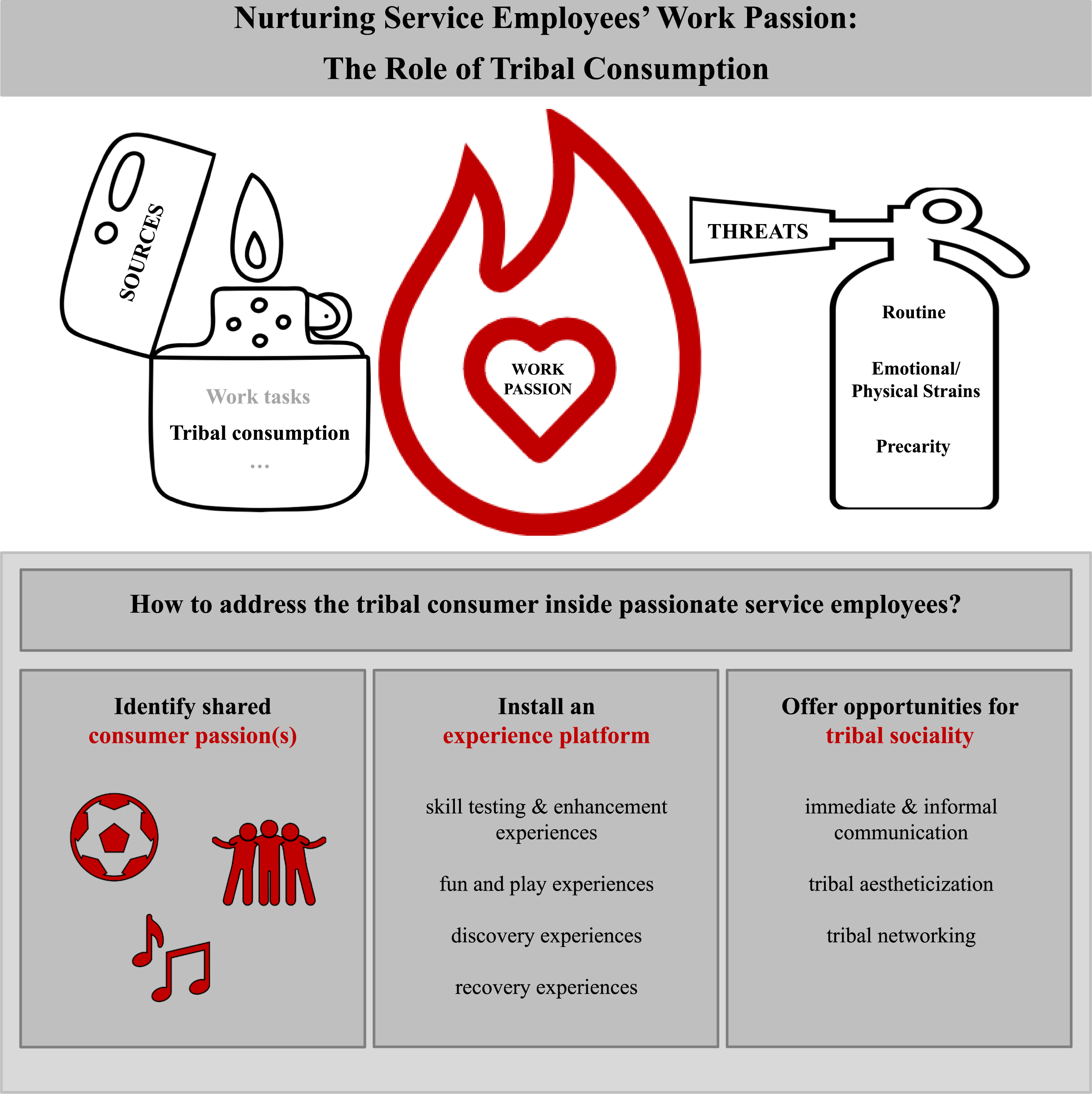
How does work passion nurture in service work contexts? Recent service research conceptualizes frontline service employees’ passion for work as “the intense positive feelings and identity reinforcement resulting from serving customers and/or solving problems” (Crawford et al. 2022, p. 194). From this perspective, work passion has its primary source in customer-oriented work tasks. At the same time, service research acknowledges that customer-oriented work tasks can pose high socio-emotional demands that can produce negative feelings, alienation, or emotional exhaustion among service employees (Hochschild 1983; Lings et al. 2014). This study draws on ethnographic data gathered in the context of an outdoor-action-sports service provider to investigate how service employees experience this apparent paradox in an emotionally and physically demanding service work context, identifies the conditions that hinder work passion from thriving, explores tribal consumption as an additional source of work passion, and derives concrete managerial implications for nurturing service employees’ work passion.
Our study contributes to prior research in three ways. First, we extend service literature that investigates frontline employee (FLE) passion (Crawford et al. 2022) by identifying service work conditions that threaten work passion and introducing an additional source of work passion. Second, we add to literature pointing towards the beneficial affective consequences of work passion in service contexts (Chen, Chang, and Wang 2019; Forest et al. 2011) by delineating a concrete pathway of how organizations can create a tribal work environment in which service employees can experience “emotional harmony” (Rafaeli and Sutton 1987, p. 32) even under emotionally and physically demanding work conditions. Last, we connect service research with consumer research by showing how tribal consumers’ shared passion for a consumption activity or lifestyle does not only fuel entrepreneurial passion (Guercini and Cova 2018) but also passion for service work in formally structured organizations.
Theoretical Background
Work Passion in Service Contexts
Interdisciplinary research into work passion has flourished for decades (Astakhova et al. 2022; Pollack et al. 2020). Vallerand et al.’s (2003) initial definition of “passion for an activity” and Vallerand and Houlfort’s (2003) transfer of the concept to the context of work motivated researchers from disciplines such as psychology, sociology, organization studies, or entrepreneurship to investigate passion in work contexts (Astakhova et al. 2022; DePalma 2021; Pollack et al. 2020; Rao and Neely 2019). The vivid scholarly interest in work passion has brought about three relatively separate streams of work passion research on general passion, dualistic (harmonious/obsessive) passion, and role-based passion, which, however, have not yet agreed on “what work passion is or how it should be conceptualized, defined, or operationalized” (Astakhova et al. 2022, p. 1463) across various work contexts (Astakhova et al. 2022; Pollack et al. 2020). Astakhova et al. (2022) have thus recently called for a comprehensive conceptualization of work passion focusing on two main characteristics, which are work passion presenting itself as an employee’s strong positive feelings towards work (such as liking or loving one’s work), and as a personal identification with one’s work (such as perceiving work as an activity that has value, is meaningful and important).
Prior service research has repeatedly highlighted the importance of service employees’ positive feelings and emotion displays for customer satisfaction, employee authenticity, and service employees’ well-being (Arnould and Price 1993; Grandey et al. 2005; Humphrey, Ashforth, and Diefendorff 2015; Rafaeli and Sutton 1987). Yet, there is still nascent research studying work passion in service contexts. Three notable studies from the field of hospitality management (Chen, Chang, and Wang 2019), general management (Forest et al. 2011), and service research (Crawford et al. 2022) are an exception. These studies emphasize the importance of work passion in service contexts and reveal manifold favorable affective, behavioral, and cognitive outcomes of employees’ passion for work.
In a study conducted in the context of a large French service company, Forest et al. (2011), for example, reveal that harmonious work passion—a type of passion that is characterized by a strong yet controllable desire to engage in work activities (Vallerand et al. 2003)—is positively associated with employees’ mental health, their concentration, control, and autotelic experience, as well as with employees’ vitality and affective commitment. Similarly, in a study conducted with frontline employees in the restaurant industry, Chen, Chang, and Wang (2019) find that harmoniously passionate frontline employees are less likely to suffer from emotional exhaustion in response to emotional labor because they are more likely to draw on the less alienating emotional labor strategy of deep acting—a type of emotional labor that has previously been referred to as “positive emotional labor” (Yoo and Arnold 2014, p. 1272).
Another recent study from Crawford et al. (2022) was the first to introduce a conceptualization of FLE passion to service research. Based on an in-depth exploration of frontline service employees’ experiences of passion in an international call center context, they define FLE passion as “the intense positive feelings and identity reinforcement resulting from solving problems and/or serving customers” (Crawford et al. 2022, p. 194). In line with Astakhova et al. (2022), this conceptualization highlights the two dimensions of strong positive feelings and identity reinforcement and introduces customer-oriented tasks as the primary source of service employees’ passion for work. While conceptualizing service employee passion along these two defining characteristics makes the concept appear similar to prior conceptualizations of work engagement (Barnes and Collier 2013; Schaufeli et al. 2002), the two concepts are still distinct from each other. Work engagement, like work passion, has an affective and an identity dimension, however, it still differs in terms of affective intensity and the amount of personal identification with work. Hence, while most passionate service employees exhibit work engagement, not all engaged employees will necessarily experience intense positive feelings and strongly identify with their work. In simple terms, work engagement may result from work passion, but work engagement does not automatically imply that service employees are passionate about their work.
However, service employees’ work passion is fragile, and there are also threats to work passion. Prior service employee passion research thus cautions that “organizations can ignite or extinguish passion” (Crawford et al. 2022, p. 208). Literature investigating the socio-emotional demands of service work points in the same direction. For instance, Lings et al. (2014) show that the socio-emotional demands of service work, including emotional labor, may produce intense negative feelings, such as emotional exhaustion or burnout in service employees. These unfavorable consequences are particularly likely to occur when service employees experience obsessive passion (Chen, Chang, and Wang 2019) and/or need to draw on the emotional labor strategy of surface acting (outwardly faking emotions) to create high-quality services (Ashforth and Humphrey 1993; Hochschild 1983).
In sum, and for the purpose of this study, we define service employees’ passion for work as characterized by service employees’ intense positive feelings (such as liking or loving work) and a strong personal identification with work (including finding one’s work valuable, meaningful and important). We further acknowledge the importance of customer-oriented work tasks as a source of work passion in service settings. However, we point to their potential dual role of activating and igniting service employees’ passion for work and suggest that service employees may draw their work passion from a variety of sources. The following section introduces tribal consumption as a potential additional source. We continue with a review of consumer research literature on consumer passion and tribes to examine how consumer passion(s) and tribal membership can translate into the motivation to engage in work activities.
A Passion for Consumption and Work
Recent research on entrepreneurial passion indicates that a passion for work can evolve from the domain of consumption (Biraghi, Gambetti, and Pace 2018; Boyaval & Herbert 2018; Guercini & Cova 2018; Milanesi 2018; Ranfagni & Runfola 2018). Consumer research supports this claim and reveals that a personal passion for a consumption activity, brand, product, or service fuels consumers’ desire to consume (Belk, Ger, and Askegaard 2003; Kozinets, Patterson, and Ashman 2017) as well as their motivation to produce value for themselves, their social circle, society, or organizations. Passionate consumers engage in work, when, for example, investing significant amounts of time, financial, and emotional resources to sew creative cosplay costumes (Seregina and Weijo 2017), to engage in farm work to breed alpacas (McMullen 2008), to co-create value for their favorite car brand (Cova, Pace, and Skålén 2015), or to recreate well-known artworks online (Hietala 2022).
While some passionate consumers pursue such work on their own, many gather and pursue their productive activities in vibrant and innovative consumer tribes (Biraghi, Gambetti, and Pace 2018; Boyaval and Herbert 2018; Hietala 2022). Such consumer tribes—loosely connected, inherently unstable, yet highly productive groupings of consumers—have passion in their DNA. Evolving from Maffessoli’s (1996) sociological theory on postmodern neo-tribes, the metaphor of consumer tribes accentuates the role of “interaction and the sharing of passion and emotion” (Maffesoli 2016, p. 746) in marketplace communions (Cova 1997; Cova and Cova 2001; Cova, Kozinets, and Shankar 2007). Canniford (2011b) further highlights the central role of passion in consumer tribes by suggesting that consumer tribes “congregate based on passion” (Canniford 2011b, p. 599). In contrast to more enduring and structured consumer collectives, such as brand communities (Muniz and O’Guinn 2001) or subcultures of consumption (Schouten and McAlexander 1995), consumer tribes are less interested in things per se (e.g., products or brands) (Arnould, Arvidsson, and Eckhardt 2021) and instead base their communion on a shared passion for consumption activities, a lifestyle and/or related products, services or brands (Cova 1997; Cova and Cova 2001; Cova, Kozinets, and Shankar 2007). The facilitation and persistence of passionate consumer tribes, therefore, necessitates an environment that provides tribal consumers with a variety of marketplace resources to playfully invigorate their shared passion (Canniford 2011a, 2011b; Diaz Ruiz, Penaloza, and Holmqvist 2020).
However, organizations that utilize such passion-nurturing tribal dynamics need to be aware of consumer tribes’ management-resistant nature. Since consumer tribes are only connected through their members’ shared emotions and passion, top-down managerial interventions and hierarchical structures can easily lead to the dissipation of passionate tribes (Canniford 2011a, 2011b; Diaz Ruiz, Penaloza, and Holmqvist 2020; Goulding, Shankar, and Canniford 2013; Mamali, Nuttall, and Shankar 2018). A more promising way of engaging with consumer tribes is to understand an organization as a tribe facilitator and collaborator (Goulding, Shankar, and Canniford 2013). Tribe facilitators and collaborators neither create tribes nor impose passion but initiate a “process of play” (Canniford 2011b, p. 595) by offering different marketplace resources to tribal members. Offerings include resources such as “aesthetics, emotions, discourses, institutions, material culture, brands, fashion, music, places, spaces and media” (Canniford 2011a, p. 63). Tribal members can draw on these resources to playfully deconstruct and reassemble them while creating passion-invigorating “moments of collective effervescence” (Arnould, Arvidsson, and Eckhardt 2021, p. 419).
Overall, previous research acknowledges that tribal consumers’ shared passion for a consumption activity or lifestyle motivates consumers to engage in work and can even fuel entrepreneurial passion (Guercini and Cova 2018), but has not addressed how it can serve as a source of passion for service work in formally structured organizations. By drawing on this prior research on tribal consumption and analyzing a large set of qualitative data collected in the context of an outdoor-action-sports provider, we aim to illustrate next how organizations can facilitate the emergence of passion-invigorating tribes in a service work context. The following sections provide an overview of the chosen research context, data collection, and analysis procedures.
Method
Empirical Context
“Area 47” (in the following Area) is an outdoor-action-sports service provider in the middle of the Central European Alps. Located in a nature park, surrounded by mountains and traversed by a river, the Area offers thrill-seeking consumers various action and outdoor sports experiences. Offerings include canyoning, river rafting, mountain biking tours, wakeboarding, motocross, and bungee jumping experiences, as well as a high rope course and a water park with giant water slides and a water airbag (for an impression of the park and its offerings, see Figure 1 and the following website: https://area47.at/en/). To provide these offerings to local and international customers, the Area employs service employees in guest services, booking, hospitality, and guiding. In 2020, Area’s staff comprised 20 permanent employees (mostly in management positions) and 110 service employees on seasonal contracts. As there is no staff accommodation on the site, most staff live in the villages around the Area for the duration of the season. A typical working week for guides comprises five work days and 2 days off. Yet, hours and working days are up for negotiation, and guides can also work part-time (e.g., students and employees with a second job or care responsibilities). Location Map and Offerings at Area 47.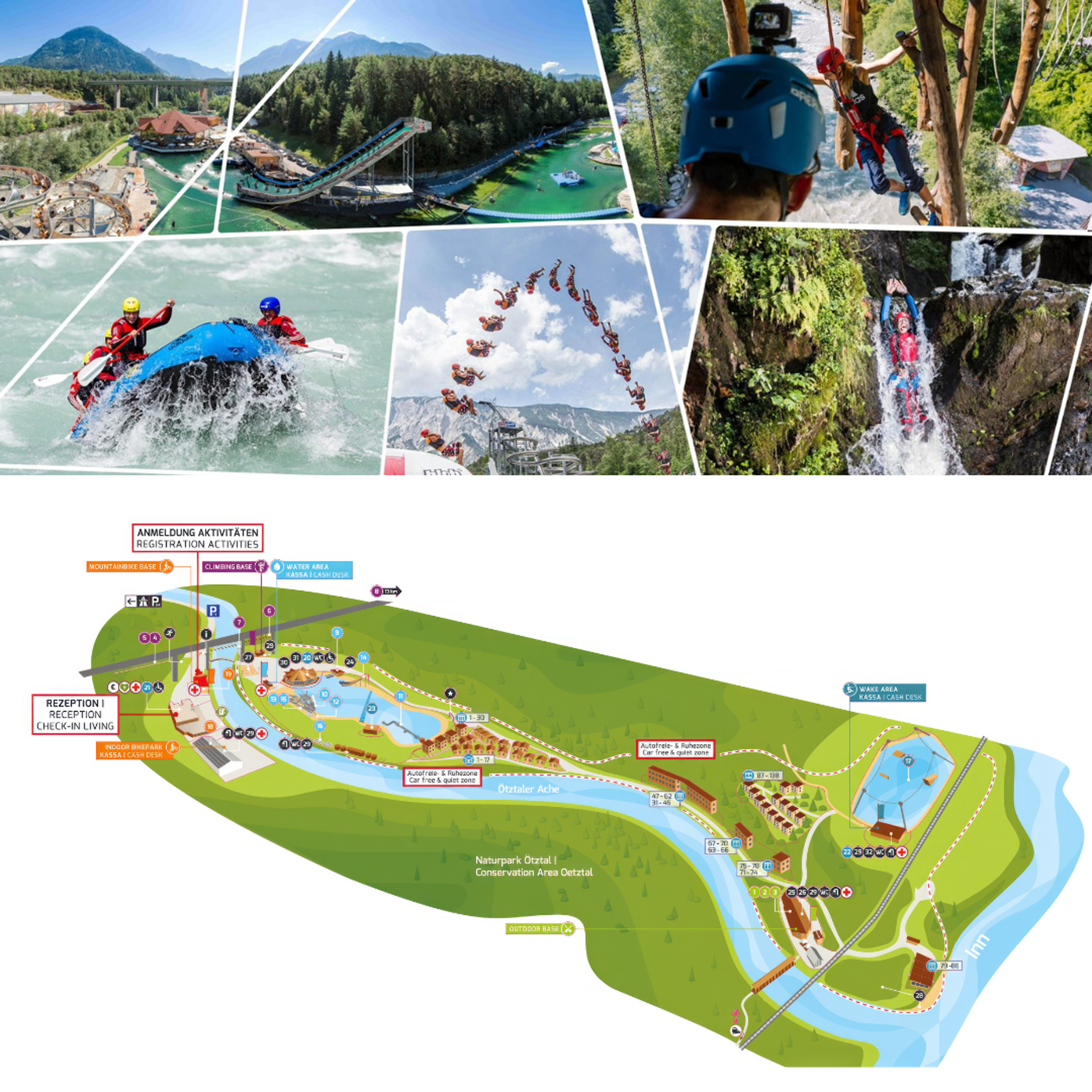
Three main contextual features characterize the suitability of this service organization for explorations into service employee work passion. First, prior research has shown that service employees’ positive feelings and the display of these positive feelings play a central role in the success or failure of leisure consumption experiences (Arnould and Price 1993). Second, in the local tourism industry context, characterized by strong competition for a committed service workforce, the Area invests great effort into attracting and retaining dedicated service employees. Despite average pay, seasonal contracts, and long hours, a fair share of service employees returns to the Area season after season, not because of the money, but because they “love” their work. Third, the Area allowed for ethnographic observation, providing the researchers with unlimited access to its outdoor park and tours and facilitating contact with service employees and customers.
Data Collection
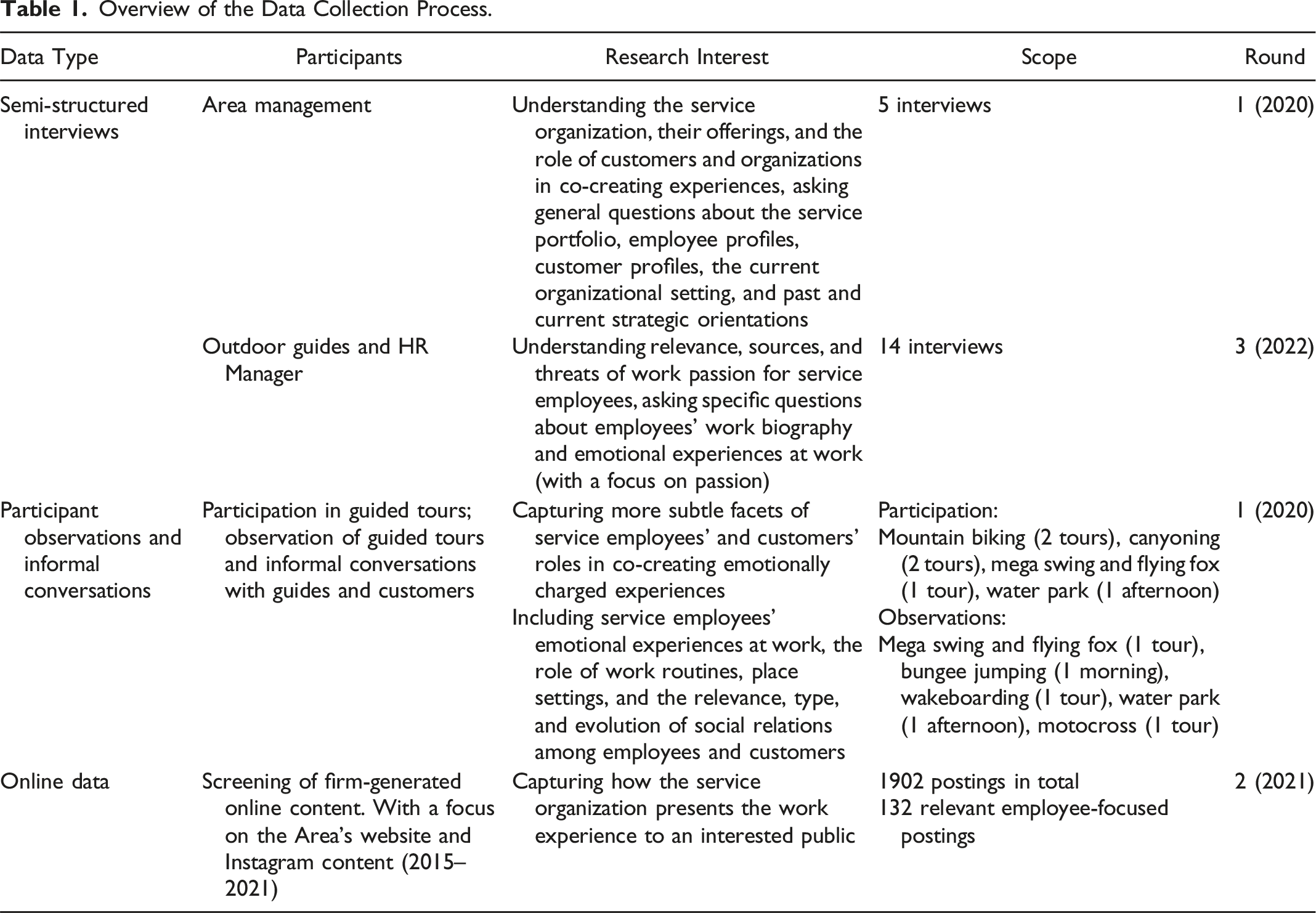
Our empirical road trip (Epp and Otnes 2021) started with a general interest in the co-creation of emotionally charged outdoor-action-sports experiences. We combined several market-oriented ethnographic methods (Arnould and Price 2006; Arnould and Wallendorf 1994), including semi-structured interviews, participant observations, and screening of firm-created online content. A multi-method ethnographic approach to data collection allowed us to observe and understand employees’ and customers’ in-situ feelings and identify the role of “relationships” and “firm-provided resources” (Arnould and Price 2006, p. 251) in the co-creation of Area’s outdoor-action-sports experiences.
Overview of the Data Collection Process.
Overview of Interview Participants.
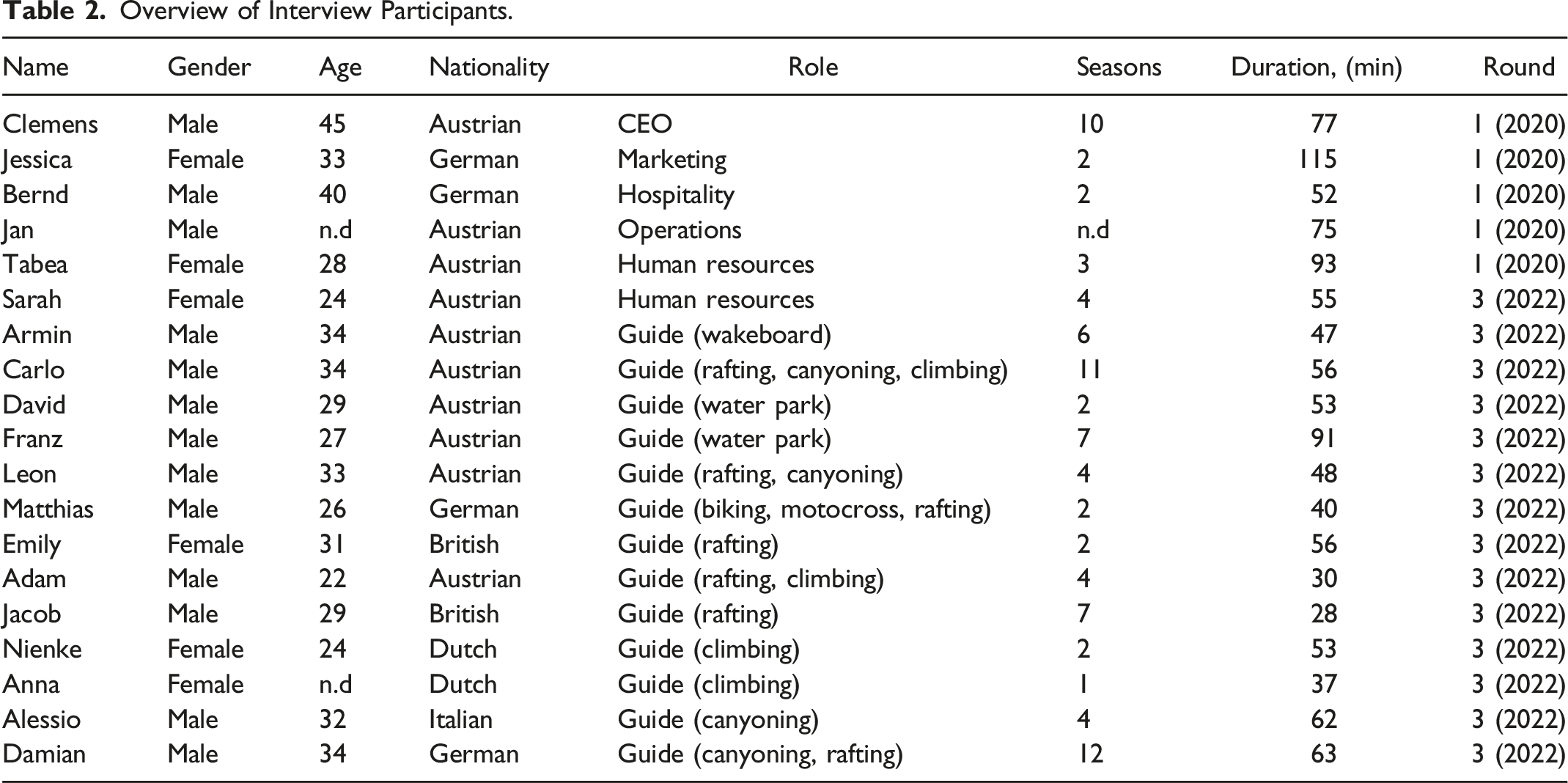
During the interviews, we followed a funnel approach (McCracken 1988), first asking participants general questions about their occupational biographies and their daily and seasonal work duties and routines in their current position before moving on to more specific questions about guides’ feelings towards their work. We prepared and flexibly posed grand tour questions (McCracken 1988), aiming to explore how guides experience work passion (both for their profession and in their daily work), the organization’s role in nurturing work passion, and the role of their own outdoor sports consumption in their job. Furthermore, we used several prompts to facilitate storytelling about participants’ feelings about work, like asking for peak moments of joy, concrete motivational and demotivational situations, or confronting participants with exemplary observations or visuals collected from previous rounds of data collection. When necessary and appropriate, we posed follow-up questions on specific topics, for instance, when participants shared their experiences with specific organizational conditions or management decisions. We closed the interview by asking guides to imagine where and how they will work in the future. The depth of the interview data, in combination with the breadth of data collected in rounds one and two, sufficed to reach the point of theoretical saturation and stop data collection (Saunders et al. 2018).
Data Analysis
Following a grounded theory approach, we performed data collection, analysis, and interpretation in an iterative process rather than consecutive steps (Corbin and Strauss 1990; Corbin and Strauss 2015). All data collection rounds were accompanied by ongoing reflections and discussions about our observations, interviews, our (emotional) experiences in the field, and comparisons to literature. To avoid “standard ways of thinking” (Corbin and Strauss 1990, p. 423) about the emerging phenomenon and to “break through subjectivity and bias” (Corbin and Strauss 1990, p. 423), we engaged in the three basic types of open, axial, and selective coding (Corbin and Strauss 1990; Corbin and Strauss 2015).
Coding procedures started with open coding of all our data, including sorting and reading through all our textual data several times (field notes, memos of researchers’ discussions, and interview transcripts) while simultaneously engaging in line-by-line coding that pointed us to patterns and variations in our data. During the open coding process, we compared and challenged our data by asking questions such as: “What patterns are (not) most similar amongst all data instances?” and pooled conceptually similar codes into higher-level categories. From this initial step of open coding, we arrived at three initial categories, which we referred to as “love and liking of work” among Area’s service employees (particularly among outdoor guides), a unique “team ethos” among Area’s service employees, and the Area’s “role in facilitating the love and liking of work and team ethos.” In the second step of coding, we applied axial coding, which allowed us to relate emerging categories to their subcategories and to test them against our data. Guided by Corbin and Strauss’ (1990) coding paradigm of conditions, context, strategies (action/interaction), and consequences, we pooled emic descriptions of the conditions (sources of and threats to service employees’ love/liking of work), the contextual characteristics (Area’s work settings), the strategies (Areas’ and service employees’ actions and interactions at work), and its consequences (such as improved employee well-being, or employee retention), and allocated supporting codes to each category. In a last step of selective coding, we unified all emerging categories around the central “core category” (Corbin and Strauss 1990, p. 424) of service employees’ passion for work. We arrived at this core category by asking questions such as “What is the main analytic idea?” or “How can we conceptualize the findings of this study?” and by dialectical tacking (Strauss and Corbin 1998), hence moving iteratively between identifying patterns in our data and comparing these with prior service and consumer research literature. We triangulated our categories and subcategories with visuals from our social media data, both to fill categories that needed further explication with “descriptive detail” (Corbin and Strauss 1990, p. 424) and to enhance our ability to craft evocative narratives that serve “to illuminate the field and our experience of it” (Jarzabkowski, Bednarek, and Lê 2014, p. 275) in our ethnographic text work.
The following findings section is structured accordingly. We first provide a nuanced description and interpretation of the sources of service employees’ work passion, the working conditions that threaten service employees’ work passion, and a detailed description of how tribal consumption can serve as an additional source of service employees’ work passion. We then proceed with a comprehensive report of how the Area addresses this source of work passion.
Findings
Sources of Service Employees’ Work Passion
Areas’ outdoor guides express their passion for work in various ways. Consider Nienke (24), a Dutch climbing guide in her early twenties, who “majored in outdoor activities” and moved to Austria for work (ski instructor in winter, outdoor guide during summer), saying: They [her peers] think it is super cool that I work [in a job] I have studied for and that I really love what I am doing. I always tell them I rather work and don’t have that much money as long as I do something I truly love.
In her statement, Nienke expresses intense positive feelings (true love) and indicates that she draws identity value from having a fun job that perfectly aligns with her educational background (studying sports). For Nienke, working in the Area is about the “love” for work and less about financial remuneration. Later in our interview, she tells us that, at the moment, she is willing to sacrifice a certain amount of financial stability in exchange for doing something for work that makes her feel good. We find further evidence of similarly intense positive feelings about work expressed in casual conversations during our participatory observations and interviews. Rafting guide Emily (31), who joined the Area two seasons ago, describes working there as “just super nice” despite knowing she has many long, busy, and tiring working days ahead of her. We also find the Area utilizing their passionate guides’ verbally or non-verbally expressed love of work for social media communication purposes (see Figure 2). Passionate Service Employees on Instagram.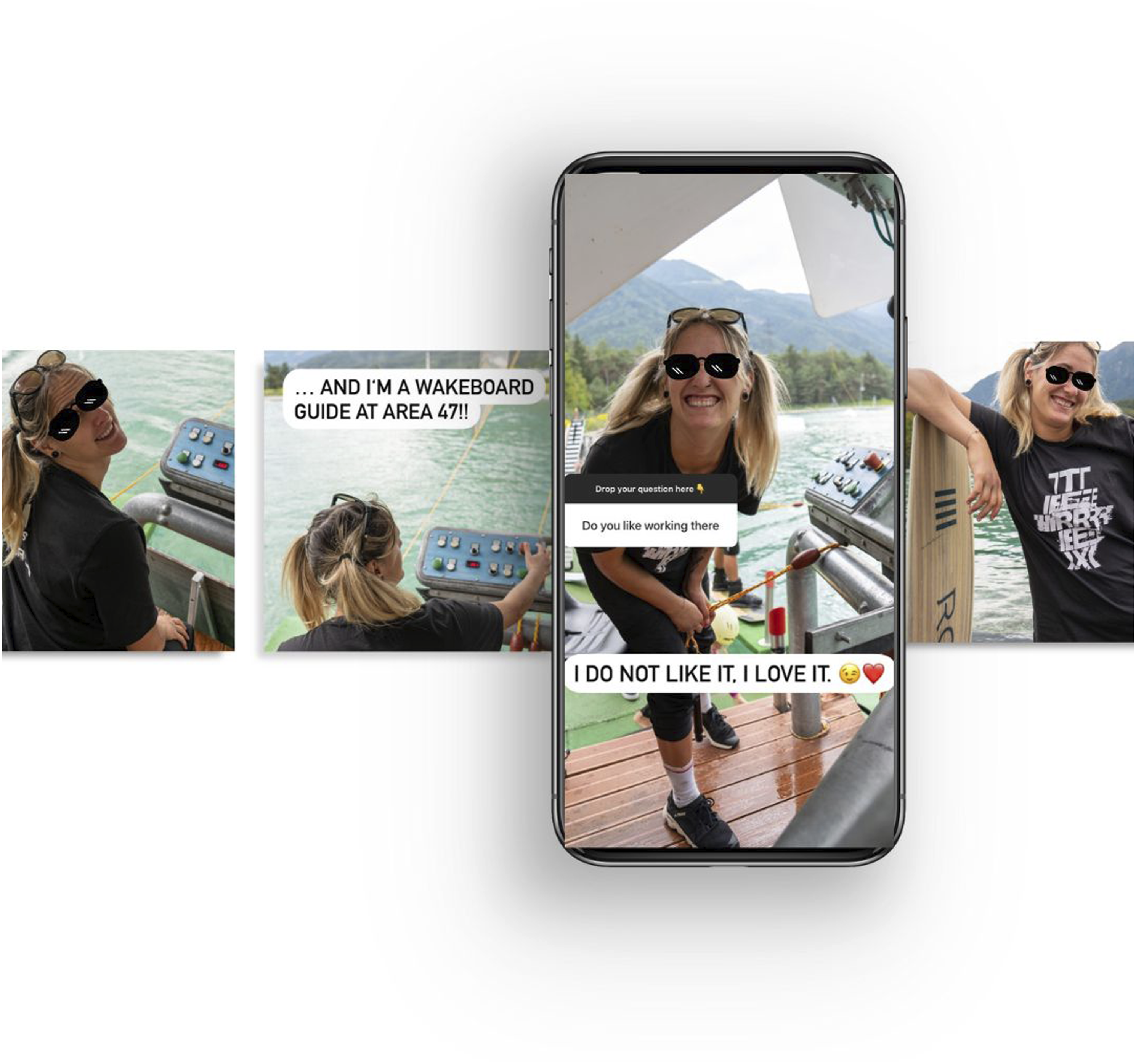
While Area’s guides strongly identify themselves with their work, we observe that work passion is particularly strong among guides who changed careers. For instance, Matthias (26) studied engineering and worked as a technical engineer in Germany before becoming a mountain bike guide in the Area. Talking about his career choices, he tells us that working at the Area showed him what it feels like to work in a job that he finds important and meaningful. Becoming a guide was a “big change in life,” allowing him to finally be “at peace with himself.” Similarly, other outdoor guides compare working in the Area with prior work experiences and conclude that working now feels like having the right job at the right place and time. For instance, Franz (27) was “extremely dissatisfied” with his job as a cook. He emphasizes that he “likes” working at the Area and works “with heart and soul.” These intense positive feelings continuously push him and his co-workers to get “the best out of themselves.” David (29) also mentions that working in his previous job at the local cable car provider “just didn’t make him [me] happy” anymore. It felt like a relief to him to find a job where he could finally be whom he wanted to be and not “have to pretend” while being at work.
Area’s guides highlight various sources of work passion. Besides some solitary mentions of a “good job environment” as a source of motivation (Carlo, 34: “The Area, as an employer, is just tiptop”) and some more frequent mentions of working “outdoors” and “in the nature” as a source of joy (Michael, Jordan, Adam, Leon), a more dominant theme is the joy of working with people. Consider Leon (33), who describes what he loves about his work: “Just being outdoors, you’re always dealing with many motivated people. That’s just fun when they’re in a good mood.” Other guides substantiate what Leon calls “dealing” with “people” as a source of work passion. Mountain bike guide Matthias (26), for instance, explains that what makes him “feel positive at work” is “to make people [customers] happy, to have a cool time, and then just to be able to send them [customers] home with achievements at the end [of the tour].” In his case, delivering “achievements” refers to facilitating customers’ progress from riding the bike “all shaky” and “all scared” at the beginning of a tour to riding “solidly down” a mountain bike trail at the end of it. When interpreting Matthias’ (26) narrations through the lens of FLE passion literature (Crawford et al. 2022), he refers to some facets of passion-nurturing job tasks, like “serving the customer,” in the sense of co-creating fun and adventurous outdoor-action-sports experiences and to “problem-solving” in the sense of safely escorting consumers through physically and emotionally demanding situations.
Threats to Service Employees’ Work Passion
At the same time, our analysis reveals that customer-oriented work tasks are quite fragile sources of passion and lose their power to nurture work passion under certain conditions. In the following, we describe these conditions under the term threats to passion and denote the three most dominant ones in our data, routine, physical and emotional strains, and precarity.
Routine
The more a season or a guide’s career progresses, the more customer interactions and operational tasks become routine to guides. Over a season or even years, guides create the same outdoor experiences over and over again and eventually know the details of their tours and customers’ and co-workers’ reactions by heart. Guides mention that after a couple of busy weeks, they feel like working “on autopilot” (Nienke, 24) and that guiding outdoor adventure tours becomes like “going for a walk” (Leon, 33). While guides welcome the efficiency gains that result from the routinization of service work (Nienke, for instance, says work is “chilling” to describe that she understands how everything works), routine becomes a threat to work passion when the sheer quantity of repetitive tasks, like “talking talking talking all day long” (Franz, 27) “exhausts” (Leon, 33) guides in the long-run. Routine is particularly tiring in high-risk settings (like canyoning, rafting, or bungee jumping) since guides need to stay alert and “pay attention” (Leon, 33) at all times to not risk their own and their customers’ lives. Consider Carlo (34) explaining that “the routine is dangerous, then you are loose, then you are careless, and then mistakes can happen.” Also, David (29) formulates a scenario to showcase how he feels after days of routinely delivering (indeed life-saving) safety instructions at the water park: It’s simple, let’s say you are at a certain position [on the platform], and a guest comes, and you know exactly, f*** now I have to explain this again, and then you just think, can’t this be over now?
Just like David describes how repeatedly serving customers threatens his positive feelings at work, Nienke (24) recalls a point in time when she caught herself thinking “not the same thing again” when performing a routine yet initially beloved task of supporting customers with overcoming their fear of jumping off from a 27-meter-high climbing platform. Our observations of David’s co-workers working on the previously mentioned waterpark platform document the density but also the monotony of guides’ work tasks: I only spent about an hour [up] there, but I could already see and feel the many demands of this job: It is hot, tight, many people were queuing, watching others jump, impatiently waiting for their turn. The guide up front [on the platform] kept explaining the same thing again and again to first-time customers, such as the ideal body position for jumping, and what not to do, while keeping an eye on those customers waiting for their “go” on the opposite side. There is not much change, besides, maybe, a short conversation with a regular guest who doesn’t need instructions anymore, some random jokes with a group of young male customers, and a quick dance performed by the guide in between tasks. (Researcher 2, fieldnotes, waterpark)
Not least, we interpret the frequently mentioned urge for “variety” at work (Leon, Nienke, Carlo) as a sign of routine threatening guides’ “good mood” (Leon, 33) at work.
Physical and Emotional Strains
The physical and emotional strains of co-creating emotionally charged outdoor-action-sports experiences threaten guides’ passion for work. Being a rafting guide, for example, can be “quite hard on your shoulders” (Emily, 31) and causes pain when “one-sided movements are not counterbalanced” (Carlo, 34). Furthermore, working “at 35 degrees, with 100 people” (Armin, 34) is exceedingly strenuous for guides’ bodies and minds. Saturdays are particularly tiring because guides are often required to work long hours and have more customers to serve. Such a high frequency of customer interactions can become emotionally exhausting for guides, particularly when younger customers pose additional demands. These demands include customers, who are eager to satisfy their thirst for learning and therefore do not get tired of asking for support, often repeating questions such as: “Armin, Armin, Armin, what did I do wrong? What did I do wrong?” (Armin, 34). Also, guides must deal with drunk customers who “do not listen” (Franz, 27) and hence do not follow the guides’ safety instructions. These situations incline guides to “play a perfect role” (Jan, n.d) while feeling differently, hence resorting to the emotional labor strategy of surface acting (Hochschild 1983) that has been shown to wear out intense positive feelings (Chen, Chang, and Wang 2019; Lings et al. 2014). In our data set, Leon (33) is an ample example of how repeated surface acting can hamper the “dealing with customers” source of passion: You’re always dealing with people, yes. That’s always also the exhausting part [of the job]; when you have a bad day, you can’t just be angry with the guest; in the long run, you think, “I don’t like it anymore.”
While Leon was the one bringing up “dealing” with “people” as a source of work passion in a prior statement, he now adds that the requirement to “remain friendly” with customers at all times sometimes causes stress for guides. The further the season progresses, the more it uses up guides’ physical and emotional resources. Carlo (34) then observes how the “complaining” increases amongst his co-workers and lists some related demotivating factors: [Beyond personal factors] It can have many factors. It can be the weather is sh** when it has snowed, they [the guides] still have to go canyoning, or the group size or the tour is bilingual. There are so many small factors that just build up a bit over time, especially in the middle of the season.
While Carlo calls the peak of strains a mid-season “high” later in our interview, other leaders and guides speak of a mid-season “low” (Tabea, 28) to describe a collective physical and emotional exhaustion. Leon (33) recalls common symptoms of mid-season job fatigue among himself and his co-workers: “At some point, you get tired. It starts at the end of July [...] All start humming, whining, tired.” Guides then observe how their co-workers start “talking about small things” (Leon, 33) and become more easily annoyed by customers’ requests and their emotional outbursts. Franz (27) even recalls how he once found a co-worker crying in the backstage area because sometimes “it’s just too much” so that co-workers “can’t take it anymore” (Franz, 27).
Precarity
The financial sacrifices and job insecurity that come with working as a guide also threaten guides’ passion for work. Leon’s (33) metaphoric saying of having to “harvest the mushrooms as long as they grow” describes the pressure, or, in his words, the “stress [to work] a lot, a lot, a lot, to make money because then the season is over.” Although Area’s guides work on seasonal contracts and are freed from the pressures of getting paid per tour, overall mediocre remuneration and the seasonality of the job still cause “financial insecurity” (Leon, 33). Many guides combine tour guiding with a winter job, like ski instructing or working for ski patrol, to increase financial stability. However, guides still consider precarity to be one of the major reasons for leaving the Area or for discontinuing their guiding career. Although guides commonly enjoy the variety, the overall workload of two seasonal jobs is high. Especially when guides approach or hit their thirties, low remuneration, working on weekends, and having two jobs start colliding with other life goals. Guides report how they make or have already executed exit plans. Franz (27), for example, mentions that “If I had a family or kids [...] they [the Area] either would have to pay me a lot more, or I would have to go back to [work in] the kitchen [working as a cook] where I was much more unhappy.” Leon (33) actually “tried” an alternative career as a medical technical assistant, which should have become his “future,” but returned to the Area saying: “I have tried something else [for work], but no, it is not my time yet [to do something else].” Later in our interview, Leon (33) mentions that the pressure he felt to terminate the guiding profession did not only originate from financial precarity but also from the job’s lacking local social recognition: Socially, that [guiding job] is not so recognized as work, which also causes perhaps, at a certain age, at some point, psychological stress, when you think, “where should I go?” Which indirectly forces you to do something else.
While younger and international guides do not claim a lack of status from their job, Leon, a local to the Alpine region, feels the status evading the longer an employee stays with seasonal guiding jobs. He describes his experience with job stigmatization by paraphrasing some prejudices he encounters, like “You are just the guide,” or questions like “When will you actually start working?” or being considered the “lazy” one instead of the “cool” one he is in the eyes of tourists, and how he believes it to be the case in other countries. Another example of a guide pointing to symbolic precarity is Damian (34), who says he always planned that he “will do this [guiding job] until he is [I’m] 30 and then he will [I’ll] do something normal again.” Damian’s (34) reference to the “normal” job he will be doing in the future points to the seemingly “abnormal” associated with the guiding profession.
In sum, the threats of routine, physical and emotional strains, and precarity may not only hinder service employees’ passion for work from thriving but, if not mitigated, carry the potential to “build up a bit over time” (Carlo, 34), make work a “grueling and exhausting” (Jan, n.d) experience, and become passion “extinguishers” (Crawford et al. 2022, p. 205). We suspect that, particularly when threats gain in intensity, or when all threats appear simultaneously, guides start losing their connection to their work passion and ask themselves, “Why am I doing this again?” (Nienke, 24).
Despite these threats to work passion, our data reveals that a vast share of Areas’ guides remain passionate about their work for many years. In his second season, David (29) does not regret having changed his career path, nor wants to return to his previous job, saying “[switching to the Area] was one of the best decisions of his [my] life.” Many employees return season after season or stay with the job much longer than planned. Leon (33), who tried to pursue an alternative career and also tried working for other outdoor sports providers, eventually returned to the Area, concluding that quitting his job at the Area would mean that he “would leave it [the guiding profession] altogether.” These examples go in line with Rao and Neely’s (2019) suggestion that work passion serves to retain service employees, who hold jobs that are “less stable and lower paid relative to other high-status jobs” (Rao and Neely 2019, p. 3). Yet, how does service employees’ passion for work nurture when work tasks threaten it? Our data reveals that an alternative source of work passion—tribal consumption—mitigates these threats to work passion.
The Tribal Consumer Inside Service Employees
Many guides emphasize that they genuinely love what they do for work because they can share their consumer passion for outdoor- and action-sports and the related lifestyle “with like-minded others” (Emily, 31). Some guides, like Nienke (24), chose this career path because being a guide allows her to combine her passion for outdoor sports with her work. She strongly believes that “everyone [who works here] loves the activities you can do here.” Peter (n.d., informal conversation) mentions that many come to work at the Area to “experience what they [customers] want to [experience],” including being “outside the whole day, with cool young people” to “do sports” (Armin, 34). Others, like Franz (27), were not overly enthusiastic about sports or the outdoors when joining the Area (“I’m actually a couch potato”) but got attracted by a sportive lifestyle and lifestyle-related activities, such as “partying together” (Nienke, 24). Descriptions of the intense positive feelings drawn from consumption activities at work range from peak moments of joy, like raised by rafting guide Adam (22), who highlights the “adrenaline rush” he experiences when doing “extremely fun” sporting activities with co-workers, to more moderate explications of satisfaction, like rafting guide Jordan mentioning him being “simply satisfied” at work when being “in the water.” In our social media data pool, we find support for this theme when the Area features guides performing their beloved sports (see Figure 3). The “Consuming” Guide on Instagram.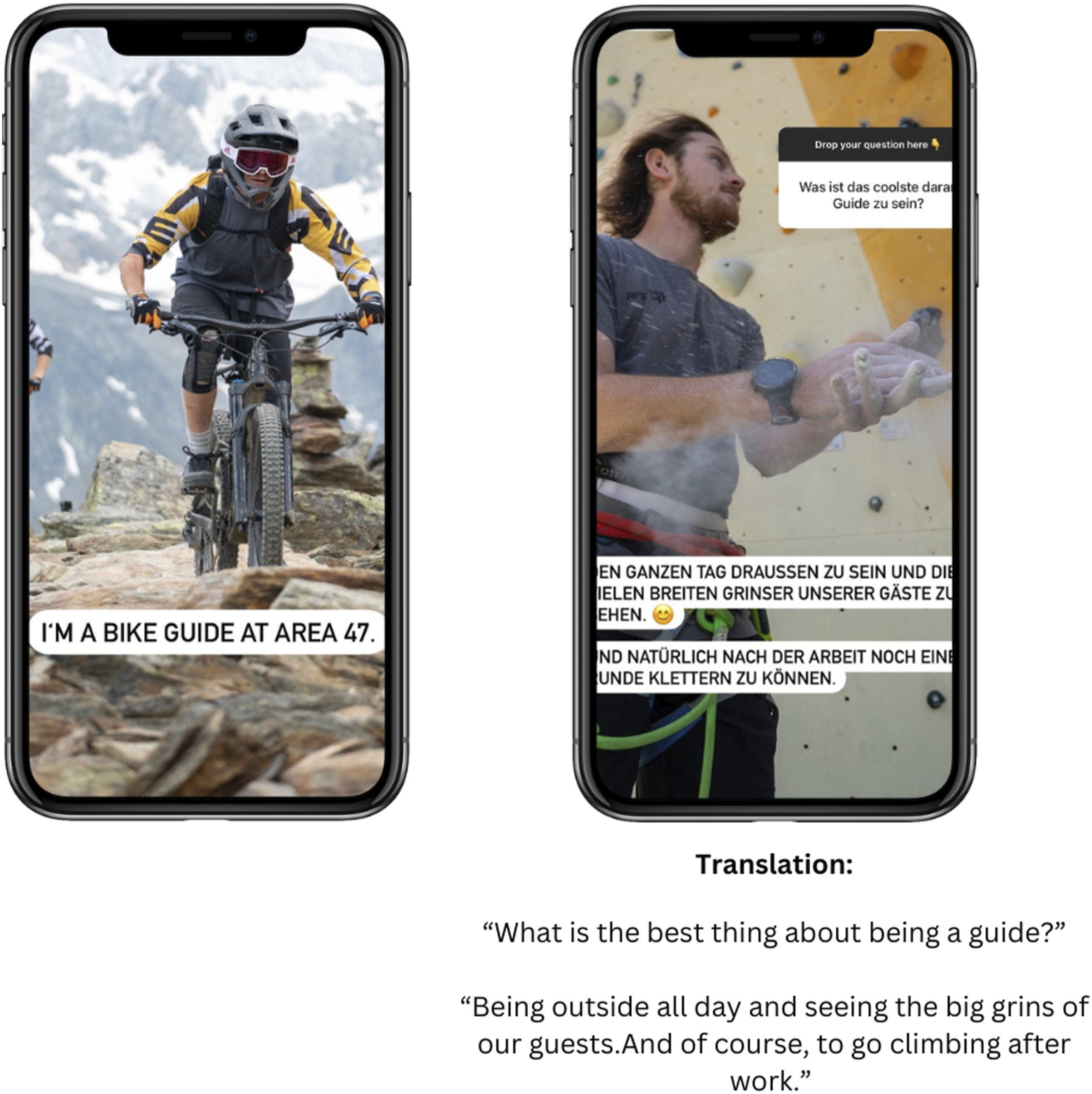
However, guides emphasize that passion for work does not only nurture when following their consumer passion on their own but even more so when they can share their passion for outdoor sporting activities and the related lifestyle with like-minded peers. Having the possibility to share and reinvigorate their consumer passion during and after work creates a unique “type of community” (Franz, 27) and a peculiar “ethos of being a team” (Emily, 31). The Instagram story depicted in Figure 4 (smiling wakeboard guides hugging each other) visualizes this peculiar team ethos that Franz, Emily, and other guides keep referring to. Tribal Team Ethos on Instagram.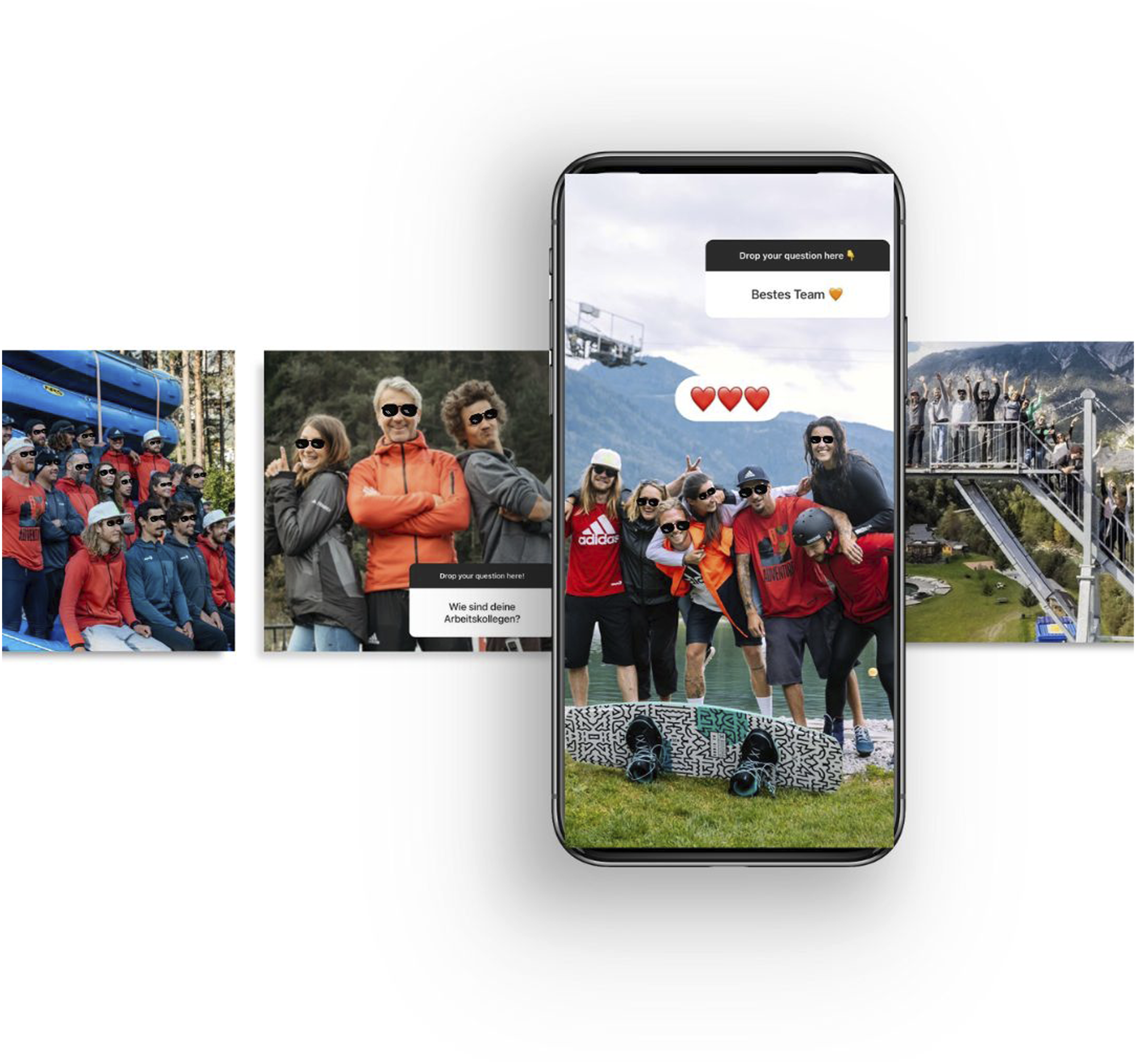
In their own words, guides emphasize the passionate, continuously changing, heterogeneous, and non-hierarchical nature of Area’s team—descriptions that are evocative of consumer tribes (Cova 1997; Cova and Cova 2001; Cova, Kozinets, and Shankar 2007). Guides call the Area “a small family” (Franz, 27), whose members share an “outdoor mindset” (Jacob, 29) and a common “good mood” (Adam, 22). Despite these commonalities, guides emphasize the heterogeneous nature of Area’s community when explaining how they enjoy having the possibility to meet people of different nationalities, with different mentalities and attitudes, and with different educational backgrounds. However, membership in this tribal-like communion of service employees is more fluid than in a small family and neither requires guides to go through a lengthy socialization process nor involves long-term commitments, as it is often the case in more traditional service employments (Subramony et al. 2018) or in more structured consumption-based communities (Muniz and O’Guinn 2001; Schouten and McAlexander 1995). The Area’s community has instead an ephemeral and continuously changing nature. After finishing the season with a huge party and spreading out for winter jobs, only a few guides meet up or stay in contact regularly. Some guides, who “live 6 months at a time” (Emily, 31), may decide to leave the Area while new ones join. Some guides stay with the Area for longer, become part of the “core team,” and therefore provide some stability to the tribe’s “identity in flux” (Canniford 2011b, p. 600). Franz (27), for instance, stayed for seven seasons (while initially planning to stay one) and “feels extremely comfortable” at work, not primarily because of work tasks (“work is pretty cool, it’s okay, it’s not bad”), but mostly “because of the guides, or the people.” He saw many guides leaving but also coming back irregularly for social gatherings, charging the workplace again with a tribal spirit: Personally, I really miss every guide I’ve ever worked with or who has ever been here. I’m a very nostalgic person, but they also come back to visit, and then I'm even more excited, and then we talk [with each other].
Beyond solely indulging in nostalgic memories of the tribal relations at the Area, Franz has created the hashtag “Team47 forever” to keep social media connections alive amongst former Area employees. He tells us that he intends to tattoo his body with this mark and emphasizes that once you have been part of the team, “you are forever.” Last but not least, guides highlight the non-hierarchical nature of the tribe. Again, Franz (27) highlights that “everyone is treated the same,” Emily (31) states that “everyone is important, doesn't matter what their role is,” and to David (29), it came as a surprise that he, as a newcomer, was given a say in decisions about changes at work. During our participant observations, we experienced this tribal spirit firsthand. No matter which tours we joined or observed, all outdoor guides welcomed us warmly, introduced us to their co-workers, and instantly treated us as one of them. When researcher one participated in a beginner E-bike tour, customers even approached her and asked if she was an additional guide on the tour. From a customer’s perspective, she “looked like a guide” and interacted with guides like she was “one of them” (Researcher 1, fieldnotes, E-bike tour).
Overall, our analysis reveals that tribal consumption represents an additional source of service employees’ passion for work. Additionally, our data shows how this passion translates into more positive service employee-customer interactions. Guides, for instance, find it easy to convey positive emotions at work because they have a personal passion for the experience they are co-creating. Armin (34) mentions that he tries to make his customers “feel” that he has “such a passion [for wakeboarding]” and to “let the fun or the fanaticism jump over.” In turn, guides experience pride and happiness when (in rare moments) customers get “fully enthusiastic” (Jacob, 29) about the sport they are passionate about. Furthermore, our data shows that guides—pushed by their own and the tribe’s shared consumer passion—go the extra mile to create extraordinary customer experiences. Though not at the core of their job profile, Matthias (26) and Armin (34) engage in “teaching [bodily] skills” to consumers. Our data, too, reveal cases in which threats to work passion find at least some resolution through support from the tribe. Consider Franz (27), for instance, who appreciates the egalitarian treatment in the tribe (“You come here and it doesn’t matter who you are”), which he did not experience in his previous job (where he felt “manipulated” with doctrines like “He [I] can’t do it; he is [I am] not worth it, blah, blah, blah”). While not entirely enthusiastic about sports, he became fully absorbed in the tribal community, which, at least for the moment, weighs out routine and emotional and physical strains (“[After 7 years] I have, with absolute certainty, already witnessed every crap”), the financial precarity of the job (he initially didn’t want to apply for a job at the Area as he heard rumors about their low wages), and symbolic precarity (he thinks he is still considered “the big clown” in his hometown).
While research suggests that tribal consumers become passionate entrepreneurs somewhat accidentally (Biraghi, Gambetti, and Pace 2018; Boyaval and Herbert 2018), our data indicates that the Area’s passionate tribe of service employees is continuously incentivized and facilitated by the Area. In the next section, we delineate two major conditions that allow the Area to facilitate and cultivate a passion-invigorating tribe of service employees.
Facilitating a Tribe of Service Employees
Our analysis shows that service organizations can nurture their service employees’ work passion by addressing the tribal consumer inside service employees. We reveal two primary conditions that allow service organizations to facilitate and maintain a passionate tribe-like community of service employees. We refer to these conditions as the workplace as an experience platform and opportunities for tribal sociality.
The Workplace as an Experience Platform
The Area addresses the tribal consumer inside service employees by becoming an experience platform— “a platform on which tribal consumers can play, plunder, build passion, community, and entrepreneurial ventures” (Canniford 2011b, p. 597). This includes that the Area encourages their employees to “do all activities themselves, to be healthy and sporty” (Jan, n.d.). Guides, in turn, explicate in several ways how they experience their workplace as tribal consumers. They emphasize that they love having the possibility “to try everything and join tours” (Nienke, 24), to borrow high-end sports equipment from “other people, [or] to borrow [equipment] from the company as well” (Emily, 31). During our stay at the Area, outdoor guides even offered Researcher 1 to come back to join tours and borrow a mountain bike and other outdoor equipment, thereby signaling the openness of the tribe to those who share the same passion. Employees consider the possibility of pursuing adventure and outdoor sporting and lifestyle-related social activities “with like-minded people” (Emily, 31) as “one of the greatest benefits” (Bernd, 40). The Area features these experiential benefits in job interviews and online communication campaigns. We further infer from our observational and interview data how guides embrace the experience platform to invigorate their passion by engaging in skill testing and enhancement, fun and play, discovery, and recovery experiences.
Skill Testing and Enhancement Experiences
Area’s experience platform allows guides to do “something for themselves [me]” (Matthias, 26) by coming together and testing and improving their skills in the sports domain they are passionate about. Those guides who are experts in their respective sports domain but cannot play out their skills in their daily work enjoy testing and enhancing their skills after work. Guides use Area’s sporting facilities to do sports when not many customers are around, after business hours, or during job training, when, for instance, rafting on “difficult rivers that they [we] can't do in normal rafting” (Jacob, 29). In a casual conversation with Researcher 1, mountain bike guide Peter points to the passion-invigorating nature of skill enhancement experiences. Peter says that after many years of working for the Area, he still “gets excited” about the high-end sporting equipment he gets to use at and off work. Similarly, Armin (34) mentions that his passion for wakeboarding “has increased [since I am working here], when you see the people boarding the whole day. You go home, and you think, how did that trick work [again]?”
Discovery Experiences
The
Fun and Play Experiences
Area’s experience platform provides employees the resources to create fun and play experiences. For instance, Franz (27) invites his colleagues to join him in a “water area session” after work to do fun activities such as tower jumping or sliding at the Area’s facilities. He explains the sociality-facilitating and energizing effect of these self-organized fun and play experiences: But that makes it a bit better when you have a tough day, when you have a bit of energy left, which is very hard from time to time. Still, when you motivate people, “Hey, come on, now we're going to do another round [of sliding] and [we] do a bit silly stuff,” [...] there are already laughs again, anyway. Then it’s okay again, you know, then you come back in [the good mood], and, I don’t want to say [that you] forget the day, but you just relax a little bit, mentally at least.
Like Franz, who mentions the stress-balancing function of these shared play experiences, Nienke (24) balances out stressful work periods by “doing funny things” with co-workers, which, for example, includes that they organize pull-up contests at work. She also mentions feeling less motivated when there is no time for that. Play is also central to the monthly staff events called “Mondays Fundays,” where employees organize activities for each other. These events are commonly experienced as creating a “good mood,” especially during the mid-season low (Tabea, 28), as “pushing up motivation” (Matthias, 26), and as facilitating the unique “type of community” (Franz, 27) that spans across the company. Similar to the playful and fun consumption experiences, which Area’s outdoor guides co-create on an everyday basis, we observe that participating in fun and play experiences organized by themselves or by the organization allows guides to connect with their co-workers and (at least temporarily) forget about the emotional and physical challenges of being a guide.
Recovery Experiences
As guides commonly need to stay close to customers during tours, they can only shortly “step out of character” (Goffman 1959, p. 112) from their role as service employees, like in short moments of checking equipment. To still allow guides to recover, one can find backstage areas at the Area where guides can gather and “reflect, be emotional and get ready for their performances” (Tumbat 2011, p. 189). Examples include free and good-quality lunches served in a location away from customers and the provision of staff huts. Many guides consider lunch an energizing anchor in their workday, both socially, because “no one eats alone” (Franz, 27) and in terms of relaxation, as Nienke (24) explains: [...] You really need some place where you don’t have to talk to guests or that you can speak about guests with people without that being a problem. [...] we kind of need that to come down a little bit [...] just to have some peace and quiet and a moment for ourselves.
In her statement, Nienke (24) describes how this backstage Area provides her and her co-workers a decelerated escape from their fast-paced work environment (Husemann and Eckhardt 2019). However, while recovery experiences at the workplace may temporarily ease the threats of routine and physical and emotional strains, guides also seek recovery experiences outside the workplace to protect work passion from deteriorating. For instance, guides mention that from time to time, they enjoy taking extra days off to play sports or hang out and how the season break is an important escape for them to “recover” (Leon, 33).
Creating Opportunities for Tribal Sociality
The Area also addresses the tribal consumer inside their service employees by creating a service work environment that allows for the evolution of tribal sociality amongst service employees. Our analysis reveals immediate and informal communication, tribal aestheticization, and tribal networking as the three main facilitators of tribal sociality in our context.
Immediate and Informal Communication
The Area provides the nurturing grounds for the evolution of a tribe of service employees by ensuring immediate bonding and informal communication at work. Guides who start working in the Area can immediately connect to the tribe via their passion for adventure and outdoor sports, and related lifestyles. The Area initiates social activities at the beginning of each season, where guides can identify common interests and passions. In 2022, for example, the Area organized a “speed dating” event where employees could “get to know everyone personally” (Leon, 33). Guides continue strengthening their connections with like-minded co-workers throughout the season. Some start meeting regularly after work to do sports, drink, play poker, or party together at Area’s restaurants or bars. Various guides mention the passion-invigorating qualities of such gatherings. Franz (27) says that he was “soaked in” by seeing guides spending time together “No matter how many mistakes you made that day, no one was angry with you,” and David (29) explains that just talking “about their everyday lives” during social gatherings is “a good way to process it [the challenges at work].” Although the Area does not organize these gatherings, it facilitates them by incentivizing food and drinks consumption at their restaurants and bars with a discount because they have noticed that meeting up helps employees let their “frustration go” (Tabea, 28).
In terms of communication style, the Area emphasizes its efforts to incorporate an informal “first-name communication among all employees,” a “laissez-faire management style,” and an “open door policy” (Tabea, 28). This communication style allows guides to talk to their team leaders directly when having a problem and to discuss and evaluate failures on equal terms rather than getting sanctioned and played down, something that Franz (27) experienced with prior employers. Whereas Area’s company structure of department heads and team leaders appears hierarchical, we observed that these structures seem to fall into oblivion during daily work-life. Researcher 1, who participated in two half-day canyoning tours, witnessed how guides embody different roles (e.g., tour leader vs. tour assistant) during their tours. Guides confirm our observations and mention that the Area has “flat hierarchies” (David, Franz) and that they are “all on the same page” (Adam, 22). Guides even refer to the CEO as a tribal member because he is a guide himself and, therefore, “knows how everything works” (Adam, 22). Like any other colleague, they characterize him as approachable and mention that he still nurtures his consumer passion. Consider Matthias (26), who explains: “The mere fact that Clemens [the CEO] himself lives out his sport and regularly goes on rafting trips [...] that already puts you in a positive mood, that he doesn’t somehow keep his distance, but is right there with you, like everyone else.” Matthias (26) adds that his and his team’s good mood at work also results from their leader acting like one of them. He mentions that he draws motivation from exchanging mountain bike tour recommendations with his boss and observing him pursue his passion for outdoor and action sports at and off work.
Tribal Aestheticization
Tribal work aesthetics that support service employees in “feeling emotions together” and thus provide “the foundations for a community” (Maffesoli 2007, p. 27) mark another way to facilitate the emergence of a passionate tribe of service employees. The stunning and picturesque nature surrounding the Area and the high-tech sports grounds regularly attract new members to join the Area’s tribe of service employees. For instance, Armin (34) mentions that, amongst wakeboarding athletes, videos from the Area’s unique wakeboarding spot (wakeboard facilities with snowy mountains in the background) create a desire to visit the Area. Adam (22) mentions that, for water sports enthusiasts, “the first impression is pretty cool when you drive to the [wakeboarding] Area.” Beyond aestheticizing the Area’s physical servicescape by utilizing natural elements (mountains, rivers, and canyons for adventure tours), converting existing physical elements (bridges for bungee jumping or climbing), and building impressive facilities (water park, flying fox), the Area also aestheticizes its tribe of service employees. Each season, Area’s co-branding partners (e.g., Adidas Terrex or Trek) equip guides with the latest high-performance sportswear and high-end sporting equipment (see Figure 5). Tribal Aestheticization.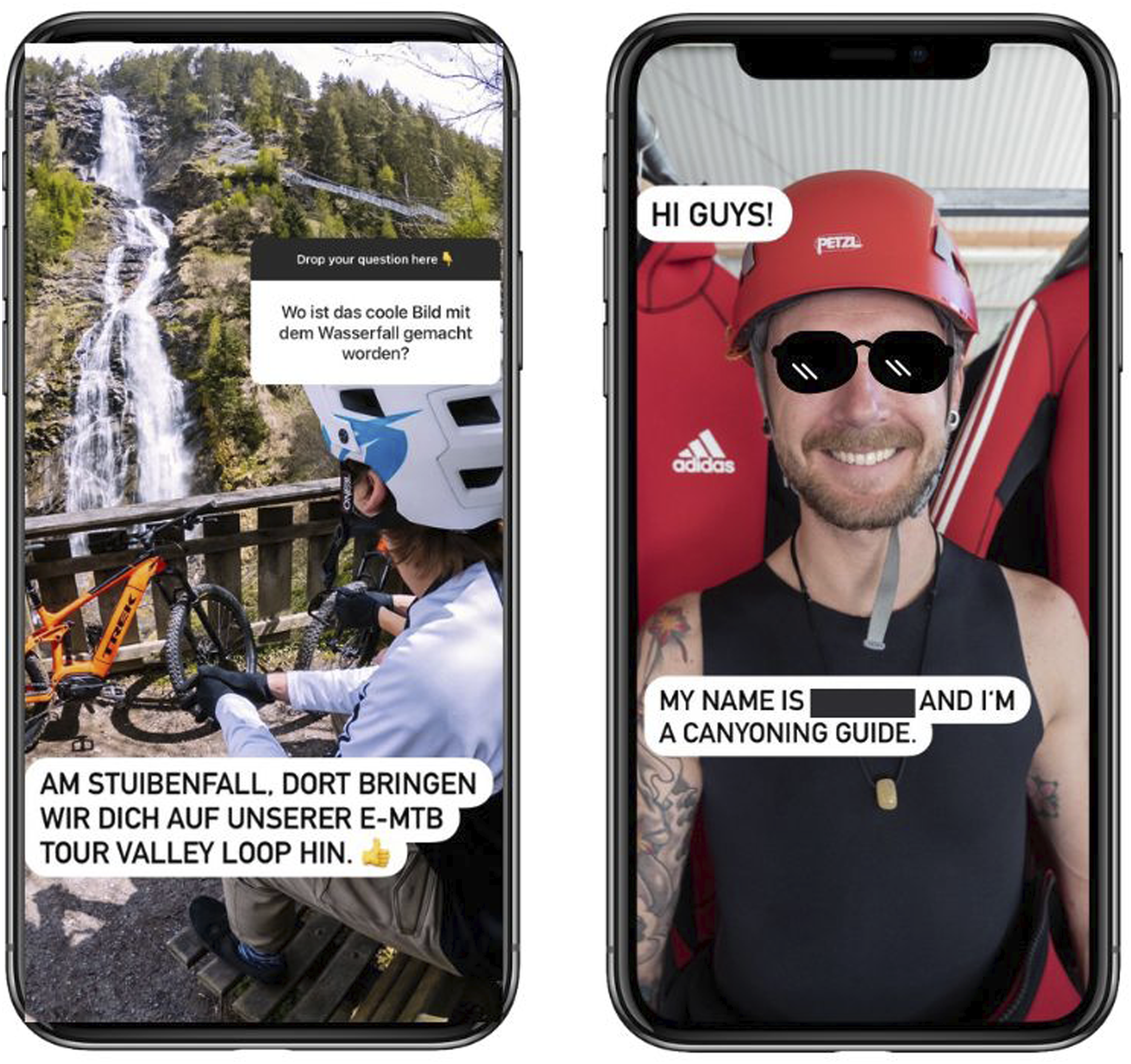
While human resources refer to clothing as a major work incentive, mountain bike guide Peter tells Researcher 1 (while participating in a beginner E-bike tour) that he is “impressed” by this investment, not least because he does not have to bother about the style and functionality of the equipment. During our observations, we also witnessed the symbolic value of clothing and equipment. The guides all wear branded Adidas clothing during and after work, which frequently facilitates interactions, like high-fives or small talk, even amongst guides who do not know each other well.
Tribal Networking
The
The Area also uses its tribal network to recruit “impressive, inspiring employees” (Matthias, 26). Sarah (24) mentions that particularly within guiding, the Area “hardly ever recruit[s] actively.” Instead, they draw on their “department heads [who] are experts in their field” and “spread [the word] and recommend [the Area]” within their network of sports and outdoor enthusiasts. Recruiting from the consumer tribe also brings some stability into constantly changing tribes of service employees. Longer-time employees, for example, mention that tribal recruiting ensures that a “new cool” and “not some idiot” (Franz, 27) will replace resigning guides. Many guides highlight that they have come to know the Area via their network and that “it’s a little easier to get in if you know people (Nienke, 24).” Recruiting from the consumer tribe also means recruiting internationally. In the case of rafting, the Area recruits from countries with a livelier rafting sports culture than Central Europe, like Peru, Chile, Scotland, and England. Guides, in turn, seize these tribal connections to internationalize their careers. For instance, Leon (33), who plans to follow his passion for canyoning during the winter, contacted former co-workers to find a guiding job in New Zealand.
Discussion
Service employees who love what they do for work and identify strongly with their work do not exclusively derive their work passion from work tasks, such as serving customers or solving problems (Crawford et al. 2022), but also when engaging in tribal consumption (Cova 1997; Cova and Cova 2001; Cova, Kozinets, and Shankar 2007). Our market ethnography in the context of an outdoor-action-sports service provider shows how passion for work nurtures when service employees share their passion for consumption activities and/or a lifestyle with like-minded employees. It highlights that tribal consumption becomes a particularly relevant passion source when the work conditions of routine, emotional and physical strains, and precarity threaten work passion. Service organizations seeking to fuel their service employees’ work passion and/or to mitigate threats to work passion may address the tribal consumer inside their service employees in two ways. First, organizations may become an experience platform, which provides employees with the resources needed to engage in skill testing and enhancement, discovery, fun and play, and recovery experiences. Second, organizations may provide opportunities for tribal sociality at work, for example, by encouraging immediate and informal communication among all employees, aestheticizing their servicescape and staff, and facilitating tribal networking that extends beyond organizational boundaries.
Theoretical Implications for Service Research and Consumer Research
This study makes important contributions to an emerging body of literature investigating the sources of, threats to, and consequences of service employees’ passion for work (Chen, Chang, and Wang 2019; Crawford et al. 2022), as well as to consumer research literature studying the blurring lines between work and consumption domains (Cova and Dalli 2009; Cova, Dalli, and Zwick 2011; Manolis et al. 2001).
Our study extends prior service research on work passion by supporting that customer-oriented work tasks are one source of work passion (Crawford et al. 2022), while introducing tribal consumption as an additional source. Like entrepreneurs who draw their entrepreneurial passion from a variety of sources, including their role(s) as entrepreneurs (Pollack et al. 2020), their personal passions as consumers (Milanesi 2018; Ranfagni and Runfola 2018), or a passion for growth, people, competition, inventing, or a social cause (Cardon, Glauser, and Murnieks 2017), service employees, too, draw their work passion from more than one source.
Furthermore, our research into tribal consumption as an additional source of service employee work passion paves several ways for further service research. First, further research may investigate when and how tribal consumption and other sources of work passion reinforce or mitigate each other. While we found that tribal consumption can reinvoke work passion, there may be instances when consumption and work-task-related sources collide. For example, we expect this to be the case when service employees start to neglect work tasks because they prioritize shared consumption activities and/or related lifestyles or when physical exhaustion from tribal consumption at work increases. Second, further research may examine the role of stakeholders other than co-workers and managers in nurturing work passion via tribal consumption. In the context we studied, we observed an elevated role of co-workers and a rear role of customers in the evolution of passion-nurturing tribes. We attribute this to some peculiarities of our context, including the team-work-based work design that allows for co-worker interactions during work tasks and the mass-customized service format that is characterized by rather short service employee-customer interactions, leaving little time to recognize consumers as like-minded others and contributors to linking value (Cova 1997). Therefore, we expect customers’ roles to be more prominent in extended service encounters (Arnould and Price 1993; McGinnis, Gentry, and Tao Gao 2008), where service interactions are particularly long and likely more intimate. Furthermore, we encourage research to investigate how the sources of service employees’ work passion change when the sociocultural context changes. For example, while we found tribal consumption to be a relevant source of work passion in a sociocultural context characterized by increasing numbers of experience-collecting employees (Bauman 2000), other sources of work passion may arise in a sociocultural context characterized by employees who decide to quit or keep their jobs based on values regarding current socio-political issues (Polman 2023). In such a sociocultural context, an employer’s stance regarding socio-political matters, like environmental protection or human rights, may represent another major source of service employee work passion.
Next, we contribute to prior service research pointing towards “potential extinguishers” (Crawford et al. 2022, p. 205) of service employees’ passion for work. While Crawford et al. (2022) emphasize that there might be conditions that can degrade service employees’ work passion, their proposed research agenda has left it up for further research to identify and specify those. Our study provides a nuanced understanding of work conditions threatening service employees’ passion for work. Findings not only provide a comprehensive investigation of how and when routine, physical, and emotional strains and precarity pose a threat to work passion but also propose specific ways of addressing the tribal consumer inside service employees that can serve to mitigate these threats. Service research may continue research on the threats to work passion and examine cases or contexts that prevent the tribal sources of work passion from thriving. For instance, our data contains a few examples of potential constraints, like service employees expressing some unease with tribal sociality at work, latent conflicts amongst co-workers, or difficulties in aligning with decision-making procedures in flat hierarchies. Also, longitudinal studies may consider the mid-to-long-term threats-mitigating effects of tribal consumption at work. For instance, while addressing the work passion source of tribal consumption might be well-suited to alleviate work task-related threats, like emotional downturns or routine, structural threats, like precarity, remain more persistent and likely require structural solutions rather than ones on a consumption and/or community level.
In addition, we add to literature pointing towards the beneficial affective consequences of work passion in service work contexts (Chen, Chang, and Wang 2019; Forest et al. 2011). We contribute to this body of literature by delineating a concrete pathway of how service organizations can create a work environment in which service employees naturally perform “positive emotional labor” (Yoo and Arnold 2014, p.1272) or experience a state of “emotional harmony” (Rafaeli and Sutton 1987, p. 32), because their genuinely felt positive feelings naturally align with the emotions they are expected to display during customer interactions. Working in such a passion-nurturing work environment can increase service employees’ authenticity during customer interactions, their satisfaction with work and enhance their well-being (Humphrey, Ashforth, and Diefendorff 2015; Rafaeli and Sutton 1987). On a critical note, however, we may point to the dangers of tribal consumption fueling an overly demanding “passion culture” at work. Recent sociological literature raises concerns about how the (organizational or societal) expectation of being passionate about one’s work can reproduce “social inequalities by race, gender, and social class” (Rao and Neely 2019, p. 1). Further service research should thus also investigate when and how service employees might feel pressured by a passion culture or how they enact “the role of a passionate employee” (Crawford et al. 2022, p. 207) instead of being genuinely passionate about their work.
Not least, our study connects service research with consumer research by showing that consumer passions do not only fuel consumers’ motivation to engage in entrepreneurial activities (Biraghi, Gambetti, and Pace 2018; Boyaval & Herbert 2018; Cova & Guercini 2016; Guercini & Cova 2018), or to voluntarily work for brands or organizations (Cova, Pace, and Skålén 2015), but may also represent a source of work passion in traditional employment relationships. Whereas prior research shows that businesses may emerge from consumers’ personal passions and the entrepreneurial spirit of tribal consumers, we studied a case where the productive nature of passionate consumer tribes serves the business activities of a traditional service organization. Through their tribal engagement, service employees create value not only for themselves and the tribe, but also for the organization. Our study can also be read in a way that suggests putting specific research focus on the consuming service worker as the counterpart of the working consumer (Cova and Dalli 2009; Cova, Dalli, and Zwick 2011; Manolis et al. 2001).
Although tribes are an ideal context to study the dissolution of clear boundaries between work and consumption, we acknowledge that our study is prone to romanticizing the blurred boundaries of consumption and service work. We do not provide a detailed analysis of how consumer passion-based career decisions impact the lives and careers of individual service employees, their social circle, employing organizations, and society in the long-run. As Bauman (2000) anticipated more than two decades ago, there are worrying downsides to the extending arm of consumption logics to traditional employment relationships. Organizations that overtly treat employees as experience-collecting consumers who pursue their quest for emotionally charged experiences at work can, for example, easily beguile service employees into remaining in highly precarious and underpaid employment relationships (Rao and Neely 2019) or emulate a passion that becomes obsessive, rather than staying harmonious (Vallerand et al. 2003; Vallerand and Houlfort 2003). We encourage further research to explore the downsides and traps that may result from career decisions in connection with consumer passions and to delineate ways to mitigate these.
Implications for Management
The findings of this study most clearly generalize to service work settings that share similar characteristics with the leisure sports service setting under the focus of this study. For instance, a service organization whose core offering is to create (emotionally charged) experiences in consumption domains that many customers are passionate about or to provide novice customers with access to these domains will find it intuitive to facilitate tribes among its service employees. Consider, for instance, music, arts, or sports vacation providers fostering service employees’ tribal networking opportunities with professional musicians, gallerists, or athletes and coaches. Furthermore, service organizations whose service settings allow employees to embody both roles of producers and consumers at the workplace will find it easier to identify and cater to shared consumer passions than others. Consider leisure and tourism service providers, such as international hotel chains or associations, who can easily offer discovery experiences like in-house vacations or international co-worker exchanges to nurture work passion. In such settings, tribal aesthetics are often already in place to attract consumers and can readily be utilized for or adapted to, employee events. Finally, event contexts, which unite multiple stakeholders, like (international) employees, volunteers, sponsors, and media, in their value co-creation practices (Grohs, Wieser, and Pristach 2020), may be better suited to address the tribal consumer inside service employees. Consider event or trade fair providers (e.g., for sporting or gaming events) whose efforts to equip employees with fashionable and recognizable uniforms or to create appealing event signage may be reconsidered to cater to tribal aesthetics.
Beyond contexts similar to our study, we propose that service organizations in more traditional service work contexts can also fuel work passion by addressing the tribal consumer inside their service employees. To illustrate how our findings generalize to more conventional service contexts, we first compare our findings with conclusions drawn from a study of market dynamics in the craft beer brewing market. Based on an analysis of the rise of U.S. craft breweries, Maciel and Fischer (2020) show that this market is primarily driven by collaborations of “peer firms” and “allies,” which are united and driven by brewers’, employees’ and consumers’ passion for taste and quality. While focusing on market development dynamics, their study also points to the critical role of brewers and their employees, who enact their consumer passion on the frontlines. In this more juvenile sub-segment of a traditional market, “cluster” meetings “facilitate sociality and communication among local brewers” (Maciel and Fischer 2020, p. 48) and charge them with enthusiasm–quite similar to the opportunities of tribal sociality that we identified in our context. There are also signs of an experience platform in place when craft beer festivals encourage playfulness and create a particular type of bonding between brewers’ employees and consumers. Organizations across or related to this beverage market, including retailers, restaurants, bars, or hotels, may participate in this tribe to address the consumer inside their service employees.
Second, we derive a concrete pathway of how service organizations across industries can nurture work passion by addressing the tribal consumer inside their service employees. For illustration purposes, the following paragraphs provide exemplary managerial interventions for facilitating a tribe of service employees in education services (e.g., language teaching) and health services (e.g., hearing care specialists).
A first step is to identify service employees’ consumer passions and assess their potential for tribal connections. The relevant consumer passions are manifold and vary from context to context. While some passions are evident and thus easy to identify, less obvious consumer passions require managers to engage deeply with their service employees. For example, for hearing care specialists, employees’ underlying consumer passion might be for music; for language teaching services, employees’ consumer passion might be to travel to new places and explore new cultures.
A second step is to prepare and install an experience platform so that employees can share consumption activities and experiences that “they like, that they find important” (Vallerand et al. 2003, p. 756) with like-minded co-workers. In the example of hearing care services, this experience platform may, for example, include providing employees access to a rehearsal room to play their instruments (skill testing and enhancement experiences), offering them discounts or vouchers for attending concerts or sound museums (fun and play experiences), funding music classes or workshops (discovery experiences), or providing access to a break room where employees can relax while listening to music (recovery experiences). To avoid imposing passion on employees in such an experience platform, it is important that organizations do not just install a static experience platform, but leave employees room to create their own unique experiences, and dynamically adapt offerings to employees’ working hours and seasonal requirements. For instance, in times of low customer demand, discovery experiences may enhance their employees’ curiosity for new consumption activities, or skill testing and enhancement experiences may offer employees the opportunity to deepen an existing consumer passion. Other experiences, like fun and play and recovery experiences, may gain priority during phases of high customer demand to counterbalance the socio-emotional demands of service work.
Finally, service organizations may also offer opportunities for tribal sociality tailored to their employees’ consumer passion(s). In international educational services, organizations can create such opportunities by assigning mentors to new employees to facilitate communication across hierarchies and educators with different cultural backgrounds (immediate and informal communication), by installing open office spaces to facilitate interactions and spontaneous discussions (tribal aestheticization), or by providing employees with funding to attend international conferences, workshops or seminars (tribal networking) to explore new places, cultures, and fuel service employees’ work passion.
Supplemental Material
Supplemental Material - “We truly love what we do”: The Tribal Consumer Inside Passionate Service Employees
Supplemental Material for “We truly love what we do”: The Tribal Consumer Inside Passionate Service Employees by Ramona Riehle, Verena E. Wieser, and Andrea Hemetsberger in Journal of Service Research
Footnotes
Declaration of Conflicting Interests
The author(s) declared no potential conflicts of interest with respect to the research, authorship, and/or publication of this article.
Funding
The author(s) disclosed receipt of the following financial support for the research, authorship, and/or publication of this article: This work was supported by the Early Stage Funding, University of Innsbruck.

Supplemental Material
Supplemental material for this article is available online.
Author Biographies
References
Supplementary Material
Please find the following supplemental material available below.
For Open Access articles published under a Creative Commons License, all supplemental material carries the same license as the article it is associated with.
For non-Open Access articles published, all supplemental material carries a non-exclusive license, and permission requests for re-use of supplemental material or any part of supplemental material shall be sent directly to the copyright owner as specified in the copyright notice associated with the article.
