




Abstract
Team display rules are expressive norms shared by team members about how to positively impact a customer's perception of service quality and satisfaction. For frontline employees' working in teams, however, the costs and benefits of team display rules are less clear as empirical links to objective, behavioral outcomes, such as turnover, are rare. In a study of 442 healthcare professionals, working within 72 teams in a large children’s hospital, we investigate the effects of positive team display rules (i.e., shared expectations among team members to express positive emotions) and negative team display rules (i.e., shared expectations among team members to suppress negative emotions) on time-lagged objective voluntary turnover. We found that positive team display rules prompted retention, while negative team display rules reduced psychological attachment (i.e., affective commitment) and increased voluntary turnover 12 months later. Team negative affective tone (i.e., negative emotions associated with different healthcare team contexts) amplified the detrimental effects of negative team display rules. Overall, this study highlights the important and nuanced effects of the socioemotional context of service teams, in particular, the consequential influence of team display rules on FLEs turnover behavior in a critical service context, that is, healthcare.
Keywords
Introduction
“We see some really sick kids and lots of distressed families, but for the kids’ sake, we expect everyone in the team to keep the atmosphere positive” (nurse on ward A). “Sometimes it gets too much…it’s hard because everyone in the team expects that we don’t show how sad we feel” (nurse on ward B).
For healthcare frontline employees (hereafter, FLEs), such as the nurses in the above quotes, the provision of quality care to sick children can be mentally, physically, and emotionally challenging. Worldwide, there are growing concerns that the high level of emotional and interpersonal demands inherent in providing high-quality patient care is a potent driving force of high turnover in the healthcare sector (Grandey 2000; Hochschild 1983; Nguyen, Groth, and Johnson 2016). For example, nurse turnover rates have been reported to be around 20% per year and as high as 40% per year in some countries (Daouda, Hocine, and Temime 2021). In healthcare, an inability to retain valued healthcare employees has detrimental outcomes for patients (Snavely 2016) and significant direct and indirect costs associated with the replacement of lost specialized healthcare skills, expertise, and knowledge management (Roche et al. 2015). As well as high levels of workload, healthcare workers face high levels of emotional demands during their interactions with patients and their families. They are often “on show” working in very public areas with few private spaces to withdraw to. There are also often strong norms and expectations dictating the emotions that healthcare professionals should and should not show when interacting with patients and families (Diefendorff and Richard 2003; Henderson 2001).
Expressive affective norms, known as display rules, are multilayered and can be shared at a cultural, societal, occupational, organizational, and team level (Ekman and Friesen 1975). Display rules are generally defined as norms that determine which emotions are appropriate in particular situations, as well as how those emotions should be expressed to others (Diefendorff and Richard 2003). Although display rules are inherently collective, few studies have examined display rules in their collective form as shared norms that influence FLE attitudes and behaviors. In this study, we extend the literature by investigating the influence that team display rules, the shared beliefs about emotional expressions within teams, have on healthcare FLEs’ turnover behavior. We collected data from 442 healthcare professionals working in 72 teams in a large children’s hospital in Australia. We compare the effects of two types of team display rules that are most commonly shared and enforced in service-oriented teams but have yet to receive empirical attention at the team level: (1) shared expectations to show positive emotions (positive team display rules—scenario 1) and (2) shared expectations to hide negative emotions (negative team display rules—scenario 2) when interacting with customers or patients. We test a theoretical model, shown in Figure 1, that links positive and negative team display rules to FLEs’ voluntary turnover behavior over the subsequent 12 months and investigate the role of affective commitment as the psychological withdrawal mechanism. Given that emotions, particularly negative emotions (e.g., sadness, despair, distress) are pervasive in hospital settings, and vary in intensity across different team service contexts as a function of the type of care delivered (e.g., the palliative care team and orthopedic team—vary in emotional intensity experienced), we also examine the moderating role of team negative affective tone (Cole, Walter, and Bruch 2008; George 1999) to capture the frequency of intense negative emotions associated with the service context of different healthcare teams. Theoretical model.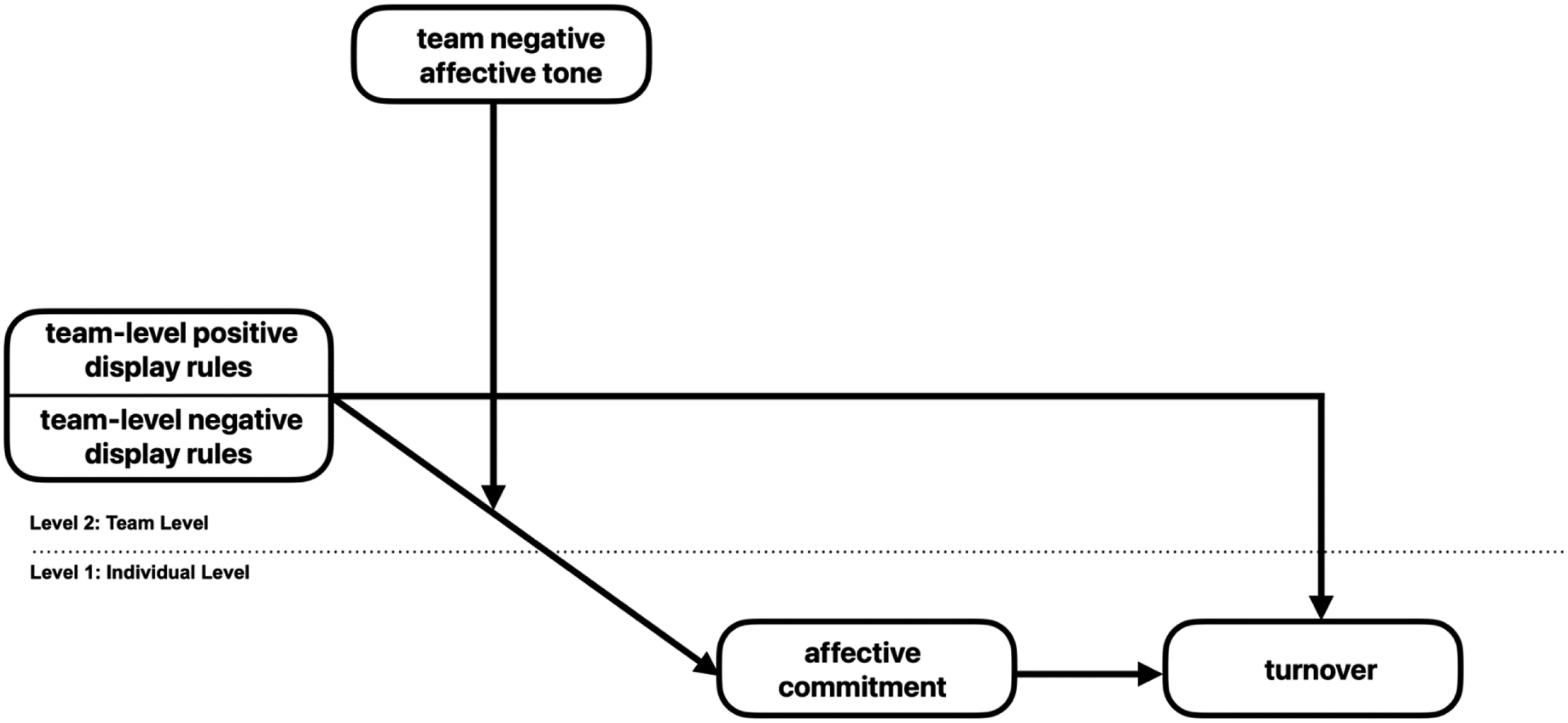
By investigating when and why positive and negative team display rules influence turnover behavior, our paper contributes to the literature in four important ways. Firstly, knowledge of display rules is largely limited to how it impacts self-reported outcomes, such as burnout and satisfaction (cf. Grandey and Melloy 2017). The lack of research examining whether and how different display rules influence turnover is a major theoretical and practical gap because there are likely to be nuances depending on the type of display rules, and if a detrimental association exists, it highlights that the strategy of mandating certain types of display rules is a double-edged sword. Examining the intention to leave is not enough—we need to better understand and predict actual turnover behavior as it affects service outcomes and organizations’ productivity and performance.
Secondly, even though display rules are typically conceptualized as shared group norms, limited research exists to demonstrate that display rules indeed operate as shared beliefs within a defined referent group, such as within work teams (Becker and Cropanzano 2011). Except for one study (Diefendorff et al. 2011), empirical research to date has predominantly investigated displays at the individual level (i.e., individuals’ perceptions of shared display rules) and has largely overlooked the impact of collective perceptions and beliefs about expressive norms and shared display rules expectations. Our investigation is also practically significant as teams are now the main vehicle through which services are delivered, particularly in healthcare (Johnson et al. 2018). FLEs do not work in isolation; they work in a social context and the strategic decisions organizations make about team display rules can affect turnover. This study can assist service organizations in shaping expectations about expressive norms in care delivery within teams.
Thirdly, this study also extends much-needed knowledge on the questions of why and under what conditions positive and negative team display rules influence employee turnover. We integrate Salancik and Pfeffer’s (1978) Social information Processing theory (SIP) and Hobfoll’s (1989) Conservation of Resource Theory (COR) to understand the role of the social context in influencing employees’ attitudes and behaviors, investigating the effects of team display rules on FLEs’ internal motivational resources or the energy and effort invested in remaining attached and committed to their workplace (Bakker, Demerouti, and Schaufeli 2003; Hobfoll 2002). Specifically, we argue that the socioemotional context that positive and negative team display rules create differentially influences the cumulative effects of motivational resource loss (i.e., affective commitment) and, over time, may lead individuals to withdraw completely from highly demanding work contexts.
As a final contribution, we investigate the moderating role of team negative affective tone, as the frequency of intense negative emotions encountered by FLEs can vary substantially depending on the service context (Cole, Walter, and Bruch 2008; George 1999). For example, the emergency department is a high-intensity emotional service context because patients unexpectedly find themselves in life-or-death situations with little time to process their emotions. These intense and raw emotions experienced by patients and their families often spill over in their interactions with FLEs. On the other hand, the orthopedic team is a relatively low-intensity emotional service context because patients have less critical medical issues with longer time periods to process their emotions. We examine whether the demands created by positive and negative team display rules are likely to be exacerbated for FLEs exposed to an emotional context characterized by negative affective tone.
Theoretical Background: Team Display Rules
Display rules, defined as the conventions about the appropriateness of emotional displays in social situations that can operate at the cultural, societal, organizational, occupational, or team level, have been of great interest to service scholars. Display rules play a significant role in service contexts and help guide FLEs’ emotional displays in an effort to promote desired emotional displays. Evidence suggests that they are common in “people work” (e.g., health care, education, hospitality; Brotheridge and Grandey 2002) and are usually viewed as in-role job requirements by employees and their supervisors (Diefendorff, Richard, and Croyle 2006). Especially in healthcare organizations, where employees often interact with emotionally vulnerable patients and their families, employees are expected to express emotions in appropriate ways, such as displaying warmth and friendliness and suppressing anger and frustration, in order to create a consistent and curated patient experience (Diefendorff et al. 2011). Display rules are often discussed in the context of emotional labor. While these constructs are related, they are nevertheless distinct (Glomb and Tews 2004). The expectations to manage emotions at work differ from the behavioral act of regulating emotions—the former is a social contextual variable, the latter is an individual, internal regulatory process (Cropanzano, Weiss, and Elias 2004; Grandey 2000). Although display rule expectations often trigger emotional labor strategies, research shows that employees’ motivation and commitment to follow display rules does not always result in actual behavior given that emotion regulation behavior is also influenced by several personal and work characteristics (Hülsheger and Schewe 2011).
Differences in the norms around the expression of emotions are particularly salient in hospital teams, as each team works with patients with different conditions, diagnoses, prognoses, or emotional needs. For example, working in an oncology team caring for patients with cancer is different from working in an orthopedics team caring for patients with a broken bone. Parallels can also be found in other service industries such as banks (rural versus inner city branches) or government service (welfare vs regulatory).
Web Appendix 1 (Online Supplementary) summarizes some of the key research studies focusing on display rules within the context of service organizations. Research has established several important outcomes of display rules for both employees and organizations (mostly self-reported). While positive and negative display rules have not always been measured concurrently, and some studies have included only positive display rules or integrative display rules measures (i.e., combining both positive and negative items in a single measure), there are differential outcomes of positive and negative display rules across many studies. From an organization’s perspective, the facilitation of employees’ expressed emotions via display rules has been shown to positively impact service quality and customer satisfaction (Cropanzano, Weiss, and Elias 2004; Tsai 2001), which in turn affects organizational bottom-line outcomes, such as profitability and customer retention (Anderson, Fornell, and Lehmann 1994). However, what is good for the customer or patient is not always good for employees. Research has shown associations between detrimental employee outcomes and employees’ efforts to meet service demands (Grandey 2003; Hülsheger and Schewe 2011).
As can be seen in the Web Appendix 1, the great majority of prior research on display rules has measured individuals’ perceptions of display rules. As Klein and Kozlowski (2000) argued, we cannot assume that what we know about display rules will be the same whether it is operationalized as an individual perception or collective experience, as “findings at one level of analysis do not generalize neatly and exactly to other levels of analysis” (p. 213). Only one prior study has measured display rules as a team-level construct in line with its theoretical conceptualization (Diefendorff et al. 2011). We argue that display rules cannot be fully understood by only examining individual perceptions in isolation. The dominant individual-level approach to understanding display rules fails to capture the inherently collective and shared nature of display rules and may miss important effects that have been theorized but not empirically tested (Liao and Rupp 2005; Morrison, Wheeler-Smith, and Kamdar 2011). In fact, a mismatch between the levels of theory, measurement and/or statistical analysis can also result in empirical results that may not be interpretable (Klein et al. 2001). This is unfortunate as team-level display rules reflecting shared norms and expectations may reveal unique insights beyond individuals’ perceptions. This is supported by numerous studies in the organizational climate literature that have shown shared beliefs can explain significant variance in behavior over and above that accounted for by individual perceptions (e.g., Liao and Rupp 2005; Morrison, Wheeler-Smith, and Kamdar 2011). Kozlowski and Klein (2000) recommended that the “first and foremost task in crafting a multi-level theory or study is to define, justify, and explain the level of each focal construct that constitutes the theoretical system” (p. 27). Based on this, we investigate team display rules assuming that teams hold internally consistent views and vary in the extent to which they encourage and support the suppression or expression of emotions by group members. Given that team display rules are inherently shared, the use of referent-shift consensus is appropriate (Arthur, Bell, and Edwards 2007). Whether direct consensus or referent-shift consensus, as noted by previous scholars, this decision should be justified on theory and empirics (Wallace et al. 2016). Based on the conceptualization of team display rules as shared expectations within teams about expressive behaviors (Diefendorff and Richard 2003), we provide the first team referent-shifted investigation of team display rules. This is an important contribution, not just methodologically but also conceptually, as “the change in referent results in a new form of the original focal construct that is conceptually distinct from the original form” (Chan 1998, p. 239).
Based on SIP theory (Salancik and Pfeffer 1978), we argue that team display rules can have two general effects on individual attitudes and behaviors: “(a) it provides a direct construction of meaning through guides to socially acceptable reasons for action; (b) it focuses an individual’s attention on certain information, making that information more salient, and provides expectations concerning individual behavior and the logical consequences of such behavior” (Salancik and Pfeffer 1978, p. 227). The latter is particularly relevant to our theorizing on the effects of team display rules. As team display rules are emotional norms and expectations (Goldberg and Grandey 2007; Hochschild 1983), in line with SIP, they serve as salient cues and have direct effects on employee outcomes through an “informational social influence” (Salancik and Pfeffer 1978, p. 227). However, SIP has also been critiqued for not articulating the precise process through which the social environment influences individual attitudes and behaviors (Blau and Katerberg 1982). Hence, in this study, we integrate Hobfoll’s (2002) COR theory to argue that individuals are strongly influenced by their social context and that team display rules function as a type of team demand (Diefendorff et al. 2011). As decades of research on normative social influence have shown, individuals will be influenced by their group’s collective beliefs and are motivated to gain acceptance and approval (e.g., Baron, Kerr, and Miller 1992).
In this way, some types of team display rules potentially represent a potent team-driven demand or threat to team members’ resources. Indeed, according to COR theory, threats to resources are usually in the form of one’s job demands or contextual demands, such as team display rules. In terms of how team display rules affect turnover behavior, a central tenet in COR theory is that people are inherently motivated to retain, protect, and foster their resources (Hobfoll 2002; Nguyen, Groth, and Johnson 2016). Individuals not facing resource loss will be motivated to gain new resources, whereas individuals facing (perceived or actual) resource loss will be motivated to prevent further loss. Over the long run, those who chronically experience the depleting effects associated with team display rules may be more inclined to withdraw from their work and quit (Grandey 2000; Hobfoll 2002). Below we discuss the potential divergent effects of positive and negative team display rules on turnover in more detail.
Effects of Positive and Negative Team Display Rules
Early research has described display rules as varying along two dimensions regarding the expected affective display: requirements to express positive emotions (i.e., positive display rules) as well as requirements to suppress negative emotions (i.e., negative display rules) (Diefendorff and Richard 2003; Schaubroeck and Jones 2000). Positive display rules typically involve expectations to express positive emotions(e.g., excitement, happiness, warmth, or empathy) towards customers or patients (Diefendorff and Richard 2003). In contrast, negative display rules are expectations to inhibit negative emotions (e.g., hiding irritation, frustration, disgust, or sadness) when interacting with customers or patients. For example, a nurse working in a team with high negative display rules is expected to hide feelings of negative emotions (e.g., anger, sadness, frustration) when interacting with patients and/or their families.
However, the effects of positive and negative display rules have not always been conceptualized as being independent of each other in prior research. As shown in the Web Appendix 1, there are numerous examples where display rules have been conceptualized as an integrated whole with the overarching goal of facilitating friendly, polite, and courteous interpersonal interactions with customers (e.g., Richard and Converse 2016). In addition, many empirical studies have limited their focus to only one type of display rule—either positive, negative, or integrative, but this approach makes it difficult to parse out the differential effects of positive and negative display rules. Nevertheless, based on this research, there is some evidence that positive display rules are linked with positive outcomes, such as higher job satisfaction, engagement, and service quality, as well as greater use of emotion regulation (Kim 2008; Trougakos, Jackson, and Beal 2011). Conversely, negative display rules have been linked to unfavorable outcomes, such as emotional exhaustion, reduced job satisfaction, and greater use of surface acting (Diefendorff and Richard 2003; Ybema and van Dam 2014). Web Appendix 1 shows no studies to date have linked positive and negative display rules to actual turnover behavior. In this research, we investigate both positive and negative display rules to unpack their differential effects on turnover behavior more clearly as, in reality, both types of display rules are likely to be in force, but at varying degrees. By including both, we can identify the influence of the valence of the display rule, while holding the influence of the opposite effect constant. From a practical perspective, this means we can focus on what to emphasize and encourage in regard to display norms, rather than suggesting a non-nuanced, blanket approach, such as the much more difficult attempt to extinguish norms that are not helpful (and also risk extinguishing shared rules that actually might be helpful).
Within the context of hospital teams, although positive and negative team display rules share common purposes, processes, and consequences, we expect that they will trigger different behavioral outcomes as the depleting effects of working in team environments that these display rules create vary. For negative team display rules, we expect that working in a team where the dominant focus is on suppressing emotions is likely to prompt greater withdrawal. According to SIP and COR theory, through “informational social influence” (Salancik and Pfeffer 1978, p. 227), negative team display rules provide suppression cues that are salient and apparent to team members which makes the demand to suppress negative emotions a particularly potent team demand. There is evidence that when there is a group mandate to hide negative emotions, these norms restrict group members from expressing any negative emotions, even when they feel that these negative emotions are justified and appropriate to the situation, for instance, when confronted with mistreatment or abuse from patients or their families (Becker and Cropanzano 2011).
Negative team display rules are particularly depleting because they limit the availability of social and affective information cues for individuals to use to potentially offset their resource loss. Hobfoll (1989) argued that depleting effects can be offset by resource gains and suggested that building rewarding social relations is the most important way that individuals can regain lost resources. However, there is evidence that norms reinforcing emotional suppression are associated with degraded social relations and adverse social outcomes, such as lower social support, less closeness to others, and lower social satisfaction (Srivastava et al. 2009). These findings are also supported by evidence that suppressed displays are often perceived to be dishonest by external observers (Srivastava et al. 2009). Discouraging the open expression of emotions, even if they are negative, is also likely to contribute to a group climate of suppression and silence, which has been linked to detrimental outcomes for individuals (Morrison, Wheeler-Smith, and Kamdar 2011). Thus, based on the proposition that withdrawal from work is mainly in response to perceived or actual loss of resources under conditions of chronic work stress (Hobfoll and Freedy 1993), we predict:
Negative team display rules are associated with higher turnover.
In contrast, we propose that positive team display rules (i.e., shared expectations to show positive emotions), through the positive valence of the emotions, may facilitate more beneficial, salutary effects that can help replenish and compensate lost resources (Hopp, Rohrmann, and Hodapp 2012). For example, in a children’s hospital, explicit norms and practices (e.g., colorful and smiley posters, staff dressed up as clowns) encouraging the display of positive emotions are important in creating a positive socioemotional environment for patients (Ford et al. 2014). In a wide range of contexts, studies have found substantial social benefits associated with norms focused on positive emotions given the highly visible and socially acceptable nature of positive displays (Fredrickson 1998). Although we acknowledge that, based on SIP and COR theory, positive display rules may act as a demand that can deplete resources, we argue that these norms create a socioemotional context in teams that offer greater opportunities for individuals to regain lost resources by building rewarding social relationships with patients (Rhee 2007). Therefore, positive team display rules may have less detrimental outcomes due to their greater resource restorative capacity, allowing more opportunities for lost resources to be regained (Fredrickson 2009; Schneider, Salvaggio, and Subirats 2002).
There are various ways that positive team display rules can help to restore lost resources and thus yield more positive returns for FLEs. Shared norms for positivity help to foster a more salient, positive service climate, which leads to better outcomes for individuals and teams (Schneider, Salvaggio, and Subirats 2002; Tsai 2001). Hobfoll (1989) suggested that opportunities to positively connect with others are the most important way in which individuals can regain lost resources. This is consistent with a growing body of evidence supporting the utility of positive emotional norms for establishing enhanced outcomes (Fredrickson 1998). Perceiving opportunity and meaning in the face of shared demands, such as team display rules, can increase feelings of attachment to one’s workplace as individuals derive benefits from coping with these demands and experience shared social rewards (Kozlowski and Ilgen 2006). Emotions often transfer from one person to another (Hatfield, Cacioppo, and Rapson 1994) and spread throughout teams given that affect in teams is communally constructed by the workgroup as a whole (Bartel and Saavedra 2000). Hence, the social environment created by positive team display rules provides opportunities for resource gain, making it less likely that FLEs will withdrawal to compensate for resource losses. Thus, we predict:
Positive team display rules are associated with lower turnover.
The Mediating Role of Motivational Resources
In addition to investigating the direct effects of positive and negative team display rules on turnover behavior, we also seek to explain with greater precision the resource-based mechanisms underlying these relationships. As reviewed by Hülsheger and Schewe (2011), the relationship between display rules and employee outcomes has been explained through various theorized mechanisms, depending on the outcomes under consideration. A few studies have examined the link between emotional labor strategies (i.e., defined as the strategies that employees use to regulate emotions at work, such as surface acting or modifying facial expressions and deep acting or modifying inner feelings, Grandey 2003; Hochschild 1983) and withdrawal behaviors (e.g., Chau et al. 2009; Goodwin, Groth, and Frenkel 2011; Nguyen, Groth, and Johnson 2016). The missing link is the role of display rules which has largely been assumed (rather than empirically examined).
To provide more theoretical specificity on what personal resources are particularly diminished as a result of team display rules leading to turnover, we integrate SIP and COR perspectives. We propose that positive and negative team display rules provide different affective information cues and social opportunities (Salancik and Pfeffer 1978) that have differentially depleting (or replenishing) effects on resources important for mobilizing and sustaining work behaviors, that is, FLEs’ motivational resources. We test this mechanism by examining the mediating role of affective commitment—defined as employees’ emotional attachment to, identification with, and involvement in the organization (Bakker, Demerouti, and Schaufeli 2003)—as a critical internal resource that sustains effort and attachment to the workplace (Meyer, Allen, and Smith 1993; Mowday, Steers, and Porter 1979). Reduced affective commitment is also a well-established, powerful psychological precursor to permanent, behavioral withdrawal, such as turnover (Somers 1995). Commitment has been conceptualized as a motivational resource that sustains individuals’ efforts to achieve goals (Hobfoll 2002) and as integral to the motivational processes leading to withdrawal behavior (Bakker, Demerouti, and Schaufeli 2003). Wang and colleagues (2011) also conceptualized employees’ commitment to service rules as a motivational resource that enables FLEs to persist in regulating their behaviors and emotions during difficult customer interactions.
In line with this stream of research, and based on Hobfoll’s (1989, 2002) COR theory, we propose that positive and negative team display rules affect affective commitment differently, which, in turn, differentially impacts turnover. This is consistent with previous conceptualizations of affective commitment as a key consequence of jobs with high emotional demands (Abraham 1999). It is also consistent with evidence showing affective commitment as a key predictor of turnover (Cohen 1993). Specifically, we propose that negative team display rules prompt permanent withdrawal. In contrast, positive team display rules prompt greater retention—both as part of a process mediated by the more proximal draining or replenishing of motivational resources that keep people feeling attached to their workplace. We predict:
Affective commitment mediates the relationship between negative team display rules and turnover.
Affective commitment mediates the relationship between positive team display rules and turnover.
The Moderating Role of Team Negative Affective Tone
We also propose that the differential effects of positive and negative team display rules on withdrawal are moderated by the emotional context within which each team works, such as the team negative affective tone (Cole, Walter, and Bruch 2008; George 1999). As discussed earlier, there is a substantial variance of situational characteristics within a hospital environment. As noted by McColl-Kennedy et al. (2017, p. 255), “health service research should take into consideration the nuances of health care situations and contexts themselves. Emotions are going to be felt differently in acute emergency contexts than they are in on-going chronic health management contexts.” Indeed, some teams operate within a team environment where patients are admitted with little prior notice and are confronted with life-threatening situations. Other teams mainly deal with patients who visit the hospital over longer periods of time and have repeated and predictable visits to deal with medical conditions that are serious but manageable and not life-threatening. As a result, there is a considerable variance of patient profiles and care provided in different hospital teams, with some teams providing a more “benign” (less emotionally intense) service and others providing more intense high-risk patient services with significant patient suffering and intense negative emotions (e.g., childhood cancer or acute mental health). We propose that the team negative affective tone (i.e., the frequency of intense negative emotions that FLEs routinely encounter in their team environment due to the nature of care in that environment) is an important contextual factor that impacts the relationship between team display rules and withdrawal.
Studies on emotional intensity in the workplace have revealed that affect intensity has a direct impact on an individual’s emotional experience (Härtel and Page 2009). Additionally, negative affective tone can be transferred from one team member to the next and become a shared property of the group (George 1999; Sy et al. 2005). In investigating the role of the team negative affective tone as a moderator, we argue that occurs either directly or via other mechanisms team display rules are likely to be exacerbated, compared to teams where the context is not as emotionally intense. Specifically, we propose that high negative affective tone is likely to exacerbate the detrimental effects of negative display rules and dampen the beneficial effects of positive display rules on withdrawal. Consistent with COR theory (Hobfoll 1989), the additional resource loss due to the negative affective tone of the team context further depletes individuals’ resources. In teams with negative display rules, this can lead to a secondary resource loss and thus exacerbate the negative impact of team negative display rules on turnover via affective commitment, given that the frequent intensive emotional context drains resources from team members. In teams with positive team display rules, consistent with COR theory, we propose that the negative affective tone of the team context will likely dampen the positive relationship between team positive display rules and turnover via affective commitment given that it creates an incongruence between the negative affective tone and the team’s shared expectations for positive emotional display. This prediction is supported by research on the role of affect intensity in affective transfer, that is, the process by which a psychological strain of one person affects the strain of others in the same environment (Westman 2011). Such affective transfer has been demonstrated in the workplace (e.g., Bakker, Van Emmerik, and Euwema 2006) and has been shown to be facilitated by the emotional intensity of one’s environment (Härtel and Page 2009).
Even though team display rules may equally apply across different teams, the frequency with which strong negative affective tone is routinely present in a team environment as a function of the type of care the team delivers is likely to accelerate the affective transfer and, therefore, the resource-depleting effects of display rules because of its impact on a team’s shared affective experience. That is, consistent with Hobfoll’s (1989) COR theory, which suggests that withdrawal increases when valued resources are threatened or depleted, where high team negative emotions are routinely present, the expectation to either suppress negative or express positive emotions is likely to have resource-depleting effects. Thus, we predict:
Team negative affective tone moderates the mediated relationship between negative team display rules and turnover through affective commitment such that the relationship is stronger when team negative affective tone is high compared to when it is low.
Team negative affective tone moderates the mediated relationship between positive team display rules and turnover through affective commitment such that the relationship is weaker when team negative affective tone is high compared to when it is low.
Method
Context of the Research
This research was conducted in a tertiary children’s hospital in a metropolitan city in Australia. This study is part of a larger applied research project developed in collaboration with the hospital as our research partners. The project was designed to facilitate team effectiveness and included considerable internal resources (from the hospital) to facilitate feedback and some focused team interventions to support team development within the organization. The impetus for the collaborative project was the implementation of a team-based model of patient care where different healthcare professionals deliver an integrated service to patients with complex needs. These clinical teams are designed to have the appropriate mix of professionals for the specific needs of the patients under their care. Display rules emerge from this complexity and the nature of the conditions or illnesses that create distinct contexts (i.e., length of stay in the hospital, prognosis, complexity, etc.) within each team. In addition, as detailed earlier, the specific hospital team contexts also create varying emotional intensity. These distinct team boundaries are particularly helpful for studying team phenomena because the work of each team is very specific, and each team has a very clear identity. This creates greater team homogeneity and between-team variability in our phenomena of interest.
Participants and Procedure
All staff in the hospital were invited to voluntarily participate in this study by completing a survey with questions about their individual experiences and the team they worked in. Surveys were distributed both online and in paper-and-pencil format at team meetings. To encourage participation, teams that achieved a response rate of 75% or higher were given a morning tea (or cake) to share. Paper-and-pencil surveys were returned to the researchers via a reply-paid envelope. A total of 498 healthcare professionals and support staff completed the survey (65% response rate). We removed respondents from the sample if (a) they were the only member of their team to complete a survey, or (b) they did not identify their team membership. This reduced the final sample size to 442 individuals nested within 72 teams. There were no significant differences in any of the demographic (e.g., gender, tenure) or study variables (e.g., affective commitment, team display rules to express positive and suppress negative emotions) between participants in the final sample and those who were excluded. The average age of participants in the final sample was 40.32 years (SD = 11.19), 86% were female, and 96% were permanent employees. The average tenure at the hospital was 8.20 years (SD = 8.18). The sample comprised 34% nursing, 32% allied health, 16% medical, and 17% administrative and support professionals.
The 72 teams provided a broad range of clinical services to patients and their families. The average team size was 18 members (SD = 20.80) and the average response rate within teams was 66%. On average, responses were received from seven healthcare professionals in each team. Teams were generally well established, with an average team tenure of 5.63 years (SD = 3.95). We included the display rule measures in the section of the survey titled “About your team” with the preface A team is defined as having 4 or more members who work in an interdependent way towards a shared goal, following conventions in the literature (e.g., Johnson et al. 2018). We asked participants to indicate the team they spent most of their time with. We also collected team membership data from the organization to triangulate this data.
Measures
The survey included the main measures of interest, operationalized at the level that they were theorized. Positive and negative team display rules and team emotional context were both team or meso-level variables, with the team as the referent, with display rules operationalized as a shared expectation rated by team members and the intensity of the team’s negative emotional service context rated by the leader. The variables conceptualized at the individual level were rated by team members with the individual as the referent. We measured all items using five-point scales with higher scores indicating higher agreement. All items are shown in the confirmatory factor analysis in the Web Appendix 2.
Team display rules were assessed using the seven-item scale by Diefendorff, Croyle, and Gosserand (2005) which is based on Brotheridge and Grandey (2002) and Schaubroeck and Jones (2000). We modified the items slightly according to suggestions from Diefendorff and Richard (2003) by adapting them to the hospital context (i.e., using “patient” instead of “customer”). Four items measured negative team display rules (α = .87) and three items measured positive team display rules (α = .89).
Given our conceptualization of display rules as shared perceptions, we used a referent-shift consensus model (Chan 1998), where we asked individuals to report their perceptions of the team’s beliefs about display rules in the team they spent most time in (participants selected from a list of teams, and the question stems specifically referred to the team e.g., “In this team…”; “This team expects…”). This is important as the average team response rate of 66% means that we have incomplete information about the team, and there is evidence that a referent-shift consensus model results in less within-group variability and greater between-group variability than using self-referenced items (Klein et al. 2001). Prior to aggregation to the team level, and as recommended by Bliese (1998), we ran a series of intraclass correlation coefficient tests to determine whether the teams had sufficient between-team variance (ICC[1]), whether teams could be differentiated reliably (ICC[2]), and whether team members agreed with each other about the extent to which they perceived the different display rules (rwg(j)). For team display rules to express positive emotions, ICC[1] was 0.20 and ICC[2] was 0.61 (F (64, 367) = 2.55, p < .01). For team display rules to suppress negative emotions, ICC[1] was 0.05 and ICC[2] was 0.25 (F (64, 367) = 1.33, p = .06). Bliese (1998) and Chen, Bliese and Mathieu (2005) suggest that, in a multilevel setting, such a statistically significant ANOVA F statistic implies that group membership affects individual members’ observations. We thus deemed it appropriate to aggregate individual ratings to the team level.
Specifically, these results suggest that approximately 20% of the variance in positive team display rule perceptions can be attributed to team membership and 5% of the variance in negative team display rule perceptions can be attributed to team membership. We also computed rwg(j) for each team. The mean and median rwg(j) were 0.87 and 0.89, respectively, for positive team display rules, and 0.81 and 0.85, respectively, for negative team display rules. The magnitude of these rwg(j) statistics suggests that there is relatively high agreement between team members’ perceptions. This provides further support for aggregation. In summary, there is sufficient evidence for the existence of two types of display rules and that these display rules are shared expectations within the team. We note that these aggregation values, though sufficient in magnitude to warrant aggregation, were modest which is not unexpected as dispersion-composition assumes individual differences within groups (Chan 1998).
Turnover data was provided by the organization 12 months after survey completion and was recorded as a binary measure for each participant (0 = still employed; 1 = left the organization). We checked to ensure that all turnover was voluntary.
Team negative affective tone was rated by a leader within each team and was measured using Cole, Walter, and Bruch’s (2008) measure adapted from van Katwyk et al.’s (2000) Job-Related Affective Well-Being Scale (JAWS). Specifically, the leaders were asked to rate the intensity of their team’s collective experience of negative emotion(s) (e.g., angry, anxious, frightened) on a scale from 1 (never) to 5 (frequently). This is consistent with previous studies using discrete emotions to measure negative emotionality within a social context (e.g., Chi, Tsai, and Tseng 2013).
Affective commitment was measured with three items from the original eight-item affective commitment scale (Allen and Meyer 1990). The three items chosen have the highest factor loadings based on Allen and Meyer’s factor analysis results. Using a reduced measure of affective commitment is consistent with previous studies (e.g., Herold et al. 2008). Cronbach’s alpha (α) was .92.
Control variables were included based on empirical and theoretical relationships with the variables in the study. Consistent with prior research (e.g., Cohen 1993), at level 1 (individual-level), we controlled for hospital tenure (length of time the employee has been at the hospital) as it is a well-established predictor of commitment and turnover. We also controlled for emotion regulation using surface acting (α = .89) and deep acting (α = .73) items from Grandey (2003) to demonstrate that the impact of team display rules on turnover is over and above the effects of these internal strategies. These measures are based on a measure originally developed by Brotheridge and Lee (2003). We modified the items slightly according to suggestions by Diefendorff and Richard (2003) and adapted them to the nursing context (i.e., using “patient” instead of “customer”). At level 2 (team-level), we controlled for team tenure (length of time the employee has been working with the team) and team size due to the large spread of team size 1 .
Analytical Approach
We ran a Bayesian multilevel model package in R statistical software (version 4.1.1) called “brms” (Bürkner 2017). This package provides functionality to test the indirect effects and for fitting logistic (Gaussian, Bernoulli) MLMs using Stan for full Bayesian inference as our turnover dependent variable was binary. Stan implements Hamiltonian Monte Carlo and its extension, the No-U-Turn Sampler (NUTS) (Hoffman and Gelman 2014). Bayesian inference outperforms the maximum likelihood estimation (MLE) method by incorporating parameter prior information and the studied dataset into parameter estimation and producing a posterior probability distribution as well as point estimated mean for parameters of interest. The brms package comes with a default prior to be used for logistic regression, described as somewhat informative (Bürkner 2017) but designed to be widely used in hierarchical Bayesian studies.
The probability of voluntary turnover is estimated by calculating multivariate odds ratios, which compare turnover behavior across teams. Odds ratios and their level of confidence internal significance are presented because the logit coefficients are less intuitively meaningful, while odds ratios can show not only the direction of the association, but also the extent of the association. An odds ratio can be defined as the ratio of the odds of an event occurring in one group to the odds of it occurring in another group. An odds ratio of 1 indicates that the event is equally likely to happen in both groups (50/50 chance). An odds ratio above 1 indicates that the event is more likely to happen in that group compared to the reference group. An odds ratio of less than 1 indicates that the event is less likely to happen in that group compared to the reference group.
The data consisted of two levels. The lower level (level 1) comprised variables measured at the individual level, that is, affective commitment, and control variables (hospital tenure, surface acting, and deep acting). The upper level (level 2) comprised variables measured at the team level, that is, team display rules (positive and negative), team negative tone as rated by team leaders, and control variables (team tenure and team size). We followed the procedures for testing 2-1-1 mediation with an individual-level mediator as outlined in Pituch and Stapleton (2012). Specifically, we used a hierarchical Bayesian random intercept model proposed by Snijders and Bosker (2011) to estimate the influence of heterogenous team display-rule level factors (positive and negative) on turnover (H1 and H2), as well as the cross-level mediation of team display rules (positive and negative) in the relationship between turnover behavior via affective commitment (H3 and H4). We then estimated intercepts-as-outcomes models to test Hypotheses 5 and 6 with the appropriate group-level interaction terms, that is, to test for the moderation effects of team negative affective tone on the relationship between team display rules and withdrawal (H5 and H6). Regarding centering decisions, Hofmann and Gavin (1998) argued that either grand-mean centering or group-mean centering provides an appropriate test of a cross-level mediation model. The choice of centering should be based on theory rather than on statistical criteria (Kreft, De Leeuw, and Aiken 1995). Consistent with past research recommendations, because we were interested in investigating whether the interaction between two level 2 variables (team display rules and team negative tone) would incrementally predict the individual-level outcomes, we therefore use grand mean rather than group-mean centering as this is more appropriate for testing the hypotheses (Hofmann and Gavin 1998). We also ran an unconditional model with no independent variables to verify the proportion of within-level versus between-level variance in the dependent variables.
Results
Descriptive Statistics and Correlations
Descriptive Statistics, Intercorrelations and Internal Consistency Estimates for the Individual- and Group-Level Variables.
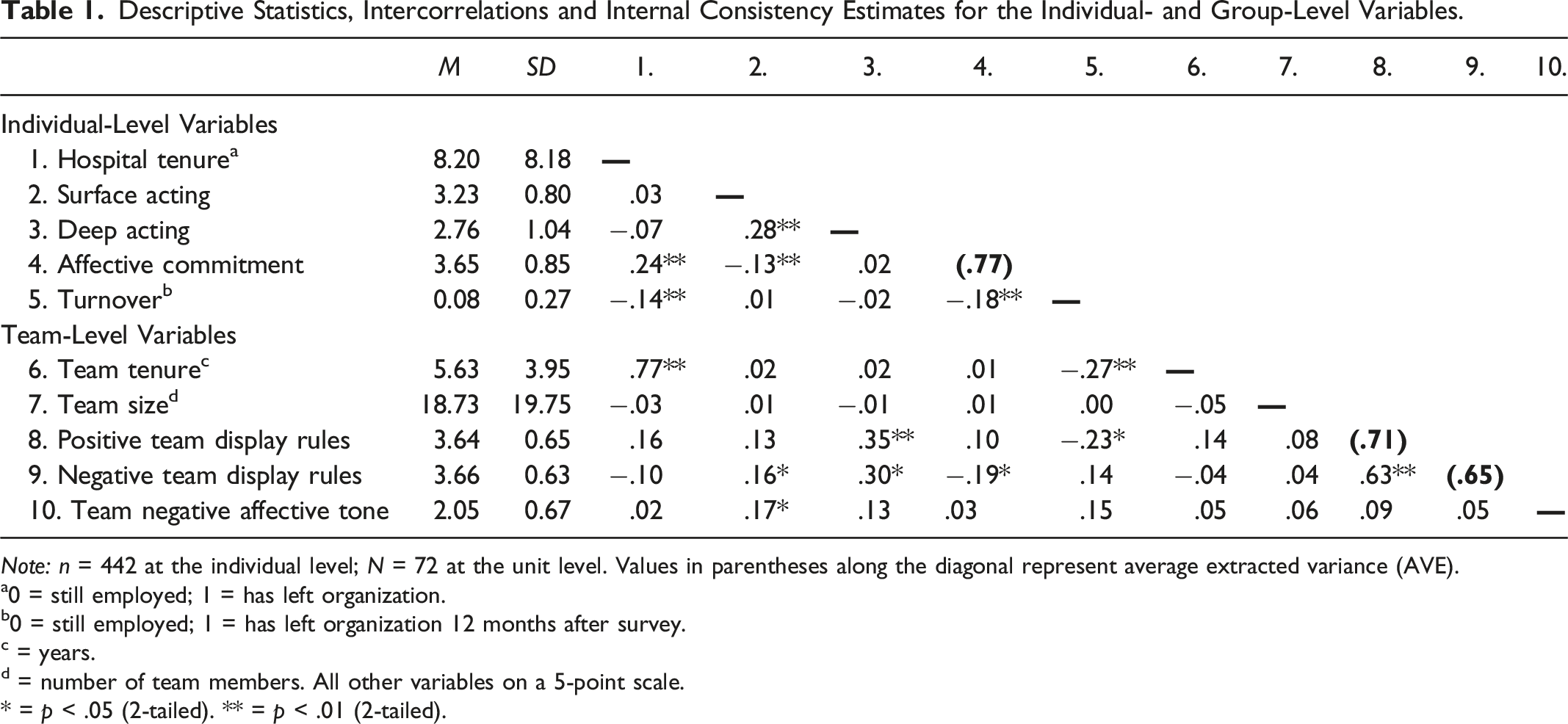
Note: n = 442 at the individual level; N = 72 at the unit level. Values in parentheses along the diagonal represent average extracted variance (AVE).
a0 = still employed; 1 = has left organization.
b0 = still employed; 1 = has left organization 12 months after survey.
c = years.
d = number of team members. All other variables on a 5-point scale.
* = p < .05 (2-tailed). ** = p < .01 (2-tailed).
To assess the convergent and discriminant validity of all multi-item measures, we ran a set of confirmatory factor analyses. We tested a three-factor measurement model (affective commitment, positive team display rules, and team negative display rules). The overall fit statistics for this model indicate an acceptable fit to the data: (χ2 = 84.18, df = 32, p < .001; CFI = .98; TLI = .96; RMSEA = .06 (CI [.05, .08]). The factor loadings of all items are shown in the Web Appendix 2. We also compared the hypothesized three-factor model with alternative models, such as a one-factor model (all three factors combined) (χ2 = 1410.01, df = 35, p < .001; CFI = .45; TLI = .14; RMSEA = .32 (CI [.29, .32]) and a two-factor model (affective commitment as one factor and all display rule items as a second factor), (χ2 = 553.87, df = 34, p < .001; CFI = .79; TLI = .66; RMSEA = .19 (CI [.18, .21]). The three-factor model showed a significantly better fit than the one-factor model (Δ χ2 (Δ df = 3) = 1325.83, p < .001) as well as the two-factor model (Δ χ2 (Δ df = 2) = 469.69, p < .001). To further demonstrate discriminant validity, we followed Fornell and Larcker (1981), the average variance extracted for two constructs should exceed the square of the correlation between the constructs. This procedure was successfully performed for each pair of constructs.
In general, as can be seen in Table 1, the correlations among measures were as expected. At the individual level, there is a negative relationship between affective commitment and turnover (r = −.18, p < .01), suggesting that respondents with lower levels of affective commitment were more likely to leave the organization. At the team level, there is a strong, positive relationship between positive and negative team display rules (r = .63, p < .01) suggesting that teams with higher levels of positive display rules also have higher levels of negative display rules, but there is still sufficient discriminant validity between the two types of display rules. Finally, in terms of the intercorrelations between individual and team level, turnover has a negative relationship with positive team display rules (r = −.23, p < .05), suggesting that positive team display rules promote retention.
Results of Hypotheses Testing
We first ran a “null model” with no predictors that confirmed there was significant variance across teams with respect to individuals’ affective commitment. The ICC[1] indicated that 14% and 8% of the variance in affective commitment and turnover, respectively, can be attributed to the team level. These results confirm the appropriateness of using multilevel modeling to test our nested data.
Hierarchical Linear Modeling Results for Predicting Affective Commitment and Turnover Behavior.
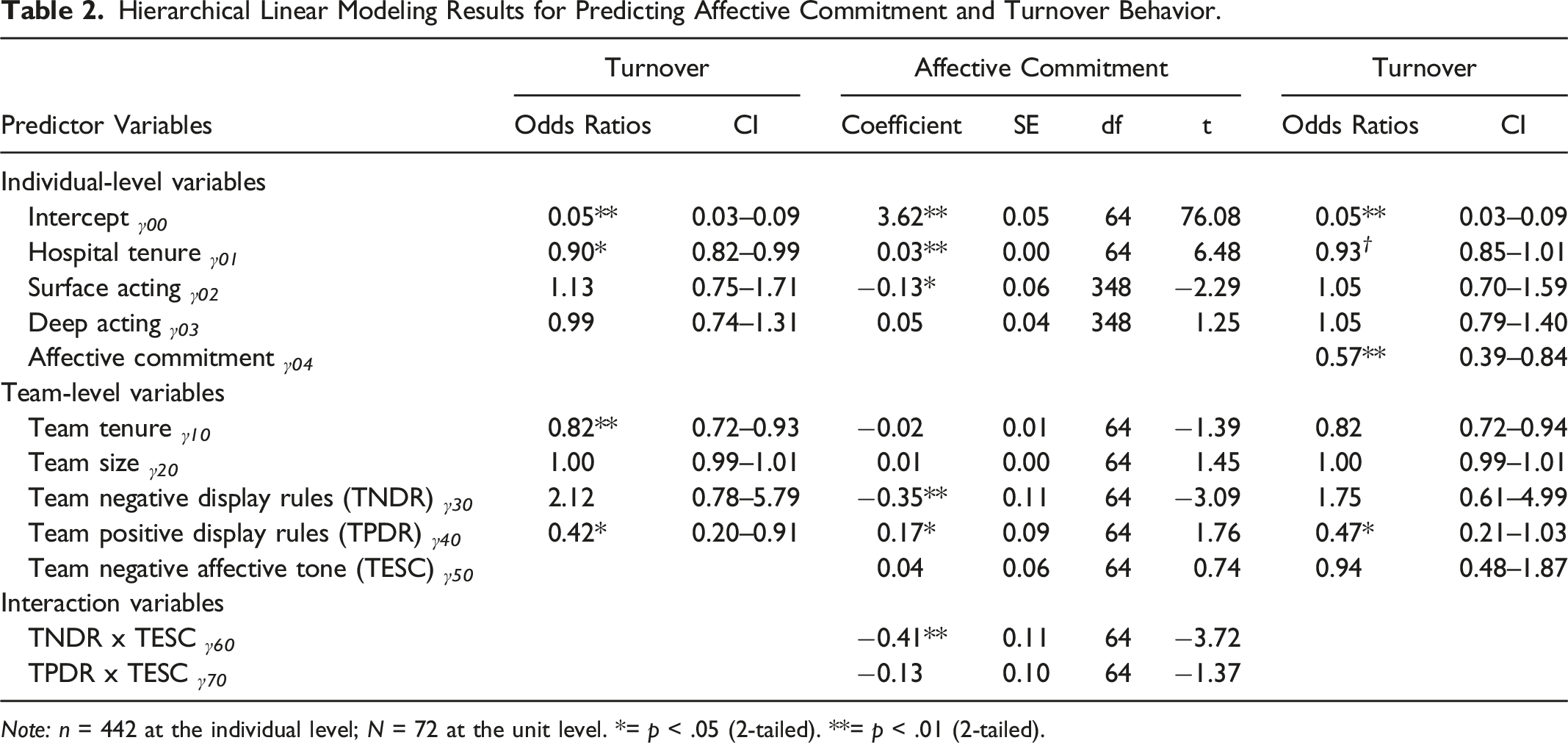
Note: n = 442 at the individual level; N = 72 at the unit level. *= p < .05 (2-tailed). **= p < .01 (2-tailed).
For the final set of hypotheses (Hypotheses 5 and 6) on the moderating effects of team negative affective tone 3 , we ran an intercepts-and-slopes-as-outcomes model and found a nonsignificant interaction between positive team display rules and team negative affective tone on affective commitment (γ = 0.06, p = .16). There was, however, a significant interaction between negative team display rules and team negative affective tone (γ = −.14, p < .01). To explore the form of this significant interaction, we separately graphed the simple slopes for the participants who were one standard deviation above and one standard deviation below on team negative affective tone (Aiken and West 1991). We also examined the simple slopes at each of these levels following Preacher, Curran, and Bauer’s (2006) procedure for testing multilevel interactions.
Figure 2 shows the negative relationship between negative team display rules and affective commitment was significantly different from zero when the team negative affective tone was high (high: γ = −.19, p < .05) but not when the team negative affective tone was low (low: γ = −.10, p > .05). Thus, Hypothesis 5 was supported. We did not find support for an overall significant moderated mediation model such that the indirect effect of negative team display rules on turnover through affective commitment is stronger at high levels of team negative affective tone. The Bayesian results revealed that this moderated indirect effect was not significant at the 95% confidence interval inclusive of zero. Further, we did not find support for a moderating role of team negative affective tone in the relationship between positive team display rules and turnover through affective commitment, thus providing no support for Hypothesis 6. Interaction between negative team display rules and team negative affective tone.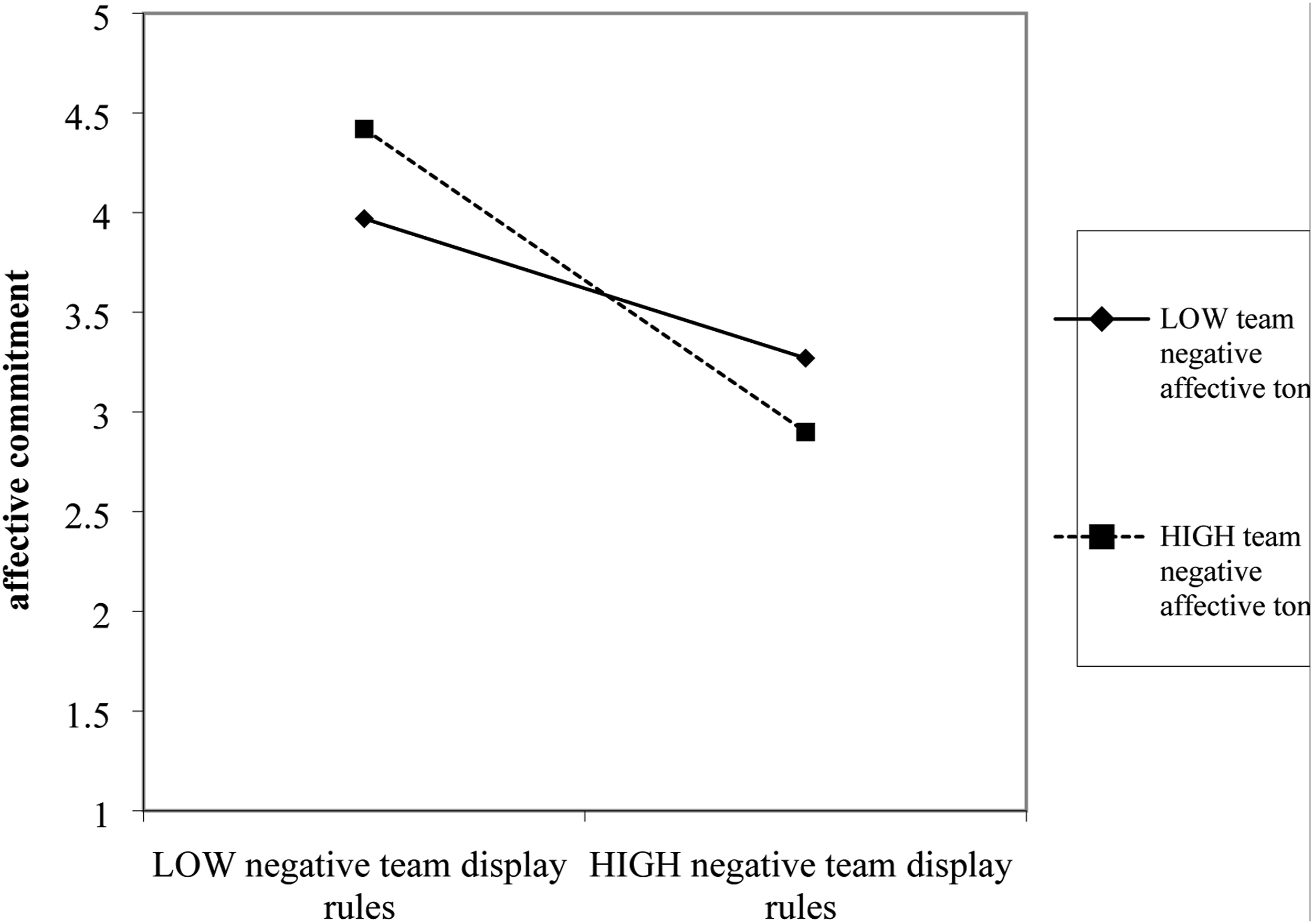
Discussion
Our study investigated the impact of team display rules (i.e., shared expectations with the team) on FLEs’ turnover and extended this research by examining display rules within a specific emotional context—the intensity of negative emotions being experienced in the team. We also sought to explain why display rules influence turnover decisions and showed that affective commitment is an important mechanism in this relationship.
In our study in a large tertiary children’s hospital offering the full range of services from routine outpatient clinics to palliative care, frontline healthcare professionals provided care in teams characterized by varying negative affective tone and display rule requirements. We examined how these team contexts drive behavior that is critical for the sustainability of healthcare organizations, specifically turnover, and a potential process through which it happens. We integrated two dominant theoretical perspectives, SIP (Salancik and Pfeffer 1978) and COR (Hobfoll 1989) to argue that FLEs’ attitudes and behaviors are heavily influenced by the saliency and relevance of information in their social context, such as the display rules that are shared within the team (Diefendorff and Richard 2003). We found that in the presence of strong negative team display rules, FLEs’ valued resources were threatened and/or lost, which prompted them to actively strive to protect their depleted resources by minimizing their emotional and psychological attachment and involvement with work (i.e., reduce affective commitment), and eventually choosing to withdraw permanently from work (i.e., actual voluntary quitting behavior). Hence for negative team display rules, results were consistent with past studies showing detrimental effects such that there was evidence of an indirect relationship between negative display rules and turnover behavior via affective commitment. The detrimental effect of negative display rules on commitment was also amplified by the high negative affective tone (i.e., the intensity of negative emotions being experienced in the team).
Interestingly, we found positive team display rules were beneficial, reducing turnover behavior. Unlike negative team display rules, the benefits of positive team display rules in promoting retention were not transmitted via affective commitment. This is consistent with previous findings on how shared norms for expressing positive emotions, by virtue of their positive valence, are particularly visible and salient and can act as a motivating force in their own right (Larsen, Kasimatis, and Frey 1992). Although positive display rules may mandate the display of emotions that one may not necessarily feel (e.g., friendliness, enthusiasm), people generally want to feel positive emotions (Fredrickson 2009). As discussed by Trougakos, Jackson, and Beal (2011, p. 352), “research indicates [that], all else being equal, people tend to be in positive affective states, which are consistent with positive display rules.” The direct benefits of positive team display rules in this study are also consistent with findings that simply being in a shared social context where there is a strong emphasis on positive emotions can have self-fulfilling effects and produce positive spirals (Becker and Cropanzano 2011; Fredrickson 2009).
While prior research has examined individual-level perceptions of display rules, this study has important theoretical implications as it is one of the first to examine team display rules. This is important as it is consistent with Hochschild’s (1983) initial conceptualization of display rules as shared perceptions or norms of organizational members about appropriate emotional displays. As Becker and Cropanzano (2011) argued, the conceptualization and operationalization of display rules solely at the individual level limits our understanding of how norms and shared beliefs about the types of emotions that should be expressed affect important individual behaviors. By conceptualizing and operationalizing team display rules as shared expectations within the team, we found nuanced results; FLEs’ behavior depends on the type of team display rules and the team’s emotional service context. To our knowledge, Diefendorff et al. (2011) conducted the only study to date that measured display rules at the work unit level, but focused only on self-reported outcomes and did not differentiate between types of team display rules. Therefore, our study extends Diefendorff et al.’s (2011) work by unpacking the effects of team display rules, extending Diefendorff and Richard’s (2008) nuanced perspective that not all team display rules are created equally by taking into account differences in the valence of emotional expectations (i.e., positive versus negative). By doing so, we established that team display rules requiring suppression of negative emotions have detrimental effects on affective commitment and, indirectly, on turnover behavior. Team display rules requiring the expression of positive emotions seem to occur directly or via other mechanisms and have beneficial effects on retention (and also on affective commitment but not via a mediating pathway). The investigation of other potential mediators is an interesting avenue for future research.
Theoretical Implications
Importantly for theory, we did not just examine display rules in isolation of their socioemotional context. Norms and expectations of the appropriate emotions to display do not occur within a vacuum but are created and evolve in response to the environment within which FLEs provide their service. One critical element of the environment is the intensity of negative emotions experienced within the hospital teams we investigated, that is, teams’ negative affective tone. In healthcare, FLEs work in vastly different emotional contexts that stem from the nature of the patient care they provide. We found that in teams where the team’s negative affective tone was high, the detrimental effects of the negative team display rules on psychological withdrawal were amplified. This is in line with our theoretical arguments as the shared expectation to suppress negative emotions is even more detrimental in teams exposed to intense negative emotions. This is in contrast to the expectation to suppress in teams with low negative affective tone (i.e., low intensity of negative emotional context) as this place a lower demand and requires the investment of fewer resources (Hobfoll 1989). Interestingly, we did not find a similar result for positive team display rules, suggesting that negative team display rules might be more instrumental in hospital settings given that healthcare professionals need to constantly remain composed and suppress anger and frustration when dealing with patients who are in pain or distress, whereas positive team display rules are often limited to showing empathy and concern, rather than outright cheerfulness or happiness. As our research only addressed negative affective tone (the negative emotional intensity of a team’s service context), future research could also examine the impact of team positive affective tone. For positive team display rules, expectations to be upbeat, positive, and caring seem to have a protective function, regardless of the intensity of emotions being experienced in the team. This is consistent with social benefits associated with positive emotions and the highly salient nature of positive display rules may account for their beneficial effect (Fredrickson 1998). Social information processing theory (Salancik and Pfeffer 1978) also suggests that positive display rules have a great potential to help FLEs build social relationships and have a restorative capacity (Fredrickson 2009).
These findings from this study challenge prior research which has often argued that the existence of display rules in general (regardless of the valence of display rules) results in a range of negative work outcomes (Goldberg and Grandey 2007; Gosserand and Diefendorff 2005). Our results suggest that it may only be certain types of team display rules (i.e., having to suppress negative emotions) that have such effects. Indeed, we found that positive team display rules have a positive impact on turnover in that FLEs working in teams with positive team display expectations were more likely to remain in their jobs 12 months later. This suggests that requirements to show and amplify positive emotions, which are prevalent in many service jobs, not just in healthcare, may not have the detrimental impact on employees that has been suggested in the past. Rather, such detrimental outcomes may be mainly driven by negative display rules. This suggests that negative display requirements indeed have detrimental effects on FLEs and even more deleterious effects when FLEs are working in team contexts characterized by heightened negative emotions such as healthcare settings.
The results of this study have important theoretical implications for understanding the resource-depleting effects of socioemotional norms such as team display rules and the context of the work. Based on the integration of SIP and COR theories, we found support for our theorizing that positive and negative team display rules provide different affective information cues and social opportunities (Salancik and Pfeffer 1978) that differentially deplete resources. Conservation of Resource Theory posits that individuals want to increase, retain, and protect their resources, and an actual or anticipated resource loss will often result in restorative actions (such as withdrawal) to regain resources. Thus, COR theory predicts withdrawal behavior to be dependent on employees’ perceptions about whether the availability of their resources can compensate for, and replenish, the depleted resources (Hobfoll 2002). Negative team display rules represent such potential loss, with the loss exacerbated when operating in a highly (negatively) charged emotional environment. We build on recent research that has examined motivational resources as a key employee resource identified in Hobfoll’s COR theory (e.g., Bakker, Demerouti, and Schaufeli 2003; Wang et al. 2011). Interestingly we find differential links between positive and negative team display rules and affective commitment in that positive team display rules are related to higher affective commitment and have direct (negative) associations with turnover. On the other hand, negative team display rule requirements are linked to higher turnover via lower affective commitment. Combined with the emotional intensity of the socioemotional environment of teams, this prompts FLEs’ attachment (detachment) to the organization, cumulating in the decision to (not) leave (Hobfoll 2001). Future research should explore other mediating pathways to test alternative theoretical pathways and explanations such as motivation. Finally, by focusing on turnover behavior as an objective, behavioral outcome of display rule requirements, our study provides the first empirical link between team display rules and withdrawal behavior.
Practical Implications
Turnover represents a significant cost to service organizations. In healthcare, an inability to retain valued healthcare employees has detrimental outcomes for patients, including disruptions to the continuity of care and decreased quality and safety of patient care (e.g., increased medication errors, patient falls, and hospital-acquired infections; Snavely 2016). There are also significant costs associated with the replacement of lost specialized healthcare skills, expertise, and knowledge management (Roche et al. 2015), as well as significant human costs for FLEs in terms of career disruption and for remaining staff, such as increased workload, fatigue, and stress. As one example, Roche and colleagues (2015) calculated that the average total cost (both direct and indirect) of replacing a nurse in Australia is AU$49,255 (approx. US$34,000) using the Nursing Turnover Costs Calculation Methodology (NTCCM). While this cost is likely to vary between countries based on wages and other factors, it provides an indication of the financial benefits of maintaining a stable workforce. Based on our data, with a turnover rate of 8%, we calculated the total cost of turnover to this one hospital to be AU$2.5 million (US$1.8 million) and the amount that can be explained by our model is AU$100,480 (US$71,240) (controlling for other variables that predict turnover). The turnover rate for our study organization (a children’s hospital) is considerably lower than the average turnover rate for nurses. Given that average turnover is 20%–40% per year internationally (Daouda et al. 2021), our results have significant financial implications. If we assume a 30% turnover, we can attribute US$267,000 per year to the influence of display rules. Reducing turnover by effectively managing team display rules can have substantial bottom-line benefits for organizations.
Healthcare organizations deliver patient care through specialist teams, and this research demonstrates that FLEs are influenced by the socioemotional environment of the teams they work in to provide care to their patients. This socioemotional environment emerges from the nature of the service (and concomitant emotional intensity) and the norms that exist (display rules). These team-level socioemotional environments are less likely to emanate from the organization, and our research shows that team or meso-level characteristics differentially affect FLEs’ turnover behavior. Providing team leaders with support in how to shape display rules (through normative practices such as celebrating, valuing, and modeling) so that they are less detrimental for turnover is important.
Our finding of differential effects of positive and negative team display rules also suggests that healthcare managers and other service organizations can benefit from a more nuanced approach to team display rules. Rather than lumping the two together, supporting team members to display positive emotions when interacting with patients and creating psychologically safe places that are removed from the front line (such as supported debriefing after difficult experiences with patients) where FLEs can express negative emotions may help restore lost motivational resources. We also acknowledge that many of the teams face challenging situations, and there are compelling reasons for suppressing negative emotions around young patients and their families. However, leaders can play a role in encouraging and modeling a norm or setting the expectation for positive emotions (appropriate to the context) such as caring, compassion, and kindness, as this will have benefits for patients and for FLEs in creating more sustainable careers.
Limitations and Future Research Directions
Our results need to be considered in light of several limitations. First, we focused on only two types of team display rules. There may be other dimensions or nuances of team display rules that could play important roles in differentially driving work outcomes like turnover. For example, it is important we consider discrete emotions (Glomb and Tews 2004) such as empathy and concern that are prevalent in health, as the expectation to display these specific emotions may differ in their impact compared to requirements to express cheerfulness and excitement, which are more prevalent in hospitality.
Furthermore, our study was limited to predicting only one objective employee outcome, voluntary turnover. While turnover has been identified as an important outcome of display rule requirements in prior research (Grandey 2000), future research should examine the effects of team display rules on other objective behaviors, such as absenteeism, objective performance (e.g., Goldberg and Grandey 2007; Goodwin, Groth, and Frenkel 2011) and career choice behavior. Our use of a lagged objective dependent variable (turnover behavior) is both a blessing and a limitation: it allows us to predict objective behavior (instead of focusing on intention to leave which is subjective); however, being binary, it has less variability, which restricted our analytical approach. More sophisticated modeling such as response surface modeling on different types of display rules has potential for future research.
Finally, we acknowledge that our analyses may suffer from endogeneity problems which may lead to biased estimates. We suggest interpreting our results with caution, and we encourage future research address endogeneity concerns through alternative study designs such as experimental methods (Antonakis et al. 2010). For example, future research could manipulate team display rules through scenarios, although the challenge would be a lack of external validity and it would not be possible to predict actual, longer-term turnover behavior.
In conclusion, it is not just the demand created by team display rules that impacts individual employee career behaviors such as leaving an organization, but also the valence of the display rule and the socioemotional context in which the display rules exist. For service organizations, this presents challenges as it is important for effective customer, client, or patient outcomes that FLEs present in a professional manner and regulate their interpersonal interactions in appropriate ways. However, our research suggests that, at the team level, a stronger emphasis on positive display norms will facilitate greater attachment and retain employees in the organization and sustain them in their careers.
Supplemental Material
Supplemental Material - How Display Rules Influence Turnover in Healthcare Teams and the Moderating Role of Team Negative Affective Tone
Supplemental Material for How Display Rules Influence Turnover in Healthcare Teams and the Moderating Role of Team Negative Affective Tone by Helena Nguyen, Markus Groth, and Anya Johnson in Journal of Service Research
Supplemental Material
Supplemental Material - How Display Rules Influence Turnover in Healthcare Teams and the Moderating Role of Team Negative Affective Tone
Supplemental Material for How Display Rules Influence Turnover in Healthcare Teams and the Moderating Role of Team Negative Affective Tone by Helena Nguyen, Markus Groth, and Anya Johnson in Journal of Service Research
Supplemental Material
Supplemental Material - How Display Rules Influence Turnover in Healthcare Teams and the Moderating Role of Team Negative Affective Tone
Supplemental Material for How Display Rules Influence Turnover in Healthcare Teams and the Moderating Role of Team Negative Affective Tone by Helena Nguyen, Markus Groth, and Anya Johnson in Journal of Service Research
Footnotes
Declaration of Conflicting Interests
The author(s) declared no potential conflicts of interest with respect to the research, authorship, and/or publication of this article.
Funding
The author(s) disclosed receipt of the following financial support for the research, authorship, and/or publication of this article: This research was supported under Australian Research Council’s Linkage (LP0990427) funding scheme. We thank participants for their engagement in the study.

Supplemental Material
Supplemental material for this article is available online.
Notes
Author Biographies
References
Supplementary Material
Please find the following supplemental material available below.
For Open Access articles published under a Creative Commons License, all supplemental material carries the same license as the article it is associated with.
For non-Open Access articles published, all supplemental material carries a non-exclusive license, and permission requests for re-use of supplemental material or any part of supplemental material shall be sent directly to the copyright owner as specified in the copyright notice associated with the article.
