




Abstract
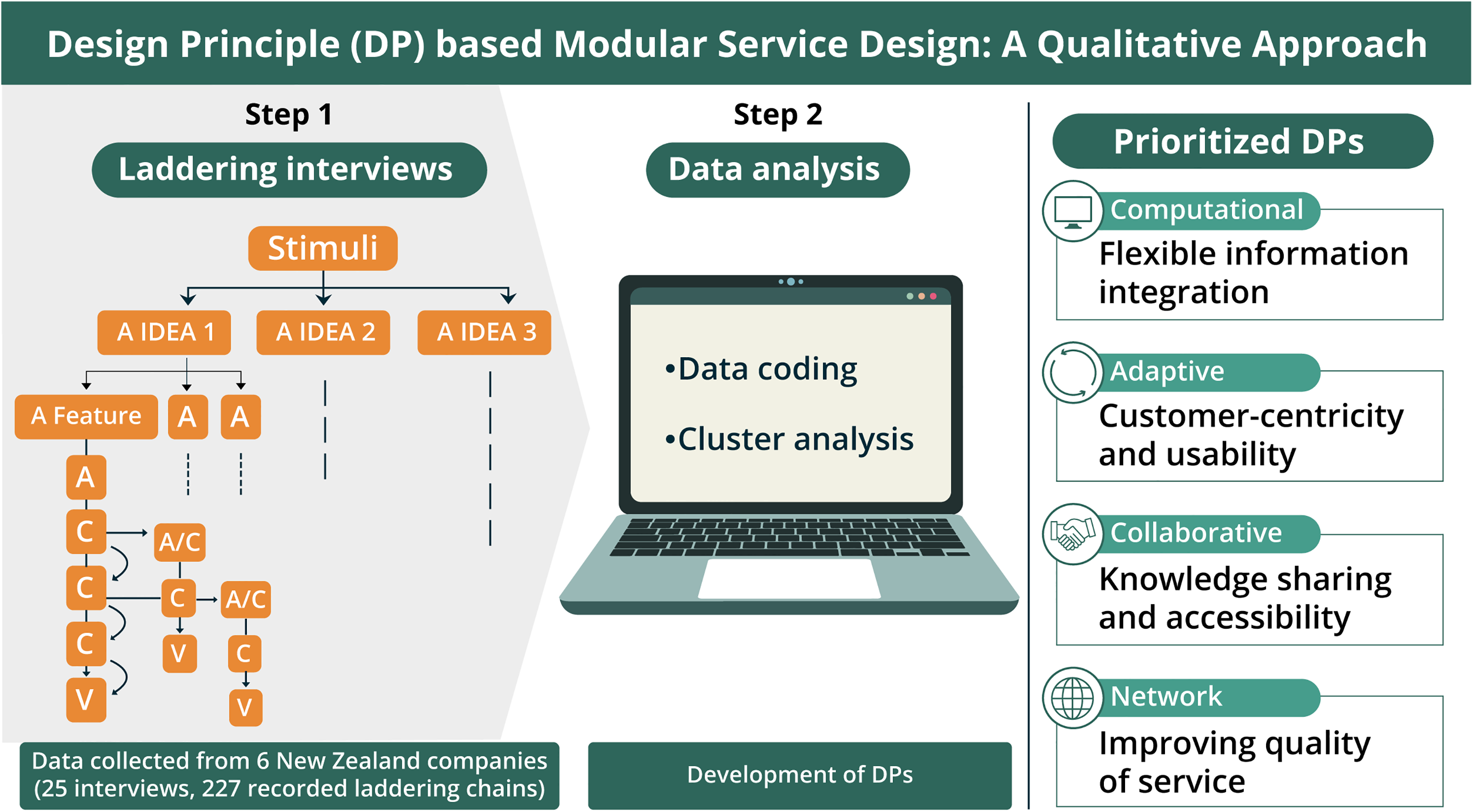
The literature has proposed ways to modularize information-technology-enabled services (ITeS) with limited success. We argue that applying design principles (DPs) can address this gap and revitalize the service modularization literature. With a qualitative research study, we develop exemplar DPs and a set of prioritized DPs for ITeS. We contribute to the literature by demonstrating how complex service systems, specifically ITeS, can be modularly designed. Our DPs show how different ITeS design elements or service attribute combinations impact the outcome-driven design of service experience. Based on the findings, we present a modular service design framework and a service design method that adopts DPs to create effective modular ITeS designs. We also offer ways to conceptualize and apply service modularization to improve the adoption of the modular service design by service designers and managers.
Keywords
Get full access to this article
View all access options for this article.
References
Supplementary Material
Please find the following supplemental material available below.
For Open Access articles published under a Creative Commons License, all supplemental material carries the same license as the article it is associated with.
For non-Open Access articles published, all supplemental material carries a non-exclusive license, and permission requests for re-use of supplemental material or any part of supplemental material shall be sent directly to the copyright owner as specified in the copyright notice associated with the article.
