




Abstract
Industrial firms venturing into services is a common phenomenon in B2B markets. However, companies are often unable to monetize many such services, thus incurring high costs of service provision without benefiting from revenue generation in return. To address this critical but little-studied problem, we investigate how industrial firms can transform existing free services into for-fee offerings. Employing a theories-in-use approach, we explore leading global firms via a cross-section of B2B industries, including automotive, maritime, material handling, medical equipment, mining and construction tools, and petrochemicals. Contingent on the empirics, we precisely characterize and define free industrial services. Based on the internal and external challenges that firms face in free-to-fee (F2F) transformations, we develop a typology classifying free services into four distinct categories: Front-runners, Tugs of War, In-house Shackles, and Dead Ends. For each category, we provide empirical illustrations and identify critical actions and activities that firms deploy to successfully implement F2F transformations along the dimensions of structures, processes, people, and rewards. Thus, we offer guidance on how to overcome both external and internal challenges. Our findings demonstrate that F2F transformations of industrial services are not isolated marketing, sales, or pricing activities but require a concerted effort among all organizational functions involved.
Introduction
For many industrial firms, developing service businesses beyond their core products is of critical importance to stem rampant commoditization, resist heightened competition, grow their customer base, accelerate revenue growth and profit margins, and, ultimately, secure competitive advantage (Eggert et al. 2014; Macdonald, Kleinaltenkamp, and Wilson 2016; Ulaga and Reinartz 2011). However, traditional product-oriented firms also face major marketing and sales challenges in pursuing service growth strategies (Eggert et al. 2014; Macdonald, Kleinaltenkamp, and Wilson 2016; Ulaga and Reinartz 2011). One such challenge is that they often end up providing a host of services free of charge (Anderson and Narus 1995; Michel 2014; Witell and Löfgren 2013), either because customer organizations are unwilling to pay or suppliers fail to exploit profit-making opportunities (Indounas 2009; Meyer, Shankar, and Berry 2018; Ulaga and Michel 2018). Accordingly, our study sheds light on this important yet under-researched topic by investigating how firms can successfully transform free services into revenue and profit sources, i.e., from “free-to-fee” (F2F). While scholars have begun to study the phenomenon of “free” services in business markets per se (Ulaga and Michel 2018; Witell and Löfgren 2013), to the best of our knowledge, a thorough understanding of the precise F2F transformation process and how it varies across different types of free services is lacking.
The problem of free services in industrial contexts – and the related drain on firms’ profitability – is not new, but has been rarely addressed in research (Ulaga and Michel 2018; Witell and Löfgren 2013). Detailed estimations of how much profit industrial firms lose through providing free services are lacking, but they have proliferated in almost every B2B market (Macdonald, Kleinaltenkamp, and Wilson 2016; Ulaga and Michel 2018; Witell and Löfgren 2013). For example, capital equipment suppliers often provide free installation and commissioning of machinery on the factory floor (Anderson and Narus 1995). High-tech medical equipment suppliers frequently offer free training sessions, years of free maintenance, and free software upgrades (Ulaga and Michel 2018). Chemical and metal component suppliers may provide material calculations, technical drawings, and documentation as well as prepare environmental and legal certifications free of charge (Michel 2014; Witell and Löfgren 2013). Similar challenges have surfaced with the growing trend of digitally enabled B2B service offerings. A report by McKinsey & Company (Catlin et al. 2016) found that companies lost up to eight percent of their value and shareholder returns by failing to capitalize on data monetization opportunities in B2B contexts.
Existing research has underscored the severity and negative consequences of providing free services (Anderson and Narus 1995; Witell and Löfgren 2013) while falling short of providing a fine-grained understanding of how exactly industrial suppliers can systematically address the problem (Michel 2014; Ulaga and Michel 2018). A conceptual clarification of the true nature of free services is lacking. Prior research has tended to refer to “free services” in a generic manner despite the established academic consensus that service activities greatly differ in their revenue- and profit-generating potentials (Mathieu 2001; Michel 2014; Ulaga and Reinartz 2011; Witell and Löfgren 2013). Moreover, in some cases, providing free services may be beneficial to industrial suppliers for sound strategic reasons. For instance, they may contribute to customer satisfaction and retention or winning new clients (Brentani 1989; Challagalla, Venkatesh, and Kohli 2009; Kohtamaki et al. 2015). Such free services are outside the scope of this study, as we focus on those whereby industrial suppliers experience no visible benefits and fail to capitalize on revenue- and profit-generating opportunities (Anderson and Narus 1995; Ulaga and Michel 2018; Witell and Löfgren 2013). Existing studies offer little to no insights into how suppliers can successfully transform such free services into for-fee services. The absence of conceptual clarifications on how to identify and characterize truly free services and distinguish them from services with other underlying goals (Ulaga and Michel 2018), combined with the lack of guidelines on how industrial firms might best implement F2F transformations, represents a major knowledge gap (Michel 2014; Ulaga and Michel 2018; Witell and Löfgren 2013).
Against this backdrop, the purpose of our study is to define and characterize free services in business markets and investigate how industrial suppliers can transform such activities into sources of revenue and profits. More specifically, we pursue two objectives: (i) First, to explore the true nature of free services and investigate their potential for F2F transformation. In line with past calls for a more fine-grained academic understanding of B2B services across various research settings (Boyt and Harvey 1997; Doty and Glick 1994; Mathieu 2001; Ulaga and Reinartz 2011), we develop a typology of free services toward gaining deeper insights into the F2F transformation potentials and processes – both to advance research on this topic and to guide managers in effectively steering F2F transformations. (ii) Second, to identify the primary strategies used by industrial suppliers to transform free services into for-fee services. Rather than compiling an exhaustive list of all conceivable challenges and solutions in this regard, we focus on those deemed crucial by experienced managers in the field.
Adopting a theories-in-use (TIU) approach (Zeithaml et al. 2020), we investigate F2F transformations in leading global firms via a cross-section of B2B industries, including automotive, maritime, material handling, medical equipment, mining and construction tools, and petrochemicals. To guide our approach, we rely on Galbraith’s (2008) widely adopted strategy implementation framework along the dimensions of structures, processes, people, and rewards.
Our study makes three contributions to the literature on industrial services. First, we offer a rigorous conceptualization of free services in industrial markets. Second, we identify four distinct types of free services, each with specific F2F challenges as firms seek to convert them into revenue and profit streams. Third, we unpack the F2F transformation process and provide detailed insights into how experienced executives align the key organizational dimensions (Galbraith 2008) for successful F2F transformations. Thus, we shed new light on extant theories, such as dual entitlement, in this particular context (Kahneman, Knetsch, and Thaler 1986; Urbany, Madden, and Dickson 1989), contributing to a more robust understanding of the phenomenon and lay a solid foundation for future research and practice.
Our article is structured as follows: first, we present the conceptual underpinnings of our study, followed by a detailed description of the methodology. Next, we present our research findings. Finally, in the concluding section, we discuss implications, recognize limitations, and offer suggestions for future research.
Conceptual Underpinnings
Research on F2F transformation in industrial markets is nascent. A mere handful of studies address the topic directly (e.g., Anderson and Narus 1995; Witell and Löfgren 2013; Ulaga and Michel 2018). Therefore, we draw upon the literature on challenges associated with growing industrial service business in general for insights relevant to F2F transformation (e.g., Brentani 1989; Chung 2021; Kowalkowski and Ulaga 2017; Macdonald, Kleinaltenkamp, and Wilson 2016; Ulaga and Reinartz 2011). These studies put forward two main types of service growth challenges, namely, those internal and external to the firm (Chung 2021; Eggert et al. 2014; Ulaga and Reinartz 2011). Based on Santos and Eisenhardt (2005), we consider challenges within the boundaries of the firm to be internal, whereas obstacles residing outside the firm boundaries are deemed external.
Research conducted in business-to-consumer (B2C) contexts allows us to gain further understanding of free services (Bond, He, and Wen 2019; Brady, Voorhees, and Brusco 2012; Lambrecht and Misra 2017), whereas pricing research, particularly studies focusing on dual entitlement, addresses the issue of pricing services that are currently free (Bruno, Che, and Dutta 2012; Dutta, Zbaracki, and Bergen 2003; Indounas 2009; Kahneman, Knetsch, and Thaler 1986; Meyer, Shankar, and Berry 2018). Key concepts and challenges derived from these literature streams are illustrated in Figure 1. Conceptual underpinnings of the study.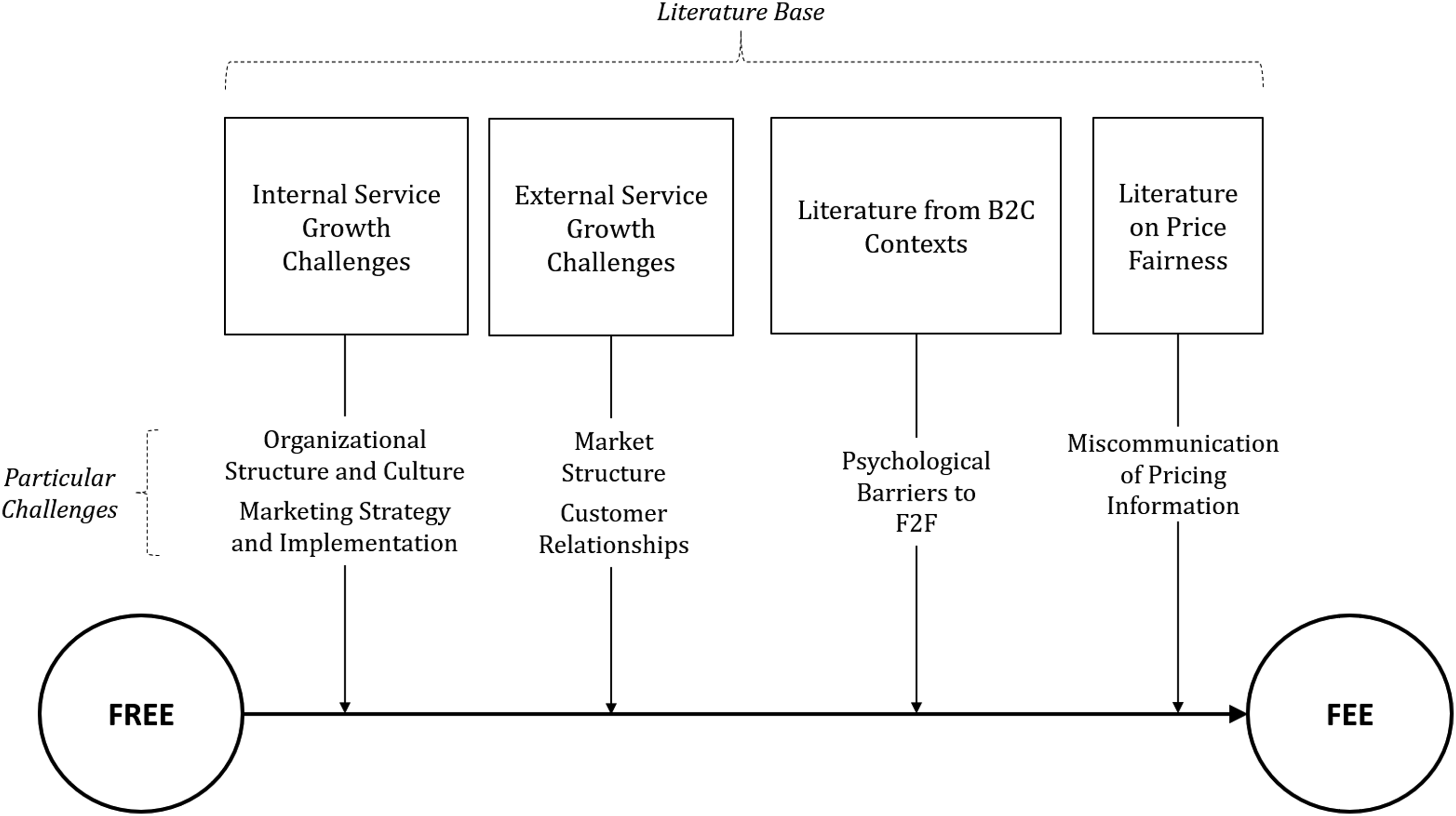
Taking the extant literature as a point of departure, we employed the TIU approach (Zeithaml et al. 2020) following Tuli, Kohli, and Bharadwaj (2007). Theories-in-use is well suited to research in which scholars seek to understand the perspectives and mental models of subject matter experts regarding how things work in particular contexts or scenarios (Zeithaml et al. 2020). This approach is in line with our study, the goal of which is to clarify an ill-defined concept while developing a deep understanding of managers’ perceptions of how their organizational choices and actions lead to desired outcomes (in this case, F2F transformation).
Literature on Internal Service Growth Challenges
Existing literature suggests that F2F transformations may entail internal challenges in two major areas: (i) a firm’s organizational culture and structure, and (ii) its marketing strategy and implementation (Brentani 1989; Matthyssens and Vandenbempt 1998; Ulaga and Reinartz 2011). The literature clearly suggests that shifting the organizational culture from “pushing boxes” (i.e., selling industrial products) to a service-oriented mindset is a major challenge for many industrial companies (Eggert et al. 2014; Fang, Palmatier, and Steenkamp 2008; Ulaga and Reinartz 2011). Consequently, product-centric firms often tend to view free services as a “necessary evil” to enable product sales (Robinson, Clarke-Hill, and Clarkson 2002). Hence, employees (e.g., field service technicians or sales personnel) of product-centric companies may simply lack insights into potential customer value created by service offerings, if not the service business overall (Oliva and Kallenberg 2003; Storbacka, Polsa, and Sääksjärvi 2011; Terho et al. 2012; Töytäri et al. 2011). Such issues may impede F2F transformations.
Second, F2F transformations may require fundamental changes in a firm’s strategy to integrate service business with traditional product-based businesses (Tuli, Kohli, and Bharadwaj 2007; Ulaga and Reinartz 2011). The firm may need to revisit its business model by rethinking the role of service revenues within overall revenue or shifting the focus from volume to value when setting growth objectives (Tuli, Kohli, and Bharadwaj 2007; Ulaga and Reinartz 2011). This, in turn, may necessitate changes to organizational structures and processes to accommodate F2F transformations (Matthyssens and Vandenbempt 1998; Parida et al. 2014; Raddats 2011).
Literature on External Service Growth Challenges
Compared with internal challenges, existing research offers limited insights into external challenges. Our literature review revealed that external barriers to F2F transformations may depend on the overall market structure and condition, along with the intensity of supplier-customer relationships (Anderson and Narus 1995; Matthyssens and Vandenbempt 1998; Rabetino et al. 2015). For instance, Ryals and Holt (2007) found that powerful customers tend to capture a larger share of the value co-created via suppliers’ offerings. Not paying for services could be a function of this power imbalance.
The intensity of a supplier–customer relationship may pose a major external barrier to F2F transformations (Anderson, Håkansson, and Johanson 1994; Barry and Terry 2008; Walter, Ritter, and Gemünden 2001). In industrial markets, developing and maintaining a strong relationship with a customer is often considered critical (Barry and Terry 2008; Ryals and Holt 2007; Walter, Ritter, and Gemünden 2001). And yet, customer intimacy could inhibit an F2F initiative as a supplier may be concerned that such a move would adversely affect the relationship (Anderson, Håkansson, and Johanson 1994; Barry and Terry 2008; Parida et al. 2014).
Literature on B2C Contexts
Prior studies focusing on pricing in consumer markets have underscored the widespread presence of free services in their respective contexts, offering some guidance to address the problem at hand (Bond, He, and Wen 2019; Brady, Voorhees, and Brusco 2012; Lambrecht and Misra 2017). Shampanier, Mazar, and Ariely (2007) noted that starting to invoice formerly free offerings is psychologically challenging. In consumer-oriented studies, the specificity of dealing with free services has mainly been addressed in online customer relationships and digital services or often in conjunction with “freemium” business models (Bond, He, and Wen 2019; Lambrecht and Misra 2017; Pauwels and Weiss 2008). Because interactions with a large base of online consumers are anonymous by default, F2F transformations often translate into discreet decisions about making an app or digital content available free of charge, pursuing a freemium approach, or setting up a paywall (Lambrecht and Misra 2017).
This approach, however, is very different from industrial market contexts, where supplier–customers interactions are often tailored to individual accounts and are long-term in nature. Here, an F2F transition may necessitate a much more comprehensive approach than simply introducing a paywall for accessing content on a website or moving to a freemium business model (Anderson, Håkansson, and Johanson 1994; Barry and Terry 2008; Ryals and Holt 2007). For these reasons, similar to the psychological challenges of an F2F transformation in consumer settings (Brady, Voorhees, and Brusco 2012; Lambrecht and Misra 2017), such a transition can be just as challenging in the context of industrial services.
Literature on Price Fairness
Existing literature on price fairness, and especially dual entitlement principle, may shed further light on the challenges associated with F2F transformations (Bruno, Che, and Dutta 2012; Dutta, Zbaracki, and Bergen 2003; Varki and Colgate 2001). The theory states that both sellers and buyers are entitled to the profit and price terms – unjustified price increases are perceived as unfair but cost justification legitimizes the price increase in the customer’s eyes (Kahneman, Knetsch, and Thaler 1986; Urbany, Madden, and Dickson 1989). However, a seller’s profit entitlement takes precedence over a buyer’s price entitlement whenever both are threatened (Kahneman, Knetsch, and Thaler 1986). These dynamics are consistent with community norms of fairness as cost increases are passed on to customers in the form of higher prices to protect the seller’s reference profit (Boyd and Bhat 1998; Kahneman, Knetsch, and Thaler 1986). From a dual entitlement perspective, industrial suppliers should be entitled to appropriate compensation as long as they effectively communicate to customers the costs associated with providing a service that is currently free (Urbany, Madden, and Dickson 1989).
Thus, F2F transformation can stem from the inadequacy of effective communication outside the firm boundaries regarding the cost of providing services for free, posing an external challenge. Simultaneously, prior research suggests that the ability to set prices and ensure that they are properly implemented is not axiomatic to firms (Dutta, Zbaracki, and Bergen 2003). Rather, existing literature indicates that B2B managers often lack sufficient knowledge or the strategic rationale to adequately price services, which may pose a major internal challenge for F2F transformation (Liozu and Hinterhuber 2013; Morris and Fuller 1989).
In sum, F2F transformation lies at the intersection of four streams of literature that provide the foundations of our study. In the present research, we integrate, build on, and extend these somewhat fragmentary fields of knowledge.
Methodology
In line with the TIU approach (Tuli, Kohli, and Bharadwaj 2007; Zeithaml et al. 2020), we conducted in-depth interviews with key decision-makers in industrial companies (McCracken 1988; Strauss and Corbin 1998). We then analyzed data according to the main themes of our study – the characteristics of free services, the challenges faced by industrial suppliers in their F2F transformations, and the actions or activities they deployed to overcome those challenges (Boyatzis 1998; Strauss and Corbin 1998).
Galbraith’s (2008) framework of organizational design guided the way our data were analyzed and findings are presented, as also adopted by multiple significant studies (e.g., Homburg, Jensen, and Hahn 2012; Le Meunier-FitzHugh, Massey, and Piercy 2011). According to the framework, effective alignment of the four critical organizational dimensions – structures, processes, rewards, and people – is vital to successfully achieve organizational goals. In Galbraith’s (2008) framework, organizational structures outline the type and number of job specialties needed, along with the location and movement of decision-making power and authority. Next, processes define actions or steps taken to achieve specific goals. Third, rewards influence employees’ motivation to execute organizational strategies and perform accordingly. Finally, the people dimension is geared toward acquiring and developing the talent, skills, and capabilities necessary to implement strategies. The four dimensions are interconnected (Galbraith 2008). In the present research, we relied on these dimensions to uncover key actions and activities that firms undertake for successful F2F transformations.
Data Collection
Sampling procedure and characteristics
Key Characteristics of the Sample of This Study.
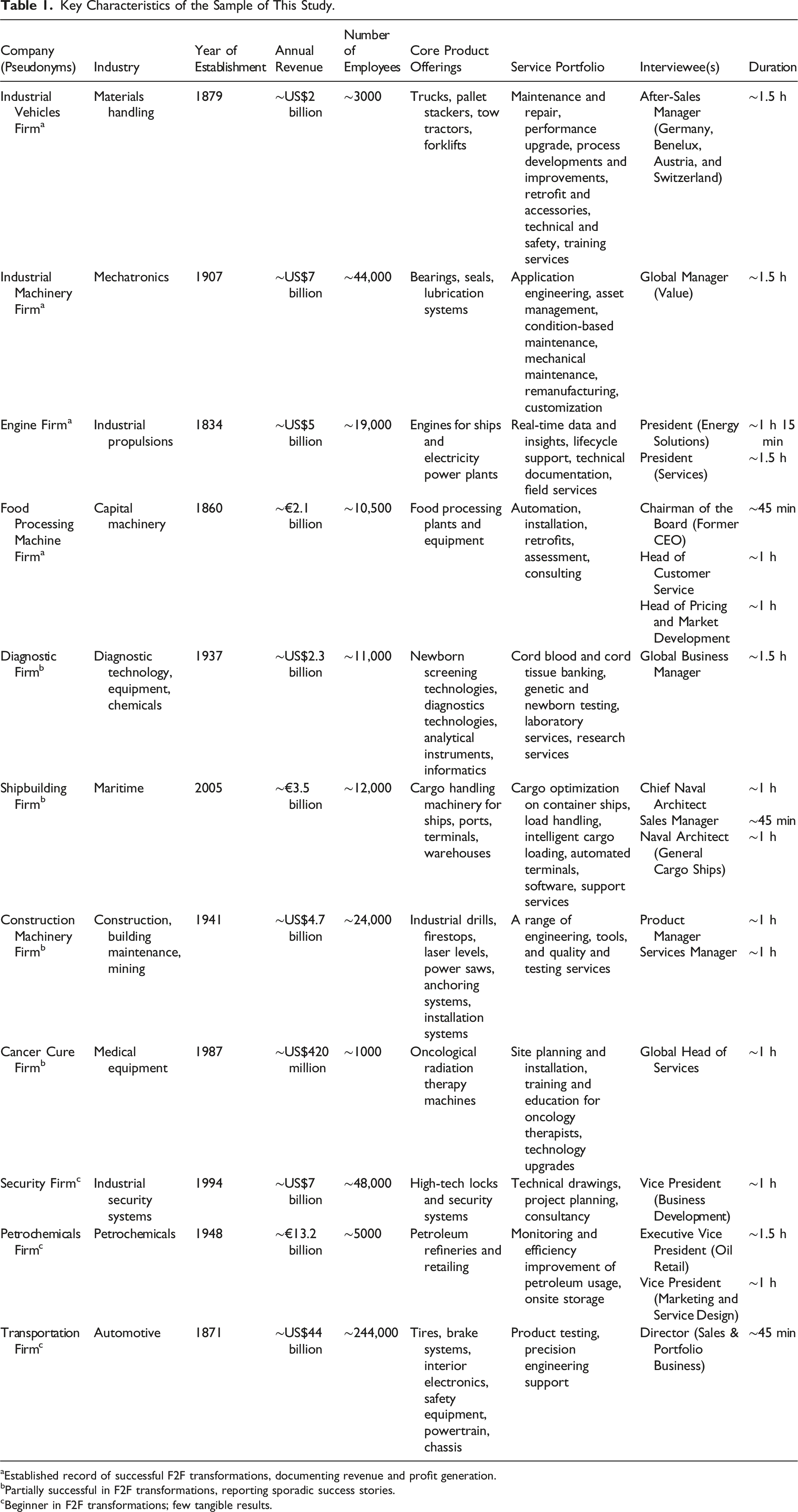
aEstablished record of successful F2F transformations, documenting revenue and profit generation.
bPartially successful in F2F transformations, reporting sporadic success stories.
cBeginner in F2F transformations; few tangible results.
To maintain comparability, we needed the suppliers to share some common characteristics. Following Ulaga and Reinartz (2011), we focused on firms with a prevalent core in manufacturing. To enhance the breadth and depth of our investigation, we examined suppliers at different stages of their respective F2F transformation based on two criteria: (i) the degree of their experience in working on F2F transformations and (ii) outcomes achieved, where revenue and profit growth had been documented. The first group of companies had an established record of successful F2F transformations. Hence, informants could report on substantial experiences of turning around free services from cost drains to profit sources. The second group was considered partially successful, consisting of managers who reported sporadic successes. The third group of companies recognized the need for F2F transformation and had already launched initiatives yet had few tangible success stories (see Table 1).
We interviewed key decision-makers who were directly involved in the planning, design, and execution of F2F transformations (Tuli, Kohli, and Bharadwaj 2007; Ulaga and Reinartz 2011). The sampling process ceased when data saturation was reached, as indicated by information redundancy and lack of newness in the data (Boyatzis 1998; Palinkas et al. 2015; Ulaga and Reinartz 2011). Our final sample consisted of 19 key informants from 11 firms, consistent with the sample size recommendation for exploratory research (McCracken 1988).
In-depth interviews
We conducted in-depth interviews based on a semi-structured interview guide to learn from key informants’ expertise, experience, perspective, and contextual specificities (Strauss and Corbin 1998). The guide served both as a reference point and a means to keep the interviews focused. Its semi-structured, open-ended design allowed the interviewees to respond in an unobtrusive, nondirective manner while helping us avoid the potential pitfalls of “active listening” (McCracken 1988; Strauss and Corbin 1998).
In the first part of the interview, we collected background information, including interviewees’ educational qualifications and job experience, primary responsibilities in their current position, and involvement in their company’s F2F transformation initiatives (McCracken 1988; Strauss and Corbin 1998). The second part focused on participating firms’ core product businesses, the context of service growth, details regarding the free services provided, and the underlying reasons for providing said services. We then asked about specific F2F initiatives undertaken by their firm (McCracken 1988; Strauss and Corbin 1998), explored the challenges faced, and had informants detail the actions and activities deployed to overcome those challenges.
Our interviews aimed to elicit contrasting examples of both successful and failed initiatives to explore the depth and breadth of the challenges and success factors that emerged. We asked additional questions when clarification was needed (McCracken 1988; Strauss and Corbin 1998). All interviews were audio-recorded and lasted an hour on average.
Data Analysis and Interpretation
Coding Process of This Study.
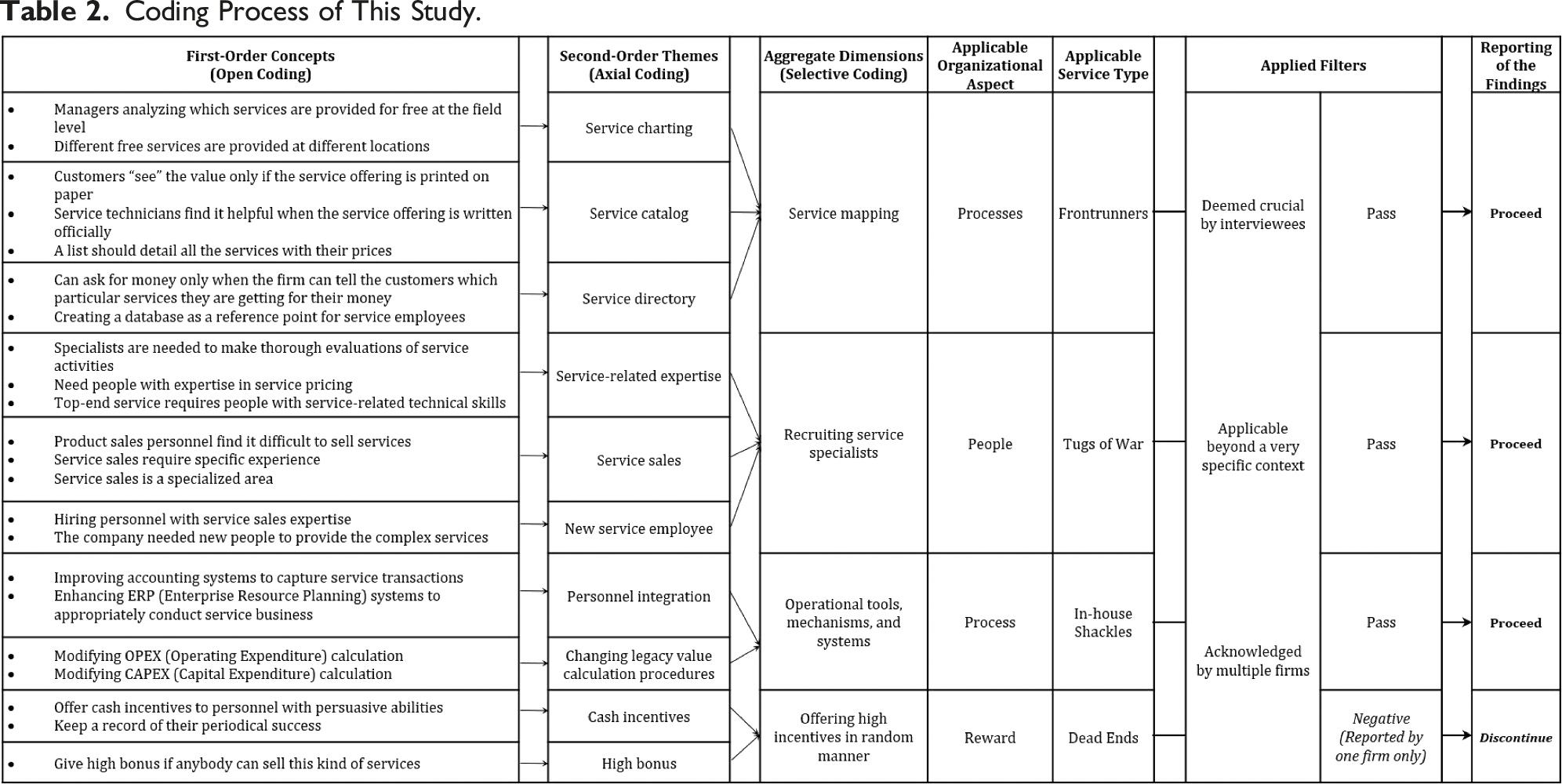
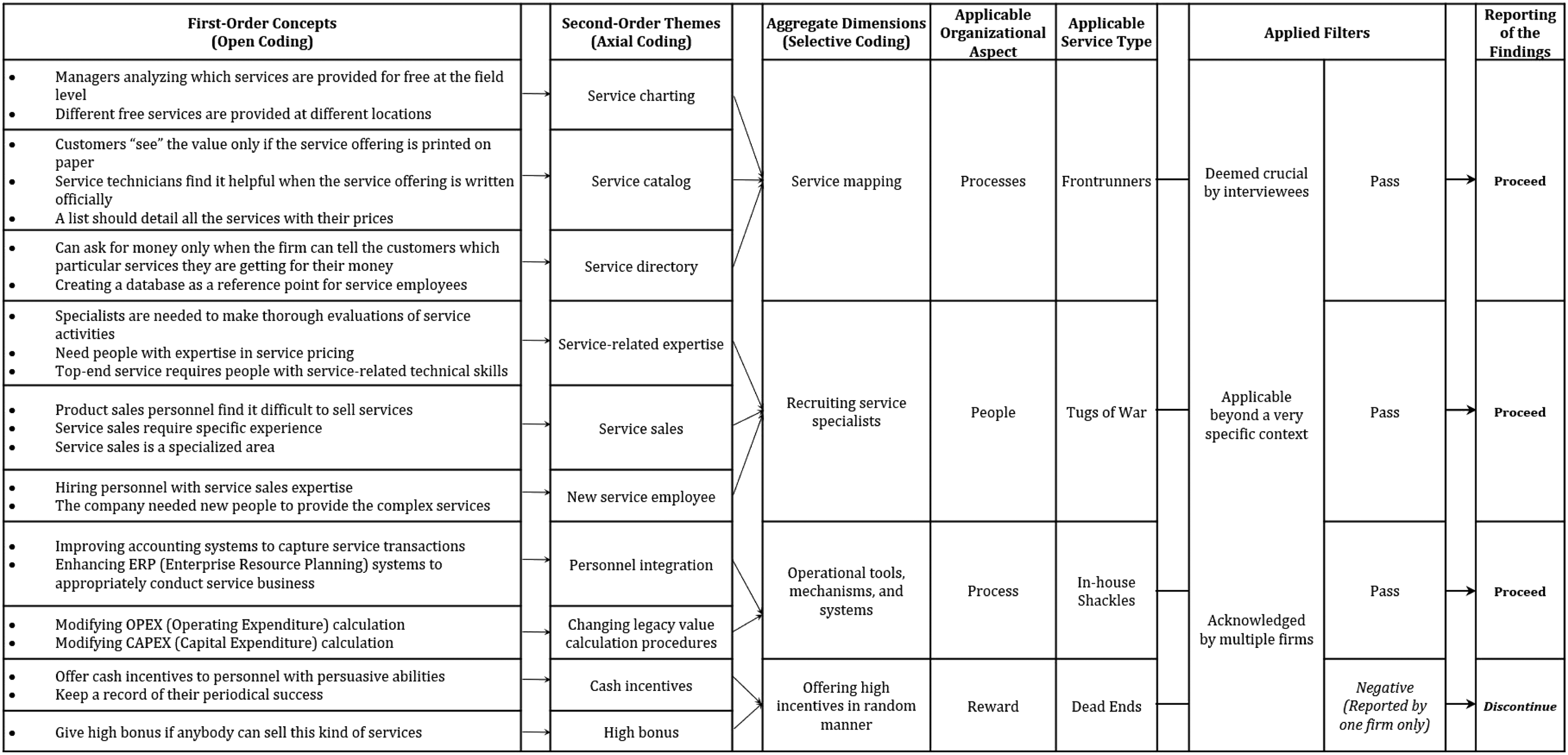
Using the MAXQDA software (version 2016), two of the authors independently performed open coding, identifying initial concepts in the data and grouping them into categories (Gioia, Corley, and Hamilton 2013). Following Gioia, Corley, and Hamilton (2013), we strived “to adhere faithfully to informant terms” and relied on in-vivo or descriptive codes. Based on Perreault and Leigh (1989), we then assessed inter-judge reliability between the two researchers. Despite slight differences in tagging, the codes pointed to nearly identical meanings. Our inter-judge reliability reached 0.86, well above the threshold of 0.70 suggested for exploratory research (Perreault and Leigh 1989). Finally, where necessary, we discussed differences in coding (e.g., wording, different interpretations of the same fragments), agreed on changes as needed, and revised the coding accordingly.
In the second step, we moved to axial coding (Gioia, Corley, and Hamilton 2013). We congregated the fragmented open codes and searched for relationships between and among the categories, allowing us to assemble them into higher-order themes (Gioia, Corley, and Hamilton 2013; Strauss and Corbin 1998; Yanow and Schwartz-Shea 2015). We then allocated the open codes to categories of critical actions and activities deployed by the firm to engender F2F transformations (Gioia, Corley, and Hamilton 2013; Strauss and Corbin 1998). Finally, for selective coding, we gathered similar themes into several overarching dimensions to capture the essential underlying attributes of the cumulative categories (Gioia, Corley, and Hamilton 2013; Strauss and Corbin 1998), and grouped the categories against the themes of structures, processes, people, and rewards (Galbraith 2008).
Following Tuli, Kohli, and Bharadwaj (2007) and Ulaga and Reinartz (2011), we applied three specific criteria to report the findings: (i) the particular actions and activities were deemed crucial by interviewees in overcoming F2F challenges, (ii) they were applicable beyond a very specific context, and (iii) they were acknowledged by multiple suppliers. Moreover, before reporting the results, all authors reviewed the data analysis process for internal consistency and refined the wording of findings and selected examples. Further, to enhance content validity, we sent a summary report based on the findings to five randomly selected interviewees and invited them to comment. All five provided feedback that indicated overall agreement with our findings. However, respondents also suggested slight changes in language, which we incorporated after further discussion.
Study Findings
Characterization of Free Services in Industrial Markets
Identifying truly free services in industrial markets is not as straightforward as it might seem at the first glance. Providing services to customer organizations and obtaining appropriate compensation in return reflects the idea of “economic exchange,” one of the most fundamental concepts of marketing (Bagozzi 1975; Houston and Gassenheimer 1987). The exchange concept suggests that parties engage in transactions to obtain something desirable in return for providing something that the other party values (Bagozzi 1975; Houston and Gassenheimer 1987). In other words, to “get” something desired, each party must “give” something of value (Bagozzi 1975; Houston and Gassenheimer 1987).
In the introduction section, we alluded to the possibility that industrial firms may provide “seemingly free” services to pursue latent goals (Brentani 1989; Challagalla, Venkatesh, and Kohli 2009; Kohtamaki et al. 2015). Our empirical investigation confirms this possibility and distinguishes between “seemingly” and “truly” free services. For “seemingly free” services, there is undoubtedly a “get” component from the supplier’s side, even though they label those services as “free.” For further conceptual clarification, we present two such cases of “seemingly free” services identified in our sample. These types of services are outside the scope of our study.
In one instance, we found “free services for business development.” Here, the supplier provides “seemingly free” services to increase product sales by facilitating higher product order volumes or securing a larger share-of-wallet:
“Sometimes, we can benefit in other ways. For example, if customers want to send those wind turbine bearings, which is one of their most important assets, to our metallurgical lab and get an analysis of aluminum integrity, that’s costly for us. We then say, ‘In return, we want 50% of your annual purchases of bearings, seals, and lubricants.’ You know, they are not going to get all those free services if they buy only 10% of their annual purchase from us!”
—Global Manager (Value), Industrial Machinery Firm
In another example, we identified “cost-inclusive free services,” whereby the costs of service provision are paid for by the contribution margins of products sold. In markets where core products are increasingly commoditized and profit margins are under pressure (Macdonald, Kleinaltenkamp, and Wilson 2016; Ulaga and Reinartz 2011), suppliers offer “seemingly free” services to justify higher prices. In reality, though, the costs of providing those services, and their respective margins, are concealed in the underlying product margins. As one interviewee explained:
“Our automated powertrain components (transmissions, driveshafts, differentials, etc.) are more expensive than those of our competitors – for example, if you source from Asian suppliers. So, to defend the higher price, we sometimes tell the customers (car manufacturers) that we will provide them telemetry data free of charge, which are very useful to them to improve vehicle efficiency. However, in reality, we calculate overhead costs and some margins for those services and include them in the final product price.”
—Director (Sales & Portfolio Business), Transportation Firm
In both above-mentioned cases, despite labeling a service as “free,” suppliers are cognizant of both the “give” and the “get” components involved. However, our research also revealed many instances in which reciprocity was lacking, that is, suppliers provided services activities without getting any benefit in return. Further, we found instances where vendors speculated about a possible “get” component but could not identify or document any, even in a non-monetary form. Consider the following two statements:
“Our sales personnel have given away free seats in our technical training programs. It costs us a lot, but we don’t know what we get in return. The hope is that those free seats would turn into future customer business. But whenever I ask, ‘What happened to those freebies?’ the answer is ‘We don’t know’ or ‘They finally had other priorities,’ at best.”
—Global Business Manager, Diagnostic Firm
“We don’t get anything in return for providing free consulting services. Not money, not better price, not any additional business. People in our company often think that we are getting something in return, but nobody has any document or evidence of getting anything”
—Chief Naval Architect, Shipbuilding Firm
The above statements clearly illustrate that some ostensibly free services are not truly free despite suppliers labeling them as such. Considering these characterizations, we offer the following definition of free services in industrial markets: A free service is the application of specialized knowledge, capabilities, and resources by the supplier to achieve customer-desired tangible business outcomes concerning their assets, processes, or operations without monetary compensation or other forms of documented benefit in return for the value added. Figure 2 provides a visual illustration of truly free services as part of a broader array of service activities. Characterization of free services in industrial markets.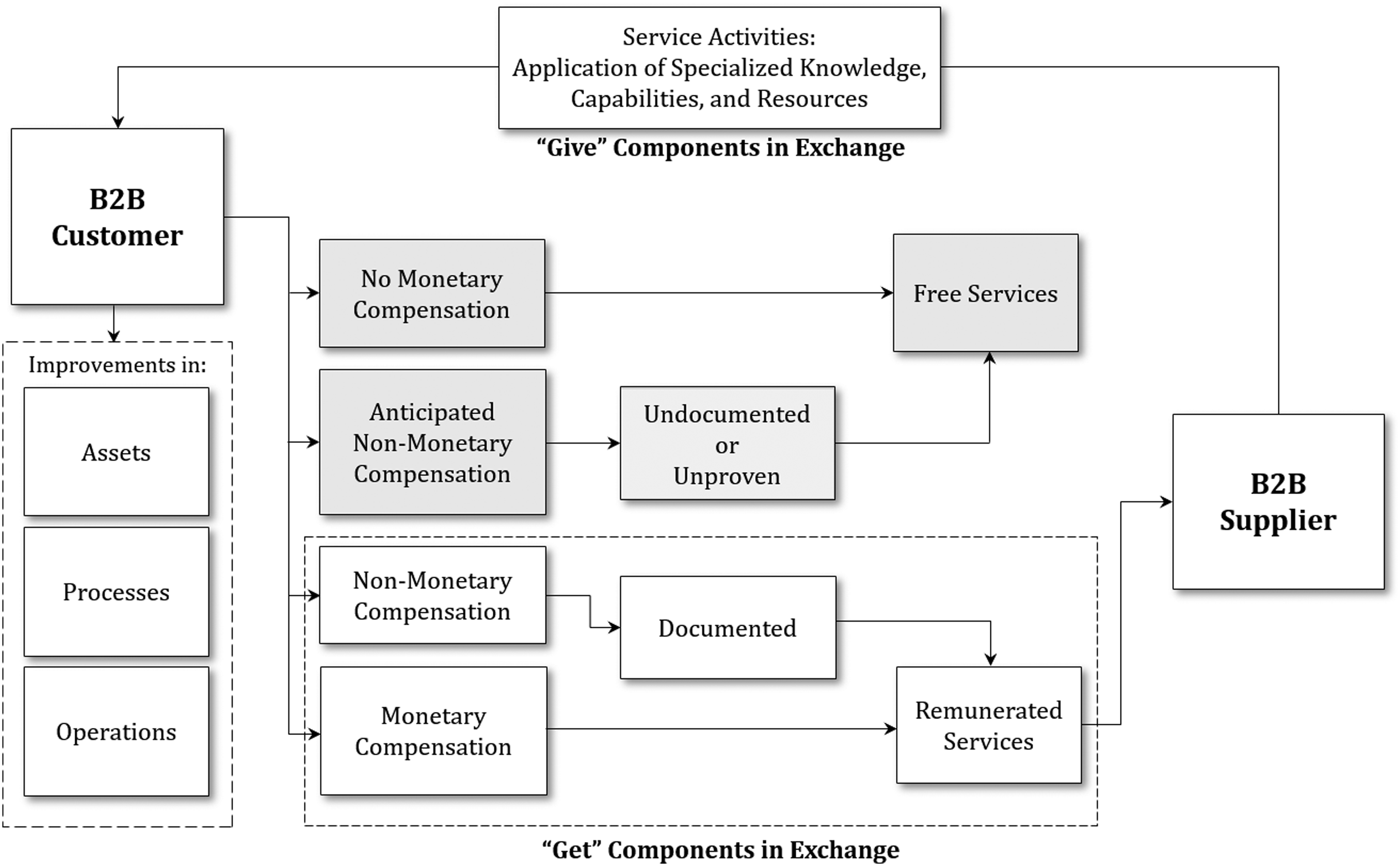
According to our characterization, a service is not considered free when in return for a “give” component there is evidence (e.g., documentation) of a “get” component, monetary or otherwise. But, as shown in Figure 2, it is considered free if there is no monetary compensation at all or a supplier anticipates various other forms of returns but cannot prove or document any such reciprocity. Thus, it represents a cost drain on the firm – a major challenge for industrial suppliers trying to grow their service business (Anderson and Narus 1995; Michel 2014; Ulaga and Michel 2018; Witell and Löfgren 2013).
Once “truly free” services are identified, the question is whether they all have the same F2F transformation potential – in other words, whether they all present equal opportunities and challenges for transforming such activities into revenue and profit sources (Anderson and Narus 1995; Ulaga and Michel 2018). The short answer is no. Our empirical investigation revealed major differences according to the type and degree of internal and external challenges faced. The heterogeneous nature of these challenges (and of the services themselves) exemplifies the need to develop a typology that helps academics identify and learn from comparable scenarios while supporting managers in their use of strategies and tools adapted to their industry and firm contexts (Boyt and Harvey 1997; Doty and Glick 1994; Mathieu 2001; Ulaga and Reinartz 2011).
Typology of Free Industrial Services
As manifested in the conceptual underpinnings section, industrial firms seeking to grow service businesses may face both internal and external challenges (Kohtamaki et al. 2015; Macdonald, Kleinaltenkamp, and Wilson 2016; Oliva and Kallenberg 2003; Ulaga and Reinartz 2011). Our empirical investigation confirms the existence of both types of challenges, identifies key internal and external barriers experienced by executives, and provides fine-grained insights into both the nature of these hurdles and initiatives taken to overcome them. For instance, we found that a prevalent external challenge is customer resistance:
“We offer free real-life performance testing facilities and services for tires in high-performance cars. Arranging those tests in different tracks and weather conditions around the globe is highly expensive. We have been thinking of charging customers for some time, as the costs are simply too high to be included in overhead. However, we are concerned that customers got used to getting it free, and they will resist strongly (against F2F transformation)”
—Director (Sales & Portfolio Business), Transportation Firm
Multiple studies (Storbacka, Polsa, and Sääksjärvi 2011; Terho et al. 2012; Töytäri et al. 2011; Ulaga and Loveland 2014) have shown that expanding into service business requires industrial firms to reorient their sales personnel toward selling the service offerings in question. This issue is exemplified in the case of F2F transformations, where opposition from sales personnel toward F2F initiatives emerged as a frequently cited internal challenge. As the following statement illustrates:
“Our product sales personnel were very much against such a move. Selling services is an unfamiliar territory for them, and they often want to avoid it at all cost”
—President (Services), Engine Firm
Juxtapositioning external and internal challenges (Ryals and Holt 2007; Tuli, Kohli, and Bharadwaj 2007; Ulaga and Reinartz 2011; Walter, Ritter, and Gemünden 2001), we developed a typology to identify four types of free services, each with its own set of F2F transformation challenges and potential. To capture the nature of each type, we labeled them as follows: Front-runners, Tugs of War, In-house Shackles, and Dead Ends, as presented in Figure 3. Typology of free industrial services.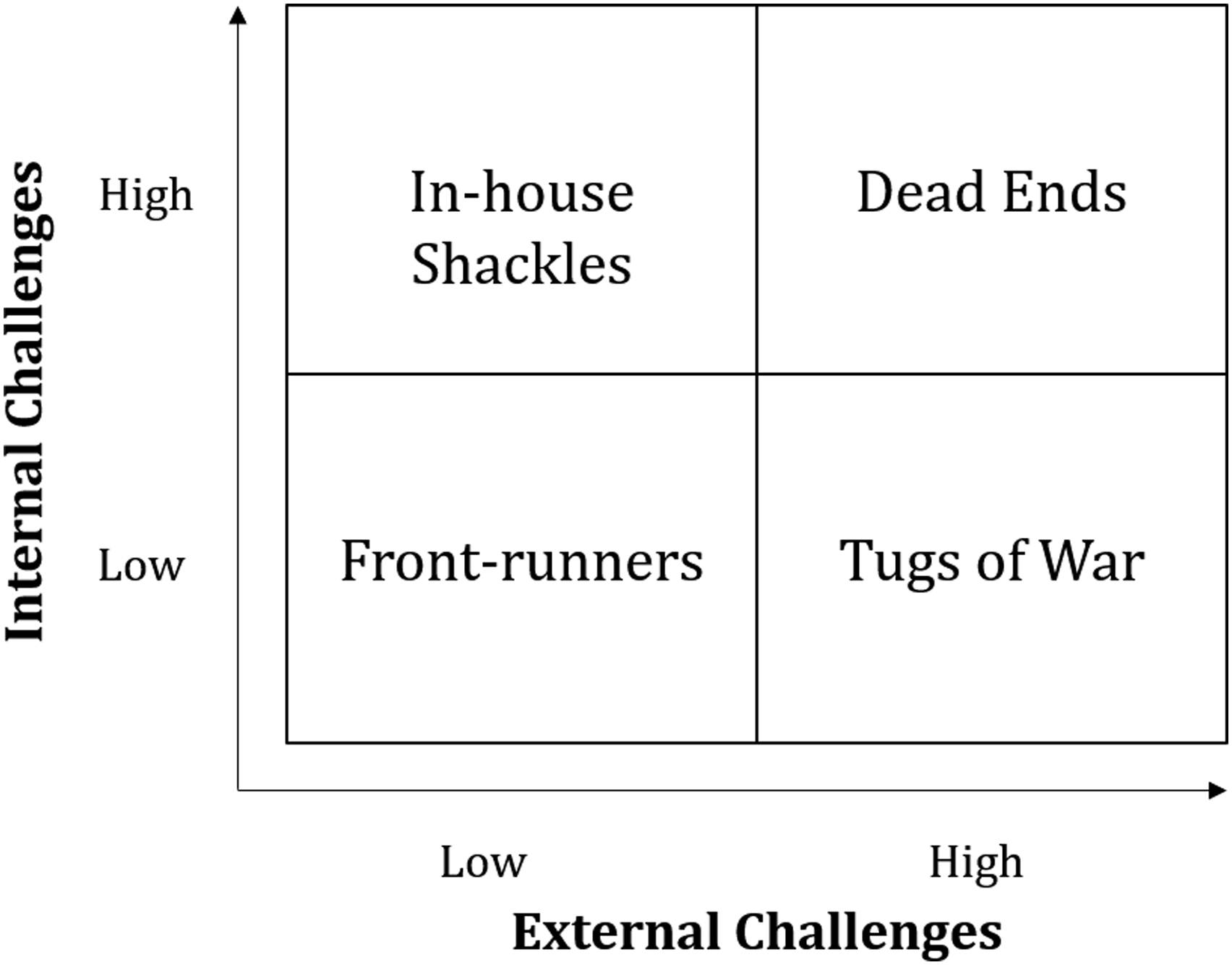
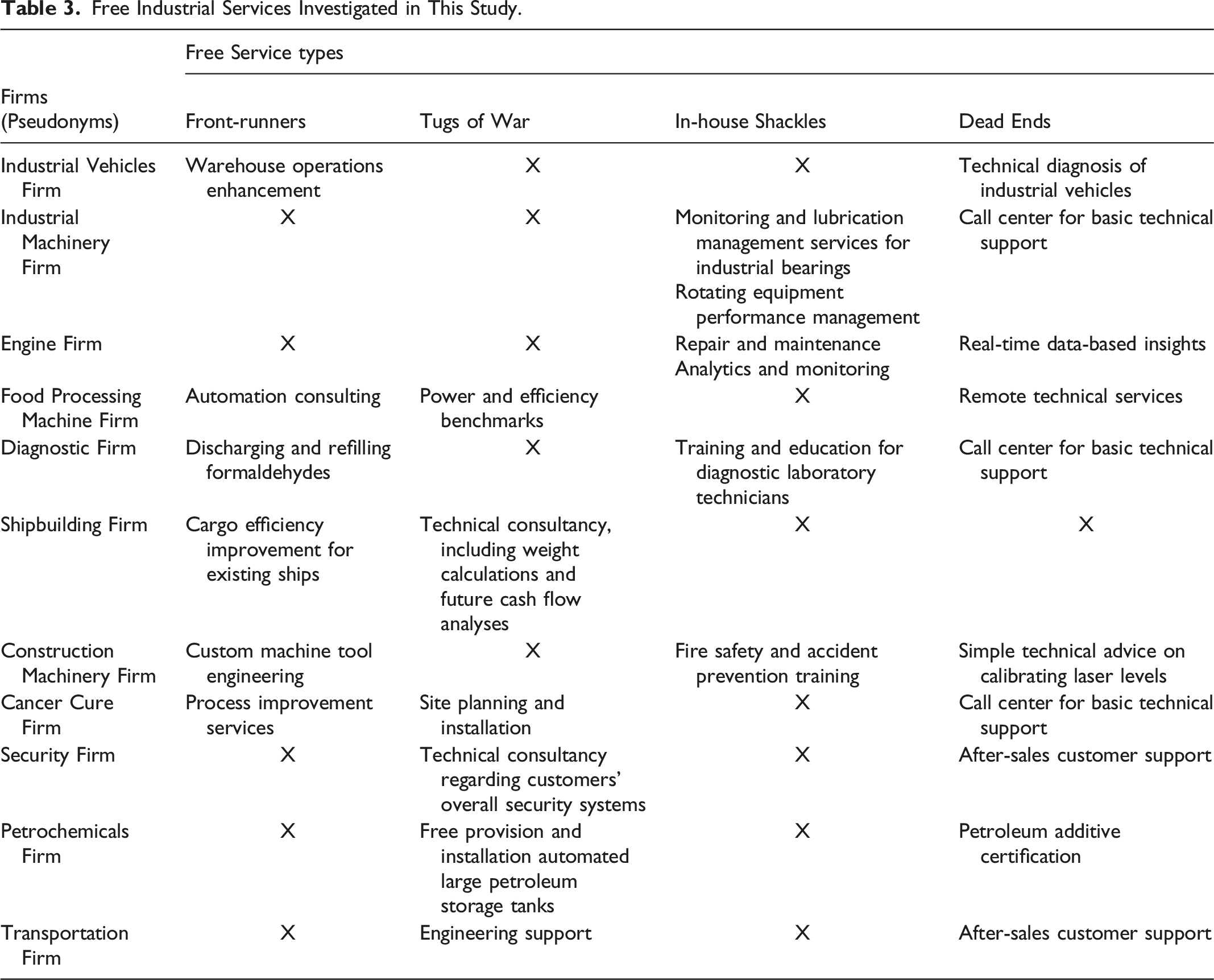
Free Industrial Services Investigated in This Study.
Front-runners
The first category of free services faces relatively low challenges – both internally and externally – to F2F transformation. Therefore, we label them “Front-runners,” as they require the least effort for a successful transformation and offer the most immediate revenue and profit potential to firms. In the words of one interviewee: “Out of all the free services we were giving away, this (automation consulting) was the rather easy one to start invoicing. Well, it’s not like customers were happy to pay – they never are! Especially, as the service was free earlier. However, apart from us, nobody else in the market offers this service (low external challenge). Our salespeople also realized they won’t have to break much sweat to sell it, so they went for it (low internal challenge).” —Head of Pricing and Market Development, Food Processing Machine Firm
Examples of “Front-runners” in our study include free services that improve the efficiency and effectiveness of customers’ operational processes, as well as activities that reduce process-related risks. We found that such services were grounded in leveraging the supplier’s specialized knowledge and competencies to assist customers in optimizing their processes or selected elements thereof. They were highly customized, too, with no equivalent services offered by direct competitors or third parties.
In line with existing B2B literature (Storbacka, Polsa, and Sääksjärvi 2011; Terho et al. 2012; Töytäri et al. 2011; Ulaga and Loveland 2014), sales personnel’s buy-in and active involvement in the F2F transformation process repeatedly surfaced as an illustration of a low internal barrier. Moreover, suppliers in our sample could easily identify, document, and communicate the value customers gained from using such services (Macdonald, Kleinaltenkamp, and Wilson 2016; Ulaga and Eggert 2006). The following remark offers further insight:
“Sometimes, the services we provide for free are simply not good enough to sell, so everybody hesitates with such an (F2F) initiative. Not this time! The quality of our custom machine tool engineering service was one of the best in the market; we knew what customers were getting out of it and we also had all the tools needed to sell it.”
—Services Manager, Construction Machinery Firm
Key informants often referred to a lack of competition in the market, along with relatively little resistance from customers, as examples of low external barriers. Consider the example of a free service provided to optimize cargo transport, reduce accidents, and prevent forklift drivers’ injuries in the customer’s warehouse:
“Over several years, we have conducted thorough analyses of customers’ entire warehouse operations processes. We also helped them to optimize cargo movement inside those large warehouses and reduce accidents, and they value it. So, even though, in the beginning, we provided the services for free, we did not upset the customers by invoicing those services going forward. Our competitors do not offer similar services, either, so it (F2F transformation) was relatively easy.”
—After-Sales Manager (Germany, Benelux, Austria, and Switzerland), Industrial Vehicles Firm
In sum, Front-runners are existing free services that face comparatively few internal challenges, the value of which suppliers can identify, document, and communicate to customers with relative ease. Moreover, external barriers are relatively low due to a lack of competition in the market, resulting in comparatively less customer resistance.
Tugs of war
The second category of free services identified in our study faced relatively low internal challenges to F2F transformation but much higher challenges from beyond the firm boundaries. Moreover, suppliers struggled to obtain information regarding customer value created by these services. As suppliers and customers disagreed on whether, how, and how much value was created, customers’ willingness-to-pay (Meyer, Shankar, and Berry 2018) remained very low. Considering these characteristics, we labeled such free industrial services “Tugs of War.” In such situations, an F2F transformation hinges on how well a supplier can align the critical organizational dimensions to address challenges that reside outside the firm’s boundaries.
Our key informants explained that such services are generally delivered on an ad-hoc basis – usually at the customer’s request – and are frequently independent of product-related sales transactions. Examples that surfaced in our study included free power and efficiency benchmarks, technical consultancy (e.g., weight calculations and future cash flow analyses), site planning and installation, engineering support, and technical drawing and design work.
Interviewees highlighted a major challenge that does not appear in the existing literature: the difficulties of receiving information regarding the benefits that customers gained from using these “Tugs of War.” Companies in the early stages of F2F transformations were more beset by this challenge than those that had more experience in approaching customers, as one informant explained:
“Let’s say, for a new five-star hotel building, our electronic access control systems are part of a bigger and complex security system. The primary contractor that is building the entire facility is also in charge of developing and installing the overall security systems, which include expensive technical components from multiple suppliers. As this is not normally their area of expertise, they often ask for free consultancy from us. We have some idea that the services are valuable to them, but we don’t exactly know how and how much. And, they never tell us. If we knew, we would have been in a better position to ask them for a price.”
—Vice President (Business Development), Security Firm
Another example was cited by a manufacturer of cranes and related mechanical systems for cargo ships, a company with moderate F2F transformation success:
“Our technical experts put in quite a lot of work in advance, including possible technical solutions, weight calculations, and even future cash-flow analyses for the ship operator. Even though we provide the services for free, there’s no guarantee of getting the business. So, we want to charge for the services separately. However, sitting here in Europe, it’s very difficult for us to know how the shipyards in East Asia actually use these services and the value they get from them. Also, they don’t share that information with us. We can’t charge for the services if we don’t know which specific benefits customers get, and how important they are to the customers.”
—Chief Naval Architect, Shipbuilding Firm
The existing literature offers some indications that the external challenges may hinge upon customers, competitors, and overall market conditions (Matthyssens and Vandenbempt 1998; Rabetino et al. 2015; Ulaga and Reinartz 2011). For example, Ryals and Holt (2007) found that power imbalance in a customer–supplier relationship holds back suppliers from appropriating value in face of powerful customers. Contexts of power imbalance in our sample favored the emergence of “Tugs of War” services. The following observation offers an illustration: “Yes, charging for these engineering support services will be brilliant. We don’t have anything else to gain from providing these services, either, as they do not increase our product sales volume. But, it will be a hard sell – probably, the customers will simply say ‘no.’ In this industry, they hold a lot of power!” —Director (Sales & Portfolio Business), Transportation Firm
Strong customer resistance was also prevalent in situations where free services were considered common industry or firm practice. One of the interviewees expressed his concerns as follows:
“I mean, we have been providing the site planning and installation service for free for ages. And, the services are not about only installing our products. Rather, we offer consultancy on how to integrate all the cancer treatment equipment in a facility. All of us in our company think we should get paid. But the customers are so used to it being free. Now, if we suddenly go and tell that they must pay, I think we will have a very difficult time making them agree!”
—Head of Services, Cancer Cure Firm
Thus, suppliers in our study found it difficult, if not impossible, to depend solely on arguments based on the endured service provision costs as justification for asking for a price. These findings are in stark contrast to the dual entitlement principle, which suggests that a cost justification “legitimates” a price increase in the customer’s eyes (Boyd and Bhat 1998; Kahneman, Knetsch, and Thaler 1986; Urbany, Madden, and Dickson 1989). Consider the following statements for further illustration:
“It’s not that easy (F2F transformations of Tugs of War). Even when you show them your costs (to provide the existing free services), they refuse to pay. They always try to get away with it (free services).”
—Chairman of the Board (Former CEO), Food Processing Machine Firm
“Well, customers generally come up with some sort of arguments, even though they know it costs us to provide these services. Our costs do not matter to them if they can get it without paying anything.”
—Director (Sales & Portfolio Business), Transportation Firm
In sum, dominant external challenges, from customers’ reluctance to pay to suppliers’ difficulties in gaining clear insights about customer value, are characterized as “Tugs of War.”
In-house shackles
Our interviews identified a third type of free services, in which external hurdles appeared to be relatively low. Rather, the major barriers resided within supplier organizations. Therefore, we labeled these services “In-house Shackles.” Consider the following observation by our informant from a diagnostics firm providing free training and education programs for oncology therapists:
“We could have sold tons of those services. I am certain that there is demand in the market, and it wouldn’t have been very difficult to convince the customers (to pay). Only if we could surpass all these naysayers among us.”
—Global Business Manager, Diagnostic Firm
Our data show that “In-house Shackles” generally emerge in the context of service activities provided for a supplier’s own installed-base. Examples in our study include monitoring and lubrication management services for industrial bearings, training and education programs for oncology therapists, and fire safety and accident prevention training. Our key informants pointed toward multiple internal challenges. In line with existing research, “In-house Shackles” typically entailed strong opposition from a manufacturer’s established product sales personnel (Storbacka, Polsa, and Sääksjärvi 2011; Terho et al. 2012; Töytäri et al. 2011; Ulaga & Loveland 2014). For example, one informant explained such resistance to invoicing customers for monitoring and lubrication management services for industrial bearings:
“A rather difficult problem is our product salespeople. They are so used to selling physical products… They simply do not want any move towards selling services. As I said before, they think that selling products is everything, and services are just something extra. Overcoming their resistance is a big challenge here.”
—Global Manager (Value), Industrial Machinery Firm
Further, our interviews revealed that sales personnel’s resistance tended to be associated with a firm’s incentive structure. Managers explained that performance evaluations and rewards were often tied to product sales only, thus offering little incentives to sell the existing free services. We also learned that a supplier’s goods-centric mindset could create substantial internal barriers, especially in the early stages of an F2F transformation, as a key informant from the construction machinery company explained:
“The angle grinder, used to cut concrete, is one of the most dangerous tools in a construction site, as sparks fly in every direction and there are real risks of fire. So, we provide free training services on safe usage of this equipment, which is very helpful for fire safety and accident prevention and has a real impact on reducing their risks. So, we know the value of these services and can show it to customers. However, when I wanted to change it into a paid service, it was very much of a mindset issue throughout the company. People were like: ‘We are a product company! Why should we go into service business?’”
—Service Manager, Construction Machinery Firm
Multiple interviewees noted that internal challenges also arise at the operational end of supplier organizations. At the construction machinery firm, frontline technicians formed close associations with site supervisors and employees of their customer firms and thus wanted to avoid the emotional discomfort of asking for a price for “helping their friends.” This closely reflects “Service Sweethearting” in B2C markets, by which frontline workers give away unauthorized free or discounted services to customers (Brady, Voorhees, and Brusco 2012).
Much to our surprise, we found that internal operational and support processes, including accounting and information systems, often represented major hurdles to F2F transformations, an issue that does not surface in prior industrial services literature. In multiple instances, these systems were largely designed to satisfy the needs of a product manufacturing firm, not a service provider, creating a substantial internal hurdle:
“Our ERP (Enterprise Resource Planning) systems were product-based. There was simply no space to keep any kind of record for anything related to services, so our people would rather give them away for free. You may think it’s a trivial issue to overcome, but with a company of our size, it takes significant investments and time to make the necessary modifications before we could even begin charging for services!”
—President (Energy Solutions), Engine Firm
In sum, several challenges, mainly from within the organization, characterize these “In-house Shackles.”
Dead ends
The final type of free service has the lowest potential for successful F2F transformation. They face a high degree of both internal and external challenges to the initiation of invoicing for services hitherto provided free of charge. Accordingly, we label these services “Dead Ends.”
We found that the magnitude of hurdles presented earlier is amplified for this category and that both internal and external challenges abound. Several informants described standard after-sales service support provided via an industrial supplier’s customer service center as a typical example of “Dead Ends.” As one executive explained: “Well, if you ask our service employees, they would like to charge for anything and everything – even for picking up a phone in our customer service center. But we must be realistic here. Sometimes, the customers call even just to get the contact details of a specific engineer or to ask whether we have a specific spare part in our inventory. How do you put a price tag on that? I am afraid, but a move like that will be simply considered stupid by both our internal people and the customers.” —Director (Sales & Portfolio Business), Transportation Firm
Thus, external impediments to such a service were perceived as high. Customers felt strongly entitled to free call center support, and there was very little endorsement inside the supplier organizations for an F2F transformation. Internal structures and processes were not aligned with attempts to establish the real cost of service provision or enable price determinations for various customer supports.
After-sales customer support was not the only service identified as a “Dead End” in our study. Consider the following:
“Take the issue of ‘petroleum additive certification’ for the B2B customers as an example. Every supplier does it, so much so that customers take it for granted. If we want to get paid to do it, well, nobody’s going to pay. Also, from the salespeople to the top management, anybody will hardly support such an idea!”
—Executive Vice President (Petroleum Retailing), Petrochemicals Firm
In short, a range of external and internal hurdles identified in tandem led us to characterize this last type of free service as a “Dead End.”
Overcoming F2F Transformation Challenges of Industrial Services
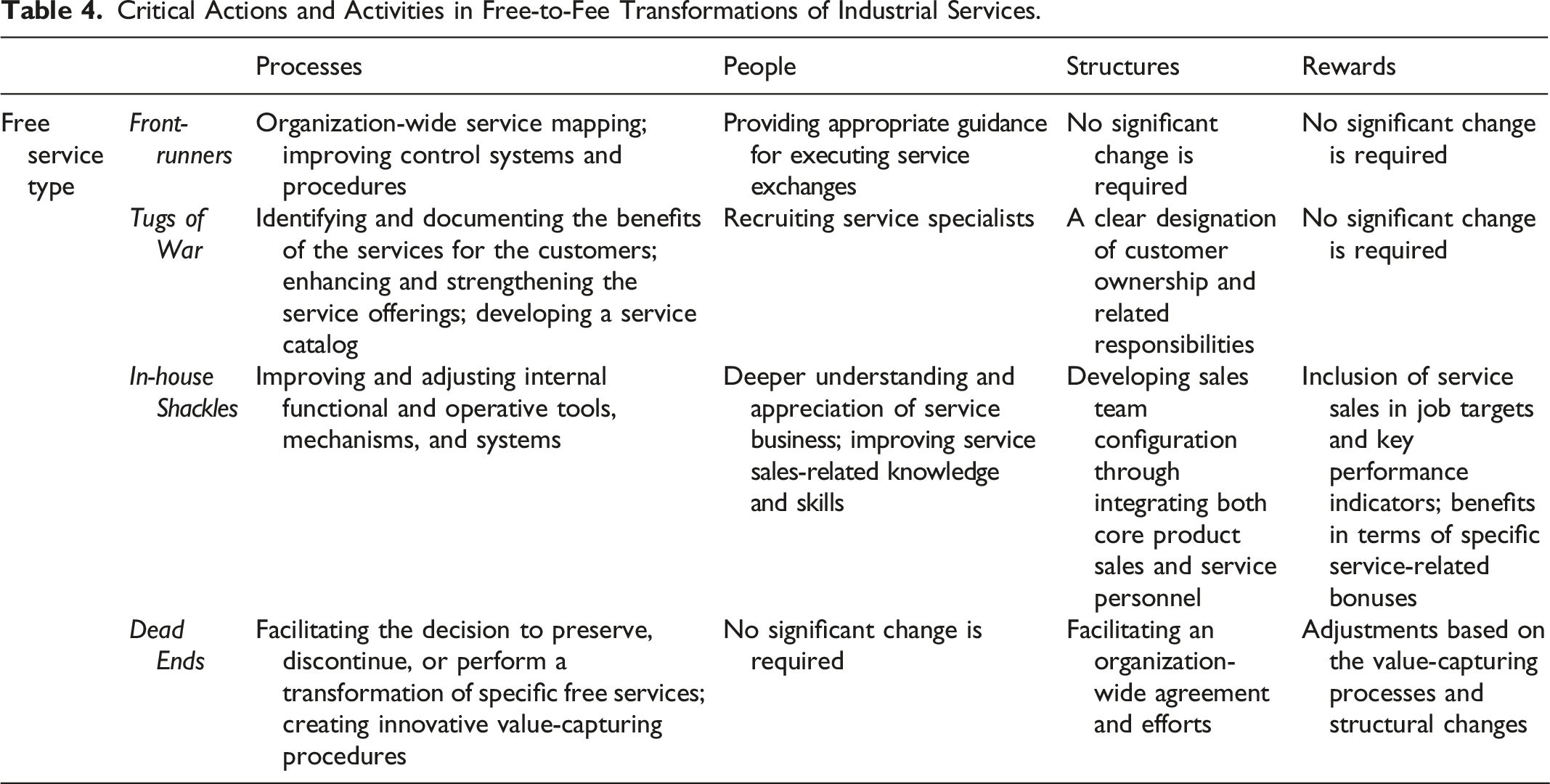
Critical Actions and Activities in Free-to-Fee Transformations of Industrial Services.
Front-runners
Our empirical investigation clearly shows that for F2F transformations of “Front-runners,” a supplier’s priorities are to focus on process- and people-related dimensions. One senior executive experienced in multiple successful F2F transformations had the following to say:
“For this type of services (Front-runners), you don’t need to make big changes in the sales teams or service teams or go buy another service company. Take our automation consulting service (a Front-runner), for example. The most critical things were that managers found out what services our people were giving away, documented them properly, and then clearly guided and supported them to invoice going forward.”
—Head of Customer Service, Food Processing Machine Firm
Multiple respondents acknowledged that identifying and documenting existing free services represented the first crucial process-related initiative. Firms often lacked an overview of the depth and breadth of services provided free of charge, especially as those services grew over the years across geographic locations and product portfolios. To address this issue, several suppliers relied on detailed service mapping, identifying and documenting all free services provided to customers at every level. This step was considered crucial not only for “Front-runners” but also for the overall F2F transformation initiatives.
The diagnostic firm in our sample, which had trouble with training and education programs for oncology therapists (an “In-house Shackle”) yet succeeded in transforming the service of discharging and refilling formaldehydes (a “Front-runner”), offered further insights:
“Customers (hospitals and diagnostic centers) are supposed to discharge the used formaldehydes from our genetic screening machines and refill them. During discharge and refill, our technicians are present there just to ensure safety and quality. However, they were discharging & refilling formaldehydes at many customer sites without informing their managers. As far as they were concerned, they were ‘just lending a hand’ and did not even think that we could charge for it! We only got to know about it when we undertook a thorough screening of our services. We then decided to charge for it and gave the technicians clear instructions. Since then, some customers have agreed to formally buy the service and are paying for it.”
—Global Business Manager, Diagnostic Firm
Another informant shared a similar experience with respect to the role of mapping services that are provided free of charge:
“It can be a field engineer offering minor process improvements or a top sales guy throwing away a service that’s worth tens of thousands of euros. Unless you do a very thorough checkup across the organization, you never know.”
—Naval Architect (General Cargo Ships), Shipbuilding Firm
After identifying and documenting a list of free services, suppliers generally focused on “Front-runners” and developed a clear roadmap for financially capitalizing on these opportunities. The same shipbuilding firm offered further insights:
“Once we figured out all the services we give for free, we identified those that were not so difficult to charge for, like this ‘cargo efficiency improvement’ thing that we have for older ships. We then clearly communicated to everyone inside the company, especially the salespeople, ‘No more giving this one for free.’ Rather, we set prices for those services and told our people that going forward, these are the prices you charge for them.”
—Sales Manager, Shipbuilding Firm
Developing and implementing control systems and procedures also played pivotal roles in transforming “Front-runners.” Consider the example of the cancer cure firm in our sample, another company with a limited degree of F2F transformation success. Managers had been struggling with “site planning and installation” (a “Tug of War”) services but successfully transformed the firm’s “process improvement services” (a “Front-runner”). In doing so, implementing a software and spare parts inventory tracking system to ensure accountability and control was deemed crucial: “Our engineers and technicians would often go for regular checkups of customers’ processes – the way they operate and maintain the radiation therapy machines. Then, as necessary, they would replace or upgrade the software or components of those machines; which are very valuable for the customer to maintain or even improve their processes; without charging anything. This showed that we lacked a control system on our side. To begin with, they (engineers and technicians) should not have been able to order those parts or software without any accountability, right? So, we have put systems in place where any component or software license must be ordered through specific channels and the details are recorded. So, every part has a price, and they (service engineers) know they must charge the customers for it.” —Head of Services, Cancer Cure Firm
Closely related to these process improvements is the people-related dimension of providing appropriate guidance for implementing service exchanges. Respondents mentioned that product-oriented personnel (i.e., sales managers, engineers, or technicians) often found it challenging to perform service exchanges. One key informant, for instance, pointed to the free “improvement of warehouse operational processes” services in relation to collision avoidance inside large warehouses:
“Our on-site service engineers did not realize that we could charge 190 euros each time for ‘tightening a few bolts’ (laughs), and they do it thousands of times per month. They understood the value of our ‘warehouse operations improvement’ services only after we helped them to understand the benefits from the customers’ point of view. Moreover, we had to train them how to invoice, provide transaction details, record it in the system, etc.”
—After-Sales Manager (Germany, Benelux, Austria, and Switzerland), Industrial Vehicles Firm
However, once employees received adequate guidance regarding “Front-runners,” they followed through. No specific changes were needed in terms of organizational structure, nor were distinct F2F-related rewards considered crucial.
Tugs of war
For F2F transformations involving “Tugs of War,” challenges mainly arose outside the firm. Firms in our sample focused on process, people, and structure to address these hurdles.
Services in this category were generally provided on an ad-hoc basis. Our data show that the critical process-related improvements for their F2F transformations entailed identifying and documenting the benefits of the services for customers, followed by systematically enhancing service offerings to optimize their customer value. The following statement regarding providing free power and efficiency benchmark services offers an illustration: “For these services, you are usually in the dark. Initially, you often don’t know their usefulness for the customer! So, our main (process-related) focus was on two issues. First, to figure out what customers actually did with those services – how they use them. And second, as these services were not part of our regular offerings and were delivered only when customers asked for them, they did not have any particular shape or form and were a bit messy. So, we had to improve and repackage those services further and turn them into concrete offerings with a price” —Chairman of the Board (Former CEO), Food Processing Machine Firm
Thus, after identifying customer value, the firms in our study did not try to sell these “Tugs of War” per se but instead enhanced those service offerings before approaching the customers. To continue with the example of the food processing machine firm, after installation and commissioning production equipment at factory floors, customers often asked for measurement and provision of power and efficiency benchmarks – services typically provided for free in the industry. However, while conducting its F2F transformation, the supplier in our sample improved the service by offering benchmarking comparisons with peers and best-in-class, and then performing further equipment calibrations as necessary, both of which were crucial in improving customers’ productivity and reducing production costs. The example below offered by one of our key informants illustrates the importance of this particular measure:
“Well, think of providing free initial production benchmarks. Everybody does the same, so how do you charge for that? Once we improved the service, we could clearly show customers the benefit they would get. This is not the same free service that companies give away; this is a much better one. Without doing so, I don’t think we’d be successful (in our F2F transformation).”
—Head of Pricing and Market Development, Food Processing Machine Firm
Managers emphasized equipping frontline employees with a well-crafted service offering catalog that contained detailed information on the services and their respective prices, which they considered another crucial process-related improvement in turning around free services, especially those in the “Tugs of War” category. Such a catalog clearly communicated to customers that suppliers were strongly committed to service provision rather than making random attempts to clinch revenues. Moreover, the sales and service personnel now had a clear roadmap in hand when engaging in discussions with customers. Consider the following statement made by one of our respondents:
“Yes, we have all the details in a book: the services, their description, their benefits, and so forth. And, clear prices against every service! It’s a great tool when you are trying to convince the customer to pay. You can always refer to the book and tell them, ‘Look, I am sorry, I cannot give this to you for free. It’s something that we sell for money, and if you want it, you have to pay for it.’”
—Head of Pricing and Market Development, Food Processing Machine Firm
Another key informant from the same firm added: “Put the details in pen and paper and even on your website. It’s a very clear sign – you are not throwing away free services here and there just because the customer wants to. Make it official: ‘Hey, these are the services. They are better than we previously gave for free, and they come with a price.’ Show your booklet to the customer; refer them to your website if you need.” —Head of Customer Service, Food Processing Machine Firm
With respect to the people dimension, in close relation to the above initiatives, firms emphasized the importance of hiring service experts. Interviewees explained that even though their product salespeople were willing to engage in selling “Tugs of War,” they often lacked the specialized skills and capabilities needed to do so. New service experts were necessary for other aspects as well, such as identifying the customer value created by these services and setting their price:
“Yes, our people who sell cargo systems for large ships were ready to take a shot at selling those services. The problem was that they are used to play around lifting capacity, technical quality, weight reduction... But, when it comes to convincing customers to pay for the services that they are very much unwilling to do, we needed new people who could do so.”
—Chief Naval Architect, Shipbuilding Firm
The importance of enhancing a firm’s service-related capabilities by hiring service experts was also reflected in a much less successful firm, as one key informant admitted:
“It takes so much time and effort to deliver those services, but we simply cannot figure out what the customers do with all these technical calculations that they randomly ask for. We are simply not good enough in this kind of service game. Seems like our only option is to hire people who know these games. Also, how do you set price for these services? As a product-based company, we simply don’t know. We need service people for that, too.”
—Vice President (Business Development), Security Firm
Furthermore, interviewees highlighted that the people dimension was closely intertwined with the structure dimension, as the inclusion of new service experts often led to overlaps and conflicts in terms of job responsibilities, scope, targets, and customer ownership. Reflecting Mathieu’s (2001) argument that industrial suppliers require infrastructural changes to grow a service business, multiple interviewees indicated that reviewing organizational structures, including the clear designation of customer ownership and related responsibilities, helped them address these problems. Consider the experience of the food processing machine firm, which reported multiple F2F success stories: “While the inclusion of service experts is crucial, be careful that it does not become an internal fight, like a land grab – who’s got the customer? For us, we had to clearly define who is working on what. Everybody should know what they are assigned to and what’s in it for the company as a whole.” —Head of Customer Service, Food Processing Machine Firm
In sum, to master F2F transformations involving “Tugs of War,” firms needed to gain insights into the customer benefits of the services they provided and change established processes, especially improving the service offering, developing a service catalog, and communicating value to customers. In doing so, they needed to bring in new people with service expertise, further necessitating the recalibration of structures to avoid internal conflicts.
In-house shackles
To overcome process-related challenges associated with F2F transformations of “In-house Shackles,” firms in our sample focused on improving functional and operative tools, mechanisms, and systems to identify, quantify, document, communicate, and capture the value created by the free service in question. Consider the following examples:
“How do I log a parts number against a service? How do I record a pay-for-performance service transaction? Sometimes, my system would not even allow me to do it. You know, if you are a product-oriented company, your systems can be terrible at handling service business and you would rather give it away for free! The only option we had was to modify and optimize your systems.”
—Services Manager, Construction Firm “Previously, when we discussed value – for example, for power plants – we were used to talking about OPEX (operating expenditure) and CAPEX (capital expenditure). Even our accounting processes and inventory systems were designed that way. Now, how do you calculate CAPEX for analytics and monitoring services? It’s a different ball game, and we had to develop and modify our systems, our processes, to calculate and communicate their values.” —President (Energy Solutions), Engine Firm
Concerning the people dimension, improving service sales-related skills along with a broader knowledge of the service offerings was considered crucial, as key informants of successful organizations explained:
“For these services, it’s your own people who often create the problem, as they are simply afraid of what they are getting into. For our rotating equipment performance management services, what we did was to enhance their knowledge and abilities. We talked with them face to face, understood their issues, and then arranged the training and education that they needed to make them comfortable with services.”
—Global Manager (Value), Industrial Machinery Firm
“Often, even when it would be easy to charge the customer (for the repair and maintenance, and the analytics and monitoring services), our people didn’t want to get into it simply because they didn’t know how it works! So, they tried to avoid it at all costs. We helped our people to increase their service-related skills. We arranged regular workshops, we helped them to see the big picture. If someone needed further training, we arranged that, too.”
—President (Services), Engine Firm
In relation to the above, successful firms repeatedly emphasized the importance of adopting incentives and reward systems to help overcome internal barriers and motivate employees to focus on the hidden revenue opportunities of free services. Managers relied on multiple initiatives, such as including service sales in yearly sales target reviews, changing key performance indicators (KPIs), and introducing a specific bonus for service sales performance. Consider the following statement:
“We made selling services official! So, not just some training and education for our people that are just nice to have. Rather, we included services in the yearly sales targets. We also modified KPIs. All of these helped to direct our people more towards services and also showed that these (F2F initiatives) were not just empty talks. Rather, we were serious about services.”
—Global Manager (Value), Industrial Machinery Firm
“You can’t just push people to go and sell services. Sometimes, they have to have something in it for themselves. It is common practice to give bonuses for product sales. What we did was to introduce the very same idea into service sales so that they have some personal motivation to get these services moving. After all, it’s not that difficult to convince customers to pay for these services. What they need here is a drive from our own people, and some bonuses can do the trick”
—President (Energy Solutions), Engine Firm
With respect to organizational structures, adjusting sales team configurations emerged as another essential initiative. Several companies in our sample integrated existing sales and service personnel. These teams leveraged complementary knowledge and expertise. Service engineers and field technicians drew on regular customer interactions and an in-depth understanding of customer needs and usage situations for a better understanding of how existing services created value for customers. Sharing knowledge and leveraging insights among different members of the sales team for identifying value creation and pricing opportunities emerged as key success factors, as one key respondent explained: “We really needed to build a team. Our service engineers and technicians have great insights into how customers use our services – both in monitoring and lubrication management and rotating equipment performance management services. However, they have trouble thinking and talking about pricing. They are totally cost-based. If the drawing is already there, and all they have to do is to do some technical measurements and change some spare parts, they’ll ask, ‘Why are we charging more than the cost of the parts? How?’ That’s where salespeople come in.” —Global Manager (Value), Industrial Machinery Firm
In sum, successful F2F transformations of “In-house Shackles” depended predominantly on enhancing suppliers’ service-related knowledge and capabilities, paired with modification and alignment of internal functions and systems. Aligning the reward systems and team structures played further critical roles.
Dead ends
F2F Transformations of “Dead Ends” represented the most problematic of all four types of free services in our study. Managers faced daunting challenges both from inside and outside of their organizations. Our data show that an essential first step for firms was to decide whether to engage in an F2F transformation of “Dead Ends” at all or forgo such an initiative as a waste of time and resources. As a key informant mentioned:
“We will simply make the customers irate if we ask for money for these services. You can see that these services are useful, but probably at some sort of aggregate level. It’s not possible to determine the benefits for individual customers or charge for them. Also, nobody in the company thinks that’s a good idea. Like, it’s nice to have a reception desk at your office, and somebody greets customers there, but can you actually charge for it?”
—Global Manager (Value), Industrial Machinery Firm
Our interviews revealed a range of interesting initiatives through which managers attempted to address “Dead Ends” – predominantly through changes in the structure and process dimensions, but also, to some extent, in people and rewards. Some of the firms were able to reduce the costs of providing the services through structural changes – for example, by transferring the provision to channel partners that were well placed to deliver such services at a lower cost. A second measure was applied through service design processes, in some way similar to addressing “Tugs of War.” For instance, one respondent explained that her company recast a “Dead End” technical support service into multiple tiers, which ranged from providing simple technical advice on calibrating laser levels to fixing complex abrupt downtime issues of automated capital equipment via remote access to customers’ servers. The supplier defined three service-level packages and offered customers the option to purchase based on their service-level requirements. Basic technical support was considered standard industry practice, and the supplier maintained this first level of service free of charge. However, beyond this primary technical support, the firm began to charge for advanced levels of support and effectively escaped a “Dead End” provision.
Beyond transferring activities to third parties or introducing multi-tier service packages, other initiatives also emerged. To regulate the consumption of costly “Dead End” services, another supplier introduced a unique “value card” system, which customers could use to receive technical support over the internet. Customers purchased the cards loaded with different amounts of “points.” Each time a customer logged in into the suppliers’ systems to get the services, points were deducted from the value card.
In the people dimension, the F2F transformation of “Dead Ends” required organization-wide agreement at all hierarchical levels, thus protecting employees from the discomfort of going against established free service provision practices. Our insights resonated well with existing research, suggesting that service growth strategies of product-centric B2B companies require a fundamental shift on organizational culture (Kohtamaki et al. 2015; Kowalkowski and Ulaga 2017; Mathieu 2001). Our interviews revealed that resistance to F2F initiatives emerged not only among frontline employees and middle management but also at the senior management level. As one informant explained:
“At the beginning, even our board members were reluctant to charge for these free services (real-time data-based insights), saying, ‘Wait a minute – we are a product company. Are we moving to service business or what?’ It took quite some time and effort to make them realize we are not changing our business altogether, and we were already providing those services for free and losing money! It took some effort to get the ‘go ahead’ from them.”
—President (Services), Engine Firm
In sum, “Dead Ends” present the greatest challenges to successful F2F transformation. Managers must determine first whether they need to continue providing the services for free or stop them altogether to eliminate the associated costs. If the decision is to continue, fundamental changes are often required at all organizational levels, including structures and processes as well as people and rewards.
Conclusion
General Discussion
Our study, grounded in the experiences of a cross-section of global industry leaders, allowed us to clarify the nature of truly free industrial services and develop a sound definition thereof. We further developed a typology that captures the F2F transformation potential of such services according to the challenges that are internal and external to the firm. Finally, based on concrete initiatives, implemented by firms that are at different stages of their respective learning curves, we identified actionable directions for how firms can best align organizational structures, processes, people, and reward dimensions to successfully steer such F2F transformations.
Thus, we build on and extend prior research by closing three important gaps. First, we remove conceptual ambiguity around the nature of “truly” free services. Next, existing research has investigated free services in an undifferentiated manner. Yet, our findings show that one must account for heterogeneity among free services based on different combinations of the challenges being faced. Finally, prior research has been silent on how to practically transform free services into for-fee services. Our study specifically sheds light on concrete actions in each of the four types of free services identified.
Overall, our research shows that F2F transformation of industrial services is not just an isolated sales or pricing activity. Rather, such a strategic initiative requires a collective and integrated effort among different organizational functions and hierarchical levels. It involves careful alignment of the core organizational dimensions to address and overcome the challenges at hand. The most common internal challenge – resistance from the product sales force – is reflective of the general industrial services literature (Terho et al. 2012; Töytäri et al. 2011). Particularly, for services in the “In-house Shackles” category, sales need to evolve from being an isolated function to a cross-functional approach where traditional product sales personnel should engage in service sales (Storbacka, Polsa, and Sääksjärvi 2011). Indeed, across all types of free services, we observed a transformation of the sales function from an operationally focused to a strategically focused practice (Storbacka, Polsa, and Sääksjärvi 2011; Terho et al. 2012; Töytäri et al. 2011).
We also found that many psychological barriers to pricing formerly free services exist in industrial companies akin to those discussed in consumer settings (Bond, He, and Wen. 2019; Brady, Voorhees, and Brusco 2012; Lambrecht and Misra 2017). Thus, significant internal changes are needed in terms of organizational culture and mindset for any successful F2F transformation. Moreover, we find support for the argument put forward by Dutta, Zbaracki, and Bergen (2003) and Indounas (2009) suggesting that product-oriented industrial suppliers often lack service pricing capabilities – a problem that they overcome by hiring service experts.
In our research, we identified specific actions and activities for each type of free services that are critical to their successful F2F transformations. Some of these actions and activities, for instance, taking stock of the depth and breadth of free services provided before embarking on a full-fledged transformation initiative, may prove beneficial for the overall F2F initiative of an industrial supplier. Such an initial assessment provides the organization with a useful snapshot of all existing free services. Similarly, our study shows that the people dimension – that is, enhancing their service-related understanding, expertise, and capabilities – plays a crucial role in the F2F conversion of almost all types of existing free services. What changes is the degree of intensity as well as the focus on specific skills. For “Front-runners,” suppliers focused on enhancing their frontline personnel’s service exchange-related skills through regular guidance and support, whereas for “In-house Shackles,” training and education to increase service-related knowledge and capabilities were more prevalent. In cases involving “Tugs of War,” industrial suppliers went a step further and hired new service experts to strengthen their service-related capabilities.
Not all of our findings are confirmatory to previous literature. When it came to external challenges, for example, we found stark empirical contrast to the dual entitlement principle. According to the theory, industrial suppliers who clearly communicate their costs of service provision with the customers should receive a fair price (Kahneman, Knetsch, and Thaler 1986; Urbany, Madden, and Dickson 1989). Our findings showed otherwise. Conceptually, this may stem from two interrelated issues. The first is the “reference price” (Bruno, Che, and Dutta 2012), which is derived from customers’ previous price references gained either by prior purchasing experience (internal reference price) or by observation and information from their peers (external reference price). For existing free services, both the internal and external reference prices are zero, as customers are used to getting the services in question for free. Neither do other customer organizations pay for these services. Consequently, the introduction of a price reflects a departure from the customer’s frame of reference and fails to resonate with them.
Second, the dual entitlement principle is heavily dependent on the “community norm of fairness” (Kahneman, Knetsch, and Thaler 1986; Urbany, Madden, and Dickson 1989). However, unlike consumer markets where individuals often form strong communities and share common norms (Chou, Lin, and Huang 2016), business customers of industrial suppliers often compete head to head (Storbacka, Polsa, and Sääksjärvi 2011; Terho et al. 2012; Töytäri et al. 2011). Thus, they might be less inclined to share norms of price fairness with others, resulting in dysfunctionality of the dual entitlement principle.
Theoretical Contributions
In this study, adopting a TIU approach (Zeithaml et al. 2020), we focused on integrating empirics with existing literature for further conceptual development rather than theory testing. Taking the literature on industrial service growth as the starting point, we precisely delineated the scope and boundaries of free services in industrial markets and developed a definition that removed ambiguity and provided much-needed clarity to serve as a basis for future research in this nascent but critical area of service research.
Typologies are extensively used across management disciplines to provide granular insights into complex phenomena, guide organizational actions, and contribute to theory building (Doty and Glick 1994; Eggert et al. 2014; Mathieu 2001; Ulaga and Reinartz 2011). In a similar vein, our typology opened the black box of free services and documented their heterogeneous nature; these activities differ in terms of their F2F potential, challenges, and ways to overcome them. Without this typology, analyzing F2F transformations would be too simplistic and overly general. Further, we have advanced knowledge in this field by unpacking each quadrant of the matrix to investigate specific combinations of challenges and effective managerial actions.
Our contributions go beyond the creation of a typology, adding substance in response to the call by Lehmann (2004, pp. 73-74): “If marketing wants ‘a seat at the table’ in important business decisions, it must link to financial performance.” Complementing prior studies that advocated in favor of service growth in industrial firms (Eggert et al. 2014; Oliva and Kallenberg 2003; Ulaga and Reinartz 2011), we show how both internal and external challenges need to be considered simultaneously when embarking on an F2F transformation in order to increase revenue and profitability. Witell and Löfgren (2013) focused on eight strategies for creating incremental to radical business model innovation for F2F transformation, without reference to the interplay of internal and external challenges. Indeed, the dominant focus of prior studies has been identifying, describing, and analyzing change in business models (e.g., Witell and Löfgren 2013), or black-and-white decision-making regarding whether to charge for services (without showing how) or discontinue them altogether (e.g., Anderson and Narus 1995). Grounded in managerial experience, this study is the first to document the combinations of critical challenges faced by each type of free service in F2F transformation and how they can be overcome through concrete initiatives (see Table 4).
Further, our detailed analyses created a more nuanced understanding of the phenomenon. For instance, close buyer–seller relationships are known to generate positive outcomes in B2B settings (Ryals and Holt 2007; Ulaga and Eggert 2006). Yet, our study has revealed some of the dark sides of close relationships between frontline service employees and their counterparts in customer organizations that can create barriers to F2F transformation (similar to “Service Sweethearting” in a B2C context; see Brady, Voorhees, and Brusco 2012). As another example, our results also showed how companies need to adapt structures and processes, such as accounting or inventory management systems, to enable service transactions, an aspect hitherto overlooked in prior literature. Collectively, our study findings have strengthened the conceptual foundations of this promising research area.
Managerial Implications
Clearly, F2F transformations entail complex processes that require holistic comprehension of existing free services, their respective challenges, and overall revenue and profit potential. A more nuanced understanding of innate differences between the four different types of free services can help industrial suppliers develop a structured and effective way of managing such initiatives. In addition, insights gained from our study can help managers and frontline employees to: (i) identify free services and select those with the highest F2F transformation potential, (ii) understand a given free service’s specific barriers to a successful transformation, and (iii) learn how to make appropriate changes in the four organizational dimensions (i.e., structures, processes, people, and rewards) to unleash lasting revenue and profit potentials.
Our study highlights the significance of coordinating the different functions and units engaged in an F2F transformation. For example, sales personnel and field service technicians need to effectively coordinate customer interactions. Similarly, accounting, finance, and legal functions need to align themselves with F2F transformation strategies. In short, all functions need to be in synchronicity if a supplier is to successfully implement an F2F transformation project. Suppliers are well-advised to consider the initiatives shared and discussed in our study, such as sales team coordination, alignment of incentive and reward systems, employee training and education, and adaptation of inventory and ERP systems, to enhance functional and unit coordination.
We would also reiterate the importance of calibrating each organizational dimension while keeping in mind its effects on related dimensions. For instance, if the service mapping process is executed poorly or without input from the functions or units that will be involved in deploying or executing the F2F transformation, the outcome is likely to be less effective. Similarly, while training a supplier’s salesforce to engage with customers about F2F transformation, the company should address, in parallel, the changes needed with respect to incentives and rewards.
Further, as Tuli, Kohli, and Bharadwaj (2007) have also pointed out, managers need to be aware of the difficulties involved in implementing such activities. For instance, a contingent hierarchy to address F2F transformation challenges may reflect a break from conventional ways of structuring organizations. Thus, its implementation may entail substantial organizational changes that meet opposition from managers with vested interests in existing organizational structures. In such situations, one approach could involve piloting contingent hierarchy among a few units or particular geographic areas, creating and communicating success stories, and tracking phased adoption in other units or areas.
Limitations and Research Agenda
As is the case for any research project, our study choices created some limitations and opened fruitful avenues for future research. For example, we investigated only supplier firms, missing out on the perspective of customer organizations. Going forward, we recommend that researchers consider both customers’ and dyadic perspectives to deepen our understanding of this domain. Likewise, because our sample included exclusively global industry leaders, investigating small and medium-sized companies might provide interesting insights pertinent to those contexts.
Future Research Agenda for Free-to-Free Transformations of Industrial Services.
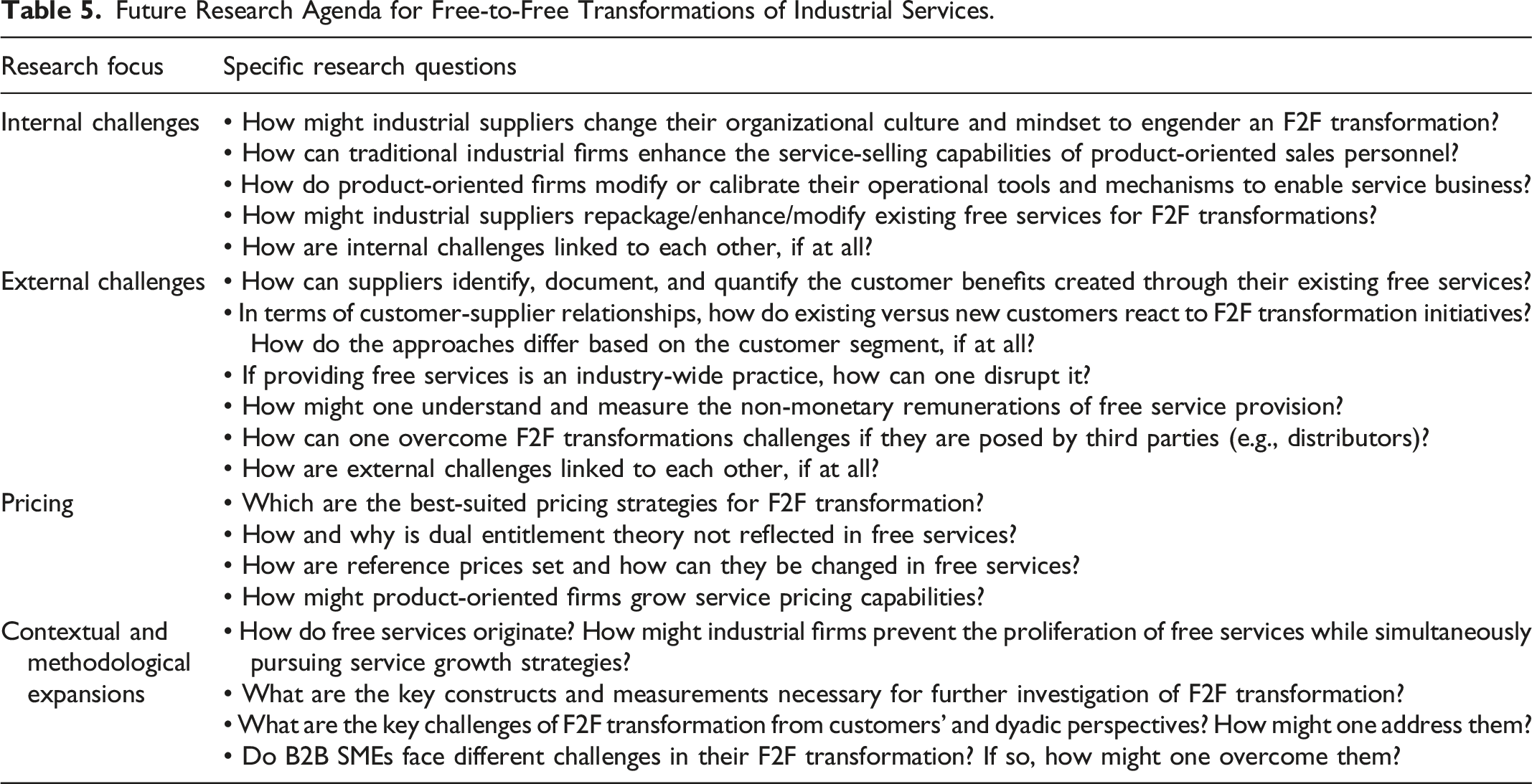
Although the above-mentioned limitations must be kept in mind when considering our results and implications, we hope our findings provide new insights to academics and practitioners alike and encourage both scholars and managers to further explore, understand, and manage future F2F transformation journeys.
Footnotes
Acknowledgment
The authors express their sincere gratitude for the helpful comments in developing the present article to Ajay Kohli, Andreas Eggert, Gary Lilien, Nicole Coviello, Niina Nummela, Shantanu Dutta, Tuure Tuunanen, and the session participants at the BMM-EMAC Conference (2017), the AMA Winter Academic Conference (2018), and the ISBM Academic Conference (2018). The continuous support and the constructive suggestions from the editor, the associate editor, and the anonymous reviewers throughout the review process are gratefully acknowledged. Mekhail Mustak acknowledges the financial support from the Foundation of Economic Education, Finland, and the Kone Foundation, Finland.
Declaration of Conflicting Interests
The author(s) declared no potential conflicts of interest with respect to the research, authorship, and/or publication of this article.
