



Abstract
Service research emphasizes the relevance of consumers’ participation in the cocreation of transformative outcomes like health and well-being. However, in complex services, consumers’ limited operant resources and lacking resource integration efficiency hinder transformative value cocreation. Service research on mechanisms that facilitate well-being through efficient resource integration is sparse, but several disciplines elaborate cognitive interventions with that target. These interventions have been validated in various contexts. Nevertheless, concerns persist that they can hurt, rather than help, individual consumers. Overcoming such limitations requires an interdisciplinary effort. The present article outlines the new research area “transformative consumer interventions” (TCI) by integrating interventions theory, consumer psychology, and transformative service research in a health context. TCI provide theory-driven principles for the selection and design of interventions that facilitate operant resource integration in complex services. Additionally, we conceptualize consumer boosting, the first TCI-based intervention construct. Consumer boosts are efficient, context-specific, and personalized interventions that enhance individuals’ operant resources. Consumer boosting provides a pathway to transformative cocreation and alleviates the risk of unintended consequences and value co-destruction. This research illustrates that the transformative service domain stands to benefit substantially from getting involved in the discussion on consumer interventions and offers a unique perspective for further conceptual elaboration.
Keywords
Firms, consumers, and other actors often collaborate to enhance consumer well-being in cocreative processes (Anderson et al. 2016; Vargo and Lusch 2016). To achieve transformative outcomes in health services, consumers’ active participation is essential (McColl-Kennedy et al. 2017; Ng, Sweeney, and Plewa 2019). In fact, many cocreative processes are consumer-directed and take place outside of providers’ immediate reach (McColl-Kennedy et al. 2017; Mende and van Doorn 2015). At the same time, consumer-directed cocreation is effortful (Sweeney, Danaher, and McColl-Kennedy 2015), and consumers may experience stress if they are responsible for the cocreation of their well-being outcomes (Anderson et al. 2016). One pathway for service providers to positively impact consumer-led cocreation of transformative value both during and beyond service interactions is the development of consumer resources (Blocker and Barrios 2015). For instance, firms can facilitate consumers’ cocreation efforts with subtle interventions into their cognitive processes. However, to date, service research on cognitive interventions is sparse.
Service research stands to benefit from embedding the vast body of knowledge on cognitive interventions and could in turn provide a unique perspective and relevant fields of application for the further development of interventions theory. The present research addresses this opportunity and outlines transformative consumer interventions (TCI), a new middle-range theory for all cognitive interventions that seek to enable the cocreation of transformative value. TCI theory allows for the conceptual evaluation of existing mechanisms, establishes a foundation for the development of new constructs, and provides a new perspective for the design and selection of situationally appropriate interventions. On that basis, we conceptualize consumer boosting, the first intervention construct that aims at facilitating transformative value through the efficient development of consumers’ operant resources.
Concepts that discuss the consumer-directed cocreation of sustainable health and well-being are central to transformative service research (TSR; Blocker and Barrios 2015). The COVID-19 pandemic showcases the extent to which risks to peoples’ health can affect individuals, societies, and the economy. In efforts to mitigate the impact of the disease, human behavior takes center stage (Betsch, Wieler, and Habersaat 2020). Behavioral science suggests that slight alterations of the environment in which consumers make choices can substantially affect their choice outcome. For instance, the effectiveness of an advertisement for self-quarantine is higher when it highlights social norms or is framed in a positive way (van Bavel et al. 2020). Such choice architecture interventions or “nudges” are often effective at altering behavior patterns in a target population (Johnson et al. 2012; Szaszi et al. 2018; Thaler and Sunstein 2008). Service providers can implement nudges into consumer interactions to increase well-being outcomes with relative ease (Wunderlich et al. 2013). At the same time, these interventions can have unintended consequences. Some are desirable, for instance, COVID-19 interventions help mitigate the spread of other infectious diseases such as the seasonal influenza (Cowling et al. 2020). Other side effects hurt individuals: After they have been successfully targeted by a healthy eating intervention, consumers may permit themselves to indulge more in unhealthy food later, leading to a negative overall effect (Dolan and Galizzi 2015).
Interventions that seek to alter peoples’ behavior by interacting with their cognitive processes have been discussed in various disciplines including consumer psychology (Milosavljevic et al. 2012), behavioral medicine (Nahum-Shani et al. 2018), and public policy (Sunstein 2014). To date, these developments have not been systematically incorporated into service research. At the time of writing, a search for the terms “choice architecture,” “cognitive interventions,” and “behavioral interventions” in this journal yields no results. Only one article peripherally discusses the concept of nudges as an intervention (Wunderlich et al. 2013). This is surprising for several reasons. First, TSR acknowledges peoples’ behavior as a key determinant for future well-being and explicitly seeks for mechanisms that foster sustainable consumer well-being through service encounters (Blocker and Barrios 2015; McColl-Kennedy et al. 2017). This aim overlaps with the goals of interventions research, which often portrays cognitive and behavioral interventions as tools to increase well-being (Hertwig and Grüne-Yanoff 2017; Thaler and Sunstein 2008). Second, service theories such as cocreation provide a valuable perspective for the conceptualization and discussion of interventions as joint efforts of providers and consumers are required for interventions to be effective. Third, service providers are in a prime position to utilize consumer interventions. Many firms have access to personal-level data and various, often digital, interactions with consumers (Aksoy et al. 2019; Huang and Rust 2017). This gives them a unique understanding of where consumers would benefit from assistance and the means to dynamically implement helpful interventions. Finally, service firms stand to benefit substantially from transformative interventions, as enabling consumers’ ability to cocreate raises the perceived service quality, efficiency, and ultimately well-being (Ouschan, Sweeney, and Johnson 2006).
We develop TCI through an integration of TSR, interventions research, and behavioral decision theory (MacInnis 2011). These research streams are important for the following reasons: TSR, which is outcome-oriented and aims at affecting well-being through services (Anderson et al. 2013; Ostrom et al. 2015), motivates the present research and constitutes a field of application. Furthermore, the concept of cocreation allows for a systematic analysis of the resource integration processes that lead to transformative value in service networks. Interventions research complements TSR by elaborating various mechanisms that foster well-being. TCI lean on existing research on choice architecture interventions, which facilitate the integration of operant resources (Dolan et al. 2012; Johnson et al. 2012), and heuristic boosting, which has recently been suggested as a method to develop peoples’ cognitive resource repertoire (Grüne-Yanoff and Hertwig 2016; Hertwig and Ryall 2020). Finally, behavioral decision theory provides psychological insights into consumers’ context-dependent development and integration of cognitive resources (e.g., Bettman, Luce, and Payne 1998), which has important implications for the design of TCI.
Discussing interventions from a TCI perspective yields several novel insights. First, distinctive interventions can facilitate transformative value cocreation in different situations. While some interventions support efficient resource integration, others can foster knowledge and competencies (cf. Hibbert, Winklhofer, and Temerak 2012). Relatedly, to unfold their full potential in a service exchange, TCI need to be context-specific, individualized, and efficient. Furthermore, a new perspective on consumer interventions helps overcome some challenges related to existing intervention mechanisms, such as a limited understanding of the underlying cognitive processes, unintended consequences, and challenging to predict effect sizes (Jachimowicz et al. 2019; Münscher, Vetter, and Scheuerle 2016; Szaszi et al. 2018).
This research has substantial interdisciplinary implications (Gustafsson et al. 2016). By outlining TCI as a middle-range theory in service research (Brodie, Saren, and Pels 2011) and developing consumer boosting as an exemplary TCI-based concept, the present work highlights the relevance of research into interventions that facilitate transformative value. Furthermore, it aligns relevant academic efforts on a unified trajectory that advances theory. Practitioners will be able to leverage our findings to develop context-sensitive and consumer-focused intervention strategies. This will be of special relevance for firms that seek to elicit transformative value, such as health app providers, financial advisors, or educative bodies. However, all firms using interventions in consumer interactions will benefit from this research as will policy makers seeking to improve well-being.
The remainder of this article is structured as follows. The following section highlights the necessity of interdisciplinary research into transformative interventions. We introduce existing research on nudging, heuristic boosting, and behavioral decision theory to then integrate that theoretical backbone and outline TCI. Next, we conceptualize consumer boosting, the first TCI-based intervention. An analysis of the merits and potential unintended consequences of the interventions discussed herein follows. We close with a discussion of theoretical and managerial implications and an outlook on future research.
Theoretical Foundations of TCI
In service, an interdisciplinary perspective is required: Both the domain of service research and TSR as one of its subfields have been characterized as interdisciplinary areas that share a common interest in discussing service-related phenomena and contexts (Anderson and Ostrom 2015; Ostrom et al. 2015). The present work integrates extant knowledge from various disciplines, which is essential to advance subsequent research (MacInnis 2011; Palmatier, Houston, and Hulland 2018). Conceptual works in service research need to be open to the incorporation of theories, paradigms, and methods from various disciplines (Gustafsson et al. 2016). The overlap of disciplines affected by, and contributing to, TSR and interventions research is substantial. TSR encompasses any research that addresses sustainable improvements to consumers’ well-being through service encounters (Anderson and Ostrom 2015; Anderson et al. 2013). The domain focuses on the cocreation of transformative value, which signifies a sustainable change toward increased well-being (Blocker and Barrios 2015). For instance, overcoming (operant) resource constraints to increase access to health services and making their cocreation more efficient can have a lasting impact on the quality of life of many people, especially those who possess the least resources (McColl-Kennedy et al. 2017; Ostrom et al. 2015).
While relevant to all service settings, the present study selects health services as its field of application for several reasons. First, health services are complex, and the cocreation of well-being through health services requires substantial resource commitments from providers and consumers alike (Anderson et al. 2016; Frow et al. 2019). Health services would benefit from the development of concepts and tools that facilitate the integration of such resources. Second, health services are transformative in that their central goal is the elicitation of sustainable well-being. Nevertheless, it is critical that undesirable consequences, which lead to the co-destruction of value, are avoided (Anderson and Ostrom 2015). Third, resulting from technological change, health services are rapidly developing (Danaher and Gallan 2016; Huang and Rust 2017). To manage and utilize that technological change appropriately, value creation dynamics in health services need to be scrutinized and innovated (Čaić, Odekerken-Schröder, and Mahr 2018).
Cocreation recognizes that several stakeholders integrate operand and operant resources in a service exchange (Vargo and Lusch 2008, 2004). However, “the precise routes by which well-being is co-created among actors […] remain unclear” (Chen et al. 2020, p. 2), and “there has been a lack of theoretical development to explain the processes by which customers learn to be effective resource integrators” (Hibbert, Winklhofer, and Temerak 2012, p. 247). Addressing these shortcomings, TSR-informed consumer interventions acknowledge that service providers can leverage their resources in two ways: They can either contribute them to the cocreation process directly or apply them to the development of consumer resources (Figure 1). This mechanistic distinction emphasizes that cocreation happens over time and often outside of providers’ immediate control (Mende and van Doorn 2015). What is more, in line with the notion that learning determines how consumers engage in future cocreation encounters (A. F. Payne, Storbacka, and Frow 2008), actors can influence other actors’ resources, which they contribute to the service exchange immediately or at a future point in time (Anderson et al. 2016; Hibbert, Winklhofer, and Temerak 2012). For instance, firms can provide suggestions based on their expertise (integrating their operant resources), or they can enhance consumers’ relevant knowledge and competencies (developing operant resources). Indirect resource integration through consumers’ resource development may lead to more efficient cocreation (Hibbert, Winklhofer, and Temerak 2012).
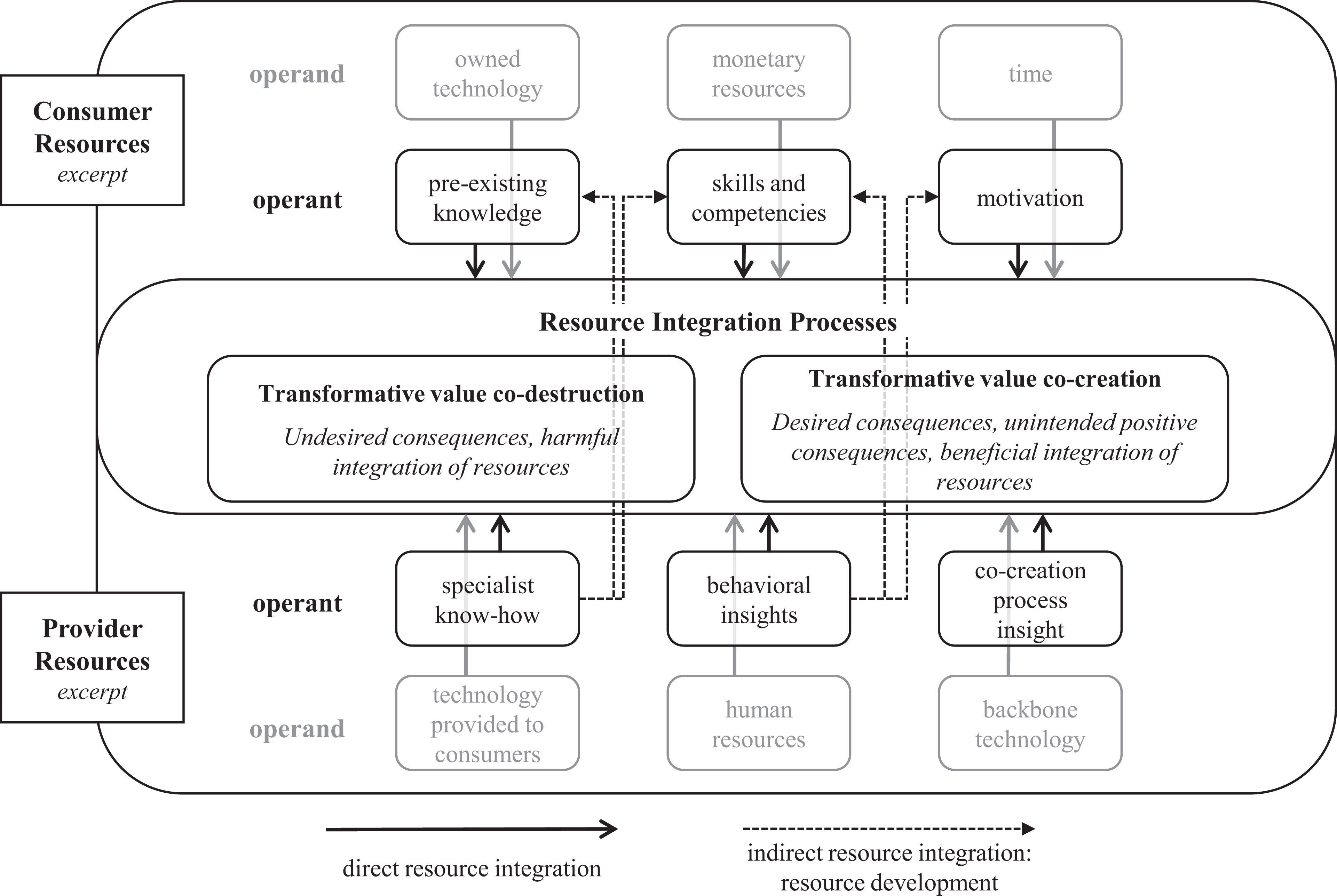
Exemplary pathways of operant resource development and integration in cocreative service exchange.
An elaboration of cocreative concepts also needs to address their co-destruction potential. While service providers can leverage cognitive interventions to facilitate transformative value creation, value is phenomenologically determined by the beneficiary (Vargo and Lusch 2008). Cocreation will be perceived as successful by the consumer if the desired outcomes are achieved. Positive side effects may further enhance this perception. However, there is also a risk that providers’ value propositions, resource contributions, and process enablers are not optimally integrated, which can result in the co-destruction of value (Anderson and Ostrom 2015; Spanjol et al. 2015). In some situations, no existing intervention reliably empowers consumers. This results from several issues, including interventions’ potential to be used malevolently (Rebonato 2012; Thaler 2018) as well as their vague definitions (Kosters and van der Heijden 2015; Sims and Müller 2019). Consequently, interventions can incur undesirable results for providers and consumers (Dolan and Galizzi 2015; Grüne-Yanoff, Marchionni, and Feufel 2018; Jachimowicz et al. 2019).
As a first step toward the development of TCI, the conceptual hold on intervention constructs and their situational merits and shortcomings needs to be improved (Grüne-Yanoff, Marchionni, and Feufel 2018). To foster understanding of when and how interventions can facilitate cocreation, and where co-destruction risks emerge, the following sections briefly review the mechanisms nudging and heuristic boosting. As new intervention constructs should be backed by consumer-based theory (Michie, van Stralen, and West 2011), we then discuss how behavioral decision theory can contribute to TCI.
Heuristic Boosting
If the effort to cocreate desirable outcomes is reduced, the released resources can be allocated to the pursuit of other well-being goals. Cocreation effort has therefore been of interest to transformative service researchers in health settings (Sweeney, Danaher, and McColl-Kennedy 2015). Heuristic boost interventions can advance that discussion. The term “boosting” was first used to describe an intervention mechanism by Grüne-Yanoff and Hertwig (2016). We dub their original iteration of the mechanism heuristic boosting to highlight the key conceptual element (heuristics) and allow a differentiation from consumer boosting as developed in this article. Like most modern decision-making research and behavioral sciences, heuristic boosting rests on the paradigm of bounded rationality (Grüne-Yanoff and Hertwig 2016). Bounded rationality suggests that peoples’ resources, including capabilities and time, are limited. It is therefore impossible to consistently behave optimally (Simon 1956). To overcome resource limitations in the pursuit of well-being, consumers utilize various decision strategies. They can either rely on normative decision rules suggested by economic theory or use simpler routines such as heuristics (Simon 1990). Heuristics describe mental shortcuts that ensure satisfactory outcomes while reducing the resource requirement for the decision process (Gigerenzer and Brighton 2009).
Heuristic boosting seeks to improve heuristic decision-making capabilities and thus targets consumers’ operant resource repertoire. Hertwig and Grüne-Yanoff (2017, p. 977) define heuristic boosts as “interventions that target competencies rather than immediate behavior. […] By fostering existing competencies or developing new ones, boosts are designed to enable specific behaviors.” Heuristic boosts target the efficient buildup of competencies and expertise in the long run (Hertwig 2017). Heuristic boosts therefore differ from other interventions in that the intervention designer does not seek to influence the cocreation process directly but rather influences the operant resources of other actors. Heuristic boosts can increase competencies in health and other service areas (Hertwig 2017; Hertwig and Grüne-Yanoff 2017), and there is some evidence that systematic heuristic education positively impacts consumer decision making and well-being (Drexler, Fischer, and Schoar 2014). It has also been argued that in some situations, heuristic boosts are more likely to have a positive impact on well-being outcomes than other intervention mechanisms (Hertwig and Ryall 2020).
However, the nascent literature on heuristic boosting has yet to deal with a variety of challenges: (1) Heuristic boosting is still vaguely defined and therefore both hard to delineate from other constructs and hard to integrate in a larger theoretical framework (Grüne-Yanoff, Marchionni, and Feufel 2018; Sims and Müller 2019). (2) With some notable exceptions (Bradt 2019; Franklin, Folke, and Ruggeri 2019), there is still a paucity of empirical research on the effectiveness of heuristic boosts. (3) There are no conceptual models or empirical observations of the side effects of boosts (Grüne-Yanoff, Marchionni, and Feufel 2018). Accordingly, the means to prevent unintended value co-destruction are missing. (4) Boosting’s focus on heuristic decision-making competencies is problematic for the generalizability of the construct. Including further classes of operant resources that efficiently assist peoples’ pursuit of well-being goals would increase the practical viability of the concept. Overall, heuristic boosting is promising for some cocreation settings. In situations where the risk of unintended consequences is high, other mechanisms should be considered. One potential alternative is choice architecture interventions, also labeled nudges.
Nudging
Nudging is one of the most discussed intervention mechanisms in public policy and consumer research, including in health settings (Benartzi et al. 2017; Marteau et al. 2011). The term was coined by Thaler and Sunstein (2008) who outline a nudge as “any aspect of the choice architecture that alters peoples’ behavior in a predictable way without forbidding any options or significantly changing their economic incentives” (p. 6). Choice architecture, in turn, is understood as the way in which a choice is presented. Without changing the contents of a choice, the design of its environment may influence choice outcomes (Johnson et al. 2012). For instance, a default option, whether in an online menu or a governmental form, is considered an aspect of the choice architecture. Its deliberate change in hopes of enticing a behavioral outcome thus constitutes a nudge (Goldstein et al. 2008). Other nudges include the provision of social reference points or the structuring of alternatives in a choice set (Dolan et al. 2012; Sunstein 2014). These interventions predictably appeal to a range of automated cognitive processes or biases in a large part of the target population (Johnson and Goldstein 2003; Tversky and Kahneman 1974).
By structuring the environment in which consumers cocreate value, nudges can lead to reduced decision effort and thereby facilitate access to well-being (Johnson and Goldstein 2003). Nudges have been repeatedly and successfully applied to support healthy behavior patterns (Baskin et al. 2016; West et al. 2020). However, the construct also has limitations. For instance, nudges have been criticized as coercive, manipulating individuals into behaving as desired by the choice architect (Rebonato 2012), which leaves intervention targets vulnerable to malevolent intervention designers (Thaler 2018). Another recurring line of criticism has focused on the conceptual state of nudging. Its definition has been characterized as vague and deliberately broad, applying to most noncoercive interventions (Hertwig and Grüne-Yanoff 2017; Kosters and van der Heijden 2015). Echoing the issues of heuristic boosting, this hinders theoretical elaboration and may pave the way for unintended consequences (Handel 2013).
To summarize, both nudges and heuristic boosts have advantages and can contribute to the cocreation of transformative value. At the same time, they do not fit all settings optimally. To understand the situations in which either intervention might be preferable, conceptual research is required (Grüne-Yanoff, Marchionni, and Feufel 2018; Reijula et al. 2018). Neglecting the constructs’ limitations results in a substantial risk of unintended consequences and value co-destruction (Jachimowicz et al. 2019; Szaszi et al. 2018). The research area TCI embraces these challenges and seeks to answer how known limitations of heuristic boosting and nudging can be overcome and how the likelihood of unintended consequences can be decreased. Behavioral decision theory provides some potential answers.
Behavioral Decision Theory: Implications for Interventions Research
The present work is the first in TSR to leverage behavioral decision theory, which elaborates the psychological processes affecting individual decision-making routines and behavioral outcomes (Einhorn and Hogarth 1981; Fischhoff and Broomell 2020; Weber and Johnson 2009). The incorporation of well-established theories has positive effects for concept and framework development (Anderson and Ostrom 2015; Michie, van Stralen, and West 2011). As TSR focuses on consumer outcomes, psychological theories promise intriguing insights. Accordingly, previous studies in TSR have drawn upon theories such as self-determination and self-regulation theory (Mende and van Doorn 2015), construal level theory (McColl-Kennedy et al. 2017), or psychological ownership theory (Chen et al. 2020).
When scrutinizing the implications of behavioral decision theory for TCI, three important findings emerge. First, when consumers’ context-dependent strategy selection can be anticipated, TCI provide an opportunity for intervention designers to alter the perceived context, trigger desirable decision routines, and thus contribute to transformative outcomes. As noted earlier, decision processes and outcomes are context dependent (J. W. Payne, Bettman, and Johnson 1988). Besides available resources, strategy selection in a cocreation task is contingent on environmental attributes such as the selection and quantity of choice alternatives (Klein and Yadav 1989), the timing of a decision (Simonson 1990), or the time pressure associated with it (Dhar 1997). Furthermore, the built environment, technological enablers, and other actors in a service network play important roles in service cocreation (Keating, McColl-Kennedy, and Solnet 2018). When presented with the same choice task in a different context, consumers are likely to adaptively select different decision-making routines that increase their choice efficiency (Bettman, Luce, and Payne 1998). Behavioral decision research thus provides theoretical insights into the role of context in consumers’ cocreation efforts, which valuably enriches both service and interventions research: Transformative services have been described as context dependent (Frow et al. 2019; Ng, Sweeney, and Plewa 2019), and interventions research provides various tools for the alteration of the choice context (Johnson et al. 2012).
Second, behavioral decision theory emphasizes the role of efficiency in decision making. In that vein, task complexity and decision effort are central themes. Technological advancements and the skyrocketing access to information and market offerings have increased complexity in all areas of life (Broniarczyk and Griffin 2014). Ceteris paribus, complexity leads to increased decision effort. Accordingly, the service literature argues that cocreation in complex services requires effortful behavioral and cognitive participation (McColl-Kennedy et al. 2012). Consumers’ perceived effort will rise with an increase in perceived complexity and less people perform tasks that are perceived as effortful (Ng, Sweeney, and Plewa 2019; Sweeney, Danaher, and McColl-Kennedy 2015). Consumers’ adaptive strategy selection has been conceived as a means to optimize the cost-benefit function of decision tasks (Lieder and Griffiths 2017; J. W. Payne, Bettman, and Johnson 1993). Reducing the resources to cocreate transformative value while holding the outcome stable translates into increased efficiency. Likewise, increased value as perceived by the consumer equates to higher efficiency when no additional effort is expended. We propose that TCI need to increase choice efficiency by facilitating consumers’ resource integration or improving their resource repertoire, whichever is likely to lead to more efficient cocreation in the long run.
A final important notion of behavioral decision research that informs the conceptualization of TCI is that people often do not have stable preferences. Rather than retrieving the optimal response to a choice task from memory, people construct their preferences throughout the process (Bettman, Luce, and Payne 1998). This constructive perspective on decision making is a logical consequence of bounded rationality, as stable preferences would require an unlimited inventory of all preferences to be stored in memory (J. W. Payne, Bettman, and Johnson 1992). At the same time, preference construction is a prerequisite for cognitive interventions, which interact with the constructive processes leading to a choice, to be effective (cf. Zwebner and Schrift 2020). The dynamic construction of preferences throughout the decision-making process has important implications for interventions theory. Most importantly, if preference configurations are individually determined, other actors in a cocreation network cannot assume to know consumers’ preference before a choice has been made. An intervention that enables people to make the best choice, “as judged by themselves” (Thaler and Sunstein 2008, p. 5), needs to rely on mechanisms that facilitate efficient preference construction while leaving the ultimate choice to the intervention target. If possible, interventions should therefore be tailored to individuals.
Integrating TSR, Interventions Research, and Behavioral Decision Theory
The integration of TSR, extant interventions research, and behavioral decision theory allows the outlining of a new class of interventions that seek to facilitate the cocreation of transformative value. Table 1 provides a summary of the theoretical background of the newly outlined research area. TCI are all interventions into peoples’ cognitive processes that are designed to enable the cocreation of transformative value. TCI can contribute to efficient resource integration either directly via an optimization of the cocreation environment or indirectly via an increase of beneficiaries’ operant resources. Existing examples for these differing mechanisms are nudge and heuristic boost interventions, which in some cases fit the description of TCI. The new TCI perspective provides principles for the selection of the optimal intervention mechanism when the cocreation of transformative value is the target. What is more, its theoretically rooted principles allow for the conceptualization of completely new intervention mechanisms. To date, an intervention that explicitly seeks to elicit a transformative change and leverages consumer-based theory to mitigate unintended consequences is missing from intervention architects’ toolbox. To change this, we propose the new TCI mechanism “consumer boosting.”
Literature-Based Overview of TCI-Relevant Findings on Established Intervention Mechanisms.
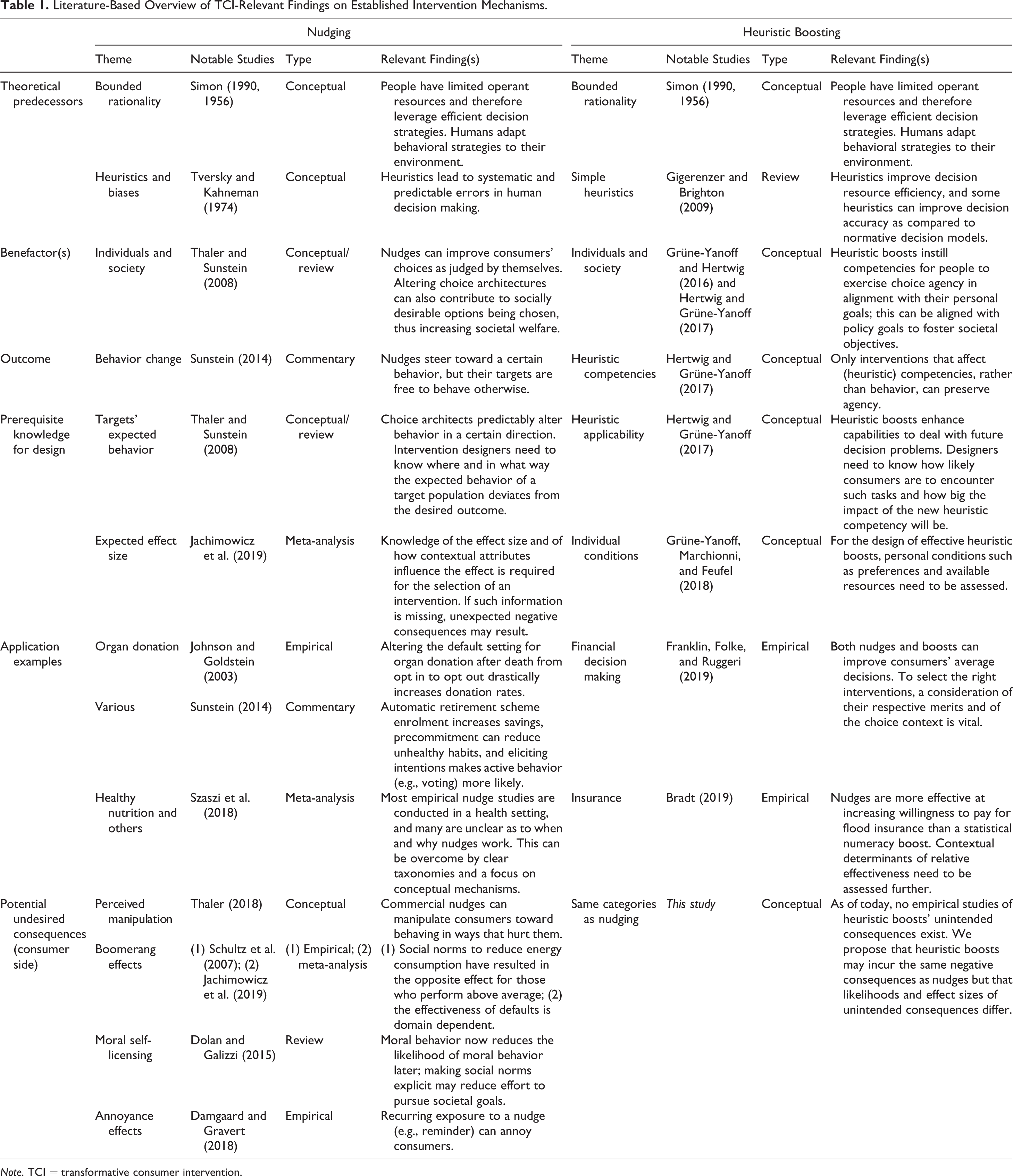
Note. TCI = transformative consumer intervention.
Conceptualizing Consumer Boosting
The present section conceptualizes consumer boosting, the first transformative consumer intervention. To pave the way for further conceptual efforts, we propose a construct definition that uses consistent and accurate nomenclature and is delineable from extant intervention mechanisms (Gilliam and Voss 2013; Teas and Palan 1997): A consumer boost is a context-specific and individualized intervention into consumers’ cognitive processes that aims at developing their operant resources to facilitate the efficient co-creation of transformative value.
Key Aspects of Consumer Boosting
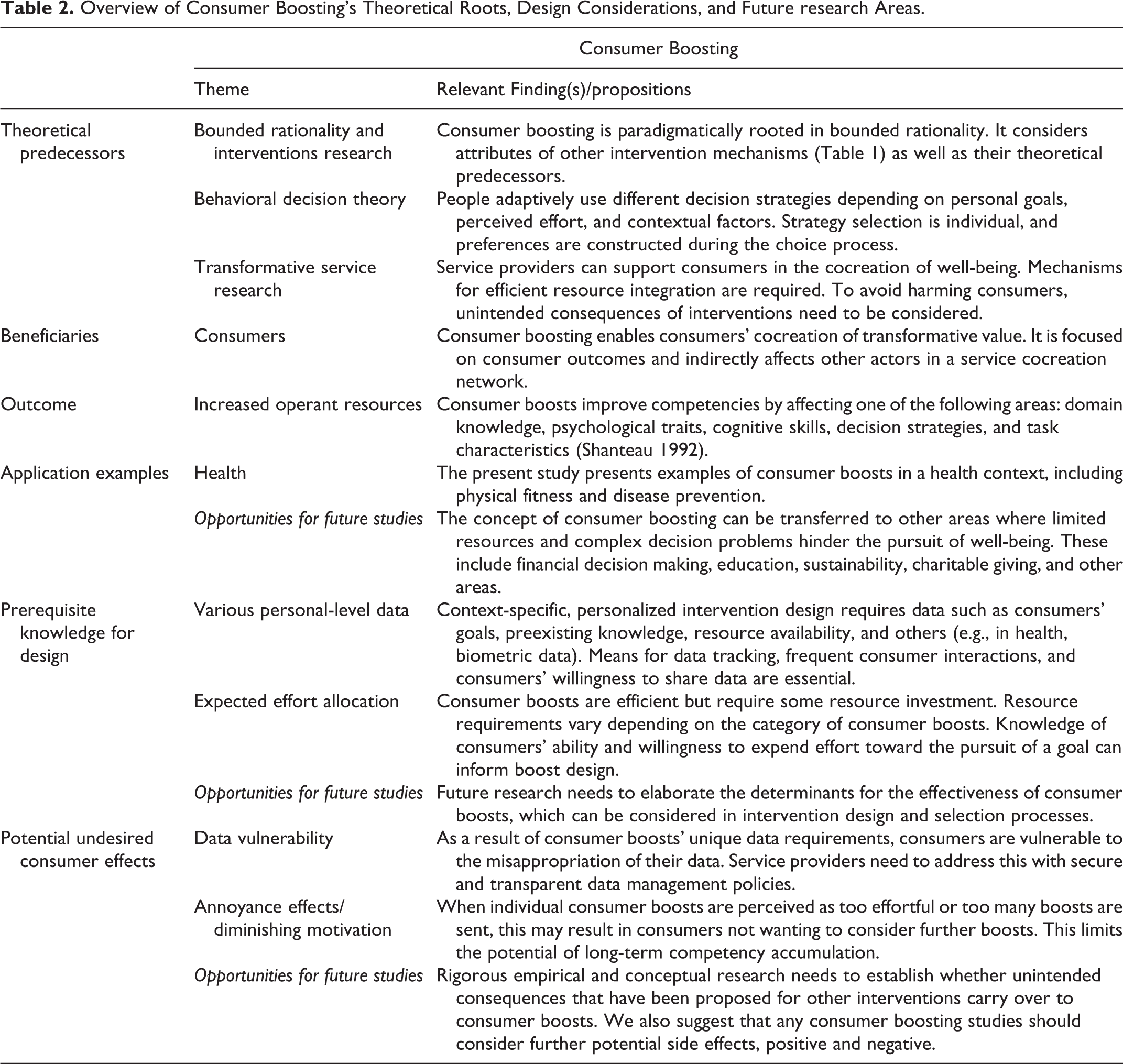
This definition of consumer boosting reflects the integration of extant interventions conceptualizations, fundamental notions of behavioral decision research, and TSR (Table 2). We now detail the theoretical roots of discrete definition elements and how they contribute to a meaningful definition, beginning with the terms adopted from extant interventions research: boost, intervention, and cognitive processes.
Overview of Consumer Boosting’s Theoretical Roots, Design Considerations, and Future research Areas.
Boost
The term “boost” is adopted from Grüne-Yanoff and Hertwig’s inception of heuristic boosting (Grüne-Yanoff and Hertwig, 2016; Hertwig and Grüne-Yanoff, 2017). The term embodies a novel category of intervention mechanisms that do not directly affect choice but rather empower—or boost—consumers’ capabilities to make that choice. This holds true for consumer boosting. Furthermore, the dictionary definition of the word equates boosting and “to assist over obstacles, to advance the progress of; to support, encourage; to increase” (Oxford English Dictionary n.d.). This reflects the central intention behind the mechanism of consumer boosting, which is to enable consumers to pursue transformative value in alignment with TSR (Anderson and Ostrom 2015; Blocker and Barrios 2015). We adopt the label boost for our new intervention mechanism.
Intervention
In the disciplines considered herein, “intervention” is a well-established denotation for a mechanism that interacts with consumers’ cognitive processes to change a focal outcome in a desired direction (Fischhoff and Broomell 2020; Nahum-Shani et al. 2018; Szaszi et al. 2018). Both nudging and heuristic boosting have been labeled as interventions (Hertwig and Ryall 2020). As opposed to other categories of interventions, such as economic incentives or governmental regulation (Michie, van Stralen, and West 2011), nudging has been considered a behavioral intervention that has “the potential to encourage desirable behavior without restricting choice” (Benartzi et al. 2017, p. 1041). However, we argue that categorizing boost interventions as behavioral would be misleading. On an individual level, no behavioral outcome of consumer boosts can be predicted. Rather, they interact with cognitive processes and result in increased cognitive resources. Consumer boosting is therefore better classified as a cognitive intervention. To avoid redundancies with other definition elements (cognitive processes, operant resources), we omit the word “cognitive” before “intervention.”
Cognitive processes
Service research clearly distinguishes between operand (i.e., material) and operant (i.e., cognitive) resources (Vargo and Lusch 2016). Extant interventions research largely focuses on peoples’ cognitive processes, neglecting other dimensions of human decision making such as emotional processes (Weber and Johnson 2009). Even the popular model of two modes of reasoning, which attempts to provide an explanation as to why human decisions are systematically biased, exclusively describes an intuitive (faster) and deliberate (slower) cognitive process (Kahneman 2011). As this commitment to one category of psychological processes is beneficial for a focused conceptualization, we follow such examples and conceive consumer boosting as strictly cognitive, bracketing other processes affecting decision making. Originating from TSR, two definition elements reflect the intended outcome of TCI and a potential antecedent to transformative value: Operant resources and transformative value.
Operant resources
Knowledge, decision strategies, and skills are operant resources that can be integrated in pursuit of a focal outcome (Hibbert, Winklhofer, and Temerak 2012; Vargo and Lusch 2016). The provision of context-relevant information can increase consumers’ well-being (Wittkowski et al. 2020), and improving decision-making competencies is one possible means to assist consumers in overcoming vulnerabilities caused by information imbalances (Anderson et al. 2016; Ouschan, Sweeney, and Johnson 2006). The conceptualization of an intervention that fosters operant resource development is therefore a worthwhile endeavor. Thus far, the emphasis on operant resources is unique to heuristic boosting. However, the mechanism only focuses on one specific type of decision strategy. Interventions that target other operant resources can be conceived. Competencies consist of five distinct domains, namely “domain knowledge, psychological traits, cognitive skills, decision strategies, and task characteristics” (Shanteau 1992, p. 256). Relatedly, it has been proposed that product- or service-related knowledge may contribute to several dimensions of improved consumer welfare (Bell, Auh, and Eisingerich 2017) as much as numeracy or health literacy can influence relevant decisions (Hertwig 2017). Consumer boosts can affect such competencies by providing pieces of domain-specific information or conveying simple rules to compute the relative values of choices. In our conceptualization of consumer boosting, we consider all classes of operant resources as potentially relevant.
Transformative value
As introduced before, enhancing beneficiaries’ transformative value is a central target of TSR and accordingly the goal of consumer boosts. Transformative value arises when sustainable consumer well-being is cocreated through resource integration (Blocker and Barrios 2015; McColl-Kennedy et al. 2012; Parkinson et al. 2019). As limited capabilities may hinder successful resource integration (Anderson et al. 2016), transformative value can be elicited through increased competencies and skills (Taiminen, Taiminen, and Munnukka 2020). Notably, TSR also deals with the potential of transformative value co-destruction through resource integration (Anderson et al. 2016; Ng, Sweeney, and Plewa 2019). This potential needs to be considered in the design of TCI.
The integration of fundamental considerations of the interventions literature and TSR allows for an initial approximation of the abovementioned definition of consumer boosting. As extant research indicates that specificity is essential to avoid conceptual overlap between intervention constructs (Sims and Müller 2019), we further enhance definitional accuracy. TCI are interactions with consumers’ cognitive processes and, to successfully foster transformative value cocreation while avoiding unintended consequences, needs to incorporate findings on how these processes unfold. We specify in what way consumer boosts achieve their target outcome by including the core notions of behavioral decision theory: Consumer boosts need to be context specific, individualized, and efficient.
Context specific
Consumer decisions depend on myriad contextual factors (Handel 2013; Sweeney, Danaher, and McColl-Kennedy 2015). In complex services, acknowledging the decision context in intervention design is essential as it has the potential to change strategy selection and preference construction processes (Bettman, Luce, and Payne 1998; Zwebner and Schrift 2020). Considering contextual elements in intervention design can enhance well-being (Nahum-Shani et al. 2018). This is even more the case as consumer vulnerability emerges in certain contextual constellations (Baker, Hunt, and Rittenburg 2007), which may be avoided with context-sensitive interventions. Current technology provides the means to develop and implement such interventions (Aksoy et al. 2019; Danaher and Gallan 2016). For instance, an intervention that seeks to encourage increased physical activity (e.g., walking) can account for the current weather and the built environment around a target’s location (Klasnja et al. 2019). The success of consumer boosts critically depends on the successful implementation of such context data.
Individualized
Decision processes are highly individual. Individual-level cocreation determinants may include cultural background (McColl-Kennedy et al. 2012), locus of control (Sweeney, Danaher, and McColl-Kennedy 2015), preexisting expertise (Hibbert, Winklhofer, and Temerak 2012), or individual biometric markers (Wittkowski et al. 2020). As is the case with context data, modern technological means allow service firms to use personal-level data to make interventions more interesting and meaningful (Danaher and Gallan 2016; Nahum-Shani et al. 2018). For instance, where relevant behavioral and biometric data are available, a fitness boost can consider the calories burnt on a specific day and the expected personal energy requirement during exercise. On that basis, a specific workout regime that allows a person to achieve their daily goal could be suggested. Another important aspect of individualized intervention design is personal goals. Both conscious and nonconscious goals have been shown to considerably influence strategy selection and effort allocated to a task (van Osselaer and Janiszewski 2012). If goals have been specified, interventions can be designed to aid in their achievement (Ajzen and Kruglanski 2019). If the same person as above had the goal of sleeping better in addition to burning calories, they would require a different boost. The intervention could highlight that while their workout duration contributes to better sleep, their habit of working out late in the evening prevents their body from entering a resting state for some hours after the activity (Chennaoui et al. 2015). To summarize, consumer boosts are most likely to be effective if they consider individual-level data and account for personal goals, which are encompassed in the term “individualized.”
Efficient
Cocreation requires consumers’ effortful cognitive and behavioral participation in a service network (Sweeney, Danaher, and McColl-Kennedy 2015). People attempt to reduce decision effort by leveraging efficient decision mechanisms (Gigerenzer and Brighton 2009). If one decision task is executed more efficiently, resources for the further optimization of that or other decisions become available. As such, decision efficiency may contribute to well-being. Consumer boosts are deployed when there is a high likelihood that consumers can benefit from the conveyed capabilities. Through the incorporation of context and individual-level data, the likelihood of presenting consumers with irrelevant information, which would result in wasted resources, is reduced. What is more, as capabilities obtained through consumer boosts can be applied to later decision problems, they can contribute to short- and long-term choice process efficiency. This can be achieved by conveying frugal decision strategies, providing the right bits of information in the right context, which alleviates search effort, or interpreting individual-level data which reduces consumers’ computation effort.
Table 2 summarizes the theoretical roots of consumer boosting, central considerations for the design of the intervention, potential unintended consequences and opportunities for future academic exploration. In the following section, we provide an example.
A Health Consumer Boost
Consider the following consumer boost: To sustain her physical fitness, Mary has been using an activity tracker along with an app that leverages consumer boosts. Mary usually goes out for a run several times a week. Currently, she is not allowed to do so due to governmental regulations that are intended to reduce the spread of COVID-19. During a home workout, the app sends her a notification: Mary, throughout the last weeks you have only gotten about one third of the intense exercise minutes you normally do. And this shows: Your resting heart rate has increased by 4 beats per minute and you might be feeling less fit than usual. We know that during a lockdown, you might not be able to go for a run as you normally do. But did you know that you can achieve the same results at home with high intensity training (HIIT)—and even in 40% less time? Interested? Click [here] for a list of HIIT workouts that you can do at home with no need for equipment.
Thus far, this article has developed the research area TCI through an integration of TSR and research on heuristic boosting, nudging, and behavioral decision research and conceptualized consumer boosting on that interdisciplinary basis. To solidify those findings, the next section proposes a generic conceptual model for TCI and discusses consequences of the different mechanisms discussed herein.
Consequences of TCI
Like any other theoretical construct, TCI unfold their meaning in connection to other relevant entities, particularly their consequences. TCI immediately affect operant resources, but their ultimate goal is to enhance well-being. Transformative cocreation happens when service provider, consumer, and other actors integrate their respective resources to achieve a mutually beneficial goal (Davey and Grönroos 2019). However, resource integration activities may lead to the co-destruction of value (Chen et al. 2020). Interventions carry a risk of detracting from well-being, as interventions research has detected a host of unintended consequences (e.g., Dolan and Galizzi 2015; Johnson et al. 2012). Those may be desirable, thus making an intervention more appropriate in a situation or undesirable and harmful to consumers. Either way, intervention designers need to be aware of potential indirect effects to optimally empower consumers. Figure 2 shows a proposed conceptual model of interventions’ immediate effects, intended indirect consequences, and common unintended outcomes.
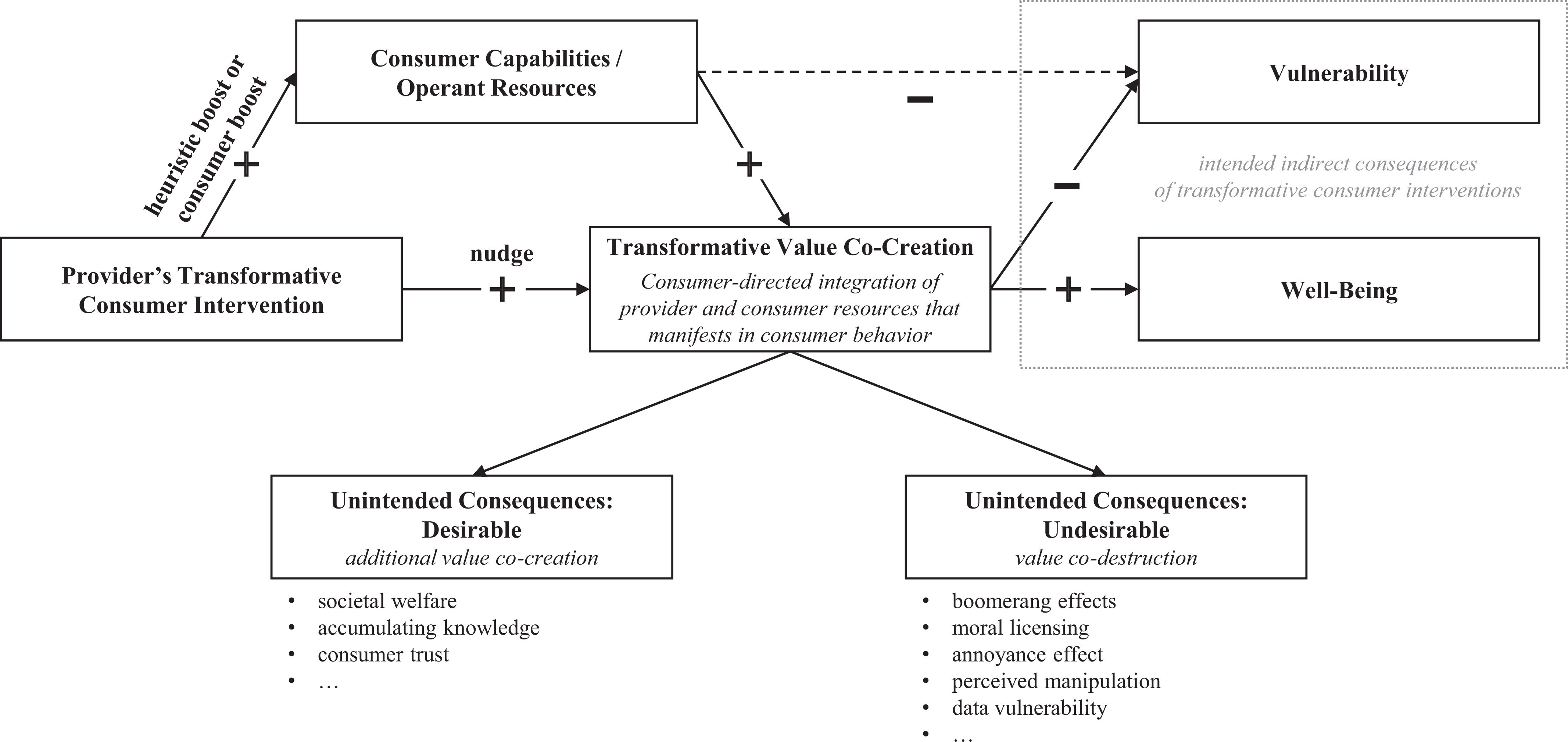
Conceptual model of transformative consumer interventions’ main and side effects.
We first consider the positive side effects of interventions. Nudging and heuristic boosting can have an impact on both individual and societal welfare (Reijula et al. 2018). This holds true for TCI, which focus on consumer outcomes, but may have societal effects. Service research also seeks to increase societal welfare (Ostrom et al. 2010), which is therefore a desirable, albeit unintended consequence. As another side effect, Hertwig (2017) suggests that in the long run, targets of heuristic boosts will accumulate decision-making competencies that they can apply to later tasks. He further argues that with rare exceptions, nudges do not have a lasting impact. For consumer boosts, the potential for later application of the obtained capabilities is not only a side effect, but a core consideration: The integration of these operant resources in later cocreation processes both elicits the longitudinal effect of transformative interventions and increases the lifetime intervention efficiency. Finally, enabling consumers to cocreate may result in positive experiential states toward the service provider (Ouschan, Sweeney, and Johnson 2006). Such positive spillover effects are important to consider when evaluating the effectiveness of different intervention mechanisms.
Among the empirical research related to nudging, some works have considered undesirable consequences (Table 1). These may arise even when the intervention designer is benevolent and does not intend to manipulate consumers (Goldstein et al. 2008; Thaler 2018). For instance, it has been shown that nudges can result in effect reversals or boomerang effects (Dolan et al. 2012; Ringold 2002). Invoking social norms, such as telling someone that most people are physically active for a certain amount of time per day, will increase the average activity of those who are under that level. For above-average performers, the opposite has been observed: After being informed of peer group behavior, their performance tends to deteriorate (Schultz et al. 2007). Likewise, it has been observed that well-established default nudges sometimes result in effects that oppose the predicted one (Jachimowicz et al. 2019). In those cases, the integration of provider resources leads to value co-destruction. The next example of a negative spillover effect is moral self-licensing: After expending effort to behave in a socially desirable way, people tend to muster less effort for a subsequent, equally positive action (Hertwig 2017). Someone who believes they have recently acted prosocially is less likely to donate to a social cause later. Similarly, a person who has been nudged to wash hands more regularly may feel licensed to observe other hygiene rules less. This may lead to a negative overall effect (Dolan and Galizzi 2015). Another unintended consequence of nudges, the annoyance effect, emerges when repeated nudges lead consumers to avoid further exposure to the intervention. It has been shown that recurring reminders to donate to a cause, embedded in a newsletter, can increase the initial donation amount but also lead people to unsubscribe and thus reduce donation payments in the long run (Damgaard and Gravert 2018; Goldstein et al. 2008). While choice architecture interventions can facilitate the efficient integration of resources in a cocreation process, these examples showcase situations where at least to some extent, negative side effects detract from the overall value increase.
Compared to nudging, the nascent heuristic boosting research has yielded limited empirical evidence on the construct’s effectiveness, and to date, no empirical evaluation of the indirect consequences of boosts exists (Hertwig 2017; Sims and Müller 2019). Absent existing evidence, we hypothesize that the unintended consequences of nudges also persist for heuristic boost interventions, albeit potentially to a different extent. Boomerang effects may result for consumers with developed capabilities in a specific area when they learn a heuristic that seems useful but leads to worse decisions than they would otherwise have made. Additionally, when a heuristic boost is processed but does not increase resources, effort is wasted. Next, moral licensing may be an issue as the effect seems to persist irrespectively of how the initial, socially desirable behavior was brought about (Monin and Miller 2001). Likewise, heuristic boosts may result in annoyance effects. While usually only conveyed once, that heuristic training requires some effort (Hertwig 2017), which can lead consumers to circumvent future boosts.
Unintended consequences of interventions are ubiquitous and establishing an exhaustive list of all undesirable outcomes before the design of an intervention may be impossible. An efficient approach to the amelioration of unintended consequences is the adherence to the TCI design principles. We exemplify this point with context-specific, individualized, and efficient consumer boosts.
Jachimowicz and colleagues (2019) propose that boomerang effects can occur when interventions are deployed without tailoring them to a specific context. Their meta-analysis of default nudges shows them to be more effective in consumption settings as compared to their effect on pro-environmental behavior. This is in line with studies that have shown that the effect of interventions may vary, or even reverse, in different contexts (Andor and Fels 2018). Accounting for the consumers’ context will therefore reduce the risk of harming them.
Boomerang and annoyance effects may also be addressed by the individualization of consumer boosts. Some interventions have been shown to be misaligned with peoples’ goals (Hertwig 2017; Thaler 2018), which may lead to psychological reactance. That reactance occurs when a person perceives a goal to be forced upon them (Ringold 2002) and is therefore likely to decrease when an intervention is explicitly tailored to personal objectives. Likewise, it is less likely for consumers to be annoyed at a recurring intervention (nudges) or one that requires some cognitive effort (boosts) if it aligns with their personal goals.
Reactance to interventions may also be reduced by increasing their efficiency. As people perform more tasks that are perceived as less effortful (Sweeney, Danaher, and McColl-Kennedy 2015), consumer boosts strive to improve consumers’ ability to cocreate transformative value with the same or even less resources. They therefore contribute to empowerment rather than to negative states associated with high decision effort.
This shows that consumer boosts mitigate some downsides that other interventions have. At the same time, TCI increase the risk of one negative side effect: Data vulnerability. To be effective, consumer boosts depend on personal and contextual data. For instance, reducing peoples’ risk of cardiovascular disease can be facilitated by service firms’ understanding of their relevant competencies, behavioral habits (e.g., activity, nutrition), biometric markers, preferences, or knowledge of conflicting goals. With the current means to collect, store, and analyze those data (Huang and Rust 2017), some cocreative service offerings such as wearable-based health apps only function when customers are willing to share their personal data (Klasnja et al. 2019; Wittkowski et al. 2020). While it seems reasonable to assume that an individuals’ context and preferences can never be fully grasped by an intervention designer, the amount of data consumers share will improve firms’ ability to optimize consumer boosts. Data sharing will reduce uncertainty regarding the optimal intervention in each situation and thus moderate interventions’ effect on transformative outcomes.
Consumers are more willing to share data when this leads to a perceived benefit (Martin, Borah, and Palmatier 2017). However, data privacy is a ubiquitous concern, and reputable companies can be victims to severe data breaches (Janakiraman, Lim, and Rishika 2018). Service firms can address perceived vulnerability to privacy violations with transparent data management policies (Martin, Borah, and Palmatier 2017). This includes having appropriate data security measures in place and informing consumers that their data are being collected, what they are being used for, and how consumers can opt out. To avoid undesirable consequences, firms setting out to develop TCI need to adhere to such transparent practices.
In summary, direct and indirect outcomes of all interventions must be carefully considered before their implementation. Consumer boosting is central to any TCI strategy as it inherently addresses context, individualization, and efficiency. Nevertheless, nudging and heuristic boosting are equally important in a TCI toolbox. TCI principles can inform their design, and in certain situations, both have the potential to facilitate resource integration. If consumers’ goals are explicitly known, nudges can reduce the resource requirement of cocreation tasks. Heuristic boosts can alter the cognitive resources to deal with cocreative tasks whenever a consumer is willing to allocate resources to extending their heuristic toolbox. Nevertheless, all interventions benefit from contextualization and personalization. Adopting a TCI mindset in the design of intervention strategies improves their effectiveness while preventing consumer harm: Interventions have situational merits that must be understood, optimized, and weighed. Put differently, peoples’ strategy selection is adaptive, and this needs to be mirrored by interventions (Nahum-Shani et al. 2018; J. W. Payne, Bettman, and Johnson 1988).
Discussion
The present work integrates the interdisciplinary research area TCI and anchors it in TSR. TCI are interventions into consumers’ cognitive processes that facilitate efficient operant resource integration or development and thereby enable the cocreation of transformative value. TCI theory enables the evaluation and design of existing interventions like nudging and heuristic boosting. These can situationally contribute to the targets of TCI, while in other settings, they are more likely to lead to the co-destruction of value and should be avoided. Additionally, TCI research provides a robust basis for the development of new intervention constructs. This article leverages TCI principles to conceptualize the new intervention consumer boosting. Consumer boosts are personalized and context-specific interventions that enhance consumers’ operant resource repertoire and thereby enable them to efficiently cocreate transformative value. As such, consumer boosts are promising when sufficient personal-level and context data can inform the intervention design. Our two central contributions have various implications for (transformative) service research and practice.
Theoretical Implications
Introducing interventions research to the service area and conceptualizing an intervention that seeks to foster transformative outcomes advance TSR in several ways. First, ten years ago, the improvement of well-being through transformative service was proclaimed a priority for service research (Ostrom et al. 2010). Recent publications show that a lot of work remains to achieve that goal (Anderson et al. 2016). Such progress in the interdisciplinary service domain requires the incorporation of established theories from other fields (Alkire et al. 2020; Anderson and Ostrom 2015). TSR focuses on consumer outcomes, therefore psychological theories are well suited to inform the field. Integrating these facilitates the development of TSR concepts and frameworks (Chen et al. 2020; McColl-Kennedy et al. 2017; Mende and van Doorn 2015). The present study is the first in TSR to include key concepts of behavioral decision theory, which helps understand how and under what circumstances consumers integrate resources in complex settings. We thereby generate theory-driven insights that are highly pertinent to the design and selection of transformative interventions. What is more, the consolidation and integration of extant interventions theory shows how intervention concepts can contribute to transformative value cocreation. While no previous study has systematically scrutinized the link between cognitive interventions and TSR, we demonstrate the natural fit between the areas. Interdisciplinary intervention concepts yield extraordinary potential to facilitate transformative value cocreation and service research would benefit substantially from the further exploration of TCI theory.
With consumer boosting, we propose the first intervention construct that is deliberately tailored to achieve the focal outcome of TSR, transformative value (Blocker and Barrios 2015). To be valuable to its stakeholders, service research relies on the development of applicable mechanisms and constructs. To date, however, a dearth of such concepts has been observed (Aksoy et al. 2019; Alkire et al. 2020). A reason for this scarcity may be a lack of relevant middle-range theory, which is conducive to construct development (Brodie, Saren, and Pels 2011). In that vein, outlining the middle-range TCI theory enables us to develop a mechanism therein. Consumer boosting differs from extant interventions in that it acknowledges the hurdles of achieving well-being in complex services and addresses those with a focus on context, personalization, and efficiency. As these aspects align well with TSR, they may also be considered in the development of other transformative service concepts. At the same time, consumer boosting reflects how new transformative intervention concepts can be developed through integration of different theories into TSR.
Our research explores the observation that resource integration can result in co-destruction (Chen et al. 2020) by showing how interventions can detract from well-being, even if they are designed with good intentions. Due to consumers’ high personal stakes associated with services such as health, the unintended destruction of value has been subject to much research (Anderson and Ostrom 2015; Spanjol et al. 2015). For example, it has been shown that self-tracking technology in health care can unexpectedly undermine advice compliance in some situations (Wittkowski et al. 2020). Similarly, assistive robots in health care can positively impact well-being but at the same time contribute to reduced privacy or human interaction (Čaić, Odekerken-Schröder, and Mahr 2018). Any transformative service theory and concept needs to limit the potential of introducing new unintended consequences to service interactions and strive to ameliorate existing ones. The present research does so in two distinct ways. First, the introduction of TCI elucidates that several mechanisms may be valuable levers in the cocreation of well-being. The TCI principles allow the assessment of interventions’ situational merits and serve as signposts for the further theoretical development of existing intervention constructs that address their likelihood of unintended effects. Second, consumer boosts are interventions that are by design less likely to result in value co-destruction. We thus demonstrate that the deliberate development of mechanisms that reduce the potential of unintended consequences is possible and worthwhile. In doing so, the present research provides signposts for future research endeavors with a similar target.
Finally, this work has far-reaching interdisciplinary implications. Both public policy and behavioral decision research have called for the development of frameworks that consider various intervention mechanisms as equally relevant and focus on respective situational merits and shortcomings (Grüne-Yanoff, Marchionni, and Feufel 2018; Münscher, Vetter, and Scheuerle 2016; Szaszi et al. 2018). TCI are a steppingstone toward such frameworks in that it introduces principles for the design and implementation of well-being-focused interventions. What is more, consumer boosting can easily transcend the boundaries of the service field and be applied in public contexts or product consumption settings.
Managerial Implications
This conceptual work has important implications for service practitioners. Businesses can leverage the TCI principles to select suitable interventions for specific purposes. Many different mechanisms have been suggested, and a TCI perspective allows the evaluation of their situational merits. Intervention architects’ design and selection processes can be guided by TCI-based questions: Which intervention is the most efficient in a situation? How can context and personal data be incorporated in the intervention design? Is it possible to reduce resource integration efforts directly through changes to the cocreation environment, or is it more beneficial to increase consumer resources? Such guiding questions will increase the likelihood that appropriate interventions are selected. What is more, a structured evaluation can highlight situational shortcomings of interventions even before they have been tried in the field. While interventions are often selected and improved upon in try-and-error processes, a systematic and logical approach may shorten these processes, alert intervention designers to potential unintended consequences, and thus reduce time and resource requirements while increasing the likelihood that the desired outcomes are achieved.
Furthermore, service providers will benefit from consumer boosting as an important addition to their intervention toolbox. As an intervention conceived for digital environments, consumer boosting is especially interesting for businesses that can make use of personal-level data and dynamically interact with consumers to support them in their goal pursuit. Consumer boosts convey important capabilities that foster transformative value. Unlike nudges, which are mostly effective when they are embedded in a choice process, consumer boosts can elicit a sustainable change in behavior. At the same time, they are more efficient than heuristic boosts and not restricted to one class of operant resources. Therefore, consumer boosts will often be the preferable alternative for a service provider who wants to improve well-being.
Limitations and Research Agenda
While the present research substantially advances theory and answers several calls for research, some limitations are inherent to this kind of explorative work. We suggest that these limitations are signposts for future transformative interventions research.
A psychological theory that sheds light onto how consumers use their resources, how their decision processes unfold, and how these processes can be interacted with yields important insights for the cocreation of transformative value. Accordingly, the present work benefits substantially from the incorporation of behavioral decision theory. At the same time, it is likely that other theoretical lenses will yield similarly relevant insights. Several theories that have been applied in TSR to other ends might allow the further elaboration of TCI. For instance, understanding under what conditions consumers take psychological ownership might illustrate when they are more receptive to specific interventions (Chen et al. 2020), while the theory of planned behavior may yield further indications of how consumer interventions can support goal-directed behavior (Ajzen and Kruglanski 2019).
Empirical research is required to advance TCI research beyond its conceptual state. First, TCI provide a basis for analyzing benefits and negative implications of interventions in a transformative service context. The TCI principles can guide rigorous experimental research that detects and catalogues the situational merits of intervention effectiveness. Such efforts are required for the development of consumer intervention frameworks that, rather than proposing one-size-fits-all approaches, consider various intervention mechanisms as equally relevant levers to foster consumer well-being. Second, the new intervention construct consumer boosting needs to be substantiated with empirical evidence. While we describe consumer boost examples that lean on different elements that have been observed in real-world interactions, no explicit evidence on the effects of consumer boosts exists yet. Experimental research is required to establish the effect of different consumer boosts on well-being (either as perceived by consumers or measured by objective scales, such as the frequency of health incidents), to what extent the effects carry over to future decisions, and what potential unintended effects consumer boosts incur.
As a final limitation, health is the only field of application in the present research. Health is of central importance to (transformative) service research, but TCI are conceivable in other complex areas that substantially influence individual well-being, for instance, financial services (Guo et al. 2013). Another field where decision interventions have been discussed before is charitable giving (e.g., Damgaard and Gravert 2018). From a TSR perspective, that area is intriguing as increasing consumers’ ability to make satisfying and efficient decisions not only affects their well-being but also that of charity recipients.
Conclusion
In closing, we acknowledge that creating and consistently selecting interventions that sustainably enhance consumer well-being is a tall order for academics and practitioners alike. The present research is an important first step toward that ambitious goal. It showcases that much valuable research that can contribute to this journey is readily available as are the technological means to implement context-specific and personalized interventions. Service research will benefit from embracing consumer interventions as a driver of transformative value and can at the same time contribute substantially to this developing field.
Supplemental Material
Supplemental Material, sj-docx-1-jsr-10.1177_10946705211003676 - Enabling Cocreation With Transformative Interventions: An Interdisciplinary Conceptualization of Consumer Boosting
Supplemental Material, sj-docx-1-jsr-10.1177_10946705211003676 for Enabling Cocreation With Transformative Interventions: An Interdisciplinary Conceptualization of Consumer Boosting by Martin Bieler, Peter Maas, Lukas Fischer and Nele Rietmann in Journal of Service Research
Supplemental Material
Supplemental Material, sj-docx-2-jsr-10.1177_10946705211003676 - Enabling Cocreation With Transformative Interventions: An Interdisciplinary Conceptualization of Consumer Boosting
Supplemental Material, sj-docx-2-jsr-10.1177_10946705211003676 for Enabling Cocreation With Transformative Interventions: An Interdisciplinary Conceptualization of Consumer Boosting by Martin Bieler, Peter Maas, Lukas Fischer and Nele Rietmann in Journal of Service Research
Footnotes
Acknowledgments
The authors are grateful to the editors of this special issue as well as three anonymous reviewers for their extensive and constructive feedback throughout the review process. Furthermore, we thank Kristina Wittkowski for her helpful comments on an earlier version of this article.
Declaration of Conflicting Interests
The author(s) declared no potential conflicts of interest with respect to the research, authorship, and/or publication of this article.
Funding
The author(s) received no financial support for the research, authorship, and/or publication of this article.

Supplemental Material
The supplemental material for this article is available online.
Author Biographies
References
Supplementary Material
Please find the following supplemental material available below.
For Open Access articles published under a Creative Commons License, all supplemental material carries the same license as the article it is associated with.
For non-Open Access articles published, all supplemental material carries a non-exclusive license, and permission requests for re-use of supplemental material or any part of supplemental material shall be sent directly to the copyright owner as specified in the copyright notice associated with the article.
