




Abstract
Service organizations, emboldened by the imperative to innovate, are increasingly introducing robots to frontline service encounters. However, as they augment or substitute human employees with robots, they may struggle to convince a distrusting public of their brand’s ethical credentials. Consequently, this article develops and tests a holistic framework to ascertain a deeper understanding of customer perceptions of frontline service robots (FLSRs) than has previously been attempted. Our experimental studies investigate the effects of the (1) role (augmentation or substitution of human employees or no involvement) and (2) type (humanoid FLSR vs. self-service machine) of FLSRs under the following service contexts: (a) value creation model (asset-builder, service provider) and (b) service type (experience, credence). By empirically establishing our framework, we highlight how customers’ personal characteristics (openness-to-change and preference for ethical/responsible service provider) and cognitive evaluations (perceived innovativeness, perceived ethical/societal reputation, and perceived innovativeness-responsibility fit) influence the impact that FLSRs have on service experience and brand usage intent. Our findings operationalize and empirically support seminal frameworks from extant literature, as well as elaborate on the positive and negative implications of using robots to complement or replace service employees. Further, we consider managerial and policy implications for service in the age of machines.
Keywords
To improve frontline service encounters, service providers increasingly utilize autonomous service robots infused with artificial intelligence (AI) to augment or replace the role of human employees. Traditionally, customer-employee interactions at the social interface have been solely responsible for developing service encounters that create brand equity by enhancing the customer experience (Brakas, Schmitt, and Zarantonello 2009; Hepola, Karjaluoto, and Hintikka 2017) and driving brand usage intent (Hollebeek, Glynn, and Brodie 2014). It has long been asserted that “the people make the brand” (Hurrell and Scholarios 2014, p. 54) and that frontline employees play an important role in defining frontline service encounters (De Keyser et al. 2019; Voorhees et al. 2017). In this article, we attempt to answer the following questions:
While it is true that we do not yet have commercially viable robots that can walk dogs or run errands, it has been predicted that by 2025, service providing robots “will be melded into numerous service experiences” (van Doorn et al. 2017, p. 44). Their introduction will fundamentally change the interactions customers have with service organizations and the functions and responsibilities of all actors involved in service encounters (De Keyser et al. 2019; Larivière et al. 2017; Wirtz 2019). For the purpose of this article, service robots are defined as “system-based autonomous and adaptable interfaces that interact, communicate and deliver service to an organization’s customers” (Wirtz et al. 2018, p. 909). In contrast to other forms of AI, which are beyond the scope of this article, intelligent physically embodied FLSRs can have meaningful social interactions with customers and can therefore be considered as service agents (Jörling, Böhm, and Paluch 2019; Mende et al. 2019; van Doorn et al. 2017). FLSRs can be categorized from humanoid (anthropomorphized robots imbued with humanlike characteristics) to nonhumanoid (e.g., an artificially intelligent reception FLSR at a restaurant; Wirtz et al. 2018). In this article, we refer to a nonhumanoid FLSR that possesses the same ability, functionality, and intelligence as a humanoid FLSR, as a self-service machine. 1 They are intuitive, interact, and communicate with customers in a similar way to employees. Humanlike features can inspire trust and bonding, however, uncanny valley theory (Mori et al. 2012) suggests that the introduction of highly humanlike robots might create “feelings of eeriness or a threat to (a customer’s) human identity” (Mende et al. 2019, p. 539). The deployment of self-service machines that perform the same functions as humanoid FLSRs may not engender the same response. Therefore, service providers seeking to introduce FLSRs face the challenge of understanding both positive and negative implications that may follow and need to gain insights into how FLSRs will influence a customer’s service experience or intent to use a brand (Hollebeek, Glynn, and Brodie 2014). Furthermore, in seeking to answer these questions, rather than isolate our research to a particular service setting, we adopt a holistic approach by investigating how customer perceptions change according to service type (e.g., for a credence service in comparison to an experience service).
FLSRs conversant with big data analytics and biometrics are providing a variety of innovations that significantly alter service settings (Mende et al. 2019; Wirtz et al. 2018). Nonetheless, they are simultaneously threatening human jobs (Harris, Kimson, and Schwedel 2018) and creating ethical and societal challenges that might lead to public distrust, inhibiting broader adoption and customer engagement with FLSRs (Huang and Rust 2018). This may have a negative influence on the service provider. Given the above it is surprising that from a customer-centric perspective, a dearth of empirical academic research focuses on whether the introduction of FLSRs may create a dichotomy between negative perceptions relating to potential ethical and societal challenges and more positive perceptions of innovative service encounters. This article addresses these gaps in the literature and responds to demands for more research prioritizing frontline service encounters and the role that technology plays in advancing service provision (e.g., Hollebeek, Andreassen, and Sprott 2018; Ostrom et al. 2015).
In two experimental studies, we extend and refine the work of Larivière et al. (2017) by exploring how the expected positive impact of innovativeness shaped by FLSRs influences customer perceptions of a frontline service encounter. In Study 1, we simultaneously investigate the potential negative effects on the perceived ethical/societal reputation and positive effects on the perceived innovativeness of a service organization that uses an FLSR to either replace or complement a human employee in frontline service encounters. Subsequently, in Study 2, we build upon our initial results, incorporating new service types (credence vs. experience) and compare responses from customers who have been exposed to two AI types (humanoid FLSR vs. nonhumanoid self-service machine). We focus on perceived innovativeness-responsibility fit in an attempt to develop a holistic approach to understanding customer perceptions of FLSRs. We consider the influence of individual characteristics, particularly an individual’s openness-to-change (Schwartz 2003), as well as an individual’s preferences for an ethical/responsible service provider (Ramasamy and Yeung 2009), as the adoption of innovative services may be influenced by an individual’s preferences for innovation (Hoffmann and Soyez 2010). To the best of our knowledge, no other study has comprehensively explored these factors.
In this article, we make several important contributions to the literature. First, we address the urgent need to better understand the relationship between FLSRs, service providers, and brands (Mende et al. 2019). Second, we also answer calls for further research to explore the net effect that automated service interactions have on customers, including the influence of positive as well as negative factors (Čaić, Odekerken-Schröder, and Mahr 2018; Hollebeek, Jaakkola, and Alexander 2018). Third, not only does our work address the need for further research into the factors that drive customer acceptance or conversely mistrust of AI and FLSRs, it also provides more knowledge about how FLSRs can be better integrated into the servicescape (Wirtz et al. 2018). Specifically, we emphasize the importance of jointly considering the barriers and drivers of AI adoption in the service context. These factors may be technology-related such as innovativeness and/or customer-related characteristics such as values. Fourth, we develop and test a holistic conceptual framework by extending and refining Lariviere et al.’s (2017) conceptual Service 2.0 model. Larivière et al.’s (2017) model provides a comprehensive overview that considers the impact of automated technologies and provides a strong foundation for an empirical investigation into the effects of robots in frontline service encounters. Finally, we outline important managerial implications that highlight the importance of adopting a holistic approach to the introduction of FLSRs.
Conceptual Foundations
Role of Robots in Frontline Services
Larivière et al.’s (2017) ambitious conceptual paper recently sought to revamp and update service marketing’s conceptualization of the service encounter. They highlight two important roles that robots can play in customer-facing service scenarios: (a) augmentation (assisting and complementing human employees) and (b) substitution (replacing human employees) which in this article we refer to as role of FLSR. By building on extant literature, they also identify two different business models that create value (which we refer to as value creation model) where robots may complement or replace humans: asset-builder (businesses/service organizations that deliver physical goods including retailers) and service provider (e.g., hotels, restaurants and airlines or airports). We focus on both asset-builders, which through physical infrastructure and marketing typically deliver value much as a retailer does—and on service providers who deliver value for the most part through the skill of their employees. It is in these types of organizations, where technological augmentation is most likely to flourish, that employees with a strong sense of role clarity, ability, and motivation are seen as key progenitors of innovation. As Larivière et al. (2017, p. 241) state “authentic human touch can help differentiate offerings in the marketplace and display unique brand-building behaviors” which create an experience driven by “sensations, feelings, cognitions, social and behavioral responses that result from interacting with other parties—employees, technology etc.” (Larivière et al. 2017, p. 242).
Customer Cognitive Evaluations of FLSRs
Customers’ perceptions of an FLSR are informed not only by their cognitive evaluation of the service encounter but also by their broader knowledge and understanding of the positive and/or negative consequences of introducing robots to the servicescape. Successful service innovations, for example, can provide real value for customers (Hollebeek and Andreassen 2018; J. Kim et al. 2015). In their study of service design and value creation, Andreassen et al. (2016, p. 22) state “innovation is the new ticket” for organizations seeking to play and stay in the service industry. Therefore, a better understanding of innovative service provision represents a growing priority for both researchers and practitioners (Antons and Breidbach 2018; Patricio, Gustaffsson, and Fisk 2018), particularly in the area of radical service innovations (Goduscheit and Faullant 2018) such as FLSRs. Our focus is microlevel and customer-centric, since customers are ultimately responsible for the success of an innovation (Kunz, Schmitt, and Meyer 2011).
Although FLSRs will be perceived as innovative and provide benefits, their use in frontline service settings also creates a number of ethical and societal implications that may influence customer perceptions. Wirtz et al. (2018) highlight how customers may be concerned about “privacy and security” as robots can gather and store data and remotely connect and share it with other sources. Sensitive customer data collected by FLSRs and stored in the cloud could be hacked by criminals. They also discuss “dehumanization and social deprivation” issues. For example, substituting human carers with robots may dehumanize care, cause emotional concerns, and lead to social isolation, particularly for the elderly (Čaić, Odekerken-Schröder, and Mahr 2018). Intuitively, an apathetic, emotionless, innately cold robot does not seem like the ideal caregiver (Stahl and Coeckelbergh 2016).
Over the last decade, robots have replaced humans by performing automatable tasks on manufacturing assembly lines, raising concerns that there may be job losses in the service sector as increasingly intelligent robots gain the ability to perform cognitive nonroutine manual tasks (Decker, Fischer, and Ott 2017). Huang and Rust (2018) highlight how AI will increasingly take over analytical, intuitive, and eventually empathetic tasks in the future. However, it is not known whether and how customers will react to service providers that are replacing service staff with FLSRs and whether they will consider such behavior as unethical or create concerns that they act poorly in terms of ethical and societal reputation. We explore three different measures which differ conceptually and enable us to gain a holistic understanding of key issues: (1) perceived ethical/ societal reputation, (2) preference for ethical/responsible service providers, and (3) perceived innovativeness-responsibility fit.
Customer Engagement Outcomes
FLSRs have the potential to revolutionize customer engagement by transforming the service experience and influencing the extent to which customers intend to use a brand (brand usage intent). For example, Natwest Bank is testing Cora and Finistra has developed Sophia, which are both highly lifelike digital human bots empowered with AI and deep learning that can detect human emotions and physically react with their own facial expressions (Joyce 2018). In the United States, Lowe’s hardware stores are testing FLSRs that answer customers’ questions and help them navigate around a store (Rafaeli et al. 2017).
For frontline service encounters, robots are likely to play an increasingly important role in enhancing the customer experience in the future; however, to the best of our knowledge, no extant research has focused on FLSRs and the brand. We focus on two different customer-centric outcomes, the service experience and brand usage intent. Service experience is conceptualized based on a customer’s perceptions of the experience they have with a service provider and draws from the brand experience literature (Brakus et al. 2009), while brand usage intent is defined as “customers’ differential response between a focal brand and an unbranded product when both have the same level of marketing stimuli and product attributes” (Hollebeek, Glynn, and Brodie 2014, p. 163). Scholars have reported that an innovative service experience and brand usage intent increase customer engagement (Hollebeek, Glynn, and Brodie 2014; Lin 2015).
Hypothesis Development
The introduction of FLSRs to service settings is still a relatively novel experience for customers; therefore, the pathways that influence service outcomes such as the service experience and brand usage intent have not been completely mapped. A variety of sometimes opposing theoretical foundations can be used to explain parts of the picture; however, there is a need for an overarching framework to gain a more holistic understanding. Therefore, based on the preceding foundations, we propose a holistic conceptual framework that is presented in Figure 1. Additional key components of the framework are described in the paragraphs that follow.
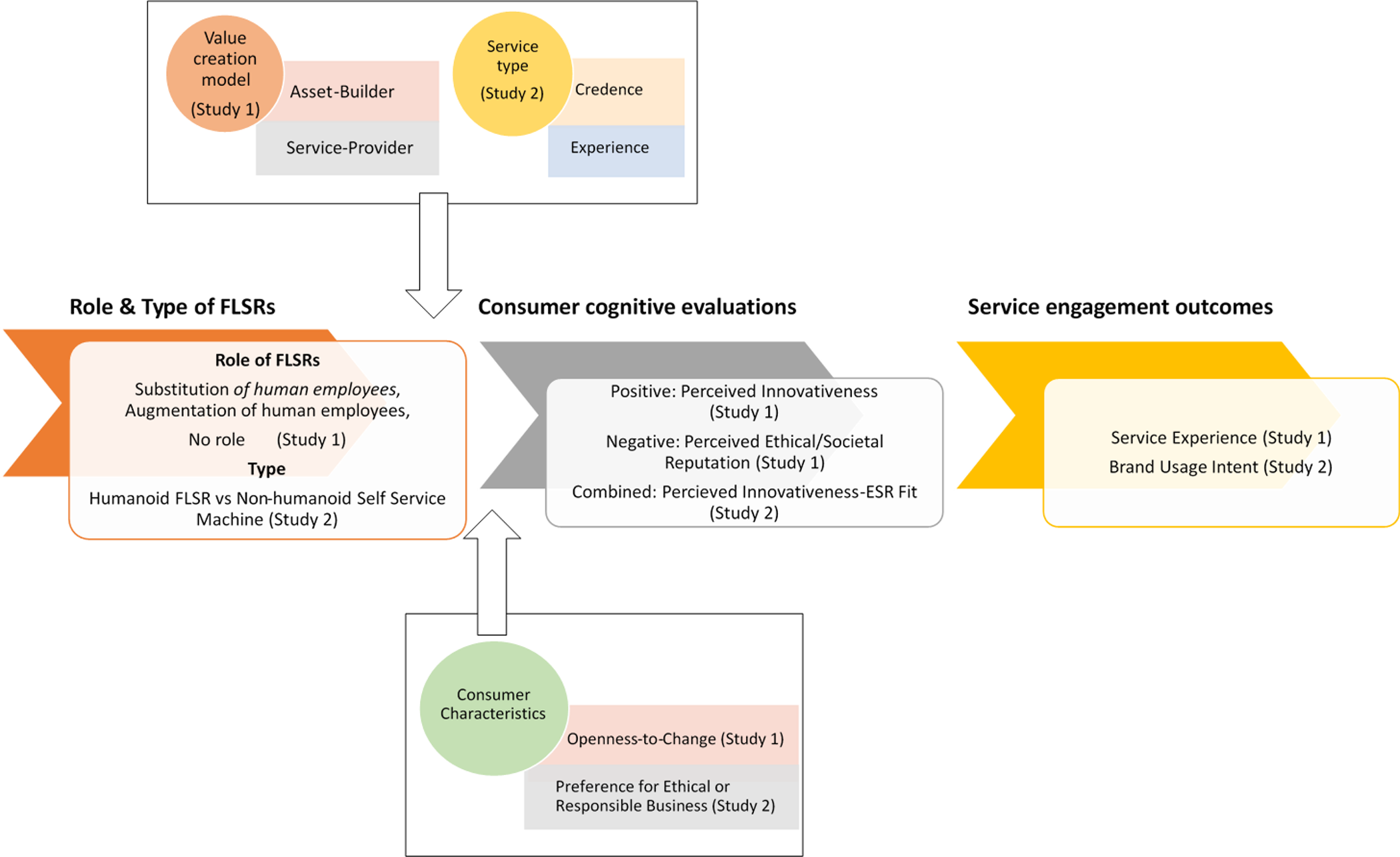
A holistic framework for understanding customers’ perceptions of frontline service robots.
Perceived Innovativeness, Perceived Ethical/Societal Reputation, and Role of FLSR
Perceived innovativeness involves a customer’s receptiveness and predisposition to a service provider adopting new ideas and launching new products and/or services (e.g., Hurley and Hult 1998) that result in “novel, creative, and impactful ideas and solutions” (Kunz, Schmitt, and Meyer 2011, p. 817). Existing studies suggest that service providers who demonstrate innovativeness create positive behavioral intentions (Eisingerich and Rubera 2010; Jin, Line, and Merkebu 2016) and that perceived innovativeness increases value in service settings (J. Kim et al. 2015; Lin 2015). Conceptually, it can be argued that customers will perceive that introducing FLSRs is innovative, particularly if FLSRs completely replace (substitute) rather than complement/augment existing employees. Therefore:
The concept of perceived ethical/societal reputation relates to customer perceptions of a service provider’s level of engagement in ethical practices and adherence to socially responsible principles, which contributes to long-term success (Fukukawa, Balmer, and Grey 2007; Stanaland, Lwin, and Murphy 2011). Thus, perceived ethical/societal reputation combines customer perceptions of a service provider’s fulfilment of ethical standards and societal responsibilities (Stanaland, Lwin, and Murphy 2011). Such practices are particularly important in the context of AI implementation. Davenport et al. (2020) note the importance of carefully considering ethical implications such as issues surrounding data privacy, biases, or the purpose of AI applications. Qureshi and Syed (2014) suggest that the introduction of robots in the health care sector is “killing off jobs” and could easily turn the perceptions of health workers and patients against such a development. Moreover, the installation of FLSRs on one side of the service interaction effectively removes the relational interplay between two human beings that previously characterized such encounters. This interplay was invariably governed by universal norms and unwritten moral codes (Abela and Murphy 2008). Thus, substituting employees with FLSRs in a previously human-human dyad may be perceived by customers as innovative but perhaps could inadvertently damage a service provider’s ethical credentials. At the same time, there is an expectation that service providers should act in the best interests of society. Substituting willing workers for robots, an act that will leave many unemployed and possibly destitute, is unlikely to be regarded as socially responsible (Barrat 2013; Ford 2015). Therefore, we propose:
Openness-to-Change
In general, customer adoption of innovative services is influenced by individual characteristics. Their values that are an essential psychographic trait reflect the motivational foundation that guides individual behavior across situations (Schwartz 2012). For example, the level of customer engagement in a brand is dependent on individual values such as uncertainty avoidance (Hollebeek 2018). Schwartz’s (2012) value theory organizes 10 value types in a motivational structure, which can be described by two axes: self-transcendence versus self-enhancement and openness-to-change versus conservation. The circumplex structure reflects a motivational continuum, in which similar value types are located close to each other (Schwartz and Boehmke 2004).
The influence of openness-to-change on an individual’s acceptance of and reasons for adopting innovative services, which in turn stimulates actual adoption behavior, has been established for different contexts. For example, Wang, Dou, and Zhou (2008) show that new product adoption is positively related to the degree of openness-to-change a customer holds and negatively to their preference for traditional products. Hence, high levels of openness-to-change should be associated with favorable behavioral outcomes as a consequence of FLSR implementation, while low levels should be related to negative outcomes. Specifically, as individuals with high levels of openness-to-change form more positive attitudes toward the implementation of innovation (Claudy, Garcia, and O’Driscoll 2015), the mediation via perceived innovativeness in such cases should be stronger. Additionally, as low levels of openness-to-change are accompanied by a preference for traditional and/or conservative products or service provision (Pepper, Jackson, and Uzzell 2009; Wang, Dou, and Zhou 2008), these individuals may be more skeptical toward FLSR implementation. As such, the negative mediation effect through perceived ethical/societal reputation should be weakened for customers with high levels of openness-to-change. Therefore, we propose:
Service Experience, Perceived Innovativeness, and Perceived Ethical/Societal Reputation
The results of previous research in a service context suggest that customer experience is an antecedent of brand engagement and brand equity (Ding and Tseng 2015; Hepola, Karjaluoto, and Hintikka 2017; Lin 2015) and drives brand loyalty (van der Westhuizen 2018). Given the influence of the role of service robots on perceived innovativeness (Hypothesis 1), and perceived ethical/societal reputation (Hypothesis 2), it is likely FLSRs may provide an overall mediated effect on service experience. In their study of service robots, Čaić, Odekerken-Schröder, and Mahr (2018) suggest there is a need to consider both the positive and negative consequences of introducing robots simultaneously in a single study. On the basis of the conceptualization of our framework derived from our literature review, we expect that customer experience with a service organization is subconsciously influenced by both factors during a frontline service encounter. We subsequently propose the following mediating hypotheses:
Perceived Innovativeness-Responsibility Fit and AI Type
Perceived innovativeness-responsibility fit relates to customer perceptions of apparent incongruences between the innovative aspects of cutting-edge technology (AI) and service providers’ adherence to sound ethical, socially responsible principles. Brand congruency theory suggests that it is important for customer brand associations to be consistent with the behavior of brand owners (Arbouw, Ballantine, and Ozanne 2018; Sjödin and Törn 2006). In a similar manner to brand owners attempting to ensure that product extensions have a good fit with the parent brand (Carter and Curry 2013), service providers must ensure that there is congruency between new FLSRs and their existing brand—in particular, a fit or congruence with ethical and socially responsible activities (de Jong and van der Meer 2017). However, technology providers have frequently been criticized for their poor responsibility records and questionable ethical practices (Vaidhyanathan 2018). For example, Facebook has been condemned for selling personal data to Cambridge Analytica who potentially influenced the results of the U.S. election. In Europe and the UK, Google has faced scorn for not paying tax (Delfanti and Arvidsson 2019). Debate is continuing regarding AI and weapons, where robots and drones could save our armed forces, but create ethical challenges if robots are given the power to kill people without human intervention (Marr and Ward 2019). Such examples create challenges in many customers’ minds regarding FLSRs and perceived innovativeness-responsibility fit. Drawing on conceptual underpinnings from the brand congruency and socially responsible consumption literature (Ramasamy and Yeung 2009; Stanaland, Lwin, and Murphy 2011), as well as recent studies that highlight how uncanny valley theory suggests customers may feel apprehension and unease with humanoid robots (e.g., S. E. Kim, Schmitt, and Thalmann 2019; Mende et al. 2019), we hypothesize:
Perceived Innovativeness-Responsibility Fit and Service Type
The credence-experience service typology (Keh and Sun 2018) has been used to categorize services that mainly have credence or experience attributes (Ostrom and Iacobucci 1995). Services differ in terms of the extent to which customers are able to evaluate them, even at the postconsumption stage. Credence services such as those associated with an insurance agency have attributes that are difficult to evaluate prior to or after consumption (Keh and Sun 2018). Experience attributes such as those related to a haircut, a stay at a hotel, or meal at a restaurant can only be evaluated during or after consumption (Chocarro, Cortinas, and Villneuva 2018). As credence services are usually nonstandardized and developed for the needs of an individual customer or family (e.g., holiday insurance may vary according to an individual’s age, where they are travelling to, as well as existing health conditions), their consumption is linked with uncertainty and risk (Mitra, Reiss, and Capella 1999), and they are harder to evaluate in comparison to experience services (Keh and Sun 2018; Ostrom and Iacobucci 1995). As such, when evaluating customer perceptions about the innovativeness and ethical and societal implications of FLSRs, it is pivotal to examine the differential effects of credence versus experience services. Drawing on conceptual foundations from the brand congruency and ethical/social responsibility literature and credence-experience typology, we suggest:
Preference for Ethical/Responsible Service Providers, Perceived Innovativeness-Responsibility fit, and Service Type
An individual customer is likely to have specific preferences for ethical/responsible service providers, which can be defined as the importance they place on businesses that act in an ethical and socially responsible manner (Ramasamy and Yeung 2009). Theories of socially responsible consumption suggest that customers who have strong ethical values are more likely to be receptive to ethical and pro-environmental products and services (De Groot and Steg 2009; Osburg et al. 2019). Therefore, we would expect an individual’s preferences for an ethical/responsible service provider to influence their perceptions of perceived innovativeness-responsibility fit. Building upon Hypothesis 7 and theoretical underpinnings from the credence and experience service literature, we hypothesize:
Perceived Innovativeness-Responsibility Fit, AI, Type and Brand Usage Intent
When introducing Hypothesis 5, we described the need to test whether perceived innovativeness and ethical/societal reputation, which are forms of cognitive evaluation, provide an overall mediated effect on the service experience—highlighting the need to simultaneously consider both factors. Following similar arguments, we expect that another form of cognitive evaluation (perceived innovativeness-responsibility fit), which is essentially a combination of perceived innovativeness and perceived ethical/societal reputation, will indirectly influence brand usage intent. Therefore:
An extended conceptual framework incorporating the hypotheses tested in Studies 1 and 2 is presented in Figure 2.
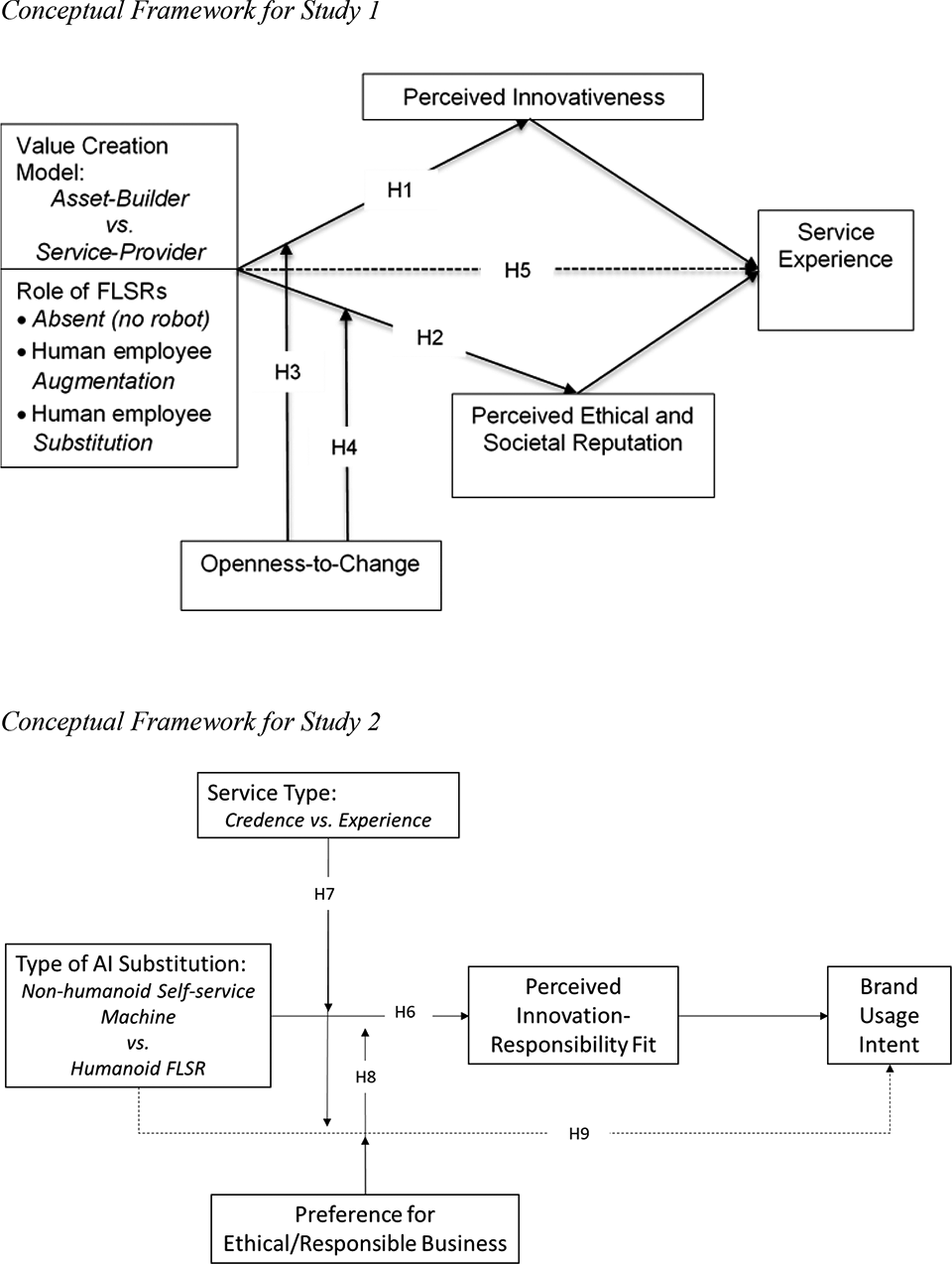
Extended conceptual framework for Studies 1 and 2 illustrating hypotheses conceptual framework for Study 1.
Study 1: FLSRs and the Service Provider Experience
Data for all studies were from a consenting representative sample of U.K. adults (aged over 18), collected randomly by the market research firm Qualtrics using an online survey.
Design, Procedure, and Stimuli
To test the hypothesized effects presented in the conceptual framework, an online experiment was conducted, which adopted a 3 (role of FLSRs: augmentation, substitution, control) × 2 (value creation model: asset-builder, service provider) between-subject design. For role of FLSRs, an artificially intelligent humanoid FLSR was presented as either assisting human airline staff during a check-in process (i.e., augmentation) or entirely replacing human staff to complete this process autonomously (i.e., substitution). The control condition stated that only human staff were present. The value creation model was manipulated to control for differences in the salience of frontline service provision to customers; service providers are likely to have greater interaction with customers than asset-builders, since a more human-relational experience is considered more important during service encounters (Lariviere et al. 2017). The asset-builder context was represented by the hypothetical visit to a duty-free shop within the airport transfer terminal, and the service provider scenario was based on the check-in process with the airline.
At the beginning of the survey, participants were asked to imagine the following situation. “Imagine that you are currently having a stopover at an airport while flying to a holiday destination. You are using the airline that you usually or frequently fly with.” Participants were then randomly assigned to one of the experimental conditions. The information provided to the participants is shown in the Supplementary Table 1 (Online Material) for each experimental condition. In addition to the text, an image of a humanoid FLSR was included for augmentation and substitution of human employees, while images of duty-free stores were used to complement the visualization of the value creation model. Images representing the humanoid FLSR presented in all studies, as well as the nonhumanoid service-machine presented in Study 2, are presented in Figure 3.
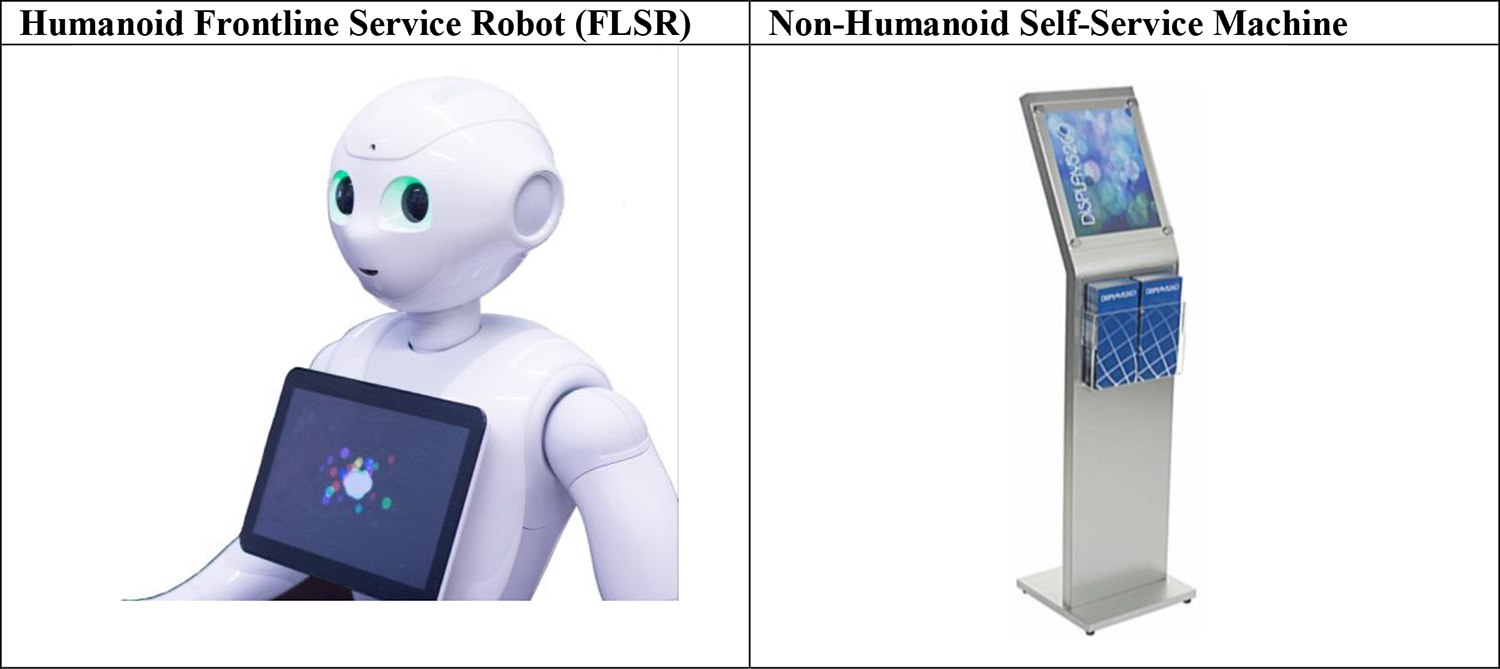
Illustrations of humanoid frontline service robot and nonhumanoid self-service machine.
Sample and Measures
Prior to the main study, a preliminary study (more details of the preliminary study are presented in the Supplementary Materials section) was carried out to check the manipulations with 85 randomly chosen participants (M age = 35.7 years, 42.4% female) from the UK. In addition, standard manipulation checks were carried out in the main study, as well as an attention check, whereby respondents were asked to correctly identify the scenarios presented to them earlier in the survey. Only those who passed the attention check were retained as part of the final sample. This resulted in a random sample of 563 usable responses (all UK) for the main study (M age = 42.2 years, 52.4% female).
After exposure to the stimulus, the constructs of the conceptual framework were assessed with established scales: (1) Perceived Ethical/Societal Reputation (Stanaland, Lwin, and Murphy 2011), (2) Perceived Innovativeness (Kunz, Schmitt, and Meyer 2011), (3) Service Experience (adapted from Brakus et al. 2009), and (4) Openness-to-Change (World Values Survey 2006). Minor modifications were made to the other items to ensure that they matched the context of the scenarios. Perceived Ethical/Societal Reputation, Perceived Innovativeness, and Service Experience were measured with 7-point scales ranging from strongly disagree (1) to strongly agree (7). Respondents rated their perceived similarity to 10 fictitious personality descriptions on a 6-point scale (1 = not at all like me, 6 = very much like me) for the measurement of the Schwartz Value Circumplex. Manipulation checks were carried out to ensure a successful manipulation of the experimental conditions. Supplementary Table 3 provides an overview of the scales and items.
Results for Study 1: FLSRs and the Service Experience
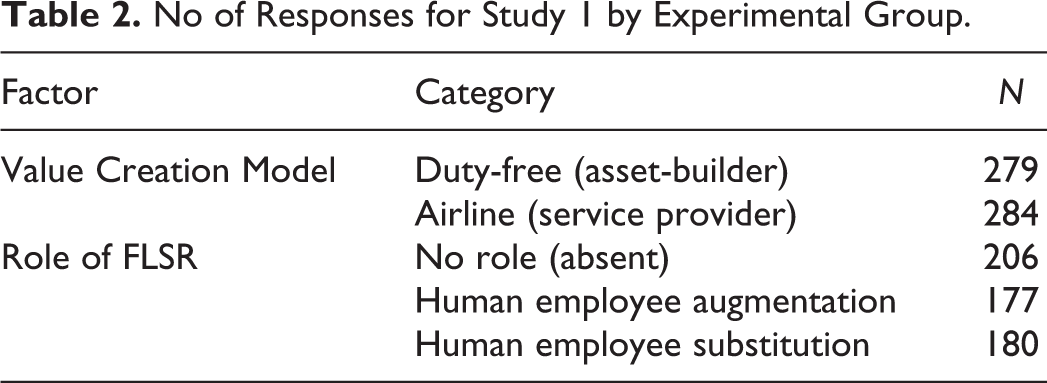
Table 1 presents a descriptive profile of participants, and Table 2 shows an overview of responses by experimental group. Construct validity and reliability tests were carried out (see Supplementary Tables 5–7 available online) and the composite reliability (CR) measure was found to be greater than 0.7 for all constructs. Further, the average variance extracted (AVE) exceeds 0.5 for each construct, while √AVE exceeds correlations with other constructs and is less than the maximum shared variance; thus, convergent and discriminant validities are established (Hair et al. 2010). The factor means for dependent variables are summarized in Figure 4 by experimental condition. The manipulation checks revealed a significant effect for both manipulated factors: value creation model (F = 13.453; p < .001) and role of FLSR (F= 11.083; p < .001). Preliminary analysis using a two-way factorial MANOVA shows that substitution has a greater positive effect on perceived innovativeness compared to no FLSR involvement (ΔM = 0.248, p < .05), but augmentation of human employees effect in this respect, although positive (ΔM = 0.125), is not statistically significant. Similarly, substitution of human employees has a greater negative effect on perceived ethical/societal reputation compared to no FLSR involvement (ΔM = −0.298, p < .05, confidence interval [CI] [–.536, −.061]), but augmentation of human employees effect (ΔM = −0.228) is not statistically significant compared to no FLSR involvement.
Descriptive Profile of Study 1 Participants.

No of Responses for Study 1 by Experimental Group.
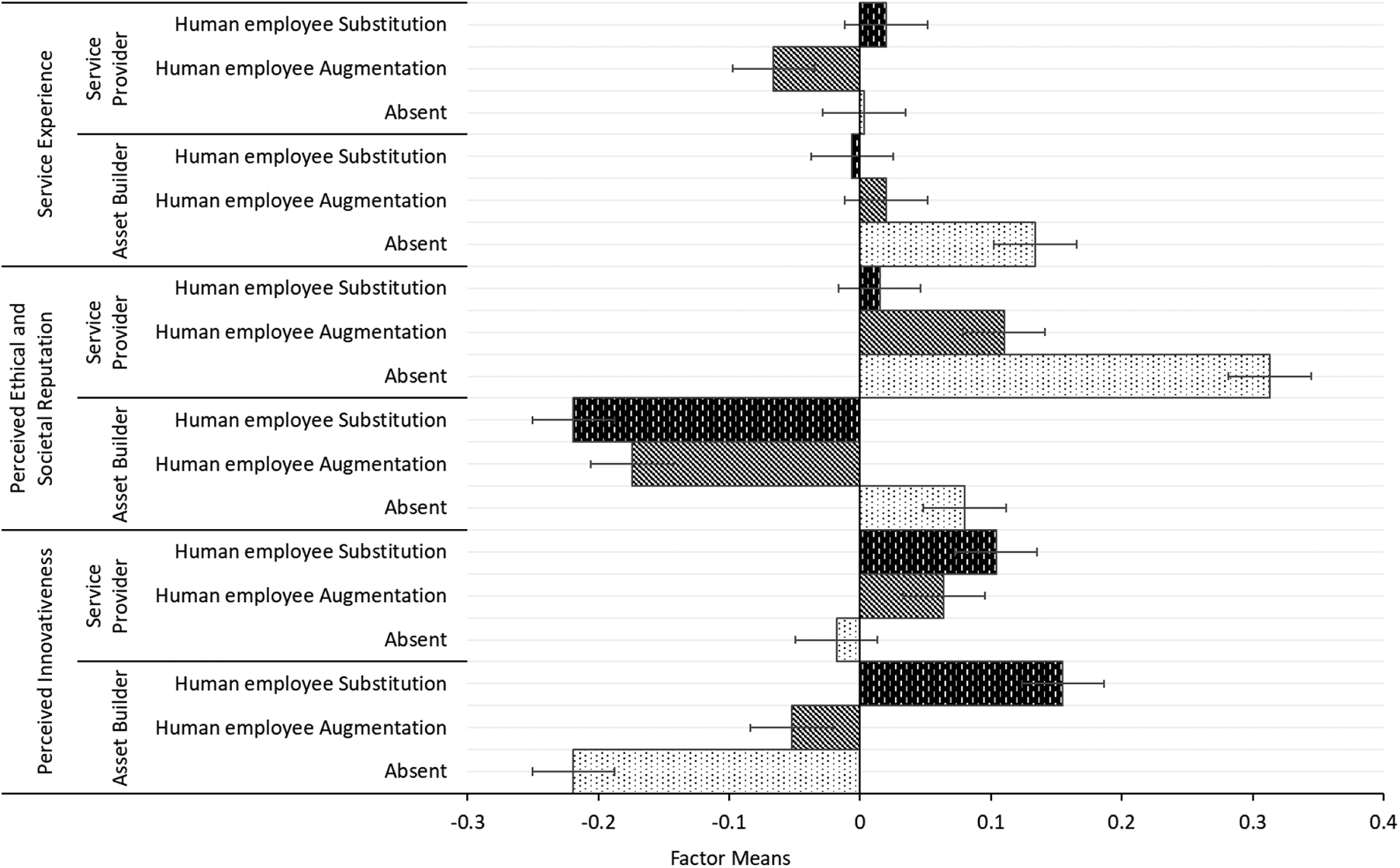
Dependent variables as a function of experimental conditions (Study 1).
Further analyses were conducted based on the ordinary least squares regression method using the Hayes’s PROCESS tool (custom Model 10); bootstrapped (N = 5,000) bias-corrected CIs and heteroscedasticity-consistent standard errors (SEs) were computed in line with standard practice (Hayes 2013; Yoganathan, Osburg, and Akhtar 2019). Categories of the manipulated factors were coded using the indicator method (Hayes and Preacher 2014). Values for openness-to-change were obtained following the procedure of Dobewall and Strack (2014) and Strack and Dobewall (2012) by mean-centering relevant items, which were then used for computing a specific composite score for each respondent. Respondents’ previous experience or interaction with FLSRs was controlled for by including it as a covariate in the model, which resulted in a nonsignificant effect on service experience (β = −.0656; CI [−.2359, .1047]).
The effect of the role of FLSRs on perceived innovativeness is positive and statistically significant for substitution of human employees (β = .1779; CI [.0442, .3116]); but for augmentation of human employees, the effect is weaker and not significant. Hypothesis 1 is therefore supported. Similarly, the effect of the role of FLSRs on perceived ethical/societal reputation is negative and statistically significant for substitution (β = −.1940; CI [−.3301, −.0580]), whereas the effect is not significant for augmentation. Hence, Hypothesis 2 is also supported. However, there were no significant differences observed between the value creation models (asset-builder, service provider) in relation to the effect of FLSR on either perceived innovativeness or perceived ethical/societal reputation. Further, there was no evidence that the effects of the role of FLSRs on perceived innovativeness and perceived ethical/societal reputation are moderated by individuals’ openness-to-change, as the moderation effects are not statistically significant. Thus, Hypotheses 3 and 4 are not supported. Effects on perceived innovativeness and perceived ethical/societal reputation are visualized in Figures 5 and 6.
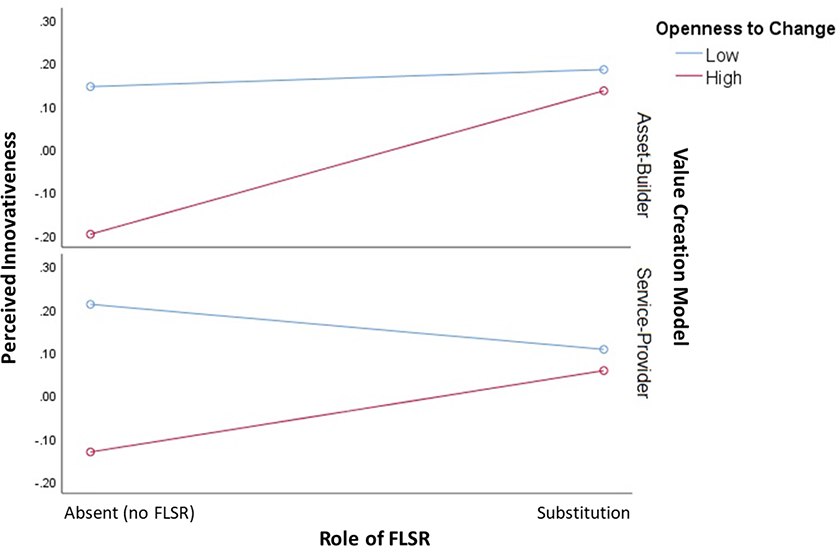
Effects of role of frontline service robots on perceived innovativeness.
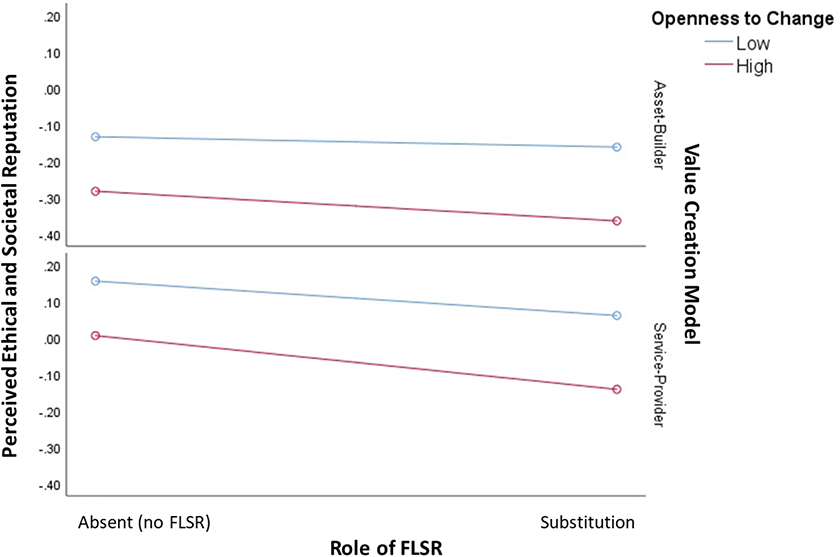
Effects of Role of frontline service robots on Perceived Ethical and Societal Reputation.
Results show support for Hypotheses 5a and 5b; the substitution role of FLSRs has a positive indirect effect on service experience via perceived innovativeness and a negative indirect effect via perceived ethical/societal reputation. However, the augmentation role does not have any indirect effects on service experience. Further, substitution’s effect via perceived ethical/societal reputation is significant at high levels of openness-to change in both asset-builder (β = −.0737; CI [−.1511, −.0021]) and service provider (β = −.0841; CI [−.1612, −.0148]) models. On the other hand, substitution’s effect via perceived innovativeness is also significant at high levels of openness-to change but only in the asset-builder model (β = .0704; CI [.0143, .1321]). In both value creation models, indirect effects via perceived innovativeness and perceived ethical/societal reputation are not significant for low levels of openness to change. Indirect effects of substitution are visualized in Figure 7.
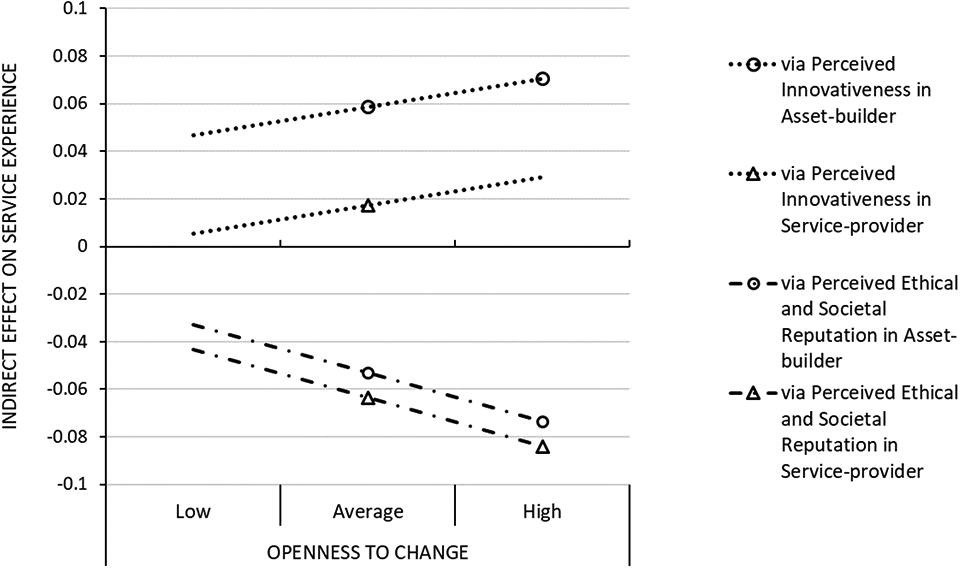
Indirect effects of substitution role of frontline service robots on service experience.
Study 2: FLSRs and Brand Usage Intent
Design, Procedure, and Stimuli
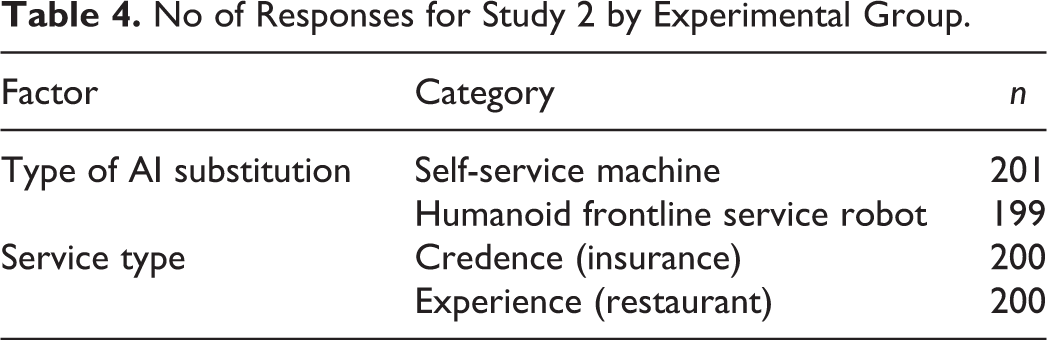
To further explore the effects of substituting human employees with AI, Study 2 considers the substitution role of technology as a function of substituting AI type and service type and builds on Study 1. Accordingly, in Study 2, we manipulated both the substituting AI type and service type, resulting in a 2 (type of AI substitution: FLSR, self-service machine) × 2 (service type: experience, credence) between-subject design. Respondents were randomly assigned to either the experience or credence service condition.
Building on the manipulations specified by Keh and Sun (2018), experience service was represented by a restaurant visit, while credence service was operationalized by the visit to an insurance agency branch (specifically, to buy life insurance). Depending on the condition, respondents were asked to imagine being in one of the described situations: (i) “Imagine that you are having dinner with some friends. You selected a restaurant, which you have not visited before. This restaurant is described in the following” (experience service) or (ii) “Imagine that you have been considering purchasing life insurance. One day, you see an insurance agency and you decide to visit the branch to find out more about it and possibly buy life insurance. The situation is further described in the following” (credence service). Participants were then provided with further information about the situation, which also included a specification of the AI type. Based on the assigned condition, the respondents received one of the texts shown in Supplementary Table 2. The descriptions were complemented with (a) an image of a humanoid or FLSR or self-service machine and (b) an image of a restaurant or insurance agency branch.
Sample and Measures
Overall, a random sample of 400 usable responses was collected (M age = 34.13 years, 56.8% female; all UK). After exposure to the stimulus, the specified constructs were measured with established scales: (1) Perceived Innovativeness-Responsibility Fit (adapted from Janssen et al. 2014), (2) Preference for Ethical/Responsible Service Provider (Ramasamy and Yeung 2009), and (3) Brand Usage Intent (Yoo and Donthu 2001). Again, minor modifications were conducted, so that the items had a better fit with the presented scenarios. All scales and items are documented in Supplementary Table 3 (available online).
Results for Study 2: FLSRs and Brand Usage Intent
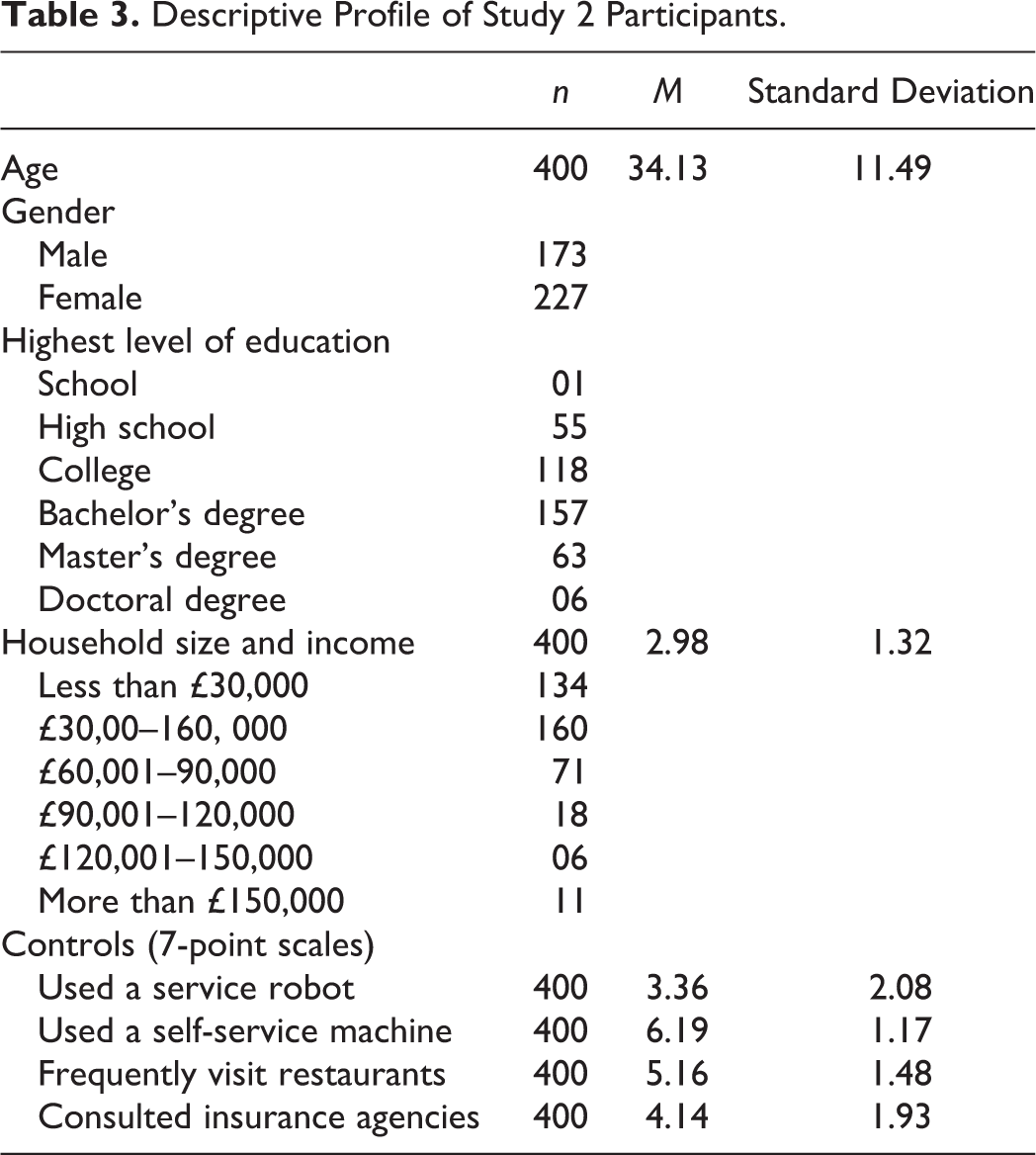
Table 3 presents a descriptive profile of participants, while Table 4 provides an overview of responses by experimental group. The manipulation checks are significant for type of AI substitution (F= 5.69; p < .05) and service type (F= 4.84; p < .05), and hypothesis testing was performed adopting the same procedure as in Study 1. Four variables were controlled for when testing hypotheses by adding them as covariates in the model: experience with FLSRs (β = .0527; CI [.0174, .0879]), experience with a self-service machine (β = −.0314; CI [−.0863, .0235]), visiting restaurants (β = .0300; CI [−.0160, .0760]), and experience with insurance agencies (β = −.0121; CI [−.0457, .0214]).
Descriptive Profile of Study 2 Participants.
No of Responses for Study 2 by Experimental Group.
Humanoid FLSRs (vs. self-service machines) have a significant negative effect on perceived innovativeness-responsibility fit (β = −.3634; CI [−.5471, −.1796]), which supports Hypothesis 6. However, there is no significant difference in this effect between credence and experience service types; hence, Hypothesis 7 is not supported.
The negative effect of humanoid FLSRs (vs. self-service machine) on perceived innovativeness-responsibility fit, for credence as well as experience services, is strengthened when an individual’s preference for ethical/responsible service providers is high (β = .2368; CI [.0741, .3995]). Therefore, Hypothesis 8 is supported. Notably (see Figure 8), perceived innovativeness-responsibility fit in credence services is low when an individual’s preference for ethical/responsible service providers is high (compared to average). In contrast, perceived innovativeness-responsibility fit in experience services is high when an individual’s preference for ethical/responsible service providers is high (compared to average).
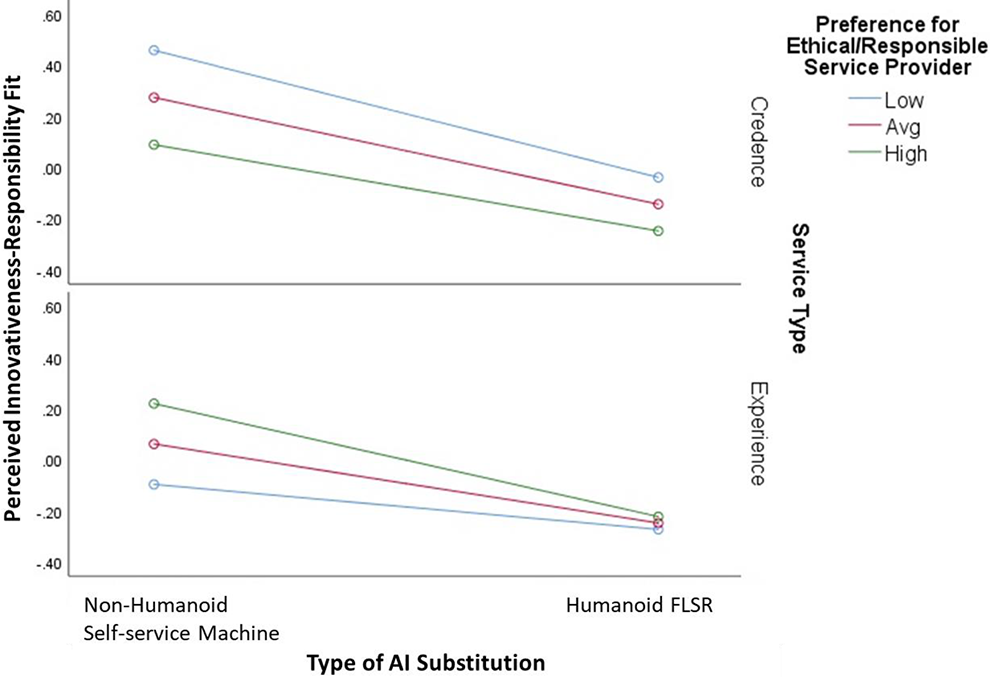
Effects on perceived innovativeness-responsibility fit by artificial intelligence type and preference for ethical/responsible business.
Humanoid FLSRs (vs. self-service machines) do not have a direct effect on brand usage intent in either credence or experience services. Nevertheless, statistically significant and positive indirect effects were observed in credence (β = .1901; CI [.0843, .3051]) and experience service types (β = .1408; CI [.0401, .2403]), which supports Hypothesis 9. However, the indirect effects do not differ significantly based on either the service type or an individual’s preference for ethical/responsible service providers.
General Discussion
There is little doubt that the introduction of FLSRs will have a profound effect on the service domain. In this article, we use the results of two main studies to show that introducing FLSRs has the following main effects: (1) Augmenting or substituting human employees with FLSRs has positive and negative consequences irrespective of value creation model, AI type, and service type; (2) FLSRs make the customer service interaction feel more innovative; (3) If human employees are replaced by FLSRs (e.g., for cost or other benefits), they damage the ethical/societal reputation of the service provider in terms of both service experience and brand usage intent; (4) However, personal customer characteristics (openness-to-change and preference for ethical/responsible service providers) determine the specificity and extent of these effects. While some individuals value innovativeness more, others appreciate the fact that a service provider is responsible toward employees and society. Our findings alert practitioners and researchers to the need to consider seriously (from a customer perspective) how the use of FLSRs influences perceived ethical/societal reputation, particularly if they are replacing/substituting human employees. Our results have theoretical as well as managerial implications that will help to successfully launch FLSRs.
Theoretical Implications
This article addresses gaps in the extant literature by answering calls for more research focusing on FLSRs and brands (Mende et al. 2019; Wirtz et al. 2018). No previous empirical research has explored the specific roles that FLSRs play in influencing service experience or brand usage intent. By operationalizing key components of Larivière et al.’s (2017) conceptual Service 2.0 model, we empirically validate and extend their work by developing and testing a holistic framework for understanding customer perceptions of FLSRs. Further, we illustrate the importance of considering both positive and negative cognitive evaluations of customers in relation to FLSRs (Čaić, Odekerken-Schröder, and Mahr 2018). As the role of FLSRs increases to replacing humans, customers’ perception of innovativeness also rises, which complements previous conceptual studies that have highlighted the positive potential of FLSRs (e.g., Wirtz et al. 2018).
Our findings also highlight the negative effect of FLSRs in terms of the ethical/societal reputation of service providers, which has not been widely empirically tested, but emphasized in conceptual papers owing to the nascent nature of the subject. For example, studies have highlighted the potential that AI has to replace human workers and create job displacement or losses (Huang and Rust 2018); robotic autonomous driverless cars (e.g., Coca-Vila 2018); robots providing the elderly with care (e.g., Čaić, Odekerken-Schröder, and Mahr 2018; Stahl and Coeckelbergh 2016); and more general concerns with FLSRs (e.g., Wirtz et al. 2018).
Customers appear to expect that employees will continue to play an essential role in delivering and defining frontline service encounters in a variety of service settings (De Keyser et al. 2019). Our results suggest that FLSRs were perceived to be more innovative in the asset-builder context of a duty-free store than the service provider context of an airline check-in. In an asset-builder context, FLSRs may add to the evaluation of the overall experience of purchasing a physical product.
By situating our study in the new and existing context of frontline service encounters and exploring mediating effects, we contribute to the general literature on service experience and brand usage intent (e.g., Andreini et al. 2018; Hollebeek, Glynn, and Brodie 2014; Japutra and Molinillo 2019). A positive service experience and increase in brand usage intent drives brand engagement and builds brand equity (Hepola, Karjaluoto, and Hintikka 2017). The mediation effects were significant when FLSRs completely replace humans, but not when they augment human service provision in a frontline service encounter. It appears that customers do not perceive that it is extraordinary to have an FLSR augmenting and supporting employees in frontline service encounters or perhaps they do not attach much importance to it. With regard to the mediating effect of perceived ethical/societal reputation, there is a clear difference between substitution and augmentation of human employees. Participants were concerned about the ethical and societal consequences of replacing employees with FLSRs, particularly in a substitution context.
The effect of humanoid FLSRs (vs. self-service machines) on perceived innovativeness-responsibility fit did not significantly differ between credence and experience services, which has not been explored previously. This is linked to arguably the most important finding of our research, which is the overall negative influence that FLSRs have on the service experience when customers are prompted to consider ethical/responsible aspects. By identifying this overall effect, we have answered calls to test net effects (e.g., Čaić, Odekerken-Schröder, and Mahr 2018). In most circumstances, the balance between the positive influence of perceived innovativeness and negative effect on perceived ethical/societal reputation and innovativeness-responsibility fit means that introducing FLSRs reduces a customer’s overall brand experience and brand usage intent. Hence, regardless of the value creation model, FLSRs taking over the roles of employees in frontline service encounters and customer-brand interactions is perceived negatively. These results provide empirical support for Huang and Rust (2018) and others who express concerns regarding FLSRs replacing employees.
We also considered how individual customer characteristics and values influence their perceptions of the role of FLSRs. Previous discussions have focused on customers in general; however, some individuals may be more open to change (innovative), while others may continue to expect traditional personal interactions with humans during a frontline service encounter. Consistent with theory, participants who were open to change appreciate the positive aspects of innovation, while those who were less receptive to change expressed concern about the negative implications (Claudy, Garcia, and O’Driscoll 2015; Wang, Dou, and Zhou 2008). Furthermore, these results were conditional on the value creation model. Positive effects of perceived innovativeness are found in the asset-builder context and when openness-to-change is high. In contrast, the negative effects of perceived ethical/societal reputation are present in both the asset-builder and service provider contexts when openness-to-change is low.
For customers who have a high preference for ethical/responsible service providers, perceived fit between the innovative and responsible aspects of humanoid FLSRs substituting/replacing human workers is low in credence services and high in experience services. This is understandable given that credence services (e.g., insurance) are harder to evaluate, uncertain, and riskier (from a customer perspective), and therefore, customers are likely to take a harsher or more skeptical attitude in evaluating FLSR involvement in such cases. Our findings in this respect are also consistent with those from brand congruency literature (Arbouw, Ballantine, and Ozanne 2018; de Jong and van der Meer 2017). Overall, if the fit between the innovative and ethical aspects of humanoid FLSRs substituting employees is established in the view of customers, this will lead to an increase in brand usage intent regardless of service type or customer preference.
Managerial Implications
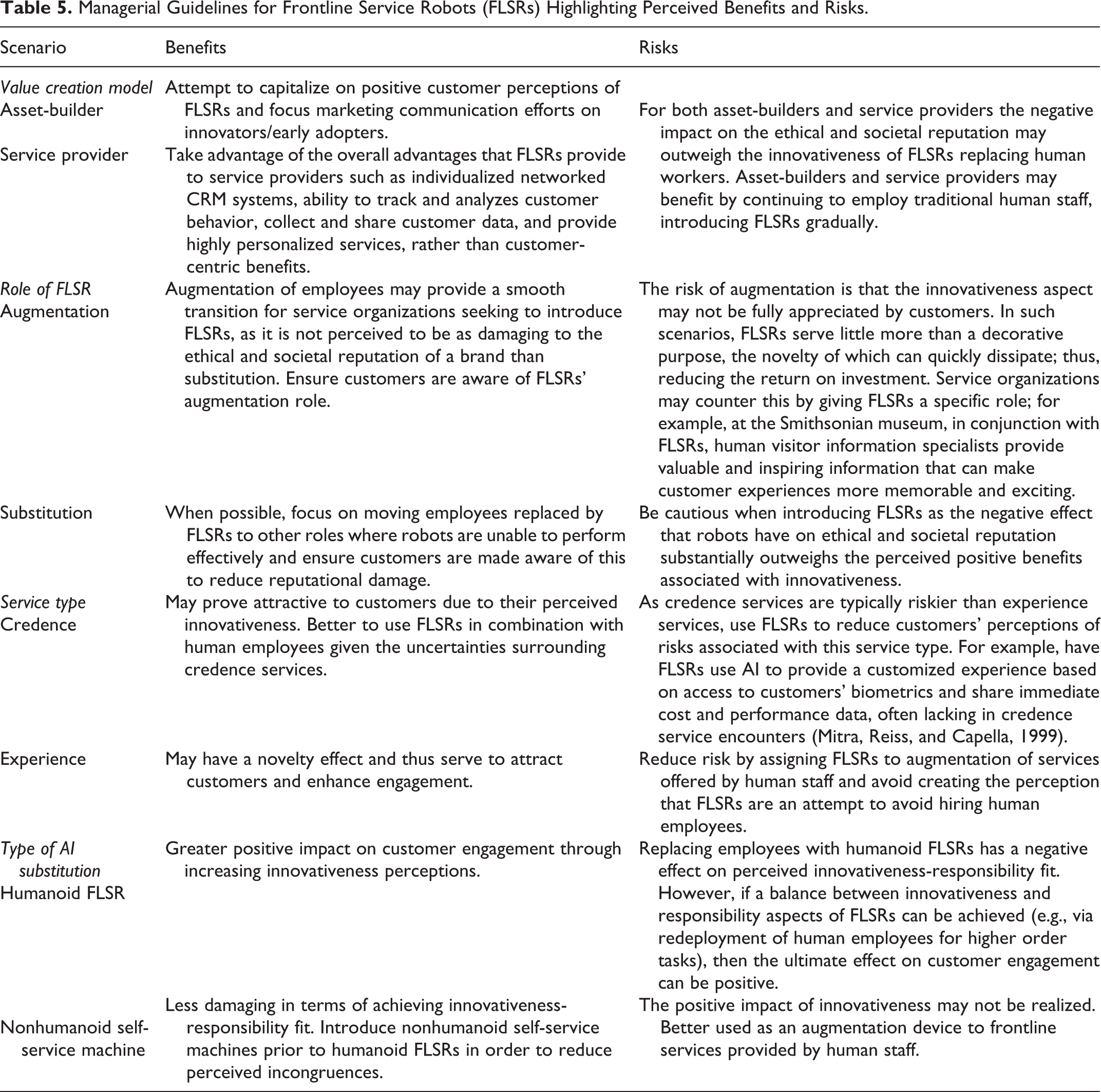
Our findings indicate that it is essential for service providers to understand how customers cognitively evaluate FLSRs and the important influence of customer characteristics, as these will have an impact on frontline service encounters. FLSRs substituting or replacing employees is perceived as a more innovative move, but FLSRs augmenting frontline service employees appear better for the ethical/societal reputation of a service provider. Also, humanoid FLSRs are perceived to be more innovative than nonhumanoid self-service machines that perform the same function. However, relative to self-service machines, humanoid FLSRs are perceived to have an incongruent innovativeness-responsibility fit that results in an overall negative impact on customer intent to use a brand. Further, the introduction of FLSRs is likely to be more successful in an asset-builder rather than service provider context. Specific recommendations that will help service providers take advantage of the benefits and reduce the risks associated with introducing FLSRs are presented in Table 5.
Managerial Guidelines for Frontline Service Robots (FLSRs) Highlighting Perceived Benefits and Risks.
Service providers might well find the prospect of reduced costs, increased efficiencies, and the provision of an alternative customer experience associated with introducing FLSRs alluring. Nonetheless, from a customer perspective, we find that the introduction of FLSRs will create a double-edged phenomenon. On the one hand, it is perceived as innovative (positive), but on the other, it is ethically questionable creating a poor innovativeness-responsibility fit. When considered in parallel, under most circumstances, negative influences outweigh the positive perceptions and lead to a decrease in the overall service experience and reduce brand usage intent. Consequently, plans or strategies involving the introduction of FLSRs should be carefully considered. While investment in robotics for assembly-line production in the 1980s was a broadly advantageous move, the same cannot quite be said of the new wave of FLSRs now entering frontline service. As such, their adoption is set to remain contentious.
Our results are dependent on the extent to which individual customers are conservative or open to change and their preferences for ethical/responsible service providers. This may depend on cultural and country differences. For multinational corporations, introducing FLSRs in countries where customers have higher levels of innovativeness (e.g., natives of Finland are seemingly in thrall to technology, whereas Germans are less positively disposed) in advance of countries where levels of customer innovativeness are lower may reap rewards (e.g., Bögel et al. 2018; Dobewall and Strack 2014). Service providers must realize that traditional models of innovation diffusion may need adapting before implementation in a dynamic, disruptive world of robot-based service encounters. If jobs lost to FLSRs are not as significant as doomsayers warn and as customers become familiar with FLSRs, damage to ethical/societal reputation may be reduced. However, education and marketing programs aimed at changing negative perceptions may still be warranted. In general, service managers should be cautioned against purely FLSR-driven service scenarios.
In view of the above, prior to the widespread deployment of FLSRs, we suggest that both managers and policy makers should give careful consideration to the following seven principles: To ensure that the safety and well-being of customers are not endangered, it is essential that ethical principles governing the implementation of FLSRs are developed and universally adopted. Through educational initiatives, service providers should collaborate to prepare customers and frontline employees for the imminent arrival of interactive FLSRs. Given the extensive nature of customer data that can be gathered through routine human-robot interactions, which is then stored, mined, and utilized by organizations, protecting the privacy such data must be an unshakeable tenet of FLSRs. Since robotic AI systems often excel by developing new ways of seeing and thinking that are impenetrable to human observers, service providers must strive for absolute transparency and integrity in their operation. Customers should be kept informed of the capabilities of such systems, and mechanisms of overseeing such capabilities and necessary control should also be made available to them. Pressures to sanction and promote the use of robotics and AI as means of increasing productivity, while simultaneously employing less labor, create a need for policy makers to remain attuned to the need to reskill and assist employees whose jobs are threatened by FLSRs. The introduction of a “robot tax” to fund and support these efforts may also be necessary. Policy makers should particularly focus on the utilization of FLSRs in credence services, where the customer may not be aware of potential substitution by FLSRs, especially if service providers deliberately avoid being transparent about the use of AI technology to protect their ethical/societal reputation.
Limitations and Areas for Further Research
Our findings demonstrate the importance of considering positive and negative influences on AI adoption together to avoid a one-sided perspective, which may over- or underestimate customer attitudes and perceptions. While the present research shows that perceived innovativeness and ethical/societal responsibility are some of these factors, future research needs to explore a range of other drivers and barriers related to AI adoption. This may include both technology-related and customer-related characteristics.
Additional research should be conducted when FLSRs are more commonly used in frontline service encounters. Such enquiry could explore the consequences of a positive service experience and increased brand usage, directly on, for example: customer engagement (see Hollebeek, Srivastava, and Chen 2016) or the roles that FLSRs could play in sharing experiences and value co-creation (Chen et al. 2018). Further, preferences for specific private versus national brands (Liu et al. 2018) or service provider versus manufacturer brands could be explored. Our scenario involved an online experiment using images of robots in various frontline service scenarios. In the future, field experiments based on the introduction of real FLSRs would support our scenario-based research and enable more tests of their positive or negative implications on the service experience, as well as other constructs of interest. For example, if and how customers’ perceptions of FLSRs change during a crisis such as the recent coronavirus pandemic when face-to-face encounters with human employees may be risky or not possible. Perceptions of artificial faces could be explored as deviation from humanness in humanoid FLSRs may have dramatic consequences (van Doorn et al. 2017; Wirtz et al. 2018). The relationships between the feeling of visceral discomfort explained by uncanny valley theory (Mori, McDorman, and Kageki 2012) and an apparently incongruent innovativeness-responsibility fit associated with humanoid FLSRs requires exploration, as they may have contrasting or cumulative negative effects on frontline service encounters. Our article did not directly focus on these factors; however, additional research in this area would provide valuable insights for FLSR designers.
Our research focused on perceived innovativeness, perceived ethical/societal reputation, and innovativeness-responsibility fit, which were established as mediators, forming the basis of customer cognitive evaluations. It would be useful to understand how long-lasting these effects are by conducting longitudinal research, which monitors changes in customer perceptions over time. Relatedly, the effects may also depend on the cultural context, namely, technology-affine cultures could be more open to the introduction of FLSRs. Our research was undertaken in the UK, but our framework could be extended to other countries and cultures. In addition, more research focusing on marketing communications is needed to identify how the implementation of FLSRs should best be communicated to customers. Our experimental study shows that as perceptions of substitution are negative, there may be a need for better education or promotion aimed at informing customers of the benefits of FLSRs or the redeployment of staff. However, as the best methods for disclosing information are yet to be determined, how would customers perceive FLSRs being the main communicator? Although we explored FLSRs in both credence and experience contexts, the extent to which perceptions of the augmentation and substitution of human employees are industry dependent should be explored in more detail. For example, the purpose of travel (holiday vs. business) may influence such perceptions and customers’ willingness-to-pay for the service may vary accordingly.
This article operationalizes Larivière et al.’s (2017) model by focusing on how customer perceptions of the service experience are influenced in asset-builder and service provider value creation models with FLSRs augmenting or substituting the role of service employees. Other parts of the model including network-orchestration and technology-creator value creation models, network facilitation, and transformation roles for customers and employees also warrant further research and validation through empirical studies. Additional categorizations such as Huang and Rust’s (2017, 2018) typology of a technology-driven service, and intelligences required for service tasks model, as well as van Doorn et al.’s (2017) and Wirtz et al.’s (2018) task type and service recipient model also warrant further empirical attention. The focus of our study was customer-centric and at the microlevel, rather than meso-, macro-, and metalevel contexts (Alexander, Jaakola, and Hollebeek 2018). Additional empirical research on the meso-, macro-, and metalevels of FLSRs across a network of dyads and actors in a servicescape would be useful.
As the development of scales that measure effectiveness and perceptions relating to FLSRs and branding are in their infancy, perhaps future research may focus on developing new and more appropriate scales. For example, there are opportunities for developing new scales that directly measure dehumanization or privacy concerns as FLSRs increasingly drive frontline service encounters.
In conclusion, since a wave of automation will undoubtedly transform service encounters and experiences, we must strive to understand the challenges and take advantage of the opportunities they provide. As service scholars, we must continue to explore the role of FLSRs in service types, the tasks they perform, and the factors that are crucial to value creation. Hollebeek, Srivastava, and Chen’s (2016) integrative S-D logic informed framework may provide additional insights for understanding co-creation, customer resource integration and customer learning, as we embrace the inevitable future in which AI-driven interactive and dynamic servicescapes become commonplace.
Supplemental Material
Supplemental Material, New_insights_into_how_robots_will_change_frontline_services - Replaced by a Robot: Service Implications in the Age of the Machine
Supplemental Material, New_insights_into_how_robots_will_change_frontline_services for Replaced by a Robot: Service Implications in the Age of the Machine by Fraser McLeay, Victoria Sophie Osburg, Vignesh Yoganathan and Anthony Patterson in Journal of Service Research
Supplemental Material
Supplemental Material, RESUBMISSION_SUPPLEMENTARY_ONLINE_MATERIAL_2020_final_Sept_14 - Replaced by a Robot: Service Implications in the Age of the Machine
Supplemental Material, RESUBMISSION_SUPPLEMENTARY_ONLINE_MATERIAL_2020_final_Sept_14 for Replaced by a Robot: Service Implications in the Age of the Machine by Fraser McLeay, Victoria Sophie Osburg, Vignesh Yoganathan and Anthony Patterson in Journal of Service Research
Footnotes
Authors’ Note
Vignesh Yoganathan is not affiliated with Bradford University School of Management, United Kingdom now.
Acknowledgments
We would like to thank Hossein Olya, 3 anonymous reviewers and the editors of this special issue for their helpful comments on earlier drafts of this manuscript.
Declaration of Conflicting Interests
The author(s) declared no potential conflicts of interest with respect to the research, authorship, and/or publication of this article.
Funding
The author(s) disclosed receipt of the following financial support for the research, authorship, and/or publication of this article: The authors would like to thank the Sheffield University Management School for internal funding to collect data for this study.

Supplemental Material
Supplemental material for this article is available online.
Note
References
Supplementary Material
Please find the following supplemental material available below.
For Open Access articles published under a Creative Commons License, all supplemental material carries the same license as the article it is associated with.
For non-Open Access articles published, all supplemental material carries a non-exclusive license, and permission requests for re-use of supplemental material or any part of supplemental material shall be sent directly to the copyright owner as specified in the copyright notice associated with the article.
