




Abstract
Ambient scents are being increasingly used in different service environments. While there is emerging research on the effects of scents, almost nothing is known about the long-term effects of consumers’ repeated exposure to ambient scents in a service environment as prior studies on ambient scents have been lab or field studies examining short-term effects of scent exposure only. Addressing this limitation, we examine the short- and long-term effects of ambient scents. Specifically, we present a conceptual framework for the short- and long-term effects of nonconsciously processed ambient scent in olfactory-rich servicescapes. We empirically test this framework with the help of two large-scale field experiments, conducted in collaboration with a major German railway company, in which consumers were exposed to a pleasant, nonconsciously processed scent. The first experiment demonstrates ambient scent’s positive short-term effects on consumers’ service perceptions. The second experiment—a longitudinal study conducted over a 4-month period—examines scent’s long-term effects on consumers’ reactions and demonstrates that the effects persist even when the scent has been removed from the servicescape.
The persuasive power of an odor cannot be fended off, it enters into us like breath into our lungs, it fills us up, imbues us totally. There is no remedy for it.
Prior research in this domain has revealed that pleasant ambient scents have a positive influence on consumers’ perceptions of, for example, the physical servicescape (Mattila and Wirtz 2001), on their brand evaluations (Morrin and Ratneshwar 2003), and time perceptions (Spangenberg, Crowley, and Henderson 1996). Furthermore, this literature also shows that ambient scents regulate consumers’ emotions, such as those related to pleasure, arousal, and mood (e.g., Mattila and Wirtz 2001; Spangenberg, Grohmann, and Sprott 2005), and even behaviors (e.g., Biswas and Szocs 2019; Herrmann et al. 2013; Hirsch 1995).
While past studies provide important insights into consumers’ perceptions of and reactions to ambient scents, almost nothing is known about the long-term effects of consumers’ repeated exposure to ambient scents in a service environment. To the best of our knowledge, only three studies, all outside marketing and in fields as diverse as geriatrics and developmental psychology, have examined the long-term effects of scent. These studies show that repeated scent exposure positively affects individuals’ arousal level (Delaunay-El Allam et al. 2010), inclination to agitation behavior (Moorman-Li et al. 2017), and their sense of balance (Sakamoto et al. 2012). Prior service and marketing research has, however, almost exclusively relied on static experiments focused on short-term effects by examining consumers’ reactions to a newly introduced olfactory stimulus. Specifically, research has not yet broached the issue of whether consumers’ responses to an ambient scent wear off over time or whether they persist even after the scent has been removed. In addition, prior research suggests that service atmospherics are particularly important for long-term customers (Dagger and Sweeney 2007). Thus, “[i]gnoring the time-variant character of servicescape effects may lead to inappropriate conclusions” (Brüggen, Foubert, and Gremler 2011, p. 72).
Also, research has not examined consumers’ reactions when an introduced ambient scent is later withdrawn or is absent. This is also critical since companies frequently implement ambient scents as a temporary promotional tool, for example, during the holiday seasons (e.g., Spangenberg, Grohmann, and Sprott 2005), or may discontinue its use for budget reasons (Spence et al. 2014). In addition, in a retail setting, ambient scents might, for example, be present in one section of the retail space but not in others (Hirsch 1995).
Finally, those studies that examined ambient scents’ short-term effects usually relied on highly controlled lab or other controllable environments, such as classrooms (see Rimkute, Moraes, and Ferreira 2016). As a consequence, there is need for research on ambient scent in olfactory-rich servicescapes characterized by diverse sensory cues (e.g., Canniford, Riach, and Hill 2018; Mattila and Wirtz 2001), such as during train journeys when it is difficult to avoid malodors and olfactory distraction (Canniford, Riach, and Hill 2018).
This article addresses these gaps in research and makes several important contributions to the literature. We first present a conceptual framework describing the short- and long-term effects of a pleasant, but nonconsciously processed, ambient scent on consumers’ service perceptions in a servicescape. We subsequently tested the framework’s central tenets by examining ambient scent’s short-term effects on consumers’ service perceptions in an olfactory-rich environment characterized by many sensory cues. For this purpose, we exposed the customers of a major German railway company to a pleasurable, nonconsciously processed ambient scent diffused via the train’s air conditioning system. The results of our first cross-sectional field experiment support ambient scents’ positive short-term effects on consumers’ service perceptions, even in an olfactory-rich servicescape.
To further test our conceptual framework, we measured the reactions of the same railway company’s customers to a pleasant ambient scent over a 4-month period in a second large-scale field experiment based on a longitudinal control group design. This study investigates the long-term effects of ambient scents on consumers’ service perceptions but also examines the possible aftereffects by measuring consumers’ reactions after the ambient scent was removed. The results show that the use of a nonconsciously processed long-term ambient scent has an enduring, positive impact on consumers’ service evaluations. Furthermore, our results indicate that ambient scents’ positive effect on service evaluations persists for at least 2 weeks after the ambient scent has been withdrawn. As such, this research has strong relevance for companies in the service and retail sectors, suggesting that nonconsciously processed ambient scent can be a powerful tool in servicescapes.
Theoretical Background and Hypotheses
A servicescape acts as a backdrop to consumers’ evolving emotions, cognitions, and behavioral intentions toward a service (Baker et al. 2002; Brüggen, Foubert, and Gremler 2011). Olfactory stimuli, an integral part of a service environment, influence consumers’ psychological responses such as by affecting approach or avoidance behavior (Bitner 1992; Krishna 2010; Spence et al. 2014). The olfactory system is unique in being the only sensory system relying solely on inputs of chemical molecules; in contrast, the visual system relies on light waves, while the auditory system uses sound waves. The olfactory bulb does the initial processing of olfactory molecules and transmits the information to the brain’s piriform cortex, which projects onto the orbitofrontal cortex via the amygdala (Rolls 2015; Soudry et al. 2011). The amygdala plays a critical role in emotions (Phelps and LeDoux 2005) and memory (Hamann et al. 1999). The presence of ambient scent has therefore been linked to positive experiences, mood, and memory (Krishna 2012; Krishna, Lwin, and Morrin 2010). In fact, the loss of smell often leads to mood disorders, depression, and an overall deterioration of the quality of life (Deems et al. 1991).
In essence, when chemical molecules from a pleasant ambient scent enter the human olfactory system, this triggers the brain’s reward circuitry area (Camerer, Loewenstein, and Prelec 2005), which in turn leads to an overall higher level of pleasant feelings (Biswas and Szocs 2019; Ressler 2004). Freiherr (2017) highlights that, in contrast to other sensory modalities, the thalamic relay does not process olfactory information on its way from the receptors to the neocortex, which might be one of the reasons for the multitude of nonconscious processes involved in olfactory perception. Using ambient scents to influence consumers has a special appeal for practitioners, particularly when processed nonconsciously, since consumers are more susceptible to the effects of scents, in such scenarios (Bradford and Desrochers 2009; Canniford, Riach, and Hill 2018).
The Effects of Nonconsciously Processed Ambient Scent on Consumers’ Service Perceptions
Building on extant literature, we theorize a pleasant ambient scent’s differing short- and long-term effects in an olfactory-rich servicescape on the basis of the exposure’s duration (Bradford and Desrochers 2009). Scents are usually processed nonconsciously (Li et al. 2007), either due to their subliminal nature (i.e., their low intensity, see Laird 1932) or because they match personal experiences and expectations, and are therefore integrated into an olfactory background (e.g., Biswas and Szocs 2019; Forster and Spence 2018; Krishna, Lwin, and Morrin 2010). Our theoretical framework therefore focuses on nonconsciously (rather than consciously) processed scents. Nonconscious processing entails that a scent influences cognition and behavior without consumers being aware of this influence (Holland, Hendriks, and Aarts 2005). This differs from consumers’ general ability to detect a scent stimulus when focusing on detection (Li et al. 2007). Subliminal scent stimuli, however, are processed nonconsciously only (Holland, Hendriks, and Aarts 2005).
Figure 1 illustrates our conceptual model. In the following sections, we first discuss pleasant, but nonconsciously processed, ambient scents’ initial effects after a one-time exposure (Stage I), followed by the effects of the scent after repeated exposure (Stage II), and, finally, by the aftereffects on consumers’ service perception following the discontinuation of the ambient scent stimulation (Stage III).
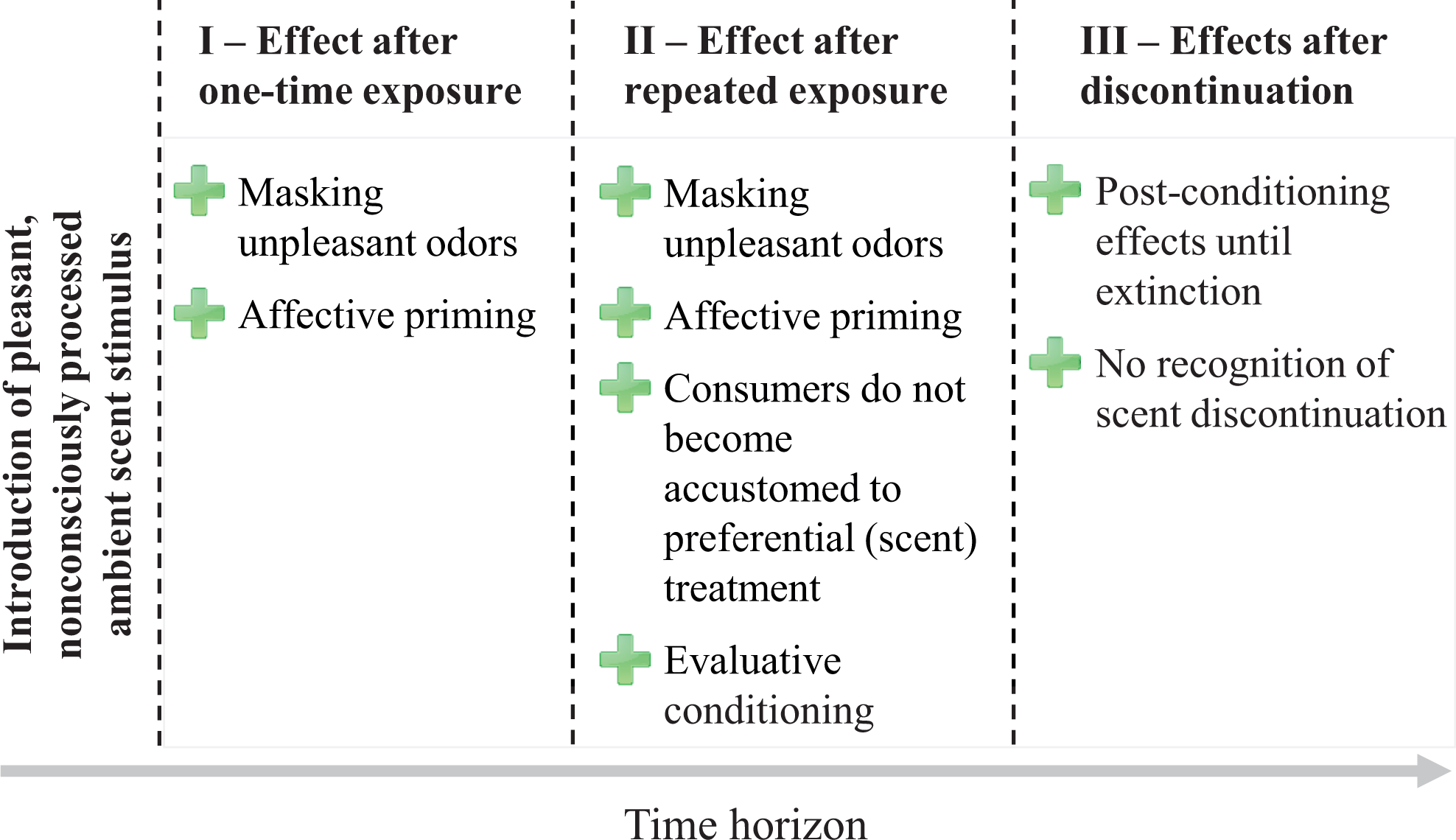
Effects of nonconsciously processed ambient scents in a service environment.
One-time exposure effects
One positive effect of a pleasant ambient scent effect is its ability to mask other scents and especially unpleasant smells from food items, other passengers, and pets (Canniford, Riach, and Hill 2018; Henshaw et al. 2016), which can be quite prevalent in olfactory-rich servicescapes (e.g., in a train). Adding a pleasant ambient scent that masks malodors should therefore lead to favorable service perceptions (Goldkuhl and Styvén 2007).
Besides their ability to displace malodors, numerous studies demonstrate that pleasant scents have an additional positive effect on consumer perceptions when processed nonconsciously (e.g., Holland, Hendriks, and Aarts 2005; Laird 1932; Li et al. 2007). Affective priming, which affective primacy theory covers (Zajonc 1980, 1984), offers a potential explanation for this effect. According to this theory, a subliminal stimulus (i.e., a scent prime) evokes an emotional response, which is transferred to the processing of a situation and modifies its affective evaluation (Li et al. 2007). Consumers can therefore form positive affective reactions to a situation without a prior cognitive interpretation of the factors determining the positive affect (Winkielman, Zajonc, and Schwarz 1997).
Finally, research has shown that pleasant ambient scents can trigger the reward circuity areas of the brain, which in turn can lead to feelings of pleasantness (Biswas and Szocs 2019; Camerer, Loewenstein, and Prelec 2005). In other words, a pleasant ambient scent can lead to a more affective state for consumers.
Repeated exposure effects
What happens when consumers are repeatedly exposed to the same ambient scent? A constant masking of malodors and ongoing affective priming will certainly impact consumers’ service perceptions positively. The positive effects are less likely to diminish, as consumers process the scent nonconsciously and therefore do not become accustomed to the preferential scent treatment (Bradford and Desrochers 2009).
In fact, consumer psychology research suggests that an additional mechanism—associative learning (Biswas et al. 2014; Herz 2005)—reinforces consumers’ positive evaluation of a service episode in such a situation. By repeatedly being exposed to a pleasant ambient scent in the course of service delivery, consumers learn to associate the scent stimulus with the service itself (Canniford, Riach, and Hill 2018). Put differently, the scent stimulus’s positive valence spills over to the service environment. This is in line with research on evaluative conditioning (e.g., Hofmann et al. 2010; Houwer, Thomas, and Baeyens 2001), which suggests that the repeated pairing of a conditioned stimulus (i.e., a service delivery episode) with an unconditioned stimulus (i.e., a pleasant ambient scent) improves customers’ liking of the former over time (Hasford et al. 2018). Research has specifically shown that this effect also occurs if the unconditioned stimulus is processed nonconsciously (e.g., Baeyens et al. 1996; Jones, Fazio, and Olson 2009). Some studies have shown that evaluative conditioning effects are stronger if individuals are unaware of the unconditioned stimulus (Walther and Nagengast 2006). Numerous studies likewise underscore the importance of odor-induced associative learning and its effects on human perceptions and behaviors (e.g., Herz 2005; Reekum, de Berg, and Frijda 1999; Todrank et al. 1995). Therapeutic approaches, such as aromatherapy, rely on this mechanism (Herz 2009).
Aftereffects
Following a successful pairing of an unconditioned stimulus (i.e., the pleasant ambient scent) and a conditioned stimulus (i.e., a service delivery episode), evaluative conditioning theory posits that the mere presence of the conditioned stimulus elicits responses comparable to those observed in the presence of the unconditioned stimulus (Hofmann et al. 2010; Reekum, de Berg, and Frijda 1999). This postconditioning effect usually persists for a certain time until “extinction.” Extinction implies that experiencing the conditioned stimulus (the service delivery episode) without the unconditioned stimulus (the scent) leads to a gradual decline in the conditioned response (Houwer, Thomas, and Baeyens 2001). Thus, after having mentally disassociated the two stimuli, consumers are no longer expected to show positive affective reactions to the service environment. Prior research in the chemoreception field has shown that scents can induce postconditioning effects for a week or longer (Baeyens et al. 1996; Herz 2005), suggesting that service providers can benefit from prolonged aftereffects when discontinuing an ambient scent.
Furthermore, when consumers process an ambient scent nonconsciously, they will not recognize its discontinuation, thus making positive aftereffects possible. In contrast, when processing a scent consciously, consumers may recognize its sudden absence, which could potentially result in a devaluation of the service and the provider (Henshaw et al. 2016).
Hypotheses
To test the central tenets of our conceptual model, we evaluated whether the implementation of a pleasant, but nonconsciously processed, ambient scent leads to the proposed positive short-, long-term, and aftereffects on consumers’ evaluation of situational service perceptions, even in an olfactory-rich servicescape such as a train journey. A train journey is a suitable service setting for studying ambient scent effects because it allows for nonconscious scent evaluation and also because in most countries around the world, consumers frequent this type, or similar types, of servicescape regularly.
We examined the effects of scent on three dependent variables frequently used to assess consumers’ situational service evaluations: (1) their perceived service quality (i.e., “a consumer’s evaluative perceptions of a service encounter at a specific point in time”; Cronin and Taylor 1994, p. 127), which prior research on short-term scent effects has often considered (McDonnell 2007; Morrin and Chebat 2005), (2) consumers’ service experience (i.e., “the outcomes of the interactions between organizations, related systems/processes, service employees and consumers”; Bitner et al. 1997, p. 193), and (3) service value perceptions (i.e., “consumers’ overall assessments of product and service utility based on what is exchanged”; Harris and Goode 2004, p. 145). These constructs are important and relevant from conceptual and practical perspectives (e.g., Cronin, Brady, and Hult 2000; Hightower, Brady, and Baker 2002). See Table 1 for a complete list of item wordings.
Constructs, Measurement Items, and Quality Criteria (Study 1).
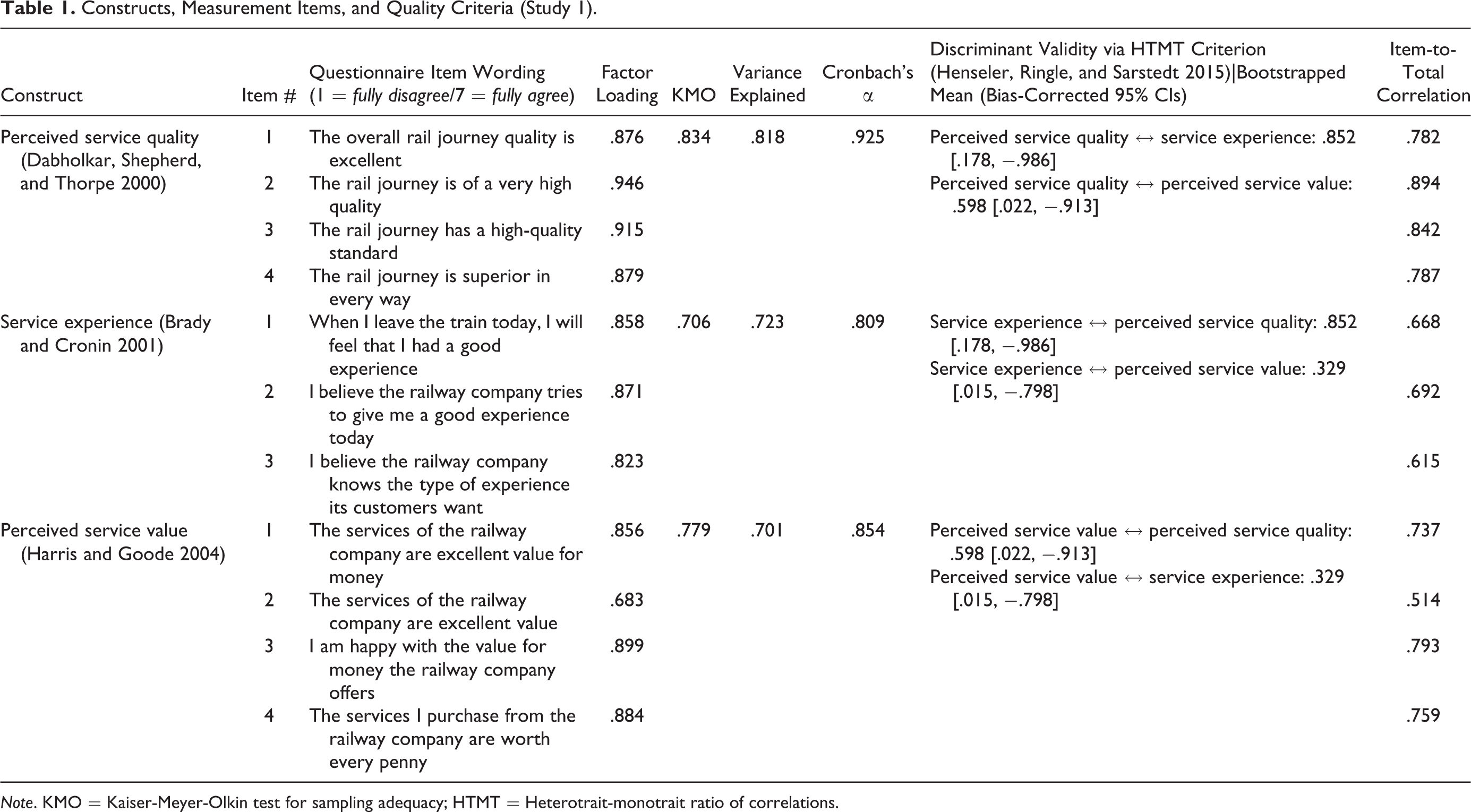
Note. KMO = Kaiser-Meyer-Olkin test for sampling adequacy; HTMT = Heterotrait-monotrait ratio of correlations.
In line with prior research (e.g., Lunardo and Mbengue 2013; Mattila and Wirtz 2001; Morrin and Chebat 2005), we expect a pleasant ambient scent to influence all three types of service perceptions after onetime exposure. Consistent with our theoretical framework, we expect the effects of repeated exposure to a nonconsciously processed scent to have continued positive effects. Finally, as discussed earlier, an ambient scent’s positive effects will persist, as consumers do not recognize the discontinuation of a nonconsciously processed scent. Formally stated:
Figure 2 provides an overview of our hypotheses.
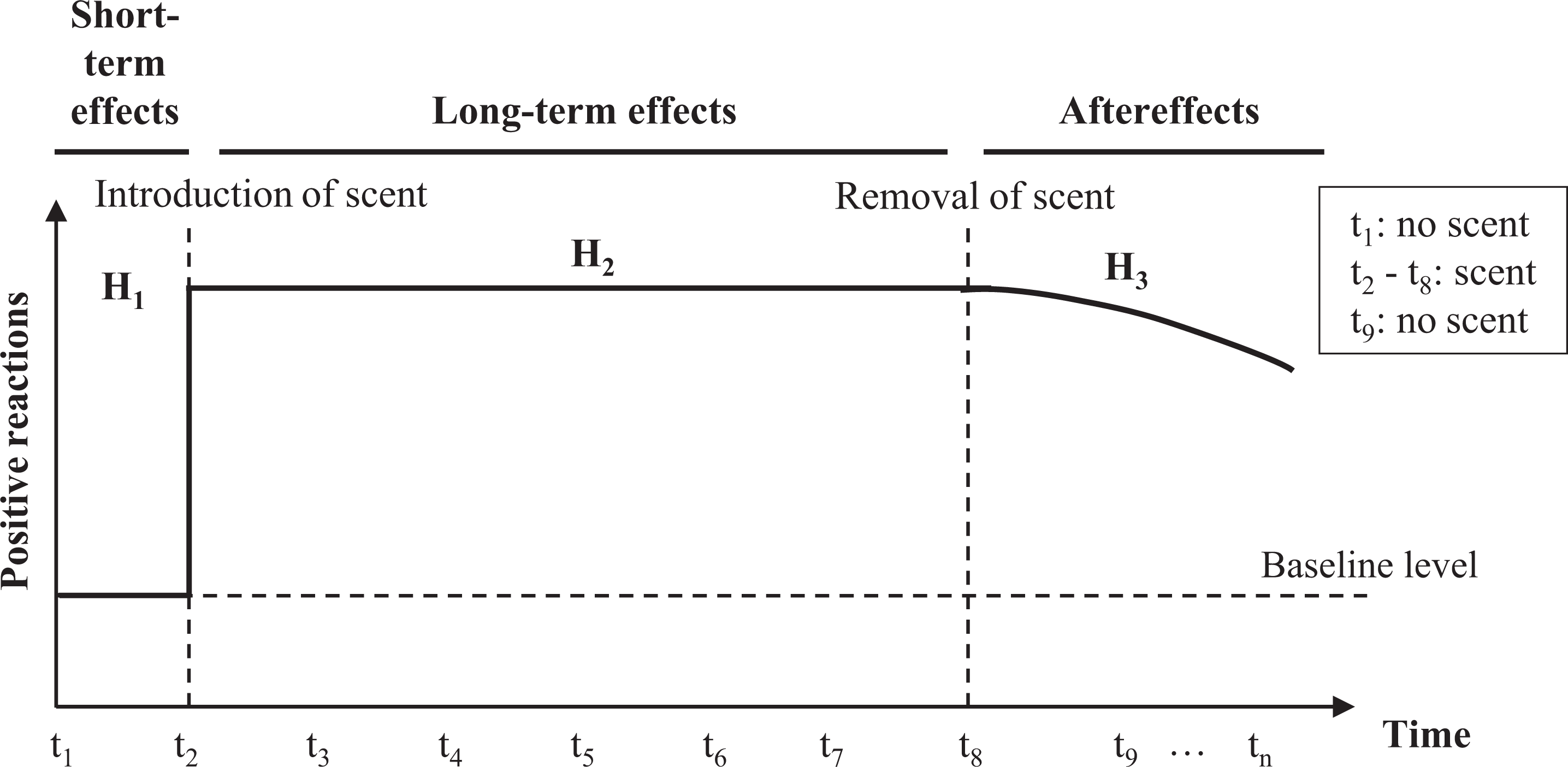
Overview of hypotheses.
Overview of Studies
First, we conducted a series of pretests, including one in a field setting with 330 actual consumers, to select an appropriate scent that consumers would predominantly process nonconsciously. We then ran two field experiments to test our hypotheses. The first experiment was a cross-sectional field study (204 actual consumers) to assess the scent’s short-term effects on consumers’ affective responses (Hypothesis 1). This study demonstrates ambient scent’s effectiveness in the specific service context of train journeys, an olfactory-rich environment. The second experiment was a longitudinal field study with 100 regular commuters; this study assessed ambient scent’s long-term and aftereffects (Hypotheses 2 and 3). Another 74 consumers were used in unscented conditions to bolster the internal validity of the longitudinal study’s results. We conducted all the experiments in cooperation with a major German railway company. Table 2 offers an overview of the pretests and field studies.
Study Overview.
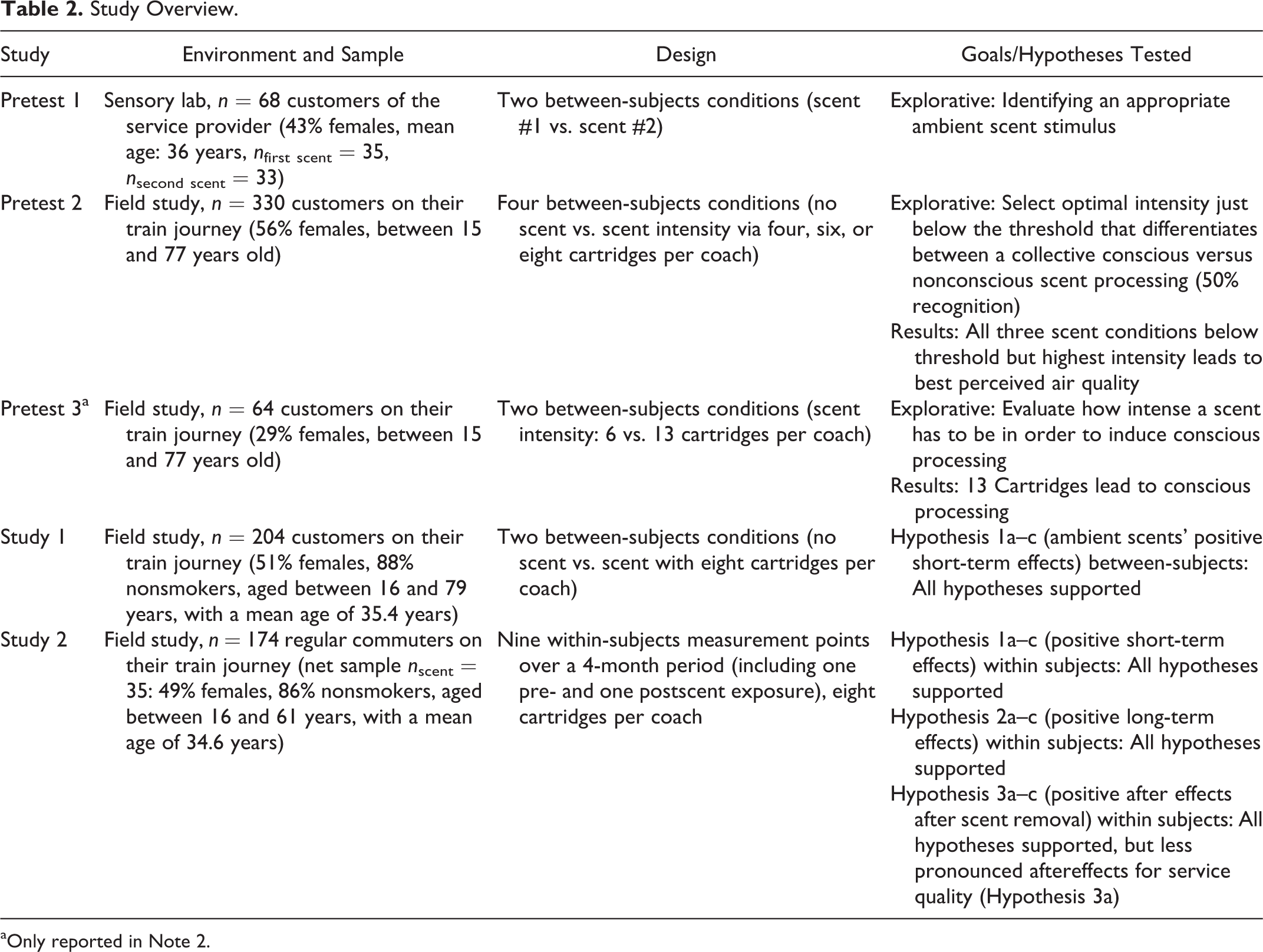
aOnly reported in Note 2.
Pretest 1: Finding an appropriate Scent Stimulus
A professional fragrance manufacturer developed two scents that fit the railway company’s servicescape. According to optimal stimulation theory, consumers aim for an optimal target-arousal level when entering a certain service environment (Das and Hagtvedt 2016; Wirtz, Mattila, and Tan 2000). Since rail commuters are likely to seek a relaxing service experience (i.e., low arousal, as confirmed through interviews with customers), the railway company sought to apply a pleasurable but moderately arousing, ambient scent to avoid creating a strong discrepancy between the consumers’ experience of the servicescape and their target-arousal level (Mattila and Wirtz 2001). For the pretest, the first scent that the fragrance manufacturer developed was mainly comprised of jasmine, melon, and violet leave essences, while the second scent was mainly comprised of lemon, grapefruit, green tea, and sandalwood essences.
We conducted a lab-based pretest with 68 customers, whom the railway company helped recruit. All the participants received a gift worth approximately €5. The test was based on a between-subjects design, with participants evaluating the first or the second scent. The two between-subjects groups did not differ significantly in terms of age or gender (smallest p value = .543). On a bipolar scale (−3 = unpleasant, +3 = pleasant), the consumers liked both scents equally, Mscent1 = 1.11 versus Mscent2 = 0.73, t(66) = 1.051, p = .297, but the first scent yielded significantly lower levels of arousal, −3 = relaxing, +3 = stimulating, Mscent1 = −0.26 versus Mscent2 = 0.52, t(66) = 2.105, p = .039. The first scent comprised of a great number of essential ingredients, which means that its production process is elaborate. These two aspects act as a safeguard against other service providers copying the scent, as it can be difficult to register and protect a signature scent (Schifferstein and Spence 2008). We consequently chose the first scent for further assessment in the field studies.
Pretest 2: Optimal Intensity and Perception in a Field Setting
To determine the scent’s optimal intensity level, we conducted an additional field pretest with a total of 330 consumers on their train journey, during which we diffused the scent via the train’s air conditioning system. 1 All the participants received gifts worth €5 for their participation. This experiment comprised four between-subjects conditions, one without scent application (two coaches, n = 132, 54% female, between 16 and 77 years old) and three with different scent intensities (each in a separate coach, nlow = 86, nmedium = 50, nhigh = 62, 57% female, between 15 and 64 years old), depending on the number of scent cartridges used per coach (i.e., four, six, or eight cartridges).
In the scented conditions, we first asked the consumers about their unaided recognition of any special scent and then asked about their aided recognition. Olfactory research has found that thresholds for scent recognition vary inter- and intraindividually (e.g., Biswas and Szocs 2019; Cain and Gent 1991). Researchers, therefore, routinely use 50% of the subjects who can recognize a scent as the threshold that differentiates between a collective conscious versus nonconscious scent processing (e.g., Burdack-Freitag, Heinlein, and Mayer 2017; Doty 2001; Marin, Acree, and Barnard 1988). In our study, 27% of the subjects recognized the scent (unaided and aided combined), which corresponds exactly to the rate observed in related research (Krishna, Lwin, and Morrin 2010), clearly indicating that the majority of consumers processed the scent nonconsciously. 2 Furthermore, we found no significant relationship between scent recognition and scent intensity, low 29%, medium = 30%, and high = 21%, χ2(2) = 1.563, p = .458. All 53 consumers who recognized the scent rated its perceived pleasantness (5 items, 7-point bipolar scales ranging from −3 to +3, Cronbach’s α = .95, Fisher 1974). With a significant positive deviation from the scale midpoint, M = 0.75, t(39) = 3.348, p = .002, η2 = .223, the results confirm that the scent stimulus has a positive valence.
Finally, we tested whether the nonconsciously processed scent evokes positive evaluations of the servicescape. For this purpose, we allowed all 330 consumers to rate the perceived air quality (a 7-point bipolar single item, −3 = very bad/+3 = very good; Zhang, Arens, and Pasut 2011). A one-way analysis of variance (ANOVA) indicated an improved air quality perception in all three scent-intensity levels (Mlow = 0.72, SDlow = 1.44; Mmedium = .84, SDmedium = 1.38; Mhigh = 1.45, SDhigh = 1.30), as compared to the control group without scent, Mcontrol = .19, SDcontrol = 0.135; F(3, 326) = 12.422; p < .001; η2 = .103. Pairwise comparisons (Hochberg’s procedure) showed significant differences between the no scent condition and all three scent intensity levels (pcontrol/low = .034; pcontrol/medium = .027; pcontrol/high = .000), as well as between the low and high intensities (p = .010), indicating that the unconscious manipulation of our olfactory cues was successful. Consequently, we applied an intensity of eight cartridges in the two subsequent field studies (Online Appendix A provides further details).
Study 1: Cross-Sectional Field Experiment
Study Design
Study 1 was a field experiment with consumers traveling between two midsize towns in Germany. The study had a between-subjects design with two manipulated conditions (scented vs. unscented coaches). We selected different train coaches randomly to serve as the experimental conditions. In the first coach, we diffused the scent via the train’s air conditioning system (scented condition), while consumers in two other coaches were not exposed to the scent (unscented condition).
Sample and Sampling Procedures
Ten minutes after the train had left the initial station, our assistants went through the two coaches and asked the consumers to participate in a market research study. We did not alert the respondents to the ambient scent diffusion during the study. All the participants received gifts worth €5 as an incentive.
The study sample consisted of 204 consumers. The respondents in the scented condition (n = 65) and the unscented condition (n = 139) did not differ significantly in terms of age, Munscented = 36.0 versus Munscented = 34.1 years, t(179) = 0.721, p > .10; smoking habits, smokersunscented = 21.8% versus smokersscented = 22.4%, χ2(1) = 0.009, p > .10); education, χ2(4) = 6.380, p > .10; occupation, χ2(4) = 0.930, p > .10; and train usage, commuter versus noncommuter, commuterunscented = 48.9% versus commuterscented = 38.6%, χ2(1) = 1.697, p > .10. However, the scented condition contained significantly more male participants (64.4%) than the unscented condition, 45.5%, χ2(1) = 5.562, p = .015.
Results
We first analyzed the construct measures’ reliability and validity. The results (reported in Table 1) support all the measures’ adequacy. Next, we ran a series of ANOVAs to compare the differences in the consumer perceptions of the scented and unscented conditions. The results show that consumers in the scented condition had significantly more favorable perceptions of the service quality, Mscented = 4.24, SD = 1.40 versus Munscented = 3.77, SD = 1.27, F(1, 195) = 5.533, p = .020, η2 = .028; service experience, Mscented = 3.82, SD = 1.43 versus Munscented = 3.19, SD = 1.41, F(1, 199) = 8.687, p < .001, η2 = .042; and service value, Mscented = 3.69, SD = 1.37 versus Munscented = 3.05, SD = 1.38, F(1, 195) = 14.521, p < .001, η2 = .069, than those in the unscented condition, with small to medium effect sizes (η2). 3 In line with Hypothesis 1a–c, these results support ambient scent’s positive short-term effect on consumers’ service perceptions, even in an olfactory-rich servicescape.
Study 2: Longitudinal Field Experiment
Study Procedure and Design
Study 2 examines ambient scent’s long-term effects and aftereffects when the scent is removed (Hypotheses 2a–c and 3a–c). This study was a field experiment conducted over a 4-month period with the same scent stimulus and a panel of consumers from the German railway company. The study had a scented condition (n = 100), an unscented control panel (n = 25), and two further unscented samples of additional consumers (total n = 49) to control for panel conditioning (see Figure 3).
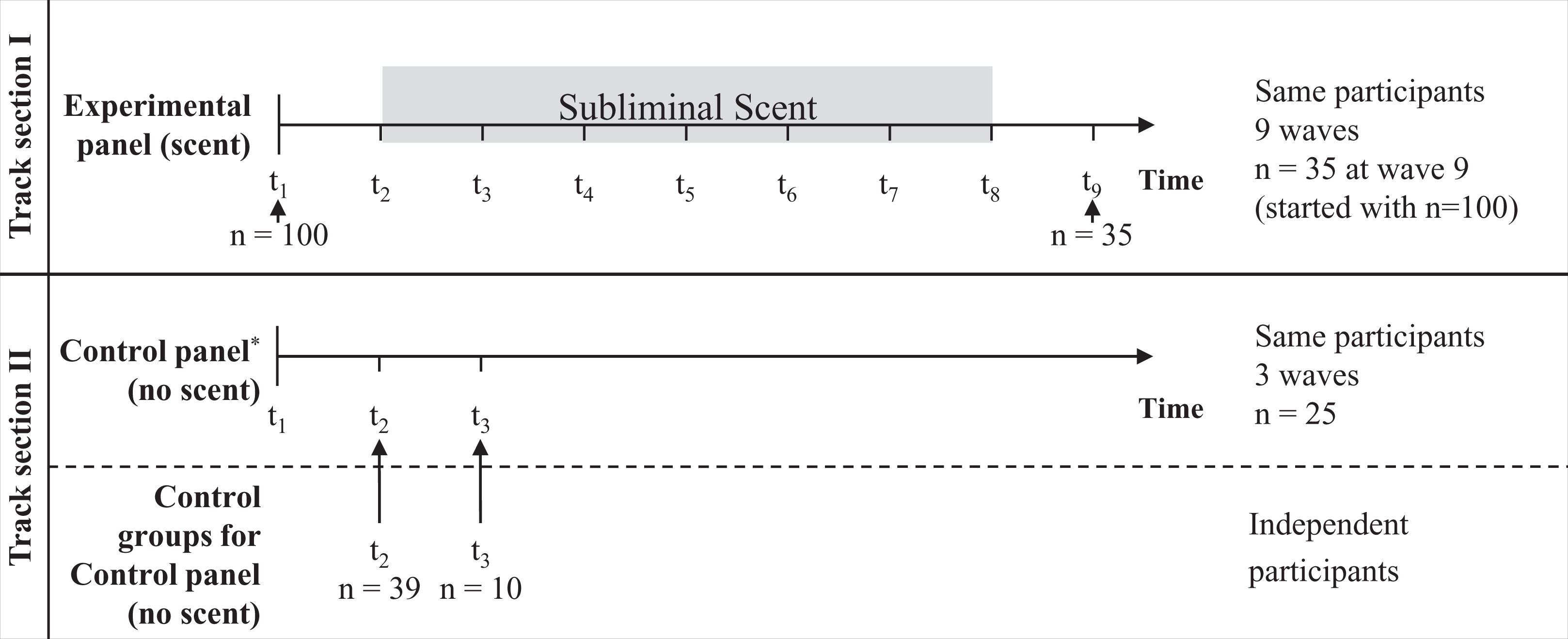
Experimental design of Study 2. The comparison of the experimental panel and the control panel, and subsequently, the control panel and the two control groups allow for an evaluation of mere measurement effects (i.e., adverse effects that arise from repeatedly interviewing the same customers; Dholakia and Morwitz 2002).
On a different route section that used in Study 1 (both directions), all operating trains were equipped with eight cartridges that diffused the ambient scent into all the passenger compartments. We applied a pretest/posttest control group design with a total of nine waves spread over a 4-month period. Wave 1 was run without ambient scent, thus serving as the baseline measurement. Waves 2–8 involved the use of an ambient scent, and we ran the final Wave 9, again without scent diffusion. 4 In each of the waves, we gathered data on the same constructs as in Study 1. Table B1 in Online Appendix B offers an overview of the reliability and validity statistics, which support all the construct measures’ adequacy.
In line with Hypotheses 2a–c and 3a–c, we define long-term effects as changes observed in the dependent variables after repeated exposure in Waves 3–8 (Figure 2) and define aftereffects as any observed changes after the removal of the olfactory stimulus (Wave 9). Wave 9 was scheduled 2 weeks after the scent removal. While research on human chemoreception shows that aftereffects persist for at least 1 week (Baeyens et al. 1996; Herz 2005), 2 weeks offer greater scope for the effects’ extinction (e.g., Krishna, Elder, and Caldara 2010). To reiterate, Study 2’s focus is on long-term effects and aftereffects; nevertheless, analyzing the changes in the service perceptions between Waves 1 and 2 allows the short-term effects (Hypothesis 1a–c) to be further tested in a more conservative, within-subjects design.
Sample and Sampling Procedures
The main sample (n = 100, Figure 3) comprised actual commuters on a specific rail route section between two midsize towns in Germany with a daily (only working days) one-way commute of at least 15 minutes in order to ensure sufficient exposure to the scent and to also give the participants enough time to answer the survey questions properly. We either recruited our respondents directly on the trains on the specific track section or contacted subscribed, regular customers via mail. None of the respondents participated in the pretests or in Study 1. Again, we did not alert the participants to the ambient scent diffusion during the study. After the completion of the final wave, all the participants received an explanation of the study’s goals and the role of the scent stimulus by mail. In Wave 2, we controlled for the participants’ awareness of the study background by means of a probing question. None of the participants could guess the study purpose or identify the scent stimulus, which further supports our contention that the consumers were unaware of the scent manipulation. Upon completion of the entire study, the participants received travel vouchers and giveaways worth €150. To ensure flexibility, we offered each participant the option of receiving the questionnaire via mail, e-mail, or from assistants on all the trains running on the specific track section every Wednesday between 5 a.m. and 11 a.m. Regardless of how the questionnaire was distributed, all the participants had to complete the survey on the train during their Wednesday morning commute.
Of the 100 respondents who participated in our baseline measurement (Wave 1), 35 participated in all nine study waves (i.e., 315 data points), representing an average panel mortality of 12% per wave, which is relatively low for a consumer panel (Tortora 2009). An a posteriori power analysis reveals that our sample size was sufficiently large to detect even small effect sizes (η2 = 0.036) with a power of at least .95 at α = .05 (Faul et al. 2007). 5 The respondents in the base and final data sets do not differ significantly with respect to gender, χ2(1) = 0.204, p > .10; educational degrees, χ2(5) = 10.342, p > .05; smoking habits, χ2(1) = 0.454, p > .10; direction of commute, χ2(1) = 0.089, p > .10; and type of questionnaire receipt, χ2(1) = 0.572, p > .10. However, the respondents in the final data set are significantly older, t(133) = −2.207, p = .029, and more often employed, rather than being students/pupils/apprentices, χ2(4) = 11.030, p = .017, than those in the base data set.
Of the 35 participants who participated in all the waves, 49% were women, 86% nonsmokers, and their ages ranged from 16 to 61 years (mean = 34.6). There were no significant differences in the survey mode used (13 on the train, 11 by mail, and 11 by e-mail). Most of the participants commuted between 6 a.m. and 9 a.m.; 16 respondents always used the same train, and 13 participants had a maximum variation in their departure time of ±1 hour. Only 6 of 315 data points (1.9%) fall clearly outside the range of usual traveling times. While these results show that the variation in travel times is relatively small, further analyses confirm that the within-subject variation is not an issue, as we did not find a systematic covariation between the study wave number and the travel times. Finally, with a single exception (an 18-minute delay, equaling four data points), none of the trains on any of the survey days arrived at their final stop with a delay of more than 10 minutes.
Results
Preliminary analysis of panel conditioning
By comparing the experimental and the control panels, we could rule out possible adverse effects arising from repeatedly interviewing the same consumers (i.e., mere measurement effects, Dholakia and Morwitz 2002). First, we evaluated if repeated observations of the control panel not experiencing scent led to an improvement of their situational service perceptions (Friedman’s ANOVA by rank). While this did not apply to the service value (p = .283), the respondents’ assessment of the service quality, χ2(2) = 7.586, p = .023, and the service experience, χ2(2) = 9.477, p = .009, increased significantly over time. More precisely, we observed an increase in the service quality assessment (p = .059, η2 = .109) between Waves 1 and 2 and in the service experience assessment between Waves 1 and 3 (p = .017, η2 = .152). Consequently, we proceeded with another in-depth analysis involving two additional control groups in the same trains in Waves 2 (n = 39) and 3 (n = 10; Figure 3). The results of a Mann-Whitney U tests show that the control panel and the control groups did not deviate significantly regarding the service quality (Wave 2: U = 416.50, p = .328, η2 = .015) or the service experience (Wave 3: U = 98.50, p = .339, η2 = .027). We conclude that our results are not biased by panel conditioning effects due to mere measurement effects (Online Appendix C provides more details).
Short-term effects
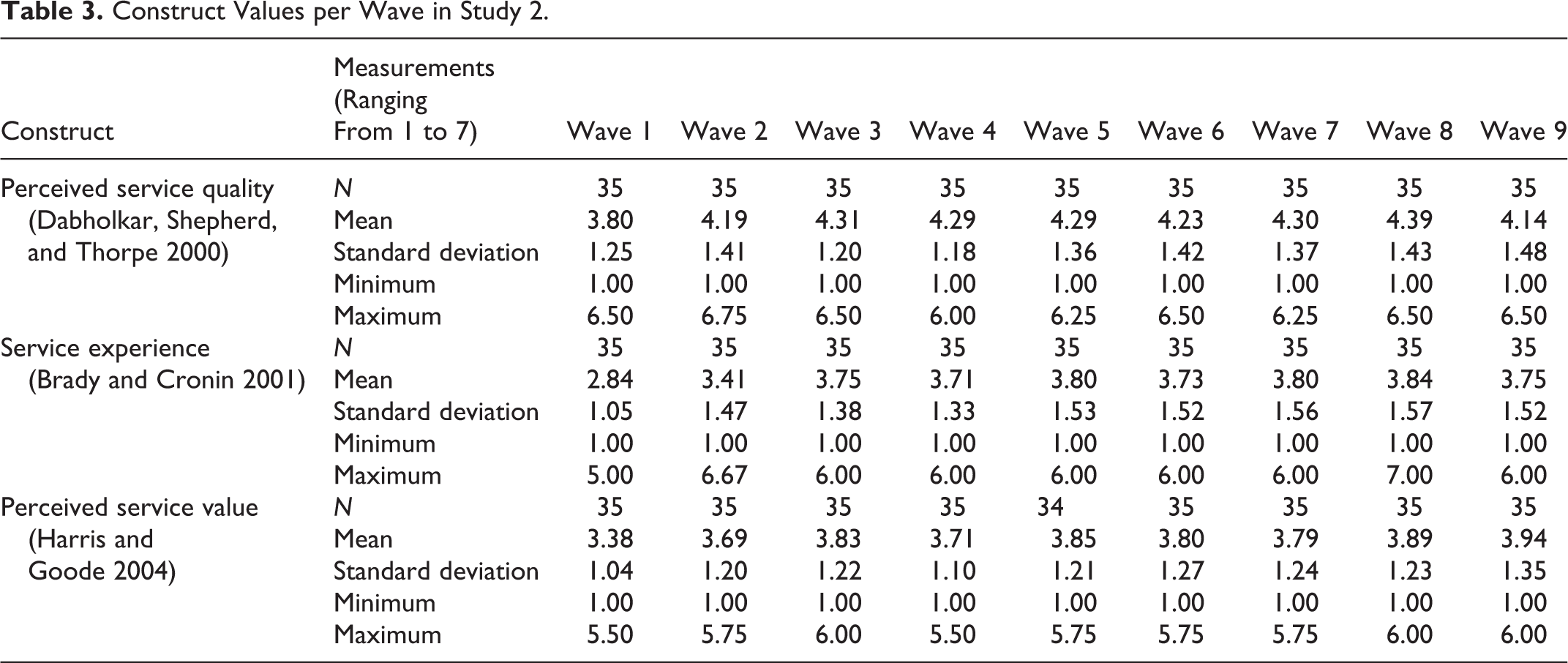
We used separate repeated-measures ANOVAs for each dependent variable, applying Greenhouse-Geisser corrections. Table 3 presents detailed descriptive statistics of each construct across all the study waves. Figure 4 summarizes the development of situational service perception evaluation over time.
Construct Values per Wave in Study 2.
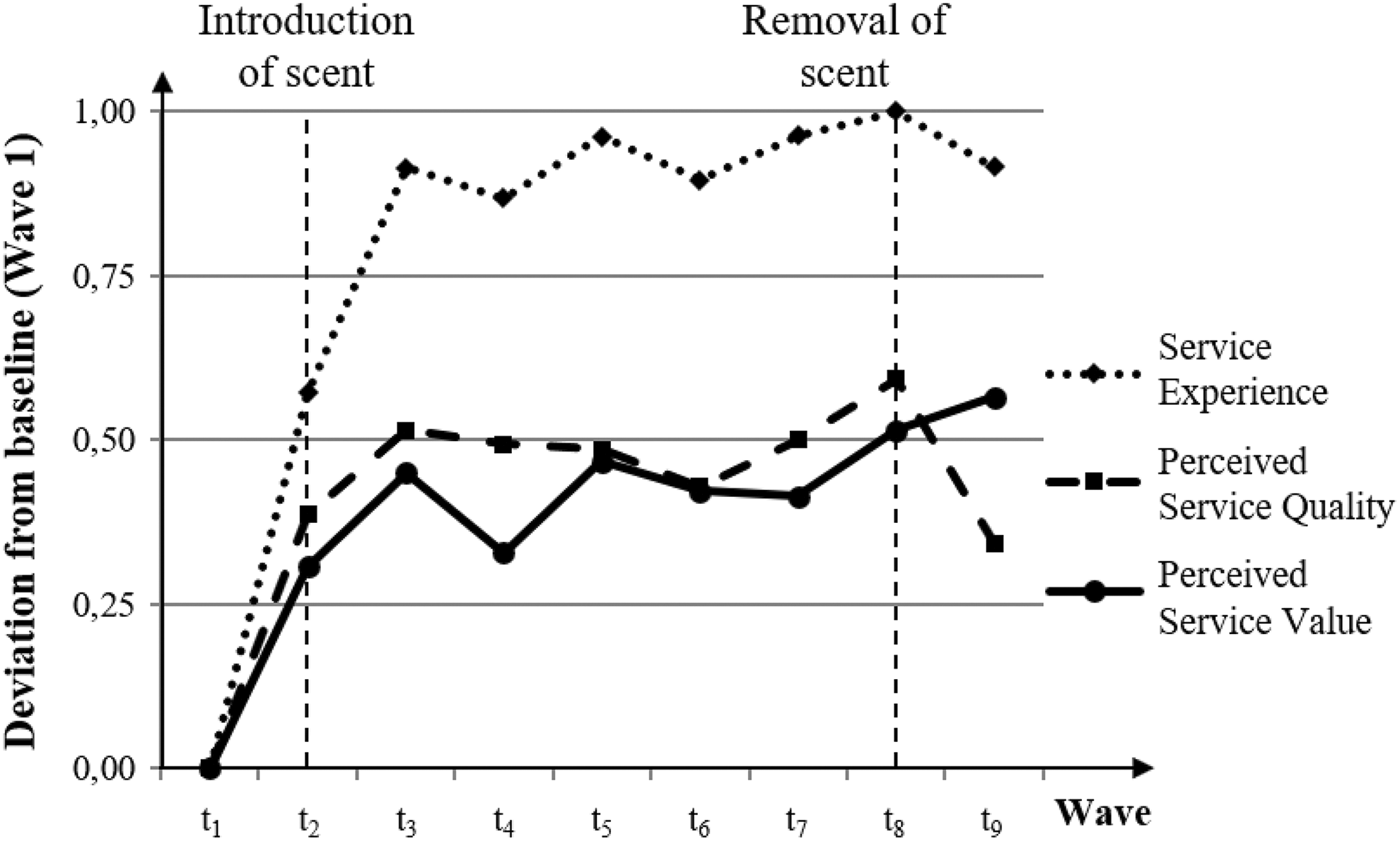
Temporal structure of scent effects as deviation from baseline (Study 2).
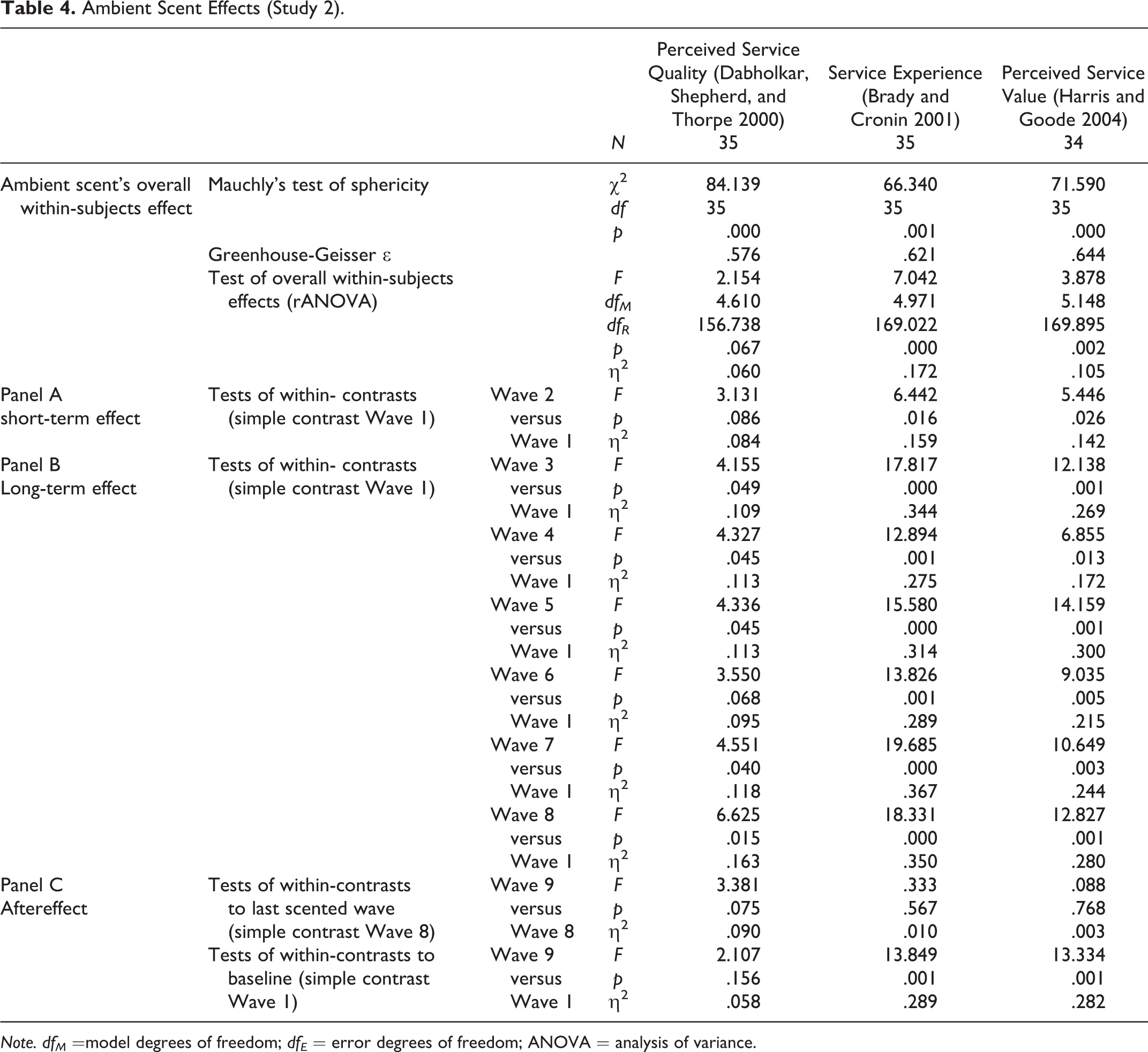
To isolate ambient scent’s short-term effects, we compared Wave 2 with the baseline measurement without scent (Wave 1), using follow-up tests with planned comparisons as simple contrasts. The results in Table 4 (Panel A) support the positive short-term effects of all three service perception constructs (Hypothesis 1a–c).
Ambient Scent Effects (Study 2).
Note. dfM =model degrees of freedom; dfE = error degrees of freedom; ANOVA = analysis of variance.
The increases of service experience, F(1, 34) = 6.442, p = .016, η2 = .159, and service value, F(1, 33) = 5.446, p = .026, η2 = .142, are significant, with medium to large effect sizes. We found that the scent had a marginally significant effect on the perceived service quality, F(1, 34) = 3.131, p = .086, η2 = .084. We also applied a single-paper meta-analysis (McShane and Böckenholt 2017), a method that facilitates the summary of multiple studies in a research paper by providing a significance test of the aggregated effects across the studies. The results confirm that the scent’s cumulative short-term effect on the service quality was significant (z = 2.600, p = .005), which also applies to its cumulative effects on the service experience (z = 3.452, p < .001) and the service value perceptions (z = 2.702, p = .003).
Long-term effects
Supporting Hypothesis 2a–c, the results in Table 4 (Panel B) demonstrate that ambient scent improves consumers’ service experience significantly over time and that this effect remains stable at a high level, with a large effect size (.159 < η2 < .367). Similarly, with respect to service value, we observed a positive and significant effect, medium to large in size (.142 < η2 < .300), across all the waves. Finally, we observed the scent’s enduring positive effect on the service quality, which unfolds with a time lag of three waves. Specifically, the consumers’ service quality assessments improved significantly, with a medium effect size (.084 < η2 < .163), from Wave 3 onward.
Aftereffects
We compared the results between Waves 8 and 9 by using repeated measure ANOVAs and a simple contrast (Table 4, Panel C). We find that, even in comparison with the last scented wave, none of service perceptions’ three facets decreased significantly 2 weeks after the scent had been removed: service quality, F(1, 34) = 3.381, p = .075, η2 = .090; service experience, F(1, 34) = 0.333, p = .567, η2 = .010; and perceived service value, F(1, 34) = 0.259, p = .614, η2 = .008. In sum, these results indicate that ambient scent continues to have a positive aftereffect, supporting Hypothesis 3a–c. For the service quality construct, however, Figure 4 presents a pronounced visual drop. A comparison of Wave 9 with Wave 1 (baseline) regarding this construct indicates that extinction works faster, F(1, 34) = 2.107, p = .156, η2 = .058, meaning that the positive aftereffect lies between the Wave 8 level and the baseline level.
Discussion and Implications
Main Findings and Theoretical Implications
This research provides a framework for predicting the effects of nonconsciously processed ambient scents on consumers’ service perceptions. Importantly, this research focuses on ambient scents’ long-term effects, which is a novel focus since prior research on effects of ambient scent have been static in nature and only examined short-term effects of ambient scent. Our proposed model focuses on olfactory-rich service environments (such as train journeys), where ambient scents compete with other olfactory sensations that multiple sources emit. We argue that a nonconsciously processed ambient scent implemented over a longer period can improve consumers’ situational service perceptions via affective priming effects. Furthermore, since consumers process the scent nonconsciously, they do not recognize a scent campaign’s discontinuation. As such, our conceptual framework suggests that service providers should install nonconsciously processed ambient scents and pursue an enhanced situational evaluation through a long-term scent campaign.
The results of two field pretests and two field studies support the model’s central tenets. These studies were realistic and were conducted in the field rather than in lab settings with contrived scenarios. That is, we exposed actual consumers of a major German railway company to ambient scents that a professional fragrance manufacturer prepared. The scents were diffused through the trains’ air conditioning and ventilation system.
A field pretest confirms (1) that the scent stimulus used in the main studies was processed at predominantly nonconscious levels and (2) that its application led to higher levels of perceived air quality. The first field experiment (Study 1) demonstrates the positive effects of nonconsciously processed ambient scents on consumers’ perceived service quality, service experience, and perceived service value after a one-time exposure, even in an olfactory-rich environment. The second field experiment provides a longitudinal assessment of ambient scents’ effects over 4 months, providing insights into these scents’ impact on service perceptions over a longer period. Our results demonstrate nonconsciously processed ambient scents’ long-lasting positive effects on consumers’ service perceptions. In line with an associative learning account, these effects persist for a while, even after the ambient scent has been removed.
Our results clearly underline ambient scents’ contribution to consumers’ perceived service experience every time they reuse the service (Verhoef et al. 2009). Zemke and Shoemaker (2007, p. 937) conclude that “a proprietary scent can ‘tangibilize’ a company’s service.” Extending this notion, environmental cues—such as ambient scents—can make a significant and lasting contribution to consumers’ service value perception. Our findings are particularly relevant for servicescapes that consumers frequent regularly, such as café shops, public transportation, sport club facilities, and supermarkets (Berry, Wall, and Carbone 2006). With regard to the removal of scent diffusion from a servicescape, our results suggest that aftereffects of a nonconsciously processed scent persist for at least 2 weeks, as we did not identify a significant drop in the evaluations after the scent’s removal.
Managerial Implications
Our results suggest that service managers can use nonconsciously processed ambient scents to enhance consumers’ situational evaluation of their service experience, its quality, and its value, and not only temporarily but also over an extended period. Marketers should therefore not only rely on ambient scent diffusion’s short-term commercial benefits but also carefully consider the influence of long-term scent exposure on their consumers in the servicescape, including the effects after discontinuation. Our results suggest that, at least right after the removal of a nonconsciously processed ambient scent, there are no negative aftereffects that jeopardize the previous investments.
It is important to note that an ambient scent’s influence probably varies across service industries. For example, ambient scents appear particularly relevant for services where the situational experience is key (e.g., casinos, hotels, movie theaters, and amusement parks; see Berry, Wall, and Carbone 2006; Biswas and Szocs 2019; Hirsch 1995). Similarly, our results suggest that the positive effects are long-lasting in olfactory-rich servicescapes with many potential sources of olfactory sensations (e.g., buses, trains) and in those where there may be various unpleasant odors (e.g., in elevators or gyms).
In light of the positive effects and the low costs associated with ambient scents’ use vis-à-vis alternative service elements (e.g., new interior design), they have the potential to offer good returns on investment. According to a professional fragrance manufacturer (Scentcommunication, https://scentcommunication.com/en/), the development of an appropriate ambient scent requires an investment of between US$5,000 and 55,000, depending on its purpose, its exclusiveness, and its ingredients. The ambient scent itself is mostly sold in scent carriers, for instance, scent cartridges, costing up to US$28 per cartridge and lasting for weeks. Ambient scent is applied by placing the scent carrier in existing air conditioning systems or via scent diffusing devices, costing up to US$100. In sum, scenting multiple trains in the presented way (i.e., the development of a particular signature scent and placing eight cartridges in an existing air conditioning system) costs roughly US$30,000, with a pronounced cost reduction over time after repeated application.
Limitations and Future Research
As the first study on long-term ambient scent effects, our research offers multiple future research opportunities. First, while we identified ambient scents’ positive long-term and aftereffects on consumers’ situational service perception, future research should shed more light on consumer responses by analyzing a scent’s impact on a company’s bottom line (e.g., in terms of money spent, cross-buying, and up-buying; Hirsch 1995) and examining potential interactions with other environmental factors relevant to the consumers’ service assessment (e.g., lighting; Biswas et al. 2017 and music; Spangenberg, Grohmann, and Sprott 2005). Future research should also focus more strongly on aftereffects, particularly on their persistence over a longer period (i.e., more than 2 weeks).
Second, it is impossible to fully exclude all confounding environmental influences in a field experiment (Gneezy 2017). For instance, in Study 2, we scented all the coaches in all the trains operating on the same line and considered only those consumers who made the same commute every working day. Thus, although we ensured that participants were exposed to the scent during their daily commute, we cannot rule out that they had other train journey experiences (e.g., on the weekends on a different track section). Likewise, we did not account for potential differences in temperature, crowding, and noise in the different train compartments, which may have influenced ambient scent’s effects.
Third, future research should consider scent effects on brand-related constructs, such as consumers’ attitude toward the brand and their brand liking. Attribution theory (Kelley 1973) suggests that such sensory branding activities require consumers to be able and willing to first process the ambient scent consciously (Bradford and Desrochers 2009). In addition, consumers need to relate the scent stimulus to the correct source (Bradford and Desrochers 2009). However, as consumers rarely attribute ambient scents correctly, particularly in olfactory-rich environments (Krishna, Lwin, and Morrin 2010), implementing sensory branding activities appears to be very challenging. Future research should test this notion.
Fourth, future research should aim at generalizing our findings to other service settings. External environmental information cues, such as scents, might be less important for services with high search qualities (Zeithaml 1981). It is therefore reasonable to assume that such service settings show weaker effects. In contrast, we expect stronger effects in servicescapes that consumers encounter in a high construal-level processing mode (e.g., Liberman and Trope 2008), such as travel agencies or companies selling retirement insurances, because recent research suggests that intangible service aspects have a stronger impact in such situations (Ding and Keh 2017). Similarly, while our research is particularly relevant to regularly frequented servicescapes, future research should replicate our findings in infrequently visited sites such as hospitals.
Future research should also investigate whether different ambient scent effects depend on the prevailing olfactory situation within the servicescape (i.e., whether the air quality is negative, neutral, or positive). In this context, assessing ambient scents’ effects in settings where smoking is still allowed would be a fruitful area for future research. Similarly, our investigation took place in winter; the study should therefore be repeated in the summer, or over a full year, to control for different weather conditions, temperatures, and associated olfactory factors. In fact, cold weather might have led to an underestimation of the scent effects.
While we applied a complex ambient scent stimulus, a simpler stimulus might trigger even more pronounced positive effects (Herrmann et al. 2013), since it may induce more pronounced long-term gains in consumers’ service perceptions due to enhanced perceptual fluency. The perceptual fluency concept builds on the processing fluency theory (Schwarz 2004), according to which consumers constantly monitor the effort required to process information cues prevalent in an environment. This effort decreases when the sensory stimulation in a servicescape is simple instead of complex and if consumers process a situation repeatedly (Orth, Wirtz, and McKinney 2016). As fluency per se feels positive (Landwehr, Golla, and Reber 2017), repeated exposure to a simple scent stimulus should translate into improved situational service evaluations. While prior service research has used the concept of perceptual fluency in the context of short-term scent exposure (Herrmann et al. 2013) and for the visual perception of servicescapes (Orth and Wirtz 2014), future studies should consider processing fluency in the context of long-term scent exposure.
Finally, we only investigated ambient scent’s effects on consumers. However, in service companies, the servicescape and all environmental cues also strongly affect those employees working in a servicescape for at least 7 hours per day and 5 days per week (e.g., Bitner 1992). Social psychology research has demonstrated that employees’ mood states likely spill over to consumers via emotional contagion effects (Grandey, Goldberg, and Pugh 2011), thus enhancing scent marketing’s positive effects on the servicescape via an employee-mood state mediation.
Supplemental Material
Supplemental Material, JSR_Scent_Executive_Summary_final - Short- and Long-Term Effects of Nonconsciously Processed Ambient Scents in a Servicescape: Findings From Two Field Experiments
Supplemental Material, JSR_Scent_Executive_Summary_final for Short- and Long-Term Effects of Nonconsciously Processed Ambient Scents in a Servicescape: Findings From Two Field Experiments by Anna Girard, Marcel Lichters, Marko Sarstedt and Dipayan Biswas in Journal of Service Research
Supplemental Material
Supplemental_Material - Short- and Long-Term Effects of Nonconsciously Processed Ambient Scents in a Servicescape: Findings From Two Field Experiments
Supplemental_Material for Short- and Long-Term Effects of Nonconsciously Processed Ambient Scents in a Servicescape: Findings From Two Field Experiments by Anna Girard, Marcel Lichters, Marko Sarstedt and Dipayan Biswas in Journal of Service Research
Footnotes
Acknowledgments
The authors would like to thank Dr. Marc Girard for his support with the data collection for Study 1.
Declaration of Conflicting Interests
The author(s) declared no potential conflicts of interest with respect to the research, authorship, and/or publication of this article.
Funding
The author(s) received no financial support for the research, authorship, and/or publication of this article.

Supplemental Material
Supplemental material for this article is available online.
Notes
References
Supplementary Material
Please find the following supplemental material available below.
For Open Access articles published under a Creative Commons License, all supplemental material carries the same license as the article it is associated with.
For non-Open Access articles published, all supplemental material carries a non-exclusive license, and permission requests for re-use of supplemental material or any part of supplemental material shall be sent directly to the copyright owner as specified in the copyright notice associated with the article.
