




Abstract
Understanding the experiences of vulnerable workers is an important scientific pursuit. For example, research interest is often in quantifying the impacts of adverse exposures such as discrimination, exclusion, harassment, or job insecurity, among others. However, routine approaches have only focused on the average treatment effect, which encapsulates the impact of an exposure (e.g., discrimination) applied to the entire study population—including those who were not exposed. In this paper, we propose using a more refined causal quantity uniquely suited to address such causal queries: The effect of treatment on the treated (ETT) from the causal inference literature. We explain why the ETT is a more pertinent causal estimand for investigating the experiences of vulnerable workers by highlighting three appealing features: Better interpretability, greater accuracy, and enhanced robustness to violations of empirically untestable causal assumptions. We further describe how to estimate the ETT by introducing and comparing two estimators. Both estimators are conferred with a so-called doubly robust property. We hope the current proposal empowers organizational scholars in their crucial endeavors dedicated to understanding the vulnerable workforce.
Keywords
Identifying and resolving barriers to equity and inclusion is at the forefront of organizational research (Amis et al., 2021; Avery et al., 2023; Bapuji et al., 2020a; Restubog et al., 2023). This necessitates understanding the unique challenges faced by the vulnerable, minoritized, and marginalized workforce (henceforth termed vulnerable workforce for brevity; Restubog et al. (2021)), such as discrimination 1 , exclusion, sexual harassment, and job insecurity. For example, organizational and management scholars have investigated how sexual harassment increases organizational withdrawal (Cortina & Areguin, 2021); how pregnancy discrimination affects the well-being and health of working mothers and their babies (Hackney et al., 2021); how perceived human immunodeficiency virus (HIV) stigma affects job effectiveness (Ocampo et al., 2023); how job insecurity affects workplace behaviors (Shoss et al., 2023); or how disability discrimination leads to the compensation gap between job candidates with vs. without disabilities (Speach et al., 2023); among many others. Such causal queries are a cornerstone of organizational research because they shed light on the disadvantages and barriers experienced by the understudied and vulnerable workforce, advance organizational theories, inform intervention development, and promote equality and inclusion in organizations and society (Amis et al., 2021, 2020; Bapuji et al., 2020a,b; Restubog et al., 2021, 2023).
While quantifying the effects of adverse exposures (i.e., “treatments”) among vulnerable workers is an essential scientific pursuit, current analytic approaches are inadequate for engaging in this task. Take discrimination against women in the workplace as an example. The percentage of women reporting being discriminated against in equal pay or consideration for promotion is 41% (National Public Radio et al., 2017). Routine analyses ignore this information and seek to estimate the impact of gender discrimination on an outcome of interest, such as well-being, among the entire study population of women employees. The causal quantity targeted here is the so-called average treatment effect (ATE). (An equivalent term is the average causal effect; ACE.) By estimating the ATE, the study population encompasses women who did not experience or perceive discrimination (at the time of investigation 2 ) and eludes a more focused assessment of how discrimination affects those discriminated against. The consequence of using the ATE is an inability to obtain accurate and meaningful estimates of the effect of discrimination among women who experienced discrimination.
In this article, we explain why the ATE, notwithstanding its widespread adoption, has critical shortcomings that undermine its relevance for causal inference in research on vulnerable populations. To address these limitations, we introduce an alternative, more fine-grained causal quantity: The so-called effect of treatment on the treated (ETT). (An equivalent term is the average treatment effect on the treated; ATT.) The ETT is a well-established causal quantity in the statistics and causal inference literature and has been widely adopted in substantive research areas such as education (see, e.g., (Morgan & Winship, 2015: Section 2.7.1); Paulsen & McCormick (2020); Stephan et al. (2009); Zang et al. (2023)), economics (see, e.g., Heckman et al. (1999)), and public health (see, e.g., Reifeis & Hudgens (2022); Webster (2022)). Here, we put forth a novel application of the ETT for organizational science.
In the remainder of this article, we explain what the ETT is and why targeting the ETT advances organizational science. We then describe two different methods to estimate the ETT: one from the statistics literature and one from the social sciences literature. Both methods have a so-called “doubly robust” property protecting the estimators from biases due to incorrectly assumed regression models. Further, we illustrate the estimation procedure using two real-world studies with publicly available datasets. A glossary of causal inference terms we use throughout is presented in Table 1 for readers unfamiliar with this framework. The R (R Core Team, 2023) scripts to reproduce the example analyses, as well as the Supplemental Online Materials (SOMs), are available online on GitHub (https://github.com/wwloh/ett-org). Through methodology advancement in causal inference, we hope this article contributes to more accurate and inclusive organizational science.
Glossary of Key Causal Inference Terms Used in This Paper.
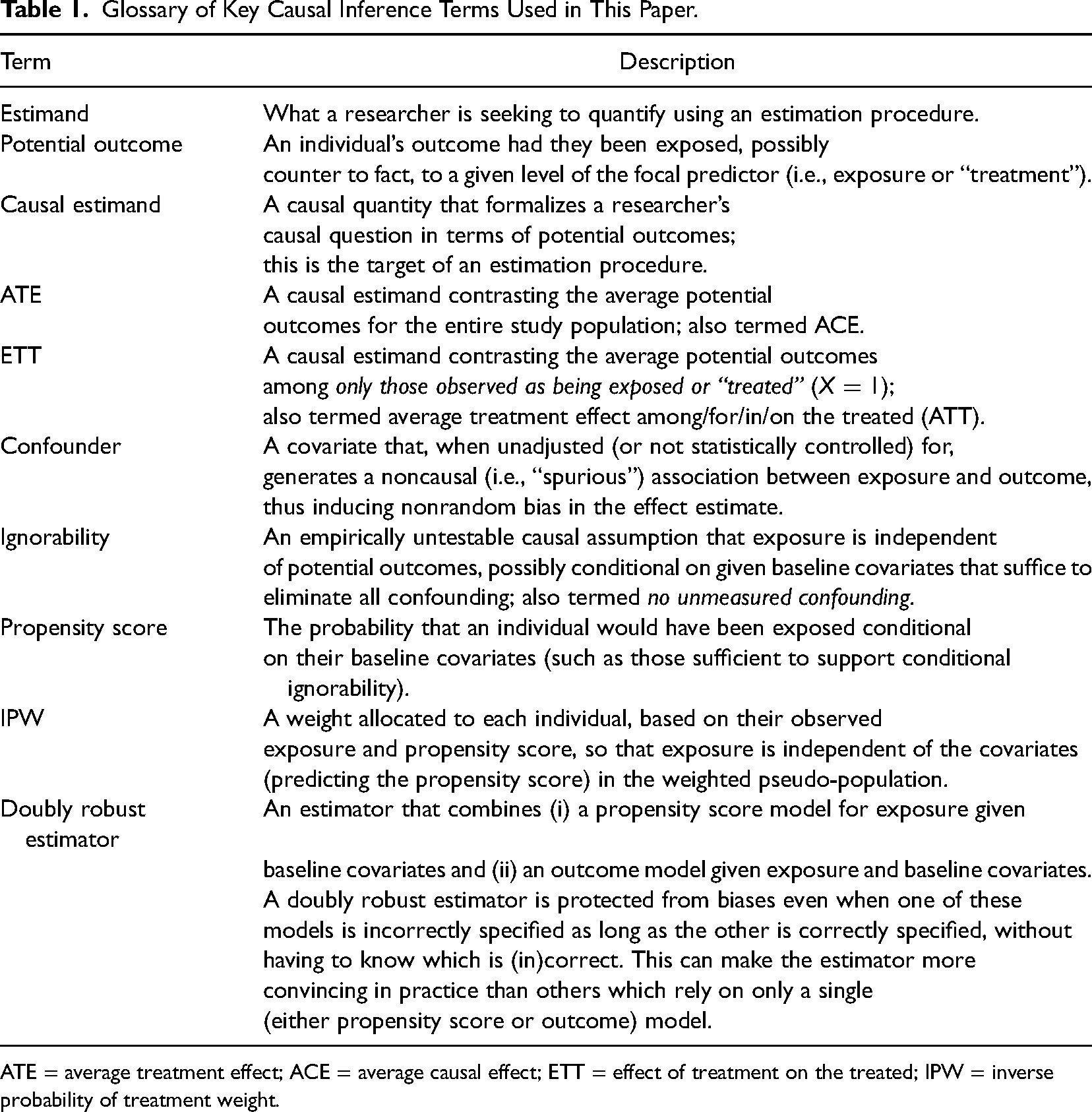
ATE = average treatment effect; ACE = average causal effect; ETT = effect of treatment on the treated; IPW = inverse probability of treatment weight.
Why is the ETT Relevant?
Before proceeding to the technical details of the ETT, we first seek to address the question: How is the ETT relevant to organizational research?
We put forth that the ETT aligns seamlessly with the core research foci on vulnerable populations in contemporary organizational research. As opposed to the ATE, which conceptualizes the average effect of an exposure on the entire study population, the ETT focuses on the exposed subpopulation. For example, in other fields outside organizational science, the ETT has been used to quantify the effect of attending college among college students (Stephan et al., 2009), the effect of a training program for the participants (Falk et al., 2005), and the effect of smoking on those who smoked (Auld, 2005). This appealing feature of the ETT makes it exceptionally well suited for understanding the experiences of the vulnerable workforce. Organizational scholars can use the ETT to address causal questions such as the effects of discrimination among workers who experienced it, the consequences of exclusion among individuals who were marginalized, and the impact of job insecurity among those facing employment uncertainty.
To provide concrete examples of past studies in organizational research where the ETT is readily applicable, we sampled from three leading journals that regularly publish original empirical studies: Journal of Applied Psychology, Journal of Management, and Academy of Management Journal. We searched for articles that used quantitative methods to study the effects of adverse exposures as illustrative examples. Our search was conducted in November 2023. Given the large number of studies, we selected ten articles published most recently (in 2023 or in press). In one such example, scholars studied how Asian employees’ past experiences with racial discrimination at work affected their propensity to combat racism against Black coworkers (Jun et al., 2023). In another example, scholars studied how job insecurity influenced job performance and counterproductive work behaviors among working adults in the United States (Shoss et al., 2023). Please see Table 2 for the complete list of examples.
Examples of Original Research Articles Where the ETT is Applicable.
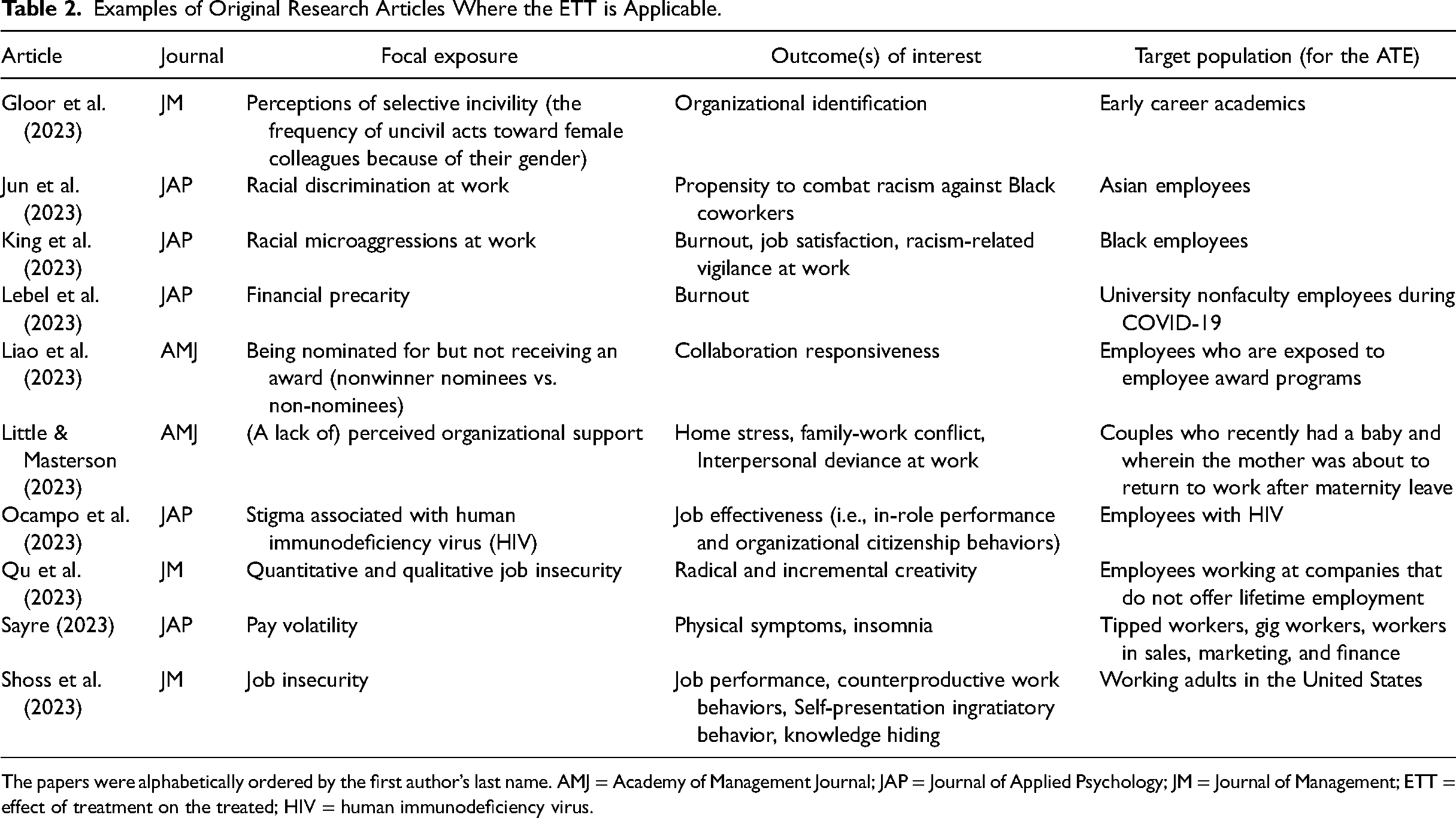
The papers were alphabetically ordered by the first author’s last name. AMJ = Academy of Management Journal; JAP = Journal of Applied Psychology; JM = Journal of Management; ETT = effect of treatment on the treated; HIV = human immunodeficiency virus.
Next, to demonstrate the broad relevance of such causal questions in the organizational literature, we carefully reviewed three leading journals publishing integrative reviews of empirical research or theoretical advances in the field: Academy of Management Annals, Academy of Management Review, and Annual Review of Organizational Psychology and Organizational Behavior. A perusal of all issues published between 2020 and 2023 revealed various exposures to which the ETT can be readily applied. These include abusive supervision, bullying, customer mistreatment, discrimination, harassment, income instability, job insecurity, limited access to resources, mental health issues, perceived organizational support, social exclusion or belonging threats, stereotypes or prejudices, stigma, victimization, and workplace incivility. Please see Table 3 for the complete list of exposures.
Examples of Reviews Demonstrating Organizational Relevance of the ETT.
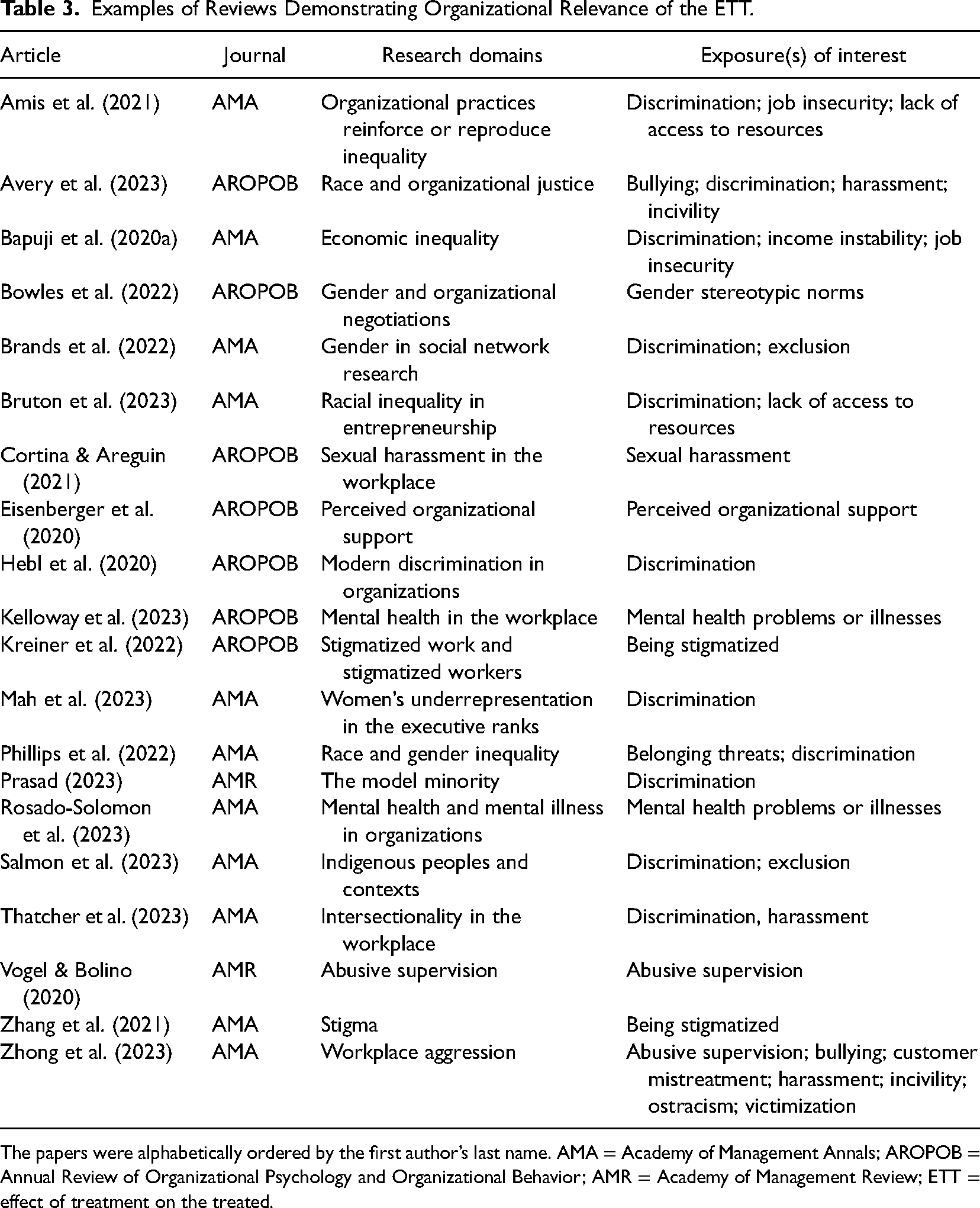
The papers were alphabetically ordered by the first author’s last name. AMA = Academy of Management Annals; AROPOB = Annual Review of Organizational Psychology and Organizational Behavior; AMR = Academy of Management Review; ETT = effect of treatment on the treated.
Notably, these adverse exposures are not confined to an esoteric or narrow research area but rather of core interest to scholars across a wide variety of research domains and organizational contexts. For example, discrimination was an exposure of interest not only within discrimination research (which has deep roots and a history of more than a century in organizational research; Colella et al. (2017)) (Hebl et al., 2020), but consistently appeared in different research domains, such as research on Indigenous Peoples and contexts (Salmon et al., 2023), racial inequality in entrepreneurship (Bruton et al., 2023), women’s underrepresentation in the executive ranks (Mah et al., 2023), intersectionality in the workplace (Thatcher et al., 2023), and inequality in organizations (Amis et al., 2020; Avery et al., 2023; Bapuji et al., 2020b; Phillips et al., 2022), among others.
Given the state of the literature and the prevalence and significance of causal queries pertinent to the experiences of the vulnerable workforce, we put forth that our introduction of the ETT to organizational research has the potential to advance the field in three ways:
Enhanced Research on Diversity and Inequality. Evident from our review of the literature is the increasing interest in research on diversity and inequality (Amis et al., 2021, 2020; Bapuji et al., 2020b; Ezerins et al., 2023; Speach et al., 2023; Thatcher et al., 2023). However, for progress in substantive research and theoretical advancement, researchers must be judicious about the interpretability and usefulness of their analytic choices. In the sequel, we discuss the shortcomings of routine methods for examining the challenges and experiences of vulnerable workers. To address these concerns, we introduce the ETT as an alternative causal inferential tool. Our aim is to enhance the accuracy and robustness of empirical investigations of diversity and inequality in organizational science.
Strengthening Causal Inference. Notwithstanding causal inference being a central pursuit in organizational and management science, the validity of causal claims can be called into question (Cornelissen & Kaandorp, 2023). To contribute to ongoing conversations about bolstering causality in organizational research, our work encourages scholars to think carefully about the causal quantity they are estimating. Defining the target causal quantity before estimation can better align theory with empirical analysis (Hernán, 2015). Currently, the common practice is to (implicitly) target the ATE by default, even when the ATE is unsuitable for the research question at hand. In this article, we critically evaluate this practice and demonstrate the benefits of the ETT as an alternative target causal quantity for organizational science.
Practical Impact on Organizational Practices. Using the ETT to focus on vulnerable segments of the workforce who experienced challenges has the practical impact of guiding scholarship that informs organizational practices and interventions toward achieving equity and inclusion (Lambert et al., 2022). Continuing the example of discrimination in the workplace among Asian employees (Jun et al., 2023), routine approaches targeting the ATE conceptualize the effects of discrimination among the entire study population. In contrast, the ETT allows for a more nuanced and refined focus on the subset who experienced racism. This makes the ETT more pertinent and precise for guiding efforts to address challenges for vulnerable segments of the workforce toward more effective and equitable organizational practices (Restubog et al., 2023).
What is the ETT?
We now define the causal quantities researchers seek to estimate, or estimands, for articulating the causal effects of substantive interest. For expository purposes, we will use a running example of discrimination as the exposure of focal interest. Note, however, that our causal reasonings broadly apply to other adverse exposures faced by vulnerable workers. As stated in the previous section, we provide concrete examples of such exposures in Tables 2 and 3.
We will utilize concepts from the established potential outcomes framework, commonly called the Neyman-Rubin Causal Model (Holland, 1986; Splawa-Neyman et al., 1990; Rubin, 1974). Let 
The ETT (Heckman & Robb, 1985) is defined as:
Why the ETT Enhances Organizational Science
We offer three reasons why the ETT is better suited for investigating the impacts of adverse exposures among vulnerable workers than the ATE: Interpretability, accuracy, and robustness.
Interpretability
The ETT offers a more straightforward and informative interpretation of the causal effects of substantive interest than the ATE. Despite a common misconception that individuals in a vulnerable population “are all alike” (Salmon et al., 2023: p 451), adverse experiences such as discrimination are unlikely to occur to all individuals in a study population; see, for example, National Public Radio et al. (2017) and Restubog et al. (2023). Yet, the ATE quantifies the impact of discrimination among the entire study population. This necessitates conceptualizing the potential outcomes for all individuals under the extreme hypothetical scenario where everyone experienced discrimination, including those who reported not experiencing discrimination within the study context (
In contrast, the ETT targets the impact of discrimination by focusing on individuals who experienced discrimination within the context of the study (
Accuracy
The ETT assesses the causal effects of interest with more fine-grained accuracy, whereas the ATE is a coarser quantification. To see why, following Equation (2.10) of Morgan & Winship (2015), the ATE can be expressed as a weighted sum of two different causal estimands:
As a hypothetical numerical example, suppose that
Robustness
The ETT is more robust against violations of empirically untestable causal assumptions. That is, the ETT can be consistently estimated under weaker causal conditions than the ATE, thus strengthening the credibility of the conclusions. We elaborate on this in the following section.
Differing Causal assumptions of the ETT vs. the ATE: Ignorability
In this section, we focus on the “ignorability” (also termed “no unmeasured confounding”) assumption that can be relaxed to consistently estimate the ETT but not the ATE. We explain each empirically untestable causal assumption that must be met for either the ATE or the ETT causal estimand to be nonparametrically identified using the observed data.
Adverse experiences, such as discrimination, are not randomized in real-world settings such as the workplace. Therefore, noncausal correlations between discrimination and the outcome of interest can arise due to their mutual associations with confounding variables (Imbens & Rubin, 2015; Morgan & Winship, 2015; Shadish et al., 2002). We will assume that a set of precisely measured baseline covariates 
However, strong ignorability is likely to be violated in practice. Past research shows that individuals aware of the adverse impacts of discrimination seek to avoid and lower their chances of experiencing discrimination in organizations (Bruton et al., 2023). This induces an association between their potential outcome had they experienced discrimination (
Instead, consider the following causal assumption that requires only 
How to Estimate the ETT
In this section, we describe the steps to estimate the ETT. Because the estimation procedures are broadly applicable to various (adverse) exposures, we present this material with minimal contexts of research questions. Nonetheless, for illustrative purposes, we will continue to use the exposure of discrimination as a running example.
When assumption (5) can be substantively justified, we can consistently estimate the ETT using the observable data as:
Why a Linear Regression-based Estimator is Undesirable
Observe from the expression in (6) that if 
However, when the observed data are generated from a process that differs from the assumed linear model for the conditional expected outcome above, using an incorrectly specified linear model can lead to biased estimates of the ETT.
6
This vulnerability motivates using estimators that avoid relying solely on a correctly assumed regression model for
Doubly Robust Estimator 1: Augmented Inverse Probability Weighting
We first introduce an estimator recently proposed in the statistics literature by Moodie et al. (2018) and consists of the following steps:
Fit to the observed data a logistic regression model for Obtain the predicted propensity score for each individual, denoted by Construct the inverse propensity score weights, or inverse probability of treatment weights (IPWs; Reifeis & Hudgens (2022)) for each individual as: Among the subgroup who did not experience discrimination ( Calculate for each individual the difference
Nonparametric percentile bootstrap confidence intervals (CIs) (Efron & Tibshirani, 1994) may be constructed by randomly resampling observations with replacement and repeating all the above steps for each bootstrap sample.
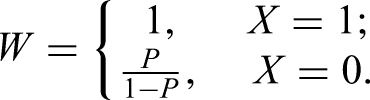


The estimator
We briefly explain the motivation behind using IPW. IPW eliminates measured confounding by creating a pseudo-population with
Doubly Robust Estimator 2: Weighted Least Squares
The estimator introduced above is not the only estimator endowed with double robustness. In the social sciences literature, Morgan & Winship (2015: Section 7.3) describe a weighted regression estimator of the ETT that can be obtained by carrying out the following steps:
Carry out steps A1 - A3 as described above. Fit a weighted linear regression model to the entire observed sample, with (i)
Therefore, the difference between the estimator 
Simulation Studies
We conducted a series of Monte Carlo simulation studies to empirically probe the operating characteristics of the doubly robust ETT estimators introduced above, alongside several other ETT estimators which are not doubly robust. We present all details in SOM section E; here, we briefly state the points empirically demonstrated in the simulation studies. First, the ATE required more stringent—empirically untestable—causal conditions for unbiased estimation than the ETT. Second, the doubly robust estimators presented above were protected from biases when either the propensity score or outcome model was incorrectly specified. In contrast, other estimators that relied on only a single model (either the propensity score model or the outcome model) were prone to biases when that assumed model was incorrect. All the estimators yielded biases of similar magnitude when both models were incorrectly specified.
Illustrations using Real-world Datasets
In this section, we illustrated the introduced estimators of the ETT by analyzing two publicly available real-world datasets. To guide researchers on implementing the ETT in practice, we provided sample analysis code in R (R Core Team, 2023) for estimating the ETT in both examples.
Example 1: Effect of Unfair Supervision on Work Stress
Between December 2003 and September 2004, researchers from the University of Kansas surveyed working professionals as part of the Professional Worker Career Experience Survey (Rosenbloom & Ash, 2010). Data collected as part of the survey included measures of work-family conflict, job satisfaction, life satisfaction, and work stress. Further details of the study are provided by Rosenbloom & Ash (2010).
For the purpose of illustration, we considered whether experiencing unfair supervision influenced respondents’ overall work stress. Exposure to unfair supervision (
We estimated the effect of unfair supervision on work stress among those who had such an experience
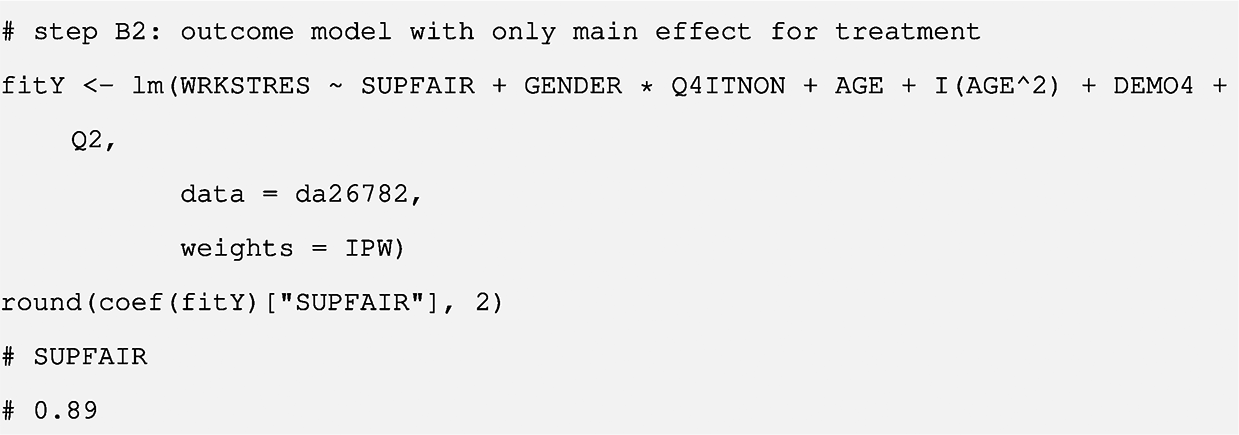
[Sample analysis code to estimate the ETT in Example 1]
How do we estimate the ETT? Here, we provide sample analysis code in R (R Core Team, 2023) for calculating the doubly robust (steps A1–A5) and weighted least squares (steps B1–B2) estimators. For illustration, we considered five baseline covariates: Gender (“
We first carried out steps A1–A3 to fit a propensity score model for experiencing unfair supervision (“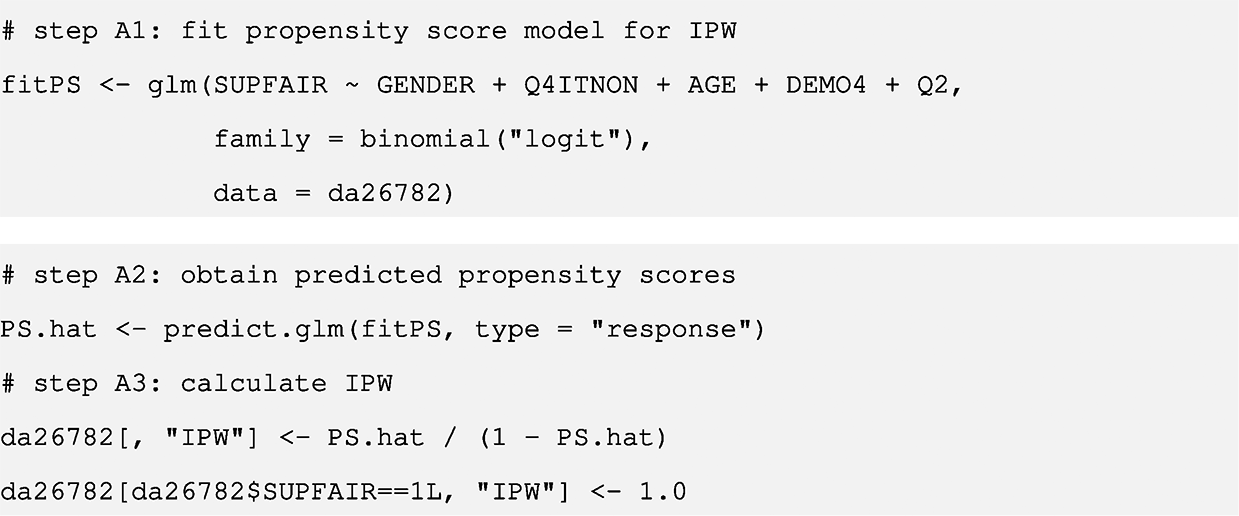 We then carried out step A4 to fit an outcome regression model for work stress (“
 Finally, we use these fitted models to carry out step A5. To help researchers implement this in practice, we have developed an R function
 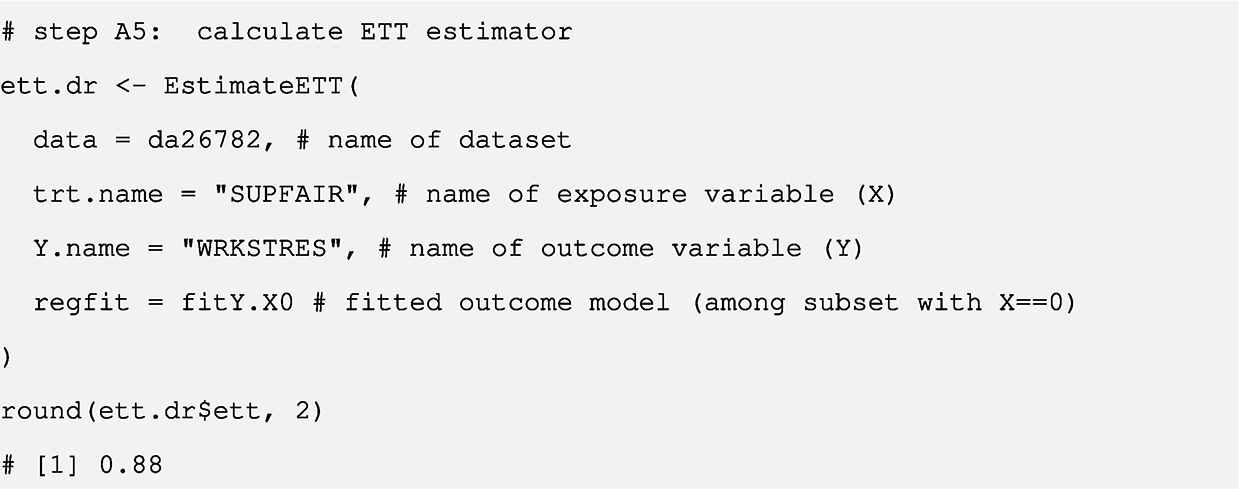 The weighted least squares estimator
  Nonparametric percentile bootstrap confidence intervals can be readily obtained by randomly sampling observations with replacement and then repeating all the above steps.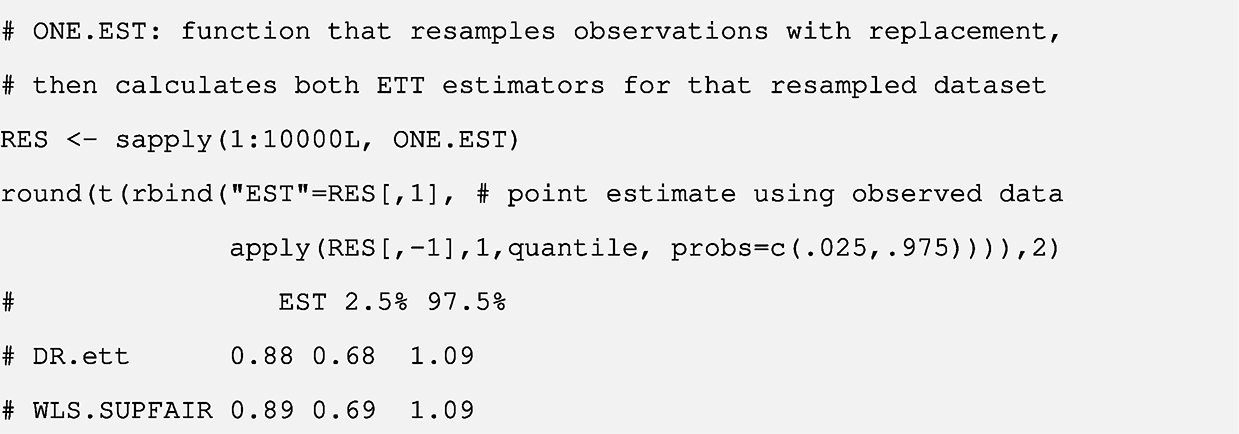
Example 2: Effect of Discrimination on Civic Engagement
In 2011, the Stanford University Center on Adolescence initiated a longitudinal study of civic purpose development in adolescence (Damon, 2017). A sample of high school seniors in California completed a survey in November 2011 (time 1). They completed a follow-up survey 21 months later (time 2) after transitioning out of high school. Survey and interview questions covered topics such as civic engagement, perceptions of America, and experiences with discrimination. Further details of the study are provided by Damon (2017).
For the purpose of illustration, we followed the analyses in Ballard (2016) and considered how the frequency of discriminatory experiences at time 1 affected participants’ subsequent fair society beliefs at time 2. Discrimination frequency (
We estimated the effect of discrimination on fair society beliefs among those who frequently experienced discrimination
[Sample analysis code to estimate the ETT in Example 2]
How do we estimate the ETT? Here, we provide sample analysis code in R (R Core Team, 2023) for calculating the doubly robust (steps A1–A5) and weighted least squares (steps B1–B2) estimators. For illustration, we considered two baseline covariates: Gender (“
We first carried out steps A1–A3 to fit a propensity score model for discrimination (“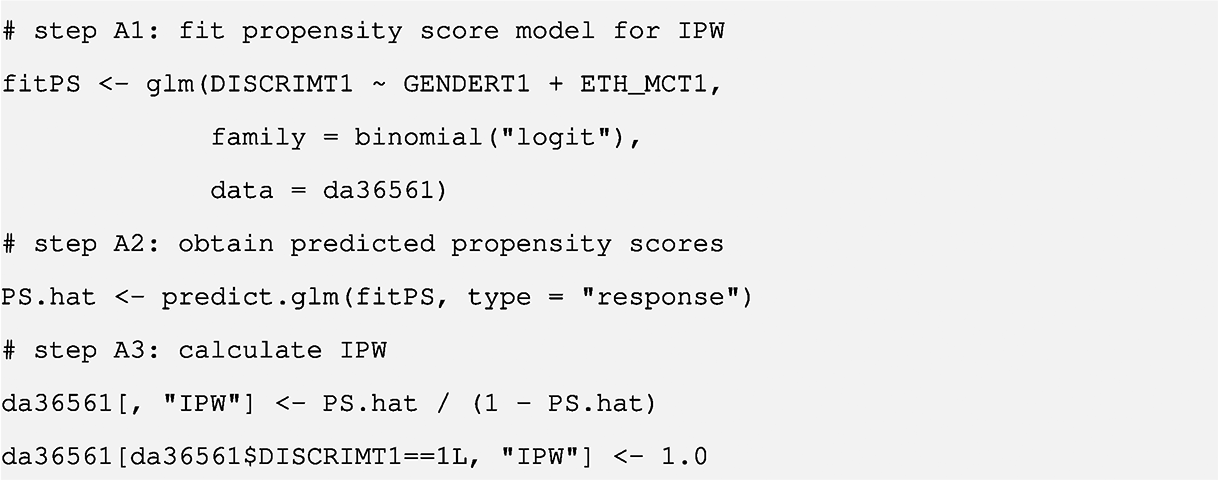 We then carried out step A4 to fit an outcome regression model for fairness society beliefs (“
 Finally, we use these fitted models to carry out step A5. To help researchers implement this in practice, we have developed an R function
 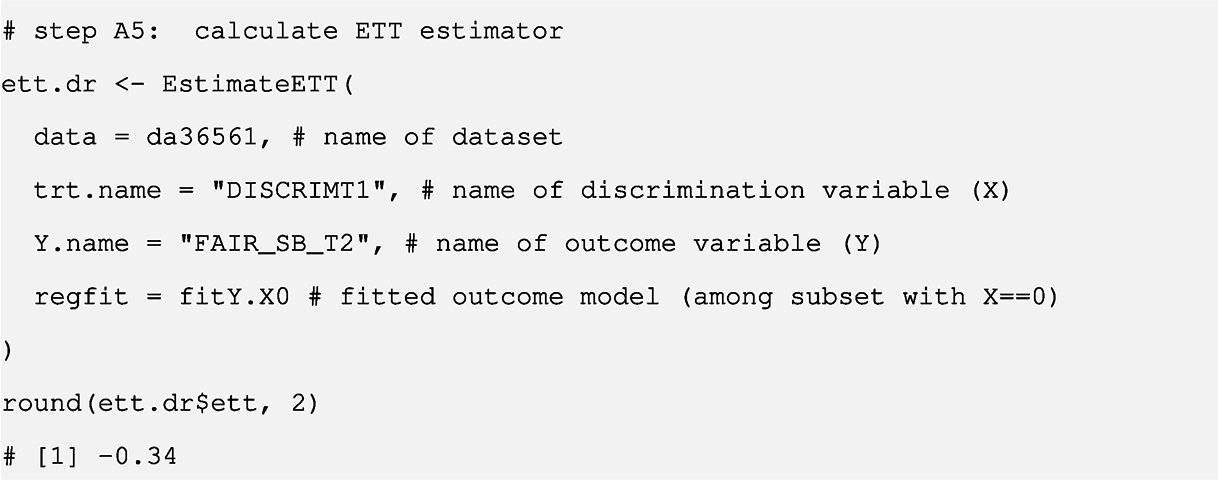 The weighted least squares estimator
 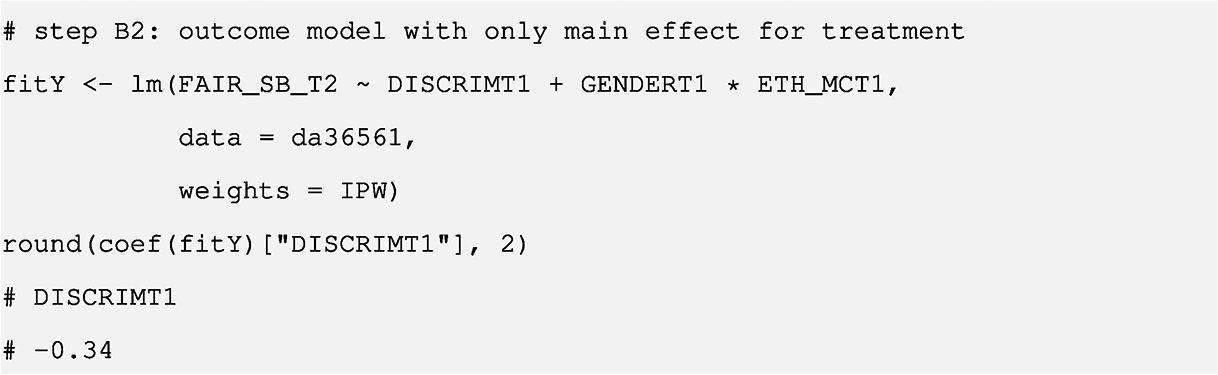 Nonparametric percentile bootstrap confidence intervals can be readily obtained by randomly sampling observations with replacement and then repeating all the above steps.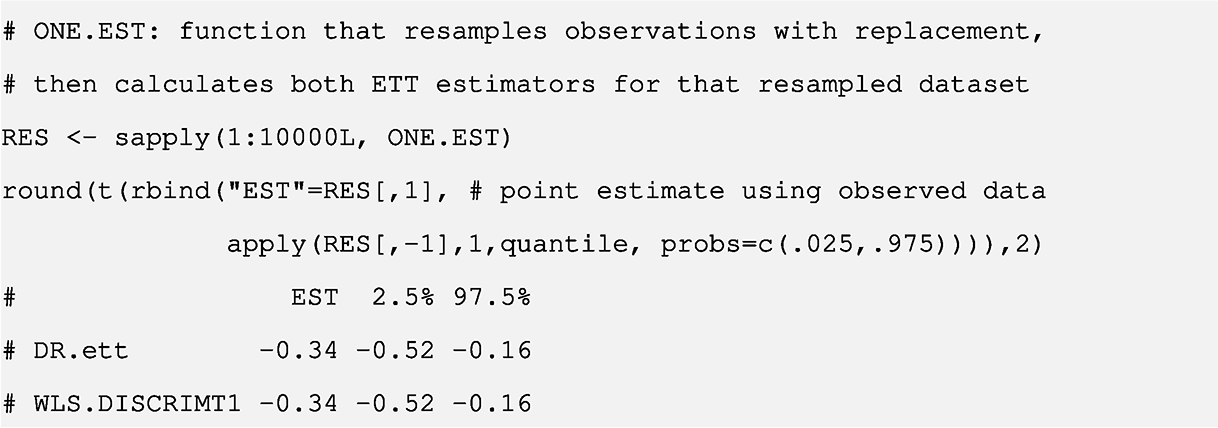
Discussion
In this paper, we introduced the ETT causal estimand as an alternative to the ATE for organizational scholars. It is important to note that we are not suggesting the ETT is uniformly superior to the ATE without context. Instead, we recommend scholars carefully choose a target causal estimand that can best answer their research questions. As we demonstrated in the preceding sections, the ETT is uniquely suited to address causal queries pertinent to the unique experiences of vulnerable populations.
An avenue for future extensions of the estimators presented in this paper regards missing data. To simplify the illustrations, in both example analyses, we included only observations with complete data recorded on the variables
As with all causal inferences of nonrandomized treatments, the ignorability assumption must be met for consistent effect estimation (Imbens & Rubin, 2015; Morgan & Winship, 2015; Shadish et al., 2002). We emphasize that the weak ignorability assumption for the ETT is less stringent than the analogous strong ignorability assumption routinely made (implicitly) when targeting the ATE. Hence, the reduced reliance on empirically untestable assumptions makes the ETT a more appealing estimand than the ATE in practice. Nonetheless, this assumption must be rigorously substantiated using subject matter and domain-specific expertise (Steiner et al., 2010). As a practical recommendation, researchers should prioritize adjusting for covariates strongly (or even only) predictive of the outcome, and avoid nonconfounders associated with treatment only (i.e., unassociated with the outcome) which can increase finite-sample variability (Loh & Ren, 2023; VanderWeele, 2019). While adjusting for observed confounders can reduce the impact of any unmeasured confounders associated with those observed (Stuart, 2010), there remains the possibility of bias due to unmeasured confounding. Therefore, researchers should also consider a sensitivity analysis to judge the impact of hypothetical unmeasured confounding on the conclusions (Hong et al., 2021).
In practice, exactly one of the potential outcomes (
Conclusion
[W]e implore researchers to conduct more studies on understudied, vulnerable populations. Otherwise, organizational research will continue to prioritize the well-understood, safe, and privileged subset of employees. This approach will lead to the formation of general theories based on these insights that are inaccurately applied to all employees, particularly the vulnerable workforce. (Restubog et al., 2023: p 2206)
We included this quote here not just to emphasize its compelling arguments on the importance of studying the work experiences of vulnerable employees, but also to highlight a discrepancy in organizational theories scholars are actively seeking to address: Knowledge obtained from the privileged subset of employees cannot be applied to the vulnerable workforce. In the current article, we have sought to draw scholars’ attention to a similar discrepancy in the methodological realm: Causal quantities such as the ATE are a coarse assessment for the entire study population that cannot be accurately applied to all individuals, especially the subset exposed to adverse experiences. To address this discrepancy, we put forth the ETT as a causal estimand better suited for studying the experiences of the vulnerable workforce. The ETT offers a more intuitive interpretation, enables a more accurate evaluation, and admits a more robust estimator. We hope that our introduction of the ETT to organizational research can contribute to a more accurate and inclusive organizational science toward an equitable society.
Supplemental Material
sj-pdf-1-orm-10.1177_10944281241246772 - Supplemental material for Enhancing Causal Pursuits in Organizational Science: Targeting the Effect of Treatment on the Treated in Research on Vulnerable Populations
Supplemental material, sj-pdf-1-orm-10.1177_10944281241246772 for Enhancing Causal Pursuits in Organizational Science: Targeting the Effect of Treatment on the Treated in Research on Vulnerable Populations by Wen Wei Loh and Dongning Ren in Organizational Research Methods
Footnotes
Acknowledgments
The authors thank the Associate Editor, Dr. Louis Tay, for his constructive suggestions and valuable advice in guiding the manuscript through the review process. We thank both anonymous reviewers for their insightful and helpful comments, which have greatly improved the manuscript. We are grateful to Dr. Cathryn Johnson and Dr. Karen Hegtvedt for engaging in enlightening discussions on mechanisms of organizational inequality that inspired the development of this paper.
Declaration of Conflicting Interests
The authors declared no potential conflicts of interest with respect to the research, authorship, and/or publication of this article.
Funding
The authors received no financial support for the research, authorship and/or publication of this article.

Supplemental material
Supplemental material for this article is available online on GitHub (https://github.com/wwloh/ett-org).
Notes
Author Biographies
References
Supplementary Material
Please find the following supplemental material available below.
For Open Access articles published under a Creative Commons License, all supplemental material carries the same license as the article it is associated with.
For non-Open Access articles published, all supplemental material carries a non-exclusive license, and permission requests for re-use of supplemental material or any part of supplemental material shall be sent directly to the copyright owner as specified in the copyright notice associated with the article.
