



Abstract
Tour guides play an important role serving as cultural ambassadors in the tourism industry. Self-leadership strategies can help tour guides to excel in their profession. However, little is known about the practices and competencies that tour guides implement to achieve self-leadership especially in developing countries where tour guide training programs are still emerging such as in Sri Lanka. We conducted a survey of National Tour Guides and interviews with tourism experts from the Sri Lankan Tourism Development Authority to investigate the current state of self-leadership practices relating to Behavior Awareness, Task Motivation, and Constructive Cognition. We present a theoretical framework to assess these three self-leadership strategies and specific practices relevant to this framework. Our recommendations on how to assess and enhance tour guide performance may be adapted in other cultural contexts to inform tour guide training programs.
Introduction
Tour guides play an important role as cultural and environmental ambassadors, offering frontline services by interpreting and sharing information about the cultural and natural heritage of a country (Ahmed Kamel, 2021; Randall & Rollins, 2009; Ren et al., 2024). They educate visitors on sustainable practices, ensure safe access to sites and facilities while enhancing the overall visitor experience (Agyeman & Antwi-Bosiako, 2022; Jamaliah et al., 2024; Zhao et al., 2015). By leveraging their roles effectively, tour guides can champion sustainable practices, educate tourists about the importance of responsible behavior, and foster positive interactions between visitors and their host communities and environments (Douglas et al., 2018; Hu et al., 2021; Syakier & Hanafiah, 2022). Commonly accepted definitions of a “tour guide” emphasize the tour guide’s role as a “professional guide of groups or individuals around places of interest to interpret cultural and natural heritage in an engaging manner” (Weiler & Black, 2014, p. 3; Weiler & Walker, 2014). Tour guides were traditionally believed to assume four primary roles: instrumental, social, interactional, and communicative (Cohen, 1985). They are instrumental in facilitating travel. Socially, they help to develop cohesion and morale within tour groups. They connect tourists with local communities, sites, and facilities. In a communicative sense, they direct the focus of tourists and interpret the resources with which they engage, and thereby promote positive outcomes for cultural and environmental sustainability.
Self-leadership strategies may contribute in positive ways to tour guides’ performance in the complex functions outlined above (Houghton et al., 2012). Self-leadership is defined as a process of self-evaluation and self-influence through which individuals achieve self-direction and motivation to strive for positive performance (e.g., Cheong et al., 2019; Manz, 1986; Neck & Houghton, 2006; Neck & Manz, 2010). Self-leadership comprises strategies relating to self-awareness of behavior (Behavior Awareness), motivation towards tasks (Task Motivation), and constructive thought patterns (Constructive Cognition) (Cantor, 2003; Condon, 2011; Locke, 2002) to enhance individual performance.
Self-leadership skills can empower guides to navigate their complex, dynamic, and autonomous work environments. These self-regulatory strategies allow guides to manage the multifaceted roles they play (Weiler & Black, 2014). Furthermore, self-leadership can contribute to the promotion of responsible tourist practices and stimulates positive interaction between tourists and local environments (Black & Ham, 2005; Ruiz-Ballesteros & González-Portillo, 2024). Consequently, self-leadership not only enhances personal performance (Goldsby et al., 2021) but should also improve the broader tourism experience (Weiler & Walker, 2014).
In developing countries, self-leadership skills may be particularly important to overcome obstacles posed by imminent economic, social, and environmental uncertainties that impact the tour guiding experience. However, training programs for tour guides to effectively manage these uncertainties while interpreting heritage sites and other attractions in developing countries like Sri Lanka are still rudimentary (Sumanapala et al., 2021, 2023). Consequently, guides rely heavily on their self-leadership skills to achieve optimal performance. A better understanding of tour guides' self-leadership skills can help to inform training programs aimed at enhancing these practices. Additionally, assessments of self-leadership skills play a role in identifying performance measures for operators, managers, and industry policymakers.
This investigation explores self-leadership strategies in Sri Lanka in an effort to understand how these strategies are employed by National Tour Guides. This research addresses a gap in understanding tour guides’ self-leadership strategies, particularly within the context of developing countries, where tourism infrastructure and training opportunities are often less established compared to more developed nations. We developed and employed a survey instrument, and conducted interviews to achieve three main objectives: (a) to assess the current (self-rated) state of self-leadership practices among Sri Lankan tour guides; (b) to determine, through Confirmatory Factor Analysis, whether the hypothesized practices effectively differentiate the self-leadership strategies of Behavior Awareness, Task Motivation, and Constructive Cognition; and (c) to provide insights from tourism experts and tour guides on how to apply and enhance self-leadership practices to improve tour guide training programs in Sri Lanka and other developing countries.
Literature Review and Key Concepts
As noted above, self-leadership is defined as “a process through which people achieve the self-direction and self-motivation necessary to perform in positive and desirable ways” (Houghton & Neck, 2002, p. 672). According to Carmeli et al. (2006) and Houghton and Neck (2002), self-leadership is built on three core strategies referred to as: (a) Behavior Awareness strategies, (b) Task Motivation strategies, and (c) Constructive Cognition strategies.
Behavior Awareness
Harunavamwe et al. (2020) concluded that the extent to which people engage with their work and how successfully they complete it is strongly influenced by behavior-focused strategies in their working environment. Behavior-focused strategies involves a conscious effort to achieve a broader goal by increasing awareness of specific behaviors that help facilitate that goal (Bruning et al., 2020; Mahoney & Arnkoff, 1978). These strategies may include key practices such as goal-setting, self-observation, and self-correction. Tour guides must first set individual objectives, such as enhancing visitor satisfaction, while also meeting tour operator requirements. Through self-observation, they assess how their actions and behaviors align with these goals, enabling them to make necessary adjustments to improve their service, either individually or collaboratively within a team environment (Houghton et al., 2012; Schipper et al., 2020).
Self-correction might include creating personal milestones based on observations, like engaging more actively with visitors or learning new historical facts about the sites they tour. Previous studies have indicated that self-punishment has a weak association with self-leadership and is one of the least commonly employed strategies (Houghton & Neck, 2002; Sesen et al., 2017; Stewart et al., 2019).
Task Motivation
Task Motivation strategies revolves around the ability to derive motivation not just from the completion of a task, but also from the meaning and positive aspects inherent in it. For tour guides, this could mean finding motivation in building meaningful connections with tour participants, rather than merely completing a scheduled tour. By visualizing success, tour guides can remain motivated and engaged, aiming not just for task completion but for enhancing the visitor experience.
Rewarding positive behaviors, tangibly or intangibly, either by oneself or by the team leader based on performance, can drive task motivation (Houghton et al, 2012; Harunavamwe et al., 2020). During this process, self-correcting feedback and self-criticism help to set targets (Houghton & Neck, 2002; Neck & Manz, 2010) and to correct potential problems associated with providing a tour guiding service (Manz & Sims, 2001). This creates a feedback loop, which combined with self-cueing (setting personal reminders about monitoring objectives), can help tour guides track their progress and stay motivated.
Rewards can be both tangible (e.g., monetary compensation) and intangible (e.g., positive feedback, online reviews or direct compliments). The provision of rewards for satisfactory performance, or the withholding of rewards due to underperformance, can play a key role in encouraging tour guides to adapt and improve their behavior (self-reward).
Constructive Cognition
Constructive Cognition strategies emphasize “self-positive thinking” behaviors that enhance efficiency in achieving specific, predefined objectives (Houghton et al., 2012; Neck & Houghton, 2006; Neck & Manz, 1992, 1996). According to Neck and Houghton (2006), this approach is deeply rooted in a person’s intrinsic thinking patterns, which can be positively shaped through self-analysis, the improvement of belief systems, mental imagery of successful outcomes, and positive self-talk (Echebiri, 2020; Neck & Manz, 1999).
Self-talk is defined as what we covertly tell ourselves (Ellis, 1962; Neck & Manz, 1992; Motevalli et al., 2020), such as when we talk to ourselves about our performance, setbacks, and alternatives to achieve a defined task (Papagiannis et al., 2018). It entails a dynamic process of development from pessimistic to optimistic self-dialogues about performance by eliminating negative beliefs about a task (Papagiannis et al., 2018). Research has revealed self-talk as one effective strategy for facilitating learning and enhancing performance in various fields, including sports, marketing, service provision, customer satisfaction, and health (Furman et al., 2020; Hatzigeorgiadis et al., 2011; Park et al., 2020).
While positive self-talk is generally considered beneficial for self-leadership, especially in challenging situations, its effectiveness can vary depending on individual differences and specific contexts. For instance, Hatzigeorgiadis et al. (2011) found that positive self-talk can fail to improve performance when not tailored to the specific task or individual, and may even exacerbate anxiety in some cases. Additionally, Hardy et al. (2004) highlight that self-talk is more effective for tasks requiring cognitive focus but may have limited or no benefit in high-pressure or emotionally charged situations. Furthermore, Lane et al. (2016) observed that positive self-talk might not enhance performance for individuals with pre-existing high confidence levels or in scenarios where instructional strategies are more effective. These findings highlight the complexity of self-talk as a self-leadership practice and suggest that its effectiveness is influenced by factors such as individual differences, the nature of the task, and the specific challenges faced.
Mental imagery, defined as a symbolic, covert, mental invention, or rehearsal of experience (Driskell et al., 1994; Finke, 1989; Richardson, 1967), can also contribute to the development of constructive thoughts. Mental imagery is a multisensory process that yields images of vivid success and achievements without reliance upon external factors. Eliciting mental imagery of success has been shown to enhance human performance in multiple fields, including sports, business, and health (Di Corrado et al., 2020; Yadolahzadeh, 2020).
Methods
An online survey was conducted in July 2020 with 1,029 National Tour Guides registered with the Sri Lanka Tourism Development Authority (SLTDA). National Tour Guides are professionally trained and hold an official registration, which authorizes them to operate as guides across the entire island. They play an important role as the primary link between tourists and Sri Lanka’s rich cultural, historical, and natural heritage. The SLTDA, as the sole government body overseeing the tourism industry, plays a central role in the training, development, and regulation of National Tour Guides. Understanding the self-leadership strategies of these guides provides valuable insights for the SLTDA to further enhance training programs and improve the overall quality of tourism services in the country, thereby setting an example for other developing countries.
The primary data were collected through a structured online questionnaire using a purposive sampling approach of tour guides registered in the SLTDA. The self-leadership questions were adapted to the Sri Lankan context based on Houghton et al. (2012a), with some modifications to suit the unique environment of Sri Lankan tour guides. Also the questionnaire was piloted with five experts from the SLTDA and five National Tour guides.
We selected 17 items from both the Abbreviated Self-Leadership Questionnaire (ASLQ) and the Revised Self-Leadership Questionnaire (RSLQ) to represent practices and competencies related to Behavior Awareness: Task Motivation; and Constructive Cognition (Houghton & Neck, 2002; Appendix). These questionnaires have been widely adopted in many industries, for example, to measure self-leadership of teachers (Sesen et al., 2017) and other professions such as banking (Flores, 2020; Houghton et al., 2012; Houghton & Neck, 2002; Marques-Quinteiro et al., 2019). The agreement of participants about the practices (and competencies) they apply towards self-leadership was queried on a scale of 1 to 7 (from 1 = “strongly disagree” to 7 “strongly agree”). Self-leadership practices were classified into three strategies: Additionally, an open-ended question prompted more in-depth comments and examples of the queried self-leadership practices.
A Confirmatory Factor Analysis (CFA) was conducted to evaluate the goodness-of-fit of the proposed model and to determine the statistical significance of each item’s relationship with its latent construct. Items demonstrating statistically non-significant relationships with their respective constructs (p > .05) were removed (see Table 1). The resulting model validates the selected items from prior studies within the context of the present study, improving the reliability and validity of the measurement. It highlights the core practices that significantly contribute to self-leadership.
Mean Ratings of the Application of Self-leadership Practices/Competencies (with 1 = “strongly disagree” to 7 = “strongly agree”) of Sri Lanka’s National Tour Guides and Results of a Confirmatory Factor Analysis of the Relationship Between Self-leadership Practices/Competencies and Strategies.
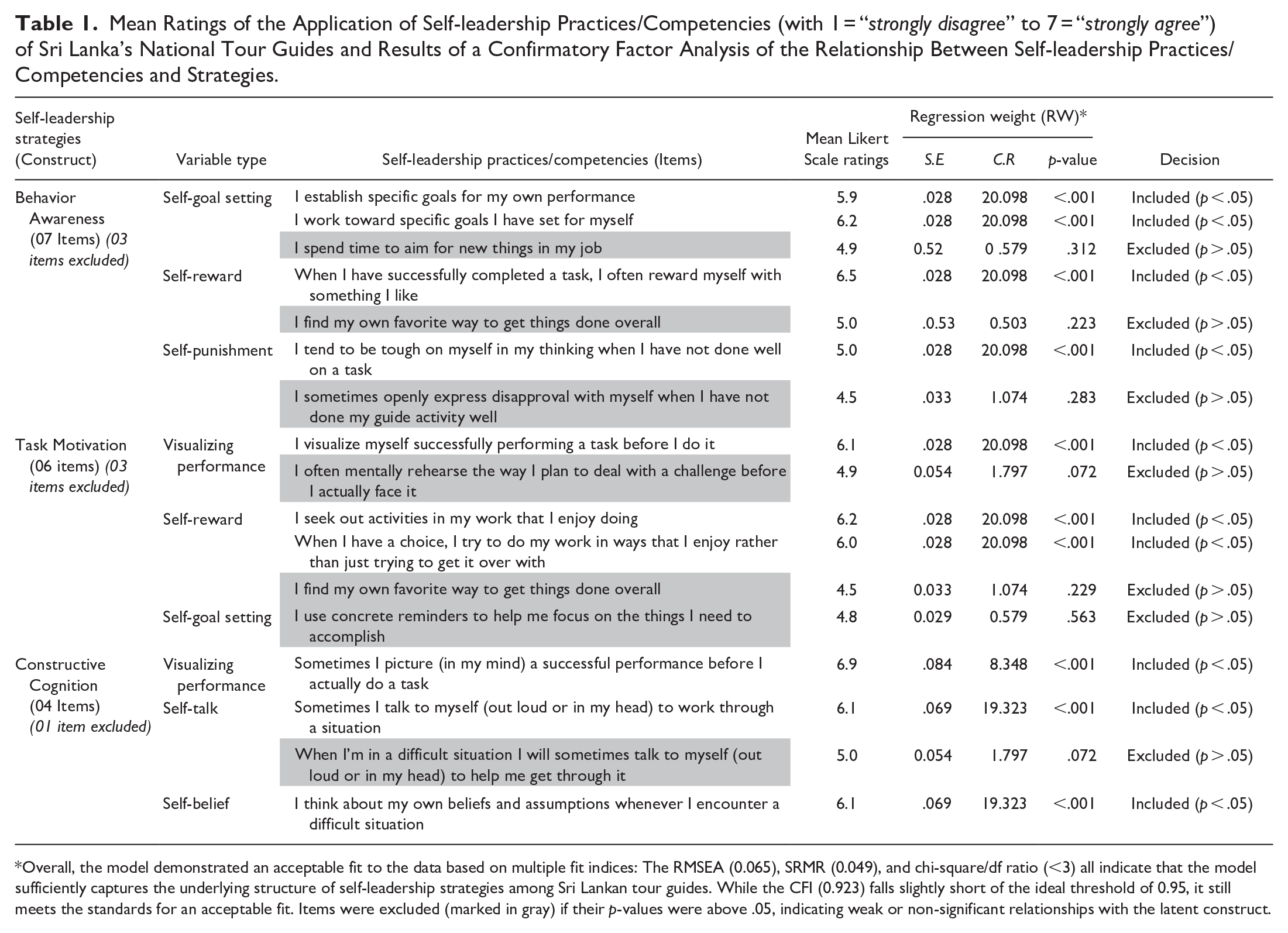
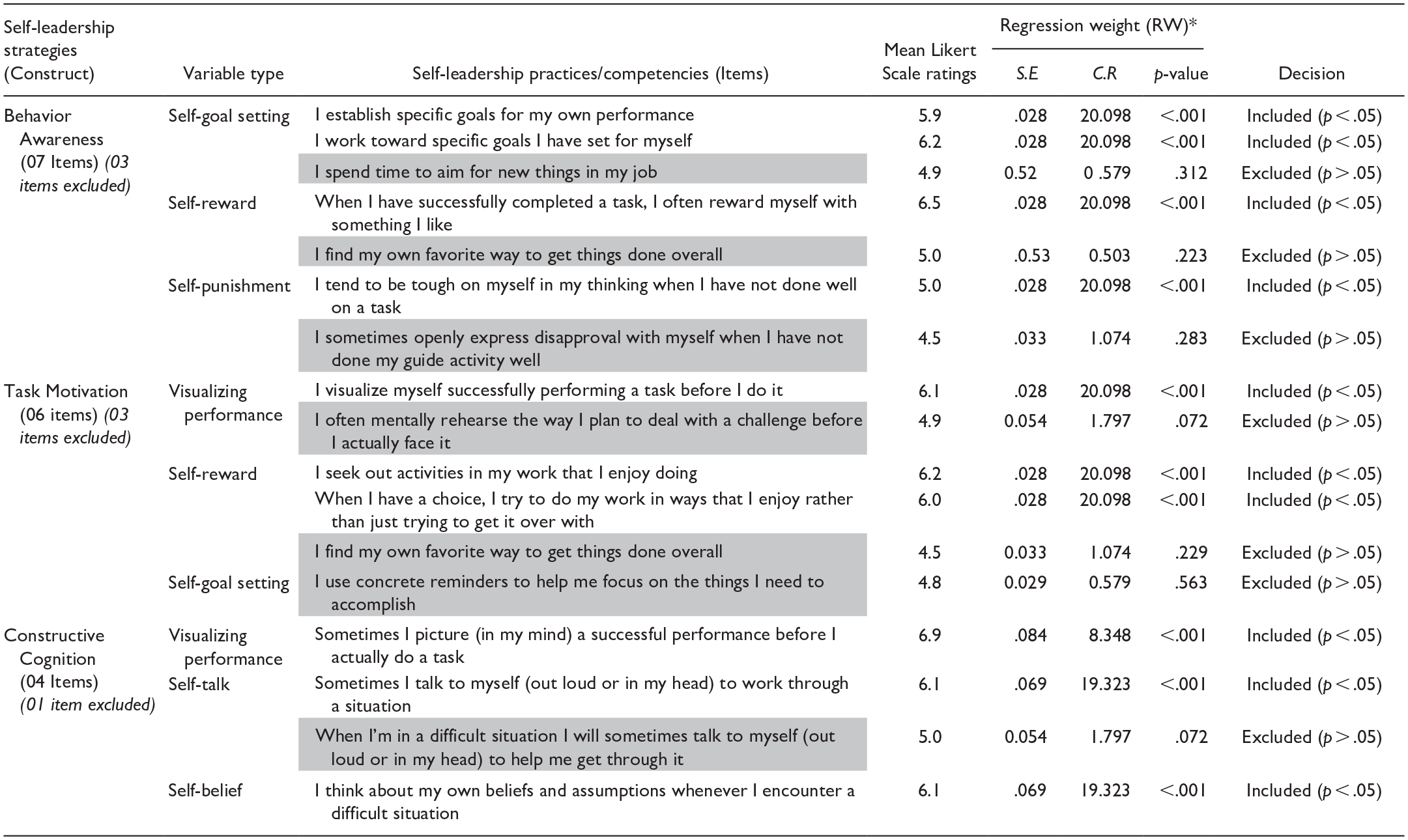
Overall, the model demonstrated an acceptable fit to the data based on multiple fit indices: The RMSEA (0.065), SRMR (0.049), and chi-square/df ratio (<3) all indicate that the model sufficiently captures the underlying structure of self-leadership strategies among Sri Lankan tour guides. While the CFI (0.923) falls slightly short of the ideal threshold of 0.95, it still meets the standards for an acceptable fit. Items were excluded (marked in gray) if their p-values were above .05, indicating weak or non-significant relationships with the latent construct.
Five in-depth semi-structured interviews were conducted with key experts from the SLTDA to gain a deeper understanding of self-leadership skills. This included the manager of the Standard & Quality Assurance Department in charge of the tour guide registration process at the SLTDA, the Cluster Head of the SLTDA, a lecturer, the course coordinator managing the National Tour Guide course at the Sri Lanka Institute of Tourism & Hotel Management, and the senior group coordinator of the National Tour Guides. Interviews were conducted remotely via telephone and typically lasted at least 45 min. The interviews focused on three main areas: (a) the importance of specific practices (and competencies), and how they relate to the three self-leadership strategies investigated in our research; (b) gaps and the need for specific practices to be implemented more effectively; and (c) potential methods for learning how to implement these practices. The interviews were audio-recorded, and the transcripts were examined to identify self-leadership practices. The qualitative data from the interviews, along with the open-ended comments from the survey with the tour guides, were coded and refined. Drawing on the framework outlined by Ritchie and Spencer (1994), the qualitative data analysis involved coding emergent themes and sub-themes, which were progressively refined as the analysis progressed. This process included an in-depth review and engagement with the data, followed by systematically organizing the content into primary themes and sub-themes, and ultimately interpreting the findings to assess the importance of each theme.
Results
A total of 308 fully completed questionnaires were analyzed. There may be various reasons for non-participation/non-response including language barriers, although English language competency is very high among National Tour Guides. In some cases, respondents may have lacked time or interest in responding.
Quantitative Findings: Insights From National Tour Guides
A confirmatory factor analysis (CFA) was conducted to validate the relationships between three self-leadership strategies—Behavior Awareness, Task Motivation, and Constructive Cognition—and their associated self-leadership practices. The final model demonstrated an acceptable fit to the data, with RMSEA = 0.065, SRMR = 0.049, CFI = 0.923, and χ2/df = 2.89.
Table 1 presents the results of the CFA. Overall, the results suggest that the measured self-leadership practices align well with their respective self-leadership strategies, supporting the relevance of our theoretical framework to actual practices in the field. The variables with the highest standardized regression weights contribute most strongly to their corresponding strategies, highlighting their importance in understanding and promoting self-leadership among tour guides. As for Behavior Awareness, self-goal setting, self-reward, and self-punishment all show significant positive relationships with Behavior Awareness. Among these, self-goal setting and self-reward have the highest standardized regression weights, indicating that they contribute most strongly to Behavior Awareness.
Specifically, Behavior Awareness was represented by four items, with standardized regression weights (λ) ranging from .348 to .554. Items included “I establish specific goals for my own performance,” “I work toward specific goals I have set for myself,” “When I have successfully completed a task, I reward myself with something I like,” and “I tend to be tough on myself in my thinking when I have not done well.”
Task Motivation included three retained items with λ values between 0.791 and 0.860, namely: “I visualize myself successfully performing a task before I do it,” “I seek out activities in my work that I enjoy doing,” and “When I have a choice, I try to do my work in ways that I enjoy.”
Constructive Cognition was defined by three items with λ values between 0.569 and 0.972. Retained items included “Sometimes I picture in my mind a successful performance before a task,” “Sometimes I talk to myself to work through difficult situations,” and “I think about my beliefs and assumptions in difficult situations.”
Table 1 also presents mean Likert-type scale ratings of the retained items, which indicate a generally high level of agreement among Sri Lanka’s national tour guides regarding the use of self-leadership practices, with mean scores ranging from 5.0 to 6.9 on a 7-point scale. The highest-rated item, “Sometimes I picture (in my mind) a successful performance before I actually do a task,” highlights that visualization is a common practice among the Sri Lankan tour guides surveyed. Other highly-rated practices, “I establish specific goals for my own performance” (mean = 5.9) and “When I have successfully completed a task, I often reward myself with something I like” (mean = 6.5), reflect a strong emphasis on self-goal setting and self-reward.
Based on these results, a conceptual model was developed to illustrate how individual practices align with the three self-leadership strategies (see Figure 1). The final model, which serves as a framework for understanding self-leadership within the tour guiding context, retained 10 items distributed across the three latent constructs of Behavior Awareness, Task Motivation, and Constructive Cognition.
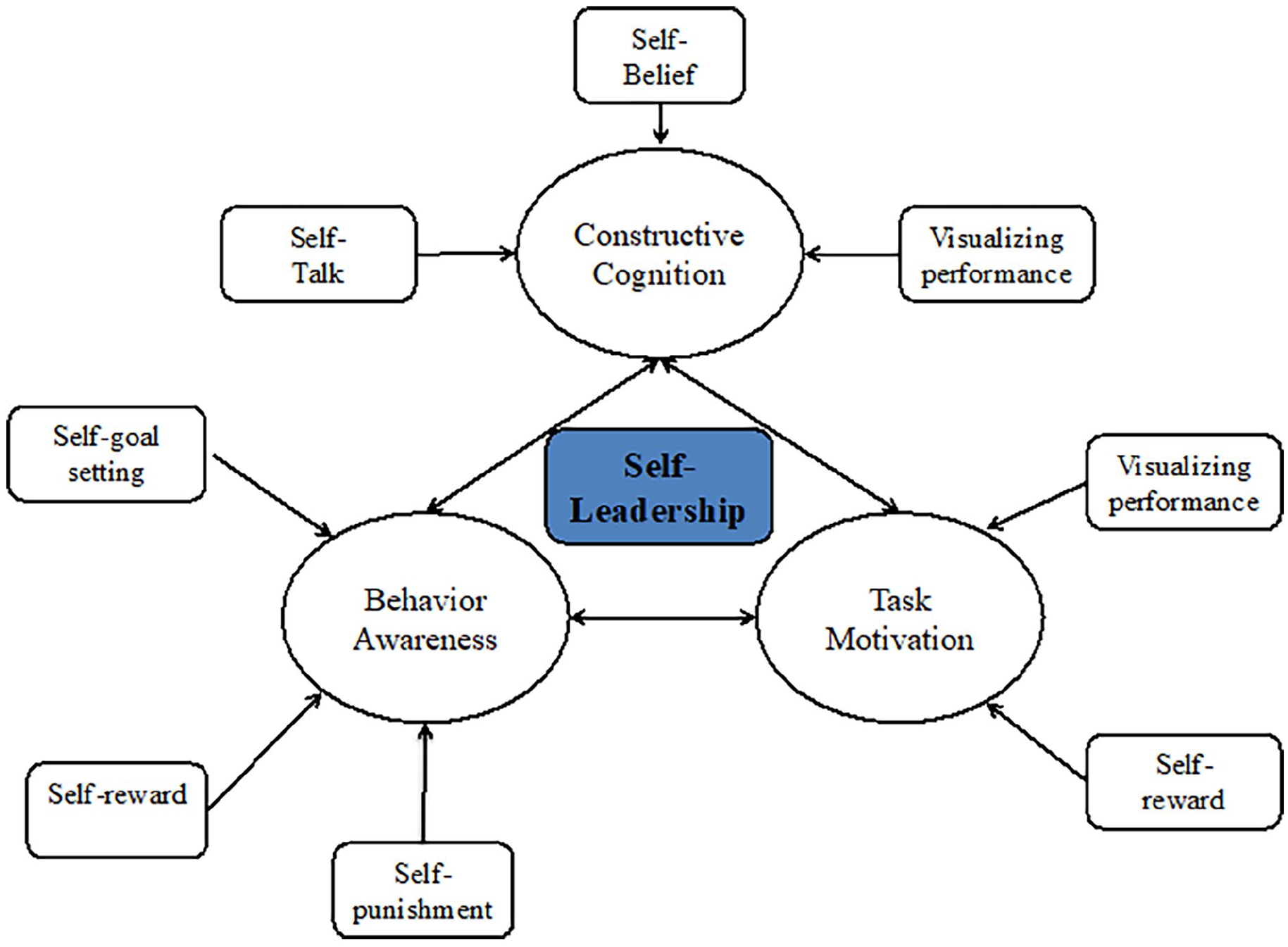
Conceptual framework for assessing self-leadership of tour guides.
Qualitative Findings: Insights From Tourism Experts (SLTDA) and National Tour Guides
The interviews and open-ended comments provided further depth to the survey data, revealing practical, context-specific examples of how tour guides implement self-leadership practices in their daily work. We collected insights from two distinct groups: five tourism experts from the Sri Lanka Tourism Development Authority (SLTDA) (see Methods) and 308 National Tour Guides through the survey. The SLTDA experts, who are involved in training and overseeing tour guides in Sri Lanka, provided in-depth perspectives on the self-leadership practices they believe are essential for effective tour guiding. Meanwhile, the tour guides themselves shared their experiences and practices through open-ended comments in the survey, which offered a practical (field-based) understanding into how they apply self-leadership strategies in their day-to-day work.
The SLTDA experts, who have extensive (theoretical and practical) knowledge of the tour guiding profession, emphasized the importance of self-leadership in maintaining high standards of service. The experts noted several key self-leadership practices that they consider important for tour guides to employ in their work. The National Tour Guides provided additional context to the expert recommendations through their survey responses, in which they shared how they employ self-leadership practices in the field. The survey comments aligned with the practices recommended by the SLTDA experts but also offered more practical and personal examples. The following practices were highlighted:
1.
2.
Many guides reported using a combination of techniques to manage their motivation. For instance, several guides mentioned that they would allocate more time to tasks they particularly enjoyed, such as engaging in a meaningful way with visitors on cultural topics. Effective tour guides appear to be able to cultivate strong personal connections with clients, thus enhancing their performance. This practice is directly linked to Task Motivation, as it helps guides maintain high energy levels and enthusiasm throughout the tour.
3.
Constructive Cognition was achieved by tour guides by visualizing performance, self-belief and self-talk. As one tour guide explained: “After every guided tour, I usually reflect on the areas I have to develop in my service for the next tour job. I picture in my head how to build up and strengthen the relationship with visitors, how to keep the team alive with engagement while tour guiding. For example, while explaining the history I will try to show some real examples at the site.” Guides explained that they would often picture themselves successfully navigating difficult situations, such as dealing with dissatisfied visitors or adapting to unplanned changes in the tour schedule. This practice was frequently mentioned by guides working in high-pressure environments where rapid decision-making was critical.
As noted in the literature (Hardy et al., 2004), we also noted in the quantitative results of the survey that self-talk as a self-leadership strategy may not be as effective under challenging or emotionally charged situations. Ineffective self-talk may be associated with adverse outcomes, such as increased anxiety and lower-quality performance, which can impede one’s capacity to thrive in challenging situations. This suggests that merely engaging in positive self-talk without addressing underlying negative thought patterns may not be sufficient for effective self-leadership.
Open-ended survey responses indicate that introducing feedback tools could improve service performance. One example is visitor feedback forms, which are currently absent in Sri Lanka. Additionally, some participants highlighted the challenges of setting goals while managing the diverse functions of their profession and identifying effective strategies to achieve
Numerous tour guides and experts were concerned about the lack of ongoing training programs. For example, one tour guide commented: “After initial training, we did not have access to continuous learning programs to acquire new knowledge about our profession. So we fear that we are providing isolated services without updating our knowledge and keeping informed about what’s going on internationally.” Several tour guides expressed a strong willingness to share their knowledge and experiences with peers, particularly if given opportunities to do so through training workshops or similar initiatives. They noted that such platforms would not only allow them to contribute to the professional development of others but also enhance their own skills and understanding through collaborative learning.
Implications for Practice
Based on our findings, we propose that the theoretical framework of self-leadership offers a valuable lens through which to develop training programs for tour guides. The integration of insights from both the SLTDA experts and National Tour Guides provides a comprehensive understanding of self-leadership practices within the Sri Lankan tour guide community. By analyzing the practices recommended by experts and comparing them with the real-world strategies used by guides, we have identified key self-leadership strategies that can be used to improve the performance and motivation of tour guides in Sri Lanka and potentially in other developing countries. These practices can also be adapted in other cultural settings to improve self-leadership in the tour guiding industry. We suggest three main areas of focus to enhance self-leadership skills for tour guides in Sri Lanka and other developing countries with a similar tour-guiding context:
(1) Training and Development: Training programs could incorporate self-leadership strategies such as visualizing performance, self-talk, self-belief, self-reward, and self-goal setting. These practices can help tour guides develop the necessary skills to regulate their Behavior, stay motivated and manage challenges effectively.
(2) Establishment of feedback systems: Tour guides in Sri Lanka often work independently in their roles rather than in a team or led by a supervisor. As a result, they primarily receive feedback through social media, which can highlight instances of poor performance or service. Typically, tour guides primarily receive tangible rewards, such as payment for their services, which incentivize them to accomplish tasks (Neck & Manz, 1996). To foster improvement, the service industry could implement structured systems to periodically provide official feedback on tour guides' overall performance (Konuk, 2017; Neck & Houghton, 2006; Zhang & Xu, 2021). While this is common practice elsewhere, several tour guides commented that National Tour Guides in Sri Lanka typically do not collect any feedback from visitors directly and instead rely on online reviews of their service (Zhang et al., 2023). Measuring service quality and ensuring customer satisfaction are essential objectives in the tourism industry (Min, 2016; Akgun et al., 2022). Consequently, tour guide companies should work with experts to develop effective means for assessing performance and identifying areas for improvement.
(3) Peer-based training: We discovered that tour guides were eager to share specific self-leadership practices they had developed, particularly in relation to Task Motivation. Involving tour guides in the training of their peers or workshops where participants train each other, rather than relying solely on external staff with potentially less practical experience in the field, appears to be beneficial. Additionally, compiling a case study guide could facilitate the sharing of these valuable techniques (Sumanapala et al., 2023; Weiler & Walker, 2014).
The self-leadership practices identified in this study—particularly visualizing performance, self-talk, self-belief, self-reward, and self-goal setting—are not only relevant to Sri Lankan guides but can also be adapted by tour guides in other developing countries. These practices could be integrated into training programs to enhance self-leadership across various cultural and professional contexts.
Limitations and Future Research
This study represents the first assessment of self-leadership practices (and/or competencies) among tour guides in Sri Lanka, thus laying the groundwork for future research. Subsequent studies could explore different levels of the Sri Lankan tour guide hierarchy, including chauffeurs, area guides, and site guides, to gain new insights. Additionally, future research could include a more diverse sample of tour guides to examine how self-leadership practices vary based on factors like education level and years of experience in the field (Wen et al., 2020).
This study was conducted often outdoors, with participants completing the questionnaire after delivering tours. This setting may have contributed to more spontaneous and enthusiastic responses, and in some cases, participants may have overestimated their self-leadership abilities, reflecting a heightened self-perception.
Other factors, such as communication skills and the ability to convey interpretations effectively to visitors, are likely to influence tour guides’ performance (Chan et al., 2015; Huang et al., 2015; Moscardo, 2022; Stern & Powell, 2013; Stern et al., 2014). Incorporating these aspects into surveys, interviews, or training programs could provide a more comprehensive understanding of the skill sets required for high-quality tour guiding experiences.
Finally, future research could employ long-term studies to assess how self-leadership practices evolve over time within a specific setting or in response to targeted training programs.
Footnotes
Appendix
Final list of statements that National Tour Guides were asked to rate on a 7-point scale in the survey regarding their self-leadership practices.
Acknowledgements
The authors would like to thank the Editor, and both reviewers for their insightful comments and valuable suggestions to improve the original manuscript.
Authors’ Note
Daminda Sumanapala is now affiliated to South Asia Research Institute, The Australian National University, Canberra, Australia.
Declaration of Conflicting Interests
The author(s) declared no potential conflicts of interest with respect to the research, authorship, and/or publication of this article.
Funding
The author(s) received no financial support for the research, authorship, and/or publication of this article.
