



Abstract
Engineering education is an evergreen challenge. It is supposed to follow the scientific progression, aggregation of knowledge, development of technologies, industrial demands, social trends, personal interests, affordances of computerization, evolution of educational practices, and so forth. From time to time, it must renew itself to comply with the changing situations, growing complexities, and quality expectations. The presented work was driven by the conjecture that next-generation engineering education (NG-EE) cannot be designed and implemented without understanding it as a holistic problematics. Therefore, this article attempts to consider the whole of engineering education and make propositions concerning its probable future based on a survey of the current literature and the author's long-term experiences. It is structured according to five fundamental questions: (i) Why is innovation in engineering education a challenging problematics (again)?; (ii) What are the currently typical approaches to engineering education?; (iii) What can be utilized as enablers for NG-EE?; (iv) What can we expect from the offerings of generative artificial intelligence tools?; and (v) What sort of new mind-set is needed for NG-EE? The main findings of the literature survey are discussed in detail, and propositional answers are formulated to these questions. It is advocated that NG-EE (i) is becoming increasingly transdisciplinary, (ii) needs novel conceptual models, methodological frameworks, and management scenarios, (iii) should impose a holistic rather than a reductionist view on systems, (iv) should consider increased diversification of engineering jobs, (v) should equip with the competencies of autonomous learning, and (vi) should offer a constructive but critical attitude to using artificial intelligence technologies.
Introduction to the Foundations of Scholarly Engineering Education
Engineering education is an evergreen challenge. From time to time, it must renew itself to comply with the changing situations, growing complexities, and quality expectations. It is supposed to train engineers who can deal with large-scale socio-technological problems and complicated situations with mental integrity. Though its general goal has not changed much in the last centuries, it should closely follow the scientific progression, aggregation of knowledge, development of technologies, industrial demands, social trends, personal interests, affordances of computerization, evolution of educational practices, and so forth. Therefore, as discussed by Seely (2005), “engineering education has been the subject of more studies and reviews, formal and informal, than any other domain of professional education”. Haghighi (2005) proposed that engineering education, as an academic discipline, must assume new responsibilities, meet new expectations, operate with solid conviction, oblige to a sense of empowerment, and take the leadership role.
Until the mid-twentieth century, engineering education at universities was framed purely on academic or industrial considerations. However, in the second half of the last century, business and social considerations started to challenge this historical disposition and raised new perspectives and challenges (Blass & Hayward, 2014). Among others, the position and role of universities have been questioned. Vest (2008) advised: “In the long run, making universities and engineering schools exciting, creative, adventurous, rigorous, demanding, and empowering milieus is more important than specifying curricular details”. On the other hand, Malcom (2008) emphasized the importance of enlivening the engineering curriculum and connecting it to the need for a globally competent engineering workforce through curricular changes that reflect what we have understood about the practice of engineering in the future. As a consequence, many of the cutting-edge universities have a sense of being under attack by performance measures, accreditation and quality systems, economic constraints and rationalism, the need for supradisciplinary cooperation, and other forms of political, financial, and social interference aimed at asserting specific purposes (Marshall, 2018).
Blass and Hayward (2014) claimed ten years ago that ‘the university’ can find new means of adding value to society by refocusing on the facilitation of social innovation and, by doing so, can sustain its existence beyond 2025. Nevertheless, this is a complicated matter because, traditionally, the phenomenon of ‘academe’ brought about notions and privileges such as academic identity, freedom, inquiry, commitment, valuation, and right to decide on personal scientific qualities, life career models, verification and validation of the research finding, challenging paradigms and models, requirements for achieving graduation, peer review processes, and sourcing knowledge for the industry and society. Since the beginning of the formation of modern science, it has been considered the professed authority of truth and wisdom. It means the question is not only about the existence of ‘the university’ as an institution but also about the above and other pillars of ‘academe’. Traditionally, academic freedom manifested in the prerogative and motivation of the universities to carry out research of their choice. Not long ago, it became more determined by knowledge economy strategies, governmental policies, financing schemes and agencies, complicated research problematics, and industrial and societal expectations.
It has become a global endeavour to build sustainable knowledge economies. At the same time, the outcome of the efforts made toward innovation at research universities, the applied concepts of innovation management, and the missing links to technological and social innovation development have not made it a competitive part of the economy (Mendes & Kehoe, 2009). There are two fundamental obstacles concerning transferring the new unidisciplinary or pluridisciplinary knowledge explored by universities into practical innovation. The first is the high risk and uncertainties of initiating disciplinary knowledge-to-framework innovation processes. The second is the financial aspect (costly nature) of transforming the explored genuinely novel knowledge into marketable innovations inside the universities. These assume strong entrepreneurial attitudes from scientific investigators and research managers as well as remarkable venture capital – none of these falls from the sky. Therefore, more often than not, the future of innovative higher education is questioned as we move ahead toward the middle of the twenty-first century.
On the Influential Trends and the Concerns of the Study
The leading universities have already recognized the demand for simultaneous and intertwined innovation in their research, education, and servicing processes (Zhu et al., 2023). However, it does not seem widely known that innovation in education necessitates a new conceptual framework due to the influence of three major trends and groups of factors. First, scientific research is (i) witnessing the proliferation of the Mode 2 (socially sensitized) doctrines of dealing with science and (ii) facing the emergence of the Mode 3 (artificial intelligence influenced) research philosophies. These complement the Mode 1 (disciplinary investigation-centred) research approach but raise many new concerns. Second, a large part of scholarly investigations is supposed to shift its attention from naturally existing phenomena toward industrially and socially created complex problematics and generate not only descriptive and explanatory knowledge but also predictive and problem-solving knowledge. Third, closer cooperation is expected with industrial partners, knowledge exploitation agencies, and the concerned segments of society. In addition, the educational roles and programs of the universities are challenged concurrently by the explosion of knowledge, convergences and/or divergences of scientific disciplines, informatization and intelligentization, and the trends in the labour market.
Many concerns are disputed on a science-philosophical and practical (pragmatic) level. On the one hand, it is argued that even the concept of the historical university has become outdated in the age of all-embracing computerization, informatization, and intelligentization, and that future universities need to be virtualized and organized for servitization. On the other hand, it is claimed that universities can become resilient and resistant to scientific, societal, political, and technological changes owing to their historical roots and recognized legacy. Also, it should be considered that the range of engineering jobs and tasks is continuously changing, and the need for conceptual changes seems to remain to stay due to the perpetual changes in technologies, systems, objectives, and relationships (Wang et al., 2024). Mykhailyshyn et al. (2018) argued that higher education institutions that have chosen an innovation-based development have become competitive leaders in the education market. As influential factors, they identified staff, social, international cooperation, economic, organization, technological, scientific research, and educational process development and the integrative approach to these aspects of development.
There is neither consensus nor best practices regarding how the above trends - and the overall demands and concerns - should be considered in daily practice. On the other hand, it is already apparent that the future will be engaged with new kinds of systems and engineering (Carr-Chellman & Carr-Chellman, 2020). Current systems engineering aggregates intellect from traditional (dominantly mono-disciplinary) engineering disciplines, characterized by features like centralized, closed, top-down, reductionist, isolated, particularized, analytic, and constructed. Next-generation systems engineering and engineering education should focus on knowledge features such as pluralistic, cross-boundary, open, bottom-up, decentralized, holistic, interacting, synthesizing, synergistic, and self-evolving. No wonder that many people think it makes everything upside-down.
This article concentrates on the currently observable engineering education (OEE) and its expected near-future status at undergraduate, graduate, and postgraduate levels. It refers to all possible near-future manifestations of engineering education as ‘next-generation engineering education’ (NG-EE). The author attempts to (i) deal with all significant internal and external matters, (ii) deepen into current and future issues and challenges rather than past results, and (iii) consider the state-of-the-art and progress from the two perspectives of innovation. However, due to the breadth and depth, a complete survey of the contemporary literature of engineering education became a ‘mission impossible’. Therefore, subjective judgment-based choices had to be made. A significance-based pre-screening and thoughtful filtering had to be done due to the enormous number of books, articles, and papers published on the problematics of NG-EE. Thus, the discussion is reduced to three aspects: (i) academic positioning of engineering education, (ii) main pedagogical and didactic advancements, and (iii) penetration and influences of artificial intelligence tools and their interactions. First, the results of a systematic overview of the closely related literature are presented. The aspects of the literature study are shown in Figure 1. The overall impression has been that many of the surveyed papers reflect an unsettled situation due to the apparent overall compressions of space, time, and intellect. This is in line with Moleka's findings (2023b). The remaining part of the article discusses the means of transformation of engineering education. It is structured according to five fundamental questions: (i) Why is innovation in engineering education a challenging problematics (again)?; (ii) What are the currently typical forms of engineering education?; (iii) What can be utilized as an enabler for next-generation engineering education?; (iv) What can we expect from the offerings of generative artificial intelligence tools?; and (v) What is the new mind-set strongly needed for next-generation engineering education? The last section critically reflects on the overall picture and concludes with some future opportunities.
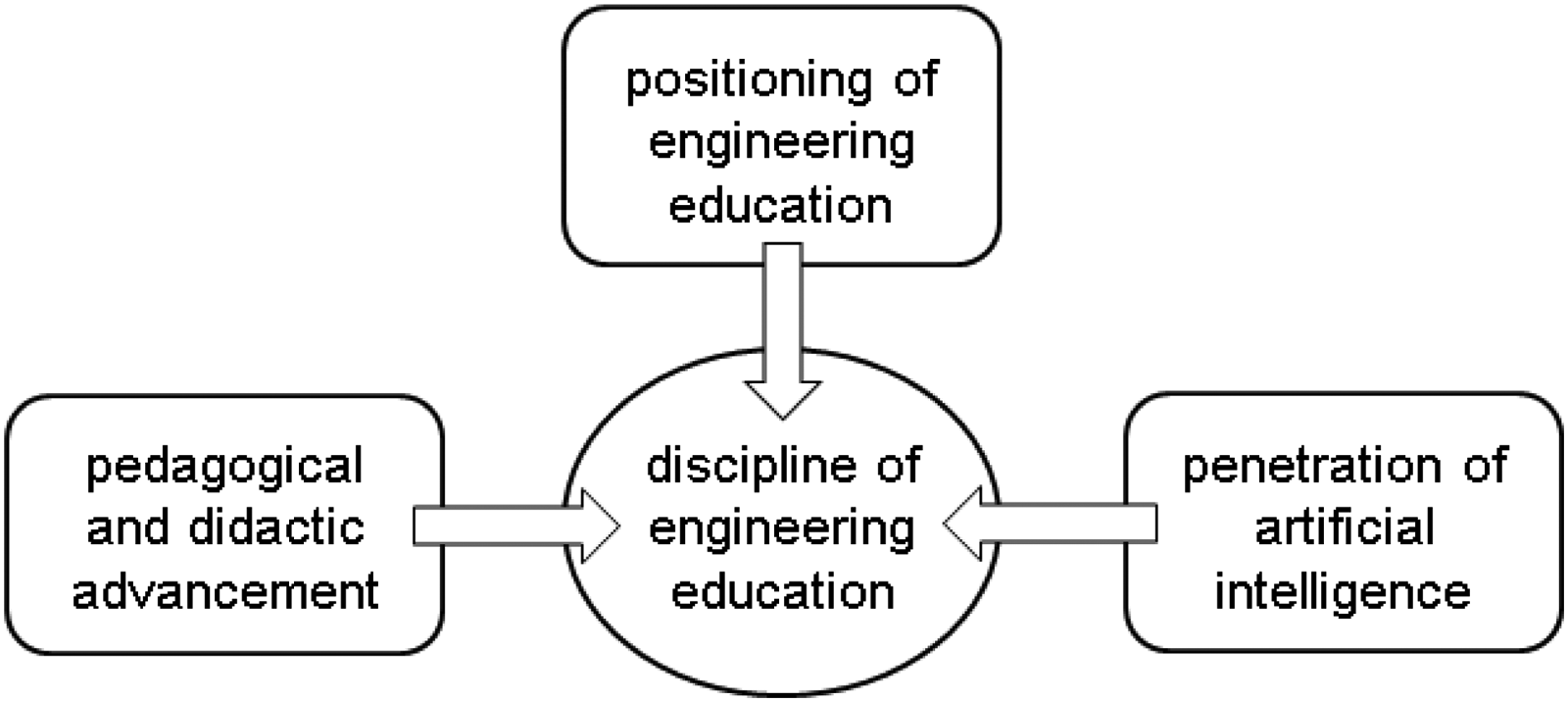
Fields of Interest Included in the Review.
A Contemplative Overview of the Recent Literature
Concerning the current positioning of engineering education, OEE and NG-EE are discussed in the context of such conceptual frameworks as Industry 4.0 and 5.0, Society 4.0 and 5.0, or Education 4.0 (Elena & Lilia, 2023) and 5.0 (Ahmad et al., 2023) in the contemporary literature. If the fourth industrial revolution (Industry 4.0) is considered the target, then the expectations toward OEE and NG-EE should be formulated accordingly. As discussed by many authors the main goals of Industry 4.0 are (i) intense innovation based on new technologies, (ii) increasing the efficiency of manufacturing, (iii) enhancing the profitability of production, and (iv) providing quality services. Industry 4.0 emphasizes informatization and automation (Muktiarni et al., 2019). Its probable support has been considered also from the perspective of Education 4.0 (Udvaros et al., 2023). The fifth industrial revolution (Industry 5.0) complements the goals of Industry 4.0 by placing a larger emphasis on human well-being, resilience of autonomous systems, and environmental sustainability. While maintaining economic growth, Industry 5.0 is supposed to be more responsible for human-centric matters, societal objectives, and the utilization of artificial intelligence (Alexandre et al., 2024). Therefore, engineering education in Industry 5.0 is supposed to focus on competency development and building inclusive learning environments (Vieira, 2024).
This means that when engineering education is seen from the context of the commencing Industry 5.0, different requirements are derived. These are primarily driven by the main goals of Industry 5.0 which concern intelligentization and the extensive use of intellectualized systems (Urmeneta & Romero, 2024). This explains why the use of advanced technologies-based learning environments has become more visible in the course of the recent great online transition (GOT) (Tondeur et al., 2023), Tondeur et al. (2024) proposed a simple conceptual model for designing digital and physical spaces for integrated learning environments that considers liminal spaces, flexible or informal spaces, and formal spaces integrated parts of physical and digital spaces.
It can be seen in the literature that NG-EE, as well as OEE, is addressed from (i) local perspective (as driven by regional interest), (ii) territorial perspective (as determined by national (Pistrui et al., 2022) or continental interest) (Nikum, 2022), and (iii) global perspective (as driven by world trends) (Sunthonkanokpong, 2011). NG-EE may appear in each of these contexts as a problematics, as a result of the coexistent and intertwined technological advancements, industrial doctrines, sustenance policies, employment structures, and societal trends that have emerged after the millennium. The literature also points to the fact that the evolutionary trends of systems science and engineering, such as intellectualization, socialization, personalization, and naturalization also contribute to the problematics of NG-EE by triggering complexification and posing knowledge synthesis challenges (Figure 2).
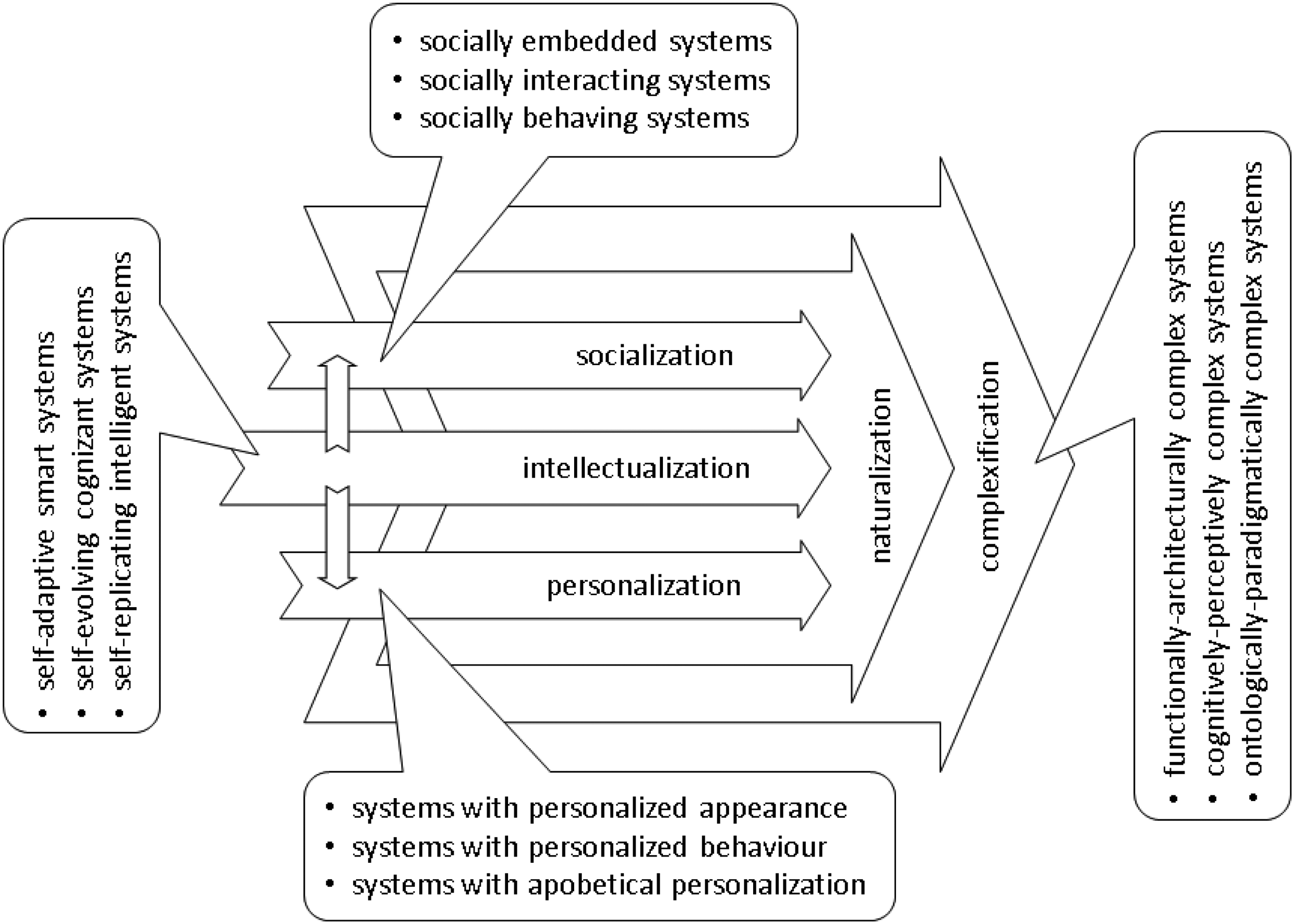
The Intertwined Trends of Evolution of Engineered Systems.
The abovementioned facts have significantly contributed to the pedagogical and didactic advancement of engineering education. Industry 4.0 and Industry 5.0 have together created an accelerated industrial transition which is often referred to as the techno-social evolution. Its proliferation is the reason why engineering education has also had to adapt both conceptually and methodologically (Barrot, 2022). Education 4.0 has been depicted as the approach of learning associated with the fourth industrial revolution and focuses on its knowledge and competence requirements (Pinto & da Cunha Reis, 2023). Considering the learning content and learner experiences, eight critical characteristics of Education 4.0 have been specified. These are (i) global citizenship skills, (ii) innovation and creativity skills, (iii) technology and problem-solving skills, (iv) interpersonal and emotional intelligence skills, (v) personalized and self-paced learning, (vi) openly accessible and inclusive learning, (vii) problem-based and collaborative learning, and (viii) lifelong sustained and student-driven learning (W.E.F., 2020). Education 5.0 has been sketched as an overall enabler of this evolutionary process (Kalaichelvan & Subramanian, 2023). The major issue is that it must keep up with the above trends, adapt to scientific convergence and technology integration, and offer more effective forms and ways of learning and training (Shahidi Hamedani et al., 2024). The concept of Education 5.0 has been presented as a holistic and transformative learning approach tailored to both Industry 4.0 and Industry 5.0 (Lyngdorf et al., 2024).
It has been observed that most of the studied articles provide general overviews (outcomes of surveys) rather than concrete conceptual proposals or tested results of implementations. For instance, Shahidi Hamedani et al. (2024) posited that, as we move from an information society to an intelligent society, dubbed Society 5.0, a shift in education paradigms as well as in higher education institutions is imperative to ensure that the programs are aligned with industry and society needs. According to them, three key areas, namely the development of (i) innovative curricula, (ii) human-centric skills, and (iii) collaboration with industry, must be emphasized to empower the future workforce in the context of Society 5.0. Toward this end, novel computational resources and educational practices, adaptive learning programs, collaborative dislocated teaching, personalized learning experiences, strengthening industry partnerships, and hands-on training opportunities are indispensable.
The pedagogical objectives and didactical approaches of modern engineering education are as important constituents as digital books, computer-based systems, and internet-based repositories (Meyer, 2007). Their importance comes from their impacts on what is designed or intended to teach and the selection of methods, activities, and teaching practices, especially as an academic subject or theoretical concept. In this context, Alharbi (2023) emphasized the importance of (i) learning with a clear focus on real-life exploitation, (ii) learning alongside individualized learning paths, (iii) developing competencies for solving complicated real-life problems, and (iv) promoting a culture of values-oriented learning. Moleka (2023a) conducted a study to identify the limitations and drawbacks of Education 5.0 and to propose a vision for Education 6.0. As limiting root causes and systemic factors of Education 5.0, he identified (i) factory work-centred industrial age model, (ii) heavy reliance on standardized testing, (iii) teacher-centric approach of knowledge transfer, (iv) lack of real-world application and experiences, and (v) limited access to and inclusivity of education. To eliminate these limitations, he proposed a vision of Education 6.0 that accounts for (i) high-level learner autonomy, (ii) balanced integration of technology and human touch, (iii) holistic development of cognitive, social, emotional, and physical skills, (iv) development of spiritual, and emotional intelligence, (v) essential skills for the future workforce, (vi) combination of continuous and formative assessments, (vii) integration of artificial intelligence practice, and (viii) establishing flexible learning environments.
The simultaneous consideration of the requirements of Industry 4.0 and 5.0 creates not only a lack of transparency but also a difficult-to-address conceptual and methodological complexity and a broadening of the concerned knowledge domains. Azmi et al., (2018) addressed the need for non-technical skills demanded by employees. They identified communication skills especially in English, teamwork skills, critical thinking and problem-solving skills, entrepreneur skills, computer skills, participation in interdisciplinary teaching, research, and innovation, and valuable industrial training to meet the current demands of industries. While key competencies are general, disciplinary competencies are specific. Orth (1999) classified these needed competencies into four categories: (i) social (e.g., the ability to communicate and collaborate), (ii) personal (e.g., responsibility, self-esteem, leadership), (iii) systematic (e.g., problem-solving and analytical skills), and (iv) general (e.g., project management, information technology) competence.
Concerning the intelligentization of engineering education, in particular learning and applying the results of the rapidly proliferating generative artificial intelligence (GenAI), the overall picture is rather unsettled. GenAI came out of the bottle and exploded into daily practice in only two years even without having consolidated computational fundamentals and mechanisms (Wong, 2024). As seen by Havemann (2024), this “new hype wave was so potent it demolished previously sturdy scepticism barriers across higher education and beyond”. Unquestionably useful in many fields, for example, in language learning and chat-box prompting, this technology is still premature and admittedly suffers from many imperfections and limitations. This would need careful and objective studies including all pros and cons but, instead, a euphoric atmosphere and overstrained hype can be observed in the dedicated literature (Kronblad et al., 2024).
The latest generation of GenAI tools, such as OpenAI's ChatGPT (Achiam et al., 2023), Microsoft's Copilot (Narayanaswamy, 2024), Google's Gemini (Imran & Almusharraf, 2024), Anthropic's Claude (Ren et al., 2023), and Meta's Llama 2 (Huang et al., 2024a), is based on large language models (Zhao et al., 2023). They are attractive for non-specialized users since they use natural language, rather than codes, and process and interpret human language in a conversational style to support interaction between computers and human stakeholders. Generative AI can be tailored and fine-tuned for different application domains. At the same time, the following antagonistic limitations should be considered at using such tools: (i) models are created to provide a likely output based on training and prompting, (ii) the generated information is often inaccurate, even if it appears factual, and this leads to lack of trust and authenticity, (iii) there is a permanent danger of misunderstanding and lack of rationality (hallucination) despite the impressiveness of the combination of syntactic elements, (iv) while GenAI tools can raise the impression that they are aware, even understand, the contents and contexts they generate and use, this is just designed computational pretending, and (v) the currently dominant syntactic text processing cannot be easily transferred into (human-type) semantic processing. Likewise, many ethical issues are waiting for resolution such as (i) training these tools needs a huge amount of resources, (ii) processing the original content happens without the permission of the original content owners, (iii) individuals without mastering a given topic may pretend to be knowledgeable, (iv) issues of copyright, ownership, intellectual property, and citing are not transparent and still open, (v) massive use of this tools floods the Internet with unreliable (non-tested or non-testable) and this reduces the quality of the output of future generative pre-trained transformer contents, (vi) self-referential loops inherit and compounds all biases, errors, and mistakes, contaminate the training data, and lead to model collapse, (vii) the often used reinforcement learning from human feedback method may be biased.
To reduce the effort on tedious and monotonous tasks, the latest versions of the LLM mechanisms have been extended with memories (Rolls, 2024). The models can remember previous interactions and it results in more coherent and relevant conversation experiences for users. Reported academic use cases of generative AI tools are such as (i) research assistance, (ii) concept and event outlining, (iii) brainstorming, (iv) thesis generation, (v) content summarization, (vi) vocabulary enhancement, (vii) proofreading paraphrasing, (viii) thematic image generation, (ix) data visualization, (x) multimodal assignments, (xi) thematic comparison, and (xii) accessibility support. Moleka (2023b) studied how AI can foster personalized learning experiences, an adaptive pedagogy, tailoring to the individual needs of learners, promoting engagement, and optimizing learning outcomes. While he could identify several deployments and enablers he also found major ethical issues and legal challenges such as (i) data privacy and security, (ii) transparency and explainability, (iii) student profiling and manipulation, and (iv) ethics of equity and access. These together result in complexity and beg for immediate action.
Why is Innovation in Engineering Education a Challenging Problematics (Again)?
The assumption that engineering education can be regarded as a problematics can be underpinned by some pure science philosophical thoughts. The fact of the matter is that a science-philosophical conceptualization of the notion of problematics can be traced back to the work of Laudan (1978). According to his view, science is a problem-solving activity that can resolve the problem of not knowing at the end of the day. He proposed that the measure of progress in a disciplinary field is related to the solved problems. He divided the problems to be addressed by science into the categories of empirical problems and conceptual problems. Empirical problems are related to knowing the world around us, while conceptual problems are associated with things that may not naturally exist and cannot be known straightforwardly. The reason is that there is no possibility of establishing a theory or synthesizing a coherent combination of theories that could explain holistically the whole or at least parts of it. Such complicated problems and conceptual incongruities may be related to natural manifestations but, usually, they are non-naturally caused manifestations. In our post-modern life, many such problematics are emerging which can be neither described completely nor exhaustively explained by scientific theories whilst they beg for some resolution.
The question formulated in the section heading can be addressed by a simple answer, as well as by a more insightful one. A simple answer is that the world is changing rapidly. The formulation of an insightful one is not a trivial thing because it needs to consider all reasons, relevant factors, and possible interactions to be convincing. However, several influential factors that simultaneously affect the existence, manifestation, and future of academic institutions and the frameworks of higher education are heavy. Some of them have already been circumscribed in the Introduction. Without striving for comprehensiveness, Figure 3 shows the other factors which play an important role. In addition to these, the multifaceted nature of innovation in engineering education must also be taken into consideration (Figure 4). These together lend themselves to what has been referred to as a problematics, i.e., a complicated and unsustainable real-life appearance that is difficult to comprehend and resolve due to its inherent wickedness and holism, respectively. In the case of engineering education, the essence of the problematics is the mismatch between the potential and coverage of the existing (traditional) forms and the future situations and expectations.
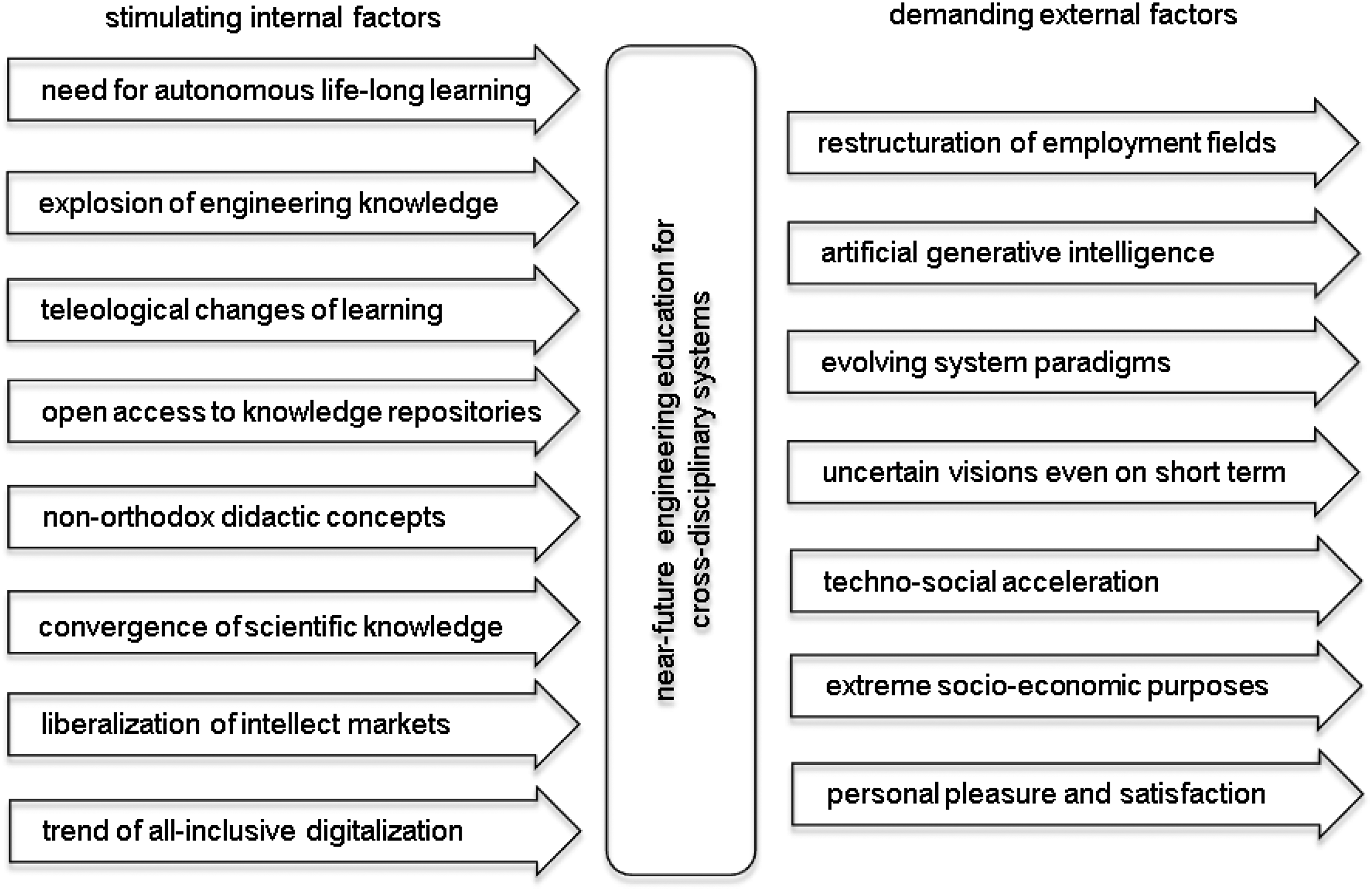
Factors Pushing or Pulling the Development of NG-EE.
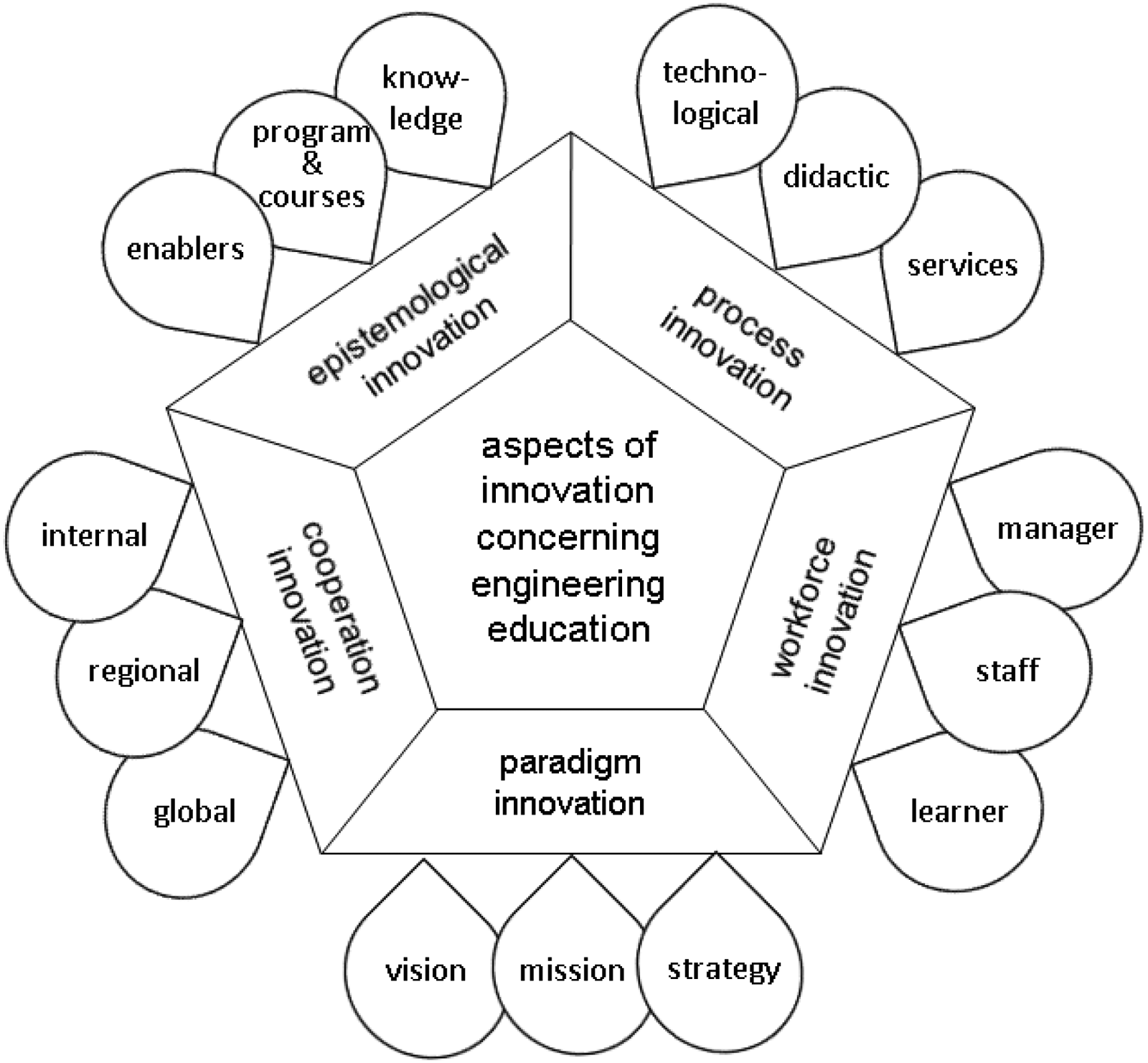
Aspects and Target Areas of Engineering Education Innovation.
Finding an innovative solution for NG-EE needs critical consideration and handling of all research, development, and deployment issues. The first step toward this end is concurrently addressing the internal factors and the external factors shown in Figure 3. The internal factors are typically encouraging, while the external factors are demanding. They, together, create a kind of push-and-pull situation that contributes to the problematics of innovative engineering education. The push and the pull create ‘opposite forces’. To eliminate these, they need to be streamlined. In practice, it necessitates the development of a tailored strategy that first sorts out the challenges associated with the external factors, and, afterwards, exploits the potentials offered by the internal factors. To arrive at a holistic solution, a kind of metamorphosis of the current engineering education is deemed necessary (Ahmad et al., 2023).
Based on the above considerations, this article proposes to handle NG-EE as a large-scale, domain-dependent, multi-faceted, and post-disciplinary problematics that has been jointly induced by technological, industrial, social, and demographic trends and factors. The above-mentioned metamorphosis of engineering education must acknowledge the necessity of moving beyond traditional unidisciplinarily oriented education and equipping learners with crossdisciplinary, postdisciplinary, and transdisciplinary knowledge and competence profiles. Ertas et al. (2000) called attention to the consequences of neglecting the development of the abilities of holistic systems thinking and the lack of involvement in pluridisciplinary fundamentals and approaches in engineering educational courses. To avoid these, different institutional policies and pedagogical practices have been conceptualized and operationalized. However, their validation and consolidation in practice still need more time (González-Pérez & Ramírez-Montoya, 2022). Emphasizing systems thinking is important to transcend disciplinary boundaries, support viewing subjects and topics holistically, integrate knowledge into a consistent framework, and apply ‘metaphorical’ reasoning to invent new applications.
Also, there is an influential systems engineering issue to take into account. Its essence is as follows: Pluridisciplinary engineering education programs (e.g., mechatronic systems and Internet of things) typically present next-generation systems as off-springs of the traditional knowledge domains (i.e., a mixture of disciplines). However, they usually do not reach that level of epistemological holism in which the technological manifestation, problem-solving functionality, embedding environments, and stakeholder relationships of the next-generation systems could be addressed holistically (Liu & Tran, 2022). On the other hand, systems-focused education programs and courses need to be driven by an objective and realistic vision of near-future systems. In addition to the complexity, heterogeneity, complicatedness, autonomy, self-operations, evolution, and services, they should also be sensitive to the interaction, embedding, and sustainability issues. Constructive courses in engineering design typically follow the principles associated with the CDIO (conceive-design-implement-operate) educational framework. The programs and courses should also let the learners see the evolution of the outcome of engineering design as (i) advanced machines, (ii) integrated systems, (iii) intellectualized actors, and, probably in the farther future, (iv) intelligent companions (Kuo et al., 2021).
Systems-focused educational programs have existed for at least fifty years and have become extremely varied. Their heterogeneity is difficult to reduce because they (i) address the complete spectrum of advanced machines and integrated systems, (ii) have been set up under different scientific, technological, social, industrial, business, etc. conditions, (iii) assume different competencies and personal competence profiles, and (iv) fulfil different practical expectations in specific contexts. Crossdisciplinarity, postdisciplinarity, and transdisciplinarity imply the need for revisiting the fundamentals of engineering education and asking about (i) the new objectives (why to learn?), (ii) the novel contents (what to learn?), and (iii) the new approaches (how to learn?). While the demand and necessity of integrating academic disciplines in engineering education is a must, it has turned out to be a challenging pedagogical problem. The computerization and informatization targeted by Industry 4.0/Society 4.0, and the intelligentization and autonomization sought by Industry 5.0/Society 5.0 place the trinity of engineering education into a radically new context (Mohd-Yusof et al., 2015). Hardly any retrospectively or intuitively formulated concept can offer a complete solution for a new triplet of objective, content, and approach.
What Are the Currently Typical Forms of Engineering Education?
Over the years, many pedagogical and didactic approaches have been developed. These are visually presented in Figure 5. Based on this, one may argue that we have a sufficiently wide choice of approaches to engineering education. The currently typical forms of engineering education include approaches such as instructional, explorative/experimental, project-based, competence-driven, team/collective-oriented, practice-placed, design-centred, virtual reality-aided, online/communicative, or search/prompting guided approaches. To complement these, the idea of experience-oriented education has popped up recently. The widely studied but much less practiced blended learning, autonomous learning (Gupta & Gupta, 2023), and life-long learning approaches are often questioned due to their deinstitutionalizing, responsibility transfer, methodologically under-defined, and uncertain quality management and accreditation nature. At the same time, they seem to have a lot of unexploited potential – a fact that begs for further intense research and practical experimentation, as well as changes in the mental models of academic educators and practical coaches. Thus, it can also be argued that we can address the overwhelming majority of current requirements and expectations by purposefully combining them. This has been the slogan of blended learning. However, it is debated whether the historically evolved forms of education can also fulfil the fabric of the dynamically emerging objectives and requirements of the near future. We have to think of issues such as knowledge explosion, technological heterogeneity, dynamic employment, and the impact of artificial intelligence.
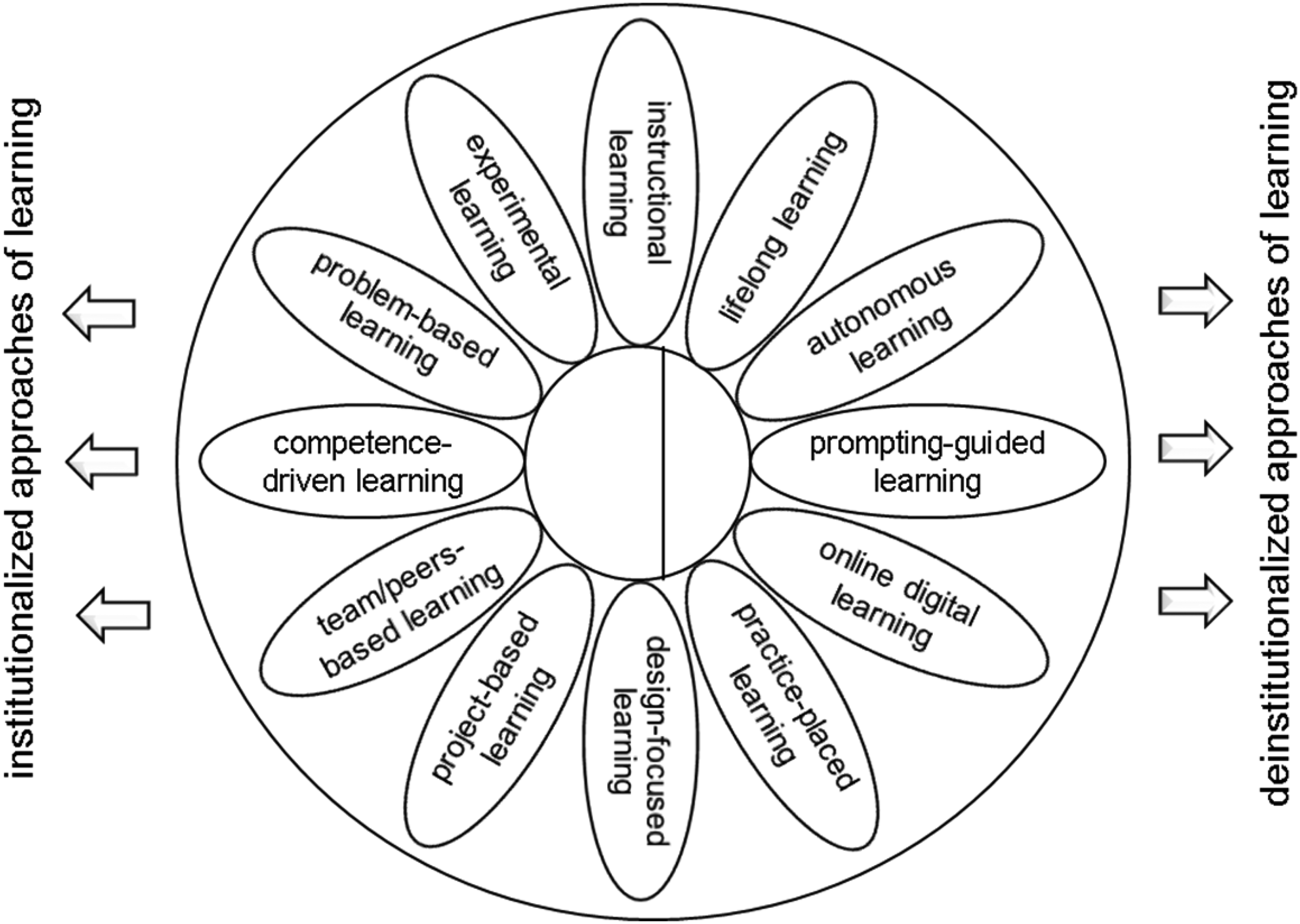
The Current Mai Forms of Engineering Education.
Given the latter, the concept of a partially deinstitutionalized, partially self-managed online education emerged some two decades ago. Referred to as massive open online courses (MOOCs), this concept has been seen over a decade-long period not only as a possibility for educating over the walls of the universities but also as a new solution for learner interest-driven and multi-institution-based completion of graduation requirements (Kim, 2016). Therefore, it has been a much-trumpeted push for new academic business models (Burd et al., 2015). It is a fact that the MOOCs model of higher education can offer freely available, online, thematic content to anyone who intends to study these over the internet, with or without end tests. Learners have access to the course sites and can learn by themselves, in an unstructured manner, benefiting from the unlimited access from across the globe. Based on their objectives or specific interests, they can choose from various topics freely. In addition, they can earn certificates and diplomas as they work through online courses after registration at some academic institutions. However, recent studies report that the attitude of learners toward MOOCs is in a period of flux, partly because they only repack what has already been known and partly because individual learning frequently leads to isolated learning in this educational construct (Kinash, 2013). Other concerns regard the low level of encouraging collaborative creativity and context-driven collective innovation (Yang, 2015).
Another innovative didactic approach to open distance learning is autonomous learning. It starts from the valid observation that learning can never stop in the age of knowledge economy and innovation society (Gupta & Gupta, 2023). Originally, autonomous learning has been regarded as a new pedagogical concept that supports lifelong learning too (Nunan, 1996). Presuming that the learners are motivated and responsible, it is self-directed learning with minimal or no aid from instructors. It requires the knowledge and experience of the learners concerning how to learn (Masouleh & Jooneghani, 2012). The main issue is to develop learning autonomy (Khan et al., 2022). The learners must take full responsibility for their unique way and goal of learning, but they may seek professional guidance and take advice. It is not yet intensively practiced in systems design and engineering. Some researchers claim that autonomous learning is an attitudinal issue (Nunan, 2014). Therefore, the main question is how to take the learners out of their comfort zone and move fast toward the productivity zone (i.e., how to achieve the largest possible progression) (Figure 6). Systematic planning of autonomous learning includes the following steps: (i) identifying needs, (ii) setting goals, (iii) developing a comprehensive learning scenario, (iv) selecting the resources, (v) choosing learning strategies, (vi) practical task execution, (vii) monitoring progress, (viii) evaluation of results, and (ix) critical reflection on the progress. Learner autonomy is generally linked to the learner's perceived self-efficacy and assumes the development of full competencies (attitude, capability, knowledge, skills, and experiences) (Nowlan, 2008). Eventually, learners must believe in learning autonomy and their ability to pursue and take action successfully.
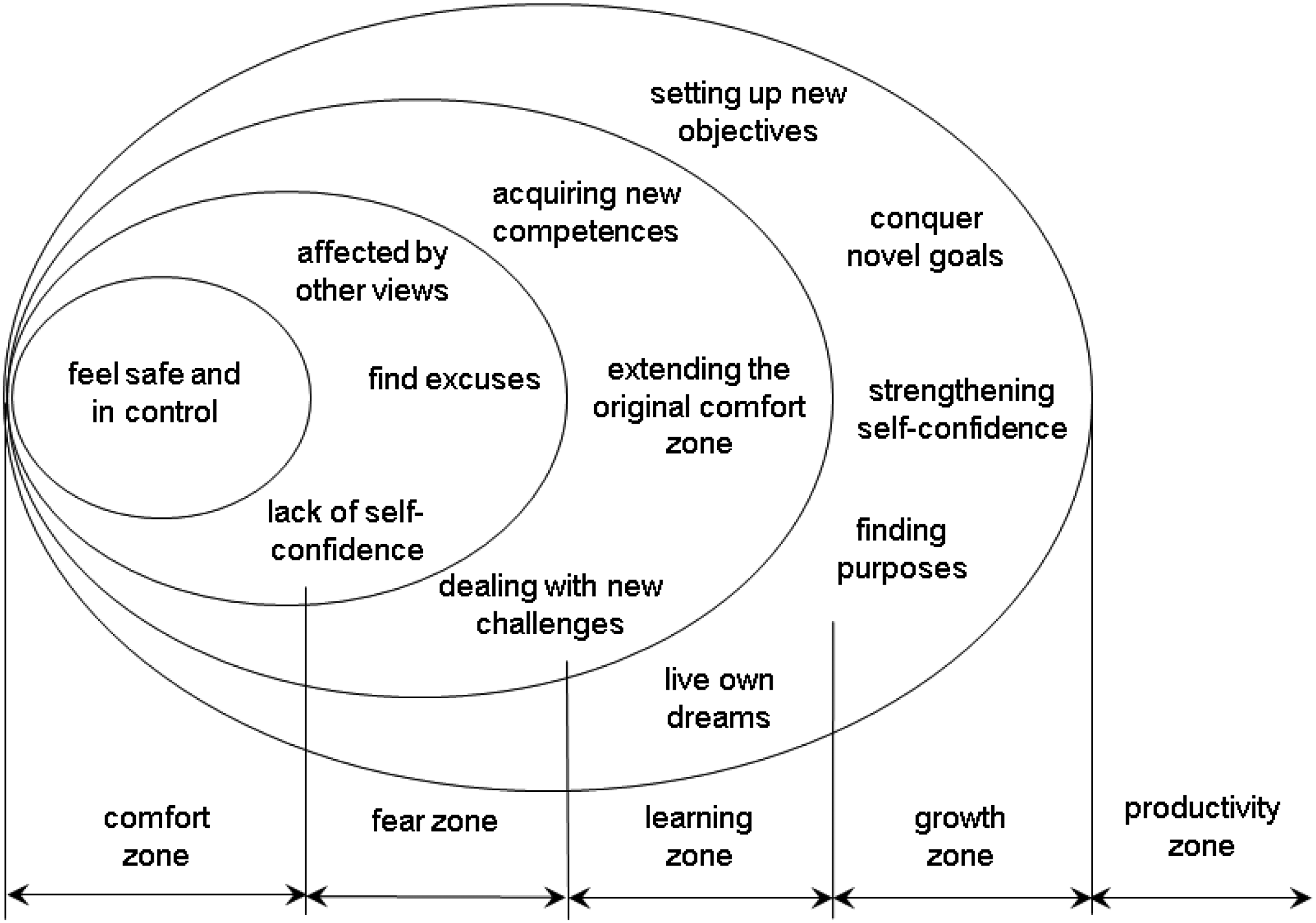
Moving From the Comfort Zone to the Productivity Zone.
Thwe and Kalman (2024) conducted a literature survey to pinpoint the concepts, theories, research methods, and influential trends of lifelong learning explored in educational research in different countries. They found that there are many more theoretical papers (overall frameworks, policies, and concepts) than empirical studies (practical approaches, best practices, and critical findings) for lifelong learning. The most prominent concepts to develop a strong theory of lifelong learning were (i) skills, (ii) competencies, and (iii) types (formal, non-formal, and informal) of lifelong learning. Chakrabarti et al. (2021) proposed a lifelong learning meta-framework where the university, industry, and government collectively participate in and contribute to fostering the concept of “learn to learn” among engineering students and professionals to sustain their employability for lifetimes.
What Can We Regard as an Enabler for Next-Generation Engineering Education?
First, it is wise to state what has been regarded as enablers of engineering education in the literature. Different categories of such (eduware) enablers have been proposed by scientists to keep the landscape of education enablers transparent. A simple categorization of enablers considers (i) epistemological enablers, (ii) methodological enablers, (iii) didactic praxiological enablers, (iv) technological enablers, and (v) emergent enablers (Figure 7). The roots of epistemological enablers are in tested knowledge. This category of enablers supports education by (i) delivering the proper knowledge contents and structures, (ii) influencing the mental and thinking models by cognitive processing of knowledge, (iii) analytic evaluation knowledge based on the principles of reductionism, and (iv) facilitating knowledge synthesis based on the principles of holism. Epistemological enablers also allow us to find the proper way of designing the contents of engineering programs and courses. The most significant ones are as follows:
consideration of the general trends of evolution combination of bottom-up and top-down content delivery striving for pluridisciplinary course contents making sustainability as the major guiding principle focusing on soft skills for cross-cultural collaboration using simulation extensively to present complex systems prioritizing creativity, innovation, and application by assessment models fostering a balance of knowing what and knowing how
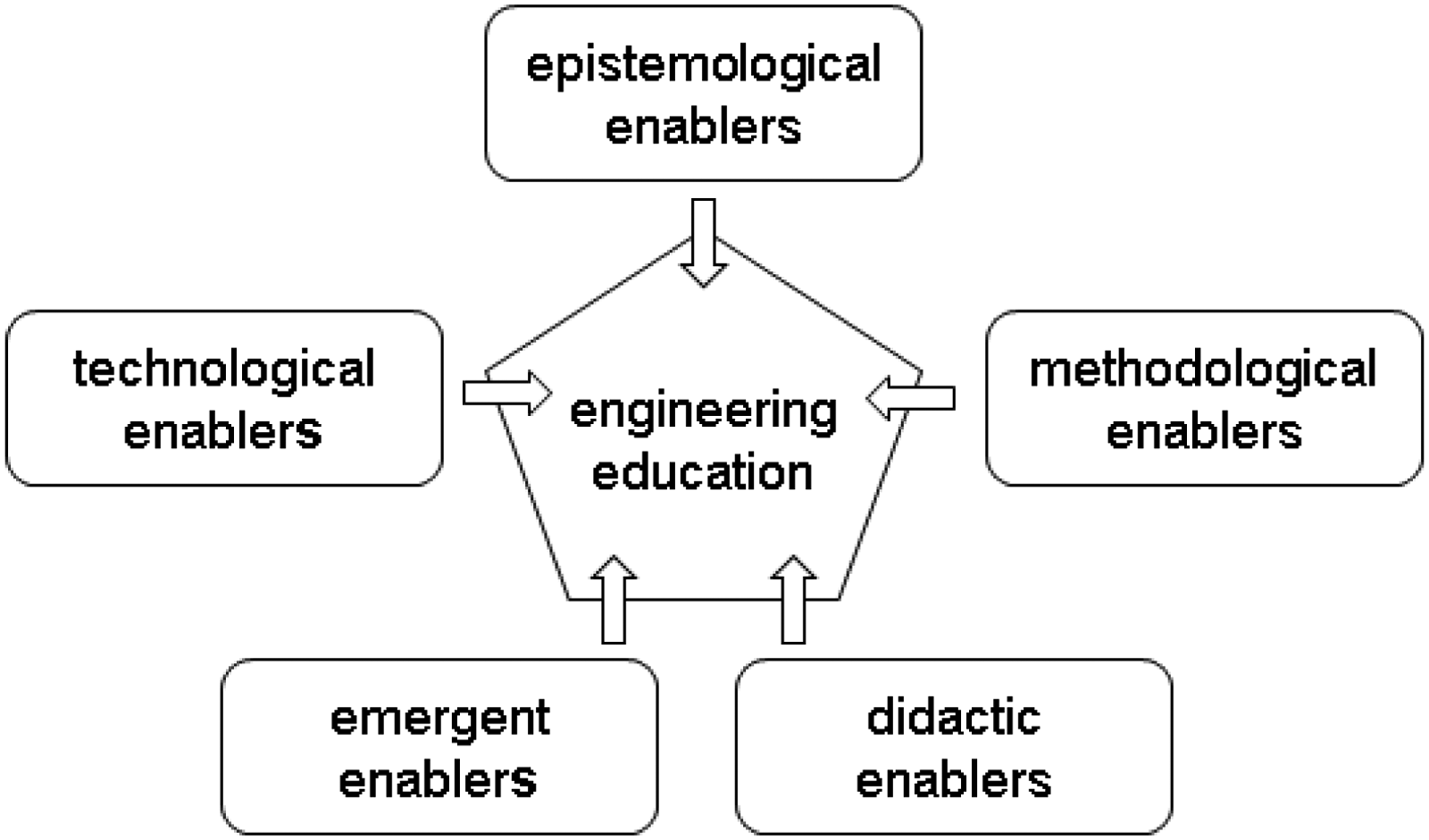
Categorization of Enablers.
Methodological enablers help organize effective learning processes, access to knowledge, and the inclusion of tools in the learning processes. The most frequently proposed ones in the literature are as follows:
building robust fundamentals for using cognitive tools holistic treatment of hardware, software, cyberware, and brainware practicing combined systems-design thinking inclusion of research methodology and practice inclusion of real-life cooperative projects training in data-driven decision-making fostering holistic problem-solving skills enforcing reflexive practice by peers and stakeholders
Didactics is primarily concerned with understanding the forms of learning, their purposeful combinations, and possible near-future approaches. It also deals with the analysis of intra-mural and extra-mural educational arrangements and their connections. The didactical enablers are, on the one hand, facilitators of the daily educational practice, and, on the other hand, are general norms through which the activities of teaching-learning-evaluating cycles happen in practice. In addition to the traditional ones (Marius-Costel, 2010), the following ones can be considered as effective didactical enablers in the case of NG-EE:
stimulation of active participation by gratification and rewarding familiarization with the principles of autonomous learning introduction of lifelong learning models and strategies facilitating the realization of personal learning objectives developing dynamically configurable programs and courses stimulation of active and experiential learning industry-academia partnerships for practical exposure establishing research labs, maker spaces, and innovation hubs encouraging and financing student-led startups
The broad category of technological enablers of engineering education includes commercial or proprietary tools, educational platforms, and digital environments that (i) support the organization and management of learning processes, (ii) provide regulated access to course contents and personal information, (iii) enhance the learning experience and foster competence development. Without striving for completeness, the most useful ones are:
Learning process management systems and platforms such as LearnUpon, Docebo, Cornerstone, Moodle, Canvas, and Blackboard Learning content management systems and tools (online course platforms), such as edX, Udemy, Coursera, Joomla, WordPress, Drupal, Kahoot, Quizizz, etc. Online real-time communication and collaboration tools like Teams, Slack, and Workspace Engineering modelling, visualization, analysis, simulation, and optimization software tools such as CAD, CAM, CAPP, FEM, Matlab, Canva, Prezi, etc. Personal and immersive virtual and augmented reality environments, such as HoloLens, Oculus, Labster, MetaVerse, iLabs, and so forth. Data analytics and artificial intelligence packages and tools (MatLab, Tableau, Power BI, Python, ML, Chat-Box, Grammarly, etc. Cloud computing platforms and repositories, such as MS Azure, Google Cloud, Amazon Web Services, MS OneDrive, etc. Digital electronics, robotics, and mechatronics kits, such as Raspberry Pi, Arduino, Espc DevKitC, SparkFun Thing Plus, Mindstorms, MaixDuino D.B., VEX Robotics. Seeed Studio, Teensy, etc. Physical prototyping and 3D/4D printing facilities and systems Software development and prototyping platforms like GitHub, Replit, Visual Studio, PyCharm, or HackerRank
By leveraging the above enablers, NG-EE can providee professionals for industry and society who are not only technically skilled but also capable of tackling the complexities accompanying the rapidly evolving fields of engineering (Fomunyam, 2019). Fomunyam (2020) also stated that research must be an integral part of engineering education all over the world. He argues that the innovation essential to the growth of national economies would hardly be possible without widely based engineering research.
What Can We Expect from the Offerings of Generative Artificial Intelligence Tools?
This question is difficult to answer since the notion of generative artificial intelligence emerged only a few years ago, and the related technologies are still at a low level of their assumable maturity. As sketched, among others, by Mohammed and Skibniewski (2023), the world is again in the era of multiple intertwined (industry, society, education, etc.) transformations due to the emergent supercomputing solutions, the everything permeating revival of artificial intelligence, the new ways of empowering the human workforce, to mention just a few. The bottom line is that the relationship between the generative artificial intelligence (GenAI) tools and the NG-EE as a whole cannot be predicted straightforwardly. At this moment, competing positivist, realist, pessimistic, and sceptic positions are taken by experts (Qadir, 2023). The positivists expect that GenAI can significantly extend human perceptive, cognitive, and behavioural abilities and offer new opportunities for customized learning and improved student outcomes. However, they do not deny that it goes together with many legal, ethical, motivational, and other unsolved issues. These latter imply that a new mind-set is strongly needed both on the side of educators and on the side of learners as moving toward NG-EE (Chan & Tsi, 2023). Important is that we must first develop a proper understanding of this part of the problematics, instead of pretending that its entirety could be addressed by having some partial solutions.
Many authors have referred to the penetration of artificial intelligence in education as the AI revolution and attempted to address the implied changes. One of the most disruptive technologies is deemed to be GenAI which has indeed brought in new opportunities (Mosly, 2024), but also caused a huge turmoil and confusion during the last two years (Aithal & Aithal, 2023). Although many believe that GenAI may eventually replace teachers, the findings of Chan and Tsi (2024) suggest that current implementations of GenAI as dedicated facilitators of personalized education do not possess those unique qualities, for instance, critical thinking and social-emotional competencies, which would make them unconditionally acceptable and irreplaceable. Costa et al., (2024) completed a study to explore how psychology instructors utilize AI tools in their daily practice. They found four goals of using such tools: (i) preparing students for the workforce, (ii) enhancing academic integrity, (iii) aligning with institutional goals, and (iv) addressing potential challenges. While they focused on fostering critical thinking, supporting research and writing, and promoting ethical AI use, they came across unresolved issues such as inconsistent AI policies, varied student proficiency, ethical concerns, and difficulties with prompt engineering.
One of the heaviest dilemmas of current-day engineering education is whether educators ought to prevent students from using AI means, or whether learners ought to be requested and trained in how to use AI efficiently and ethically (Chui et al., 2018). Many publications elaborate on the importance of the consideration and scrutiny of the ethical implications and challenges tied to the incorporation of GenAI in education. A recent study by Alberd et al. (2024) attempted to explore how GenAI can revolutionize the traditional pedagogical approach by enabling the development of interactive lab experiences, simulations, and practical exercises to integrate and create a greater understanding of AI capabilities. As critical hindrances of incorporating GenAI in engineering education they referred to (i) the lack of ethical guidelines, (ii) the issues of transparency and accountability, and (iii) the danger of plagiarism and misuse of knowledge. Notwithstanding, the authors claim that harnessing GenAI in engineering education has the potential to revolutionize the way students learn in addition to preparing them to leverage engineering knowledge and skills for domain-dependent engineering innovation. It is the other side of the coin what the learners take away (learn) from the outcome.
Slade et al. (2024) observed that the literature highlights versatile applications of GenAI technologies in education from facilitating research to acting as a tutor. They argued that GenAI tools can be integrated as supports rather than substitutes for learning. They, however, warned that these technologies not only offer unparalleled opportunities for instructional support and personalized learning but also introduce challenges related to academic integrity and personal differences. Consequently, there is a need to foster AI-proof assignments and, eventually, an ethical framework within which students can explore GenAI capabilities. They emphasize the necessity that faculty members familiarize themselves with the variety of GenAI tools but their overview also suggests that it is a new challenge to learn the mushrooming number of tools that have both overlapping and/or complementing functionalities. Their suggestion is to develop formal institutional policies (campus-wide recommendations) on GenAI/ANI use and include a syllabus statement making expectations of GenAI use transparent. On the one hand, in line with the prohibition strategies of using AI, various AI use-detection programs like Turnitin (Batane, 2010), Quillbot (Fitria, 2022), and ZeroGPT (Liu et al., 2024) have been developed. On the other hand, they are frequently reported to be unreliable and not considered meaningful means. However, neither returning to oral nor pen-and-paper exams is a solution when the proliferation of AI means and their use by others is practically irresistible.
The above-mentioned paper by Alberd et al. (2024) also deals with the strategical employment of GenAI techniques in their “Introduction to Engineering and Engineering Technology” course to explore opportunities for the enhancement of both the depth and quality of student work and significantly supplement their research efforts. To assess the results of stimulating critical thinking, they compared the students’ genuine ideas with those generated by the GenAI tool. They claim that this (i) encouraged the students to evaluate the advantages and limitations of incorporating GenAI into the ideation process, (ii) fostered a deeper understanding of the role of GenAI in creativity, (iii) activated their existing knowledge and made it possible to compare it with the independent knowledge, and (iv) shed light on what is to be known by them.
Lastly, let me share my personal view here. My roughly two-year-long experience with testing GenAI tools is that anything that current GenAI mechanisms can produce does not go beyond what is typical for popular science or professional textbook levels. Their insightfulness, scholarly novelty, prognostication power, and academic significance cannot be matched with the trend-setting knowledge of domain experts. Thus, they may be informative for the general public but do not contribute new knowledge to that possessed by front-line scientists. Due to the retrospective nature, the support of scholarly projection, prediction, envisioning, and inception is largely restricted and delimited. The question intended to explore what distinguished scientists can share about the specific outcomes of recent deep-going analytic and comparative studies, as opposed to interlinked contents of Internet repositories.
What is the New Mind-Set Strongly Needed for Next-Generation Engineering Education?
If Industry 5.0 and Society 5.0 target a synergistic relation between humans and systems, then this should be properly considered in Education 5.0 (Lantada, 2020). If it is true that the growing level of intellectualization, socialization, and personalization can place systems into completely different social and educational contexts, then it should also receive sufficient attention. A new challenge seems to be emerging because of the changing ontology and relationship of humans and systems from the perspective of NG-EE. Therefore, the learning, training, and teaching potential of humans and systems should be revisited and rethought holistically. Accordingly, epistemological and methodological harmonization and new reasoning frameworks are necessary. Toward these objectives, many authors have emphasized the importance of developing systems thinking to properly understand the existing situations and the necessary changes concerning NG-EE (King & Frick, 1999).
First, we must understand the evolutionary megatrends of engineering systems (Roco, 2002). This is important for the reason the typical lengths of the paradigmatic shift and internal development periods of engineered systems have shortened from a century or a half-century (that was typical in the age of the second and third industrial revolutions) to a couple of decades or even shorter periods. Let us interpret the conceivable megatrends based on Figure 8. The outer shell of the figure shows the five inherent categories of systems (i) unanimated natural systems (a.k.a. physical systems), (ii) animated natural systems (a.k.a. biological systems), (iii) social systems, (iv) engineered system, and (v) technical systems (a.k.a. monodisciplinary engineered systems). Without striving for exhaustiveness, there are typical examples of the manifestations of these categories of systems shown in Figure 8.
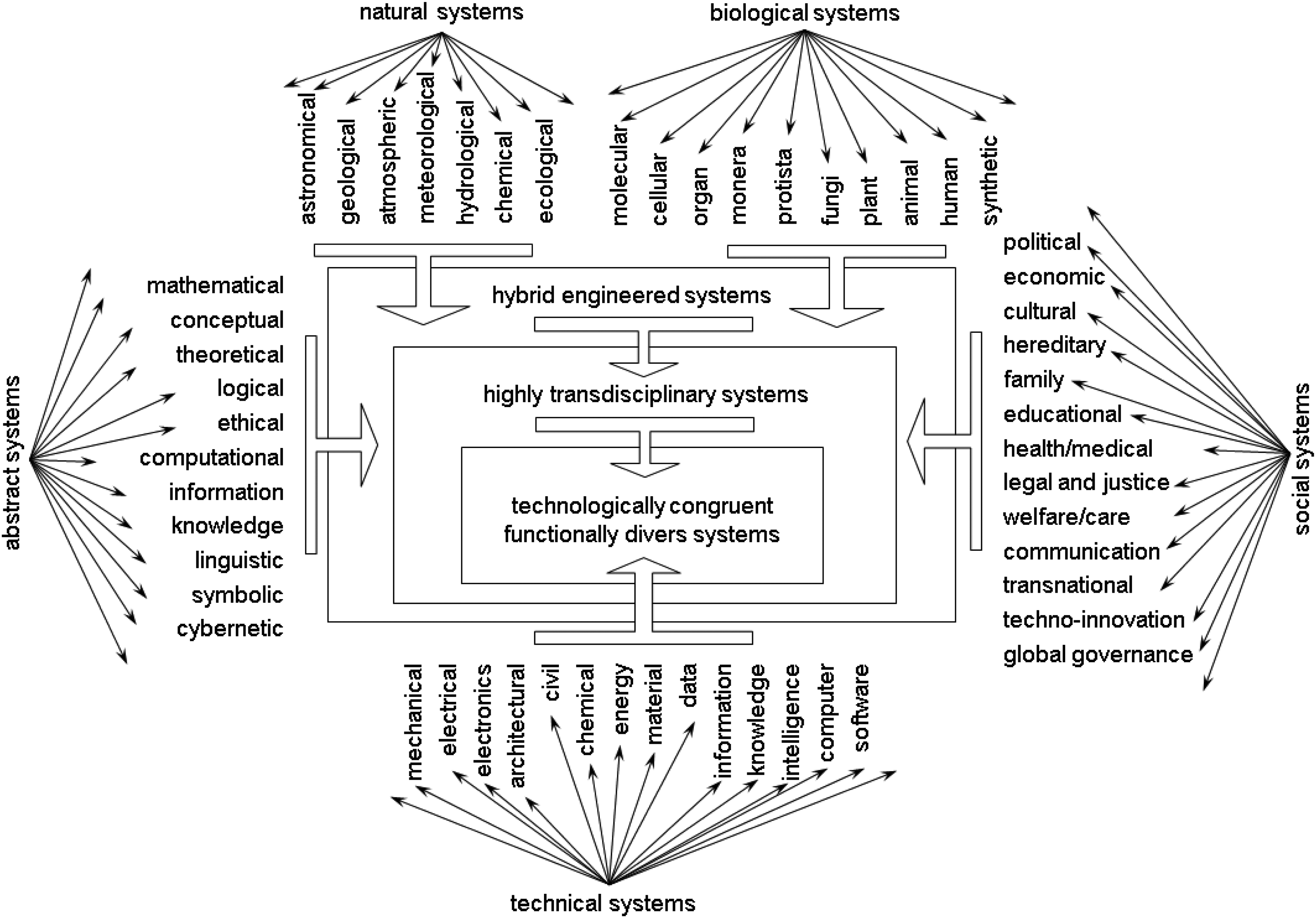
Shifts of System Engineering Paradigms Influencing the Evolution of Engineered Systems.
Driven by scientific convergence and technological integration, new multidisciplinary and interdisciplinary domains of interests and genres of systems emerged at the end of the last century (N.A.E., 2004). Representatives for the outcomes (products) of the first stage of convergence (actually blending) of these disciplines are such as classical mechatronics systems, socio-technical systems, digital computation systems, socio-ecological systems, embedded systems, cyber-physical systems, and Internet of things systems. These systems have been called ‘hybrid engineered systems’. In the second stage of convergence and integration, these systems technologically and architecturally have approached each other, but also incorporated knowledge and technologies that made their intellectualization, socialization, and personalization possible, This genre of systems can be dubbed as ‘highly transdisciplinary systems’ because of their simultaneous reliance on scientific knowledge and non-scientific knowledge. Representative examples are advanced (knowledge-intensive mechatronics systems, intellectualized cyber-physical-social-human systems, socio-technical-cognitive-ecological systems, or generative artificial intelligence systems (Lau & Haugh, 2018).
It can be assumed that the megatrend of convergence and merging will continue, accompanied by new divergences and branching out of brand-new disciplinary domains (Hessel, 2014). In light of this practice-evidenced conjecture, it can be expected that the overall technological resemblance of the above systems will be so high that they will not be told based on their paradigmatic features and technological constituents anymore (Kowch, 2019). The only differences in their design, implementation, and deployment will be that are rooted in their application purpose, context, and operation. These will be leveraged by their system-level functionality, or in other words, by the whole of their primary and lower-level functions. This genre of paradigmatically overlapping systems can be referred to as ‘technologically congruent functionally divers (TCFD) systems. Seeing the current acceleration, it can be forecasted that TCFD systems will appear in the typically 30–40 years of the professional life of current and near-future learners, therefore this megatrend and the different genres of engineered systems of high crossdisciplinary and postdisciplinary complexity must be taken into consideration at the conceptualization and development of long-term engineering education programs. This should be reflected in the whole lifecycle of such systems.
A second important consideration is that a huge shift (actually a dominant transferal) has booted up in terms of the teleology (orientation, objectives, subjects, stakeholders, etc.) of education. Let us discuss and explain this issue with the help of Figure 9. This figure shows that, in addition to humans, systems (not specifically education systems, though included) should also be considered as both subjects and objects of education. The evolution of intellectualized, socialized, and personalized systems creates brand-new educational relationships, in addition to the conventional ones (Holter & El-Assady, 2024).
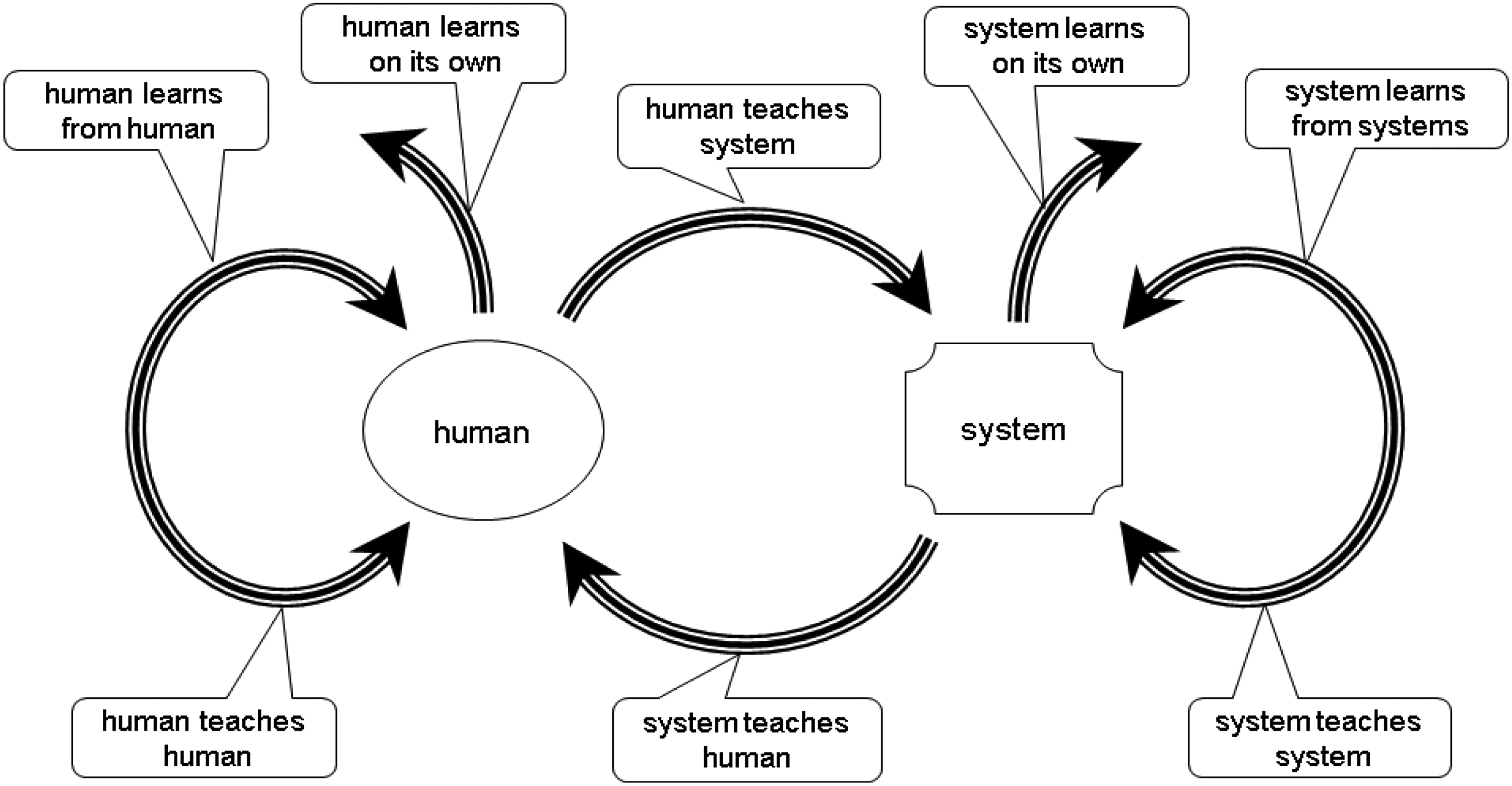
Educational Relations of Humans and Systems.
Everything cannot be taught. Presumably, this remains an important guiding principle in NG-EE. The growing complexities, heterogeneities, and dependencies must be handled in one way or another, systematically rather than intuitively or autarchic manner. This also needs a new mind-set which is supposed to be aided by a combination of the knowledge of complexity science (Morcol, 2001) and the potential of dedicated artificial intelligence mechanisms such as large action models (LAM) (Zhang et al., 2024).
Complexity science is revolutionizing the view on the natural and created worlds, and their coexistence (Anderson, 1999). Instead of the classical - linear - cause-effect view, it assumes a holistic view that interprets systems as the results of the operations of their internal mechanisms and evolution and the interaction with the mechanisms and evolution of its external environment, exhibiting dynamic, nonlinear, and adaptive patterns (Allen, 2001). In the context of engineering education as a whole, complexity science helps reframe our view of entirety which can be only partially understood using traditional reductionist reasoning and considering local contexts (Homer-Dixon, 2011). A recognized issue is the plannability of education which is implied by the fact that even the near future is not as predictable as it would be needed for good planning due to the accelerated changes and the growing complexity. It is also observable that the complex bidirectional interface between engineering education and the larger technological and societal contexts in which it is embedded rapidly changes over time (Cheville, 2014).
As a means of screening organizational performance, complexity science correlates the concerned organization construct with the vision, mission, and objective and tries to explore and avoid conflicts by restructuring. Second, it considers the characteristics and interdependences of the processes to create a transparent map of their straightforwardness or complicatedness. Third, it considers the contents (the objects) of the work and compares it with state-of-the-art developments or other referential models. Fourth, it exposes the data, information, and knowledge streams associated with the organization, processes, and contents. Fifth, it accounts for the actors, and their roles and behaviors, summing up the available resources, competencies, and qualities, including individual choices and self-determination. Eventually, complexity science seeks to identify the patterns of relationships within the above constituents, how they are sustained, how they self-organize, and how outcomes emerge depending on the relationships and contexts rather than merely on the constituents. It can place engineering education into the position of a complex adaptive system and create a conceptual framework that helps explore both the probabilities and the possibilities from the perspective of the near future.
Large action models (LAM) are being developed to understand complex goals communicated with natural language, and they will be able to plan a flow of actions and determine autonomous actions that are needed to achieve the goals (Schmied et al., 2024). Though their development is still in a premature state, many experts await an explosion similar to what has happened with other generative artificial intelligence tools - but there are also concerns (Lambert & Stevens, 2024). LAM complements language understanding with procedural logic and event-based reasoning to plan task scenarios (Ma et al., 2024). These may include educational actions that are needed for the optimal achievement of the goals of education in varying contexts. It means that personalized action plans can be developed according to individual needs. Based on combinations of deep learning and reinforcement learning mechanisms, they enhance their decision-making capabilities over time and provide educated predictions about complex activity scenarios and their future outcomes. They will probably not suffer from the lack of ability to generate new concepts because they can synthesize complex processes from elementary action entities according to goals and constraints on various levels. This is a cornerstone of the emerging field of computational process science. Being highly tailored to educational challenges, domain-specific LAM agents may even collaborate with specialized LAM agents, address niche problems, and continually improve plans, as expected by researchers (Huang et al., 2024b). Implicit reasoning and abstraction in contexts are indispensable cognitive resources for such agents.
Overall Reflections, Conclusions, and Propositions
The book compiled by the Committee of the National Academy of Engineering on the Engineer of 2020 stated that “engineering education must avoid the cliché of teaching more and more about less and less until it teaches everything about nothing. Addressing this problem may involve reconsideration of the basic structure of engineering departments and the infrastructure for evaluating the performance of professors as much as it does selecting the coursework students should be taught.”
The future goes beyond disciplinary divides (Lazar et al., 2023). The mega-trends, recognized as the convergence of scientific knowledge, the integration of systems technologies, and the move toward complex systems, are forcing educational institutions to change from a unidisciplinary view to a pluridisciplinary view and address the challenges that originate in pluridisciplinary education programs and courses.
Innovation in engineering education is a complicated matter and differs from the standard managing innovation models (Tidd & Bessant, 2009). As the previous sections disclosed, it has (i) knowledge innovation (the offering that an educational institute/program creates and disseminates, (ii) process innovation (how the offerings and the educational activities are organized, (iii) relation innovation (what and how the internal and external connections are maintained), (iv) paradigm innovation (adaptation of the underlying mental models and conceptual frameworks), and (v) workforce innovation (concerning manager and staff competencies and potentials).
There is an intense diversification in the positions that engineering graduates can take, ranging from engineering researchers to engineering innovators, engineering educators, systems engineers, engineering technologists, and engineering technicians. They need largely different competencies and, thus, largely different (dedicated) educational programs.
Blass and Hayward (2014) focused on the management of educational innovation and presented five scenarios (i) the ‘public academic intellectual’ will become a champion of the MOOC, (ii) leading knowledge creation by research universities, (iii) knowledge creation responsive to societal needs, (iv) involving collaborative partners for local sustainability, and (v) offering alternative ways of employment and education) for the future of higher education underpinned by drivers of funding, the ownership and exploitation of ‘research’, the provision of good ‘teaching’, and the potential missing link of social innovation development. The university can play both a passive and an active role in supporting, sustaining, developing, and promoting innovation in society going forward (Jakovljevic, 2018).
There are several benefits of autonomous learning such as (i) the methodology of how to do it best can be acquired, (ii) it enhances the learner's curiosity and motivation, (iii) leads to more effective and tailored learning, (iv) it provides more opportunities for proficiency, (v) it caters to the individual needs of learners at all levels, and (vi) it has a lasting influence on a socialized manner. At the same time, one must not forget about at least two significant disadvantages, namely, it may (i) contribute to social isolation and virtualization, and (ii) may not fit equally well for each individual. The most important feature of autonomous learning is that it offers a methodological basis for life-long learning.
There is a need for widely-based longitudinal studies that investigate the dynamicity (monotonicity) of the related trends and offer a reliable prognosis on the perspectives. This especially applies to the latest technologies and tools of artificial intelligence, which is permeating engineering education too fast and in an incommensurable manner. The integration of AI into engineering education seems to be a strong process. It goes together with the emergence of both revolutionary possibilities and never-experienced challenges since it has its influence on the perceptive, cognitive, and attentive human domains. It supports the learners to move toward autonomous and life-long learning, but it also needs an insightful and disciplined attitude to use it as a trainer or a peer. Other global challenges include addressing ethical, legislative, and inclusion issues.
There is a tension between the demand for integrated scientific, technological, social, and business knowledge and the hierarchical organization (institutional structure) of universities based on faculties, departments, sections, teams, and individuals. Moving toward transdisciplinary knowledge needs and supradisciplinary research approaches, this is becoming a painfully hot issue. Where does convergence go? Emergence of technologically congruent functionally diverse (TCFD) engineered systems. A typical example is the intertwining strands of the evolution of knowledge-intensive mechatronics systems and intellectualized cyber-physical-social-human systems that show a huge overlap from a technological perspective but are diverse from the viewpoint of functionality. TCFDs can most probably be discussed best in a top-down manner and learned through holistic educational approaches.
Footnotes
Funding
The author received no financial support for the research, authorship, and/or publication of this article.
Declaration of Conflicting Interests
The author declared no potential conflicts of interest with respect to the research, authorship, and/or publication of this article.