




Abstract
Background and Aim:
In order to achieve improved global health, environmental health risks that could affect this goal have to be reduced as much as possible. This review thus aimed at determining the exposure levels, health risk assessments, and public health effects of polycyclic aromatic hydrocarbons (PAHs) in sub-Saharan Africa (SSA). This review was developed using guidelines provided for Preferred Reporting Items for Systematic Review and Meta-Analysis. Search was done on Google Scholar, Scopus, and PubMed databases. A study was included if it was carried out in SSA from 2000 to 2020 and written in English language. Fifty-two studies were finally retained and used for the review. Extracted data included the concentrations of 8 selected priority PAHs (including the PAHs prioritized for their carcinogenic potentials), their sources and reported outcomes. In SSA, PAHs exposure has been linked to the use of unprocessed biomass fuels for cooking, release of poorly treated petrochemical effluents into water bodies, and so on. Related public health effects included the occurrence of respiratory, cardiovascular abnormalities, and so on. Others included destruction of natural biodiversity in soil, water, and atmospheric environmental media. Health risk assessments also buttressed the occurrence of these public health effects of PAHs. In SSA, the region is exposed to a substantial amount of PAHs pollution which is associated with deleterious environmental and epidemiological effects. The adoption of healthier forms of energy, a change of attitude to one that favors environmental sustainability, and proper enforcement of environmental regulations are, however, necessary for attaining environmental sanity in SSA.
Keywords
Introduction
For a number of years now, the problem associated with environmental pollution caused by the release of polycyclic aromatic hydrocarbons (PAHs) into the environment has been worsened by a number of other anthropogenic activities. These include the increasing levels of artisanal refining activities for reasons of survival and financial gain, intense oil exploration, 1 -4 the use of leaded petrol, and poor attitude toward dumping and burning of toxic waste. 5 Others include the occurrence of forest fires, 6 wood combustion, 7 local food processing practices, for example, in smoked fish, 8,9 emissions from combustion engines, and the overdependence on fossil fuels. The weak implementation and regulatory enforcement of environmental laws and legislations designed to protect the environment from environmentally deleterious activities, for example, gas flaring have also been implicated. 10 -12 These weak regulatory efforts have been linked with corruption, revenue redistribution in an inefficient manner for political gains, mismanagement, and misappropriation of available resources. These problems have been reported within countries in sub-Saharan Africa (SSA). 13 In Nigeria, these environmentally deleterious activities such as deposition of industrial waste containing harmful petroleum effluents, gas flaring, and so on still go on despite having constitutional basis (eg, section 3 of the “Associated Gas Reinjection Act” of Nigeria) that makes them illegal. 14,15
Many PAHs possess the capacity to be carcinogenic, mutagenic, bioaccumulative, toxic, and persistent in the environment for long periods of time. They have thus come to be regarded as potentially harmful to the environmental and seen as a source of public health concern. 16 -19 Whenever they are released into the environment, they travel long distances due to their persistent nature, accumulate in, and harm plants, animals, and inadvertently humans. 20 -22 Typically, the low-molecular-weight PAHs dissolve in water, and the high-molecular-weight PAHs are adsorbed onto living organisms or particles found in water. 23,24 Examples include benz(a)anthracene, naphthalene, pyrene, dibenz[a, h]anthracene, benzo[k]fluoranthene, and so on. 5,7
In the United Nations Environment Programme report on the Ogoniland environmental assessment, hydrocarbon, and heavy metal levels in the ecosystem including the air, water, and soil were found to be up to 1000 times higher than permissible limits. 12,25,26 In another study conducted in crude oil–polluted Communities in Rivers State, Nigeria, it was reported that the concentrations of tested PAHs including benzo[a]anthracene and chrysene, among other PAHs in food samples exceeded safe limits. Exceeded limits included the European Union (EU) Limit of 0.2 mg/kg and the Department of Petroleum Resources (DPR) intervention limit of 0.01 mg/kg. The inhabitants of these communities were thus likely predisposed to high risk of developing cancers due to long exposure to PAHs through the contaminated food crops.
Oil pollution has been implicated as a potential source of PAHs contamination of the environment with consequent human morbidities. 27 Polycyclic aromatic hydrocarbons have been shown to be made available in various forms as sources of pollution within the SSA region. They have been pinpointed as possible causative agents of neurological disorders, respiratory, cardiovascular, visual, skin, and gastrointestinal diseases. They have also been linked as possible morbidity and mortality risks among under-5 children which is associated with the widespread use of biomass and other fuel types in SSA. 28 Health risks that may arise as a result of exposure to PAHs are dependent on a number of factors including the route, intensity, and duration of exposure. Others include individual susceptibility, age at exposure, gender, and immune system capability, among other factors. 17,29,30 As a result of the rapid accumulation of these compounds in organisms which exceeds their ability to detoxify and excrete them, they tend to gradually bioaccumulate overtime. This bioaccumulative tendency results in the occurrence of pathological mechanisms that distorts homeostatic balance and causes adverse health effects. Aquatic organisms have also been shown to be adversely affected by exposure to PAHs with manifestations of alteration of endocrine functions, DNA damage, and retardation of growth. 31
Review Questions/Objectives
In view of the extent of the pollution caused by PAHs arising from both environmental and occupational exposures in SSA and the extent of damage these hydrocarbons are capable of causing to humans and the environment, 32,33 it is important to have a firm grasp of their public health effects. This review was conducted considering the various individual and population-based susceptibilities present within SSA. These include the unsatisfactory access to quality health care, socioeconomic inequalities, culture, 34 -36 health inequity, and population explosion, 37,38 among others. This review thus desired to answer the questions: what are the various exposures, health risks, and associated public health effects of PAHs in SSA? An important factor that justified conducting this review was the need to identify exposure routes of PAHs peculiar to SSA and how it impacts on public health within the region. This is vital in the generation of modalities, monitoring networks and policies that would be helpful in instituting preventive action necessary for ensuring a safer and healthier environment in the region. It also showed available knowledge gaps regarding PAHs exposure and the associated environmental health impacts which would help in driving future environmental and epidemiologic research. The present review thus presented evidence on PAHs exposure in SSA and the public health effects of these exposures in SSA.
Methods
Criteria for Including Studies in the Review
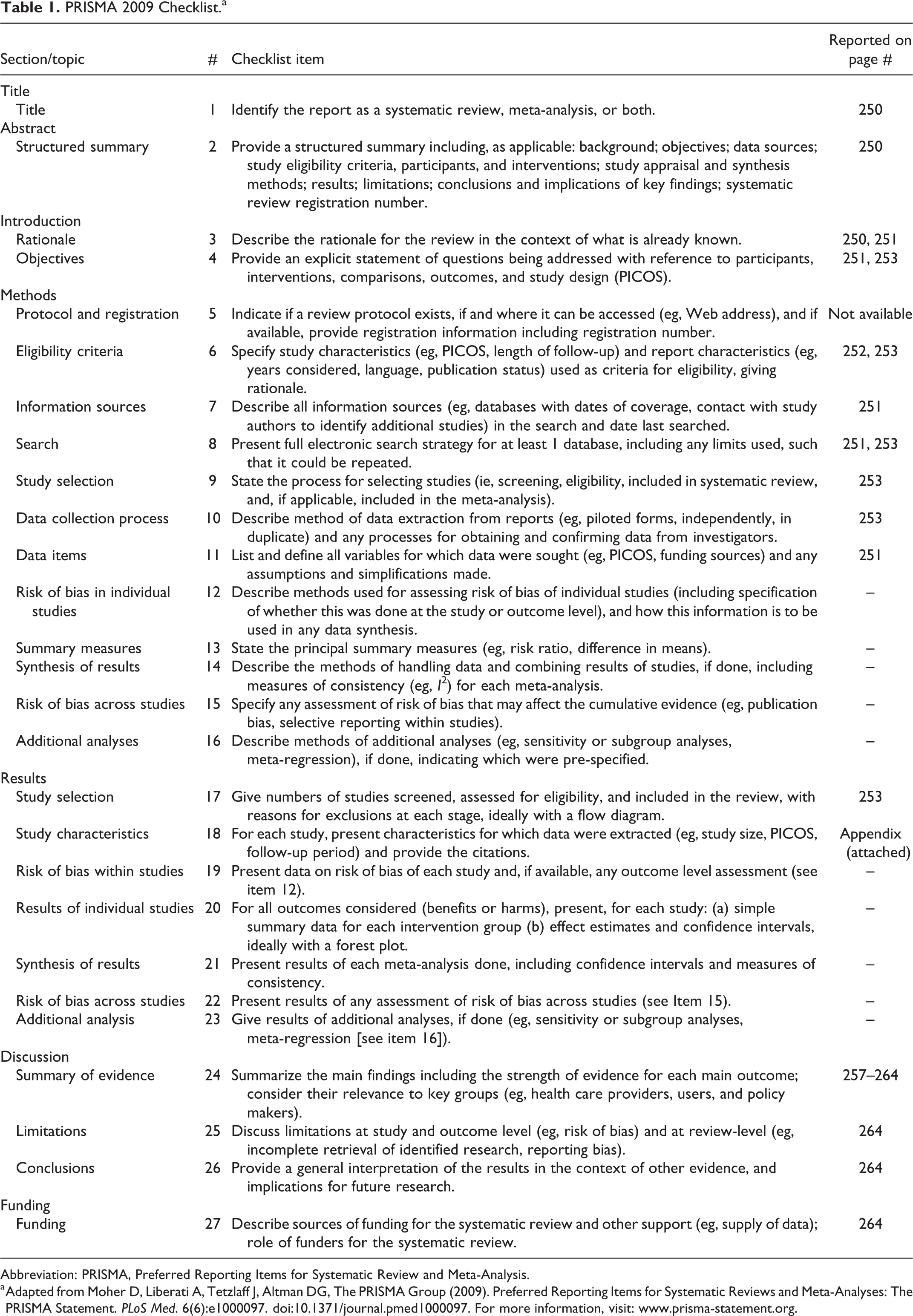
This systematic review was developed based on the guidelines provided for Preferred Reporting Items for Systematic Review and Meta-Analysis (PRISMA). 39 Thus, the PRISMA checklist (Table 1) formed the basis for inclusion of necessary information. Studies included in this review included epidemiological and environmental research that described the exposure, health risk assessment, and public health effects of PAHs in SSA. This included studies involving humans and elements of the environment that are exposed to PAHs contamination. The outcome of interest for the review was the exposure to PAHs, health risk assessments of the effects of these exposures to humans, and the clinical and environmental health effects of PAHs exposures in SSA.
PRISMA 2009 Checklist.a
Abbreviation: PRISMA, Preferred Reporting Items for Systematic Review and Meta-Analysis.
a Adapted from Moher D, Liberati A, Tetzlaff J, Altman DG, The PRISMA Group (2009). Preferred Reporting Items for Systematic Reviews and Meta-Analyses: The PRISMA Statement. PLoS Med. 6(6):e1000097. doi:10.1371/journal.pmed1000097. For more information, visit: www.prisma-statement.org.
Search Strategy
An extensive search for literature was conducted between July 2019 and January 2020 on Scopus, PubMed, and Google Scholar research databases. This search was modified in April 2020 in order to capture more recent literature. The search was done independently in each database, and retrieved literature was pooled afterward. References of studies that were obtained during the databases’ search were also cross-checked for identification of literature that pertained to exposure and public health effects of PAHs in SSA. Also gray literature from conference abstracts and proceedings as well as identification of evidence which have not been submitted for publication was done. A number of keyword combinations were used to retrieve relevant literature from the perused databases. The following MeSH terms were used “Polycyclic Aromatic Hydrocarbons,” “aromatic hydrocarbons,” “soot,” “carbon black,” “black carbon,” “health effects,” “public health effects,” “environmental effects,” “environment effects,” “health risk assessment,” “environmental consequences,” “health consequences.” Articles were retrieved by searches from Scopus (2000-April week 4, 2020), Pubmed (2000-April 25, 2020), and Google Scholar (2000-April week 4, 2020).
Inclusion and Exclusion Criteria
The criteria for selecting studies regarding health outcomes included the study population (children, adults or elderly residing in SSA); exposure of interest (PAHs contamination); study design (epidemiologic studies utilizing cross-sectional, case-control, cohort, or case-crossover designs). The selection of studies for inclusion eligibility for this systematic review was carried out by scanning through the titles of the studies as well as by conducting a detailed review of their abstracts and aspects of the full texts. The addition and omission yardstick was adopted when evaluating the titles, abstracts, and full texts of each study. A study was considered for inclusion if: it was carried out in SSA, it was published in English language, it was published between 2000 and 2020, and it was an epidemiological study. A study was also included if: it described a relationship between PAHs and public health effects, talked about PAHs pollution in SSA, and risk assessment in the environment. When faced with 2 or more reports being published from the same study, only the study with the best assessment of the PAHs was included. All duplicate studies, any study written in a language other than English language or which had a weak precision or was conducted outside SSA without measurements in SSA countries, were excluded. Also, review studies, studies assessing predictors to exposure as well as studies that only assessed exposure to metallic pollutants, were excluded.
Quality of Evidence
Quality of evidence from the retrieved studies was assessed using the approach outlined by the Grading of Recommendations Assessment Development and Evaluation working group. The quality of eligible studies was graded as high, moderate, or low depending on the evaluated quality parameters. Also, the “Strengthening the Reporting of Observational Studies in Epidemiology” tool was used for assessing relevant content and methodology used in each of the retrieved studies. Assessment of the studies was done with questions appropriate for each study design.
Data Extraction and Management
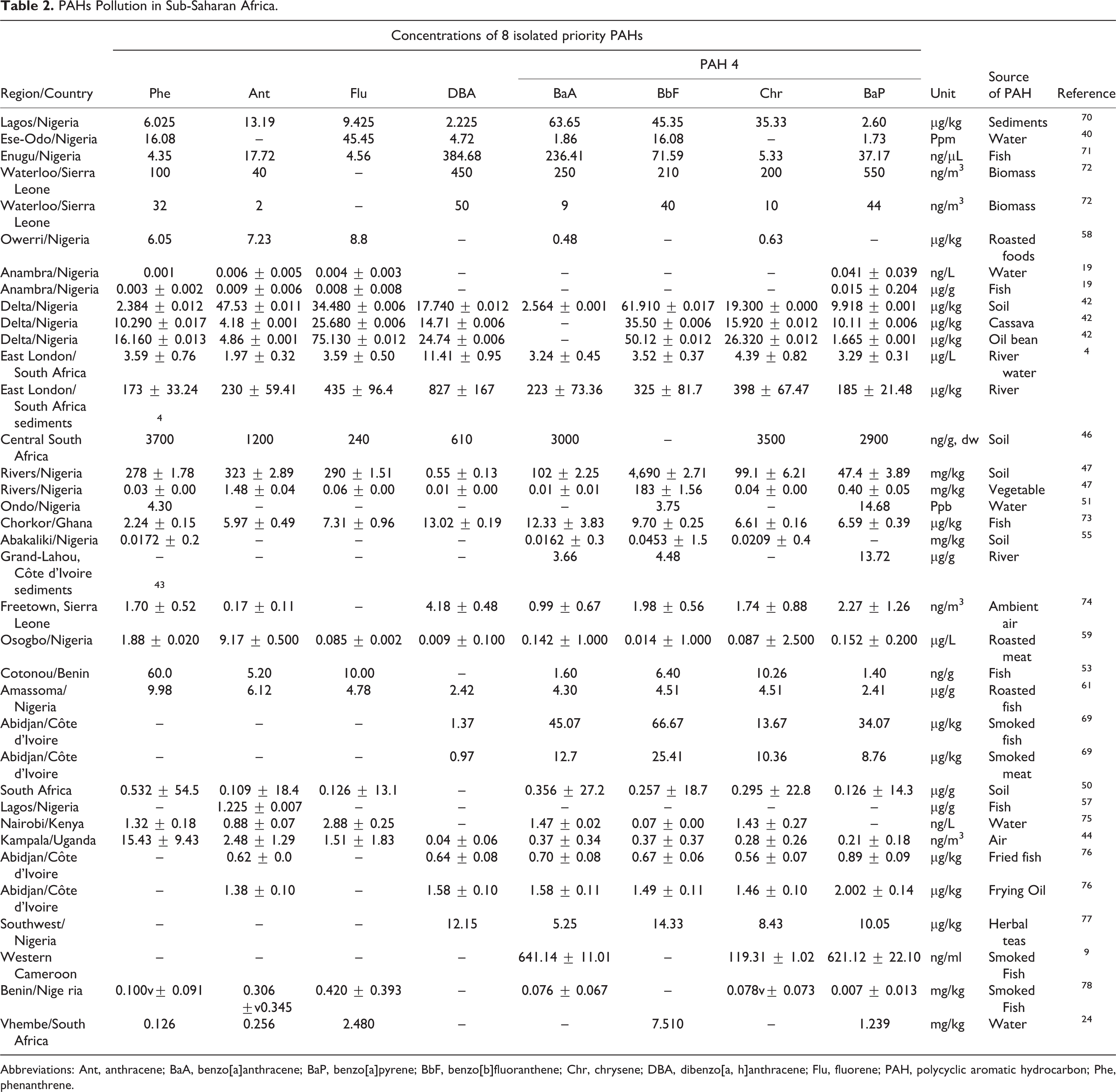
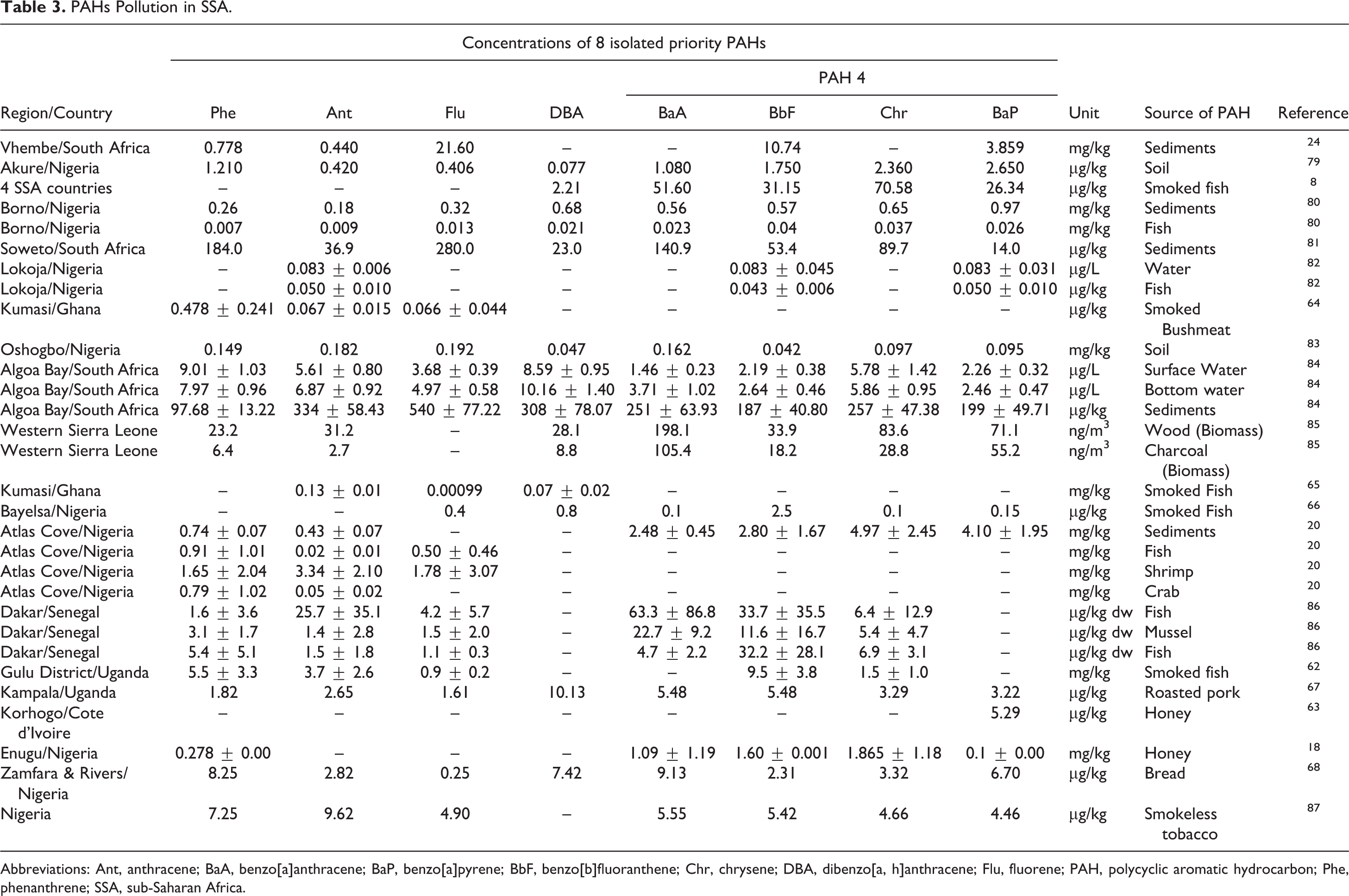
Database search produced 3395 studies with 44 obtained from PubMed, 31 from Scopus, and 3320 from Google Scholar. Additional reference search produced 30 studies bringing the total to 3350 studies. A total of 211 relevant studies were then identified and screened. Screening of the titles, abstracts, and keywords of these studies resulted in the exclusion of 32 duplicate studies, 2 reviews, and 28 studies whose full text could not be retrieved. Further screening of the 149 full text studies brought about exclusion of 92 studies as they were not in line with the review focus as well as 3 studies which were not specific for PAHs effects. Fifty-four studies were finally retained and used for the systematic review. These studies comprised 1 experimental study, 2 retrospective studies, and 51 observational studies. Ten countries within SSA are represented in this review. Breakdown of included studies by countries located in SSA showed that 29 studies were conducted in Nigeria; 6 in South Africa; 4 in Cote d’Ivoire; 3 each in Ghana, Sierra Leone, and Uganda; and 1 each in Benin, Cameroon, Senegal, and Kenya. Among these studies, 44 described the levels of PAHs exposure in SSA (Tables 2 and 3) and 8 assessed the association between PAHs pollution and public health outcomes (Tables 4 and 5). The search, screening, and inclusion process is summarized in Figure 1.
PAHs Pollution in Sub-Saharan Africa.
Abbreviations: Ant, anthracene; BaA, benzo[a]anthracene; BaP, benzo[a]pyrene; BbF, benzo[b]fluoranthene; Chr, chrysene; DBA, dibenzo[a, h]anthracene; Flu, fluorene; PAH, polycyclic aromatic hydrocarbon; Phe, phenanthrene.
PAHs Pollution in SSA.
Abbreviations: Ant, anthracene; BaA, benzo[a]anthracene; BaP, benzo[a]pyrene; BbF, benzo[b]fluoranthene; Chr, chrysene; DBA, dibenzo[a, h]anthracene; Flu, fluorene; PAH, polycyclic aromatic hydrocarbon; Phe, phenanthrene; SSA, sub-Saharan Africa.
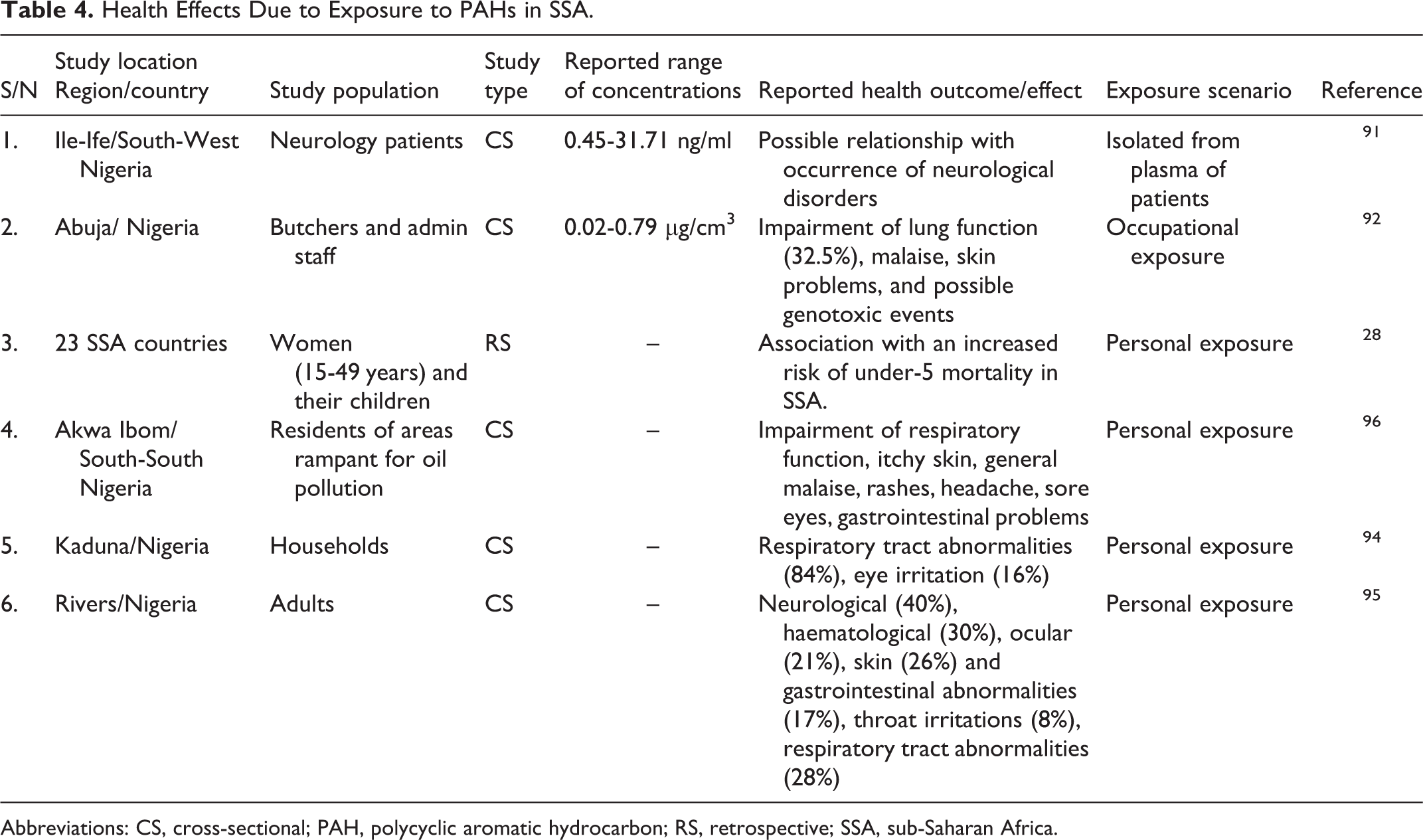
Health Effects Due to Exposure to PAHs in SSA.
Abbreviations: CS, cross-sectional; PAH, polycyclic aromatic hydrocarbon; RS, retrospective; SSA, sub-Saharan Africa.
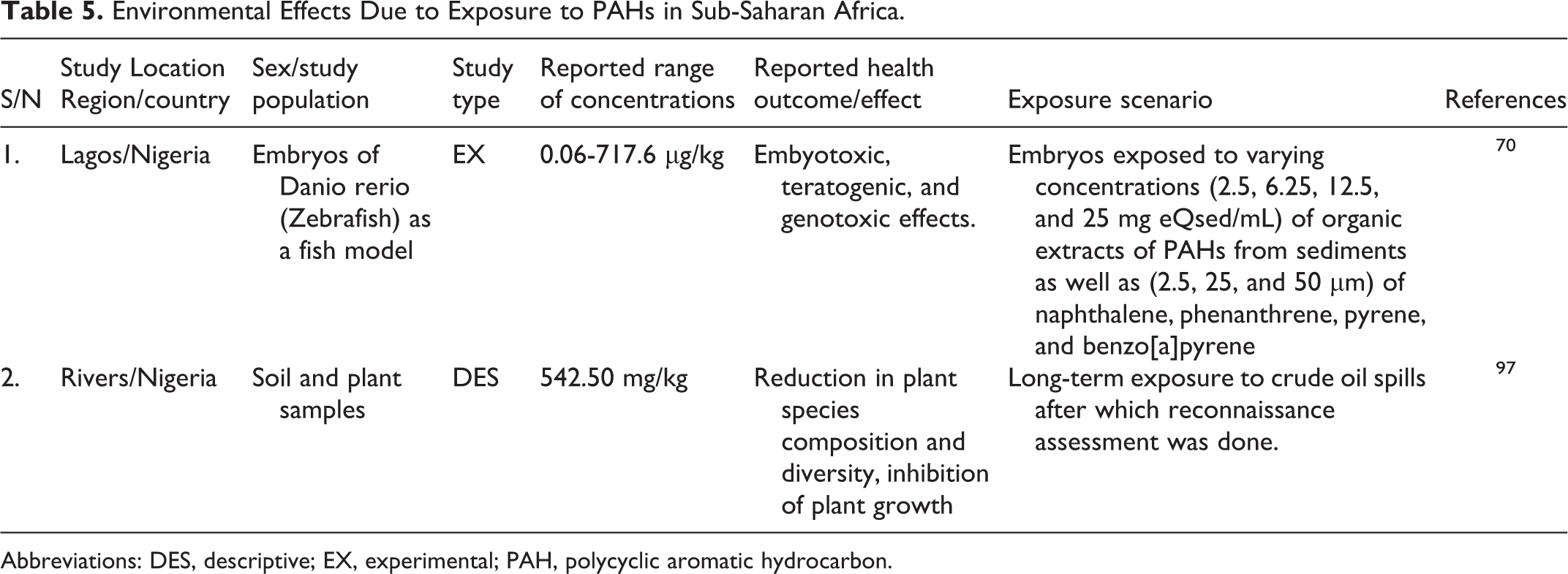
Environmental Effects Due to Exposure to PAHs in Sub-Saharan Africa.
Abbreviations: DES, descriptive; EX, experimental; PAH, polycyclic aromatic hydrocarbon.
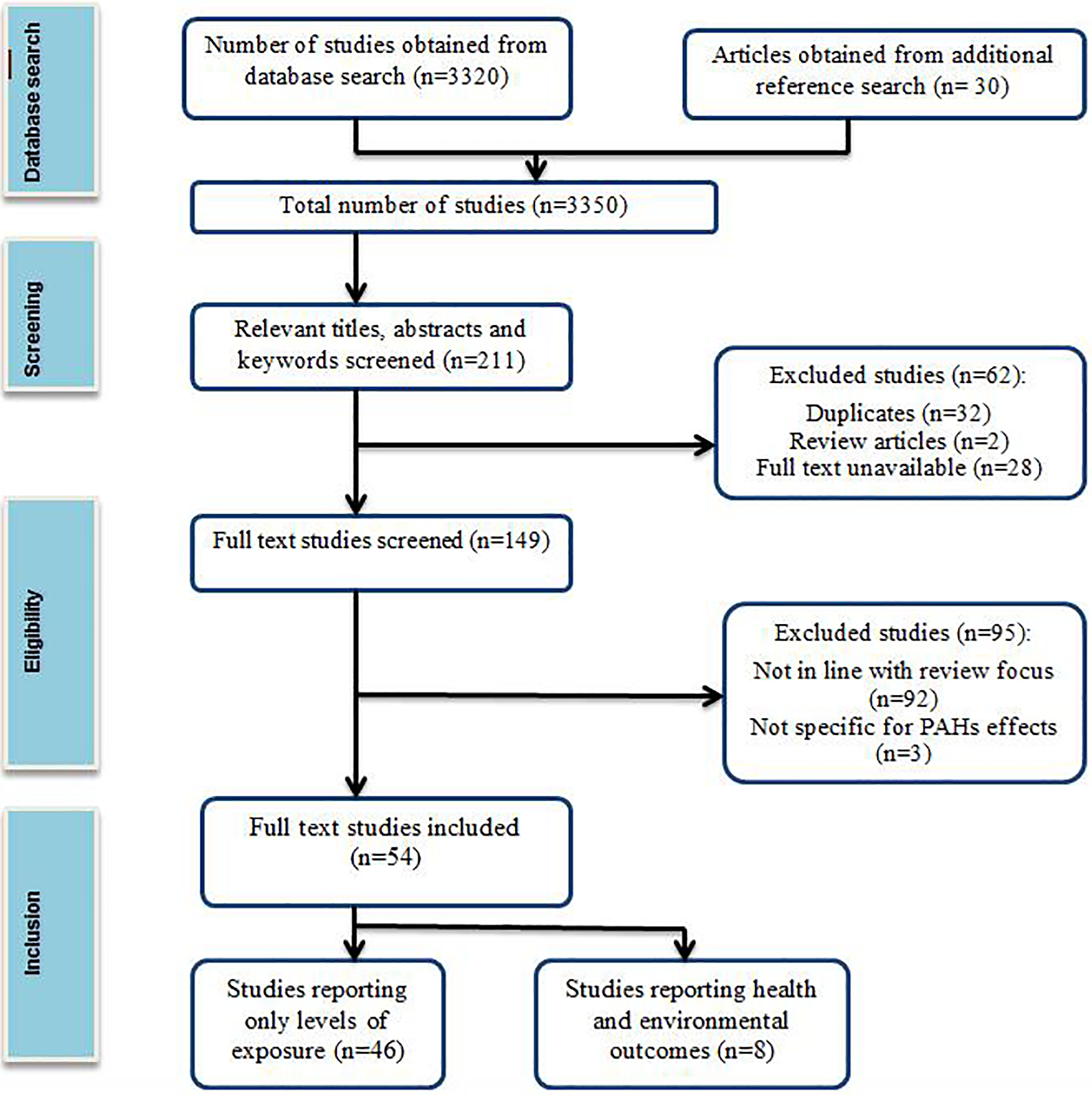
Study selection process using the PRISMA flow diagram. PRISMA indicates Preferred Reporting Items for Systematic Review and Meta-Analysis.
Exposure levels due to biomass burning in SSA
Data Synthesis
A narrative synthesis of these included studies is done in this review and summary tables of findings of included studies are shown on Tables 2-5. A flowchart for the selection of eligible studies is also presented on Figure 1. Information extracted from eligible studies included the author’s name, the year of publication, objectives of the study, and journal where study was published as well as the region and country where study was conducted. The study population, study design, sample size, the PAHs isolated, the concentrations of 8 selected priority PAHs (including those known to possess carcinogenic potentials), the source of the PAHs, and the reported health outcome were also extracted. Considering the methodological heterogeneity present in the assessment of exposures and outcomes, a meta-analysis could not be performed using synthesized data.
Results
Exposure Assessments
Exposure sources of PAHs in SSA
In SSA, as synthesized from included studies and seen in Figure 2, the major reported sources of exposure to PAHs were from pollution of water bodies and its constituents from crude oil exploitation and refining activities 26 (54%), food processing methods and techniques 13 (27%), food products 4 (8%), use of biomass fuels 2 (5%), ambient air pollution 2 (4%), and the use of smokeless tobacco 1 (2%).
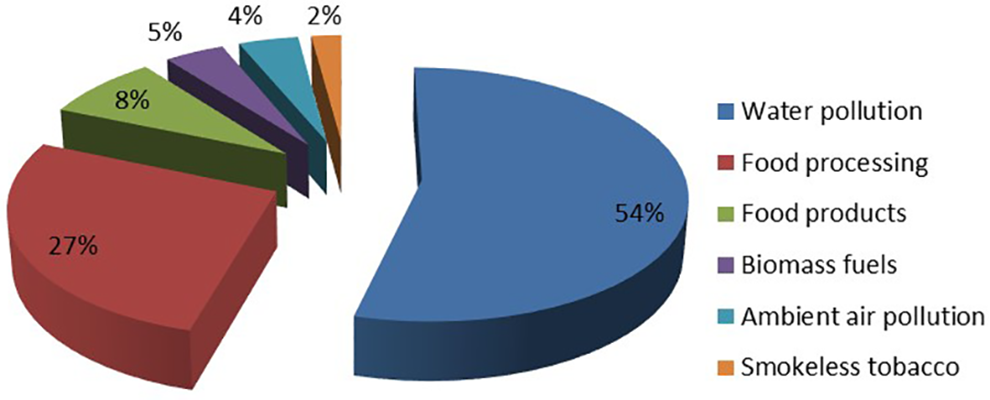
Distribution of reported sources of PAHs exposure in SSA. PAH indicates polycyclic aromatic hydrocarbon; SSA, sub-Saharan Africa.
The toxico-kinetics, toxico-dynamics, and toxico-genomics of an exposure have been explained using a biologically based framework. This provides an insight into the concept of external exposure in which the presence of a toxicant in the environment, its exposure, the uptake by the host, host expression of toxicity, and how the genetic makeup of the organism responds to the absorbed toxicants are highlighted. This framework is shown in Figure 3. 12
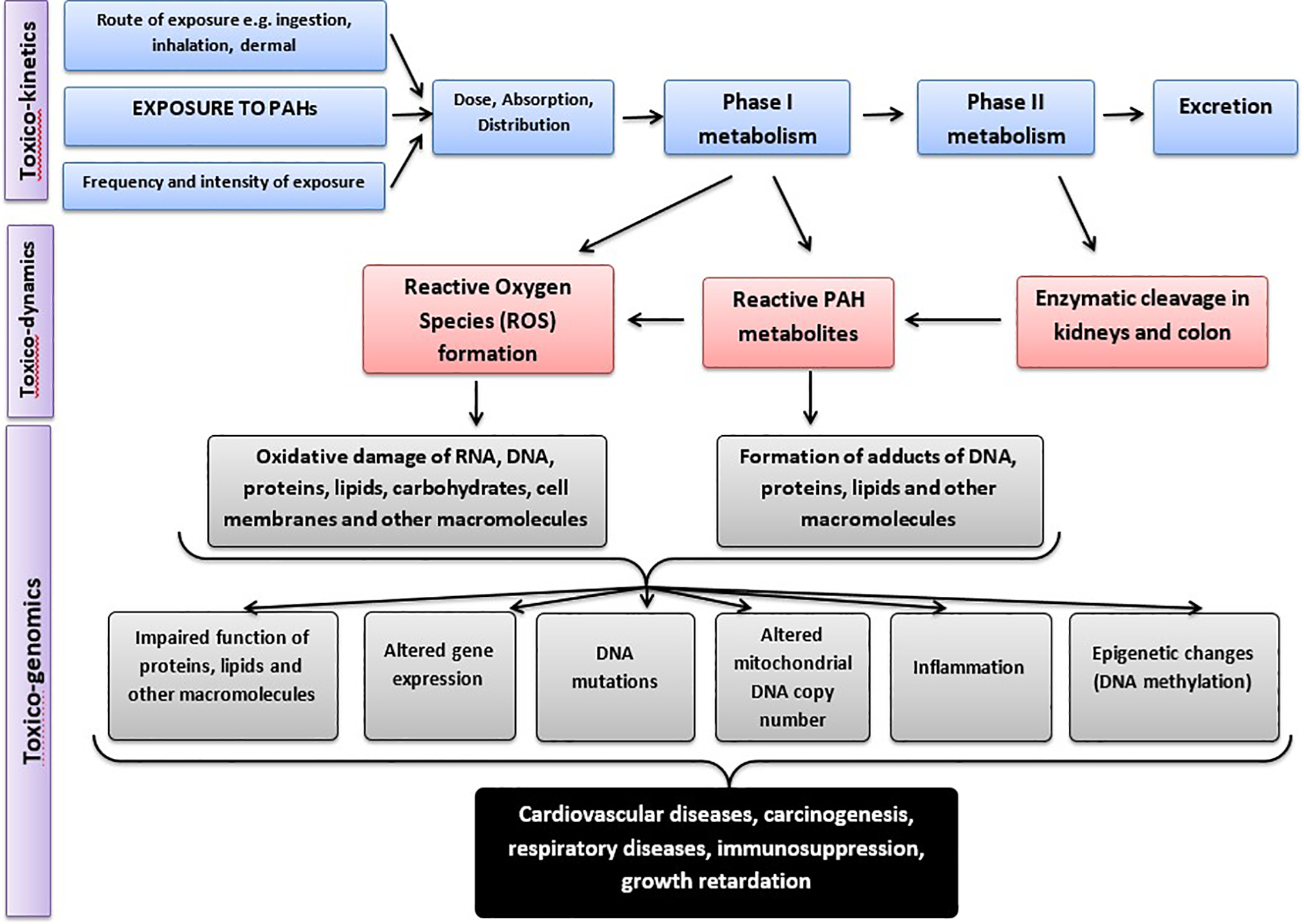
Conceptual framework of exposure mechanism and major health problems associated with PAH toxicity. PAH indicates polycyclic aromatic hydrocarbon.
Exposure levels due to products of oil exploration activities in SSA
In a study conducted in Ese-Odo in Nigeria, the offshore waters in that area where crude oil exploration activities take place was found to be contaminated by PAHs at alarming concentrations of between 0.07 and 113.16 ppm and a total PAHs of 381.06 ppm. Implicated PAHs included fluoranthene, naphthalene, fluorine, benzo(a)pyrene, benz(a)anthracene, and so on. 40 Authors have made reports that implicates oil spills as being capable of increasing the levels of high molecular weight PAHs found in the environment with a resultant occurrence of carcinogenic effects overtime due to the persistent nature of these PAHs. 41,42 High levels of PAHs have also been reported in the Grand-Lahou lagoon in Cote d’Ivoire with concentrations as high as 1222.73 μg/g and Pyrene, benzo(a)pyrene, and benzo(a)anthracene mostly implicated. 43 In the study of PAHs in the Lake Victoria water shed in Uganda, it was found that highest ∑PAHs concentrations ranged between 19.3 and 311 ng/m3 with a mean concentration of 74.3 ng/m3. Naphthalene was found to have an exceptionally high mean concentration of 21.9 ng/m3. 44
The PAHs contamination within their study area was related with agricultural activities, petroleum combustion, and the use of biomass fuels. ∑PAHs concentrations ranging between 56.8 and 112 mg/kg have been reported in soils used for agricultural purposes but contaminated with crude oil in Nigeria. 45
In the study on soil and sediments from certain areas in Central South Africa, ∑PAHs ranging between 44 and 39 000 ng/g, dw and concentration of carcinogenic PAHs (c-PAH) ranging between 19 and 19 000 ng/g, dw were reported. Pyrogenic processes were however more implicated than petrogenic contributions for this PAHs exposure and majority of the sites did not exceed the Canadian environmental quality guidelines for such exposures. 46
In another study in Nigeria, soil PAHs concentration was found to be 6950 ± 68.3 mg/kg dw which exceeded the set limits laid down by the DPR in Nigeria. 47 Depending on the frequency and intensity of exposure, soil contamination with PAHs-containing compounds is capable of damaging crop growth, destroying soil micro-flora, and rendering the soil infertile. 48 Differential levels of risk of contamination for different PAHs has also been identified and is said to be related to the temperature and the organic matter content of the soil. 49 In a study in South Africa, ∑PAH concentration in soils around 3 power plants were reported to range between 9.73 and 61.24 μg/g. 50 This was above the allowable levels provided by the Agency for Toxic Substances and Disease Registry (ATSDR) of 1.0 μg/g. Additionally, PAHs contamination from bitumen seepage has been observed in water samples in Ondo, Nigeria, where observed benzo(a)pyrene and Indenol (1, 2, 3—cd)pyrene concentrations exceeded normal safe limits. Bitumen seepage could occur as a result of water runoff, surface runoff, direct deposition, and via discharges from boats. 51
Bioaccumulation of PAHs has been reported in fish and invertebrates gotten from the Lagos lagoon in Lagos, Nigeria. Typically, the high-molecular-weight PAHs bioaccumulated more with dibenzo(a, h)anthracene having a concentration of 564.103 ng/g dry weight while naphthalene presented with a concentration of 340.711 ng/g dw. Range of ∑12PAHs in the study was found to be between 0.110 and 0.480ng/mL in water and 12.320 to 955.510 ng/g dry weight in sediments. Phenanthrene was however discovered to pose a high risk of toxicity due to its concentrations in crabs and other water creatures. 52 Total PAHs concentration in organisms from Benin coastal waters in the Republic of Benin were also found to range between 15 and 102 ng/g with phenanthrene accounting for 76% of the total bioaccumulation. 53 In a study in Togo, ∑21 PAHs concentrations in coastal sediments ranged from ≈4 ng/g to 257 ng/g with a mean PAHs concentration of 92 ng/g. 54
In Ebonyi, Nigeria, there is the existence of clusters of automechanic workshops commonly known as mechanic villages, 55 which have been implicated as sites where unguided disposal of engine oils (a refined crude oil product laden with PAHs) into water and soil occurs. This was confirmed through detection of varying PAHs concentrations in an automechanic village in Abakaliki. The PAHs were however lower than maximum background limits of 15 mg/kg set by the Dutch Environment Ministry. This notwithstanding, considering that there is no given threshold concentration below which carcinogenic effects of PAHs can occur, this presence of PAHs should be closely monitored. 55
Exposure levels due to food-processing techniques in SSA
Polycyclic aromatic hydrocarbons exposure could also occur through food-processing and preservation methods used in SSA. 56,57 Ogbuagu and Ayoade 58 characterized the presence of PAHs in staple foods taken in Imo, Nigeria. High concentrations of PAHs were found to exist in the foods tested. Roasted plantain contained the highest concentration of combined PAHs (ΣPAHs) of 0.0465 mg/kg, followed by suya 0.0372 mg/kg. The least concentration of ΣPAHs of 0.0135 was, however, seen in roasted fish. Most implicated PAHs included fluorene in suya, acenaphthene and phenanthrene in the roasted fish, and phenanthrene and anthracene in roasted plantain.
In Osogbo, Nigeria, PAHs concentration in barbequed meat (asun, suya) where found to range between 0.001 and 26.82 μg/g and 0.002 to 9.17 μg/g, respectively, for asun and suya barbequed meat samples. These values were found to be higher than the safe limit of 0.1 μg/g provided by the US ATSDR which created a toxicological profile for certain PAHs. 59,60 At Amassoma, Nigeria, benzo[a]pyrene concentration of 2.41 μg/g and benzo[b]fluoranthene of 4.51 μg/g in roasted mackerel fish and a mean concentration of 7.23 μg/g of benzo[a]anthracene were detected in suya beef. 61 ΣPAHs concentrations in the study ranged between 35.60 and 91.26 μg/g in roasted fish and 10.47 to 9.19 μg/g in suya beef. Other studies have also shown the levels of PAHs exposure encountered during food processing in SSA. 8,9,18,62 -68
Benzo(a)pyrene levels found in roasted fish had concentrations ranging between 1.65 and 3.17 μg/g. These concentrations were higher than the recommended standard concentration of 0.005 μg/g or 5.0 μg/kg set for benzo(a)pyrene levels in smoked meat and fish products by the European Commission. 61 Benzo(a)pyrene has also been identified as the most common PAH to cause cancer in humans and animals. 66 In Abidjan, Cote d’Ivoire, Dano et al 69 evaluated PAHs in processed meat and fish samples sold at a market. They discovered a Σ8PAHs concentration ranging between 49.81 and 200.19 μg/kg. However, benzo[b]fluoranthene and indeno[1,2,3-cd]pyrene presented with the highest PAHs concentrations of 46.04 μg/kg and 50.66 μg/kg, respectively, when the tested samples were processed by smoking.
Taylor and Nakai, 72 in their study in Sierra Leone, assessed the levels of PAHs in kitchens using traditional stoves. The range of PM2.5 bound Σ11PAHs concentration was found to be between 319 and 4282 ng/m3 for wood stoves and 38 and 355 ng/m3 for charcoal stoves. In addition to this, PM2.5-10-bound Σ11PAHs concentration was found to range between 23 and 144 ng/m3 for wood stoves and 8 and 32 ng/m3 for charcoal stoves. The most present PM2.5-bound PAHs in kitchens with wood stoves were pyrene, benzo(a)pyrene, fluoranthene, and dibenzo(a, h)anthracene making up 60% of Σ11PAHs. The most present PM2.5 bound PAHs in kitchens with charcoal stoves were dibenzo(a, h)anthracene, benzo(b)fluoranthene, benzo(a)pyrene, and phenanthrene. The use of firewood has been described as the major source of emissions that causes air pollution in a number of developing countries. 63,88 A population-based study on cooking fuel use and its association with under-5 mortality risk was conducted in SSA. In the study, countries like Ethiopia, Gambia, Mali, Sierra Leone, and so on were among the countries that ranked highest for under-5 children exposure to biomass cooking fuel (upper range limit being 98%). Gabon was ranked lowest with only 15.1% of the children exposed to these PAHs-containing fuels 28 Ambient air in Freetown, Sierra Leone, was found to exceed the safe limits for PAHs concentration provided by the WHO with an annual mean PAHs concentration for PM2.5 of 37.18 ng/m3 and 6.24 ng/m3 for PM2.5-10. 74 In Nairobi, Kenya, it was also discovered that black carbon concentrations ranged from 74 to 9900 ng/m3 in urban and suburban study sites. 89
Other anthropogenic exposure levels in SSA
In the Orange-Senqu River Basin in Southern Africa, high ∑PAHs levels of 0.867 μg/g dm were observed in a gold mining area. It was also recorded that the highest sum of carcinogenic PAHs (ΣCPAHs) was 0.37 μg/g dm. The PAHs levels were found to exceed 10 of the 12 Canadian threshold effects guidelines for protection of benthic organisms. 90 Likewise, in the Buffalo River Estuary, South Africa, PAHs mainly produced from pyrolytic sources were identified. In the study, total concentrations of PAHs in the water and sediment samples ranged between 14.91 and 206 μg/L and 1107 and 22 310 μg/kg, respectively. 4 These findings show the potential risk to the aquatic biodiversity in that area and the risk of potential carcinogenic and mutagenic health effects that could arise when these aquatic creatures are ingested and metabolized in the human body. 84 Nyarko and Klubi 73 in their study in Ghana also reported the presence of benzo(a)pyrene concentrations in common fish species which exceeded the EU recommended limit of 2 μg/kg wet weight and thus was not considered safe for human consumption. This was further buttressed by an estimation of carcinogenic potency equivalent concentration which exceeded the screening value for tested fish species in the study. The implication of these findings was the propensity for marked carcinogenic health risks associated with the consumption of these fishes. In Anambra, Nigeria, the abundant presence of certain PAHs in fish including naphthalene, acenaphthene, fluorine, anthracene, pyrene, and benz[a]pyrene, among others was reported for both rainy and dry seasons. 19 In Enugu, Nigeria, ∑PAHs in fish exposed to PAHs-containing compounds was found to range between 99.68 ± 4.81 ng/µL (for crude oil) and 97.30 ± 14.57 ng/µL (for diesel oil). Crude oil exposed fish presented with Dibenz (a, h) anthracene levels of 384.68 ng/μL. Diesel oil exposed fish presented with Dibenz (a, h) anthracene levels of 389.05 ng/μL. 71 Other studies have also shown varying concentrations of PAHs in other kinds of media within SSA. 24,75,77,79
Health Effects of PAH Contamination in SSA
Six different studies provided associations between PAHs exposure and health outcomes. Associated health outcomes included respiratory, neurological, skin, gastrointestinal, cardiovascular, and visual health outcomes. In one of such studies, PAHs were pinpointed as possible causative agents of neurological disorders. In the study conducted at an outpatient neurology clinic, it was found that ranges of pyrene, fluoranthene, and acenaphthene concentrations in the blood plasma of the patients were between 2.96 and 236.86 ng/mL, 1.96 and 11.55 ng/mL, and 1.08 and 1.81 ng/mL, respectively. 91 In another study conducted at an Abattoir in Abuja, Nigeria, chronic occupational exposure of butchers to PAHs-containing fumes produced from burning tires used in de-furring of slaughtered animals was found to affect their lung health. 92 In the study the butchers presented with a forced expiratory volume, forced vital capacity ratio (FEV/FVC) of < 80% which according to the Global Initiative for Chronic Obstructive Disease is an indication of primary lung impairment. 93
Exposure of under-5 year children to biomass cooking fuels including charcoal, biomass, and other fuel types in SSA has been associated with the risk of mortality among this age-group. In a retrospective study that was conducted among 23 SSA countries, it was found that the risk of mortality among under-5 children exposed to clean cooking fuel was lower than those exposed to biomass cooking fuels. Indoor air pollution mainly caused by the use of pollutant cooking fuels such as coal, charcoal, wood, animal dung, and agricultural crops was reported to lead to premature deaths resulting from acute pneumonia and lower respiratory infections. This was also linked to the occurrence of higher disability-adjusted life years, and hence resulting in an increase in the national and global burden of disease. The study highlighted that Sierra Leone had the highest hazard ratio and Comoros had the lowest hazard ratio. 28 In another study conducted in Kaduna, Nigeria, it was found that cough, tuberculosis, eye irritation, bronchitis, pneumonitis, and so on were among reported cases at the health facility which were related with the use of biomass energy for cooking. 94 Kponee et al, 95 in Rivers state, Nigeria, made reports of symptoms prevalent in a population after an exposure to petroleum hydrocarbons from drinking water. These symptoms included neurologic symptoms including headaches, dizziness, and so on as well as anemia, skin, throat, and eye irritations. In another study conducted in Nigeria, though a combination of direct and indirect effects of PAHs, Nriagu et al 96 reported elevated stress levels among the study participants. This was related to the air pollution from refineries and gas plants (where gas flaring occurs) as well as the constant fear of the event of an explosion from the refinery activity. Direct effects included impairment of respiratory function, having itchy skin, general malaise, rashes, headache, sore eyes, and gastrointestinal problems. Indirect effects reported included environmental annoyance and environmental worry which are a function of the risk perception of these residents. They were also found to be strongly correlated with the manifestation of other pollution-related abnormalities experienced by the residents. 96 These health effects are summarized on Table 4.
Environmental Effects
Two studies showed the effects PAHs exposure could have on the environment. In sediments obtained from different sampling points along the Lagos lagoon in Lagos, Nigeria, exposure to extracts of PAHs and PAHs mixtures obtained from these sediments was done. These exposures were shown to cause the manifestation of embryotoxic, genotoxic, and teratogenic effects on the embryos of zebrafish (Table 5). 70 Polycyclic aromatic hydrocarbons soil contamination was also evidenced by the study conducted by Tanee and Albert 97 who reported total hydrocarbon levels of 542.50 ± 28.58 mg/kg in an area in Rivers, Nigeria (Table 5). The plant species composition and diversity as well as chemical properties of soil in the area were also adversely affected and diminished.
Health Risk Assessments of PAH Contamination in SSA
The exposure dynamics and health risk assessment of PAHs in the environment is a necessary initiative in public health considering the ubiquitous nature of PAHs in nature. 98,99 Of all known exposures to PAHs, dietary exposures are the most common as a result of the applied food-processing techniques including roasting, smoking, barbecuing, drying, curing, grilling, and so on. 59,78 Also when foods are cooked at high temperatures, there is the formation of PAHs which usually stick to the food surface. 100 When these food-processing techniques and processes become common practice among majority of the populace, it turns on the realization that food safety with respect to public health and PAHs exposures cannot be overlooked. 61,101,102 There is thus the need for application of safer, PAHs-reducing food-processing methods 7 as well as reinforced action in ensuring access to clean energy sources for domestic use in SSA. This is necessary to improve human health, increase productivity, and ensure sustainable economic growth. 103 Other exposures include those from vehicular emissions, bush burning, and crude oil exploration activities, among others. 73
Methods that can be used in measuring the exposure of humans to toxic substances include environmental monitoring as well as the use of biomarkers to estimate systemic exposure levels. 104 Additionally, regular monitoring and assessment of contamination-susceptible environmental media such as water, soil, and so on, in areas of PAHs exposure, need to be done to closely monitor PAHs levels in these media. 105
Among known PAHs, 15 are classified as being genotoxic and the Joint FAO/WHO Expert Committee on Food Additives labeled 13 as being carcinogenic. The European Food Safety Authority in 2008 made a report stating that in order to provide a suitable indicator of measuring levels of PAHs contamination in food, the sum of benz[a]anthracene, benzo[a]pyrene, benzo[b]fluoranthene, and chrysene (designated PAHs4) had to be used. This assisted in setting maximum limits for both benzo[a]pyrene and PAHs4. 8 In a study on human health hazards of PAHs in smokeless tobacco in Nigeria, it was reported that total PAHs concentrations ranged between 1.09 μg/kg and 225.84 μg/kg in different smokeless tobacco samples. 87 The total benzo[a]pyrene toxicity equivalent in the smokeless tobacco from the southeast ranged from 0.24 to 29.23, 0.94 to 14.55 in the southwest, 2.28 to 22.88 in the Niger Delta, and 0.11 to 9.47 in the North Central region. The estimated cancer risk from exposure to PAHs from using these substances was, however, within or below the United States Environmental Protection Agency cancer risk range. 87 This notwithstanding, its common use in SSA for social events, for pleasure, to treat nasal congestions, cold, and so on 106,107 could be a reason for the burden of oral and pharyngeal cancers in SSA. 108 This is an interesting area that requires further research to effectively characterize the relationship between PAHs in smokeless tobacco and the risk of carcinogenesis.
In Lagos, Nigeria, an observation of total PAHs concentration in water samples ranging from 46 to 507 μg/L was made. This was linked to a carcinogenic risk assessment of higher than acceptable limits as provided by the US Environmental Protection Agency. 109 It should be noted that this risk is not only borne by the populace but also by the abundant biodiversity that are present in affected ecosystems. 110,111 Increasing risks would also consequently result in worsening environmental degradation with accompanying problems of poor environmental aesthetics and loss of biodiversity. It could also result in loss of productivity necessary for food chain sustenance, reduced tourism potentials, global warming, drought, flooding, and so on. 10,112,113 A carcinogenic human health risk assessment of PAHs in smoked fish using the carcinogenic toxic equivalent, in Southern Nigeria, showed that eating such fish had the capacity to increase carcinogenic risks. This conclusion was arrived as a result of having an estimated cumulative excess cancer risk and PAHs4 index that exceeded the dietary daily intake for smoked fish. 78
In Anambra, Nigeria, the abundant presence of certain PAHs including naphthalene, acenaphthene, fluorine, anthracene, pyrene, and benz[a]pyrene among others was reported for both rainy and dry seasons in fish samples. 19 The dietary intake of these food toxicants through food consumption is a topic of public health concern as a result of the continuous daily exposure to concentrations of these toxicants which exceed normal safe limits for human consumption. 19,20,68,82 This view was also shared regarding the increased consumption of a fried-tuna-related food in Abidjan, Cote d’Ivoire. 76 A number of health risk assessments made in different parts of SSA have shown that these exposures have the capacity to bring about carcinogenic and mutagenic risks. 4,67,83,85,87
Despite being a potential health risk, the exposure to food-borne PAHs could also be reduced. This can be achieved by scrapping off the burnt food portions (where the PAHs can mostly be found) before eating. 114 This reduces the total amounts of PAHs ingested as well as the associated health risks. In Kumasi, Ghana, tested smoked fish samples were found to have mutagenic and toxicity concentrations that were below normal limits and presented with a low hazard quotient. This manner of low PAHs concentration in foods indicates safety for human consumption and a very low risk of developing carcinogenic malformations. 18,64,65,81,115 Similar findings have also been made in Bayelsa, Nigeria 66 ; Rivers, Nigeria 116 ; Borno, Nigeria 80 ; Dakar, Senegal 86 ; Gulu District, Uganda 62 ; and in Korhogo, Cote d’Ivoire. 63 The exposure concentrations that have been associated with these risks have been summarized on Tables 1 and 2.
Discussion
In this systematic review that summarized reports provided in published studies that assessed the exposure levels, health risk assessments, and public health effects of PAHs exposure in SSA, 48 studies examining exposures to PAHs were identified. Eight studies were also identified that assessed the association between PAHs exposure and health outcomes. A meta-analysis of the studies could, however, not be conducted considering the methodological heterogeneity used in exposure and outcome assessments in the different studies. This presented itself in terms of different population groups, exposure settings, and variability of study designs applied by the studies. The strength, temporal relationship, biological plausibility, and consistency of associations, however, provided a yardstick for the overall assessment of causality between PAHs exposures and reported health outcomes.
Polycyclic aromatic hydrocarbon exposure and health outcomes
Polycyclic aromatic hydrocarbons have been shown to be made available in various forms as sources of pollution within the SSA region. They have been pinpointed as possible causative agents of neurological disorders, respiratory, cardiovascular, visual, skin, and gastrointestinal diseases. They have also been linked as possible mortality risks among under-5 children which is associated with the widespread use of biomass and other fuel types in SSA. Factors that increased the risk of under-5 mortality included having kitchens located within the house, residence in rural areas, and children who were still breastfeeding (considering that their mothers carried them even when cooking). Others included gender (female children were at 6% less risk of death than the male children), exposure to tobacco smoke, lack of education, poverty, and unemployment. 28
Indoor air pollution has been tagged by the WHO as the “killer in the kitchen” with 24% of the 1.6 million deaths worldwide occurring in Africa every year. 94 It has been described as a potent barrier to the attainment of health equity and has been implicated as a contributory factor to the occurrence of morbidities including cataracts, heart diseases, cancers, and respiratory diseases in children among others. 117 -119 Fifty percent of all large biomass fires have been reported to occur in Africa with a seasonal affinity for the dry season. 120 Biomass fuels from wood, animal dung, and so on are used by a large proportion of populations in SSA. When these are subjected to pyrolytic conversion and combustion, greenhouse gases and other pollutants that have been implicated in certain disease etiologies are released. 32,121 These fuels are also involved in the processing of various foods in SSA including roasting, smoking, and so on. Important factors that could contribute to the formation of PAHs on roasted or smoked foods have been reported to include higher roasting/smoking temperatures, proximity of the food substance to the heat source, and the fat content of the food. Others include the roasting duration, the fuel type used during roasting/smoking, and the covering of the foods being roasted with cardboards during roasting. The covering could modify the photosensitive properties of the PAHs which could result in their accumulation due to the lighting modifications of the setup and/or oxygen modification of the foods’ PAHs content. 58,69 Sub-Saharan Africa is thus a definite region in the world that would greatly benefit from the use of cleaner and less hazardous indoor/household energy sources. 122 -124
In Port Harcourt city in Rivers, Nigeria, epidemiological studies conducted have associated the high levels of air pollutants (which exceeded safe limits provided by the WHO) with morbidities and mortalities in the state. Morbidities identified included pneumonia, other respiratory tract diseases, childhood deformities, miscarriages, 125,126 dermal pathologies, eye lesions, and lung and skin cancers. 127,128 Nkwocha and Egejuru 129 in their study on industrial air pollution and children’s respiratory health revealed a strong association between air pollutants including PAHs (which make up particulate matter) and the incidence of cough, sinusitis, and bronchitis, among other conditions. Considering these previous studies, it would not be far-fetched to expect similar health effects in Rivers State linked with the haze of soot that hit the state in 2016. 130 During this period, there were widespread complaints of black soot settling on nets, doors, furniture, bathtubs, buildings, cars, and even visibly cleaned out from people’s nostrils. The soot was everywhere as water sources were also affected especially water-sourced from rainwater. This implied that there was widespread exposure to the black soot which is known to contain large amounts of PAHs. Sources of the soot as provided by the government during that period included gas flaring, illegal refineries, the burning of tires, petrochemical companies’ activities, and liquefied natural gas operations and processes. 130 This exposure was accompanied with widespread deposition in lakes, streams, rivers, trees, and plants with a consequential occurrence of ecosystem disruption affecting soil, air, and water environmental media. 131
Sub-Saharan Africa has been reported to bear the heaviest burden of cardiovascular diseases which incidentally is one of the most exposed regions of the world to household air pollution. 132 Formation of DNA adducts have also been associated with exposure to PAHs. 133 Morbidities including asthma, pneumonia, emphysema, and cardiorespiratory abnormalities have also been reported as being related with exposures to PAHs-containing compounds from a number of different sources in South Africa and some parts of SSA. 134 Aflatoxicosis occurrence has also been suspected to be related with exposure of a Ghanaian population to PAHs. 135 Exposures to PAHs occur in various forms within the SSA region. 1
Polycyclic aromatic hydrocarbons exposure, environmental health outcomes and health risks
Health risks that may arise as a result of exposure to PAHs are dependent on a number of factors including the route, intensity, and duration of exposure, individual susceptibility, age at exposure, gender, and immune system capability, among others. 17,29,30 As a result of the rapid accumulation of these compounds in organisms which exceeds their ability to detoxify and excrete them, they tend to gradually bioaccumulate overtime. This results in the occurrence of pathological mechanisms that distorts homeostatic balance and causes adverse health effects. 82,136 These toxicity effects are evident in different components of the environment including in aquatic ecosystems, soil, plants, wildlife, domestic animals, and even in humans. 7,137,138 These exposure sources place a great burden of morbidities and mortalities on inhabitants of this region owing to the different pathological mechanisms that occur within the body. 134,139 Cattle have also been reported to manifest signs of exposure to the risks of PAHs. This was shown in a study who reported high concentrations of urinary naphthalene (2-OHNap) and phenanthrene. 140 Geometric mean concentrations (adjusted by specific gravity) [GMSG] of 2-OHNap was found to be 21.9 ± 6.51 ng/mL in a rural setting and 4.15 ± 4.37 ng/mL in an urban setting.
These exposures are also responsible for different manifestations of environmental degradation within SSA. 113 Oil pollution has been implicated as a potential source of PAHs contamination of the environment with consequent human morbidities. This has been blamed on accidental fires at oil exploration sites, sabotage of oil pipelines by vandals, bunkering, and artisanal refining of crude oil. 27 Chronic effects of crude oil pollution on the soil and plant species diversity related with PAHs release into the environment is a reality. A double burden of exposure could also arise from using cooking techniques that favor PAHs production to cook fish that is harvested from polluted aquatic environments. Although no study highlights this in this review, it is a possibility. Its level of toxicity is said to vary and is dependent on a number of factors including the concentration and composition of the pollutant, the environmental conditions, and biological state of soil microbes during the period when pollution occurs. 79,141
Strength and Limitations
A major strength discovered in one included study for this review was the use of an experimental design to ascertain the effect of PAHs exposure on exposed embryos using Danio rerio (Zebrafish) models. However, across the different studies included in this review, few limitations were discovered. One limitation was that most of the health outcomes studies utilized cross-sectional study designs which would have made it impossible to determine causality between PAHs exposure and health outcomes among human populations. Another limitation was found in the method utilized in assessing exposures and outcomes in some of the studies through the use of questionnaires and interviews. Responses provided by these means of data collection to assess exposure could be affected by the inability to provide reliable estimates of magnitude of PAHs exposure. This is capable of affecting the relationship estimated for exposure to PAHs and health outcomes. This notwithstanding, the results from the studies were generally consistent and provided an acceptable indication of the negative effects of PAHs exposure on human and environmental health.
Implications and Recommendations
The high exposure to PAHs in SSA is not devoid of its implications. From having the propensity to reduce the quality of life years of an individual to adversely affecting livelihoods, it is certainly a cause for concern. Pollution caused by these substances can result in severe reduction of the capacity to carry out agricultural activities meant to provide food and sustenance in affected areas as a result of acute and chronic soil toxicity and destruction of soil microflora. 142,143 Soil toxicity may manifest as evidence of high soil hydrocarbon content, high acidity, and temperature of the soil as well as low electrical conductivity of the soil which are indicative of poor soil fertility. 144 In places where agriculture is the main occupation of the populace, this kind of soil devastation is capable of not only exposing the populace to the risk of starvation and malnutrition but also to the possibility of losing their source of livelihood and consequent experience of impoverishment and low-quality lifes. 145 Despite the water shortage problems presently being experienced in SSA, the contamination of water by PAHs also only adds to the burden of potable water availability in SSA and requires urgent mitigation efforts to ensure the availability of clean potable water. 75,146,147 In addition to these, though having a good number of exposure and health risk assessments of PAHs exposure in SSA, there still abounds a low number of exposure and health outcome assessments conducted to assess the health and environmental effects associated with PAH pollution in SSA. The implication of this would be the inability to make informed decisions and bring about policy drives that are based on sound evidence.
These adversities can, however, be prevented when adequate biological and chemical remediation of the soil is done to rid it of pollutants. 45,148,149 However, the heavy metals which are released alongside PAHs during soil pollution, apart from their related adverse effects on the environment, could also hinder the in situ biodegradation of the PAHs and slow the remediation process. 150,151 Prevention can be also taken a notch higher by desisting from practices that encourage PAHs deposition into the environment. 152 Regulatory authorities in SSA should also be determined to enforce all relevant environmental protection laws which would ensure the safety of the citizens and of the environment. 153 The use of healthier forms of energy, education of the populace on building and maintaining safer environments which fosters a change of attitude to one that favors environmental sustainability, and proper enforcement of environmental regulations are, however, necessary in the drive to attaining environmental sanity in SSA. It is believed that when the populace is well educated on the harmful effects of PAHs pollution of the environment, they will take up the responsibility of maintaining cleaner and safer environments. Studies that can be prospectively conducted to fill the existing knowledge gap and provide more evidence necessary to be able to make informed decisions that can improve the lives and standard of living of the concerned populace in SSA are thus advocated.
Conclusion
The various exposures, health risk assessments, and public health effects of PAHs contamination have been discussed in this review. This discourse has shown that considering the peculiar means adopted in meeting the needs of life and living in SSA, the region is exposed to a substantial amount of PAHs pollution which is associated with deleterious environmental and epidemiological effects. There is thus the need for measures to be put in place to stem the tide and reduce the pollution caused by PAHs to the barest minimum.
Supplemental Material
Supplemental Material, sj-docx-1-ijt-10.1177_10915818211002487 - Exposure and Public Health Effects of Polycyclic Aromatic Hydrocarbon Compounds in Sub-Saharan Africa: A Systematic Review
Supplemental Material, sj-docx-1-ijt-10.1177_10915818211002487 for Exposure and Public Health Effects of Polycyclic Aromatic Hydrocarbon Compounds in Sub-Saharan Africa: A Systematic Review by Benson Chukwunweike Ephraim-Emmanuel and Best Ordinioha in International Journal of Toxicology
Footnotes
Author Contributions
Ephraim-Emmanuel, B contributed to conception and design; contributed to acquisition, analysis, and interpretation; drafted manuscript; critically revised manuscript; and gave final approval. Ordinioha, B contributed to conception, contributed to analysis, drafted manuscript, and gave final approval. Both the authors agree to be accountable for all aspects of work ensuring integrity and accuracy.
Declaration of Conflicting Interests
The author(s) declared no potential conflicts of interest with respect to the research, authorship, and/or publication of this article.
Funding
The author(s) received no financial support for the research, authorship, and/or publication of this article.

Supplemental Material
Supplemental material for this article is available online.
References
Supplementary Material
Please find the following supplemental material available below.
For Open Access articles published under a Creative Commons License, all supplemental material carries the same license as the article it is associated with.
For non-Open Access articles published, all supplemental material carries a non-exclusive license, and permission requests for re-use of supplemental material or any part of supplemental material shall be sent directly to the copyright owner as specified in the copyright notice associated with the article.
