




Abstract
This study investigated genetic damage in gasoline pump workers using the cytokinesis blocked micronucleus (CBMN) assay. Blood and urine samples were collected from 50 gasoline pump workers and 50 control participants matched with respect to age and other confounding factors except for exposure to benzene through gasoline vapors. To determine the benzene exposure, phenol was analyzed in urinary samples of exposed and control participants. Urinary mean phenol level was found to be significantly high (P < 0.05) in exposed workers. The CBMN frequency was found to be significantly higher in gasoline pump workers (6.70 ± 1.78) when compared to control individuals (2.20 ± 0.63; P < 0.05). We also investigated influence of polymorphisms of GSTM1, GSTT1, and GSTP1 genes on CBMN frequency. The individuals having GSTM1 and GSTT1 null genotypes had significantly higher frequency of CBMN (P < 0.05). Our study indicates that chronic and long-term exposure of gasoline vapors can increase genotoxic risk in gasoline pump workers.
Introduction
The hydrocarbons of greater toxicological power, which are present in petroleum, are volatile organic compounds, such as benzene, toluene, xylene, and polynuclear aromatic hydrocarbons. Exposure to gasoline vapors is classified by the International Agency for research on Cancer 1 as possibly carcinogenic to humans mainly due to presence of some components such as benzene whose carcinogenic nature is well established. The Environmental Protection Agency limits the percentage of benzene allowed in gasoline to an average of 0.62% by volume (with a maximum of 1.3%). However, the percentage of benzene in automobile gasoline in India is known to be about 3%. Benzene is considered as ubiquitous toxic environmental pollutant. It is a natural component of crude oil (less than 1% by weight). Filling station workers are chronically exposed to gasoline. These workers do not wear personal protective equipment and are chronically exposed to petroleum derivatives primarily through inhalation of the volatile fraction of petrol during vehicle fueling. Benzene levels in human breath 2 and blood 3 are elevated after refueling at self-service petrol stations. The micronucleus frequency in cultured peripheral blood lymphocytes is extensively used as a biomarker of genotoxic exposure and early biological effect in human biomonitoring studies. 4,5
Glutathione-S-transferases (GSTs), a group of phase II enzymes in detoxification pathway, detoxify many electrophilic substrates by conjunction with reduced glutathione. GSTM1 and GSTT1 genes exhibit deletion polymorphism. 6 The GSTP1 gene displays a polymorphism at codon 105 (Ile105Val), resulting in an enzyme with altered substrate affinity. 7 In recent years, many groups have investigated the possible effects of genetic variants of GSTM1, GSTT1, and GSTP1 genes in relation to various factors, especially cancer susceptibility and the effectiveness of cancer treatment. 8 –10 This study was carried out to examine whether the genetic polymorphisms of GSTM1, GSTT1, and GSTP1 genes are associated with the risk of increased genetic damage in gasoline pump workers.
Materials and Methods
Studied Population
Participants were informed about the objectives of the study. They were asked to sign an informed consent form, and each participant was personally interviewed by a standard questionnaire having information related to demographic characteristics such as age, gender, consumption habits, personal medical history, and occupational history of exposure to gasoline fumes. Participants undergoing medical treatment, X-ray exposure, radiography, or vaccination up to 3 months before sampling have not been included. Each individual from the exposed population should have a minimum of 5 years of exposure to gasoline vapors. The research protocol was approved by the ethical committee of Kurukshetra University, Kurukshetra, Haryana, India.
Urinary Phenol Analysis for Internal Benzene Exposure
To assess the benzene exposure in exposed population, the level of phenol in random urine samples of exposed and control participants were analyzed by standard method using gas chromatography–mass spectrometry. 11 The participants’ urine samples were taken upon finishing an 8-hour work shift.
Cytokinesis Blocked Micronucleus Assay in PBL
The cytokinesis blocked micronucleus (CBMN) assay was done according to the method of Fenech and Morley (1985). 12 The participants’ blood samples were also taken upon finishing an 8-hour work shift. For CBMN analysis, whole heparinized blood (0.4 mL) was added to culture, and cytochalasin B (Sigma-Aldrich Corporation, St. Louis, MO, USA) in final concentration of 6 µg mL−1 in culture was added after 44 hours of incubation. The cultures were incubated for another 24 hours at 37°C and ±5% CO2. The cells were harvested and fixed in methanol–acetic acid (3:1). A total of 1000 binucleated cells were scored for each participant to determine CBMN frequency.
GSTM1 and GSTT1 Genotyping
Multiplex polymerase chain reaction (PCR) was used to detect the presence or absence of GSTM1 and GSTT1 genes. A part of exon 7 of the constitutional gene CYP1A1 was coamplified as an internal control. 13 Polymerase chain reaction was performed using reaction mixture with primers GSTM1 (forward 5′-GAACTCCCTGAAAAGCTAAGC-3′ and reverse 5′-TGGGGCTCAAATATACGGTGG-3′), GSTT1 (forward 5′-TTC CTT ACT GGT CCT CACATC TC-3′, reverse 5′-TCACCG GAT CAT GGC CAG CA-3′), and CYP1A1 (forward 5′-GAACTGCCACTTCAGCTGTCT-3′ and reverse 5′-CAGCTGCATTTG GAAGTGCTC-3′). The amplification products were analyzed in 2% ethidium bromide agarose gel. The genotype of GSTP1 exon 5 (Ile105Val) was determined by the PCR-restriction fragment length polymorphism method according to Harries et al. 14 Briefly, the primers used in PCR are as follows : forward 5′-ACC CCA GGG CTC TAT GGG AA-3′) and reverse (5′-TGA GGG CAC AAG AAG CCC CT-3′). The amplification products were digested with restriction endonuclease Alw261. The products were separated on 3.5% agarose gel and subsequently stained with ethidium bromide (10 mg/mL) to visualize the different digest patterns for wild and mutant genotypes.
Statistical Analysis
All tests were performed in duplicates, and results were expressed as means ± standard deviation. The student t test was used for comparison of different variables between studied groups. Distribution of GSTM1 and GSTT1 among studied population was determined by student chi-square test. The frequency of GSTP1 was computed using Hardey-Weinberg equilibrium equation. The influence of confounding factors on studied biomarkers among multiple subgroups was done by post hoc analysis using analysis of variance. A regression analysis was used to analyze the effect of the GSTs polymorphism on cytogenetic variables taking confounding factors such as age, consumption habits, and exposure duration into model for both studied groups. All tests were performed using statistical package system SPSS 16.0.
Results
The Demographic Characteristics
The demographic characteristics of studied population are summarized in Table 1. There was no significant difference between control and exposed groups with respect to confounding factors except for benzene exposure through gasoline vapors. Visual symptoms such as skin irritation, eye irritation, and itchiness were significantly found to be more prominent in exposed population when compared to control population (data not shown).
Demographic Characteristics of Control and Exposed Population.a
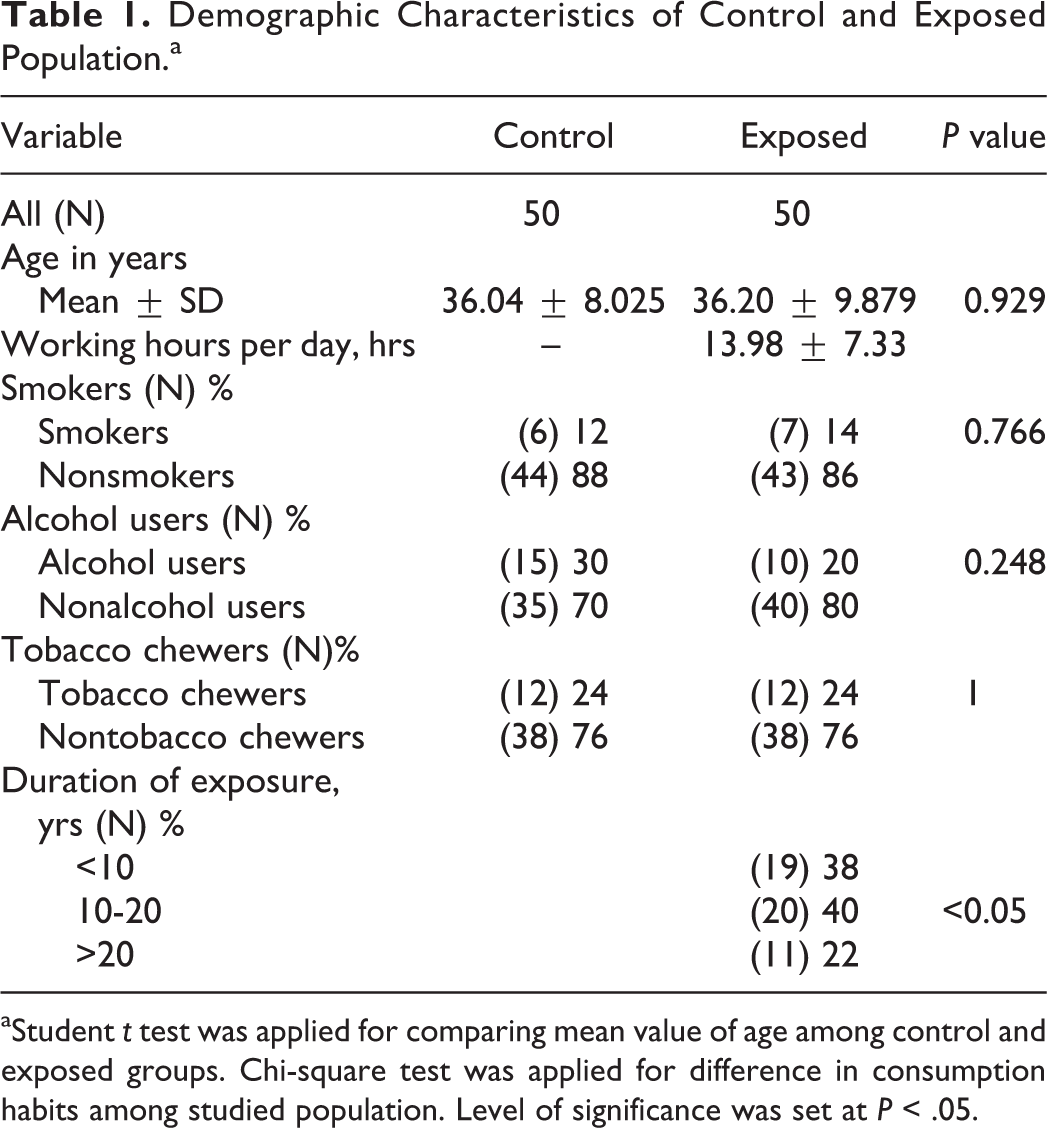
aStudent t test was applied for comparing mean value of age among control and exposed groups. Chi-square test was applied for difference in consumption habits among studied population. Level of significance was set at P < .05.
Urinary Phenol Assessment
The mean concentration of phenol in random urine samples of control and exposed participants was found to be 0.024 ± 0.010 µg/mL and 0.80 ± 0.018 µg/mL, respectively (Figure 1). The level of phenol in urine of exposed participants was found significantly higher than that of control participants (P < 0.05) as evidenced by the fact that in the control group, urinary phenol range was 0.001 to 0.1 µg/mL while in the gasoline pump workers, the range was 0.23 to 1.00 µg/mL.
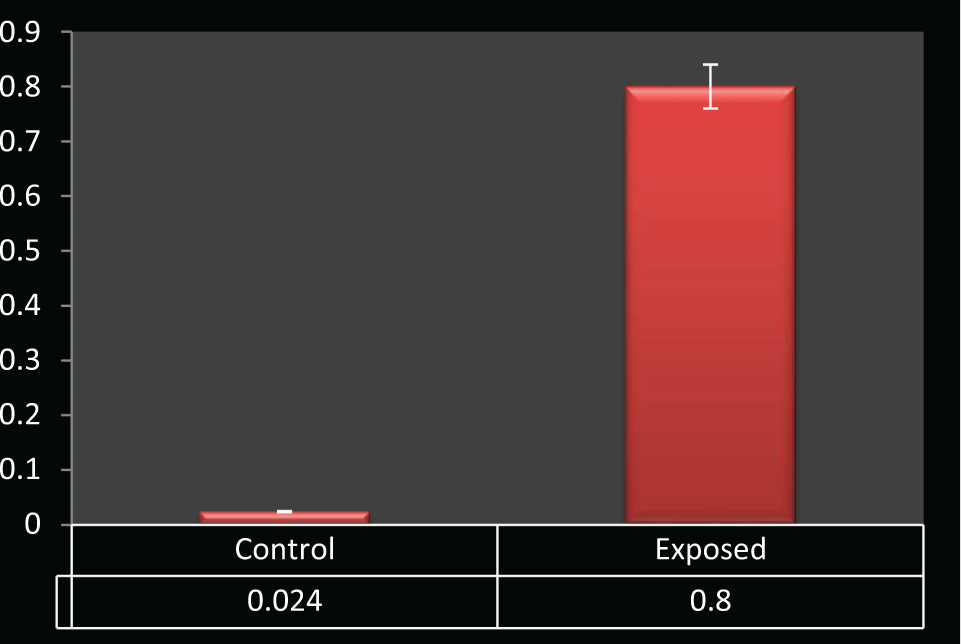
Mean concentration of phenol in exposed and control population.
Frequency Distribution of GSTM1, GSTT1, and GSTP1
Frequency distribution of GSTM1, GSTT1, and GSTP1 genotypes is given in Table 2. GSTM1 and GSTT1 non-null genotypes were found to be more prominent than null genotypes in both control and exposed participants. The observed frequency of GSTP1 genotype was found to be in Hardy-Weinberg equilibrium (Table 3).
Frequency Distribution of GSTM1 and GSTT1 Genotypes.a
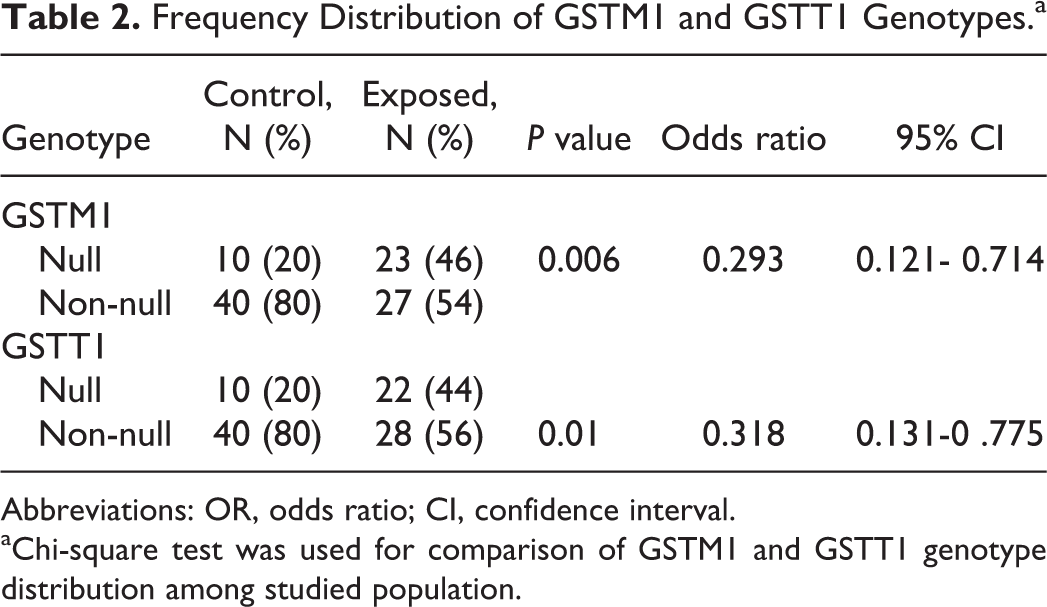
Abbreviations: OR, odds ratio; CI, confidence interval.
aChi-square test was used for comparison of GSTM1 and GSTT1 genotype distribution among studied population.
Frequency Distribution of GSTP1.a
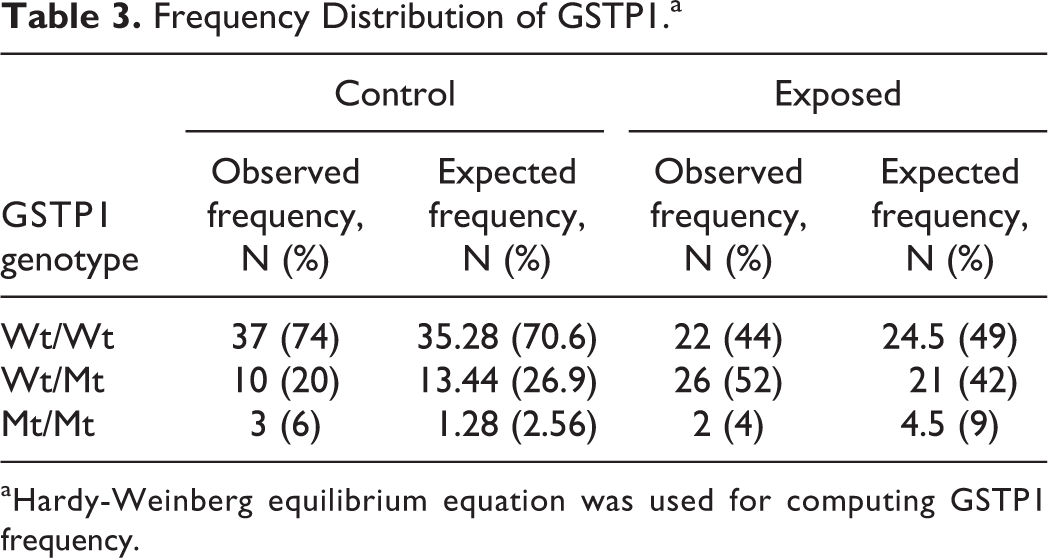
aHardy-Weinberg equilibrium equation was used for computing GSTP1 frequency.
Frequency of CBMN in Control and Exposed Population
The mean value of CBMN in exposed participants was found to be 6.70 ± 1.78, which was significantly higher than that of control participants (2.20 ± 0.63; Table 4). Highest and significant mean value of CBMN frequency was found in exposed participants having the exposure duration of more than 20 years (7.91 ± 1.58). Among age-groups, highest mean value of CBMN frequency was found in 30 to 40 years age-group in both the exposed and the control population, respectively (7.94 ± 1.12; 2.21± 0.63).
CBMN Frequency by Age and Exposure Duration.
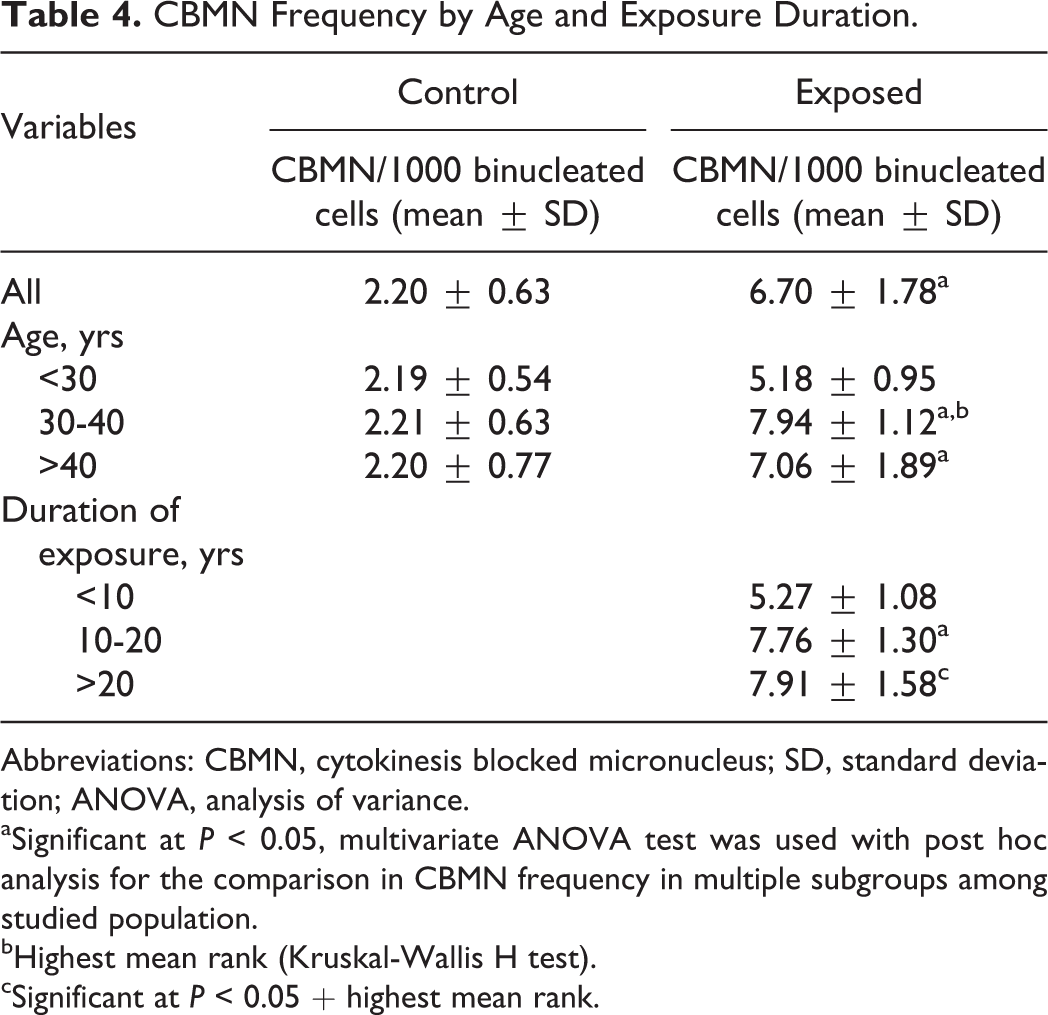
Abbreviations: CBMN, cytokinesis blocked micronucleus; SD, standard deviation; ANOVA, analysis of variance.
aSignificant at P < 0.05, multivariate ANOVA test was used with post hoc analysis for the comparison in CBMN frequency in multiple subgroups among studied population.
bHighest mean rank (Kruskal-Wallis H test).
cSignificant at P < 0.05 + highest mean rank.
Influence of GSTM1, GSTT1, and GSTP1 Polymorphisms on CBMN Frequency
Influence of GSTM1, GSTT1, and GSTP1polymorphisms on CBMN frequency has been studied (Table 5). The mean value of CBMN was found to be significantly higher in participants having GSTM1 null (7.43 ± 1.65) and GSTT1 null (7.73± 1.70) genotypes when compared to participants with GSTM1 (6.07± 1.69) and GSTT1 (5.89± 1.42) non-null genotypes in the exposed group.
CBMN Frequency by GST Genotypes.a
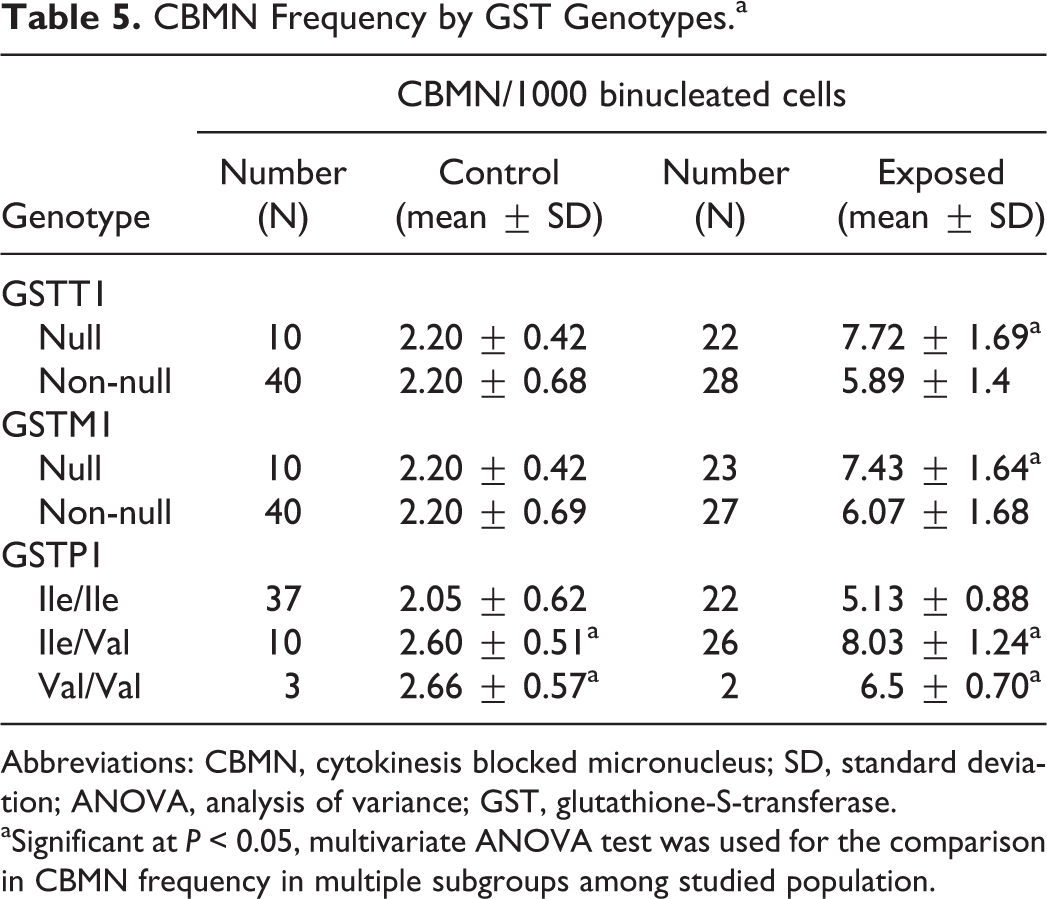
Abbreviations: CBMN, cytokinesis blocked micronucleus; SD, standard deviation; ANOVA, analysis of variance; GST, glutathione-S-transferase.
aSignificant at P < 0.05, multivariate ANOVA test was used for the comparison in CBMN frequency in multiple subgroups among studied population.
In case of GSTP1, mutant genotypes (heterozygous and homozygous) had higher mean CBMN frequency value (8.04 ± 1.25 + 6.50 ± .71; 2.60 ± .52 + 2.67.58) as compared to wild genotype (5.14 ± .89; 2.05 ± .62) in both exposed and control groups, respectively. Results of linear regression analysis adjusted for model such as age, exposure, and consumption habits are shown in Table 6.
Association of GST Genes With CBMN Frequency as Found by Linear Regression Analysis.
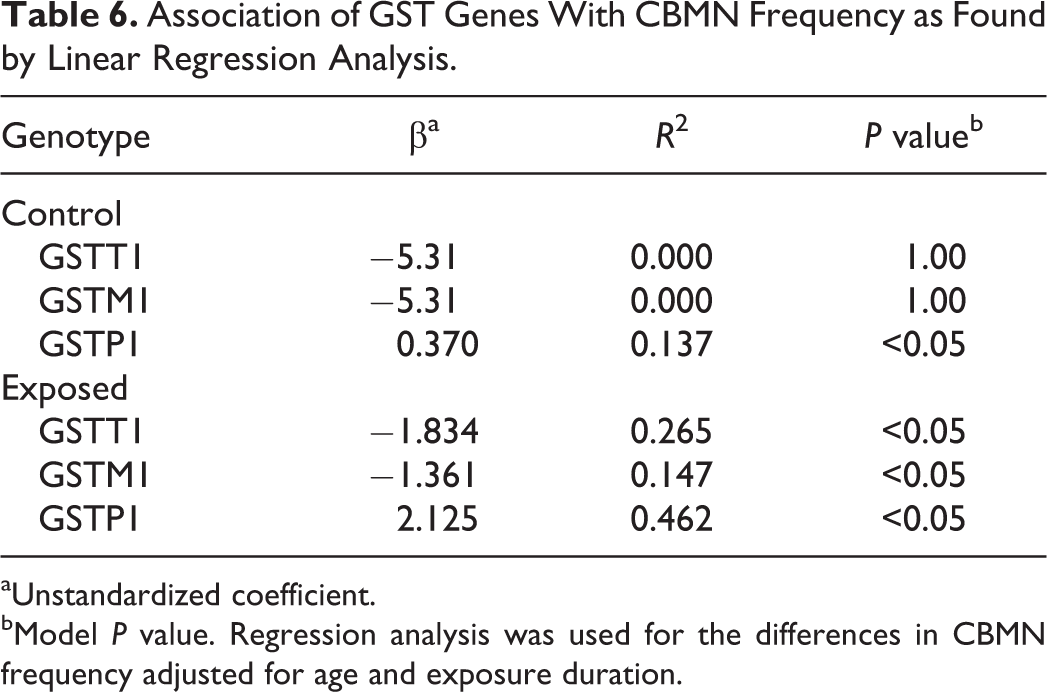
aUnstandardized coefficient.
bModel P value. Regression analysis was used for the differences in CBMN frequency adjusted for age and exposure duration.
Discussion
In our results, significant increase in CBMN frequency was found in gasoline pump workers. Similar to our results, Sellappa et al 15 and Rekhadevi et al 16 showed significantly higher frequency of micronucleated cells in workers exposed to petrol than in the unexposed control population. Significantly increased micronuclei frequencies as well as binucleated cells were observed in petrol pump attendants after exposure to benzene (Celik et al and Gadhia et al). 17,18 Michael and Stefano 19 described studies reporting on the impact of age, diet, and life style factors using micronucleus as a biomarker. There have been many findings reporting that age is a risk factor for increasing MN frequency (Fenech and Bonassi 2011). 20 However, contradictory to our results, Carere et al 21 did not show any significant excess of MN in binucleated lymphocytes of petrol pump workers with respect to the age-paired control.
We observed that there was significant increase in CBMN frequency among GSTM1 and GSTT1 null participants in exposed group. Similar to our results, Krisch-Volder et al 22 observed higher frequency of MN and Sister Chromatid Exchanges (SCE) in individuals having GSTM1 and GSTT1 null genotypes in healthy population. Contradictory to our results, Rossi et al 23 did not find any significant association between GST genotypes (GSTM1 and GSTT1) and chromosomal aberrations in exposed participants. Regarding the effect of GSTP1 polymorphism, similar to our results, Kumar et al 24 found that the null genotypes of GSTM1, GSTT1, and GSTP1 (val/val) are sensitive to hydroquinone genotoxicity. Individuals with the GSTP1*C (Val) allele had a higher risk of developing lung cancer than patients with wild type allele (Ryberg et al and Schneider et al). 25,26
In our study, CBMN frequency was found to be significantly higher in gasoline pump workers than that of control population having no exposure to gasoline vapors. Biological monitoring of exposure to chemical substances in the workplace has acquired an increasing importance in the evaluation risk to human health as an integral part of strategies to improve conditions of occupational safety and health. It is recommended that occupational workers are required to train regularly and always be given appropriate personal protective equipments. The determination of GSTM1, GSTT1, and GSTP1 genotypes status could also be helpful in providing baseline data as an individual marker of susceptibility in gasoline pump-exposed population. Disparate results obtained in case of GSTP1 genotype may be because of small number of homozygous mutants.
Footnotes
Acknowledgments
We are thankful to Kurukshetra University for grant of University Research Fellowship to the first author and to all blood donors. We are also grateful to Mr Rajesh, statistical officer, Department of forensic sciences, Post Graduate Institute of Medical Education, and Research, Chandigarh, Haryana (India) for statistical analysis.
Author Contributions
Priya, K. contributed to conception and design, contributed to acquisition, and drafted the manuscript; Yadav, A contributed to conception and design, contributed to interpretation, and critically revised the manuscript; Gupta, R contributed to conception and critically revised the manuscript; Aggawal, N contributed to design and critically revised the manuscript; Kumar, N contributed to acquisition and drafted the manuscript; Gulati, S contributed to acquisition and drafted the manuscript. All authors gave final approval and agreed to be accountable for all aspects of work ensuring integrity and accuracy.
Declaration of Conflicting Interests
The author(s) declared no potential conflicts of interest with respect to the research, authorship, and/or publication of this article.
Funding
The author(s) received no financial support for the research, authorship, and/or publication of this article.