




Abstract
The Cosmetic Ingredient Review (CIR) Expert Panel (Panel) reviewed the safety of 16 pentaerythrityl tetraester compounds as used in cosmetics. These ingredients mostly function as hair-conditioning agents, skin-conditioning agents—miscellaneous and binders, skin-conditioning agents–occlusive, viscosity-increasing agents–nonaqueous, and skin-conditioning agents—emollient. The Panel reviewed the available animal and human data related to these ingredients and previous safety assessments of the fatty acid moieties. The Panel concluded that pentaerythrityl tetraisostearate and the other pentaerythrityl tetraester compounds were safe in the practices of use and concentration as given in this safety assessment.
Introduction
This safety assessment summarizes published and unpublished data relevant to the safety of pentaerythrityl tetraisostearate and other pentaerythrityl tetraester compounds used in cosmetics. As given in the International Cosmetic Ingredient Dictionary and Handbook,
1
these ingredients function mostly as hair-conditioning agents, skin-conditioning agents–miscellaneous, binders, skin-conditioning agents—occlusive, viscosity-increasing agents—nonaqueous, and skin-conditioning agents—emollient. The 17 ingredients included in this report are as follows: pentaerythrityl tetraisostearate, pentaerythrityl tetra C5-9 acid esters, pentaerythrityl tetra C5-10 acid esters, pentaerythrityl tetracaprylate/tetracaprate, pentaerythrityl tetralaurate, pentaerythrityl tetramyristate, pentaerythrityl tetrastearate, pentaerythrityl tetrabehenate, pentaerythrityl tetracocoate, pentaerythrityl tetraoleate, pentaerythrityl tetraethylhexanoate, pentaerythrityl tetraethylhexanoate/benzoate, pentaerythrityl tetrabehenate/ benzoate/ethylhexanoate, pentaerythrityl tetrabenzoate, pentaerythrityl tetraisononanoate, and pentaerythrityl tetrapelargonate.
In a previous review by CIR Expert Panel (Panel), pentaerythrityl tetraisononanoate and pentaerythrityl tetrapelargonate were determined to be safe in the present practices of use and concentration. 2 These 2 ingredients were added to this report so that all of the reviewed pentaerythrityl tetraesters would be in one report. In addition, the Panel issued safety assessments of most of the fatty acid component of these ingredients, including coconut, isostearic, oleic, lauric, myristic, and stearic acids. These are the esterase metabolites that would result from pentaerythrityl tetracocoate, pentaerythrityl tetraisostearate, pentaerythrityl tetraoleate, pentaerythrityl tetralaurate, pentaerythrityl tetramyristate, and pentaerythrityl tetrastearate, respectively. In previous safety assessments, CIR determined that these fatty acids are safe in the present practices of cosmetic use. 3 –5 Benzoic acid (a metabolite of pentaerythrityl tetrabenzoate, pentaerythrityl tetraethylhexanoate/benzoate, and pentaerythrityl tetrabehenate/benzoate/ethylhexanoate) was determined by the Panel to be safe for use in cosmetic formulations in the present practices of use and concentration at their meeting on September 26 to 27, 2011. This revised the earlier safety assessment of benzoic acid. 6
Chemistry
Definition and Structure
The pentaerythrityl tetraesters have a core pentaerythritol moiety that is esterified with 4 monobasic fatty acids. For example, pentaerythrityl tetraisostearate consists of a pentaerythritol core, esterified with 4 stoichiometric equivalents of isostearic acid (Figure 1). The Chemical Abstracts Service numbers, definitions, functions, and structures of these ingredients are provided in Table 1.
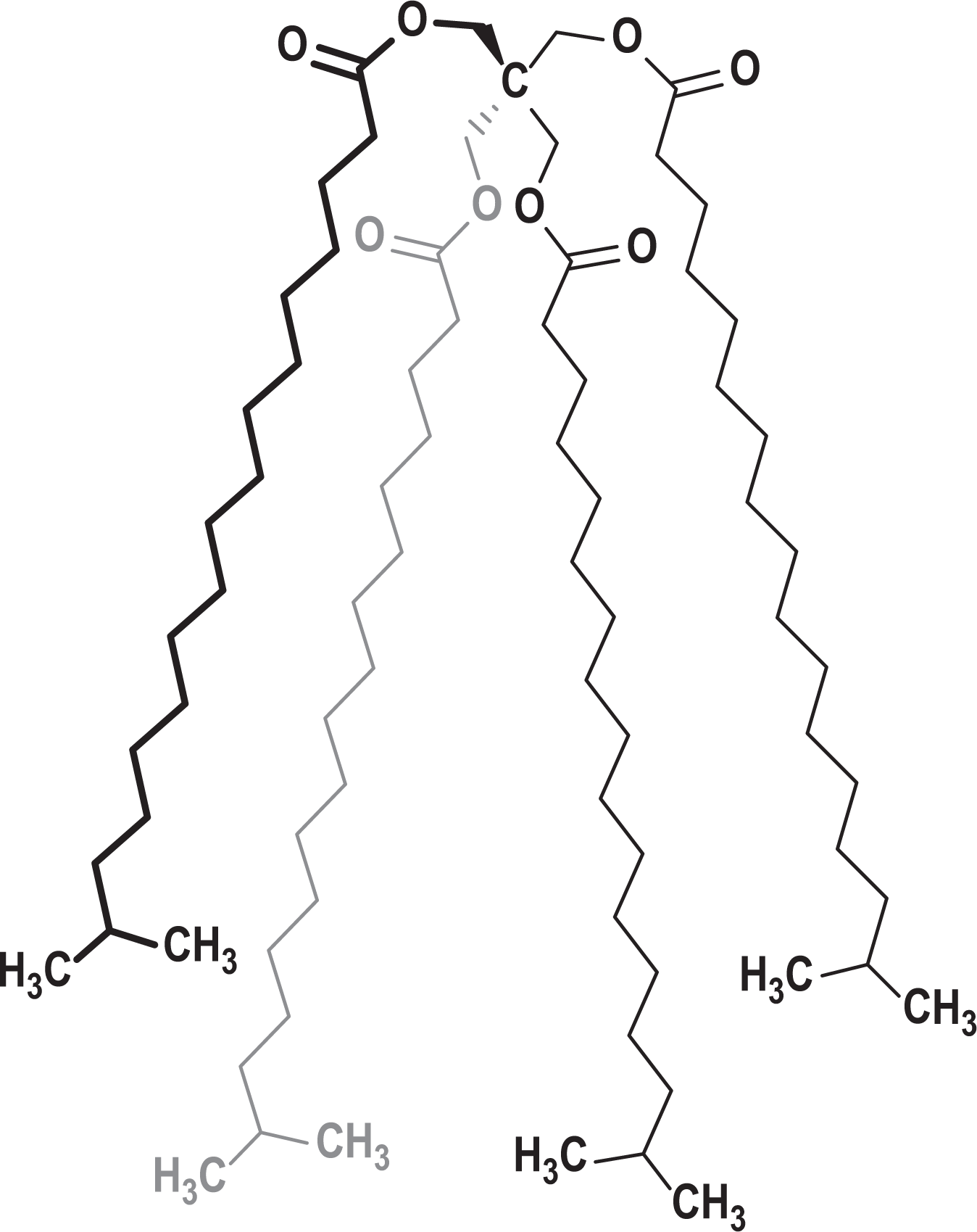
Pentaerythrityl tetraisostearate.
Definitions, Functions, and Structures of Pentaerythrityl Ester Ingredients in this Safety Assessment. 1

Physical and Chemical Properties
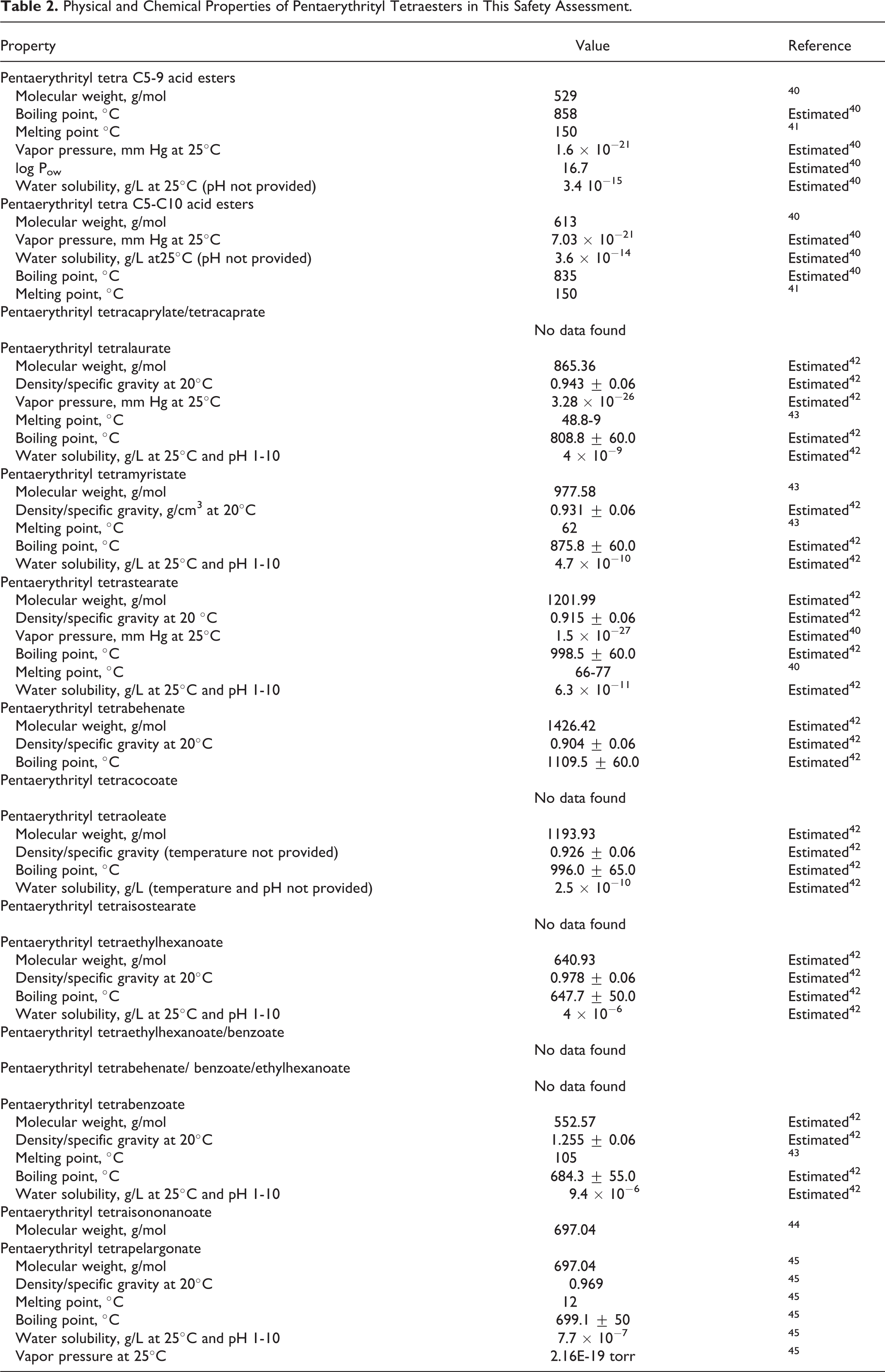
The physical and chemical properties of the pentaerythrityl tetraester ingredients in this safety assessment are provided in Table 2. The pentaerythrityl tetraesters, as a group, are solid crystalline materials. These ingredients have very poor solubility in water and have large molecular weights (too large to pass through the dermal layer). Pentaerythrityl tetra C5-9 acid esters have an estimated logPow of 16.7.
Physical and Chemical Properties of Pentaerythrityl Tetraesters in This Safety Assessment.
Method of Manufacture
Pentaerythrityl tetraesters can be prepared from pentaerythritol by alcohol esterification methods (eg, by reaction with acids, acid chlorides, or acid anhydrides). 7 For example, pentaerythritol tetrastearate can be manufactured by heating stearoyl chloride and pentaerythritol (4:1 ratio) at 100°C under 2 mm Hg. 8 The resulting product can then be recrystallized from chloroform to form a pure product. A greener, biocatalytic process developed specifically for the manufacture of esters for use in the formulation of cosmetic ingredients (ie, for producing cosmetic grade esters) also is a potential process for the manufacture of these ingredients. 9
Impurities
Pentaerythrityl tetra C5-9 acid esters were reported by one source to be 100% pure. 10,11 Another source, however, reported 81% purity with the other 19% comprised of carboxylic acids and dipentaerythritol C5-9 hexaesters. 12
Absorption of UV
While no UV absorption data on the ingredients in this safety assessment were available, most of the ingredients included in this review would not be expected to have any meaningful UV absorption (ie, no detectable absorption in the UV-A and UV-B bands). The alkyl carboxyl groups and the nonconjugated alkenyl groups of pentaerythrityl tetraoleate found in most of these ingredients would be expected to absorb in the UVC range. For the majority of these ingredients, there simply are no chemical functional groups present that have any possibility of UV-A or UV-B absorption. However, the aromatic, conjugated carboxyl groups present in pentaerythrityl tetrabenzoate, pentaerythrityl tetraethylhexanoate/benzoate, and pentaerythrityl tetrabehenate/benzoate/ethylhexanoate would be expected to have some meaningful UV absorption.
Use
Cosmetic
Data on ingredient usage are provided to the Food and Drug Administration Voluntary Cosmetic Registration Program (VCRP), and a survey conducted by the Personal Care Products Council (Council) collected use concentrations for ingredients in this group. 13 –18 The total number of VCRP reported uses of pentaerythrityl tetraisostearate was 532 for leave-on and 9 for rinse-off products, and the Council survey found that pentaerythrityl tetraisostearate was used up to 0.1% to 55% (highest concentration in lipstick) in leave-on products and up to 0.1% in paste masks (mud packs), a rinse-off product. Table 3 summarizes the VCRP and Council survey data for all ingredients in this group.

Abbreviations: NR, none reported.
aBecause each ingredient may be used in cosmetics with multiple exposure types, the sum of all exposure type uses may not equal the sum of total uses.
b Fragrance preparations (used up to 45% and 50%) are light gels that are applied with a small spatula-like applicator, not aerosols.
There were no reports to the VCRP or the Council survey of use for pentaerythrityl tetra C5-9 acid esters, pentaerythrityl C5-10 acid esters, pentaerythrityl tetramyristate, pentaerythrityl tetracocoate, pentaerythrityl tetraoleate, pentaerythrityl tetrabenzoate, pentthrityl tetraisonononanoate, and penaerythirtyl tetrapleargonate.
Pentaerythrityl tetracaprylate/tetracaprate is used in hair sprays, and pentaerythrityl tetraethylhexanolate is used in deodorants and could possibly be inhaled. In practice, 95% to 99% of the droplets/particles released from cosmetic sprays have aerodynamic equivalent diameters >10 µm. 19,20 Therefore, most droplets/particles incidentally inhaled from cosmetic sprays would be deposited in the nasopharyngeal region and would not be respirable (ie, they would not enter the lungs) to any appreciable amount. 21 –23 However, the potential for inhalation toxicity is not limited to respirable droplets/particles deposited in the lungs. Inhaled droplets/particles deposited in the nasopharyngeal and thoracic regions of the respiratory tract may cause toxic effects depending on their chemical and other properties. There is some evidence indicating that deodorant spray products can release substantially larger fractions of particulates having aerodynamic equivalent diameters in the range considered to be respirable. 22 However, the information is not sufficient to determine whether significantly greater lung exposures result from the use of deodorant sprays compared to other cosmetic sprays.
Noncosmetic
Pentaerythrityl tetraesters are used in lubricating oils of jet engines, low-temperature use grease, heat-resistant engine oil, and refrigerator oil. 24 Pentaerythrityl tetrastearate is an indirect food additive that may be used to make food packaging. 25 It may also be used in cellophane that comes in contact with food with a limit of 0.1%. 26 Pentaerythrityl fatty acids may be used as defoaming agents in paper and paperboard intended for food use. 18
Toxicokinetics
Absorption, Distribution, Metabolism, and Excretion
There were no experimental data discovered on the toxicokinetics of pentaerythritol tetraesters. However, due to the large size of the molecules and the high Pow of pentaerythrityl tetra C5-9 acid esters, it is not expected that these ingredients would penetrate the skin. For example, pentaerythrityl tetrapelargonate has a log P >16.7, a molecular weight >500, and low solubility, so it is not likely to penetrate the skin. The dermal bioavailability of pentaerythrityl tetra C5-9 acid esters was 2% to 6%. 27
Toxicological Studies
Acute Toxicity
Dermal
There were no dermal studies discovered for pentaerythrityl tetraesters.
Oral—nonhuman
Pentaerythrityl tetra C5-9 acid esters
Sprague-Dawley rats (n = 5/sex) were orally administered pentaerythrityl tetra C5-9 acid esters (1940 mg/kg). 10,11 There were no deaths. One male had unformed stool at 4 hours after administration. Necropsy was unremarkable at 15 days. Sprague-Dawley rats (n = 5/sex) had no deaths or clinical signs after oral gavage of pentaerythrityl tetra C5-9 acid esters (1940 mg/kg; 2.0 mL/kg). 28 Necropsy was unremarkable at 15 days.
Pentaerythrityl tetra C5-10 acid esters
Wistar rats (n = 5/sex) were orally administered pentaerythrityl tetra C5-10 acid esters (5000 mg/kg). 10,11 There were no deaths or clinical signs. Necropsy was unremarkable at 14 days.
Pentaerythrityl tetrabenzoate
The oral median lethal dose (LD50) for pentaerythrityl tetrabenzoate was reported to be 1158 mg/kg in rats. 29
Inhalation
There were no acute inhalation toxicological studies discovered for pentaerythrityl tetraesters.
Repeated Dose Toxicity
Dermal—nonhuman
Pentaerythrityl tetra C5-9 acid esters
Pentaerythrityl tetra C5-9 acid esters (0, 800, or 2000 mg/kg, neat) were dermally administered to clipped backs of Sprague-Dawley rats (n = 10/sex) for 5 days/week for 13 weeks. 27 The test material was not covered but collars were used to prevent grooming of the area. Males in the high-dose group weighed 10% less than the control group and 7% less than those in the low-dose group after 13 weeks. No effect on body weights occurred in females. There were no other signs of systemic toxicity. There was minimal skin irritation, and flaking with slight erythema was observed in both treatment groups. Microscopic examination of the skin revealed very minor epidermal hyperplasia and chronic inflammation of the dermis. No differences were seen in sperm morphology at necropsy. Ovaries, testes, epididymides, uterus, and vagina showed no adverse effects. The no observed adverse effect level (NOAEL) was 2000 mg/kg/d.
Oral
There were no oral repeated dose studies discovered for pentaerythrityl tetraesters.
Inhalation
A micronucleus assay was performed on male Sprague-Dawley rats (n = 10) that were exposed to aerosolized pentaerythrityl tetra C5-9 acid esters (0.5 mg/L) for 6 h/d, 5 d/week, for 2 weeks. 30 There were no reported mortalities or adverse effects reported.
Reproductive and Developmental Toxicity
Pentaerythrityl Tetra C5-9 Acid Esters
Pentaerythrityl tetra C5-9 acid esters (0, 800, or 2000 mg/kg) were dermally administered to clipped backs of Sprague-Dawley rats (n = 10/sex) for 5 d/week for 13 weeks. 27 There were no effects noted in sperm morphology. Gross necropsy and histopathology of the ovaries, testis, epididymides, uteruses, and vaginas were unremarkable.
Pentaerythrityl tetra C5-9 acid esters (0, 800, or 2000 mg/kg/d) were applied to the clipped backs of Sprague-Dawley rats (n = 20) on days 0 to 19 of gestation. 31 Neither maternal parameters (food consumption and body weight gains) monitored throughout gestation (days 0-19) nor reproductive parameters (number of implants, resorptions, or viable fetuses) were adversely affected by the test substance. No evidence of teratogenicity was observed by external examination of fetuses. Mean fetal body weights and crown-rump distances were similar in all the groups.
Genotoxicity
In Vitro
Pentaerythrityl tetra C5-9 acid esters
In a reverse mutation assay of pentaerythrityl tetra C5-9 acid esters (33.3, 100, 333, 1000, 3330, or 5000 µg/plate) using Salmonella typhimurium (strains TA98, TA100, TA1535, and TA1537) and Escherichia coli (WP2uvrA) with and without metabolic activation, the results were negative. 32 Positive controls were 2-aminoanthracene and benzo[a]prene with metabolic activation. Positive controls, without metabolic activation, were sodium azide, 2-nitrofluorene, and ICR-191. The controls had the expected results.
Pentaerythrityl tetra C5-9 acid esters (33.3, 100, 333, 1000, 3330, or 5000 µg/plate) with and without metabolic activation were not cytotoxic or mutagenic in a reverse mutation assay using E coli (WP2uvrA). 33 The positive controls (2-aminoanthracen and 4-nitroquinoline-N-oxide) and negative vehicle controls (ethanol) had the expected results.
In a microsome reverse mutation assay using S typhimurium (TA98, TA100, TA1535, and TA1537) and E coli (WP2uvrA), pentaerythrityl tetra C5-9 acid esters (33.3, 100, 333, 1000, 3330, or 5000 µg/plate) were not mutagenic with or without metabolic activation. 12
Pentaerythrityl tetrabenzoate
A mutagenicity assay of pentaerythrityl tetrabenzoate (0.05 mL/plate) using S typhimurium (TA97, TA98, TAl00, TAl535, and TA1537) was negative. 34
In Vivo
Pentaerythrityl tetra C5-9 acid esters
A micronucleus assay was performed on male Sprague-Dawley rats (n = 10) that were exposed to aerosolized pentaerythrityl tetra C5-9 acid esters (0.5 mg/L) for 6 h/d, 5 d/week, for 2 weeks. 30 The test material was not cytotoxic to red blood cell formation nor did it induce increased micronucleated polychromatic erythrocytes (PCEs) or normochormatic erythrocytes (NCEs) in the bone marrow.
Carcinogenicity
There were no carcinogenicity studies discovered for pentaerythrityl tetraesters.
Irritation and Sensitization
Irritation
Dermal—nonhuman
Pentaerythrityl tetra C5-9 acid esters
Pentaerythrityl tetra C5-9 acid esters (0, 800, or 2000 mg/kg) were dermally administered to clipped backs of Sprague-Dawley rats (n = 10/sex) for 5 days/week for 13 weeks. 27 Minimal skin irritation, mostly flaking with slight erythema, was observed in both treatment groups. Microscopic examination of the skin revealed very minor epidermal hyperplasia and chronic inflammation of the dermis.
Pentaerythrityl tetra C5-9 acid esters (0, 800, or 2000 mg/kg/d) were applied to the clipped back of Sprague-Dawley rats (n = 20) on days 0 to 19 of gestation. 31 The test substances at both doses produced slight skin irritation (erythema and flaking) at the application site.
Dermal and mucosal—human
There were no human dermal or mucosal irritation studies discovered for pentaerythrityl tetraesters.
Ocular
Pentaerythrityl tetrabehenate
Subjects (n = 30) used an eyeliner containing pentaerythrityl tetrabehenate (1.705%) daily for 4 weeks. 35 Trace increases in redness of the palpebral conjunctivae were observed in 2 subjects at week 4. The authors decided that this was unrelated to the test substance. The subjects did not report any irritation. There were no increases in lacrimation, eye lid inflammation, or bulbar conjunctova1 irritation and no changes in visual acuity, corneal tissue integrity, or contact lenses were observed.
Sensitization
Dermal—nonhuman
Pentaerythrityl tetrabehenate/benzoate/ethylhexanoate
In a skin contact allergenicity test of pentaerythrityl tetrabehenate/benzoate/ethylhexanoate (16.6%) using female albino guinea pigs (n = 10 test, 5 control), no signs of irritation or sensitization were observed when challenged (16.6% and 50%). 35,36 The acetone control had the expected results.
Pentaerythrityl tetraethylhexanoate/benzoate
In a contact allergenicity test of pentaerythrityl tetraethylhexanoate/benzoate (100%) using female albino Hartley guinea pigs (n = 10, 5 control), no signs of irritation or sensitization were observed when challenged (1.8%-100%). 36,37 The acetone control had the expected results.
Dermal—human
Pentaerythrityl tetracaprylate/tetracaprate
In a human repeated insult patch test (HRIPT; n = 115) of a cream blush containing pentaerythrityl tetracaprylate/tetracaprate (5%), no irritation or sensitization was observed. 37
Pentaerythrityl tetrabehenate
In an HRIPT (n = 107), an eyeliner containing pentaerythrityl tetrabehenate (1.705%), no irritation or sensitization was observed. 38
Pentaerythrityl tetraisostearate
In an HRIPT (n = 107) of a lip gloss containing pentaerythrityl tetraisostearate (55%), no irritation or sensitization was observed. 39
Phototoxicity
There were no phototoxicity studies discovered for the pentaerythrityl tetraesters.
Summary
This is a safety assessment of pentaerythrityl tetraisostearate and other pentaerythrityl tetraester compounds used as cosmetic ingredients. The functions of these ingredients include hair-conditioning agents, plasticizers, skin-conditioning agents—miscellaneous, binders, skin-conditioning agents—occlusive, viscosity-increasing agents—nonaqueous, and skin-conditioning agents—emollient.
Pentaerythrityl tetraisostearate was reported to be used in 532 leave-on and 9 rinse-off products up to 0.1% to 55% in leave-on products and up to 0.1% in a rinse-off product. Pentaerythrityl tetraethylhexanoate/benzoate was reported to be used in 4 leave-on products up to 40%. Pentaerythrityl tetrabehenate was reported to be used up to 3% in 8 leave-on products. Pentaerythrityl tetrabehenate/benzoate/ethylhexanoate was reported to be used in 7 leave-on products up to 16% and in rinse-off products up to 0.5%. Pentaerythrityl tetracaprylate/tetracaprate was reported to be used in 26 leave-on products at 5%, up to 1% in hair sprays. Pentaerythrityl tetraethylhexanoate was reported to be used in 224 leave-on products up to 50% and 17 rinse-off products up to 20%. Pentaerythrityl tetraethylhexonate is reported to be used in suntan gels, creams, and liquids up to 16% and other suntan products up to 21%, which may or not be spray products, but this ingredient is used in nonspray products at concentrations of 45% to 50%. Pentaerythrityl tetrapelargonate was reported to be used in 1 hair product and pentaerythrityl tetralaurate in 1 eye product. Pentaerythrityl tetrastearate was reported to be used up to 7% in leave-on products. There were no reports to the VCRP or the Council survey of use for pentaerythrityl tetra C5-9 acid esters, pentaerythrityl C5-10 acid esters, pentaerythrityl tetramyristate, pentaerythrityl tetracocoate, pentaerythrityl tetraoleate, pentaerythrityl tetrabenzoate, pentthrityl tetraisonononanoate, and penaerythirtyl tetrapleargonate.
There were no mortalities in rats orally administered 1943 mg/kg pentaerythrityl tetra C5-9 acid esters. There was no mortality in rats orally administered pentaerythrityl tetra C5-9 acid esters at 1940 mg/kg and pentaerythrityl tetra C5-10 acid esters at 5000 mg/kg. The oral LD50 for pentaerythrityl tetrabenzoate was reported to be 1158 mg/kg in rats. The dermal NOAEL was 2000 mg/kg/d for female rats and >2000 mg/kg/d over 13 weeks for pentaerythrityl tetra C5-9 acid esters.
Dermally applied pentaerythrityl tetra C5-9 acid esters at 2000 mg/kg had no effects on male or female reproductive organs in rats. There were no teratogenic effects up to 2000 mg/kg. Pentaerythrityl tetra C5-9 acid esters and pentaerythrityl tetrabenzoate were not genotoxic in reverse mutation assays. Aerosolized pentaerythrityl tetra C5-9 acid was neither cytotoxic to red blood cell formation nor did it induce increased micronulceated PCEs or NCEs in the bone marrow of rats.
Pentaerythrityl tetra C5-9 acid esters were mildly irritating in rats at 800 mg/kg when administered dermally for 13 weeks. Using an eyeliner containing pentaerythrityl tetrabehenate at 1.705% for 4 weeks did not cause irritation. Pentaerythrityl tetrabehenate/benzoate/ethylhexanoate at 16.6% and pentaerythrityl tetraethylhexanoate/benzoate at 100% were not sensitizing to guinea pigs. Pentaerythrityl tetrabehenate in an eyeliner, pentaerythrityl tetraisostearate in a lip gloss, and pentaerythrityl tetracaprylate/tetracaprate in a cream blush were not sensitizing at 1.705%, 55%, and 5%, respectively.
Discussion
The Expert Panel noted gaps in the available safety data for the pentaerythrityl tetraester compounds in this safety assessment. The available data on many of the ingredients are sufficient, however, and similarity between structures suggested that the available data may be read across to address the entire group. In addition, these ingredients have similar functions in cosmetics.
Previous safety assessments support the safety for most of the fatty acid components of these ingredients, including coconut, isostearic, oleic, lauric, myristic, and stearic acids. These may be esterase metabolites that could result from the cleavage of pentaerythrityl tetracocoate, pentaerythrityl tetraisostearate, pentaerythrityl tetraoleate, pentaerythrityl tetralaurate, pentaerythrityl tetramyristate, and pentaerythrityl tetrastearate, respectively. Likewise, benzoic acid (a potential metabolite of pentaerythrityl tetrabenzoate, pentaerythrityl tetraethylhexanoate/benzoate, and pentaerythrityl tetrabehenate/benzoate/ethylhexanoate) was determined by the Panel to be safe for use in cosmetic formulations in the present practices of use and concentration.
The Panel stressed that the cosmetics industry continue to use current good manufacturing practices to limit impurities. Because these ingredients were reported to be used in products that may be aerosolized, including hair sprays and deodorants, the Panel discussed the issue of incidental inhalation exposure. The Panel considered that the preponderance of the data indicates that incidental inhalation exposures to these ingredients in aerosolized cosmetic products would not cause adverse health effects. The limited data available from one repeated dose inhalation study suggest little potential for respiratory effects at relevant doses. The Panel believes that the sizes of a substantial majority of the particles of these ingredients, as manufactured, are larger than those in the respirable range and/or aggregate and agglomerate to form much larger particles in formulation. Thus, the adverse effects reported using high doses of respirable particles in the inhalation studies do not indicate risks posed by use in cosmetics. The Panel considered other data available to characterize the potential for pentaerythrityl tetraesters to cause reproductive toxicity, genotoxicity, irritation and sensitization, or other toxic effects. They noted the lack of systemic toxicity at high doses in acute and subchronic exposure studies, little or no irritation or sensitization in multiple tests of dermal and ocular exposure, and the absence of genotoxicity in Ames tests and a micronucleus test. In addition, these ingredients are large molecules with a low dermal bioavailability (2%-6%), which supports the view that they are unlikely to be absorbed or cause local effects in the respiratory tract. Further, these ingredients are reportedly used at concentrations of 21% or less in cosmetic products that may be aerosolized. The Panel noted that 95% to 99% of droplets/particles produced in cosmetic aerosols would not be respirable to any appreciable amount. Furthermore, several of these ingredients are used for viscosity-increasing functions, indicating that they tend to swell and aggregate in water and other solvents and would, thus, be too large to be inhaled or respired. Coupled with the small actual exposure in the breathing zone and the concentrations at which the ingredients are used, the available information indicates that incidental inhalation would not be a significant route of exposure that might lead to local respiratory or systemic effects. A detailed discussion and summary of the Panel’s approach to evaluating incidental inhalation exposures to ingredients in cosmetic products that may be aerosolized is available at http://www.cir-safety.org/cir-findings.
Conclusion
The CIR Expert Panel concluded that the following ingredients are safe in the present practices of use and concentration described in this safety assessment: pentaerythrityl tetraisostearate, pentaerythrityl tetra C5-9 acid esters*, pentaerythrityl tetra C5-10 acid esters*, pentaerythrityl tetracaprylate/tetracaprate, pentaerythrityl tetralaurate, pentaerythrityl tetramyristate*, pentaerythrityl tetrastearate, pentaerythrityl tetrabehenate, pentaerythrityl tetracocoate*, pentaerythrityl tetraoleate*, pentaerythrityl tetraethylhexanoate, pentaerythrityl tetraethylhexanoate/benzoate, pentaerythrityl tetrabehenate/ benzoate/ethylhexanoate, pentaerythrityl tetrabenzoate*, pentaerythrityl tetraisononanoate, and pentaerythrityl tetrapelargonate.
Were ingredients in this group not in current use (identified with an *) to be used in the future, the expectation is that they would be used in product categories and at concentrations comparable to others in this group.
Footnotes
Authors’ Contributions
Becker contributed to conception and design; contributed to acquisition, analysis, and interpretation; and drafted the manuscript; Gill contributed to conception and design; contributed to analysis and interpretation; and critically revised the manuscript; Bergfeld contributed to conception and design; contributed to analysis and interpretation; and critically revised the manuscript; Belsito contributed to conception and design; contributed to analysis and interpretation; and critically revised the manuscript; Hill contributed to conception and design; contributed to analysis and interpretation; and critically revised the manuscript; Klaassen contributed to conception and design; contributed to analysis and interpretation; and critically revised the manuscript; Liebler contributed to conception and design; contributed to analysis and interpretation; and critically revised the manuscript; Marks contributed to conception and design; contributed to analysis and interpretation; and critically revised the manuscript; Shank contributed to conception and design; contributed to analysis and interpretation; and critically revised the manuscript; Slaga contributed to conception and design; contributed to analysis and interpretation; and critically revised the manuscript; Snyder contributed to conception and design; contributed to analysis and interpretation; and critically revised the manuscript. All authors gave final approval and agree to be accountable for all aspects of work ensuring integrity and accuracy.
Author’s Note
Unpublished sources cited in this report are available from the director, Cosmetic Ingredient Review, 1620L Street, NW, Suite 1200, Washington, DC 20036, USA.
Declaration of Conflicting Interests
The author(s) declared the following potential conflicts of interest with respect to the research, authorship, and/or publication of this article. The articles in this supplement were sponsored by the Cosmetic Ingredient Review.
Funding
The author(s) disclosed receipt of the following financial support for the research, authorship, and/or publication of this article: The articles in this supplement were sponsored by the Cosmetic Ingredient Review. The Cosmetic Ingredient Review is financially supported by the Personal Care Products Council.