




Abstract
Interleukin 13 (IL-13) is a type 2 helper T cytokine involved in allergic inflammation and immune responses to parasites. CNTO5825 is an antihuman IL-13 monoclonal antibody that inhibits the pharmacological activity of human, cynomolgus monkey, and rat IL-13. Repeated dose toxicology studies of 1- to 6-month duration were conducted in both rats and monkeys at doses of 20 to 100 mg/kg/wk. A decrease in the T cell-dependent antibody response to Keyhole Limpet Hemocyanin immunization was observed in monkeys but not in rats. In the 6-month rat study, there was a 2.2-fold increase in eosinophils in males at 3 and 6 months that was reversible. At necropsy (main and 4-month recovery), rats from control and CNTO5825-dosed groups were found to have pin worms, which may have contributed to the elevations in eosinophil. Testicular toxicity (dilatation of seminiferous tubules, atrophy, and degeneration of the germinal epithelium) was observed in 2 rats at 20 mg/kg and in 5 rats at 100 mg/kg (main and recovery). Brain lesions (unilateral focal accumulation of cells in the white matter of the cerebral cortex) were observed in 2 rats at 100 mg/kg, and vascular neoplasms (1 fatal multicentric hemangiosarcoma and 1 benign hemangioma) were observed at 100 mg/kg/wk. Overall, these studies show that CNTO5825 was without toxicity when administered to rats for up to 6 weeks and to monkeys for up to 6 months. However, when administered to rats for 6 months, a number of seemingly unrelated events occurred that could not be clearly linked to CNTO5825 administration, inhibition of IL-13, or to the immunological status of the animals.
Introduction
Interleukin-13 (IL-13) is associated with type 2 helper T (Th2) cell immune responses and is secreted from multiple cell types, including T cells, eosinophils, basophils, mast cells, smooth muscle cells, epithelial cells, and macrophages. Signaling of IL-13 mediates a variety of biological activities, including airway hyperresponsiveness, inflammation, eosinophilia, immunoglobulin (Ig) E production, goblet cell hyperplasia, tissue remodeling, and fibrosis. 1 As such IL-13 is thought to play a role in the pathogenesis of several Th2-mediated diseases, including asthma, allergic dermatitis, and atopic rhinitis. Inhibitors of IL-13 have been demonstrated to be efficacious in numerous animal models of asthma, 2 –9 and early clinical studies have shown some beneficial effects in human allergic diseases. 10,11 In addition, IL-13 has been shown to play a role in the growth of tumor cells and in the elimination of parasites, including intestinal nematodes. 12
These studies describe the nonclinical testing that was conducted to support the clinical development of CNTO5825 in asthma. CNTO5825 is a human IgG1 monoclonal antibody that binds to human IL-13 with high specificity and affinity. CNTO5825 prevents the binding of extracellular IL-13 to the cell surface IL-13 receptors α1 and 2 (IL-13Rα1 and IL-13Rα2) and subsequent activation of intracellular signaling pathways mediated by IL-13Rα1/IL-4Rα heterodimeric receptor complexes. CNTO5825 also binds to and neutralizes the pharmacological actions of rat and cynomolgus monkey IL-13, and therefore both of these species were utilized for the nonclinical safety assessment in accordance with the regulatory guidance for the preclinical evaluation of biotechnology-derived pharmaceuticals. 13 The studies conducted in cynomolgus monkeys showed no toxicities at doses up to 100 mg/kg/wk for up to 6 months. In the rats, no toxicity was seen in a 1-month study, but in a 6-month study a number of adverse findings were observed that have an uncertain relationship with treatment and have no known biological association with inhibition of IL-13. During the course of the 6-month toxicology study, the rats in both the control and the CNTO5825-dosed groups developed a gastrointestinal parasitic infestation that may have had a confounding influence on the interpretation of the study results in light of the known association of IL-13 in the immune responses to parasites.
Materials and Methods
All studies involving animals were conducted in accordance with the Guide for the Care and Use of Laboratory Animals. All nonclinical studies were conducted in accordance with best scientific principles. Studies described as “toxicology studies” were conducted in conformance with US Food and Drug Administration Good Laboratory Practice (GLP) principles as outlined in the Code of Federal Regulations Title 21 Part 58.
Species Selection
In vitro binding and functional assays
The identification of a suitable species for the nonclinical safety evaluation of CNTO5825 was conducted using a series of in vitro assays. The binding kinetics and affinities of CNTO5825 with rat, mouse, and cynomolgus monkey IL-13 were measured by surface plasmon resonance technology (Biacore, GE Healthcare, Pittsburgh, PA). The potency of CNTO5825 to inhibit IL-13-induced pharmacological responses in vitro was evaluated in human embryonic kidney cells for STAT (Signal transducer and activator of transcription) 6 phosphorylation, human monocytic THP-1 cells for CCL (C-C Chemokine Ligand) 2 release, and human T84 colonic epithelial carcinoma cells for CCL26 release and CD23 expression. Cells were stimulated with a fixed concentration of IL-13 from the various species (titered to produce a similar level of pharmacological response, Table 1). CNTO5825 was then added at various concentrations to determine a concentration that produced 50% inhibition of the IL-13 response.
SPR Parameters for the Binding of Rat, Mouse, Cynomolgus Monkey, and Human IL-13 to CNTO5825.a
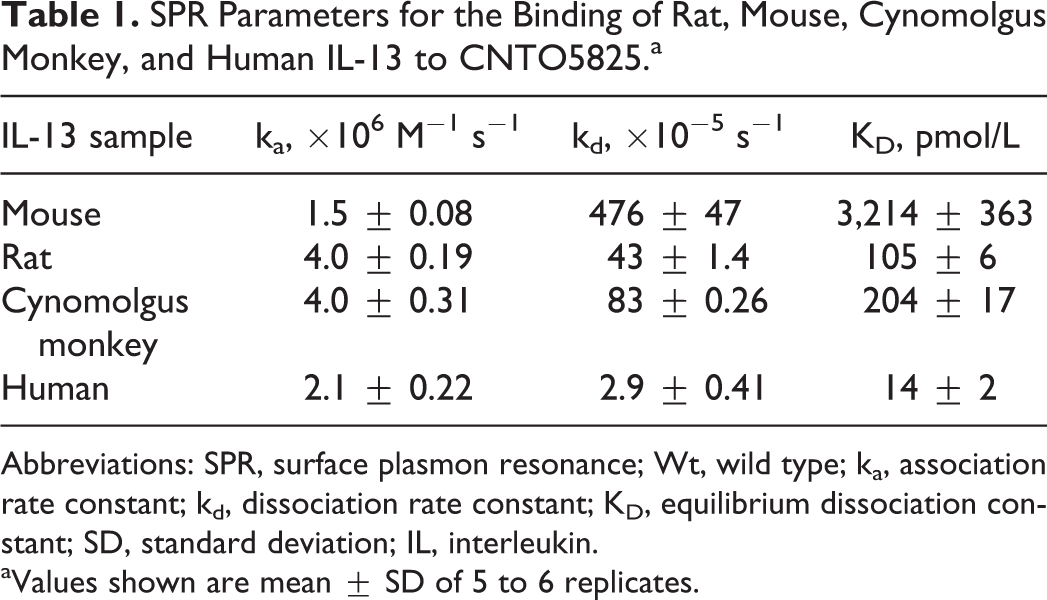
Abbreviations: SPR, surface plasmon resonance; Wt, wild type; ka, association rate constant; kd, dissociation rate constant; KD, equilibrium dissociation constant; SD, standard deviation; IL, interleukin.
aValues shown are mean ± SD of 5 to 6 replicates.
Rat asthma model
To confirm the pharmacological relevance of the rat as a species for the nonclinical safety testing of CNTO5825, a rat asthma model was employed. Brown Norway rats were sensitized by subcutaneous (SC) administration of ovalbumin (OVA) with aluminum hydroxide on days 0, 14, and 21. Groups of 8 OVA-sensitized rats were treated with saline or CNTO5825 (1, 3, and 10 mg/kg on study day 21 and day 27) and challenged with OVA through intratracheal instillation on days 23, 25, and 28. On day 29, pulmonary functions were tested and animals were challenged with increasing concentrations of methacholine (MCh). Blood, serum, brochoalveolar lavage (BAL) fluid, and lung tissue were subsequently harvested.
Tissue Cross Reactivity
In vitro tissue cross-reactivity studies
The ability of CNTO5825 to bind to sections of frozen normal human or animal (cynomolgus monkey, rhesus monkey, New Zealand white rabbit, Sprague-Dawley rat, and CD-1 mouse) tissues was initially evaluated in a preliminary study (1 donor per tissue). Tissues evaluated were bone marrow, brain (cerebellum), small intestine, heart, kidney, liver, lung, nasal mucosa/nasal turbinates, ovary, spleen, testis, thymus, trachea, and uterus. This initially evaluation was followed by a more comprehensive evaluation to a panel of 35 human tissues (3 donors per tissue).
Ex vivo tissue cross-reactivity in rats
To explore the in vivo relevance of the staining observed in the in vitro tissue cross-reactivity studies, an ex vivo tissue cross-reactivity/localization study was conducted in rats. In this study, 3 female rats per treatment group were dosed with CNTO5825 20 mg/kg intravenously (IV) or human IV immunoglobulin (IVIG) on days 1 and 6. Rats were terminated on day 7 and sequentially perfused with saline and formalin. Brain, kidneys, liver, lung, heart, spleen, trachea, pancreas, mesenteric lymph nodes, ovaries, and uterus were collected and prepared for histological examination. The presence of CNTO5825 and IVIG in rat paraffin-embedded tissues was detected using an antihuman IgG and immunoperoxidase staining, and endogenous rat IgG was detected using an antirat IgG (Charles River Laboratories, Gaithersburg, Maryland).
Serum CNTO5825 Analysis
Bioanalysis assays
The quantification of CNTO5825 concentrations and the determination of anti-CNTO5825 antibodies in serum were conducted using proprietary electrochemiluminescent immunoassays (Janssen Research and Development, Spring House, Pennsylvania). The ADA analysis consisted of an initial screening assay where samples potentially positive for antibodies to CNTO5825 are detected. If sufficient sample was available, an additional titration assay was conducted to obtain a relative measure of antibodies to CNTO5825 in serum.
Toxicokinetic analysis
The toxicokinetic (TK) profile of CNTO5825 in serum was determined using a noncompartmental analysis module in WinNonlin, version 5.2.1 (Pharsight, Mountain View, California). The maximum serum concentration (Cmax) and the time to the maximum concentration (Tmax) were obtained from inspection of the individual serum concentration versus time profile. The area under the serum concentration versus time curve within a dosing interval, AUC(0-τ), was calculated by the trapezoidal method. The terminal rate constant (λz) was determined by least squares regression analysis of the terminal phase on a log-linear plot. The terminal half-life (T1/2) was calculated as 0.693/λ.
Nonclinical safety evaluations
Repeated dose non-GLP tolerability and GLP toxicology studies were conducted in rats and cynomolgus monkeys. Single-dose pharmacokinetic studies demonstrated that the terminal elimination half-life following IV dosing ranged from 12.29 to 14.15 days in rats and from 6.61 to 7.73 days in cynomolgus monkeys. 14 Therefore, weekly dosing regimens were used in the repeated dose studies in both species in order to maintain continuous high exposure to CNTO5825 throughout the treatment periods.
Repeat Dose Studies in Rats
One-month IV/SC tolerability study in rats
A 1-month tolerability study was conducted in male Sprague-Dawley rats (∼8 weeks of age) to establish suitable dosing regimens for the subsequent 1- and 6-month toxicology studies. Thirty rats (6 males/group) were SC or IV administered either vehicle (10 mmol/L histidine buffer containing 0.012% polysorbate 80 and 8.5% sucrose, pH 6.0) or CNTO5825 at doses of 20 mg/kg SC or 100 mg/kg (SC and IV). Rats were dosed once a week for 4 weeks (days 1-22, 4 doses) followed by an additional 35 days of observations. Assessments were made of mortality, clinical observations, body weight, hematology, clinical chemistry, and gross pathology. These same rats were bled predose and on days 1, 2, 3, 7, 14, 21, 22, 23, 24, 28, 35, 42, 49, and 56 postdose (3/group/time point) for the assessment of CNTO5825 serum concentrations. Blood samples for analysis of anti-CNTO5825 antibodies were collected on day 0 predose, day 21 predose, and on day 56.
One-month IV toxicology study in rats
A 1-month subchronic toxicology study was conducted in rats to support the administration of CNTO5825 in early-stage clinical trials of up to 1-month duration. Only the IV route of administration was used in the GLP toxicology studies in rats because the non-GLP tolerability study in rats demonstrated low SC bioavailability and a high rate of anti-CNTO5825 antibodies in rats following SC dosing with CNTO5825.
Sprague-Dawley rats (∼9 weeks of age, 10/sex/group) and an additional 5/sex/group (as recovery animals) were injected IV with saline (control group) or 20 or 100 mg/kg/wk of CNTO5825 on days 1 to 29 (5 doses) followed by a 90-day treatment-free period. At the end of the 1-month treatment period (day 30), all main study animals were euthanized and necropsied. All remaining animals were necropsied following the 90-day treatment-free recovery period. Assessments included mortality, clinical observations, ophthalmology examination, body weight, food consumption, clinical pathology (termination and recovery), organ weights, and gross and microscopic pathology. Blood was collected from satellite animals pretest and on days 1, 2, 5, 8, 22, 24, 26, 29, 30, 57, 85, and 113 postdose (3/sex/group/timepoint) for evaluation of CNTO5825 serum concentrations and pretest and on days 29, 57, 85, and 113 for anti-CNTO5825 antibodies. In addition, a single sample was collected from each of the main study animals at termination for evaluation of serum CNTO5825 concentrations.
Six-month IV toxicology study in rats
A 6-month chronic toxicology study was conducted in rats to support clinical trials of greater than 1-month duration and the potential chronic use of CNTO5825 in patients. Sprague-Dawley rats (∼9 weeks of age, 30/sex/group) were injected IV once weekly with saline (control group) or 20 or 100 mg/kg/wk of CNTO5825 for 6 months (days 1-176 or 178, 26 doses) followed by a 4-month (123 days) treatment-free period. Assessments included viability, clinical observations, ophthalmology, body weights, food consumption, clinical pathology, and anatomic pathology (organ weights, macroscopic observations, and microscopic pathology). Following the 13th dose on day 85, an interim complete gross necropsy was performed on 5 rats/sex/group. Thereafter, 1 day after the 26th dose on day 176 or 178, 20 rats/sex/group and after 4 months of recovery on day 299, 5 rats/sex/group were euthanized and subjected to a complete gross necropsy and comprehensive tissue collection.
Blood was collected from satellite animals (3 animals/sex/group) for determination of serum CNTO5825 concentrations pretest and on days 1, 2, 4, 8, 64, 71, 78, 79, 81, 85, 169, 170, 172, 176, 183, 197, 218, and 260 postdose. Samples for determination of anti-CNTO5825 antibodies were collected from satellite animals pretest and on days 85, 176, 218, and 260. Blood samples for CNTO5825 serum concentrations were also collected from main study animals pretest and at termination on days 85 and 176 and at the end of the recovery period (day 299).
Tissues with neoplasms and brain lesions were examined for the presence of polyoma virus by immunohistochemisty techniques using a mouse-derived monoclonal antibody and a rabbit-derived polyclonal antibody against Polyoma Virus SV 40 antigen. To investigate whether CNTO5825 may have caused an elevation in vascular endothelial growth factor (VEGF) resulting in an increased incidence of vascular neoplasms, the presence of rat VEGF in selected serum samples was evaluated using a rat VEGF enzyme-linked immunosorbent assay (ELISA) kit (R&D systems, Minneapolis, MN).
Immunotoxicology study in rats
Sprague-Dawley rats (∼12 weeks of age, 10/group/assay) were dosed with saline or CNTO5825 (20 or 100 mg/kg) once weekly IV for 6 doses (days 1-36). Rats assigned to assay 1 (10 males) underwent an evaluation of the T cell-dependent antibody response (TDAR) to Keyhole Limpet Hemocyanin (KLH) immunization as a measure of functional immune competence. Rats were sensitized by IV injection with 2 mg/rat of KLH on day 22 of the study. Six days after injection of KLH, blood was collected for measurement of the primary IgM antibody response to KLH. A second injection of KLH was administered on day 36 of study. Seven days after the second injection of KLH, blood was collected for measurement of the secondary IgG antibody response to KLH. Rats assigned to assay 2 (10 males) were terminated on day 43. Spleens were removed and single-cell suspensions were prepared for splenocyte phenotyping (total B cells, total T cells, Th cells, cytotoxic T cells, natural killer [NK] cells, and macrophages) and NK cell activity.
The following additional parameters and end points were evaluated in this study: clinical signs, body weights, body weight changes, food consumption, hematology parameters, anti-CNTO5825 antibody and serum CNTO5825 concentration evaluation, gross necropsy findings, organ weights, and histopathological examinations of the immune system (bone marrow, mandibular and mesenteric lymph nodes, spleen, and thymus). In addition to the immunological tissues, histopathology was also conducted on the brain and the reproductive tissues (testis, efferent ducts, and epididymis) to further explore tissues in which histopathological finding had been observed in the 6-month IV toxicology study in rats. Serum samples were collected pretest and on days 1, 15, 29, 36, and 43 from the animals assigned to assay 2 for evaluation of serum CNTO5825 concentrations. The presence of anti-CNTO5825 antibodies was evaluated pretest and on day 43.
Repeat Dose Studies in Monkeys
One-month IV/SC tolerability study in monkeys
A 1-month tolerability study was conducted in cynomolgus monkeys to establish suitable dosing regimens for the subsequent 1- and 6-month toxicology studies. Four groups of 3 female cynomolgus monkeys (2.13-2.97 kg) were administered CNTO5825 (20 or 100 mg/kg/wk SC or 100 mg/kg/wk IV) or vehicle (10 mmol/L histidine buffer containing 0.012% polysorbate 80 and 8.5% sucrose, pH 6.0) SC on days 1 to 22 (4 doses). Tolerability was evaluated by clinical observations, body weight, and clinical pathology. Blood was collected pretest and on days 1, 2, 3, 4, 8, 15, 22, 23, 24, 25, 29, 36, 43, 50, and 57 for evaluation of CNTO5825 serum concentrations. Presence of anti-CNTO5825 antibodies was determined pretest and on days 22 and 57. Animals were returned to the colony at the end of the blood collections.
One-month SC/IV toxicology study in monkeys
A 1-month subchronic toxicology study was conducted in cynomolgus monkeys to support the administration of CNTO5828 in early-stage clinical trials of up to 1-month duration. Male and female cynomolgus monkeys (3/sex/group, ∼2.5-3 years of age, 2.3-3.0 kg for females, and 2.6-3.5 kg for males) were injected with saline (control group) or 20 or 100 mg/kg/wk SC or 100 mg/kg/wk of CNTO5825 IV on days 1 to 29 (5 doses). On day 30, all animals were euthanized and necropsied. Blood samples were collected pretest and on days 1, 2, 4, 6, 8, 15, 22, 23, 25, 27, 29, and 30 for analysis of serum CNTO5825 concentrations. Additional blood samples were collected on days 1 and 29 for anti-CNTO5825 antibody analysis. Assessments included mortality, clinical observations, ophthalmology, electrocardiographic (ECG) examinations, blood pressure and heart rate measurements, respiration rate, body weight, food consumption, hematology, coagulation, clinical chemistry, urinalysis, organ weights, gross and microscopic pathology evaluations, and immunohistopathology of the lymphoid tissues (for T- and B-cell distribution).
Six-month SC toxicology study in monkeys
A 6-month chronic toxicology study was conducted in cynomolgus monkeys to support clinical trials of greater than 1-month duration and the potential chronic use of CNTO5825 in patients. Cynomolgus monkeys (5/sex/group, ∼3 years of age, 2.8-4.3 for females, and 2.7-4.4 for males) were injected SC with saline (control group) or 20, 60, or 100 mg/kg of CNTO5825 once weekly for 6 months. At the end of the treatment period, 3 animals/sex/group were euthanized and necropsied (day 177). The remaining 2 animals/sex/group were held for a 4-month recovery period after which they were euthanized and necropsied (day 291). Blood samples were collected pretest and on days 1, 2, 4, 6, 8, 15, 43, 71, 99, 127, 155, 169, 170, 172, 174, 176, 183, 190, 197, 211, 225, 246, 267, and 290 for CNTO5825 serum concentration analysis. Animals were also bled pretest and on days 176, 246, and 290 for anti-CNTO5825 antibody analysis.
Potential toxicological effects of CNTO5825 treatment were evaluated by monitoring clinical observations body weight, food consumption, and physical examinations throughout the study; ECG assessments (9-lead ECG); blood pressure and respiration rates; body temperature; clinical pathology including hematology, coagulation, and clinical chemistry; urinalysis; and ophthalmoscopy. Potential effects of CNTO5825 treatment on the immune system were additionally evaluated by immunohistopathology of the lymphoid tissues (using anti-CD3 and anti-CD20 antibodies for T- and B-cell distribution) and evaluation of the TDAR following immunization with KLH. On day 90, animals received a 1-mL SC injection with 10 mg of KLH. The antibody response of IgM and IgG was measured in serum samples collected pretest and 5, 7, and 10 days post-KLH immunization for IgM and 14, 17, and 21 days post-KLH immunization for IgG. Each serum sample was analyzed for IgM and IgG independently using quantitative direct ELISA methods specific for either IgM or IgG.
Results
Selectivity of Species for Nonclinical Safety Testing
In vitro assays
Table 1 compares the binding of CNTO5825 to IL-13 from various species and Table 2 compares the in vitro functional potency of CNTO5825 to inhibit the pharmacological action of IL-13. CNTO5825 showed high affinity binding to human IL-13 and high antagonist potency in the cellular assays. CNTO5825 was approximately 10- to 50-fold less potent at binding to and neutralizing the pharmacological activity of recombinant IL-13 from cynomolgus monkey and rats versus humans. Based upon these assays, the rat and the cynomolgus monkey were selected as pharmacologically relevant species for the nonclinical safety evaluation of CNTO5825. The mouse was not considered to be a relevant species because of the low affinity of CNTO5825 to bind to recombinant mouse IL-13.
Comparison of IL-13-Mediated Bioactivity (EC50) and CNTO5825 Inhibition of IL-13-Mediated Bioactivity (IC50) in Cellular Assays for Human, Rat, and Cynomolgus Monkey IL-13.
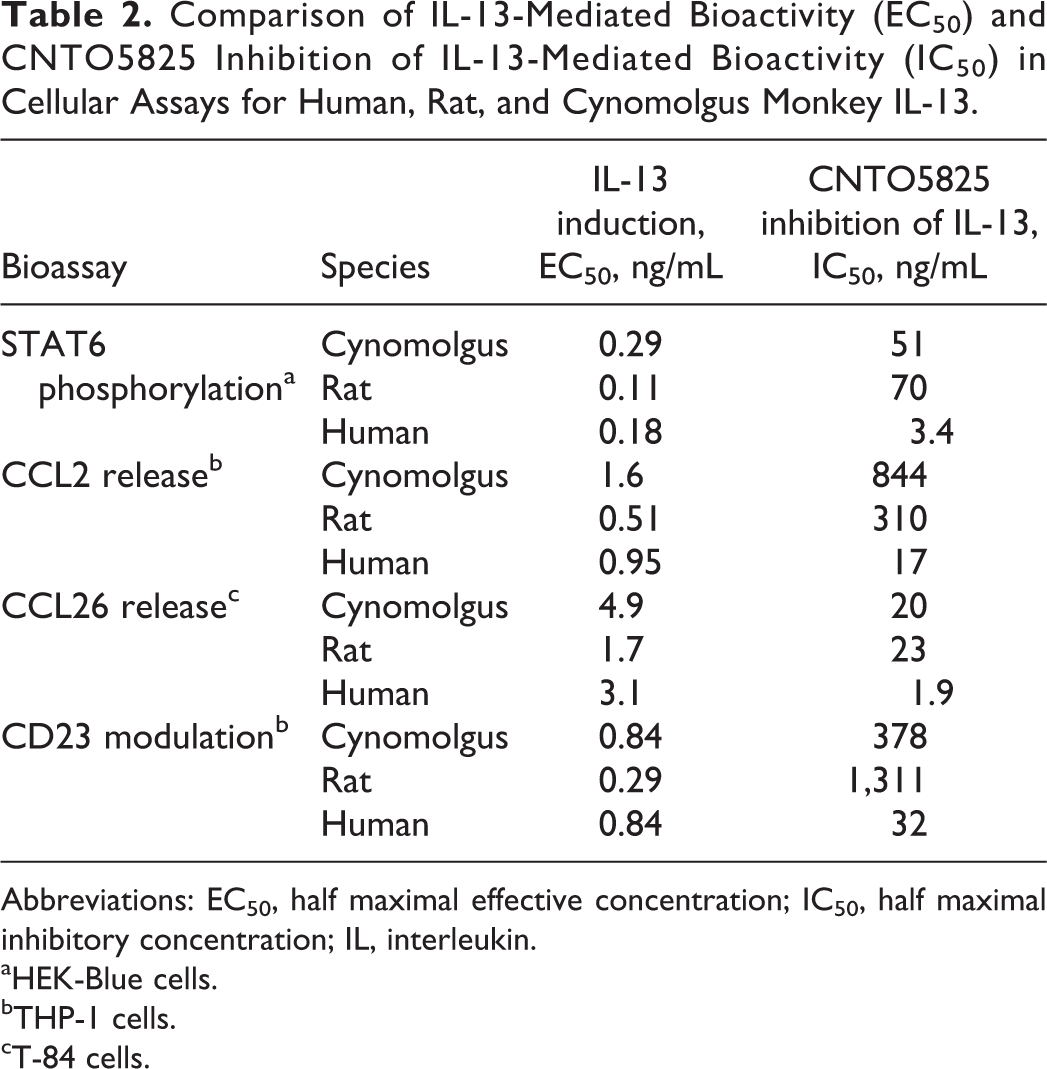
Abbreviations: EC50, half maximal effective concentration; IC50, half maximal inhibitory concentration; IL, interleukin.
aHEK-Blue cells.
bTHP-1 cells.
cT-84 cells.
Rat asthma model
The relevance of the rat as a suitable species for the nonclinical safety evaluation of CNTO5825 was confirmed in vivo in a rat allergic asthma model. Treatment of OVA-sensitized rats with CNTO5825 produced a reduction in serum IgE concentrations (75% reduction at 1 mg/kg and 85% reduction at 3 and 10 mg/kg) and a 25% reduction in eotaxin concentration in the lung at the 10-mg/kg dose. A reduction in lung eosinophils (∼50%) was also noted at all dose levels but this did not attain statistical significance.
In comparison with saline-treated OVA-sensitized animals, rat treated with 10 mg/kg CNTO5825 showed statistically significant differences (P < 0.01) in peak airway resistance (∼10%-20% reduction) following repeated MCh challenges 24 hours following the last lung OVA-allergen challenge and statistically significant (P < 0.05) differences in baseline airway resistance (∼20% reduction) prior to ascending challenge with MCh.
Tissue Cross-Reactivity
Tissue cross-reactivity studies
In the in vitro tissue cross-reactivity studies, biotin-CNTO5825-stained cytoplasmic filaments and/or cytoplasmic filaments/granules in multiple cell types including myofibroblasts and/or fibroblasts, vascular and/or intrinsic smooth muscle, epithelium, endothelium, endocardium, neural tissue (neurons, glial cells, and neuropil), testicular spermatogenic cells, mesothelium, mononuclear cells, and other hematopoietic cells in the different species examined. Because of the common morphology and patterns of staining among the affected cell types, these findings were interpreted to represent staining of one (or a few closely related) structural element in multiple different cell types. Membrane staining was observed only to mononuclear cells and other hematopoietic cells.
Ex vivo tissue cross-reactivity in the rat
To further understand the in vivo relevance of the observed in vitro tissue staining, an in vivo localization study was conducted in rats. Administration of either CNTO5825 or IVIG was associated with increased IgG transport and uptake in brain, liver, kidney, lung, and/or mesenteric lymph node. There were no adverse histologic alterations attributable to administration of either CNTO5825 or IVIG. In this tissue biodistribution (ex vivo tissue cross-reactivity) study, with the exception of physiologic vesicular transport, there was no evidence for the in vivo distribution of CNTO5825 to the cytoplasm and no binding to cytoplasmic filaments/granules in any of the tissues examined.
Repeated Dose Studies in Rats
One-Month IV and SC tolerability in rats
CNTO5825 was well tolerated in rats at doses of up to 100 mg/kg/wk IV or SC for 1 month. There were no treatment-related effects at 20 mg/kg/wk SC. At 100 mg/kg/wk SC, the only potential treatment-related changes were a reduced body weight gain (0.83-fold lower than controls on day 13) and mildly (1.58-fold) higher white blood cell values. At the end of the 35-day treatment-free period, a minimally (1.24-fold) higher mean white blood cell value was still observed, as well as a minimally (1.23-fold) higher glucose value. In the 100-mg/kg IV group, the only potential finding was a minimally (1.22-fold) higher white blood cell value. These minor changes did not attain statistical significance and were not considered to be adverse.
The TK parameters and the incidence and titers of rat anti-CNTO5825 antibodies are summarized in Table 3. After administration of the first SC dose, the median Tmax was 3 days for both the 20- and 100-mg/kg dose groups. A 5-fold increase in dose from 20 to 100 mg/kg resulted in a 3.25-fold increase in Cmax and a 3.21-fold increase in AUC (0-7 days) after the first dose and a 2.07-fold increase in Cmax and a 1.74-fold increase in AUC (21-28 days) following the fourth dose, indicating less than dose proportionality. The accumulation ratio following SC dosing was 1.66 and 0.90 for the 20- and 100-mg/kg groups, respectively, and for IV dosing was 2.20.
Exposure to CNTO5825 (Mean ± SD) and Anti-CNTO5825 Antibody Response in Rats and Monkeys Following Weekly IV or SC Dosing for 1 Month.
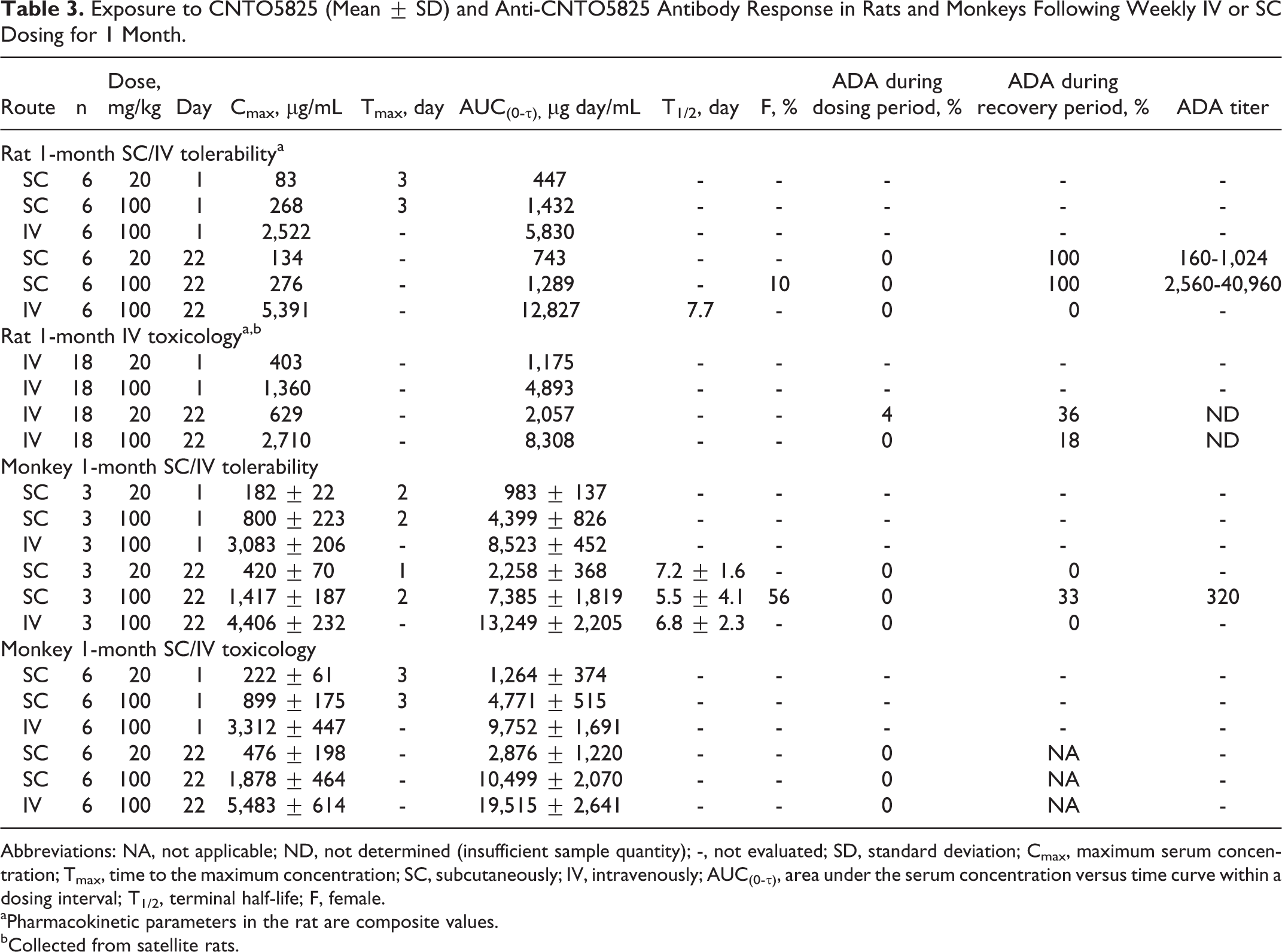
Abbreviations: NA, not applicable; ND, not determined (insufficient sample quantity); -, not evaluated; SD, standard deviation; Cmax, maximum serum concentration; Tmax, time to the maximum concentration; SC, subcutaneously; IV, intravenously; AUC(0-τ), area under the serum concentration versus time curve within a dosing interval; T1/2, terminal half-life; F, female.
aPharmacokinetic parameters in the rat are composite values.
bCollected from satellite rats.
In the rats dosed SC, serum concentrations of CNTO5825 after the last 20 or 100 mg/kg SC dose fell below the lower limit of qualification (<0.02 µg/mL) by the end of the 35-day free period and anti-CNTO5825 antibodies were detected in all of the animals at this time. As a consequence, the absolute bioavailability of CNTO5825 after the fourth SC administration of 100 mg/kg was 10.05%.
In the rats dosed IV, elimination half-life after the fourth 100 mg/kg dose was 7.7 days. CNTO5825 was still detectable in the serum (89 ± 83 µg/mL) at 35 days after the last mg/kg IV dose and anti-CNTO5825 antibodies were not detected in these animals.
One-month IV toxicology study in rats
The only potential treatment-related changes associated with the IV administration of CNTO5825 in rats were minor (nonadverse) clinical pathology changes consisting of dose-related decreases in red blood cell mass (0.92-0.96-fold; both sexes) and increases in mean platelet volume (1.1-fold; both sexes) and glucose (1.13-fold; females) and decreases in triglycerides (0.54-fold; males) at 100 kg/kg/wk. There were no histopathological findings considered to be related to administration of CNTO5825.
The TK parameters and the incidence of rat anti-CNTO5825 antibodies are summarized in Table 3. The analysis showed that all animals (in which serum concentrations of CNTO5825 were measured) were exposed to high concentrations of CNTO5825 throughout the dosing period. CNTO5825 was still detectable on day 113, that is, 84 days after the last dose in 14 of the 23 animals dosed at 20 mg/kg/wk (2.4 ± 3.1 µg/mL) and in 18 of the 23 animals dosed at 100 mg/kg/wk (9.1 ± 11.6 µg/mL).
The TK results were evaluated following the first dose on day 1 and fourth dose on day 22. The Cmax and AUC values increased in a less than dose-proportional manner following weekly IV injections of CNTO5825 in rats. The mean accumulation ratio following multiple IV administrations of CNTO5825 was 1.75 and 1.70 for the 20- and 100-mg/kg dose groups, respectively, suggesting that moderate drug accumulation occurred in systemic circulation when CNTO5825 was administered IV once every week for 4 weeks in rats.
Anti-CNTO5825 antibodies were not detected in any of the animals that had detectable levels of CNTO5825 in serum either during the dosing period or during the 3-month treatment-free period but were present in the majority of animals during the treatment-free recovery period (10 of 28 animals tested in the 20-mg/kg/wk group and 5 of 28 animals tested in the 100-mg/kg/wk group) in which the levels of CNTO5825 fell below the limit of quantification (<0.0781 µg/mL). The titers of the anti-CNTO5825 antibodies titers were not determined for this study due to insufficient sample available for the analysis.
Six-month IV toxicology study in rats
In rats receiving IV injections of CNTO5825 (total 26 doses) followed by 4 months of recovery, 2 incidences of rare neoplasms and 2 incidences of brain lesions were identified in the 100-mg/kg/wk dose group (Figure 1). Testicular lesions were also identified macroscopically and microscopically in both the 20- and the 100-mg/kg/wk IV treatment groups.
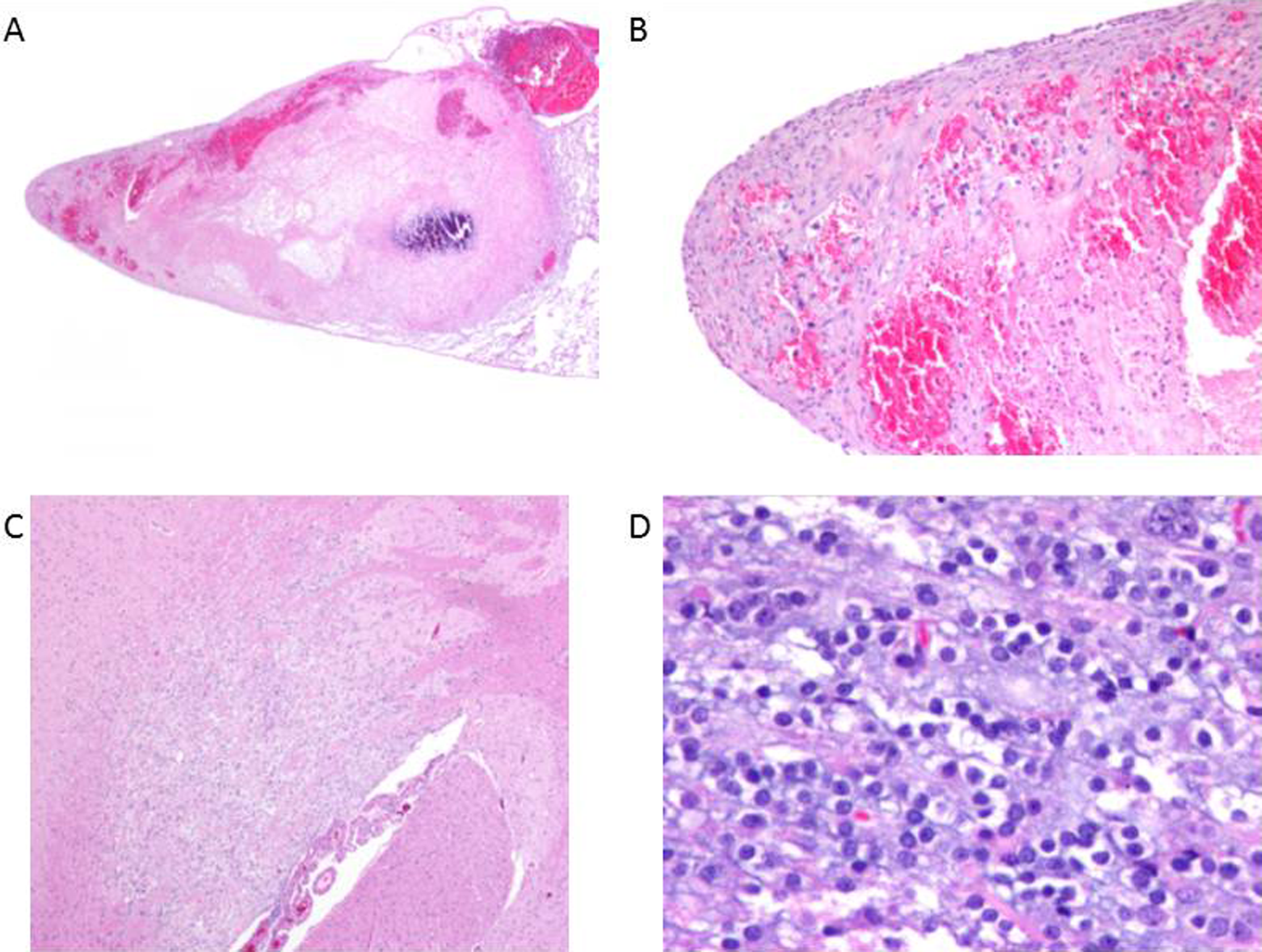
A, Hemangiosarcoma in the lung of a rat treated with CNTO5825. Note the large multiple vascular channels. H&E 10×. B, Higher magnification of hemangiosarcoma. Note the pleomorphic endothelial tumor cells with occasional mitotic figures. H&E 40×. C, Brain section with monomorphic population of cells with round to ovoid nuclei. H&E 10×. D, Higher magnification. H&E 40×. H&E indicates hematoxylin and eosin.
A malignant vascular neoplasm (multicentric hemangiosarcoma) was seen in 1 male in the 100-mg/kg/wk dose group. This animal died 74 days after the last dose (during recovery period, day 103). A benign hemangioma of the spleen was identified in 1 female at the end of the recovery period on day 261. In the male with the hemangiosarcoma, metastasis was present in the lung (Figure 1A and B), mesentery, mediastinal lymph node, and abdominal skeletal muscle, but the primary site of origin for the neoplasm could not be determined. The metastasis of this malignant neoplasm to multiple organs was most likely the cause of death. No clinical pathology data are available for the rat that died from the hemangiosarcoma because this animal died prior to its scheduled clinical pathology sample collection. VEGF was not detectable in any of the analyzed serum samples.
In the cerebral cortex of the brain, focal accumulation of cells in the white matter was seen in 2 rats dosed at 100 mg/kg/wk, 1 male on day 177 (Figure 1C and D) and 1 female on day 261. Both of these lesions were similar morphologically in appearance and location. The lesions were composed of a dense sheet of monomorphic cells with well-defined margins, round to oval nuclei, and a clear cytoplasm. The lesions were evaluated by immunohistochemistry for the possible presence of a polyoma SV40 virus. No polyoma virus was identified in the any tissues with pathology or in kidneys from these animals.
Other CNTO5825-related findings at 20 and 100 mg/kg/wk were seminiferous tubular dilation in the testes of 100 mg/kg/wk males and seminiferous tubule degeneration/atrophy in the testes of 20 and 100 mg/kg/wk males with secondary changes in aspermia or oligospermia in the epididymides (Tables 4 and 5). Recovery of the testes findings was not evident after a 4-month recovery period.
Incidence and Severity of CNTO5825-Related Microscopic Findings of the Testes of Rats (Terminated 1 Day After Last Dose, Day 177 or 179).
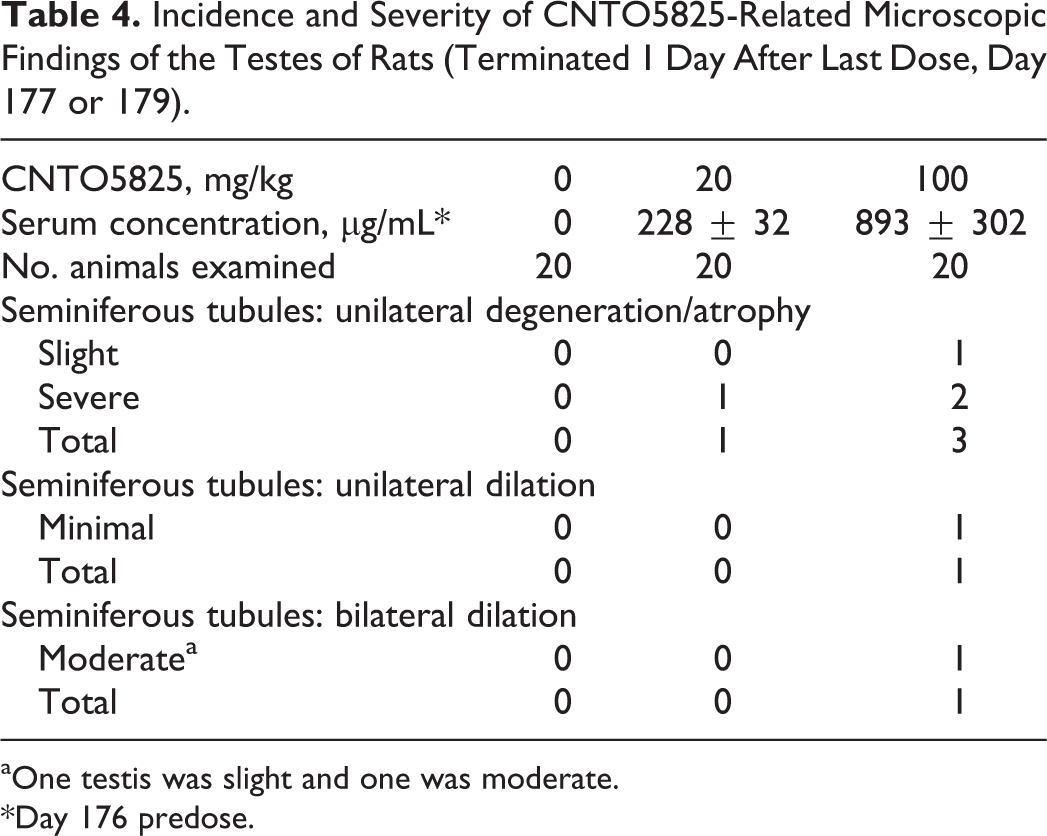
aOne testis was slight and one was moderate. *Day 176 predose.
Incidence and Severity of CNTO5825-Related Microscopic Findings of the Testes of Rats (Terminated 4-Month After Last Dose, Day 299).
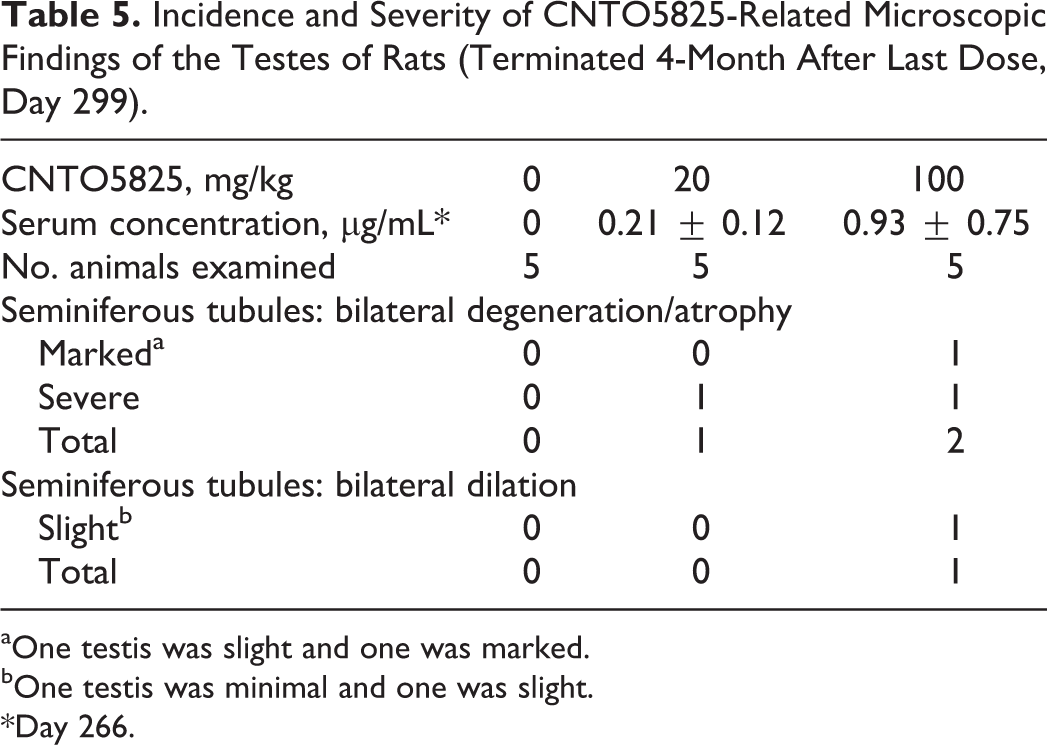
aOne testis was slight and one was marked.
bOne testis was minimal and one was slight. *Day 266.
The only other finding was a dose-related increase in eosinophils, noted in males at 20 mg/kg/wk (up to 2.0× control values) and 100 mg/kg/wk (up to 2.2× control values) at 3 and 6 months and slightly in females (1.4×) at 100 mg/kg at 6 months (Figure 2). This effect was reversible by the end of the treatment-free period.
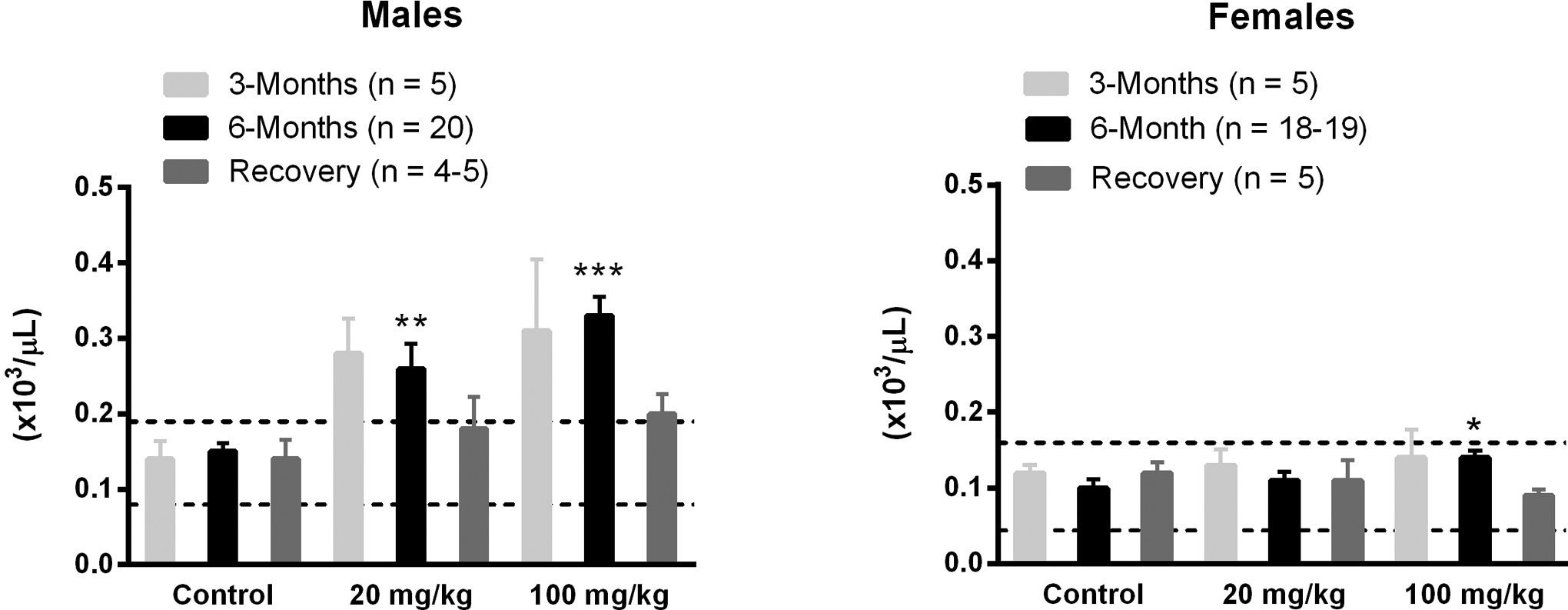
Eosinophil counts (mean ± standard deviation [SD]) in rats from the 6-month toxicology study measured 1 day after 3 or 6 months of dosing with CNTO5825 or measured 4 months after 6 months of dosing (recovery). *P < 0.05, **P < 0.01, and ***P < 0.001. The dashed lines represent the upper and lower ranges for the normal values for rats.
In control and CNTO5825-treated rats, nematode parasites (most likely pinworms) were observed microscopically in the lumen of the large intestines (highest incidence in the rectum) at all scheduled sacrifices with a slightly increased incidence in the terminal-sacrificed rats dosed at 100 mg/kg (Table 6).
Incidence of Parasites Observed in the Lumen of the Gastrointestinal Tract of the Rats in the 6-Month Toxicology Study Identified by Routine Sectioning and Histopathological Examination of Tissue Sections.a
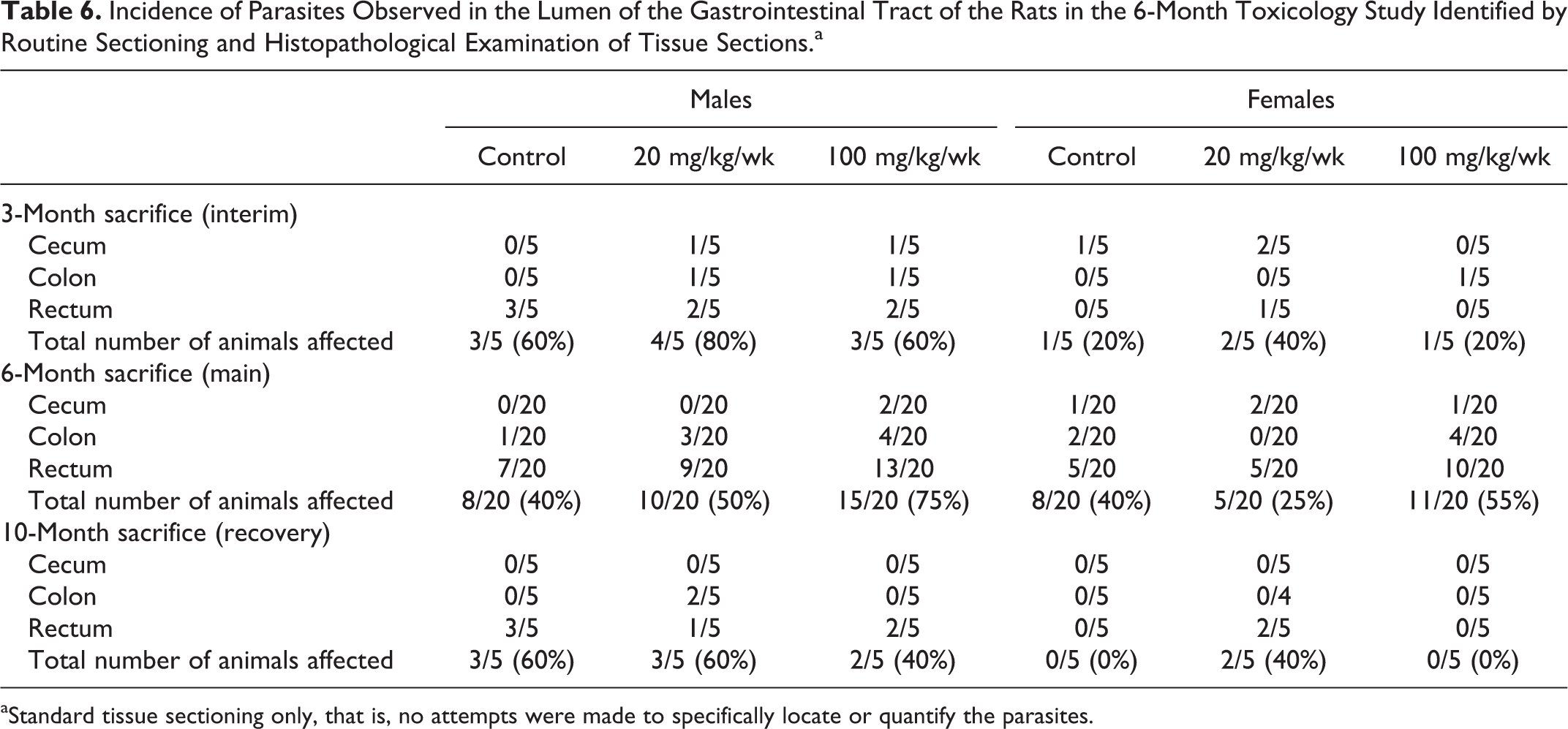
aStandard tissue sectioning only, that is, no attempts were made to specifically locate or quantify the parasites.
The TK parameters are summarized in Table 7. The analysis showed that all animals (in which serum concentrations of CNTO5825 were measured) were exposed to high concentrations of CNTO5825 throughout the dosing period. Steady state was achieved prior to day 71. The Cmax and AUC within 1 dose interval at steady state increased in a slightly less than dose-proportional manner from 20 to 100 mg/kg and moderate drug accumulation occurred in the systemic circulation. Mean concentrations on days 85 and 176 from the main study animals were comparable to those in the satellite TK animals.
Exposure to CNTO5825 and Anti-CNTO5825 Antibody Response in Rats and Monkeys Following Weekly IV or SC Dosing for 6 Months.a
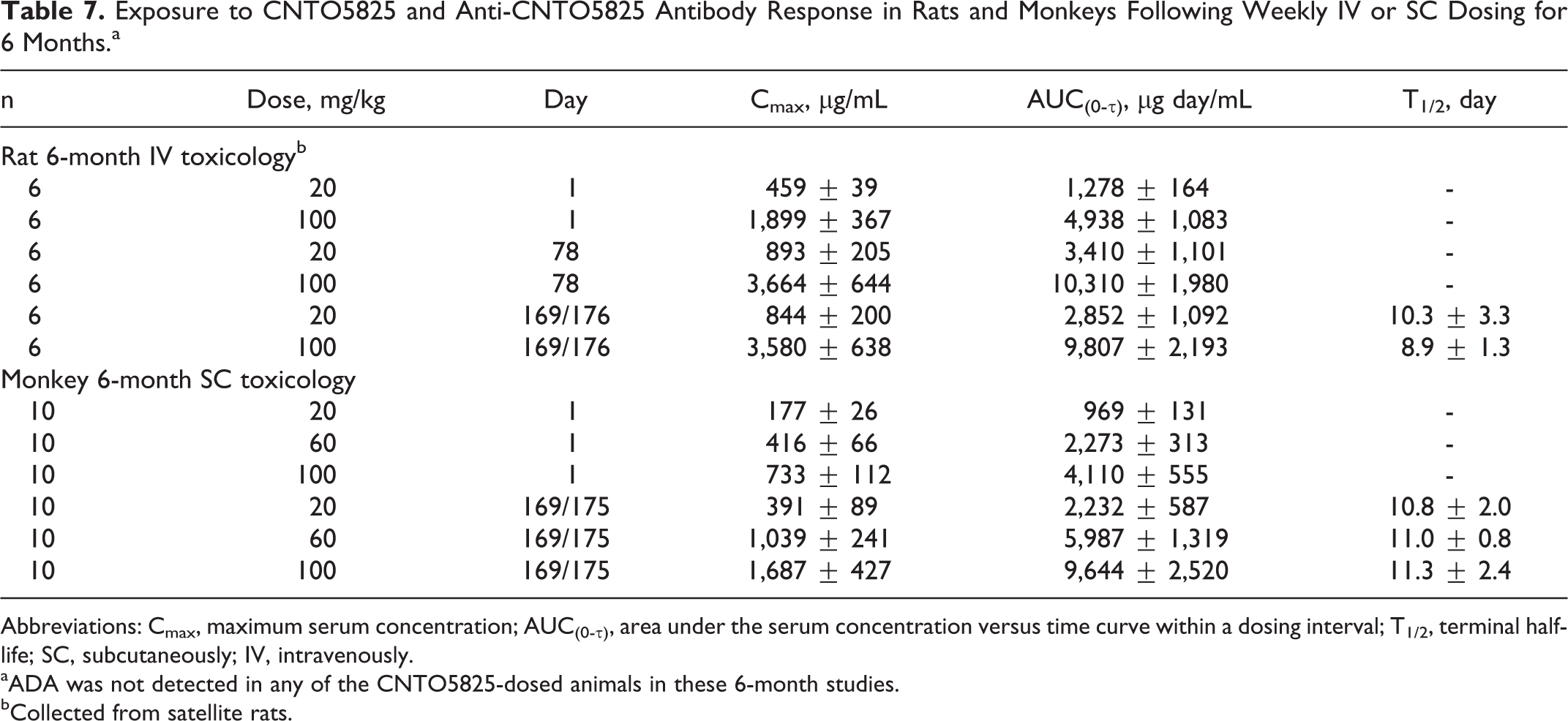
Abbreviations: Cmax, maximum serum concentration; AUC(0-τ), area under the serum concentration versus time curve within a dosing interval; T1/2, terminal half-life; SC, subcutaneously; IV, intravenously.
aADA was not detected in any of the CNTO5825-dosed animals in these 6-month studies.
bCollected from satellite rats.
In the satellite animals, the elimination half-life was 8.9 to 10.3 days. CNTO5825 was still detectable on day 260, that is, 84 days after the last dose in 10 of the 16 animals dosed at 20 mg/kg/wk (1.9 ± 4.3 µg/mL) and in 11 of the 15 animals dosed at 100 mg/kg/wk (2.1 ± 1.9 µg/mL). In the toxicology animals, CNTO5825 was still detectable on day 299, that is, 123 days after the last dose in 5 of the 10 animals dosed at 20 mg/kg/wk (0.10 ± 0.14 µg/mL) and in 5 of the 10 animals dosed at 100 mg/kg/wk (0.44 ± 0.66 µg/mL). Anti-CNTO5825 antibodies were not detected in any of the satellite animals in this study through day 260 (last ADA time point measured) including the animals (6 of the 16 and 4 of the 15 in the 20- and 100-mg/kg groups, respectively) in which the levels of CNTO5825 fell below the limit of quantification by day 260 (<0.08 µg/mL).
Immunotoxicology Study in Rats
CNTO5825 at doses of 20 or 100 mg/kg/wk for 6 weeks to male rats did not adversely affect or suppress the rat immune system in this study. CNTO5825 had no significant effect on the TDAR response to KLH immunization, did not affect lymphocyte numbers or subpopulations, and did not affect NK cell functional activity. The T-cell splenic populations were unaffected following treatment with CNTO5825, and histopathological examination of the spleen, bone marrow, lymph node, and thymus showed no treatment-related effects.
Administration of CNTO5825 did not produce any general toxicity (mortality, clinical observations, body weight, body weight gains, food consumption, or hematology). There were no effects on specific organ weights including the brain, testes, and epididymides. No macroscopic or microscopic findings related to CNTO5825 occurred in the liver, lung, stomach, brain, or reproductive organs (testes, epididymides, and efferent ducts). CNTO5825 concentration analysis demonstrated continuous exposure to CNTO5825 during the course of treatment. The mean serum concentrations of CNTO5825 at 2 hours after the 20-mg/kg dose were 442 µg/mL after the first dose and 556 µg/mL after the sixth dose. At 2 hours after the 100-mg/kg dose, the mean serum concentrations of CNTO5825 were 2074 µg/mL after the first dose and 2786.46 µg/mL after the sixth dose. No anti-CNTO5825 antibody testing was conducted in this study, since the CNTO5825 concentration at the time of termination was above the assay tolerance.
Repeat Dose Studies in Monkeys
One-month IV/SC tolerability study in monkeys
In the 1-month tolerability study in female cynomolgus monkeys, CNTO5825 was well tolerated when administered by IV or SC injection at doses of up to 100 mg/kg/wk for 4 doses. There were no clinical observations or CNTO5825 treatment-related changes in body weight or clinical pathology.
All CNTO5825-treated monkeys were continuously exposed to high serum concentrations of CNTO5825 throughout the 22-day treatment period (Table 3). After SC administration of the first dose, the median Tmax was 2 days for both the 20- and the 100-mg/kg dose groups. The Cmax and AUC increased approximately dose proportionally between 20 and 100 mg/kg after the first dose but slightly less than dose proportionately after the fourth dose. The mean accumulation ratio was 3.32 and 1.78 for the 20- and 100-mg/kg/wk SC dose groups, respectively, and 1.55 for the 100-mg/kg/wk IV dose group, suggesting moderate accumulation in the systemic circulation.
No anti-CNTO5825 antibodies were detected during the treatment period. Elimination half-life following the last IV dose was 5.5 to 7.2 days. By day 57, that is, 35 days after the last dose administration, serum concentrations of CNTO5825 had decreased to 15 ± 8 µg/mL (n = 3) in the 20-mg/kg/wk IV dose group and 77 ± 66 (n = 3) in the 100-mg/kg/wk IV dose group and 50 ± 74 (n = 2) in the 100 mg/kg/wk SC group. In 1 animal in the SC group, the serum concentration fell below the lowest quantifiable concentration of 0.02 µg/mL by day 50 and in this animal anti-CNTO5825 antibodies were detected on day 57 (Table 3).
One-month IV/SC toxicology study in monkeys
In the 1-month toxicology study in male and female cynomolgus monkeys, CNTO5825 was well tolerated when administered by IV or SC injection at doses of up to 100 mg/kg/wk for 5 doses. There were no toxicologically significant CNTO5825-related clinical signs, ocular findings, effects on body weight, food consumption, cardiovascular parameters, respiratory rates, clinical, or anatomical pathology findings.
All CNTO5825-treated monkeys were continuously exposed to high serum concentrations of CNTO5825 throughout the 29-day treatment period (Table 3). No anti-CNTO5825 antibodies were detected in any of the monkeys during the treatment period. All animals were terminated 1 day after the last dose, and therefore, no drug washout period was included in this study.
Six-month SC toxicology study in monkeys
In the 6-month toxicity study in male and female cynomolgus monkeys, CNTO5825 was well tolerated when administered by SC injection at doses of up to 100 mg/kg/wk for 26 doses. There were no toxicologically significant effects related to administration of CNTO5825 in this study. In addition, there were no immunohistopathological changes (T- and B-cell distribution) observed in sections of the spleen, thymus, Peyer patch, tonsil, and lymph nodes. The TDAR response to KLH was highly variable between animals but demonstrated that all CNTO5825-treated monkeys were able to mount a substantial humoral immune response against KLH (Figure 3). The magnitude of the KLH-specific IgM and IgG responses were however slightly reduced at all doses in males and appeared to be slightly reduced in 60 and 100 mg/kg/wk females for IgG only (not statistically significant). These inconsistent changes are not considered to be toxicologically significant.
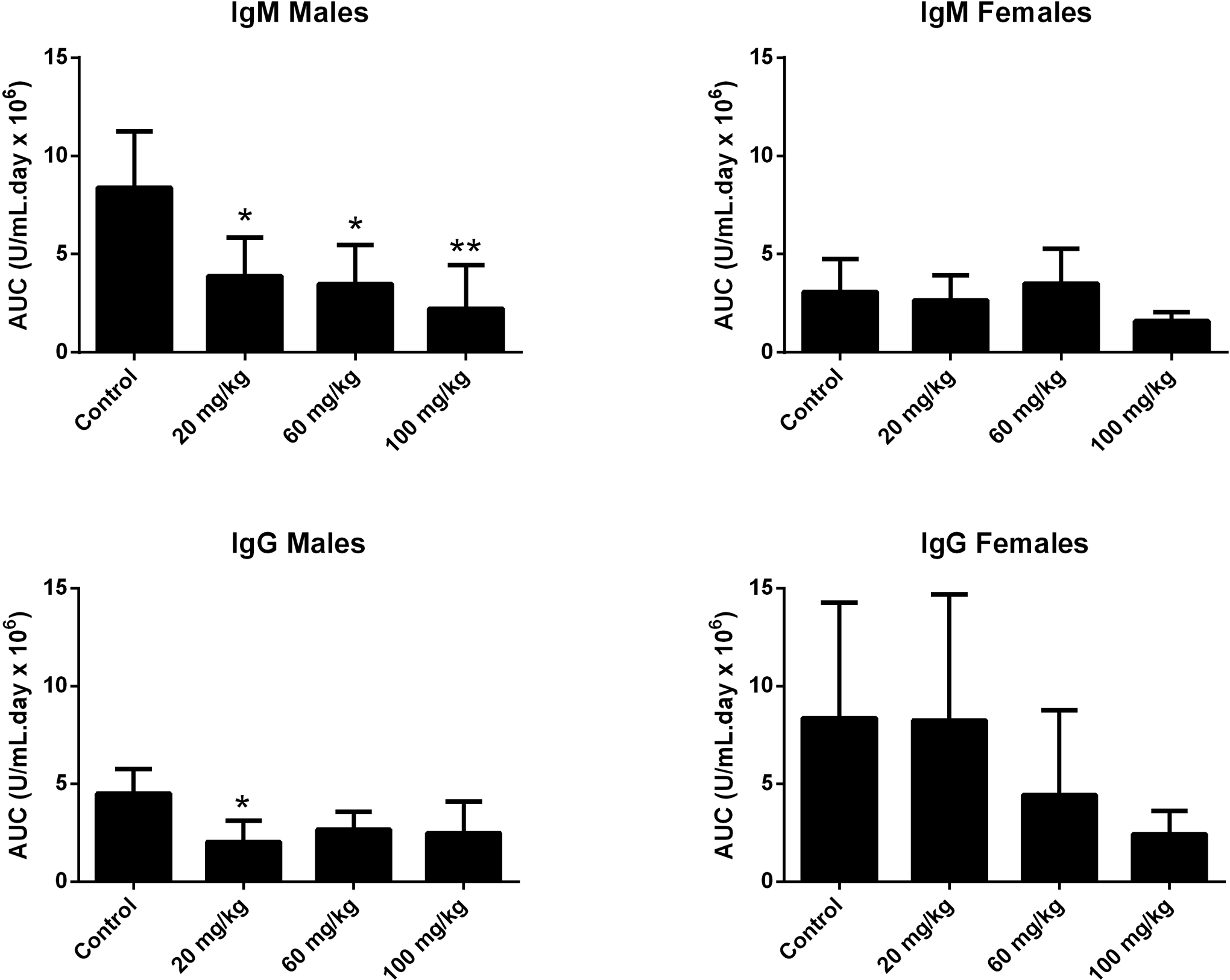
Anti-KLH IgM and IgG responses in monkeys from the 6-month toxicology study that were immunized with KLH at 3 months. The anti-KLH antibody responses are expressed as area under the concentration versus time curve (mean ± standard deviation [SD]). *P < 0.05 and **P < 0.01. Ig indicates immunoglobulin; KLH, Keyhole Limpet Hemocyanin.
All CNTO5825-treated monkeys were continuously exposed to high concentrations of CNTO5825 during the dosing period (Table 7). After SC administration of the first SC dose, the median Tmax was 2 days for both the 20- and the 100-mg/kg dose groups. The increase in Cmax and AUC (0-7 days) was approximately dose proportional after the first SC dose in cynomolgus monkeys. However, the increase in the Cmax and AUC (21-28 days) was less than dose-proportional after the last SC dose in cynomolgus monkeys. The mean accumulation ratios following multiple SC administrations of CNTO5825 were 2.32 and 1.78 for the 20- and 100-mg/kg dose groups, respectively, suggesting that moderate drug accumulation occurred in systemic circulation.
Elimination half-life following the last IV dose was 10.8 to 11.3 days. On the last serum sample collection day (day 267 or day 290), that is, 90 to 114 days after the last dose, CNTO5825 was still detectable (>0.04 µg/mL) in 3 of the 4 monkeys dosed with 20 mg/kg/wk SC (0.05-0.7 µg/mL) and in all monkeys dosed with ≥ 60 mg/kg/wk (0.3-5.5 µg/mL). Antibodies to CNTO5825 were not detected during the dosing period or during the 4-month treatment-free period in any animal.
Discussion
These studies show that administration of the human anti-IL-13 monoclonal antibody, CNTO5825, was well tolerated and not associated with any signs of toxicity when administered to rats or cynomolgus monkeys for 1 month. The 1-month studies were sufficient to support the safe administration of CNTO5825 to subjects in a phase I clinical trial. 10 The maximum serum concentration of CNTO5825 obtained in the rat and monkey 1-month toxicology studies were approximately 2,000- and 4,000-fold greater, respectively, to the maximum serum concentration obtained at the clinical starting dose of 0.1 mg/kg and were 10- and 20-fold greater than at the maximum administered clinical dose of 10 mg/kg. To support the continued development of CNTO5825, toxicology studies of 6-month duration were conducted in rats and cynomolgus monkeys. In those studies, CNTO5825 was not associated with any signs of toxicity when administered to cynomolgus monkeys for up to 6 months but when administered to rats for 6 months was associated with numerous unexpected findings that do not appear to be related to inhibition of IL-13.
The use of a rodent and a nonrodent species for the nonclinical safety evaluation of human therapeutics is a regulatory expectation, 13 when both species have been demonstrated to be pharmacologically relevant. For most human monoclonal antibodies, the cross-reactivity is restricted to humans and nonhuman primates and in those instances the nonhuman primate is used as the sole species for nonclinical development. CNTO5825 exhibited equivalent binding and in vitro antagonism of both rat and monkey IL-13 and therefore a 2-species assessment was conducted. The similar potency of CNTO5825 to inhibit rat and monkey IL-13 was somewhat unexpected, given that the sequence homology between rats and monkeys is quite different, 67% identify of rat IL-13 with human versus 95% identity of monkey IL-13 with human. To confirm the pharmacological relevance of the rat, an in vivo rat asthma model was employed. Ovalbumin sensitization in the Brown Norway rat produces an elevation in lung eosinophils, IL-13, and eotaxin. 15 In this model, a single dose of CNTO5825 of 10 mg/kg was sufficient to reduce lung resistance, inhibit lung eotaxin and eosinophilia, and to reduce serum IgE. Changes in these parameters following IL-13 inhibition have also been noted in monkey, 2,4 –7 sheep, 3 and mouse models of asthma, 8,9,16 and in asthmatic and atopic patients. 10,11
As part of the nonclinical testing program, the ability of biotin-labeled CNTO5825 to bind to frozen sections of animal and human tissues was evaluated as required by the regulatory guidances. 13 The intention of these studies is to detect any potential on-target (IL-13) and off-target (not IL-13) binding of the monoclonal antibody. 17 These studies showed positive staining to elements of the cytoplasm described as filaments or granules in all tissues examined and in all species examined, including the mouse which is not a pharmacologically relevant species. However, these studies do not represent the in vivo situation because the sectioning of the tissues reveals cytoplasmic elements that large molecular weight antibodies cannot gain access to when the cells are intact. Antibodies do not diffuse into cells but are actively taken up into cells by endocytosis in which case they are held within vesicles until they become rereleased at the cell surface or are degraded and thereby do not come into direct contact with the cytoplasm. 18 To demonstrate the physiological irrelevance of the cytoplasmic binding, a study was conducted in rats that were dosed IV with CNTO5825 after which tissues were collected for immunolocalization of CNTO5825. This study showed no cytoplasmic staining in any of the tissues, thereby confirming that CNTO5825 does not gain access to the cytoplasm and is consequently unable to interact with cytoplasmic elements. However, what the study did show was increased IgG recycling through cells when CNTO5825 or human IVIG was present possibly indicating saturation of the recycling process by 20 mg/kg in rats. 19
Although the rat was demonstrated to be a pharmacologically relevant species for the nonclinical safety testing of CNTO5825, CNTO5825 was more immunogenic in rats than in cynomolgus monkeys. This is not unexpected, given the greater phylogenetic difference between rat and human versus monkey and human. Regardless of this, the immunogenicity in rats did not preclude the use of the rat for long-term toxicity testing. In the 1-month tolerability study, the incidence of rat anti-CNTO5825 antibodies was greater after SC dosing than following IV dosing. Also, the bioavailability of CNTO5825 was very low (∼10%) at the 100-mg/kg/wk SC dose level, possibly due to a combination of high immunogenicity and limited absorption from the SC injection site. This contrasts with the high bioavailability (94%) reported after a single SC dose at 10 mg/kg in rats. 14 In addition, the decrease in body weight and an elevation in white blood cells (SC > IV) that was observed following SC dosing at 100 mg/kg/wk may be a secondary immunological reaction to CNTO5825 in rats. For these reasons, the IV route of administration only was used in rats for the 1- and 6-month toxicology studies. Although immunogenicity in rats was lower with the IV route of administration, it was still observed in the 1-month rat IV toxicology study. Therefore, for the 6-month toxicology study, a cohort of animals were included for termination at 3 months in the event that exposure could not be maintained throughout the entire 6-month period. However, in the 6-month rat study, no immunogenicity was observed. As a consequence, rats were continuously exposed to CNTO5825 throughout the entire 6-month dosing period and were also exposed to CNTO5825 throughout most of the 4-month treatment-free period. This is consistent with the high doses administered (up to 100 mg/kg/wk) and the long serum half-life of CNTO5825, which was ∼9 to 10 days following multiple dosing in rats. Assay interference due to the presence of CNTO5825 in the serum may be one explanation for the inability to detect an immune response although no immune response was detected even in those rats in which no measurable CNTO5825 could be detected in the serum. One other possible explanation for the lack of immunogenicity may be that CNTO5825, through its mechanism of action, may be inhibiting humoral immune responses. To test this hypothesis, an immunotoxicology study was conducted in rats. In this study, dosing of rats with CNTO5825 for 6 weeks did not inhibit the humoral immune responses to KLH immunization or show any other modulatory effects on the immune system. The 8-week duration for this study allowed for 4 doses of CNTO5825 to be administered prior to the initiation of the immunizations followed by an additional 2 weeks of dosing and 4 weeks of blood collections (8 weeks total) for determination of antibodies to KLH. Based upon prior experiences, a study of this duration would be expected to be sufficient to detect an immunosuppressant effect. 20
The absence of an effect on the humoral immune response to KLH immunization in the rat is in contrast to the monkey study where a possible reduction in the anti-KLH antibody concentration was observed. However, the reduction in the KLH response in the monkeys was not associated with any signs of toxicity and no changes in the histomorphometry of the lymphoid tissues. In contrast, in the 6-month rat study a number of toxicities were observed which may or may not have been related to administration of CNTO5825. These lesions, which occurred in different animals, include vascular neoplasms (2 animals), brain lesions (2 animals), and male reproductive tract lesions (7 animals). These lesions are not consistent with the known pharmacological effects of IL-13 inhibition and do not appear to be related to immunological reactions to administration of a foreign protein.
One male rat died during the treatment-free recovery period (study day 250, ∼10 months of age). This rat died from a multicentric hemangiosarcoma in the lung, mesentery, mediastinal lymph node, and abdominal skeletal muscle. Although dosing had been discontinued 74 days prior to this event, the projected serum concentrations of CNTO5825 at the time of moribund sacrifice, based upon results from other males in the study, would be between 5.5 and 44 µg/mL. One female was also noted with a hemangioma in the spleen at termination on study day 299 (∼11.5 months of age). Hemangiomas and hemangiosarcomas are both characterized as vascular neoplasms but are distinct lesions with hemangiomas being benign and not generally developing into hemangiosarcomas, whereas hemangiosarcomas are aggressive malignant tumors. Hemangiomas and hemangiosarcoma can occur spontaneously in mice (2%-5%) and in rats (0.1%-2%) and can be increased by certain pharmaceutical drugs. 21,22 The spontaneous lesions are generally late-developing tumors that arise at greater than 18 months of age and in mice occur most frequently in liver, spleen, and bone marrow. Therefore, the early occurrence of these vascular neoplasms in rats is somewhat unusual although a few isolated incidences of spontaneous angiosarcomas have been reported in rats younger than 10 months of age. 23,24 A number of hypothesis have been proposed for the mechanisms underlying the drug-induced increases in hemangiosarcomas reported for mice. 25 For nongenotoxic agents, these include hypoxia, dysregulated angiogenesis and/or erythropoiesis, macrophage activation, increased angiogenic growth factors, and increased endothelial cell proliferation. In the CNTO5825 rat study, the clinical and anatomic pathology data showed no indication of changes in erythropoiesis, coagulation, or macrophage production. A few serum samples from control and CNTO5825-dosed rats (from rats without the neoplasms) were tested for levels of VEGF. However, no circulating VEGF could be detected. This however is not unexpected because increases in serum VEGF could also not be detected in mice with hemangiosarcomas but could be detected in tissues. 26
Brain lesions were observed in 2 high-dose male rats. The brain lesions in these 2 animals were very similar in appearance to one another and were in a similar unilateral location. The unusual appearance of these lesions suggests a possible relationship to CNTO5825 treatment. However, CNTO5825 because if its size is not expected to cross the blood–brain barrier and gain access to the brain tissues. The in vitro tissue cross-reactivity study showed positive staining to cytoplasmic filaments/granules in neurons, glial cells, neuropil, and meningeal cells of the cerebellum. However, when CNTO5825 was injected IV into rats and tissues were collected for immunohistochemical localization of CNTO5825, this cytoplasmic staining was absent from all tissues including the brain tissues. A slight increased uptake of IgG in the brain sections was detected, but these increases were in those tissue elements outside of the blood–brain barrier: the cerebrospinal fluid (CSF) produced by the choroid plexus epithelium, the circumventricular organs (particularly the subfornical organ), the ependyma (responsible for IgG and other macromolecule uptake from CSF), the area postrema, and the immediate subpial or subependymal neuropil. Therefore, there is no evidence to suggest that CNTO5825 was producing a direct effect on the brain. However, brain lesions have occurred in patients treated with various immunosuppressive agents including large molecular weight biopharmaceuticals. 27 It is hypothesized that these lesions in humans may be due to a reactivation of the JC polyoma virus rather than to a direct effect on the brain. Polyomaviruses have been shown to induce hemangiomas in neonatal rats that have an immature immune system. 28 Therefore, the possibly was considered that reactivation of a polyomavirus due to immune suppression may have contributed to the brain lesions and possibly also to the hemangioma/hemangiosarcoma in rats. To that end, brain lesions, neoplasms, and normal tissues were tested for the presence of a polyoma virus. However, these investigations revealed no polyoma virus in tissues.
Lesions of the male reproductive tract were present in 2 (8%) of the 25 rats dosed with 20 mg/kg/wk of CNTO5825 and in 5 (20%) of the 25 rats dosed with 100 mg/kg/wk, but in none of the control animals. Although present in a minority of the animals, the dose relatedness of this finding is suggestive of a CNTO5825-related effect. In the testes, the lesions consisted of seminiferous tubule degeneration/atrophy or dilation. In the epididymides, microscopic findings included reduction in sperm (oligospermia or aspermia), epithelial cribriform change, and/or cellular debris in the lumen. The tubular dilation and severe degeneration/atrophy are suggestive of a secondary response to a lesion in the efferent ducts rather than a primary effect on the germinal epithelium of the testis. 29 However, the efferent ducts are not routinely examined as part of a standard toxicology study and so were not examined in the 6-month toxicology study with CNTO5825. Because of this omission, male reproductive organs including the efferent duct were collected and examined microscopically from the 6-week immunotoxicology study. In that study, there were no microscopic lesions in the efferent ducts, the testis, or the epididymis. The lack of effects on the male reproductive tract in the 6-week study may be due to the shorter duration of CNTO5825 dosing (6 weeks vs 6 months), the younger age of the animals at termination (18 vs 35-47 weeks) or that the studies were conducted in different research facilities with a different background of parasites.
Rats may be more susceptible to blockages in the efferent duct than primates because of their anatomy. 30 Rats have fewer ductules compared with primates and these funnel into a single duct that enters the epididymis. By contrast, efferent ductules in primates do not merge into a single duct but rather enter the epididymis at several sites. This allows for the outflow of fluid even if several efferent ductules become occluded or fluid reabsorption is inhibited. This may explain why effects were seen in rats with CNTO5825 but not in cynomolgus monkeys, although it should be emphasized that the cynomolgus monkeys in these studies were sexually immature. There is currently no explanation why CNTO5825 may cause a blockade of the efferent duct in rats. CNTO5825 because of its size would not be expected to cross the blood–testis barrier to any great extent. Studies in rats have shown that only small amounts of IgG (luminal titers <1% of serum) can enter the extratesticular duct system. 31 This occurs at the level of the rete testis, and most of this IgG is reabsorbed at the level of the efferent ducts by FcRn (Fc receptor neonatal)-mediated transport. In the in vitro tissue cross-reactivity studies, biotinylated-CNTO5825 was shown to stain spermatogenic cells in monkey and rat testis. However, this staining was described as to cytoplasmic filaments/granules, that is, similar to that described for all other tissues examined.
In control and CNTO5825-treated rats, nematode parasites (most likely pinworms) were observed microscopically in the lumen of the large intestines (highest incidence in the rectum) at all scheduled sacrifices with a slightly increased incidence in the terminal-sacrificed rats dosed at 100 mg/kg. This finding is a common background finding in rats generally with minimal toxicological significance (ie, no organ dysfunction). However, IL-13 is known to be very important in controlling parasites including pinworms 32 –34 and that although it appears that CNTO5825 had minimal effect, the potential impact on the rat immune system with infestation of pinworms in combination with an anti-IL-13 inhibitor is unknown. Athymic mice infected with pinworms show a proliferation of T and B lymphocytes in spleen and lymph nodes, an enhanced humoral immune response to sheep red blood cells and in increased incidence of lymphomas. 35,36 Normal BALB/c mice respond to pinworm infestation with an increase in interferon γ, IL-4, IL-5, and IL-13 production and development of IgG1-specific antibodies against the pin worms. 34 In these mice, the presence of the pin worms alter the animals’ allergic response to OVA but did not alter IgE levels or eosinophils. 34 In contrast in CBA mice, pin worm infection was associated with increases in blood eosinophils and reticulocytes and decreases in neutrophils and monocytes. 37 Increased myelopoiesis and erythropoiesis were evident in the spleen and bone marrow of the CBA mice and sensitivity to IL-17 was altered. Overall, although the presence of pinworms in rodents is generally considered to be irrelevant to the interpretation of toxicology studies, pinworms can alter the balance of the immune system, and this can have important implications when evaluating the potential effects of immune modulating agents. An increase in blood eosinophils was observed at the 3- and 6-month time point in the 6-month rat toxicology study. However, it cannot be clearly determined whether the increase in eosinophils is a secondary response to the pinworm infection or is an unrelated event. However, the eosinophils were not elevated in the 4- and 6-week studies in which the animals were not infested with pin worms.
Overall, these studies show that CNTO5825 was without toxicity when administered to rats for 1 month and to monkeys for up to 6 months. However, when administered to rats for 6 months, a number of seemingly unrelated events occurred that could not be clearly linked to CNTO5825 administration, inhibition of IL-13, or to the immunological status of the animals.
Footnotes
Acknowledgments
The authors would like to thank Stewart Bryant, Adu Siddiqui, George Gunn, Trina Jiao, Chao Han, and John Krayer from Janssen R&D and the numerous staff from Huntingdon Life Sciences, Charles River Laboratories, Covance Laboratories, and Lovelace Respiratory Research Institute for their various scientific and technical contributions to these studies.
Author Contribution
P. L. Martin contributed to conception and design; acquisition, analysis, and interpretation; drafted the article; and critically revised the article. I. Nnane and P. Branigan contributed to conception and design; acquisition, analysis, and interpretation; and critically revised the article. C. Louden contributed to analysis and interpretation and critically revised the article. All authors gave final approval and agree to be accountable for all aspects of work ensuring integrity and accuracy.
Declaration of Conflicting Interests
The author(s) declared the following potential conflicts of interest with respect to the research, authorship, and/or publication of this article: All contributors are employees of Janssen R&D Inc.
Funding
The author(s) disclosed receipt of the following financial support for the research, authorship, and/or publication of this article: These studies were funded by Janssen Research and Development.