



Abstract
Petroleum-derived substances are complex and composed of aliphatic (normal-, iso-, and cycloparaffins), olefinic, and/or aromatic constituents. Approximately 400 of these complex substances were evaluated as part of the US Environmental Protection Agency voluntary High Production Volume (HPV) Challenge program. The substances were separated into 13 groups (categories), and all available data were assessed. Toxicology testing was conducted as necessary to fully address the end points encompassed by the HPV initiative. In a broad sense, volatile hydrocarbons may cause acute central nervous system effects, and those that are liquids at room temperature pose aspiration hazards if taken into the lungs as liquids and may also cause skin irritation. Higher boiling substances may contain polycyclic aromatic constituents (PACs) that can be mutagenic and carcinogenic and may also cause developmental effects. Substances containing PACs can also cause target organ and developmental effects. The effects of aliphatic constituents include liver enlargement and/or renal effects in male rats via an α-2u-globulin-mediated process and, in some cases, small but statistically significant reductions in hematological parameters. Crude oils may contain other constituents, particularly sulfur- and nitrogen-containing compounds, which are removed during refining. Aside from these more generic considerations, some specific petroleum substances may contain unusually toxic constituents including benzene, 1,3-butadiene, and/or n-hexane, which should also be taken into account if present at toxicologically relevant levels.
Introduction
The US Environmental Protection Agency (USEPA) announced a voluntary chemical data collection effort in 1998 called the High Production Volume (HPV) Challenge Program. 1 Chemicals of HPV are those produced or imported into the United States in aggregate quantities of at least 1 million pounds per year. The challenge to the industry was to provide information equivalent to the requirements of the Organization for Economic Cooperation and Development (OECD) Screening Information Data Set for each of these substances. The relevant information included physical/chemical properties, environmental fate and toxicity, and mammalian toxicology end points. Among these substances, approximately 400, identified by unique Chemical Abstract Services (CAS) numbers, were petroleum derived. The industry formed the Petroleum High Production Volume Testing Group (PHPVTG), managed by the American Petroleum Institute (API), to compile the available data including previously unpublished information from company sources, identify any missing information, conduct any necessary testing, and provide the results to the EPA and to the general public via a Web site maintained by the API (www.petroleumhpv.org). The specific types of mammalian toxicological hazards, which fell within the requirements of the HPV challenge program, included acute toxicity (effects of single relatively high doses), repeated dose toxicity, in vitro and in vivo genetic toxicity as well as developmental and reproductive toxicity, but information addressing other toxicological hazards was also compiled and summarized when available. This and the other articles in this supplemental issue of the International Journal of Toxicology summarize the new data, along with previously unpublished information, and assess the mammalian toxicological hazards of the substances that the petroleum industry manufactures. An assessment of physical/chemical and environmental hazards was also covered by the HPV Challenge Program, and the required information on these other types of hazards was also compiled and reported but is outside the scope of the articles in this volume.
A particular challenge of the petroleum industry is that the majority of the substances that it produces are of complex and variable character (Chemical Substances of Unknown or Variable Composition, Complex Reaction Products and Biological Materials [UVCBs]). This is partly because petroleum substances are manufactured from crude oil that itself is complex and variable, but additionally, because petroleum substances are manufactured to meet technical specifications related to operational properties and do not normally have specific compositional requirements. Because this is true, the petroleum industry relies on generic approaches to the extent possible, applying the principal that substances of similar structure usually have similar toxicological as well as physical/chemical properties—although there are exceptions. This has led to an assessment strategy in which the complex petroleum substances evaluated within the HPV program were grouped into categories of similar materials (Figure 1). The evaluations were based on a “representative substance/reasonable worst case” approach in which materials that were “representative” of the categories (or subsets thereof) were tested, and the data were “read-across” to other “similar” substances. This raised a number of questions including the extent to which the test substances were representative and/or worst case, the substance domains over which the data were applicable, and the thoroughness to which the hazards were characterized. To meet the objectives of the HPV initiative, it was necessary to critically consider the underlying assumptions embedded within the classical approaches and to consider each of the questions raised in order to meet the overall industry objectives with respect to the HPV program.
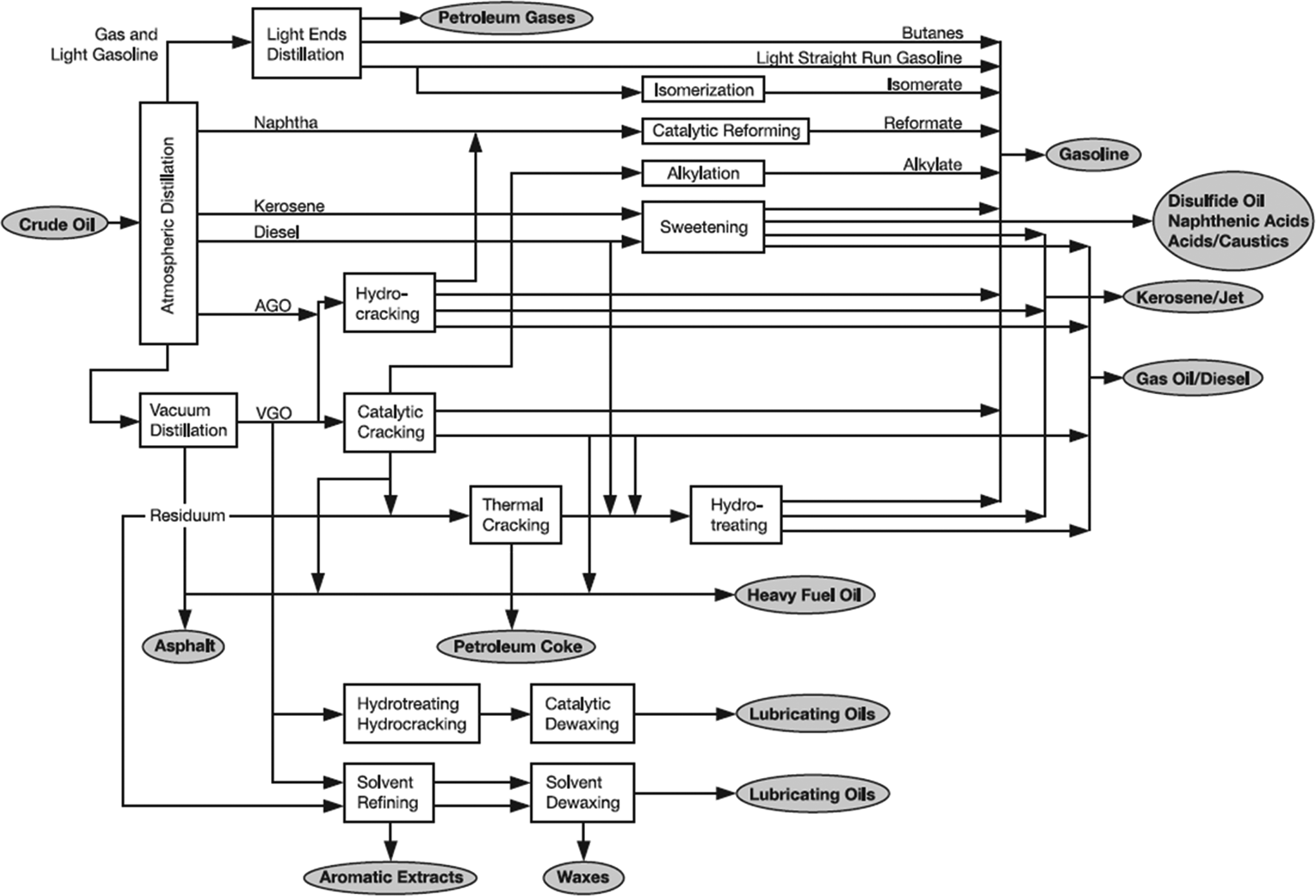
Simplified refinery diagram showing the principal manufacturing steps leading to the substances in the petroleum industry high production volume (HPV) categories. The 13 petroleum substance categories are shown in bold.
In a broad sense, the substances manufactured by the petroleum industry can be thought of as complex hydrocarbon substances consisting of normal paraffins, iso (branched) paraffins, cycloparaffins (also referred to as naphthenes), olefins, and aromatics in various combinations. With increasing boiling point, the molecular weights of the individual constituents increase, the molecules become increasingly more complex, the numbers of possible isomers increase, and the substances become increasingly complex. Thus, the substances represent a continuum from relatively simple molecules to substances containing large numbers of very complex molecules individually present at low levels. Because the substances are complex, the process of hazard characterization is challenging, but there are some simplifying assumptions that make the problems much more manageable. In practice, with some exceptions, the constituents of petroleum-derived substance have similar toxicological properties and can be considered on a collective basis. To a certain extent, this is because most of the constituents of petroleum-derived substances have relatively limited toxicological properties that are related to their physical/chemical properties; thus, the toxicological hazards of the complex substances are a combination of the generic hazards of the constituents plus any specific hazards associated with a relatively small number of unusually toxic constituents. This is illustrated by some of the examples subsequently in which it is shown that the potential for toxicological hazards is largely a reflection of the levels of benzene, butadiene, polycyclic aromatic hydrocarbons, or other specific toxic constituents that may be present in the various substances.
As is demonstrated by the examples described subsequently, the HPV program process required a critical review of the previous assumptions about hazard characterization by the industry. With respect to the points listed earlier, the assessments showed that:
The categorization strategy used by the industry, which was originally developed on the basis of end-use applications, has practical utility, as the constraints imposed by end use are related to physical/chemical properties and compositional parameters which match up well with the toxicological hazards of the substances within the categories. This provides empirical evidence that the applicability domains are reasonable.
The outcomes of the tests were as expected, indicating that both current and previous test substances were representative. This was also addressed theoretically through the use of modeling studies in which it was shown for one example, crude oil, that the effect levels identified in previous toxicological studies were consistent with the lowest predicted outcomes from other untested samples.
The hazard characterization was sufficiently thorough to meet the objectives of the HPV initiative. New testing was limited to the end points encompassed by the HPV initiative, but for many of the substances, the available information went well beyond the minimum requirements of the HPV program.
The principal contributions of the petroleum industry’s HPV program have been in 3 areas:
The hazard characterization studies that were conducted as part of the HPV program primarily focused on the potential for systemic and/or developmental toxicity. As the petroleum industry has historically focused on other toxicological end points, primarily carcinogenic potential, the data from the HPV program have substantially enhanced the previous understanding of the noncancer hazards associated with repeated exposures.
The new data along with careful review of older information extended the understanding of the relationship between polycyclic aromatic compounds (PACs) and systemic and developmental toxicity.
A series of empirical models were developed by which it is possible to predict the outcomes of repeated dose toxicity, developmental toxicity, and the outcomes of Salmonella tests from compositional information. 2
It is hoped that the new data and the predictive models will limit the need to conduct further studies to characterize the toxicological hazards of petroleum substances.
In short, the HPV program confirmed that the historical approaches used by the industry were appropriate and effective and that the previous understanding by the industry of the toxicological hazards of its products was further substantiated by the enlargement of the toxicology database.
Characterization of Toxicological Hazards of Petroleum Products
Historical Information and Classical Approaches
Classically, the petroleum industry has used 4 general approaches to characterize the hazards of the substances that it manufactures:
Reasonable worst case/read across in which a “representative” substance is tested and the results used to represent the hazards of other “similar” substances.
Consideration of the hazards of any unusually toxic components of the substances.
Development of screening tests that are validated by comparison to the results of in vivo studies.
Development of quantitative composition/activity relationship models that can be used to predict outcome from substance composition.
In some respects, all 4 of these approaches were used in the context of the petroleum industry HPV program to develop the information that was used to characterize the hazards of the substances that it manufactures. Further, these approaches are not mutually exclusive and, in some cases, were used in combination. It should be noted, however, that the HPV initiative is only the latest of the toxicological investigations that the petroleum industry has sponsored.
The first systematic attempt by the petroleum industry to characterize the hazards of its substances was a series of inhalation toxicity studies by Carpenter and coworkers that were published in the early 1970s. As explained in the first of a series of articles describing this work, 3 approximately 15 generic types of materials were identified covering a range of volatile petroleum substances and hydrocarbon solvents. The sample matrix was intended to cover as broad a range of compositions and physical/chemical properties as possible, taking both hydrocarbon type (aliphatic, cycloaliphatic, aromatic) and carbon number/distillation range into account. The selected substances were tested following a common protocol that included acute inhalation toxicity studies in several animal species, repeated inhalation toxicity studies in rats and dogs, tests of sensory irritation in mice, and short-term exposure studies with human volunteers. As the specific objectives of this program were to provide information that would be useful in managing the hazards of occupational exposures, the end points of particular interest were acute central nervous system (CNS) effects and acute eye and respiratory irritation, although the potential for effects associated with repeated exposure was also considered. An overall conclusion was that these relatively volatile petroleum-derived substances could cause acute CNS effects and some could be irritating to the eyes and respiratory tract, but they did not appear to cause profound target organ effects. The evidence for acute CNS effects and the potential for discomfort were taken into consideration in recommendations for occupational exposure limits. The one potentially pathological change that was noted in the repeated exposure studies 4 was a kidney lesion in male rats, which Carpenter et al interpreted as an exacerbation of “nonprogressive murine nephrosis,” a spontaneous aging lesion. Studies that were conducted to further assess the toxicological significance of these renal lesions 5 –7 contributed to the ultimate identification of this effect as a male rat-specific nephropathy (α2u-globulin mediated nephropathy) that does not occur in humans. 8,9
In the late 1970s, the petroleum industry conducted another program to collect base toxicological data on a range of volatile and nonvolatile petroleum-derived substances. Studies assessed the hazards of acute and subacute (2 weeks) exposure, 10 and the potential for in vitro and in vivo genetic toxicity was investigated. 11 Some substances were tested for developmental toxicity. 12 There was also an investigation of carcinogenic potential using dermal application studies in mice (note 1). 13
These initial studies led to longer term studies when these were justified by the potential for exposure, including 90-day and chronic toxicity/carcinogenicity studies of gasoline 14,15 and green petroleum coke. 16 The principal finding in the repeated exposure studies of gasoline was an increased incidence of specific kidney changes and ultimately an increased incidence of renal tumors in male rats. Like the earlier observations of Carpenter et al, 4 these changes were eventually shown to have been the consequence of an α2u-globulin-mediated process in male rats, which is not relevant to humans. 8,9 The findings in the petroleum coke studies, associated with dust accumulation in the lungs described as inflammatory changes, were found in rats but not in monkeys. 16 As discussed in more detail subsequently, substances for which exposure was likely to be by skin contact were tested in repeated dermal application studies.
In a review of the chronic gasoline study, Scala 17 provided an example of a “reasonable worst-case” test sample. A survey of commercial fuels was conducted, and a sample was then custom blended to meet the specifications for an average summer blend of gasoline in the market place in 1976. The benzene content of the test sample was increased from 1% (typical at that time) to 2% to avoid underestimating any potential hazards associated with benzene exposure. Performance additives that are product specific and proprietary were limited to those necessary to maintain substance stability over the test period, and butane was added to raise the Reid Vapor pressure. In later years, the focus of testing shifted from hazard identification to risk assessment, and many of the inhalation toxicity studies used the more volatile constituents (“light ends”) rather than fully vaporized material as the test substances. Because of the potential for relatively widespread exposure, more specialized studies to investigate the potential for noncarcinogenic hazards including reproductive and developmental toxicity of gasoline 18,19 were also conducted. The 90-day and chronic studies of gasoline that were conducted in the 1980s investigated the potential effects from exposure to fully vaporized gasoline; but by the late 1990s, it was recognized that exposures to gasoline vapors were dominated by the more volatile constituents. Subsequent investigations have focused on the “light ends” rather than the full range of gasoline constituents, and the focus has shifted from hazard identification to risk assessment. As few effects were observed in any of these gasoline studies, the different testing strategies were most likely unimportant. However, the differences between the substances as they are manufactured and the constituents to which humans are ultimately exposed need to be taken into consideration if the hazard characterization data are to be used for risk assessment.
Studies were also conducted by repeated dermal application to assess the potential hazards of higher boiling, low-volatility substances. Some of these focused on repeated exposures for relatively short periods of time, 10 but the majority of these tests were chronic dermal application tests in mice. As summarized by McKee et al, 20 evidence from the first half of the 20th century indicated that some base oils used in lubricant manufacture or as metal working oils could cause dermal cancer. The carcinogenic agents were identified as high-boiling aromatic constituents (PACs), and a test method involving repeated application to the skin of mice was developed as a means of identifying potentially carcinogenic streams. Beginning in the late 1940s, the use of catalytic cracking, a refining process by which larger, less commercially important molecules are converted to smaller molecules that can be used in fuels blending, became an increasingly important refining process. Because catalytic cracking (note 2) as well as thermal cracking, a similar process using high temperatures, yields output streams that tend to contain relatively high levels of PACs, mouse dermal application studies were conducted to identify process streams that contained PACs at potentially hazardous levels. 21 –24 It should be noted that, although the carcinogenic hazards of these high boiling petroleum substances are related to PAC content in general, the specific PAC molecules are complex and difficult to identify, and attempts to predict the dermal carcinogenic potency in quantitative terms based on levels of specific marker substances (eg, benzo(a)pyrene) have been unsuccessful. One pragmatic solution to this problem is to treat the PACs on a generic basis and to develop process conditions that remove or convert the carcinogenic constituents to yield noncarcinogenic oils for lubricant manufacture. 25 Another approach has been to exclude these molecules to the extent possible largely from products that could be sold to the population at large, particularly transportation fuels, through specifications that limit the upper bounds of the distillation ranges of the finished products. Finally, there are some streams for which removal of the carcinogenic constituents is not practical, necessitating the development of risk management measures to minimize exposure. Most importantly, industry has developed practices to manage the hazards based on an understanding of the types of molecules that are of concern but without requiring detailed information on which of the aromatic molecules specifically have carcinogenic properties.
Because some petroleum-derived substances have carcinogenic properties, the petroleum industry has had a strong interest in the development of screening and/or predictive assays to efficiently differentiate between substances that could produce dermal cancer via genotoxic properties and those that cannot. This led to the development of screening tests that involve extraction of the PACs into dimethyl sulfoxide followed by either direct measurements of the weight of the extract (IP 346) 26 or a measure of its mutagenic properties using a modification of the Salmonella assay. 27 The IP346 and optimized Salmonella tests were validated by comparison to the results of dermal carcinogenesis bioassays 28 –32 to assess both sensitivity and selectivity of the screening assay procedures. Data generated within the HPV program made possible the development of compositionally based models that could be used for other end points. More specifically, the industry developed models that can be used to calculate the potential for certain high boiling point petroleum substances, specifically those with final boiling points >344°C to produce target organ and/or developmental toxicity based on compositional information. A series of articles describing the development of the method and its applications has been published elsewhere (eg, Gray et al 2 ). A previous publication based on a series of repeated dose and developmental toxicity tests of a series of high boiling point refinery streams showed that these substances produced similar target organ and developmental effects and that these effects were associated with PAC content 33 ; however, quantitative relationships between the levels of PACs in the test samples and outcomes measured in the toxicity tests were not defined. A related and also very important observation was that the aliphatic constituents of these substances made no apparent contribution to the toxicological properties. From the data in this publication as well as in results of other, unpublished studies, the PHPVTG developed statistical models to predict target organ and developmental effects of high boiling point petroleum substances from their aromatic contents. 34
In addition to the generic considerations, there are a number of hazardous constituents that may be present at variable levels in some specific types of petroleum substances; some of these are specifically identified and some have only been characterized in generic terms. Crude oils may contain hydrogen sulfide that is highly irritating and acutely toxic, 35 and other sulfur-containing molecules may also be present. 36 Depending on the method of production, some gas streams may contain hydrogen sulfide, carbon monoxide, benzene, and/or 1,3-butadiene. Some naphtha streams may contain benzene or other molecules with specific regulatory limits including n-hexane, and the distillate streams may contain naphthalene. Each of these constituents has toxicological properties that are unique and distinguished from other molecules of similar structure. From a manufacturing perspective, it is necessary to know which process streams are likely to contain unusually hazardous constituents in order to control exposures. On the other hand, to a certain extent, the hazards of these unusually toxic constituents are managed almost independent of the process streams in which they may be present. For example, benzene 1,3-butadiene and hydrogen sulfide have their own occupational exposure limits, and industrial hygiene practices are designed to avoid overexposure to these substances, regardless of the complex substances from which they originate.
Contributions of the New Information Obtained During the HPV Program
Within the context of the HPV program, it was necessary to consider 3 principal questions:
whether the historical data were comprehensive;
whether the compositional characterization of petroleum substances was sufficient; and
whether the historical approaches were reasonable.
Taking these in order:
Sufficiency of historical information: the petroleum industry had previously focused on carcinogenic potential as the greatest concern associated with repeated exposure. Within the HPV program, the potential for target organ and/or developmental effects was investigated more thoroughly across a range of substances, and more consideration was also given to the potential for reproductive toxicity and in vivo mutagenic effects. As discussed subsequently, it was shown that some of the substances can produce target organ and/or developmental effects, but these are associated with the levels of PACs that are also the carcinogenic constituents. In articles published elsewhere, methods were developed by which the potential for petroleum substances to cause these effects could be predicted from compositional information. 34,37,38 Previously published information indicated that reproductive effects were unlikely at treatment levels producing other effects and were, therefore, unlikely to represent critical effects for risk assessment. 39 The studies of micronucleus induction and an indicator of in vivo mutagenic effects provided information suggesting that most petroleum substances, even those with high levels of PACs, are unlikely to be mutagenic under in vivo conditions. 40
Sufficiency of compositional information: since petroleum substances are complex and variable, compositional information is usually relatively generic and limited to the types of molecules that they contain and the boiling ranges/carbon numbers that define the substance boundaries. With a few exceptions, levels of individual constituents are not specified. That having been said, the assessments in the petroleum industry HPV program included evaluations of certain kinds of substances that could be used to predict toxicological effects from compositional information. In particular, it was shown that for high boiling point petroleum substances (ie, those with final boiling points >344°C), the aliphatic constituents are essentially nontoxic, and the toxicological hazards associated with the aromatic constituents can be predicted from compositional indicators. 2 For more volatile petroleum substances, the principal hazards are associated with a few constituents with unusual toxicological properties, in particular benzene and 1,3-butadiene.
Adequacy of historical approaches: using the new models, it was possible to compare outcomes of toxicological tests to predicted outcomes of other substances across substance categories. The modeling exercises confirmed that the effects obtained with the previously tested examples were produced at similar or lower levels than the predicted outcomes. Thus, the results of the HPV program showed that the historical approaches of the industry were reasonable and that the samples previously chosen as “worst case” had been appropriate for use in defining the hazards of the other related substances.
Characterization of Toxicological Hazard Information for Major Categories of Petroleum-Derived Substances
The articles included in this volume summarize new information on 10 of the substance categories (crude oils, gases, naphthas, jet fuel/kerosene, gas oils, heavy fuel oils, lubricant base oils [LBOs], aromatic extracts, petroleum coke, and 2 types of reclaimed substances [naphthenic acids and disulfide oils]). In addition, there was 1 category of substances (asphalt) for which testing was conducted but reported separately 41 and 2 categories (waxes and grease thickeners) for which the available information was considered sufficient. For completeness, summaries of the overall conclusions relating to the toxicological properties of all of the categories of petroleum-derived substances are provided subsequently.
Crude oils are a group of complex substances described by a single CAS number (8002-05-9), which are used as the starting material for other petroleum substances. Crude oil may contain hazardous constituents including benzene and PACs that may be carried forward through the refining processes and may ultimately contribute to the hazards of any substances in which they are found in significant quantities. Crude oils may also contain other hazardous constituents such as hydrogen sulfide and mercaptans that are removed during refining. Thus, the hazards of any specific crude oil are related to the constituents that it contains and the levels that may be present. In general terms, the acute toxicological properties of crude oils are associated with volatile constituents including hydrogen sulfide, other volatile sulfur-containing constituents (eg, mercaptans), and volatile hydrocarbons. Chronic hazards are primarily associated with the potential for exposure to benzene and/or polycyclic aromatic compounds.
Previous studies of 2 specific crude oils had shown that they could produce target organ and developmental toxicity with repeated dermal exposure. 42,43 Using compositional modeling developed as part of the HPV program, the potential hazards of 46 additional crude oils were predicted. 44 The results showed that the lowest predicted effect levels were similar to the lowest effect levels of one of the previously tested crude oils. This supported the view that the existing data could be used as a reasonable worst case and that further testing to characterize the hazards of individual crude oils was unnecessary.
The initial step in the refining process is to separate the constituents of crude oil by boiling under atmospheric pressure as shown in Figure 1. This results in gaseous and liquid streams that can be used for blending of fuels along with a residuum that can be further processed either by catalytic cracking to produce lower molecular weight material that can also be used for blending or by separation of fuels under vacuum (vacuum distillation; Figure 2) which is used to produce LBOs, aromatic extracts, waxes, and asphalt.
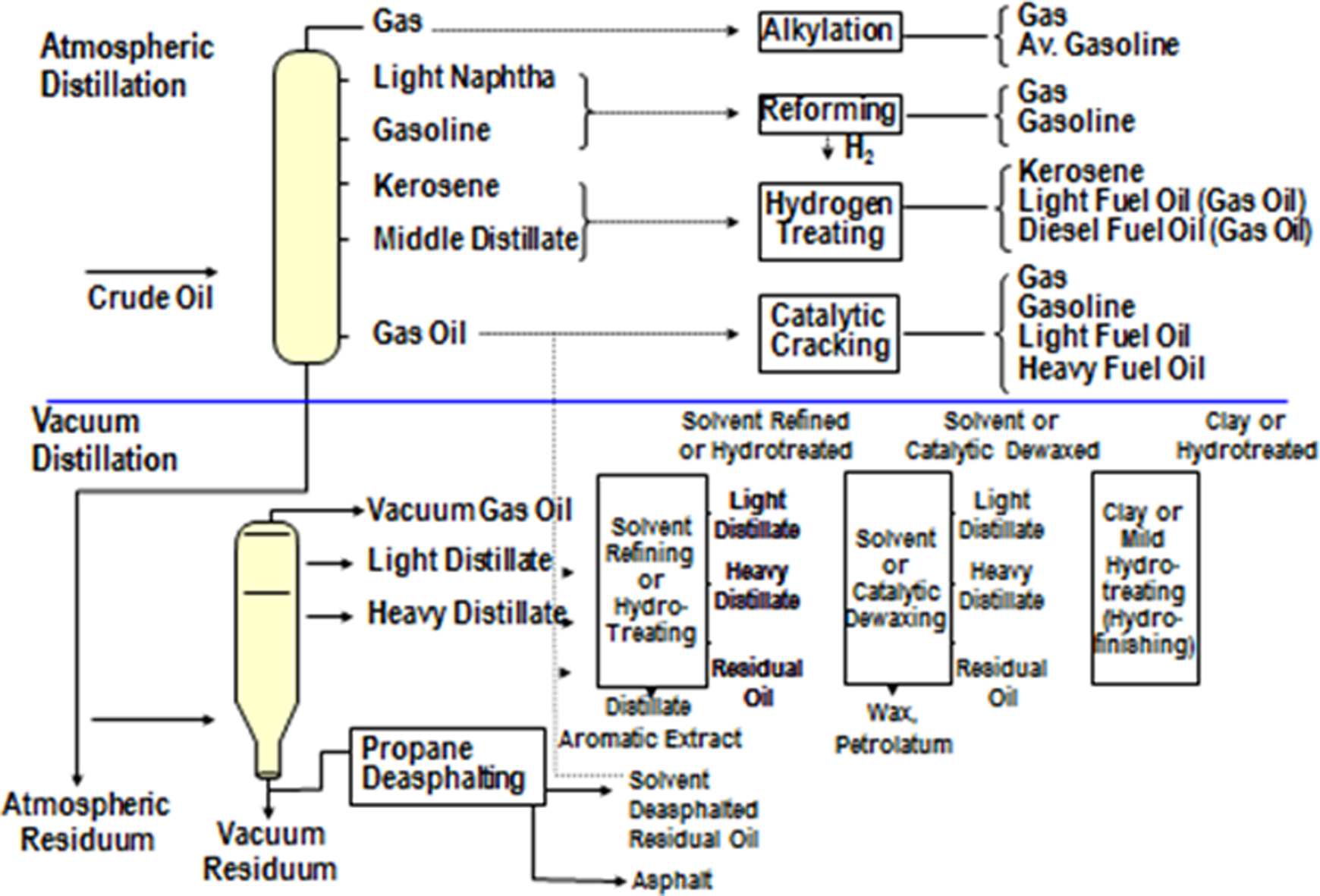
Simplified refinery diagram showing vacuum distillation of atmospheric residuum and the manufacturing steps leading to the production of lubricating base oils, waxes, bitumen, and aromatic extracts.
Hydrocarbon gases are substances that exist in the gaseous state at room temperature and are composed primarily of C1 to C4 hydrocarbons (methane, ethane, propane, and butane) along with some entrained higher molecular weight hydrocarbons, particularly pentane and hexane isomers (note 3). The gases had previously been considered as simple asphyxiants with the major hazards being primarily fire and explosion. 45 The PHPVTG sponsored studies to characterize the repeated dose and developmental/reproductive hazards of the gas constituents individually as well as the principal commercial product and liquefied propane gas. The only notable finding was a small and not statistically significant reduction in mating in the high-exposure (9000 ppm) group in the isobutane study. Assuming on a worst-case basis that this result was toxicologically significant and using the results of these studies as well as previous data on other hydrocarbons that could be present in these streams, a method was proposed by which the toxicity of any complex petroleum gas stream could be calculated based on its constituents. 46 Ultimately, the most important consideration was whether or not the gaseous streams contained benzene and/or 1,3-butadiene which must be controlled in terms of their own regulatory requirements.
Naphtha is a generic term for gasoline-blending streams and refers to complex hydrocarbon substances with constituents having carbon numbers in the range of C4 to C12. Exposure to naphthas (and formulated gasoline) may cause acute CNS effects and/or respiratory irritation at high vapor concentrations 47 –49 and may cause chemical pneumonitis if aspirated into the lungs 50 but has not been associated with other toxicological effects except under conditions of intentional abuse. The characterization of the toxicological hazards of naphthas has utilized “reasonable worst case” examples based on studies in which substances with relatively high levels of the various types of hydrocarbon constituents, paraffins, olefins, aromatics, and cycloparaffins, were tested. Since data on paraffinic-, olefinic-, and aromatic-rich streams had been previously published, a cycloparaffinic-rich stream was tested in a repeated dose/reproductive toxicity screening test to complete the matrix. As no hazards were identified that differed from previously published results of either naphtha streams or formulated gasoline, it was concluded that the hazards of all naphthas fall within the range of substances tested and that further toxicological testing for hazard characterization is unnecessary. 51 Benzene, when present, must be taken into account and, in particular, the occupational exposure recommendations for benzene must be observed. Finally, with respect to risk assessment, it should be noted that naphthas may have relatively wide boiling ranges and that exposures are primarily to the more volatile C4-C6 constituents. This distinction needs to be taken into consideration when the results of toxicological tests are used for human health risk assessment.
Kerosene/jet fuel is a category of hydrocarbon fuels with boiling ranges of approximately 150 to 290°C and carbon numbers in the range of approximately C9-C16. Historically, “kerosene” was the principal commercial product from the refining industry but is now primarily used to blend turbine fuels for the aviation industry. Because kerosene and jet fuel are less volatile than substances used in gasoline blending (ie, naphthas), they are not acutely toxic (note 4) by inhalation 52 or by oral or dermal administration (although they can cause chemical pneumonitis if taken into the lungs in a liquid state). 10 Kerosene and jet fuel may be irritating to the skin but are not eye irritants and do not produce allergic contact dermatitis. 10 Kerosene produced minimal effects when tested by inhalation in rats and dogs at levels up to saturated vapor concentrations. 52 Salmonella tests of kerosenes and jet fuels have usually yielded negative results, 29,53 and these substances did not increase micronucleus frequency when tested in bone marrow assays in mice. 53,54 Repeated dermal application of straight run kerosene and jet fuel A to mouse skin increased the frequency of squamous cell tumors, but the tumors were judged to have been due to promotional processes related to repeated dermal irritation, in part because kerosene and jet fuel are not mutagenic- or carcinogenic-initiating agents. 55 –57 Kerosene is not a reproductive or developmental toxicant, 58 and jet fuel had no effects on either fertility or development. 59,60 To help meet the HPV Challenge Program goal of bringing previously unpublished data into the public domain, a 13-week subchronic dermal toxicity test with neurotoxicological evaluations was made part of the PHPVTG’s submission to EPA. 61 There were no treatment-related effects other than skin irritation at the highest dose tested (495 mg/kg/d).
Gas oils are a category of complex hydrocarbon substances with carbon numbers of C9 to C30 and boiling ranges of approximately 150 to 450°C that are primarily used to manufacture diesel fuels and residential heating oils. In many respects, the gas oils are like the substances in the kerosene/jet fuel category, but some contain aromatic constituents of more than 3 rings that have toxicological properties that differ from the 1- to 2-ring aromatics that may be found in the kerosene and jet fuels. Although there are no compositional specifications for the individual gas oil blending streams, the specifications for diesel fuel and heating oil include limits on boiling range (the 90% boiling point is less than 338°C) and total sulfur content (15 ppm) which effectively limit the types of aromatic constituents that may be present in the end products of those with 1 to 3 aromatic rings.
62
Gas oils are not acute oral or dermal toxicants
10
and the lethal concentration 50 (LC50) values are
As part of the HPV program, 2 types of gas oils, a blend of commercial diesel fuels (ultralow sulfur diesel [ULSD]), and aromatic-rich streams from a catalytic cracking process were tested for target organ and developmental effects in repeated dermal application studies. The ULSD did not produce target organ effects or developmental effects at treatment levels up to 600 mg/kg/d, whereas treatment with the aromatic-rich streams increased liver weights, reduced maternal thymus weights, and reduced certain hematological parameters and also produced developmental effects in a manner related to the levels and types of aromatics present in the specific gas oil streams tested. 33,64 The new data from the HPV program provided additional information showing that the target organ and developmental effects are associated with PACs.
Heavy fuel oil components, a category of substances with carbon numbers in the range of approximately C20 to C50, are primarily used as fuels in industrial boilers and other direct source heating applications such as blast furnaces. Heavy fuel oils are not acutely toxic by oral administration or dermal application 65 and have such low vapor pressures that they do not present hazards by inhalation (although lower boiling point material is sometimes added to reduce viscosity and improve flow characteristics). The HFOs may be irritating to the skin but are not eye irritants and do not cause allergic contact dermatitis. 65 The principal toxicological concern associated with HFOs is that they may contain high levels of PACs, and the toxicological studies have tended to use catalytically cracked clarified oil (CCCO, CAS number 64741-62-4), a high boiling point bottom fractions from a catalytic cracking process with high levels of PACs as a means of characterizing the hazards of this group of substances on a “worst-case” basis. The CCCO was lethal to rats when applied repeatedly at high doses and produced profound liver and thymus effects and reduced hematological parameters among the survivors. 66 The CCCO is mutagenic in Salmonella 28,29,67 but does not increase micronucleus frequency when tested under in vivo conditions. 68 The CCCO causes skin tumors in repeated dose dermal studies in mice. 69,70 In developmental toxicity tests, CCCO reduces fetal survival and increases the frequency of resorption 33,71 –75 but has no effects on reproductive parameters. 63 Repeated dose and developmental toxicity tests of CCCO, conducted as part of the HPV program, produced results consistent with previous reports. The predicted effects for other HFO components, based on their PAC contents, supported the view that CCCO was a worst case for substances in this category. 75 The systemic and developmental hazards of any specific HFO stream can be predicted from its composition using the PAC models. 34,37,38
Lubricant base oils (LBOs) are substances used in the manufacture of formulated lubricants and greases. The starting materials are vacuum gas oil streams with differing viscosity characteristics and a residuum (vacuum residuum; Figure 2). These “raw” LBOs contain PACs and can produce tumors if repeatedly administered to mouse skin. 25,30 Based on the PAC content, they could also produce target organ and developmental effects. These oils are further refined usually by solvent extraction, a process that selectively removes high-boiling aromatic components resulting in noncarcinogenic base stocks or hydrogenation to remove the aromatics or convert them to saturated constituents. The LBOs, as currently manufactured do not contain PACs at hazardous levels, are not carcinogenic, 76 and, as demonstrated by experimental studies conducted as part of the HPV program along with other data, 77 do not produce either target organ or developmental toxicity. Because the unrefined LBOs contain PACs and are carcinogenic, it seems reasonable to assume that they could also produce target organ and developmental effects in repeated dose studies. Further, it is possible to predict the outcomes of repeated dose and developmental toxicity tests using the PAC models. As there appeared to be no practical benefit to conducting toxicological testing to further characterize the potential hazards of unrefined LBOs, no testing was conducted.
Waxes are high-molecular-weight paraffinic constituents removed from refined LBOs by low temperature separation or solvent extraction. At this stage, the waxes are referred to as slack waxes and may contain other hydrocarbon constituents as entrained material. At 1 time, some waxes were produced from unrefined LBOs and the entrained material contained carcinogenic constituents, 78 but in modern base oil production the entrained hydrocarbons, like the LBOs from which they are derived, are not carcinogenic and do not produce target organ or developmental toxicity. It was concluded that for HPV purposes, the potential toxicological hazards, or lack thereof, of hydrocarbon waxes could be predicted based on the knowledge of process history and/or compositional information.
“Aromatic extract” is a term for the aromatic-rich materials removed from raw LBOs by solvent extraction. Aromatic extracts are not acutely toxic, highly irritating, or sensitizing, but, as shown by previous studies 79 as well as studies conducted as part of the HPV work, distillate aromatic extracts can produce the target organ and developmental effects that are characteristic of PAC-containing substances. 80 Aromatic extracts are also mutagenic in appropriately modified Salmonella tests 28,29 and produce skin tumors when repeatedly applied to mouse skin. 25,30,81 Based on the results of Hoberman et al, 63,74 aromatic extracts are not expected to be reproductive toxicants.
Asphalts (bitumens) are substances derived from vacuum residuum with high boiling points (typically > 450°C) and are comprised of high-molecular-weight (500-5000 Da) very complex molecules. Because asphalts are solid or semisolid at room temperature, the exposure is primarily to fumes created when asphalt is heated in order for it to be applied during roofing or paving applications. The primary hazards are considered to be related to burns or irritant effects from the hot material. The principal toxicological concern has been the potential for asphalt to cause cancer, based in part on reports that asphalt fume condensate was carcinogenic when repeatedly applied to mouse skin. 82 In contrast, a sample of commercial paving asphalt was not carcinogenic in the mouse skin assay, 83 asphalt fume condensate did not produce lung tumors when tested in a chronic inhalation toxicity study in rats, 84 and no consistent association between inhalation and dermal exposure to asphalt was demonstrated in epidemiology studies. 85 In order to assess whether asphalt fume exposure might be associated with any other toxicological effects, the potential for repeated dose and reproductive toxicity was assessed following an OECD 422 protocol and using inhalation as the route of test material administration. An assessment of the potential for in vivo mutagenic effects was also included in the study design. As reported elsewhere, there were minimal systemic effects associated with the deposition of asphalt fume in the lung, but there were no effects in the assessments of reproductive and/or developmental effects and no evidence of in vivo mutagenic potential was obtained. 41
Grease thickeners are reaction products of fatty acids and metal salts (ie, soaps) that are used in the formulation of greases. In effect, the thickeners provide a matrix that holds the lubricants (LBOs as described earlier) in contact with the intended surfaces. Usually, the process of grease manufacture occurs as a single step in which the fatty acids and metal salts are reacted in the presence of the LBOs and any performance additives. As the LBOs from which greases are manufactured are refined and do not present toxicological hazards as described earlier, and the fatty acids are food grade material, if there are any hazards related to the greases, these are due to either the metal salts or the performance additives and not within the scope of this assessment. For a review of the relevant information, see API. 86
Petroleum coke is the residual material from a thermal cracking process and is essentially inorganic carbon although some residual hydrocarbon may be entrained in the coke. The previous toxicological data suggested that petroleum coke, per se, did not cause acute or repeated dose toxicity but could accumulate in the lungs. The results of the present program, an OECD 422 repeated dose/reproductive toxicity screening test, were consistent with previous information. The coke did accumulate in the lungs and induced an inflammatory response at levels consistent with previous investigations but did not cause systemic or developmental toxicity. 87
Reclaimed substances are by-products of petroleum refining and cover a range of materials of differing properties. For purposes of this assessment, the petroleum industry has identified 4 types of wastes: acids and bases; disulfide oils; naphthenic acids; and waste oils.
Acids and bases are waste materials recovered from processes involving caustic washes or chemical neutralization, are characterized by either very high or very low pH, and are corrosive to the skin and eyes. Depending on the characteristics of these substances, some components can be recovered and reused and one of these substances, a caustic tar solution, can be used as a feedstock for the production of cresylic acid. Because of the corrosive nature of these substances, they are handled and disposed of with particular care. Further testing to characterize the potential for toxicological hazards associated with repeated exposure seemed neither justified from a risk assessment context nor consistent with the principles of responsible animal husbandry. 88
Disulfide oils are substances with very intense odors due to the presence of sulfur-containing constituents. The potential toxicological hazards of disulfide oils were characterized using available information on dimethyldisulfide. 89
Naphthenic acids are organic acids that are removed during the manufacture of distillate fuels. They are considered as wastes by the petroleum industry but are refined by third parties for use in manufacturing process oils (naphthenates). Chemically, these substances are alkyl-substituted cycloaliphatic carboxylic acids. Previous information 90 provided evidence that naphthenic acids from refining processes have limited acute toxicity and are not mutagenic under in vitro conditions. 91 Based on studies conducted as part of the HPV program, refined naphthenic acids can produce both target organ and developmental toxicity, but they are not in vivo mutagens. The overall no-effect levels were approximately 100 mg/kg/d. 92 It should be noted that higher molecular weight naphthenic acids, isolated from waste streams from oil sands operations, produced systemic and developmental effects at levels much lower than those tested in the present study. 93,94
Waste oils are primarily the hydrocarbon constituents collected as wastes in the refinery, particularly from sumps. The compositions of these materials cannot be defined; however, as they are commonly blended with crude oil and used as refinery feeds, it would be reasonable to assume that the hazards of these materials are similar to those of the starting crude oil. However, if it is possible to differentiate the wastes based on physical/chemical properties, the potential hazards of lower molecular weight, more volatile materials would probably be similar to those of naphthas, whereas the hazards of higher molecular weight, less volatile material, could be assumed to be similar to those of heavy fuel oils. 95
Summary and Conclusions
The petroleum industry had previously conducted toxicology tests of representative substances to assess the acute and repeated dose effects of petroleum substances. The potential for genetic toxicity, developmental toxicity, and carcinogenesis had also been assessed. There were tests of the reproductive potential of gasoline vapors, but assessments of the potential effects of nonvolatile petroleum substances on fertility were more limited. In the context of the HPV program, the industry reevaluated its representative substance approach on a category basis as a means of addressing the challenges associated with substances of unknown and variable composition (UVCBs). The new data provided additional support for the historical approach as both a reasonable and a pragmatic method to characterize the toxicological hazards of a wide range of petroleum-derived substances. Although there are some exceptions, most of the constituents of these substances have similar toxicological properties and can be characterized on a generic basis and that greatly simplifies the challenges associated with assessments of UVCB substances. 96 In general, the data showed that the principal toxicological hazards of the relatively low boiling point petroleum substances (petroleum gases, naphthas, kerosene/jet fuel, and some gas oils) are associated with the potential to produce acute CNS depression and/or respiratory irritation if inhaled at high levels, chemical pneumonitis if taken into the lungs in the liquid state, or dermal irritation in situations involving repeated skin contact. However, there are some constituents including benzene, 1,3-butadiene and n-hexane, which are exceptional and also need to be taken into account in the overall assessments of the hazards of the substances in which they occur at toxicologically important levels. The higher boiling substances including some gas oils, HFO components, lubricating oil base stocks, and aromatic extracts contain polycyclic aromatic components at levels high enough to raise concerns about dermal cancer. As shown herein, these substances can also cause target organ effects and/or developmental toxicity, and the likelihood for such effects can be predicted based on compositional information. The removal of PACs during refining yields finished lubricants and waxes that are not carcinogenic and, similarly, do not cause target organ or developmental toxicity. The data summarized earlier also provide a basis for characterizing the hazards of substances in most of the remaining categories, although there are a few exceptions being hydrogen sulfide in crude oil and caustic constituents in some waste streams. In summary, the toxicological hazards of high volume petroleum substances were assessed, the objectives of the HPV program were satisfied, and the classical approaches that the petroleum industry has used to characterize the hazards of these substances were further justified.
Footnotes
Acknowledgments
The authors would like to thank Lynn Bennett for assistance in manuscript preparation, and Dr Robert Scala for critical review and comment.
Declaration of Conflicting Interests
The authors declared the following potential conflicts of interest with respect to the research, authorship, and/or publication of this article: One of the authors of this article is employed by a company that manufactures petroleum products and the other is employed by the American Petroleum Institute.
Funding
The authors disclosed receipt of the following financial support for the research, authorship, and/or publication of this article: This project was sponsored and funded by the Petroleum HPV Testing Group, an unincorporated group of manufacturers affiliated by contractual obligation to fund a voluntary data disclosure and toxicity testing program on certain petroleum related chemical substances in response to EPA's HPV Challenge Program. The American Petroleum Institute (API) manages the PHPVTG's activities. This publication was written as part of the normal employment-related functions of both authors.