




Abstract
This article reports the results of neurobehavioral tests on C5-C10 normal paraffinic constituents (n-paraffins). Shortly after exposure, effects were evaluated in several domains including clinical effects, motor activity, functional observations, and visual discrimination performance. The representative C5 n-paraffin, n-pentane, did not produce any evidence of acute central nervous system (CNS) effects at levels up to 20 000 mg/m3. Similarly, there was no compelling evidence that n-octane (C8) produced CNS effects at 14 000 mg/m3, the highest concentration tested. n-decane (C10) produced minor, reversible acute CNS effects at 5000 mg/m3, with 1500 mg/m3 as the no-effect level. Consistent with literature data, there seemed to be a relationship between increasing molecular weight up to C10 and acute CNS effects. However, the CNS effects were reversible. Repeated exposures did not provide evidence of metabolic induction.
Keywords
Introduction
Hydrocarbon solvents are commercial substances that may be composed of 4 types of constituents; normal paraffins, isoparaffins, cycloparaffins, and aromatics; and with carbon numbers generally ranging from 5 to 15. Many of these solvents are complex and contain constituents of more than 1 molecular type or molecular weight. Because of the widespread use and specific physical/chemical properties of hydrocarbon solvents, there may be exposure, particularly by inhalation. Consequently, there is a need to provide consistent and appropriate occupational exposure advice. Accordingly, a process was initiated to generate toxicological data that could be used in developing occupational exposure levels (OELs). 1 Based on previous studies, it was determined that measurements of acute central nervous system (CNS) effects in rodents could be used for this purpose. 2 –6 Therefore, a matrix of representative test materials was constructed, which included substances of each type across a range of carbon numbers for use as a predictive tool for other, untested constituents. The specific group of representative substances included specific molecules as well as complex solvents composed of single types of molecules but covering a range of carbon numbers. This report describes the studies of the representative normal (n-) paraffinic constituents.
To identify representative n-paraffins, the range of molecules in the carbon number range was examined. In principal, the constituents could range from C5 (ie, n-pentane) to >C15. However, molecules with carbon numbers of 13 and greater have very low vapor pressures and do not contribute greatly to exposure by inhalation. Additionally, as shown by Nilsen et al, 7 brain/blood ratios increase with increasing molecular weight (and octanol/water partition coefficient, log Kow) to approximately C10, but then decline with greater carbon numbers. Hau et al 8 hypothesized that there may be a blood/brain barrier effect that reduces penetration of the larger molecules. Thus, it seemed unlikely that exposure to C10+ n-paraffins would be associated with CNS effects, and efforts were focused on C5-C10 n-paraffins. More specifically, the acute CNS effects of 3 substances, n-pentane (C5), n-octane (C8), and n-decane (C10) as representatives of the range of normal paraffins, were assessed in rodent studies. Additionally, blood and brain concentrations of n-decane were measured to provide information on tissue levels, which could be compared to the corresponding external exposure levels. The specific objective of these studies was, as noted above, to obtain acute CNS effect data for this group of representative substances for use in an overall process to develop occupational exposure recommendations for hydrocarbon solvents.
Methods
Test Materials
n-Pentane, CAS number 106-99-0, supplied by Exxon Chemical Europe, Antwerp, Belgium, had a listed purity of 96.9% and was used as supplied. n-Pentane has a molecular weight of 72 daltons, a density of 0.63 kg/L, and a boiling point of 37°C at 10 5 Pa.
n-Octane, CAS number 111-65-9, was purchased from Boom, Meppel, the Netherlands. It has a molecular weight of 114 daltons, a density of 0.703 kg/L, and a boiling point of 125.6°C at 105 Pa. The batch of n-octane had a listed purity of 99.3% and was used as purchased.
n-Decane, CAS number 124-18-5, was purchased from Boom, Meppel, the Netherlands. It has a molecular weight of 142 daltons, a density of 0.73 kg/L, and a boiling point of 174°C at 105 Pa. The batch of n-decane had a listed purity of >99% and was used as purchased.
Animal Studies
All animal studies used male Wistar-derived WAG/RijCrlBR rats, obtained from Charles River Wiga, Sulzfeld, Germany. The rats were initially housed in groups of 5 in wire-mesh cages. In the tests described below, rats assessed for functional observations and motor activity were singly housed and exposed. For visual discrimination performance, the rats were housed and exposed in groups of 4. For blood and brain determinations, the rats were housed and exposed either singly or in groups of 3. Food (rat and mouse no. 3 breeding diet, RM3) and water were available ad libitum in the home cages. Rats that were used for visual discrimination testing were water deprived in conjunction with behavioral testing. The rats were approximately 14 weeks of age at time of testing. Each of the functional observation and motor activity tests required 32 rats, divided into 4 groups of 8 by computer randomization with a correction for mean body weight. The visual discrimination tests also required 32 rats randomly divided into groups of 8 on a body weight basis. Blood and brain measurements of n-decane required an additional 87 rats, also randomized by weight into groups of 3. Other matters of animal husbandry have been previously described. 2,3,5 The study protocol was reviewed and approved by TNO’s Animal Ethics Committee. The welfare of the animals was maintained in accordance with the general principles governing the use of animals in experiments of the European Communities (Directive 86/609/EEC) and Dutch legislation (The Experiments on Animals Act, 1997).
Exposures
Rats were exposed by inhalation for periods up to 8 hours/day for 3 consecutive days in modified H 1000 inhalation chambers (Hazleton Systems, Inc., Aberdeen, Maryland.). The 8-hour exposure periods were chosen to mirror occupational situations. The exposures were repeated over several days to assess whether there was accumulation of hydrocarbon solvent constituents in the CNS with an exacerbation of effects over time. Target exposure concentrations were 2000, 6500, or 20000 mg/m3 for n-pentane; 1400, 4200, or 14000 mg/m3 for n-octane; and 500, 1500, or 5000 mg/m3 for n-decane. The lower ends of the exposure ranges were chosen to approximate the recommended occupational exposure levels for these solvents, that is, 1200 to 1500 mg/m3. 1 The upper ends of the exposure range were an order of magnitude higher than the lower range to assess the potential for excursions. Additionally, the highest exposure level used in the pentane study (20 000 mg/m3) is approximately half of the lower explosive limit and the highest concentration considered safe to test. The upper end of the exposure range for decane (5000 mg/m3) is near the maximally attainable vapor concentration at 20°C.
At the end of exposure periods, rats were removed from the exposure chambers for behavioral experiments or determination of tissue concentrations while the internal concentrations were still at the defined levels. Control animals were exposed to air only while in the exposure chamber.
Test atmospheres were created by pumping liquid material through heated water baths to create vapors. The vapors were transported with an air stream and added to the main airflow systems for the inhalation chambers. The test atmospheres were continuously monitored by total carbon analysis (TCA, Ratfish, Germany) and converted to exposure levels by comparison to concentrations in Tedlar bags (Chrompack, Bergen op Zoom, the Netherlands) of known size and content.
Evaluation of CNS Effects
The animals were evaluated for viability and other measures of well-being, functional observations, motor activity, and visual discrimination performance. The testing procedures will be briefly described here. The reader is referred to previous publications for further details. 2,3,5
Viability and other measures of well-being
The assessment of well-being included daily health and viability checks. Additionally, body weights were recorded at randomization, on days of testing, and immediately prior to scheduled termination of animals used for determination of blood and brain concentrations of n-decane. Body temperatures were measured by rectal probe before exposure and after the first and third 8-hour exposure periods.
Functional observations and motor activity
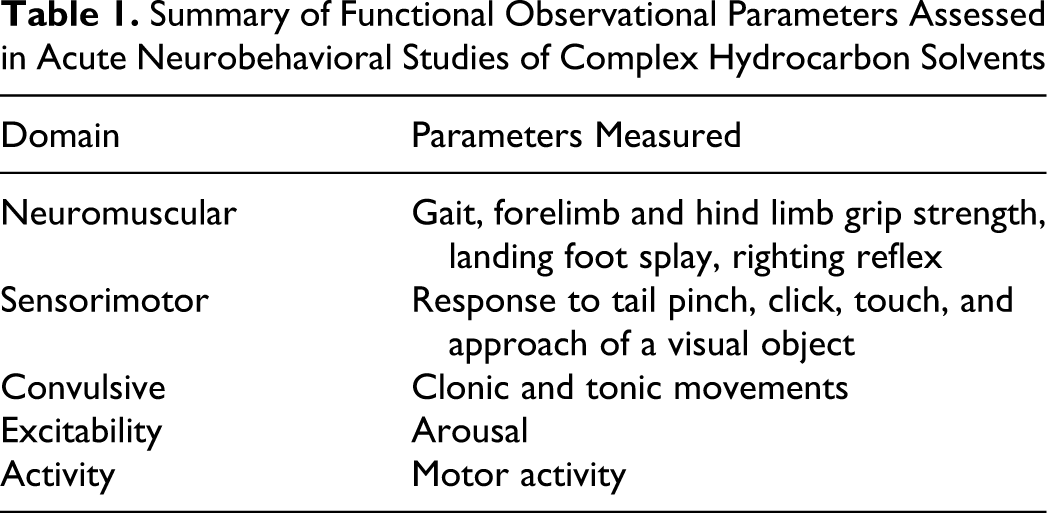
Neurobehavioral functioning was evaluated using selected measures from a standardized functional observational battery (FOB) and motor activity assessment protocol similar to that used in the World Health Organization/International Programme on Chemical Safety (WHO/IPCS) Collaborative Study on Neurotoxicity Assessment. 9 –11 The FOB consists of standardized observations and simple tests designed to evaluate gross changes in neurological and behavioral functioning in the rat using measures taken from different functional domains as summarized in Table 1 . Spontaneous motor activity was measured in sessions of 30 minutes using an automated video image analysis system, with each rat placed individually in a 50 cm × 50 cm × 50 cm (l × w × h) open-roofed cage. Rats were tested before exposure and after the first and third 8-hour exposure periods. The functional observational battery was conducted immediately after termination of exposure and required approximately 5 min/rat to complete. The motor activity testing was started immediately after the completion of the FOB testing so the rats were placed in the motor activity testing device 25 to 40 minutes after removal from the test chamber. The measurements were conducted by observers who were not aware of the treatment that the rats had received.
Summary of Functional Observational Parameters Assessed in Acute Neurobehavioral Studies of Complex Hydrocarbon Solvents
Visual discrimination performance
Separate groups of rats were evaluated for 2-choice visual discrimination performance. The apparatus consisted of 16 operant chambers (32 × 30 × 28 cm [l × w × h]) and programming and recording equipment programmed with the MedState notation system (Med Associates, Inc, St Albans, Vermont). Each operant chamber was equipped with 2 levers, 2 stimulus lights, and a water dipper for delivering water reinforcement. In addition, a photocell assembly was mounted in the water trough to detect the entry of each rat's head when obtaining reinforcement. Each operant chamber was located in a ventilated, sound-attenuated cubicle. Prior to treatment, water-deprived rats were first trained to obtain water reinforcements and to lever press using autoshaping techniques. The rats subsequently received 4 weeks of training on a discrete-trial light-dark visual discrimination task to stabilize baseline responding. Animals were trained 5 days/week, from Monday to Friday. During training and testing, the rats were given access to water for only 15 minutes immediately after the training or testing session. On the weekends, they were given free access to water.
Test sessions consisted of 100 trials or 60 minutes, whichever came first, and were conducted at approximately the same time each day. Dose groups were counterbalanced across time of testing and testing device. Trials were initiated by the illumination of either the left or right stimulus light, and the rat's task was to depress the lever under the illuminated light to obtain a water reward. Illumination of right and left stimulus lights was counterbalanced and occurred in a predetermined semirandom order. If the rat pressed the correct lever, the stimulus light was extinguished and a water reward was delivered. If the initial response during a trial was on the incorrect lever, the trial continued until the correct lever was pressed. A given trial remained in effect until the correct lever had been pressed; however, only the initial lever press was used to assess accuracy. Trials were separated by an intertrial interval (ITI) of 10 seconds. A response during the ITI reset the ITI timer, and the rat was required to wait a further 10 seconds before initiation of the following trial. Rats were tested on the day prior to the first exposure day and on each day of exposure immediately after the exposure period. A postexposure test was performed the day after the last exposure period to evaluate the persistence of effects.
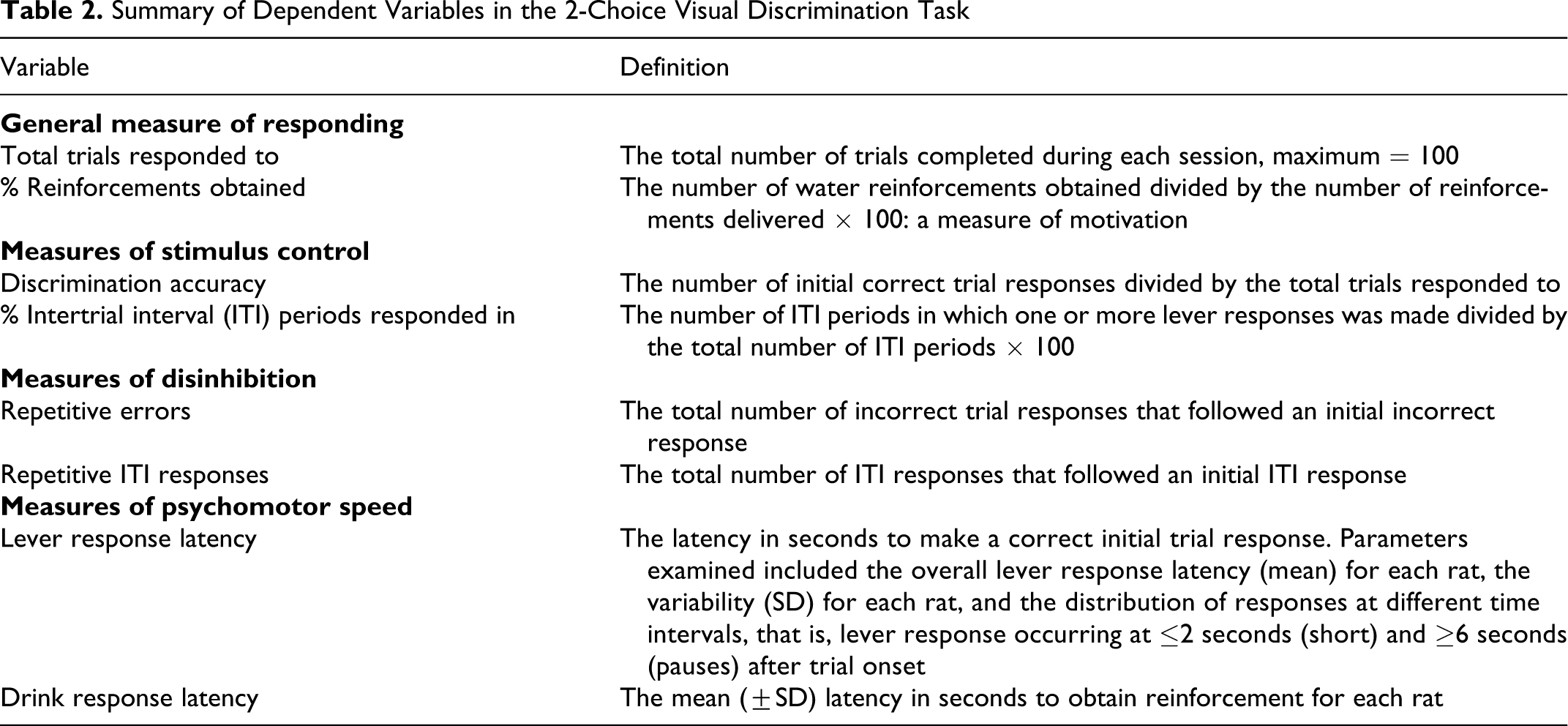
Variables measured are summarized in Table 2 . For each rat, the initial response in each trial was recorded and used to calculate accuracy. If the initial trial response was correct, the latency of the lever press was also recorded. If the initial response was incorrect, the number of incorrect lever responses made by the rat before switching to the correct lever was recorded. Following a correct lever response, the water dipper was raised. The system recorded whether the rat inserted its snout to drink from the dipper, providing a measure of the number of reinforcements obtained. The latency to obtain the reinforcement on each trial was also recorded. During the intertrial period, lever responses were recorded to determine the number of ITI periods in which 1 or more lever presses occurred and the number of repetitive ITI lever responses.
Summary of Dependent Variables in the 2-Choice Visual Discrimination Task
Blood and Brain Concentrations of n-Decane
Samples of blood and brain tissue were taken from rats exposed to n-decane. To do this, rats were exposed for 2, 4, or 8 hours or for three 8-hour periods on consecutive days, and groups of 3 animals per concentration were sacrificed immediately after each exposure period to measure uptake into the target tissues. These measurements were conducted to compare the results of the current study with previous kinetic data on decane. 12 Methods of tissue analysis are described elsewhere. 4,6
Statistical Analysis
All data were analyzed using the SAS statistical software package (release 6.12). For each test measure, probability values of P ≤ .05 were considered statistically significant.
Body weights and body temperatures were analyzed using 1-way analysis of variance (ANOVA) conducted at each time point followed by Dunnett multiple comparison tests.
Continuous variables from the functional observational battery were analyzed using analysis of variance for preexposure performance to examine possible preexisting differences among the groups prior to treatment. Treatment effects were analyzed using repeated measures analysis of variance. If a significant effect of treatment or a significant treatment-by-time interaction was indicated, ANOVA was performed at each test time point. Group comparisons were made using Dunnett multiple comparison tests. Motor activity data were analyzed using ANOVA for preexposure performance. Effects of exposure on total activity or habituation were analyzed using 3-way repeated measures ANOVA with 1 treatment factor and 2 repeated factors (test time point and time blocks within each session). Each session consisted of 5 time blocks of 6 minutes each. Rank data were analyzed by Kruskal-Wallis 1-way ANOVA on each test day followed by planned multiple comparisons in case of a significant result.
Baseline visual discrimination performance prior to exposure was examined in 2 ways: (1) by examining the mean performance averaged across the 5 days in the week prior to exposure (preweek responding) and (2) by examining the performance on the day preceding exposure (preday responding). One-way ANOVA was conducted on the preweek performance and on the preday performance data to examine possible preexisting differences among the groups prior to exposure. Treatment effects were analyzed using repeated measures ANOVA of the data recorded during the 3-day exposure period. Huynh-Feldt adjustment of P values of the repeated measures factor was applied in case the assumption of sphericity of observations was violated. When a significant treatment effect was demonstrated, pairwise group comparisons were performed to determine which treated group significantly differed from the control group. When a significant treatment-by-time interaction was demonstrated, 1-way ANOVA was performed at each test time point followed by Dunnett’s multiple comparison tests. Levene’s test was used to assess equality of variances in the different groups. In case of unequal variances, 1-way ANOVA was performed on log-transformed data. If log-transformation did not satisfy the assumption of equal variances, the Welch correction test was applied to the 1-way ANOVA of nontransformed data. Persistence of effects was evaluated by ANOVA of postexposure data.
Results
Exposure Levels
n-Pentane—The target concentrations were 2000, 6500, and 20 000 mg/m3. The mean, analytically determined concentrations were 1985, 6318, and 19 872 mg/m3.
n-Octane—The target concentrations were 1400, 4200, and 14 000 mg/m3. The mean, analytically determined concentrations for the neurobehavioral tests were 1405, 4248, and 14002 mg/m3.
n-Decane—The target concentrations were 500, 1500, and 5000 mg/m3. The mean, analytically determined concentrations were 501, 1510, and 5005 mg/m3 for the neurobehavioral studies, and 497, 1513, and 4937 mg/m3 for the tissue uptake study.
Viability and Other Indicators of Well-Being
All animals survived the exposures to n-pentane, n-octane, or n-decane, and for each of the test substances, there were no significant group differences in body weights or body temperatures at any exposure level.
Functional Observations and Motor Activity
n-Pentane—The only significant difference between groups in any of the FOB measurements was a reduced response to approach (Kruskal-Wallis statistic = 11.98, df = 3, P = .0075), but as this was observed prior to exposure and in the group designated for the lowest exposure, it was clearly not treatment-related (data not shown). There were no effects on motor activity.
n-Octane—After the first 8-hour exposure period, two (out of 8) rats from the high exposure group showed some tendency to tiptoe walking. There were a few changes in the functional observational battery, but none that were plausibly related to treatment (data not shown). Among these, foot-splay was significantly increased in the low-exposure group (ANOVA, F 3,28 = 3.14, P = .0411; Dunnett multiple comparison test: low exposure group significantly [P < .05] different from the control group), and hind-limb grip strength was significantly increased in the intermediate-exposure group (repeated-measures ANOVA, F 3,28 = 3.65, P = .0243). As an exposure-response relationship was not demonstrated, these effects were judged to be unrelated to treatment. There were no statistically significant effects on motor activity.
n-Decane—The only significant difference in any of the FOB measurements was a statistically significant reduction in grip strength in the high-exposure group after the third 8-hour exposure (ANOVA, F 3,28 = 3.39, P = 0.0319; Dunnett multiple comparison test: high exposure group significantly (P < .05) different from the control group; Table 3 ). This was plausibly related to treatment. There were no effects on motor activity.
Summarized Results of Functional Observations With n-Decane (Mean + SEM)
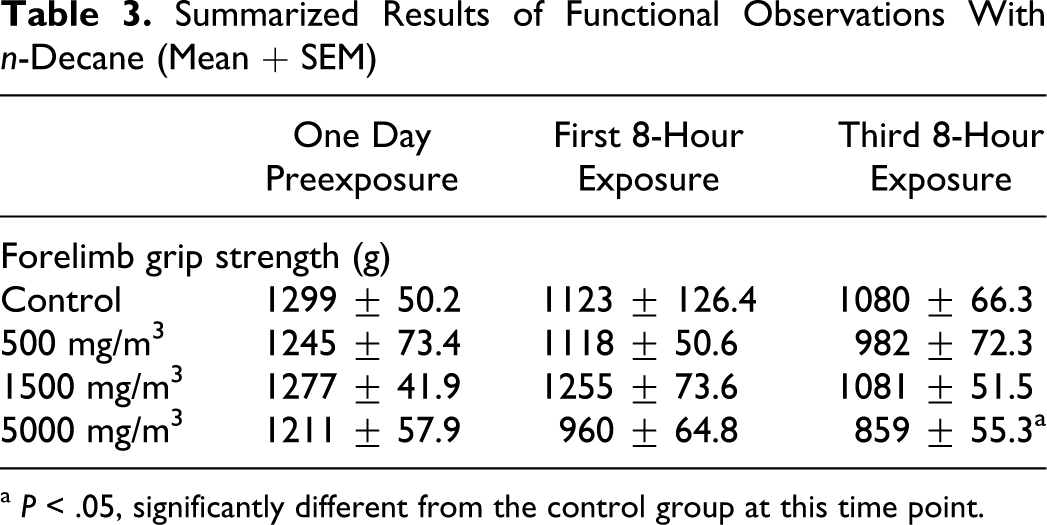
a P < .05, significantly different from the control group at this time point.
Visual Discrimination Performance
n-Pentane—Visual discrimination performance testing did not reveal any treatment-related effects. There were no group differences in number of trials completed or discrimination ratios. Frequency of response during the ITI was reduced with increasing exposure (repeated-measures ANOVA, treatment-by-time F 6,56 = 2.83, P = .0177), but group differences were not statistically significant. There were no differences in frequency of repetitive errors. There were no differences in overall latency of response (Table 4 ). There were statistically nonsignificant reductions in the frequency of very short latency (ie, <1 second) responses, but these differences were apparent in the pretest examination and did not change during the study. Thus, it seems unlikely that this difference was an effect of treatment. Similarly, there were no treatment-related differences in short (ie, <2 seconds) or long (ie, >6 seconds) latency responses. The overall assessment was that n-pentane did not affect visual discrimination performance at exposure levels up to 20 000 mg/m3.
Summarized Results of Visual Discrimination Performance Testing With n-Pentane (Mean + SEM)
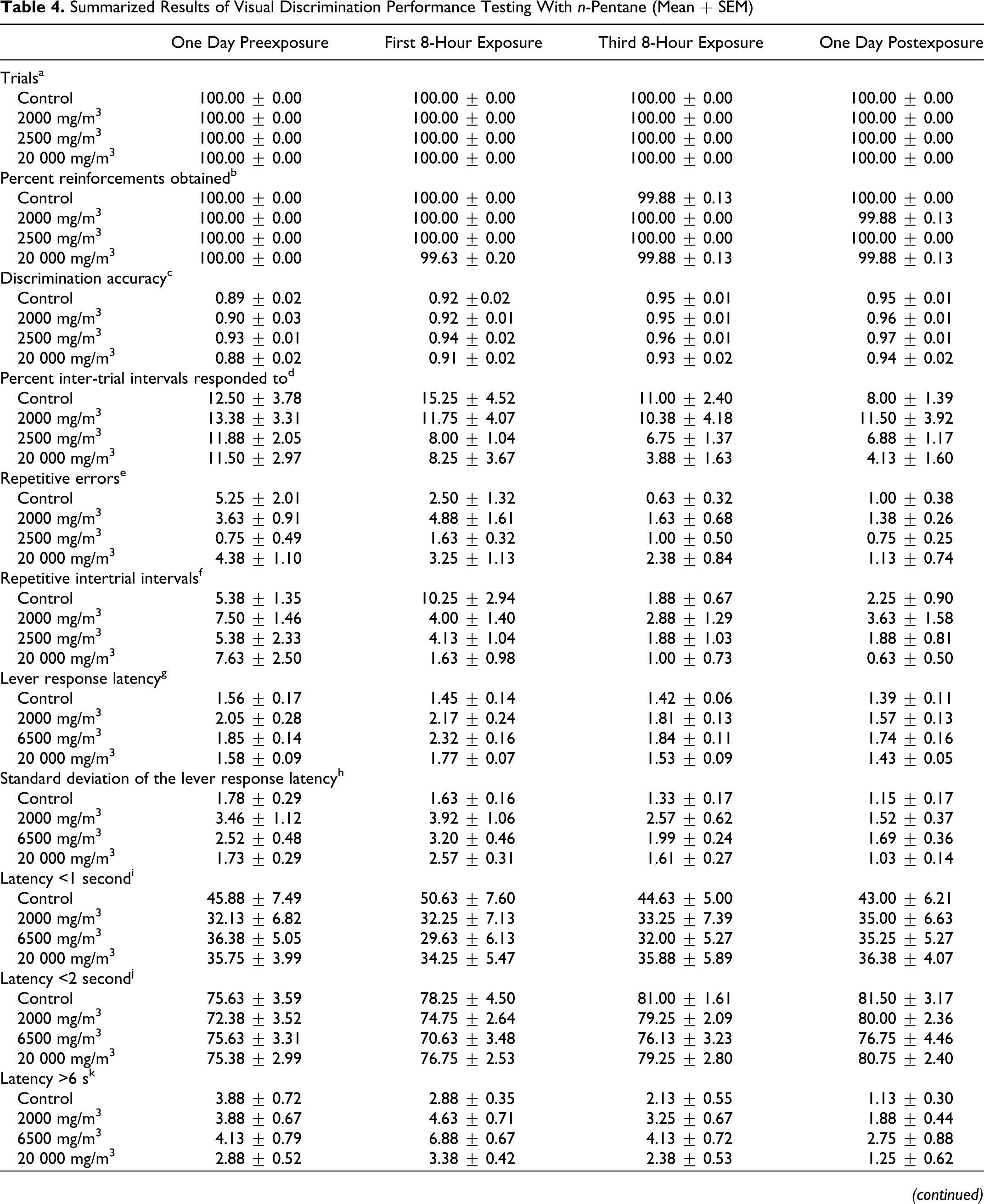
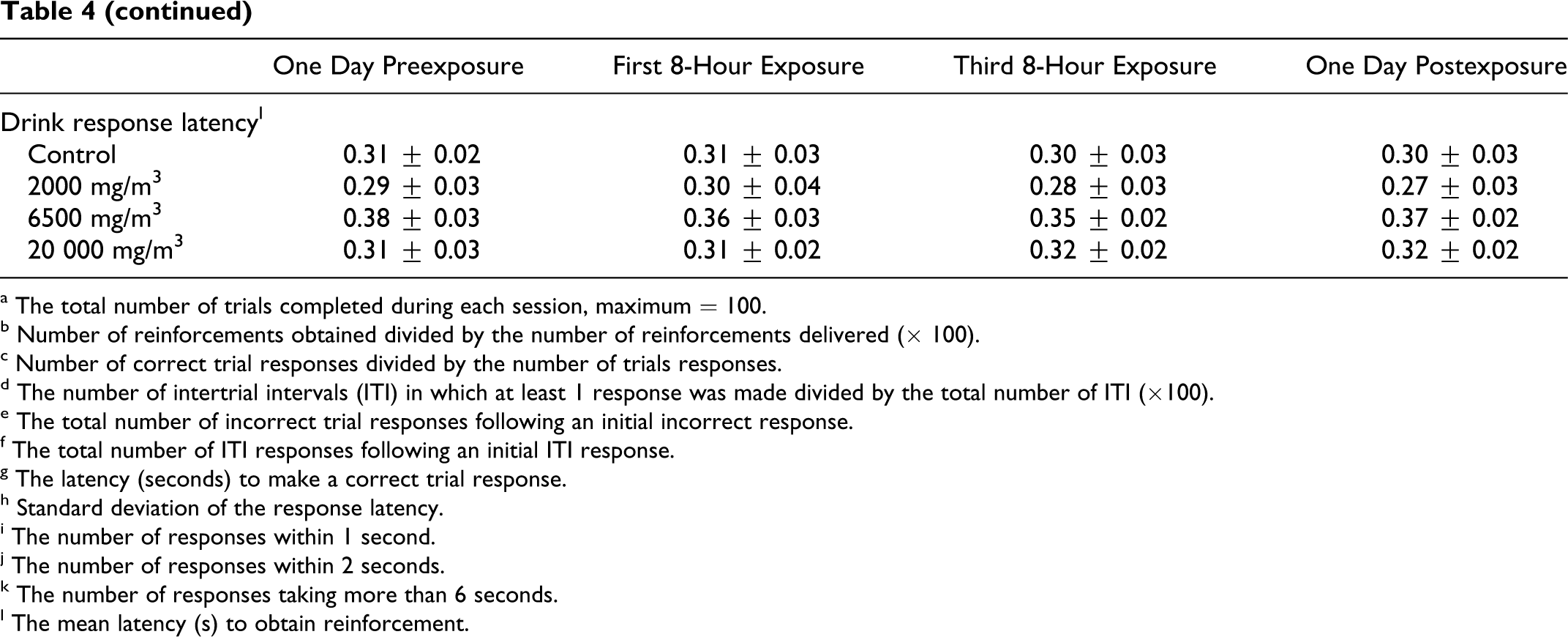
a The total number of trials completed during each session, maximum = 100.
b Number of reinforcements obtained divided by the number of reinforcements delivered (× 100).
c Number of correct trial responses divided by the number of trials responses.
d The number of intertrial intervals (ITI) in which at least 1 response was made divided by the total number of ITI (×100).
e The total number of incorrect trial responses following an initial incorrect response.
f The total number of ITI responses following an initial ITI response.
g The latency (seconds) to make a correct trial response.
h Standard deviation of the response latency.
i The number of responses within 1 second.
j The number of responses within 2 seconds.
k The number of responses taking more than 6 seconds.
l The mean latency (s) to obtain reinforcement.
n-Octane—Visual discrimination performance testing did not reveal any treatment-related effects. There were no group differences in number of trials completed or discrimination accuracy. Frequency of response during the ITI was reduced with increasing exposure, but group differences were not significant. There were no differences in frequency of repetitive errors or in lever response latency (Table 5 ). There was a statistically nonsignificant reduction in frequency of very short latency responses (ie, <1 second), but this difference was also observed in the pretest examination, and the frequency did not change during the study. Thus, it seems unlikely that it was a treatment-related effect. Similarly, there were no treatment-related differences in short (ie, <2 seconds) or long (ie, >6 seconds) latency responses. The overall assessment was that n-octane did not affect visual discrimination performance at exposure levels up to 14 000 mg/m3.
Summarized Results of Visual Discrimination Performance Testing With n-Octane (Mean + SEM)
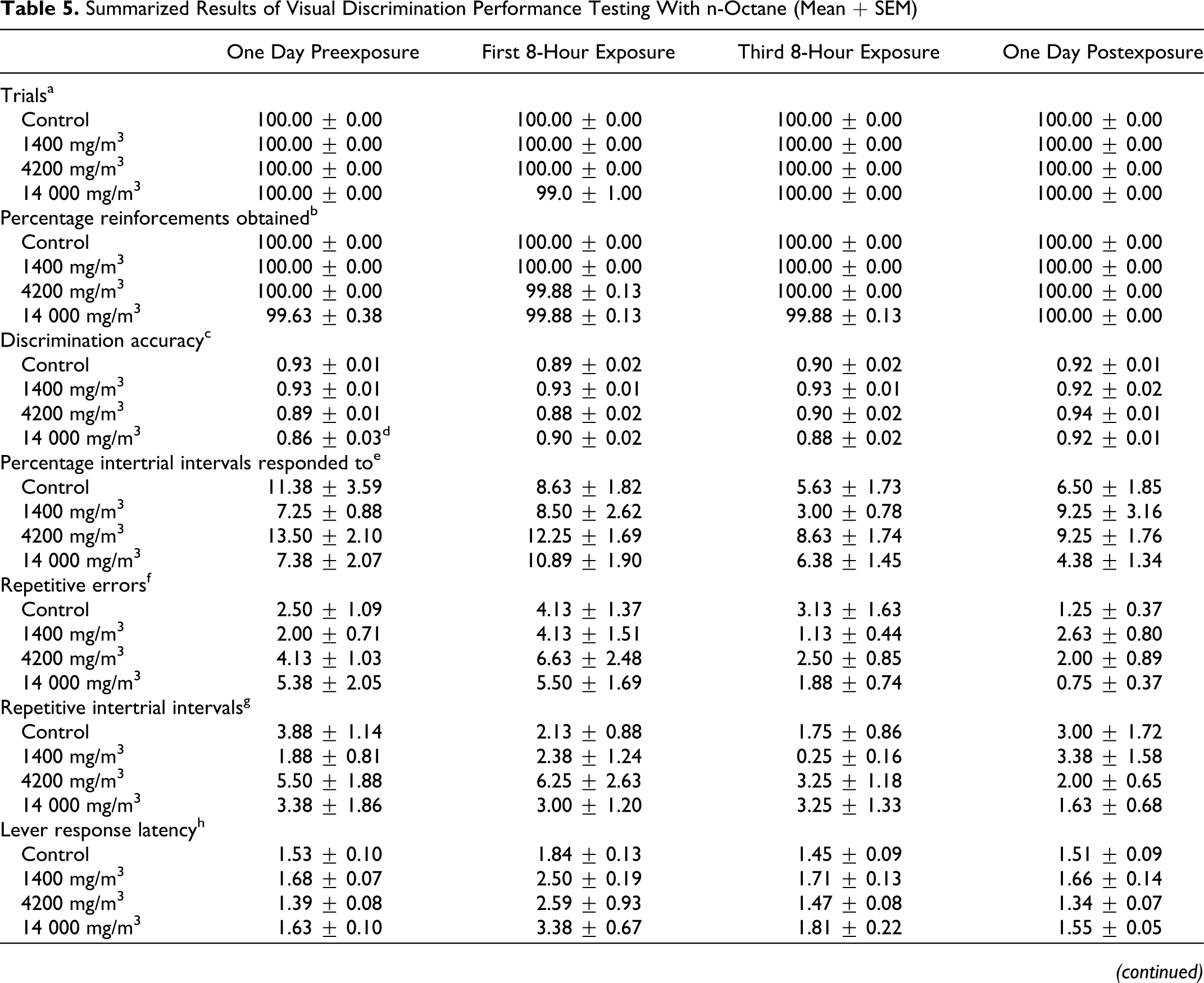
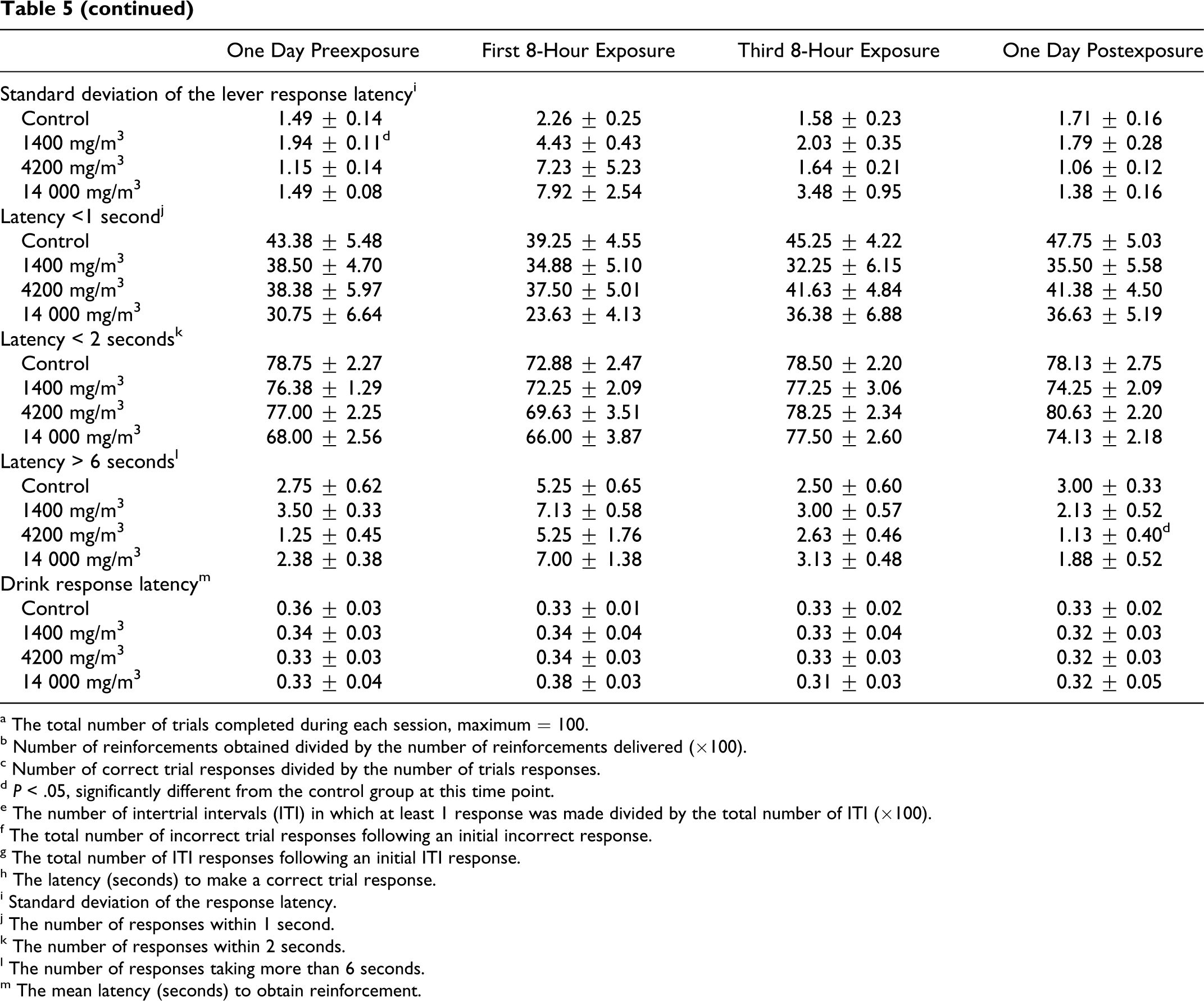
a The total number of trials completed during each session, maximum = 100.
b Number of reinforcements obtained divided by the number of reinforcements delivered (×100).
c Number of correct trial responses divided by the number of trials responses.
d P < .05, significantly different from the control group at this time point.
e The number of intertrial intervals (ITI) in which at least 1 response was made divided by the total number of ITI (×100).
f The total number of incorrect trial responses following an initial incorrect response.
g The total number of ITI responses following an initial ITI response.
h The latency (seconds) to make a correct trial response.
i Standard deviation of the response latency.
j The number of responses within 1 second.
k The number of responses within 2 seconds.
l The number of responses taking more than 6 seconds.
m The mean latency (seconds) to obtain reinforcement.
n-Decane—Visual discrimination performance testing did not reveal any treatment-related differences in number of trials completed or discrimination ratios. Frequency of response during the ITI was not significantly different between groups during the 3-day exposure period. There were differences in frequency of repetitive errors and responses during the ITIs, but as the most highly exposed animals performed better than the controls, this was judged to have not been a toxicologically relevant finding. There were differences in lever response latency, but these were not statistically significant (Table 6 ). There was also a reduction in the frequency of very short latency responses (ie, <1 seconds), but this was not statistically significant. Finally, there was a statistically significant increase in the frequency of long (ie, >6 seconds) latency responses (repeated-measures ANOVA, treatment F 3,28 = 6.12, P = .0024; contrast control versus high-dose group F = 13.73, df = 1, P = .0009). The overall assessment was that n-decane had some minimal effects on visual discrimination performance at an exposure level of 5000 mg/m3 but that exposure to 1500 mg/m3 was without effect.
Summarized Results of Visual Discrimination Performance Testing With n-Decane (mean + SEM)
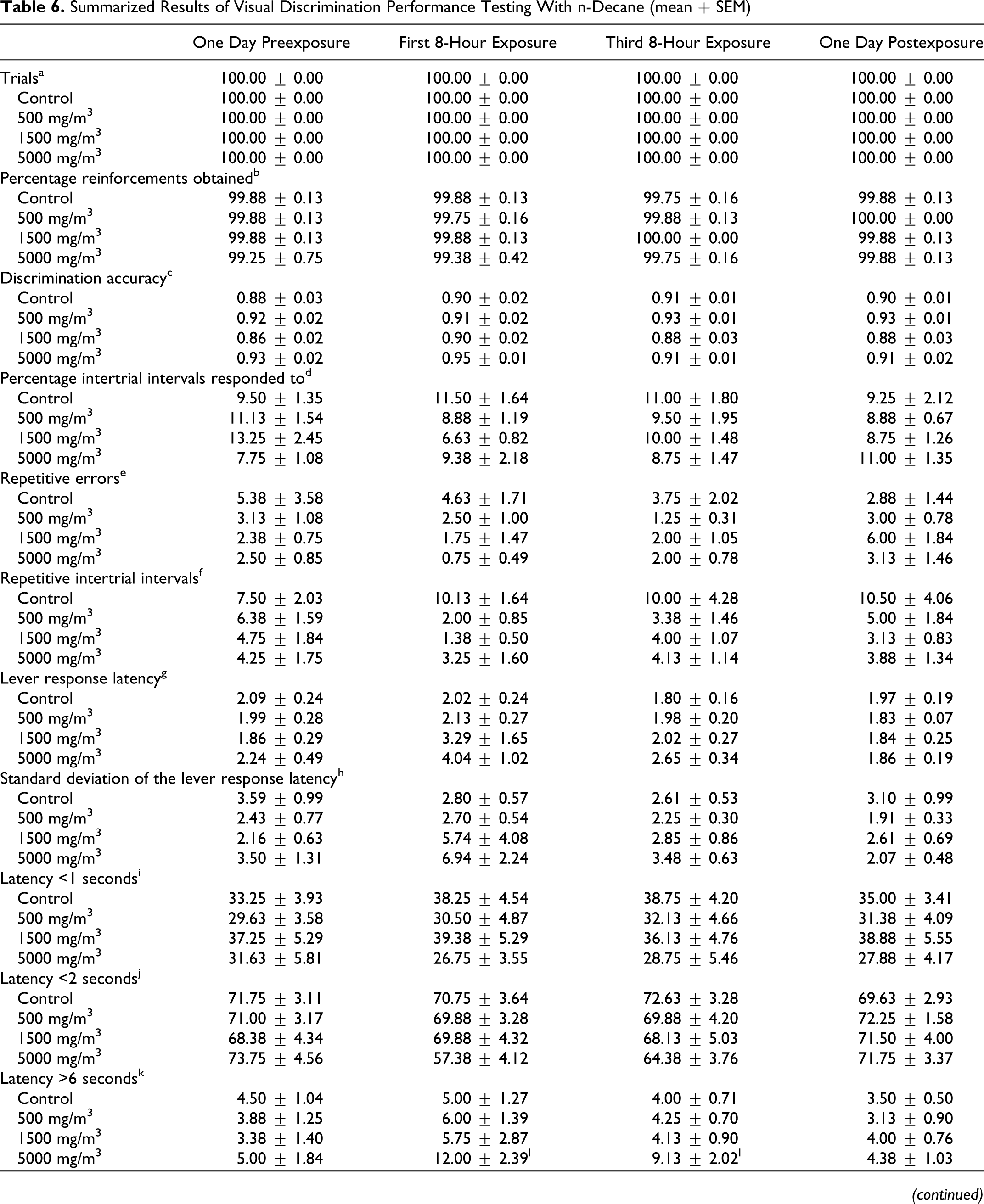
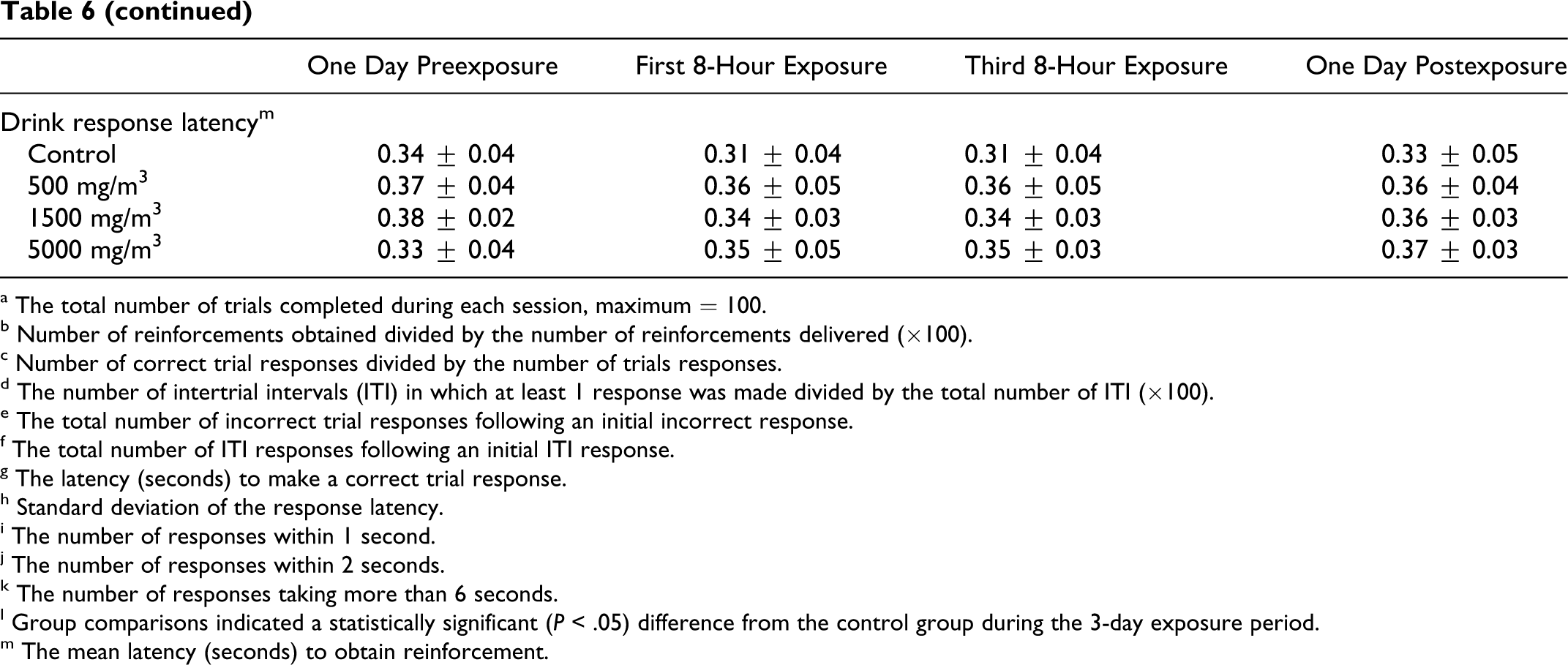
a The total number of trials completed during each session, maximum = 100.
b Number of reinforcements obtained divided by the number of reinforcements delivered (×100).
c Number of correct trial responses divided by the number of trials responses.
d The number of intertrial intervals (ITI) in which at least 1 response was made divided by the total number of ITI (×100).
e The total number of incorrect trial responses following an initial incorrect response.
f The total number of ITI responses following an initial ITI response.
g The latency (seconds) to make a correct trial response.
h Standard deviation of the response latency.
i The number of responses within 1 second.
j The number of responses within 2 seconds.
k The number of responses taking more than 6 seconds.
l Group comparisons indicated a statistically significant (P < .05) difference from the control group during the 3-day exposure period.
m The mean latency (seconds) to obtain reinforcement.
Blood and Brain Levels of n-Decane
n-Decane was rapidly taken up into the blood and brain with brain levels being more than an order of magnitude higher than the corresponding blood levels (Table 7 ). At least at the lower concentrations, equilibrium appeared to have been reached within 2 hours; however, in the high-exposure group, brain levels continued to increase over the entire 8-hour period, indicating that steady-state may not have been achieved. The ratio of brain to blood levels ranged from approximately 13 to 23 depending on the length of the exposure period and the exposure level. After 3 consecutive days of exposure, the blood and brain levels in animals from the high exposure group were similar to the levels recorded in animals after a single 8-hour exposure period. These data suggest that, unlike aromatic compounds of similar molecular weight such as trimethyl benzene, 13,14 n-decane may not induce its own metabolism, even at high exposure levels.
Blood and Brain Concentrations of n-Decane in Rats Following Exposure by Inhalation (mean + SEM)
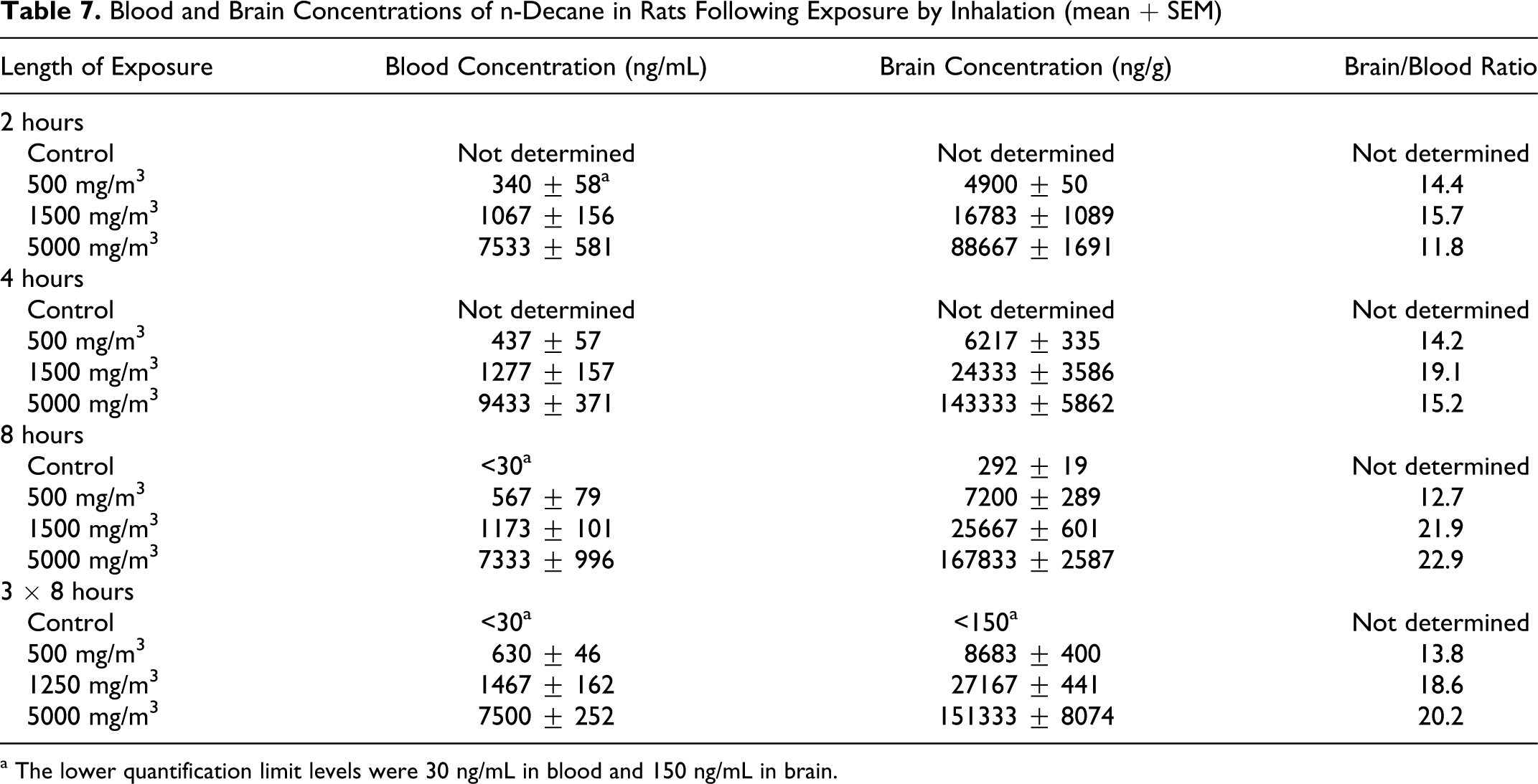
a The lower quantification limit levels were 30 ng/mL in blood and 150 ng/mL in brain.
Discussion
The principal objective of this study was to assess the acute CNS effects of C5-C10 normal paraffinic hydrocarbons in rodents for use in calculating occupational exposure levels for hydrocarbon solvents. The representative examples of this group of hydrocarbon solvent constituents were n-pentane (C5), n-octane (C8), and n-decane (C10). Higher molecular weight paraffinic hydrocarbons may be found in some solvents, but, because of their low vapor pressures, do not contribute substantially to exposure. Further, brain/blood ratios are inversely related to carbon number when C >10. 7 This may be due to blood/brain barrier effects. 8
It should be noted that there are some limitations to interpretation which are imposed by the study design. More specifically, for technical reasons, the rats were tested for neurobehavioral effects after rather than during the exposure period. The uptake and elimination of hydrocarbons from the CNS is relatively rapid, so the brain concentrations were reduced during the time it took to conduct the neurobehavioral tests. This is a particularly important factor in assessing the n-pentane results. Inhaled n-pentane is not absorbed efficiently, 15 and is rapidly eliminated, primarily by exhalation with an estimated elimination half-time of 0.13 hours. 16 In the present study, all neurobehavioral testing was conducted within 1 hour after the exposure period. Given the extremely rapid elimination of n-pentane, brain concentrations may have decreased substantially between the end of the exposure period and the initiation of neurobehavioral testing. Timing is less of an issue for the higher molecular weight hydrocarbons. For example, the half-time for elimination of decane from the CNS is on the order of 2 hours. 4
n-Pentane did not produce any effects at exposure levels up to 20 000 mg/m3. This level was selected as a pragmatic upper bound for experimental purposes because it is equivalent to approximately 50% of the lower explosive limit of n-pentane. 17 The absence of acute CNS effects at these levels was not surprising. Several previous investigators have reported that n-pentane has anesthetic effects but only at extremely high exposure levels. In studies in which mice were exposed to increasing concentrations of n-pentane for 5 minutes, 16 000 ppm (47 200 mg/m3) was without any obvious effects. 18 (Note that with reference to the published literature, the data are reported in the units, eg, ppm or mg/m3, as presented in the respective publications. The converted units are given in parentheses.) Exposure to 32 000 (94 400 mg/m3) and 64 000 ppm (188 800 mg/m3) may have produced light anesthesia although this was not clear from the report. 18 Deep anesthesia was produced by exposure to 128 000 ppm (377 600 mg/m3). 18 Glowa 19 investigated the effects of n-alkane exposure on responding. Exposure of mice to n-pentane at concentrations less than 10 000 ppm (29 500 mg/m3) did not result in any obvious central nervous system effects whereas concentrations in the range of 30 000 to 56 000 ppm (88 500-165 200 mg/m3) reduced responsiveness. Full recovery was observed 30 minutes after exposure to 56 000 ppm was terminated. Frantik et al 20 reported that the air concentration of n-pentane associated with a 30% depression in maintenance of the seizure discharge was 21 000 ppm in rats and 23 500 ppm in mice (61 950 and 69 325 mg/m3, respectively). Thus, the present and previous studies all confirm the absence of acute CNS effects at n-pentane exposure levels ≤20 000 mg/m3.
In addition to the studies of acute CNS effects, there is evidence that n-pentane does not produce any pathological changes in the nervous system following repeated exposure. 21,22 Nor were there other manifestations of acute or repeated dose toxicity at levels up to 20 000 mg/m3, the highest concentration tested. 17
The results with n-octane were very similar to those of pentane. There were no statistically significant, treatment-related CNS effects or physiological changes in this study. There was an observation of slight gait alterations in the high exposure group (14 000 mg/m3) but only after the first exposure. This may have been a treatment-related effect, but as the difference was not statistically significant and not confirmed in later tests, even though brain levels were equivalent, further confirmation would be required. Thus, the overall no-effect level was judged to have been 14 000 mg/m3, and certainly there was no evidence of any effects at 4200 mg/m3. In other studies, n-octane had little effect on responding at concentrations up to 1000 ppm, 3000 ppm decreased responding, and 5600 ppm abolished responding (4667, 14 010, and 26 152 mg/m3, respectively). 23 In a subsequent study, Glowa 19 reported that the rate decreasing potency for responding was inversely related to molecular weight; the EC50 value for n-octane was 2474 ppm (11 554 mg/m3). Swan et al 18 reported that isooctane produced no anesthetic effects at levels up to 8000 ppm; however, there were motor effects and evidence of sensory irritation at 16 000 ppm, and 32,000 ppm was lethal within 5 minutes (37 360, 74 720, and 149 440 mg/m3, respectively). Thus, these other data indicate that exposure to n-octane at levels in the range of 4000 to 5000 mg/m3 is not associated with acute CNS effects. However, subtle effects could be associated with exposures in the range of 14 000 mg/m3, and more profound CNS effects may be produced at higher exposure levels.
Exposure to n-decane did not result in any apparent physiological or clinical effects. There was a statistically significant effect on grip strength in the high (5000 mg/m3) exposure group, but no other effects in the functional observational battery or on motor activity. In the visual discrimination performance tests, the only statistically significant and probably treatment-related finding was an increase in frequency of long latency responses in the high-exposure group. The intermediate exposure level (1500 mg/m3) was without effect. The measurements of blood and brain concentrations shown in the current study as well as a previous kinetic study 4 indicated that n-decane is rapidly taken up, as steady state appeared to have been achieved within 2 hours at least at the low (500 mg/m3) and intermediate (1500 mg/m3) exposure levels. A comparison of blood and brain levels indicated that brain levels were 13 to 22 times the blood levels. As also shown elsewhere, elimination was rapid once exposures were terminated. 4,24 There were no strong differences in tissue levels when a single 8-hour exposure was compared to 3 consecutive 8-hour exposure periods, providing no evidence of induction of metabolism. Nilsen et al 7 reported that n-decane was not acutely toxic in an 8-hour exposure study at the maximum saturated vapor concentration, 1369 ppm (7940 mg/m3); the reported ratio of brain to blood concentrations was 4.4. However, after 12 hours of exposure at 100 ppm (580 mg/m3), the ratio of brain to blood levels was 15, 12 similar to the results found in the current study. In a reproductive toxicity/reproductive toxicity screening study, Maraschin et al 25 found no effects on startle reflex, open field behavior, or forelimb grip strength following repeated treatment with 1000 mg/kg (oral). Thus, the data indicated that acute CNS effects could be associated with exposures of 5000 mg/m3 or higher but not with lower levels.
In addition to the above, there are also relevant studies of other n-alkanes. Frontali et al 21 reported that repeated exposure to n-heptane at 1500 ppm (6150 mg/m3), 9 h/day, 5 days/week for up to 30 weeks did not produce any pathologic changes in the nervous system. There have also been several studies of n-nonane, which, based on an investigation of comparative brain levels following exposure to n-paraffins of increasing carbon number, 12,14 would be expected to be intermediate between n-octane and n-decane. The most detailed study of n-nonane was that of Nilsen et al 7 who exposed rats for 8 hours at concentrations ranging from 2414 to 5280 ppm (12 673-27 720 mg/m3). Signs of acute CNS effects were observed including tremor, spasms, and limb paralysis. Specific symptoms were observed after 2 hours in the highest exposure group, with deaths of 9 of 10 rats within 4 hours. All animals surviving the 8-hour exposure appeared to recover from their specific symptoms. The lowest exposure level (12 673 mg/m3) was not associated with lethality; the report implied that there were CNS effects at that level, but this was not clear. Carpenter et al 26 reported that repeated exposure to nonane at 8100 mg/m3 resulted in mild tremors, slight loss of coordination, and slight irritation of the eyes and extremities. Repeated exposures at levels up to 1900 mg/m3 did not produce any signs of overt toxicity (apparently including observations of CNS effects) nor were any histological changes apparent at terminal sacrifice. These data seem consistent with the n-octane results (above) and the n-decane data from the present study.
Conclusions
The overall objectives of this study were to assess the effects of C5-C10 normal paraffinic hydrocarbons on the central nervous system of rodents. There were no effects with n-pentane at levels up to 20 000 mg/m3 and no significant effects with n-octane at exposure levels up to 14 000 mg/m3. However, gait changes, although not significant, and information from other sources suggested the possibility of very subtle acute CNS effects associated with n-octane exposure in the range of 14 000 mg/m3, with no effect levels in the range of 4000 to 5000 mg/m3. Exposure to n-decane at 5000 mg/m3 resulted in mild, reversible effects on visual discrimination and a statistically significant reduction in grip strenth, with 1500 mg/m3 as the no effect level. These results are consistent with the hypothesis that acute CNS effects are related to brain levels of the respective hydrocarbon molecules. Inhaled n-pentane is poorly absorbed 5 and rapidly eliminated 16 primarily by exhalation. Uptake of inhaled hydrocarbons generally increases with increasing molecular weight, 2 so n-octane and n-decane are more likely to be taken up than n-pentane. As shown by Zahlsen et al, 2 blood and brain levels for C6-C10 alkanes increase with increasing molecular weight, although the relationship decreases at even higher carbon numbers. Further, elimination of low–molecular-weight hydrocarbons (eg, n-pentane) is predominantly by exhalation and very rapid whereas elimination of molecules of greater molecular weights is more likely to involve metabolism and urinary excretion, increasing elimination half times from a few minutes to approximately 2 hours (n-decane). Thus, exposure to alkanes with carbon numbers in the range of 7 to 10 tends to produce higher brain levels for longer periods of time than does exposure to similar concentrations of n-pentane.
Footnotes
The authors declared a potential conflict of interest as follows: Two of the co-authors, RHM and DEO, are employed by companies that manufacture hydrocarbon solvents.
The authors disclosed receipt of the following financial support for the research and/or authorship of this article: CEFIC hydrocarbon Solvent Producers Association and American Chemistry Council Hydrocarbon Solvents Panel.