



Abstract
Opioid overdose, an urgent public health (PH) crisis, can be countered through harm reduction strategies such as community education and naloxone distribution. Embedding opioid education and naloxone distribution (OEND) into a graduate PH practicum allowed students to experience firsthand the impact of expanding community access to life-saving interventions. This report evaluated an OEND practicum within a Master of Public Health program using Kolb’s experiential learning cycle as an organizing structure. A quantitative evaluation was conducted, examining the feasibility of program enrollment and volunteer participation over multiple semesters, and the ability of practicum students to recruit, schedule, and complete OEND events. Quantitative analysis of pre-post surveys collected during student-led OEND events were collected and assessed and opportunities for structured student reflection were tallied. Practicum students applied harm reduction concepts to practice and reflected on the challenges and successes of this initiative. Participants in the OEND events demonstrated improvements in knowledge, attitudes, and self-efficacy for recognizing and responding to opioid overdoses, while opportunities for structured reflection among practicum students expanded over time. This evaluation adds to the literature by illustrating how harm reduction education can be integrated into graduate training through experiential learning, reporting benefits for both student development and community awareness and preparedness to address opioid overdose. Additional implications include utilizing the experiential learning cycle to strengthen future PH practicums that develop OEND events in diverse community settings or other harm reduction initiatives.
Introduction
Background
Opioid overdose occurs when opioid use suppresses breathing, reducing oxygen to the brain and heart, causing unconsciousness, and in some cases, death (Florence et al., 2021; Hong et al., 2019; Lee et al., 2024; National Institute on Drug Abuse [NIH] 2021). Opioid overdose contributed to 76% of overdose deaths in the United States in 2022 (Centers for Disease Control and Prevention [CDC], 2024). Young adults between 18 and 24 years are at high risk for opioid overdose due to opioid naivety and the addition of fentanyl, a synthetic opioid, into non-opioid drugs (Freibott et al., 2024; Shelton et al., 2023; Weiner et al., 2022). When an opioid overdose occurs, there is a limited time to respond, thus increasing the usefulness of a bystander with knowledge of the signs and response to opioid overdose to perform lifesaving actions (Lee et al., 2024). Harm reduction strategies, including community education, guidance on response, and naloxone distribution, have been recognized as effective techniques for increasing community awareness and reducing the stigma associated with overdoses (Beauchamp et al., 2021; Knudsen et al., 2025; Miller et al., 2024).
Naloxone is an opioid overdose reversal medication that can be administered as an injection or a nasal spray to an individual to reverse the effects of an opioid overdose (Bagalman et al., 2018; Evoy et al., 2021). In 2023, the U.S. Food and Drug Administration (FDA) allowed naloxone to be purchased over the counter at pharmacies throughout the United States without a prescription (U.S. Food and Drug Administration, 2023). The passage of these laws coincided with a 14% decrease in overdose deaths (McClellan et al., 2018). However, public knowledge of naloxone availability and proper use in an emergency event remains low in the United States (Lai et al., 2022; Shelton et al., 2023).
Opioid overdose education and naloxone distribution (OEND) programs have been successful in training the community on the signs of an overdose and how to effectively administer naloxone (Beauchamp et al., 2021; Cohen et al., 2025; Dahlem et al., 2023). One of the primary objectives of OEND programs is to educate the community on the ability to quickly and confidently respond to an overdose (Sellen et al., 2023). Traditionally, clinicians, health care staff, law enforcement, and first responders have been the recipients of OEND programs (Beauchamp et al., 2021; Cody et al., 2023; Dahlem et al., 2023; Salvador et al., 2020; Vega et al., 2025). Research has suggested that the development of OEND programs targeted to community groups outside of the professional realm could reduce stigma and increase overdose prevention awareness and response (Chen et al., 2024; Dasgupta et al., 2018; Sellen et al., 2023).
The development of student-led opioid overdose prevention programs has varied in training format and outcome objectives. Pharmacy students in California conducted an opioid overdose prevention training and naloxone distribution initiative that led to an increase in demand for naloxone kits on college campuses (Brown et al., 2023). In Texas, pharmacy students provided naloxone education to high school and college students, which resulted in increased knowledge and confidence to intervene following an opioid overdose (Azad et al., 2022). Medical student volunteers developed a telephone-based OEND program with 55% of targeted individuals agreeing to an OEND training (Hughes et al., 2022). These studies suggest that student-led OEND programs can successfully increase awareness and disseminate knowledge to the community. Based on these findings, we aimed to explore whether a practicum opportunity for public health (PH) students could serve as an effective approach to educating students on OEND while simultaneously increasing community awareness of opioid overdose prevention and harm reduction strategies.
Opioid Overdose Education and Naloxone Distribution Practicum (OEND-P)
In the United States, practicums, defined as structured, hands-on experiences in a student’s field of study, typically accompany the completion of a graduate degree (Moreno-Vasquez et al., 2021). The Opioid Overdose Education and Naloxone Distribution Practicum (OEND-P) was created as an opportunity for graduate-level PH students at a large university in Texas to participate in implementing and delivering OEND interventions to peers in the community. This practicum was aligned with the experiential learning cycle, which emphasizes a four-stage process for learning through the experience of doing, reflecting, thinking, and acting (Kolb, 2015). The experiential learning cycle was integrated into the OEND-P by providing students with hands-on training in opioid overdose response, incorporating reflective observation, abstract conceptualization, and active experimentation to prepare them to respond and educate others (Kolb, 2015; Nagel et al., 2024). Figure 1 depicts the application of the OEND practicum to the experiential learning cycle.
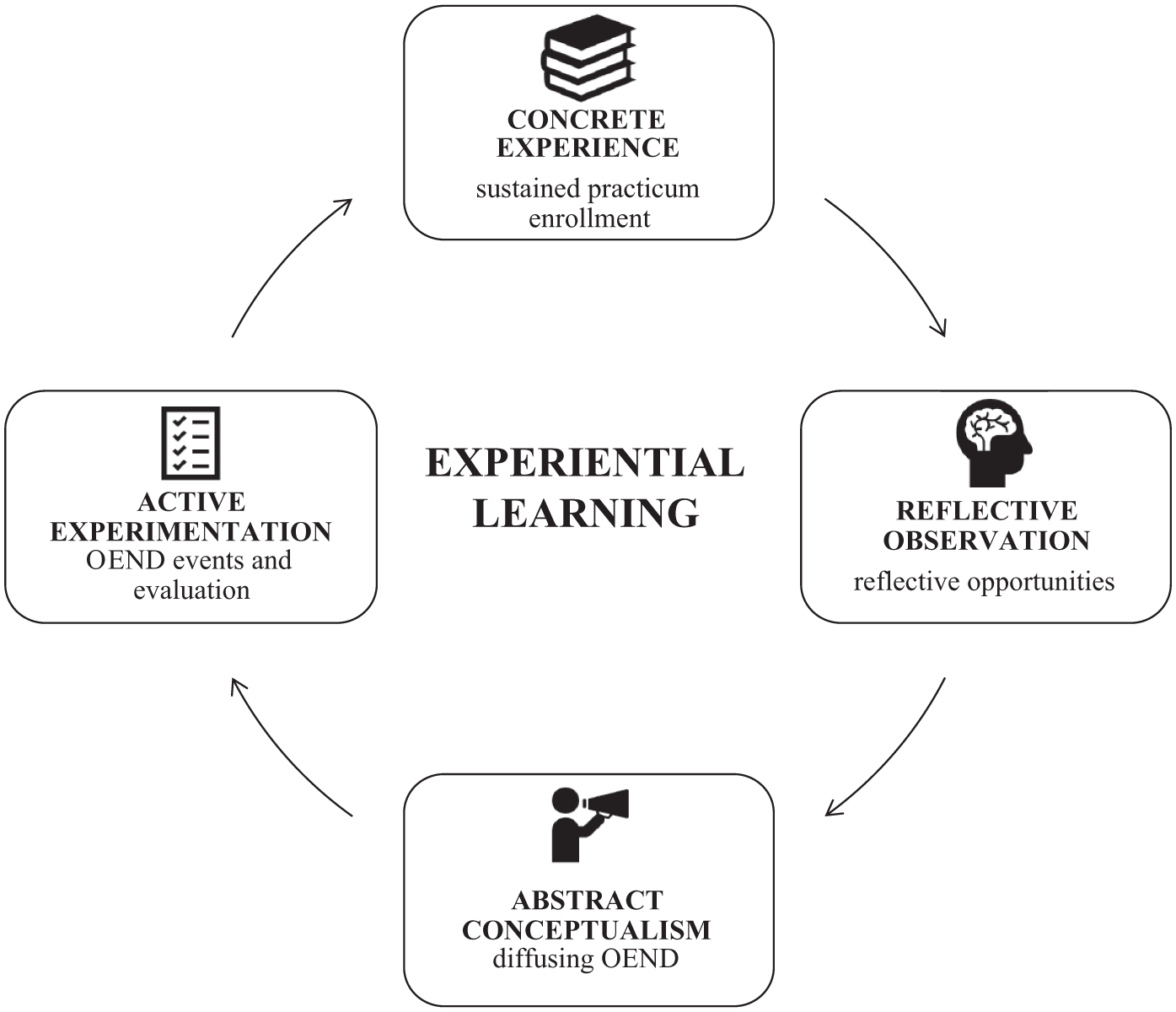
Application of opioid overdose education and naloxone distribution (OEND) practicum to the experiential learning cycle.
This paper presents an evaluation of a student-led OEND practicum through the structural lens of experiential learning to determine the feasibility of implementing harm reduction projects within PH training programs The ability of the program to provide concrete learning experiences, qualitative reflective moments, abstract conceptualization opportunities, and active experimentation occasions was assessed.
Method
A step-by-step evaluation was conducted to compare how well the OEND-P aligned with the experiential learning cycle and the program’s ability to provide a well-rounded learning opportunity for PH practicum students while concurrently educating the community on opioid overdose prevention. The findings of this evaluation will highlight how the integration of harm reduction projects within academic settings can be incorporated into practicum curriculum design for PH students.
Project Setting
The OEND-P was developed by a behavioral health research center at a university-level academic institution for delivery to PH students located across the state of Texas. This practicum aligned with goals set forth by the university, which included the opportunity for PH students to gain direct practice within the field of PH under the guidance of a supervisor. Supervision of the practicum was conducted by the OEND-P faculty and staff. This project was reviewed by the university’s institutional review board and was classified as a quality improvement initiative as it did not meet the requirements of human participants research.
Measures
Concrete Experience
Beginning in summer 2024, a group of three practicum students completed the protocol for the OEND-P, which included the project scope, goals, and data collection methods for this project. Practicum students for the following Fall 2024 and Spring 2025 semesters carried out the protocol of reaching out to young adult populations to schedule and conduct OEND events and collect pre-post OEND evaluation data. Practicum students were recruited through word of mouth and during OEND events where eligible PH students were present. The practicum also utilized student volunteers to provide support to students enrolled in the practicum. The PH students who completed the practicum were eligible to provide volunteer support for the current practicum students. Practicum enrollment and sustainability were assessed using counts. To deliver the OEND-P training sessions, a minimum of two practicum students was needed each semester. Actual recruitment was assessed against this metric.
Reflective Observation
Throughout the practicum, students were given opportunities to reflect in writing and verbally. Reflection opportunities included virtual recurring meetings and discussion board posts, where students were asked to reflect on what was learned, successes or challenges faced, and the competencies and professional growth that occurred, as well as an open-ended reflection paper at the end of the semester. At the end of each practicum experience, the practicum students were asked to give a presentation to the behavioral health center staff regarding their reflective experience and the work conducted on the practicum. Qualitative feedback was provided from the practicum students, which was used to improve the next semester of practicum students and strengthen the steps associated with the practicum experience and OEND events. The opportunities for reflective feedback that occurred during each practicum semester were tallied and described to confirm multiple opportunities were provided to the students.
Abstract Conceptualization
The OEND-P utilized the diffusion of innovations theory to introduce opioid overdose education and naloxone distribution to university and graduate-level students (Rogers, 2003). The OEND-P students acted as change agents who disseminated knowledge of opioid overdose and naloxone administration to peer students who may have been unaware of these harm reduction strategies (Rogers, 2003). Each semester, practicum students identified potential student organizations that could benefit from an OEND event. Through peer contacts and publicly posted information, practicum students reached out to student organizations using a template email that introduced the behavioral health research center and the OEND-P outreach educational objectives. For student groups who responded to the email outreach and who were interested in participating, practicum students provided additional information about the intervention and coordinated a training date, time, and location. A spreadsheet was utilized to record the names of student organizations that received an introductory email, the response received, and the outcome of any contact. The ability to schedule training sessions utilizing the OEND-P outreach process was measured by the number of organizations interested divided by the total number of organizations contacted. A target of .1 (10%) was set for this response rate.
Active Experimentation
The practicum students were tasked with conducting at least three independent OEND events during the semester and were provided with a 1-hour slideshow presentation and an accompanying script that could be adapted and used for all OEND events. The OEND events occurred in-person, virtually, and in a hybrid format with at least two practicum students in attendance at each event. The OEND events incorporated a pre-training survey to collect demographic information on the population being trained and their prior experience with opioid overdose reversal. The survey also assessed participants’ knowledge about opioids and overdose, their attitudes toward individuals who use opioids, and toward naloxone and OEND programs, and an assessment of participants’ self-efficacy in managing an opioid overdose. At the end of the presentation, a post-survey reassessing knowledge, attitudes, and self-efficacy was collected.
Survey Development and Administration
Pre-post survey questions were developed by the summer 2024 PH practicum students who reviewed previous studies on naloxone trainings with surveys as the inspiration (Adams, 2020; Beauchamp et al., 2021; Behar et al., 2015; Cody et al., 2023; Dahlem et al., 2023; Goss et al., 2021; Sandhu et al., 2022; Williams et al., 2014). The pre- and post-survey questions can be found in Supplement A. Knowledge was measured as the number of correct responses across 14 multiple-choice and true/false items (range 0–14). Attitudes were assessed using a composite Likert-type-based scale that included both positively and reverse-coded items. Efficacy was also measured using a composite Likert-type-based scale (range 7–35).
Surveys were administered using Research Electronic Data Capture, REDCap (Harris et al., 2009). Prior to the start of the presentation, a QR code linking to the pre-survey was displayed, and practicum students encouraged the audience to complete the survey, allowing 5 to 10 minutes for completion. At the conclusion of the presentation, a second QR code was displayed linking to the post-survey. Practicum students prompted participants to complete the survey prior to leaving.
Survey Analysis
An analysis was conducted comparing pre-training and post-training scores for knowledge, attitudes, and efficacy. Due to incomplete use of pairing identifiers, pre- and post-survey data were analyzed as independent (unpaired) samples. Descriptive statistics (n, mean, SD, median, interquartile range, minimum, maximum) were calculated for each outcome by survey time point (pre vs. post). Knowledge scores were modeled as count outcomes using Poisson regression, with survey time (pre vs. post) as the independent variable. Incident rate ratios (IRRs) with 95% confidence intervals (CI) are reported. Attitudes and efficacy scores were modeled as continuous outcomes using linear regression, with survey time as the independent variable. Results are reported as mean differences (post minus pre) with 95% CI. Statistical significance was assessed at an alpha level of .05. All analyses were conducted using RStudio Version 2025.05.1+513 (Posit Team, 2025) and Stata, version 16, StataCorp LLC, College Station, TX.
Results
Concrete Experience
Since initiating practicum student recruitment for OEND-P, the program has recruited 10 students; three in summer 2024, two in Fall 2024, and five in Spring 2025. Seven students enrolled and completed a practicum and three students assisted in a volunteer role. In addition, the three students who completed the practicum in summer 2024 continued to assist in a volunteer capacity in the Fall 2024 and Spring 2025 semesters.
Reflective Observation
Opportunities for OEND-P students to provide reflective observation during the practicum increased each semester. Summer 2024 offered: (1) virtual recurring meetings and (2) an end-of-semester oral presentation where students provided qualitative feedback on their practicum experience. Fall 2024 semester offered: (1) virtual recurring meetings, (2) end-of-semester oral presentation, and (3) end-of-semester reflection paper. Spring 2025 offered: (1) virtual recurring meetings, (2) reflection discussion #1, (3) reflection discussion #2, (4) reflection discussion #3, and (5) end-of-semester oral presentation. Figure 2 depicts the increase in the types of reflective activities carried out per semester.
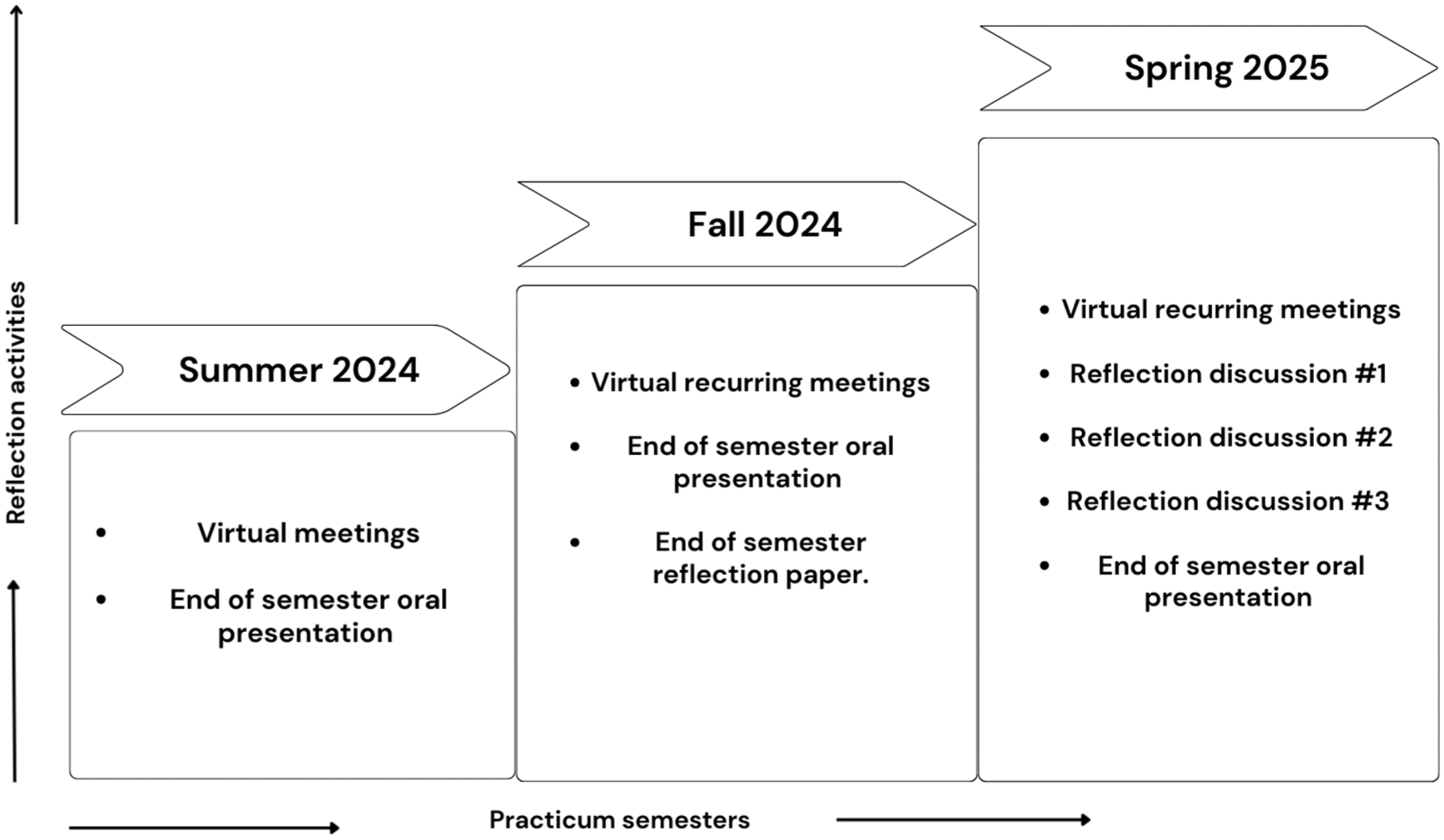
Reflective observation opportunities per semester.
Abstract Conceptualization
The PH practicum students contacted a total of 68 student organizations from six universities via an informational email regarding scheduling an OEND event during the Fall 2024 and Spring 2025 semesters, 31 student organizations from two universities in Fall 2024 and 37 student organizations from five universities in Spring 2025. A variety of student organization groups were contacted, including those representing medical, health, or PH interests, Greek life, and college dormitories. Of the emails sent, 12 student organizations responded, four emails were undeliverable, and 58 received no reply. In Fall 2024, the response rate for emails sent out was 16.13%, and in Spring 2025, the response rate for emails sent out was 18.92%. From the 12 total student organizations that responded, seven OEND events were scheduled and completed. Three OEND events were completed in Fall 2024, and four OEND events were completed in Spring 2025. The rate of completed events from organizations responding to the email was 60% in Fall 2024 and 57.14% in Spring 2025. The combined response rate to introductory emails was 17.65%, and 58.33% of student organizations that responded to the email scheduled an OEND event. The Fall 2024 practicum students conducted one OEND event virtually and two hybrid. In Spring 2025, three OEND events were conducted in-person, and one virtual event was conducted virtually.
Active Experimentation
A total of 92 individuals participated in the OEND events. The majority of participants were young adults, aged 18 to 26 (n = 68, 73.91%). The number of female participants was 79.35%, 16.30% were male, and 4.35% did not select male or female. Just over 40% of participants identified as Asian, 23.91% as White, 26.09% Black, 4.35% as another race, and 5.43% as multiracial. Individuals identifying as Hispanic accounted for 18.48% of participants, 56.52% identified as non-Hispanic, and 25% identified as other. The majority of participants (97.83%) reported never taking opioid medication more frequently than prescribed, while 2.17% indicated that they had. Most participants (83.33%) stated that they did not know someone who used opioids, whereas 16.67% reported that they did. Most participants (91.21%) had never witnessed an opioid overdose, with 8.60% responding that they had. All participants (100%) reported never having used opioid overdose reversal medication. In addition, 84.62% had not received prior training on opioid overdose reversal medication, while 15.38% indicated they had received such training. The results are listed in Table 1.
OEND Training Participant Demographics and Prior Experience.
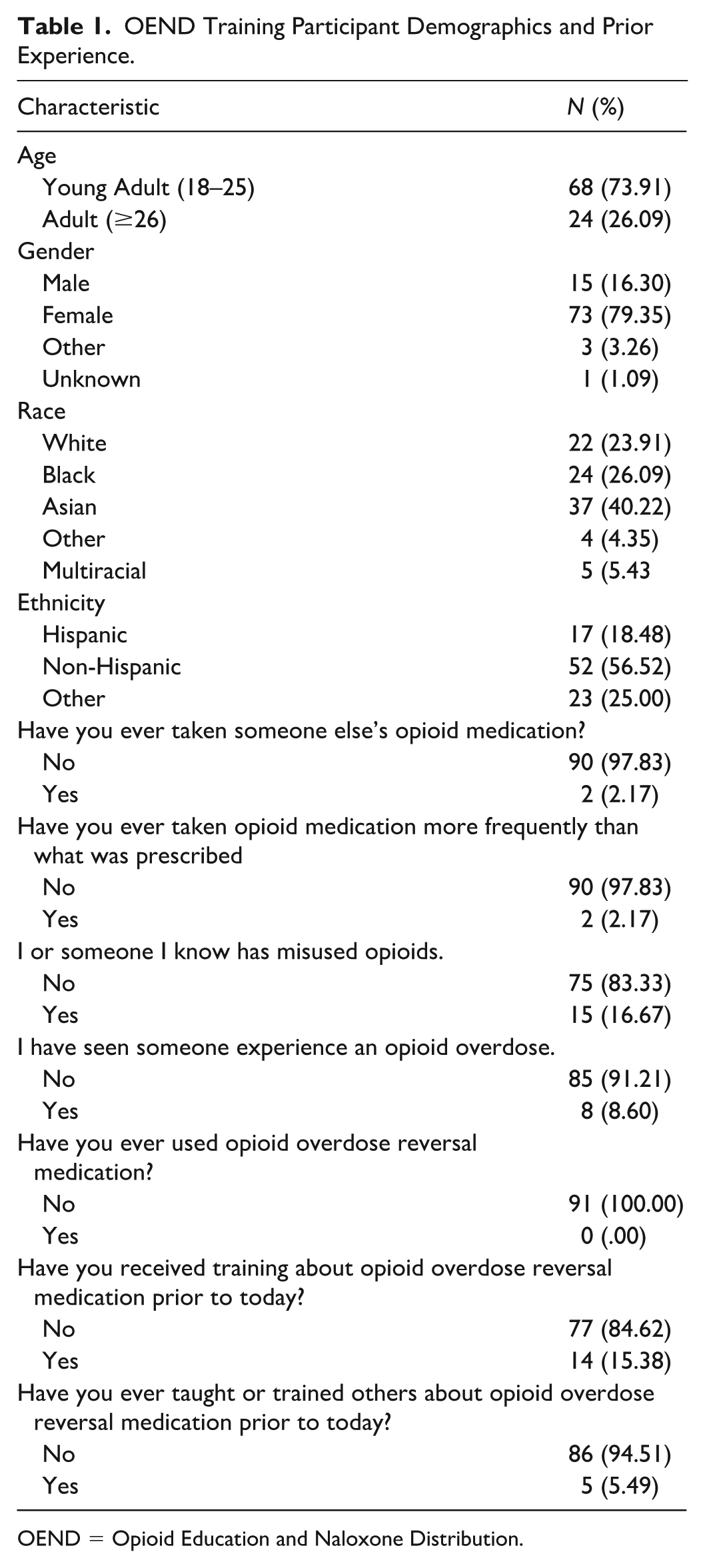
OEND = Opioid Education and Naloxone Distribution.
Descriptive Statistics Knowledge, Attitude, and Efficacy Scales
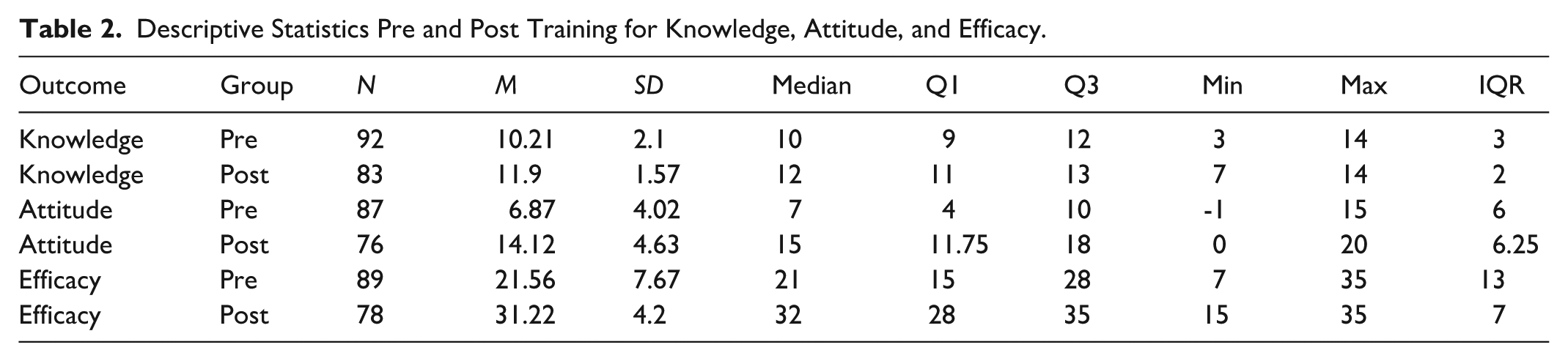
A total of 92 participants completed the pre-survey, and 83 participants completed the post-survey for knowledge. For attitudes, 87 participants completed the pre-survey, and 77 completed the post-survey. For efficacy, 89 completed the pre-survey, and 78 participants completed the post-survey. Table 2 displays the descriptive statistics for each scale. Mean knowledge scores increased from 10.21 (SD = 210) to 11.09 (SD = 1.57) post-survey. Attitude increased from 6.87 (SD = 4.02) pre-survey to 13.91 (SD = 4.95) post-survey. Efficacy increased from 21.56 (SD = 7.67) pre-survey to 31.22 (SD = 4.20) post-survey.
Descriptive Statistics Pre and Post Training for Knowledge, Attitude, and Efficacy.
Model Results
The Poisson regression indicated that post-survey participants answered 17% more knowledge items correctly compared to pre-survey participants (IRR = 1.17, 95% CI [1.07, 1.28], p = .001). Linear regression showed significant gains in attitudes and efficacy from pre- to post- survey. Attitudes increased by an average of 7.04 points (95% CI [5.71, 8.35], p < .001), and efficacy increased by an average of 9.66 points (95% CI [8.12, 11.21], p < .001) as highlighted in Table 3. These findings demonstrate that the educational intervention was associated with statistically significant improvements in knowledge, attitudes, and efficacy. Gains were largest for attitudes and efficacy, while knowledge showed modest but meaningful improvement.
Changes in Knowledge, Attitudes, and Efficacy From Pre to Post Training.
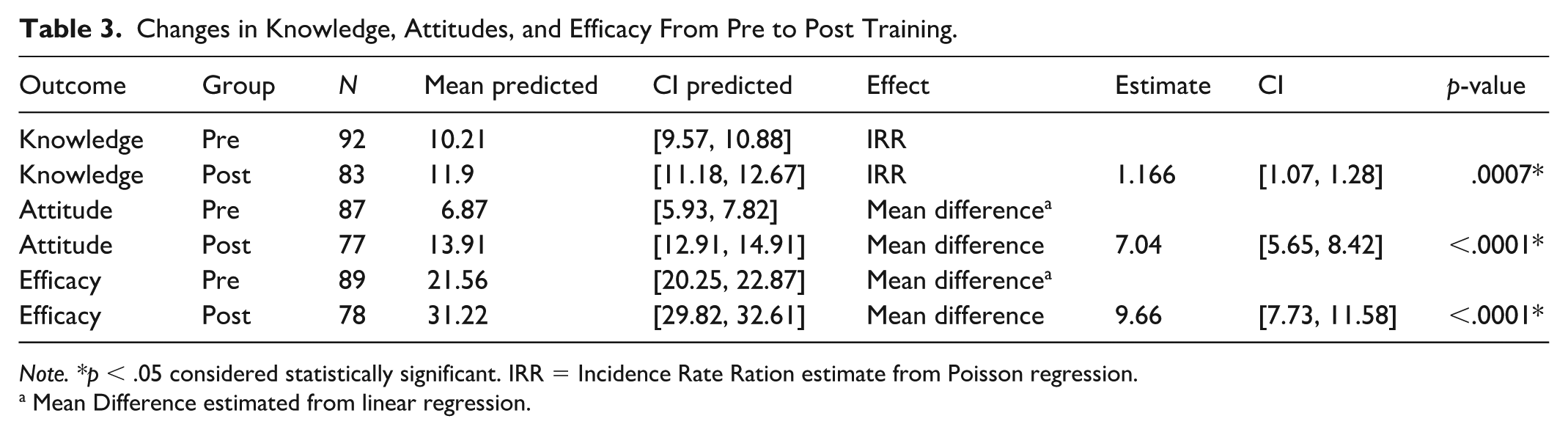
Note. *p < .05 considered statistically significant. IRR = Incidence Rate Ration estimate from Poisson regression.
Mean Difference estimated from linear regression.
Discussion
Utilizing the experiential learning cycle as the organizing structure for the OEND-P allowed for assessment of the practicum’s ability to engage students in the activities of doing, reflecting, thinking, and acting when studying, scheduling, and completing OEND events. Each practicum component enhanced student immersion in harm reduction strategies for opioid overdose prevention. In addition, the OEND-P allowed for knowledge of OEND to be transferred from the practicum students to the community through the scheduling and completion of OEND events. Graduate PH educators, practicum coordinators, and PH training programs can benefit from incorporating harm reduction projects into practicum curriculum designs.
The practical experience provided in the OEND-P enabled the practicum students to have direct, hands-on involvement with all aspects of preparing for, scheduling, and conducting OEND events. Recruitment of practicum students interested in completing the OEND-P continued through the course of 1 year. Practicum enrollment was sustained from word of mouth and from participants in OEND events learning about the practicum opportunity. Additional sources for recruiting practicum students could include college career services offices, academic listservs, or job portals (Dewa et al., 2022; Smith & Green, 2021). Practicum positions are ideally structured with the intention to train students on desired skills for professional career paths (Rowen et al., 2024; Smith & Green, 2021). Substance use focused practicum experiences have shown improvement in attitude and willingness of students to work in the substance use disorder field following graduation (de Claudio, 2024; Estave et al., 2021). Incorporating OEND into a practicum offers the opportunity to educate PH students on stigma and harm reduction strategies associated with opioid use disorder while benefiting the community and future PH workforce.
The OEND-P provided opportunities for reflective observation, with each semester expanding upon the reflection opportunities offered to the practicum students. One goal of reflective observation in the OEND-P was to prompt practicum students to reflect upon stigma found within opioid use disorder care and increase personal awareness of the importance of harm reduction strategies (Bakos-Block et al., 2024). Reflection enhances adult learning as it provides the opportunity for students to conceptualize what they have learned and apply it to an interprofessional and diverse health care workforce (Elsayed et al., 2024; Harris & Seo, 2024). Opportunities for reflection continue to expand as technology advances. Artificial intelligence tools, such as chatbots and other interactive personalized learning tools to assist adult learners have been described as opportunities to enhance self-reflection (Lin, 2024; Mazari, 2025). These technological advances allow for the OEND-P staff to offer additional reflective observation techniques to practicum students.
Abstract conceptualization was used in this practicum to diffuse the knowledge of OEND to a young adult population. Spreading information about OEND-P was primarily communicated through an introductory email discussing OEND and requesting to schedule an event. The response rate was 17.65% from the introductory email method alone. The communication of OEND events can be conducted through additional channels other than just email, with the utilization of social media, posters, phone, or in-person to provide the introduction and scheduling request for an OEND event (Febres-Cordero et al., 2023). Multichannel advertisement provides the opportunity to increase the diffusion of OEND knowledge by increasing the response rate of organizations targeted (Wang et al., 2024).
The OEND-P active experimentation results indicated that event participants increased in overall attitude, knowledge, and self-efficacy of naloxone administration following the completion of the OEND event. This is in line with studies of other OEND events (Beauchamp et al., 2021; Condie et al., 2023; Febres-Cordero et al., 2023). Interestingly, most of the participants stated that they had never witnessed an opioid overdose and had limited knowledge of naloxone prior to the OEND event. Similar to cardiopulmonary resuscitation (CPR) certification or first aid training, knowledge of how to administer naloxone as a bystander is a lifesaving skill (Filteau et al., 2022). The OEND events provide individuals with the tools to identify the signs and symptoms of an overdose and build the confidence of an individual to act in the event of an opioid overdose emergency.
Limitations
This project was conducted in a single-institutional setting using only master-level PH students and may not transfer well to other institutions or other practicum populations. Although the OEND-P practicum students participated in the four stages of experiential learning and provided reflection, there was no standardized measurement of learning or changes in practicum students’ attitudes and beliefs or subsequent behaviors. Changes in knowledge, attitudes, and beliefs were measured among OEND-P training participants, but surveys were voluntary, and there may have been selection bias in those who chose to attend the event or complete the surveys, particularly the post-survey. The long-term impact of how the OEND-P affected the ability of the practicum students to create PH changes in their community, including through the spread of OEND knowledge outside of the training events, is unknown. Further research would be needed to determine long-term sustainability and generalizability into other educational institutions.
Implications for Policy, Practice, and Research
This evaluation illustrates the successful application of OEND into a PH practicum, demonstrating how experiential learning of harm reduction initiatives can simultaneously build professional competencies and enhance community awareness of opioid overdose prevention. The findings of this initiative provide several actionable implications for PH training programs. Programs seeking to replicate this model can strengthen engagement by utilizing available campus resources, such as career services offices or academic listservs. Kolb’s experiential learning cycle, used as an organizing structure, can prompt PH educators to provide, develop, and grow opportunities for student reflection. Additional reflection opportunities could include a facilitated post-event debrief for practicum students or the delivery of additional reflection prompts in written or oral formats. Implementation considerations include ensuring adequate staffing support and oversight for practicum students, as well as providing harm reduction educational materials and resources, such as naloxone, for distribution. Future directions include utilizing this experiential learning practicum design within PH training programs to target additional at-risk community populations and create OEND events or other harm reduction initiatives for community groups outside of young adult student organizations (Bauer et al., 2021). In addition, researching the long-term implications of aligning OEND events to experiential learning within a practicum setting could be studied to understand if this approach advances the dissemination of harm reduction strategies within student organizations and the community at large.
Supplemental Material
sj-docx-1-heb-10.1177_10901981261438663 – Supplemental material for Evaluation of an Opioid Overdose Education and Naloxone Distribution Practicum Using Experiential Learning
Supplemental material, sj-docx-1-heb-10.1177_10901981261438663 for Evaluation of an Opioid Overdose Education and Naloxone Distribution Practicum Using Experiential Learning by Audrey Lopez, A. Sarah Cohen, Francine R. Vega, Rakshitha Vijendra and Tiffany Champagne-Langabeer in Health Education & Behavior
Footnotes
Acknowledgements
The authors thank the following students for their participation in the Opioid Overdose Education and Naloxone Distribution Practicum: Matthew Lee, Ermelinda Garduno, Angela Nguyen, Katlyn Orton, Ashley Guo, Mia Craven, and Allyson Mark. Their engagement and feedback were essential to the development and evaluation of this project.

Funding
The authors received no financial support for the research, authorship, and/or publication of this article.
Declaration of Conflicting Interests
The authors declared no potential conflicts of interest with respect to the research, authorship, and/or publication of this article.
References
Supplementary Material
Please find the following supplemental material available below.
For Open Access articles published under a Creative Commons License, all supplemental material carries the same license as the article it is associated with.
For non-Open Access articles published, all supplemental material carries a non-exclusive license, and permission requests for re-use of supplemental material or any part of supplemental material shall be sent directly to the copyright owner as specified in the copyright notice associated with the article.
