




Abstract
Mobile technologies have become key tools to promote physical activity and reduce sedentary behavior among office workers. While workplaces serve as ideal settings for implementing such interventions, bibliometric analyses of the growing literature evaluating their effectiveness remain limited. The aim of this bibliometric analysis was to examine trends in research productivity and impact of m-health within workplace-related literature. Six databases including Web of Science, Scopus, Ovid Medline, Cochrane Central, Cumulative Index of Nursing and Allied Health Library, and Embase were searched for the studies that have explored the m-health interventions to promote physical activity and reduce sedentary behavior among office workers on February 12, 2024. The studies were downloaded as BibTex files and analyzed for productivity, citation impact, and intellectual structure (conceptual and social structural) using Biblioshiny, Bibliometrix software. In total, 113 studies were identified with 10% of studies published in JMIR mHealth and uHealth and BMC Public Health. Mair JL, 2022 was found to be a significant contributor to the evidence. Australia, the United Kingdom, and the United States continue to dominate the contributions. M-health, obesity, physical activity, and validity were among the most frequently used terms, whereas digital health, development, and adherence remain underrepresented in the literature. Research on m-health to promote physical activity and reduce sedentary behavior among office workers is growing, predominantly in high-income countries. However, interdisciplinary collaboration and studies integrating behavioral science, primary care, digital development, and end-user acceptability remain limited and are urgently needed.
Background
The World Health Organization (WHO) recommends that adults engage in at least 150 to 300 minutes of moderate to vigorous physical activity (MVPA) to reduce the risk of chronic disease (Bull et al., 2020). Emerging evidence claims sedentary behavior (SB) remains an independent risk factor for chronic diseases despite meeting the recommended weekly dose of MVPA (Knaeps et al., 2018). A typical computer-based working adult spends a significant portion of their waking hours sedentary; therefore, the workplace serves as an ideal setting to promote physical activity (PA) and reduce SB (Pronk, 2021). This is evident in the significant growth of interest in workplace PA interventions, which have emerged as one of eight global investment priorities to promote PA (Milton et al., 2021).
Mobile interventions have become crucial in reaching individuals otherwise unreached for behavior change on diet, PA, and mental health (Zheng et al., 2023). Through their Global Observatory for eHealth Compendium 2019, WHO defined m-health as “medical and public health practice supported by mobile devices, such as mobile phones, patient monitoring devices, personal digital assistants, and other wireless devices” (Caiani et al., 2024). Accumulating evidence claims that these mobile devices, especially smartphones with their advanced features of accelerometer, magnetometers, gyroscope, gamification, networking, and global positioning system, have been shown to be promising in influencing PA and SB in office workers (Aldenaini et al., 2020; Trifan et al., 2019). However, publication trends, study contributors and their collaborations, and the impact on the community of this accumulating evidence on mobile interventions in improving PA levels and reducing SB remain largely unexplored.
Bibliometric analyses aim to summarize the research productivity, impact, and intellectual structure of a field by exploring the social and structural relationships among various research components, such as authors, countries, institutions, and topics (Donthu et al., 2021). Bibliometric analyses offer valuable insights into research productivity, social biases, academic impact, and social dominance, advancing theory and providing gaps in existing knowledge (Mukherjee et al., 2022). However, bibliometric studies that comprehensively explore the breadth of available m-health solutions, including author contributions, institutional affiliations, and collaborative networks, remain scarce (Wu et al., 2022). Understanding these dimensions is critical for policymakers and public health planners to identify influential research groups, high-impact evidence clusters, and neglected regions or populations in the field of m-health interventions (Zhou et al., 2024). Further findings may provide direction for more context-specific and scalable m-health interventions to achieve movement and health in workplaces.
This bibliometric analysis seeks to answer the following research question: What is the current state and intellectual structure of scientific literature on m-health interventions aimed at reducing SB and promoting PA among office workers? Specifically, our objectives are:
To analyze publication trends, citation impact, and collaboration patterns among authors, countries, and institutions;
To identify conceptual and thematic structures in the existing literature using co-occurrence and co-citation mapping; and
To highlight gaps and underrepresented areas to guide future research.
While previous bibliometric analyses have broadly examined m-health applications or workplace health promotion individually, this is, to our knowledge, the first study to map the intersection of m-health based occupational PA promotion using a comprehensive bibliometric framework.
Method
The present bibliometric analysis partially followed the preliminary guidelines for reporting bibliometric reviews of the biomedical literature (BIBLIO) (Montazeri et al., 2023). The BIBLIO guidelines mandated reporting of 20 items for the minimum requirement for the bibliometric review as depicted in Supplementary File S1.
Information Sources
Primary author (B.C.) administered the search in six electronic databases: Web of Science, Scopus, Cochrane Central, Embase, Cumulative Index for Nursing and Allied Health Library (CINAHL) Ultimate, and Ovid Medline from inception to February 12, 2024. The six databases were selected for their comprehensive indexing of biomedical, public health, allied health, and digital health literature and are commonly used in digital health research to ensure comprehensive literature coverage (Borges do Nascimento et al., 2023; Car et al., 2019). Scopus and Web of Science were specifically chosen for their extensive interdisciplinary coverage, robust citation tracking, and bibliometric capabilities (Pranckutė, 2021), which were essential for the objectives of this review. Ovid Medline, Cochrane Central, and Embase were included due to their extensive coverage of clinical and intervention-based studies, whereas CINAHL was added to capture relevant literature from nursing and allied health sciences, particularly in the context of workplace wellness. This selection was further supported by consultations with public health experts and a medical librarian to ensure broad and interdisciplinary coverage of m-health interventions targeting office workers.
Search Strategy
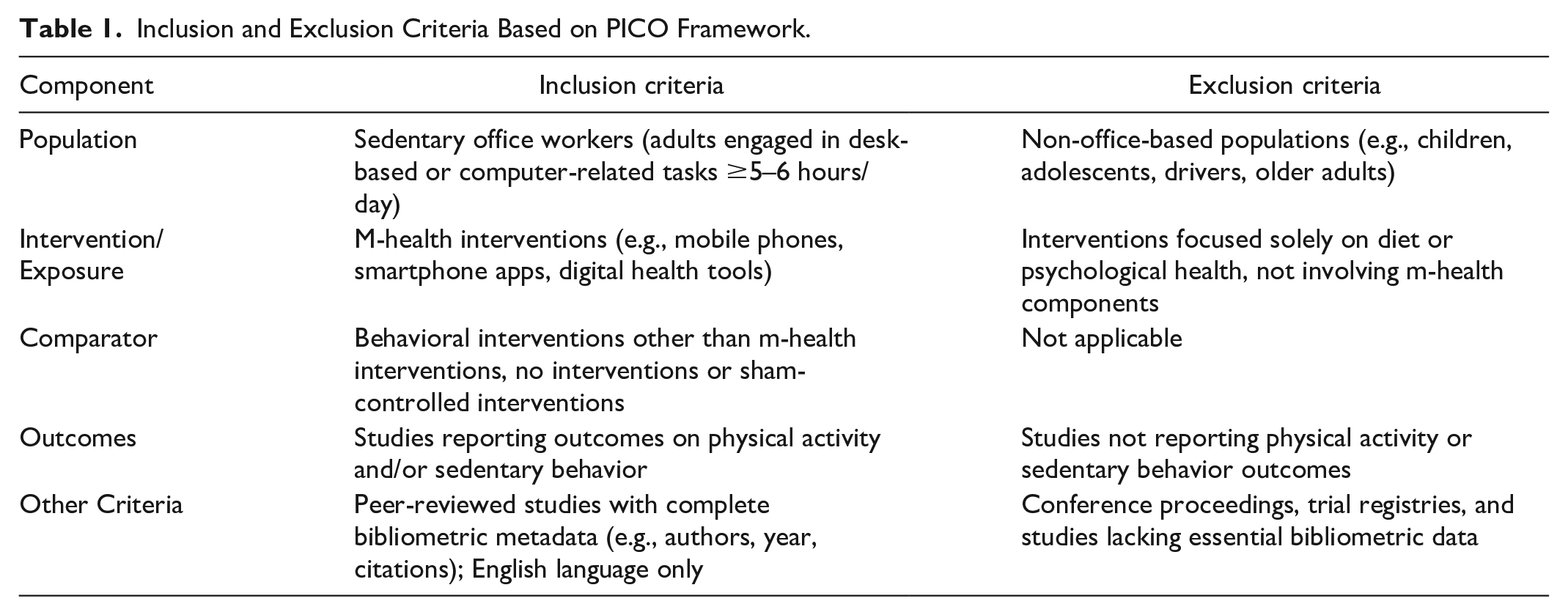
The search strategy was guided by a PICO-based framework to structure the key concepts: sedentary office workers (Population), m-health interventions (Intervention/Exposure), and outcomes related to PA or SB (Outcomes) as depicted in Table 1. Keywords were grouped and combined using Boolean operators (AND, OR) to broaden sensitivity while maintaining relevance. The keywords related to mobile health technologies were selected to comprehensively capture the diversity of digital platforms used in workplace health promotion. For example, the keywords such as “m-health,” “mobile health,” “smartphone,” “mobile phone,” “smartphone applications,” and “digital intervention” were included to reflect the common terminologies used in the literature that have administered mobile-based health interventions. This broad coverage ensured inclusion of studies employing app-based PA tracking, gamification, wearable integration, and SMS-based interventions. Further to address the outcomes related to PA and SB, a wide range of outcome-related keywords such as “physical activity,” “exercise,” “walking,” “endurance,” “aerobic,” and “resistance training” (PA) and for SB, keywords such as “sedentary behavior,” “sitting time,” “prolonged sitting,” “uninterrupted sitting,” and “breaking sitting” were used. The keyword selection was informed by prior reviews (Baumann et al., 2022; Buckingham et al., 2019; Xu et al., 2022), domain expertise, and initial scoping searches to balance comprehensiveness and relevance to the objective of the present bibliometric review. The Supplementary File S2 depicts the search strategies administered in six databases.
Inclusion and Exclusion Criteria Based on PICO Framework.
Time Frame
The time frame for this bibliometric analysis was set from the inception of each database to February 12, 2024. Early development of mobile phone-based PA tracking can be traced back to the mid-2000s. For example, the Nokia 5500 Sport, released in 2007, incorporated built-in accelerometers to track steps and activity levels, marking a key technological milestone in the evolution of m-health interventions (Vajk et al., 2008). This innovation represented one of the earliest attempts to integrate PA monitoring into consumer mobile devices. Although few relevant studies likely existed prior to 2007, we conducted the search from database inception to ensure comprehensive coverage of the field’s development and to capture potential early contributions to enhance historical completeness and reduce the risk of publication bias.
Eligibility Criteria
To clearly define the scope of this bibliometric analysis, we adopted a structured PICO-based approach to establish inclusion and exclusion criteria. The target population was limited to sedentary office workers, as they represent the primary group affected by prolonged inactivity during work hours. We included studies that employed “m-health” interventions defined as “health-related strategies delivered via mobile or digital technologies” and measured their effects on PA or SB or both. Studies that did not report on PA or SB outcomes, or those lacking key bibliometric metadata (e.g., authorship, publication year, citation count), were excluded to maintain the analytical integrity required for bibliometric mapping. Table 1 outlines the key characteristics of the studies to be included for the bibliometric mapping.
Data Refinement
The identified references from individual databases were then imported into the online reference management software (EndNote Web, https://www.myendnoteweb.com/), and duplicates were removed. Two authors (B.C. and C.R.R.) independently screened the titles and abstracts, identifying the relevant sources. Any disagreements were solved mutually, and the citations were exported as text files using export styles, BibTex or Tab Delimited. The text files were then uploaded to the SciVal and R-based software “Bibliometrix,” and the references were processed at a micro-level to analyse temporal trends and research impact.
Data Analysis and Visualization
The DOIs of the independent studies were imported to SciVal and were analyzed for following metrics: summary, bibliometrics (publication, citation, views metrics and journal quartiles), contribution (authors, institutions, countries, Scopus sources), research fields (topics, subject areas, key phrases, top contributors), and collaboration (collaboration metrics) were identified. Furthermore, the BibTex files exported from EndNote Web were uploaded to Biblioshiny, Bibliometrix software (K-Synth, University of Naples Federico II), an open R-based bibliometrics software for analysing the publication, authors, network, impact, and citation analysis. Further visualization (publication, author, and citation trends) was administered using Microsoft Excel 2016, Microsoft.
The present bibliometric analysis involved two types of analysis (Gumus et al., 2024): (1) general structure analysis: involving capturing of indicators such as number of authors and co-authors per article, citations per article, and collaboration; (2) intellectual structure analysis: this involves discussing the conceptual, social, and intellectual structure. The conceptual structure analysis involves co-word analysis using clustering techniques. Further network density and centrality of the words were captured using nodular density and location. Social structure was captured using strength, number, and neighborhood of the networks. For example, countries with darker shades produce more publications in the area compared with the countries with the lighter shades. Finally, intellectual structure was further quantified using co-citation analysis, which signifies the seminal articles that lead to further progress in the field, depending on the nodular density, distance, and number.
Results
Of the 119 studies identified, only 113 studies were imported to SciVal and Bibliometrix software. Six studies were not imported, probably due to that these publications were not indexed in either Scopus or Web of Science. Figure 1 depicts the systematic screening and inclusion for bibliometric analysis.
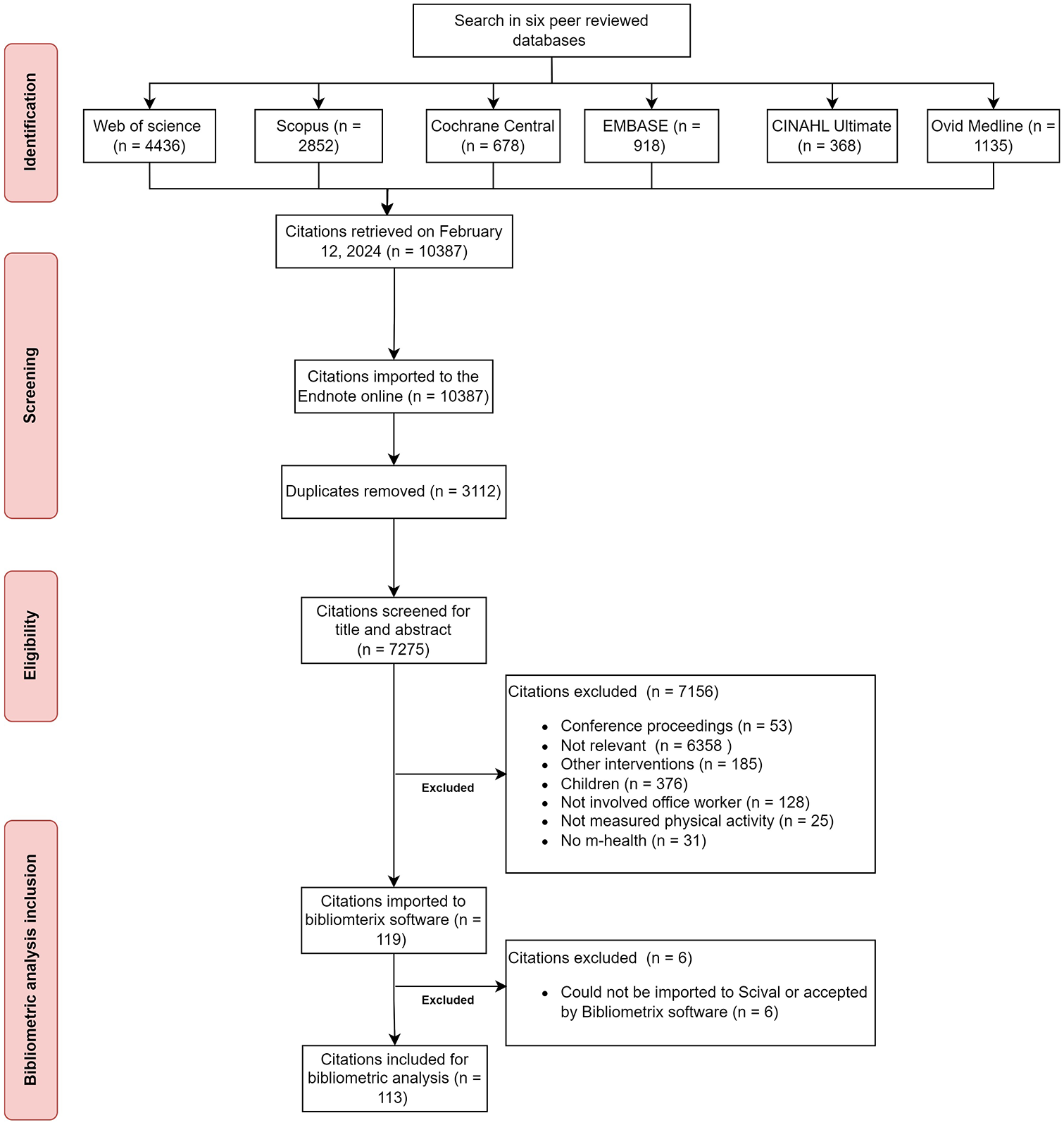
Flowcharts Depict the Study Identification and Inclusion.
Descriptive Analysis
Our bibliometric analysis demonstrated a significant steady increase in the studies exploring the effects of m-health as an intervention for improving PA and reducing SB among sedentary office workers, especially during the past 4 years (Figure 2). Before 2017, there were hardly any studies exploring the effects of m-health among office workers to reduce SB or improve PA. In 2020, 21% of the studies were conducted, showing the significant impact of the COVID-19 lockdown on exploring the effectiveness of m-health. The time span of the publications was between 2013 and 2024. The annual growth rate was 10.5% with a total of 695 authors. International co-authorship was 33.63%. Mean co-authors per document was 6.46. Authors’ keywords were 417, total references were 4,588, and the mean age of the documents was relatively new (3.96 years).
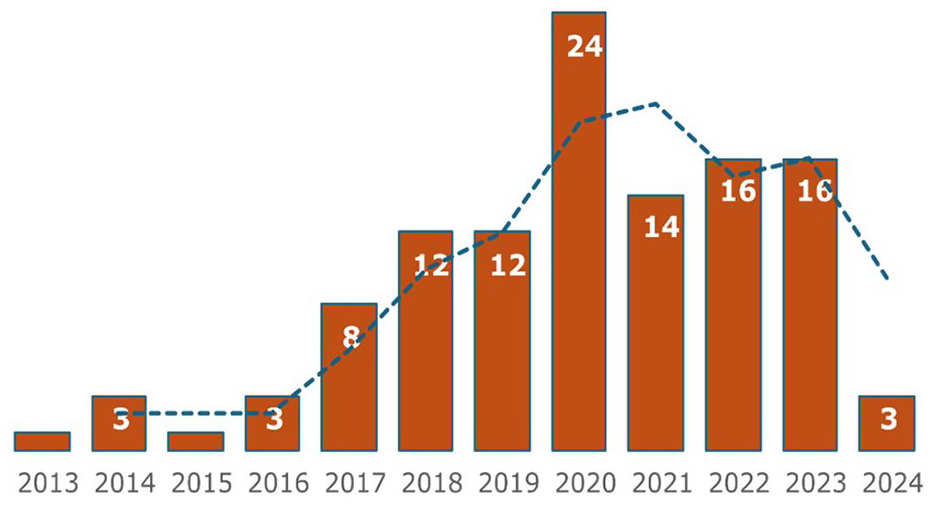
Publication Trends in the Field.
Authors and Sources
Of the 113 studies, most of the articles (n = 10, 8.8%) are published in JMIR mHealth and uHealth followed by Journal of Medical Internet Research (n = 8, 7.1%), BMC Public Health (n = 6, 5.3%), Digital Health (n = 5, 4.4%), and Journal of Occupational and Environmental Medicine (n = 5, 4.4%). Among the authors, Jaquelin Mair contributed the most to the field (n = 4, 3.5%) (Mair et al., 2022; Stephenson et al., 2021; Stephenson, Garcia-Constantino, et al., 2020; Stephenson, McDonough, et al., 2020), followed by Murphy MH, Nugent CO, Ryu H, and Stephenson A (Simpson et al., 2020; Stephenson et al., 2021; Stephenson, Garcia-Constantino, et al., 2020), while Ulster and Karolinska universities made significant contributions to the existing literature. Figure 3 depicts the major contributions from the high-income countries (Australia, the United Kingdom, and the United States).
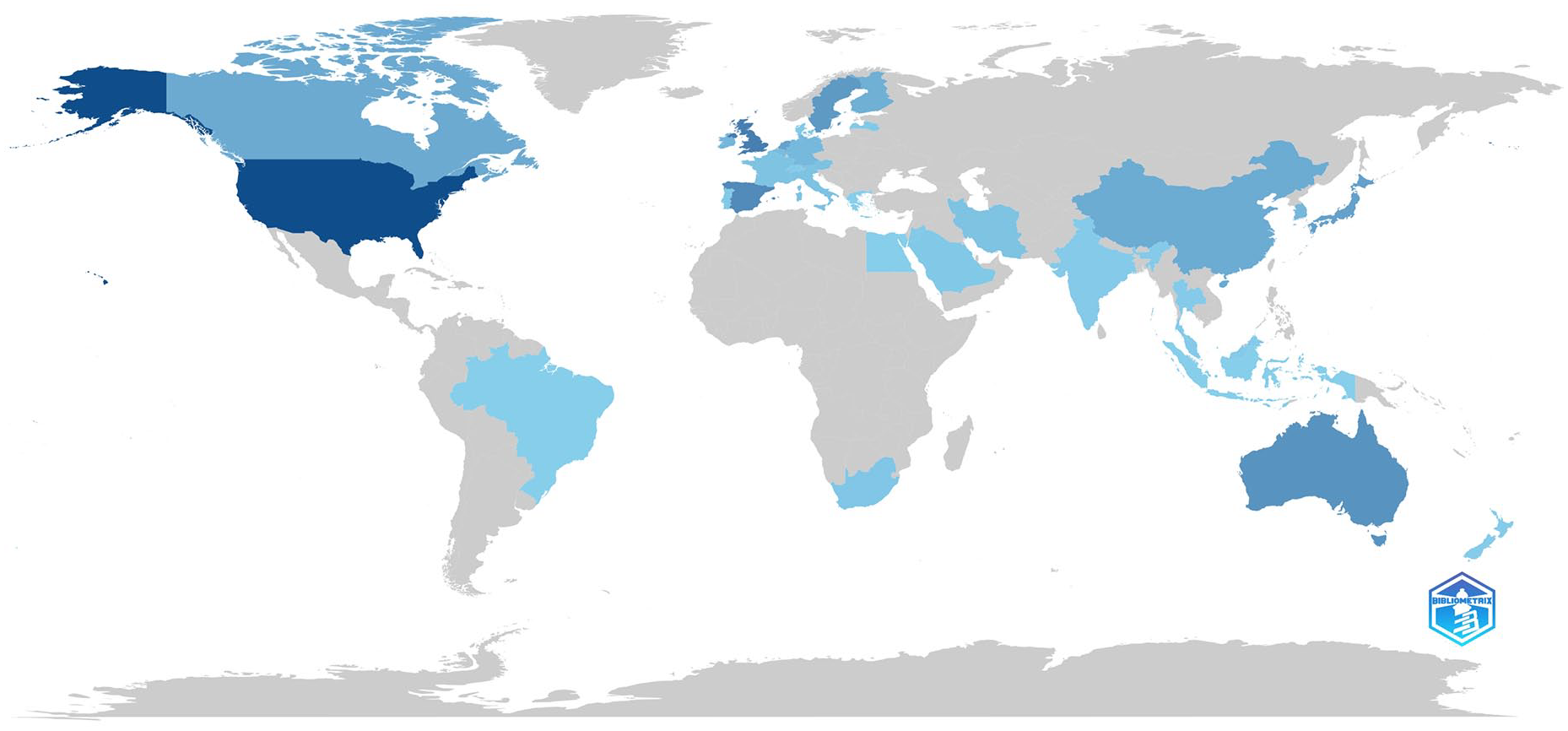
Global Trends in Mobile Interventions to Promote Physical Activity and to Reduce Sedentary Behavior Among Office Workers.
Co-citation Analysis
The average citations per document were 16.83. The most-cited article, authored by Ernsting et al. (2017), surveyed health behavior change through smartphone apps (Ernsting et al., 2017). The second most-cited article, by Demeyer et al. (2017), examined the effects of 12 weeks of tele-coaching (Demeyer et al., 2017). Notably, the article by Mair et al. (2022) had the greatest local impact (Mair et al., 2022).
Thematic Network Analysis
Co-occurrence network analysis revealed significant interaction between the words of m-health, PA, SB, obesity, and behavior change determinants (Figure 4A). While the majority of the keywords are regarding prevention, obesity, validity, and adherence, the least keywords are behavior change determinants. Network density analysis revealed that behavior change techniques are potential motor themes beyond centrality functions. Emerging themes were found as social support and acceptance of the m-health interventions, which are prime drivers for adherence (Figure 4B). On historiographical analysis, the earliest seminal article was identified as Ahtinen et al. (2013), whereas the most recent article was by Hiemstra et al. (2024). The most frequent words seen are PA, health, adults, interventions, obesity, and sitting time, whereas less occurring words are behavior change theories, adherence, and impact.
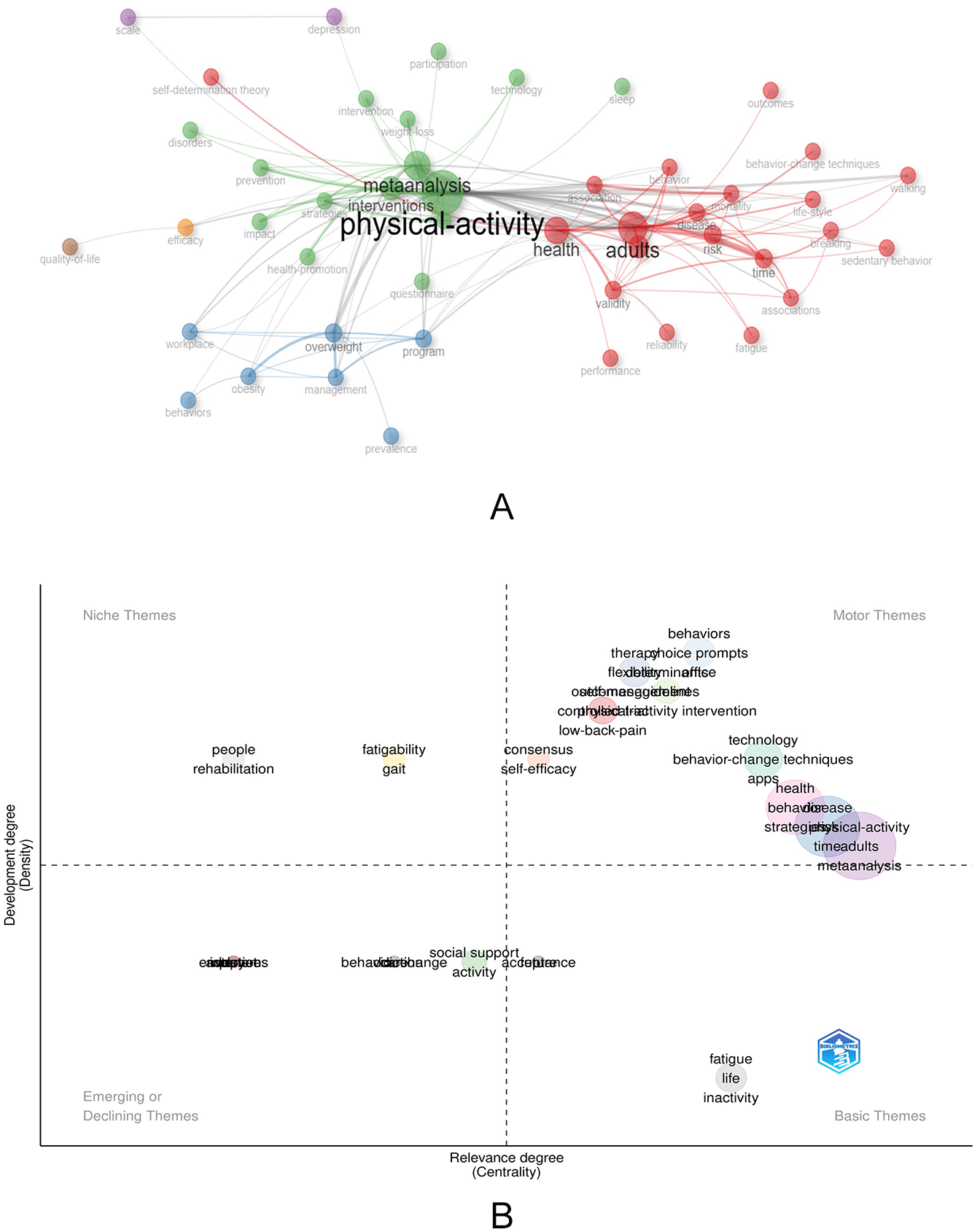
Network Analysis of the Included Studies.
Conceptual Structure Analysis
Only a few authors’ works are frequently represented in the existing literature: Mair JL (Mair et al., 2022), Stephenson A (Stephenson et al., 2021), Garcia-Constantino M (Stephenson et al., 2021; Stephenson, Garcia-Constantino, et al., 2020), Bort-Roig (Bort-Roig et al., 2020), Balk-Møller (Balk-Møller et al., 2017), Costa F and Dempsey PC (Costa et al., 2022); however, with lesser collaborative network structure. These authors are related to occupational health, SB, workplace, digital health, smartphone, PA, e-health, and mobile phone (Figure 5). Similarly, the trend analysis depicted that mobile phone was a highly trending topic, followed by exercise, mobile health, and PA in 2013, while in 2021, mobile health and SB started showing higher trends in the field.
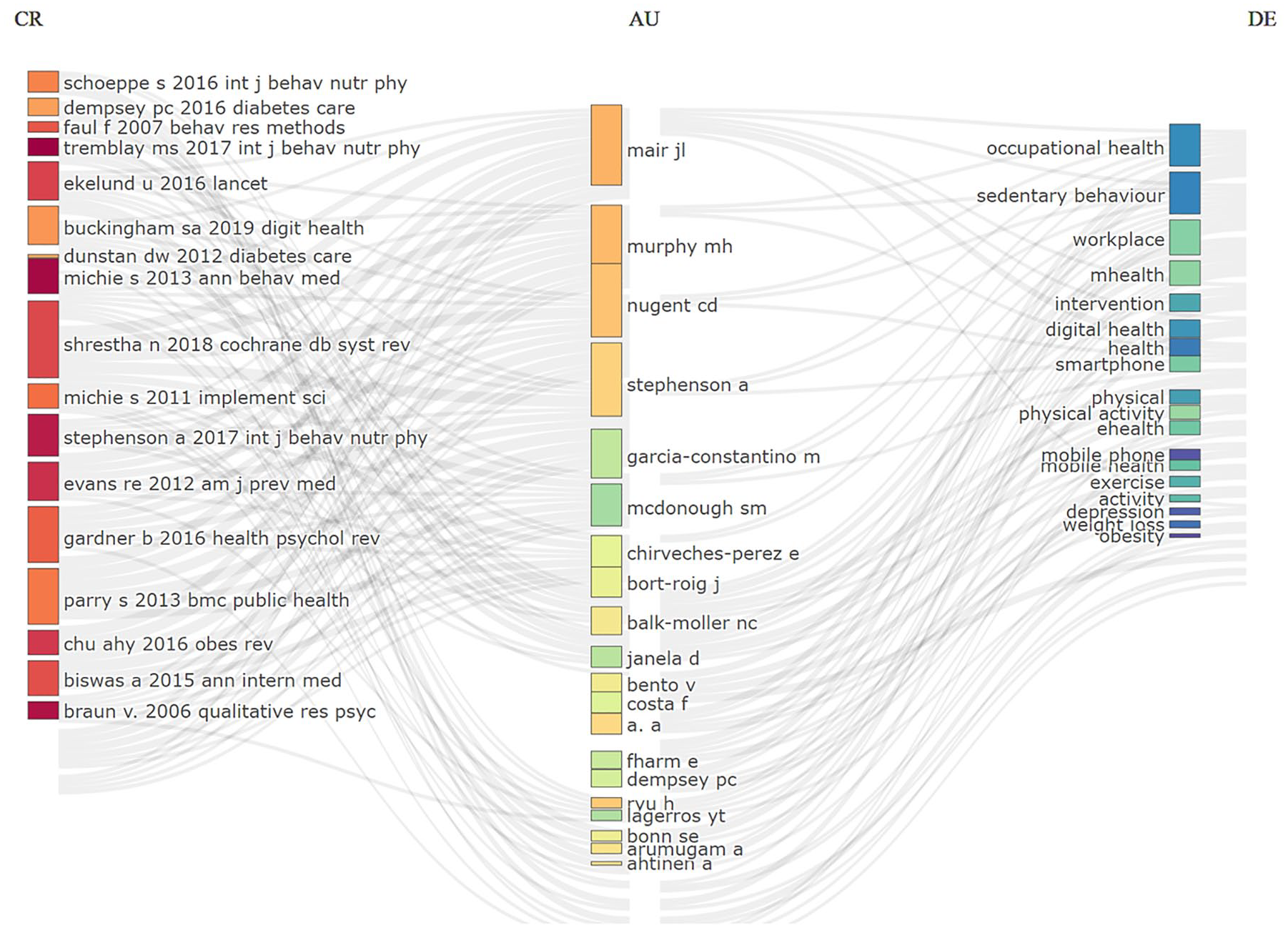
Sankey Diagrams demonstrating the inter-relationships between Cited References (CR), Authors (AU), and Keywords (DE).
Discussion
The present bibliometric analysis aims to provide an overview of publications, authors, impact, and trends in exploring m-health for promoting PA and reducing SB among office workers. The study identified gaps in productivity, biases, and research nuances that remain unaddressed in the context of m-health interventions for promoting PA.
Digital interventions to enhance PA and reduce SB in workplaces have garnered significant attention due to their substantial potential for driving behavior change (Buckingham et al., 2019; Huang et al., 2019). The analytical findings from the present study reveal a significant increase in the number of publications since 2017. While JMIR mHealth and uHealth emerged as the major publishers in the field, Mair et al. (2022) were identified as key contributors. All included articles originated from high-income countries, specifically Australia, the United Kingdom, and the United States. Our review findings agreed with the previous bibliometric studies, which shared similar publication trends in m-Health and health benefits (Wu et al., 2022). Notably, 21% of the studies were conducted during the COVID-19 pandemic in 2021. The annual growth rate of the publications was 10.5%, with one-third of the publications resulting from international collaborations. However, there is a notable lack of collaboration among public health experts, clinicians, and m-health developers, as evidenced by the limited focus on the acceptability and development of m-health solutions incorporating essential behavior change features such as social support, gamification, and activity tracking (Xu et al., 2022).
Digital interventions targeting PA and their effects on mental health have garnered increasing attention, as evidenced by the recent rise in publications and trend analyses (Murawski et al., 2019; Rathbone & Prescott, 2017). Mair et al. (2022) were the most influential authors in the field of m-health for office workers (Mair et al., 2022). Co-occurrence analysis highlighted prevention, obesity, validity, and adherence as frequently explored themes, while behavior change, social support, acceptance, and digital health are emerging areas of interest. Recent trials have started exploring the effectiveness of behavior change techniques such as goal setting, modeling, gamification, and social support to promote PA using m-health interventions among office workers (Daryabeygi-Khotbehsara et al., 2021; Schroé et al., 2020).
Network analysis indicated limited collaboration across research teams, with most contributions coming from high-income countries, especially Australia, the United Kingdom, and the United States. Only limited research groups are still engaged in the development of m-health interventions focusing on improving PA and reducing SB among office workers. These findings have already been confirmed by previous bibliometric analysis of m-health studies (Alanzi et al., 2024; Wu et al., 2022). Cultural norms, adaptability, social support systems, and the development of m-health interventions may exhibit regional differences that are currently underrepresented, particularly from low- and middle-income countries (LMIC) in the prevention of chronic disease risk (Mao et al., 2020; van Olmen et al., 2020). To ensure equitable global implementation, future m-health interventions must consider the specific contextual needs of LMICs (Ojo et al., 2021). Adaptations may include leveraging basic mobile phone technology (e.g., SMS-based interventions), designing culturally relevant content, ensuring low data usage, and engaging local stakeholders during co-creating m-health interventions (Amoakoh-Coleman et al., 2016; Cho et al., 2018; Materia et al., 2023). Further studies involving collaboration with researchers from LMICs are warranted to extend the benefits of m-health to underserved populations, to strengthen local research capacity, and to address the current geographical imbalance in the m-health literature (Zhou et al., 2024).
Our bibliometric findings have several implications for policy makers and public health experts as follows: First, identifying underrepresented themes such as adherence, digital development, and end-user acceptability underscores the need for close collaboration between mobile app developers, behavioral science experts, and organizational policymakers to design user-friendly, low-cost, and sustainable m-health interventions (Dahlhausen et al., 2022). Second, policymakers can also use author, affiliations, and geographic productivity data to identify centers of excellence for global collaboration and capacity building, especially in underrepresented LMICs, to design scalable, culturally acceptable, adaptive, and cost-effective m-health interventions (Dean et al., 2015; Iribarren et al., 2017).
Strengths and Limitations
Our study conducted an extensive search across six databases, providing a comprehensive overview of m-health interventions targeting PA promotion among office workers. Another methodological strength of this study was the use of an inception-to-date search strategy across six major databases, allowing for comprehensive capture of historical and recent developments in m-health interventions. However, this approach also presented certain limitations, such as the inclusion of older studies that may lack detailed metadata or use less rigorous methodologies. The present bibliometric analysis has several limitations: (1) we did not assess the risk of bias in the included studies, leaving the potential for inherent bias unaddressed; (2) the search was restricted to English-language publications, potentially overlooking relevant non-English literature; and (3) the studies were conducted exclusively in high-income countries, limiting the generalizability of the findings to LMICs; (4) finally, readers are cautioned to interpret the observed trends and metrics in light of potential publication-related biases, including the exclusion of non-English studies, omission of non-peer-reviewed databases, which may have excluded research from LMICs and the natural citation lag, which may underestimate the impact of more recent publications.
Conclusion
Research on m-health interventions to promote PA and reduce SB among office workers has grown significantly, with high-income countries leading in publication output. While a few research groups are actively involved in m-health intervention development, limited collaboration exists across disciplines. To advance the field, future studies should prioritize the inclusion of LMICs, incorporate robust behavior change frameworks, and engage end-users in intervention design. Interdisciplinary collaboration among app developers, behavioral scientists, clinicians, and public health experts is essential to enhance the effectiveness and sustainability of m-health solutions. From a policy perspective, these findings highlight the importance of integrating validated m-health strategies into workplace wellness programs and global PA promotion guidelines.
Supplemental Material
sj-docx-1-heb-10.1177_10901981251361958 – Supplemental material for Mobile Interventions for Reducing Sedentary Behavior and Promoting Physical Activity Among Office Workers: Bibliometric Study
Supplemental material, sj-docx-1-heb-10.1177_10901981251361958 for Mobile Interventions for Reducing Sedentary Behavior and Promoting Physical Activity Among Office Workers: Bibliometric Study by Baskaran Chandrasekaran and Chythra R. Rao in Health Education & Behavior
Footnotes
Acknowledgements
The authors wish to thank the Health Sciences Library, Manipal Academy of Higher Education, for the support for the search strategy and trial search in four databases.

Ethical Considerations
Not applicable.
Consent for Publication
Not applicable.
Author Contributions
Conceptualization: Dr Baskaran Chandrasekaran & Dr Chythra R Rao.; methodology: Dr Baskaran Chandrasekaran & Dr Chythra R Rao.; validation: Dr Chythra R Rao Ł.R.; formal analysis: Dr Baskaran Chandrasekaran; data curation: Dr Chythra R Rao; writing—original draft preparation: Dr Baskaran Chandrasekaran; writing—review and editing: Dr Chythra R Rao. Both authors have read and agreed to the final version of the manuscript.
Data Availability Statement
The datasets generated during and/or analyzed during the current study are available from the corresponding author on reasonable request.
Supplemental Material
Supplemental material for this article is available online.
References
Supplementary Material
Please find the following supplemental material available below.
For Open Access articles published under a Creative Commons License, all supplemental material carries the same license as the article it is associated with.
For non-Open Access articles published, all supplemental material carries a non-exclusive license, and permission requests for re-use of supplemental material or any part of supplemental material shall be sent directly to the copyright owner as specified in the copyright notice associated with the article.
