



Abstract
Stigma prevents societal acceptance, reinforces social inequities, and greatly complicates the management of diabetes for those dealing with homelessness. Various forms of media, such as film, can educate audiences and play a role in reducing stigma, but the effectiveness of such interventions in changing individuals’ knowledge, attitudes, and beliefs (KAB) requires further exploration. This study assessed the impact of a film on diabetes and homelessness through pre- and post-surveys of audience members (n = 202) at 12 screening events. The surveys measured changes in KAB through Likert scale questions, with scores ranging from 1 to 5. Statistical analyses, including Wilcoxon signed-rank and Kruskal–Wallis tests, were used to assess differences in KAB before and after viewing the film, as well as variations based on prior familiarity with diabetes and homelessness. Respondents’ knowledge increased significantly across all topics related to both diabetes and homelessness. There were significant differences in all questions that assessed respondents’ attitudes. Notably, respondents’ beliefs changed significantly to be more positive, except for a single question where the pre-scores already demonstrated reasonably high baseline knowledge. In several domains, respondents familiar with diabetes did not have as significant of a change compared with individuals who were less familiar with diabetes at baseline. These findings suggest that narrative films can positively influence audience members’ KAB about stigmatized conditions like diabetes and homelessness. Future research will examine the lasting impact of such interventions on audience members’ KAB.
Keywords
Introduction
Living in emergency housing shelters often presents numerous barriers and setbacks that hinder individuals’ ability to manage chronic health conditions, including diabetes (Campbell et al., 2021; Hwang & Bugeja, 2000). One commonly documented challenge among people experiencing homelessness (PEH) is stigma (Reilly et al., 2022; Weng & Clark, 2017). As a phenomenon that precludes individuals from full societal acceptance along the lines of established social inequalities, stigma profoundly affects marginalized groups (Hatzenbuehler et al., 2013; Mitchell et al., 2021). Stigma is also commonly experienced by individuals who live with diabetes, particularly related to the etiology, treatment modalities, and health outcomes associated with their diabetes (Liu et al., 2017; Speight et al., 2024). For those who live with both diabetes and homelessness, there is a unique confluence of stigmas that arises from the intersection of these independent stigmas (Tariq et al., 2024; Tariq, Grewal, Booth, et al., 2023). These stigmas affect individuals’ adherence to medication in shelters and shape how others perceive their medication use (Liu et al., 2017; Speight et al., 2024).
The phenomenon of stigma is borne from negative perceptions, attitudes, and beliefs directed toward marginalized groups, alongside a widespread lack of understanding about these populations (Stangl et al., 2019; Stigma: Why Words Matter, 2022). Stigmatizing perceptions of PEH are perpetuated through negative discourse (Chapados et al., 2023). The lack of knowledge about these populations and the realities of their lives further fuels stigmatization, creating barriers to acceptance and support (Hatzenbuehler et al., 2013; Stangl et al., 2019).
Various strategies have been documented to effectively combat stigma. These include raising awareness about the stigmatized population, advocacy through influential groups or individuals, and enacting legislation to enforce anti-discrimination laws (National Academies of Sciences, Engineering, and Medicine et al., 2016). Educational anti-stigma campaigns, such as Canada’s In One Voice campaign, have been effective in increasing traffic and exposure to an online education platform aimed at raising mental health awareness. However, this campaign did not significantly alter public attitudes toward mental health (Livingston et al., 2013, 2014). In contrast, New Zealand’s Like Minds, Like Mine campaign was successful in the widespread reduction of discrimination and stigma surrounding mental illness while also enhancing knowledge among participants (Thornicroft et al., 2014). Given the variation in impact among these anti-stigma campaigns in changing audience members’ attitudes and increasing their knowledge, it can be assumed that the effectiveness of such interventions is likely attributable to the topic portrayed and specifically, how much it is socially stigmatized, the modality of the intervention (film, commercial, art exhibit, etc.), and the population being studied. These interventions are postulated to work by helping people replace stereotypes and prejudice with accurate information, and can be designed on any scale, from local to national (National Academies of Sciences, Engineering, and Medicine et al., 2016). Film has been proven to be a valuable tool in carrying out educational anti-stigma campaigns, as it has the ability to humanize conditions that are otherwise relatively poorly understood and has the power to reduce stigma toward various stigmatized topics, such as mental health conditions (Sznajder et al., 2022).
To date, particularly in the context of homelessness and diabetes, educational interventions tailored toward changing individuals’ knowledge, attitudes, and beliefs (KAB) about topics portrayed in the interventions have not been well documented or evaluated. Therefore, we sought to evaluate the efficacy of a narrative film, which highlights the intersection of diabetes and homelessness, in changing audience members’ KAB.
Method
Study Design
We conducted a quantitative pre/post study to assess the impact of a narrative film about diabetes and homelessness stigma on audience members’ KAB. This study received ethics approval from the University of Calgary’s Conjoint Health Research Ethics Board (REB23-0764).
Intervention Development
The Calgary Diabetes Advocacy Committee (CDAC) is a community-based participatory research (CBPR) group in Alberta, Canada, currently comprised of eight co-researchers with lived experience of diabetes and homelessness, and three academic research staff. Since 2021, the CDAC has engaged in numerous focus group discussions exploring barriers to diabetes management while experiencing homelessness, and through these discussions, the group set out to conduct research to address the stigma and lack of awareness surrounding diabetes and homelessness. Through additional committee meetings, the CDAC decided to create a short narrative film (duration: 38-minutes) as a tool to mobilize knowledge surrounding diabetes and homelessness and serve as an advocacy tool to combat the stigma and lack of awareness surrounding diabetes and homelessness (Reed et al., 2023; Tariq, Grewal, Booth, et al., 2023; Tariq, Grewal, Nat, et al., 2023). To ensure authenticity, in addition to the co-researcher experiences, the film was made in conjunction with shelter staff and medical professionals, which allowed for multiple perspectives to shine through during the script-writing process, as well as the film development process. The film, titled Low, is a narrative film that follows the protagonist, a semi-fictional client inspired by the real-life stories of co-researchers, and a shelter worker as they navigate challenges identified by the CDAC. These challenges include diabetes stigma, difficulties with medication storage and access, limited access to timely and appropriate food, experiences of both low and high blood glucose levels, and the pressures faced by overworked and understaffed shelter staff, all within the broader context of the current opioid crisis. For more information on the film’s conception, development, and content, visit www.calgarydac.ca.
Impact Statement
This study demonstrates the immediate effectiveness of a community-based narrative film in enhancing individuals’ knowledge, attitudes, and beliefs regarding critical issues related to diabetes and homelessness, including diabetes stigma, medication storage, and the management of hypo/hyperglycemic events. While the findings indicate significant short-term changes in audience members, the study is limited by its inability to evaluate the film’s long-term impact. Future research should investigate the sustained influence of narrative films on audience members’ knowledge, attitudes and beliefs.
Setting/Context
The study took place in Canada, with in-person screening events occurring in four Canadian cities (Calgary, Halifax, Montreal, and Toronto), and online screening events which had attendees nationwide. These screening events (n = 12) took place between October 2023 and February 2024, with audience members being invited through word of mouth, posters, conference programs, and social media. Screening events were held at emergency housing shelters, academic conferences, academic institutions, non-profit housing organizations, as well as theatres for the general public.
Screening Events
Screening events began with a member from the research team (ST or DJTC) providing audience members with a brief description of what the CDAC is and why the group decided to use participatory filmmaking. During these introductions, audience members were invited to complete the pre-survey. After audience members completed the pre-survey, the film was shown. After the film, co-researchers and academic researchers from the CDAC, filmmakers, and shelter staff held panel discussions to allow audience members to ask questions and share their thoughts about the film. After the panel discussion, the audience members completed the post-survey.
Inclusion/Exclusion Criteria
To have their data included in the analysis, individuals must have watched the entire film and completed both pre- and post-surveys. To allow researchers to assess the change in KAB among participants, we excluded any participants who completed only one of the surveys. Individuals who completed both the pre- and the post-survey after the film had ended (identified by timestamps) were excluded from the analysis, as it was deemed not to be an accurate reflection of how the film would have impacted their KAB in the absence of a true baseline.
Data Collection
Surveys were administered using Qualtrics, a University of Calgary-approved online survey platform. The survey contained a brief demographic section, eight 5-point Likert scale questions designed to assess audience members’ knowledge, five such questions designed to assess audience members’ attitudes, and 11 such questions designed to assess audience members’ beliefs (Supplemental Material 1). The questions assessing audience members’ attitudes and beliefs were crafted using the Theory of Planned Behavior (TPB), which helps categorize statements into attitudes (evaluations or feelings toward a particular situation) and beliefs (underlying convictions about the world) (Ajzen, 2020). The survey used in this study was developed collaboratively by the academic team (TR, ST, EKG, and DJTC) and individuals with lived experience of diabetes and homelessness (JA, ML, JL, and AW). It was informed by previously used surveys designed to assess changes in audience members’ KAB on topics, such as homelessness and substance use (Bryan & Division, 2000; Petit et al., 2018, 2019). In addition, relevant literature on diabetes and homelessness helped shape the survey. However, this survey has not undergone formal psychometric validation, which is acknowledged as a study limitation. While the script and scenes of the film were crafted to authentically represent the lived experiences of individuals with diabetes and homelessness and the perspectives of shelter workers, the shelter depicted in the film is a composite, informed by experiences shared during focus group discussions. Importantly, survey questions (e.g., “Currently offered regular health services meet the needs of people experiencing homelessness”) asked respondents to reflect on and evaluate the policies and practices of real shelters they were familiar with, rather than the shelter depicted in the film.
Statistical Analysis
Descriptive statistics were used to describe self-reported demographic characteristics of the participants. Audience members KAB toward diabetes and homelessness were compared before and after viewing the film. Audience members’ knowledge was measured using a 5-point Likert scale (1 = not familiar at all; 2 = slightly familiar; 3 = moderately familiar; 4 = very familiar; 5 = extremely familiar); whereas their attitudes and beliefs were also measured using a 5-point Likert scale (1 = strongly disagree; 2 = disagree; 3 = neutral; 4 = agree; 5 = strongly agree) (Supplemental Material 1). Due to the ordinal nature of the data, non-parametric statistical tests were used. For each KAB domain, the mean score of all participants was calculated for both the pre- and post-survey responses. The pre- and post-scores were compared to assess for statistically significant differences using a series of Wilcoxon signed rank tests.
Respondents were stratified across two axes: familiarity with homelessness (characterized by anyone who works in social services or has daily/weekly contact with PEH) and familiarity with diabetes (characterized by diabetes educators, physicians, dietitians, nurses, or individuals who personally know someone who has diabetes). The groups were not mutually exclusive, and an individual could be “familiar” with both diabetes and homelessness. This stratification was done to assess potential effect modification, as baseline familiarity with diabetes and/or homelessness was hypothesized to potentially influence the degree to which the film impacted changes in KAB. We hypothesized that individuals without a baseline familiarity of diabetes and/or homelessness would show greater changes in KAB, and stratifying the respondents allowed us to explore this potential differential effect. To assess whether there were statistically significant differences between the stratified groups, Kruskal–Wallis H tests were carried out. Analyses were conducted using Stata statistical analysis software (StataCorp, College Station, Texas, United States).
Results
The film was shown to 721 audience members at 12 screening events hosted in various locations across Canada over a 5-month period. Of the audience members at the screening events, 339 individuals initiated the pre-survey, and of those, approximately two-thirds went on to complete the post-survey after viewing the film and were included in the analysis, yielding a final sample of 202 participants (Figure 1).
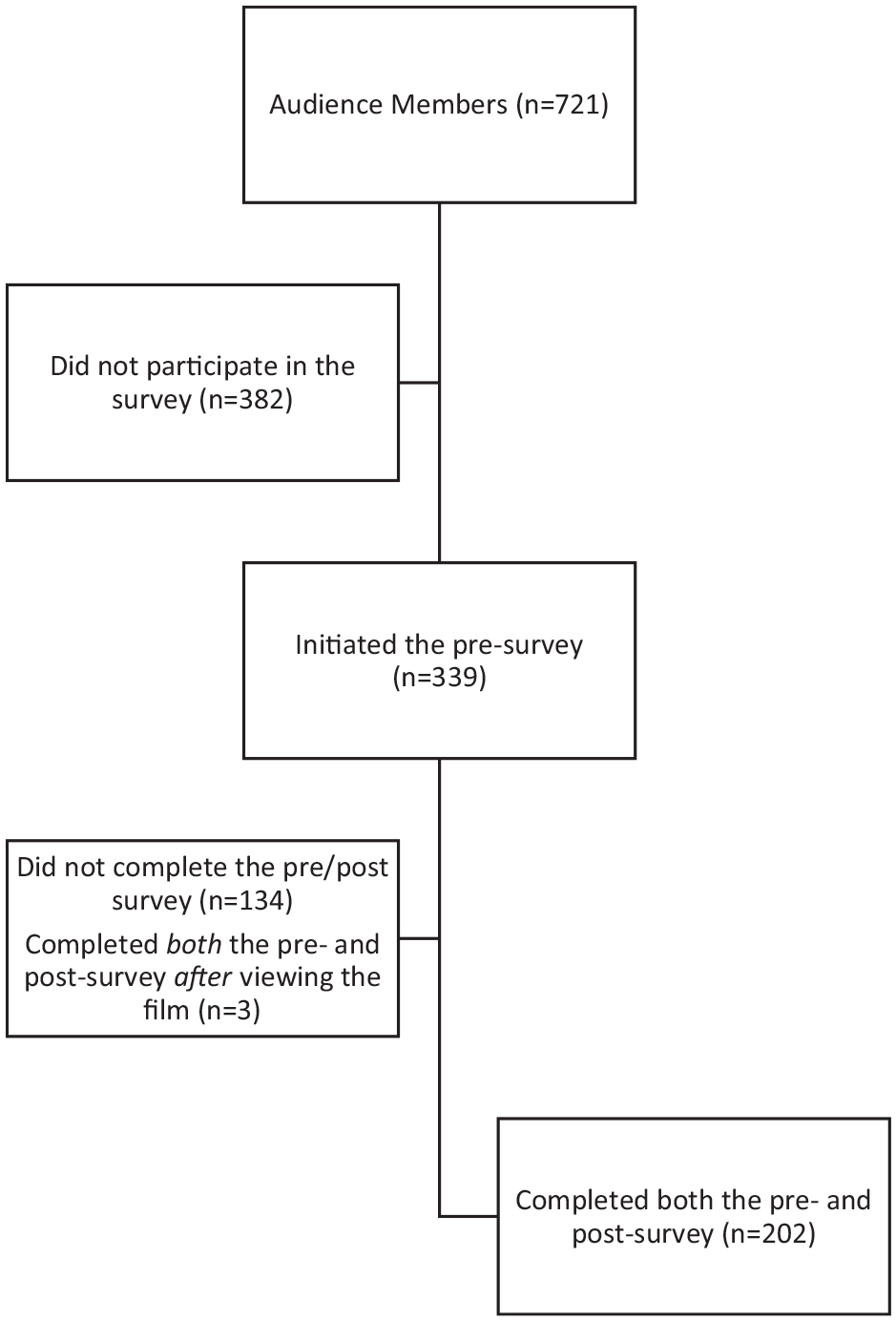
A Schematic Depiction of Audience Participation and Survey Completion.
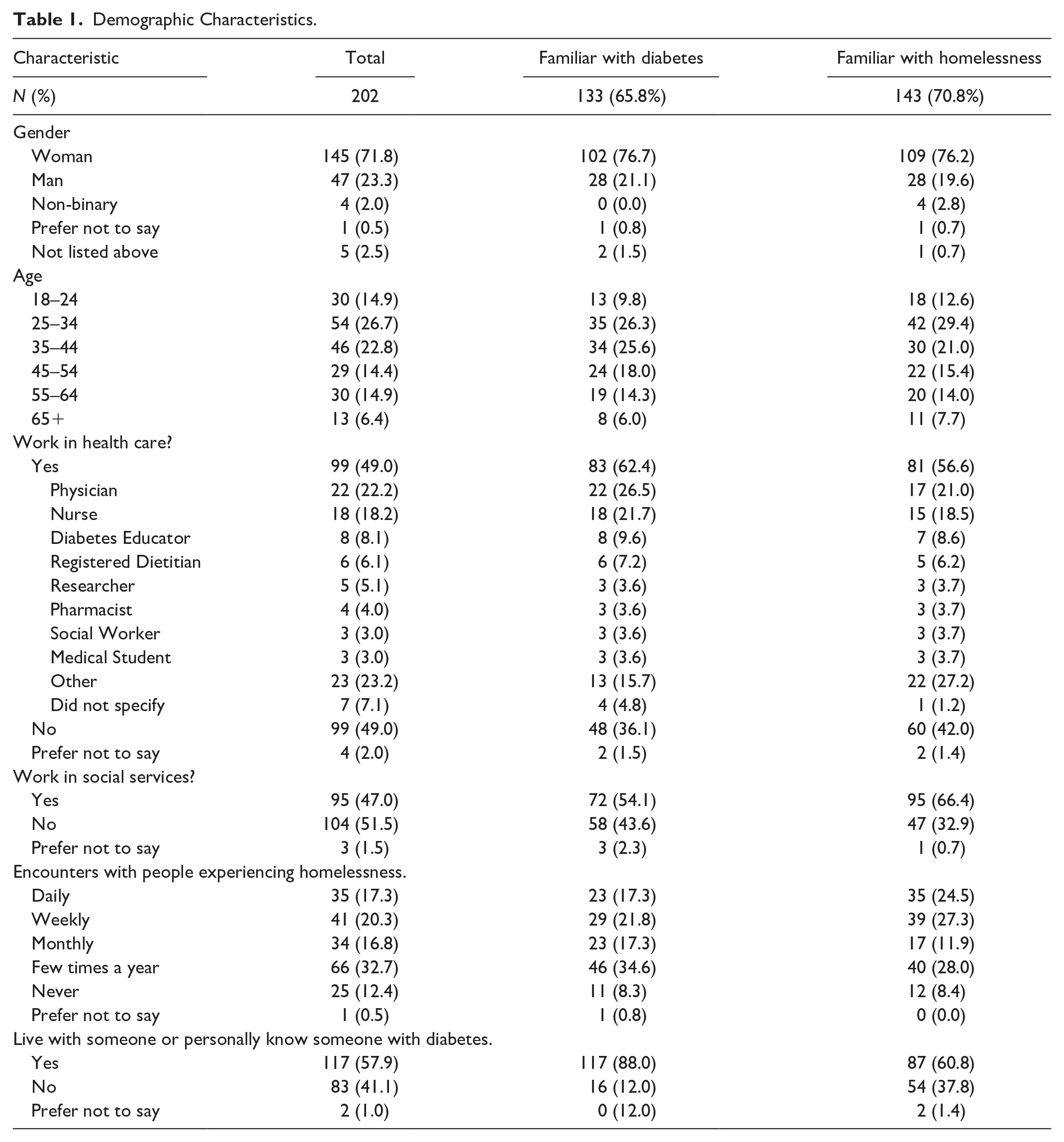
Respondents were predominantly women (71.8%), with the most reported age range being 25–34 years (26.7%). Around half of the respondents reported that they work in health care (49.0%), and the other half worked in social services (47.0%). Most participants stated that they encounter PEH a few times a year (32.7%), whereas the majority (57.9%) reported that they are close to someone who lives with diabetes (Table 1).
Demographic Characteristics.
With regards to the questions pertaining to respondents’ knowledge of diabetes and homelessness, the results indicated a significant improvement across all topics. On average, audience members’ post-film knowledge was 0.44 points higher than their pre-film knowledge, suggesting an overall improvement in understanding (Table 2). The increase in knowledge of each of the eight topics was statistically significant. Notably, knowledge about “diabetes stigma” and “medication storage & access in shelters” increased the most, with mean differences of 0.75 (p < .0001) and 0.85 (p < .0001), respectively.
Changes in Knowledge of Topics Surrounding Diabetes and Homelessness.
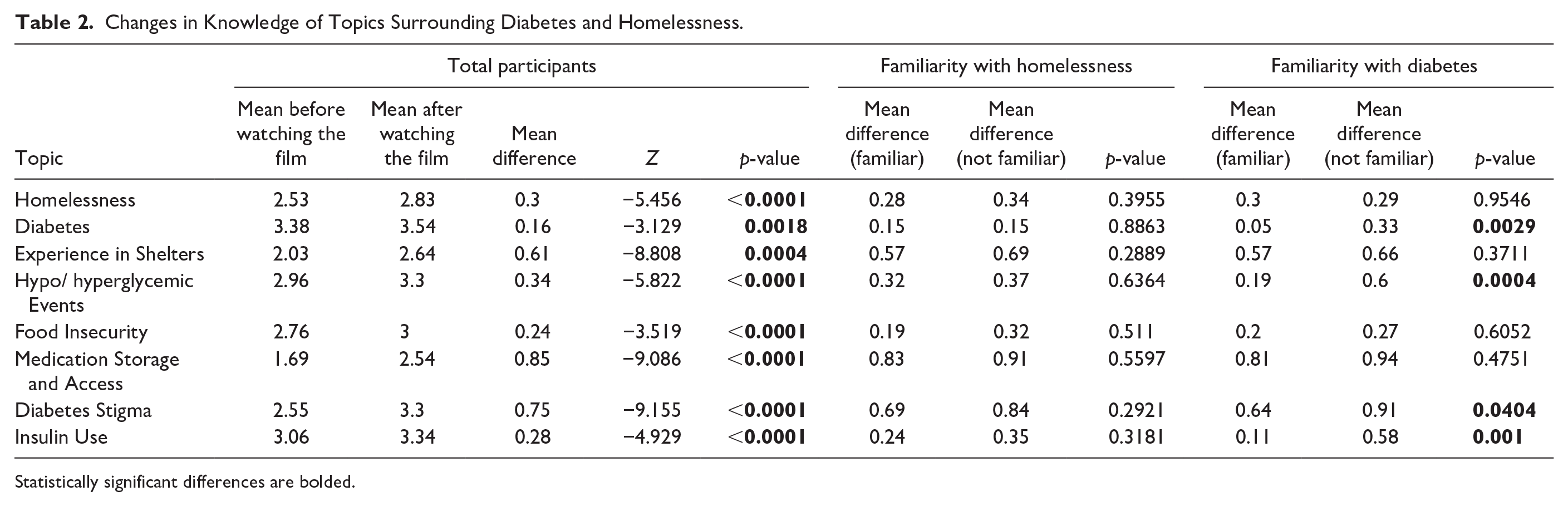
Statistically significant differences are bolded.
There was no statistically significant difference between the changes in knowledge among individuals who were familiar with homelessness and those who were not familiar with homelessness. However, the changes in knowledge were statistically different between individuals who were familiar with diabetes and those who were not familiar with diabetes. We noted that those who had a higher baseline familiarity with diabetes had a statistically significant lower magnitude of change in four of the knowledge domains: “diabetes” (p = .0029), “hypo/hyperglycemic events” (p = .0004), “diabetes stigma” (p = .0404), and “insulin use” (p = .001) (Table 2). In contrast, the change in knowledge of homeless-specific items was not significantly different between those who were familiar with diabetes and those who were not.
The film not only increased respondents’ knowledge but also seemed to have a similar impact on audience members’ attitudes toward various topics surrounding diabetes and homelessness. There was a significant positive change in attitude across all questions. On average, post-film responses changed by 0.23 points compared with pre-film responses. Audience members reported statistically significant positive changes in their responses to all five questions assessing attitudes after watching the film (including one statement which was scored inversely). The largest changes were observed in the statements: (1) “diabetes is a disease that carries social stigma” (mean difference = 0.52) and (2) “people with diabetes with high or low blood sugars look drunk or intoxicated” (mean difference = 0.47) (Table 3). Individuals’ familiarity with diabetes or homelessness did not influence the degree of the change in attitudes across any of the attitude domains.
Changes in Attitudes of Topics Surrounding Diabetes and Homelessness.
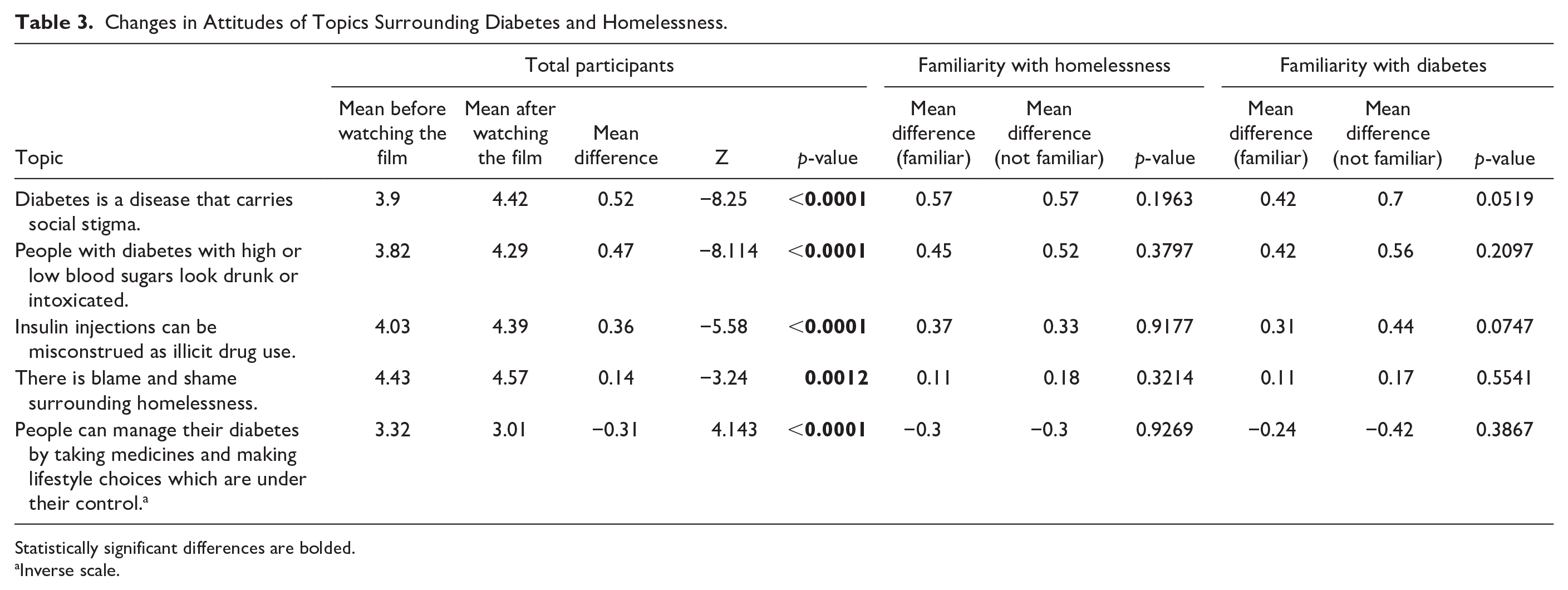
Statistically significant differences are bolded.
Inverse scale.
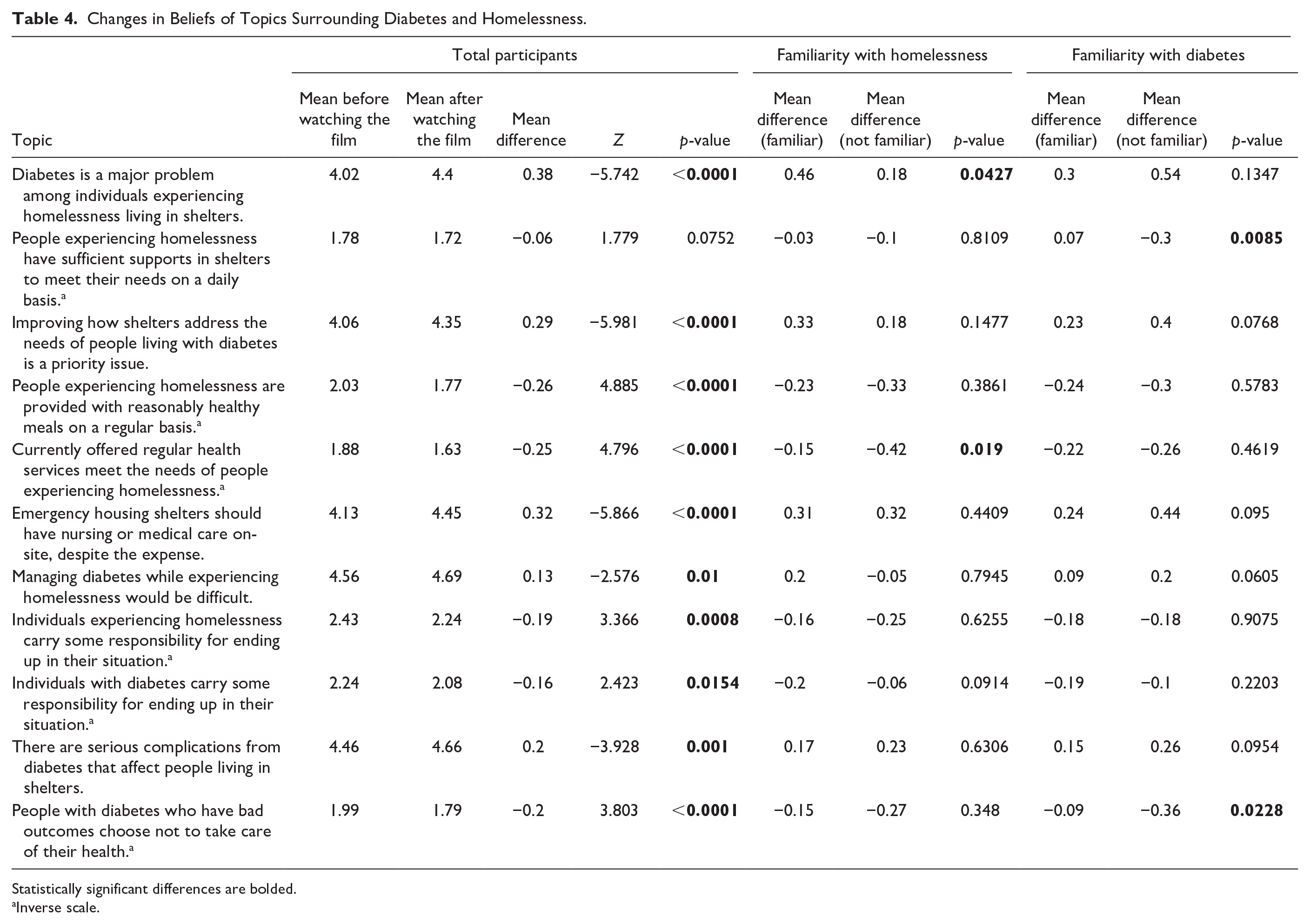
On average, audience members’ responses to questions assessing beliefs changed by 0.22 points after watching the film (Table 4). The film significantly influenced audience members’ beliefs in all but one statement: “people experiencing homelessness have sufficient supports in shelters to meet their needs on a daily basis” (p = .0752). The most significant changes in beliefs were observed in the following three statements: (1) “improving how shelters address the needs of people living with diabetes is a priority issue” (mean difference = 0.29), (2) “emergency housing shelters should have nursing or medical care on-site, despite the expense” (mean difference = 0.32), and (3) “diabetes is a major problem among individuals experiencing homelessness living in shelters” (mean difference = 0.38) (Table 4).
Changes in Beliefs of Topics Surrounding Diabetes and Homelessness.
Statistically significant differences are bolded.
Inverse scale.
Responses from individuals familiar with homelessness and those unfamiliar with homelessness demonstrated significant differences across the following domains: (1) the belief that diabetes is a major problem among individuals experiencing homelessness living in shelters (p = .0427), and (2) the belief that the regular health services currently offered adequately meet the needs of PEH (p = .019). Similarly, significant differences were observed between individuals familiar with diabetes and those unfamiliar with diabetes across the following domains: (1) the belief that PEH have sufficient supports in shelters to meet their daily needs (p = .0085), and (2) the belief that poor health outcomes among individuals with diabetes are due to their personal choice not to manage their health (p = .0228).
Discussion
Changes in Knowledge
Our study investigated the impact of a community-based narrative film, Low, through pre- and post-film surveys administered to audience members (n = 202) that assessed changes in audience members’ KAB about diabetes and homelessness. Findings revealed that exposure to the narrative film yielded an immediate increase in audience members’ knowledge across all eight domains assessed (Table 2). There were significant differences in the magnitude of change in knowledge across the four diabetes-related domains between those unfamiliar and familiar with diabetes (i.e., diabetes educators, physicians and those who had a close family member with diabetes). This suggests that prior familiarity with diabetes attenuated the film’s impact on increasing knowledge in these areas. Contrastingly, those who were already familiar with homelessness (i.e., those who work in the homeless-serving sector) reported a comparable increase in knowledge compared with individuals without prior familiarity with homelessness, even for topics directly related to homelessness, such as medication storage and access in shelters.
Shifts in Attitudes
The film similarly influenced audience attitudes, resulting in significant changes across all five domains assessed. Interestingly, neither familiarity with diabetes nor with homelessness affected the degree of attitude change, suggesting the film’s impact on attitude was consistent across different audience groups.
Impact on Beliefs
Among all respondents, there was a significant change in beliefs in all but one category: “PEH have sufficient supports in shelters to meet their needs on a daily basis”, likely due to the very low score reported even before the film viewing. Interestingly, when stratified by familiarity with diabetes, a significant difference emerged: individuals unfamiliar with diabetes were more likely to adjust their beliefs on this issue compared with those familiar with diabetes. This may be explained by the fact that individuals unfamiliar with diabetes may not have had preconceived notions about the challenges of managing a chronic condition in a shelter environment. As a result, they may have been more receptive to the film’s depiction of the hardships that residing in emergency housing shelters presents, resulting in a change in their beliefs about this topic. In contrast, those already familiar with diabetes may have had a more fixed understanding of the difficulties faced by people managing diabetes, which might have limited the extent of their attitude change. A similar trend was observed regarding the following statement: “people with diabetes who have bad outcomes choose not to take care of their health.” Individuals unfamiliar with diabetes exhibited greater changes in their beliefs on this matter. This significant difference may stem from the fact that those with prior knowledge of diabetes are likely to possess a more nuanced understanding of the condition, recognizing that diabetes management is a multifaceted challenge. As a result, they may be aware that effective management often involves complex self-management strategies that can be difficult to adhere to, thus limiting their willingness to attribute negative health outcomes solely to personal choices.
There were significant differences observed across two statements assessing the change in audience members’ beliefs when stratified by familiarity with homelessness. Individuals familiar with homelessness exhibited a greater change in their knowledge regarding the statement that diabetes is a major problem among individuals experiencing homelessness living in shelters, when compared with people who were not familiar with homelessness. It is possible that prior to watching the film, individuals who work in the homeless-serving sector did not think that diabetes was as common or problematic among their clients, resulting in a lower baseline pre-movie rating for this item and enabling a greater degree of change resulting from the film.
Conversely, individuals unfamiliar with homelessness showed a greater change in their beliefs regarding the statement that currently offered health services meet the needs of PEH. This implies that individuals who were unfamiliar with homelessness may have a less accurate understanding of health services offered in shelters, compared with those who are more familiar with homelessness and the sector.
Historically, mass media, such as film, television, radio, and newspaper, have been used to influence various health behaviors among different populations, such as smoking cessation, cancer screening, and vaccine uptake (Bala et al., 2017; Choudhuri et al., 2017; He & Li, 2021; Qin et al., 2021). Despite the abundance of literature around the use of mass media to influence health behaviors, there remains a gap in assessing mass media’s role in influencing individuals’ social tendencies and conceptions, such as their attitudes and beliefs toward various populations, rather than directly on their own health behaviors. Previous studies have found that the use of film can change audience members’ attitudes toward various populations, such as elderly individuals as well as PEH (Greenberg, 2020; Hodgkins, 2018; Kubrak, 2020). One study evaluated a film’s ability to affect younger individuals’ perceptions of elderly individuals and found significant differences across various domains that assessed their beliefs of older adults (Kubrak, 2020). In addition, studies assessing the impact of film on people’s beliefs of PEH also saw similar results, widely influencing viewers’ attitudes toward this population (Greenberg, 2020; Hodgkins, 2018). For example, the study conducted by Hodgkins (2018) assessed the impact of a narrative film about the intersection of homelessness and mental illness. The authors report that audience members’ attitudes toward PEH shifted, leading to more compassionate thinking and behaviors, much like the results we saw in our study.
Interestingly, older studies, such as a study conducted by Gilliam and Seltzer (1989) investigating the impact of film as a modality to change audience perceptions about individuals living with AIDS, showed minimal change. The evolution of film and other forms of media throughout the years may have enhanced the ability of media to influence audience attitudes and beliefs toward certain topics. These temporal changes, along with the gap in literature assessing the use of film to inform and change attitudes and beliefs about specific social groups, indicate that further research is needed in this area. Continued investigation will help to better understand how mass media can be used as a knowledge mobilization tool in educating and informing audiences and reducing stigma for various populations.
The pre/post study design employed allowed us to elucidate the immediate change in KAB among audience members, but lacks the ability to assess the lasting effects of the film’s impact on audience members’ KAB. In addition, audience members likely came to watch the film with an initial and genuine intent to learn more about diabetes and homelessness. This prior interest likely led to a selection bias, which may result in an overestimation of the film’s impact. Future studies could benefit from including a more diverse sample of participants, including those without a pre-existing interest in the topics being depicted. The pre/post design of the study limits our capacity to obtain nuanced insights into the film’s impact, as the survey may not fully capture a complete assessment of audience members’ KAB regarding the topics depicted in the film. The survey used to assess changes in KAB has not undergone formal validation, which may introduce measurement error and affect the internal validity of the study findings. Given this limitation, the film’s true impact on increasing knowledge or influencing attitudes and behaviors should be interpreted with caution. With this in mind, a qualitative evaluation through interviews with audience members could provide a more comprehensive understanding of the film’s effects on audience members. Furthermore, investigating these long-term effects and examining the influence of film and other arts-based methods in addressing societal misconceptions could inform the development of social policies. For example, funding public awareness campaigns that challenge stereotypes about homelessness and supporting community-based initiatives that amplify the voices of individuals with lived experience could foster more informed and empathetic perspectives, ultimately shifting individuals’ KAB surrounding diabetes and homelessness.
In conclusion, our study highlights the potential of community-based narrative films, like Low, to significantly enhance audience KAB regarding diabetes and homelessness. These findings underscore the importance of utilizing media as a tool for public health knowledge mobilization and advocacy efforts. Future research should explore the long-term effects of such interventions and their implications for informing social policy and reducing stigma.
Supplemental Material
sj-docx-1-heb-10.1177_10901981251332235 – Supplemental material for Assessing the Impact of a Community-Based Narrative Film about Diabetes and Homelessness
Supplemental material, sj-docx-1-heb-10.1177_10901981251332235 for Assessing the Impact of a Community-Based Narrative Film about Diabetes and Homelessness by Tucker Reed, Saania Tariq, Jeremy Auger, Matt Larsen, Justin Lawson, Anna Whaley, Eshleen K Grewal and David JT Campbell in Health Education & Behavior
Footnotes
Declaration of Conflicting Interests
The author(s) declared no potential conflicts of interest with respect to the research, authorship, and/or publication of this article.
Funding
The author(s) disclosed receipt of the following financial support for the research, authorship, and/or publication of this article: This work was funded by Diabetes Canada through the End Diabetes Award to Dr Campbell, and a Partnership Engage Grant from the Social Sciences and Humanities Research Council.

Supplemental Material
Supplemental material for this article is available online.
References
Supplementary Material
Please find the following supplemental material available below.
For Open Access articles published under a Creative Commons License, all supplemental material carries the same license as the article it is associated with.
For non-Open Access articles published, all supplemental material carries a non-exclusive license, and permission requests for re-use of supplemental material or any part of supplemental material shall be sent directly to the copyright owner as specified in the copyright notice associated with the article.
