



Abstract
The university is considered an environment that favors the initiation and use of substances, especially those that are legal, such as alcohol. This consumption can be differentiated in university students, which makes it necessary to better understand this behavior. Taking into account these aspects, we analyzed the abusive consumption of alcoholic beverages in university students and its association with socioeconomic and behavioral factors. We conducted a cross-sectional study with regularly enrolled students. We assessed the abusive consumption of alcoholic beverages using the binge drinking pattern. We collected socioeconomic and behavioral data using a questionnaire. The association between the variables was verified using logistic regression. Abusive consumption of alcoholic beverages was high, with a high weekly frequency. The association with sociodemographic and behavioral factors can increase the health risk. Education campaigns within institutions with students in the classroom and with all those who can influence these students are important. As there are few studies that consider other health risk factors that have not been analyzed yet, such as those treated in our study, with the abusive consumption of alcoholic beverages, this study seeks to contribute to the knowledge of the relationships between these variables and in the elaboration of actions aimed at improving the lifestyle and health of university students.
Alcohol is classified as a psychoactive substance that acts on the central nervous system and can cause a change in behavior and develop dependence (Barros & Costa, 2019). Abusive consumption of alcohol can lead to undesirable consequences (Barros & Costa, 2019; Gomes et al., 2018), in addition to being identified as a risk factor for high blood pressure, obesity, and stroke (Oliveira et al., 2019). Worldwide, there are 3 million deaths annually from harmful use of alcohol, and 5.1% of the global amount of diseases is attributed to alcohol (World Health Organization, 2022).
In Brazil, a study conducted with adults living in Brazilian capitals indicated that the abusive consumption of alcoholic beverages in the last 30 days was 18.8%, decreasing in prevalence with increasing age and increasing with the level of education (Brasil, 2020). In university students, a study conducted with more than 12,000 students showed a prevalence of alcohol consumption of 86.2% (de Andrade et al., 2012). Male college students aged 18 to 23 years are more likely to use alcohol (de Andrade et al., 2012), while high economic income increased the chance of developing harmful alcohol consumption (Heredia et al., 2017). Recent data with students from private institutions and considering several sociodemographic and behavioral factors were not found in the literature.
Alcohol consumption among young people reaches high prevalence, and can reach even higher rates when it comes to the university population (Araújo Rosa & Nascimento, 2015), in which consumption can become more intense and frequent, justified by the ease of access to opportunities for interaction and socialization among young people, in an attempt to enter a new group (Barros & Costa, 2019), due to social influence, for wanting to follow their friends (Gomes et al., 2018), especially at university parties, where the availability of alcoholic beverages is often unrestricted.
Admission to a university involves important changes in the students’ lives, such as increased individual autonomy, exposure to a new environment, and less control by parents and/or family members, which can lead to the psychological stress that is associated with alcohol consumption and other risk factors such as smoking, physical inactivity, and low consumption of fruits and vegetables (Bennasar-Veny et al., 2020). In addition, the beginning of university life, most of the times, happens when the individual reaches adulthood, which favors attitudes and behaviors that were not allowed before.
Therefore, the university is considered an environment that favors the initiation and use of substances (Lee et al., 2018), especially those that are legal, such as alcohol. This consumption can be differentiated in university students from private institutions, as most study at night and have a double shift, as well as taking into account the area of knowledge, which makes it necessary to better understand this behavior in university students, seeking to have information to support actions that can contribute to a lower abusive consumption of alcoholic beverages.
Given the above, this study aimed to analyze the abusive consumption of alcoholic beverages by university students from a private institution and its association with socioeconomic and behavioral factors. Although some studies have analyzed alcohol consumption in students in the health area (Baumgarten et al., 2012; Freire et al., 2020; Pelicioli et al., 2017; Pires et al., 2020; Rodríguez-Muñoz et al., 2020), few studies have compared this consumption between areas of knowledge and observed a higher prevalence in students from other areas when compared with the health area (Brazil. National Secretariat for Drug Policies, 2010; Simplício et al., 2021). We hypothesize that the abusive consumption of alcoholic beverages is greater among students in other areas (including courses in the areas of mathematics, science, and humanities) and that the associations with sociodemographic and behavioral factors are stronger in these students when compared with those in the health area.
Method
We conducted a cross-sectional study, with data from research on cardiovascular risk factors in university students, with data collected from March 2017 to October 2018. The study was made in a private higher education institution, located in Zona da Mata (Brazil, MG state), which offered, at the time of the research, 10 undergraduate courses (Journalism, Pedagogy, Administration, Accounting Sciences, Computer Sciences, Psychology, Licentiate in Physical Education, Bachelor in Physical Education, Dentistry, and Medicine).
We considered as population for this study all students regularly enrolled in the institution’s undergraduate courses in 2017, aged between 18 and 39 years old. According to data from the institution, there were 1,800 students enrolled, of which 48 were discarded because they were older than 39 years. We used a prevalence of 50%, an error of 3.5%, and a design effect of 1.5 as a reference to calculate the sample. After the calculation, we obtained a sample of 813 students, with 10% added for confounding factors and 10% for losses, totaling a final sample of 977 university students, using data from 1,075 students.
Data collection occurred at the educational institution itself by trained interviewers who applied a structured and question-based questionnaire to assess risk and protective factors for chronic diseases in Brazilian adults (Brazil, 2017). The application of the questionnaire took place individually and in a reserved place (without the presence of other individuals) within the institution. After authorization from the management to conduct the study, students were approached at the institution itself outside of class hours (living area, canteen, library, break between classes). All participants read, agreed, and signed the Informed Consent Form, in two copies, containing all information about the study, according to the ethical guidelines for research involving human beings of Resolution 466/12 of the National Health Council and approved by the e Ethics Committee for Research with Humans of the Federal University of Viçosa, MG, Brazil.
The study’s outcome was the abusive consumption of alcoholic beverages, with the Binge Drinking pattern being adopted and defined as the consumption of four or five doses of alcoholic beverages on the same occasion, respectively, for women and men in the last 30 days (Brazil, 2017). The students were asked: “In the last 30 days, did you consume 4/5 or more drinks of alcoholic beverage on a single occasion? (yes/no).” Those who answered “yes” were asked the following question: “On how many days of the month did this occur?” The response options were: (a) 1 day, (b) 2 days, (c) 3 days, (d) 4 days, (e) 5 days, (f) 6 days, (g) 7 or more days, and (h) Not applicable (for those who answered “no” in the previous question). Students who do not consume alcohol or who consume alcohol but have not reported abusive consumption in the last 30 days were categorized as non-consumers and those who reported consuming 4/5 drinks or more in the last 30 days were categorized as abusive consumption of alcoholic beverages. This categorization was used taking into account the greater risk to the health of the abusive consumption of alcoholic beverages in relation to light or moderate consumption of alcohol (Courtney & Polich, 2009) and in a previous study that used a similar methodology (Jao et al., 2019).
As socioeconomic factors associated with abusive consumption of alcoholic beverages, we investigated sex (male/female), age (18-22 years old, 23-29 years old and 30-39 years old), self-reported skin color (non-white/white), family income (up to BRL 1,499.00, between BRL 1,500.00 and BRL 2,999.00, between BRL 3,000.00 and BRL 3,999.00 and ≥ BRL 5,000.00), and the realization of remunerated activity (no/yes).
In addition to socioeconomic variables, we assessed the following behavioral variables: habit of adding salt to food after it was ready (no/yes), eating in front of the TV (no/yes), consumption of fruits/vegetables (<5 days/week or ≥5 days/week), habit of eating meat with visible fat (no/yes), consumption of sweets (<5 days/week or ≥ 5 days/week), habit of changing the meal (lunch/dinner) for snack (no/yes), time spent sitting (< 3 hours/day or ≥ 3 hours/day), smoking (non-smokers and current smokers), physical activity (insufficiently active or sufficiently active), perceived salt consumption (adequate or high), perception of health status (regular/bad or good/very good), based on population surveys with Brazilian adults (Brazil, 2014, 2017; Malta et al., 2021).
Figure 1 corresponds to the proposed model that was examined. The creation of this model was based on a review of the literature on excessive consumption of alcoholic beverages. The purpose of this model is to simplify the detection of potential confounders and variables that play a role in the situation as well as direct data analysis.
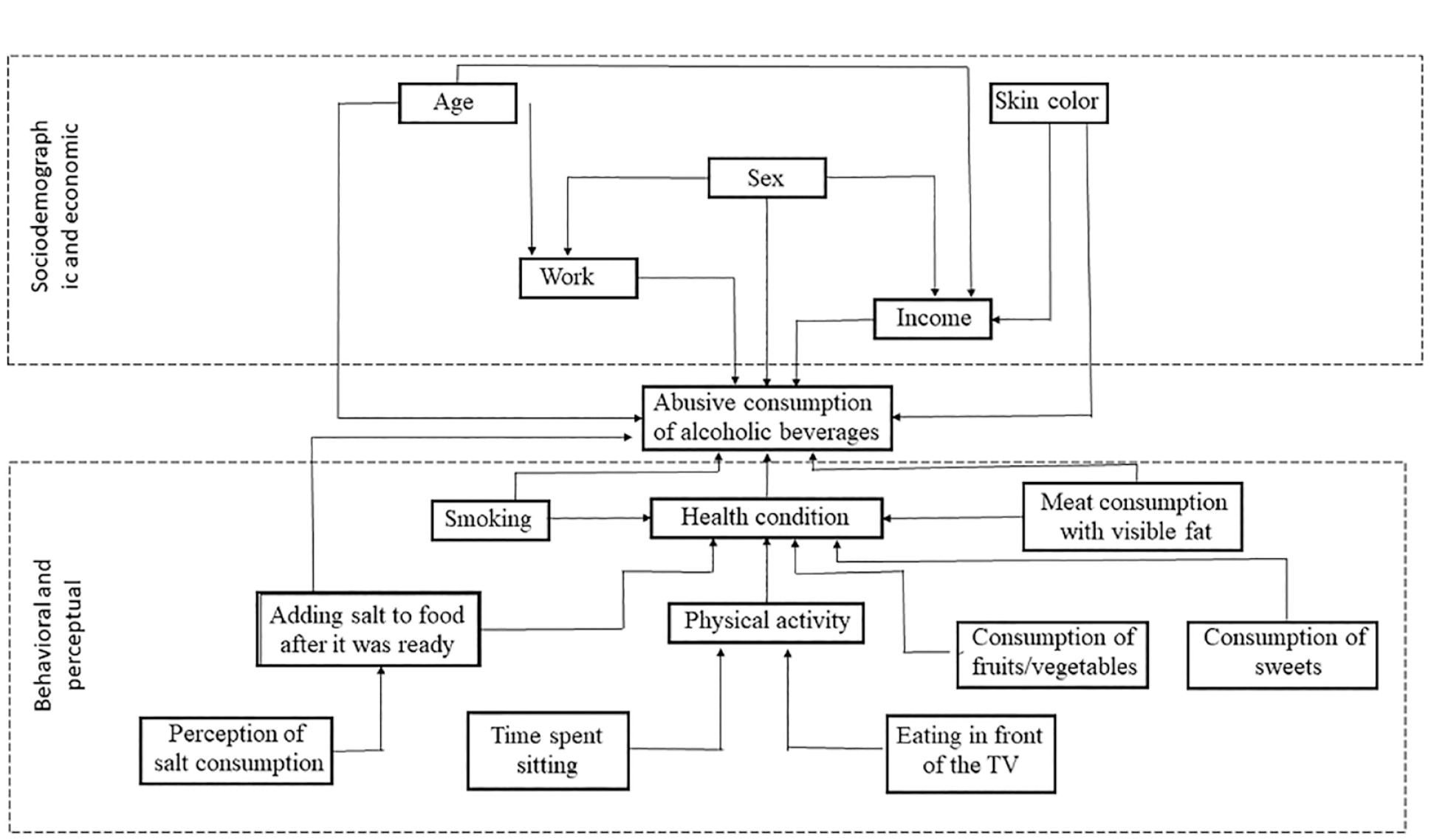
Theoretical Model for Evaluating the Association Between Alcohol Abuse and Sociodemographic Behavioral and Health Perception Factors in University Students.
We double-entered data in the Epi-data program, and the analysis was made in the Stata 13.1 program. We analyzed the total and stratified sample by areas, with the courses grouped into other areas (including courses in math, science, and humanities areas) and health. Initially, we presented the data using proportions and a 95% confidence interval (95% CI), and the proportions were compared using the chi-square test. The odds ratio (OR) and its respective 95% CI were estimated for the association of abusive consumption of alcoholic beverages with socioeconomic and behavioral variables, using logistic regression. After univariate analysis, we conducted a multiple analysis with the variables that presented a value of p ≤ .25, remaining in the final model those with a value of p ≤ .05.
Results
The study included 1075 university students with a mean age of 22.52 years old (SD 4.12 years). Abusive consumption of alcoholic beverages was reported by 49.2% of university students, being higher in males (p<.01), in those with higher income (p<.01), with the habit of adding salt to food after it was ready (p <.01), with the habit of consuming meat with visible fat (p<.01), in smokers (p<.01) and in those who are sufficiently active (p=.02; Table 1).
Characterization of the Total Sample and by the Abusive Consumption of Alcoholic Beverages, According to Socioeconomic, Behavioral and Perception Variables in University Students From a Private Institution, Brazil.
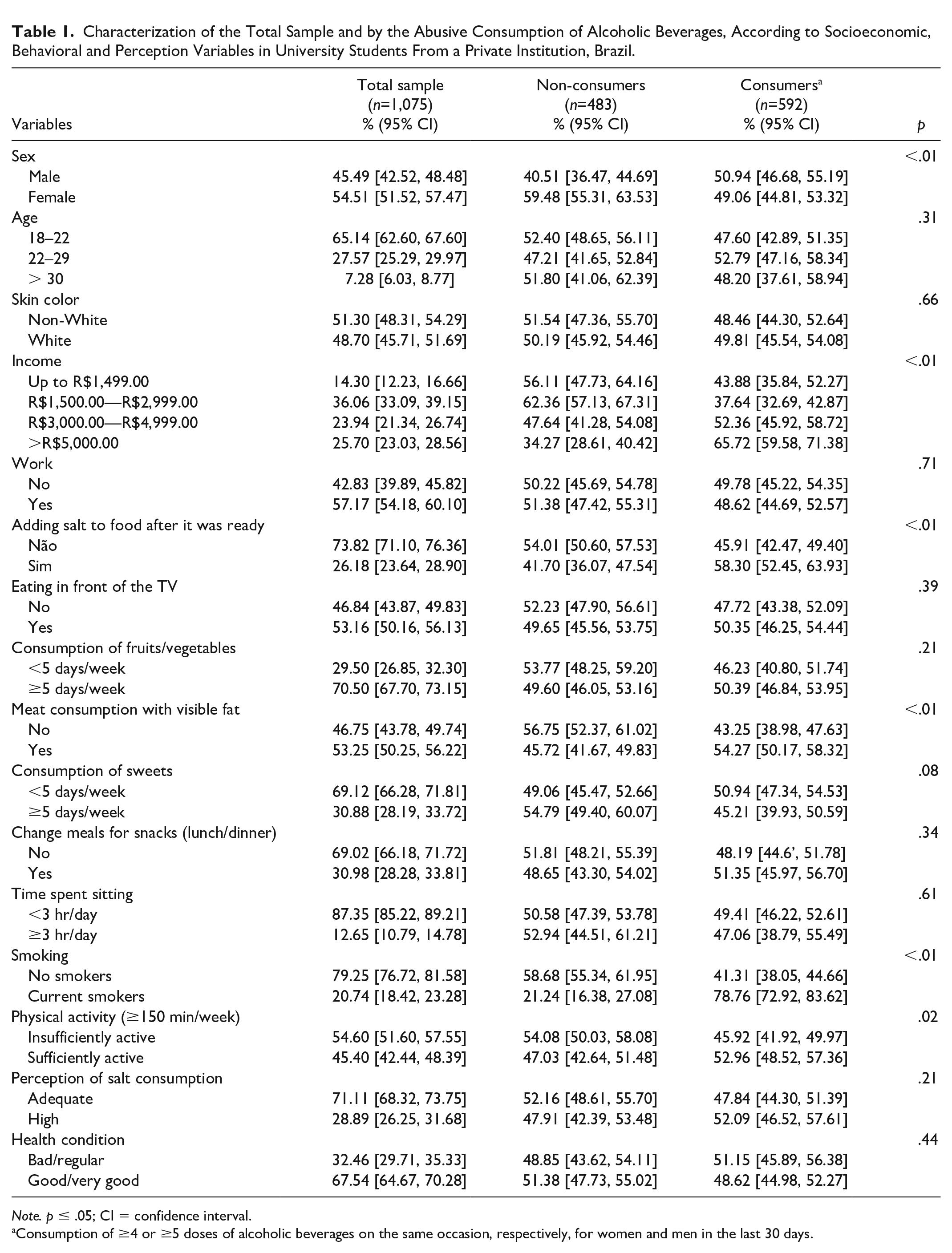
Note. p ≤ .05; CI = confidence interval.
Consumption of ≥4 or ≥5 doses of alcoholic beverages on the same occasion, respectively, for women and men in the last 30 days.
When stratified by area, a greater abusive consumption of alcoholic beverages was observed in students of the health area (55.3%), although there was no statistical difference (p=.85). In addition, in Figure 2, it is noted that the highest frequency of exposure to abusive consumption of alcoholic beverages was for 7 or more days/month, being higher in students from the other areas.
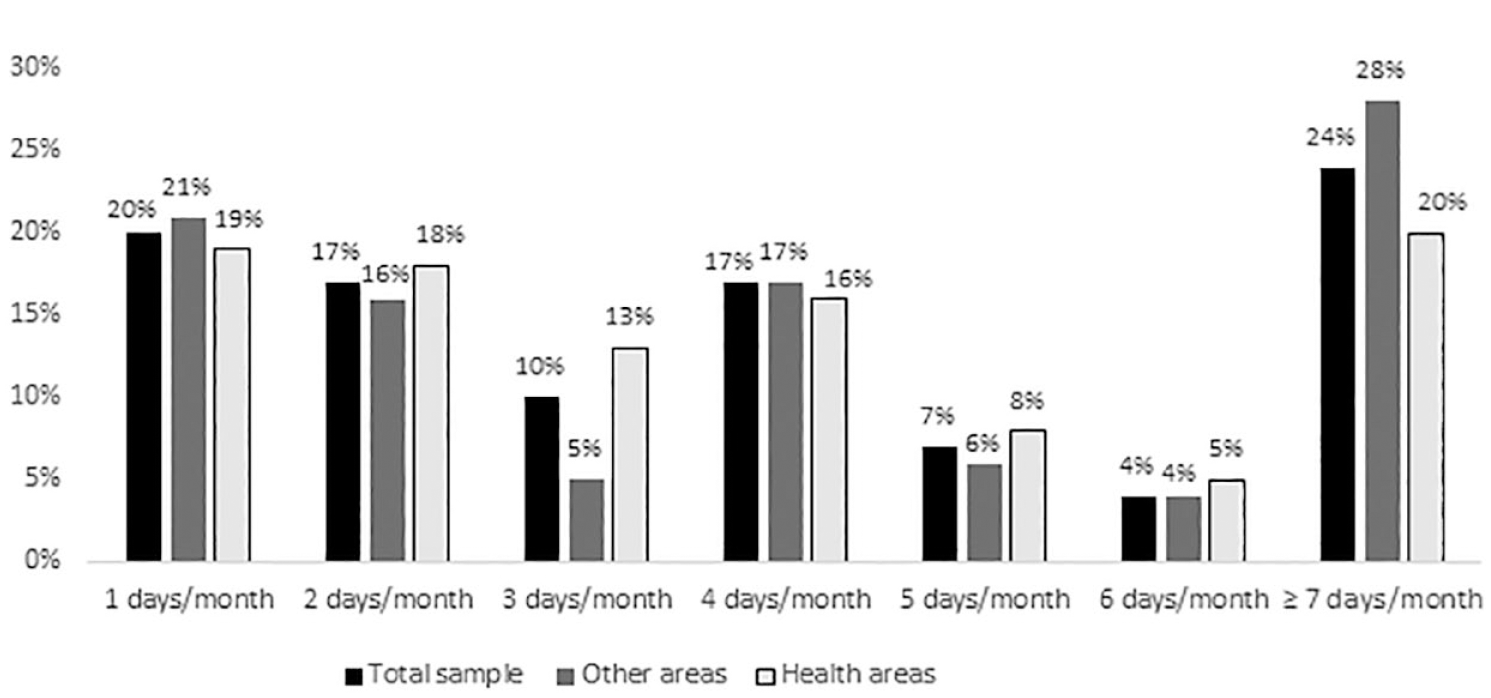
Number of Days/Month of Abusive Consumption of Alcoholic Beverages (4 Doses for Men and 5 Doses for Women) on the Same Occasion by University Students From a Private Institution, Brazil.
For the total sample (Table 2), abusive consumption of alcoholic beverages was associated with female sex (OR 0.65 p<.01), monthly family income above BRL 5,000.00 (OR 2.25 p < .01), the habit of adding salt to the food after it is ready (OR 1.65 p < .01), the habit of eating meat with visible fat (OR 1.56 p < .01), the habit of smoking (OR 5,27 p < .01) and the regular practice of physical activity (OR 1.33 p = .02). When stratified by area (Table 2), we observe that abusive consumption of alcoholic beverages in students from the other areas was associated with the female sex (OR 0.60 p < .01), family income greater than BRL 5,000.00 (OR 2.65 p < .01), consumption of meat with visible fat (OR 1.51 p = .03), consumption of sweets for 5 or more days/week (OR 0.63 p = .02), time spent sitting (OR 0.58 p = .04) and the smoking habit (OR 8.27 p < .01), while in those students of the health area there was an association between abusive consumption of alcoholic beverages and female sex (OR 0.71 p = .04), with a family income above BRL 5,000.00 (OR 2.39 p < .01), with the habit of adding salt to food after it is ready (OR 2, 09 p < .01), with the habit of eating meat with visible fat (OR 1.60 p<.01), with the habit of smoking (OR 3.84 p < .01), with the regular practice of physical activity (OR 1.43 p = .03) and with the perception that their salt consumption is high (OR 1.64 p < .01).
Univariate Analysis of Abusive Consumption of Alcoholic Beverages With Socioeconomic Factors, Behavioral and Perceptual, for the Total Sample and Stratified by Course Area, in University Students From a Private Institution, Brazil.
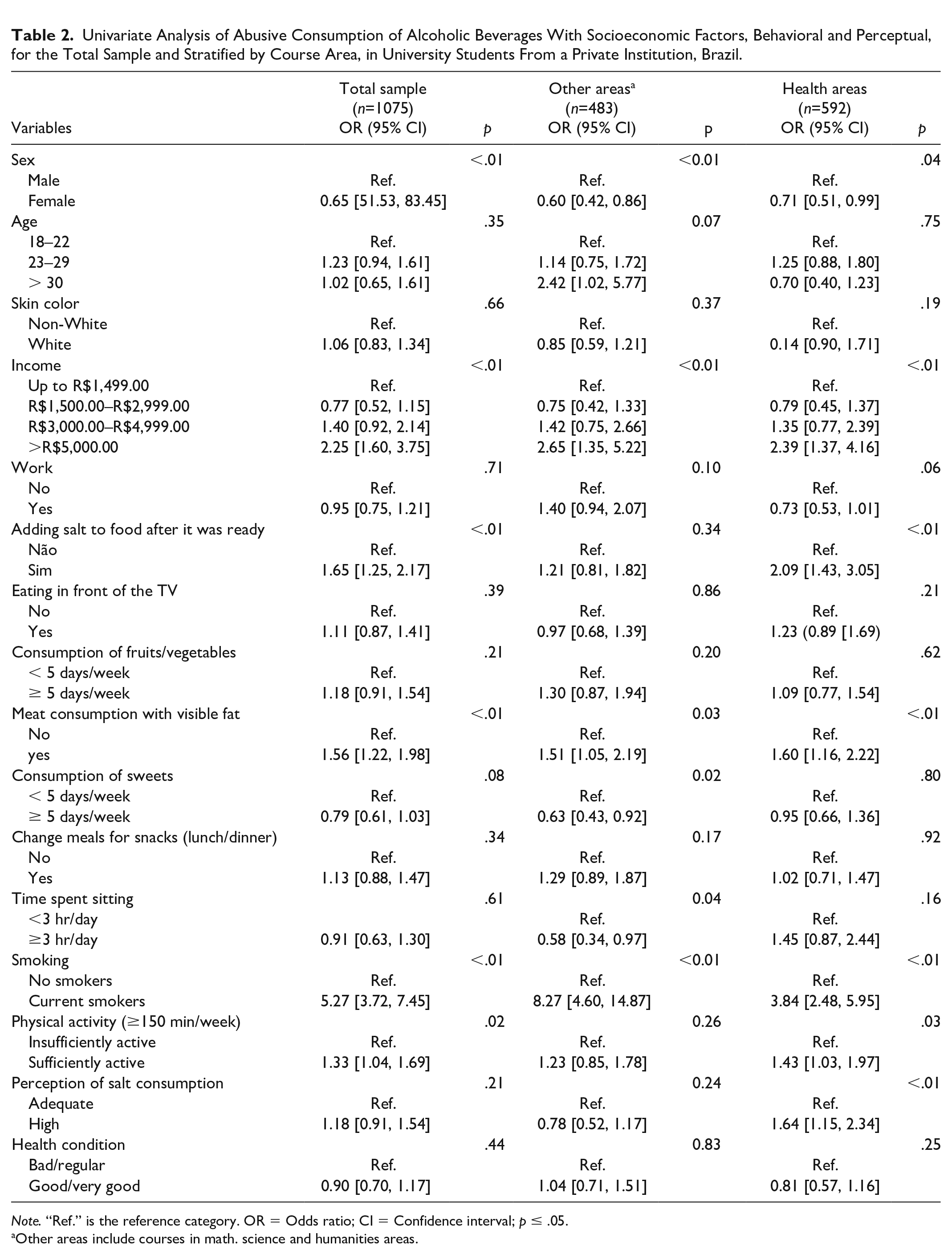
Note. “Ref.” is the reference category. OR = Odds ratio; CI = Confidence interval; p ≤ .05.
Other areas include courses in math. science and humanities areas.
After adjusting for possible confounding variables (sex, age, income, adding salt to food after it was ready, meat consumption with visible fat, consumption of sweets, time spent sitting, smoking, physical activity, and perception of salt consumption; Table 3) the chances of having a abusive consumption of alcoholic beverages were higher in those with a family income above BRL 5,000.00 (OR 2.33, p<.01), with the habit of adding salt to the food after it is ready (OR 1.54, p < .01), with the habit of eating meat with visible fat (OR 1.62, p < .01), in current smokers (OR 5.13 p < .01) and in those who were sufficiently active (OR 1.34, p < .03). In university students from the other areas aged > 30 years old (OR 2.85, p = .02), with the habit of changing meals for snacks (OR 1.61, p = .02) and smokers (OR 8.16, p < .01) the chances of having abusive consumption of alcoholic beverages were higher, as well as consuming sweets for 5 or more days/week (OR 0.63, p = .04) reduces the chances of university students having abusive consumption of alcoholic beverages. For those university students in the health area, the variables that remained in the final model and increased the chances of abusive consumption of alcoholic beverages were: having a family income greater than BRL 5,000.00 (OR 2.49, p < .01), having the habit of adding salt in the food after it is ready (OR 2.03, p<.01), consuming meat with visible fat (OR 1.66, p < .01), being a current smoker (OR 3.86, p<.01) and being sufficiently active (OR 1.55, p = .02).
Multiple Analysis (Final Model) of Abusive Consumption of Alcoholic Beverages With Socioeconomic Factors, Behavioral and Perceptual, for the Total Sample and Stratified by Course Area, in University Students From a Private Institution, Brazil.
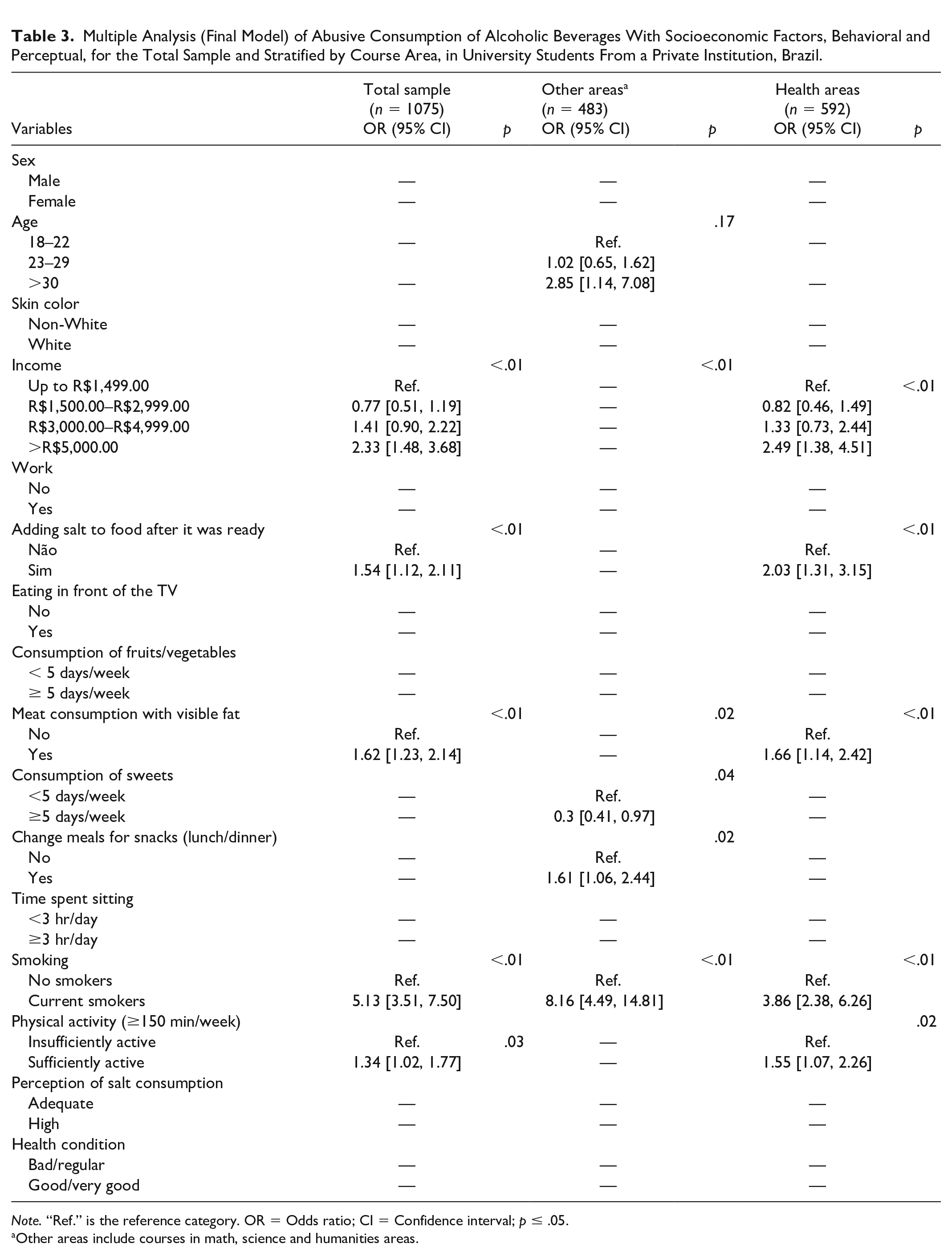
Note. “Ref.” is the reference category. OR = Odds ratio; CI = Confidence interval; p ≤ .05.
Other areas include courses in math, science and humanities areas.
Discussion
Beverages with alcohol content are licit drugs, easily accessible, and socially accepted, and their commercialization and dissemination are allowed throughout the Brazilian territory (Barros & Costa, 2019). Abusive consumption of alcoholic beverages is associated with accidents, confusion, influence on school performance, and even legal problems (Horta et al., 2012). Despite these risks, abusive consumption of alcoholic beverages was observed in practically half of the students in this study, being higher in males (50.9%) and in those in the health area (55.3%). Even with the fact that health students have more access to information about risk factors (Rodríguez-Muñoz et al., 2020), this seems not to have been a determining factor for a lower consumption of alcoholic beverages in our study.
Data in the literature demonstrate the high consumption of alcoholic beverages in university students (Júnior & Meneses-Gaya, 2015; Zanetti et al., 2019) higher than those observed in our study. Although this high consumption is well documented, a low prevalence of risky or abusive consumption of alcohol was observed in university students of the Biological Sciences, Natural Sciences and Biomedicine (Barros & Costa, 2019). These differences can be explained by the context that involves students from private and public institutions as well as the culture and customs inherent to each region.
When analyzing the abusive consumption of alcoholic beverages considering the number of days/month, we observed that the highest proportions went to the abusive consumption of alcoholic beverages for 7 or more days/month, being proportionally higher in students from the other areas, different from the total consumption, which was higher in university students of the health areas. Regarding the number of days, our results were superior to those observed in a recent cohort study with former students from institutions in Minas Gerais, where the highest alcohol consumption occurred on 1 or 2 days a month (Souza E Souza et al., 2020), although this frequency has been observed in most of our sample.
Regarding sex, despite having lost association in the adjusted model, several studies have pointed to an association with abusive consumption of alcoholic beverages (Grucza et al., 2018; Jao et al., 2019; Malta et al., 2021; Rodríguez-Muñoz et al., 2020; Silva et al., 2019), mainly, the increase in consumption by women (Grucza et al., 2018; Rodríguez-Muñoz et al., 2020) which raises some concern, as women seem to be more vulnerable to damage caused by alcohol (Gomes et al., 2018). Although we had a higher proportion of female university students in our study, and there was no association in the adjusted model, we found an indication in the univariate analysis of females to be a protective factor for abusive consumption of alcoholic beverages, different from the trend observed in other studies. A possible explanation for this lower proportion of abusive consumption of alcoholic beverages observed in female university students may be linked to biological and cultural conditions (Barros & Costa, 2019) or even the fact that alcohol consumption is related to the expression of masculinity as part of man’s own identity, as a component of the socialization process (Araújo Rosa & Nascimento, 2015).
With increasing age, a decrease in alcohol abuse was observed in the Brazilian adult population (Brazil, 2020; Machado et al., 2017), with the age group from 18 to 34 years old being the one with the highest risk for abusive use of alcoholic beverages in both sexes (Machado et al., 2017). In a national survey conducted with university students from 27 Brazilian capitals, it was identified that the age group between 18 and 24 years old was more likely to consume alcohol when compared to other age groups (de Andrade et al., 2012). In university students from a public institution in the city of Ribeirão Preto—SP, there was a positive association between age and alcohol consumption (Zanetti et al., 2019), as well as in young Brazilian adults (Abreu et al., 2020), and these results are similar to those observed in our study for students in the other areas. It is important to highlight that the higher consumption of alcoholic beverages in early adulthood is related to the perception of low risk, being tolerated by society (Bennasar-Veny et al., 2020) and may contribute to the consumption in this age group. Furthermore, early consumption of alcoholic beverages increases the probabilities of consumption during life (de Moura et al., 2018) and some disorders due to abusive use of substances such as alcohol can even cause, psychophysical distress, and clinically significant impairments (Brellenthin & Lee, 2018).
A higher family income was associated with abusive consumption of alcoholic beverages for the total sample and students of the health area in our study as well as in a study with university women in Colombia was observed that those with higher incomes had an odds ratio of harmful use of alcohol 11 times higher than the reference group (Heredia et al., 2017). In a cohort of university graduates from Minas Gerais, the abusive consumption of alcoholic beverages for 5 or more days/week was higher in those with a higher mean of family income (Souza E Souza et al., 2020). Income seems to allow greater access to alcohol consumption, thus implying higher levels of consumption among students with higher incomes, either by direct association, so that individuals with greater buying power consume more drinks due to greater purchasing power, or inverse association, so that individuals with lower income consume more to satisfy the absence of other activities, such as leisure-time physical activity, for example (Barros & Costa, 2019).
One of the strengths of this study was the association of abusive consumption of alcoholic beverages with other risk behaviors described less frequently in the literature for university students and that when associated with abusive consumption of alcoholic beverages can increase the risk of diseases, such as the habit of adding salt to food after it is ready, the habit of eating meat with visible fat, the consumption of sweets and the habit of replacing the meal by snacks. These analyses are important as the synergistic effect between the interaction of risk factors seems to be more harmful to health when comparing only with the sum of these factors (Rangel Caballero et al., 2018).
Culturally, in Brazil, the consumption of alcoholic beverages is accompanied by the habit of eating portions such as meat, and fries, among others, as well as fraternization barbecues, very common in university centers. These habits can potentialize the excessive consumption of salt in portions and meats with fat, as well as the habit of changing the meal for snacks, appetizers, or hors d’oeuvre that accompany the consumption of alcoholic beverages, considerably increasing the risk to health from the simultaneity of these factors.
Another factor that showed an association with abusive consumption of alcoholic beverages was the habit of smoking, both for the total sample and for the other areas and health courses. This association was also observed in a study with young Brazilians (Abreu et al., 2020), graduates (Souza E Souza et al., 2020), and university students (Barros & Costa, 2019; Júnior & Meneses-Gaya, 2015). This reinforces the need for special attention to this public in the sense of prevention, as at this stage there is a favor to the consumption of alcohol and other drugs because the young person is in a phase of experimentation and opportunities, most of the time, still not experienced. The use of alcohol and tobacco, two legal drugs for the Brazilian population, may be related to the associated effects of these drugs that increase the sensation of pleasure (Abreu et al., 2020), as well as to risky sexual behavior, which can impact in the health status of these individuals (Gomes et al., 2018).
As in the present study, data found in university students, aged between 18 and 23 years, revealed that active individuals are more likely to drink excessively in the last 30 days compared with non-active individuals (Dunn & Wang, 2003). Similar results were also obtained when assessing university students, with those who participated in frequent vigorous exercise (between 5 and 7 days/week), drank more often, in excess, and consumed greater amounts of alcohol compared to infrequent practitioners (0–2 days/week; Moore & Werch, 2008). These results are also in line with a review study that analyzed nine studies with high school students and 24 with university students, which showed that participation in sports teams is associated with increased alcohol use (Lisha & Sussman, 2010). Also corroborating our findings, a recent study published with individuals belonging to a cohort of graduates from universities in Minas Gerais showed that those who consumed alcohol in excess for five or more days/month were more often physically active (Souza E Souza et al., 2020).
A possible explanation for the association of abusive consumption of alcoholic beverages with the regular practice of physical activity in students of the health area may be the fact that 44% of these university students are enrolled in the day shift and the majority belong to the highest income stratum (data not shown), which can contribute to greater access to physical activity. Another important issue is the common meetings in our country, after sports practice, for celebrations, mainly for university students. In addition, it should be noted that there is an incentive through the media for the consumption of alcoholic beverages by practitioners of physical activities as most of the advertisements for these beverages are related to sports, which can be a stimulating factor for their consumption.
The consumption of alcoholic beverages by university students is high and education campaigns within institutions, with students in the classroom and with all those who can influence, in some way, these students not to consume alcoholic beverages in excess are important and should seek to make them aware of the damage caused in academic life and in all other aspects. As there are few studies with private institutions that consider other health risk factors that have not been analyzed yet, such as the habit of adding salt to food after it is ready, the habit of eating visible fat in meat and replacing meals by snacks, among others, with the abusive consumption of alcoholic beverages, this study seeks to contribute to the knowledge of the relationships between these variables and in the elaboration of actions that aim at improving the lifestyle and health of university students. It is important to highlight the role of the University, whether public or private, in training individuals with an overview of their health, regardless of their area of activity, contributing to a healthy life at all stages.
The results of this study can direct guidance actions and encourage the reduction of abusive consumption of alcoholic beverages. Carrying out these surveys, taking into account the institutional profile and location of the university, will allow important practical implications that can directly impact the health of university students. Universities can implement awareness programs and counseling services for those students who report alcohol abuse; incorporate alcohol education into curricula with information about the risks associated with heavy drinking; in addition to influence the creation of policies at universities to reduce alcohol consumption and promote a healthier environment. This study provides us with important information about a significant problem among university students and practical measures, such as those mentioned above, can contribute to a healthier lifestyle among university students.
Despite this, some limitations should be highlighted, such as the response bias that may occur when applying questionnaires to assess lifestyle, but the methodological rigor used in the training and application of the questionnaires sought to reduce this bias. In addition, as many students may be aware of the damage caused by abusive consumption of alcoholic beverages, an underestimation of this consumption may have occurred, which would make these results even more important as the proportion of university students who reported abusive consumption of alcoholic beverages was high. Another important limitation is that the sample was formed only by students from a private institution, which does not allow the extrapolation of the results to other institutions, mainly those of public education. However, as previously described, few studies have been conducted with higher education students from private institutions, mainly taking into account the association with other important risk factors. New studies comparing students from private and public institutions are important to understand the behavior of these students in relation to alcohol abuse and, therefore, intervention strategies can be designed to reduce this consumption.
In conclusion, abusive consumption of alcoholic beverages was high in university students assessed in this study, with a high frequency of days/month of abusive consumption. Our hypothesis of higher consumption in students from other areas was not statistically confirmed. The association with sociodemographic and, mainly, behavioral factors that can increase the risk to health should be considered in the elaboration of strategies that will reduce abusive consumption of alcoholic beverages in this population. Other issues can be addressed in new studies, such as family structure, the history of behaviors in adolescence and academic performance, as well as religious and cultural issues that can also influence the excessive consumption of alcoholic beverages, among others, seeking to expand the knowledge of factors that may be related to this consumption, especially in university students from private institutions.
Footnotes
Acknowledgements
The authors thank the Centro Universitario Governador Ozanam Coelho for the support and scholarships for scientific initiation. The authors also thank to all undergraduate research fellows and volunteers who contributed to the data collection, the students who participated in the study, teachers Lívia Beatriz Almeida Fontes, Filipe Moreira de Andrade and Marcelo Daibert and laboratory technique Alisania Santos for their support.
Declaration of Conflicting Interests
The author(s) declared no potential conflicts of interest with respect to the research, authorship, and/or publication of this article.
Funding
The author(s) received no financial support for the research, authorship, and/or publication of this article.
