



Abstract
This study described integrative community therapy (ICT) in the online modality as a health promotion resource in the context of COVID-19 in Latin America, characterizing the ICT circles, the ICT training centers, and the community therapists involved in this practice. It is a descriptive, observational, and cross-sectional study with a quantitative approach. Data were collected from November 2020 to July 2021 through an online questionnaire created on the Google Forms platform. The study’s first stage involved the participation of ICT training centers, while the second involved community therapists. Forty-three centers participated in the first stage; 86.1% offered online ICT in the period evaluated, and 74.4% trained professionals to implement this modality. In the second stage, 66 community therapists responded to the questionnaire. Of these, 49 (74.2%) resided in Brazil, 84.8% were female, and 72.7% performed the work voluntarily, with an average of 6.1 hours per week dedicated to online circles. Community-based circles were the most cited, followed by those linked to the public sector, with an average of 20.7 participants/circle in the period. The most frequent themes were stress and negative emotions, problems with work/unemployment, and family conflicts. Strengthening self-care, participation in ICT circles, and personal empowerment stood out among the coping strategies. In conclusion, online ICT proved to be an innovative resource for health promotion during the pandemic through the articulation and engagement of community therapists and different institutions, expanding solidary social networks, and showing itself as a sustainable practice in the Latin American scenario.
Since the Ottawa Charter, the importance of health promotion and the need to face the social determinants of health, which consequently affect the quality of life of populations, have been highlighted. In this way, intersectoral articulations should be stimulated, and community participation should be reinforced to guarantee equity and sustainability of actions for comprehensive care (Heidmann et al., 2006). In the Latin American context, significant social inequalities prevail, especially in poor and developing countries, causing deterioration of living conditions, increased health risks, and reduced resources to face them (Leiva-Peña et al., 2021). With the emergence of the pandemic, in addition to the disease that caused an overload of health services, other factors, including social isolation, fear, insecurity, loss of close people, intra-household family conflicts, dissemination of false information, and economic difficulties, generated or aggravated depressive and anxiety disorders in the population (A.L.B. Carneiro et al., 2020; Kelly, 2020).
In the Americas, depressive disorders are the single most significant cause of disability, accounting for 7.8%, followed by anxiety disorders, with 4.9%. Public expenditure on mental health accounts for only 2% of total health expenditure (Pan American Health Organization [PAHO], 2018; Tausch et al., 2022). American countries revealed worsening mental health indicators during the pandemic, especially among women, people with pre-existing mental health problems, health professionals, and people with low education and income (Tausch et al., 2022). Thus, with lessons learned from previous epidemics, public health interventions related to mental health must be formally integrated into epidemic containment policies (Brooks et al., 2020; Dong & Bouey, 2020).
One of the health promotion strategies is the use of Traditional, Complementary, and Integrative Medicines (TCIM), known in Brazil as Integrative and Complementary Practices in Health (ICPH). These practices constitute ways of working on health thinking in the biopsychosocial context, seeking to expand care approaches and therapeutic possibilities for individuals, ensuring greater comprehensiveness and resolution of health care, and contributing to reducing the dependence caused by medicalization (Brasil, 2015; Barreto, 2019). Integrative Community Therapy (ICT) has been part of the National Policy on Integrative and Complementary Practices of the Brazilian Unified Health System (known as SUS in Brazil) since 2017 and is very present in Primary Health Care. It is defined as “a collective therapeutic practice that involves community members in an activity of building solidary social networks for the promotion of life and mobilization of resources and skills of individuals, families and communities” (Barreto, 2019; Brasil, 2015). Recently, the ICT gained important representation in the National Health Council, a collegiate, deliberative, and permanent body of the SUS, Brazil’s highest body of social control in health (Brazilian Association of Integrative Community Therapy [ABRATECOM], 2021).
ICT is a practice based on health promotion and self-esteem recovery, with relevant impacts on the management of psychic suffering, which are epistemologically based on five major references: (a) systemic thinking understands that problems and crises are part of a complex network involving the individual, their relationships and society; (b) the theory of communication points out that communication is an element of union between individuals, family, and society; (c) cultural anthropology states that culture is a fundamental element for the formation of individual and group identity; (d) Paulo Freire’s pedagogy understands that life history is also a source of knowledge and learning; and (e) resilience, the individual’s ability to overcome the difficulties of his life, is an important source of knowledge formation and must be shared (Barreto, 2019; Igeski et al., 2020). Every ICT circle follows the systematization proposed by Barreto, which consists of the following steps: (a) reception, (b) choice of restlessness, (c) contextualization, (d) sharing of experiences, and (e) closure (Barreto, 2019).
It is essential to clarify that the ICT circle is not defined as a psychotherapeutic process but rather a space of supportive care where the shared life story of each individual resonates, in a unique way, in the experiences of other participants, connecting emotions and experiences for building support networks and positive bonds (Barreto, 2019; Macedo et al., 2020). Unlike conventional collective psychotherapies, ICT does not require a regular attendance process, as each circle constitutes a therapeutic act containing a beginning, middle, and end (Gomes, 2015; Macedo et al., 2020).
Community therapists lead the ICT circles, and their training takes place through activities at the Training Centers, which are linked to the Brazilian Association of Integrative Community Therapy (ABRATECOM), a nonprofit organization created in 2004, which has already trained around 40,000 Community Therapists working in the Americas, Europe, Africa, and Asia (Barreto & Camarotti, 2021). ABRATECOM is responsible for training community therapists in all training centers distributed worldwide. The ICT training comprises a minimum workload of 240 hours covering theory and experiential content in ICT (Ruiz et al., 2021).
Although ICT was conceived as a face-to-face collective practice, it was necessary to re-adapt it using online tools for its realization in the context of the pandemic. The ABRATECOM—in partnership with the Brazilian Association of Social Psychiatry, the World Association of Social Psychiatry, the National Coordination of ICPH of the Brazilian Ministry of Health, the National Observatory of Complementary and Integrative Traditional Knowledge, and the Brazilian Academic Consortium for Integrative Health—developed technological and methodological guidelines for the dissemination, conduction through the Zoom platform, and monitoring of online ICT circles. The guidelines establish the requirement of at least one community therapist with practical experience per online ICT circle (M. Z. d. Silva et al., 2020). The purpose of ABRATECOM and its partners was to promote the construction of social support networks for individuals and families who were in social isolation and also to perform affective reception in a virtual environment for individuals/families who did not have the option of social distancing because they work in essential services, such as health and education professionals (Barreto et al., 2020; Ruiz et al., 2021).
Given the reported situation, this study aimed to describe ICT in the online modality as a health promotion resource in the context of COVID-19 in Latin America, characterizing the ICT circles, as well as the ICT training centers and the community therapists involved in this practice.
Material and Methods
It is a descriptive, observational, and cross-sectional study with a quantitative approach, approved by a Research Ethics Committee in Brazil in August 2020 (protocol 36850620.4.0000.0105). Data collection comprised the period from November 2020 to July 2021 and involved the participation of different units of analysis: ICT training centers, community therapists, and online ICT circles.
The study was carried out in two stages. Stage 1 [“Centers”] consisted of using a self-administered online questionnaire through the Google Forms platform, with questions directed to the coordinators of the ICT training centers. At the time of the survey, there were 45 centers (39 in Brazil, two in Argentina, two in Chile, one in Ecuador, and one in the Dominican Republic). This stage took place in November and December 2020. The contact with the centers was carried out through WhatsApp groups, the official email of each center (two attempts), and the telephone number of the coordinators of the centers (three attempts).
Stage 2 [“Community Therapists”] consisted of obtaining a convenience sample, in which community therapists were contacted through an online ICT circle (conducted in April 2021 by the creator of the methodology via the Zoom platform) and also by the ICT training centers linked to ABRATECOM. Data were collected from April to July 2021 through a self-administered online questionnaire in Portuguese and Spanish, using the Google Forms platform, containing structured questions to community therapists who performed online ICT circles in Brazil and other countries in Latin America. A pretest was carried out with six community therapists to validate the questionnaire.
In addition to the two stages, a documentary analysis of the online ICT circles schedules (a project by ABRATECOM in partnership with the Brazilian Ministry of Health) was carried out from April 2020 to April 2021.
The responses to the electronic forms were organized in Microsoft Excel spreadsheets. Measures such as the mean and median, as well as absolute frequencies (counts) and percentages, were used for data description. The appraisal form indicated by Barreto (2019) was followed for categorizing themes and coping strategies reported in the online ICT circles. A georeferenced map of the centers was also built using the software QGIS version 3.18.1 (QGIS, 2020)—a free and open geographic information system—to assess the distribution of ICT training centers in Brazil’s regions and other Latin American countries.
Results
Stage 1—Centers
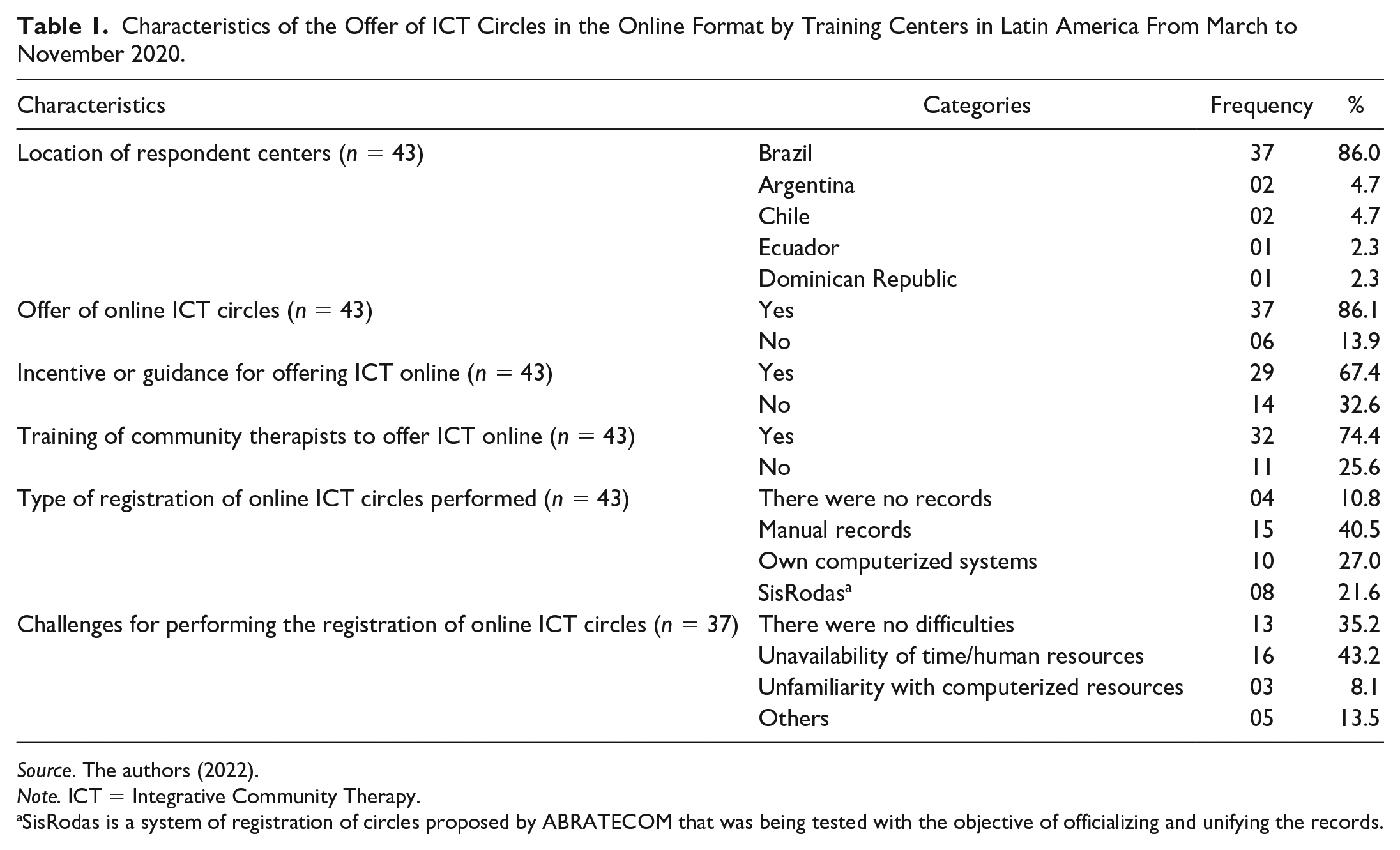
The map in Figure 1 shows the 45 existing Latin American centers in 2020. Coordinators from 43 centers participated in this study (one per center): 37 from Brazil, two from Argentina, one from Chile, one from Ecuador, and one from the Dominican Republic. Table 1 presents the characteristics of the offer of online circles reported by ICT training centers between March and November 2020. As potentialities, the majority (67.4%) reported having received guidance to offer ICT in the online modality, as well as having carried out the training of community therapists for this offer, including organization and technical computer support for the use of virtual platforms and the registration of information about the online ICT circles (74.4%).
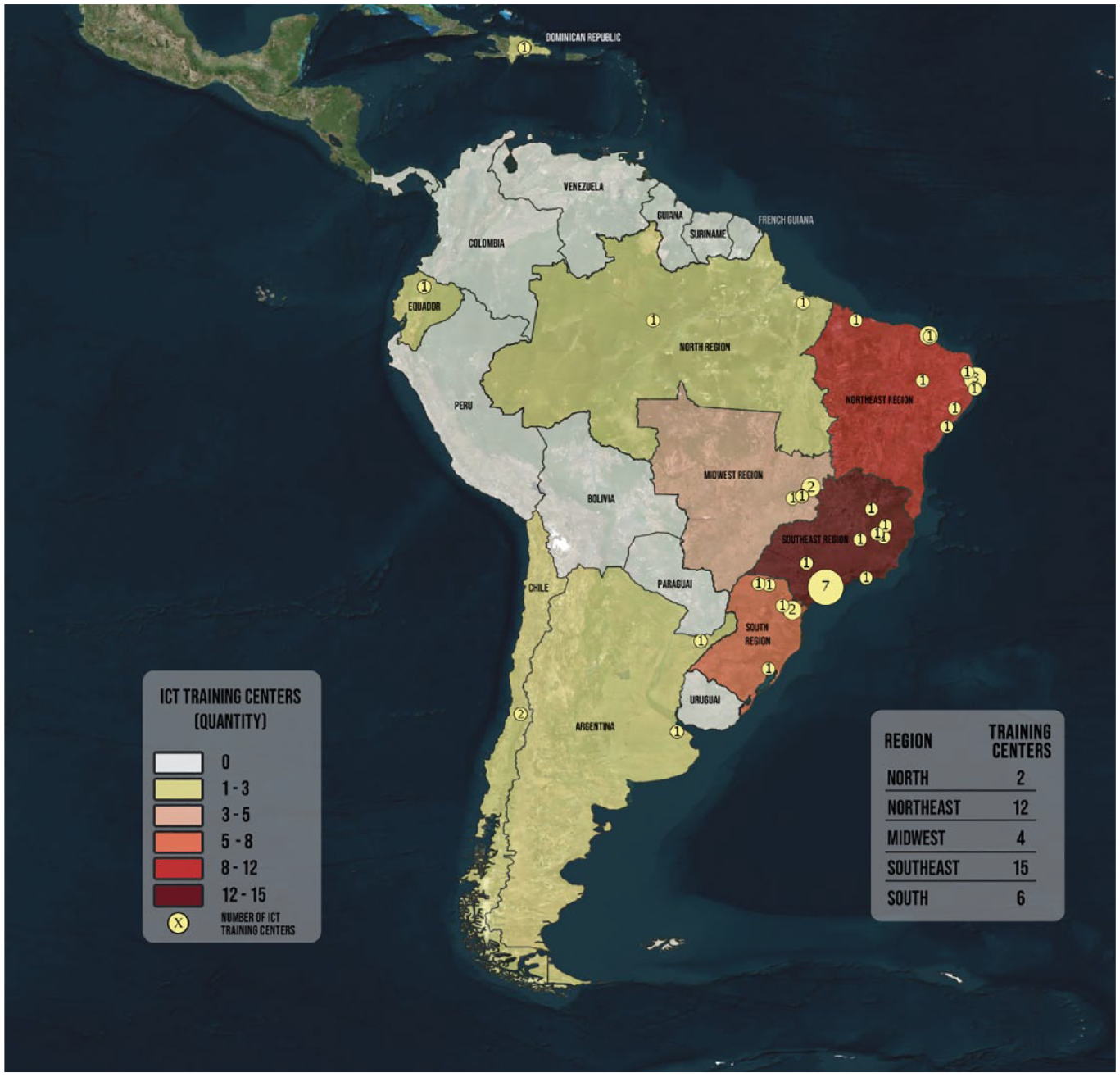
Georeferenced Map Showing the Distribution of ICT Training Centers by Regions of Brazil and Other Latin American Countries, 2020.
Characteristics of the Offer of ICT Circles in the Online Format by Training Centers in Latin America From March to November 2020.
Source. The authors (2022).
Note. ICT = Integrative Community Therapy.
SisRodas is a system of registration of circles proposed by ABRATECOM that was being tested with the objective of officializing and unifying the records.
Of the 43 centers that responded, 37 (86.1%) offered online ICT circles during the period evaluated. Regarding the records of these circles (Table 1), 10.8% (n = 4) did not perform any type of record, 40.5% (n = 15) used manual records, 27% (n = 10) used their own computerized systems, and 21.6% (n = 8) used the SisRodas. No difficulties in registering the circles were reported by 35.2% of the centers. Of those that reported difficulties, the main reasons were unavailability of time/human resources (43.2%, n = 16) and lack of familiarity with computerized resources (8.1%, n = 3).
Stage 2—Community Therapists
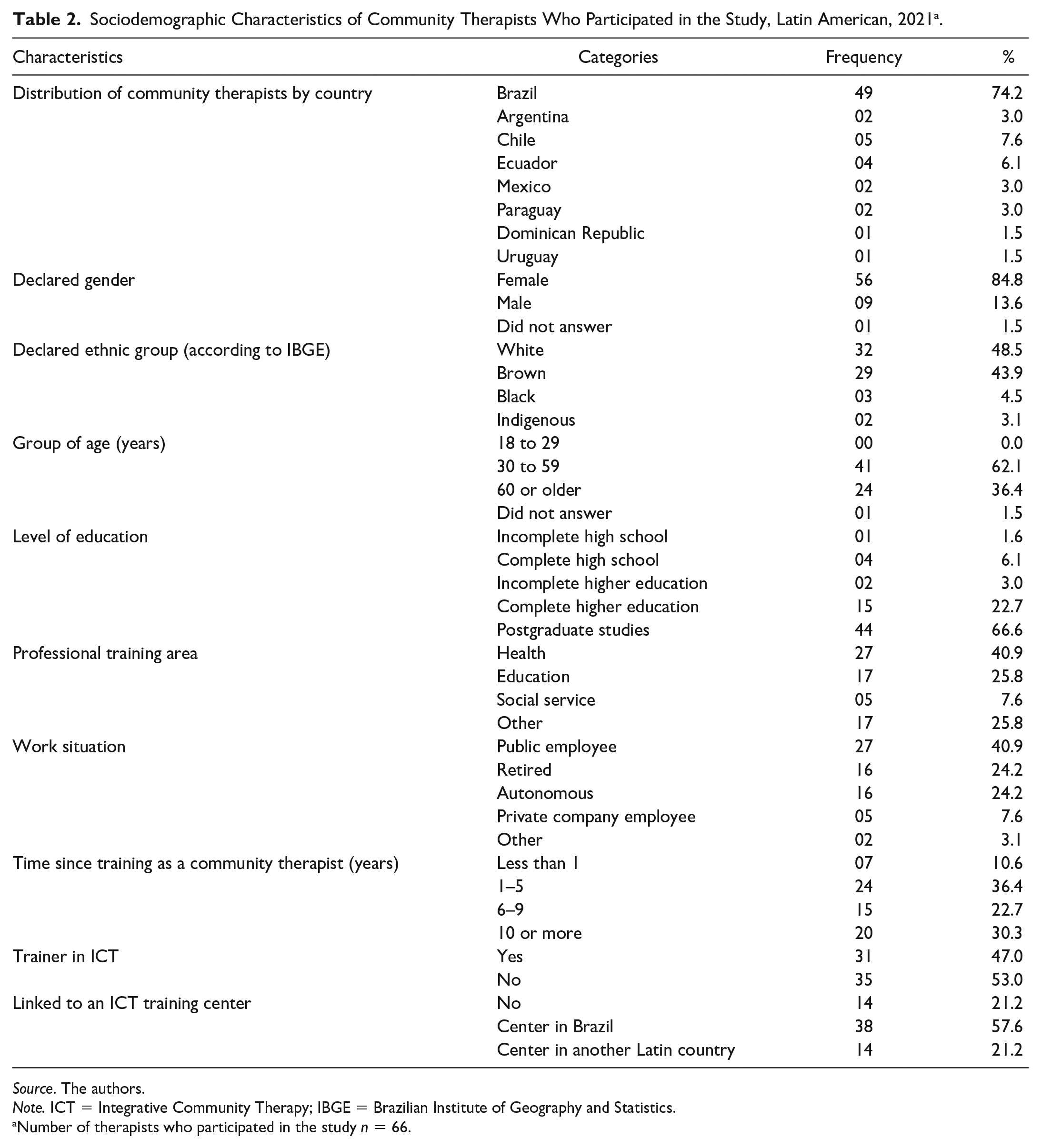
Sixty-six community therapists participated in this stage, with 74.2% (n = 49) residing in Brazil and 25.8% (n = 17) in other Latin American countries (Argentina, Chile, Ecuador, Mexico, Paraguay, Dominican Republic, and Uruguay). The sociodemographic characteristics of these professionals are in Table 2. The predominant gender was female, with 84.8% (n = 56). The median age was 57 years, and 48.5% (n = 32) declared themselves white and 43.9% (n = 29) brown. In addition, 66.6% (n = 44) had postgraduate studies, and 40.9% (n = 27) declared they were working in public services.
Sociodemographic Characteristics of Community Therapists Who Participated in the Study, Latin American, 2021 a .
Source. The authors.
Note. ICT = Integrative Community Therapy; IBGE = Brazilian Institute of Geography and Statistics.
Number of therapists who participated in the study n = 66.
Regarding the community therapists’ professional training, 40.9% (n = 27) were from the health area, and 25.8% (n = 17) were from the education area. The average time of training as a community therapist was 6.97 years, where 47% (n = 31) are trainers in this practice. Regarding the link with training centers, 57.6% of community therapists (n = 38) were linked to centers in Brazil, where most Latin centers are located (Figure 1). On the contrary, 21.2% (n = 14) declared that they were not linked to any training center at the survey time.
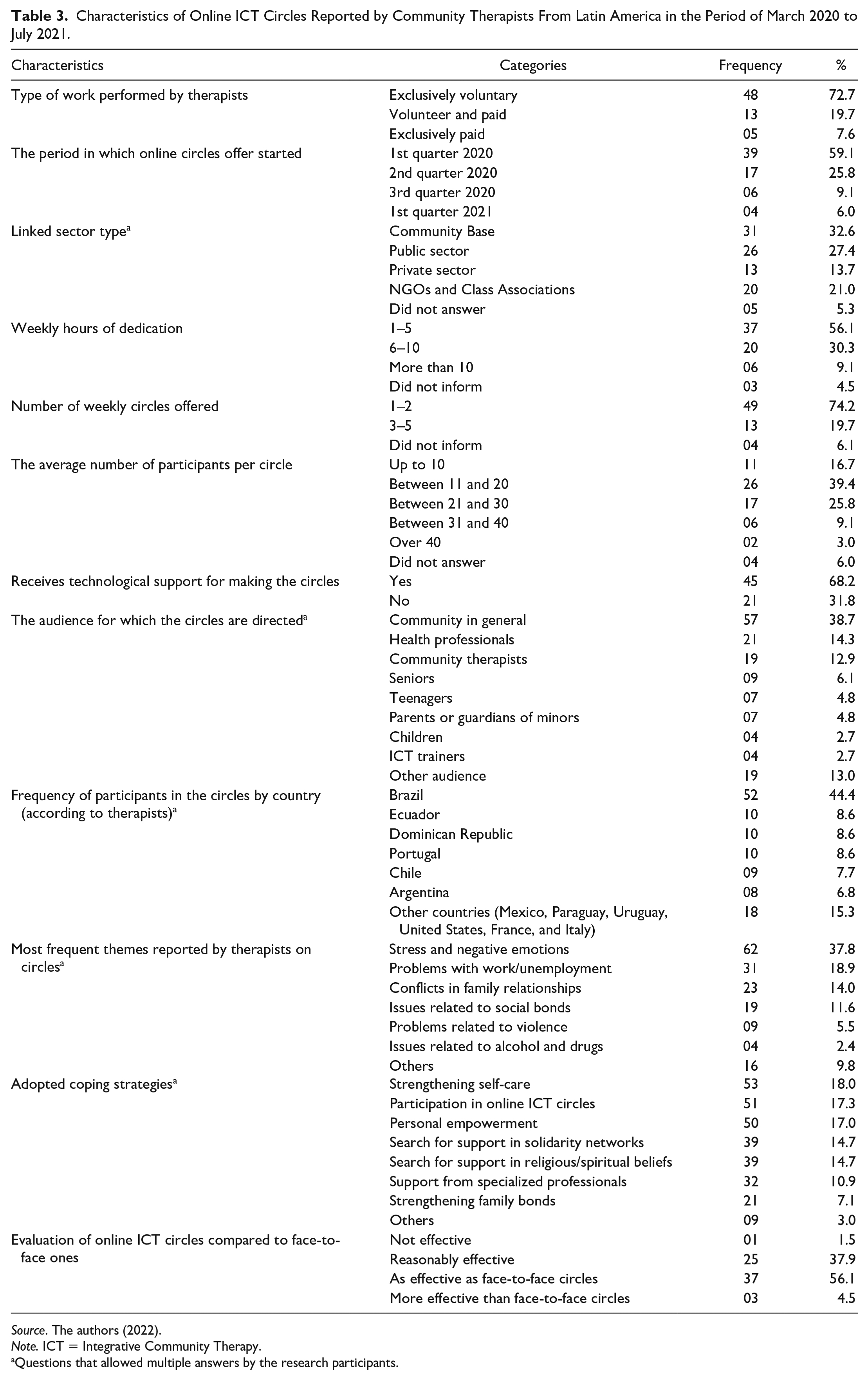
During the period evaluated, 799 online ICT circles (single-center) were offered, with another 165 shared between centers, totaling 964 circles with participants from 12 different countries. Most professionals (72.7%) reported being volunteers, with an average of 6.1 hours per week dedicated to ICT circles. The offer that stood out was the online community-based circles (n = 31), followed by the public sector (n = 26), with many professionals performing the circles in different contexts, that is, linked to different sectors (Table 3). During this study, approximately 195 community therapists were involved in online circles in Latin America.
Characteristics of Online ICT Circles Reported by Community Therapists From Latin America in the Period of March 2020 to July 2021.
Source. The authors (2022).
Note. ICT = Integrative Community Therapy.
Questions that allowed multiple answers by the research participants.
The average of weekly online ICT circles conducted by professionals was 1.7. Around 59% of community therapists started offering them in Latin America at the beginning of the pandemic (in the first quarter of 2020), with 45 (68.2%) receiving technological support to perform them.
The online circles were held for different audiences, most of the time being aimed at the community in general, health professionals, and community therapists themselves. In this study, the average number of participants per circle was 20.7.
According to the community therapists’ reports, the most frequent themes in the circles were those related to stress and negative emotions, followed by concerns related to work or unemployment and conflicts in family relationships. As coping strategies for the different concerns, the following were cited: strengthening self-care, personal empowerment, participation in online ICT circles, the search for support in solidary social networks and religious/spiritual beliefs, and the search for specialized professionals. Owing to the strategies highlighted and the experiences in the circles, 56.1% (n = 37) of community therapists considered the online ICT circles as effective as the face-to-face circles.
Discussion
During the pandemic, several individual and collective strategies were implemented to promote health, many with the use of media and technologies and the ICPH approach (Damiano et al., 2021). The implementation of online ICT had the challenge of using hard technologies (through the use of cell phones or computers) that would allow the intervention of a light care technology, which is the practice of ICT in its essence, characterized by the processes of reception, bonding, and humanization of health care (A. L. P. Silva et al., 2020). In this sense, this research is a pioneer, considering that it is the first investigation that brings the Latin American panorama about the implementation process and the characteristics of the online ICT circles in the context of the COVID-19 pandemic.
Although this study does not allow for statements related to the importance of online ICT implementation, other studies (Barreto & Camarotti, 2021; Barreto et al., 2020; Uhry, 2022) have pointed out that its implementation in Latin America was an important strategy as a practice of health promotion, encouragement of self-care, given its innovation magnitude, replicability, and sustainability. Of the 43 centers evaluated, 86% offered ICT circles, mostly by experienced community therapists (67.4% of the centers received encouragement/orientation and 74.4% training). The process of training new community therapists through the hybrid model (adopted during the pandemic) and the six new ICT centers (13.3%) created during the pandemic also boosted online ICT circles (Ruiz et al., 2021).
The considerable average number of participants per circle (20.7) during the period under analysis, the multiplicity of people participating from different countries (n = 12), the shared themes and coping strategies, and the fact that 84.9% of circles started in the first months of the pandemic (first and second quarters), ratify the powerful organizational capacity and capillarity of the network of community therapists in Latin America. Another relevant finding is that 98.5% of community therapists considered online ICT circles effective in strengthening positive social bonds, managing suffering, and rescuing self-esteem and hope. These facts reinforce the values and principles of health promotion that involve happiness as a self-perception of satisfaction, solidarity, social participation, and autonomy (Brasil, 2014).
Regarding the themes of the online ICT circles, the most frequent, according to the reports of community therapists, were stress and negative emotions (such as fear, impotence, anguish, and frustration), followed by issues related to work/unemployment and family conflicts. It is possible to identify in the literature experiences with online ICT in which the themes converge with those found in this study, especially those related to social inequalities, which have been exacerbated by the COVID-19 pandemic, with significant increases in unemployment, poverty, food insecurity and difficulties in accessing health services in many Latin countries (Carvalho et al., 2021; De Oliveira Pontes et al., 2021; Leiva-Peña et al., 2021; Salcedo-Barrientos et al., 2020).
The coping strategies most cited in the online ICT circles were: strengthening self-care, personal empowerment, and participation in online ICT circles, corroborated by other studies (A. L. B. Carneiro et al., 2020; De Oliveira Pontes et al., 2021). These positive results are connected with the life stories shared during the ICT circle, as the experience of the other allows resonances with everyone’s life story in a unique way, bringing the power of collective intelligence and strengthening community resilience. It is already known that group interventions reach more people and can offer additional elements of reflection and healing that individual approaches do not (Viswanathan et al., 2020).
Although, based on this study, it is not possible to establish the benefits of online ICT, other studies have indicated that it has proven to be a space of care, reducing the impact of social isolation and the consequences imposed by the pandemic, considering that it stimulated the strengthening of self-care and solidarity networks, with the empowerment of people of their own lives and emotions (Uhry, 2022). Connection with others is a fundamental part of human life, as it brings meaning and purpose to life and creates safety and support networks, which individuals turn to during adversity (Escalante et al., 2021). ICT has been shown to be an appropriate measure to alleviate the adverse consequences of loneliness and isolation by creating spaces to maintain social connections, promote healthy activities, and manage emotions (Hwang et al., 2020). In addition, some studies on online ICT have also revealed that the feelings and emotions in the circles are universal (Barreto & Camarotti, 2021; Barreto et al., 2020; Uhry, 2022).
Community therapy is, above all, a social movement that, in the absence of human rights protection, such as access to quality health by the State (M. Z. d. Silva et al., 2020)—a fact that became evident during the pandemic in Brazil and Latin America—organizes itself and strengthens in the same proportion contrary to the insufficiency of public policies to promote life. Data such as the high voluntary participation (92.4%) of community therapists in the circles, with an average of 6.1 hours in 1.7 weekly circles identified in this study, demonstrate the engagement and commitment of the actors involved with this integrative practice.
Another aspect that deserves to be highlighted in this study is the number of ICT circles (approximately 1,000) with the participation of 195 community therapists, which continue to take place to date, according to the disclosure on ABRATECOM’s social networks, evidencing the sustainability of this intervention. Unlike ICT, many therapeutic groups implemented virtually during the pandemic were characterized by a short implementation period, highlighting the fragile commitment of the participants to the groups and the high dropout rate (L. A. Carneiro et al., 2020).
In the first year of the pandemic, the estimate was more than 35.000 hours of volunteer work, carried out mostly by female community therapists and involving mainly female participants (M. Z. d. Silva et al., 2020). This study also verified this, registering 84.8% of female community therapists. In addition, most of the community therapists evaluated were public agency employees (40.9%). This may have occurred due to the partnership movement established by ABRATECOM and the MISMEC-Ceará Training Center with the Ministry of Health in 2008, which enabled the implementation of ICT in the public sector through the training of 4,000 professionals from the Family Health Strategy in Brazil (Tesser et al., 2018).
In addition to the partnership mentioned for training in public service, another movement stood out for volunteering, in which people who identified with the practice started to do the training with their resources and lead the ICT circles without any official institutional link (Gomes, 2015). Voluntary work helps to create a stable and cohesive society through the so-called “social capital” (United Nations Volunteers, 2001). Specifically in Latin America, social capital is a strategy for recomposing weakened citizenship due to inequalities based on democratic practices such as volunteering (Lechner, 2000). It can be thought that the voluntary dedication of these professionals can be driven by a sense of belonging with shared values and goals, believing in the potential of ICT as a practice of reception and social transformation.
In low- and middle-income countries, such as the investigated countries, mental health programs from a community and biopsychosocial approaches have been gaining strength, especially in the scope of primary care and in the post-COVID-19 moment, despite the difficulties of financing and operationalization (Belkin et al., 2021; Leiva-Peña et al., 2021). This fact may justify the higher frequency of community-based online ICT circles, followed by those linked to the public sector.
Concerning the records of the online circles, it was found in this study that there is no uniformity, with 40.5% of the centers using manual records in the period evaluated. Other studies agree with these findings, revealing a gap between what is recorded and practiced concerning TCIM (Sousa et al., 2012). There have been advances in the systematization of records, but it still represents a critical node for the construction of evidence about online ICT and ICPH in general.
One of the limitations of this study that can be cited is the low adherence of community therapists to stage 2 of the research. This can be explained by the fact that it was a survey carried out virtually, and many others were carried out in the same format during the study. Another factor that may have limited their participation is the lack of digital inclusion, caused by significant disparities between countries and Brazil’s regions regarding internet access and management of tools for its use.
In addition, it was not feasible to address a gender perspective in this study due to the lack of representativeness of the male gender in our convenience sample (only nine male community therapists). While this constitutes a limitation of this study, it may also be a suggestion for future studies.
Another limitation of this study is that it did not assess the adaptation of ICT to the online modality and the impact of this modality on the participants of the circles, thus also being suggestions for future research.
Final Considerations
The implementation of online ICT circles in Latin America during the analyzed period was considered successful in promoting health and encouraging self-care. This was due to issues related to the organization, training stimulus, and institutional incentive of ABRATECOM and its respective Training and Care Centers, weaving and articulating the work in networks among the collaborators through the community participation of people from different countries, as well as by the engagement and sense of belonging of community therapists when carrying out the online ICT circles almost voluntarily.
The timely adaptation of the ICT to the virtual context proved to be an innovative and strategic tool for communities and governments to face the unfolding of the health crisis caused by the COVID-19 pandemic, as it offered spaces of care for the construction of positive bonds and management of psychological distress.
In conclusion, this study points to the potential for incorporating and strengthening ICT in Latin American countries’ public policies, intending to reinforce the community approach to health promotion. It is also suggested that additional studies be carried out to better understand the impacts of online ICT in different populations and social, geographic, and territorial contexts, especially in the postpandemic scenario.
Footnotes
Acknowledgements
The authors especially thank the Postgraduate Program in Family Health (PROFSAUDE), from Federal University of Paraná and Oswaldo Cruz Foundation (FIOCRUZ); the Brazilian Association of Integrative Community Therapy (ABRATECOM); the Brazilian Association of Social Psychiatry (APSBRA) and the entire Latin American network of Integrative Community Therapy for their collaboration and partnership in this research.
Declaration of Conflicting Interests
The author(s) declared no potential conflicts of interest with respect to the research, authorship, and/or publication of this article.
Funding
The author(s) received no financial support for the research, authorship, and/or publication of this article.
