




Abstract
Acceptability of a sexual violence (SV) risk reduction program called RealConsent designed for first-year female college students was conducted as part of a larger, randomized controlled trial. RealConsent uses web-based and mobile technology to deliver four 45-minute theoretically and empirically derived modules designed to increase knowledge, affect attitudes and normative beliefs, increase bystander and other protective behaviors, and reduce alcohol misuse. Educational entertainment is used throughout the program to achieve these aims. A total of 444 first-year female college students recruited from three Southeastern universities who were eligible and provided informed consent were randomized to RealConsent. Acceptability was ascertained both quantitatively and qualitatively through a survey administered following the completion of each of four modules. Results suggest that overall, RealConsent was viewed as relatable, realistic, and relevant. Most participants rated modules as good/excellent in quality, in organization, and in the conveying of a high degree of knowledge regarding alcohol misuse, consent for sex, sexual communication, defense strategies, protective strategies, and intervening to prevent SV. Suggestions to improve RealConsent centered on having more content inclusive of sexual and gender-minoritized students. Results suggest that RealConsent is an acceptable SV risk reduction program among first-year female college students and may have advantages for dissemination over in-person programs due to its web-based and mobile technology.
Keywords
Introduction
Sexual violence (SV) victimization against women is a serious and complex problem across college campuses in the United States. SV encompasses a range of experiences on a continuum from “minor” behaviors, such as catcalling, verbal suggestions of intent to force someone to have sex, to more extreme behaviors, including attempted or completed rape. Roughly 1 in 4 college women experience SV during college and this number has risen in recent years (Koss et al., 2022). Various programs have been developed that aim to reduce SV among college students, including programs that focus specifically on preventing SV perpetration for men (Bonar et al., 2022; DeGue et al., 2014; Tharp et al., 2013); however, despite the high incidence of SV, there are only a handful of prevention programs specifically designed to decrease risk of SV among college women (Gilmore et al., 2015; Hollander, 2018; Hollander & Cunningham, 2020; McCaughey & Cermele, 2017; Senn et al., 2015). Though these existing programs are efficacious, there is little published data about their acceptability.
Feasibility studies are often used to determine if an intervention should undergo further efficacy testing and are appropriate to conduct when developing a new intervention (Bowen et al., 2009). One indicator of feasibility is acceptability, or how the intended recipients of the program react to the program and whether the program meets the needs of the population of interest (Ayala & Elder, 2011; Bowen et al., 2009). In light of limited established methods for measuring acceptability (Ayala & Elder, 2011), programs are often developed without a reasonable expectation that the target population will receive and accept the intervention. This may hinder program implementation and effectiveness, promote distrust between the target population and the researchers, or inadequately address health disparities (Ayala & Elder, 2011). Measures of acceptability can include satisfaction, perceptions of appropriateness, personal and cultural relevance, positive or negative effects on one’s life, usability, attendance, usefulness, and enjoyment of the intervention (Ayala & Elder, 2011; Bowen et al., 2009). However, there is a need to understand the acceptability of existing SV prevention programming.
Acceptability of an intervention is necessary but perhaps not sufficient for effectiveness; however, successful implementation depends on acceptability (Sekhon et al., 2017). Specifically, the content and quality of the intervention may have implications for acceptability. If an intervention is considered acceptable, then the target audience is more likely to benefit from improved outcomes (Sekhon et al., 2017). Intervention implementation, delivery, and mode of delivery are crucial to acceptability.
The Present Study
RealConsent is a web-based SV prevention program for college men that was rigorously tested in a randomized controlled trial (RCT) and found to be effective in decreasing SV perpetration and increasing bystander intervention (Salazar et al., 2014). More recently, a female version of RealConsent as a SV risk reduction, bystander intervention, and alcohol misuse web-based program for first-year college women was developed and tested for efficacy (Salazar et al., 2023). As part of the RCT, the acceptability of the program was assessed during implementation. The primary goal of this study was to assess the acceptability of RealConsent among study participants who were randomly assigned to the intervention group. In this study, we assessed the following constructs of acceptability for each of the four modules: quality, relevance, organization, interestingness, usefulness, surprisingness, what participants learned, whether the module changed the way they thought about program topic areas (i.e., effects of alcohol, sexual consent, sexual communication, and risk reduction strategies), understandability of language, believability of each module’s Squad serial drama episodes, and whether anything in each of the modules needed to be changed. Acceptability of the program was assessed after each module because the program was self-paced and the rate of completion ranged across participants (i.e., completing the program in one sitting to completing the program over several weeks), to incentivize participants to complete the entire program, and to minimize recall bias. The acceptability of the entire program was determined by averaging the acceptability construct scores across the four modules.
Methods
Recruitment and Eligibility
An online sample of 881 first-year college women were recruited from three universities in the Southeastern United States using contact email lists provided by each university’s Registrar’s office. An email was sent to participants containing a brief description of the study with a link to an online eligibility survey delivered via Qualtrics. Eligible participants identified as women, 18–20 years of age, and were in their first year of college at one of three Southeastern universities involved in the study. A total of 4,473 were screened for eligibility and 1,259 met inclusion criteria. Study procedures were approved by the university’s Institutional Review Board and are listed on clinicaltrials.gov (NCT0372643).
Consent, Enrollment, and Randomization
Informed consent was obtained from all study participants. Individuals who met eligibility criteria and provided informed consent electronically were redirected to an online form to provide their contact information and then were redirected to the baseline survey. These three separate surveys were administered via Qualtrics and were employed to ensure participants’ data were deidentified. Following the baseline survey, participants completed a REDCap survey that collected data on their email and institution for the purpose of randomization. Stratified block randomization was implemented via REDCap to randomly assign participants to either RealConsent (n = 444) or to an attention-matched placebo condition (n = 437) (Harris et al., 2009, 2019).
RealConsent
RealConsent is a web-based program that aims to (a) increase young women’s awareness of the risks of alcohol use, (b) enhance the skills necessary for engaging in alcohol-related protective behaviors, (c) raise awareness of dating-related risk factors for victimization, and (d) teach effective prosocial bystander intervention strategies. RealConsent was delivered via a password-protected web portal (see Figure 1) and contains four 45-minute program modules focused on alcohol use (Module 1: Think Before You Drink), knowledge of consent for sex (Module 2: Let’s Get Consensual), sexual communication (Module 3: Can We Just Talk?), and bystander intervention and resistance strategies (Module 4: Circle of Defense). Each module ranged in the number of segments and types of activities that involve interactivity, didactic activities, and serial drama “Squad” episodes portraying four first-year college women navigating their first year in college. The RealConsent program included ethnically and racially diverse actors in filmed segments and in pictures accompanying didactic segments and included representation of same-sex relationships.
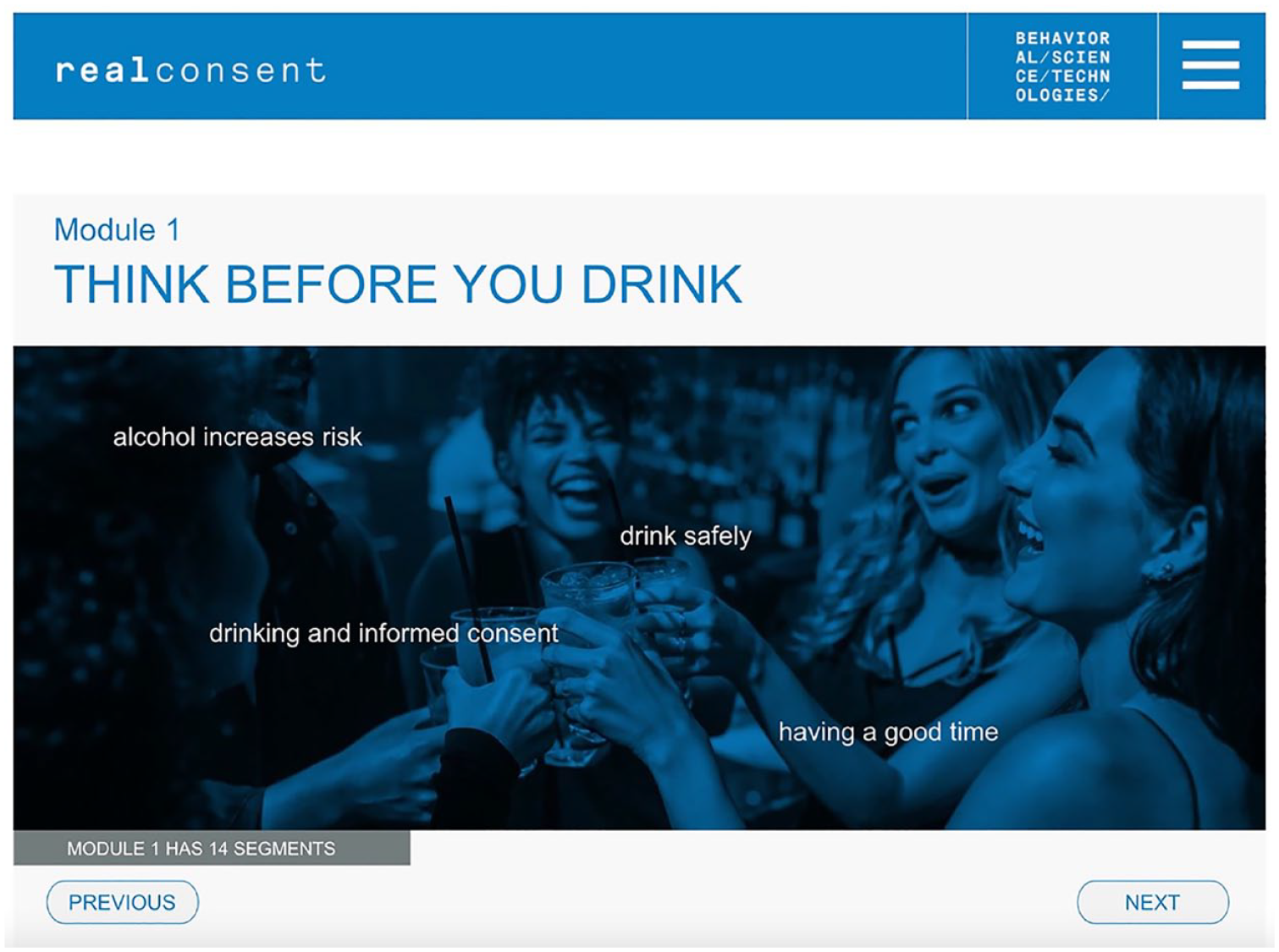
RealConsent Web Program
After each module, participants were emailed a survey link that assessed acceptability and feedback. Participants were incentivized to complete all four modules within a week such that they could earn an extra $20 for completing the program and four module-specific acceptability surveys within a week’s time. Participants who completed the program within a week received $15 per each module survey, therefore could earn up to $60 if they completed all four program modules and surveys. Those who completed the program in over a week’s time received $10 per each module survey, and could earn $40 for completing all four module programs and surveys. Thus, the additional $20 incentive was for participants who completed the entire RealConsent program within a week. These procedures ensured that each participant had completed each module in its entirety at follow-up.
Acceptability Measures
Acceptability surveys assessed participants’ perceptions on the quality, appropriateness, effectiveness, usefulness, and personal relevancy of each of the four modules through a mix of multiple-choice and open-ended questions.
Quantitative Measures: Close-Ended Survey Questions
Close-ended questions’ response options ranged from 1 (poor) to 4 (excellent), with high scores reflecting greater acceptability of program content. For example, a multiple-choice question included in the acceptability survey is, “How would you rate the QUALITY of the module you just completed?” The acceptability survey assessed the following constructs: quality, relevance, organization, interestingness, usefulness, surprisingness, what participants learned, whether the module changed the way they thought about program topic areas (i.e., effects of alcohol, sexual consent, sexual communication, and risk reduction strategies), understandability of language, believability of each module’s Squad serial drama episodes, and whether anything in the module needed to be changed. The following constructs were assessed on a four-point Likert-type scale: quality, relevance, organization, interestingness, usefulness, what participants learned). The remaining constructs (i.e., surprisingness whether the module changed the way they thought about program topic areas, understandability of language, believability of each module’s Squad serial drama episodes, whether anything needed to be changed) were assessed via Yes (1) or No (0) response options.
Qualitative Items: Open-Ended Survey Questions
Open-ended survey questions were included in the acceptability survey as follow-up questions to the multiple-choice questions. Open-ended questions were intended to receive additional feedback on the RealConsent modules and provide more context on participants’ acceptability survey responses. Open-ended questions asked what participants liked most and least about each module, how the module did or did not change their perceptions on RealConsent topic areas, including but not limited to sexual consent, alcohol use, sexual assault, and bystander intervention. For example, an open-ended item in RealConsent module 2, which focused on sexual consent, was “Please explain how this module did or did not change the way you think about consent.” Responses ranged from a few words to two to three lines of text.
Analysis
Sample characteristics and descriptive statistics of quantitative acceptability data, including frequencies, percentages, and averages, were examined using SPSS version 26.0. NVivo version 11 qualitative analysis software was used to analyze qualitative data and identify themes that provided context surrounding the acceptability, relevance, knowledge, and content learned from modules as well as feedback for improvement. Acceptability of the overall RealConsent program was determined by calculating average frequencies and percentages for each acceptability construct across the four program modules.
Two undergraduate female research assistants (RAs) facilitated qualitative data analysis using a thematic analysis approach. RAs independently read the open-ended responses from two respective RealConsent program modules’ acceptability surveys and created a list of codes to begin the coding process. Then, the RAs met to compare and review codes for agreement and developed a codebook for data analysis. Using the codebook, the RAs coded the open-ended responses for the remaining two modules. The codebook included codes based upon the acceptability surveys as well as other codes developed during the coding process. If new codes were discovered during coding, the RAs discussed the additional codes with the study team and added them to the codebook. Throughout data analysis, the RAs communicated with the study team about additional codes that emerged, and the primary investigator resolved any discrepancies in coding. This process was repeated until the codebook was exhaustive and saturation was reached. Themes were derived from the data. For themes identified, illustrative quotes are displayed.
Results
Participant Characteristics
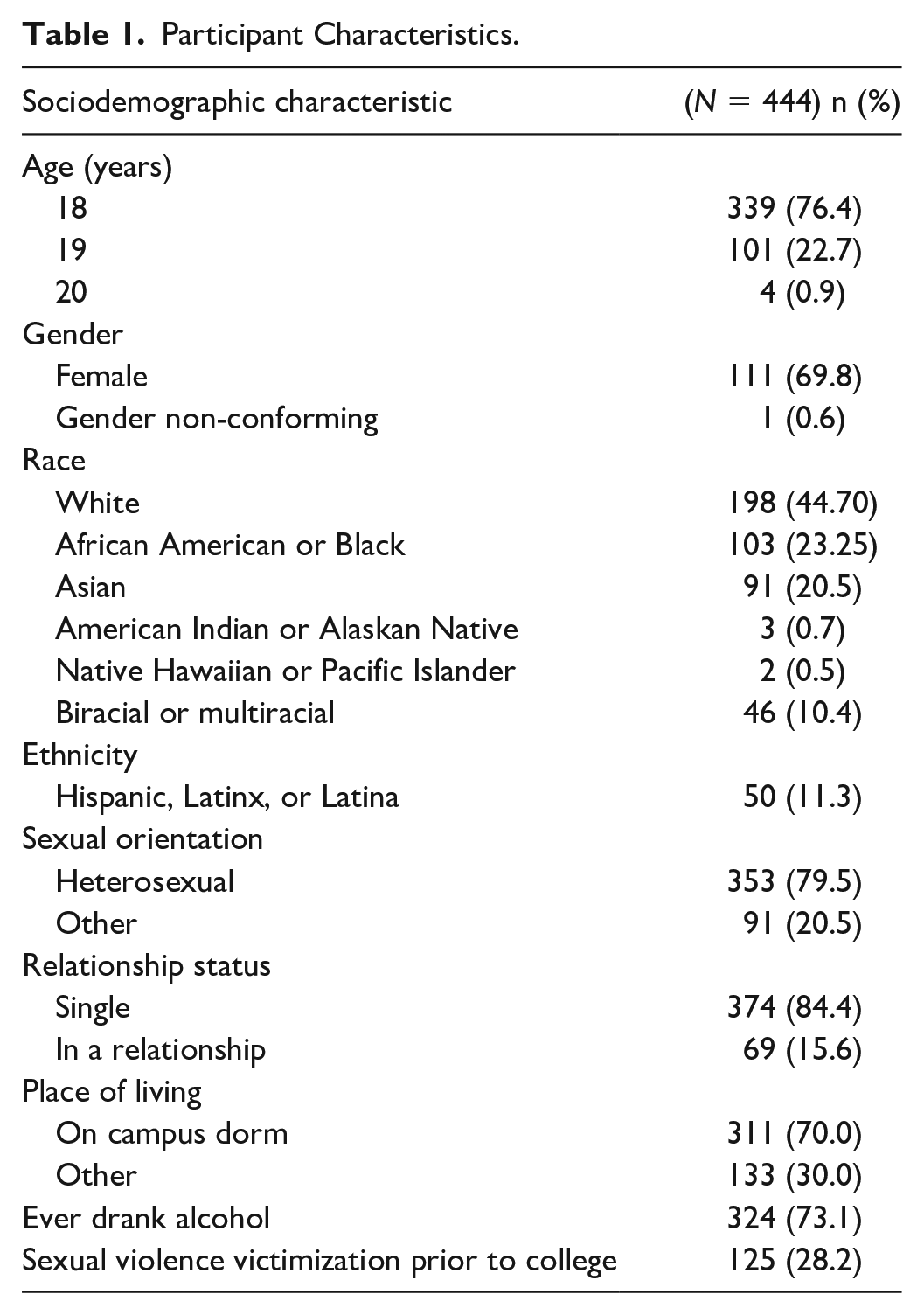
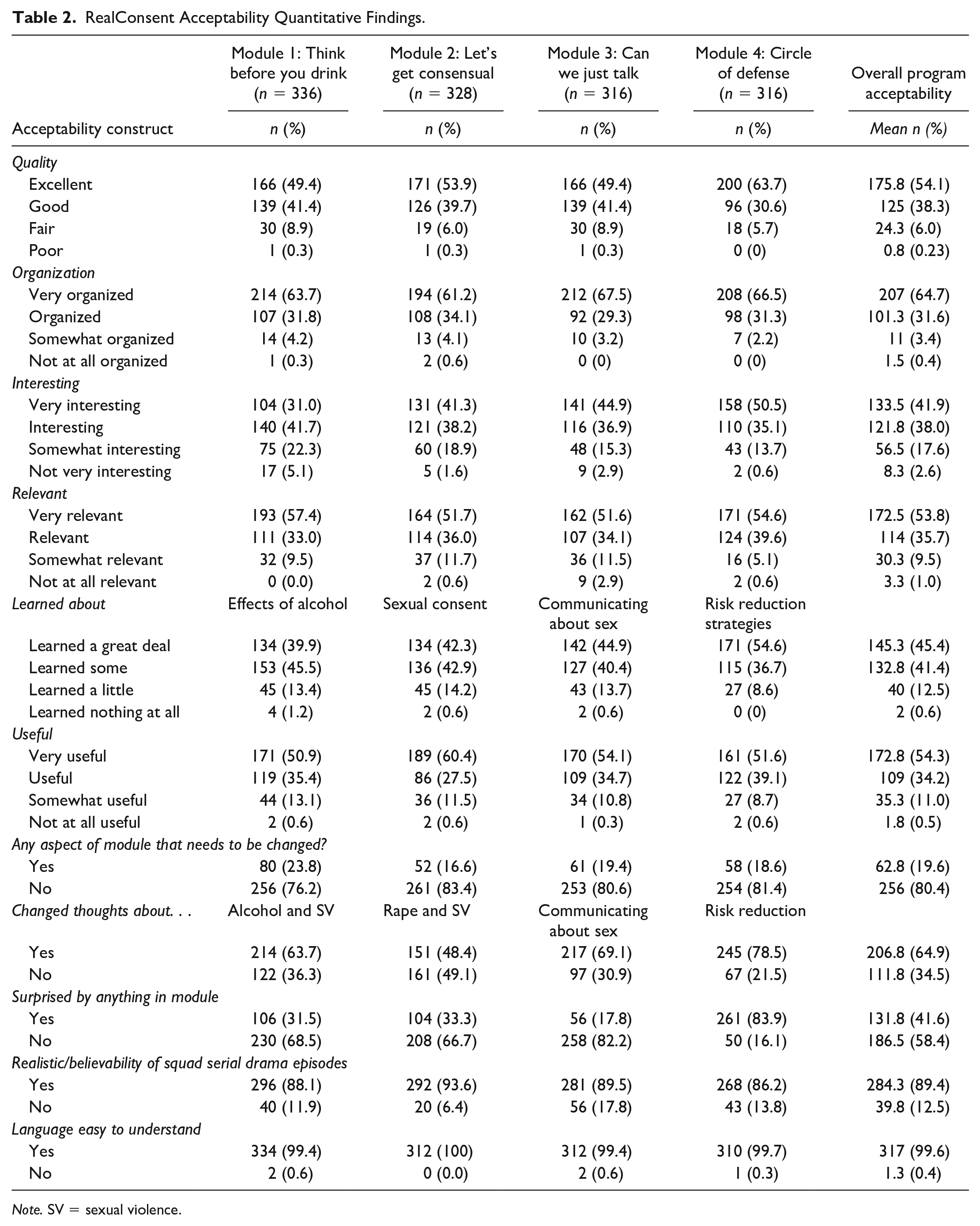
A total of 444 college women participated in RealConsent. See Table 1 for participant characteristics. Of the participants who participated in the RealConsent program, 83.7% completed module 1 acceptability survey (n = 371), 79.6% completed the module 2 acceptability survey (n = 353), 71.2% (n = 316) completed the module 3 and 4 acceptability surveys respectively (see Table 2). Program dosage ranged from one to four program modules, and 75% of the total sample received full program dosage (Salazar et al., 2023).
Participant Characteristics.
RealConsent Acceptability Quantitative Findings.
Note. SV = sexual violence.
Quantitative Results
Quantitative findings across acceptability constructs for each RealConsent module and the overall program acceptability mean scores are presented in Table 2. In addition, mean acceptability scores for each construct across the four program modules are presented to summarize the acceptability of the overall RealConsent program.
Qualitative Results
Overall Program
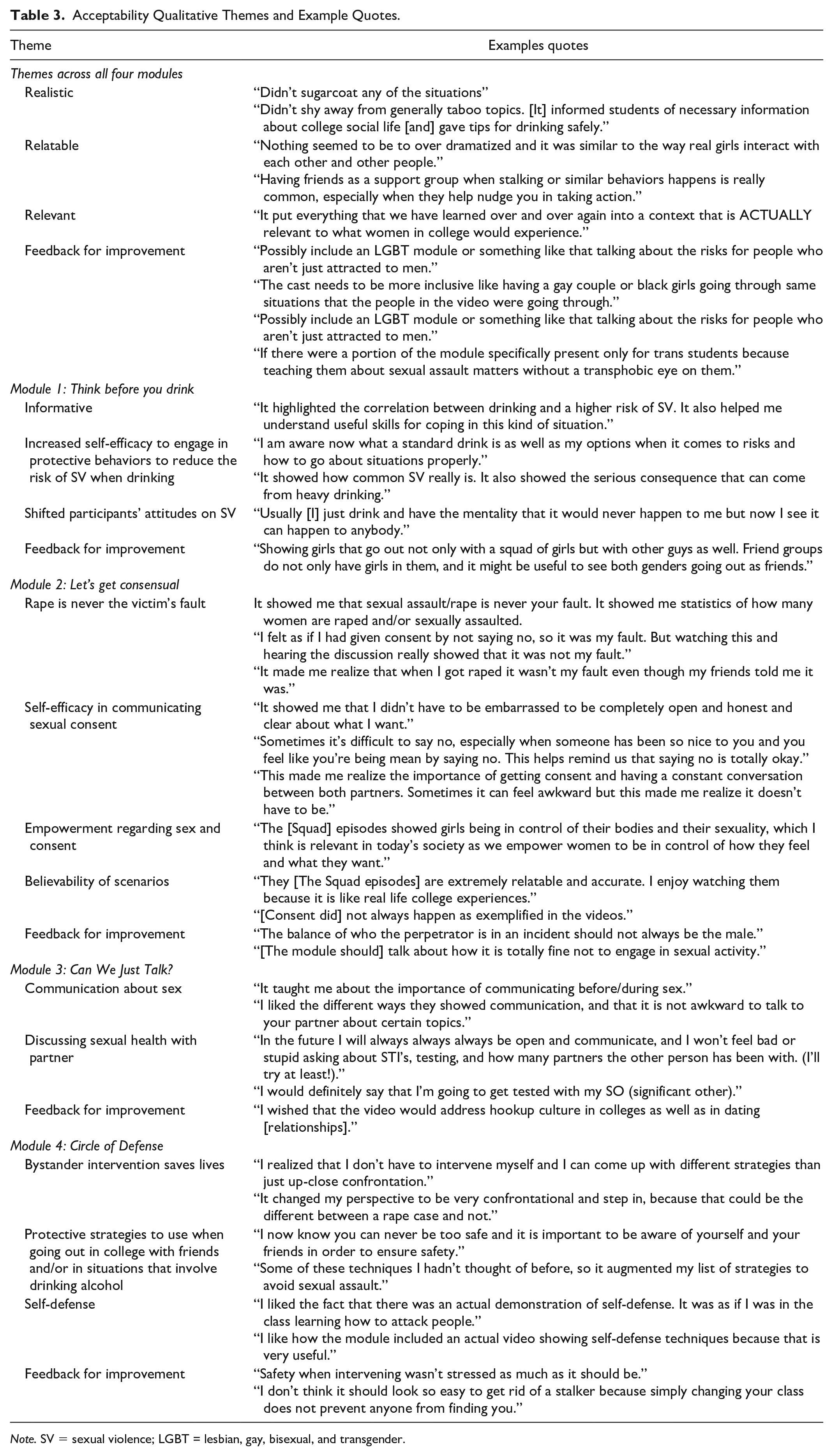
Persistent themes across all four program modules indicate participants perceived RealConsent to be realistic, relatable, and relevant (see Table 3 for themes and example quotes). Specifically, participants perceived the program as a whole to be honest and real. Across the four modules of RealConsent, a suggested area for improvement was to include more content inclusive to sexual and gender minority college students. Participants suggested that the module should include more lesbian, gay, bisexual, transgender, and questioning (LGBTQ) individuals, and another commented on the need for more representation of racial and sexual minorities. Finally, a participant explained that she would like to see more content for transgender and gender diverse college students. There was also feedback on the technical aspects of the program, including the suggestion to include closed captioning in the videos or a transcript of the videos.
Acceptability Qualitative Themes and Example Quotes.
Note. SV = sexual violence; LGBT = lesbian, gay, bisexual, and transgender.
Module 1: Think Before You Drink
Several themes emerged from the Think Before You Drink module (see Table 3 for themes and example quotes), which included the following themes: informative, reported increases in self-efficacy to engage in protective behaviors to reduce the risk of SV while drinking, the module shifted participants’ attitudes on SV, and participants offered feedback for improvement. Respondents found the module informative, specifically in teaching about the importance of the relationship between alcohol use and SV. Participants reported that the module also conveyed knowledge that will contribute to behavior change when they are out drinking. Finally, participants reported that this module shifted their attitudes and perspectives on rape, and increased participants’ perceived risk of SV, particularly when drinking alcohol. Altogether, these themes indicate that the Think Before You Drink module increased respondents’ knowledge of SV and alcohol as a risk factor for SV, self-efficacy to reduce the risk of SV victimization, and perceived risk of SV.
There was also feedback given for improving the Think Before You Drink module. One participant commented on the fact that college women often go out with their male friends as well and would like to see this portrayed in the module. See Table 3 for themes and example quotes.
Module 2: Let’s Get Consensual
Several themes emerged from the Let’s Get Consensual module (see Table 3 for themes and quotes), which included the following: rape is never the victim’s fault, reported increases in self-efficacy in communicating about sexual consent, empowerment regarding sex and consent, believability of scenarios in the module, and participants offered feedback for improvement. For one theme, “rape is never the victim’s fault,” respondents reported that they found the Let’s Get Consensual module informative in communicating the fact that SV is never, under any circumstances, the victim or survivor’s responsibility. Another theme that emerged was how the module increases participants’ self-efficacy and confidence to communicate sexual consent. The last theme was empowerment regarding sex and consent. For example, some young women reported feeling empowered by the “Squad” episodes in this module to communicate effectively and assertively when it comes to sex, consent, and in greater society. Participants’ feedback on the believability of the scenarios was largely positive. There were a handful of participants who had feedback related to believability in how consent was represented in the videos.
Participants also had feedback for improving Let’s Get Consensual module. One participant suggested that the videos represent perpetrators of various genders and not just men. Two participants commented on the representation and inclusivity of the cast. One person also recommended including more messaging in the module on the fact that not all college students are sexually active.
Module 3: Can We Just Talk?
Themes that emerged from the Can We Just Talk? Module were communication about sex and discussions about sexual health and testing for HIV and sexually transmitted infections (STIs) with a partner (see Table 3 for themes and example quotes). Findings indicate that the Can We Just Talk module resonated with participants and that they learned a great deal about communication, particularly the different strategies for communicating sexual consent and talking about sex and sexual health with a partner. One young woman commented on how this module taught her about communication about sex, and another participant talked about how the module normalized conversations about sex with a partner. Another participant frankly shared that she will be getting tested after viewing this module. Overall, these findings indicate that participants learned helpful information and skills on sexual communication that they plan to apply in their current lives.
Participants also provided feedback on areas for improvement. One respondent shared that it would be helpful to include information on how the module could also be made applicable to casual sexual relationships, not just within dating relationships. This feedback provides helpful insight on areas for improvement within the module.
Module 4: Circle of Defense
Three themes emerged from the Circle of Defense module (see Table 3 for themes and example quotes). The first theme that emerged was that “bystander intervention saves lives,” which resonated deeply with many young women. Participants described their increased knowledge on bystander intervention, strategies to intervene effectively, and self-efficacy to intervene in situations after viewing this module. One young woman explained how she feels empowered to step in and help because it could prevent SV.
The second theme that emerged was in regard to protective strategies to use when going out in college with friends and/or in situations that involve drinking alcohol. Participants described how the module increased their awareness of different tactics they can use to increase their safety as well as the safety of their friends. One young woman described how this module increased her knowledge of new strategies to use.
The last theme that emerged was related to a segment in the Circle of Defense module that taught self-defense techniques. Participants reported that they enjoyed this segment and found the different strategies helpful in increasing their knowledge of ways they can defend themselves if they are in danger, as well as their self-efficacy to protect themselves. Collectively, these findings indicate that the module resonated with participants in the way it was intended by increasing knowledge, skills, and self-efficacy of bystander intervention, protective strategies, and resistance strategies.
Participants also had feedback on areas for improvement. One participant pointed out the module’s lack of discussion on preserving safety while intervening. Another person commented on the complexity of navigating a stalker relationship and suggested that this could be portrayed in the module. Overall, these comments provide helpful insight into how the module can be improved.
Discussion
Given the rates of SV on college campuses have not decreased in the past 30 years, effective prevention and risk reduction programming is critical to moving the needle downward (Koss et al., 2022). RealConsent is a web-based, theoretically derived SV risk reduction program for female first-year college students that was designed to fill an important gap in the prevention programming arsenal. This study examined the acceptability of RealConsent by determining how well the program was received and the extent to which RealConsent meets the needs of female first-year college students. Overall, this study found support for high levels of acceptability in a large sample of first-year college women (n= 444).
Quantitative results demonstrated that over 82% of participants rated all four modules to have good or excellent quality are relevant or very relevant, are organized, useful or very useful, and that the language is easy to understand. Moreover, most women reported that they learned something new from each module and that the content changed the way they thought about key topics.
Qualitative findings mirrored quantitative results and indicated that women found program content informative, useful, and that it shifted their attitude and perspectives in several domains. In the module with alcohol content, Think Before You Drink, participants reported learning about the role alcohol can play in SV and how to change their drinking to mitigate this risk. In the module on consent, Let’s Get Consensual, findings indicate that participants learned the responsibility of SV is always on the perpetrator, regardless of the circumstances. Risk reduction programs are sometimes criticized for victim blaming; however, women who completed RealConsent reported learning that they are never to blame. Even after learning about the role of alcohol and strategies to drink safely, women received the message that they were not responsible for being sexually assaulted when drinking. Women also reported gaining confidence in setting their own sexual boundaries and being empowered to defy traditional female norms by being assertive. In the module on communicating sexual consent and sexual health, Can We Just Talk, women reported learning new skills on how to communicate about sex. Finally, in the module on bystander intervention, protective strategies, and self-defense, Circle of Defense, women reported greater confidence and skills in keeping themselves and their friends safe from coercive men. Collectively, qualitative findings demonstrated that participants not only liked how the content was presented but also thought it was useful in changing how they thought about sexual assault and building confidence and skills to resist a coercive man.
Participants offered several suggestions to improve program content. For example, some women reported that some aspects of the program content should be changed or done differently. Open-ended suggestions focused mostly on the need to include more content, scenarios, characters and topics specific to LGBTQ populations. We acknowledge that sexual and gender minority college students are at elevated risk for SV as compared to their cisgender, heterosexual peers (Coulter & Rankin, 2020; McKay et al., 2019; Tilley et al., 2020). However, the majority of perpetrators of SV against cisgender women of all sexual identities and the majority of perpetrators of SV against transgender women are cisgender men (Hequembourg et al., 2013; Walters et al., 2013; Westbrook, 2023). For this reason, while some RealConsent content would need to be modified, it is likely that the situations in the RealConsent program that portray men as perpetrators of SV against women would not need to be redone in a version of RealConsent designed for an LGBTQ audience. Further, there is an urgent need for specific programming both at the college level (e.g., improving campus climate for sexual and gender minorities, reducing stigma and discrimination) and the interpersonal and individual level (e.g., SV programming that is inclusive of scenarios, characters, and actors specific to sexual and gender minoritized individuals). Because RealConsent is a web-based program and is mostly video-based, making major changes to the program is not feasible without additional funding. However, our future research and programmatic goals for RealConsent include developing a new version that will be tailored to, and that will resonate with sexual and gender minority college students. Collectively, these findings highlight the importance of assessing program acceptability to gain valuable insight from the target population on ways to improve content for optimal uptake.
Several limitations warrant discussion. First, results may not generalize to all college women. Participants were from a larger metro city in the Southeastern United States, and it is unclear if similarly high levels of acceptability would be present in other geographic locations. Second, qualitative data was collected through open-ended questions in a web-based survey. It is possible that interview-style questions with additional probes may have yielded additional information about the acceptability of programming content. Finally, although these results show promise, it remains unclear if this intervention is effective at modifying target behaviors.
Implications for Practice
RealConsent is an efficacious, theoretically driven (i.e., Social Cognitive theory; Bandura & National Inst of Mental Health, 1986) web-based program that can be widely implemented with minimal resources or barriers. RealConsent was tested in a randomized clinical trial and was found to be efficacious in reducing SV revictimization, binge drinking, and increasing bystander intervention (Salazar et al., 2023). Unlike in-person SV prevention programs that require training, personnel, space, and resources for implementation, students can complete RealConsent at their own pace on their own devices (Salazar et al., 2023; Schipani-McLaughlin et al., in press). Thus, RealConsent has the potential to be easily disseminated to thousands of first-year college women with minimal burden on administrators to implement the program. RealConsent is also the only web-based SV risk reduction program for first-year college women that utilizes educational entertainment and other behavioral techniques such as interactive activities, problem-solving learning, and participatory videos (Bonar et al., 2022; Salazar et al., 2023).
In the current study, feedback from the target population indicates that RealConsent is an engaging and relevant program that has the potential to change attitudes and behaviors related to alcohol use, sexual communication, bystander intervention, protective behavioral strategies for dating, and self-defense. Thus, the current study, which determined RealConsent’s acceptability, is critical to support effective implementation of this efficacious program. Thus, RealConsent could ultimately help reduce rates of SV victimization among college women that have been unchanged for 30 years.
Footnotes
Declaration of Conflicting Interests
The author(s) declared no potential conflicts of interest with respect to the research, authorship, and/or publication of this article.
Funding
The author(s) disclosed receipt of the following financial support for the research, authorship, and/or publication of this article: This study was funded by the National Institutes of Health/National Institute on Alcohol Abuse and Alcoholism (R42AA025817; K01AA028844): ClinicalTrials.gov Identifier: NCT0372643.
