




Abstract
Increasingly, immigration policies are understood as structural determinants, rooted in racism, nativism, and ethnocentrism, which raise serious public health concerns for Latinx adolescents’ mental health. Our objective was to examine how immigration policy enforcement affects mental health of Latinx youth raised in a county with an aggressive interior immigration enforcement program. From 2009 to 2021, Gwinnett County, GA, led the nation in deportations under the 287(g) program as a “universal enforcement model,” where local law enforcement were deputized to detain undocumented immigrants, primarily through traffic violations. From June to July 2022, we followed a participatory action research approach with two groups of Latinx youth who grew up in Gwinnett County. In total, 10 youth took photos related to the research question, and engaged in facilitated dialogue using photovoice guide SHOWED/VENCER for four, 2-hour sessions that were audio-recorded and transcribed. Transcripts were analyzed following grounded theory principles to arrive at a conceptual model codeveloped and validated by youth. Youth described how 287(g) led to policing and deportation in their communities, fueling stereotypes, and discrimination that criminalized Latinx immigrants. Youth linked immigration enforcement policies like 287(g) to exclusionary systems that contributed to fear, marginalization, and loss in their communities, bringing experiences of sadness, grief, isolation, hopelessness, and low self-worth. From youth-driven research, we identified mental health implications of the 287(g) program among Latinx youth. The cascading harms of immigration enforcement policies highlight the need to address these policies and identify immediate strategies to promote Latinx youth mental health.
Keywords
Introduction
The nation faces a mental health crisis in adolescents with alarming trends of increasing depressive symptoms and suicidal thoughts and behaviors (Centers for Disease Control and Prevention [CDC], 2020). For the last decade, a greater proportion of Latinx youth report feelings of sadness or hopelessness and greater suicide-related behaviors compared with White, non-Latinx peers (CDC, 2020). Disproportionate exposure to social determinants, such as concentrated poverty, discrimination, and childhood adversity influence Latinx adolescent depressive symptoms and suicidal ideation; though, multiple forms of oppression, such as nativism, racism, and ethnocentrism underlie these experiences (Chavez-Dueñas et al., 2019; Torres et al., 2022). These oppressions are codified in federal and state policies that marginalize immigrants and place Latinx youth at elevated risk of negative social determinants and mental health outcomes (Barajas-Gonzalez et al., 2021; Torres et al., 2022). Increasing evidence demonstrates that immigration-related policies adversely affect Latinx health and well-being, but greater focus on Latinx adolescent mental health is urgently needed (Barajas-Gonzalez et al., 2021).
Immigration enforcement policies that threaten or cause family separation are of pressing importance to child and adolescent development due to their potential long-standing consequences for well-being across the life course (Torres et al., 2022). Immigration enforcement includes strategies and tactics at the border and interior of the United States that can lead to an acute trauma of family separation at vital stages of child and adolescent development (Torres et al., 2022). Family separation due to detention or deportation of immigrant family members already living in the United States continues as an ongoing practice of expanding interior immigration enforcement programs (Perreira & Pedroza, 2019). Interior immigration enforcement programs, such as the 287(g) and Secures Communities, work in tandem to grant authority and train local law enforcement to ask questions about immigration status and arrest and hold immigrants for Immigration Customs Enforcement (ICE) (Perreira & Pedroza, 2019). At the discretion of local jurisdictions, most 287(g) programs operate under a jail model where persons arrested and identified as undocumented are held in jail for ICE (Capps et al., 2011). However, many local jurisdictions in the Southeast, starting with Mecklenburg County, North Carolina in 2006, adopted the 287(g) program as a “universal enforcement model, placing detainers on virtually every potentially removable immigrant they encounter,” with the primary method of identification and arrest being for driving without a license (Capps et al., 2011; Perreira & Pedroza, 2019).
Interior immigration enforcement threatening family separation through detention and deportation is a form of psychological violence endured by immigrants and their children (Barajas-Gonzalez et al., 2021). Children in immigrant families, especially those with an undocumented family member, face family separation as a daily threat (Barajas-Gonzalez et al., 2018; Torres & Young, 2016). This uncertainty contributes to greater depression, distress, and suicidal ideation in Latinx adolescents (Gulbas et al., 2016; Roche et al., 2020; Rojas-Flores et al., 2017). Despite the known deleterious effects of enforcement tactics, there remains a lack of research focused on Latinx adolescents’ experience living in communities with ongoing, aggressive interior immigration enforcement (Barajas-Gonzalez et al., 2018; Gramlich, 2020). Furthermore, these conditions are persistent in certain regions, such as the Southeast, where many Latinx adolescents have been raised since early childhood (Barajas-Gonzalez et al., 2021; Kline, 2017). Developing a greater understanding of the potential mental health effects of these policies among Latinx adolescents in contexts with high levels of immigration enforcement is critical to promote mental health equity.
It is necessary to understand how structural racism, ethnocentrism, and nativism play a larger role in contributing to mental health disparities through immigration enforcement policies from a youth’s perspective, especially through critical research methodologies (Chavez-Dueñas et al., 2019; Ford & Airhihenbuwa, 2010). Latinx youth perspectives are rooted in their lived experiences at the intersection of their race, class, gender, and nativity, and the oppression of those identities within varying socio-ecological systems (Chavez-Dueñas et al., 2019; Viruell-Fuentes et al., 2012). Youth participatory action research (YPAR) is a critical research methodology that equitably engages youth as partners in research to investigate interconnected social and health problems with an orientation toward catalyzing change in their environments (Anyon et al., 2018). As a result, YPAR simultaneously promotes change in individuals and communities, and has the potential to improve the mental health outcomes of those engaged in the YPAR process (Anyon et al., 2018). For these reasons, YPAR approaches are optimal for examining and addressing urgent adolescent mental health inequities within intersectional systems of oppression (Anyon et al., 2018). However, there is limited research applying critical methodologies to understand and intervene upon the mental health impacts of immigration-related policies among Latinx youth.
Present Study
To address these gaps, we applied a YPAR approach to explore how immigration enforcement policies affect the mental health of Latinx adolescents growing up in Gwinnett County, Georgia, a large minority–majority suburban county of Metro Atlanta with nearly 1 million residents (33% White, 31% Black, 23% Latinx, and 13% Asian) and a large immigrant population (Rose, 2018; U.S. Census Bureau, 2022). Gwinnett county adopted the program in 2009 and was known as the “most productive” 287(g) program nationally, accounting for one-fifth of all encounters nationwide ranging from 1,000 to over 4,000 arrests per year (Rose, 2018). The county’s program ended under a newly elected sheriff in January 2021, after many years of grassroots organizing spearheaded by the Georgia Latino Alliance for Human Rights (GLAHR) (Grinspan, 2022). This history and the lived experiences of Latinx youth raised in this environment over the last decade are pivotal to understanding the present and lasting mental health effects of this interior immigration enforcement program.
Methods
We carried out a YPAR project that was coled by youth, community organizers, community organization leaders, and academic researchers who all identified as Latinx. We were also supported by a community action board (CAB) that included members from community-based organizations, community organizers, and Latinx youth and young adults in Georgia. The study was reviewed and approved by Emory Institutional Review Board. Youth eligibility to participate in the photovoice project was based on the following criteria: (1) lived in Gwinnett County for the last 5 years, (2) identified as Latinx, and (3) age 14–18 years old. Youth were recruited from two Latinx-led community-based organizations, GLAHR and Ser Familia, each of whom hosted one YPAR group. Two groups met weekly for 7 weeks during the summer of 2022; the first session was an orientation and photo prompt brainstorming, followed by four photo-discussion sessions (i.e., photovoice sessions). Then the groups came together for analysis, synthesis and action planning sessions. Data were collected using photovoice, a participatory action research method wherein participant-researchers take photos related to a research question to critically examine their environment and use their photos to elicit discussion about root causes and proposed solutions (Wang & Burris, 1997). Adherent to the photovoice method, youth produced several prompts to guide their photo-taking related to the research question: “How does immigration policy enforcement affect Latinx youth mental health?”. Then, each week, youth took photos on a different prompt and met to discuss their photos following a standard bilingual photovoice discussion guide (i.e., SHOWED/VENCER) (Baquero et al., 2014; Wang & Burris, 1997). At the end of these sessions, youth co-created concept maps to explain how immigration policy affects Latinx youth mental health and each youth wrote down three ways that immigration policy enforcement affect Latinx youth mental health. The session breakdown, youth-created prompts and SHOWED/VENCER guide description are shown in Table 1.
YPAR Sessions Overview and Photovoice Photo Prompts.
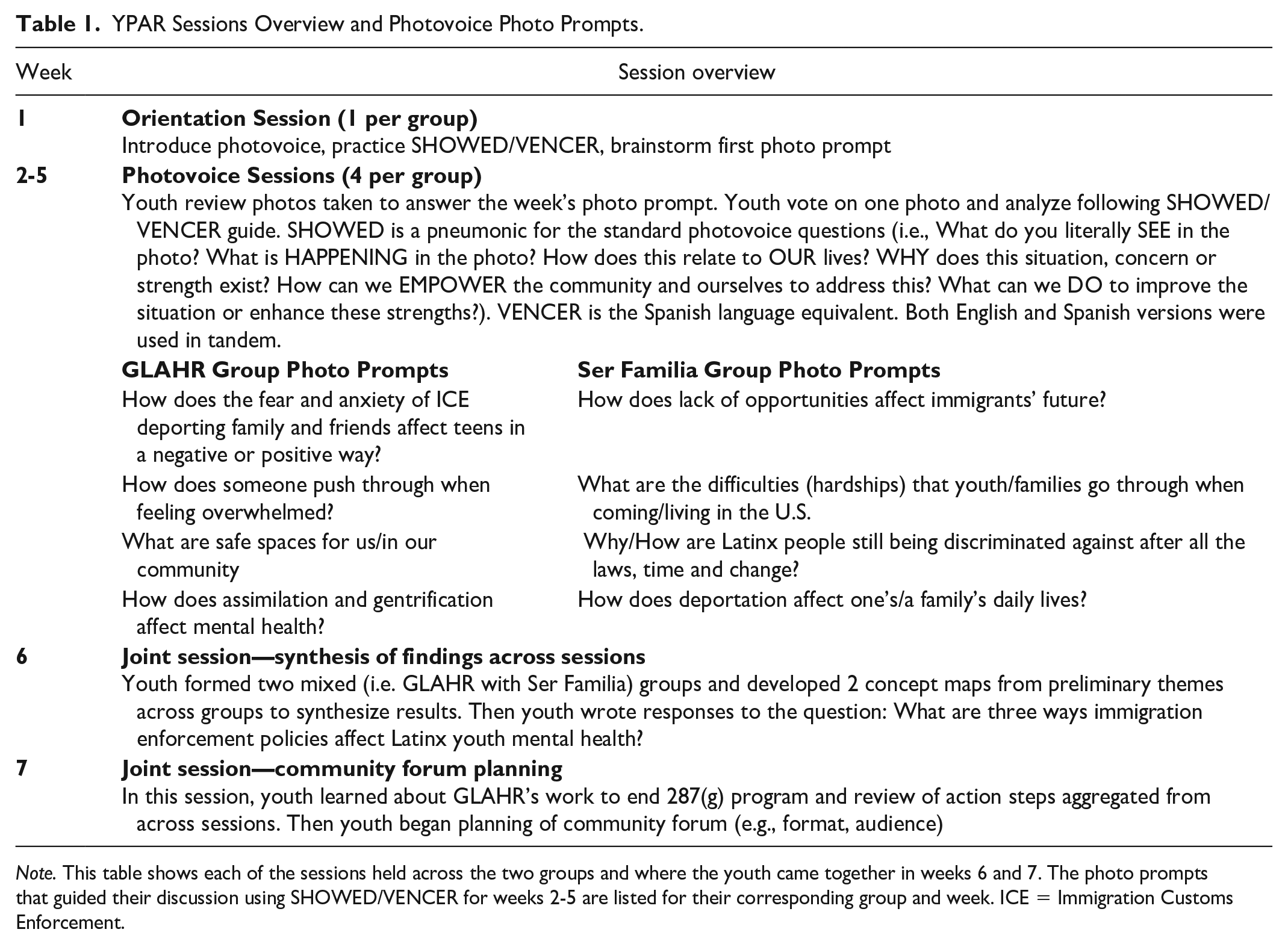
Note. This table shows each of the sessions held across the two groups and where the youth came together in weeks 6 and 7. The photo prompts that guided their discussion using SHOWED/VENCER for weeks 2-5 are listed for their corresponding group and week. ICE = Immigration Customs Enforcement.
Photovoice Data Analyses
Critical dialogue and analysis occurred in each photovoice session, resulting in preliminary themes and action steps (e.g., invest in safe spaces; advocate for our rights) at the end of each session. Preliminary themes were aggregated into concept maps, summary findings and action steps in the final two joint sessions. We recorded and professionally transcribed the photo-prompt brainstorming and all SHOWED/VENCER photo-discussions resulting in 10 transcripts, primarily in English, with some parts in Spanish and Spanglish. The transcripts, youth summary findings, and action steps were imported into MAXQDA, a qualitative data management and analysis software. We followed an analytic approach rooted in principles of grounded theory whereby we memoed the transcripts, youth concept maps, and youth summary findings and action steps to develop an inductive codebook (Hennink et al., 2020). The final, refined codebook contained 23 codes related to racism, relationships, community, mental well-being, spaces, and gender.
Two coders separately coded all data and met regularly to review and revise coding, yielding intercoder agreement of ≥95% agreement per transcript. Next, the PI and two graduate research assistants (GRAs) analyzed each code and created a thick description with supporting quotes for each code. These descriptions were compared, categorized, and then synthesized to understand how they answer the research question through two in-person analysis sessions with the PI, one young adult CAB member, two photovoice youth partners and three GRAs. In this session, youth partners (authors 2 and 3), reviewed a MAXQDA diagram showing the intersection of codes and thick descriptions, and chose key intersections to compare thick descriptions of codes against one another. They drew diagrams, annotated, and discussed the relationships between codes and grouped them into broader categories over several hours, and arrived at the conceptual model. The PI conducted a final stage of writing, analysis, synthesis, and refinement of concepts to validate the conceptual model against the data and then validate and refine the model again with in-person meetings with youth, CAB, and GRA coauthors.
Youth Survey
In the first session, youth completed an online survey via Qualtrics. The survey contained 20 questions that were developed, reviewed and refined by the CAB about youth demographics, exposure to immigration enforcement and police encounters, and previous involvement with immigrant rights advocacy. Descriptive statistics of the sample were produced in Qualtrics.
Results
Youth Survey Results
Youth Demographics
All 10 of the youth identified as Latinx, and none identified with any additional race or ethnicity (e.g., Black or Indigenous). All but one youth partner identified as being of Mexican heritage, and two youth were immigrants to the United States. All of the youth had immigrant parents, and the majority of them had a family member who was undocumented. All youth identified as cisgender: five boys and five girls; three identified as bisexual, pansexual or sexually fluid, six as heterosexual, and one undisclosed.
Exposure to Police and ICE Enforcement
Youth reported encounters with law enforcement in their daily lives, including being stopped in a road block (40%), stopped for a traffic violation (30%), or stopped in a public place, such as a park, gas station, or while playing outside (20%). None of the youth reported encounters with being monitored closely by school resource officers, being arrested, or being threatened by law enforcement. Many reported that they were exposed to the detention or deportation of a family member (60%) or someone in their community (80%).
Photovoice Results
Our description and comparison analysis yielded an explanatory model of how immigration policy enforcement affected Latinx youth mental health, primarily through policing and deportation, stereotypes and discrimination, and marginalization, exclusion, and neglect (Figure 1). We present how youth perceive and describe their experiences with immigration policies as criminalizing of Latinx immigrants, then describe each of the mechanisms of the model. A selection of youth photos that illustrate these mechanisms are displayed in Table 2 and supporting quotes for each mechanism are presented in Table 3. We close with proposed summary of youth-recommended action steps for youth resistance and resilience.
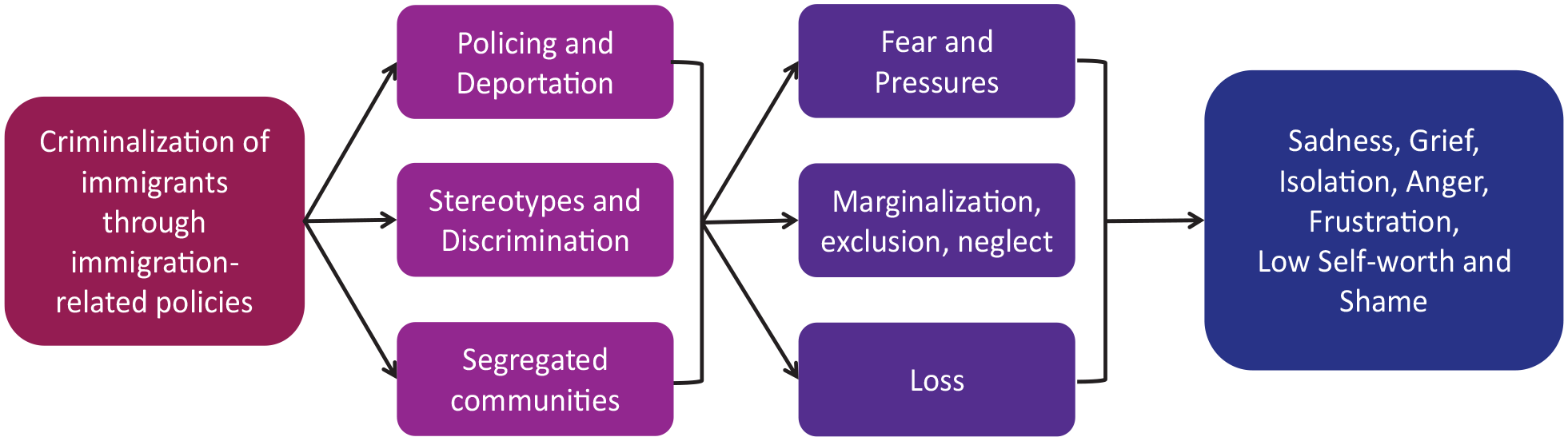
How Immigration Policy Climate and Enforcement Influence Latinx Youth Mental Health, a Conceptual Model Grounded in Data From Eight Photovoice Sessions and One Data Synthesis Session With 10 Latinx Youth in an Aggressive Enforcement Context.
Youth Photos Depicting How Immigration Policy Enforcement Affect Latinx Youth Mental Health.
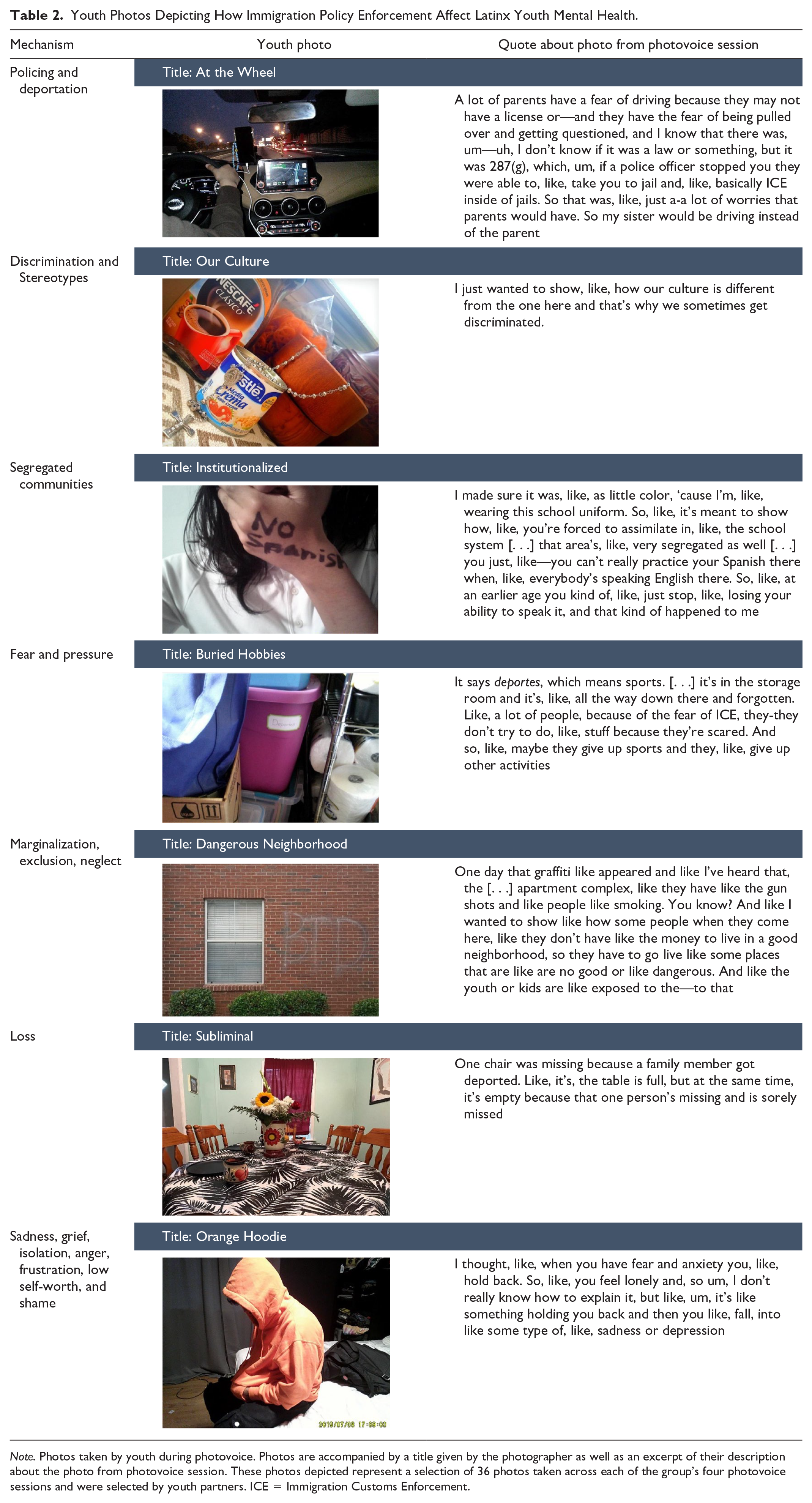
Note. Photos taken by youth during photovoice. Photos are accompanied by a title given by the photographer as well as an excerpt of their description about the photo from photovoice session. These photos depicted represent a selection of 36 photos taken across each of the group’s four photovoice sessions and were selected by youth partners. ICE = Immigration Customs Enforcement.
Quotes From Photovoice Sessions With Latinx Youth Describing Mechanisms of Immigration Enforcement Policies on Latinx Youth Mental Health.
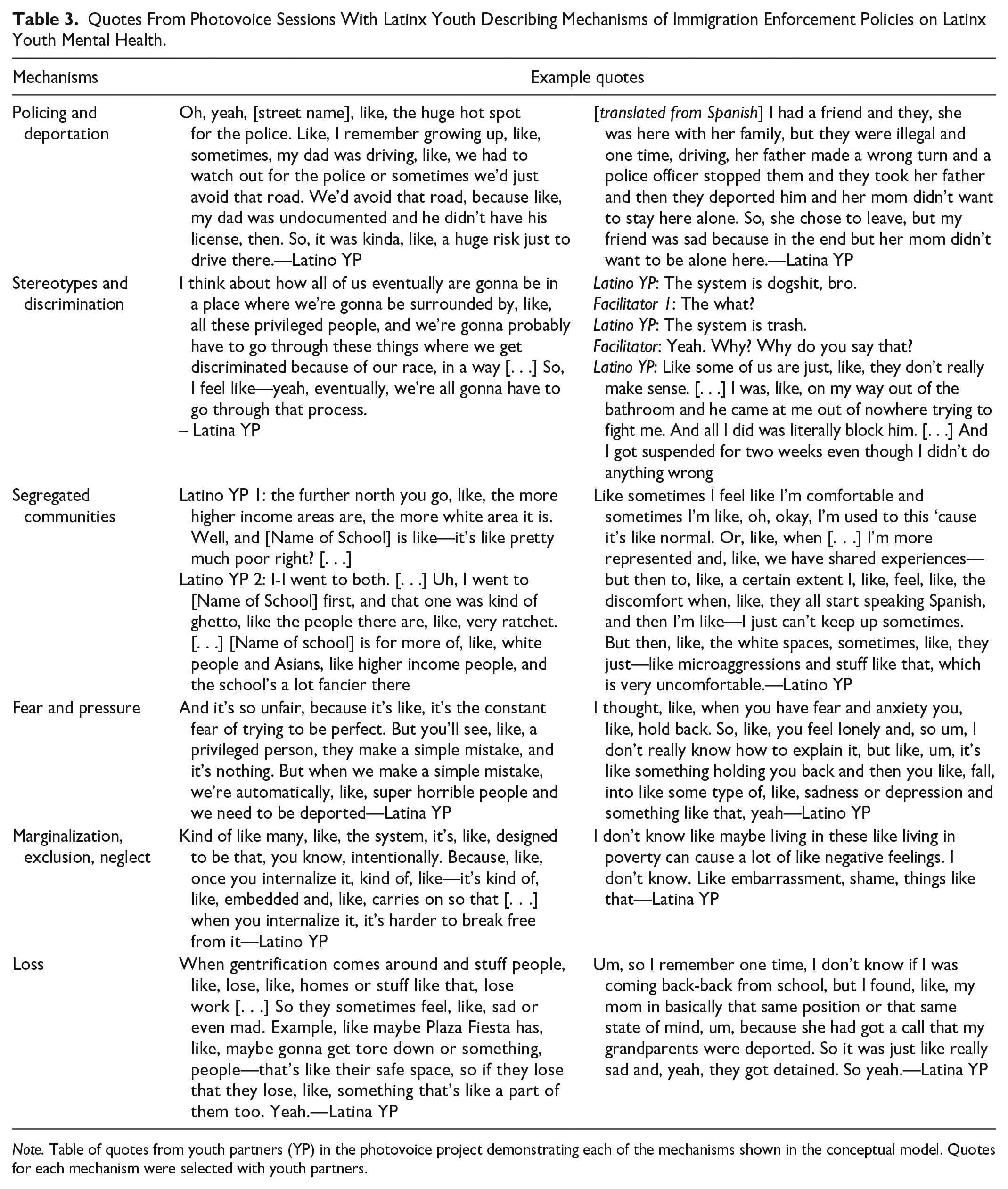
Note. Table of quotes from youth partners (YP) in the photovoice project demonstrating each of the mechanisms shown in the conceptual model. Quotes for each mechanism were selected with youth partners.
Immigration Enforcement Policies That Criminalize Latinx Immigrants
Youth talked about multiple immigration enforcement policies that affected them, friends, families, and the broader community. They discussed policies about who is allowed to migrate in and out of the United States and the Mexican border that separates families residing on either side. They mentioned knowing young people, parents and family members who faced an expensive and treacherous journey to enter the United States because of the border and migration laws that denied them entry.
They discussed “policies and tactics used to scare and control us” that included the border, 287(g), ICE raids, policing Latinx and low-income neighborhoods, and deportation. Two youth specifically named the 287(g) program: don’t know if it was a law or something, but it was 287(g), which, um, if a police officer stopped you they were able to, like, take you to jail and, like, basically ICE inside of jails. So that was, like, just a-a lot of worries that parents would have.
Another youth spoke of 287(g) saying: “this was like before 287(g) was ended, so it was like those ICE raids that were going on [. . .] we were, like, living in constant fear.” Others more broadly spoke to the policy and its consequences, describing fear of driving and the ways their families and communities adapted their lives to reduce driving or to drive routes that were less patrolled. For example, one of the youth shared: “We’d avoid that road, because like, my dad was undocumented and he didn’t have his license, then. So, it was kinda, like, a huge risk just to drive there.”
More broadly, youth discussed the context of immigration policies and underlying narratives. For example, the concept of citizenship for immigrants was often discussed as being “earned” or having to show you were “deserving” through hard work and being a “good citizen.” They said that these policies communicate a message that only “certain people” deserve access to the United States and others are considered “bad” or “criminal.” They also discussed the need to abolish the border, detention centers, and ICE and how they stem from racism and discrimination.
Policing and Deportation
Youth described how police surveilled their neighborhoods and schools and how local police and ICE targeted Latinx immigrants in their places of employment, grocery stores, and the roads they drive to go to work or go about everyday life. As a result, Latinx youth and families had to adapt their lives to not be targeted, causing ongoing fear and pressure. Youth dealt with many losses related to deportation and deportation fears. For example, one youth reported in their summary findings on how immigration policies affect Latinx youth mental health: “Living in fear of police and having to hide and give up on stuff because you don’t want to get people deported” and another youth reported: “I can never feel safe in places that I am supposed to feel safe in.”
Stereotypes and Discrimination
Youth conversed frequently about negative stereotypes, how they are perpetuated, and the impact of stereotypes. Youth discussed how Latinx people are often criminalized and viewed as people who are “bad,” even in movies and media, and that the use of the word “illegal” criminalizes Latinx people. Youth described feeling criminalized in spaces that Latinx youth frequented, especially in “Black and Brown” schools with a prominent police presence. They said that immigrant Latinx youth are treated differently by their peers and are bullied, especially if they speak Spanish or dress differently. Furthermore, neighborhoods that were predominantly Latinx and Black were labeled as “ratchet” and “ghetto.” One youth explained that immigration enforcement policies lead to stereotypes and that these “Negative stigmas create feelings of self-hate/insecurities in schools/other places.”
Segregated Communities
Youth frequently discussed the segregation of schools and neighborhoods based on income and race and its impact on youth experiences and opportunities for the future; low-income schools and neighborhoods where youth and their peers lived did not feel safe (e.g., lack of sidewalks, vandalism, overpoliced) or cared for (e.g., by landlords, the city, or county). They also said that many Latinx youth feel like they are not valued or are not treated as deserving of safety and stability given by good schools, quality housing, safe neighborhoods, safe streets, and economic and educational opportunities. They expressed that gentrification and segregation was evident and intentional, and led to loss of safe spaces. They highlighted feelings of inferiority and shame that came from navigating segregated neighborhoods and schools (e.g., trying to fit in at predominantly White schools or classroom vs feeling neglected due to lack of resources at predominantly Black and Brown schools).
Fear and Pressure
In relation to policing and deportation, youth said that they “inherit” their parents’ fears and live with these fears and anxieties about the future from a young age. They also said fear of deportation “makes us scared to do everyday things.” They also talked about the pressure to not make mistakes that could make their family targeted. The immensity of hardships their parents faced as immigrants made them feel pressure to make their sacrifice “worth it” and to be successful. Youth said this pressure led to feelings of “constantly being on alert,” instability, sadness, grief, and isolation. They also expressed difficulty sharing their feelings with parents because their struggles and sacrifices as immigrants were “worse.” For example, one youth shared that youth are “Bottling up emotions because there are bigger problems in your family and feeling lonely.” They said that stereotypes and discrimination meant that Latinx youth could not make the mistakes that others can, pressuring youth to be perfect and assimilate into White culture as a “model minority.” For example, one youth reported in their summary findings: “It creates fear in the youth so they feel like they have to assimilate and become model minorities.” They said pressures to assimilate led loss of culture and their authentic self, bringing isolation, grief, and low self-worth.
Marginalization, Exclusion, and Neglect
Youth described many forms of systematic marginalization, exclusion, and neglect that impacted Latinx youth and communities. They highlighted how discrimination against Latinx people and undocumented immigrants in education and the economy created economic hardship, constrained housing choices, and limited educational opportunities due to the segregation of schools and neighborhoods. They described youth losing or avoiding opportunities due to immigration status of themselves or parents, how undocumented immigrants are banned from Georgia’s top universities and cannot access in-state tuition, and that undocumented workers are exploited and underpaid. They related these issues to segregation and gentrification that also marginalize and exclude Latinx communities from opportunities and safe neighborhoods and schools. In their summary findings, one youth said: “These racist laws/policies create a criminalized view of/towards us, which can make us feel abandoned/forgotten by society/shamed about our culture.” Youth also discussed feelings of unworthiness, anger, frustration, sadness, “self-hate,” and shame related to systematic marginalization, exclusion, and neglect. Youth expressed feeling uncertain about the future and that many of their peers feel defeated and hopeless about the future.
Loss
Youth discussed many experiences of loss, including loss of family members and friends, loss of stability, loss of opportunity, loss of culture, and loss of childhood. The many losses described were related to deportation that destabilized families emotionally and economically. For example, one youth wrote a consequence of immigration enforcement is “Loosing family and friends that I love and have deep connection with.” Stereotypes and discrimination led to loss of opportunity and pressure to assimilate resulting in loss of culture; and that “gentrification makes people lose their safe spaces and/or lose their jobs.” Loss of childhood permeated much of discussion, with youth needing to take on responsibilities that belong to their caregivers (e.g., driving, working), and even more so if a family member was detained or deported. One youth reported: “As a result of parents being taken away, children often are forced to grow up and develop when they should be enjoying their youth.” Finally, due to fear of policing and deportation, youth with undocumented family members have to give up activities, interests, and opportunities to avoid the risk of deportation.
Youth Resilience and Resistance
As characterized above, youth described feelings of sadness, isolation, grief, hopelessness, anger, and low-self-worth related to immigration enforcement policies. They also expressed a desire to not have to carry these burdens, and the strength of Latinx youth to resist and be resilient, as expressed by one youth partner: “It makes us stronger—we are able to form communities and fight these problems, even though we shouldn’t have to.” They recommended the following action steps: onsite school therapists, investing in safe spaces, knowing and advocating for our rights, solidarity in resisting discrimination, protesting against inequalities, and creating support groups and networks.
Discussion
Our research advances the literature on the role of immigration policies on Latinx youth mental health by applying critical methodology to better understand Latinx youth experiences in a community with a long history of aggressive immigration enforcement under the 287(g) program. Our research was carried out in partnership with 10 youth over a period of 7 weeks, with more than 20 hours of in-person critical analysis and dialogue guided by photos taken by youth. Then, these data were analyzed utilizing grounded theory principles to explain how immigration policies impact Latinx youth mental health. All of the youth engaged in the project had experiences with interior immigration enforcement under the 287(g) program resulting in the deportation of friends, family, and members of their community, and described how underlying racism, ethnocentrism, and nativism extended beyond enforcement policies into their schools, neighborhoods, and cultural spaces. We found that interior immigration enforcement policy led to feelings of sadness, isolation and grief via policing and deportation, discrimination and stereotypes about Latinx immigrants, and segregated communities. We also found that interior immigration enforcement was part of broader systems of marginalization (i.e., assimilation, gentrification, and segregation) bringing many pressures and losses into their everyday lives.
Our findings from Latinx youth experiences and perspectives provide evidence of how fear and exclusion from interior immigration enforcement policy permeate Latinx youth environments and become internalized, with potential long-term impacts across the life course. There is a growing body of quantitative and qualitative literature describing the experiences of deportation on Latinx youth mental health, and we found Latinx youth continue to have fear of family separation more than 1 year after the 287(g) program ended (Barajas-Gonzalez et al., 2021; Torres et al., 2022). Youth also made evident that the nativism, ethnocentrism, and racism that fueled the high levels of deportation in their communities still persist in introducing fear and marginalization through segregation, discrimination, and gentrification. Our findings add to the literature documenting the legacy left behind in communities impacted by aggressive immigration enforcement, and identifies oppressive systems that work together to marginalize Latinx communities.
Furthermore, our finding that Latinx youth often adopt a worldview that Latinx people have to prove their worth, provoking perfectionism, hopelessness, and uncertainty, demonstrates the harms of internalized oppression on the Latinx adolescent psyche (David et al., 2019; Torres et al., 2022; Trent et al., 2019). Internalized racism is one of multiple forms of internalized oppressions (e.g., sexism, xenophobia) that has a growing theoretical and evidence base to explain its relationship to structural racism, discrimination and negative developmental and behavioral outcomes in adolescence (David et al., 2019; Torres et al., 2022; Trent et al., 2019). Our findings add to the studies among adolescents of color that have found higher levels of internalized racism are associated with lower self-esteem, greater hopelessness and resignation as Latinx youth in our study described this relationship (Torres et al., 2022; Trent et al., 2019). Further exploration of internalized racism among Latinx youth is important given the critical adolescent period for identity development, and should take into account the racial diversity of the Latinx population (David et al., 2019; Torres et al., 2022). Interventions that prioritize peer support spaces to discuss assimilation pressures and internalized oppressions and their sources could ameliorate these chronic stressors among Latinx adolescents (Piña-Watson et al., 2018). Family-level interventions that integrate ethno-racial socialization can support youth in retaining cultural ties and pride while also mitigating internalized oppressions (Torres et al., 2022).
Our study found existing strengths and resilience in Latinx youth, and more research and action focused on resistance and resilience is needed. In parallel with addressing policies that perpetuate family separation, stereotypes and discrimination, systematic exclusion and loss, researchers and practitioners should prioritize providing adolescents with environments and tools to cope with ongoing oppression. The Healing Ethno and Racial Trauma (HEART) Model, rooted in Liberation Psychology principles, is one such strategy that integrates individual and family therapies and programs with immigrant rights awareness and advocacy that can guide future research and interventions that strengthen resilience through resistance to oppression (Chavez-Dueñas et al., 2019).
Future quantitative research should examine Latinx youth mental health changes following the end of 287(g) programs across counties and qualitatively examine the conditions for youth still living under these programs. In addition, focus on how experiences and perceptions of immigration policy for youth in the interior United States may differ for Latinx youth living at the border is merited. In addition, the psychosocial impacts of immigration policy enforcement for migrant children and youth who have been detained at the border require examination. Finally, future research should identify community- and school-based strategies that address discrimination and feelings of neglect, isolation and grief that draw upon youth strengths and cultural assets.
Strengths and Limitations
As a YPAR study utilizing photovoice, we bring the strength of youth-led research from data collection, analysis and interpretation, to dissemination. This youth-led research brings a novel lens to understanding and explaining youth experiences of growing up in an aggressive deportation context in the Southeastern United States. The goal of this research is not to be generalizable, but to be local and community-based with the intention of community-based action. In addition, our study offers a conceptual model grounded in Latinx youth lived experiences that may be transferable to similar contexts and supports future research to promote mental health equity. Though inclusive of a wide age range with some diversity in gender and sexual orientation, our study does not include perspectives of Latinx youth who are Black, Indigenous or from Central America. We also did not include recent immigrant youth and unaccompanied minors who have distinct experiences with immigration policy enforcement.
Finally, our study is strengthened by having a Latinx principal investigator, team of facilitators, community partners, CAB, and research assistants with shared culture, language, and experiences with Latinx youth research partners. Members of the research team involved in design, facilitation, and coding of data were reflexive as to their positionality, their role in the research process and centering the power and autonomy of youth as partners in research. These strengths grounded our results in the truths of the Latinx youth living in Gwinnett County.
Policy and Practice Implications
Through a Latinx youth-led photovoice study, we found further evidence that interior immigration enforcement policy, such as the 287(g) program, is deleterious to the Latinx community and presents a serious threat to Latinx youth mental health. Our research points to potential mechanisms by which immigration enforcement policies and exclusionary immigration-related policies can lead to negative affect in Latinx youth. By identifying these potential mechanisms, we highlight opportunities for intervention through schools, communities, and local policy-change that can promote Latinx youth mental health. Schools with large Latinx populations in aggressive enforcement settings require greater funding and mental health support to equitably serve Latinx youth. Creating sanctuary spaces where youth can safely share their emotions and experiences and be free from discrimination, fear and assimilation pressures should be a priority for community-based youth-serving programs.
Footnotes
Acknowledgements
This research would not be possible without the partnerships of Georgia Latino Alliance for Human Rights, Ser Familia, youth partners, and the community action board members. The authors acknowledge and appreciate their contributions.
Declaration of Conflicting Interests
The author(s) declared no potential conflicts of interest with respect to the research, authorship, and/or publication of this article.
Funding
The author(s) disclosed receipt of the following financial support for the research, authorship, and/or publication of this article: This research was funded by the National Institute of Mental Health R36MH127827. This research was also funded by the Emory Prevention Research Center Mini-Grant for Community-Egnaged Student Research.
