




Abstract
Adolescents’ intake of vegetables and fruits is generally low, and many demonstrate unhealthy eating behaviors. Food literacy may be key to improving adolescents’ nutrition. However, the relationship between food literacy, fruit and vegetable intake, and other healthy eating behaviors remains unclear, as well as how these relationships may differ among boys and girls. This study assessed the relationship between food literacy (including food skills and cooking skills), vegetable and fruit consumption, and other eating behaviors of adolescents. This cross-sectional study included 1,054 students, including 467 boys and 570 girls from five francophone high schools in New Brunswick, Canada. Quantitative data on students’ food and cooking skills, vegetable and fruit consumption, and other eating behaviors were collected with a self-reported questionnaire. Multilevel regressions were used to assess the relationship between food literacy, students’ consumption of vegetables and fruits, and other eating behaviors. Better cooking skills were associated with healthier eating behaviors and greater vegetable and fruit consumption for boys and girls. Better food skills were also associated with healthier eating behaviors and greater vegetable and fruit consumption among both genders. These findings highlight the importance of improving food literacy among adolescents. Public health interventions should focus on increasing cooking and food skills to improve adolescents’ nutrition.
Adolescence is often accompanied by changes in eating behavior, including skipping breakfast or other meals, eating at restaurants, watching television while eating, and not eating meals with family members (Lipsky & Iannotti, 2012; Spear, 2002; Brown, 2020). Adolescents also tend to have low intakes of vegetables and fruits, which are essential to a healthy diet due to their high concentrations of vitamins, minerals, fiber, and antioxidants (Slavin & Lloyd, 2012). In Canada, only 61% of boys and 78% of girls between the ages of 14 and 18 years consume a minimum of five servings of vegetables and fruits daily (Polsky & Garriguet, 2020). These poor eating behaviors are concerning, as they can lead to obesity, nutritional deficiencies, and long-term health consequences (Bowman et al., 2004; Centers for Disease Control and Prevention, 1996; do Amaral e Melo et al., 2020; Lipsky & Iannotti, 2012).
Food literacy may play an important role in shaping adolescents’ dietary intake and eating behaviors (Vaitkeviciute et al., 2014). Food literacy is an emerging concept that is defined as “a collection of interrelated knowledge, skills, and behaviors required to plan, manage, select, prepare, and eat foods to meet needs and determine intake” (Vidgen & Gallegos, 2014). Compared with nutrition literacy, which focuses primarily on the abilities required to understand nutrition, food literacy incorporates a broad spectrum of knowledge and skills needed to make healthy and responsible nutrition choices (Krause et al., 2018). Definitions of food literacy have traditionally focused on knowledge, skills, and behaviors; food and health choices; and to a lesser extent, food systems, emotions, and culture (Truman et al., 2017). Among children, the focus has been primarily on developing basic knowledge and practical skills needed to develop more complex food literacy skills that require greater cognitive capacities (Dean et al., 2021). Knowledge is an important factor in changing eating behaviors and dietary intake (Gracey et al., 1996; McAleese & Rankin, 2007; Osler & Hansen, 1993; Tsartsali et al., 2009; Venter & Winterbach, 2010) and is the basis of well-respected theories such as Bandura’s Social Cognitive Theory (Bandura, 1977). However, some studies suggest that knowledge alone may not be sufficient (Chapman et al., 1997; Mirmiran et al., 2007; Morgan et al., 2010). Among adolescents, basic cooking and food skills are also needed to help plan, manage, select, and prepare healthy foods, and develop more complex food literacy skills later in life. While it is recognized that food literacy interventions must go beyond solely increasing nutrition knowledge (Vaitkeviciute et al., 2014), a 2019 systematic review on food literacy programs in secondary schools found that few have done so (Bailey et al., 2019). Of the 37 studies included in this review, only six assessed cooking or food skills (e.g., reading nutrition labels, preparing or shopping for food), but none evaluated both.
Gender differences may play a role in how food literacy translates to a better diet or healthier eating behaviors (Bailey et al., 2019). Previous studies have documented gender differences in nutritional knowledge, food preferences, food choices, and nutritional practices (Bailey et al., 2019; Jaenke et al., 2012; Otsuka et al., 2020; Rasmussen et al., 2006). For example, girls have been shown to have greater nutritional knowledge than boys (Gracey et al., 1996; Mirmiran et al., 2007; Pirouznia, 2001; Venter & Winterbach, 2010), while one study reported that boys showed better nutritional practices despite having lower levels of knowledge than girls (Mirmiran et al., 2007). These findings suggest that it is necessary to understand how various aspects of food literacy relate to adolescents’ dietary intake and eating behaviors and how gender influences those relationships. Filling this knowledge gap may help develop more effective interventions among adolescent girls and boys. Therefore, this study aimed to investigate the associations between food literacy, including food and cooking skills, and adolescent boys’ and girls’ consumption of vegetables and fruits and other eating behaviors.
Methods
Study Design and Sample
Baseline data obtained from adolescents enrolled in a quasi-experimental study were used for this secondary cross-sectional analysis. The quasi-experimental study (NCT04605224) was conducted in five francophone high schools in New Brunswick, Canada, and aimed to evaluate the effectiveness of the elective “Professional Cooking” course (experimental group) on adolescents’ food literacy, dietary intake, and eating behaviors, as compared with students enrolled in a mandatory “Personal and Social Development” course (control group). These schools were recruited because they offered the “Professional Cooking” course to at least 50 students each year. All students enrolled in either course were eligible to participate in the study. Signed and informed consent was obtained from students before data collection. All students were informed of their right to answer the questionnaire in its entirety, select specific questions to answer, or exclude themselves from answering the questionnaire altogether. Considering the age of the students and the minimal risks associated with their participation in the study, parental consent was not required. Ethical approval was obtained from the Comité d’éthique de la recherche sur les êtres humains at the Université de Moncton (#1920-002).
Data Collection Procedures and Measures
Study participants completed a pen-and-paper self-administered questionnaire within class hours during the first week of the fall (September) and winter (January) semesters of the 2019–2020 school year. The questionnaire assessed students’ eating behaviors, dietary intake, food skills, and cooking skills. The questionnaire was developed based on two previously validated questionnaires (Lavelle et al., 2017; Wilson et al., 2008) and one question from the New Brunswick Student Wellness Survey (New Brunswick Health Council, 2016). Since this study’s participants were francophones, questionnaire items not already available in French were translated using the back-translation protocol (Brislin, 1970).
Vegetable and Fruit Consumption
Considering the importance of vegetables and fruits for a healthy diet (Slavin & Lloyd, 2012) and their low intake among adolescents (Polsky & Garriguet, 2020), this food group was considered one of this study’s primary outcomes. Participants’ consumption of vegetables and fruits was measured with five questions (Wilson et al., 2008) which were found to have good test–retest reliability (intraclass correlation coefficient [ICC] = .66, p < .001 for vegetable intake and ICC = .66, p < .05 for fruit intake) and moderately correlated with a 7-day food diary (r = .36, p < .01 for vegetable consumption and r = .48, p < .01 for fruit consumption)
Two of the five questions measured students’ usual daily consumption of fruits, “How many servings of fruits do you usually eat each day? (one serving = one medium piece, or two small pieces of fruit, for example, mandarins or apricots, or one cup of diced pieces),” and vegetables “How many servings of vegetables do you usually eat each day? (one serving = one cup of salad vegetables, or half a cup of cooked vegetables, or one medium potato)”. Response options included “I do not eat fruits/vegetables” (0 point), “less than one serving per day” (1 point), “one to two servings per day” (2 points), “three to five servings a day” (3 points), and “more than five portions a day” (4 points).
A third question asked students to report whether they had consumed specific foods on the day of the questionnaire (i.e., “Think about today. Describe what you eat at each time . . . ”) and when (i.e., breakfast, lunch, or snack). This question was followed by 19 food items, including “vegetables or salad,” “fresh or canned fruits,” and “dried fruits.” One point was awarded each time the latter items were checked (Wilson et al., 2008). A maximum of three points per vegetable/fruit item was possible, for a total of 9 points.
Two questions included a list of 15 fruits and 25 vegetables. Students were asked to identify which fruits (i.e., “Please indicate if you ate this fruit yesterday, by ticking the box that applies to you, for each fruit”) and vegetables (i.e., “Please indicate if you ate this vegetable yesterday, by ticking the box that applies to you, for each vegetable”) they consumed the day before the questionnaire. Possible scores of 0 to 4 points were awarded to each question based on the number of vegetables and fruits students reported consuming. For fruits, points were awarded as follows: none consumed = 0 point, 1 fruit = 1 point, 2 to 3 fruits = 2 points, 4 to 5 fruits = 3 points, and ≥6 fruits = 4 points. For vegetables, points were awarded as follows: none consumed = 0 point, 1 to 3 vegetables = 1 point, 4 to 6 vegetables = 2 points, 7 to 9 vegetables = 3 points, and ≥10 vegetables = 4 points (Wilson et al., 2008).
The scores of each of these five questions were summed to provide a possible total score of 25 points.
Other Eating Behaviors
Other eating behaviors were assessed with two questions. The first question assessed the frequency of breakfast consumption and was based on the province-wide New Brunswick Student Wellness Survey (New Brunswick Health Council, 2016). Specifically, students were asked to report how many times they had consumed breakfast during the week that preceded the questionnaire (i.e., “Last week, how many times did you eat breakfast?”), with response options ranging from none (0 point) to seven times (7 points).
A second question was used to measure other healthy eating behaviors (Wilson et al., 2008). This question has shown to have good test–retest reliability (ICC = .64, p < .001) and moderately correlated with a 7-day food diary (r = .46, p < .01; Wilson et al., 2008). Specifically, this question asked, “How often do you usually do the following?” followed by six items including carrying a water bottle, helping their family choose or buy groceries, eating dinner with most of their family, and eating dinner or snacks in front of the television (the latter question is reversed scored). Response options for each behavior included the following: never, rarely, less than once a week, approximately once or twice a week, approximately four to six times a week, or every day. A score of 0 to 3 points was awarded to each item, where a higher score represented a more frequent occurrence of a specific healthy eating behavior. A total score of 18 points was possible for this question (Wilson et al., 2008).
The scores of both questions were summed to provide a total possible score of 25 points.
Cooking Skills
Participants’ cooking skills were assessed with one question (Lavelle et al., 2017), which has shown to be highly reliable (2-week test–retest: r = .815, p < .001). This question also showed high discriminate validity by identifying significant differences (p < .05) in mean scores between “experienced food preparers” and “food preparation novices” (Lavelle et al., 2017). This question asked, “Please take a look at the following list. If you did it, please say how good you are at it on a scale of 1 to 7, where 1 means very poor and 7 means very good. If you have never done it, tick “Never/rarely”,” followed by 14 different cooking skills (e.g., chop, mix, and stir foods; blend foods to make them smooth; steam food; boil or simmer food; etc.). Response options ranged from 1 (very poor) to 7 (very good), with a score of 0 being awarded if students responded that they never or rarely do the cooking activity. The total possible score for this question was 98 points.
Food Skills
Food skills were assessed with one question (Lavelle et al., 2017), which has also been shown to be highly reliable (2-week test–retest: r = .872, p < .001). Similarly to cooking skills, the question showed high discriminate validity by identifying significant differences (p < .01) in mean scores between “experienced food preparers” and “food preparation novices” (Lavelle et al., 2017). This question asked, “Please take a look at the following food practices. If you did it, please say how good you are at it on a scale of 1 to 7, where 1 means very poor and 7 means very good. If you have never done it, tick “Never/rarely”,” followed by 12 different food skills (e.g., plan meals, prepare meals in advance, follow a recipe when cooking, shop with a grocery list, etc.). Response options ranged from 1 (very poor) to 7 (very good), with a score of 0 being awarded if students responded that they never or rarely do the food skill. The total possible score for this question was 84 points.
Confounding Variables
Students’ age, gender, and ethnicity were collected directly from the student questionnaires. Age was considered a potential confounding variable as older adolescents may have greater cognitive and fine motor skills than younger adolescents, leading to differences in levels of food literacy (Dean et al., 2021). Gender options included “boy,” “girl,” “other,” and “rather not answer.” Using publicly available geospatial information (Community Information Database, 2011), schools were defined as being in an urban area if they were in census metropolitan areas, census agglomerations, or strong metropolitan influenced zone (MIZ). Schools located in moderate, weak, or no MIZ were defined as being in a rural area. Since students who chose to enroll in the “Professional Cooking” or “Introduction to Nutrition” electives may demonstrate better food literacy, healthier eating behaviors, or greater vegetable and fruit consumption than students who did not enroll in those courses, information on current or prior enrollment was collected through the questionnaires and considered as potential confounding variables.
Statistical Analyses
Statistical analyses were conducted in the fall of 2020 using RStudio, 1.2.1335. Means and standard deviations were generated for all study variables for all students and boys and girls separately. Multilevel linear regressions were used to assess the relationship between adolescents’ overall food literacy, cooking skills, food skills, vegetable and fruit consumption, and other eating behaviors. A three-step stepwise regression approach was used to assess the change in total variance explained in the dependent variable by adding each independent variable to the model (McDonald, 2014). This approach helped create the best fitting model for each independent variable. In step 1, univariate models were generated. In step 2, all confounding variables (rurality, age, ethnicity, and current or previous enrollment in an “Introduction to Nutrition” course or a “Professional Cooking” course at school) were added to the models in step 1. In step 3, models in step 2 were fully adjusted by including schools at an additional level to account for potential clustering. These steps were conducted for students of all genders (including nonbinary students) and boys and girls separately. In addition to the abovementioned confounding variables, models that included all students were also adjusted for gender. Since only 17 students identified their gender as “other,” separate nonbinary gender analyses were not conducted.
Results
A total of 1,054 students, including 467 boys (44%) and 570 girls (54%), aged between 13 and 19 years old (M = 15.5 ± 1.2), completed the questionnaire. Student characteristics are presented in Table 1. The majority of the participants identified as Caucasian (90.3%) and attended a school located in an urban area (67.0%). Less than half of the participants were currently enrolled or had previously been enrolled in the “Professional Cooking” course (36.2%). Few participants were currently enrolled or had previously been enrolled in the “Introduction to Nutrition” course (8.7%).
Characteristics of the Study Participants (N = 1,054), by Gender.
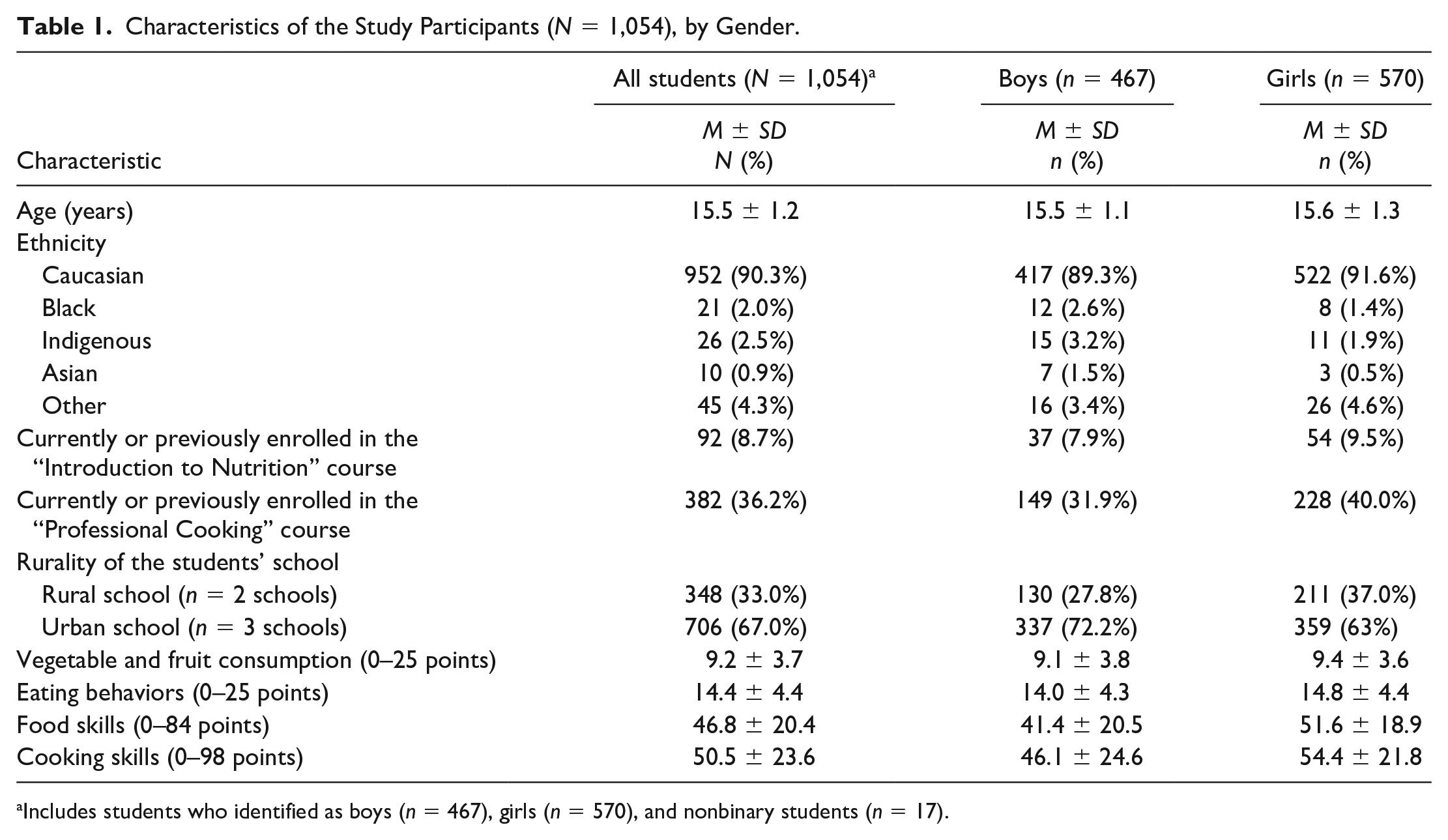
Includes students who identified as boys (n = 467), girls (n = 570), and nonbinary students (n = 17).
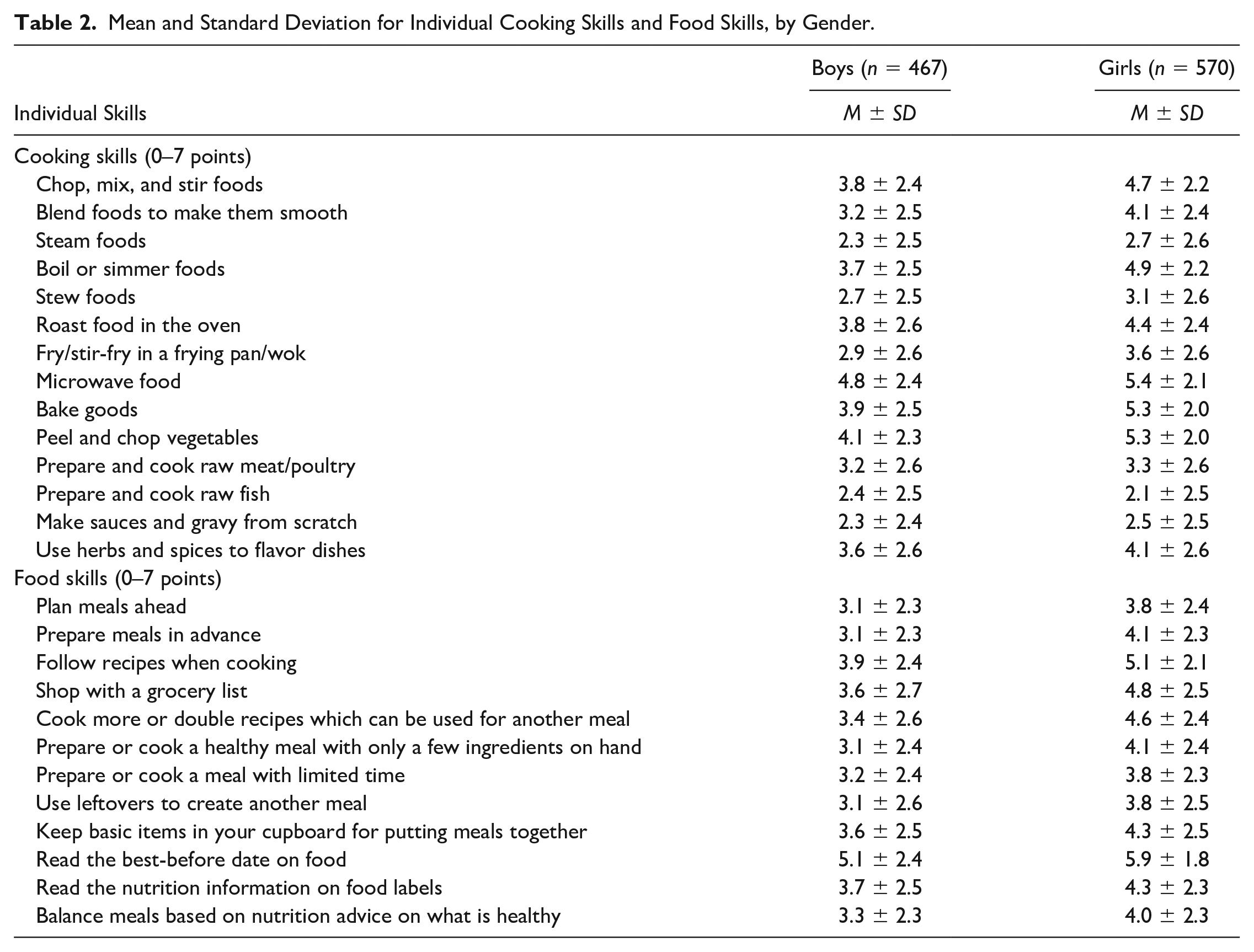
Mean scores for cooking skills and food skills were 54.4 and 51.6 for girls, and 46.1 and 41.4 for boys (Table 1), respectively. Mean scores for individual cooking and food skills are presented in Table 2. Results show relatively low scores for all skills among both genders. On average, adolescents felt most confident in their ability to microwave foods, peel and chop vegetables, and bake goods, but least confident in making sauces from scratch, preparing raw fish, and steaming foods. Overall, mean scores for food skills were slightly greater than those for cooking skills. Adolescents reported feeling most confident in following recipes when cooking and reading the best-before date on food. On average, girls reported having low confidence in their ability to plan meals ahead, use leftovers to create another meal, and prepare or cook a meal with limited time, while boys also reported having low confidence in their ability to prepare or cook healthy meals with limited ingredients and prepare meals in advance. While mean scores for food and cooking skills varied slightly between boys and girls, these differences were not significant. Mean scores for vegetable and fruit consumption and other eating behaviors were low in both genders (vegetable and fruit consumption: 9.4 for girls and 9.1 for boys; other eating behaviors: 14.8 for girls and 14.0 for boys) when considering that the maximum score for both of these variables was 25 points.
Mean and Standard Deviation for Individual Cooking Skills and Food Skills, by Gender.
Results in Tables 3 and 4 show that better cooking and food skills were positively associated with healthier eating behaviors and greater vegetable and fruit consumption among all students and for both boys and girls separately. Food literacy, which represents the sum of both cooking and food skills scores, was positively associated with healthier eating behaviors and vegetable and fruit consumption among all students, boys, and girls. All models were adjusted for rurality, age, ethnicity, and whether students were or had previously been enrolled in an “Introduction to Nutrition” or “Professional Cooking” course at school. While the inclusion of these variables was theoretically driven, only rurality was a significant confounding variable in the associations between vegetable and fruit consumption and food literacy (β = 2.0, p = .006), cooking skills (β = 2.2, p = .006), and food skills (β = 1.9, p = .007) among girls.
Multilevel Linear Regression-Derived Estimates of the Association Between Students’ Food Literacy and Their Consumption of Vegetables and Fruits (N = 1,054).
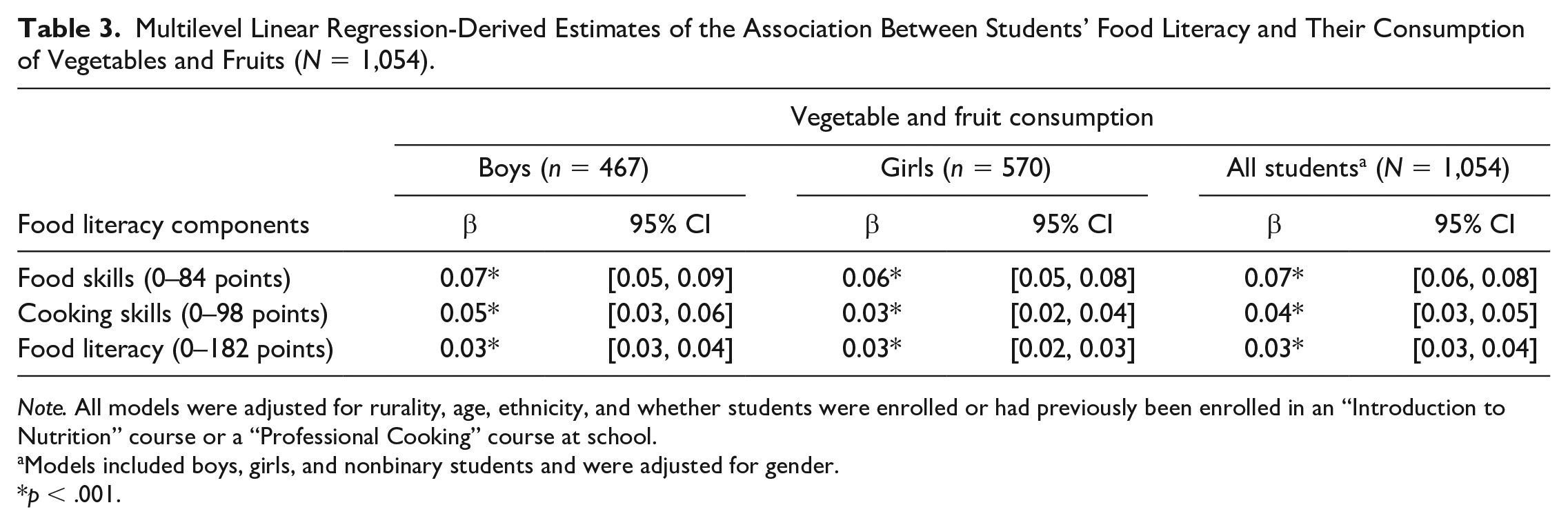
Note. All models were adjusted for rurality, age, ethnicity, and whether students were enrolled or had previously been enrolled in an “Introduction to Nutrition” course or a “Professional Cooking” course at school.
Models included boys, girls, and nonbinary students and were adjusted for gender.
p < .001.
Multilevel Linear Regression-Derived Estimates of the Association Between Students’ Food Literacy and Other Eating Behaviors (N = 1,054).
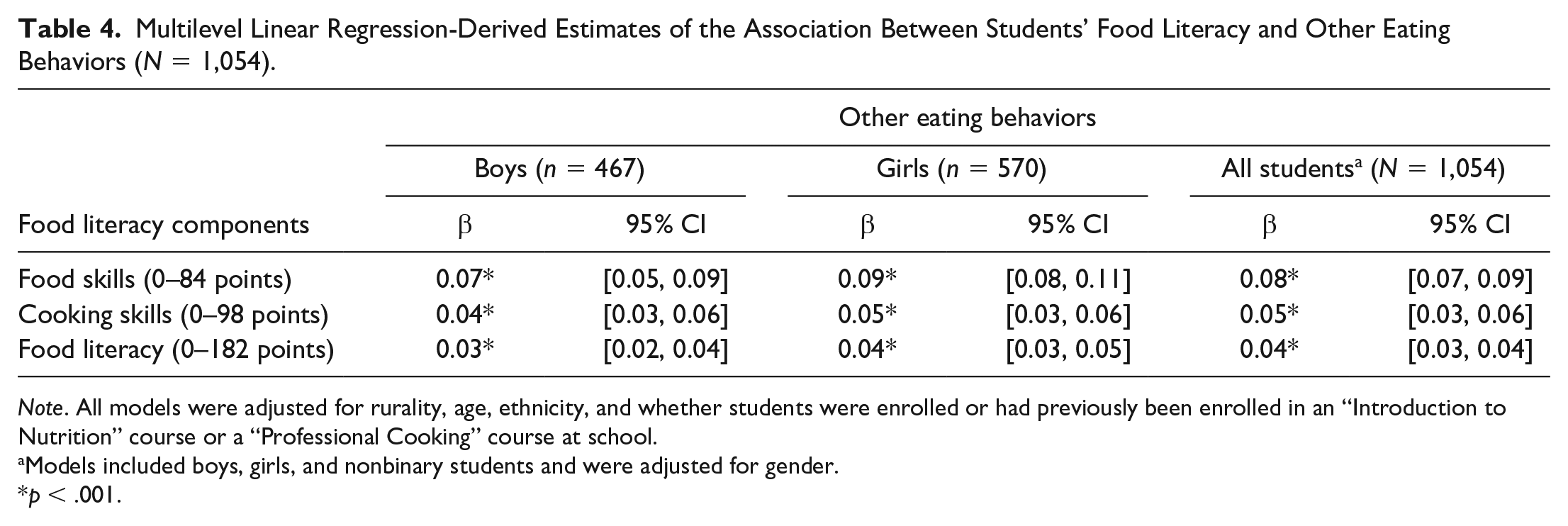
Note. All models were adjusted for rurality, age, ethnicity, and whether students were enrolled or had previously been enrolled in an “Introduction to Nutrition” course or a “Professional Cooking” course at school.
Models included boys, girls, and nonbinary students and were adjusted for gender.
p < .001.
Discussion
This study is one of the first to assess the relationship between cooking and food skills, vegetable and fruit consumption, and other eating behaviors of adolescent boys and girls. Findings showed that students had relatively low scores for vegetable and fruit consumption, other eating behaviors, food skills, and cooking skills. Our study also found that regardless of gender, adolescents who had better cooking and food skills reported having healthier eating behaviors and consuming more vegetables and fruits.
In our study, better cooking skills were associated with greater vegetable and fruit consumption and healthier eating behaviors. Previous studies have reported similar findings. For example, Utter et al. (2016) found that high school students who reported the greatest cooking abilities were approximately twice more likely to meet vegetable and fruit recommendations than those with the lowest cooking abilities. Similarly, interventions that aimed to increase children’s and adolescents’ cooking skills have also been shown to increase the consumption of vegetables and fruits (Caraher et al., 2013; Liquori et al., 1998). These foods generally require some form of preparation (e.g., peeling, cutting, chopping, cooking); thus, having the skills to prepare them properly is essential. Adolescents who cook also tend to report feelings of pride, which motivates them to try the foods they prepared (Ensaff et al., 2015; Gibbs et al., 2013). Therefore, having greater cooking skills may help increase adolescents’ exposure to and preferences for a larger variety of vegetables and fruits (Birch et al., 1987; Krølner et al., 2011; Lavelle et al., 2017). While the relationship between cooking skills and other eating behaviors has been less researched, some studies have suggested that greater cooking skills are linked to a greater interest in preparing food at home (Ensaff et al., 2015), and to a greater frequency of family meals (Woodruff & Kirby, 2013). While more studies are needed to explain how cooking skills are related to other eating behaviors, our results suggest that improving adolescents’ cooking skills may be a promising way of improving their overall nutrition.
Food skills are defined as the knowledge and skills needed to plan, manage, and select healthy foods (Fordyce-Voorham, 2011; Lavelle et al., 2017; Porter et al., 2000). They include knowing how to read labels, plan meals, prepare nutritionally balanced meals using available ingredients and resources, and so on (Fordyce-Voorham, 2011; Lavelle et al., 2017; Porter et al., 2000). Our findings show that better food skills were associated with healthier eating behaviors and greater vegetable and fruit consumption among boys and girls. Adolescents who have better food skills may be better equipped to plan and manage their meals and snacks, which may reduce their likelihood of skipping meals or relying on non-nutritious foods. Not having enough time is often reported as one of the main reasons for skipping breakfast (Hearst et al., 2016; Reddan et al., 2002). Therefore, adolescents who can plan and prepare meals in advance, and prepare or cook healthy meals with limited time, may be more likely to eat breakfast and consume vegetables and fruits (do Amaral e Melo et al., 2020; Lazzeri et al., 2013). Furthermore, food skills such as cooking enough food to have leftovers, or preparing meals with limited ingredients, may reduce adolescents’ reliance on fast foods, prepackaged or frozen meals, and other non-nutritious foods. Other essential food skills such as knowing how to shop for groceries and reading nutrition labels have also been linked to greater vegetable and fruit consumption (Haidar et al., 2017; Vanderlee et al., 2018). Haidar et al. (2017) found that adolescents who used nutrition labels were 2.13 times more likely to consume one or more vegetables and fruits per day than adolescents who did not. Williams et al. (2016) also found that after receiving education on reading labels, adolescents were more likely to pick fruits as their snack of choice (Williams et al., 2016). Compared with these studies, which assessed one specific food skill, ours considered 12 different skills. Since individual associations were not conducted in our study, it is unclear how each food skill relates to adolescents’ consumption of vegetables and fruits. More research is needed to confirm the link between specific food skills, vegetable and fruit consumption, and other eating behaviors.
Gender differences in nutritional knowledge, practices, and food preferences and choices have been documented (Bailey et al., 2019; Jaenke et al., 2012; Otsuka et al., 2020; Rasmussen et al., 2006), and some cross-sectional studies have found gender differences in the association between food literacy and adolescent nutrition (Huang et al., 2004; Larson et al., 2006; Pirouznia, 2001). However, in our study, better food and cooking skills were associated with healthier eating behaviors and greater vegetable and fruit consumption among both boys and girls. These findings are encouraging, as they suggest that both could benefit from improved cooking and food skills. Previous food literacy interventions have improved adolescents’ diet and eating behaviors, irrespective of their gender (Caraher et al., 2013; Davis et al., 2011; Ensaff et al., 2015; Evans et al., 2012; Jarpe-Ratner et al., 2016; Liquori et al., 1998; McAleese & Rankin, 2007; Williams et al., 2016). Considering that boys and girls had low scores for vegetable and fruit consumption, other eating behaviors, food skills, and cooking skills, increasing adolescents’ food literacy may improve all adolescents’ nutrition.
Implications for Practice
Schools are ideal for developing adolescents’ food literacy and improving vegetable and fruit consumption, as noted by previous school-based interventions (Caraher et al., 2013; Jarpe-Ratner et al., 2016; Liquori et al., 1998). Exposing students to various types of hands-on nutrition experiences, such as cooking classes (led by chefs, teachers, or peers), school gardens, and field trips to farms, may be the best way of improving their overall food literacy (Caraher et al., 2013; Evans et al., 2012; Liquori et al., 1998). This approach may help improve students’ knowledge, skills, behaviors, and food and health choices while broadening their understanding of food systems and culture. Since children’s cognitive and fine motor abilities develop over time, it is also suggested that age-appropriate nutrition education be fully integrated into the curriculum and that experiential learning opportunities be offered throughout the school years (Dean et al., 2021; McCloat & Caraher, 2020). Although age was not a significant confounding variable in our study, future studies should consider age differences in food literacy and nutrition. They should also assess the impact of age-appropriate curriculum-integrated cooking courses and programs on various aspects of food literacy among children and adolescents.
Strengths and Limitations
This study had several strengths, including its large sample size, its assessment of cooking and food skills, and its use of gender-based analyses. However, limitations must be acknowledged. While our study assessed a wide range of food and cooking skills, we did not measure all aspects of food literacy, which encompasses knowledge, critical reflection on personal food choices, and the impact of these choices on society (Krause et al., 2018). It is also unclear how cooking and food skills are associated with adolescents’ overall diet, as only vegetables and fruits were assessed. Since this study used a self-reported questionnaire, students’ actual dietary intake was not measured. Self-reported questionnaires are also subject to social desirability bias, where students may have systematically over or underreported more positive behaviors. Further, while the questions used to develop this study’s questionnaire showed good test–retest reliability, they only moderately correlated with 7-day food records, suggesting gaps in its validity. Students may also have completed the questionnaire at different times during the day (e.g., morning versus afternoon), meaning that those who completed it in the afternoon had more eating opportunities and thus earned more vegetable and fruit consumption points than those who completed the questionnaire in the morning. This limitation is noteworthy since breakfast consumption has been shown to decrease as adolescents age, and this decrease is particularly noticeable among boys (Doggui et al., 2021). The cross-sectional nature of this study inhibits the ability to establish causal relationships, and since students were recruited from targeted schools in one school district, results cannot be generalized to all adolescents.
Conclusion
Our findings highlight how food literacy may play a role in adolescent boys’ and girls’ vegetable and fruit consumption and other eating behaviors. Specifically, better food literacy, including cooking and food skills, was associated with greater vegetable and fruit consumption and healthier eating behaviors in adolescent boys and girls. Our results also show that adolescents had relatively low scores for vegetable and fruit consumption, other eating behaviors, cooking and food skills. These findings demonstrate the need for nutrition interventions during adolescence and support the importance of teaching food literacy to adolescents.
Footnotes
Declaration of Conflicting Interests
The author(s) declared no potential conflicts of interest with respect to the research, authorship, and/or publication of this article.
Funding
The author(s) disclosed receipt of the following financial support for the research, authorship, and/or publication of this article: Funding was received from the Faculté des études supérieures et de la recherche from the Université de Moncton.
Availability of Data and Material
The data sets used and/or analyzed for the current study are available from the corresponding author upon reasonable request.
Ethical Approval
This study was approved by the Comité d’éthique de la recherche sur les êtres humains at the Université de Moncton (No. 1920-002).
