




Abstract
Background
Household air pollution adversely affects human health and the environment, yet more than 40% of the world still depends on solid cooking fuels. The House Air Pollution Intervention Network (HAPIN) randomized controlled trial is assessing the health effects of a liquefied petroleum gas (LPG) stove and 18-month supply of free fuel in 3,200 households in rural Guatemala, India, Peru, and Rwanda.
Aims
We conducted formative research in Guatemala to create visual messages that support the sustained, exclusive use of LPG in HAPIN intervention households.
Method
We conducted ethnographic research, including direct observation (n = 36), in-depth (n = 18), and semistructured (n = 6) interviews, and 24 focus group discussions (n = 96) to understand participants’ experience with LPG. Sixty participants were selected from a pilot study of LPG stove and 2-months of free fuel to assess the acceptability and use of LPG. Emergent themes were used to create visual messages based on observations and interviews in 40 households; messages were tested and revised in focus group discussions with 20 households.
Results
We identified 50 codes related to household air pollution and stoves; these were reduced into 24 themes relevant to LPG stoves, prioritizing 12 for calendars. Messages addressed fear and reluctance to use LPG; preference of wood stoves for cooking traditional foods; sustainability and accessibility of fuel; association between health outcomes and household air pollution; and the need for inspirational and aspirational messages.
Discussion
We created a flip chart and calendar illustrating themes to promote exclusive LPG use in HAPIN intervention households.
Visual messages used with printed materials, such as flip charts, brochures, posters, and calendars are central to health education, enhancing delivery of behavioral interventions, increasing awareness and reminding people to engage, or disengage, in a specific behavior (Lipkus, 2007). Visual images may be more impactful than written messages, particularly among people with lower levels of literacy (Devakumar et al., 2018; Houts et al., 2006). However, an effective visual message needs to encompass the sociocultural context of people situated within their communities and be consistent with their perceived roles and practices (Chen, 1989; Jensen, 2012; Kreuter, 1999). Since notions are flexible and context dependent, we need to understand how individuals interpret visual messages about an idea or concept. Engaging people in the process of developing visual messages overcomes potential barriers that materials may not be understandable or applicable in a given setting or with a group of people.
Social science researchers use visual image methodology to elicit and interpret research findings (Bagnoli, 2009; Copeland & Agosto, 2012; Guillemin, 2004; Harper, 2002; Ross et al., 2009). Posters and calendars are two examples of visual methods that have been used to reinforce behavioral change communication, including the promotion of environmental messages. An Australian study cocreated a seasonal calendar with Indigenous communities to reinforce ecological messages promoting aquatic resource management (Woodward & Taggart 2019). Several household air pollution studies have used health education campaigns to reduce household air pollution exposures or to promote the use of cleaner cookstoves (Barnes et al., 2011; Devakumar et al., 2018; Jin et al., 2006; Oluwole et al., 2013; Tun et al., 2005; Zhou et al., 2006), but there are no publications describing the development of visual messaging tools. There is a gap in understanding how visual images represent community members’ understanding of household air pollution or beliefs about transitioning to new cookstove technologies (Evans et al., 2018; Hollada et al., 2017; Thurber et al., 2013).
In 2017, nearly 47% of the world’s population cooked with solid fuels, like wood. An estimated 1.6 million deaths are attributed to household air pollution annually (Health Effects Institute, 2019). Clean cookstove programs, including the provision of liquefied petroleum gas (LPG) stoves and fuel, aim to reduce indoor fine particulate matter to levels needed to meet the World Health Organization air quality guidelines of 10 µg/m3 (World Health Organization, 2014). However, long-term behavioral change leading to sustained use of clean stoves is challenging in rural poor communities where affordability and accessibility to clean fuels are primary barriers (Puzzolo et al., 2016). Messages about supporting the correct use of a new stove technology and fuel should be carefully aligned and effectively delivered to new LPG users. Visual messages that incorporate the promotion or avoidance of specific household behaviors can aid the adoption and sustained use of clean cookstoves (Goodwin et al., 2015; Thompson, 2018).
The Household Air Pollution Intervention Network (HAPIN) Trial is a multicountry randomized controlled trial of a LPG stove and free fuel distribution system delivered to half of the 3,200 enrolled households in India, Guatemala, Peru, and Rwanda. This trial aims to deliver evidence regarding health impacts in children during their first year of life, including low birth weight, stunting, and severe pneumonia, and blood pressure changes in older adult women residing in the homes (Clasen et al., 2020). This is an efficacy trial in which the investigators deliver and promote the uptake and consistent use of the intervention. Previous evaluations of improved cookstove have shown continued use of traditional stoves with the new stoves—a practice known as “stacking”—which is believed to vitiate the potential health benefits (Ruiz-Mercado et al., 2013). Behavioral intervention strategies that encourage households to adopt and exclusively use LPG stoves are essential for achieving the research aims of the HAPIN trial (Williams et al., 2020).
Before the launch of the HAPIN trial in April 2018, all four sites conducted formative research to develop behavioral messages that address household-level experiences with solid fuel and LPG stoves (Fandiño-Del-Rio et al., 2017; Williams et al., 2020). Three of the sites (all except Peru) conducted a pilot LPG stove and free fuel intervention over 2 months with 40 to 60 households to assess barriers to exclusive LPG use and to measure air pollution at baseline (with a solid fuel stove) and twice with the LPG stove. During our formative research in Guatemala, we invited 60 families to participate in this pilot study to create visual messages that would appeal to all household members in the intervention arm of the trial. The purpose of these messages was to inform participants about (1) the benefits of safe and exclusive use of LPG stoves and fuel and (2) the potential health and environmental effects of LPG use compared with firewood use. In Guatemala, we chose to design a flip chart to be used by the behavioral interventionist during the main trial and a wall calendar that will be given to each intervention home on the day the LPG stove was installed. The calendar was used to train household members on how to properly use the stove, as well as explain the benefits of cooking with LPG. Here we describe the process of creating visual messages for a flip chart and a calendar during our formative research in rural Guatemala.
Method
Procedures and Setting
The Guatemalan research site for the HAPIN trial is located in the Jalapa Department, approximately 2 hours southeast of Guatemala City. Rural communities in this area are primarily Xinca Indigenous people and speak Spanish. The altitude in these communities ranges from 871 to 2,677 meters above sea level, with a temperate climate that does not necessitate indoor heating (Clasen et al., 2020). The practice of relying on firewood cooking fuel throughout the year is common among rural Indigenous communities; poverty is the main driving factor, but traditional cooking practices that have been maintained and reinforced for centuries are also important (Thompson et al., 2018). The use of dung as a fuel is not practiced in Guatemala, unlike other low-income rural households, like in Peru (Fandiño-Del-Rio et al., 2017) and globally (Shupler et al., 2020). The primary sources of firewood are from peoples’ own lands and purchased fuel. This demand is exacerbated by woodstoves that require more wood fuel (Sharma & Dasappa, 2017), contributing to deforestation. Poorer households also use agricultural residues, as well as domestic trash, including plastic (Fedak et al., 2019). The different types of firewood depend on seasonal availability and accessibility, but households store wood and cook indoors or in outdoor shelters, thus they do not switch fuel use or cooking location during the rainy season. Alternatives to biomass fuels are still scarce and are determined primarily by wealth and accessibility (Puzzolo et al., 2016).
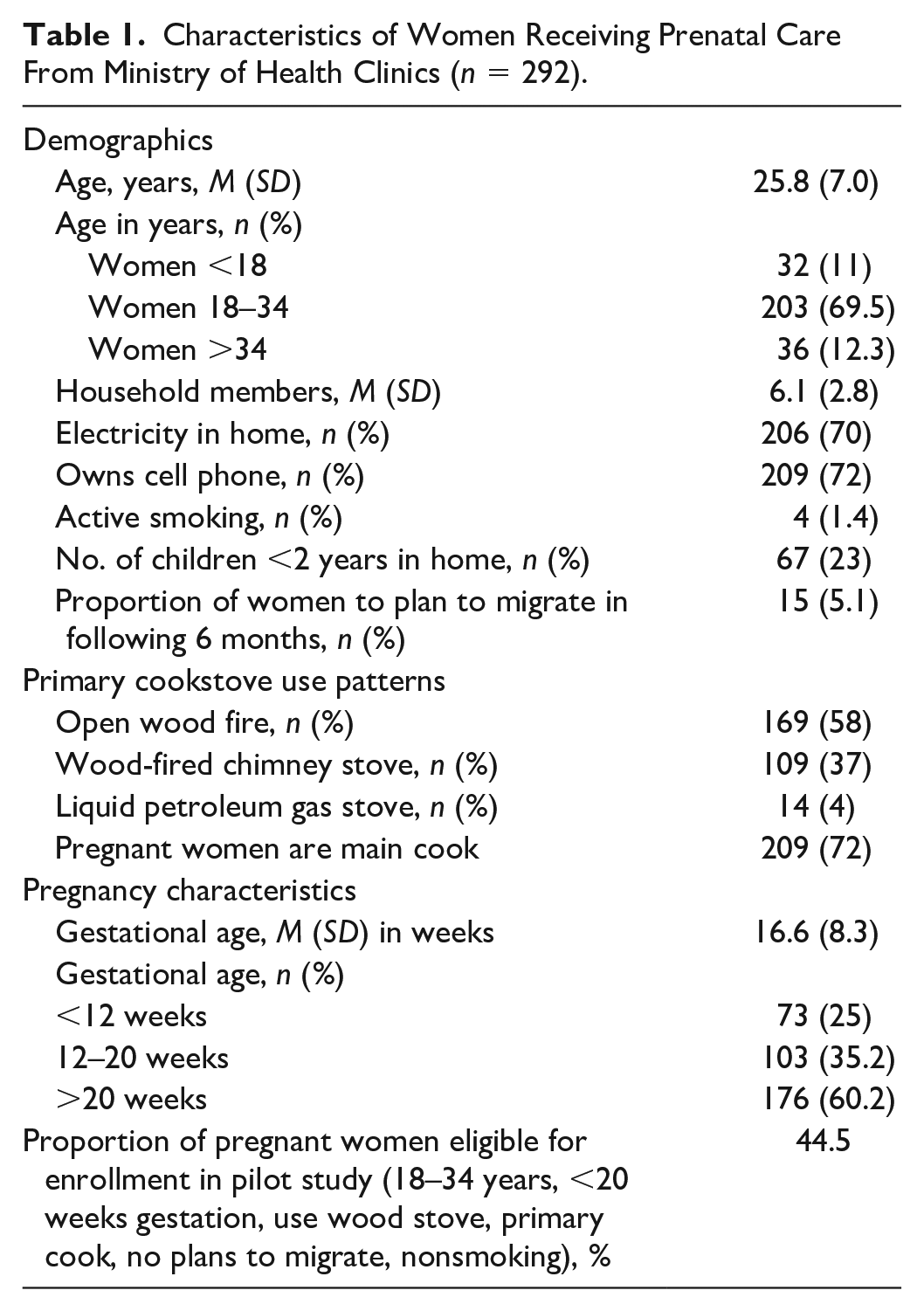
Local trained fieldworkers conducted brief verbally administered surveys of pregnant women who attended Ministry of Health prenatal clinics from 21 different communities in Jalapa to better understand the population that would be invited to participate in the HAPIN trial (Table 1). Among those, we randomly selected pregnant women with wood stoves using the same inclusion and exclusion procedures that would be used in the Main Trial (Clasen et al., 2020). Between June and August 2017, 40 households received an LPG stove and free fuel for 2 months to assess the acceptability and use of the intervention stove and fuel delivery system. In these households, we conducted participant interviews and observations. We took photographs of settings and people during their daily cooking activities to help us reflect on and evaluate how the intervention group would engage with the LPG stove and other cookstoves in the home.
Characteristics of Women Receiving Prenatal Care From Ministry of Health Clinics (n = 292).
We used social phenomenology (Desjarlais & Throop, 2011; Schutz, 1967) to explore the experience of exclusive use of LPG stoves, with the goal of visually representing these experiences. A medical anthropologist (MH) conducted qualitative methods using direct observation (n = 36 participants), in-depth (n = 18 participants) and semistructured (n = 6 participants) interviews to assess peoples’ cooking preferences and behaviors to understand households’ LPG use and underlying driving factors of the use of traditional wood-fueled cookstoves, including norms, values, preferences, and perceptions. Since current and future practices are related to previous knowledge and experiences, we explored perceived differences between wood and LPG stoves (see Supplemental Material for interview guides). These methods helped us identify 24 topics that became a thread, central to understanding sociocultural practices and perceptions of LPG use, which ensured local and cultural relevance as well as appropriateness. A Guatemalan graphic designer (ALMR-A) drafted images based on themes that emerged from this initial phase.
In the second phase of the research (September and October 2017), 20 additional households were recruited using the same procedures described above, except that these households also included an older adult woman residing in the home who also participated in the pilot study. With these households, we conducted 24 focus group discussions (FGDs) with 96 adults (all adults in the household were invited to attend) to review draft images representing the themes that emerged from the initial phase. Each FGD consisted of four participants. Based on previous experience, we limited men’s participation, because women in this setting tend to defer to men, who then speak more frequently and with more authority. However, in two groups, two husbands participated. Two groups validated the same four images to assure accurate representation for each image and to achieve homogeneity in interpretation of the images. All FGDs were conducted at one of the participants’ households and lasted 45 to 60 minutes. We asked participants to build interpretations of each image, allowing us to gather a range of perspectives. The following open-ended questions allowed for open discussion:
Please carefully observe the following four images. For each image: a. Is there something you do not like? What is it? b. What would you like to change/modify? c. Do you think that each image corresponds to the written phrase that describes the image? In your own words, describe what this image means to you:
What difficulties have you had with the gas stove? With the gas cylinders?
We aimed to achieve cultural consensus among participants even if some representations of an experience were “more-or-less” similar. Based on feedback from these groups, the graphic designer modified the visual messages.
Data Analysis
All ethnographic notes and interviews were transcribed in Spanish and coded thematically by the primary author using HyperRESEARCH Software (Randolph, MA). Common themes, or code groups, that were mentioned repeatedly were grouped together using deductive and inductive approaches. For example, “fear” unified concepts of fear of getting burned, fear of explosions, fear of the children being near the stove and fear of not having LPG to cook. We developed networks from main codes to identify which concepts were closer or farther away to other themes. If the theme was too complex (e.g., “where does the gas come from?”), or too specific (e.g., “how do we handle the gas stove’s knobs?”), the theme was labeled as independent. We chose the themes that caused the greatest concern to new LPG users.
For FGDs, one or more of our researchers (MH, AD-A, LMT) facilitated each discussion and a fieldworker (RO-S) served as a note-taker. We did not audio-record the sessions but transcribed the notes and relayed this information to the graphic designer (ALMR-A) who made modifications to the illustrations and written phrases in an iterative fashion based on participant suggestions (Figure 1). Clear and insightful comments given by participants during the qualitative data collection that helped elucidate constraints and meaningful aspects for the adoption and sustained use of LPG stoves were selected for each topic and illustration. Relevant quotes were those that better represented, supported, and clarified the messages to reinforce the visual messages in the flip chart and the calendar.
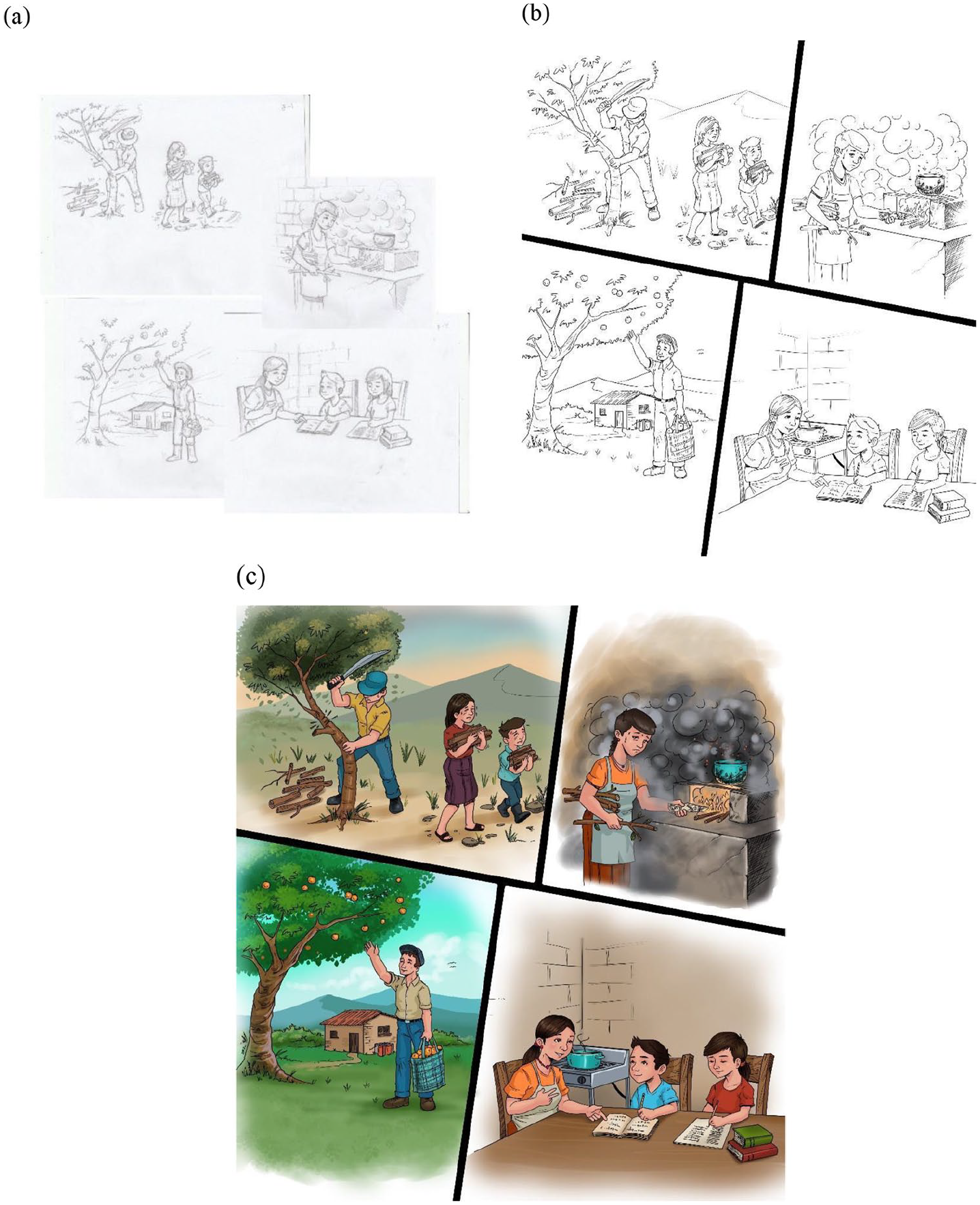
(a) Draft sketch shared with focus group. (b) Line drawing shared with investigators. (c) Final color image included in calendar.
After coding the data, we created “descriptive images” that would represent the relevant themes or threads for the visual messages. With the help of photographs, descriptions, and quotes, the investigators (MH, AD-A, LMT) discussed the 50 codes we found. To avoid creating bias when sorting the data during the reduction process, we discussed whether the codes were related to LPG use, what the descriptive images represented, and whether there would be overlap or confusion about the images. During this process, the 50 codes were reduced to 24 themes that related specifically to sustained use of LPG use. The graphic designer (ALMR-A) elaborated 24 visual messages with help of photographs and participant descriptions. The first drafts were discussed again by the research team, to see whether the images represented the meaning and importance of the messages we wanted to transmit. With this feedback the graphic designer elaborated a more detailed second draft. These images were presented and discussed by the FGDs participants to identify issues of importance to them and to assure that the images accurately reflected the corresponding theme. To make certain that the images were correct and accurate, the final drawings were again revised by the research team before printing (see Supplemental Material).
Ethics
The study protocol was reviewed and approved by institutional review boards or ethics committees at Emory University (00089799), Johns Hopkins University (00007464), Universidad del Valle de Guatemala (146-08-2016/11-2016), and the Guatemalan Ministry of Health National Ethics Committee (11-2016). All participants provided written informed consent.
Results
Since practices are interrelated to previous knowledge and experiences, we linked ideas (past, present, and projections) that people have about cooking practices, as well as differences people perceive about wood and gas stoves. For that, we selected information from among families who were part of the pilot LPG stove study, choosing the most predominant aspects that caused the greatest concern to the new LPG users. We assessed these aspects as predictors or reasons to not use the gas stove exclusively during the HAPIN trial. Cooking practices that have been maintained and reinforced through years among families and communities cannot be expected to turn into commitments that contradict or devalue previous behavior. Therefore, it was vitally important to develop the material among people who are part of the same sociocultural setting. Since these families live in precarious economic conditions, their concerns associated with the staple foods they usually cook (beans and corn) is constant, that is, how it is prepared and how should it taste. We found that this created the idea of “traditional ways of cooking” to prepare these foods. The result of the method applied in our research showed how these subjective aspects have an effect on how people feel and their expectations of using a new stove. It also revealed people’s interest (or not) in cooking with gas; inferred how individuals become concerned with aspects related to health; and illustrated why (or not) this particular way of cooking is considered feasible.
The ethnographic research revealed more than 50 codes and subcodes based on peoples’ opinions, perceptions, and experiences that address their concerns, fears, doubts, and lack of understanding. Twenty-four themes were relevant to LPG use (Table 2 describes visual content for each of these themes) and were derived from these 50 codes. Each visual message was designed to portray a concept and realistically resemble the study area and participants. “Resemblance” aimed to help participants see themselves in the procedures, awareness, interests, responsibilities, and traditions. The illustrations depict differences between using LPG and biomass to ensure that each aspect of using an LPG stove fulfills not only expectations but also portrays a positive image of people’s social lives as well as their environment. Several important changes were the result of the focus group participants saying, “we don’t wear those clothes or shoes” or “we don’t cook with pots like that.” The complete set of 24 themes were developed into a flip chart that is used by the behavioral interventionist who visits intervention households to train families in intervention households on how to use the LPG stove use and fuel exclusively during the HAPIN trial. From the 24 themes, 12 were prioritized for the calendar based on frequency of themes mentioned and relevance to the purpose of promoting exclusive gas use. Each month portrays a goal-based concept. We narrowed down calendar themes based on participant relevance to important behaviors, such as fear or gas leaks, and notions that influence the use of LPG, such as cooking traditional foods like beans. This calendar was used by the behavioral interventionist to conduct the 2-hour initial training on how to use the stove and address the questions of the new user during the installation.
Twenty-Four Themes That Promote Adoption and Sustained Use of Liquefied Petroleum Gas Stoves.

Note. First 12 themes formed the calendar messages.
Fear and Reluctance
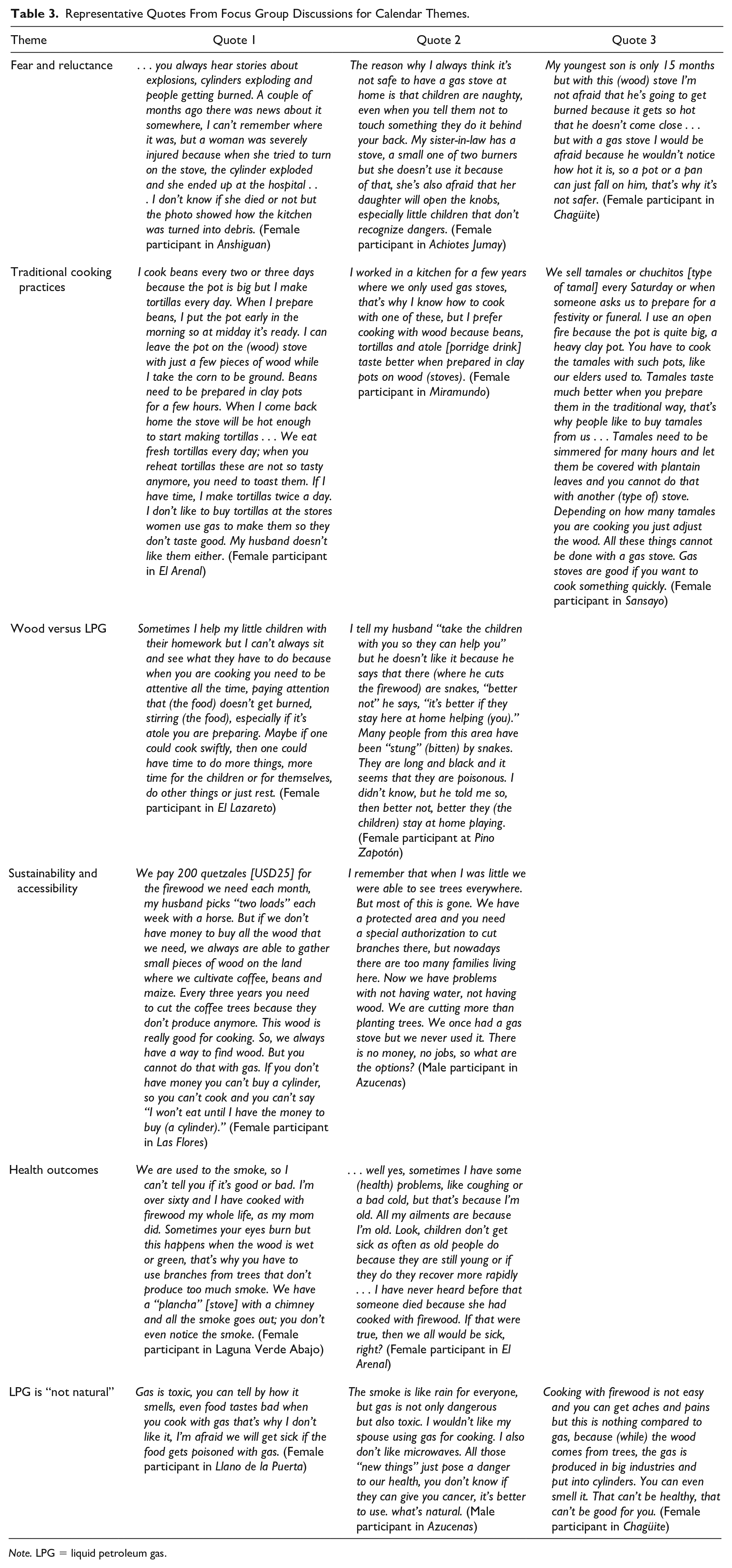
Two main themes that appeared consistently and that are crucially important to overcome are fear and reluctance (Table 3 shows representative quotes from the FGDs). A common theme was fear of explosions—a draft illustration portrayed this theme. Yet, the focus group perceived the image negatively, and were alarmed by the danger, so the image was redrawn to illustrate what to do to avoid gas leaks (Table 2, Theme 1) and what to do if there is a gas leak (Theme 3). Positively framed themes support self-confidence and awareness about safe LPG use.
Representative Quotes From Focus Group Discussions for Calendar Themes.
Note. LPG = liquid petroleum gas.
Another common theme identified was young children playing with the stove knobs or coming too close to the stove, which could result in gas leaks or burns. People were therefore reluctant to use this new technology. To communicate these risks (Lipkus & Hollands, 1999), a visual message depicts how to avoid accidents when using the LPG stove (Table 2, Theme 15).
Traditional Cooking Practices
Traditional cooking practices, maintained and reinforced for generations, cannot be expected to change if new behaviors are viewed as contradictory to previous behaviors. The visual material is based on a contemplation phase (reflecting about the behavior, i.e., the process of awareness) and the preparation and action phase (Prochaska & Norcross, 2001). Cooking staple foods using the “traditional ways of cooking” was an important theme (Table 3). We found that when culinary practices revolve around a few staple foods, like corn and beans, people appeared reluctant to change their ways of cooking. We observed that people described the type of food they cooked, directly associated with ideas or perceptions about how this food should be traditionally prepared (Table 2, Themes 2, 11, 17, 18, 21, and 23).
Wood Versus LPG
We identified positive messages that support new behaviors around LPG use, and used an integrated strategy to contrast cooking with the traditional wood-stove or LPG stoves (Table 3). We aimed to demonstrate a relationship between new cooking behaviors that affect all members of the family depending on what role members play in the household (Table 2, Themes 5, 6, 7, 10, 12, 13, and 16).
Sustainability and Accessibility
“Sustainability” and “accessibility” of fuel were recurring themes (Table 3). The HAPIN trial will provide free fuel, so we addressed the concern of not being able to cook if they ran out of LPG (Table 2, Theme 22). Participants who gathered wood expressed concern about the effects of deforestation in rural areas where there are no measures to protect forests or plant new trees (Table 2, Theme 9). For participants who purchased wood, Theme 19 illustrates a misconceived notion that LPG is more expensive than wood because wood is purchased continuously in small amounts versus the cost of a 25-pound cylinder of LPG, making it difficult to estimate monthly costs. In many parts of the world, people collect free wood fuel; however, in regions of Guatemala where there are few communities or privately held forests, many households purchase wood. In the Jalapa Department, we conducted a rapid assessment in 404 homes in 2016 before starting the HAPIN trial. Among the 93% of household who used wood fuel, households spent an average of U.S. $21 monthly to purchase wood (Campbell, n.d.) Among the 800 households recruited and randomized in 2018–2019 during the HAPIN trial, at baseline 457 (57%) reported buying firewood, with a median cost of US $26. During the HAPIN trial, the cost of a 25-pound tank of LPG gas in Guatemala was $12.80 and the median monthly use of cylinders per household is 2.8 cylinders, or U.S. $36 per month (Mollinedo & McCracken, n.d.).
Health Outcomes
While the HAPIN trial assesses intervention effects on health benefits, the inherent advantages of using LPG stoves to reduce diseases and discomforts associated with biomass smoke were not described by participants. Firewood, for example, was considered natural, and therefore healthier than LPG. Participants described elders as having diseases and discomforts as part of a normal body “weakening” due to their age and not a consequence of indoor air pollution exposure (Table 3). Themes 13, 14, 16, and 20 focus on how cleaner and efficient cooking technologies and fuels can improve health (Table 2).
LPG Is “Not Natural”
Even complex ideas, such as misperceptions of where LPG comes from, were illustrated. This was necessary because participants mentioned that LPG was “unnatural” and “smelled poisonous,” unlike wood (Table 3). Participants stated that LPG is a manufactured product that makes food poisonous, as opposed to firewood (Table 2, Theme 14). Explaining that LPG is odorless and therefore the gas company adds mercaptan, which smells bad, is a way to alert families that there is a leak (Table 2, Themes 3 and 4). We developed a message that gas is a fossil fuel that comes from the ground and is processed and delivered into the home in cylinders for cooking use (Table 2, Theme 24).
Inspirational and Aspirational Testimonial Messages
During our FGDs, participant testimonials were viewed as inspirational by other participants. Therefore, we chose quotes that supported visual messages on the calendar and flip chart. For Indigenous communities, daily cooking practices are customarily embedded in social relations of responsibility, reciprocity, and knowledge transmission. Positive remarks by women who participated in the pilot study were used to reverse the negative sentiments of cultural appropriation in which the new technology (the LPG stove) and new cooking practices acquire significance within the existing sociocultural context (Theme 18).
Time-savings was an important aspirational message, “with the time I save now that I don’t have to collect wood, I make my house pretty, there is no soot, and I have time to feed my animals and water my flowers.” Cleanliness was another aspiration (Table 2, Theme 8) and was reflected in messages like “my brothers and sisters are happy because my mother doesn’t suffer from cooking with wood” and “my children don’t get covered with smoke and soot anymore. My (older) children are now independent and cook (too).”
Testimonial messages, tied together with visual images, is not only a way of gaining insight into how people process visual information but also allows the graphic designer to capture emotional expressions, facial, and body language and spatial relations. This allowed us to modify the draft images based on open-ended commentaries from participants until consistency was reached (Figure 1).
Discussion
Social phenomenology framed our understanding of people engaging in their everyday world (Desjarlais & Throop, 2011). Testimonials can overcome the sense of “cultural appropriation” from an anthropological perspective (Hage, 2015), especially when adopting new ways of cooking might be seen as a loss of tradition. People who had experience using LPG stoves provided diffusion of ideas, rather than cultural appropriation, which can exert a powerful influence on social networks (Mills & Peeples, 2019). We used qualitative methods, including participant observation, in-depth interviews, and focus group discussions to elicit themes and develop messages to create a calendar with 12 themes and a flip chart with all 24 themes. The 12 topics chosen for the calendar address issues that are crucially important to overcome fear or reluctance, two main aspects that consistently appeared during the pilot study, to provide people with confidence instead. Several of the themes we found are similar to other studies, including fear and reluctance to use LPG in Cameroon (Stanistreet et al., 2019); traditional foods are better when cooked on wood stoves in Peru (Hollada et al., 2017); the inherent contrast between wood versus LPG in Guatemala (Thompson et al., 2018); sustainability and accessibility of fuel in Cameroon (Pope et al., 2018); lack of an association between health outcomes and household air pollution in Kenya and Ethiopia (Loo et al., 2016; Tamire et al., 2018); and the need for inspirational and aspirational messages, instead of negative messaging in Senegal (Hooper et al., 2018). Because the HAPIN study provides free LPG stoves and fuel, and our focus group participants were members of the pilot stove and fuel distribution program, we did not hear common themes described in other studies, such as the need for reliable distribution of LPG equipment and cylinder refills (Ronzi et al., 2019).
Studies have explored visual messages about environmental health themes, but no prior published studies have used calendar messages about household air pollution. Photovoice methods, where participants photograph and then reflect on their lived experiences, were used in Cameroon to document barriers to uptake of LPG cooking (Ronzi et al., 2019). One recent study in Nepal used art during focus groups to illustrate women’s lived experience of exposure to household indoor air pollution (Devakumar et al., 2018). A local artist produced images that depicted perceived health problems as well as solutions, such as improved ventilation. Our current study goes beyond a description of the problem as done in these two studies; our calendar messages are used to promote behavior change, increasing adherence to the LPG stove intervention. We found one example of a seasonal calendar developed in Australia to promote aquatic resource management based on the ecological knowledge of Ngan’gi Aboriginal people (Woodward & Taggart, 2019). While the intent of the seasonal calendar was used differently than ours, both incorporated local knowledge of seasons, climate change, and natural resource management.
These materials are being used in intervention households in the HAPIN trial in Guatemala, where family members are instructed on cleaning the stove, using the LPG cylinder safety valve, lighting and regulating flame strength, recognizing and responding to gas leaks, and reporting malfunctioning stoves and cylinders. At installation, the calendar is reviewed with the family and left in the household. At subsequent visits, themes are reinforced and cylinder refills are marked on the calendar. If our field team detects biomass stove use in intervention homes (e.g., traditional stoves lit or smoldering at home visits, temperature sensors on traditional stoves showing evidence of use; Wilson et al., 2020), a behavioral interventionist visits the households to reinforce exclusive LPG use, using pertinent messages in the flip chart to guide discussion with family members.
LPG fuel cost is the primary barrier for low-income households in countries that do not subsidize LPG fuel, such as Guatemala (Thompson et al., 2018); cost barriers have been well documented in other countries (Gould & Urpelainen, 2018; Pillarisetti et al., 2019; Puzzolo et al., 2016; Quinn et al., 2018). Household income, fuel prices, and subsidies are the primary determinants of sustained use of LPG in poor households (Kojima, 2011). Where national governments have embarked on programs to subsidize clean fuels, like in India (Mani et al., 2020), Ecuador (Gould & Urpelainen, 2018) and Peru (Pollard et al., 2018), LPG stoves have achieved sustained adoption among the poor. Because the HAPIN trial was an efficacy trial, we did not focus on posttrial sustained use of LPG. This is, however, a focus of our planned follow-up study, HAPIN II, which will assess sustained use of the LPG stove, including refill consumption, wood collection (time and cost) as well as changes in household air pollution.
There are several strengths of this study. First, this was a collaboration between researchers, study participants and a graphic designer to discover themes and develop visual messages that represent the daily lives of the study area population, many of whom were Xinca indigenous communities. In this sense, we agree with Pink (2006) who argued “. . . in any project a researcher should attend not only to the internal ‘meanings’ of an image, but also to how the image was produced and how it is made meaningful by its viewers” (p. 186). Second, our formative phase participants had 2 months of experience with exclusive LPG use. As new users, they expressed fears they had before using LPG, and said that positive safety messages would be more effective than messages that provoke fear. Third, we use images as a messaging tool in the HAPIN trial conducted in rural communities of Jalapa to reinforce the sustained use of LPG stoves and fuel. Each image systematizes problem solving around a different topic. As Liebenberg (2009) states, “experiences and meanings become tangible through visual representation and may be understood in ways that other conventional forms of communication may not necessarily allow” (p. 445). Four, the new messages can be more effective when they have been designed within similar audiences and pinpoint the components that are associated with their own concerns. These components merited the design of an in-depth formative phase to ensure adherence by overcoming cultural barriers, such as cooking practices, taking into consideration that economic barriers are not a factor during the HAPIN trial. As the “one size fits all” approach never works, it is more efficient to focus the strategy on people who share the same lifestyles, environmental settings, motivations, perceptions, and social values.
There are several limitations to interpretation of our findings. First, a calendar with appealing visual messages will not be instructional without people or processes that permit participants to replace traditional practices with new practices. To address this, a behavioral interventionist visits intervention households in the HAPIN trial to address persistent traditional stove use. This field worker uses the calendar or flip chart to identify barriers and then reinforce LPG use, for instance, demonstrating how to prepare a specific traditional meal on the LPG stove. Second, while we have 24 themes, 12 of them are not in the calendar and may only be addressed because a solid fuel stove was used in an intervention household. Therefore, some complex themes such as “where does gas come from?” may not be discussed, unless a household member asks that question. Third, given the short time frame of the pilot study (2 months), and the long-term behavioral changes needed to adopt and exclusively use LPG, participant responses may not have provided all the potential and positive aspects of cooking with cleaner fuels. We estimate that within the 400 Guatemalan intervention households participating in the HAPIN trial over 18 months, we will be able to fully characterize the behavioral aspects that determine adoption and sustained use of LPG in the future. Fourth, findings may not be generalizable to other communities, or other type of solid fuel use, like animal dung. Some of the concerns, like a smoky kitchen from solid fuel use, might be relevant. However, the results of the visual messages are likely not applicable to different ethnic groups and geographic areas in Guatemala since clothing, house materials, and stove types were drawn to suit the rural people of these Xinca communities. Finally, during the HAPIN trial, we may uncover additional household concerns and may develop new messages to assuage these concerns, but we did not do that in the present study.
Implications
Peoples’ experiences are an integral part of the complex whole—daily cooking involves choices, culinary habits, and availability of commodities, overlapping with experiences based on social conditions. This holistic approach helps us understand how changes influence “cooking systems” (Sobreira et al., 2018). External forces, like the introduction of a new stove technology, will necessarily lead to a recontextualization of beliefs and behaviors. It is important to address all underlying reasons, including “subjective feelings” toward LPG stoves and activities related to cooking behaviors. Future directions in the field should include an examination of the context-specific barriers and enablers to adopt and sustain the use of clean cooking (Puzzolo et al., 2016). One of the biggest barriers to use of clean stoves is national policies that support fuel subsidies or promote clean cookstoves, and research is needed to support policy development (Puzzolo et al., 2016; Smith et al., 2014; Stanistreet et al., 2019). This formative research did not focus on policy implications, but the aim of the HAPIN trial is to provide rigorous evidence to policy makers, showing that exclusive use of LPG stoves will show positive health effects in children and other household members (Barr et al., 2020; Clasen et al., 2020; Johnson et al., 2020).
Cooking with LPG and other clean fuels can dramatically reduce PM2.5 (particulate matter <2.5 µm in diameter) from household air pollution (Steenland et al., 2018) and may improve health of children and women in developing countries where solid fuels are used for cooking. Yet, adherence to clean cookstoves will be low if participants do not see the value of the new stove. The challenge to confronting deeply rooted beliefs and habits is to understand what motivates people to change behavior when faced with a new technology. We identified information gaps that could prevent new users from exclusively using the LPG stove. Our visual messages prioritized how to reduce harm when using LPG safely and how LPG can improve health, well-being and the environment compared with wood stove use. The images drew on the strengths of LPG and the disadvantages of firewood, addressing fears and doubts that prevent LPG use, as well as exploring the integration of new cooking behaviors.
Conclusions
Visual messages using pictorial data play an important role in reinforcing messages and make information comprehensible to lower literacy groups. People’s choices and preferences around stoves and fuels are multifaceted and depend not only on “affordability,” “accessibility,” and “availability.” Concepts such as “fear,” “better,” and “healthier” may factor into choices. The HAPIN trial provides free LPG fuel for 18 months, thus addressing “affordability,” “accessibility,” and “availability.” However, new users must be convinced that there are both tangible and intangible benefits when households abandon their traditional solid fuel stoves. The intent of the flip chart and the calendar is to address fears, motivations, and aspirations to support the exclusive use of LPG during the HAPIN trial. Translating peoples’ experiences, ideas, and perceptions into visual images creates a representation of LPG stove use. While these messages are not generalizable to all settings, future work will be done to evaluate the importance of context-specific reinforcing messages during the HAPIN trial.
Supplemental Material
sj-docx-1-heb-10.1177_1090198121996280 – Supplemental material for Developing Visual Messages to Support Liquefied Petroleum Gas Use in Intervention Homes in the Household Air Pollution Intervention Network (HAPIN) Trial in Rural Guatemala
Supplemental material, sj-docx-1-heb-10.1177_1090198121996280 for Developing Visual Messages to Support Liquefied Petroleum Gas Use in Intervention Homes in the Household Air Pollution Intervention Network (HAPIN) Trial in Rural Guatemala by Mayarí Hengstermann, Anaité Díaz-Artiga, Roberto Otzóy-Sucúc, Ana Laura Maria Ruiz-Aguilar and Lisa M. Thompson in Health Education & Behavior
Footnotes
Authors’ Note
The findings and conclusions in this report are those of the authors and do not necessarily represent the official position of the U.S. National Institutes of Health (NIH) or Department of Health and Human Services. A multidisciplinary, independent Data and Safety Monitoring Board (DSMB) appointed by the National Heart, Lung, and Blood Institute (NHLBI) monitors the quality of the data and protects the safety of patients enrolled in the HAPIN trial. NHLBI DSMB: Nancy R Cook, Stephen Hecht, Catherine Karr, Joseph Millum, Nalini Sathiakumar (Chair), Paul K Whelton, Gail G Weinmann (Executive Secretary). Program Coordination: Gail Rodgers, Bill & Melinda Gates Foundation; Claudia L Thompson, National Institute of Environmental Health Science; Mark J. Parascandola, National Cancer Institute; Danuta M Krotoski and Marion Koso-Thomas, Eunice Kennedy Shriver National Institute of Child Health and Human Development; Joshua P Rosenthal, Fogarty International Center; Conception R Nierras, NIH Office of Strategic Coordination Common Fund; Katie Kavounis, Dong-Yun Kim, Antonello Punturieri, and Barry S Schmetter, NHLBI.
Declaration of Conflicting Interests
The authors declared no potential conflicts of interest with respect to the research, authorship, and/or publication of this article.
Funding
The authors disclosed receipt of the following financial support for the research, authorship, and/or publication of this article: This study is funded by the U.S. National Institutes of Health (NIH; cooperative agreement 1UM1HL134590) in collaboration with the Bill & Melinda Gates Foundation (OPP1131279). Participating NIH organizations include the National Heart, Lung and Blood Institute, National Institute of Environmental Health Sciences, National Cancer Institute, National Institute of Child Health and Human Development, Fogarty International Center, and the NIH Common Fund.
Study Registration
ClinicalTrials.gov (Identifier NCT02944682)

*
HAPIN Investigators: Vigneswari Aravindalochanan, Kalpana Balakrishnan, Dana Boyd Barr, Vanessa Burrowes, Devan Campbell, Julia McPeek Campbell, Eduardo Canuz, Adly Castañaza, Howard Chang, William Checkley, Yunyun Chen, Marilú Chiang, Maggie L. Clark, Thomas Clasen, Rachel Craik, Mary Crocker, Victor Davila-Roman, Lisa de las Fuentes, Oscar De Léon, Anaité Diaz-Artiga, Ephrem Dusabimana, Lisa Elon, Juan Gabriel Espinoza, Irma Sayury Pineda Fuentes, Sarada Garg, Dina Goodman, Savannah Gupton, Meghan Hardison, Stella Hartinger, Steven A. Harvey, Mayari Hengstermann, Phabiola Herrera, Shakir Hossen, Penelope Howards, Lindsay Jaacks, Shirin Jabbarzadeh, Michael A. Johnson, Abigail Jones, Katherine Kearns, Miles Kirby, Jacob Kremer, Margaret Laws, Jiawen Liao, Amy Lovvorn, Fiona Majorin, Eric McCollum, John McCracken, Rachel Meyers, J. Jaime Miranda, Erick Mollinedo, Lawrence Moulton, Krishnendu Mukhopadhyay, Luke Naeher, Abidan Nambajimana, Florien Ndagijimana, Azhar Nizam, Jean de Dieu Ntivuguruzwa, Aris Papageorghiou, Jennifer Peel, Ricardo Piedrahita, Ajay Pillarisetti, Naveen Puttaswamy, Elisa Puzzolo, Ashlinn Quinn, Sarah Rajkumar, Usha Ramakrishnan, Davis Reardon, Ghislaine Rosa, Joshua Rosenthal, P. Barry Ryan, Zoe Sakas, Sankar Sambandam, Jeremy Sarnat, Suzanne Simkovich, Sheela Sinharoy, Kirk R. Smith, Kyle Steenland, Damien Swearing, Gurusamy Thangavel, Lisa M. Thompson, Ashley Toenjes, Lindsay Underhill, Jean Damascene Uwizeyimana, Viviane Valdes, Amit Verma, Lance Waller, Megan Warnock, Kendra Williams, Wenlu Ye, Bonnie Young
References
Supplementary Material
Please find the following supplemental material available below.
For Open Access articles published under a Creative Commons License, all supplemental material carries the same license as the article it is associated with.
For non-Open Access articles published, all supplemental material carries a non-exclusive license, and permission requests for re-use of supplemental material or any part of supplemental material shall be sent directly to the copyright owner as specified in the copyright notice associated with the article.
