



Abstract
Background
Mobile health platforms can facilitate social support and address HIV (human immunodeficiency virus) stigma but pose challenges for intervention design and participant engagement. Giddens’s structuration theory, that individuals are shaped by—and shape—their communities through rules and resources that give them power to operate within these environments, provides a useful analytic framework for exploring these dynamic intervention spaces.
Method
Data were drawn from an online randomized controlled trial intervention (HealthMpowerment) for young Black men who have sex with men to reduce condomless anal intercourse. We applied a conversational analysis informed by structuration theory to 65 user-generated conversations that included stigma content. We aimed to understand how the interdependent relationship between the intervention space and participants’ contributions might contribute to behavior change.
Results
Thirty five intervention participants contributed to the analyzed conversations. Our analysis identified three types of conversational processes that may underlie behavior change: (1) Through intervention engagement, participants established norms and expectations that shaped their discussions; (2) participants used anecdotes and anonymity to reinforce norms; and (3) intervention staff members sought to improve engagement and build knowledge by initiating discussions and correcting misinformation, thus playing an integral role in the online community.
Conclusions
The lens of structuration theory usefully reveals potential behavior change mechanisms within the social interactions of an online intervention. Future design of these interventions to address HIV stigma should explicitly characterize the context in which individuals (study staff and participants) engage with one another in order to assess whether these processes are associated with improved intervention outcomes.
Keywords
In 2018, Black men who have sex with men (BMSM) accounted for 26% of new HIV (human immunodeficiency virus) diagnoses in the United States; among persons aged 13 to 24 years and diagnosed with HIV 52% were young Black MSM (YBMSM; Centers for Disease Control and Prevention, 2018). BMSM in the southern United States are particularly affected, accounting for 48% of all HIV diagnoses (Centers for Disease Control and Prevention, 2018). Stigma, homophobia, and racism substantially contribute to HIV risk; thus, interventions are needed that address vulnerabilities that may arise from multiple stigmatized social identities (Arnold et al., 2014; Barry et al., 2018; Quinn & Dickson-Gomez, 2016; Sang et al., 2018).
Stigma occurs at the individual, interpersonal, and structural levels (Link & Phelan, 2001) and results in alienation, punishment, and other forms of social sanctions (Goffman, 1963). BMSM experience structural discrimination by institutions that impede their access to HIV prevention, treatment, and care (Eaton et al., 2018; Matthews et al., 2016). Southern YBMSM have described mistreatment by health care providers and fear of HIV testing and HIV medication (Threats et al., 2020). Within Black communities and gay communities dominated by White men, YBMSM may experience social isolation or encounter stigmatizing messages that affect their quality of life (Arnold et al., 2014; Haile et al., 2011; Scott et al., 2014). Efforts to reduce societal stigma and provide spaces for YBMSM to connect and build social support are critical for eliminating stigma-related barriers to HIV prevention and care (Lauby et al., 2012; Scott et al., 2014).
Online interventions that provide space for YBMSM to engage with one another have the potential to counter stigma and reduce social isolation by supporting and strengthening community structure (Barry et al., 2018). Efforts to develop and sustain online intervention communities have been largely atheoretical, inhibiting understanding of intervention mechanisms. Using a theoretically grounded approach to analyze an online intervention community’s conversations could improve understanding of what interactions facilitate the intervention’s goals.
To date, behavior change mobile interventions that apply theoretical frameworks are primarily informed by individual-level theories, including social cognitive theory, the transtheoretical model, and the theory of planned behavior (Golden & Earp, 2012; Riley et al., 2011); these theories neglect or downplay external influences, such as those pertaining to online spaces (Bull & Ezeanochie, 2016; Kaufman et al., 2014; Roux, 2007). In contrast, community-level theories advance the understanding of human relationships to their environments (Couclelis, 1992). As a particular kind of environment, online spaces—and their communities—pose unique rules of engagement compared with in-person interactions.
Structuration theory posits a recursive relationship between agency and social structure. Structure is defined as rules, routines, and customs, such that individuals create and reinforce informal community structure through their social actions, which are themselves driven by the rules and customs that constitute those structures (Giddens, 1984; Ling et al., 2020; Tural, 2017). As people of different backgrounds and social upbringings come together, they change the social fabric of a community (Giddens, 1984). Structuration theory also suggests that individuals have substantive control and influence (agency) over the constitution of their social environment(s) (Burke et al., 2009; Frohlich et al., 2001; Giddens, 1984; Misir, 2015; Sewell, 1992). Applying structuration theory to the concept of stigma, the space of an online intervention may facilitate or mitigate stigma through rules, processes, and design, but individuals may also facilitate or mitigate stigma through actions such as condoning stigma, or providing social support to confront or address stigma.
Individuals come to the online space of community-building interventions with their identities and understanding of the social norms of those identities and the norms of online engagement (Storholm et al., 2019). These norms inform their perceptions of stigma that have developed from other communities they participate in, both virtual and tangible. As they engage with one another in online spaces, they continually build a structure from their own perceptions of these identity-related norms and a new online community with cocreated social norms that may challenge and, at times, perpetuate stigma (Misir, 2015). HealthMpowerment.org (HMP) is a web-based, mobile-optimized intervention that aimed to build an online community of YBMSM and reduce condomless anal intercourse (CAI; Hightow-Weidman et al., 2015). A North Carolina–wide randomized controlled trial (RCT) of HMP found a 32% reduction in CAI at the end of the 3-month intervention period (Hightow-Weidman et al., 2019). In subsequent analyses, Bauermeister et al. (2019) identified sexuality and HIV stigma as common topics of discussion within HMP; they found that those who challenged sexuality stigma within the forums had lower internalized homophobia. The mechanisms underlying these findings are less understood and warrant further exploration.
As such, we aimed to understand how YBMSM participants constructed community within this structured online space. In applying structuration theory to analyze conversations among participants and between intervention staff and participants, we sought to improve understanding of the relational dynamics of online interventions. Our analysis characterized how these interactions might perpetuate existing social norms online and also challenge stigmatizing language and stereotypes. Our findings can inform future mobile health interventions, particularly those that aim to use social support or community building as mechanisms of change.
Method
Parent Study
Data for this analysis come from the HMP online RCT. As described above, HMP was an internet-based, mobile phone–optimized intervention (Figure 1) for YBMSM of any HIV status (Hightow-Weidman et al., 2015; Muessig et al., 2014). The intervention website included areas where users could create, contribute, and read conversation threads. The primary study design and outcomes are provided elsewhere (Hightow-Weidman et al., 2019). Briefly, participants were recruited in North Carolina through social media websites, venue and community-based flyers and palm cards, health care facilities, including HIV/sexually transmitted infection clinics, case management organizations, and through friends or word of mouth. Eligible participants were 18 to 30 years old, identified as male sex assigned at birth, self-identified as African American/Black, resided in or received HIV-related medical care in North Carolina, had access to an internet-enabled mobile device with texting capability, and self-reported one or more sexual risk criteria in the past 6 months (e.g., CAI, exchange of sex for drugs or money). All participants were consented and enrolled in person and completed Qualtrics surveys at baseline and follow-up time points (3, 6, and 12 months), for a total possible remuneration of $210. The University of North Carolina’s Institutional Review Board approved all study procedures.
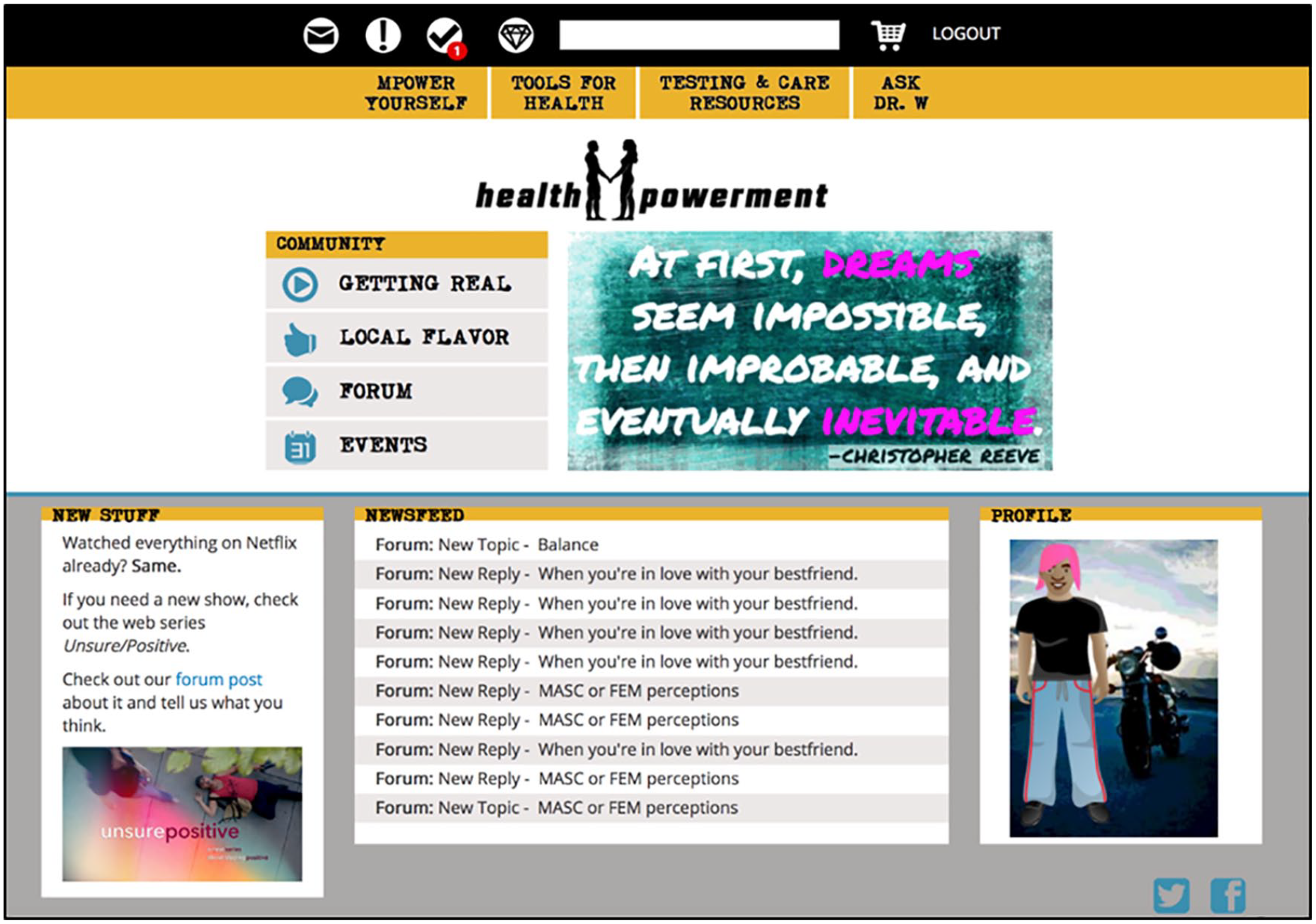
Screenshot of the homepage with the site features listed on HealthMpowerment.org.
In total, 474 participants were randomized to HMP or an information-only control website. HMP included three areas to facilitate interaction with others: a question and answer session with a board-certified infectious disease doctor; a creative space for posting videos, images, and other media; and an open thread (the Forum) to initiate or add to conversations (Figure 1). The intended intervention period (“dose”) was 3 months of use; however, participants could access their assigned study condition website (intervention or control) for the duration of the 12-month follow-up period. The website was only available for study purposes and was not in the public domain.
We defined structure in this intervention as the way in which language on the site enabled and constrained participants’ verbal behavior, with conversations being knit together to build an environment where individuals engaged with one another (Bodolica et al., 2016; Giddens, 1984; Ling et al., 2020; Zanin & Piercy, 2019). The structure of the website, therefore, were the rules for participation in the intervention website, including that participants’ screen names could not include personal identifying characteristics. Community guidelines were posted on the site and included mutual respect and tolerance and restrictions on posting sexually explicit material, hate speech, predatory behavior, and so on. Study staff who each had a username with “HMP” in the handle (e.g., HMPJared) responded to possible violations of site rules with a warning. HMP staff also responded to questions posted by participants on the site and provided additional resources on the site as requested. HMP staff were of diverse race/ethnicity, gender identity, sexual orientation, and age. All staff were experienced working with YBMSM and trained in the study protocols.
Our data set focused on Forum conversations because this space was designed to promote dialogue and encourage open, user-generated conversations. The Forum’s interactive nature lent itself to the importance of capturing and analyzing full conversations in context. Participants’ contributing and responding within conversations was critical for our analysis because of the tenets of structuration theory and participants’ shaping of their online space.
Analysis
Two analysts independently coded all Forum conversations for any stigma content following an analytic framework and codebook developed by the larger research team (Bauermeister et al., 2019). Categories included perpetuating, experiencing, anticipating, and challenging stigma in the context of HIV, race, gender, and sexuality-related stigma (Barry et al., 2018; Bauermeister et al., 2019). Differences were resolved through discussion among the larger analysis team.
Within this coded data set, two analysts (NB, WD) then conducted a conversational analysis, developed from discourse analysis (Giles et al., 2015), with inductive content analysis in which entire conversations are analyzed to identify processes and themes. Conversational analysis can help identify patterns within an interaction and has been used in health services research to analyze patient–provider communication, including the ways in which providers might shape patients’ responses (Drew et al., 2001; Uchitel et al., 2020). This method is particularly well suited for online discussion threads due to the unique form that offers an asynchronous text-based interaction that documents the conversation’s history and evolves over time with participant engagement (Giles et al., 2015). We chose to analyze all HMP conversations in which participants or staff initiated a conversation with a post coded as “perpetuating stigma” that were immediately followed by a “challenging stigma” post. By studying how participants built on one another’s posts and how staff engaged with participants, we aimed to understand how changes in stigma might be accomplished through this medium.
Results
We identified 65 conversations in which 34 participants and six staff members contributed content that both perpetuated and challenged stigma. Three main conversational processes emerged:
Participants shaping and being shaped by rules and structure of conversations
Use of anecdotes to establish social norms and protect anonymity
HMP staff contributing to the structure creation
Below, we first briefly describe these three conversational processes. We then present three full conversations from the Forum and identify how these processes are displayed in each. Participants are assigned the same numbering scheme (i.e., Participant 1) across excerpted conversations to reflect continuity in their participation on the site.
Summary of Conversational Processes
Participants Shaping and Being Shaped by Rules and Structure in the Online Space (i. e., “Shaping Process”)
Participants built on predetermined HMP community guidelines, creating rules and structure through their responses to stigmatizing language. This derived structure was further maintained through participants’ perpetuation and challenge of stigma in their post responses. In some instances, stigma was perpetuated when participants referenced stereotypes or used language that stereotyped certain groups in their post. Participants challenged one another on how they verbalized opinions that perpetuated stigma and characterized a general norm in the space against certain kinds of stereotyping while also affirming specific extreme stereotypes.
Use of Anecdotes to Establish Social Norms in the Context of Anonymity (i. e., “Anecdotes Process”)
While the anonymity of the online space was an imposed structure on this intervention (e.g., participants’ screen names could not include personal identifying characteristics), participants used anecdotes to shape social norms in the context of this anonymity. First, participants imparted their lived experiences as a form of shared cultural knowledge in the online discussion space. Through providing their own stories and anecdotes, they established credibility on living as an YBMSM, and in the process, they established structure in the form of social norms within the anonymous online space that others then followed. Furthermore, the online space allows for anonymity that can be protective for individuals as they describe and recount in-person experiences. For some participants, fear of being stigmatized or judged for expressing certain opinions or sharing personal stories was lessened through the anonymity of the online space, as participants frequently described difficult face-to-face interactions and conversations openly on the site.
HMP Staff Contributing to the Structure of the Space as Facilitators and Members of the Community (i. e., “Staff as Community Members Process”)
Throughout the intervention period, HMP staff posted web hyperlinks and started conversation topics with the goal of spurring intervention engagement and dialogue among participants. The HMP intervention planned for staff to monitor the forums and contribute as-needed; we found that the role of HMP staff evolved as part of maintaining participant engagement such that they became part of the community as they created and contributed to conversations that further shaped the online space. These contributions occurred for three main reasons: to provide resources and additional information about a topic, to offer medically accurate information in response to incorrect posts, and to remind and reinforce the HMP site community guidelines of mutual respect and confidentiality.
Illustrating the Three Conversational Processes in Forum Discussions
In the first example conversation, six participants discuss masculine and feminine characteristics in men, each speaking about their own experiences and norms (Shaping Process, Anecdotes Process).
Conversation A: Masculinity and Femininity in Dating Preferences (Figures 2 and 3)
In this conversation, Participant 1 describes to the HMP online space an in-person discussion he had with a friend (Anecdotes Process). He elicits perspectives from the HMP community on their understanding of masculinity and femininity, particularly in the context of attraction. The first person who responds to the post qualifies his response as “subjective” and goes on to express stereotypes that shape the way in which the conversation progresses (Shaping Process). This respondent is expressing a belief, bringing to the conversation a perspective shaped by their background and community norms. The conversation continues, however, to challenge those norms and shape this space.
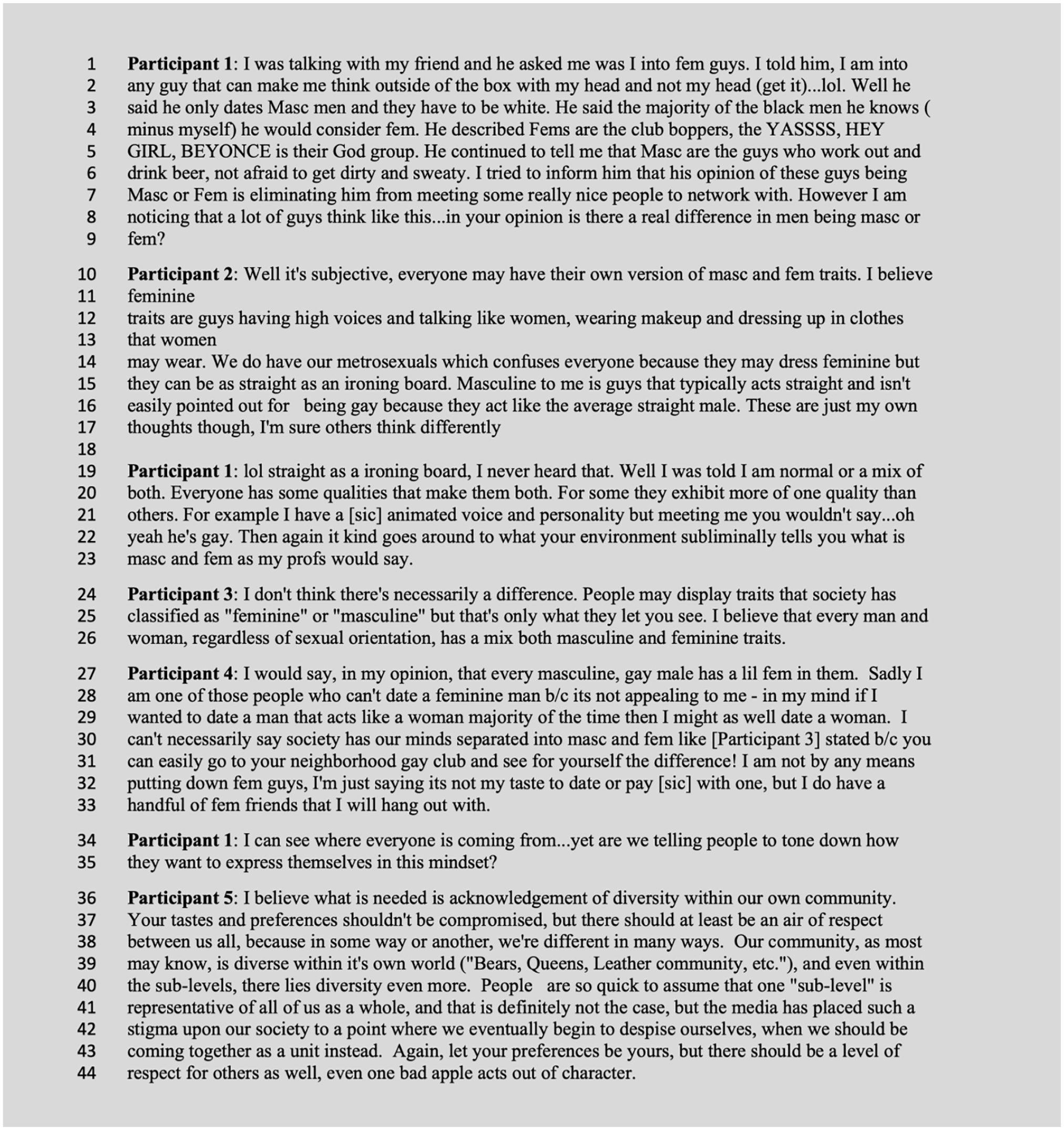
Conversation A: Part 1.
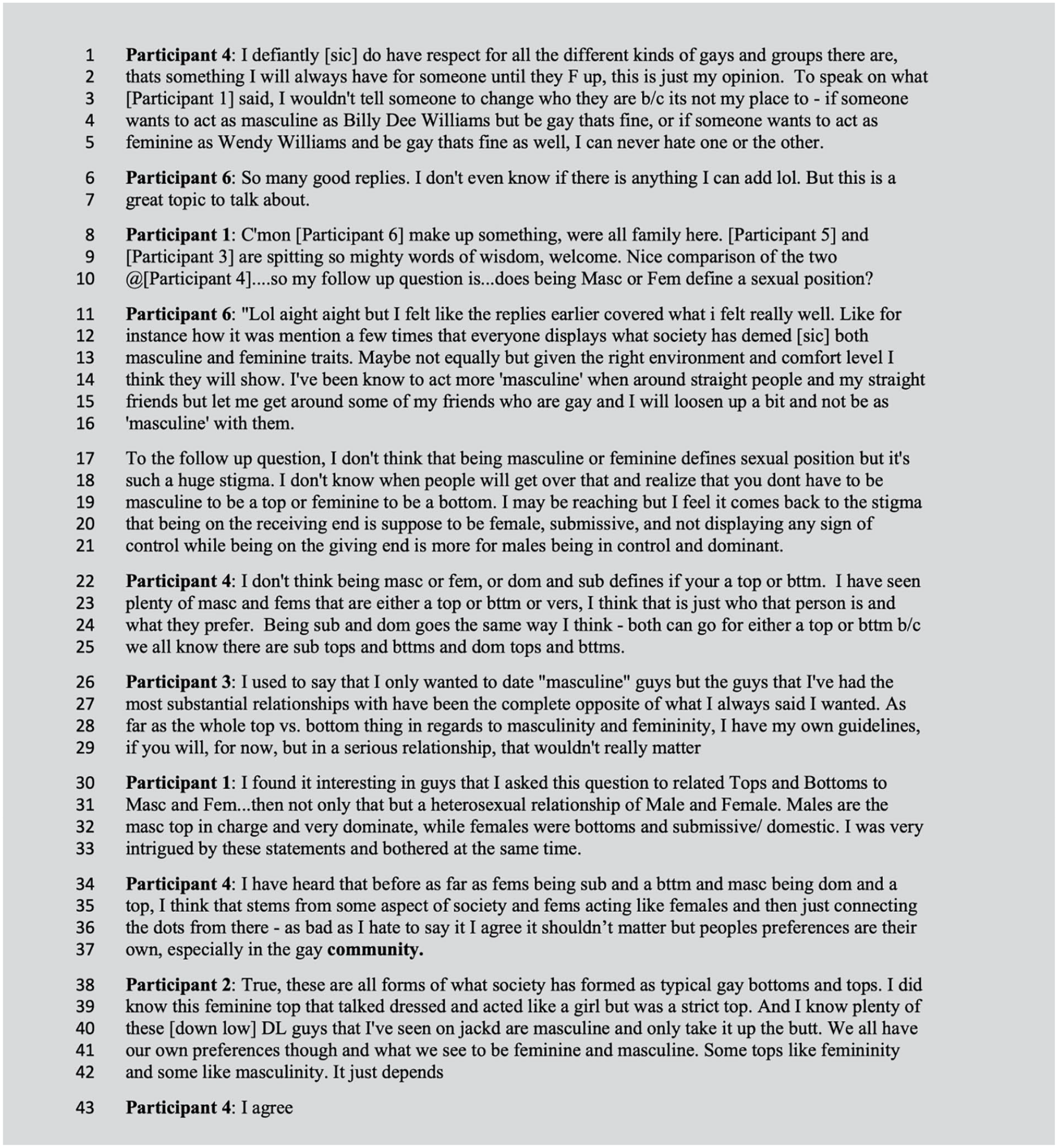
Conversation A: Part 2.
Participant 1 defines normal as a mix of feminine and masculine traits providing further shape to the conversation and to the broader norms being built in this community space. Participant 3 challenges the stigma presented in these posts by confronting the standards of masculinity and femininity that have been defined thus far (Shaping Process).
The conversation unfolds with more stigmatizing language even as participants struggle to articulate the role of personal preferences with perpetuating broader stereotypes in society. The conversation maintains that there are generally accepted definitions of what is “masculine” or “feminine” and that this diversity should be valued within the community (Participant 5, Figure 2, Lines 36–38; Shaping Process) while also noting a tension in how the media creates stereotypes that lead to masking diversity and enhancing stigma. Participant 4 responds (Figure 3, Line 1) to clarify his position.
Participant 6 joins the conversation late, initially affirming the importance of the topic. Participant 1 urges them to go deeper, envoking a sense of safety and shared values (“were [sic] all family here,” Figure 3, Line 8; Shaping Process). Participant 6 obliges, discussing how he presents himself in the in-person space depending on the group with whom he is associating. His illustration bridges some of the ideas previous respondents provided and then poses a fundamental connection between the gendered stereotypes they are describing within same-sex relationships and mainstream social constructions of gender roles (Figure 3, Lines 19–21; Anecdotes Process).
Participant 1 further discusses how these stereotypes stem from a bias against women/the feminine, and Participant 4 appears to agree while also suggesting that gender stereotypes notwithstanding people have a right to their preferences, calling out “the gay community” (Shaping Process, Anecdotes Process). The response from Participant 2 demonstrates a continued engagement since his first response at the beginning of the conversation. Earlier he noted the subjectivity of everyone’s definitions of femininity and masculinity. As he closes the conversation, he concedes that socially accepted distinctions of masculine and feminine exist but may also be (re)defined by the individual (Shaping Process, Anecdotes Process).
Conversation B: Pornography in Sexual Relationships
In the second example conversation, four participants and one HMP staff member discuss how pornography is viewed in the context of relationships (Shaping Process, Anecdotes Process, Staff as Community Members Process). The conversation includes stigmatizing language about the effects of pornography on individuals.
After Participant 1’s initial post, HMP Staff 1 joins in, sets a particular tone, and then encourages participation and commentary from others. HMP Staff 1’s response appears to balance not stigmatizing those who choose to watch pornography while also addressing misinformation about pornography and acknowledging its potential for addiction. This response demonstrates one role that HMP staff take in moderating conversations (Staff as Community Members Process). This kind of staff moderation builds and maintains the structure of the online space, highlighting the role of the HMP staff as part of the online intervention community rather than external to it (Shaping Process).
In raising the idea of pornography as potentially educational, Participant 1’s response challenges some of the stigmatizing language used in the initial post (e.g., “pollutes the mind and relationships,” Figure 4, Lines 2–3; Shaping Process, Anecdotes Process). As the conversation progresses, Participant 7 shares personal experiences. The anonymity of the online space appears to facilitate this sharing around what occurs in the in-person space as they take part in porn consumption (Anecdotes Process). Participant 8 raises another potentially stigmatizing perspective, in stating that consuming pornography is only for individuals who are not in relationships (“when you’re single it’s okay,” Figure 4, Line 25). This language could discourage others from sharing their own experiences about watching pornography with a partner or when in a relationship; this response appears to shape the space in a way that cuts off further conversation (Shaping Process).
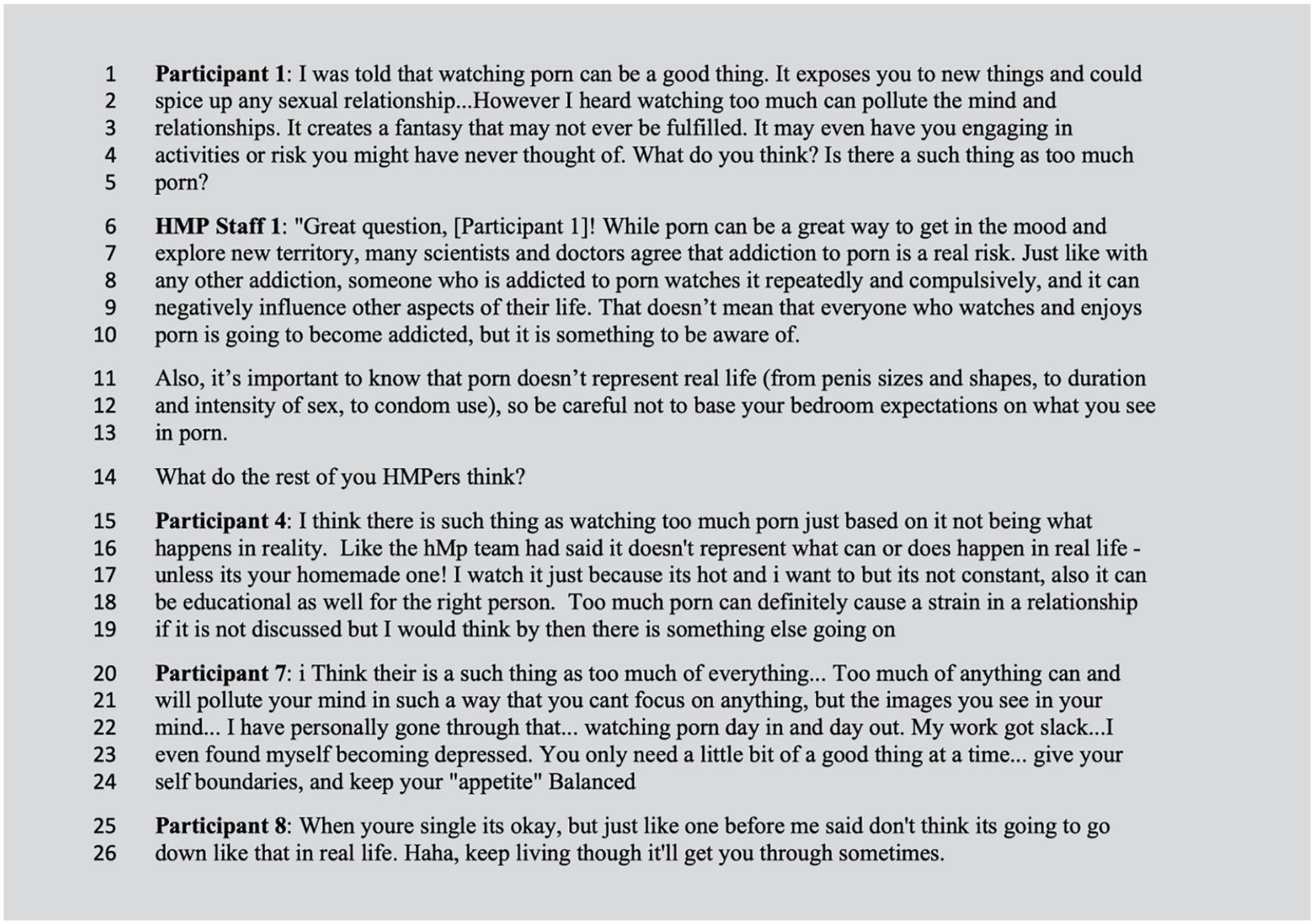
Conversation B.
Conversation C: What Is Truvada (Pre-Exposure Prophylaxis or PrEP)?
Conversation C (Figure 5) includes two HMP staff members providing information about PrEP and attempting to better understand how the participants in HMP view PrEP (Staff as Community Members Process). Four participants respond to the HMP staff’s posts with their own conceptions of what PrEP is and ideas of why different people take it (Shaping Process, Anecdotes Process).
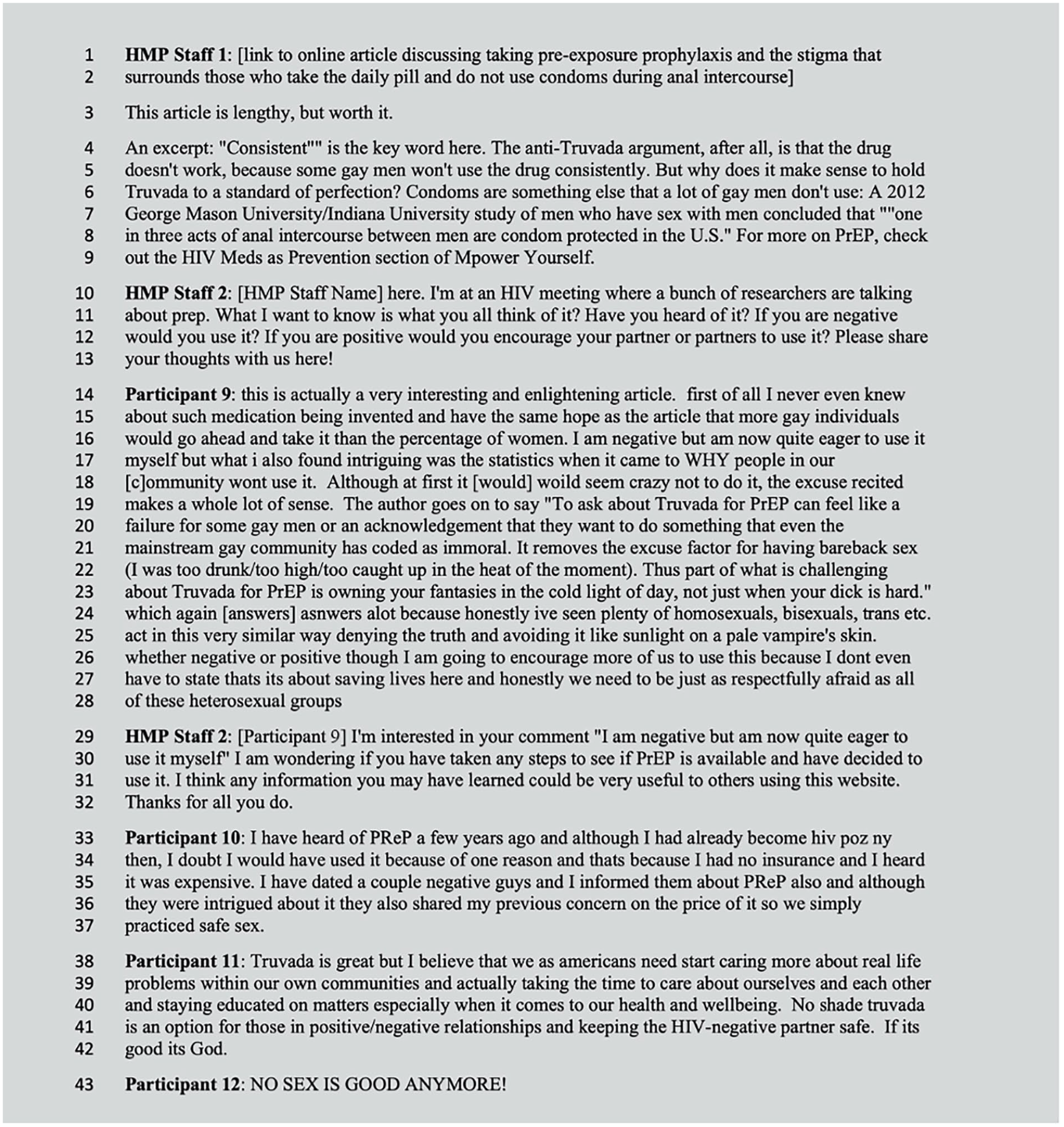
Conversation C.
Here we see HMP staff initiating discussion in attempts to build conversation, facilitate the sharing of information, and draw out opinions around PrEP (Shaping Process, Staff as Community Members Process).
Participant 9’s response shares what he learns from the article posted, demonstrating how he is being shaped by information provided in this space (Shaping Process). HMP Staff 2 then interjects to draw out more information and have the participants educate one another from their experiences accessing PrEP (Shaping Process, Anecdotes Process, Staff as Community Members Process).
HMP Staff 2 requests more information in response to Participant 9’s post around the need for men to use PrEP (Staff as Community Members Process). Other participants then voice their concerns, perspectives, and experiences (Shaping Process, Anecdotes Process). This conversation demonstrates how staff could learn from participants’ shared experiences and continue to shape the online discussions. Such concerns from participants around PrEP provided an opportunity for staff to further explore how to communicate and discuss PrEP. The stigmatizing associations with taking PrEP (“no sex is good anymore!” Figure 5, Line 43) also offered insight to intervention staff on possible barriers to address to improve future interventions targeting PrEP uptake.
Discussion
The design and implementation of the HMP intervention shaped participant behavior in the intervention space to allow participants to define and explore multiple stigmas, including race, gender, sexuality, and HIV serostatus-related stigma. Using a structuration theory lens to analyze these conversations revealed how the structure provided by the intervention, relevance of the intervention’s resources to the outside world, and individuals’ challenging and perpetuation of stigma within the forum conversations were important dynamics in the workings of the intervention. In addition to the structures provided through the design of the intervention and interventionist participation, participants also shaped the intervention through setting rules and exercising agency, such as by establishing positive norms and resisting stigma in the context of the Forum posts.
Using the lens of structuration highlighted specific features of online interventions. The intervention was designed to encourage participants to access the space repeatedly over the 3-month intervention. By examining the conversations that evolved, the recurrent social practices that form the rules of the environment can be observed. Unlike in-person interventions, the emergence of recurrent social practices is more easily observed across the life of the intervention. These features of online interventions build our understanding of complex processes such as community-wide social support (as opposed to one-on-one social support) and the building of community and social cohesion (LeGrand et al., 2014). Additionally, recognizing negative processes (e.g., the impact on other participants when individuals use stereotypes or demeaning language) also allowed for opportunities to minimize the impact of these processes on others within the intervention context. Our team’s earlier work found that engaging in discussions about experiencing stigma was associated with internalized homophobia (Bauermeister et al., 2019), though we could not establish the temporality or mechanisms of this relationship. By understanding the benefits and harms of conversational processes, health educators and practitioners could try to amplify or minimize them in online interventions.
Furthermore, we found that intervention staff members were critical to conversation in the Forum. While online interventions often provide few details about the actions of intervention staff, we found that program staff actively contributed to the growth and maintenance of the online community. This work is often a component of an online community’s “sociability features,” referring to the design features that increase engagement and interaction of a social media site (Preece, 2001). A 2016 study of a forum for Weight Watchers (an organization dedicated to promoting weight loss) found that the lack of a moderator or health educator allowed for inaccurate posts by participants to remain unaddressed, which may have detracted from the goals of the site (Wang & Willis, 2016).
Online interventions focused on community building, such as HMP, may access vulnerable populations who are typically not reached by traditional in-person interventions (Iribarren et al., 2018; Miner et al., 2012). With the increased recognition of the complex dynamics of behavioral interventions, recurrent social practices can be identified using constructs and mechanisms from structuration (Hawe et al., 2009). While process evaluation suggests the need for reproducible interventions, our study suggests that while the interactions and “space” of the intervention is unique, the mechanisms of how participants and intervention structure shaped each other may be identified and fostered across interventions. In particular, moderation-related processes such as those of the HMP staff should be operationalized and measured in future studies as a key determinant of intervention success (Gold et al., 2011).
Our study had a few limitations. First, it is difficult to know how the intervention space affected those who did not post comments. As the structure of the intervention reflected in the Forum allowed participants’ dialogue to both perpetuate and challenge stigma, “mainstream” perspectives and experiences could replicate oppressive structures within the online space influencing who chose not to post on the website.
Second, we did not incorporate the occurrence of external social, cultural, and/or political events in our analysis. External events, such as the police shooting of 18-year-old Michael Brown in Missouri (August 2014), spurred on conversations and contributed to an emphasis on certain issues over others (Carney, 2016). Individuals could also join conversations and leave conversations as they pleased, as well as leave the intervention after 3 months, based on the time line for the RCT (the trial occurred from 2013 to 2015). These disruptions and external factors influenced the content and nature of posts on the website and do not reflect all-important stigma-related issues affecting YBMSM in their day-to-day lives.
Conclusion
HealthMPowerment offers an example of the potential for online interventions to address pressing health disparities through engagement with social drivers of HIV such as stigma and social isolation. Online interventions are designed with particular structures, but typically, they are analyzed with measures at the individual and interpersonal levels. Using structuration theory as an analytic framework more clearly revealed the processes underlying intervention conversations and may help identify how to shape online spaces to improve user engagement and ultimately user health. Online spaces may lend themselves to analysis using the theoretical tools of other disciplines to study complex processes that shape participant behavior. Future studies of online interventions should examine both factors leading to the success of the intervention, such as the moderation staff use to engage participants and the building of supportive relationships in an online community, and those that may detract from intervention objectives such as the perpetuation of stigma in anonymous spaces.
Footnotes
Acknowledgements
We would like to thank all those who participated in the study and project staff for all their work and Dr. Shelley Golden for her advice and support.
Declaration of Conflicting Interests
The author(s) declared no potential conflicts of interest with respect to the research, authorship, and/or publication of this article.
Funding
The author(s) disclosed receipt of the following financial support for the research, authorship, and/or publication of this article: Research reported in this publication was supported in full by Federal grant money from the National Institute of Mental Health of the United States of America National Institutes of Health under award numbers R21MH105292 and R01MH093275. The content is solely the responsibility of the authors and does not necessarily represent the official views of the National Institutes of Health.
