




Abstract
What a text means in translation is accepted, canonically, to be indeterminate. Authors can provide additional constraints to interpretation by taking care to explain some of the original context. But this requires making judgments about what counts, and readers can’t generally do that of sources except in retrospect. So the solution to the problem is taken to be “to become bilingual,” and basically do the translation work oneself. This means immersing in that foreign culture for long enough that its ways of being, and ways of meaning, become one’s own. When the subject of one’s interest is the undiscovered country, however, this goal remains forever inaccessible. That’s just not somewhere you can go and report back from. The true meanings of deceased authors are therefore forever inscrutable. Except, of course, in cases where historical traces can stand in their stead. Interactions with archival sources are thus offered as a new solution to the problems of indeterminacy and inscrutability: archives provide anchors to stabilize the received meaning of historical texts by offering evidence of what those involved in their production intended them to mean. Here, that is demonstrated with reference to (1) the difficulty of translating Jean Piaget’s (1896–1980) collection of essays entitled Sociological Studies and (2) the broader misunderstanding of Piaget’s sociality in relation to the popularity of its critique by Lev Vygotsky (1896–1934). We then find, in the process, new ways to consider a consistently thorny question: what is the means by which one attains truth? Here, we therefore articulate and illustrate the “Interpretation Game” by providing access to a curated selection of archival texts drawn from several collections never before considered in relation to the question of the meaning of “Piaget” as a holophrastic utterance. The result is then also a new look at Cold War-era developmental psychology, social psychology, educational theory, and genetic epistemology (the study of the construction of knowledge).
Keywords
In formal considerations of meaning, there are two broad approaches to evaluating truth-claims: “extensional designation” and “intensional implication” (with an ess). The first names particular examples that can be found and observed directly. The second names broader meaning-full categories (distinguished by Carnap, 1947/1956). One might therefore propose that extensions refer concretely to objects, while intensions refer abstractly to networks of relations (consistent with the postscript added by Kuhn, 1970, to Structure; e.g., Burman et al., 2015).
Following the recent update in this journal of a classic example, consider the difference between “The Morning Star” as Venus (extensionally) and as Lucifer (intensionally). These have quite different meanings; they refer differently. One to a literal planet that we could visit, in principle, and the other to a literary adversary who can't be met in this world. And because the first kind has been discussed in detail—especially in relation to Quine’s (1960; 2001/2008) indeterminacy of translation (viz. “to what are we referring?”)—the goal here is to engage the second kind: an alternative to accusations of ignorance, advocating instead for additional investigation during the reconstruction of old meanings in new contexts (Burman, 2022). As a result, in short, we argue that the solution to the related problems of holophrastic indeterminacy (multiple possible designates), the inscrutability of reference (not knowing what something refers to), and foreign invisibles (unseen others visible only from another perspective) is to go to the relevant archive and investigate the traces left by one’s historical subjects to see what else they were saying on similar themes, why, and in what contexts (by examining e.g., their unpublished letters, drafts, corrections, meeting notes, grant applications, and so on). These extensions then suggest what they could mean, intensionally, in a text to be interpreted.
The prior discussion in this journal was quantitative, considering the correct rendering, replication, and translation of scientific texts (with implications for the meanings understood of “Wundt” and “Piaget” by different groups). Here, we use archival sources to examine related concerns by other means. We have also chosen to continue with Piaget as our illustrative case: the cited archives then further constrain the set of possible worlds one might reasonably be referring to.
To double-down on this broader interest in truth-full translation, and with a nod to methodological symmetry, we consider Piaget’s writings on related themes. Not about extension and intension, directly, but about what he intended to capture in his appeals to these formalisms. 1 Then, consistent with Kuhn’s (1983/2000, 1989/2000, 1993/2000) responses to Quine, we follow the archival sources to partially reconstruct the social network of those involved in the constructions of possible alternative meanings to the one we use now (cf. Ratcliff & Tau, 2018; see also Pettit, 2019). We are thus able to follow the inspiration provided by modal approaches to truth-telling—following Carnap, Lewis, Barcan Marcus, Kripke, the Later Kuhn, and others (see De, 2022; Grize, 1967; Shieh, 2013)—to assert the reasonable possibility of an alternative-yet-commensurable rendering of the meaning of an important set of texts (intensionally). In addition, we provide evidence that can be sought at the relevant archives and examined individually (extensionally). Our findings can thus be easily replicated. 2 And we expect even sceptical readers will find the results convincing as a result.
Briefly, then, here is the problem that serves as our microhistory to inform this broader philosophical investigation: when Piaget’s Sociological Studies (1995) appeared in print, the publisher (Routledge) claimed that it was the “first English translation” of his Études Sociologiques (1965, 1977). Indeed, they said so twice: once on the inside front flap of the dust jacket, and once on the back. However, this is incorrect. Or it was misleading. The version we have available to us was not the first English translation made; it was the first English translation published. It was also preceded by decades by other editions, including in Spanish (as Estudios Sociológicos, 1977).
This matters for two reasons. The first is that the resulting delay in the book’s appearance in English no doubt contributed to the widespread and continuing but erroneous belief, in Anglo-American psychology and its inheritors, that Piaget neglected the social (discussed by e.g., Burman, 2015; Carpendale, 2000; Lourenço & Machado, 1996; Youniss & Damon, 1992; and throughout this essay in connection to different groups of translators). Thus, also, that the positions of Piaget and Vygotsky are divergent and incommensurable (e.g., Bruner, 1997). The second relates to the meaning attributed to the book itself by the published translation’s editorial lead in his introductory remarks. And the hermeneutic method of modals requires us to consider the other meanings that the book had for the others involved: its several different possible intensions, with an ess, because—for reasons of “the Levi Effect” (Burman, 2022)—translations of historical materials cannot be considered by contemporary readers to be identical with their sources without additional investigation (viz. to show that the translator’s chosen equivalences aren’t problematic in the new context).
What follows, therefore, is an archival engagement with an earlier quantitative demonstration in this journal of the problem of how to represent scientific meaning to audiences who aren’t already fluent in the language of the source. Several different groups of experts are thus shown to have played the bilingual “Interpretation Game” of attempting to translate the same text, and they produced multiple renderings that were shared, judged, commented-upon, and found lacking. In the process, they also generated additional work-product that reflected the meanings they intended. And these were themselves not all identical in their implications. That these conflicts were not considered relevant by the publisher in turn also helps us to see an associated yet broader conflict in a new light: the uncontrolled-but-still-mediated relations between Piagetians and Vygotskyians and their respective translations (as well as the contemporary inheritors of the results of these historical language-games), some of which we also examine with new archival sources in the second half because they are bound up with the same misunderstood set of meaning-implications. In what follows, we therefore use these archival sources to engage a larger misunderstanding underlying much of contemporary psychology related to the relations between the cognitive and the social (and their exemplary representatives).
Historicizing the Text we Have Today
The version of Piaget’s book that exists today was presented by its editor, Les Smith (1943–2020), as having been organized around a single, simple issue. As he explained, “The central question addressed by Piaget in Sociological Studies appears at the beginning of Chapter 5: how does a rational mind attain truth?” (Smith, 1995, p. 1; referring to Piaget, 1928/1995). However, this is misleading: that text is from the first chapter of the appendix in the expanded (third) French edition. It was not included in the first or second (corrected) French editions. And although it’s not necessarily the case that these earlier editions were about something else, or that they meant something else (intensionally), they certainly could not have been about the explicit contents of that chapter that was written first but added later (extensionally). 3
Recognizing that the third French edition of the book was the expansion of a previously published collection, brought together in two parts (original and appendix), one might be tempted to suggest that Piaget simply chose not to include this early “central point” in the original text because he felt he had made that point more clearly in his subsequent writing. To understand what English-speaking readers don’t presently recognize of Sociological Studies as a text with multiple histories—and indeed to achieve the goal that Piaget himself set for the essays it contains—we must therefore separate Smith’s since-popularized interpretation from the central question addressed in the original first French edition, and then compare.
Very briefly: the first French edition can be viewed as a collection of highlights following Piaget’s taking-up, in 1940, of the Chair of Sociology at the University of Geneva (see Burman, 2015; Ratcliff & Borella, 2013). His reflections after reviewing his own collected writings then suggest a consistency in his thinking over this ten year period: In re-reading these studies, I have the disquieting experience of repeating myself from one chapter to the next, because Chapter 1 of the present text [an extract from the otherwise untranslated Introduction à l’épistémologie génétique, published in 1950] in fact is a synthesis of the next three Chapters, which have been previously published. It will therefore be seen that I have kept too much to the letter of the famous advice of an old professor: to make yourself understood, it is necessary first to say what you are going to say, then it is necessary to say it and finally it is necessary to repeat it by way of a summary. (Piaget, 1965/1995, p. 28)
This question is a variation of what had been asked by the Rockefeller Foundation in discussing Piaget’s grants related to genetic epistemology, and he had actually anticipated it in the essay that became the first chapter (but which had not yet been translated when Rockefeller asked). After explaining that sociological knowledge has important relations with psychological and biological knowledge that need to be examined (which was also itself just a summary of the two preceding untranslated volumes of the Introduction à l’épistémologie génétique), Piaget put it directly: genetic epistemology, which studies the growth of knowledge from the dual viewpoint both of its psychological formation and of its historical evolution, depends as much on sociology as on psychology – the sociogenesis of the different forms of knowledge being neither more nor less important than its psychogenesis, since these are two inseparable aspects of any existing formation. There are two questions of particular significance here because the answers to them are crucial for the definition of genetic epistemology: the question of the relationship between sociogenesis and psychogenesis in the formation of the child’s notions during the course of socialization, and the question of the nature of these same notions in the elaboration of scientific and philosophical notions as these succeed each other historically. (Piaget, 1950/1995, p. 35)
English readers at the time had already received a preview of this in the penultimate chapter of The Psychology of Intelligence, entitled “Social factors in intellectual development” (Piaget, 1947/1950). And we can interpret that as an elaboration of the address that Piaget gave at Harvard a decade earlier, on the occasion of his receipt of an honorary doctorate for what they described as his “sociology of child development” (Piaget, 1937; see Hsueh, 2004; Burman, 2015). Also of his still-earlier comments in The Moral Judgment of the Child: “Logic is the morality of thought just as morality is the logic of action” (Piaget, 1932/1932, p. 404). And therefore—as he indicated in that same book (on p. 339)—of his address at the Ninth International Congress of Psychology in New Haven, in 1929, where he spoke about “The parallelism between logic and morality in the child” (our trans of Piaget, 1930). Indeed, as Piaget (1950/1995) put it in the first chapter of the first French edition of Sociological Studies: “the social aspect and the logical aspect are inseparable” (p. 88).
In other words, the short collection published originally as Études Sociologiques was a continuation of themes examined in those earlier writings to which English-speaking audiences had long had access. However, the program in genetic epistemology to which it contributed was also explicitly an expansion of Piaget’s psychology (as he explained to the Rockefeller Foundation; see Burman, 2021). Later reformulations also returned to his original interests in ways most English audiences have almost no awareness at all (Burman, 2013; 2019; 2020; 2022). Thus, in short, the contribution of the first French edition of Sociological Studies was not really about the cognitive development that we now equate with Piaget’s name. Rather, its goal was to explain how shared norms underlie the construction of systems of exchange—including those of knowledge-production—and to argue that the resulting co-operation precedes the internalization of the associated operational structures of individual reasoning that ultimately enable the production of shared knowledge in general (Piaget, 1950/1995, pp. 92–93).
The result is similar to Smith’s (1993) interpretation, but with a different emphasis; closer to what Apostel (1986) called “the unknown Piaget” (see also his 1982; and his unpublished letter of 1957 about the “crisis” in formal logic then being investigated in Geneva, qtd. in Burman, 2021, p. 28). Furthermore, we suggest that Smith’s (1995) focus on truth, in presenting the third French edition as Sociological Studies in English, was itself made possible by the first French edition’s focus on shared values and norms (see also Chapman, 1986). Indeed, it is from this moral foundation that the child’s understanding of “necessity” first arises: it must be, but only after it ought to be (i.e., necessity is constructed from undifferentiated “pseudonecessity” [Piaget, 1983/1987; Piaget & Garcia, 1983/1989]).
It seems, though, that it was specifically the modal operator □ that was Smith’s original interest as a translator (e.g., of Piaget, 1977/1986, which also includes engagements with issues of extension and intension). 4 However, Piaget (1983/1987) made it clear that this was not his interest as an author: “In approaching the problem of necessity we do not intend to study modal logic, but rather to relate necessity … to the development of the notion of reality” (p. 3; emphasis as in the original). We can then further propose that Smith’s (1993, 1995) intent and interpretation was philosophical (see also Smith, 1982; 1999a; 1999b). But because of classic philosophical problems with translation, like indeterminacy, what was needed in introducing the new text was not philosophy itself but history: an examination of the context(s) in which the texts derived their meaning(s), as evidenced by their associated traces, while also accommodating how contemporary readers might misunderstand them as a result of their foreignness (Burman, 2015, 2022; see also in this connection, e.g., the excavation of Piaget’s “neo-Godelian turn” by Burman, 2016; cf. Piaget, 1977/1986, pp. 302, 304).
That the publisher didn’t tell Smith 5 that several other teams had failed to produce an adequate translation was a hindrance, of course, because the discussions captured in the archival documents make clearer what they had struggled to represent and why. Indeed, they enacted what Piaget described: the lack of shared values and norms, between English and French (as well as between publisher and scholars), produced renderings that failed again and again to reconstruct knowledge equivalent to the original. (Although the words chosen often seemed equivalent, the meanings they had were not; the translations could not, therefore, be identical with their source text [also discussed e.g., by Jurczak, 1997; Smith, 1981; 2009].) Our goal here, therefore, is to share these efforts and then to provide the introduction that we argue—in retrospect, with the benefit of an extra quarter-century’s hindsight—should have accompanied the eventual publication of the translation that seemed to have succeeded. Then also to consider the problem more broadly.
What follows is based on the examination of hundreds of pages of unpublished correspondence, preserved in several specialist archives and private collections. In other words: although our interpretation is intensional, with an ess, the evidence supporting it is extensional. (We’ve named the letters we cite, and you can go to those places and hold them in your hands.) As a result, too, what follows is new in the sense that these archival collections have previously not been considered in relation to the meanings of these texts. Even though they could have been. Furthermore, in the process of interpreting these sources of evidence, we have also collected together some of the related scholarship produced and published by those involved in the translation effort itself. This previously unrecognized social network then further reinforces Piaget’s point in his dispute with Quine that led the Rockefeller Foundation to end their support of his institute in Geneva: what something could be said to “mean”—its presently understood intensions (with an ess)—is a function, in part, of the group to which one belongs and the values and norms to which one is held (which condition the sought-after extensions that it seems possible to imply). This then looks like Later Wittgenstein, but with extra steps. So our first step is simple: who were these various other translators that were doing something different from Smith, and how did they describe what they meant?
First Extensions
In the late-1960s, Henri Tajfel (1919–1982) had sought to define a new European style of social psychology that—as he explained in a letter to Piaget—would no longer imitate the “sterile” research “from across the Atlantic.” 6 Thus he had recently published, for example, on the “cognitive aspects of prejudice” (1969) and “intergroup discrimination” (1970). Shared interest in the intersection between psychology and sociology 7 then led Piaget to visit with Tajfel in Bristol, in 1970, when the university there awarded him an honorary doctorate.
Soon afterward, Piaget offered Tajfel the Chair of Social Psychology at Geneva. This was intended to fill the permanent position then-staffed temporarily by visiting lecturers like Willem Doise (1935–2023) and Serge Moscovici (1925–2014). 8 Tajfel did not accept, ultimately, but their shared interests and discussions continued. (With the exception of his dedication to visiting other institutions, he remained at Bristol for the rest of his career; see R. Brown, 2020, pp. 164–167.)
By 1973, Piaget and Tajfel had agreed that the English translation of Sociological Studies ought to appear in Tajfel’s book series: European Monographs of Social Psychology (in which Doise and Moscovici also published). They then discovered to their dismay, however, that Routledge had in 1971 acquired the rights directly from Droz (the French publisher). So Tajfel wrote to Routledge in Piaget’s name, and asked if they would relinquish the rights to his own publisher—Academic Press—and allow the volume to proceed “in a form which, he [Piaget] feels, would present special advantages from the point of view of its intellectual setting.” 9 (In other words, in a form and context in which what he meant would be more easily understood by a ready audience.)
Routledge declined, reporting that their translation was already finished and would soon be going to press.
10
Piaget’s response then took the middle way.
11
He wrote to Routledge and asked that Tajfel be invited to compose an introduction. As he explained in his letter: I am not a sociologist, and sociologists do not like psychologists. It would therefore be very useful for a famous author such as Tajfel, who is both at the same time, to connect the dots for readers. In particular, he could say some useful things about my chapter on the exchange of values, which was written quite a long time ago and which anticipates in a sense the work of the modern functionalists.
12
News quickly spread. The volume’s Spanish translator, Miguel Quintanilla (b. 1945), soon afterward asked if Tajfel’s introduction could be included in that edition too. 16 Tajfel again agreed. 17 And a special double issue of the Revue européenne des sciences sociales (also sometimes known as the Cahiers Vilfredo Pareto) began to come together on the theme of “the social sciences with and after Jean Piaget” (Busino, 1976; see esp. pp. 363–525).
By September of 1973, the first draft of the English translation was ready to be circulated. Everyone seems to have understood, however, that it wouldn’t—couldn’t—be perfect. Indeed, the publisher mentioned to Tajfel that it had been “a translation of some difficulty.” 18 In the letter preceding the package that actually included the draft, which arrived nearly two months later, they also indicated that this was consistent with their expectations: “Translations of Piaget are never very satisfactory but people seem not to be too put off.” 19
Tajfel agreed that the translations were often problematic, but not that they ought to be. Merely splitting up overly long sentences, as Routledge had asked the original translator to do,
20
was also really insufficient for the production of a worthwhile rendering. As he explained: Piaget’s translations are not usually very good; nor for that matter is his style in French. A really good translation of Piaget would need re-writing and editing rather than closely following his text.
21
With respect, [the translator] has missed the point .... There is no reason why the English of the translation should be so much worse and more obscure than the French of the original. If Piaget wrote originally in English, and not in French, he would never have written as badly as is the case with the present translation.
22
He continued: Piaget’s French is difficult; it is not turgid. The English of the translation is both. It reads as if the text has been bodily lifted from the French into English, respecting the French but not the English. One cannot do justice to Piaget's thought and its original expression (however difficult it is) by producing an English text with a very strong (almost grotesque) French accent. The translator should have had much more courage than he showed in first understanding each page or paragraph in its own right, and then rendering it faithfully into its English equivalent instead of an English parody of the French text.
23
Tajfel also said as much directly to Piaget, and shared that he was reluctant to finish his introduction before the main body of the book was fixed. 28 This must then have put him off the timeline for the Spanish edition, because that didn’t include his contribution either. (Taking advantage of yet another archival collection, it is now clear in retrospect that the Spanish translation of an earlier special issue of the Cahiers Vilfredo Pareto edited by Busino [1966], which included Quintanilla’s [1974] introduction, was also related to that effort.) 29
Tajfel’s letters show us not only what led him to reject the translation but also how Piaget was using the language—including presenting the awkward-in-English parallel between “socialisation” (to become social, in the sense of following externally shared rules for behavior) and “mentalisation” (to become mental, in the sense of the causes of sensations being internalized as object-representations)—to express himself in ways that would make his intent hard to translate without some additional scholarly heavy-lifting. Thus, as Tajfel said of the translator’s draft: He should also take a little more advice about some technical terms which are not necessarily “jargon.” Some examples near the beginning: “connections nerveuses” should not be translated as “nervous connections” but as “neural connections”; “compréhension” should not have been translated in its context as “comprehension” but as “understanding” (in the traditional opposition of the German “Erklärung” and “Verstehen”, translated into French as “explication” and “compréhension”, and into English as “explanation” and “understanding”); “segrégation” on p.18 of the original should have been “selection” and not “segregation” in English; on p.20 of the original “fonctions mentalisées” should not be in English “mentalised(!) functions” but (in the context of the sentence) “…precisely because man is one entity, and all of his functions which become those of the mind are also at the same time being socialized”. The present translation reads: “precisely because man is one and all his mentalised functions are also socialised.”
30
Extensions Two Through Seven
In 1975, Tajfel suggested a new translator for a second attempt: Douglas Graham (d. 1980) of the University of Durham. This would use the first draft only “as a background for the new one.” 32 That proposal was then accepted by Routledge, and an updated version of the original was sent out. 33 Tajfel forwarded this along to Graham in early 1976.34, 35 Then there’s nothing further; it’s not even clear if his chapter from that time on similar topics was related to the translation effort (Graham, 1976). And although he soon afterward published the translation of a book discussing Tajfel and Piaget, by Doise (1976/1978), we also see in Graham’s obituary that his health had been in decline (F. V. S., 1981). 36 So perhaps he was unable to undertake a second book-length project. In any case, it’s clear that this second attempt also failed to produce an acceptable English equivalent worth writing home about.
By 1977, Pierre Moessinger (b. 1943)—then a sociology postdoc with psychological interests and a collaborator at Piaget’s International Center for Genetic Epistemology—had also become interested in the translation effort. 37 He took over editorial oversight of the project, collaborating with Pamela Stevens at the Piaget Archives (founded by Inhelder a few years before) to try to address the problems that Tajfel remarked-upon while also respecting both the English and the French. 38
Moessinger’s preliminary comments, likely in response to the same Routledge text that had been sent to Graham, highlight an important stylistic difference between English and French that all such translations must address: the translation was too literal, which results sometimes in a rather heavy style in English, although it is not unfaithful [in its details] to the French text. It seems that Piaget's “difficult style” is more acceptable in French than in English, particularly when one considers by whom such a book will be read in English. Useless to insist on the fact that the language in which Piaget expresses his dialectical thought does not sell too well among American Academics in the social sciences.
39
He explained further: There is in the USA a kind of an official style of research expounded in publications such as “How to write a research paper,” as well as in the “Publication manuals.” One is taught to write short sentences, to put commas in the right place, to avoid evasiveness, and so on. In short, the recommended style is not exactly Piaget's. Consequently, I am of the opinion that Piaget's translations should be made understandable to his readers, even at the price of Anglicizing a bit what he means.
40
For help with technical vocabulary, one could appeal to the official Piaget Dictionary, which by that point had editions in both French and English (Battro, 1966/1973). Yet this was not a Translation Manual in the way that Quine (1960) meant. Moessinger thus concluded that the main problem “was more in the understanding than in the translating.” 42 After discussing the state of things with Tajfel, he then agreed that the original could not be saved. Instead, he proposed that an entirely new translation be undertaken in collaboration with David d’Arcy. 43
This can be understood as the third attempt. Conveniently, too, a sample of their work has been preserved. Here then, by way of example, is their version of the first paragraph of the first chapter from the first edition: Sociology, like both biology and psychology, is of interest in the study of epistemology from two distinct, although complementary, points of view: on the one hand, it constitutes a mode of knowledge worth studying for its own sake; on the other hand, in its very object or content [,] sociological knowledge conditions epistemology. Human knowledge being essentially collective, social life constitutes one of the essential factors in the formation and growth of prescientific and scientific knowledge.
44
It is important to note, at this point, that all of these attempted translations were of the short first or second (corrected) French editions. This comprised only four chapters: 150 or so printed pages. And even as Piaget continued to express his support for the translation effort, the expanded third French edition was in preparation. That version—with nine chapters (the four originals followed by the “appendix” of five more)—then appeared, in French, in 1977.
After many years of false starts and disappointments, Piaget again wrote to Routledge to ask that the rights for the translation of the expanded edition be transferred to Academic Press so the book could be included with similar works in Tajfel’s European Monographs of Social Psychology series. 47 As before, however, they refused. Explained the editor: “As you know I have made great efforts to find a suitable person to revise the translation.” 48
We don’t find this especially satisfactory. Tajfel seems not to have either: in parallel with those efforts, he attempted his own complete re-translation. This was the fourth attempt we know about. Eventually, though, he gave that up as well: there was too much to do, and too little time, to go it alone. 49
The task eventually passed to Michael Chapman (1947–1991), to Terry Brown (1939–2005), and then ultimately to Les Smith (1943–2020). 50 We might call these the fifth, sixth, and seventh attempts. It should be noted, however, that these are just the seven that we know of; the seven that we have evidence for. It’s possible there are others out there.
To manage the complexity of the expanded volume, in producing the seventh version that English-speaking audiences have now, Smith recruited a team of sympathetic scholars—many of whom had then or have since published their own historical, theoretical, or philosophical research on topics related to this explicitly Social Piaget (e.g., T. Brown, 1988, 1996, 2001; Campbell, 2001, 2019; Emler, 1983; Ferrari & Okamoto, 2003; Kitchener, 1981, 1991, 1996, 2004, 2009; Mays, 1974, 1982, 1985, 2000; Mays & Smith, 2001; Smith, 1982, 1996). Each also took on their own chapter, while Smith himself took on the role of overall editorial lead.
Routledge, however, had presented the project to Smith as something relatively new. 51 The remembered history of the project extended back only to Chapman (who predeceased its conclusion; see Chandler & Carpendale, 1992). But even this was not reflected in the published version. 52 As a result, the wealth of related scholarship—including the final team’s associated writings but also Girod (1966a, 1966b, 1982), Busino (1966, 1974, 1976, 1990), Quintanilla (1973, 1974), Graham (1976), Moessinger (1978, 1997, 2000), Chapman (1986, 1988a, pp. 58-73, 179-188, 231-233; 1988b), and Davidson (1988, 1992, 1993)—remains disconnected from their shared source. 53 As does the work of the original three social psychologists in Piaget’s circle: Tajfel, Doise, and Moscovici, who are sometimes presented to have been in conflict with Piaget (with notable exceptions; e.g., Duveen, 2013). And although these sources can be considered separately, they can also be seen as a commensurable group working at playing the same Interpretation Game: bilingual producers of works influenced by the original text, in the original language, who then tried to understand and explain its meanings to interested audiences with access to different and sometimes conflicting interpretations. (As we are now also trying to do as well.)
The Eighth Extension
How should we conceive of Sociological Studies today?
Piaget wrote in the preface to the first French edition that its publication was the result of “the joint influence of the dynamism of Droz [his publisher] and of the fidelity of my colleague and friend R. Girod” (Piaget, 1965, p. 8). 54 In other words, it seems the collection’s original publication was the consequence of an editorial intervention rather than of a grand plan. And we don’t know their reasons, although we continue to look for evidence of them. (The third French edition retroactively inserted Busino alongside Girod, and this is the version of that acknowledgement presented in the English translation: “The dynamic character of the sociological publications of Editions Droz and the loyalty of my colleagues Busino and Girod” [Piaget, 1995, p. 23].)
However, when the time came for Smith’s further intervention thirty years later, and our critical comments twenty-five years after that, the audience expects only one reason to justify the appearance of the book at that time: the publication three years before of Lev Vygotsky’s (1934/1962) Thought and Language. And indeed, to the extent that contemporary audiences are concerned with the contents of Piaget’s collection of social writings at all, that is now how they inevitably interpret their relevance and contribution. It must be a response (but only pseudo-necessarily). By way of conclusion, in an extended sense, we therefore offer the following as the eighth extension of Sociological Studies: what we believe its meaning ought to be today, in light of everything we’ve uncovered. This, though, requires some introductory remarks to situate what follows.
Thought and Language
The common belief today is that the translation of Vygotsky’s critique of Piaget’s neglect of the social was delayed for political reasons. In his introduction to the English translation of Thought and Language, Jerome Bruner (1915–2016) explained that this was because the book had been “suppressed in 1936, two years after its appearance, not to reappear again until 1956” (Bruner, 1962, p. vi). It therefore wasn’t until after the death of Stalin, supposedly, that it once again became possible to discuss Vygotsky’s work in the open. This, however, is misleading. Or it was a misunderstanding.
Although the suppression—which Bruner (1983, p. 137; 1985, p. 22) later recalled as a “ban”—no doubt contributed to Vygotsky’s appeal in the US as a scientific underdog, especially after the Soviets’ unexpected success with Sputnik in 1957, this treatment wasn’t personal. It was directed instead toward the scientific study of education in general: “pedology,” the discipline, which Stalin’s supporters labelled an ideology and discredited as anti-Marxist.
As Fradkin (1990) explained, however, pedology wasn’t simply suppressed. It was murdered (in the title and throughout). Along with several hundred of its researchers and teachers, who “disappeared for ever” in 1937 (p. 199). In other words, the suppression wasn’t merely a ban in the way that word has its meaning in the West today. Nor was it solely a ban on Vygotsky. It was a denial and negation of all research conducted at the boundary between developmental psychology and educational theory; a recasting of certain kinds of empirical research as bourgeois, and thus immoral. Indeed, as Fradkin put it: Pedologists were accused of the fact that the number of mentally retarded, handicapped and problem children was growing more and more .... They were accused of trying to show, with statistics and mathematical formulae, that spiritually strong people are mainly the offspring of the bourgeoisie and of families well provided for, but that working-class children fall into the category of the spiritually weak. (p. 205)
He continued: The rout of pedology was also pursuing an “educational” goal: to intimidate those academics who, following the traditions of their science, persistently argued their principles and opposed external pressure. Arrests, the threat of physical extermination, deprivation of the possibility of working in education and, most important of all, the danger of repressions against totally innocent relatives led to the pedologists' ceasing to exist as a professional group. Many of them died from shock, some were arrested, and still others subsequently worked as psychologists and pedagogues. (p. 206)
In short: the emergence of these conditions of unthinkability would have affected everyone interested in child study in the USSR. Including those interested in Piaget (see Van der Veer, 1996/2007). Especially in his capacity as Director-Diplomat, since 1929, of the bourgeois International Bureau of Education (Hofstetter & Schneuwly, 2023). With this realization, methodological symmetry then requires that we treat both authors in the same way: to the extent that there was a “ban” on Vygotsky, there was equally a ban on Piaget (pace Bruner). The two traditions then developed separately, and they only reconnected well after Vygotsky’s death.
This is most easily considered, in its basic facts but without the political or moral or normative contexts on which our contemporary understandings rest, with a simple timeline. Thus, for example, it is well-known that both men were born in the same year: 1896, with Piaget born in August and Vygotsky born in November. Piaget’s (1923/1926, 1924/1928) first two books were then published in his late-20s, and Vygotsky (1934/1962) criticized them in his mid-30s. These are the works we know today: the original classics that largely defined what “Piaget” came to mean (Burman, 2022). Vygotsky’s life then ended at 37 in June of 1934. And Piaget died at 84 in September of 1980.
In other words, it’s straightforward and clear that Piaget had many decades more time than Vygotsky did. Even including the blackout of the ban, Piaget had years in which to learn about Vygotsky’s criticisms and respond. Yet because that very suggestion runs counter to the common understanding, we will show rather than tell: extraordinary claims require extraordinary evidence.
Additional complexity
Piaget and Vygotsky never met. The one opportunity we know-of when they could possibly have met, but didn’t, came in 1929. Both are named in the proceedings of the International Congress of Psychology that was hosted by Yale, in New Haven, at which Piaget (1930) spoke about “The parallelism between logic and morality in children.” But Vygotsky didn’t attend. He chose to stay home, to revise his book discussing “the impenetrable Piaget.” 56 His junior co-author, Alexander Luria (1902–1977), gave their talk instead (Yasnitsky, 2012, pp. 120–121; 2018, pp. 71–73; see also Lamdan, 2018).
Despite Vygotsky’s absence, Piaget was much impressed by the collaboration. He wrote to Ignace Meyerson (1888–1983) immediately afterward, saying that both Vygotsky and Luria ought to be recruited to Meyerson’s project to create an international association of psychology and pedagogy. 57 But then Vygotsky died of tuberculosis, as is now understood (pace Fradkin), and Stalin’s heaviest restrictions came into force two years later. Piaget thus had no further opportunity to engage directly with Soviet pedological thought. Not for another twenty years; first in Montreal at the International Congress of Psychology in 1954—at which a Soviet Delegation held court—and then again in 1955 when he was invited to visit Moscow and Leningrad during his presidency of the International Union of Scientific Psychology (see Piaget, 1956/1956).
It was also at around this time that efforts began to come together to undertake the translation of Vygotsky’s critical commentary on Piaget’s first books. Bruner had been in Montreal too, and met with the Soviet Delegation. He also befriended Luria, by then Vygotsky’s literary executor. From there, sustained efforts produced the translation we now know so well.
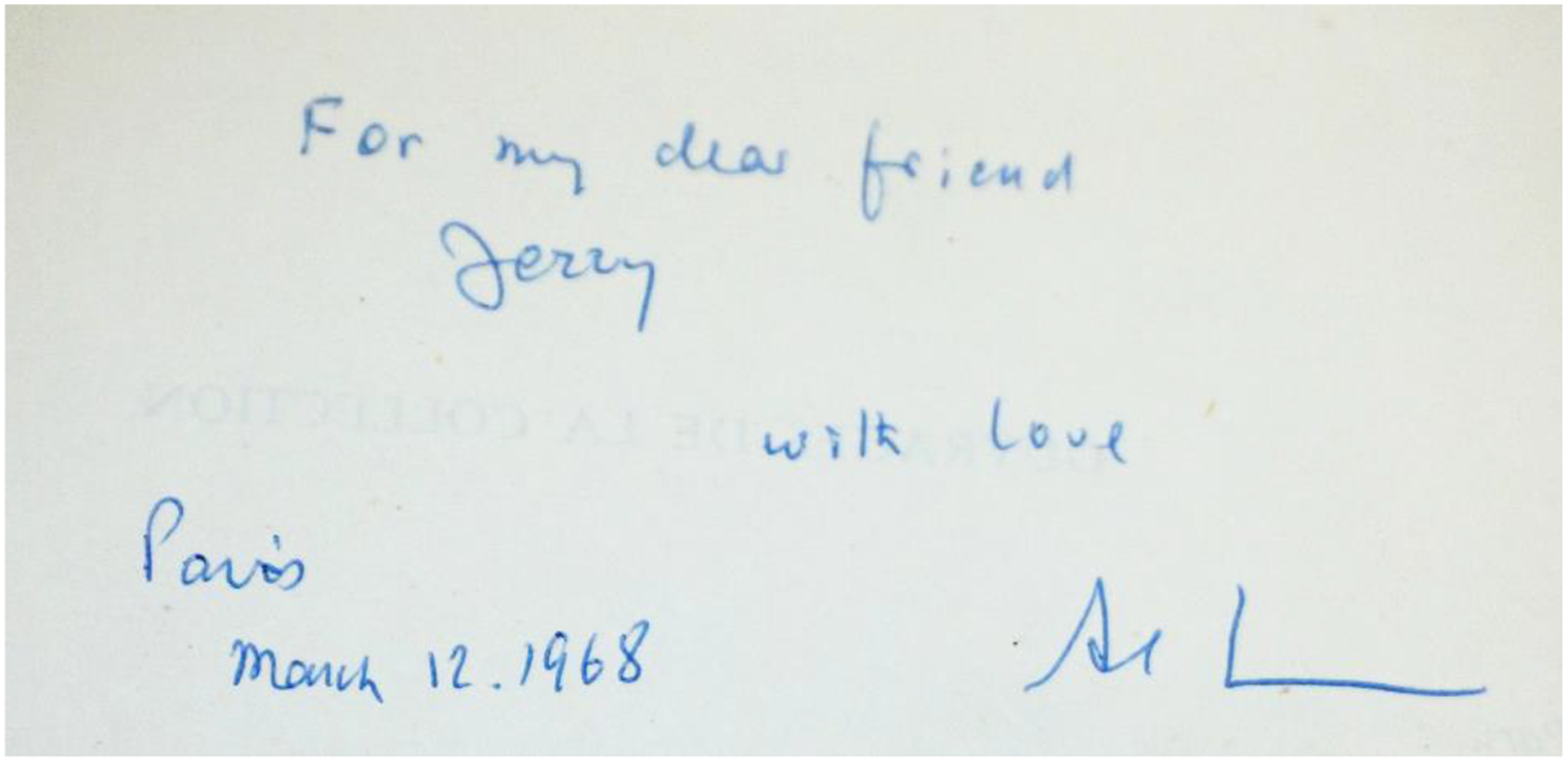
This has been reported before (e.g., Bruner, 1983, pp. 143–145; 1985, pp. 22–23). Yet we begin to see it in a different light when examining the books held in the Bruner Library at the Max Planck Institute for Psycholinguistics in Nijmegen: there’s an evolution in the dedications from Luria, from “cordially” in 1960 (Figure 1) to “my dear friend… with love” by 1968 (Figure 2). This is then clarified further in the Bruner–Luria correspondence at Harvard, where we see that there were challenges to be overcome in translating Vygotsky as well. We can therefore expect a similar parallel history about the production of the English versions of his works (as we have shown with Piaget’s).
58
Luria’s dedication in Speech and the development of mental processes in the child (MPI-NL, BL Lur 1; 155613). Luria’s dedication in Les troubles de la résolution de problèmes (MPI-NL, BL Lur 5; 155614).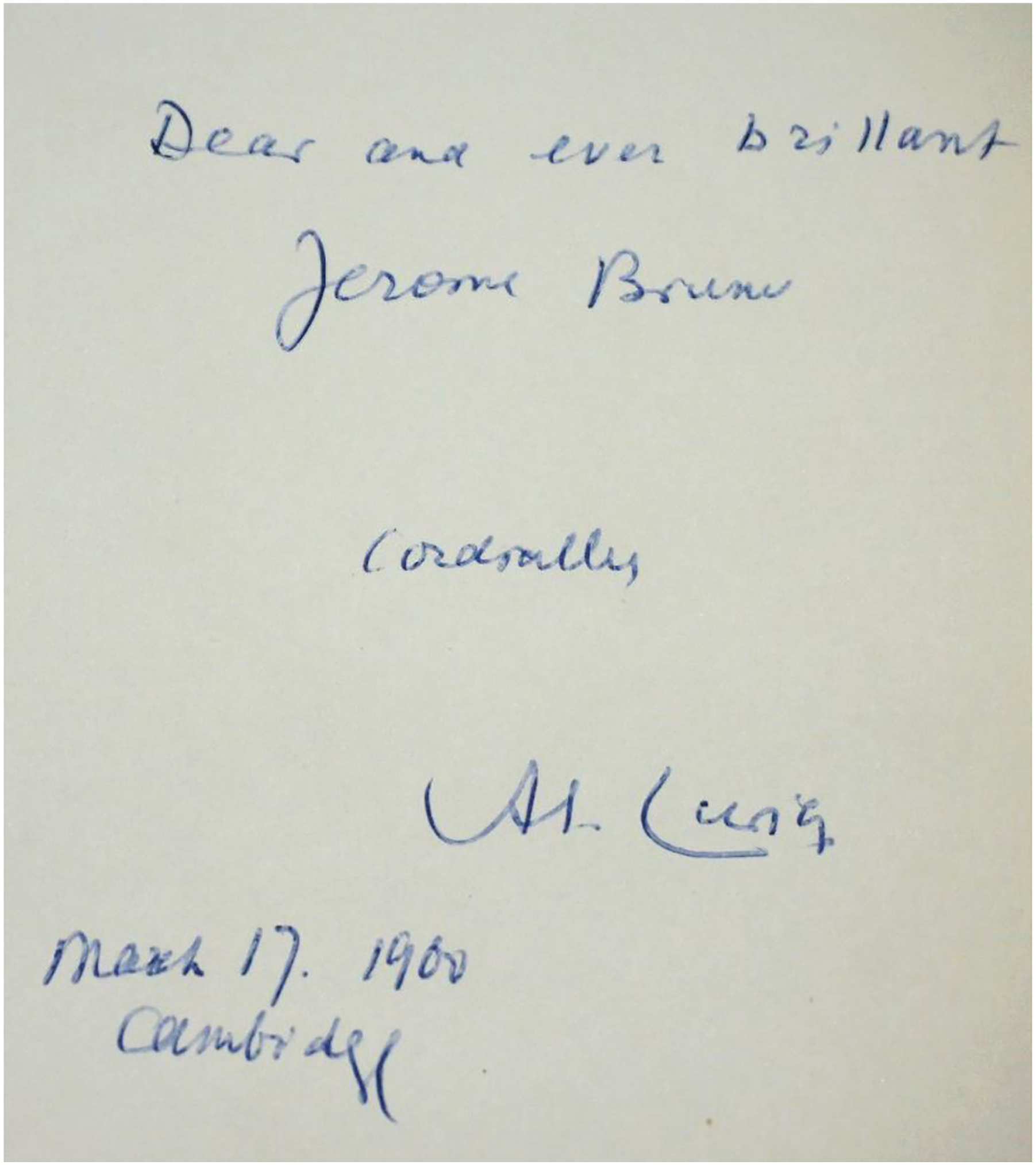
In short: the end of the restrictions on pedology in the Soviet Union did not mean that an English translation of Vygotsky’s text could be published immediately. Just as Routledge would later struggle with Sociological Studies, Basic Books chose simply not to proceed with their edition of Thought and Language. 59 John Wiley then also balked at the cost. 60
Years of negotiations were required, which also involved several different groups. Some of whom we can’t presently see; one of whom, though, was Piaget himself. We now know, for example, that he supported the Vygotsky translation project and responded to it. These are not the actions of an unsympathetic competitor, nor those expected of the uninterested bystander we see today. Our contemporary view, it turns out, is the result of past mediations that have since become invisible. But we can retrieve the evidence in the archives of a different interpretation.
A little-known reply
We see Piaget’s more-developed thinking most clearly in his direct reply to Vygotsky’s criticisms, published in a little-known pamphlet when he was in his mid-60s. This was then also retranslated into English decades later by Les Smith (whom we’ve followed here, rather than providing new translations, to retain consistency with Smith’s earlier rendering of Sociological Studies). Thus, as Piaget explained: on certain issues I find myself more in agreement with Vygotsky than I would have been in 1934, while on other issues I now have better arguments for answering him than would previously have been the case. (Piaget, 1962/2000, p. 242) systematic errors are found at all levels in the hierarchy of behavior. In the field of perception, for example, which passes as the one in which adaptation is most successful, nearly every perception embodies its share of “illusion.” After studying for 20 years the evolution of these systematic errors from childhood to adulthood, I have just written a book on The mechanisms of perception in which I have tried to trace back these varied effects to general mechanisms based on centration in looking[,] thus raising problems which are very close to those of egocentrism. At the level of affective life, a great deal of optimism would be required to believe that our elementary, interpersonal feelings are always well adapted and that reactions such as jealousy, envy, vanity, etc., which are doubtless universal, do not equally reveal different forms of “systematic errors” in the individual’s affective perspective. In the domain of thought, the whole history of science from geocentrism to the Copernican revolution, from the false absolutes of Aristotle’s physics to the relativity of Galileo's principle of inertia and to Einstein’s relativity, etc. shows that centuries are required to be free (and then only partially) from “systematic errors” due to illusions arising from the immediate point of view as opposed to “decentred” systems. (Piaget, 1962/2000, p. 243; referring to the French edition translated as Piaget, 1961/1969)
The so-called “decentring” view of development in his earliest writings is thus to be reconceived as a distancing from the unthinking immediacy of impelled reaction; distancing not only from reflexive physiological responses but also from embeddedness in social meaning systems. And although his earliest writings characterize the undistanced consequences as “egocentrism” (a word choice he later regretted and for which he also apologized), 62 the word he came to use for the opposite tendency was “autonomy” (e.g., Piaget, 1932/1932, p. 196; Piaget, 1960/1995, p. 315; see Kamii, 1984). Thus we might retranslate the original as “undifferentiated,” in the sense of an inability to adopt a perspective other than one’s own (see Battro, 1966/1973, pp. 51–54).
Autonomy is an idealized outcome of development, not a foregone conclusion. It is achieved primarily through the construction and use of formal operational thought, developed most comprehensively to that point in Piaget’s collaborations with Inhelder (esp. Inhelder & Piaget, 1955/1958; 1959/1964). But the moral sense we usually mean also requires a “modern” mode of development, reflected in societal norms; something to “induce in [the child] the habit of reflection or the critical spirit” (Piaget, 1947, p. 3; discussed in Burman, 2020; see also Piaget, 1950/1995, pp. 80–88).
That said, however, this more complex form of reasoning still remains grounded in the actions made meaningful by social relations. As Piaget explained further in his reply to Vygotsky: all of my subsequent work on the genesis of intellectual operations through action itself[,] and on the genesis of logical structures through action-coordination[,] sufficiently demonstrates that I do not separate thought from action. It took me some time to see, it is true, that the roots of logical operations lie deeper than, [sic] linguistic connections and that my early study showed a preoccupation with thought at the level of language. (Piaget, 1962/2000, pp. 245–246)
Clarifications
It is a mistake to consider Piaget’s position on autonomy as being akin to a kind of idealized disembodied cognition that is disconnected from the social, as his thought is often described. Instead, the double-decentration that enables autonomy is required in order to adopt an epistemic position in relation to the self and the social (and their illusions). It is this higher relation that then enables cooperation toward a common goal from co-operation, together, toward individual goals. As he put it: what I think Vygotsky still failed to appreciate fully is egocentrism itself qua obstacle to the coordination of viewpoints and to cooperation. Vygotsky reproaches me correctly for not emphasizing sufficiently from the outset the functional aspect of these questions. Granted, but I did emphasize this later on. In The moral judgment of the child[,] I studied children’s collective games (marbles, etc.) and found that children, before the age of seven years, do not know how to coordinate their rules during a game, so that each one plays for himself and all win at the same time without realizing that it is a “match.” (Piaget, 1962/2000, p. 248; referring to Piaget, 1932/1932)
He continued: when Vygotsky concludes that the early function of language is that of global communication[,] and that this language later becomes differentiated into egocentric and “communicative” language, I believe I agree with him. But when he then maintains that these two forms of language are equally socialized and differ only in function[,] I cannot go along with him because the word socialization is then ambiguous: if an individual A mistakenly believes that an individual B thinks the way that A does, and if A fails to understand this difference between the two points of view, this is, to be sure, social behavior in the sense that there is contact between the two. But from the perspective of intellectual cooperation, such behavior is unadapted. It is this perspective which bears upon the only problem which has concerned me but which does not seem to have interested Vygotsky. (Piaget, 1962/2000, p. 248; alluding to Edith Meyer's “Three Mountains Task” as described in Piaget & Inhelder, 1948/1956)
This seems to be of fundamental significance, especially when considering the truthfulness of translations. That is for the simple reason that there can be no Translation Manual, in the sense described by Quine (1960), which completely renders the senses from one language into the senses of another. Instead, the translator must make choices that reflect how functionally similar (equivalent) meanings are made in the target language (as Kuhn 1983/2000a, 1989/2000b, 1993/2000c, replied to Quine). To put this plainly, in considering these foreign texts: we must understand the original sense, then render it in such a way that it has the same impact in the target language (Burman, 2022). We must, in other words, decentre and “become bilingual” (Kuhn, 1990, p. 300). Or indeed “bicultural.” Here, though, we see that this must also be about more than just learning and repeating the right dictionary terms: it’s not just the words that matter, because what’s at issue is their meaning (under partially invisible constraints), and so also the possible worlds implied for those who can only see from their own perspective (Kuhn, 2022).
In short: Piaget and Vygotsky are not in conflict, except in our understanding of them. And it is because of the discovery of these archival sources that we can now do this work in a way that Smith and the others could not have done. Indeed, what the archives allow is the anchoring of the possible in the actual; which is to say, in the modal necessary (which was Smith’s original interest).
In all of the possible worlds in which any given text has a truth-full interpretation, there is also—possibly—a set of previously unexamined archival sources to further constrain that interpretation; additional primary sources which could inform the decisions about what terms are equivalent in translation. And importantly: that set of necessary constraints doesn’t overlap completely with the set of possible worlds in which that same text has meaning-full interpretations. So interpreters need to go look. Because sometimes interpretations are illusory. That's potentially dangerous when they seem to make sense.
To make this point still clearer, and more concrete, we will briefly consider Piaget in relation to the Vygotsky Translation Project that contributed to the present misunderstanding. This is itself possible because our archival sources make the point directly. Then we can wrap-up, and consider how these engagements contribute to our understanding of translation—the rendering of meaning—as both a psycholinguistic and a sociohistorical problem (viz. of words and worlds).
Why haven’t we understood this for as long as we’ve known about Vygotsky?
Piaget’s reply to Vygotsky was included in Pensée et Langage, the French translation of Thought and Language (Vygotski, 1934/1985). But it was not included in the English edition that preceded it, the influence of which introduced Vygotsky to the West. And that, as it turns out, was important for how English readers understood not only Vygotsky but also for how we have understood Piaget’s Sociological Studies. Despite the decades between them, the exclusion of Piaget’s response from Vygotsky’s critique introduced a “Levi Effect” that has since continued to skew the English perception of the relations between Piaget and Vygotsky (following Burman, 2022).
The reader might object, of course, that Piaget’s comments could not have been published in English alongside the translation of Vygotsky’s criticisms. They were different projects, one from 1962 and the other from 1934. Surely, Piaget’s reply was disconnected from the translation effort. But this is incorrect: we have found evidence, in yet another archive, that these texts were originally meant to be presented together in English. More than this, we discovered that Piaget’s response was recruited and then purposefully omitted (although we don’t yet know why).
Briefly: after the English translation rights for Thought and Language had been secured from Vygotsky’s literary executor, Luria, the lead translator—Eugenia Hanfmann (1905–1983) of Brandeis University—sought a reply directly from Piaget. He agreed. Then when MIT Press chose to omit this text from the book that they ultimately published in cooperation with John Wiley, she sent an objection that was carbon-copied to Bruner and preserved in his papers at the Harvard University Archives: I cannot accept as final the M.I.T. Press’s decision to exclude Piaget’s appendix. Having thought over the proposed substitute solutions and talked with Piaget’s collaborator, Miss Inhelder, who asked me for an explanation of this puzzling situation, I feel that the only possible thing to do is for the MIT Press to carry out the promise made to me, on the strength of which I in turn made a definite agreement with Piaget.
64
She continued: I consider Piaget’s very complimentary and gracious comments a most valuable addition to the book. More than that: the relation of Vygotsky’s work to that of Piaget makes this supplement virtually imperative. One cannot publish a book in whose origins the stimulation provided by another author’s work has played a very prominent role and let stand, without comment, the criticism of the early stages of that work, when its later development cancels out a large part of the objections.
65
Furthermore: If Piaget had not been living I would have asked one of his disciples for such a comment, or attempted to write one myself, as part of the book. Piaget did a far better job than anyone else could have done. His stressing the convergence of his later work with Vygotsky’s thought and accepting some of Vygotsky’s own [scratched out in the original] hypotheses, while yet bringing out the differences sufficiently to leave no doubt as to the originality of Vygotsky’s thinking—all this makes his article the best possible introduction that an old master could give to one who can no longer himself check his theories against the later developments in his field. The fact that Piaget’s reply across this span of years also provided him, [comma scratched out] with an opportunity to clear up some misunderstandings of his early work and to reappraise it from his present point of view adds to the value of his comments for the American reader.
66
Conclusion
The realization that this fundamental misunderstanding of Piaget’s sociality actually occurred in translation, and not in the original texts, is important for what comes next. In short: to make further progress in our thinking that takes advantage of the resources we now have accessible to us, as readers, we need to understand how our present view is biased—in English, reflecting the American Cold War-era psychological understanding of Piaget and Vygotsky—and then “decentre” from that false-perspective. We have to let go of this misunderstanding that we have been “holding onto” (as Burman, 2020, put it in describing Kuhn’s inheritance from Piaget).
In this case, that means recognizing that English audiences have mostly never really read “Piaget on the Social” or “Piaget and Vygotsky” in their proper contexts. So most readers never really understood what they meant: we have their words (it seems extensionally), but these words then somehow refer to the wrong implications (intensionally; cf. Burman, 2022). Despite there having been plenty of exchanges on the matter. Hence the need here to take up a perspective in relation to that persistent illusion.
This is how received-meanings become true reflections of the real world, according to Piaget in Sociological Studies. Our understanding is reworked as we gain access to new information; here, from the archives that preserved the previously unconsidered primary sources that we have presented. The result isn’t historical revisionism in a derogatory sense, though. Because there’s good evidence here that the popular (intensional) belief is simply incorrect. We now therefore need to update our understanding to accommodate the facts preserved in the archives (extensionally).
Of course, nobody was malicious in presenting the basis for this false consciousness; nobody meant to deceive. Instead, meanings were lost that nobody in a position of power knew to retain. False equivalences were then allowed. And thus we are returned to the critical commentaries of Tajfel and Moessinger, of the previous attempts at translating Sociological Studies, and can now usefully interpret translation itself as a kind of pedological intervention (of the sort that was banned in the Soviet Union).
To wit: lessons must be presented in such a way that the audience will receive the intended meaning. Even at the cost of some reworking. Only then can an audience—a public—be reasonably expected to respond in ways consistent with the norms and values of the source (cf. Burman, 2022; Pettit & Young, 2017). And that, finally, is our criticism of Smith in advancing his own interests in introducing the “seventh extension” of Piaget’s sociality to which English readers now have primary access: by focusing on a revelation of truth, without regard for the different contexts we have presented here that altered the senses of his source’s meaning, he failed to teach the lesson that Piaget himself had set in a way that the audience would understand. By adopting a position with respect to all of this, however, we have appealed to the evidence of the archives to provide a new interpretation that is consistent not only with the text but also with the many additional found-anchors to its otherwise-indeterminate meanings. And that, ultimately, is our answer to the problem of the indeterminacy of translation: historical research, with a view specifically to revealing what can't be seen by the light of the present day.
Footnotes
Author’s Note
This essay is substantially expanded from a presentation, with the same authors, at the Jean Piaget Society meeting in Chicago in 2016. The subtitle is an allusion to Jan Sapp’s (1990) “The nine lives of Gregor Mendel,” which is highly recommended for those interested in this kind of approach. The formalisms considered were added after they were discovered to have been central to a dispute between Piaget and Quine, which in turn led Quine to withdraw his endorsement of Piaget’s continuing grant from the Rockefeller Foundation (investigated in Burman, 2021). That was then subsequently examined as part of a quantitative demonstration of intensional differences between different language groups’ interpretations as reflected extensionally in citation preferences (by Burman, 2022).
Acknowledgements
Special thanks to Whitley Bruner for permission to work in and quote from Jerome Bruner's papers held at the Harvard University Archives, Jeremy Carpendale for sharing his private collection of Michael Chapman’s letters (especially for converting them from floppy discs), Luis Martínez Uribe for sharing records from the Fundación Juan March in Madrid related to Quintanilla’s efforts in Spanish, and Pim Levelt for his invitation to come explore the contents of the Bruner Library prior to its official opening. All archival sources cited with permission.
Action Editors
Wade E. Pickren and Thomas Teo.
Declaration of Conflicting Interests
The author(s) declared no potential conflicts of interest with respect to the research, authorship, and/or publication of this article.
Funding
The author(s) disclosed receipt of the following financial support for the research, authorship, and/or publication of this article: Initial preparation and archival fieldwork at Harvard and Geneva were made possible by a Trudeau Fellowship at York University, a ThinkSwiss Research Scholarship from the Embassy of Switzerland, and a grant from the Fondation Jean Piaget (to Burman). Research conducted at the Wellcome Library in London was supported by the Social Sciences and Humanity Research Council of Canada (to Young, award no. 756-2014-0526). Research conducted at the Archives Jean Piaget in the University of Geneva, and at the Archives Nationales de France in Paris, was supported by the Fonds National Suisse (grants no. 100011-146145/1 to Ratcliff and 100011_175617/1 to Ratcliff and Burman). Final preparation was assisted by a Faculty Support Grant from the Faculty of Behavioural and Social Sciences at the University of Groningen (to Burman).
