



Abstract
Academic Abstract
One of the key challenges to researching psychological acculturation is the immense heterogeneity in theories and measures. These inconsistencies make it difficult to compare past literature, hinder straightforward measurement selections, and stifle theoretical integration. To structure acculturation, we propose to utilize the four basic aspects of human experiences (wanting, feeling, thinking, and doing) as a conceptual framework. We use this framework to build a theory-driven assessment of past theoretical (final N = 92), psychometric (final N = 233), and empirical literature (final N = 530). We find that the framework allows us to examine and compare past conceptualizations. For example, empirical works have understudied the more internal aspects of acculturation (i.e., motivations and feelings) compared with theoretical works. We, then, discuss the framework’s novel insights including its temporal resolution, its comprehensive and cross-cultural structure, and how the framework can aid transparent and functional theories, studies, and interventions going forward.
Public Abstract
This systematic scoping review indicates that the concept of psychological acculturation can be structured in terms of affect (e.g., feeling at home), behavior (e.g., language use), cognition (e.g., ethnic identification), and desire (e.g., independence wish). We find that the framework is useful in structuring past research and helps with new predictions and interventions. We, for example, find a crucial disconnect between theory and practice, which will need to be resolved in the future.
The question of how people change when they get into continuous firsthand contact with other cultures is likely as old as the history of human migration. And also today migration adjustment remains an important issue for many societies around the world. Over the past 80 years, researchers of the psychological sciences have proposed hundreds of models and measurements for this phenomenon of “psychological acculturation” (Rudmin, 2003). Yet, despite enormous theoretical and empirical advances, it remains unclear what psychological acculturation exactly entails and a conceptual framework allowing for a synthesis of the past literature on psychological acculturation is still missing (Birman & Simon, 2014).
We find an illustration of this challenging heterogeneity in the use of prominent theories of psychological acculturation. One prominent approach has been to conceptualize psychological acculturation as a two-dimensional set of orientations toward the heritage- and the dominant culture—Berry’s (1980, 1997, 2005) now famous “acculturation orientations.” However, over the past 40 years, Berry himself has used a variety of attitudes (i.e., preferences) and behaviors (i.e., actual activities) to describe what these orientations should entail (Berry, 2005). And a broader review of the theory found that other researchers had conceptualized and measured “acculturation orientations” with even more diverse aspects. Conceptualizations had, for example, included attitudes, attachments, goals, identifications, or choices and uses of cultural elements (e.g., language, food, or dresses; see Rudmin, 2003). We see a similar pattern with conceptualizations of psychological acculturation as a “psychological and socio-cultural adaptation” process. Here, cultural adaptation has, for example, included aspects such as life satisfaction and well-being, as well as cultural skills, and work performance (Berry, 2003; Searle & Ward, 1990; Ward, 2001). Measurements of psychological acculturation are, thus, inconsistent across studies, and it remains unclear what aspects the concept exactly entails and how these aspects are organized.
This heterogeneity of aspects presents fundamental challenges to researchers, practitioners, and policy-makers in the field. Looking back at past theories and measures, different conceptualizations might lead to different results (Snauwaert et al., 2003) and the diversities of included or excluded concepts makes it virtually impossible to compare different studies—which makes it difficult to integrate them quantitatively or qualitatively (Taft, 1981). And looking forward, it remains difficult to select acculturation elements and develop new theories and measurements. A coherent conceptual framework would be necessary to make informed and transparent choices about which aspects are (ir)relevant to a given research question and how they relate to one another as a psychological process. Given these challenges, some have even suggested that psychological acculturation should not be measured until common terminologies and frameworks are available (Escobar & Vega, 2000).
We have, thus, developed a descriptive conceptual framework to disentangle, compare, and organize the many conceptual elements found within the literature. In this paper, we describe how this framework was developed based on recent developments within the literature and how the framework gives space to the complexities of psychological acculturation. We then apply the framework in a systematic scoping review of the literature to examine its utility and identify gaps within the literature. The proposed framework, thus, has a different objective than previous efforts which have cataloged literature on acculturation (e.g., Castles et al., 2003), built multidimensional measures of integration (e.g., Harder et al., 2018), normative frameworks (e.g., Ager & Strang, 2008), or theories of acculturation (e.g., Berry, 2005). Rather than offering a new measurement, definition, or theory, we aim to build a framework to assess, organize, and compare these conceptual elements.
To build a framework that gives space to the contextual complexity of psychological acculturation while structuring the concept across a wide range of contexts, we propose to utilize the basic aspects of human experiences. Bringing together the rich empirical literature and building on past reviews, we propose that the psychological acculturation experience can be understood in terms of affects, behaviors, cognitions, and desires. Psychological acculturation in this framework might, for example, be understood or measured in terms of behavioral acculturation, such as language use, or voting; cognitive acculturation, such as ethnic identification, or cultural values endorsement; affective acculturation, such as feeling at home, or loneliness; motivational acculturation, such as the satisfaction of competence or independence needs; or as a combination of any or all of these aspects (also see Table 1 for a range of example concepts).
Examples of Coding Levels for the Experience Framework of Psychological Acculturation.
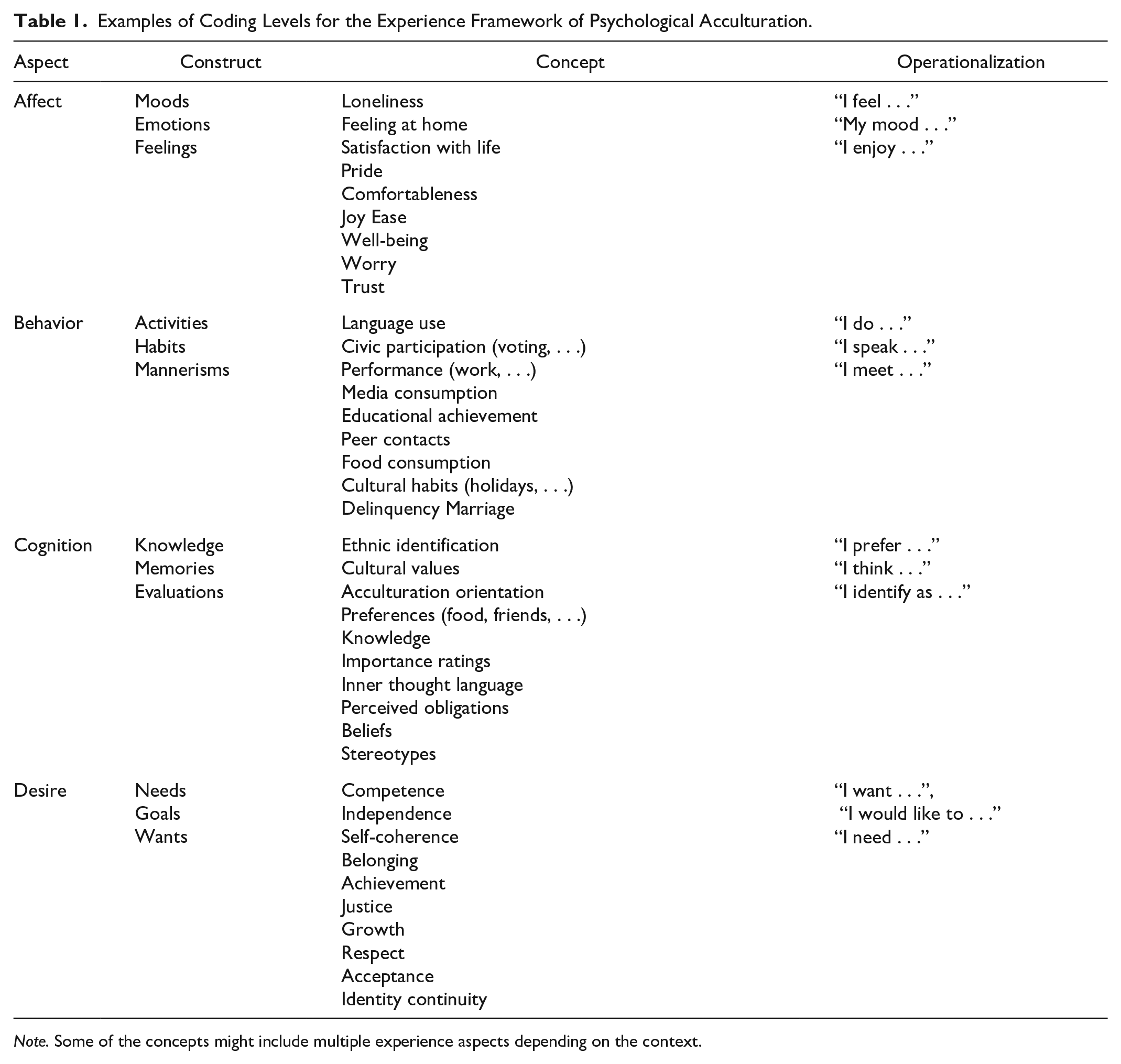
Note. Some of the concepts might include multiple experience aspects depending on the context.
Such a framework, thus, explicitly aims to allow researchers and practitioners to review past acculturation literature based on the aspects considered. As a result, researchers can consider broader integration efforts and novel predictions of how acculturation processes develop psychologically. Moreover, the affect, behavior, cognition, and desire separation allows researchers to make clearer and more transparent decisions about which aspects of acculturation are relevant to their research question and which aspects they measure. Similarly, practitioners can use the framework to make more informed decisions on which aspects are relevant for policy development and intervention design.
Importantly, this structural effort seeks to showcase the conceptual complexity and gives space to contextual idiosyncrasies rather than diminishing or reducing migration experiences. We hope to give prominence to the diversity of conceptual aspects that are relevant to the lived realities of migrants and other acculturating individuals. We offer the ABCD framework as a transferable structure to transparently address the similarities and shared mechanisms but also highlight the complexity and diversity of the full migration experience.
In the following sections, we will develop this framework in more detail and will then apply it in a systematic scoping review of the past theoretical, psychometric, and empirical literature on acculturation.
Framework Development
This framework explicitly emerged from recent empirical and theoretical developments within the acculturation field in particular as well as the psychological phenomenological literature more broadly. We were able to benefit from a strong theoretical tradition in the field and the broader conceptual framework we propose arguably brings together many of the past advances in capturing psychological acculturation at different levels of conceptualization. To adequately situate the conceptual framework within the past theoretical and empirical efforts, we will first briefly address the notion of using a phenomenological approach for psychological acculturation. We will then introduce each of the experience aspects as they emerge from the literature on psychological acculturation. As a final step of the framework development, we will discuss which functional characteristics the framework highlights and how these functional elements integrate past theoretical advances.
A Phenomenological Perspective
There is a converging theoretical consensus that human experiences can fundamentally be understood in terms of wanting, feeling, thinking, and doing (sometimes referred to as the ABCs or ABCDs of psychology: affect, behavior, cognition, desire; e.g., Cottam, 2010; Hogg & Vaughan, 2005; Jhangiani & Tarry, 2014.1). 1 Following the premise that any human experience can be conceptualized within these four basic aspects, we believe that an ABCD framework of psychological acculturation could offer a comprehensive and theory-driven framework to structure and analyze the many conceptual elements of psychological acculturation.
However, given the prevalence of ABC(D) structures within the psychological literature in general, it is important to ask how the affect, behavior, cognition, and desire aspects are conceptually relevant to psychological acculturation in particular. To address the conceptual relevance of the four aspects, we look at two common definitions of (psychological) acculturation to identify the conceptual contexts of psychological acculturation. First, the Social Science Research Council originally defined the broader concept of acculturation as:
— Redfield et al. (1936, p. 149)
From the broader concept, the individual-level experience of psychological acculturation—which is the focus of the present framework—has commonly been further specified as:
—as cited in Sam et al. (2006, p. 14)
Within both of these definitions, psychological acculturation, thus, fundamentally comprehends any individual changes as the result of cultures and contacts. The different types of individual-level phenomena and changes are the topic of this framework but the prerequisites of culture and contact are central to understanding how the psychological experience emerges. We will, thus, briefly discuss how we conceptualize cultures and contact within the framework and how that aligns with the ABCD structure of the individual experience.
Culture
To discuss the role of cultures, we will look at one last definition. In this framework, we follow the approach refined by Adams and Markus (2004), which defines cultures as cultural patterns:
—as cited in Adams and Markus (2004, p. 341)
This definition highlights a number of features that are central to our efforts of conceptualizing psychological acculturation. In particular, the definition emphasizes that cultural patterns (a) are dynamically changing over time (i.e., are historically derived), (b) are agentically re-produced (i.e., selected ideas), and (c) dualistically reside both in the individual (i.e., who produces the patterns) as well as the physical and social context (i.e., which embodies and conditions; Adams & Markus, 2004). As such, the definition follows the general tenets that are shared by many theoreticians within the acculturation field (e.g., see Berry, 2009; Ward & Geeraert, 2016). At the same time, however, in empirical practice models of acculturation have often focused on cultures as static, externalized influences (e.g., see the commonly [mis-]used models of Berry, 1997, 2006). We argue that affects, behaviors, cognitions, and desires connect the external embodiments and conditionings of cultural patterns with the individual choice of which cultural patterns will be reproduced.
Within the sociological literature, the external social influences of cultures can be divided into formal social facts (e.g., laws, regulations, policies, history, and language), informal social facts (e.g., norms, values, beliefs, rituals, customs; also see Herzog, 2018), and more material cultural products or artifacts (e.g., food, fashion, architecture, or arts, such as film, music, literature, and fine arts; e.g., see Alexander & Smith, 2001). The content of these external influences often formally or informally embodies expected patterns of behavior (e.g., dress or communication styles), cognition (e.g., sense of race-, class-, gender-, and sexual identities), emotions (e.g., expressions of emotions), and motivations (e.g., virtues and duties).
At the same time, however, affect, behaviors, cognitions, and desires also drive what we consider “cultures” to be (e.g., Varnum & Grossmann, 2017). For example, cultural knowledge, values, identities, beliefs, and attitudes are likely the most widely discussed aspects of non-material cultural patterns (i.e., cognitions; e.g., DiMaggio, 1997), several indigenous cultural practices are legally protected as manifestations of culture (i.e., behaviors; e.g., Art. 11 United Nations, 2007), shared emotions are an integral part of culture creation in narratives (i.e., affects; e.g., Ahmed, 2014; Kitayama & Markus, 1994; M. Smith, 2016; Sundararajan, 2015), and motivational ideals or oughts form the basis of many cultural discussions (i.e., desires; e.g., see Markus & Kitayama, 1991).
In the case of psychological acculturation, a migrating individual needs to deal with (at least) two sets of cultural patterns—the heritage cultural patterns and any local cultural patterns (e.g., see Ferguson & Bornstein, 2015). The individual will, thus, have to negotiate their individual response to the cultural expectations of the cultural patterns of their new context and their own personally held cultural patterns. These individual responses in affects, behaviors, cognitions, and desires thus impeccably connect internal and external cultural patterns as they actively evolve over time (also see the psychological foundations of culture, in Adams & Markus, 2004). In other words, the psychological acculturation experience (i.e., the individual experience of ABCD) captures the adjustment to tension as a result of different patterns of internal, shared, and embodied affects, behaviors, cognitions, and desires. Moreover, studying psychological acculturation in the experience framework then also allows us to reflect on which cultural patterns are in positions of power (Bhatia & Ram, 2001).
In addition, affect, behavior, cognition, and desire have all been highlighted in the conceptualization of human functioning and adaptation to conflicting cultural patterns—a core outcome for many acculturation researchers (e.g., see Berry, 2006; Maertz et al., 2016; Searle & Ward, 1990; Ward, 2001). Adaptation in such an understanding can include, behavioral adaptions, such as building skills and competencies (e.g., Bevan, 1965), cognitive adaptation, including self-image restorations and dissonance reductions (e.g., Czajkowska, 2017), affective adaptions, such as dealing with feelings of culture shock and homesickness (e.g., C. A. Smith & Lazarus, 1990; Van Tilburg et al., 1996), as well as desire adaptations, such as regulations of status and affection needs (e.g., Steverink & Lindenberg, 2006). In short, affects, behaviors, cognitions, and desires not only form the fundamental aspects of human experiences but also connect the external and internal cultural patterns in such a way that they showcase the nuances of dynamic, agentic, and adaptive (re-)productions of the cultural patterns that underlie acculturation.
Contact
Beyond cultural contextualization, it is also important to consider the contacts that drive cultural adaptation. One way of structuring the situational contact contexts is what we will here refer to as the domains of psycho-social functioning—the idea that the social experience will take place within different domains in life. There are many social-scientific theories that have discussed these spheres of life. One famous example is Bronfenbrenner’s Ecological systems theory (Bronfenbrenner, 1992), according to which humans get into contact with others, and society at large, through a number of environmental systems that range from the closest relations (e.g., family or colleagues) to the more remote relationships (e.g., mass media or societal services). A similar framework was suggested by prominent theorists of the (structural) functionalist traditions with the concept of social institutions (e.g., Turner, 1997). According to these sociological theorists, it is through societal institutions (commonly: family, government, economy, media, education, health care, and religion) that cultural patterns are transmitted and maintained (e.g., Durkheim, 1982). Similar ideas for domains of interaction with society and culture have also been proposed within the acculturation literature. Arends-Tóth and van de Vijver (2006b, 2007) have, for example, suggested 15 public and private life domains (e.g., education [public], child-rearing [private]) in which cultural contact takes place. Empirical research in the individual acculturation field has also provided evidence that acculturation processes can develop separately and differently within these contact domains (e.g., Arends-Tóth & van de Vijver, 2003).
Importantly for our framework, these situational domains afford different affects, behaviors, cognitions, and desires. The contact domain and situation structure which experiences are appropriate or even possible (e.g., Cantor, 1994). These situational affordances can be physical, where certain cultural patterns are not possible (e.g., localized ancestral worship Kawano, 2005; Schmidt et al., 2022); formal, where certain cultural patterns are not allowed (e.g., indigenous hunting practices; Blaser, 2009); or informal where certain cultural patterns are not wanted (e.g., discrimination of black hair C. L. Robinson, 2011). Also more implicitly, empirical studies have, for example, found that cultural contexts differ in the frequency and variety of situations that afford different types of negative social emotions (Boiger et al., 2013). Situational affordances, thus, particularly interact with cultural norms and patterns to allow for specific acculturation experiences. These situational affordances in a cultural space then also highlight how power over the situation translates into power over the experiences of acculturating individuals (e.g., Guinote, 2008). And more broadly, the individual experience of affect, behavior, cognition, and desire as psychological acculturation is embedded within contact structures and captures the situational affordances.
Similarly, affect, behavior, cognition, and desire are also embedded within the literature on intergroup and intercultural contact more broadly. How and why people get into behavioral contact with people from other backgrounds has, for example, been linked to group-specific needs, and desires, such as power and acceptance (e.g., Hässler et al., 2021; Shnabel & Nadler, 2008). Similarly, outcomes of these interactions are often governed by inter-group cognitions, such as perceptions of threat or shared identities (e.g., Dovidio et al., 2017; W. G. Stephan et al., 2000) and intergroup emotions, including pride, or anxiety (e.g., Iyer & Leach, 2008; C. W. Stephan & Stephan, 1992). Affect, behavior, cognition, and desire are, thus, also at the very heart of contact with different cultural contexts.
In short, the individual affect, behavior, cognition, and desire aspects are generally well-equipped to address the prerequisite contextual elements of acculturation. In the next sections, we will focus on the individual psychological acculturation experience and discuss how each of the psychological aspects emerged out of the empirical and theoretical developments within the field.
Affect, Behavior, Cognition, and Desire Within the Acculturation Literature
Interestingly, the ABC structure is not entirely foreign to the field of acculturation. Ward and colleagues (Masgoret & Ward, 2006; Ward, 2001; Ward & Szabó, 2019) have previously pointed out that theoretical perspectives on acculturation tend to focus on affect, behavior, or cognition. Within the affective tradition, Ward situates the stress and coping literature, behavioral traditions are the cultural learning theories, and social identification theories form the cognitive theories. Sam (2006) has even noted that such a perspective might be useful in structuring the core components of psychological acculturation more broadly. Following Sam’s (2006) suggestion, we propose that, once we include desires (i.e., motivational literature), we can build a generalized conceptual framework. That is to say, the full ABCD structure would not only summarize theoretical traditions but would offer a theory-based framework for the conceptual elements because it comprehensively structures the concept based on the fundamental aspects of a culturally embedded contact experience. Such a framework should structure psychological acculturation at any level of abstraction—from the most abstract theory level to the most applied operationalization level.
Given the centrality of the four aspects to the framework, we will briefly discuss how each of the four aspects is reflected in recent debates within the literature on psychological acculturation. To illustrate how the conceptual ideas are embodied in lived realities, we will additionally provide emblematic quotes from a focus group we conducted as part of the broader project. The focus group discussion is not an empirical part of the framework but rather offers an illustration of the real-world relevance of the individual aspects (the full account of the focus group discussion is available as a separate publication by Kreienkamp et al., 2023).
Behavior
Behaviors—that is actions and mannerisms—are often the most overtly and externally visible aspect of the human experience. As such, especially social behaviors (e.g., language learning and contacts outside the home) are visible and reciprocal elements that are deeply connected to cultural contacts (e.g., Imai et al., 2016; Legare, 2019; Whiting, 1980).
[. . .] while, of course, you integrate best when you go to work.
Why is that exactly?
[. . .] Because there you have daily contacts with locals.
Given the overt nature of behaviors and their interconnectedness with cultural patterns, behaviors have also been a prominent aspect of the acculturation literature. Ward & Szabó (2019) in their review have identified cultural learning theories as one key literature tradition that has focused on behavioral aspects of acculturation. They relate these learning theories to the acquisition of effective skills and competencies as behavioral operationalizations (including, verbal and nonverbal communication skills; Ward, 2001). Other examples of behavioral conceptualizations of acculturation (beyond Ward’s focus) include civic participation (e.g., voting; Lessard-Phillips et al., 2020), interethnic marriage (e.g., Song, 2009), and media consumption (e.g., Shoemaker et al., 1985).
Cognition
[. . .] Once I started my education, I felt part of society. [. . .] That was not the case when I was learning Dutch at the university, at the language school, or at other places before. Only later when I was at school, . . . I feel: Okay, now I feel I am really in the Netherlands.
Why did you not have that at the language school?
Because I was only a refugee.
Cognitive aspects, which commonly entail the thinking processes of the human experience, often underlie navigational cultural competencies and social identities in dealing with conflicting cultural patterns (Padilla & Perez, 2003). Language-, social-, and communication norms as well as learning about more formal social systems, values, and social rules are examples of how cognitive changes related to bridging social gaps (e.g., Gelfand et al., 2011; Nisbett & Norenzayan, 2002). Similarly, both a break in identity (the struggle of defining oneself in the new environment) and the struggle of dealing with a singular (migrant or refugee) identity label and the process of developing a more complex identity narrative toward others are applied examples of how cognitions sit at the forefront of adapting to conflicting cultural patterns (e.g., Verkuyten & Martinovic, 2012).
Given the pertinent connection between cultural patterns and cognitive processes, cognitions have also played a major role in the theoretical acculturation literature. Within the cognitive tradition, Ward (2001), Ward & Szabó (2019) have identified ethnic identity and group perception theories, with a particular focus on Berry’s (1997) acculturation attitudes. Beyond the theories identified by Ward, the acculturation literature has recently also focused on several other cognitive conceptualizations of psychological acculturation, including cultural values (e.g., Marin & Gamba, 2003) and stereotypes (e.g., Stanciu & Vauclair, 2018).
Affect
[. . .] But for me, the language is very very difficult. And then you think people are not open. And you don’t understand because your language isn’t that good. And then I maybe don’t feel welcomed when I have questions or want to approach them.
Affect—the human capacity to feel (including emotions and moods; Feldman Barrett et al., 2007)—foreground the importance of the subjective experience as acculturation (Holodynski & Friedlmeier, 2012). Instead of focusing on purely behavioral outcome conceptualizations (e.g., housing, job, and education), affective acculturation experiences (e.g., feeling at home, feeling accepted) highlight the individual embeddedness components of healthily adapting to a new social environment (Mesquita et al., 2016).
The functional character of affect and emotion have also been discussed within the conceptual acculturation literature. Ward (2001), in her review of the acculturation traditions, describes the stress and coping literature—especially Berry’s (1997) concept of acculturation stress—as the affect component of acculturation. In this tradition, the main constructs that constitute the affective dimension are the psychological and emotional well-being as part of the psychological adaptation process (including, e.g., life satisfaction and depression; Ward & Szabó, 2019). However, beyond the theoretical stress literature tradition, there are also more immediate models and measurements of emotional acculturation. There is, for example, a relatively young tradition of “emotional acculturation” as a distinct concept in which acculturation is understood as the similarity in emotional patterns (see De Leersnyder, 2017, for a review). But also individual emotions, such as “feeling accepted” (Jasini et al., 2018), or “pride” (Suinn et al., 1995) have received attention as discrete conceptualizations of acculturation.
Desire
[. . .] Yes, they [parents] have control like a boss or a god. And I still had that in Syria but it kind of stopped, . . . because I am not gonna be a kind of a slave to my family, . . . because I want freedom for myself.
Desires—the motivational forces of the human experience—often highlight the individual agency and the deeply functional essence of the acculturation processes (Gezentsvey & Ward, 2008). The needs for interactions, to be understood, for purpose, and for identity continuity are not necessarily expected by the dominant group but are intrinsic and fundamental to the health and functioning of the newcomers during the acculturation process (e.g., Anzaldúa, 1987). As deeply internal aspects of the human experience, motivations often also have the potential of fundamentally organizing the manner in which a migrant approaches a new cultural context (Kashima, 2014; Vishkin et al., 2021).
Yet, despite these functional and interconnected properties, few of the past reviews have examined motivation as a distinct aspect of psychological acculturation within the literature or the concept. However, outside of reviews, needs and wants have been discussed more frequently as a conceptual aspect of psychological acculturation. For example, more and more researchers are looking at the motivations for migration in understanding acculturation (Echterhoff et al., 2020; Sandu et al., 2018). In addition, motivations are more frequently considered as underlying acculturation orientations (Recker et al., 2017), acculturation behavior (Reece & Palmgreen, 2000), and psychological adaptation (Safdar et al., 2003).
Functional Embeddedness
Before we move to the application of the framework in the systematic scoping review, we will discuss a number of functional characteristics that allow the framework to be embedded within real-life experiences and assist in building a deeper theoretical understanding of psychological acculturation.
Aspect Distinctiveness
First, while we have introduced the four experience aspects as distinct elements, it is important to note that both in theory and in practice affect, behavior, cognition, and desire are not experienced as distinct entities. This aspect-interconnectedness is also reflected in theories on the aspects. As an example, most affects have a cognitive component just as most cognitions have an affective value. Similarly, motivation is commonly conceived as having both emotional (e.g., desire) and cognitive (e.g., goals) aspects, both of which are often directed toward behaviors (i.e., conation). Muddying the waters further is the difficulty that many operationalizations (and empirical measures) of psychological acculturation also include multiple aspects. Concepts such as satisfaction or distress, which are common measures of acculturation, famously include affective and cognitive components. Yet, despite the interdependence of aspects in theories and lived experience, the four aspects can consistently be identified within experiences and concepts—they remain qualitatively different aspects of the experience. And as such, they offer a pragmatic lens to structure the psychological acculturation concept (Kuhn, 1962). Differentiating the four (needing, feeling, thinking, and doing) qualities of an experience in what we consider psychological acculturation to be allows us to structure our discussions of past, current, and future theories and measures of psychological acculturation.
Experience Content
Second, it is also important to note here that while anyone will have motives, emotions, thoughts, and behaviors, what one needs (e.g., belongingness or independence), feels (e.g., sadness or happiness), thinks (e.g., identification or disinterest), or does (e.g., studying or working) is highly ideographic. It is this ideographic content that makes the framework relevant to such a broad range of migration contexts. Yet, it is the content-free structure—the presence or absence of the basic aspects in conceptualizations of acculturation—that is transferable across contexts and studies, enabling comparisons and broader conceptual discussion. It should also be noted that in our view such a framework does not stand in conflict with cultural or indigenous psychological concerns of an absolutist or deterministic psychology (e.g., U. Kim & Park, 2006). In fact, cultural psychologists, together with many decolonial researchers, have long argued that the individual embedded and lived experience should gain a more central role in theoretical developments (e.g., ontological turn; Pedersen, 2020).
Process
A final, fundamental property we would like to address in the experience framework is the understanding of psychological acculturation as a dynamic process rather than a static end-product. That psychological acculturation is a process and that “acculturation occurs when two independent cultural groups come into continuous firsthand contact over an extended period of time” (Berry et al., 1989, p. 186) seem to be a generally accepted assumption within the field (e.g., Ward & Geeraert, 2016). Yet, some reviews have pointed out that few empirical studies have actually considered the theoretical implications of migration as a process and even fewer have methodologically followed the trajectories of migrants over time (Brown & Zagefka, 2011; Ward & Szabó, 2019). We believe that the experience framework of psychological acculturation, as it is presented here, is ideally suited to deal with this conceptualization as a process. Philosophers of the phenomenological tradition have long highlighted that a subjective experience can only be understood within the history of past experiences (e.g., Heidegger, 1978). The human experiences are thus scalable and can capture processes of seconds or years and might even relate to generational or future conceptualizations.
As such, the experience structure allows us to integrate, expand, and systematize previous process conceptualizations of psychological acculturation. Working through the many theoretical works within the acculturation literature, we realized that theories focus on one or multiple stages of intercultural contact episodes. This allowed us to integrate theoretical traditions that distinguish between acculturation orientations and later acculturation outcomes (e.g., Te Lindert et al., 2008) and associated methodological efforts that organize different assessments around this division (notably Arends-Tóth & van de Vijver, 2006a) with an emerging view that acculturation develops as a series of contact episodes (Maertz et al., 2016). Bringing together several of the terms and approaches used within the literature, we propose to distinguish between (a) acculturation conditions [ABCDs prior to contact], (b) acculturation response [ABCDs during contact], and (c) acculturation outcome [ABCDs following the contact]. 2
Importantly, for all three of these steps, different ABCDs can emerge and due to the temporality of these phases, the ABCDs experienced during these three steps are often qualitatively different. As an example, while acculturation conditions often focus more on socio-structural and personal expectations, immediate acculturation responses often have a reactive or oppositional character, and acculturation outcomes tend to focus on habitual, reflective, and evaluative experiences in the literature. We discuss these qualitative differences as they are represented in the theoretical literature in more detail during the scoping review below (also see Figure 1 for several example features).
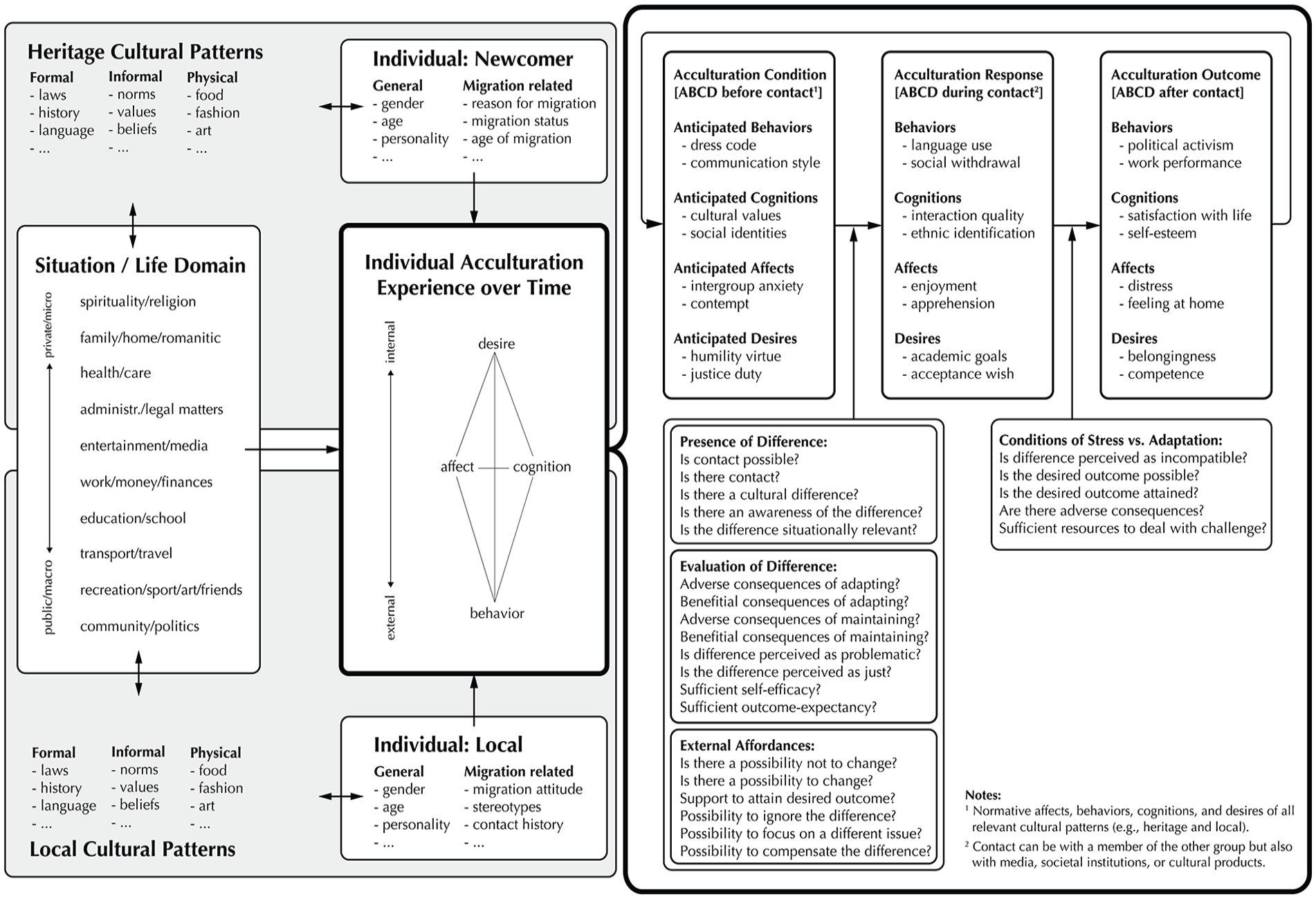
Conceptual Framework of Psychological Acculturation with Context and Experience Process.
In addition, by considering the three-stepped process we can also integrate what we call the “conditions of change” and the “conditions of stress” that sit between the three steps. Looking at cultural conflict models (e.g., A. Robinson, 2019), we can extract a number of conditions based on the presence of differences, evaluations of differences, and external affordances, which determine whether the migrant seeks to change the ABCDs anticipated prior to the contact when they enter the contact (also see Alitolppa-Niitamo, 2004; Grove & Torbiörn, 1985; Masgoret & Ward, 2006; Wood, 2014). Similarly, using stress-adaptation models (e.g., Hajro et al., 2019; Y. Y. Kim, 1988; Sam, 2006), we are able to discern a number of conditions that address when ABCD changes following the contact lead to stress or adaptation outcomes (also see Benet-Martínez & Haritatos, 2005; Berry, 1992; Hajro et al., 2019; Ryan et al., 2008; Salo & Birman, 2015; Wood, 2014). Together, the episodic ABCD approach and the intermittent conditions also highlighted the dynamic, embedded, and circular nature of the cross-cultural contacts at the heart of psychological acculturation (also see Figure 1).
In sum, the conceptual framework suggests that the concept of psychological acculturation is psychologically fundamentally structured into affect, behavior, cognition, and desire aspects. And while each experiential aspect captures part of the concept, only jointly will they comprehensively capture the full psychological acculturation concept. We have also shown that the four experience aspects are all highly relevant to the concept as they capture the dynamic, adaptive, and interactive functionings of contacts with new cultural patterns. We have further emphasized that the experience framework highlights the embedded complexities of real-world migration experiences and that the distinction of the ABCD structure along the dynamics of cultural contacts brings together several theoretical perspectives of the psychological acculturation literature.
In practice, the framework can thus find utility in comparing past literature and interventions (e.g., which conceptual aspects were considered for particularly important findings), can structure future study and intervention designs (e.g., which aspects are relevant to health behaviors), and can advance future theoretical developments (e.g., which experiential aspect organizes the other acculturation aspects for specific outcomes). In the following, we will take the first steps at exploring the applied utility of the framework, for organizing the past literature on psychological acculturation.
The Present Study
The aim of our empirical efforts presented here is to put our proposed framework to the test. We have lamented that one of the challenges of a heterogeneous field is that it is difficult to assess and compare past literature. As a framework, we have suggested that the psychological aspects of experiences could comprehensively structure our assessment of the literature. We will thus systematically retrieve the past literature on the psychological acculturation of first-generation migrants. We chose first-generation migrants specifically to allow for a focused systematic literature search while still maintaining the broad heterogeneity of acculturation experiences. For all relevant works, we will extract which experiential aspects were considered in the research. We expect that these efforts will provide insights into the perceived importance of desires, affects, cognitions, and behaviors for psychological acculturation. We also expect that this allows us to assess how many experience aspects are usually considered and which aspects are consideredc jointly. And finally, we aim to compare the understanding of psychological acculturation across different fields to assess the comparative utility.
To apply the framework, we specifically target three bodies of literature that capture the concept of psychological acculturation. First, we will assess the theoretical literature on psychological acculturation. The theoretical literature should offer the broadest, most abstract, and most comprehensive works on psychological acculturation. Coding the aspects considered in these theories should, thus, offer insights into the assumptions on which researchers build their empirical work. Second, we will assess psychometric literature developing acculturation measures. As operationalizations of the construct within the empirical literature, validated scales usually focus on a concept in a generalized manner, rather than focusing on aspects only relevant to a specific “applied” investigation. Coding psychological acculturation measures separately might also aid future considerations of measure selection because we effectively build a database of scales that can be filtered by whether the scale includes measurements of affects, behaviors, cognitions, and desires (see Supplemental Material C). Third and finally, once we have considered the validated scales in particular, we will more generally assess the empirical literature that used measures of psychological acculturation. Capturing operationalizations within empirical studies, allows us to investigate the focus within the empirical literature more broadly and allows us to compare differences between fields and research subjects. In short, the main aims of our empirical efforts can be summarized in four main research questions.
To address these research questions, we specifically chose a systematic scoping review. Such a review is systematic because it uses “systematic and explicit methods to identify, select, and critically appraise relevant research, and to collect and analyze data from the studies” (PRISMA guidelines; Moher et al., 2009, p. 1). In practice, this meant that we developed literature search- and data extraction protocols for a structured, transparent, and reproducible review (for the systematic search protocol see Appendix A and for our coding manual see Supplemental Material A; also see Peters et al., 2015). To analyze and summarize the data, we then perform a scoping analysis to “map the key concepts underpinning a research area and the main sources and types of evidence available” (Arksey & O’Malley, 2005, p. 21). In our case, this meant that we were able to address our broader research questions of how psychological acculturation has been conceptualized within different bodies of past literature and how useful the ABCD separation was in assessing and comparing conceptualizations.
It should also be noted that we consciously chose not to conduct a meta-analysis. We conduct this review exactly because we are worried about comparability across studies, a key requirement of meta-analyses (Pogue & Yusuf, 1998). In our case, we, arguably, do not have a clearly defined concept, and exclusions to ensure a cohesive data set would be counterproductive to our efforts. Moreover, a meta-analysis is commonly understood as an analysis of analyses (Glass, 1976). However, since we are interested in a conceptualization (rather than a relationship, a scale metric, or a population parameter) a quantitative summary in the form of a meta-analysis is not well-suited to answer our research question. Also, a meta-analysis of our own extracted data seems profitless because it would likely mirror a sample size weighted average.
In the following section, we will briefly discuss how we conducted the systematic scoping review and will sequentially analyze the role of experience aspects in the theoretical, psychometric, and empirical literature of psychological psychological acculturation. Please note that all protocols, materials, data, and software code is openly accessible as part of our OSF repository (Kreienkamp et al., 2022b).
Systematic Scoping Review
To assess the past empirical and theoretical literature on psychological acculturation, we performed a systematic scoping review. We first read seminal and review works within the field (including, Berry, 1997, 2003; Rudmin, 2003; Sam & Berry, 2006; Szapocznik et al., 1978; Ward & Szabó, 2019). Based on our reading of the literature, we designed a comprehensive literature search strategy in an iterative fashion. For the empirical work on acculturation, we performed a literature search on March 4th, 2020, and February 14th, 2021, within the “APA PsycINFO” bibliographic databases, using the EBSCOhost provider. The databases also included the PsycARTICLES, PsycBOOKS, and PsycCRITIQUES databases as well as ProQuest Dissertations with psychological relevance (for the full information on the search strategy see Appendix A.
Together with past reviews, we used this literature search to identify validated scales as well as empirical works more generally. For the theoretical literature, we collected the theories used in the empirical works and performed an additional, more specific, search of the same databases as well as the Web of Science Core Collection using the Clarivate Analytics provider on March 3, 2021 (for full information see Appendix A).
From the literature searches, we created three separate databases of theoretical, psychometric, and applied empirical works on psychological acculturation. For each literature search, we downloaded all references and abstracts, which two independent coders screened for relevance after duplicate removal—first based on the titles and then based on the abstracts. We downloaded all relevant and available works for full-text coding. For all three types of works, we extracted a range of variables to apply our framework. The full coding process and data extraction are described in the coding manual (Supplemental Material A), as part of the full annotated analyses (Supplemental Material B) as well as in our open science repositories (see Kreienkamp et al., 2022a, 2022b).
Theoretical Literature
The most abstract level of our review was concerned with how researchers conceptualized psychological acculturation in their theoretical work. Our theory-specific literature search produced a total of 477 results from which we identified 73 theories. From our review of the empirical literature, we added an additional 19 theories (total N = 92, for exclusion reasons, see Table 2 and for the PRISMA diagram see Figure A1 A. A full table of all theories, with references, and final coding is available in our Supplemental Material C, as well as on our open science repository (see Kreienkamp et al., 2022a, 2022b).
Exclusion Reasons for All Literature Levels.
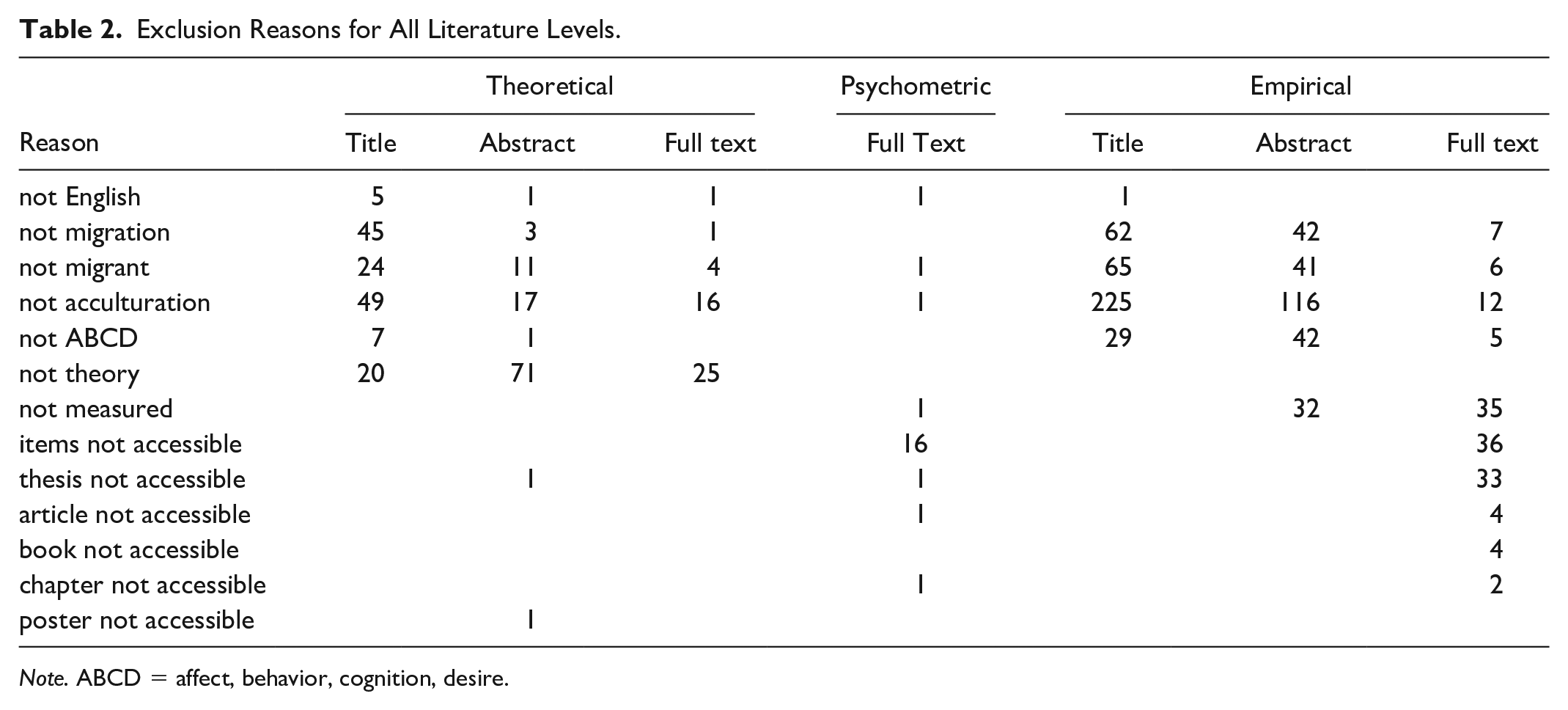
Note. ABCD = affect, behavior, cognition, desire.
Methods
Dataset
The authors of the 92 included theoretical works self-categorized their contributions as a theoretical conceptualization (N = 9), theoretical framework (N = 26), theory (N = 36), or theoretical model (N = 21). Looking at the types of theory building, a majority of proposals were purely theoretical (N = 75) with the remaining theoretical works growing out of qualitative investigations (such as grounded theory approaches; N = 17). A complete and interactive list of the collected theoretical works, including reference- and publication information, as well as our experience aspect codings is available via our acculturation directory app, described in Supplemental Material C.
Experience Aspects
To assess the experience aspects that were considered as part of the theoretical works, two independent coders coded the authors’ axioms, theorems, and model elements for self-identified inclusions of affects, behaviors, cognitions, and desires (all interrater agreements were 96.74% or above and all Cohen’s
Process
To assess the focus on psychological acculturation as a process or an outcome, we coded whether authors self-identified the theory as a process (e.g., “process,” “development”, “longitudinal,” “temporal”, “dynamic”) or an outcome (e.g., “static,” “outcome”, “markers,” “consequence”).
Results
ABCD Prevalence
Our main goal was to assess the use of the four affect, behavior, cognition, and desire elements within the theoretical conceptualizations of psychological acculturation. Looking at the overall usage of the experience aspects, we find that virtually all theoretical works included behavioral aspects (94.57%; e.g., cultural practices and media consumption) and a vast majority considered cognitive aspects (90.22%; e.g., navigation knowledge and ethnic identification). We found considerably fewer mentions of affective (46.74%; e.g., anxiety and pride) and motivational aspects (41.3%; e.g., independence goals, need to belong). But the generally high usage of the aspects also meant that only about a tenth of the theories focused on a single aspect (6.52%). Interestingly, all theories that considered only one aspect were exclusively focusing on behaviors (N = 5) or cognitions (N = 1). Of the remaining theories, 21 (i.e., 22.83%) considered all four aspects, leaving a majority of theoretical works to consider two aspects (36.96%) or three aspects (33.7%). Among these, the most common combinations of experience aspects were behavioral and cognitive acculturation (28.26%) or behavioral, cognitive, and motivational aspects combined (17.39%; also see Figure 2 and Table 3).
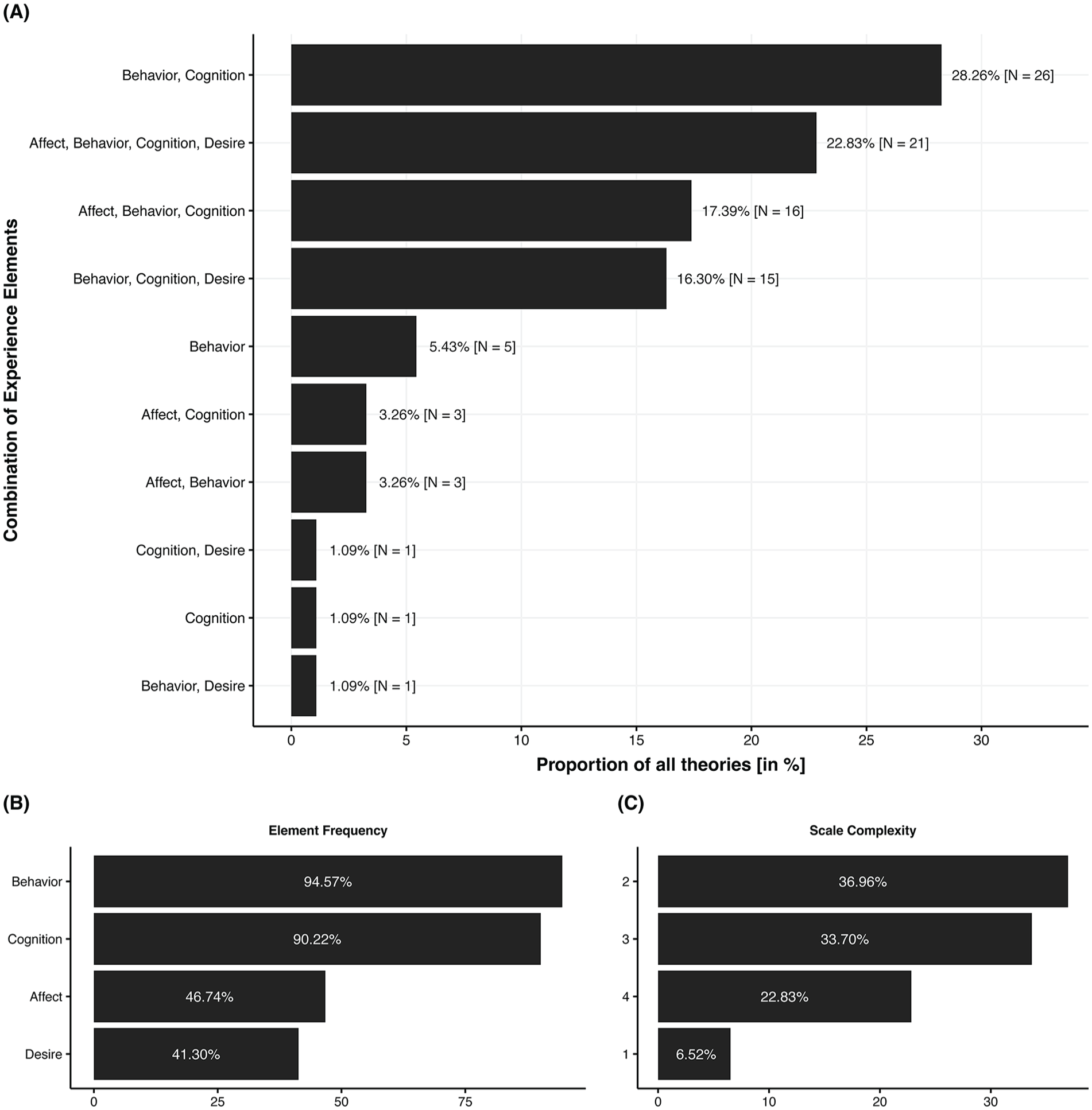
Psychological acculturation aspects within the theoretical literature.
Bivariate Association of Aspects for All Literature Levels.
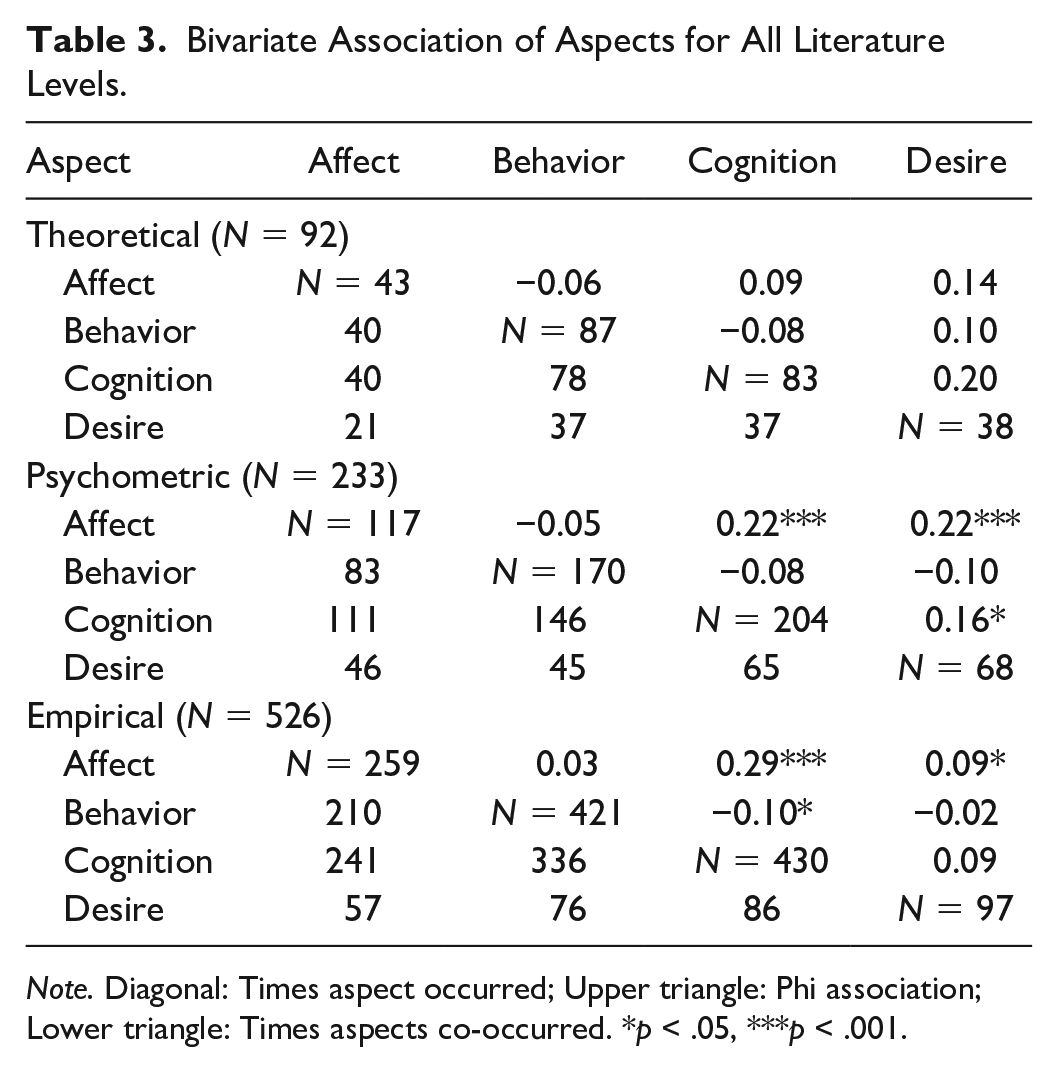
Note. Diagonal: Times aspect occurred; Upper triangle: Phi association; Lower triangle: Times aspects co-occurred. *p < .05, ***p < .001.
ABCD Composition
Looking at the number of aspects considered together we also see substantial differences in what kind of theories include a certain aspect. Theories that included behaviors considered an average of 1.78 other aspects (SD = 0.78), and theories considering cognitions, on average, also included 1.87 other aspects (SD = 0.65). Theories that included the more internal aspects of affect or desire showed a considerably higher number of additional aspects considered (affect: M = 3.35, SD = 0.52; desire: M = 3.50, SD = 0.36). Thus, most scales measure multiple dimensions of acculturation (M = 2.73, SD = 0.79; also see Figure 8). Yet they tend to focus on more external aspects of behavioral and cognitive acculturation, and less on internal aspects of affects and desires. This is also visible in the observation that there were no theories that exclusively focused on emotional or motivational acculturation while this was the case for both cognitions and behaviors. And if emotional or desire aspects were considered they were found in theories that tended to already include a higher number of other experience aspects.
Process
To assess the process focus of the theoretical works, we assessed whether authors self-identified their works as process- or outcome-focused. We found that 49 of the 92 coded theoretical works proposed dynamic conceptualizations of psychological acculturation (53.26%). This slight majority is a notably high percentage, considering that past reviews of the acculturation literature have pointed to a small number of studies actually offering dynamic tests of theories (e.g., Brown & Zagefka, 2011; Ward & Szabó, 2019).
Content
While it is beyond the scope of this paper to comprehensively summarize and integrate the over 90 theoretical works on psychological acculturation, we will briefly discuss how the different types of theoretical works fit within a broader ABCD framework. To this aim, we separate the acculturation process into three functional steps and highlight some works in their use of the affect, behavior, cognition, and desire aspects.
A broader pattern we observed is that theories focused on different phases of the acculturation process. These phases can arguably be organized around the timeline of actual intercultural contacts. In essence, we saw three phases describing the affects, behaviors, cognitions, and desires that are (a) normatively expected prior to the contact [acculturation conditions], (b) actually experienced during the contact [acculturation response], and (c) experienced after the contact [acculturation outcome] (also see Figure 1). While it would be beyond the scope of this article (and likely overly simplified) to summarize all theoretical ideas within each of the three stages, in the following we would like to highlight a small selection of works that illustrate the use of ABCDs within the experience stages.
Acculturation Conditions
Theoretical works that focused on the experience prior to the actual inter-cultural contact, generally speaking, focused on the socio-structural and personal expectations of the acculturation experience. As an example, Ward and Geeraert (2016) in their contextualized process framework highlight how culturally expected “behaviors, values and identities” (behavior and cognitions; p. 100) have a fundamental influence on perceived cultural distance, the intercultural contact, and the ensuing psychological changes, including well-being and emotional distress (affect). They even embed this process further in a series of ecological contexts, highlighting the affordances and conditions of the process. A second example might be the “acculturation intentions model” (Tartakovsky, 2012), which argues that we should focus on pre-migration attitudes, perceived social norms, and perceived control (i.e., cognitions). Depending on the valence of these pre-migration cognitions, the migrant will then experience “feelings of pride, love, and comfort, [. . .] or feelings of shame and discomfort” (i.e., affects; p. 86). According to the author, the early cognitions and affects will then become “the main motivational forces that affect their [. . .] desire to continue living in this country” (i.e., desires; p. 86) and will ultimately determine acculturation intentions and behaviors (i.e., cognitions and behaviors). Tartakovsky also highlights that personal resources, and environmental constraints determine the experienced ABCDs. 3 Both theories exemplify how affects, behaviors, cognitions, and desires were conceptualized prior to the intercultural contact and how important environmental conditions are at that time.
Acculturation Responses
Theories that included a focus on the acculturation response tended to focus on the affects, behaviors, cognitions, and desires during (or immediately following) the intercultural interaction. One good example of this phase comes from the now classic work of Berry (1992), where he divided psychological acculturation into behavioral shifts and acculturation stress. Berry then goes on to write that behavioral shifts are “changes in behaviour [. . .] and include values, attitudes, abilities and motives” (i.e., behavior, cognition, desire; p. 70), and acculturation stress is particularly manifested “as lowered mental health status (particularly anxiety, depression), feelings of marginality and alienation” (i.e., affects; p. 75). In Berry’s (1992) theorizing behavioral shifts and acculturation stress jointly form “psychological acculturation,” which follows immediately after the intercultural contact. This phase is clearly distinguished from the migrant’s adaptation, which follows the behavioral shifts and acculturation stress and, in turn, includes the famous acculturation strategies. 4
Acculturation Outcomes
The third stage of acculturation outcomes are often the affects, behaviors, cognitions, and desires that are more long-term and are often experienced after the actual intercultural contact is (temporarily) concluded. One exemplary theory-building effort is arguably that of the “integrative theory of communication and cross-cultural adaptation” (Y. Y. Kim, 1988). As one of the final theoretical steps Kim steps Y. Y. Kim (1988) devotes an entire chapter to “adaptation outcomes,” which she begins with the definition of acculturation outcomes: “Gradually [migrants’] habitual patterns of cognitive, affective, and behavioral responses undergo adaptive transformations [. . .] which enable them to fulfill their various human needs, such as maintaining and enhancing social relationships and providing for channels of self-expression and fulfilment” (affect, behavior, cognition, desire; p. 138). 5 This focus on how the more immediate contact experiences influence long-term ABCDs, such as well-being, stress, and other adaptation outcomes was a common target of broader theoretical works.
Scope
It is important to mention that many of the theoretical works, including most of the examples above, have focused on process models that span two or more of the three steps (e.g., Arends-Tóth & van de Vijver, 2006a; Berry, 1992; Rogler, 1994; Ward & Geeraert, 2016). In addition, a majority of the theoretical works we considered offered commentary on the overall construct of acculturation (N = 63), and only a minority of 29 works explicitly targeted a specific part of acculturation (e.g., 7 identity acculturation theories and 4 labor market acculturation theories; for an example see Weinreich, 2009). Moreover, as the examples have already highlighted, for many theoretical conceptualizations of psychological acculturation authors discussed their focus on affect, behavior, cognition, or desire aspects rather explicitly (which was also visible in a high inter-rater reliability; for full coding details see Supplemental Material B).
A final observation has been that while the inclusion of desire components was generally high within the theoretical literature, the emphasis on desires and motivations was particularly prominent in grounded theories and other bottom-up works. As an example, B. J. Kim and Rousseau (2019) developed a theoretical model based on the reported importance of goals and motivations prior to and during migration for downstream adaptation processes. Similarly, for Mchitarjan and Reisenzein (2015) one key determinant of acculturation “success or failure” are “motivational factors, i.e., the motives, desires, or goals of the minority and majority” (p. 2).
Psychometric Literature
Based on the systematic scoping review and its coding, the first empirical dataset we assess is a database of scale validations. We bring together the scales suggested in previous reviews as well as validation studies we identified in our own review. Throughout our literature review, we found five major works that reviewed the measurement of acculturation (Celenk & Van de Vijver, 2011; Maestas, 2000; Matsudaira, 2006; Wallace et al., 2010; Zane & Mak, 2004). After removal of duplicate scales, we added any scale validation that was present in our own systematic scoping review but not included in the previous reviews. For each measure, we extracted the full item list as well as the item scoring prior to coding. A comprehensive and interactive database of the scales, with all available items, reference- and publication information, as well as our experience elements and -context coding is available in Supplemental Material C, (also see Figure 3 for an illustration).
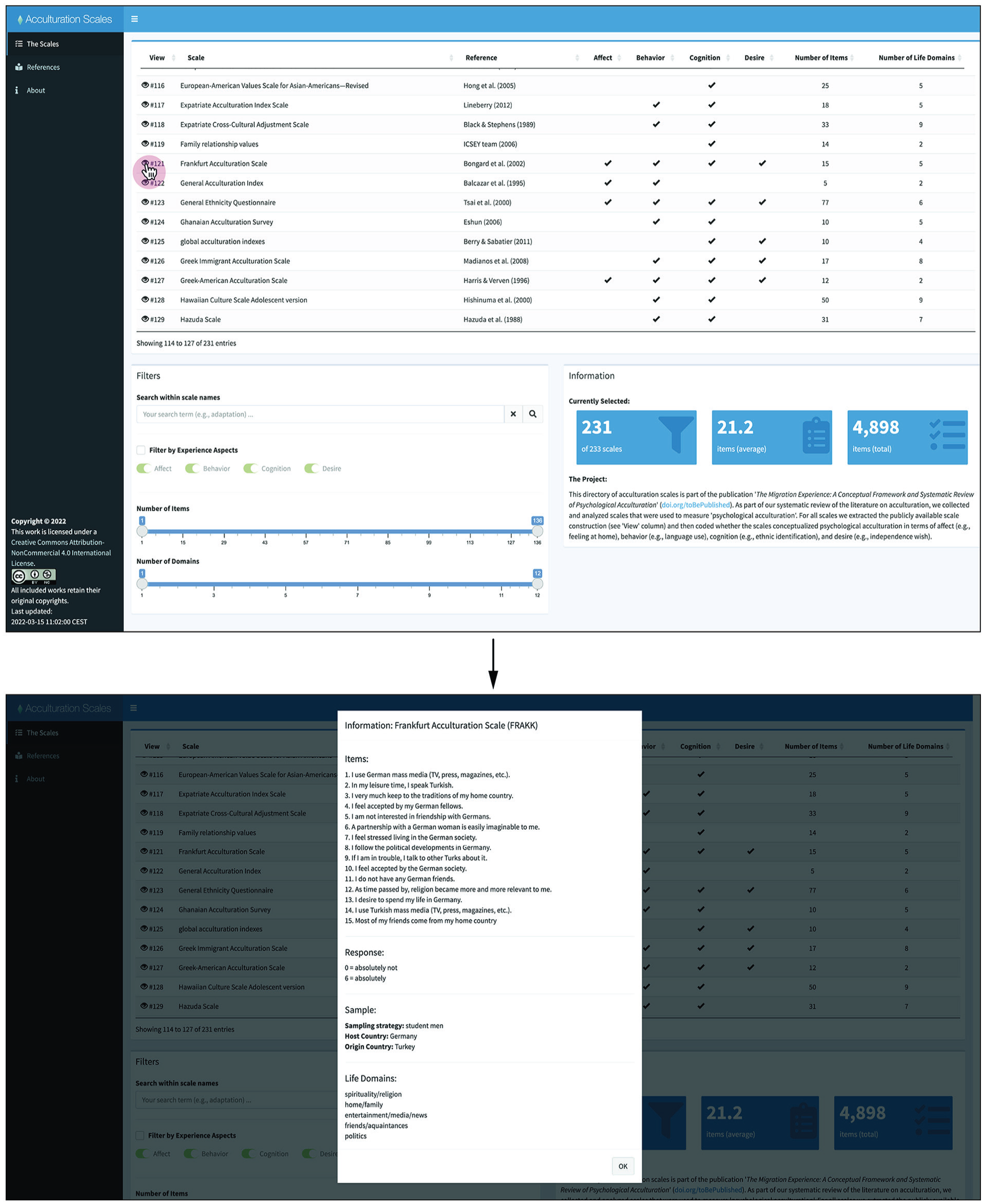
Screenshot of the Acculturation Directory.
Methods
Dataset
After duplicate removal, these five reviews collected a total of 97 scales. From our own review, we added 159 additional validation studies (total of 256 unique scales). Of these scales, we ultimately had to exclude 23 because they were either not accessible or did not fit the topic of our review (see Table 2). About a quarter of scales (24.22%) included majority group members in their validation studies. The earliest included validation was from 1948 with a majority of scales being validated around the turn of the 21st century and the most recent included validation study was published in 2020.
Experience Aspects
We extracted data on the experience aspects by primarily focusing on the measured concepts and their operationalizations (also see Table 1). For each article, we retrieved the items used and coded whether the measure included references to affects, behaviors, cognitions, and desires. Because this concerned the most central aspect of our framework, each manuscript was double-coded and inconsistent codes were resolved after discussion (all inter-rater agreements were 97.85% or above and all Cohen’s
At this stage, we also noted if scales or items measured concepts that relate to multiple experience aspects. As an example, a single item asking about “satisfaction with the new life” might include emotional and cognitive elements. In this case, we code the manuscript as measuring both emotions and cognitions, and noted that these elements are not measured independently. We also noted if the measures do not consider an individual’s experiences, such as reporting migration status or length of residency.
Process
To extract an indicator of whether the scales were aimed at psychological acculturation as a process or an outcome, we collected information on assessed migration times (e.g., pre-migration and post-migration) and the validation type (e.g., cross-sectional, longitudinal).
Results
ABCD Prevalence
With our main aim of examining the experience structure within the scales, we examined whether scales included a specific experience element but also examined the used elements in their complex combinations. In terms of general inclusion of elements, most studies included a measure of cognition (87.55%) and behavior (72.53%), whereas only roughly half the studies included a measure of affect (50.21%) and only a fourth of the scales included a measure of desires (29.18%). However, only a minority of scales included only a single aspect. There were only 18 scales that exclusively relied on cognitions (7.73%) and 21 scales that measured only behaviors (9.01%). Yet, inversely, there were also only 35 scales that measured all four aspects (15.02%). Most studies measured two (38.63%) or three (27.9%) aspects. A majority of scales either measured behavioral and cognitive aspects (23.61%) or behavioral, cognitive, and affective elements (19.31%; also see Figure 4 and Table 3).
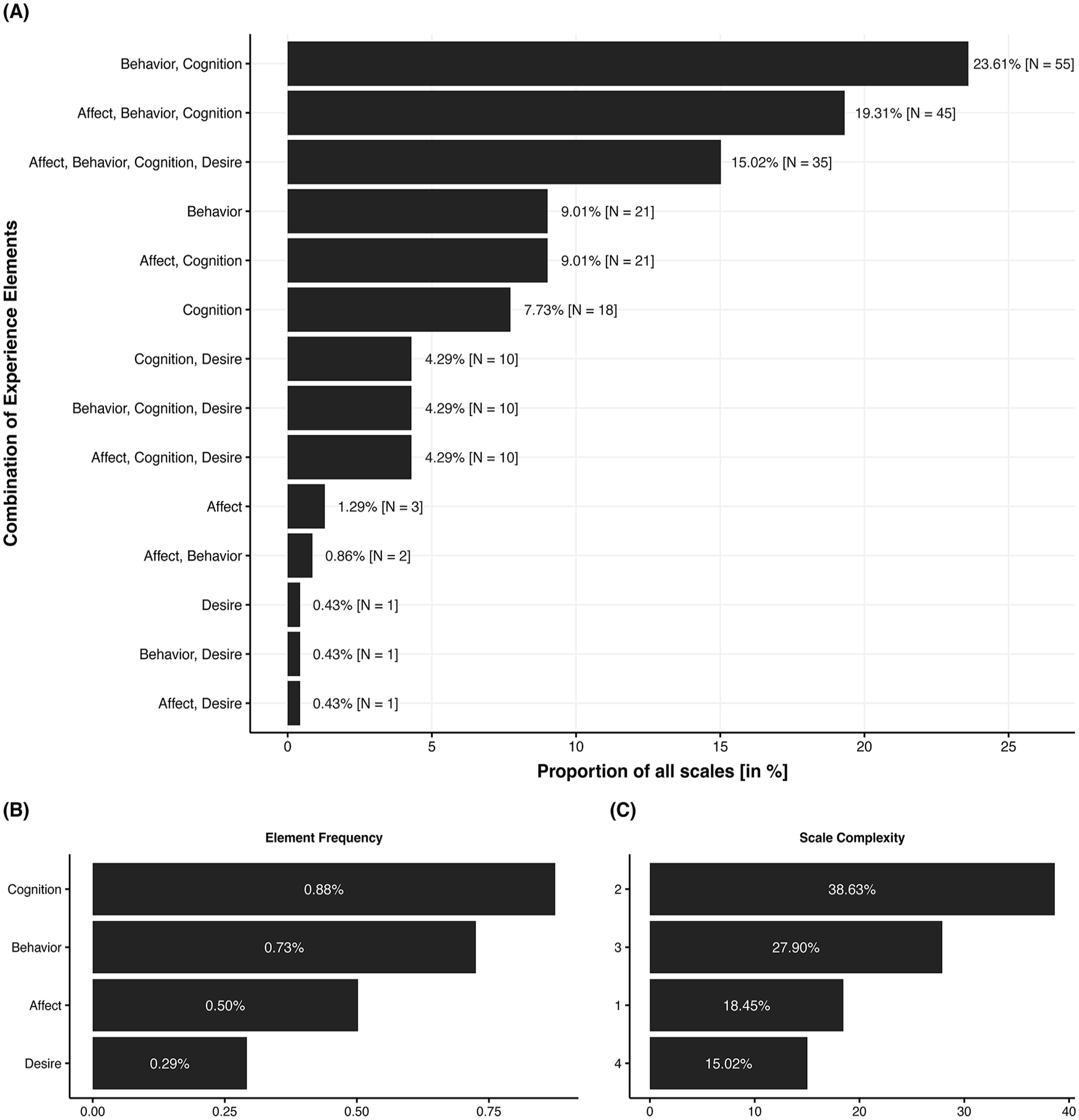
Psychological acculturation aspects within the psychometric literature.
ABCD Composition
Looking at the number of aspects measured together we also see substantial differences in what kind of scales include a certain aspect. Scales that included cognitions also measured an average of 1.57 other aspects (SD = 0.77), and scales measuring behavior, on average, also included 1.62 other aspects (SD = 0.77). Scales measuring affect or desire measures included substantially more other aspects. Scales that included affect measures also included 2.04 other aspects (SD = 0.61) and scales measuring desires even measured an average of 2.31 other aspects per scale (SD = 0.66; also see Figure 8). Thus, most scales measure multiple dimensions (M = 2.39, SD = 0.91), yet they focus on external accessible aspects of psychological acculturation (i.e., behavior and cognition), less on what is considered “internal” or “subjective” (i.e., affect and desires). And if affect or desire elements are considered, they often only occur in scales that already include a higher number of other aspects. This is further underscored by the observation that there were only three scales that exclusively measured emotional acculturation and not a single scale that exclusively focused on motivational acculturation (while this was the case for both cognitions and behaviors).
Process
To assess the process focus of the scales we also assessed the migration time the scale validators considered. Except for a single scale that was validated for potential migrants, all scales were validated using cross-sectional data after the migrant arrived in the settlement society. This is in line with observations by previous reviews of the field (e.g., Brown & Zagefka, 2011).
Content
While a discussion of all the topics addressed by the included scales lies beyond the scope of this study, we would like to describe some of the larger patterns authors have focused on. To that aim, we offer illustrations of the patterns we observed during the reading, extraction, and coding of the acculturation scales. We additionally, ran a machine learning topic modeling procedure on the items of the scales to identify content topics.
A first key observation is that there was considerable diversity between the scales in how many experience aspects and topics were addressed. That might not generally be surprising, considering that the scales had between 1 and 136 items, and included between 1 and 12 life domains (see Supplemental Material C). In addition, scales were also either more focused on a specific aspect (e.g., “Asian Value Scale”; B. S. K. Kim et al., 1999; B. S. Kim & Hong, 2004) or aimed to capture acculturation more broadly (e.g., “Asian American Multidimensional Acculturation Scale” Gim Chung et al., 2004). Another trend that we observed was a separation between factual and counterfactual acculturation (e.g., real vs. ideal, Benet-Martínez, 2006; Navas et al., 2005, 2007). In addition, while a large number of scales separately assessed ABCDs as they related to the local and the heritage cultural patterns, we saw a trend toward explicitly asking about different life domains (e.g., family, work, media; Arends-Tóth & van de Vijver, 2007; U. Kim, 2010; Mancini & Bottura, 2014, also see Supplemental Material D).
When considering the content of the aspects that were included across acculturation scales, the topic modeling analysis offers a number of key insights that mostly align with our reading of the literature. For the topic modeling of the acculturation scales, we particularly used the scale items in a Latent Dirichlet Allocation (LDA) analysis, an unsupervised machine learning method common within the natural language processing literature. The analysis essentially extracts sets of terms that tended to occur together, assuming that scales that measure a specific topic have more words that relate to the topic than scales that measure other topics (we followed the procedures outlined by Schweinberger, 2022, for a full methodological detail see Supplemental Material B).
While we had earlier described that many scales included a measurement of behavioral acculturation, the topic modeling showed that one of the main topics across the scales was language use. This included questions about listening to, reading, and speaking the dominant local language. While there are a few (sub-)scales specifically targeting language use as a conceptualization of acculturation (e.g., Deyo et al., 1985; ICSEY Team, 2006), most scales used language as only one of the multiple experience aspects. Moreover, the assessment of behavioral language use (and the more cognitive language proficiency) often differentiated between the language used at home and outside the home. Similarly, some language assessments were distinguishing between the languages used in different life areas (e.g., media consumption, among friends, and at work Birman et al., 2002, for more information see Supplemental Material B). Other behavioral measurements of acculturation included the participation in and celebration of traditions and customs (e.g., Cortés et al., 1994; Rezentes, 1993; Wilson, 2013), clothing (e.g., Ghuman, 2000), food (e.g., Schaefer et al., 2009), and political participation (e.g., Jeong & Kim, 2016; Uslaner & Brown, 2005). One pattern that the topic modeling procedure highlighted was that food-related questions were often found in scales targeting the adaptation of Asian migrants (in particular, Vietnamese, Indian, and Korean acculturation scales).
Among the cognitive conceptualizations of acculturation, one key topic that we saw both in the LDA and in our own review process is a strong focus on ethnic identification and cultural identity ratings (e.g., Jadalla & Lee, 2015; Mchitarjan & Reisenzein, 2015). Other important topics were belief- (e.g., Klonoff & Landrine, 2000) and value endorsement (e.g., Duarte, 2020; U. Kim, 2010; Wolfe et al., 2001) as well as preferences (e.g., Benet-Martínez, 2006; Tull et al., 2003).
Among the affective acculturation measurements, an important distinction was the separation by valence, often either assessing joy and happieness (e.g., Cuellar et al., 1995; Phinney, 1992) or anxiety and loneliness (e.g., Perez & Arnold-Berkovits, 2019; Shin & Abell, 1999). A second observation was a particular focus on self-conscious emotions, such as pride and shame (e.g., Suinn et al., 1992; Tsai et al., 2000). A third pattern was that most of the emotional measurements were of social emotions, such as comfort and discomfort (e.g., Stephenson, 2000), or belonging and connectedness feelings (e.g., Harder et al., 2018; Kouli & Papaioannou, 2009). Most of the motivational acculturation measurements (i.e., desires) were related to wishes and wants for the future (e.g., Ben-Shalom & Horenczyk, 2003; Mancini & Bottura, 2014). However, there was a smaller subset of scales explicitly addressing specific motives, such as transition motives (Mchitarjan & Reisenzein, 2015), and motivation for cultural exploration and maintenance (Recker et al., 2017).
It should be noted that with the psychometric literature, we saw a larger number of instances where items targeted multiple experience aspects (e.g., enjoyment of wearing traditional clothing, Ozer & Schwartz, 2016) as well as the measurement of concepts that included multiple experience aspects (e.g., satisfaction, Cuellar et al., 1995).
Finally, there were a few additional patterns that were particularly highlighted by the LDA topic modeling. These issues included a focus on navigating everyday life issues (e.g., Harder et al., 2018), and acculturation hassles (e.g., Vinokurov et al., 2002), as well the importance of family and generational differences (e.g., ICSEY Team, 2006; Lee, 2004). Similarly, the topics showcased that the validated scales tended to focus on specific cultural pairs, such as migrants from the former UDSSR in Israel, or Mexicans and East Asians in North America (for more information on the migration context see Supplemental Material D). Please also note that we developed an interactive scale directory, where users can explore the content of the included acculturation scales on their own (see Supplemental Material C).
Empirical Literature
At the most applied level, we assessed the broader empirical studies. This final database included the largest number of manuscripts and is in theory the application of the theoretical and psychometric literature. The search produced a total of 1,629 results to which we added 133 articles through contacts with experts in the field and from referenced works within the review. After duplicate removal, title–, abstract–, and full-text screening we coded a total of 526 empirical works (for exclusion reasons see Table 2, and for the PRISMA diagram see Figure A1 C).
Methods
Dataset
Of the final works we coded, 452 were journal articles, 68 theses, and 6 book chapters. Most studies presented quantitative data (N = 464), mixed methods (N = 39), or qualitative data (N = 20), while the remaining 3 manuscripts were reviews of empirical data. Notably, a majority of the empirical investigations did not share common measures of acculturation—391 studies used measures that were reported a maximum of five times. A considerable majority of papers with uncommon measures used new or ad hoc measures of acculturation. Less than a fifth of the studies included local majority group members in the study (N = 77, 14.69%). Acculturation most frequently was a predictor variable (N = 285, 54.39%), a dependent variable (N = 148, 28.24%), or a correlation variable (N = 37, 7.06%) in the empirical works. This pattern was mirrored when looking at the focus of the articles, where a majority of the papers had acculturation as their main focus (N = 153, 29.48%), with other bodies of work focusing on health outcomes (N = 163, 31.41%), or intergroup relations (N = 18, 3.47%) as their main outcomes. The earliest included study was published in 1948, with a strong increase of publications after the year 2000, and a peak of publications in 2012. We provide full descriptions of data extractions and additional information about the data description in Supplemental Material B.
Experience Aspects
Extraction of the used experience aspects mirrored the psychometric literature assessment and we primarily focused on the measured concepts and their operationalizations (also see Table 1). The only exception was qualitative studies, which we coded following the same codebook of the theoretical literature. All aspects were coded by two independent coders (all inter-rater agreements were 97.91% or above and all Cohen’s
Process
To assess the static or dynamic conceptualization of the empirical studies, we again collected information on assessed migration times (e.g., pre-migration, post-migration) and additionally coded the type of data collected and analyzed (e.g., cross-sectional, longitudinal data, and data analysis).
Field of Publication
For the broader empirical literature, we also collected additional data on the field the studies were published in. To that end, we merged the “Scimago Journal Ranking Database” (SCImago, 2020) with our database. For all available journal articles, we added information on key journal metrics (incl. H index, impact factor, and data on the field and audiences). This also meant that dissertations, book chapters, and books were excluded from this analysis because data on their publishers are not readily available or unreliable. In addition, 19 journals were not included in the Scimago database (because they do not have an ISSN identifier or were discontinued before 1996, see Online Appendix B for the missing journals). We ultimately had journal metrics for 425 empirical articles.
To summarize the journal data, we then classified the journal fields into super-ordinate discipline codes. These discipline codes are based in part on the U.S. Department of Education’s subject classifications (i.e., CIP, Institute of Education Sciences, 2020), the U.K. academic coding system (JACS 3.0, Higher Education Statistics Agency, 2013), the Australian and New Zealand Standard Research Classification (ANZSRC-2020; Australian Bureau of Statistics, 2020), and the Fields of Knowledge project (Things made Thinkable, 2014). We ultimately classified each journal into one of four mutually exclusive disciplines, “psychology”: N = 122, “multidisciplinary”: N = 102, “medicine, nursing, and health”: N = 144, and “social sciences (miscellaneous)”: N = 45. For a full discussion of the classifications see Supplemental Material B.
Results
We assessed the role of experience aspects in the measurement and then compared differences between fields.
ABCD Prevalence
In terms of the overall frequencies of experience elements, the broader empirical data mirrored that of the psychometric literature. Most studies included a measure of cognition (81.75%) and behavior (80.23%), whereas only about half of all studies included a measure of affect (49.05%) and less than a fifth of the studies included a measure of desires (18.63%). Yet, only 126 studies focused on a single experience aspect
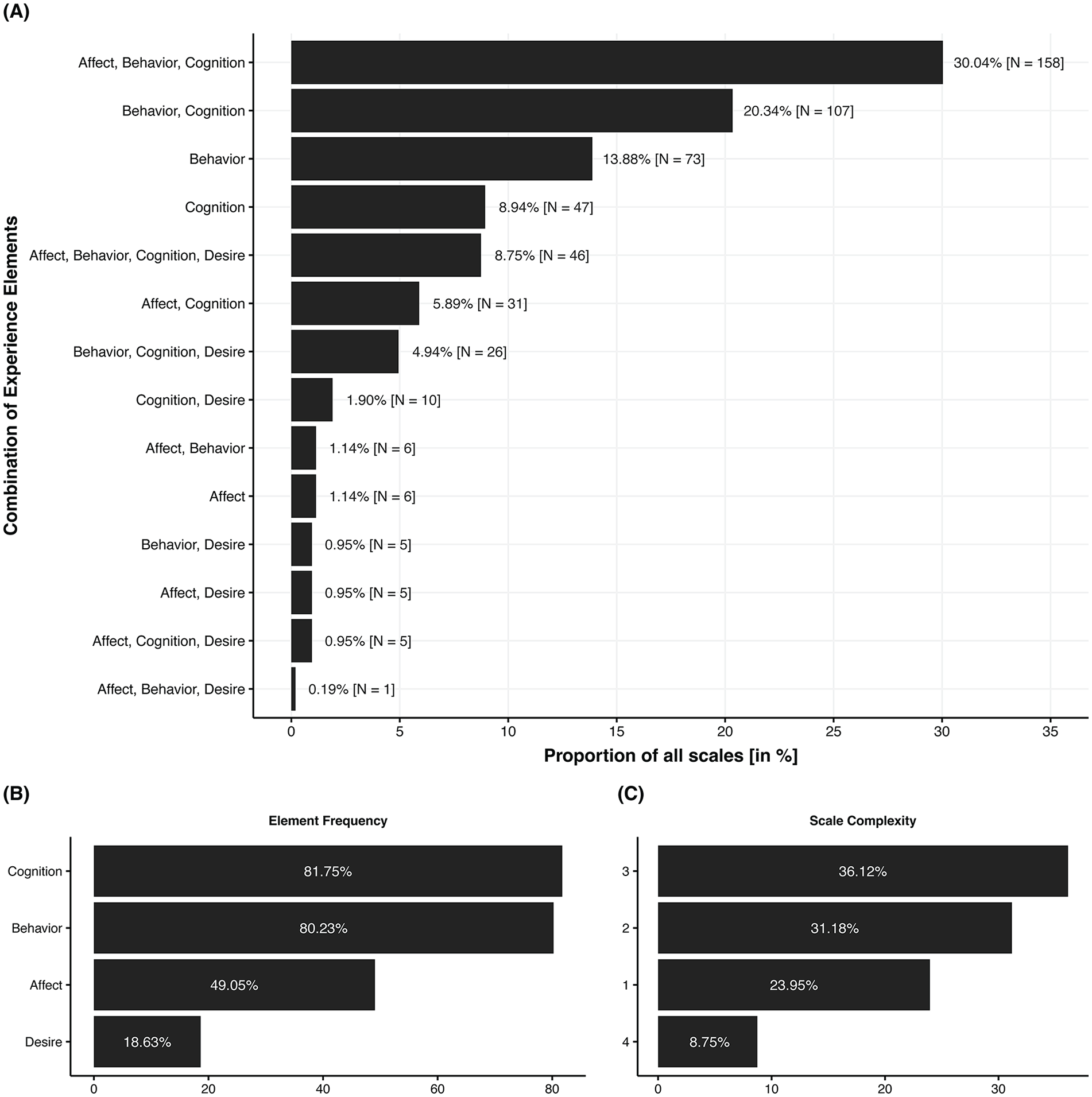
Psychological acculturation aspects within the empirical literature.
ABCD Composition
Looking at the number of aspects measured together we again see substantial differences in what kind of scales include the individual aspects. Scales that included cognitions measured an average of 1.54 other aspects (SD = 0.68), scales measuring behavior, on average, measured 1.48 other aspects (SD = 0.82), while scales that included affect measured an average of 1.97 other experience aspects (SD = 0.43) and scales measuring desires even measured an average of 2.27 other experience aspects (SD = 0.61; also see Figure 8). Thus, not a single study measured only motivational acculturation (i.e., desires), and measures of desires remained mostly limited to scales that were already measuring many of the other experience aspects. The results exacerbate the pattern found in the scale validations, complex measures and conceptions of acculturation are seen infrequently and external aspects of cognition and behavior remain the focus of most studies.
Process
To assess the process focus of the broader empirical works, we again assessed when in the migration process the data were collected, and we additionally assessed the type of analysis done by the authors. We found that 512 studies (97.71%) collected data after the arrival of the migrant in the new society. Two studies targeted potential migrants and 10 studies collected data prior to and following the migration event. Moreover, only 25 studies included longitudinal data analyses of psychological acculturation (4.79%). This observation again underscores the arguments that the acculturation literature has thus far failed to provide data that meaningfully capture migration as a process (e.g., Brown & Zagefka, 2011; Ward & Szabó, 2019).
Content
When considering the content of the empirical conceptualizations of psychological acculturation, the content largely mirrors that of the psychometric literature, whenever authors used validated acculturation scales. However, there were a few conceptualizations that were favored in empirical practice. One such focus has been that specific acculturation scales were used more frequently. These favored scales include the “Vancouver Index of Acculturation” (Ryder et al., 2000), the “Language, Identity, and Behavioral Acculturation Scale”, the “Stephenson Multigroup Acculturation Scale” (Stephenson, 2000), as well as scales focusing on Hispanic migrants (Cuellar et al., 1995; Marin et al., 1987).
Another major pattern within the conceptualizations of applied empirical works has been the use of modified, abridged, or shortened versions of established scales (e.g., Green et al., 2014; Im et al., 2009). These scales often used a subset of questions from the validated scales, for example by choosing a specific aspect only (e.g., media consumption). This is different from the use of “adapted” scales, where authors usually only replaced the name of the dominant and non-dominant cultural groups to adapt the scale to their context.
An even more extreme version of this pattern has been the observation that a sizable number of empirical studies have used non-validated scales. These measurements were often short (i.e., 1-3 items) and lacked psychometric validation. Common uses were single items on language use, employment status, or cultural identification. It should be noted that for many of these studies, acculturation was not a key concept of interest but rather a covariate or partial outcome variable (for more information on these conceptualizations see Supplemental Material B).
Comparison Publication Fields
To further assess the comparative utility of the experience framework, we then assessed differences in experience aspects between academic fields. For the full results, including differences in the methods, and publication types as well as contextual differences in terms of sampling procedures, situational domains, analyses, and cultural contexts see Supplemental Material B.
We first assessed the references to affect, behavior, cognition, and desires separately, for each of the disciplines. We find that for all fields desires (12.5-28.69% of all measures in the field) and emotions (35.56-62.3%) are the least frequently measured elements and medical journals measure them the least frequently (in proportional terms). Looking at the common cognitive and behavioral elements the proportions diverge between the fields. While the multidisciplinary field measured behaviors (76.47%) and cognition (82.35%) almost equally often, in the medical and general social science journals behaviors were measured considerably more often than cognitions
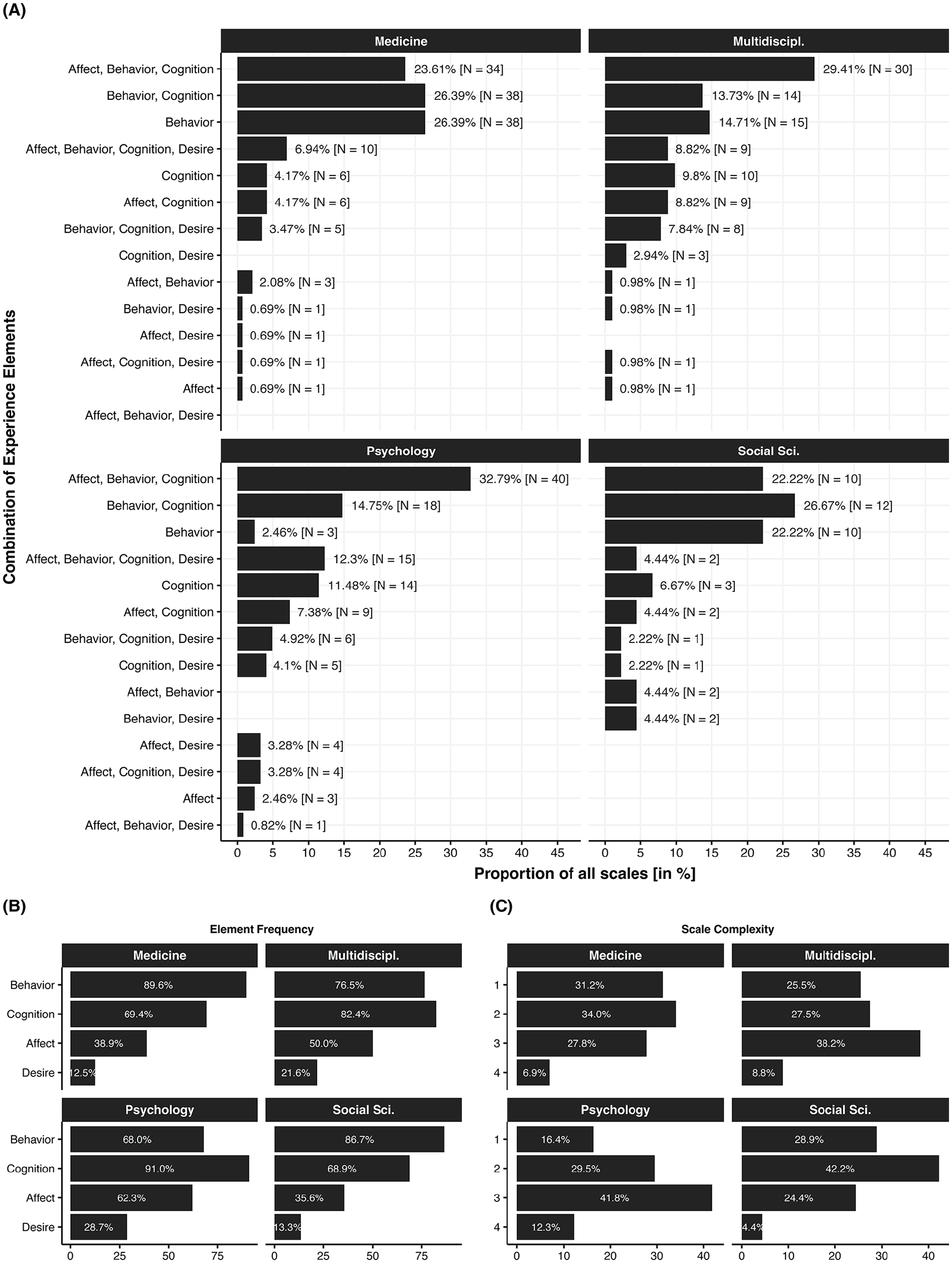
Psychological Acculturation Aspects Across Different Academic Fields.
When looking at differences in how many different experience aspects were measured together and patterns within these aspect-combinations, differences between the fields become increasingly evident (also see Figure 6A and C). While “affect, behavior, and cognition” and “behavior, and cognition” measures are common combinations across all fields, fewer experience aspects and less variation were considered in the medical and social science fields. There were statistically significant mean differences between the fields in terms of how many experience aspects were considered, parametric: F(3, 409) = 5.02, p = .002, non-parametric: Kruskal–Wallis
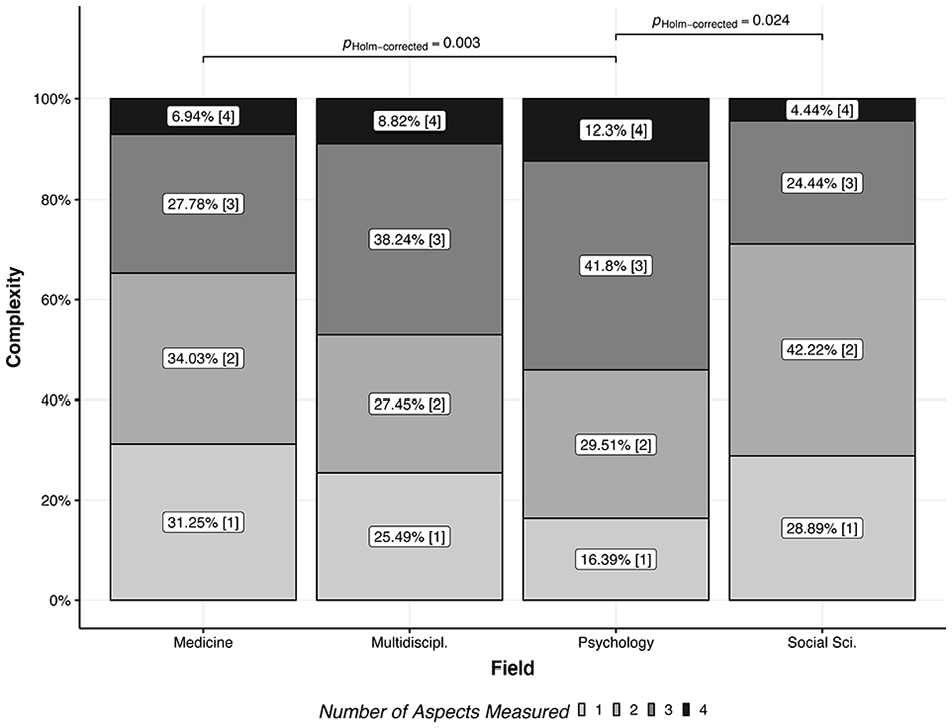
Scale Complexity and Their Proportional Occurrences Per Field.
Comparing Literature Levels
As a final step, we aim to compare the three levels of literature we have reviewed (i.e., theoretical-psychometric-empirical). We find that all three bodies of literature focus more readily on the more external aspects of behaviors and cognitions, and less on more internal affects and desires. However, we also see that desires (i.e., motivations) play a more prominent role in the theoretical literature and interest decreases with more applied research (also see Figure 8A). Looking at the combinations of different experience aspects, we find that across all three bodies of literature, a combination of two or three aspects is most common (often including behaviors or cognitions). However, we also find that single-aspect conceptualizations are substantially more common in the more applied empirical works, whereas conceptualizations that include all four experience aspects are substantially more common in the more abstract theoretical literature (also see Figure 8B). Yet, we also see that the most undervalued aspects often are considered in works that have already included a larger number of other aspects (also see Figure 8C).
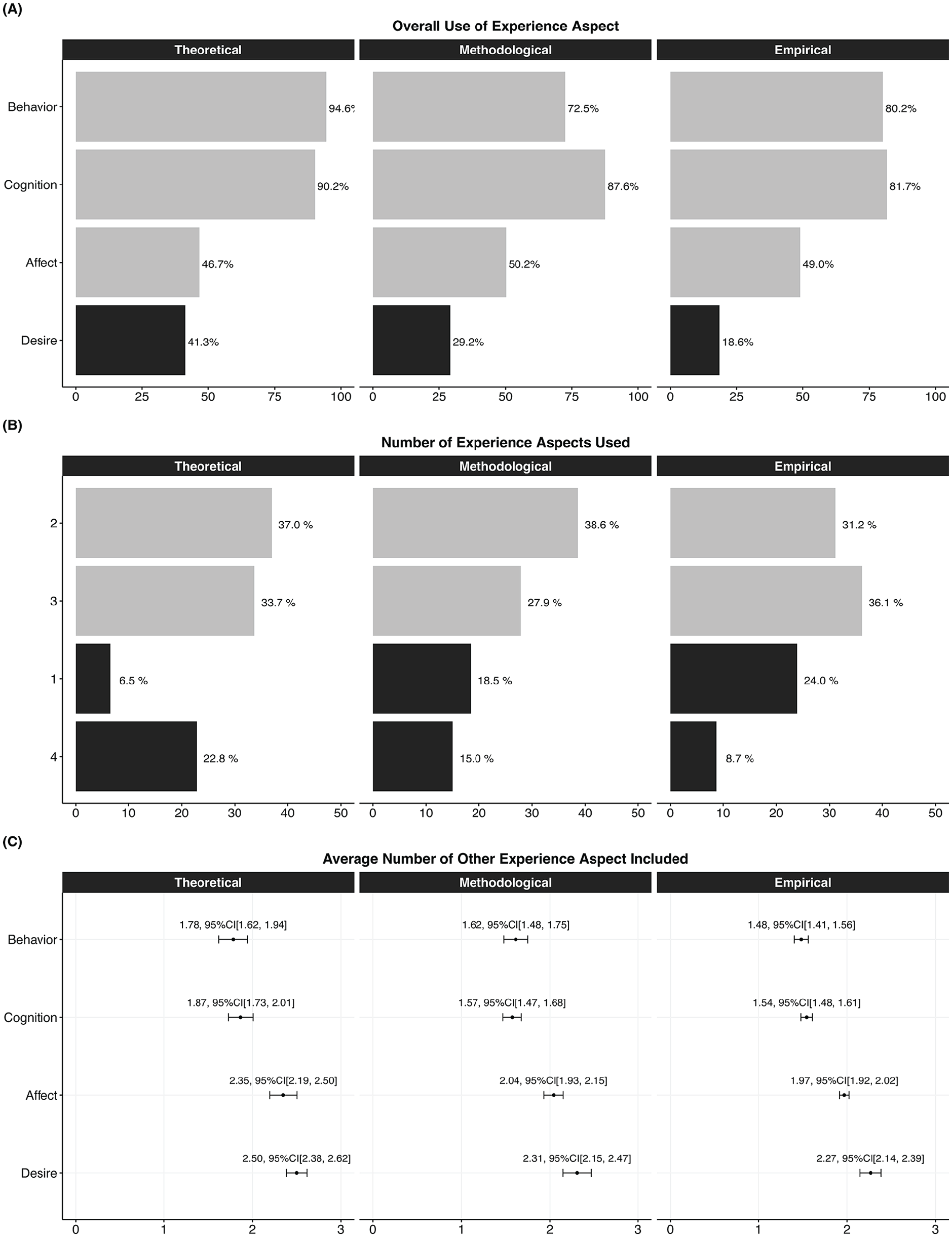
Comparison of Literature Levels.
Discussion
An enormous variety of aspects of our lives are affected by cultures, so the psychological changes we experience when we get into continuous firsthand contact with new cultural patterns (i.e., psychological acculturation) are consequently equally plentiful and diverse. In order to make sense of past theories and measures of psychological acculturation and to develop new theories and measures, it is thus necessary to build a conceptual framework that allows us to analyze, compare, and understand the individual aspects of psychological acculturation. In this article, we have proposed that taking the fundamental aspects of the human experience (affect, behavior, cognition, and desire) offers a comprehensive and theory-based structure to the psychological acculturation concept (in both theory and application).
Our investigation has utilized a variety of empirical sources and applications that offer support for the applicability of an experience framework in the acculturation field. First, the ABCD experience framework brings together and expands on several key developments within the literature on psychological acculturation. By applying the affect, behavior, cognition, and desire structure across abstract and applied levels of conceptualization, we were able to highlight the complexity and embeddedness of the acculturation process while still offering novel structural nuance in the different phases of the contact with new cultural patterns.
And second, we also applied the experience-based framework in a systematic scoping review of past theoretical, psychometric, and empirical literature on psychological acculturation. We found that the framework was able to capture a heterogeneous set of theoretical, psychometric, and empirical works. We were able to assess and bring together a broad set of theoretical works and were able to compare conceptualizations between publication fields and across different types of literature. We particularly found that theoretical conceptualizations of psychological acculturation tended to include more ABCD aspects than the psychometric and empirical works, and across all three types of literature, researchers have tended to focus on the more external behaviors and cognitions while the more internal affects and desires have remained understudied, especially in applied empirical works.
From our framework development and systematic scoping review, we thus offer several novel insights, which address past conceptual issues.
Our framework highlights that psychological acculturation is based on separate experiences of contact over time. This emphasizes the episodic nature of acculturation, where a majority of the psychological changes are driven by contact events. This focus on the contact episode allows us to conceptually distinguish experiences at different phases of the contact. We see this in the systematic scoping review, where an episodic and contact-focused condition-response-outcome separation was able to organize the past theoretical literature. In addition, the framework was able to capture cross-sectional as well as longitudinal studies and was relevant to samples prior to and following the migration event (including, prospective migrants).
Because affect, behavior, cognition, and desire broadly capture the human experience (e.g., Jhangiani & Tarry, 2014), the experience framework comprehensively captures the psychological aspects of acculturation. The framework, thus, offers a theory-driven structure of the concept and its applications while still providing space for the idiosyncratic complexities of the phenomenon. This meant that in our systematic scoping review application very few studies did not capture any experience aspect (e.g., length of residency, or migration status; also see Table 2), and we were arguably able to make meaningful comparisons across a wide variety of contexts and even fields. In short, the ABCD structure offers a common language that structures the heterogeneity within the literature. The broader structure can help us make sense of the differences between individual studies or competing results and, as a result, lets us talk about and address the most pressing issues within a given idiosyncratic context more transparently.
The experience aspects of psychological acculturation highlight a shared humanity across contexts. ABCD structures have been found across cultural contexts because they build on basic human faculties (e.g., Bhawuk, 2011). At the same time, however, the four experience aspects do not prescribe what exactly is being wanted, felt, thought, or done in any given context. The structure instead provides a language to discuss where experiences and psychological mechanisms might be shared or diverging for different contexts. In the scoping review, we were able to assess a wide range of affects, behaviors, cognitions, and desires in acculturation research from more than 315 cultural contexts (see Supplemental Material D).
We explain psychological acculturation as a complex phenomenon. Most theoretical works we collected as part of the systematic scoping review conceptualize psychological acculturation as a composite phenomenon that includes multiple aspects of the human experience (affect, behavior, cognition, and desire). This stands in stark contrast to singular research traditions and many empirical operationalizations that have intentionally or unintentionally focused on a single aspect of the psychological acculturation experience (also see Ward, 2001).
New Research Directions
From both the development of the experience framework of psychological acculturation and its application in the systematic scoping review, we can thus formulate a number of lessons learned that can help guide future work in the field (also see Table 4). We believe that these have a number of broader implications for researchers and practitioners. For advancing future research projects, the systematic scoping review and the conceptual framework can offer future perspectives for (a) the clarity of conceptualizations, (b) the focus of study or intervention, (c) future empirical tests, and (d) new theoretical predictions.
Synthesis Summary and Future Perspectives.
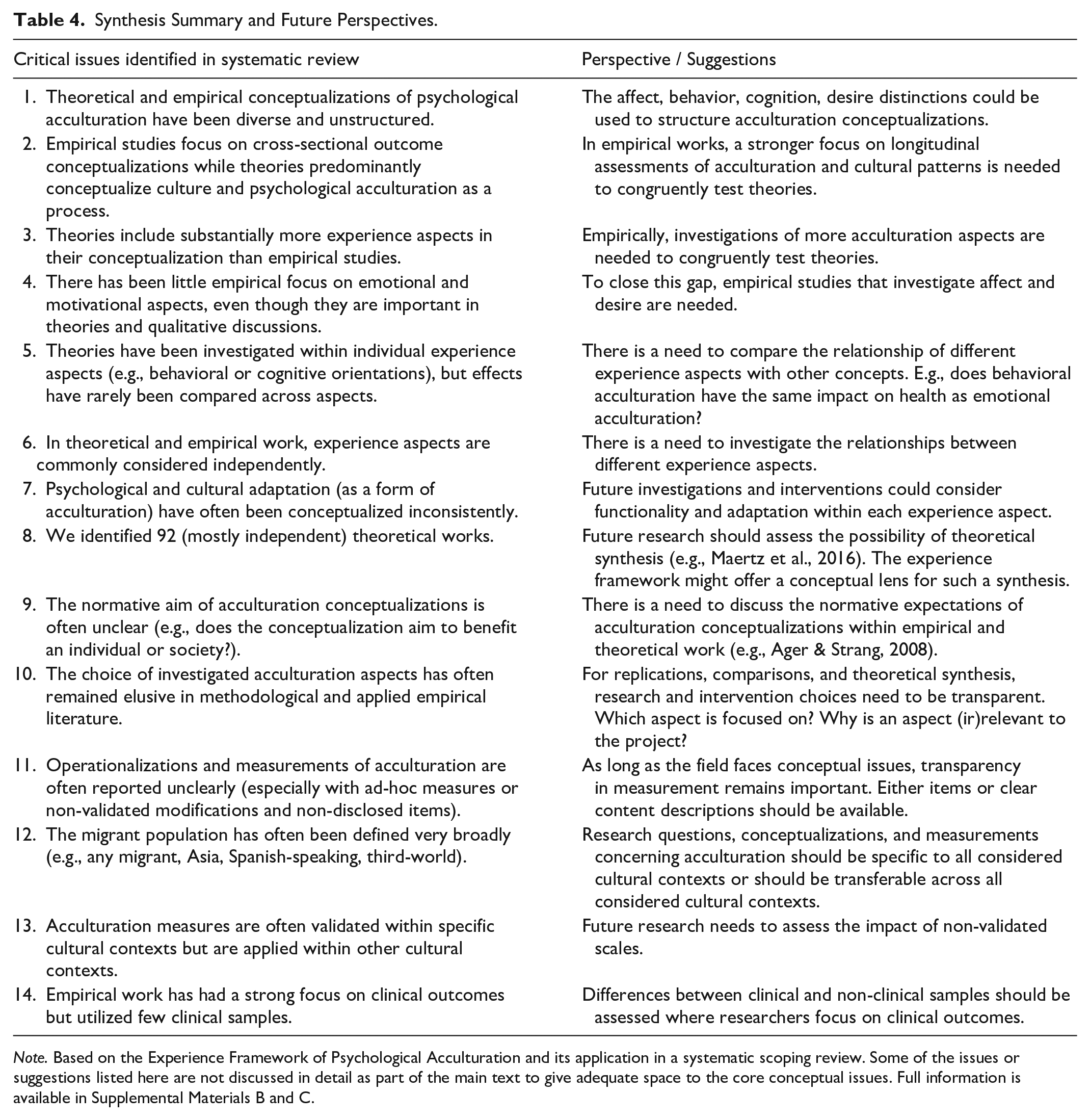
Note. Based on the Experience Framework of Psychological Acculturation and its application in a systematic scoping review. Some of the issues or suggestions listed here are not discussed in detail as part of the main text to give adequate space to the core conceptual issues. Full information is available in Supplemental Materials B and C.
On Transfer-Ability and Comparability
Our systematic scoping review highlighted a number of transparency- and transferability issues within the field. In some works, the conceptualization and operationalizations of acculturation remained vague and unexplained (for more information on this issue see Supplemental Material D). Future research should clearly define which experience aspect is focused on and why a particular aspect is (ir)relevant to a specific project. Also more broadly, future research should assess the impact and transfer-ability of sample and measurement decisions, such as recruiting broad categories of migrants (e.g., “Asian,” “Spanish-speaking”), the use of ad hoc and non-validated scales, or the focus on clinical outcomes with non-clinical samples—all of which were common within the empirical literature.
On Testing Current Theories
We find that theoretical works commonly focus on acculturation as a process that includes multiple experience aspects, while empirical works were considerably more static and narrow in their conceptualization. This gap means that many theoretical models remain empirically untested and many empirical tests are not accurately embedded within theories. Future research should, thus, consider more longitudinal and multifaceted conceptualizations of acculturation to meaningfully test theoretical models and -predictions in their entirety.
The same static reductionist practices hold true for the conceptualization of culture more broadly. While many theoretical conceptualizations of cultural patterns have pointed to the rich idiosyncrasies of cultural realities, more applied models and empirical studies often fail to capture the multifaceted, interactive, and fluid nature of the cultural patterns migrants (re-)create. Future studies should have a more transparent communication of the cultural patterns involved and more research is needed for contexts where new cultural patterns emerge or several cultural patterns come into conflict.
A similar gap exists in the focus on specific aspects, where affect and desire conceptualizations are highlighted in theoretical works as well as more bottom-up qualitative studies but remain relatively absent in empirical quantitative works. Future empirical studies will thus need to investigate the mechanisms and roles of affective and motivational acculturation.
On Novel Theoretical Predictions
Finally, our framework also opens up the possibility to investigate relationships between individual experience aspects of acculturation and relationships of these aspects with other concepts. Future research could, for example, assess whether a certain aspect precedes another or how one aspect might feed back into another. There are plenty (social) psychological theories that speak to the organization of human experiences and offer meaningful predictions of causal pathways for functional elements. For example, when focusing on acculturation behaviors one prediction model might argue that in response to a given interaction situation, cognitions regulate affect and desire to produce adaptive behaviors (cf., cognitive self-regulation theories; Panadero, 2017; for illustration see Figure 9A). However, a conflicting model might propose that motivations organize cognition and affect, which in turn drive behavior (cf., theory of reasoned goal pursuit; Ajzen & Kruglanski, 2019; also see Figure 9B). It is thus up to future studies to determine which experience aspect causally drives acculturation behaviors. And similar endeavors could help explain emotional, motivational, or cognitive acculturation outcomes. Similarly, the subdivision into experience aspects also allows for more nuanced investigations of these acculturation aspects to other concepts (e.g., does behavioral acculturation have the same impact on health as emotional acculturation?).
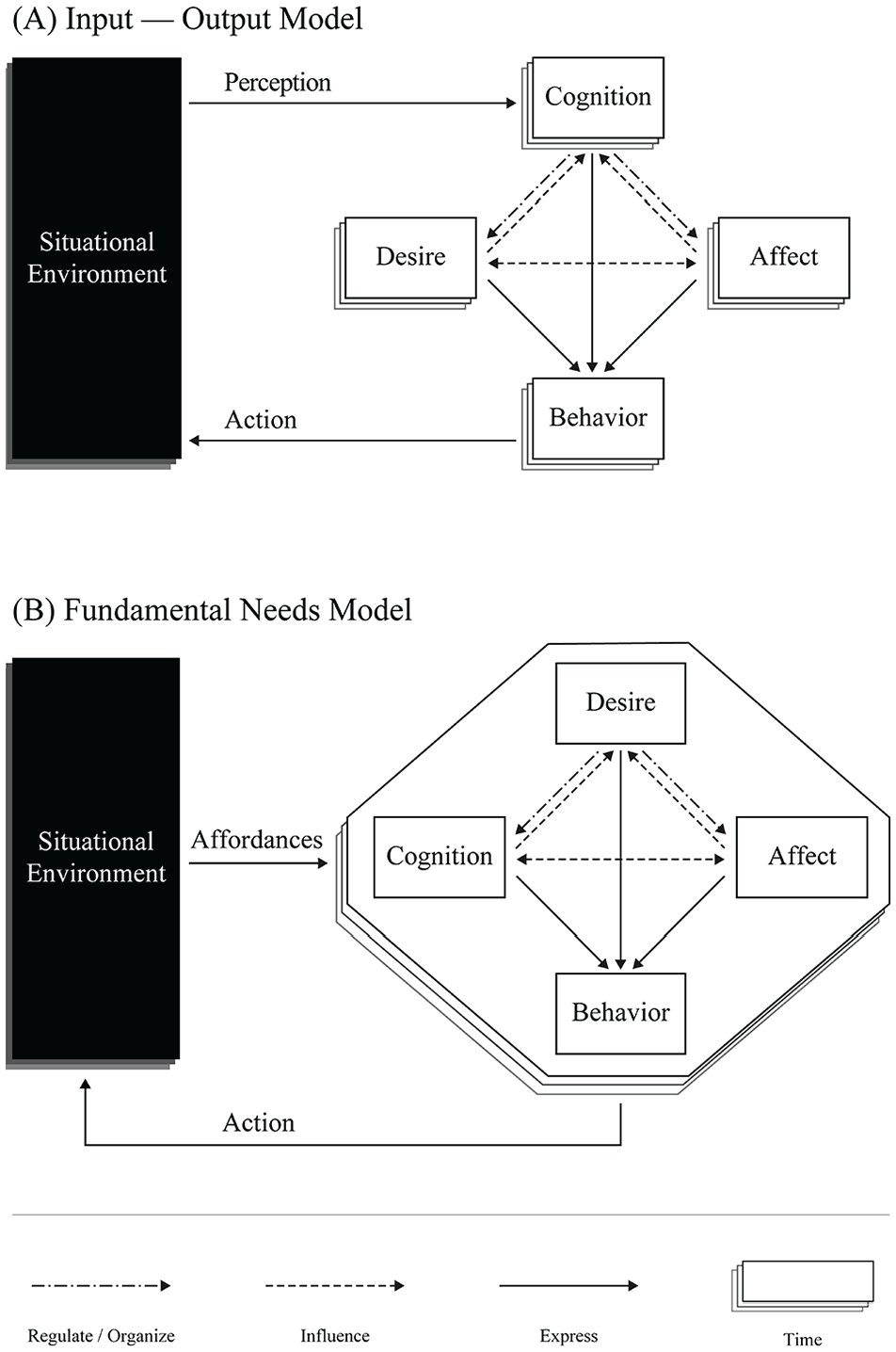
Novel Prediction Models With Behavioral Focus Based on the Acculturation Experience Framework
In addition, because the experience aspects also relate to the structural and embodied aspects of cultural patterns, the aspect separation also allows us to consider contextual affordances. As an example, in most resettlement contexts behavioral acculturation experiences are often much more directly regulated and restricted than motivational, affective, or cognitive acculturation experiences. Laws, policies, and societal interventions that surround occupational or political participation are, for example, often more common than interventions on values, virtues, or emotions (Shafir, 2013). Within concrete resettlement contexts, considering the four aspects can, thus, for example, help understand differential influences of power inequality and acculturation hurdles (Bhatia & Ram, 2001; Khawaja et al., 2019).
More broadly, the framework also integrates many of the prominent models and theories within the acculturation literature (see Figure 1). The individual responses in affects, behaviors, cognitions, and desires give space to the fluid and interconnected nature of cultural patterns by capturing the connection between different patterns of shared, embodied, and internal affects, behaviors, cognitions, and desires. As such the framework is consistent with the generalized frameworks (e.g., Berry, 2005; Cross, 1991) and ecological process models within the field (e.g., Mistry & Wu, 2010; Serdarevic & Chronister, 2005; Ward & Geeraert, 2016). And by differentiating expected ABCDs prior to contact (i.e., acculturation conditions) from experiences ABCDs during contact (i.e., acculturation response) and after the contact (acculturation outcome) the different temporal stages of an episodic contact experience extend and streamline traditional orientation-outcome models (e.g., Arends-Tóth & van de Vijver, 2006a; Te Lindert et al., 2008). In such a process approach cultural conflict models can additionally address conditions of change (e.g., A. Robinson, 2019) and stress adaptation models can further discern conditions of stress (e.g., Hajro et al., 2019; Y. Y. Kim, 1988; Sam, 2006) between the experience steps. In its structure and approach the framework is also consistent with liminality (e.g., Baird & Reed, 2015; Loon & Vitale, 2021) and structuralist approaches (e.g., Kemppainen et al., 2020).
In its application, the framework might then address the difficulty of quantitative integration—for example, through meta-analytic reviews. The ABCD experience framework offers both a filter- as well as a moderator solution for new quantitative integration efforts. For specific relationships (e.g., between psychological acculturation and health-seeking behaviors) quantitative reviewers may choose to only select a specific set of experience aspects (e.g., only behavioral acculturation), and if multiple aspects are considered the ABCD structure offers a meaningful moderator variable.
It is important to note again that distinguishing the four aspects should not reduce the complexity of human experiences. While researchers and lay people are generally able to identify affect, behaviors, cognitions, and desires as distinct aspects of psychological acculturation, it remains important to consider that they often co-occur in psychological concepts and experiences.
Practical Implications
Our framework also offers guidance to practitioners, policymakers, and acculturating individuals.
Facilitating Intervention Focus
The framework might be of interest to practitioners and policy-makers because it is theory-based and brings together a wide range of past literature. The structured approach might be useful in making clear and informed decisions while still considering the concept in its personal complexity. When considering psychological acculturation, practitioners can choose to assess or address emotions and moods (affective acculturation), behaviors and mannerisms (behavioral acculturation), thoughts and cognitions (cognitive acculturation), or needs and desires (motivational acculturation). Whichever selection is made for an application, the framework offers a concise decision-making tool and the review suggests that most theories of acculturation call for a large number of aspects.
Giving Agency to the Target Group
The experience conceptualization of psychological acculturation is inherently a bottom-up approach to the topic. Taking migration experiences as the starting point highlights the considerations for the lived realities of the researched individuals and communities. Scholars in the traditions of critical research methods have long highlighted the importance of including the participants in the research conceptualization process (e.g., Kovach, 2009). If one uses the experiences of the researched individuals to guide the study or intervention design, one inevitably emphasizes the agency and needs of the community—lending relevance and ownership of knowledge to the community (e.g., Schmidt, 2021). Using the individual experience as our conceptual foundation reminds us that in clinical and social protection contexts the recipients are human beings with complex experiences. In its application, the four experience aspects thus offer a structure for building humane interventions as well as monitoring and evaluation efforts of such interventions.
Comprehensive Considerations
Our framework itself as well as the systematic scoping review of the theoretical literature suggest that psychological acculturation is best captured with all four experience aspects of acculturation (i.e., wanting, feeling, thinking, and doing). Efforts that aim to monitor, or address maladaptive acculturation should thus consider the entire broad acculturation experience. Resettlement organizations aiding new migrants may, for example, want to monitor cognitive and behavioral acculturation (e.g., cultural knowledge or contact behaviors) but should equally consider motivational or emotional acculturation (e.g., unfulfilled competence needs or feelings of loneliness).
Constraints on Generality, Positionality, and Citations
As with any large-scale conceptual undertaking, the framework and this review study are not without limitations. Notably, the framework exclusively focuses on the psychological acculturation process. This has been the explicit focus of our efforts but this also means that non-psychological aspects such as biological, cultural, or societal changes are not captured directly but only to the extent to which they impact the experiences of the involved people. Future work might want to integrate these different levels of group and individual, body and mind (e.g., Eronen, 2021).
Another point that we have thus far mostly disregarded is the role of the migration context. While we have argued that the framework structure (i.e., the four experience aspects) is relevant across contexts, the lived experiences are often fundamentally influenced by their context and environment. Three major contextual factors often found within the literature are the cultural patterns, the contact situation or life domain, and the interacting individuals. As we already alluded to during the framework development, all of these contextual elements will likely have a profound impact on the experience of affects, behaviors, cognitions, and desires. Cultural patterns, such as laws or norms, individual differences, such as personality or age, but also situational differences in how public or private the acculturation experience is are all likely intermingled with the individual experience aspects. This means that especially within more applied research projects such contextual considerations will be meaningful predictors of individual and group differences (for a first discussion of these contextual factors within our systematic scoping review, see Supplemental Material D).
Beyond the more methodological constraints, we would also like to briefly address the generality of the samples included in the systematic scoping review. We included 233 studies in the psychometric literature and 526 studies from the broader empirical literature. While the studies jointly included 43 host societies, and 118 societies of origin (with a total of 315 unique combinations), for both bodies of literature an overwhelming amount of studies were conducted in “Western” countries—Western Europe (e.g., The Netherlands, United Kingdom, Germany, Italy, Spain), Australasia (Australia, New Zealand), Russia, and Israel. As an example, 126 scales were validated for a U.S.-American resettlement context, and 324 of the included empirical studies focused on migrants arriving in North America (i.e., the U.S. and Canada). When it came to the migrants’ country of origin, a majority of studies were indifferent to migrants’ background and simply recruited any consenting migrant
Next to the more formal limitations of scope and methodology, we would like to situate our framework, its application, and its limitations more broadly. For such a reflection, it is essential to expand on how our own beliefs, judgments, and practices have shaped the development of the framework and its application. In the most practical sense, the extensive, multiyear efforts of this project grew out of a research–NGO collaboration and academic frustration. The conceptual question of what we mean by “acculturation” and how we should assess it was initially raised during this local collaboration with a refugee resettlement organization. However, trying to make sense of the heterogeneous acculturation conceptualizations within the academic literature to develop more sustainable metrics for practitioners, initially highlighted that we miss an overarching manner in which we make sense of the concept. In addition, by engaging with stakeholders, we gained a deeper understanding of the experiences and perspectives on psychological acculturation, and the participatory approach facilitated the co-creation of knowledge, where we were able to exchange ideas, identify knowledge gaps, and co-develop approaches that could inform future work in the field (for a full reflection on the participatory action aspect see Kreienkamp et al., 2023).
Our approach to this review and the framework was certainly also guided by our own backgrounds and past experiences. The main author has been working with forced migrants for over 10 years in three countries around the world—in refugee resettlement programs under the UNHCR, as a volunteer, language teacher, and integration coach with several smaller and larger migration organizations. In addition, three of the five authors were first-generation migrants at the time of the writing of this article. Our own, decidedly applied experiences with the importance and diversity of psychological acculturation, have assuredly influenced our research process. Most notable are our choices to take a phenomenological perspective and our focus on the migrant minority perspective in understanding the psychological mechanisms of acculturation. Taking a bottom-up and migrant-centered focus was fundamental to our approach.
Similarly, all five authors have contributed a unique view to this project in terms of their academic background. The author team consists of two social psychologists but also includes a clinical-developmental, and an organizational psychologist, as well as a methodologist and statistician. The team not only exemplifies the diversity of fields that are affected by questions of acculturation but also brought about the basic structure of the framework we suggest. Making sense of the qualitative responses and the past conceptual literature, the ABCD division of the human experience is arguably a multidisciplinary structure that coherently conformed to the bodies of literature we were familiar with prior to the systematic scoping review.
On a more abstract level, we would like to address some of the ontological and epistemological influences that have shaped our approach. Our research question and conceptual framework are fundamentally motivated by our structuralist ontology. Here we follow the stance that others like Berry (2009) have taken, where we argue that affect, behavior, cognition, and desire are basic human capacities. Importantly, in our view, this does not imply cultural determinism or deny cultural and individual diversity. While we argue that everyone has the capacity for emotions, we do not argue that this determines which emotions an individual will feel at any given moment. By extension, the same holds true for affective acculturation, where we argue for its structural existence but not a culturally universal content. Similarly, the way in which we sought to validate our framework is arguably the result of our own empiricist epistemological background. In particular, we chose to systematically collect past academic literature and extracted conceptual aspects to apply the framework. Thus, while we have included some qualitative review elements, our efforts were mainly deductive and had a hypothesis-testing rather than hypothesis-generating quality in their application.
Finally, we would like to speak to the diversity of the scholars we cite and who form the body of the literature we worked with. To assess the broadest level of structural bias within the work we cite, we used a “cleanBib pipeline” developed by Zhou et al. (2022). The Python program allowed us to analyze the first/last author pairs in our bibliography entries. The program relies on probabilistic gender (woman vs. man) and ethnicity assignments (White vs. person of color [POC]) based on the authors’ names. The predictive validity of both the underlying Gender API (Sebo, 2021) and the name ethnicity predictor has been well-established (Ambekar et al., 2009; Sood & Laohaprapanon, 2018). For both measurements, we excluded any self-citations of the first and last authors of this current paper. For the works cited within this manuscript, we found scholars were 22.88% woman(first)/woman(last), 15.29% man/woman, 15.44% woman/man, and 46.38% man/man. In addition, our references contain 17.29% POC(first)/POC(last), 14.40% White/POC, 15.75% POC/White, and 52.57% White/White. Compared with the full set of works that were included in the scoping review, our references match the patterns of the theoretical literature.
Interestingly, when we compared the distributions across the three bodies of theoretical, psychometric, and broader empirical literature, we saw that women and people of color were less frequently authors of theoretical literature but were substantially better represented within the psychometric and the empirical literature (e.g., empirical gender: 40.18% woman/woman and 25.68% man/man; ethnicity: 23.72% POC/POC and 34.88% White/White). This might be due to the larger sample sizes or represent a broader inequality within the field. Beyond the limitations of the method we employed here, 6 it should also be noted that privilege and discrimination are layered, multidimensional, and often intersectional. Important additional markers of such inequalities include access to funding, the journal tier, and the research institution, all of which are readily available for most published works (e.g., Schmidt, 2021). Future research should seek to assess and address the multidimensional and intersectional inequalities within the field more rigorously.
Conclusion
By building on recent developments within the field, we suggest a conceptual framework of psychological acculturation, utilizing the affect-behavior-cognition-desire aspects of human experiences. We showcase the structuring and comparative utility by applying the framework in a systematic scoping review of the past theoretical, psychometric, and empirical literature. We find that the framework is able to comprehensively structure past works (e.g., few articles did not fit the ABCD conceptualization), identify gaps within the literature (e.g., a crucial disconnect between theory and empirical practice), and is able to assist in future theoretical and applied conceptualizations (e.g., novel predictions and interventions). As such, the framework provides a robust starting point and a useful tool for both researchers and practitioners.
Supplemental Material
sj-pdf-1-psr-10.1177_10888683231183479 – Supplemental material for The Migration Experience: A Conceptual Framework and Systematic Scoping Review of Psychological Acculturation
Supplemental material, sj-pdf-1-psr-10.1177_10888683231183479 for The Migration Experience: A Conceptual Framework and Systematic Scoping Review of Psychological Acculturation by Jannis Kreienkamp, Laura F. Bringmann, Raili F. Engler, Peter de Jonge and Kai Epstude in Personality and Social Psychology Review
Footnotes
Appendix
Acknowledgements
We would like to acknowledge the invaluable contribution of the volunteer network at Humanitas Groningen, with their continued support and practical insight into local resettlement practices. We would like to thank Liesbeth Hanrath and Wim Griep in particular for their guidance and input, as well as the participants of the joint focus group discussion for sharing their experiences and insightful commentary.
Data Availability Statement
Source data and software are available at https://doi.org/10.5281/zenodo.8186317 (Kreienkamp et al., 2022a). Protocols, materials, analysis data, and code are available at https://doi.org/10.17605/OSF.IO/N587W (Kreienkamp et al., 2022b).
Declaration of Conflicting Interests
The author(s) declared no potential conflicts of interest with respect to the research, authorship, and/or publication of this article.
Funding
The author(s) received no specific financial support for the research, authorship, and/or publication of this article.

Supplemental Material
Supplemental material for this article is available online.
Notes
References
Supplementary Material
Please find the following supplemental material available below.
For Open Access articles published under a Creative Commons License, all supplemental material carries the same license as the article it is associated with.
For non-Open Access articles published, all supplemental material carries a non-exclusive license, and permission requests for re-use of supplemental material or any part of supplemental material shall be sent directly to the copyright owner as specified in the copyright notice associated with the article.
