




Abstract
Black communities are disproportionately impacted by homicide, yet research on how surviving family members and friends of murdered victims cope with their violent, traumatic death is limited. This scoping review examines current literature on how Black communities cope with homicide, identifies key concepts, reviews study methods, summarizes findings, and offers implications for future research. A scoping review of empirical studies (2000–2024) consisting of majority Black participants coping with homicide was conducted. Out of 2,932 articles, 35 met the inclusion criteria. An inductive thematic analysis was used to synthesize results. Findings from these studies revealed two domains: the sociocultural context of coping and coping strategies, consisting of eight themes (e.g., racism and social stigma, the impact of homicide, support, spiritual coping, activism, maintaining a connection to the deceased, substance use, avoidance, and concealment). These findings emphasize social and cultural factors that shape Black experiences with homicide, which consequently impact the coping resources and strategies they use to manage the violent, traumatic death of loved ones. Implications for future research should focus on standardized collection of homicide data, contextualization of homicide experiences, and diverse research methods.
Introduction
The traumatic impact of experiencing the murder of a loved one disproportionately affects Black communities. In the United States, Black people comprise approximately 15% of the nation’s population yet account for 68% of all homicide victims (Langley & Sugarmann, 2021). In Canada, Black people represent 3.5% of the population and constitute 44% of homicide victims (Maheux & Do, 2019; Moreau et al., 2020). In the aftermath of a murder, research suggests that, on average, 7 to 10 family members and friends of homicide victims (hereafter referred to as survivors) are faced with the challenge of learning to cope with the traumatic impact of their loved one’s murder (Gross, 2007; Rheingold et al., 2012). In addition, Black communities often include chosen persons not related by blood, suggesting that the number of family members and friends faced with the challenge of coping with the homicide of a loved one may be far greater than research predicts (Sharpe, 2015). Despite this alarming reality, research relevant to the ways in which Black surviving family members and friends cope with the traumatic effects of experiencing the murder(s) of their loved ones is limited (Connolly & Gordon, 2015; Sharpe et al., 2018).
The Traumatic Impact of Homicide
Survivors of homicide victims often experience intense emotions, including shock, rage, guilt, helplessness, grief, isolation, and dissociation (Sharpe & Iwamoto, 2022). The traumatic impact of such events disrupts daily functioning, challenges survivors’ ability to find meaning (Armour, 2003), and significantly affects well-being, productivity, and quality of life (Rheingold et al., 2012). Additionally, the sudden and violent nature of homicide increases the risk for depression, PTSD, and chronic or complicated grief among family members (Laurie & Neimeyer, 2008; Sharpe et al., 2023).
Research (Zinzow et al., 2011) further suggests that homicide survivors are more likely to experience PTSD than survivors of other traumatic events (e.g., suicide, physical assault, robbery, burglary, sexual assault). Several studies have found that increased risk for developing PTSD not only complicates the grieving process but has profound psychological consequences for Black survivors of homicide victims, including, but not limited to, hypervigilance, avoidance, numbing, as well as increased overall stress (Burke et al., 2010; Rheingold & Williams, 2015; Smith Lee & Patton, 2016; Zakarian et al., 2019).
The ability to bereave and grieve the homicide of a loved one depends on many factors: the coping skills and strategies of survivors, the existence of support systems (e.g., family members, friends, mental health services), and their ability to provide assistance; the circumstances of the death; the response of family members, friends, and the criminal justice system; the nature of the relationship with the deceased; cultural beliefs and customs. However, coping strategies and support systems are often constrained by social and structural inequities that exist as a result of anti-Black racism (Sharpe, 2015; Sharpe et al., 2023). For example, inequitable access to educational and employment opportunities limits access to quality medical and mental health care services for survivors. In addition, due to the disparate and unjust verbal and physical violence of Black people by law enforcement (DeVylder et al., 2020; Edwards et al., 2022; Graham et al., 2020), Black survivors of homicide victims often experience disappointment, fear, anger, and frustration with social institutions (e.g., police, the criminal justice system) that families hope would protect their loved ones from harm (Sharpe, 2015).
Given the frequency of homicide and the traumatic impact murder has on Black communities, understanding the ways in which Black people cope is essential to informing culturally responsive services designed to support them.
Stress and Coping Theory
Coping refers to the conscious and unconscious effort to mitigate stress or threat in the wake of adverse events or circumstances (Lazarus, 1993). Coping strategies are essential for reducing traumatic stress and restoring mental and physical health, forming the basis of interventions for violent experiences (Littleton et al., 2007; Sharpe, 2015; Sharpe et al., 2023). Given the integral role of coping in addressing the impact of traumatic injury, stress and coping theory is a suitable theoretical framework for examining how Black survivors of homicide victims cope with the murder(s) of a loved one.
Lazarus and Folkman (1984) offer a framework for coping with stress that consists of two concepts: appraisal, the individual’s assessment of an event’s significance, and coping, the efforts to manage the impact of the stressful event (Lazarus, 1993). The appraisal of a situation influences the level of stress experienced and shapes the unique coping strategies adopted by individuals (Lazarus, 1993; Lazarus & Folkman, 1984). According to Lazarus and Folkman (1984), there are two types of appraisals: primary and secondary. Primary appraisal involves evaluating whether a stressor represents harm, loss, threat, or challenge, while secondary appraisal involves assessing one’s coping resources, such as physical and psychological capacities and social support. Based on these appraisals, individuals determine their coping strategies. Folkman and Lazarus (1980) categorize coping resources into problem-focused coping, which includes seeking support, making accommodations, and engaging in action-oriented behaviors, and emotion-focused coping, which includes expressions of grief, crying, and emotional numbing. Once coping strategies are evaluated and selected, individuals implement these strategies to manage the stressor effectively. This framework posits that coping addresses the incongruence between the meaning produced by the stressful event and the situation at hand (Park & Folkman, 1997). The strength of Lazarus and Folkman’s (1984) theory lies in its emphasis on the cognitive transactional relationship between individuals and their environment, recognizing the subjective nature of evaluating a stressful event and the dynamic, evolving constructs of stress and coping. While efforts have been made to explore cross-cultural variations in stress and coping (Bjorck et al., 2001; Rokach et al., 2000; Yeh & Inose, 2002; Zaff et al., 2002), research has largely neglected stress and coping within majority Black communities where homicide loss is prevalent.
Coping in the Aftermath of Homicide
There is a growing body of evidence that indicates Black survivors of homicide victims employ unique coping strategies to deal with their loss, encompassing various approaches such as spiritual coping, meaning-making, maintaining a connection to the deceased, caring for others, concealing emotions, as well as engaging in collective coping and supporting friends and family as they grieve (Kessler et al., 2014; Laurie & Neimeyer, 2008; Sharpe, 2015). Among these coping strategies, relational and collective coping have been associated with collectivist cultures and beliefs prevalent throughout the African diaspora (Franklin et al., 2006). Coping with traumatic grief resulting from experiences of violence differs across ethnic groups (Laurie & Neimeyer, 2008). Compared to their white counterparts, Black people rely upon the support of family members and friends, religious resources and spiritual rituals to cope with the traumatic impact of violence more so than medical and mental health services (Fontes, 2005; Laurie & Neimeyer, 2008; McGuffey, 2013; Rosenblatt & Wallace, 2005). These unique differences emerge from sociocultural norms and responses to anti-Black racism that dictate the perception and inequitable distribution of resources (e.g., financial, medical, and mental health services) that influence the accessibility of support for Black people as they grieve (Gonzales & Kim, 1997; Sharpe, 2015; Weiss et al., 2017).
The experience of grief following homicide encompasses various psychological, social, and physical effects (Walter & McCoyd, 2009). The grieving process is influenced by multiple factors, including the circumstances surrounding the homicide, access to and utilization of medical and mental health services, availability and use of informal social support systems (e.g., friends and family members), involvement with the criminal justice system, the nature of the relationship with the deceased, and religious or cultural beliefs (Englebrecht et al., 2014; Holland et al., 2009; Sharpe, 2008). Sharpe (2015) found that race-based social and structural inequities shape coping strategies and support systems employed by Black survivors of homicide victims. In the aftermath of homicide, Black survivors of homicide victims do not merely assess the immediate “threat” to determine suitable coping strategies to mitigate distress. Instead, they engage in a racial appraisal process that evaluates the impact of experiencing homicide within structurally racist systems, which assign value to the experience and contribute to feelings of stigma, shame, blame, and a lack of justice (McGuffey, 2013; Sharpe, 2015).
A systematic review by Connolly and Gordon (2015) highlighted that exposure to the homicide of a loved one profoundly impacts various aspects of survivors’ lives, including psychological well-being, academic performance, social interactions, occupational functioning, and family dynamics. Additionally, findings indicated that the grieving process is disrupted and delayed when survivors engage with the criminal justice system and report experiencing institutional opacity, lack of sympathy, and lengthy investigations. Survivors identified the cultivation of supportive networks and spirituality as meaningful coping strategies for managing their grief. In a related systematic review by Alves-Costa et al. (2021), psychological interventions such as cognitive-behavioral therapy, restorative retelling, and eye movement desensitization and reprocessing group therapy were found to be effective in reducing symptoms of PTSD, complicated grief, and depression among survivors of homicide victims.
While these systematic reviews provide valuable insights into the traumatic impact of homicide and identify interventions designed to mitigate grief, there are notable gaps in the existing literature concerning post-homicide experiences. Granek and Peleg-Sagy (2015) found that many studies lack pertinent demographic details, such as race, ethnicity, age, education, and socioeconomic status, which hinders the contextualization of grief experiences and undermines the validity of research findings. Additionally, the review highlighted a prevailing trend where white populations are used as the normative standard against which Black populations are compared.
The scarcity of research on Black survivors of homicide victims leaves social workers, medical professionals, and practitioners with minimal data to develop culturally responsive, evidence-based interventions that support survivors as they grieve the murder of their loved one(s) (Sharpe et al., 2018). In response to the limited research on Black experiences of coping with homicide, a scoping review is an effective methodological approach in generating knowledge in a manner that systematically maps out study findings as they relate to the impact of experiencing the homicide of a loved one, strategies used to cope with the experience, and interventions used to support Black survivors of homicide victims. As such, the authors of this study conducted a scoping review to display existing research focused on the coping strategies of Black survivors of homicide victims and identify areas for future research.
Methods and Analysis
Literature Search and Selection
To comprehensively explore existing empirical knowledge on coping in the aftermath of homicide for Black communities, a scoping review was conducted to assess the depth and breadth of literature on the topic (Munn et al., 2018). Unlike systematic reviews with specific inclusion criteria, scoping reviews capture a broad range of research, providing valuable insights into the current research landscape while identifying knowledge gaps and enhancing conceptual clarity (Arksey & O’Malley, 2005; Munn et al., 2018).
This scoping review protocol utilized Arksey and O’Malley’s (2005) five-phase scoping review framework, which includes (1) indicating the core research questions; (2) highlighting related research; (3) organizing the research that meets the determined inclusion criteria; (4) outlining the findings; and (5) analyzing and disseminating the results. Additionally, this study adhered to the PRISMA Extension for Scoping Reviews guidelines (PRISMA-ScR).
The following research questions guided this study: (1) What is the impact of experiencing the homicide of a loved one for Black individuals, families, and communities?; (2) How do Black individuals, families and communities cope with the homicide of a loved one?; and (3) What strategies and/or interventions have been designed to support Black individuals, families, and communities coping with homicide? This scoping review provides a systematic synthesis of the literature, offering a valuable resource to medical and mental health practitioners, service providers, researchers, advocates, and Black survivors of homicide victims. Despite the disproportionate impact of homicide on Black individuals, families, and communities, post-homicide research often lacks the experiences of homicide survivors and systematically collected data on coping strategies and approaches for assisting them. To capture the diversity of Blackness, search terms included Black, African American, African, Caribbean, and Afro (e.g., Caribbean, Brazilian, etc.) due to the inconsistent use of the term “Black” in the literature (Edwards et al., 2020; Granek & Peleg-Sagy, 2015).
This scoping review strategy was developed collaboratively among the authors and reviewed in partnership with the University of Toronto, Factor-Inwentash Faculty of Social Work Librarian. We engaged in a peer review process to assess the suitability of potential databases. The following online databases were chosen for their applicability and transdisciplinary perspectives related to Black homicide victims and their surviving family members and friends: OVID (MEDLINE & PsycINFO), ProQuest (Sociological Abstracts, Social Services Abstracts, International Bibliography of Social Sciences [IBSS]), and EBSCO (Africa Wide, The Cumulative Index to Nursing and Allied Health Literature [CINAHL]). To support the development of the search string terms, the authors reviewed each database’s vocabulary index to ensure the search terms were appropriate based on the journal’s search criteria. Covidence software (Covidence, 2022) was used to assist in the literature selection process. Based on our research questions, this review included studies that examined the impact of experiencing the murder of a loved one on Black survivors of homicide victims, the strategies utilized by Black survivors to cope with the homicide of a loved one, and the interventions or approaches used to support Black people who have experienced the homicide of a family member or friend.
Despite the historical phenomenon of the murder of Black people, the past two decades have amplified the pervasive nature of homicide, necessitating an examination of ways to support Black individuals, families, and communities in coping with relentless traumatic injury. Therefore, this scoping review included scholarly articles published between 2000 and 2024, focusing on research designed to understand the impact of homicide victimization, coping strategies and interventions designed to support Black people in the aftermath of homicide.
In this review, we included empirical studies that utilized quantitative (e.g., administered and self-report survey), qualitative (e.g., individual and focus group interviews), and mixed methods approaches to examine the coping strategies of Black individuals, families, and communities. Peer reviewed articles were included in this review if they: (1) included the word Black or African (e.g., African-American, Afro-Caribbean) in the title and abstract; (2) included the word homicide or one of the following terms used synonymously with this construct in the title or abstract (e.g., murder, death, killing, fatality); (3) included the word coping or one of the following synonymous terms in the title and abstract (e.g., manage, survive, healing, resilience); (4) had an explicit focus on Black survivors of homicide and how they cope with this form of tragic death; and (5) included strategies and interventions that had a majority sample of Black participants. Exclusions included book reviews, dissertations, full books, studies where Black survivors of homicide victims were not included in the study sample, conceptual articles, non-English articles, and grey literature (e.g., newspapers, governmental documents, and non-peer reviewed articles). There were no geographical study limitations within this review.
The screening of articles involved a peer review process, requiring the review and approval of at least two authors to assess eligibility. The initial two authors were responsible for resolving any conflicting decisions that emerged during the review process. To establish and assess the quality and agreement rates of the screening process, we initially used the first 100 articles, applying the identified inclusion and exclusion criteria. The Kappa score was utilized to measure the inter-agreement rate among reviewers. This study aimed to achieve a 90% inter-agreement rate before proceeding with independent screening. If this inter-agreement rate was not achieved from the first 100 articles, the team reconvened to clarify the study’s purpose and criteria. This process would then be repeated with another 100 articles to reach the desired 90% inter-agreement score and ultimately result in the selection of eligible articles. Refer to Figure 1 for the selection process.
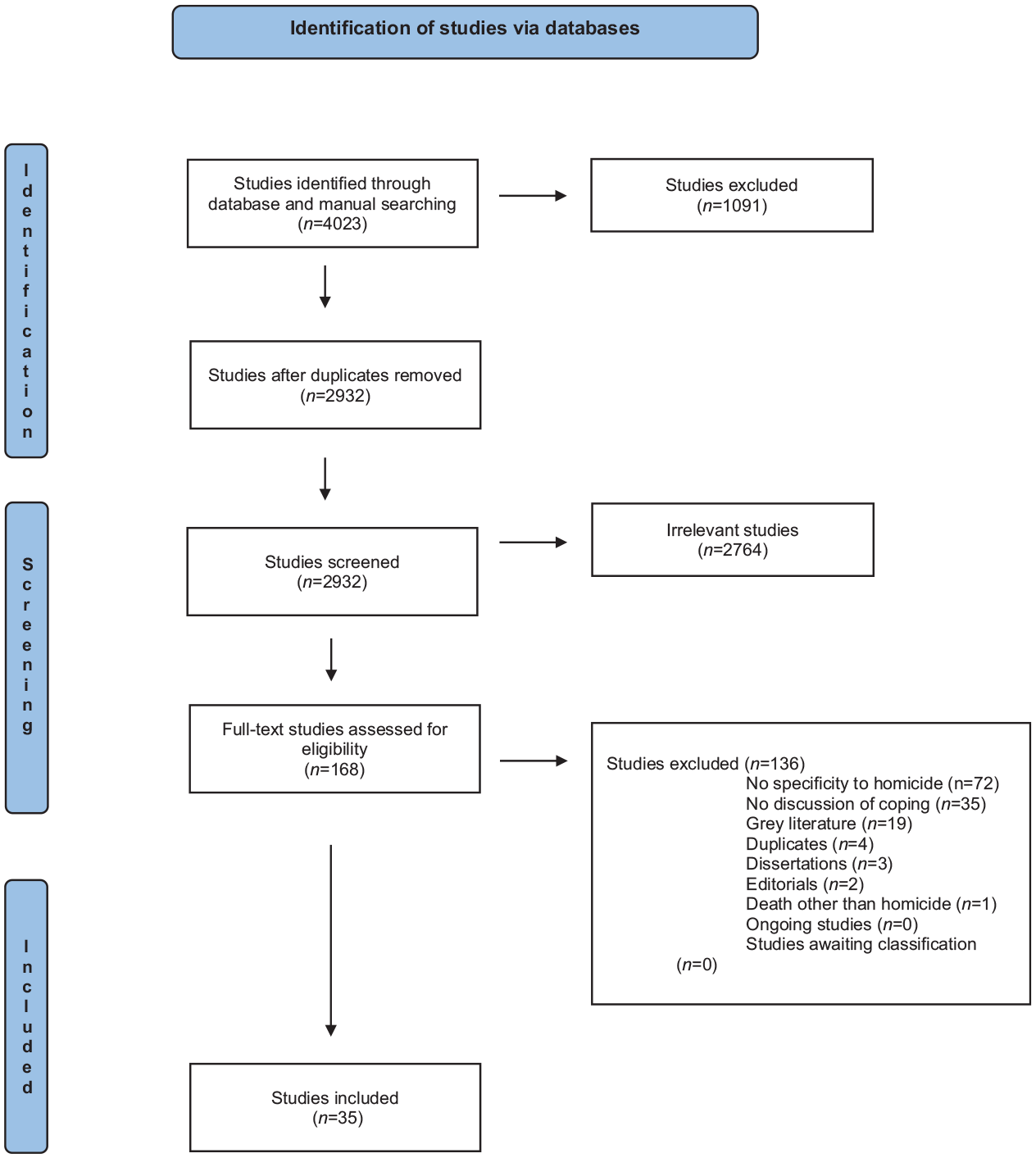
PRISMA flow diagram.
Analysis and Synthesis of Findings
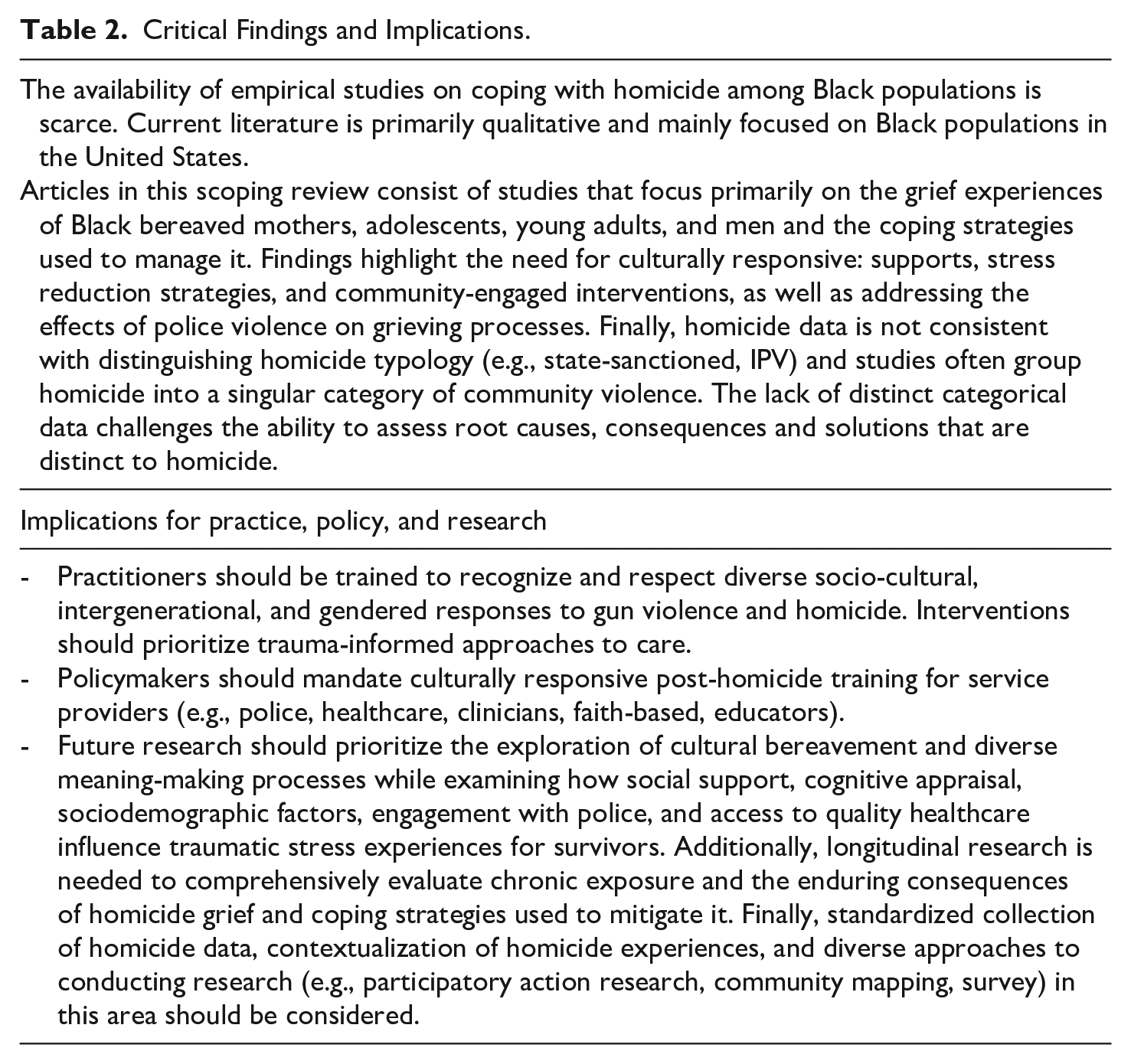
Scoping review analysis consisted of an iterative thematic analysis (Braun & Clarke, 2006). The first author labelled articles following textual interpretation while remaining close to the language used by the authors of the studies. Second, the goals and objectives of each article were compared and merged into conceptual domains. Third, to increase consistency among reviewers, the first author drafted a global coding scheme consisting of the following categories: study design, participant demographics, research aims/objects, and study methods. The first and second authors identified two domains: the sociocultural context of coping and coping strategies. These domains consist of eight themes (e.g., support, spiritual coping, racism and societal stigma, activism, impacts of homicide, maintaining a connection to the deceased, substance use, and avoidance and concealment) identified across scoping review studies. To maintain the rigor of our analysis, the first author extracted data from the scoping review studies. The second author independently analyzed a subsample of the selected articles, using the coding scheme as a guideline and allowing new themes and codes to emerge. Disagreements on data extraction were resolved through consensus, with discussions involving other co-authors as necessary. Scoping review results, critical findings, and implications can be found in Tables 1 and 2.
Selected Papers.


Critical Findings and Implications.
Results
The PRISMA in Figure 1 outlines our search process. The search yielded 4,023 records, of which 1,091 were excluded during initial screening, leaving 2,932 articles for detailed review. Subsequently, 168 articles were evaluated for eligibility criteria, resulting in 35 studies (see Table 1) that met the inclusion criteria for this review. Most of these studies were conducted in the United States and used qualitative research methods to provide insight relevant to the ways Black communities are impacted by homicide and cope with the murder(s) of their loved ones. Most study participants in this scoping review included Black mothers (Bailey, Sharma, & Jubin, 2013; Hannays-King et al., 2015; Huggins et al., 2020; Piazza-Bonin et al., 2015; Stewart, 2017), Black men (Singletary, 2022; Smith Lee et al., 2020; Smith Lee & Patton, 2016; Smith Lee & Robinson, 2019) and youth (Alexander et al., 2023; Johnson, 2010a, 2010b, 2014; Patton et al., 2016; Pretorius et al., 2010; Salloum, 2008; Salloum et al., 2001).
The first and second authors identified two domains: the sociocultural context of coping and coping strategies. The sociocultural context domain consists of two themes: (1) racism and social stigma and (2) the impact of homicide. The coping strategies domain consists of six themes (e.g., support, spiritual coping, activism, maintaining a connection to the deceased, substance use, and avoidance and concealment).
Sociocultural Context of Coping
Contents in the sociocultural context of coping domain reflect societal and cultural factors that influence Black experiences with homicide. These factors impact coping resources and strategies Black communities use to cope with violent traumatic death.
Racism and Societal Stigma
Fear of experiencing anti-Black racism and societal stigma were central themes across several articles within the context of barriers to coping (Bailey, Sharma, & Jubin, 2013; Hannays-King et al., 2015; Huggins & Hinkson, 2022; Huggins et al., 2020; Johnson, 2014; Pabon & Basile, 2022; Patton et al., 2016; Pretorius et al., 2010; Salloum, 2008; Singletary, 2022; Smith Lee & Patton, 2016; Spilsbury et al., 2017). Black survivors of homicide victims often expressed a profound distrust of formal institutions (e.g., legal, medical, and mental health; Hawkins, 2022; Smith Lee & Robinson, 2019; Spilsbury et al., 2017). This distrust is rooted in historical and contemporary experiences of systemic racism and exploitation (e.g., enslavement, forced sterilization, mass incarceration, and police brutality; Bailey, Hannays-King, et al., 2013; Hawkins, 2022; Patton et al., 2016; Sharpe, 2008; Smith Lee & Robinson, 2019; Spilsbury et al., 2017). A study examining sources of support for Black survivors of homicide victims found that historical distrust of formal institutions (e.g., police, medical and mental healthcare systems), fear of social stigma (e.g., stereotypes that Black people are prone to violence), and comfort levels with clinical service providers were significant barriers to seeking and receiving support (Sharpe, 2008). These studies amplify the complex reality of coping with homicide for Black people. Homicide and the associated grief are exacerbated by intergenerational historical and contemporary accounts of racial injustice and structural inequity. Black individuals often do not receive justice, whether they are homicide victims or surviving family members (Huggins & Hinkson, 2022; Johnson, 2010a, 2010b; Pretorius et al., 2010; Sharpe et al., 2018). Media coverage rarely highlights these cases or investigates them as thoroughly as other violent acts like mass shootings (Zhang, 2021). When media attention is given, it often portrays Black communities as “prone to homicide” (Sharpe, 2015). These narratives devalue Black lives and often fail to acknowledge the complexity of coping with grief for Black survivors of homicide victims.
Social stigma around mental health, alongside the shame and blame frequently associated with homicide, often deters Black survivors of homicide victims from seeking support to help manage their grief (Hannays-King et al., 2015; Sharpe, 2008, 2015; Sharpe et al., 2013; Singletary, 2022; Smith Lee & Robinson, 2019). These findings are congruent with post-homicide research that suggests social stigma, blame, and shame are often associated with the way homicide victims lived and died (Doka, 2008). Black homicide frequently carries a stigma due to the assumption that illegal activities (e.g., drug trafficking, gang activity) were the cause of the violent death (Sharpe, 2015). This stigma can lead to surviving family members feeling as though their family’s reputation has been compromised and the stereotypes of Black communities being prone to violent criminal activity valid from the perspective of society at large (Sharpe, 2008; Sharpe & Boyas, 2011). Additionally, survivors may blame themselves for failing to protect their loved ones from harm.
Understanding the intersection between the traumas of anti-Black racism and homicide is vital for supporting Black survivors of homicide victims. The influence of both historical and contemporary experiences of anti-Black racism on grief has a profound influence on the development of cultural norms where stigma and shame hinder authentic emotional expressions of grief.
The Impact of Homicide
Scoping review studies highlighted the devastating impact homicide has on Black communities. The severe impact of homicide occurs as a result of the relentless frequency in which Black people are experiencing the murder of their loved ones and are collectively exposed to the brutal erasure of Black bodies through news and social media outlets (Alexander et al., 2023; Patton et al., 2016; Smith, 2015). These chronic traumatic experiences compromise the individual and collective physical and psychological well-being of Black communities (Hannays-King et al., 2015; Hawkins, 2022; Patton et al., 2016; Sharpe, 2015; Sharpe et al., 2013; Singletary, 2022; Smith Lee & Patton, 2016).
Research on the physiological impact of experiencing the homicide of a loved one is limited. Hannays-King et al. (2015) found that among Black parents, the sudden and violent nature of homicide lead to chronic conditions such as cardiovascular conditions, insomnia, and gastrointestinal issues long after the loss. Hawkins (2022) noted that Black male survivors of homicide victims reported avoiding public spaces and social interactions due to fear of compromised physical safety and well-being. The threat of physical harm frequently jeopardizes Black men’s ability to engage socially with members of their community, contributing to their sense of isolation (Hawkins, 2022; Patton et al., 2016; Smith, 2015). While Smith (2015) does not explicitly detail the psychological impact of homicide on study participants, study findings reveal that young Black males, on average, experienced the murder of three loved ones. Repeat exposure to the deaths of peers during crucial developmental stages not only disrupted their social networks but highlights the pervasive impact of homicide and the experience of relentless accumulation of grief for young Black survivors of homicide victims. Moreover, the threat of safety for Black men is often so severe that engagement in social isolation as a means of protection in some instances also served as a barrier to Black men engaging in the opportunities that would advance their social capital, economic growth and development (e.g., employment programs, job opportunities (Smith Lee & Patton, 2016; Smith Lee & Robinson, 2019).
Experiencing the homicide of a loved one has a profound impact on the psychological well-being of surviving family members and friends. Psychological reactions include but are not limited to feelings of anger, shame, blame, helplessness, fear, suppression and avoidance of expressing feelings about the violent death of loved ones (Sharpe et al., 2013; Singletary, 2022; Smith, 2015). The frequency of homicide for Black communities suggests that relationships and connections to the deceased are diverse, accounting for the disparate psychological impact of homicide survivors. However, several studies in this scoping review examined the experiences of Black mothers and found that internal and external blame uniquely impacted mothers, leading to prolonged and complicated grief and PTSD symptoms (Bailey, Hannays-King, et al., 2013; Bailey, Sharma, & Jubin, 2013; Hannays-King et al., 2015; Huggins & Hinkson, 2022; Sharpe et al., 2013; Singletary, 2022).
Huggins and Hinkson (2022) and Huggins et al. (2020) found that mothers of homicide victims often blamed themselves for their inability to protect their children from harm, leading to prolonged symptoms of grief and intensifying feelings of guilt and self-reproach. Huggins and Hinkson (2022) and Huggins et al. (2020) found that mothers of homicide victims often blamed themselves for their inability to protect their children from harm, leading to prolonged symptoms of grief and intensifying feelings of guilt and self-reproach. Black surviving mothers of homicide victims described experiencing societal stigma that influenced perceptions of their children. Societal stigma is rooted in stereotypes of Black males being prone to violence, alluding to the belief that their children were responsible for their own deaths and blame placed on surviving family members for their inability to protect their children from harm (Bailey, Hannays-King, et al., 2013; Hannays-King et al., 2015; Huggins & Hinkson, 2022; Huggins et al., 2020; Sharpe et al., 2013). A lack of understanding of the psychological complexity of grief led to surviving mothers experiencing shame, blame and altered relationships with friends and family, leading to emotional distress and feelings of abandonment (Hannays-King et al., 2015; Singletary, 2022).
Sharpe et al. (2013) explained that mothers who experienced the murder of their children reported a heightened sense of fear and anxiety about their surviving siblings, leading to increased monitoring and protective behaviors of their surviving children that further strained relationships with family members and their mental health. Given the profound, complex impact of homicide on Black survivors of homicide victims, understanding their coping mechanisms and the factors shaping these strategies is critical to informing the development of culturally responsive interventions.
Coping Strategies
Themes in the coping strategies domain revealed coping resources Black survivors of homicide victims identify and utilize to support them as they grieve the murder of their loved ones.
Support: Informal and Formal
Black communities have developed a long-standing tradition of relying heavily on informal support (e.g., family members and friends, church members; Sharpe & Boyas, 2011). As a result of anti-Black racism in the form of oppressive structures and discriminatory societal beliefs, Black communities have faced limited access to socioeconomic opportunities, which have influenced inequitable opportunities to utilize essential support services such as medical, mental health, and legal services (Sharpe & Boyas, 2011). These challenges have been further compounded by the disproportionately negative interactions and impacts of the police and criminal justice system (e.g., over-surveillance, police brutality, intimidation, and mass incarceration; Patton et al., 2016). Consequently, this has resulted in a widespread distrust of formal support networks, prompting Black survivors to rely on informal support systems (Patton et al., 2016; Sharpe, 2008; Sharpe et al., 2024; Singletary, 2022). The use of these informal networks is often seen as a form of collective resistance against structural inequity and injustice.
Informal support networks are often the first and most significant support, offering immediate and culturally relevant care (Piazza-Bonin et al., 2015; Pretorius et al., 2010; Sharpe & Boyas, 2011; Sharpe et al., 2013). Family members and friends provide crucial emotional support, helping survivors navigate their grief through close, personal connections that involve listening, offering comfort, and assisting with daily responsibilities to alleviate stress (Sharpe, 2008; Sharpe et al., 2018). In addition, several scoping review studies found that the church provides spiritual guidance, communal prayer, and rituals that help survivors cope, find meaning and remain connected to the community (Outwater et al., 2012; Pretorius et al., 2010; Sharpe & Boyas, 2011; Sharpe et al., 2018).
Formal support systems (e.g., medical and mental health care, victim services, legal assistance) are services survivors engage with on a daily basis, as well as the ones they often need to support them in coping with their grief. Spilsbury et al. (2017) found that survivors who used coordinated services gained access to crucial information about the homicide, felt empowered, and interacted constructively with criminal justice personnel. This resulted in a reduced degree of trauma caused by bereavement. However, when formal support resources do not recognize and incorporate informal support systems into their continuity of care, survivors reported feeling as though support for their specific needs was not available (Bailey, Sharma, & Jubin, 2013; Hannays-King et al., 2015; Piazza-Bonin et al., 2015; Sharpe, 2008; Sharpe & Iwamoto, 2022; Spilsbury et al., 2017). In addition, survivors across review studies reported feeling as though formal sources of support were often hard to access and uncoordinated (Spilsbury et al., 2017). The difficulty in navigating these services left survivors feeling alone (Bailey, Sharma, & Jubin, 2013; Hannays-King et al., 2015; Piazza-Bonin et al., 2015; Sharpe, 2008; Sharpe & Iwamoto, 2022).
The frequency in which Black people experience homicide and the impacts it has individually and collectively necessitates that support networks reflect this diverse complexity (Outwater et al., 2012; Sharpe & Boyas, 2011; Smith Lee et al., 2020). The implications of these findings underscore the critical need for both informal and formal support systems to be culturally relevant and well coordinated. The Inventory of Stress and Coping for African American Survivors of Homicide Victims (ISCASHV; Sharpe et al., 2023) is a tool of measurement that considers the assessment of both formal and informal supports in the provision of grief and bereavement services for the Black survivors of homicide victims.
The frequency in which homicide occurs, coupled with the management of structural inequity, further subjugates the expectations of survivors in receiving support from formal support services that may not postulate cultural understanding. Support services must be designed to prevent overburdening informal support systems, who, while providing support, are simultaneously navigating their grief.
Spiritual Coping
Spiritual traditions and holistic healing practices play a significant role in shaping the values and strengths of Black communities (McAdoo, 2006; Taylor et al., 2013). These spiritual resources provide a sacred space for Black people to process and find meaning in the homicide of their loved ones (Armour, 2003). However, discourses relevant to the impact of homicide on metaphysical constructs of spirituality emerged through attempting to make sense of the violent death of loved ones. The spiritual impacts are twofold: across scoping review studies, some survivors described the impact of homicide as directly correlated to an increased connection to their faith/spirituality (Burke et al., 2011; Sharpe et al., 2013; Sharpe & Boyas, 2011; Smith Lee et al., 2020). While other survivors expressed that experiencing the homicide of a loved one caused a disconnection from their faith and religious practices (Burke et al., 2011; Johnson, 2010a, 2010b; Sharpe et al., 2013; Smith Lee et al., 2020).
Study respondents reported using spiritual and/or religious resources (e.g., personal prayer to the deceased, reading the Bible, attending Church) to cope with the homicide of their loved ones. However, several authors reported spiritual and/or religious coping as being varied and on a spectrum of use. In Tanzania, funeral rituals are essential for fostering community solidarity. These rituals, which include preparing the deceased for burial and providing basic needs such as food, shelter, and money to the bereaved family, offer an opportunity to mourn the death and celebrate the deceased’s life (Outwater et al., 2012). Participants across various age groups reported that their religious affiliations and practices remained consistent or even strengthened in response to experiencing the homicide of a loved one (Huggins & Hinkson, 2022; Johnson, 2014). This finding underscores the important role of religious/spiritual practices in coping with homicide grief and making meaning of a loved one’s tragic death. Bailey, Hannays-King, et al. (2013) and Burke et al. (2011) found that collaborations between religious and clinical disciplines were essential to mitigating the traumatic impact of grief as a result of experiencing homicide. In contrast, other studies highlighted how the homicide of a loved one caused participants to question their faith and religious beliefs (Burke et al., 2011; Pretorius et al., 2010; Smith Lee et al., 2020). Burke et al. (2011) found that for Black survivors of homicide victims, thoughts of anger directed at God or their faith community, questioning the power of God, and feelings of spiritual abandonment were associated with complicated grief symptoms (e.g., prolonged depression and anxiety, insomnia). These findings suggest that the use of spiritual/religious resources to cope with the homicide of a loved one should not be generalized. Diverse spiritual/ resources and fluctuations in their application to help cope with homicide grief are as diverse as the communities from which they derive and should be understood and considered in the provision of culturally attuned services.
Activism
Alexander et al. (2023), Bailey, Hannays-King, et al. (2013), Bailey, Sharma, and Jubin (2013), and Sharpe (2008) suggest that activism serves as a protective coping mechanism for Black survivors of homicide victims. Activism has always served as a method of addressing issues of social injustice (James et al., 2010). Engaging in multiple forms of activism (e.g., social media campaigns, protests, policy) has served as a method of collective action, helping survivors cope with their grief (Alexander et al., 2023). Sharpe (2008) highlighted that Black survivors of homicide victims often relied on community organizations and religious institutions to access activism. Survivors’ engagement in advocacy for violence prevention and intervention initiatives provided them with emotional support and a sense of community. In a study of Black mothers, Bailey, Hannays-King, et al. (2013) found that engaging in activism helped surviving mothers restore a sense of reclaimed agency and a community of support and solidarity among other surviving mothers.
Alexander et al. (2023) found that high levels of engagement in social activism were associated with better perceptions of mental health among participants exposed to media coverage of police brutality and protests, suggesting that activism can serve as a protective factor against emotional distress as a result of witnessing homicide. However, it is important to note that prolonged periods of activism with little perceived social change increased the likelihood of adverse psychological impacts such as frustration and hopelessness (Alexander et al., 2023).
Smith Lee and Robinson (2019) emphasized that police violence leads to significant psychological distress, including feelings of isolation, oppression, and the need to conceal emotions. In such contexts, the authors suggest that activism can provide an outlet to address these feelings, offering a way for individuals to connect with others, advocate for change, and resist the negative impacts of police violence and societal oppression and isolation.
Across studies in this scoping review, survivors of homicide victims endorsed activism as offering numerous benefits, including emotional support, a sense of purpose, community engagement, and improved mental health. The potential for activism to serve as a coping mechanism is supported by broader literature (James et al., 2010), which underscores the role of community engagement and collective action in fostering resilience and mental health.
Maintaining a Connection to the Deceased
Racialized collectivist communities have traditionally held beliefs about ancestral spirits and the ability to seek strength, guidance and wisdom from them during times of stress (Lobar et al., 2006; Outwater et al., 2012). Maintaining a connection to the deceased is a widely practiced cross-cultural coping strategy for those grieving the loss of a loved one. For Black survivors of homicide, this coping mechanism holds significant cultural and historical context (Lalande & Bonanno, 2006). Bordere (2009) and Sharpe (2015) reported that Black survivors who engaged in these practices experienced a sense of solace and comfort.
Throughout this scoping review, maintaining a connection to the deceased was identified as one of the most marked coping mechanisms among Black survivors of homicide victims. Maintaining a connection to the deceased encompassed a variety of behaviors and rituals. Bordere (2009), Outwater et al. (2012), and Sharpe (2015) detailed several post-funeral remembrance activities, such as visiting the grave site, keeping or wearing mementos, getting tattoos, conversing with or praying to the deceased, and prominently displaying photos and car decals as practices Black survivors of homicide victims used to ensure that connections to their deceased loved ones remained intact. These reminders allowed them to reflect on joyful times and sustain a sense of connection to their deceased loved ones. Bordere (2009) specifically highlighted the significance of second-lines in New Orleans, where Black teenage males celebrated death through dancing, jazz music, and t-shirts with the deceased’s image. Held at significant locations, second-line processions provided a communal space for expressing grief and celebrating life, helping participants cope by reinforcing their connection to the deceased through culturally resonant practices.
Studies in this review highlighted maintaining a connection to the deceased as a practice used across all demographic groups (e.g., men, women, mothers; Bailey, Hannays-King, et al., 2013; Bordere, 2009; Johnson, 2010a, 2010b, 2014; Piazza-Bonin et al., 2015; Sharpe, 2008; Smith Lee et al., 2020). Johnson’s (2014) study of Black teenage girls found that three strategies involving maintaining a connection to the deceased proved beneficial for Black teenage girls: (1) public strategies like creating street shrines, wearing commemorative clothing, and either avoiding or attending memorials; (2) private strategies such as spending time alone, talking to others, and engaging in religious coping; and (3) contextual strategies involving support from friends and family, participation in grief rituals, and support from teachers helped foster restorative bereavement following the murder of their friends.
The mental health implications of maintaining a connection to the deceased are notable. Stewart (2017) found that among grieving parents, writing letters to their deceased children and poems about who they were served as a way to not only maintain connection to their children but also served as an invaluable tool to ensuring that their child’s memory was viewed in a positive light.
Study findings suggest that the practice of maintaining a connection to the deceased may be a formidable pathway through which Black survivors of homicide victims cope with their grief and sustain a bond with the deceased (Burke et al., 2011). Maintaining a connection to the deceased is a prevalent and culturally significant coping mechanism among Black survivors of homicide victims. It involves a range of activities that help individuals process their grief, maintain emotional bonds, and derive comfort. This theme underscores the importance of culturally informed support strategies in addressing the unique needs of Black communities coping with the traumatic impact of homicide.
Substance Use
Substance use as a coping mechanism was a finding in three studies on bereaved Black mothers, young Black men in urban neighborhoods, and survivors of suicide and homicide. McDevitt-Murphy et al. (2021) found that while the overall prevalence of drinking alcohol was low among bereaved Black mothers, they engaged in drinking to cope with the murder of loved ones. Alcohol use was closely tied to higher levels of avoidant emotional coping (e.g., denial, self-distraction, disengagement, self-blame), suggesting that it serves as a means to numb the pain and manage overwhelming emotions resulting from the traumatic loss of a loved one.
Smith Lee and Patton (2016) found that among young Black men in urban neighborhoods, in the absence of culturally responsive and accessible support resources, substance use was commonly reported as a way to manage the distress they experienced from witnessing peer homicides and experiencing violent injuries. Smith Lee and Patton (2016) noted a cyclical pattern of substance use and symptoms of traumatic stress. Substance use increased susceptibility to further violence and traumatic injury and loss. This vicious cycle of violence further isolated and constrained the mental health and well-being of young Black men.
An exploratory study on the experiences of Black surviving family members and friends of homicide and suicide victims, Sharpe et al. (2013) found that both suicide and homicide survivors participants reported escalating substance use following the death of their loved ones, often resulting in further mental health challenges. One survivor of a homicide victim explicitly linked increased alcohol consumption to their way of coping with the murder of their cousin, while others described turning to drugs and subsequently seeking help due to the negative impact substance use had on their lives. This study noted that Black survivors often turned to substances due to a lack of culturally responsive mental health resources and support systems. This underscores the need for accessible substance use prevention and intervention services to support individuals during their grieving process (Sharpe et al., 2013).
Overall, these findings emphasize the compounded effect of trauma and substance use on the mental health and well-being of Black survivors of homicide victims. Studies highlight the necessity for culturally responsive support and interventions that address the complex interplay between trauma, substance use, and the unique experiences of Black individuals.
Avoidance and Concealment
Scoping review studies found that Black survivors of homicide victims frequently used avoidance and concealment of emotions as a means of coping with chronic traumatic exposure to homicide. Specifically, avoidance and concealment emerged as a coping strategy often used among Black men. Young Black males who experienced and/or were exposed to state sanctioned police violence resulting in physical harm, racialized subjugation and/or homicide reported attempting to not think about these events or their emotional impact as a means of coping with their traumatic grief (Sharpe et al., 2024; Singletary, 2022; Smith Lee & Patton, 2016; Smith Lee & Robinson, 2019). Moreover, Black men reported concealing their emotions to avoid appearing threatening or provoking further aggression from police. Findings from several scoping review studies found that, while warranted, the use of concealment to suppress their legitimate realities perpetuates a vicious cycle of invisibility that renders young Black males feeling helplessness, often leading to depression, anxiety and psychological distress (Hawkins, 2022; Singletary, 2022; Smith Lee & Robinson, 2019).
In a study on Caribbean Black mothers surviving the homicide of their children, Huggins and Hinkson (2022) found that Black mothers often engaged in avoidance behaviors, such as staying away from reminders of their child’s murder and withdrawing from social activities. Withdrawing from family members and friends was a strategy employed to shield them from those who might not comprehend the complexity of their grief journey (Hannays-King et al., 2015).
Study findings suggest that concealment and avoidance were not only used by survivors themselves but were often strategically used by organizational structures and systems as a means of silencing Black grief. For example, Pabon and Basile (2022) described a school system’s dismissal of young Black survivors’ grief following the murder of their peers. School personnel were found to have pathologized and minimized students’ symptoms of traumatic grief, dismissing their trauma and imposing the concealment of their emotions. Moreover, the administration and local media minimized the impact of their friend’s murder and failed to provide support services. The denial of opportunities to grieve contributed to survivors suppressing their emotions surrounding their friend’s death, often resulting in anger and disappointment in systems that were supposed to support them, exacerbating their emotional suffering (Pabon & Basile, 2022).
These findings highlight how concealing emotions and engaging in avoidance behaviors are not individual isolated responses to coping with homicide grief but are deeply linked to broader social and systemic issues.
Discussion
Scoping review findings reveal diverse coping mechanisms: spiritual practices, maintaining connections to the deceased, substance use, and activism, utilized by Black survivors of homicide victims. These strategies are deeply rooted in sociocultural norms and communal values. The sociocultural context of coping with homicide is influenced by systemic racism and societal stigma, which significantly shapes the coping experiences of Black survivors. Distrust of formal institutions and reliance on informal support systems are prevalent due to historical and contemporary experiences of injustice. Informal support networks, such as family, friends, and religious communities, play a crucial role in the coping process. However, there is a critical need for formal support systems to be culturally responsive and inclusive of informal networks and cultural practices. The impact of systemic barriers, including inequitable access to healthcare and legal services, exacerbates the challenges faced by Black survivors of homicide victims. Addressing these barriers through culturally responsive policies and practices is essential to the provision of effective support.
Black communities experience the murder of a loved one at a disproportionate rate. Essential to discern this omnipresent phenomenon is to understand that Black people are not only exposed to the frequent murder of their family members and close friends, but they are also experiencing chronic collective trauma by witnessing and grieving the pervasive murder of Black people on the news and social media platforms. Despite this devastating reality, gaps in research exist relevant to the ways in which Black survivors of homicide victims are impacted and cope in the aftermath of homicide. To our knowledge, this scoping review is the first of its kind to analyze current available literature on Black survivor’s experiences coping with homicide. Scoping review studies indicate that to effectively support Black survivors of homicide victims, it is essential to implement culturally responsive services that recognize and address systemic barriers (e.g., inequitable access to culturally attuned medical and mental health, victim and sociolegal services) imposed upon Black communities as a result of racism and societal stigma. To address these challenges, policy mandates must be created that require service providers to receive post-homicide training that helps them to understand and acknowledge the intersectional relationship chronic trauma in the form of structural violence and homicide has on Black survivors of homicide victims. Through this framework, service providers are well positioned to develop culturally responsive interventions in collaboration with and for Black communities.
To our knowledge, this scoping review is the first attempt to collect data on the experiences of Black communities coping with homicide. A rigorous iterative thematic analysis of scoping review studies provided a nuanced understanding of the impact of homicide and the coping strategies of Black communities in the aftermath of murder. The results can inform culturally responsive research, policy, and practice for Black survivors of homicide victims. Scoping review findings provide invaluable insight into the coping strategies of Black survivors of homicide victims while offering insight for future research. The results of these studies suggest that the classification of homicide under the broad category of community violence has led to a diminished understanding of homicide as a distinct category and experience of violence. Consequently, the unique aspects of post-homicide experiences are often overlooked. This miscategorization conflates homicide within broader community violence themes such as robbery, assault, nonfatal violent injuries, etc. Moreover, this oversight fails to recognize the distinct impacts of various types of homicides (e.g., familial/intimate partner violence, state sanctioned, mass shootings, gang related). This dereliction highlights a need to operationalize and standardize the collection of homicide data. Moreover, study findings provide a foundation for a broader investigation into sociocultural factors (e.g., race, ethnicity, culture) that influence coping strategies of Black people across intersecting identities (e.g., ethnicity, LGBTQIA+, neurodivergent) throughout the global diaspora. In addition, quantitative, mixed methods, and longitudinal studies should be employed to understand the viability of coping resources and strategies.
Footnotes
Declaration of Conflicting Interests
The author(s) declared no potential conflicts of interest with respect to the research, authorship, and/or publication of this article.
Funding
The author(s) received no financial support for the research, authorship, and/or publication of this article.
