




Abstract
Stalking-precipitated homicide is a recognized phenomenon with devastating consequences, yet there is no literature identifying its population-level prevalence. This study examined all homicide-related deaths between 1997 and 2015 (n = 855) that were reported by a court in the Australian state of Victoria. Three aims were addressed: (1) to identify how often homicide is precipitated by stalking, (2) to describe characteristics of cases of stalking-precipitated homicide and explore differences between cases involving ex-partners and other relationships, and (3) to investigate the association between stalking and coercive control in homicide cases involving a current or former partner. Data were extracted from three state- and national-level databases. Stalking was clearly present in 6.41% (n = 54) of all homicide-related deaths and 63.41% (n = 26) of Ex-Partner homicides. Both ex-partner and other homicide offenders were mostly male (93.10%/96.15%), and nearly half (44.83%/46.15%) were born outside Australia. Evidence of planning, a trigger event, and last-resort thinking were found in most stalking precipitated homicides (67.31%–88.37%). Evidence of previous coercive control was present in 30.77% (n = 8) of ex-partner stalking-precipitated homicides compared to 12.50% (n = 2) ex-partner homicides without stalking and 21.93% (n = 25) of current partner homicides.
Stalking has long been linked to homicide (Meloy, 1998; Mullen et al., 2000) and it has been suggested that stalking may be a specific risk factor for intimate partner femicide (Spencer & Stith, 2020). Despite this there is scant research on the population prevalence of stalking-precipitated homicide, and none on the role of stalking in homicide that does not involve an intimate partner. Moreover, although stalking of an intimate partner has been linked to both coercive control and homicide (Boxall et al., 2022; Monckton Smith, 2020), there is a dearth of research examining the association between coercive control during a relationship, stalking after its end, and subsequent intimate partner homicide. This study aimed to address these research gaps by identifying and describing cases of stalking-precipitated homicide and examining how stalking and coercive control present and intersect in a 19-year population cohort of homicides from the Australian state of Victoria.
Defining Stalking
Stalking is a patterned phenomenon consisting of multiple unwanted intrusions into the life of a specific target over a continuous period of time, the cumulative effect of which is to cause distress or fear (Fox et al., 2011). The period from the first to last stalking behavior is often termed a “stalking episode.” Definition and accurate measurement are known challenges in stalking research (Fox et al., 2011; McEwan et al., 2021; Rosay et al., 2020). A key problem is identifying a pattern of targeted behavior rather than assuming stalking from a single act of following or surveillance or multiple discrete acts targeting different victims (Nobles et al., 2009). Fox et al. (2011) recommended that stalking is best measured by assessing the presence and frequency of a wide range of possible stalking behaviors during a period of targeted harassment involving a specific victim or victims.
There is some debate over whether the term “stalking” should be used to describe behavior that occurs during a continuing relationship (McEwan et al., 2021). Most research specifically investigating stalking has defined it as a pattern of behavior that exists in the absence of any current relationship between stalker and victim (e.g., any intimate relationship has ended, family or friends are now estranged, a professional relationship has been terminated; McEwan et al., 2021; McMahon et al., 2020). Meta-analytic review of this literature suggests that stalking of a former intimate partner is most common (accounting for about 45% of all stalking cases), followed by stalking of those with other close relationships and acquaintances (35%), and strangers (20%; Spitzberg & Cupach, 2014). In this literature stalking is defined by the fact that any contact with the victim is illegitimate—the stalking exists in the person imposing themselves into the life of another where they have no right to be. This literature therefore examines stalking in all contexts, regardless of the nature of the prior relationship between stalker and victim (see McEwan et al., 2021 for discussion).
On the other side of this debate is research that conceptualizes stalking within the broader construct of intimate partner abuse (IPA). This literature uses the word “stalking” to describe repeated surveillance, unwanted communication, and threatening or intimidating behavior by a current or former intimate partner (Tjaden & Thoennes, 1998). A large body of research has developed that defines stalking in this way, contextualizing it within broader patterns of IPA and without considering stalking outside of an intimate relationship (see McEwan et al., 2021 for review). Over the past 15 years this idea of stalking as a form of IPA has been incorporated into the construct of coercive control. There, the word “stalking” is used specifically to describe surveillance or monitoring of a current or former partner, with single incidents of such behavior called stalking and forming part of a broader pattern of coercive control (Stark, 2012; Stark & Hester, 2019). Almost all prior studies of stalking and homicide come from this latter perspective (James & Farnham, 2003 being the exception), meaning stalking, IPA, and coercive control are undifferentiated in most previous studies of the relationship between stalking and homicide.
Prevalence of Stalking-Precipitated Homicide
In early samples sourced from specialist forensic settings, mostly in the United States, homicide was observed in between 1% and 2% of stalking cases (Meloy, 1996, 1998). However, as Mullen et al. (2000) pointed out, an equivalent population rate is clearly impossible given the prevalence of stalking and the number of recorded homicides. Stalking affects at least 5.3 million Americans annually (Catalano, 2012), meaning a homicide rate of 1% would equate to over 50,000 homicides a year. This is nearly twice the number of homicides that occurred in the United States in 2021 (Centers for Disease Control and Prevention, National Center for Health Statistics, 2023). In the Australian context, a homicide rate of 1% would mean approximately 3,900 stalking-precipitated homicides a year (Australian Bureau of Statistics [ABS], 2021–22), 18 times the actual number of homicides in Australia in the 12 months to June 2021 (Bricknell, 2023). There have been no longitudinal studies in which stalking cases have been followed up to identify the presence of homicide, meaning the true proportion of stalking cases that end in homicide is unknown.
A handful of studies from the United States (US) and United Kingdom (UK) have examined the prevalence of prior stalking in homicide cases (Campbell et al., 2003; McFarlane et al., 2002; Monckton-Smith et al., 2017; Rai et al., 2020). All have used retrospective methodologies to identify stalking prior to a homicide, usually from file review or interviews with associates of the homicide victim. These researchers conceptualized stalking as a form of IPA and so focused exclusively on how often stalking occurs prior to intimate partner homicide (usually specifically the killing of women), including both current and former partners. Prevalence of stalking prior to the homicide varies widely in these studies, from 1% in a US population study (Rai et al., 2020) to 68% in a sample of 437 attempted or actual intimate partner femicides from 10 US cities (McFarlane et al., 2002) and 94% in 358 femicides from the UK (Monckton-Smith et al., 2017). The vast discrepancy in these figures likely reflects the use of very different definitions of stalking.
Consistent with Fox et al.’s (2011) later guidance, McFarlane et al. (2002) measured a range of stalking behaviors and asked victims or associates of the victim about the presence of these behaviors over the 12 months prior to the (attempted) homicide. This makes their estimate of 68% potentially more accurate than that of Monckton-Smith et al. (2017), whose definition of stalking included a single incident of covert contact with a victim. Conversely, while Rai et al. (2020) used an appropriately multi-faceted definition of stalking, they were reliant on official sources. Stalking is known to be poorly identified and therefore under recorded by police and criminal justice agencies (Brady & Nobles, 2017; Brandt & Voerman, 2020; Taylor-Dunn et al., 2021), meaning stalking was likely poorly ascertained. Given the limited scope and/or methodological issues of existing research, an accurate prevalence estimate of stalking-precipitated homicide is not currently available.
Characteristics of Stalking-Precipitated Homicide Cases
The characteristics of people who stalk, victims, and prior stalking behavior in homicide cases is similarly under-researched. Forensic samples of people who stalk (which typically exclude those in ongoing intimate relationships) generally have very low rates of serious physical violence (approximately 5%; McEwan et al., 2009, 2017, 2020; Rosenfeld & Harmon, 2002), making it difficult to extrapolate from their findings. James and Farnham’s (2003) UK study of 85 people (85% male) subject to forensic psychiatric evaluation for stalking is one of the few to investigate serious violence during a stalking episode. They found significant associations between serious violence and approach behavior (i.e., attending the victim’s home earlier in the stalking episode), the person being employed, an absence of psychosis, and an absence of substance abuse (James & Farnham, 2003). Though the relationship between the parties was not explicitly reported, those who had perpetrated homicide (n = 7) were more likely than others to be classified as having a “Rejected” motivation using Mullen et al.’s (1999, 2000) typology, which usually indicates the stalking was of an ex-partner. This widely used multiaxial typology categorizes stalking cases according to the apparent initial motivation for stalking, the prior relationship between stalker and victim, and the nature of any mental illness. The “Rejected” group are those who stalk following the breakdown of a close relationship, either in an attempt to reconcile or to take revenge for the stalking victim’s betrayal and the harm they are perceived to have caused (Mullen et al., 2000).
Rai et al. (2020) examined correlates of stalking-precipitated intimate partner homicide in cases recorded in the United States’ National Violent Death Reporting System (NVDRS) between 2003 and 2005. Perpetrators were predominantly male, approximately half were white, and most were aged 40 years or older (Rai et al., 2020). Victims were found to be primarily female, approximately half were white, and most (80%) had experienced other forms of IPA by the homicide perpetrator (Rai et al., 2020).
Monckton-Smith et al.’s (2017) study concluded that escalation in concerning behavior and the presence of surveillance and control in the prior relationship were common in cases of intimate partner femicide preceded by stalking, though the very broad definition of stalking makes these findings difficult to interpret. Neither McFarlane et al. (2002) nor Campbell et al. (2003) reported characteristics of stalking cases as both studies examined stalking only as a potential correlate of femicide. Drawing from the sample used by Campbell et al. (2003), Koziol-McLain et al. (2006) found that 24% of intimate-partner suicide-femicides involved prior stalking. This was no different to the 20% of intimate partner femicides that did not involve offender suicide.
The Relationship Between Homicide, Stalking, and Coercive Control
As noted above, most research to date examining the link between stalking and homicide has defined stalking as a form of IPA that can occur during a relationship or after its end. Where reported, most homicides in these samples occur in relationships that were intact at the time of the victim’s death (McFarlane et al., 2002). This has very real implications when drawing conclusions about any relationship between stalking and homicide. If stalking is conceptualized as a pattern of behavior that can occur during a relationship, it is unclear how it differs from the construct of coercive control, which has also been closely linked to homicide (Monckton Smith, 2020; Tyson, 2020). Coercive control has been defined as: A malevolent course of conduct that subordinates women to an alien will by violating their physical integrity (domestic violence), denying them respect and autonomy (intimidation), depriving them of social connectedness (isolation) and appropriating or denying them access to the resources required for personhood and citizenship (control). (Stark, 2007, p. 15)
The literatures linking stalking and coercive control to homicide rely heavily on behavioral operationalization of the key constructs, given problems ascertaining motive and victim impact. However, using behavioral measures, stalking and coercive control during a relationship are virtually identical. Both involve a pattern of behavior in which one person inflicts on another a targeted campaign of violence, explicit and implicit threats, surveillance, isolation, shaming, reputational harm, and degradation. Perhaps the greatest behavioral difference is that coercive control must involve depriving, exploiting, and regulating the victim’s access to resources (Stark, 2012), which is not integral to stalking but may occur. Stark (2012) suggested that in the context of coercive control, “stalking” refers specifically to surveillance and monitoring, which has subsequently been adopted by others (e.g., Boxall et al., 2022). However, this more limited definition was not consistent with the far broader phenomenon of stalking that had already been well-described in prior research (see Mullen et al., 2000 for review), and seriously underestimates the complexity of stalking and its effects on victims. Restricting stalking to surveillance and monitoring is also not consistent with how stalking has been defined in homicide studies published to date (Campbell et al., 2003; McFarlane et al., 2002; Monckton-Smith et al., 2017; Rai et al., 2020). We suggest that using the word “stalking” to refer to behavior that occurs during an intimate relationship can only create conceptual confusion when that course of conduct and its implications are better described using the broad concept of coercive control and the specific act of surveillance or monitoring.
In critiquing the conflation of stalking and coercive control in research we do not suggest that the two patterns of behavior are unrelated. It is logical to hypothesize that coercive control during a relationship might lead to stalking after its end given their distinct similarities. The few studies examining this suggest that coercive and controlling behaviors during a relationship may be useful predictors of post-relationship stalking, though there is far from complete concordance between the two (Cloonan-Thomas et al., 2022; Davis et al., 2000; Dye & Davis, 2003; Katz & Rich, 2015; Ornstein & Rickne, 2013; Roberts, 2005). Being able to distinguish between stalking and coercive control based on their relationship context would allow for clearer operationalization in research and clearer communication and risk management responses in practice.
Conceptual confusion between coercive control and stalking is particularly important when studying the association between these patterns of behavior and homicide. If the construct of stalking is restricted to behavior outside of a continuing relationship (where opportunities for coercion, control, and the deployment of contingent threat are clearly different), then it is possible that stalking is in fact not related to ex-partner homicide and it is the presence of coercive control during the relationship that is more important. Given they do not adequately differentiate stalking from coercive control (or distinguish between current and former partners in their results), the findings of Campbell et al. (2003), McFarlane et al. (2002), and Monckton-Smith et al. (2017) may be evidence of a link between coercive control and homicide that is somewhat confusingly being labeled stalking. Alternatively, it may be that coercive control during the relationship makes stalking post-relationship more likely, and it is the combination of both that is most strongly associated with ex-partner homicide. At present the nuances of how these two similar patterns of behavior relate to homicide cannot be teased apart as the existing theoretical and empirical literature has been insufficiently specific when operationalizing stalking and coercive control.
The Current Study
The purpose of this study was to add to the very small literature on stalking-precipitated homicide using a novel Australian population. We sought to investigate the relationship between homicide and stalking and homicide and coercive control as distinct constructs, with stalking being defined as a pattern of repeated and unwanted intrusions toward a specific victim that occurred in the absence of an ongoing relationship between victim and perpetrator. This definition allows us to examine the full scope of stalking cases and contrast their characteristics with existing stalking risk assessment literature to identify any practically useful differences between stalking cases that do and do not end in homicide.
The study had three aims: (1) to determine how commonly homicide is precipitated by stalking, (2) to describe demographic, personal, and behavioral characteristics of stalking-precipitated homicide cases and investigate potential differences between those involving ex-partners and other prior relationships, and (3) to investigate the association between stalking and coercive control as distinct constructs in homicide cases involving a current or former partner, specifically seeking to determine how often coercive control is identified in cases of ex-partner stalking-precipitated homicide compared to other ex-partner homicides and homicides of current partners.
Method
Sample
The sample consisted of 855 homicide cases. This represents nearly the entire population of homicides that occurred in the Australian state of Victoria between 1997 and 2015 and resulted in a court case. Details of a small but unknown number of cases were suppressed by the court and so were not included in the sample. Cases are only suppressed if there are concerns disclosure would be contrary to the public interest and/or the publication of information is likely to identify a child (Coroners Act 2008 (Vic)). Homicides which culminated in the offender’s suicide and appeared before the Coroner’s Court (i.e., murder-suicides) were included in the sample and accounted for 6.43% (n = 55) of all homicides.
The characteristics of the total homicide sample are presented in Table 1. Males were the most common offenders and victims. Most victims and offenders were known to each other, with over one third (n = 303, 35.52%) being Acquaintances, 15.36% being Other Family relationships, and Current Partners accounting for 14.65%. Ex-Partners accounted for 5.74% and there were four cases that did not fit into these categories which are discussed further below. The mean age of offenders at the time of the homicide was slightly younger than that of victims (34.36 vs. 37.10). Just over two thirds of offenders and just over half of victims were born in Australia.
Descriptive Information About Homicide Offenders and Victims at the Time of the Index Offense From Reported Homicides in Victoria Between 1997 and 2015 (N = 855).
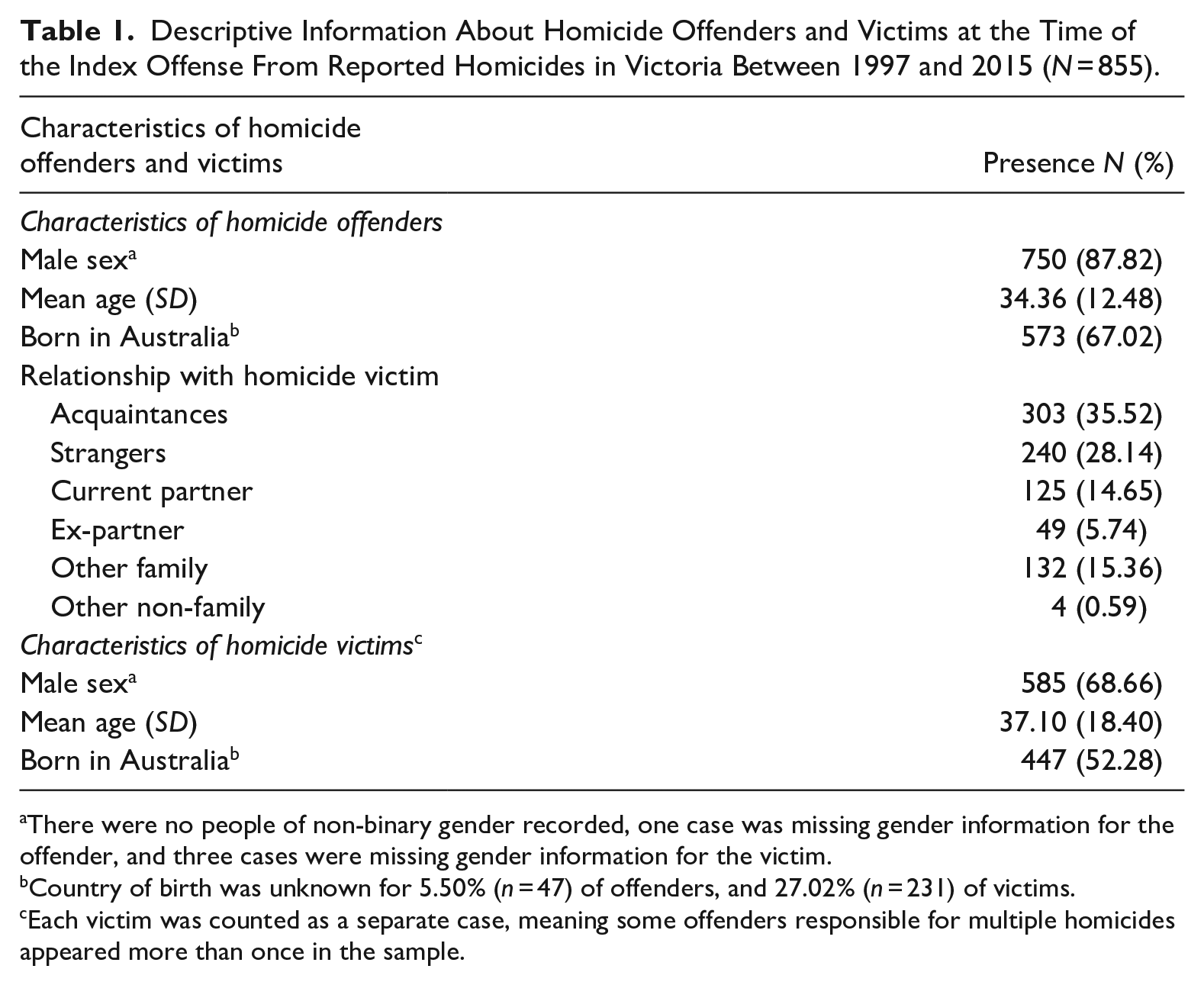
There were no people of non-binary gender recorded, one case was missing gender information for the offender, and three cases were missing gender information for the victim.
Country of birth was unknown for 5.50% (n = 47) of offenders, and 27.02% (n = 231) of victims.
Each victim was counted as a separate case, meaning some offenders responsible for multiple homicides appeared more than once in the sample.
Procedure
Data Extraction and Variables
All reported homicides that occurred between January 1st, 1997 and December 31st, 2015 were identified using the Court Services Victoria sentencing database, the National Coronial Information System (NCIS), and the Australasian Legal Information Institute (AustLII) database. Court Services Victoria is an independent statutory body which provides services and facilities to Victorian courts, tribunals, and judicial colleges/commissions. The NCIS is the national database of mortality data on deaths reported to an Australian or New Zealand coroner. AustLII is Australia’s open-access online resource for publicly available Australian legal information, including the decisions of higher criminal courts with detailed sentencing comments from judicial officers.
Court Services Victoria used their higher courts sentencing database to identify all cases in which a homicide (defined broadly to include murder, manslaughter, and infanticide) resulted in a sentence between July 2000 and November 2019, allowing capture of cases from 2015 that took some years to appear in court. For cases sentenced between January 1997 and December 1999, researchers identified homicide cases in the AustLII database and provided names to Court Services Victoria to locate in an older database holding information on cases sentenced prior to 2000. Information was then obtained from the NCIS and AustLII databases for every case identified by Court Services Victoria. The NCIS database was used to identify homicides in which the perpetrator subsequently committed suicide, and therefore was not sentenced. All coronial reports recorded between January 1997 and December 2019 (for murder-suicides occurring until the end of 2015) where there had been a code of “intent type” as assault, self-harm, or had a flag for multiple fatality event, were examined to determine whether they involved both a contemporaneous murder and a suicide by the same individual.
After each reported case was identified in AustLII, characteristics of the person who committed the homicide, the homicide victim, and homicide- and stalking-related characteristics were manually coded from judges’ sentencing comments by author CB with contemporaneous consultation with the other authors to clarify coding where unclear. Forty-eight cases were subsequently double coded for inter-rater reliability purposes by author TM. These procedures received ethical approval from the Victorian Department of Justice Human Research Ethics Committee (CF/16/23273).
Missing Data
Due to the retrospective methodology missing data was common, and the amount of missing data differed according to the variable being examined. As a result, missing data is routinely presented throughout this study. All percentages reported—except where explicitly stated otherwise—are based on available data and exclude missing data. This is described in each table, with the “Sample” column denoting the proportion of the sample with available data, and the “Present” column identifying the proportion of cases where presence could be ascertained from available data. Twelve cases (1.40%) were missing data such that stalking could not be coded.
Definitions
Stalking and Related Behaviors
Stalking was defined as a pattern of repeated and unwanted intrusive behavior targeted toward a specific victim that occurred in the absence of an ongoing relationship between offender and victim. Where stalking was present, various stalking behaviors were coded. Unwanted communication was defined as any communication from the offender to the victim during the stalking (e.g., telephone, written, social media, emails). Cyberstalking was defined as any use of the internet to harass in ways that did not involve direct communication with or surveillance of the victim (e.g., hacking into online accounts, spreading misinformation about the victim online, creating false online profiles about the victim).
Stalking-related violence was defined as physical contact with the intent to coerce or harm—or attempted contact with a weapon—involving the victim or others targeted by the stalker during the period of stalking. In cases where there was an intimate relationship between the stalker and victim, violence that occurred during the relationship was coded as IPA, while violence that occurred after the relationship ended was classified as stalking-related violence.
To allow for comparison with the coercive control research literature, which defines stalking differently to the current study, we coded the presence of following the victim, loitering near the victim’s location, or using electronic surveillance equipment during an intimate relationship as “IPA surveillance/monitoring.” This variable is analogous to Stark’s (2012) conceptualization of stalking in the context of coercive control meaning, where reported, results can be compared with research using that approach.
Evidence of Planning, Trigger Event, and Last-Resort Thinking
Evidence of planning was coded in the presence of behavior by the perpetrator indicating that the homicide was premeditated, including—but not limited to—obtaining means of killing/harming the victim, organizing victim location/access, looking up information pertaining to killing the victim or concealing the crime, organizing administrative matters (e.g., changes to their will), and reconnaissance behavior. A trigger event was defined as an important event or situation occurring in the weeks prior to the homicide (e.g., separation, custody dispute, financial settlement dispute, bankruptcy, diagnosis of illness, onset of police involvement). Last-resort thinking was defined per the Stalking Risk Profile (MacKenzie et al., 2009) and was coded when there was evidence in the period prior to the homicide that the offender no longer felt constrained by legal or moral imperatives and believed that non-violent means would not achieve their goals.
Coercive Control
Coercive control was defined as present when there was evidence of both coercion and control during an intact intimate relationship between offender and victim. Based on Stark’s (2007, 2012) detailed descriptions of the phenomenon, coercive behaviors were: implicit threats, explicit threats, sexual or physical violence, strangulation, or shaming/degrading the victim during the relationship. Controlling behaviors were: attempts to isolate the victim, surveillance/monitoring behavior, or evidence of other means of exerting power over the victim’s life as a means of influencing their behavior (e.g., controlling access to finances or medical assistance).
Relationship Between Offender and Victim
The relationship between offender and victim at the time of the homicide was initially coded in one of six ways. Where there was no known connection between the two people, the relationship was coded as “stranger,” while those who had prior direct knowledge of each other were coded as “acquaintances.” This included friends, neighbors, work or professional relationships, criminal associates, and other non-romantic and non-familial relationships. The presence of a romantic relationship that was intact at the time of the homicide was coded as a “current partner,” while cases where a romantic relationship had broken down or the couple were estranged were coded as “ex-partner.” Other family relationships (e.g., parent-child, child-parent, siblings, etc.) were coded as “other family.” In four cases the relationship was coded as “other non-family” as it did not fall neatly into these categories because the offender and homicide victim were not acquaintances but had an indirect association. In each of these cases the homicide victim was a family member or current partner of someone with whom the offender had previously been in a romantic relationship. For stalking-related analyses, the acquaintance (n = 303), stranger (n = 241), other family (n = 131) and other non-family categories (n = 4) were consolidated into an “Other Relationship” group. All stalking-related analyses exclude the “Current Partner” category, reflecting the definition of stalking used in this study.
Historical Offender and Victim Characteristics
Offender historical characteristics were coded using definitions from relevant risk factors provided in the Spousal Assault Risk Assessment—Version 3 (SARAv3; Kropp & Hart, 2015). Variables included were: offender mental health issues, personality disorder, cognitive impairment, substance use issues, experience of trauma/victimization across the lifetime, employment problems across the lifetime, general antisocial behavior across the lifetime. Victim historical characteristics were coded using the victim vulnerability factors provided in Brief Spousal Assault Form for the Assessment of Risk—Version 2 (B-SAFERv2; Kropp et al., 2010). Variables included were: victim mental health issues, cognitive impairment, substance use issues, lack of supports, and lack of resources. All items in the SARAv3 and B-SAFERv2 are rated on a 3-point scale (absent, possibly or partially present, present). For this study, possible or partial evidence was grouped with definite evidence of the characteristic, creating a dichotomous variable (present or absent). Offender suicidal ideation was coded as present if there was evidence of suicidal thoughts or plans in the weeks preceding the homicide or the homicide was accompanied by suicide of the offender.
Statistical Analyses
All statistical analyses used IBM SPSS Statistics (version 28). Post-hoc power analyses using GPower (Faul et al., 2007) showed statistical power (based on chi-square analyses) to detect a medium effect (ω = 0.30) was 0.62 and a small effect (ω = 0.10) was 0.09. Post-hoc power analyses (based on t-tests) showed statistical power to detect a medium effect (d = 0.50) was 0.44 and a small effect (d = 0.20) was 0.11. This was below the recommended power of 0.80 to detect medium and small effect sizes, meaning Type II errors (false negatives) were more likely (Cohen, 1988). Given this, we decided not to conduct statistical comparisons between groups to avoid potentially misleading results.
Inter-Rater Reliability (IRR)
Forty-eight cases (5.6% of the sample) were randomly selected using SPSS v28, oversampling 10% of cases that had been identified by the first rater as involving stalking and 10% of those identified as coercive control cases to ensure sufficient numbers for IRR. Cases were randomly ordered, and the 38 variables reported in Tables 2 to 5 were recoded from original data by the third author. Variable ratings were inspected visually and an agreement item (rated as yes = 1, no = 0) was created for each variable (ratings of absent vs. missing were coded as disagreements). Frequencies were then calculated representing the total level of agreement for each variable.
Frequency (%) and Nature of Stalker and Victim Sociodemographic Characteristics at the Time of the Index Offense, According to Relationship Type.
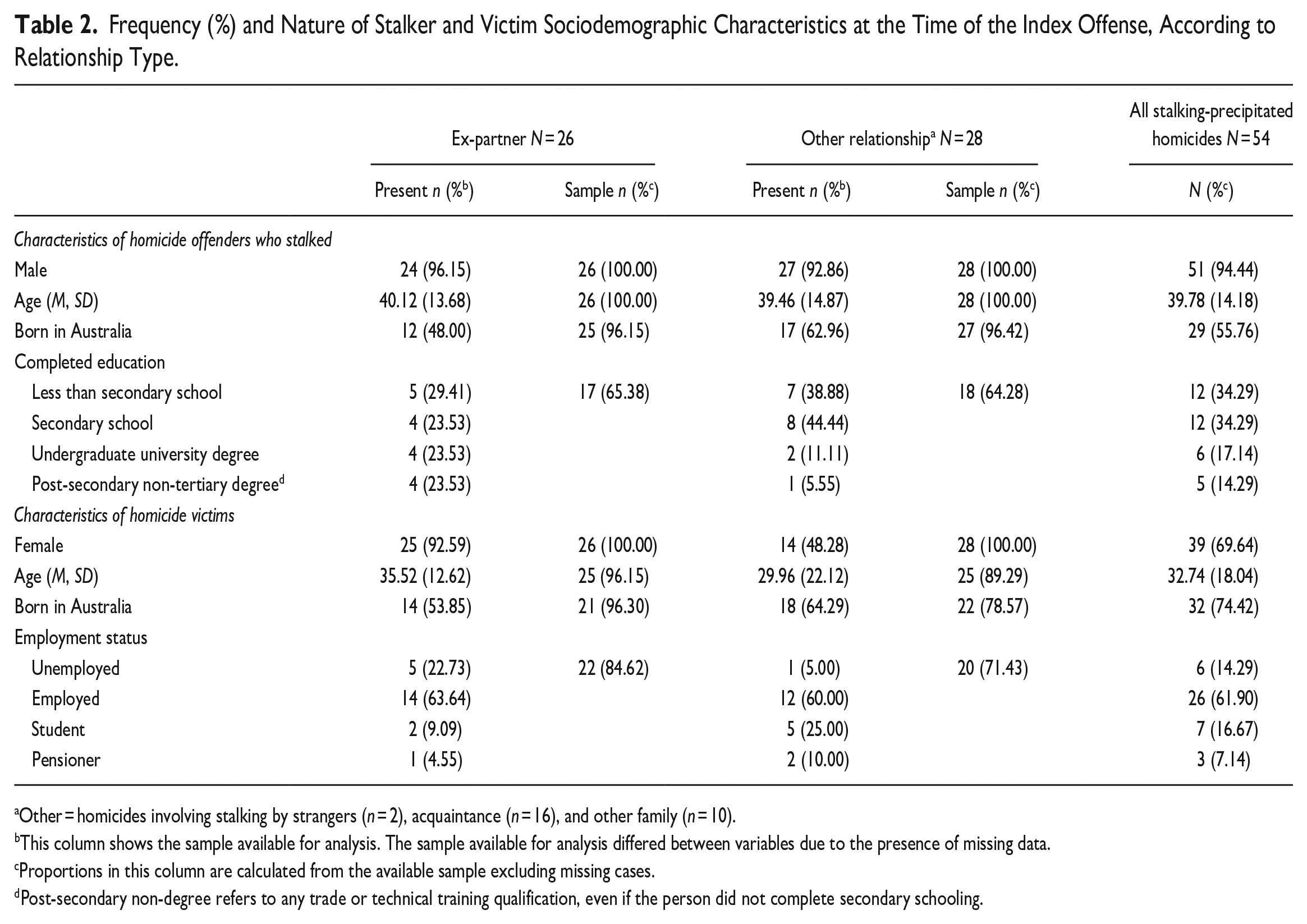
Other = homicides involving stalking by strangers (n = 2), acquaintance (n = 16), and other family (n = 10).
This column shows the sample available for analysis. The sample available for analysis differed between variables due to the presence of missing data.
Proportions in this column are calculated from the available sample excluding missing cases.
Post-secondary non-degree refers to any trade or technical training qualification, even if the person did not complete secondary schooling.
Frequency (%) and Nature of Stalker and Victim Personal Characteristics According to Relationship Type.
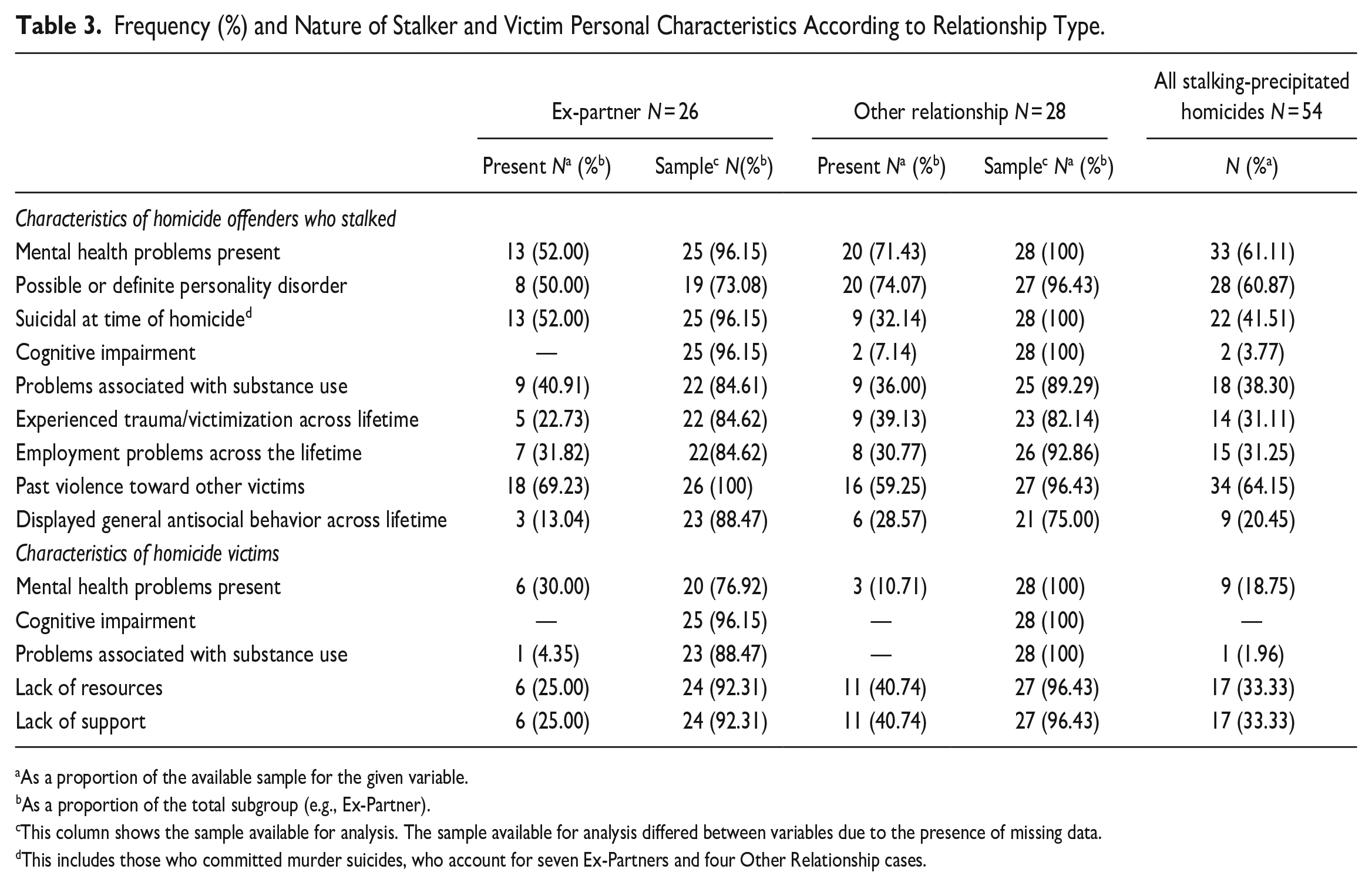
As a proportion of the available sample for the given variable.
As a proportion of the total subgroup (e.g., Ex-Partner).
This column shows the sample available for analysis. The sample available for analysis differed between variables due to the presence of missing data.
This includes those who committed murder suicides, who account for seven Ex-Partners and four Other Relationship cases.
Frequency (%) and Nature of Characteristics of the Pre-Homicide Stalking Episode, by Relationship Type.
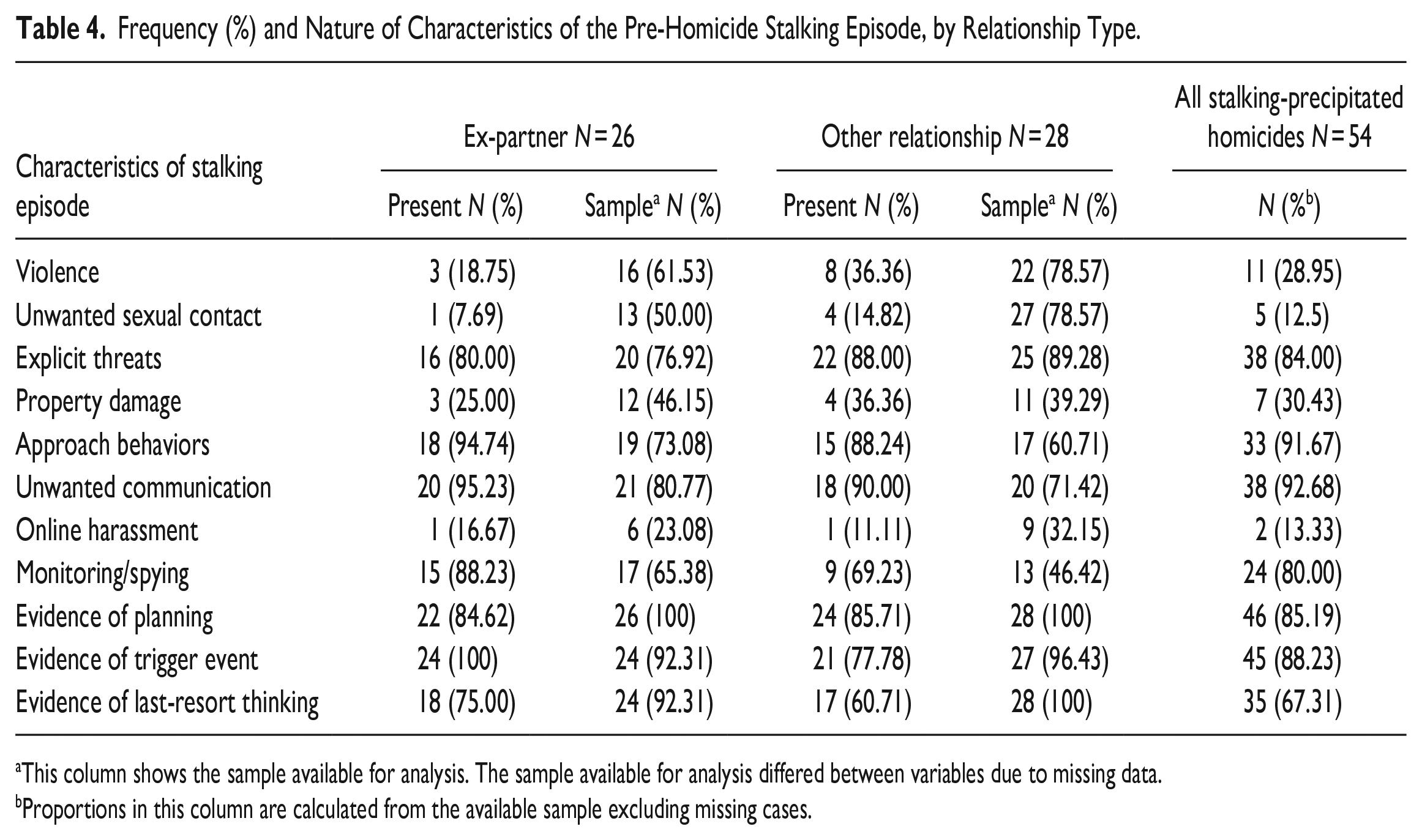
This column shows the sample available for analysis. The sample available for analysis differed between variables due to missing data.
Proportions in this column are calculated from the available sample excluding missing cases.
Frequency (%) of Coercion, Control, and Coercive Control During the Intimate Relationship Between Homicide Victim and Offender by the Presence of Stalking and Relationship Status at Time of Homicide.
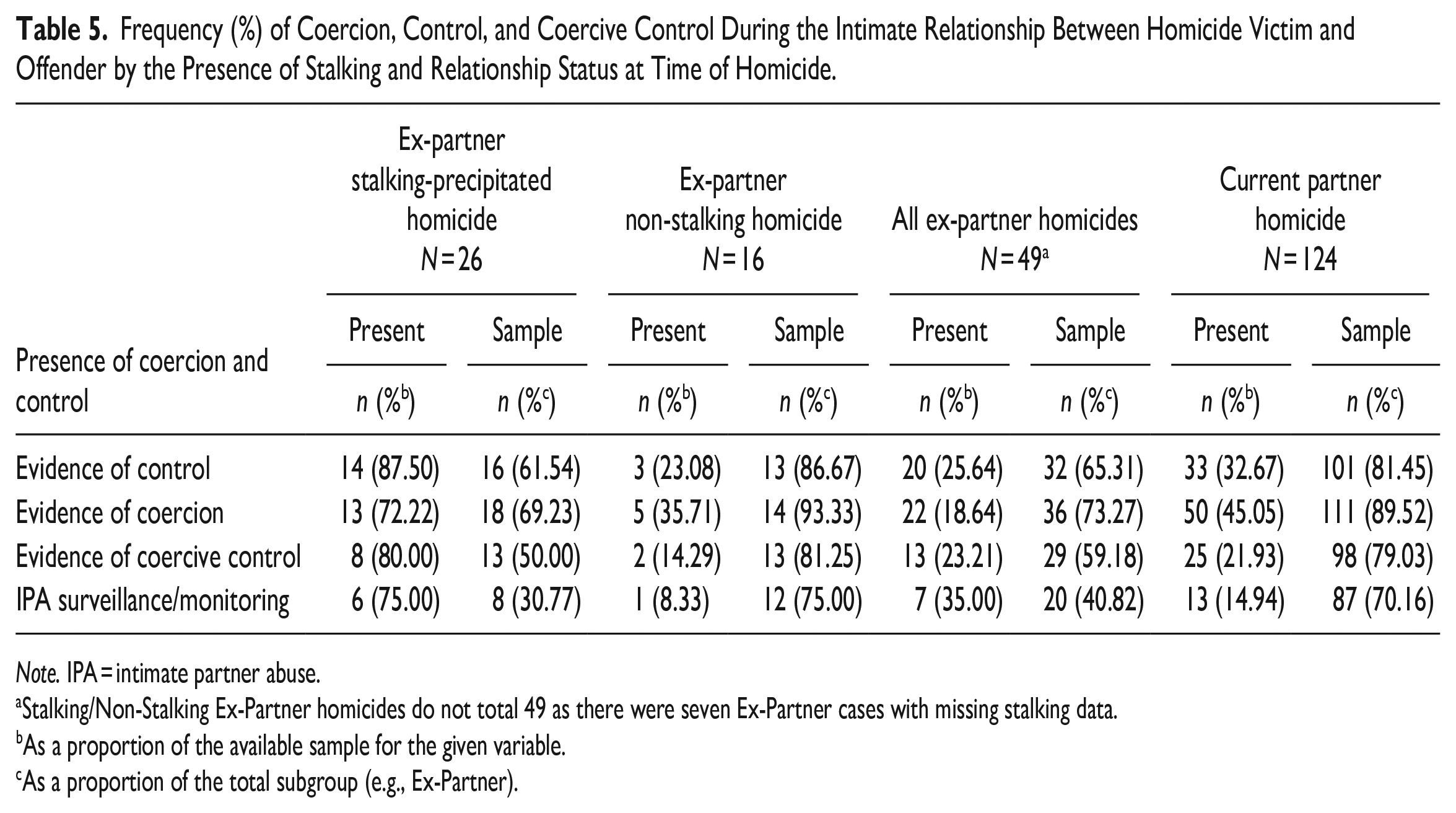
Note. IPA = intimate partner abuse.
Stalking/Non-Stalking Ex-Partner homicides do not total 49 as there were seven Ex-Partner cases with missing stalking data.
As a proportion of the available sample for the given variable.
As a proportion of the total subgroup (e.g., Ex-Partner).
Agreement between ratings ranged from 61% to 100%. There was agreement about the presence of stalking in 98% of cases. In the 22 cases where there was an intimate or familial relationship, there was agreement about the presence of coercive control in 82%. All but one of the four disagreements was between “absent” and “missing” information about the presence of controlling behavior. Eighteen other variables had agreement over 80%, and 18 achieved over 90%, with disagreements between “missing” and “absent” judgments across behavioral variables. Variables requiring judgments about offender characteristics mostly achieved agreement in the 80% to 90% range. The five variables with agreement below 80% all related to victim characteristics, which were less often provided in detail, particularly in older files. Recorded victim age and offender age were correlated r = .96 and r = .99 respectively, with disagreements mostly due to age calculations in the absence of specific dates.
Results
Prevalence of Stalking-Precipitated Homicide
Stalking was present in at least 6.41% (n = 54, 12 cases with missing data) of all homicides. Twenty-six cases involved ex-partners, 15 were acquaintances, 10 had other family relationships, and 3 were strangers. This relationship distribution meant that stalking was present in 4.14% of Other Relationship homicides and 63.41% of Ex-Partner homicides. Notably, in 17 Other Relationship cases, the homicide victim had a (perceived) romantic interest in or was a family member of the homicide perpetrator’s ex-partner. The Other Relationship group was also notable for a high proportion of multiple homicides, with seven perpetrators accounting for 14 homicides and one attempted homicide (the latter victim was not included in any analyses).
Murder-suicides predominantly involved family relationships, half resulting in the death of other family members (often children; n = 26, 47.27%), one quarter (n = 14, 25.45%) involving the death of a current partner, and approximately one fifth (n = 12, 21.82%) resulting in the death of an ex-partner. Only three (5.45%) murder-suicides involved an acquaintance or stranger. Murder-suicides accounted for 21.43% (n = 12) of all stalking-precipitated homicides and 5.10% (n = 38; 40 cases with missing data) of non-stalking-precipitated homicides (including 14, 11.67%, of Current Partner homicides). Where a murder-suicide was precipitated by stalking, eight (66.67%) cases involved ex-partners and four were other family members. Closer inspection showed that four cases of stalking-precipitated murder-suicide involved a single incident, a family massacre.
If “IPA surveillance/monitoring” was included when calculating the prevalence of stalking-precipitated homicide (analogous to Stark’s [2007, 2012] conceptualization of stalking as an element of coercive control) a further 14 stalking cases were identified, 13 involving Current Partners. This led to a prevalence of stalking-precipitated homicide in 7.83% of all homicides and 37.38% of homicides in which the victim was a current or former partner (noting that data about IPA surveillance/monitoring was available in only 107 partner homicide cases 1 ).
Characteristics of Stalking-Precipitated Homicide Cases
The characteristics of perpetrators and victims are provided in Table 2. Details of perpetrator’s mental health (including personality disorder and suicidality), cognitive status, substance use, experience of trauma/victimization, and history of general antisocial behavior are displayed in Table 3, while information about their stalking behavior is presented in Table 4.
Broadly, results shown in Tables 2 and 3 were relatively similar between the Ex-Partner and Other Relationship groups. While statistical comparisons were not possible, areas of potential difference warranting further research were observed in victim gender (93% female Ex-Partner vs. 28% female Other Relationship), perpetrator antisocial behavior (13% Ex-Partner vs. 29% Other Relationship), perpetrator and victim mental health concerns (perpetrator: 52% Ex-Partner vs. 71% Other Relationship; victim: 30% Ex-Partner vs. 11% Other Relationship), perpetrator personality dysfunction (50% Ex-Partner, 74% Other Relationship), and perpetrator suicidality (52% Ex-Partner vs. 32% Other Relationship). Among both perpetrators and victims, the proportion born in Australia appeared to differ between Ex-Partners and Other Relationships (perpetrator: 48% Ex-Partner, 63% Other Relationship; victim: 54% Ex-Partner, 64% Other Relationship). More victims in the Other Relationship lacked resources and support than victims of Ex-Partner stalking (25% Ex-Partner vs. 41% Other Relationship).
Characteristics of the stalking episode were also largely similar between Ex-Partner and Other Relationship cases. Ex-Partners had potentially lower levels of stalking-related violence prior to the homicide (19% vs. 37%) and less unwanted sexual contact (8% vs. 15%). Similarly, they had a lower rate of property damage (25% vs. 37%), though verbal aggression in the form of explicit threats occurred at similar rates (80% vs. 88%). There were also possible differences in immediate precipitants to the homicide, with more Ex-Partner cases having evidence of a trigger event (100% vs. 78%), and a greater proportion evidencing last resort thinking (75% vs. 61%) in the period prior to the homicide, though evidence of planning was equally present in both groups (85% vs. 86%). These comparisons must be treated somewhat cautiously as it is feasible that there could be reporting differences between Ex-Partner and Other Relationship stalking cases. For example, it may be that ex-partner victims were less likely to report violence or unwanted sexual contact as it was a more routine occurrence in their prior intimate relationship, which would not be the case for victims in other relationships.
Presence of Coercive Control Prior to Homicide
Table 5 shows presence of coercive or controlling behavior and the combination of both indicating the presence of coercive control in the sub-sample of homicides where there had been an intimate relationship between the offender and victim, whether former or current at the time of homicide. Table 5 also presents the proportion of partner homicide cases where there was evidence of “IPA surveillance/monitoring” during the relationship (capturing Stark’s narrower definition of stalking when conceptualized as an element of coercive control).
Coercive control appeared more prevalent in Ex-Partner stalking-precipitated homicide cases, being present in over one third of cases with available data, compared with approximately one in six Ex-Partner non-stalking homicides and one in five Current Partner homicides. Interpretation of these results must be tentative, given small samples and high rates of missing data, particularly in the Ex-Partner stalking-precipitated homicide sub-sample. “IPA surveillance/monitoring” was also found to be present in three out of four cases of Ex-Partner stalking-precipitated homicide, compared to less than 10% of Ex-Partner homicides in which stalking was not present and only one in six Current Partner homicides (again, different rates of missing data across sub-samples means these results must be interpreted cautiously).
Discussion
This study aimed to establish the prevalence of prior stalking in a population of homicides from the Australian state of Victoria between 1997 and 2015; to describe characteristics of these cases depending on the nature of the prior relationship between victim and offender; and, to investigate associations between stalking, coercive control, and homicide.
Prevalence of Stalking-Precipitated Homicide
Our finding that 6.41% of all homicides were preceded by stalking represents the first population prevalence figure of stalking-precipitated homicide. It is likely that there were homicide cases where stalking was not identified, meaning this prevalence estimate is the lowest possible base rate of known stalking-precipitated homicide. Half of stalking-precipitated homicide cases involved ex-partners and half had other relationships to the stalking victim. However, further examination of case material showed that in 80% of these cases, the perpetrator killed either an ex-partner or someone close to an ex-partner. This suggests that the bulk of stalking-precipitated homicides may occur in the context of stalking an ex-partner, but the risk encompasses both the ex-partner and secondary stalking victims.
Remarkably, nearly two-thirds of Ex-Partner homicides were preceded by clear evidence of stalking. This is a striking finding and emphasizes the fact that murders of former partners (predominantly murders of women by men) mostly do not happen “out of the blue.” However, it is essential that this finding is not misinterpreted as suggesting that the presence of stalking per se is a useful risk factor for ex-partner homicide. While there were 26 stalking-precipitated homicides of ex-partners during the 19-year study period, the prevalence of stalking over the same time was vastly higher. The closest estimate comes from the ABS (2021–22) Personal Safety survey, which suggest that across Australia approximately 390,000 people experience stalking in any 1 year. Of these cases, it can be assumed that approximately half are perpetrated by a former partner (Spitzberg & Cupach, 2014) and approximately one quarter would be expected to occur in Victoria (the state population accounting for a quarter of Australia’s total population, ABS, 2022, December). Over 19 years, this would equate to approximately 950,000 ex-partner stalking cases in Victoria, of which 26 involved a homicide. These figures (while admittedly rough approximations) indicate that more than 99.99% of ex-partner stalking cases do not end in homicide, meaning that the presence of stalking alone is not a helpful risk factor for predicting homicide. Suggesting otherwise is incorrect, can create needless fear for victims, and has the potential to direct limited risk management resources toward a very large number of cases where they are not urgently needed. However, our findings do suggest that specific characteristics of stalking cases may be associated with acutely increased likelihood of serious violence, and which could therefore be useful as dynamic risk factors when assessing stalking cases and directing risk management. These are discussed further below.
Characteristics of Those Involved in Stalking-Precipitated Homicides
Perpetrators of stalking-precipitated homicides were overwhelmingly men and Ex-Partner stalkers overwhelmingly killed women, reflecting broader stalking literature (see Spitzberg & Cupach, 2014 for overview). However, those in the Other Relationship group were equally likely to target a man as a woman (noting that the vast majority of these cases involved acquaintances). This is different from the broader clinical/forensic stalking literature where acquaintance stalking remains somewhat more gendered (reanalysis of the Australian and Dutch data presented in McEwan et al., 2017 and McEwan et al., 2020 shows that approximately two thirds of acquaintance cases involved female victims). On further examination, 5 of the 15 acquaintance cases involved men who killed another man who was dating (or believed to be dating) the offender’s ex-partner. 2 This biases the acquaintance homicide sample toward male victims given these were all heterosexual offenders.
Consistent with James and Farnham (2003), more than half of all people who committed a stalking-precipitated homicide were born outside Australia. This is substantially higher than the proportion of immigrants in the Victorian population during this period (which at most was approximately 35%; ABS, 2016), and markedly higher than the proportion in a clinical/forensic stalking sample recruited in the same jurisdiction, where immigrants were under-represented at 22% of 157 people (McEwan et al., 2017). Boxall et al. (2022) similarly found a substantial over-representation of people with immigrant backgrounds in their Australian sample of intimate partner homicides. They suggested that this could be due to pre-existing trauma among those who were forced to migrate, stress arising from acculturation, residency instability, and cultural factors that create barriers to help-seeking. Boxall et al. (2022) also note that immigration may create challenges to cultural norms about relationship roles and dynamics. We suggest that in stalking cases in particular, norms and expectations about relationship dissolution and gender roles may be relevant to both stalking and homicide perpetration. It must be emphasized that this finding does not suggest that being an immigrant who stalks is a risk factor for stalking-precipitated homicide given the high numbers of people who are immigrants in the Australian community, and the very low number of homicides.
Rates of mental health issues (including personality disorder) were higher among those who stalked and killed strangers, acquaintances, or non-intimate family members in this sample, reflecting similar findings in broader clinical/forensic stalking samples (Albrecht et al., 2022; McEwan & Strand, 2013). This study provides the first prevalence data about suicidality among those who both stalk and kill. Suicidality has been linked to increased risk of stalking violence by some authors (MacKenzie et al., 2009) and this population study suggests that approximately one in five stalking-precipitated homicides is accompanied by perpetrator suicide, compared to only one in 20 non-stalking-precipitated homicides. This is a high suicide rate when contrasted to a prospective study of stalkers recruited in a general clinical/forensic setting in the same jurisdiction, where only 2.2% completed suicide over a follow-up period of 1 to 5 years (McEwan et al., 2010). Suicidal ideation was also more common in this homicide sample, with half of Ex-Partner stalking-precipitated homicide offenders and nearly one third of those who stalked and killed others evidencing prior suicidal ideation. Conversely, suicidal ideation was present in only 8.3% of 140 stalking perpetrators assessed in a community forensic mental health clinic in the same jurisdiction (James et al., 2010). This difference supports the conclusion that suicidal ideation during a stalking episode may be a dynamic indicator of acutely increased risk.
With regards to victim vulnerability factors, conclusions must be tentative given relatively lower inter-rater reliability. Mental health needs were reported as present in more than a third of Ex-Partner victims but fewer other stalking-precipitated homicide victims. This perhaps reflects broader data about IPA victimization being associated with poor mental health (Lagdon et al., 2014). More notable were differences in victims’ support or resources, which has been linked to increased victim vulnerability in IPA research (Kropp & Hart, 2015). More Other Relationship than Ex-Partner stalking-precipitated homicide victims lacked supports and resources, demonstrating the relevance of this victim vulnerability factor across all stalking cases. It indicates the need for specialist stalking support services that are not targeted to intimate partner or family violence, given lack of supports seems to be a common problem for all stalking victims (Jerath et al., 2022).
When considering specific stalking behaviors, approach, threats, and unwanted communication were all very common in both relationship groups, at rates similar to general clinical/forensic stalking samples (McEwan et al., 2009, 2017, 2020; Nijdam-Jones et al., 2018). Conversely, rates of stalking-related violence (prior to homicide) and general antisocial behavior among the Ex-Partner group were unusually low and rates in the Other Relationship group were high in comparison to the general stalking literature (McEwan, 2021). Together these findings appear to lend support to James and Farnham’s (2003) conclusion that serious stalking violence is less commonly part of a pattern of antisocial and violent behavior, at least among ex-partners. However, it must be noted that more than two thirds of those in the Ex-Partner stalking-precipitated homicide group had a history of violence toward others, contrary to James and Farnham’s (2003) conclusion. This rate is similar to those observed in other clinical/forensic stalking samples (McEwan et al., 2009, 2017, 2020; Nijdam-Jones et al., 2018).
Evidence of planning and trigger events were ubiquitous prior to stalking-precipitated homicide. This supports the conclusion that when catastrophic violence does occur in stalking cases, it is more commonly the culmination of a planned sequence of targeted behavior, exacerbated or driven by emotional arousal from perceived provocation or loss (i.e., a trigger event). It is impossible to say how commonly such patterns occur in stalking without ending in fatal violence, however, it does suggest that periods of crisis are times when severe violence may be more likely during a stalking episode. This is consistent with Monckton-Smith et al.’s (2017) conclusions. It also echoes findings from Sheehan et al.’s (2015) qualitative research with family members of intimate partner homicide victims (some of whom were stalked), which identified changes in perpetrator behavior associated with trigger events as important precipitants. Whether this combination of acutely dynamic warning signs is adequately recognized and taken seriously by victims and professionals responsible for risk management should be a focus of further research.
Last resort thinking is similarly conceptualized as an acute dynamic warning sign for severe violence (Meloy et al., 2023) and, while thought to be rare in stalking cases generally (MacKenzie et al., 2009), it was common in this stalking homicide sample. When in a state of “last resort,” the person comes to believe that they have no other options and must force a resolution to the situation, precipitating an act of serious violence. Such thinking was commonly observed in this study, regardless of whether the victim was a former intimate partner or not. Again, this is consistent with Sheehan et al. (2015), who describe examples of last resort thinking (which they described as the perpetrator’s perception of “loss of control over the victim”), and with findings from Monckton-Smith’s (2020) study of intimate partner homicides. The current research design does not allow conclusions about whether last resort thinking is truly a useful risk factor for serious stalking violence. However, when the prevalence rate of 67% in this homicide sample is contrasted to a rate of 4% in Shea’s (2015) study of 163 Victorian stalking cases subject to forensic assessment (with no subsequent homicides over an average 4-year follow-up), it seems possible that the presence of last resort thinking could help identify those at acutely increased risk of severe stalking violence.
The Relationship Between Stalking, Coercive Control, and Homicide
This study provides the first estimate of the separate prevalence of coercive control and stalking in a partner homicide sample, though the level of missing data means that results must be interpreted cautiously. Prior coercive control was present in four out of five Ex-Partner stalking-precipitated homicide cases where data was available. This finding is consistent with the hypothesis that coercive control and stalking are closely related constructs, and that ex-partner stalking is frequently preceded by coercive control during the prior relationship. At present it is unclear whether this is unique to stalking-precipitated homicide or if the same is true of all ex-partner stalking cases. More research is needed (ideally using prospective longitudinal designs) that differentiates between coercive control and stalking to determine whether the presence of prior coercive control may be a useful risk factor for severe stalking violence, and for ex-partner stalking more generally.
While coercive control was frequently present in the Ex-Partner stalking-precipitated homicide group, it was less common in Ex-Partner non-stalking-precipitated homicide or Current Partner homicides. Only 22% of Current Partner homicides and 14% of Ex-Partner non-stalking homicides with available data had evidence of coercive control. This was unexpected given discourse about the close relationship between coercive control and homicide (e.g., Tyson, 2020) and published findings suggesting that 99% of intimate partner homicides in a different Australian jurisdiction had evidence of coercive and controlling behaviors (Domestic Violence Death Review Team, 2017). It is likely that less overt forms of coercive and controlling behavior were poorly recorded in judge’s comments, reducing accurate ascertainment of coercive control in this study (Boxall et al., 2022). However, it is also possible that our relatively rigorous definition of coercive control (requiring evidence of both coercive and controlling behavior) may have reduced its prevalence compared to past research. Given the ambiguity of the construct, it is essential that researchers are very clear about what constitutes coercive control (Hamberger et al., 2017). We have tried to ensure both rigor and transparency in measuring coercive control in this study, within the limitations of our data sources. Our finding of relatively low rates of clear coercive control warrants further investigation using more comprehensive data sources with coercive control operationalized in a rigorous and transparent fashion.
Limitations and Directions for Future Research
These findings are from an Australian sample and so generalizability to other jurisdictions cannot be assumed. However, stalking research to date has shown considerable similarities across English-speaking and European nations, meaning it is likely that these findings can be generalized to some degree (McEwan et al., 2024). More significantly, the findings are limited by the retrospective and file-based research design, which resulted in substantial missing data. Some desired variables with time elements, such as stalking duration and escalation, could not be coded with an adequate degree of inter-rater reliability and so were excluded. Further, the small sample size conferred insufficient statistical power to allow for between-groups analyses, meaning only descriptive statistics could be reported.
Ideally, this kind of research would use a prospective design, however the low prevalence of homicide realistically means that such studies would take years to conduct and still be limited by the small samples and low power that were observed in this retrospective study. It may not be possible to conduct such research because of the very low base rate of homicide. For example, in the authors’ jurisdiction, the homicide rate during the study period (1997–2015) ranged between 0.70 and 1.78 homicides per 100,000 people (Australian Institute of Criminology, 2023). It will likely be necessary to broaden the outcome to a wider set of potentially lethal behaviors in any research using a prospective design to maximize the ability to analyze between-group differences in a meaningful way.
Conclusion
This study provides the first population-level estimate of stalking-precipitated homicide, the first description of characteristics of the full scope of stalking-precipitated homicide cases, and an investigation of how coercive control and stalking might relate to (ex-)partner homicide when considered as distinct constructs. Our findings suggest that it may be highly changeable aspects of the offender’s mental state, situation, and pattern of behavior (e.g., suicidal ideation, last resort thinking, triggers, planning), rather than the presence of stalking per se, that is associated with increased risk of severe or lethal violence in stalking cases. The findings also support the conclusion that coercive control during a relationship and stalking after its end are linked to some degree in ex-partner homicide cases, though replication using a data source with fewer missing data is required.
However, even if any of these characteristics are used to inform risk assessment, the very low base rate of homicide means that only a tiny minority of those with them will go on to engage in lethal violence. An appropriate risk management response is of course required regardless. Providing an appropriate level of support, alongside supervision and controls on the stalker’s behavior where judged necessary, will prevent a wide range of harmful outcomes. In a very small number of cases, this might include preventing some stalking-precipitated homicides.
Footnotes
Acknowledgements
The authors acknowledge the contribution of Dr Margaret Nixon and Dr Melanie Simmons to ensuring access to the data used in this project.
Correction (February 2025):
Article updated online to correct text on pages 17 and 21, as well as in Table 5. For more details, see [DOI: 10.1177/10887679251320352].
Author Note
The specific ideas and data analyses presented in this work have not previously been published or presented.
Declaration of Conflicting Interests
The author(s) declared no potential conflicts of interest with respect to the research, authorship, and/or publication of this article.
Funding
The author(s) received no financial support for the research, authorship, and/or publication of this article.
