




Abstract
The aim of this study was to detect nonserial sexual-homicide offenders whose profile indicates a potential to become serial sexual-homicide offenders. Two Two-Step Cluster Analysis were performed, one for the nonserials (n = 87), and one for the serials (n = 33). Six types of sexual murderers were identified: four types of nonserials (sexual nonsadistic, sadistic, angry, and sexual opportunistic), and two types of serials (severe sadistic and psychopathic). These analyses indicated a perfect match between the sadistic and the severe sadistic. The identified types were subjected to comparative analyses (Chi-Square, Kruskal-Wallis, and Mann-Whitney U tests) based on modus operandi characteristics and were compared to previous sexual-offender typologies.
Keywords
Sexual homicide differs from most other crimes because of the combination of the two forms of violence that it comprises: extreme physical violence and sexual violence. Although this type of crime is relatively rare (James & Proulx, 2014, 2016), it tends to generate a sense of insecurity within the general public, particularly as a result of the intense media coverage it receives (James, 2020; Proulx et al., 2007). This in turn feeds fears that a reoccurrence of such a crime is impending (James, 2020; Proulx et al., 2007). In reaction to these crimes, the authorities instigate preventive measures (e.g., curfews and roadblocks) and issue safety recommendations (e.g., advising women not to leave the house unattended at nighttime), both of which can exacerbate the sense of insecurity in the community. One of the main objectives of criminal investigative teams is to apprehend the offender as quickly as possible, to reduce the possibility that he commits subsequent homicides. However, criminal investigators sometimes make errors in judgment (e.g., classifying the homicide as a suicide) that may delay the identification of the offender and, thus, give him the opportunity to commit a subsequent homicide (James & Beauregard, 2018; James & Cusson, 2018).
In the mid-1980s, a team of investigators and researchers affiliated with the United States Federal Bureau of Investigation (FBI) conducted a series of studies (e.g., Ressler et al., 1986) to support the development of tools that would increase the probability of quickly apprehending a perpetrator of sexual homicide. Among these tools, criminal profiling, also referred to as the identification of perpetrator prototypes, is recognized as having had the greatest impact in the field (Knight et al., 1998). Since the FBI studies, several researchers have developed typologies of sexual offenders to identify types of nonserial sexual offenders with the potential to become serial offenders.
Literature Review
The Massachusetts Treatment Center Rapist Typology
In the field of sexual offending, the Massachusetts Treatment Center Rapist Typology (MTC:R; Knight et al., 1985) is considered to be a milestone, since it brought to light the heterogeneity of sexual offenders. Since its initial version (MTC:R1), several validity analyses have been carried out, and have resulted in the identification of five types of sexual offenders (opportunistic, pervasively angry, sadistic, sexual nonsadistic, and vindictive). This typology is based on three variables—primary motivation of the offender to commit the crime, degree of premeditation of the crime, and type of violence exhibited during the crime. These five types are now represented in a circumplex model embodying the outcome of the MTC:R4 (Knight, 2010).
Opportunistic offenders are described as narcissists with an antisocial lifestyle who commit impulsive assaults to fulfill sexual needs. The violence they exhibit is instrumental, that is, the minimal amount of violence needed to coerce the victim. Pervasively angry offenders are described as antisocial individuals who are emotionally and socially unstable, and who commit impulsive assaults to express their undifferentiated anger towards others. The violence they exhibit is expressive, that is, more violence than necessary is used to coerce the victim. Sadistic offenders are described as sexually preoccupied antisocial individuals who obtain pleasure from the infliction of pain or distress, and commit rigorously premeditated assaults to act out sadistic sexual fantasies). The violence they exhibit is expressive and ritualized, that is, the violent sequence is structured on the basis of a pre-established sexual script. Sexual nonsadistic offenders are described as individuals who have nonsadistic sexual preoccupations and who commit premeditated assaults, in which they dominate or control their victim, to act out nonsadistic deviant sexual fantasies. The violence they exhibit is instrumental. Vindictive offenders are described as misogynists who commit impulsive assaults to express their anger towards women specifically. The violence they exhibit is expressive and intended to denigrate, humiliate, and physically harm the victim.
The MTC:R has the merit of having identified a heterogeneity of sexual offenders. However, although the sample it was based on included violent offenders, it encompassed few individuals who had committed a sexual homicide (see Knight et al., 1985; Prentky et al., 1989). Although the empirical literature has shown that there are more similarities than differences between nonlethal sexual offenders and sexual homicide offenders (Proulx et al., 2007; and that, consequently, it is not justified to develop explanatory theories or models that are specific to sexual homicide offenders when such theories or models have already been developed for nonlethal sexual offenders [DeLisi & Wright, 2014]), it is important to consider that these two groups of individuals differ in terms of the degree of violence exhibited during the crime. Moreover, governmental epidemiological data show that it is extremely rare for a nonlethal sexual offender to commit a sexual homicide (e.g., each year, approximately 22,000 sexual assaults are reported to the police, of which only 12 are sexual homicides, Proulx et al., 2007; Department of Justice Canada, 2019).
The FBI’s Organized/Disorganized Typology of Serial Sexual-Homicide Offenders
In parallel with the development of the MTC:R, the FBI analyzed a sample of 36 sexual homicide offenders and developed a typology of serial sexual-homicide offenders (SSHOs; e.g., Ressler et al., 1986). Two types of SSHOs were identified: organized and disorganized.
Organized sexual homicide offenders are described as intelligent, and socially and occupationally functional. Their acting out is thought to be precipitated by stressful life events (e.g., financial difficulties). Moreover, in the days leading up to their acting out, they are angry or depressed, and they develop deviant sexual fantasies. Their acting out is carefully premeditated to increase their likelihood of exerting significant control over their victims, and ultimately, of subjecting them to the specific sexual acts they had fantasized about. Finally, after the crime, they exhibit organized behaviors (e.g., they change their residence) to undermine the likelihood of being detected by the police.
Disorganized sexual homicide offenders are described as inhibited and socially isolated and may even be sexually averse. Although the precipitating factors of their acting out has not been identified, they appear to be frightened or confused when they decide to kill. Their acting out is usually impulsive and “bizarre” (e.g., depersonalization of victims’ bodies), and may involve postmortem sexual acts. Finally, after the crime, they seem to lack concern regarding the possibility of being identified by the police, as suggested by the fact that they may leave the murder weapon at the crime scene.
The series of studies conducted by the FBI highlighted that sexual homicide offenders, like nonlethal sexual offenders are a heterogeneous group. However, it should be mentioned that the FBI typology is, for practical purposes, one of SSHOs (80% of the sample), whereas Proulx et al. (2007) have suggested that SSHOs represent only two percent of sexual murderers. As a result, the FBI’s typology may not reflect the majority of individuals committing sexual homicides and therefore may not be generalizable to all of them.
James’ Serial/Nonserial Sexual-Homicide Offender Dichotomy
James and colleagues conducted a series of comparative studies to establish the profile of serial sexual-homicide offenders (SSHOs) and nonserial sexual-homicide offenders (NSHOs; James, Beauregard, Proulx, 2019; James, Lussier, Proulx, 2018; James & Proulx, 2014, 2016; James, Proulx, et al., 2019). To this end, they analyzed a sample of 120 sexual homicide offenders (SHOs), 33 of whom were SSHOs.
The predominant feature of the SSHOs in James’ profile is the presence of extensive psychosexual problems (e.g., paraphilias and deviant sexual fantasies). These offenders are socially isolated, feel rejected and humiliated, and take refuge in their deviant sexual fantasies to compensate for the poverty of their relational, emotional, and sexual lives. Moreover, these fantasies not only appear to provide a refuge that allows them to compensate for their unsatisfying lives, but also appear to function as internal constraints that shape their acting out. In these fantasies, SSHOs picture themselves abducting, raping, torturing, and killing women. It is in this context that they carefully premeditate their crimes. Thus, they are organized, before (e.g., pre-selecting a location for the attack), during (e.g., using physical restraints), and after (e.g., destroying incriminating evidence) their crime. Finally, although their crimes procure pleasure for them, they can almost never perfectly match their fantasies, and if these offenders are not apprehended by the police following their first crime, they tend to reoffend (James & Beauregard, 2018).
NSHOs are typically antisocial. They have a diverse and precocious criminal career, and are violent, easily angered when their immediate needs are not met, and easily offended. Their homicides are therefore often a means of revenge for a sudden affront, with no consideration for the consequences for their victim. Thus, unlike SSHOs, the internal constraint that molds their crime is emotional, not sexual. Also, because they are often intoxicated at the time of the homicide, their crime is impulsive, brutal, and disorderly. As a result of their mental state, NSHOs tend to leave evidence at the scene of the crime, which allows the police to apprehend them quickly.
These comparative studies of SSHOs and NSHOs have highlighted the differences between them. However, these studies failed to take into consideration the heterogeneity of each group, especially NSHOs.
The Heterogeneity of Homicides Committed by NSHOs
Since the early 2000s, several typologies of NSHOs have been developed. Despite their various approaches and the types of data collected (see Kerr et al., 2013), their results converge towards the identification of three types: the sexualized murderer, the grievance murderer, and the rape murderer. Higgs et al.’s (2017) systematic review concludes that the homicides committed by these types have different functions. Their principal findings are summarized below.
Individuals who commit sexualized murders invest extensively in their deviant sexuality and elaborate sadistic fantasies which tend to be pervasive in the 48 hours prior to the homicide, and structure their acting out. During the crime, they display sadistic behaviors (e.g., mutilation). They are organized and few of them are intoxicated while committing the crime. Finally, for these individuals, the homicidal act is central, as it is a source of sexual arousal. They often kill their victims by strangulation, and some may engage in postmortem sexual activities.
Individuals who commit grievance murders tend to nurse grievances and angry cognitive schemas (e.g., women as sex objects, Beech et al., 2005) both before and during their crime. Their homicides may be in retaliation for a conflict with the victim. Indeed, because of their high level of emotionality and intoxication, they may become extremely violent towards a consensual sexual partner following their misinterpretation of something the victim did or said. In cases of nonconsensual sexual activities, the homicide is committed impulsively, although the sexual assault may be premeditated.
Individuals who commit rape murders can be distinguished from the previous types in part because of the plurality of contexts in which they commit a sexual homicide. The first distinctive context commonly identified is the murderer’s desire to eliminate the only witness to the sexual assault—the victim. The second context often observed is the murderer’s lack of clarity regarding the consequences of his coercive behaviors (e.g., drugging the victim in order to sexually assault her, but causing an overdose). In both contexts, elements of the crime may be premeditated (e.g., breaking and entering), and the violence exhibited is instrumental in nature.
Like sexual-offender (e.g., MTC:R) and SSHO (e.g., FBI) typologies, Higgs et al.’s (2017) systematic review emphasizes the heterogeneity of NSHO types. While the identification of these types can strengthen police response, it does not, on its own, allow identification of the type(s) of NSHOs with the potential to commit a series of homicides.
Aim of the Study
Over the past four decades, research on sexual offending has shown that there is a heterogeneity of offender types and that SHOs, whether they have committed one or more sexual homicides, are no exception to this rule. However, due to the methodological strategies implemented by the various research teams (e.g., samples composed exclusively, or overwhelmingly, of NSHOs or SSHOs), it has not been possible to identify distinct types of NSHOs and SSHOs within the same sample and on the basis of the same variables. As a result, to date, no team has been able to establish correspondences between NSHO and SSHO types, and by extension, identify types of NSHOs with the potential to commit a series of sexual homicides. The purpose of this study was therefore to identify NSHOs with the potential to commit a series of sexual homicides, by conducting two separate classification analyses with two subgroups of individuals having committed a sexual homicide: SSHOs and NSHOs. Consistent with previous typologies (Higgs et al., 2017; Ressler et al., 1986), we expected that: (1) multiple types of SSHOs and NSHOs exist; and (2) the heterogeneity of SSHOs is smaller than that of NSHOs. Moreover, given the presence of a type with sadistic characteristics in both the FBI’s SSHO typology and Higgs et al.’s (2017) systematic review of NSHOs, we sought to identify correspondences between SSHO and NSHO types. Finally, we also examined possible correspondences between types of SHOs and Knight et al.’s (1998) nonlethal sexual-offender types.
Method
Participants
The sample was composed of 120 men who had committed a sexual homicide in France between 1975 and 2012. In order to be included in this study, these individuals had to have committed at least one homicide that satisfied the FBI definition of sexual homicide, which requires that at least one of the following elements be identified at the crime scene: (a) victim lacks attire (totally or partially), (b) exposure of the sexual parts of the victim’s body, (c) the body is found in a sexually explicit position, (d) an object has been inserted into a body cavity (anus, vagina, or mouth), (e) there is evidence of sexual intercourse, (f) there is evidence of substitutive sexual activity (e.g., masturbation and ejaculation at the crime scene), or of sadistic sexual fantasies (e.g., genital mutilation) (Ressler et al., 1988, p. xiii).
In order to minimize false positives (i.e., identifying a nonsexual homicide as sexual), a situational context analysis was conducted, as recommended by Clarke and Carter (2000). Thus, all 120 cases which were retained for the study simultaneously met the FBI definition and the situational context analysis. The sample consisted of 87 NSHOs (one homicide) and 33 SSHOs (two or more homicides over the course of separate events; Federal Bureau of Investigation, 2008). SSHOs were accountable for the deaths of the majority of victims (114 of 200) and, on average, killed more than three victims (M = 3.45; range = 2–9). NSHOs were accountable for the deaths of 86 victims (some murderers were in fact accomplices, and others committed multiple homicides in a single event). The mean age of participants at the time of their homicide was 30.3 years (SD = 10.9; range = 16–64). Most participants were White (69.7%), single (61.8%), unemployed (62.9%), and had a criminal record (65.8%). To limit potential biases typically associated with group comparisons in which one group consists of individuals having committed a series of crimes, only characteristics of the first sexual homicide committed by SSHOs were included in this study. This approach renders the two groups comparable in that it avoids the comparison of sexual homicides committed by first-time offenders with sexual homicides committed by individuals who may have developed criminal skills during their seriality.
Procedure
The Department of Justice of France authorized access to the participants’ files. Data were collected between 2013 and 2015. To increase the representativeness of the sample and limit selection bias, investigators, behavioral analysts of the Gendarmerie Nationale’s Behavioral Sciences Unit, prosecutors, and court clerks independently identified files that met the criteria for the definition of sexual homicide. The files were kept in 46 courthouses and averaged 4,105 pages (range = 901–17,789). They consisted of the criminal charges filed against the individual by the Cour d’Assises, investigative reports (e.g., crime scene photos; transcripts of interviews with the murderer and witnesses; autopsy, pathology, DNA, ballistics, and toxicology reports), expert reports (e.g., psychiatric, psychological, neurological, and medical), and social evaluations (based on statements about the participant’s material, family, occupational, and social situations by individuals who knew him or had known him, e.g., spouses, ex-spouses, relatives, friends, and neighbors). In addition, institutional school, military, occupational, and criminal records were analyzed. Participants’ criminal records were obtained from the National Criminal Database of France (for more details, see James, 2020). Finally, in cases of contradictions between the participant’s statements and the content of official sources (e.g., toxicology and autopsy reports), the latter were considered more reliable and were used.
Instruments
The data from the 120 SHOs’ files were collected and analyzed using the Sexual Murderers Multidimensional Inventory (SMMI; James & Proulx, 2015). This instrument is designed to collect information on a multitude of domains: developmental, psychopathological, lifestyle, criminal career, and modus operandi. In this study, the Severe Sexual Sadism Scale (SeSaS; Nitschke et al., 2009) was used to assess sexual sadism based on crime scene behaviors. The files were analyzed by a clinical psychologist specialized in the analysis of violent behavior. From these 120 files, 20 were randomly selected to be coded independently by a psychologist, a behavioral analyst, and an investigator, all of whom were members of the Gendarmerie Nationale’s Behavioral Sciences Unit. The interrater reliability index (ICC2) was .82, which is excellent according to the standards established by Portney and Watkins (2000).
Variables
The types of SHOs were established on the basis of the following variables: (1) degree of premeditation (none, partial, and rigorous); (2) primary motivation (anger, nondeviant sexuality, and deviant sexuality); and (3) type of violence (instrumental and expressive). It is important to note that these three classification variables were selected because of the fundamental role they held in the development of the well-validated MTC’s typology (Knight, 2010). Following this classification, the types were compared on the basis of variables related to the three phases of their modus operandi, that is, precrime (N = 23), crime (N = 41), and postcrime (N = 26).
The data were gathered from different sources: (1) criminal and judicial investigations; (2) statements made by the SHO; and (3) statements made by the SHO’s entourage (e.g., spouses, ex-spouses, parents, children, siblings, extended family, employers, co-workers, teachers, educators, and neighbors). As the original information was collected from multiple sources on multiple occasions—especially during multiple interviews of the SHO during the investigation and instruction (which summarizes the prosecution’s evidence for the charge)—the validity of the information was enhanced. Finally, a variety of professionals (e.g., police officers, judges, social investigators, psychologists, and psychiatrists) participated in gathering the statements by the sexual murderer and his entourage, which limited the risks of bias (withholding or altering information) specific to the context of the interviews and the personal characteristics of the professionals.
Analytical Strategy
First, Two-Step cluster analyses were performed using the following three variables: primary motivation to commit the homicide, degree of premeditation of the crime, and type of violence exhibited by the perpetrator. We opted for Two-Step cluster analyses because it is a flexible type of classification in the rotation it performs to find groups with small sample sizes. The cluster analysis was conducted in two steps (Li & Sun, 2018): (1) pre-ranking; and (2) ranking. In the pre-ranking stage, “all the cases in the data are scanned and the log-likelihood distance between them is measured to determine whether they are going to form preclusters based on some threshold distance criterion” (p. 5). In the classification step, “the subclusters resulting from the preclustering step are clustered into the optimal number of clusters using an agglomerative clustering algorithm” (Li & Sun, 2018, p. 5).
Second, to identify the correlates associated with each type of SHO, bivariate analyses (Chi-square, Kruskal-Wallis, Mann-Whitney U test) were performed to test the null hypothesis of independence between the dependent variables (SSHO types and NSHO types) and the independent variables for each of the crime phases (precrime, crime, and postcrime). Given the exploratory nature of this study and the relatively small sample size (n = 120), the Bonferroni correction to prevent Type 1 errors (the null hypothesis is confirmed but rejected, i.e., the identification of false positives) was not applied. Indeed, many studies have pointed out the negative consequences that this correction could have; in particular, that Type 1 errors could not decrease without causing an inflation of Type 2 errors (the null hypothesis is invalidated but not erroneously rejected, i.e., the identification of false negatives) and, thus, not identifying associations that, nevertheless, exist (Nakagawa, 2004; Perneger, 1998; Rothman, 1990; Thomas et al., 1985). Thus, contrary to a mistaken belief in the academic community, applying the Bonferroni correction does not guarantee a more conservative interpretation of the results. Analyses were conducted with IBM SPSS Statistics version 27.
Results
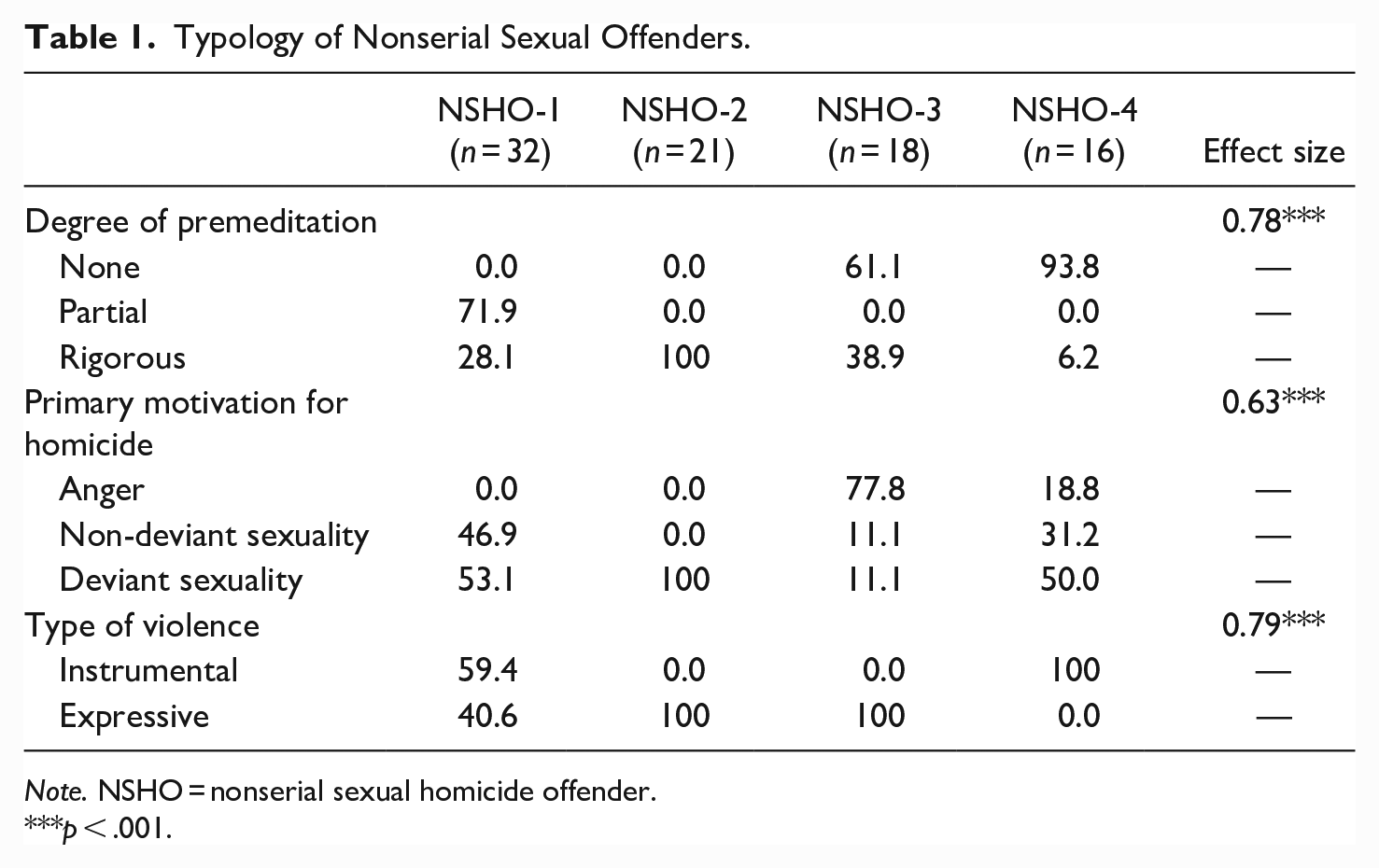
Four types of NSHOs were identified: NSHO-1, NSHO-2, NSHO-3, and NSHO-4 (Table 1). NSHO-1s (n = 32) partially premeditated their crime (71.9%), were motivated by a sexual need (deviant: 53.1%, nondeviant: 46.9%), and resorted to instrumental violence (59.4%). NSHO-2s (n = 21) rigorously premeditated their crime (100%), were motivated by a deviant sexual need (100%), and resorted to expressive violence (100%). NSHO-3s (n = 18) tended not to premeditate their crime (61.1%), were motivated by anger (77.8%) and resorted to expressive violence (100%). NSHO-4s (n = 16) did not premeditate their crime (93.8%), were motivated by a sexual need (deviant 50.0%, nondeviant: 31.2%), and resorted to instrumental violence (100%).
Typology of Nonserial Sexual Offenders.
Note. NSHO = nonserial sexual homicide offender.
p < .001.
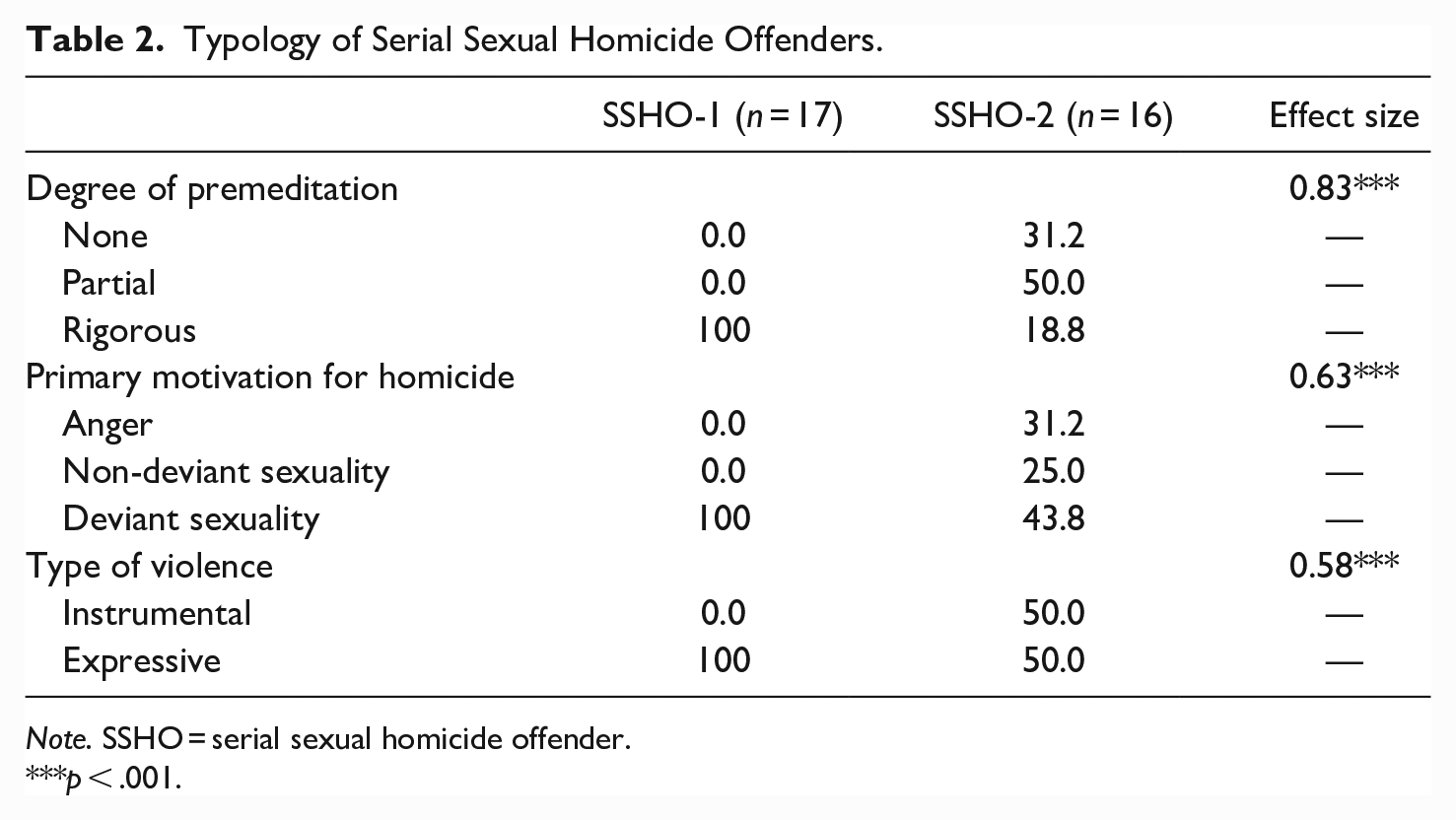
Two types of SSHOs were identified: SSHO-1 and SSHO-2 (Table 2). SSHO-1s (n = 17) rigorously premeditated their crime (100%), were motivated by a deviant sexual need (100%) and resorted to expressive violence (100%). SSHO-2s (n = 16) tended to premeditate their crime at least partially (68.8%), were motivated by a sexual need (68.8%) or, to a lesser extent, anger (31.2%), and resorted to both instrumental (50.0%) and expressive (50.0%) violence.
Typology of Serial Sexual Homicide Offenders.
Note. SSHO = serial sexual homicide offender.
p < .001.
Precrime-Phase Characteristics
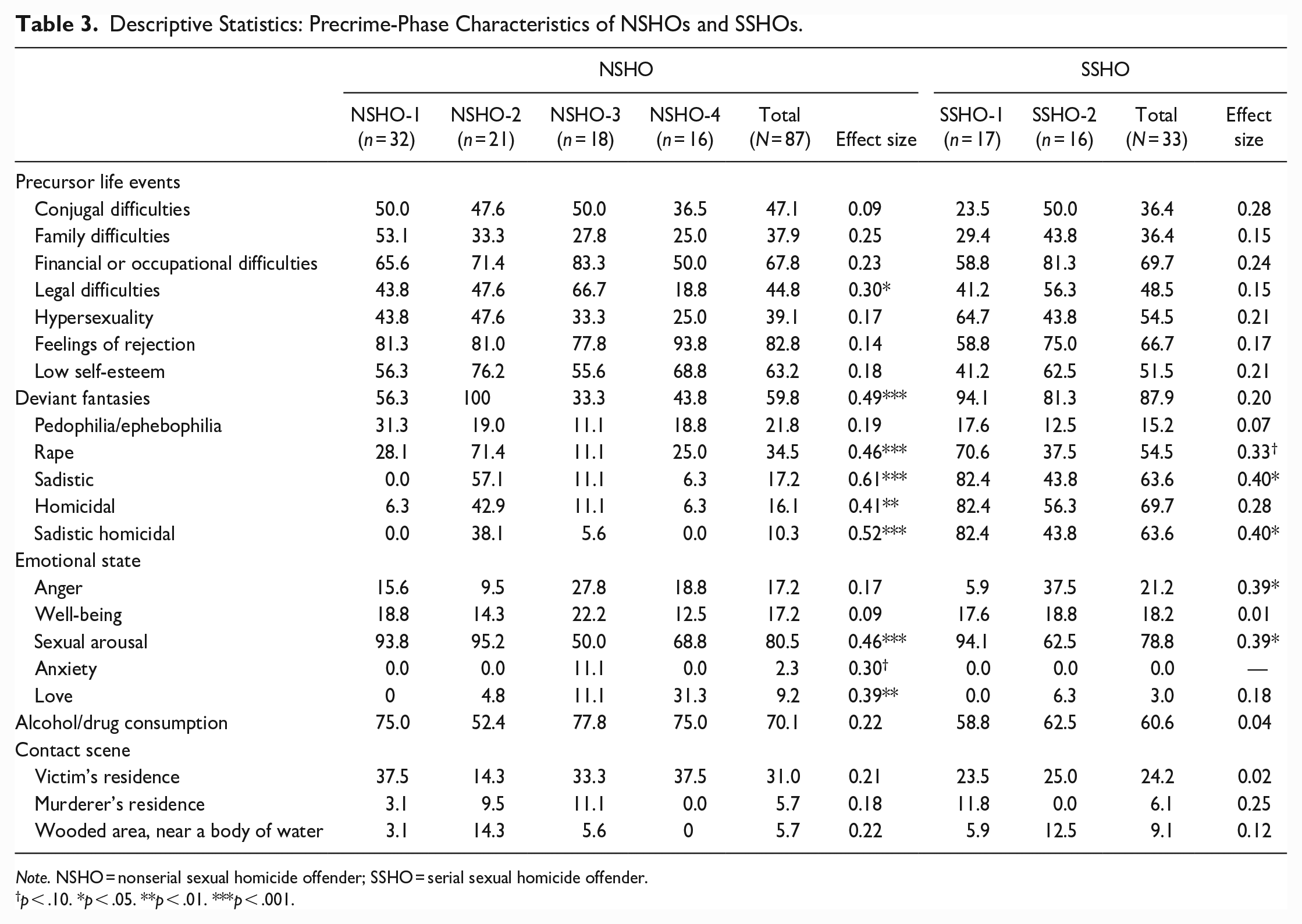
In the precrime phase, NSHOs felt generally rejected by others (82.8%), encountered financial and/or occupational difficulties (67.8%) in the days or hours preceding their offense, and used a psychoactive substance (alcohol and drugs) prior to their homicide (70.1%; Table 3).
Descriptive Statistics: Precrime-Phase Characteristics of NSHOs and SSHOs.
Note. NSHO = nonserial sexual homicide offender; SSHO = serial sexual homicide offender.
p < .10. *p < .05. **p < .01. ***p < .001.
The life context of NSHO-2s appears to have been characterized by a state of sexual arousal (p = .002, φ = .46) and the presence of deviant fantasies (p = .001, φ = .49), such as rape fantasies (p = .002, φ = .46), sadistic fantasies (p = .002, φ = . 61), homicide fantasies (p = .002, φ = .41), and sadistic homicidal fantasies (p = .001, φ = .52). In contrast, the life context of NSHO-3s appears to have been characterized by legal difficulties (p = .047, φ = .30), and the life context of NSHO-4s appears to have been characterized by feelings of love or the need for emotional intimacy (p = .004, φ = .39).
Like NSHOs, SSHOs reported having encountered financial or occupational difficulties (69.7%) and having felt rejected by others (66.7%). However, SSHOs appear to differ from NSHOs with respect to the presence of homicidal fantasies (SSHO = 69.7%, NSHO = 16.1%). In addition, the life context and precrime emotional state of the two types of SSHOs differed: whereas sexuality predominated among SSHO-1s (sadistic fantasies: p = .021, φ = .40; sadistic homicidal fantasies: p = .021, φ = .40; sexual fantasies of rape or coercion: p = .16, φ = .33; sexual arousal: p = .035, φ = .39), SSHO-2s were characterized by a lesser predominance of sexuality, but a greater prevalence of an angry emotional state (p = .035, φ = .39).
Crime-Phase Characteristics
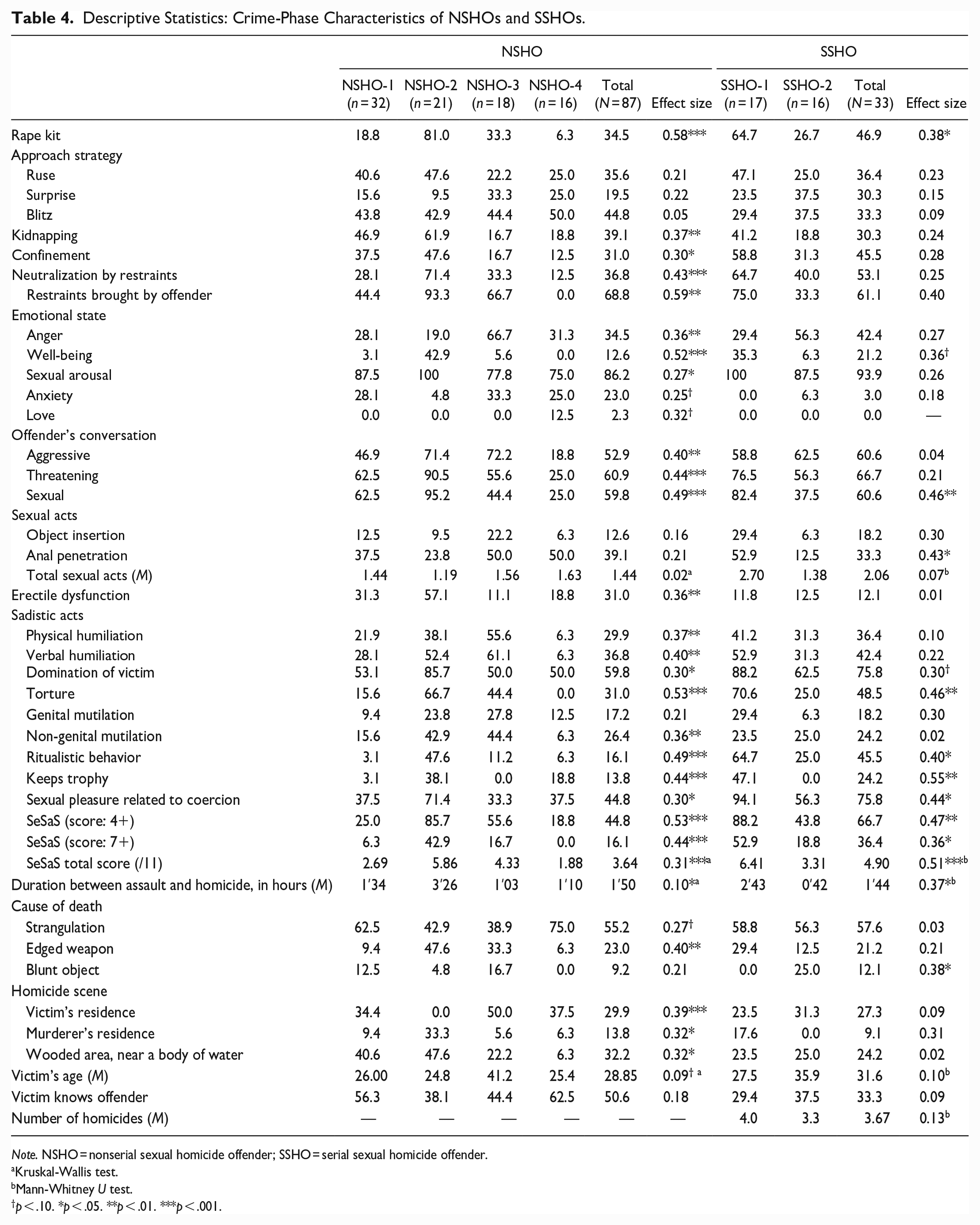
Emotionally, NSHO-2s were characterized by a sense of well-being (p = .001, φ = .52) and sexuality (sexual arousal: p = .035, φ = .27; sexual conversation: p = .001, φ = .49), while NSHO-3s were characterized by anger (p = .011, φ = .36) and aggressiveness (aggressive conversation: p = .004, φ = .40). Behaviorally, NSHO-2s exhibited several distinctive characteristics: they premeditated their crime (rape kit: p = .001, φ = .58); used ligatures (p = .001, φ = .43) that they brought to the scene of the crime (p = .006, φ = .59), kidnapped the victim (p = .007, φ = .37), threatened the victim (p = .001, φ = .44), confined the victim (p = .044, φ = . 30), used an edged weapon (p = .002, φ = .40), made sexual comments (p = .001, φ = .49), and exhibited more sexual sadism (score of at least 4 on the SeSaS: p = . 001, φ = .53; score of at least 7 on the SeSaS: p = .001, φ = .44; ritualistic behavior: p = .001, φ = .49; tortured victim: p = .001, φ = .53; dominated victim: p = .050, φ = .30). In addition, NSHO-2s were distinctive in their killing of the victim at their own residence (p = .047, φ = .32) or in a wooded area (p = .028, φ = .32) after spending a long time with the victim (p = .042, ε = .10). On the other hand, NSHO-3s were distinctive in their humiliation of the victim (physical: p = .006, φ = .37; verbal: p = .003, φ = .40), mutilation of non-genital body parts (p = .008, φ = .36), and killing of the victim at the latter’s residence (p = .001, φ = .39) (Table 4).
Descriptive Statistics: Crime-Phase Characteristics of NSHOs and SSHOs.
Note. NSHO = nonserial sexual homicide offender; SSHO = serial sexual homicide offender.
Kruskal-Wallis test.
Mann-Whitney U test.
p < .10. *p < .05. **p < .01. ***p < .001.
Turning to SSHOs, SSHO-1s differed from SSHO-2s with regard to emotional state and crime-phase behaviors. SSHO-1s, but not SSHO-2s: (1) took sexual pleasure related to coercion (p = .017, φ = 4); (2) used a rape kit (p = .031, φ = .38); (3) exhibited distinctive sexual behaviors (sexual comments: p = .008, φ = .46; anal penetration: p = .014, φ = .43); (4) exhibited distinctive sadistic behaviors (score of at least 4 on the SeSaS: p = .007, φ = .47; score of at least 7 on the SeSaS: p = .041, φ = .36; tortured the victim: p = .009, φ = .46; performed ritualistic behavior: p = .022, φ = .40; kept a trophy: p = .003, φ = .55); and (5) committed crimes that lasted for several minutes (p = .37, ε = .37) (Table 4).
Postcrime-Phase Characteristics
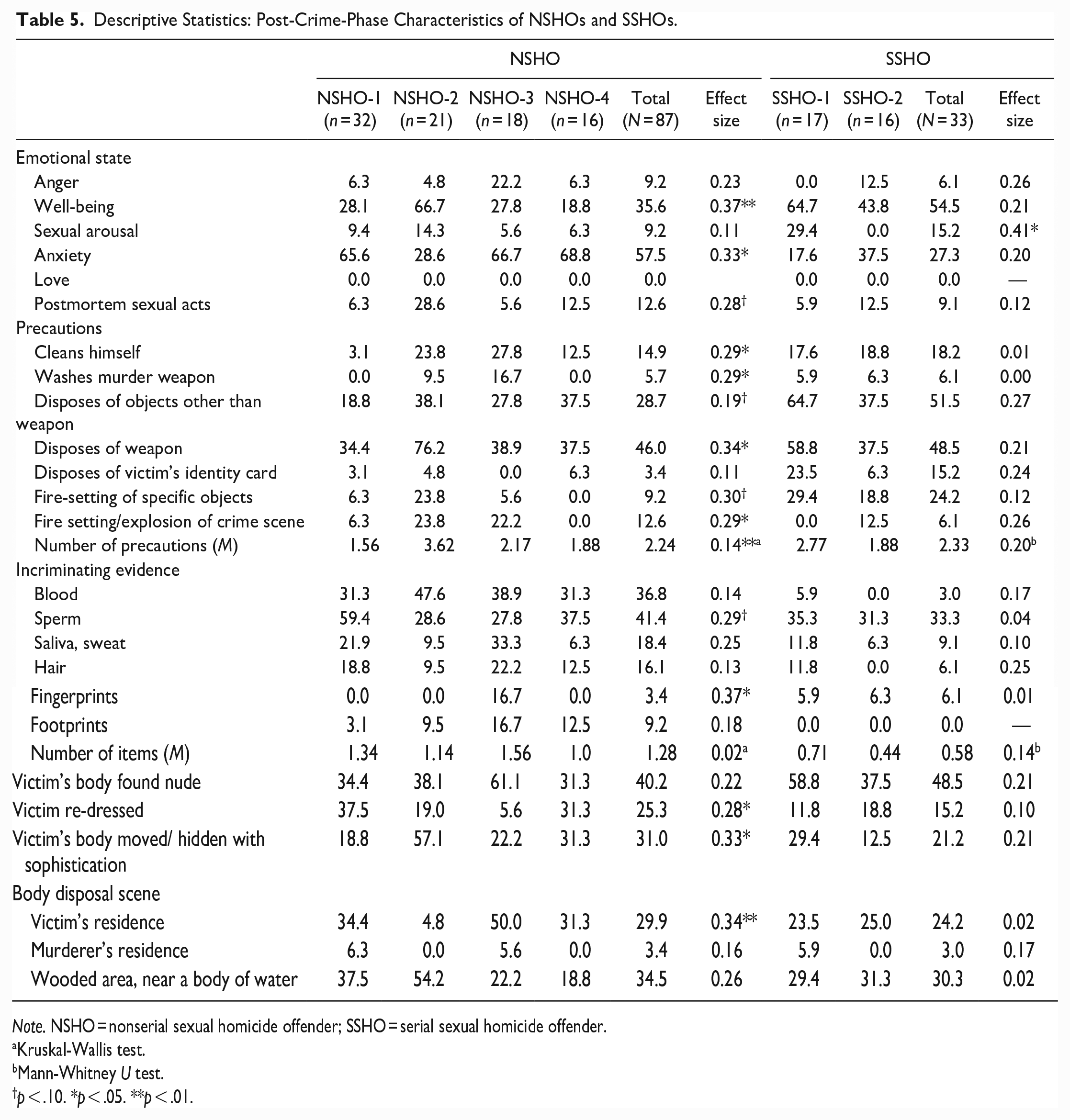
Emotionally, NSHO-2s experienced well-being after committing the offense (p = .007, φ = .37), while NSHO-4s felt anxious (p = .023, φ = .33). In terms of the number and type of precautions taken: (1) NSHO-1s tended to re-dress the victim more often (p = .046, φ = .28); (2) NSHO-2s took the most precautions, both overall (p = .006, ε = .14), and specifically (disposed of the murder weapon: p = . 016, φ = .34; set the crime scene on fire: p = .030, φ = .29; moved the victim’s body: p = .026, φ = .33); and (3) NSHO-3s were more likely to clean themselves (p = .044, φ = .29), wash the crime weapon (p = .031, φ = .29), and dispose of the victim’s body at the latter’s residence (p = .007, φ = .34). Interestingly, NSHO-4s took relatively few precautions. Finally, regarding evidence found at the crime scene, NSHO-3s were more likely to have had their fingerprints identified at the crime scene (p = .020, φ = .37) (Table 5).
Descriptive Statistics: Post-Crime-Phase Characteristics of NSHOs and SSHOs.
Note. NSHO = nonserial sexual homicide offender; SSHO = serial sexual homicide offender.
Kruskal-Wallis test.
Mann-Whitney U test.
p < .10. *p < .05. **p < .01.
Discussion
Over the past four decades, research in the field of sexual homicide has highlighted that not all perpetrators of this type of crime are the same, regardless of whether they have committed one or multiple homicides (e.g., Higgs et al., 2017; James & Proulx, 2014). For instance, while sexual deviance is one of the predominant characteristics of some profiles of individuals (e.g., nonserial sadistic, and serial), other profiles are better characterized by general deviance (e.g., angry, opportunistic, and nonserial). Although several profiles have been identified, they all stem from studies in which the identification of a greater diversity of types may have been hindered by methodological aspects, including a small number of participants (e.g., Ressler et al., 1986), the exclusion of individuals who had committed a series of homicides (e.g., Proulx et al., 2007; Stefanska et al., 2015), and a lack of specificity in the formation of the analyzed groups (nonserial vs. serial; e.g., James, Beauregard, Proulx, 2019). Due to these methodological limitations, none of these studies had the opportunity to empirically test whether some NSHOs within their sample had a similar, or perhaps identical, profile to that of SSHOs classically depicted in the scientific literature. In light of this knowledge gap, we performed classification analyses on generic groups of individuals in our sample (SHOs and SSHOs) to identify more discrete subgroups of SHOs.
These analyses led to the identification of six types of individuals having committed a sexual homicide: four types of NSHOs and two types of SSHOs. More importantly, on the basis of the classification analysis, it appears that NSHO-2s and SSHO-1s are identical in terms of premeditation, motivation, and violence. This perfect match, being the main result of the current study, raises the question of whether NSHO-2s are actually potential SSHO-1s who were apprehended by police before they had had the opportunity to commit a second homicide. In light of these findings, it is essential that criminal investigative teams be sensitive to the heterogeneity of nonserial SHOs, and the possibility that at least one subgroup may progress to seriality.
NSHO Profiles
In the days leading up to their sexual homicide, NSHOs were usually struggling: they felt rejected by others and experienced financial difficulties. They tended to use alcohol or drugs and then decided to offend to satisfy a sexual need (deviant or nondeviant). Beyond these characteristics that are relatively common to all NSHOs, differences between NSHO types were identified.
NSHO-1s were primarily motivated by the desire to act out a coercive nonsadistic sexual fantasy (e.g., child molestation and rape). Typically, they premeditated their crime, although this premeditation was usually unsophisticated (e.g., they did not prepare a rape kit). During the assault, they tended to threaten the victim to force her to satisfy their nonsadistic sexual needs, as implied by their average SeSaS score (M = 2.69). We can therefore suppose that the goal of the homicidal act itself was not to provide sexual pleasure but rather to allow the offender to avoid police detection, by eliminating the only witness to the crime, the victim. NSHO-1s can thus be considered sexual nonsadistic offenders. After the victim’s death, NSHO-1s were anxious, took few precautions to avoid detection by the police (e.g., did not move or hide the victim’s body with any sophistication), and, as a result, left much incriminating evidence, including sperm. Given this combination of behaviors, it is not surprising that NSHO-1s were apprehended after their first sexual homicide.
NSHO-2s, like NSHO-1s, were motivated by the desire to act out a coercive sexual fantasy (rape), but unlike NSHO-1s, had fantasies that tended to be focused on sadistic themes. Typically, NSHO-2s rigorously premeditated their offense (e.g., built a rape kit). It has been suggested that this degree of organization mirrors organized fantasies, which structure SHOs’ behavioral sequence in order to reach a high degree of congruence with the content of their fantasies and with their homicide (James & Proulx, 2016). NSHO-2s tended to kidnap and/or confine their victim to isolate them (e.g., in a wooded area), and tended to tie them up. It is possible that such control of the situation increased their level of sexual arousal and well-being, and lowered their anxiety. It is important to note that NSHO-2s can be considered sadistic offenders, since: (1) almost all obtained a score of at least 4 on the SeSaS, and almost half obtained a score of at least 7, indicating a severe form of sadism (Mokros et al., 2012); (2) they dominated their victim; (3) they physically and verbally humiliated their victim; 94) they tortured their victim; (5) they exhibited ritualistic behaviors; and (6) they kept a trophy. In addition, it is important to mention that more than half of the NSHO-2s reported having experienced erectile dysfunction during the offense. This sexual disorder could have been be the result of a contextual factor not anticipated by the offender (e.g., victim resistance or urination) and may also partly explain why the crime phase of their murder was long (since they took some time to attempt to obtain an erection). Finally, NSHO-2s typically killed their victim with an edged weapon and, although they took more precautions than the other SHOs after the homicide (e.g., concealed the body), they tended to leave incriminating genetic evidence (blood) at the crime scene (which suggests that not all precautions are efficient). This may explain why, despite having rigorously premeditated the crime, they were identified after committing their first sexual homicide.
NSHO-3s were motivated by a feeling of anger they seemed incapable of managing. Because of their emotional state, they tended to be impulsive and disorganized, and used aggressive, threatening, and humiliating language towards the victim. Thus, NSHO-3s can be considered angry offenders. Results from previous studies (e.g., Beech et al., 2005) have suggested that this type of behavior tends to occur when the victim, who is an intimate party, says or does something that the offender perceives negatively during a sexual encounter. During the assault, some NSHO-3s exhibited sadistic behaviors (e.g., physical and verbal humiliation and non-genital mutilation) but they did not report having had sadistic fantasies prior to the homicide. To explain this paradox, it has been suggested that “it is likely that a profound lack of affect/empathy combined with a thrill-seeking propensity could promote such (sadistic) behavior during a sexual homicide” (Porter et al., 2003, p. 467). Given that sexual gratification was not sought by NSHO-3s and that their anger outburst generated violent behaviors, the time between their attack and homicide was relatively short. Finally, after the victim’s death, NSHO-3s took precautions to avoid detection by the police, but these were ineffective, due to: (1) the existence of elements that allowed investigators to identify them (e.g., a witness having seen the victim with the NSHO before the crime); (2) the forensic evidence they left at the scene (e.g., saliva on a glass or cigarette butt); and (3) their mental state after the homicide (anxiety combined with a state of substance intoxication). As a result, NSHO-3s were arrested by the police after committing their first sexual homicide.
NSHO-4s, like NSHO-1s, were motivated by deviant and nondeviant sexuality. However, in contrast to NSHO-1s, few NSHO-4s reported having had a deviant sexual fantasy prior to their homicide and almost none premeditated their crime. In addition, it is important to note that unlike NSHO-3s, who also tended not to premeditate their crime, NSHO-4s were not motivated by anger. They tended to use a minimum amount of violence to overcome the victim’s resistance, sometimes in an improvised manner (e.g., any physical restraints used were obtained at the crime scene). In light of these observations, NSHO-4s can be considered opportunists whose actions were aimed at satisfying sexual needs, that is, they were sexual opportunists. During their assault, NSHO-4s were unlikely to have engaged in sadistic behaviors and their crime was short-lived. Since the homicide was motivated by neither sadistic need nor anger, they may have been motivated to kill the victim for the same reason as NSHO-1s—that is, to avoid police detection, by eliminating the only witness to the crime, the victim. After the homicide, NSHO-4s were anxious. They quickly left the crime scene, which was often the victim’s residence, and took few precautions (e.g., generally did not move the victim’s body). Since the decision to kill the victim appears to have been secondary to the impromptu decision to sexually assault the victim, they were unlikely to have used a condom during the assault and, as a result, left forensic evidence on the victim’s body, which potentially facilitated their identification after their sexual homicide.
SSHO Profiles
The two SSHO groups generally reported: (1) having had a deviant fantasy prior to the crime; (2) premeditating their crime; (3) committing their crime to satisfy a sexual need; (4) using a psychoactive substance prior to the crime; (5) being sexually aroused during the assault; and (6) having no relationship with the victim. Aside from these general findings, differences were nonetheless observed between the two groups.
SSHO-1s were motivated by the desire to act out a sadistic homicidal fantasy and like NSHO-2s, rigorously premeditated their homicide. SSHO-1s reported that prior to their acting out they had had a life characterized by hypersexuality. Moreover, SSHO-1s were distinguishable from other types of SHOs by the lower proportion of individuals reporting feelings of rejection, which suggests a difference in interpersonal skills and/or cognitive schemas (see James, Beauregard, Proulx, 2019). Emotionally and physiologically, SSHO-1s were sexually aroused prior to the crime, and as the crime was carried out, this arousal seems to have given way to a sense of well-being, implying that they were satisfied with the course of the crime; this may partly explain why few SSHO-1s experienced erectile dysfunction during the crime. Thus, in general, SSHO-1s seem to fit the SSHO prototype described in the scientific literature (see James & Proulx, 2014, 2016): they built a rape kit, kidnapped, confined, and incapacitated their victims, used physical restraints, and committed crimes of relatively long duration. During the crime, they were threatening and engaged in sexually oriented conversations. It is important to note that these observations indicate that they are, like NSHO-2s, sadists. However, they differed from NSHO-2s in two ways: (1) they had a higher prevalence of sadistic homicidal fantasies (complementary analysis: NSHO-2s = 38.1%, SSHO-1s = 82.4%; p = .006, φ = .45); and (2) they derived pleasure from torturing and killing their victim (complementary comparative analysis: NSHO-2s = 71.4%, SSHO-1 = 94.1%; p = .047, φ = .34). They can therefore be considered severe sadistic offenders. Although SSHO-1s were not the type to take the most precautions to avoid detection by the police (they were second after the other sadistic group, NSHO-2s), they appear to have been the type whose precautions were the most effective. Indeed, they are one of the types that left the least forensic evidence at the crime scene (second after the other serial group, SSHO-2s). Their precrime, per-crime, and postcrime decisions thus seem to have allowed them to thwart the criminal investigative team, and thereby avoid apprehension. Finally, the sense of impunity associated with the avoidance of apprehension, combined with the pleasure they experienced during the commission of the first sexual homicide, may have reinforced their behaviors and driven them to commit a series of sexual homicides, as reported by James (2020).
SSHO-2s were motivated by the desire to satisfy a sexual need, but also by anger and the will to harm others. In fact, it is interesting to note that homicidal fantasies were the most prevalent among this group. Thus, SSHO-2s seem to be hostile individuals ready to act out if they find themselves in a suitable context. They tended to report that prior to their offense they had experienced stressful life events (e.g., financial difficulties) and had felt rejected and devalued. These experiences may have accentuated their hostility and precipitated their acting out. On the other hand, SSHO-2s, unlike SSHO-1s, exhibited little sadistic behavior and committed crimes of relatively short duration. Following their victims’ deaths, SSHO-2s took few precautions to protect their identity—in fact, they were the type to leave the least evidence—but these precautions (e.g., disposal of objects other than weapon) appear to have been effective. Thus, it is not surprising that SSHO-2s were not arrested by the police after their first sexual homicide. Burgess et al. (1986) have suggested that the reoccurrence of sexual homicides is contingent upon stressful life events that trigger the need to seek revenge for a real or perceived injustice. Finally, in an attempt to establish a clinically significant label for the SSHO-2s, complementary analyses were conducted. These analyses highlight that, of all the types, SSHO-2s had the highest mean score on the Psychopathy Checklist Revised: Screening Version (Hart et al., 1995), and that 75.0% scored above the cutoff for psychopathy (≥ 16; Dolan & Blackburn, 2006). In light of these complementary analyses, SSHO-2s were labelled psychopathic offenders.
The Detection of NSHOs With the Potential to Become SSHOs
The results of the current study highlight that not all NSHOs and SSHOs are identical, and that exploring the heterogeneity of these two categories of offenders sheds light on what does and does not lead to seriality. Indeed, our analyses have shown that one type of NSHO (NSHO-2/sadistic) shares more similarities with a type of SSHO (SSHO-1/severe sadistic) than with the other types of NSHOs. As a result, it is possible to assert that NSHO-2s have a potential for seriality. Two main, non-mutually exclusive, hypotheses are posited to explain why the NSHO-2s failed to commit a series of homicides despite this potential: (1) there are variations in how they decided to act; and (2) there are variations in how the criminal investigative team conducted the investigation. James and Beauregard (2018) highlighted that the choices made by murderers and criminal investigative teams individually influence the likelihood of rapid resolution of the crime, and that the prediction of rapid resolution of the homicide is more likely to be accurate when the two measures are used collectively.
Correspondence of NSHO and SSHO Types to Reported Types of Sexual Homicides
There are similarities between the types of SHOs we identified and the types of sexual homicides identified in previous studies (sexualized, grievance, and rape murder; Higgs et al., 2017). NSHO-2/sadistic and SSHO-1/severe sadistic types appear to have committed sexualized murder. Indeed, for them, the act of killing appears to have been functionally related to the sexual element of the crime: they premeditated the homicide to fulfill a deviant sexual fantasy and experienced sexual pleasure when the victim was assaulted. However, whereas the pleasure of NSHO-2s appears to have been primarily related to the realization of sadistic rape fantasies, that of SSHO-1s appears to have been related to the realization of sadistic homicidal fantasies.
The NSHO-3/angry and SSHO-2/psychopathic types seem to have been the ones committing grievance murder. Indeed, their acting out was motivated by an anger schema and an overly aggressive response style. However, whereas the anger of NSHO-3s seems to have been pervasive and disorganizing (leading to an impulsive crime), the anger of SSHO-2s seems to have been channeled and internalized (they tended to premeditate their crime), suggesting that they have better cognitive abilities (as seen by their ability to develop homicidal fantasies).
Finally, the NSHO-1/sexual nonsadistic and NSHO-4/sexual opportunistic types seem to have committed rape murder. Indeed, for them, the act of killing seems to have been motivated by the desire not to be reported to the police for having committed a sexual assault, and their crime does not include the factors typical of sexualized murder or grievance murder. However, while NSHO-1 homicides were at least partially premeditated, NSHO-4 homicides were impulsive.
Correspondences Between SSHO Types and the FBI’s Organized/Disorganized Types
Like the FBI’s organized/disorganized typology of SSHOs, our study identified two types of SSHOs: SSHO-1/severe sadistic and SSHO-2/psychopathic. Our results suggest that the SSHO-1s and the SSHO-2s share similarities with the FBI’s organized type, as they tended to: (1) premeditate their crimes; (2) use physical restraints to control their victims; (3) perform sexual acts while the victim is alive; (4) take several precautions to avoid leaving incriminating evidence at the crime scene; and (5) in fact leave little evidence at the crime scene. However, SSHO-1s and SSHO-2s did not exhibit the same degree of organization. Indeed, SSHO-1s more rigorously premeditated their crimes, made more frequent use of physical restraints and took the most precautions to avoid leaving any evidence at the crime scene. Finally, it is surprising that, unlike the analyses performed by the FBI team, our analyses did not identify a disorganized type of SSHO. It is possible that this discrepancy is in part due to the evolution of forensic science. Indeed, the majority of individuals included in the FBI sample committed their homicides in the 1960s/1970s, whereas the majority of our participants committed their homicides in the 1990s/2000s, a period during which crime-scene DNA analysis was standardized. Therefore, it is possible that the paradox of a disorganized SHO managing to commit a series of crimes now only occurs in relatively rare situations (as a result of suboptimal decisions made by the criminal investigative team; see James & Beauregard, 2018).
Correspondences of NSHO and SSHO Types to Types of Sexual Offenders Who Do Not Kill Their Victim
The six types of SHOs identified by our study share some characteristics with the five main types of nonlethal sexual offenders (opportunistic, pervasively angry, sadistic, sexual nonsadistic, and vindictive) identified by Knight and Prentky (1990).
Knight and Prentky’s (1990) opportunistic offenders partly correspond to NSHO-4/sexual opportunistic, in that: (1) their offending is impulsive; (2) the primary motivational factor for acting out is sexual gratification; and (3) they resort to instrumental violence. However, while opportunists are more likely to be described as antisocial and polymorphic offenders, NSHO-4s appeared to have a lifestyle that was more focused on sexuality (deviant and nondeviant). This inconsistency in the profiles may in part be explained by cultural factors. In fact, James, Proulx, Lussier (2018) compared the French SHOs in the current study’s sample to Canadian SHOs, and their results highlight that the French sample is characterized by both a greater propensity for sexual deviance and a smaller propensity for antisociality. Thus, it is not surprising that the profile of French opportunists includes a sexual component.
Pervasively angry offenders share similarities with SSHO-2/psychopathic: they are angry/hostile, antisocial individuals who have deviant fantasies that are not necessarily sexual in nature (aggressive fantasies for pervasively angry offenders, homicidal fantasies for SSHO-2s), and may resort to expressive violence during the assault (although to a lesser extent in the case of SSHO-2s). However, SSHO-2s differ from pervasively angry offenders by their propensity to: (1) premeditate their crimes (albeit often only partially); and (2) be motivated by sexual gratification. Finally, Knight and Prentky (1990) indicated that the anger experienced by pervasively angry offenders is undifferentiated (i.e., not directed specifically at women). It would have been desirable to be able to determine the nature of the SSHO-2s’ anger. However, it is important to consider that, generally, the anger experienced by psychopaths is also undifferentiated (Blair, 2012; Hicks & Patrick, 2006).
Sadistic offenders share many similarities with NSHO-2/sadistic and SSHO-1/severe sadistic: (1) they rigorously premeditate their offending; (2) they are motivated by sadistic sexual fantasies; (3) they resort to expressive violence; and (4) their violence is in many cases ritualized. We did not identify any significant divergence between the NSHO-2s, the SSHO-1s in this study, and Knight and Prentky’s (1990) sadistic offenders.
Sexual nonsadistic offenders correspond to NSHO-1/sexual non-sadistic, in that both: (1) premeditate the crimes (albeit not rigorously); (2) are motivated by sexual fantasies; (3) do not have sexual fantasies involving a sadistic component; and (4) resort to instrumental violence. We did not identify any significant divergence between the NSHO-1s and the sexual nonsadistic offenders.
Vindictive offenders share similarities with NSHO-3/angry, in that both: (1) commit impulsive crimes; (2) are motivated by anger; and (3) resort to expressive violence. Knight and Prentky (1990) indicated that the anger experienced by vindictive offenders is specifically oriented towards women. As was the case with NSHO-2s’ anger, it would have been desirable to determine the nature of the NSHO-3s’ anger, in order to optimize the comparison between the types. However, it is important to consider that NSHO-3s were the most verbally and physically humiliating to the victim, and that as a result, we might conjecture that their sexual homicide is intended to express the anger they feel towards women.
Comparisons between these different types reveal a continuity between the typologies of nonlethal sexual offenders and those of SHOs. They therefore suggest that SHOs are not fundamentally different from nonlethal sexual offenders. Thus, the body of knowledge developed in the field of nonlethal sexual offending (e.g., risk factors for sexual recidivism, treatment modalities, and correctional management plans) can potentially also be applied to individuals who have committed sexual homicide.
Implications
The above-mentioned results have some implications from investigative and clinical point of views.
The implications in terms of the investigative process can be divided into three main areas. First, such a typology can help investigators determine, based on the elements of the crime scene they are investigating, what type of offender (serial or non-serial) they are dealing with. If the elements identified on the crime scene are consistent with either one of the serial types (SSHO-1 or SSHO-2), more logistical resources should be allocated to this investigative team. This would maximize the chances of a quick apprehension of the offender and minimize the likelihood of additional homicides being committed by the perpetrator. Second, beyond the seriality of the perpetrator, it can be helpful to consider to which type of sexual homicide offender the perpetrator corresponds (SSHO-1, SSHO2, NSHO-1, NSHO-2, NSHO-3, or NSHO-4). Because these types are associated with different psychosocial profiles, investigators would better be able to orient their investigation by having an idea of the type of person the perpetrator is in everyday life. Given that the psychosocial profile of sadistic individuals in everyday life is well described (Proulx et al., 2007; Longpré et al., 2020), it is then possible for investigators to prioritize investigative lines of inquiry related to their list of suspects. Third, once the suspect has been identified, by knowing the type of sexual homicide offender the perpetrator corresponds to, the investigative teams can tailor the interview strategy according to the information that can be found in the literature on the type of individual they are dealing with.
From a clinical point of view, once the individual is incarcerated, being aware of the characteristics of the type of sexual homicide offender this individual corresponds to can help identify more suitable therapeutic targets (e.g., lack of empathy, hostility, and cognitions). A treatment that is more adapted to the criminal’s profile allows for a better chance of improving the individual’s life condition and decreasing the risks of sexual homicide recidivism and sexual recidivism in general if the individual is released.
Conclusion
By identifying six types of SHOs—four NSHO types and two SSHO types—and comparing them, this study helps improve the detection of the types of NSHOs with the potential to become SSHOs. However, this study is not without its limitations. First, by its very nature, it is limited to SHOs who have been apprehended. Therefore, its results may not be representative of all SHOs. Second, the formation of the categories (NSHOs and SSHOs), which is based on the number of victims per SHO, may be biased in two ways: (1) NSHOs may include SSHOs not identified as such by the police because of undiscovered victims; and (2) NSHOs may include SSHOs who, because of their early apprehension, did not have the opportunity to accumulate additional victims. Third, the small sample size for some types, such as the SSHOs, may have hindered the identification of statistically significant differences and, therefore, limited our ability to develop a more detailed picture of the types. Finally, it is important to consider that the homicides analyzed here were predominantly committed in the 1990s/2000s, and the modus operandi of contemporary SHOs may be different, for example due to advances in technology.
In order to provide a more complete picture of the types of NSHOs and SSHOs and thereby more accurately assess NSHOs’ potential for seriality, future studies should compare the six types in terms of a variety of variables (e.g., psychopathological, cognitive, and criminal history). In addition, although this may be a challenging undertaking, it would be desirable to analyze a larger sample size of SSHOs, to increase statistical power when performing comparative analyses.
In summary, following the completion of two classification analyses performed on two categories of SHOs (NSHOs and SSHOs), using the same variables (degree of premeditation, primary motivation for the crime, type of violence), six types of SHOs were identified: NSHO-1/sexual nonsadistic, NSHO-2/sadistic, NSHO-3/angry, NSHO-4/sexual opportunistic, SSHO-1/severe sadistic, and SSHO-2/psychopathic. The main finding of this study is the perfect correspondence between the NSHO-2 and the SSHO-1 types that these analyses revealed, suggesting that NSHO-2s have the potential to become SSHOs and that their arrest by police may have prevented the occurrence of further sexual homicides. Subsequently, the six types were subjected to comparative analyses on the basis of the characteristics of their modus operandi (precrime, crime, and postcrime). These analyses allowed us to develop profiles, identify differences and similarities, and compare our types with previously reported types. Based on these comparisons, it is apparent that SHOs are a more heterogeneous category of individuals than previous typological studies of these offenders have implied. Moreover, this finding is consistent with the heterogeneity that has been identified by typological studies of nonlethal sexual offenders. Thus, in line with what has been previously suggested (e.g., DeLisi & Wright, 2014; James, Beauregard, Proulx, 2019), despite the extreme severity of their crime, SHOs do not appear to be a separate population of sexual offenders.
Footnotes
Declaration of Conflicting Interests
The author(s) declared no potential conflicts of interest with respect to the research, authorship, and/or publication of this article.
Funding
The author(s) disclosed receipt of the following financial support for the research, authorship, and/or publication of this article: This research was supported by the Fonds de Recherche Société et Culture du Québec, grant 2019-B2Z-260457.
