




Abstract
Prior research has associated Craigslist.com and Backpage.com as sources of victimization, which in part resulted in the closure of the erotic services of each respective website. However, research also claims the introduction of Craigslist was associated with a reduction in female homicide rates across 30 large cities. This research acts as a supplemental analysis to Cunningham et al. by analyzing if Backpage.com, considered to be Craigslist’s successor, has similar effects on female homicide rates. When including measures of interest in each respective website, we find that Backpage is associated with a decrease in homicide rates for women. The purpose of this study is to extend the study conducted by Cunningham et al. through supplemental analysis. To determine the effect of online clearinghouses on female homicide rates, interest measures in Backpage along with the female homicide rates from 120 single city metropolitan and micropolitan areas over 14 years (2004–2018) were analyzed using multiple regression analyses. The regression analyses show that there is a statistically significant relationship between interest in Backpage and homicide rates for women. We find that Backpage is associated with a decrease in homicide rates for women.
In 2015, Dwinell and O’Ryan (2015) published an article with the Boston Herald highlighting the growing concerns by elected officials on the use of online advertisements for sexual purposes, specifically the use of Backpage. The concern occurred after the murder of a female prostitute by two clientele who contacted her via Backpage. This incident added to a growing list in which either the client or the prostitute is robbed or assaulted because of connections made thru Craigslist or Backpage (Dwinell & O’Ryan, 2015). In a statement made about the use of Backpage, Attorney General Maura Healey stated: “These websites facilitate crime, such as human trafficking” (Dwinell & O’Ryan, 2015). In the same article, Eugene O’Donnell, Ph.D. of John Jay College of Criminal Justice of New York, was quoted
“It’s a superhighway for suspects to connect with potential victim..there is a huge capacity for fundamentally bad people to go out and meet people who underestimate the risks they’re taking. . .the platform has to be held accountable.” (Dwinell & O’Ryan, 2015).
Amid growing pressure for governmental response to the rising concern of human trafficking by anti-trafficking advocates (Musto et al., 2021)—specifically, trafficking for the purposes of sex, and lack of accountability for online web advertisement companies, in April 2018, the United States federal government passed a federal antitrafficking bill: Allow States and Victims to Fight Online Sex Trafficking Act (FOSTA) and Stop Enabling Sex Traffickers Act (SESTA), known collectively as FOSTA-SESTA. FOSTA-SESTA provides the legal ability to hold websites who knowingly facilitate sex trafficking criminally accountable (Peterson et al., 2019) by providing the U.S. Department of Justice the ability to shut down Backpage and similar websites (Feifer et al., 2019). Supporters of FOSTA- SESTA argue that it is needed, as sex trafficking is often conducted using online platforms to contact clientele and marketing women and children for the purposes of sexual exploitation (Dalton, 2012; Judge, 2018; Makatche, 2013; O’Brien, 2017; Weitzer, 2019).
Non-supporters claim the targeting and closure of the adult erotic review sections in Craigslist and Backpage makes the profession more dangerous for its male and female workers (Peterson et al., 2019; Weitzer, 2019; Wissex Work, n.d). Citing the findings of a study conducted by Cunningham et al. (2017), non-supporters argue the use of online websites, like Backpage and Craigslist, improved safety for prostitutes, including reducing risk of homicide (Feifer et al., 2019). Specifically, Cunningham et al. (2017, 2019) found the use of Craigslist and its adult erotic review services was associated with the reduction of the female homicide rate by 10% to 17.4%. Based on these findings, the researchers argued that online web advertisements by sex workers for business transactions reduces the risk of violence to sex workers (Cunningham et al., 2017, 2019). Even with its widespread use and dissemination, Cunningham et al.’s (2017) study is not without its critiques, with claims of methodological flaws based on a failure to link online prostitution and declining homicide rates among other criticisms (Feifer et al., 2019).
Despite over a decade of research on websites like Backpage and Craigslist, little is known about the long-term effect of online web advertisements on the safety of sex workers. Moreover, the most known study suggesting decreases in violence was limited to Craigslist, whose adult erotic review sections was completely shut down in 2010. It could be assumed that this rate would remain constant and would be similar in other online clearinghouses like Backpage, which has been referred to as Craigslist’s successor for adult erotic reviews. However, this assumption needs to be empirically supported especially as it is being utilized as an argument against policies like FOSTA-SESTA.
Literature Review
Prostitution is commonly defined as the exchange or commodification of the human body for sexual purposes in exchange for something of value (Cunningham & Shah, 2018; Dalla, 2002; Decker et al., 2013; Monto, 2004; Murphy, 2010). Typically, street prostitution or “street walkers,” the lowest level of the hierarchy (Weitzer, 2005), are sex workers who physically advertise their services often by standing on a corner or walking down a street making direct contact with potential consumers. In comparison, indoor prostitution involves the use of a legitimate business to serve as the face or cover of the prostitution enterprise preventing detection by legal authorities (Monto, 2004). Within the hierarchy, while rated higher than “street walkers,” indoor sex workers at massage parlors are ranked the lowest followed by workers at brothels and strip clubs, escorts, and finally at the top of the hierarchy, independent call girls (Weitzer, 2005). The hierarchy also influences the level of safety and protections based on the type of sex work (Dalla, 2002; Decker et al., 2013; O’Doherty, 2011; Raphael & Shapiro, 2004). The highest risk of violence is the most associated with street prostitution, with the leading cause of death in sex workers being homicide (Beckham & Prohaska, 2012; Brewer et al., 2006; Chan & Beauregard, 2019). It is estimated that in the United States, female sex workers (cis-gendered) are 18 times more likely to be killed as a result of their profession compared to their non-sex work counterparts (Cunningham et al., 2018; Potterat et al., 2004).
There are characteristics of the urban, metropolitan environment that have been associated with a higher sex worker presence (Lopez et al., 2020). Researchers have established a relationship between the presence of high volume transportation routes, hubs connecting these routes, and prostitution (Fredericks, 2016; Lopez et al., 2020; Makin & Bye, 2018; Schauer & Wheaton, 2006). The high volume of transportation hubs in a location is associated with spatial mobility. While there are many definitions and understandings of spatial mobility, for this paper, spatial mobility is the movement or ability to move between different locations (Kellerman, 2018). One aspect associated with areas that had high prostitution arrests were the high rate of commuters and tourism, examples of spatial mobility.
The presence of ports, highways, and airports, among other avenues of transportation, contribute to the mobility aspect of being transient (Lopez et al., 2020). Makin and Bye (2018) mapped search query interest in Backpage to the interstate system. Results of this mapping established, what they referred to as “interest corridors,” which aligned with known prostitution hotspots associated with human trafficking and sex trafficking (Makin & Bye, 2018). Interest corridors included Highway I-35, which runs from San Antonio, Texas to Wichita, Kansas as well as I-10 which runs from Texas, connecting with I-35 in San Antonio, to Georgia. These findings were further documented in a study conducted by Lopez et al. (2020) finding that counties and cities containing or are close to military installations, tourism, transportation corridors have higher prostitution arrests (Lopez et al., 2020). The presence of high-profile events, like sporting events and conventions which are tied with tourism, has been found to increase interest in prostitution and consumer demand (Farley et al., 2014), albeit with mixed support (Fredericks, 2016; Latonero, 2011).
Given that a relationship between locations with high spatial mobility and the presence of sex workers, we could assume that these same locations would also have higher rates of violence as well. Studies conducted by Hollis (2016) and Paloyo et al. (2014) show that rates of violence were higher in areas with the military, the presence of the military in cities could impact rates of violence in part due to the popularity of prostitution (Potterat et al., 1990) as well as its mobility and transient status, which has been shown to have a relationship with prostitution (Hollis, 2016; Lopez et al., 2020; Paloyo et al., 2014).
Female Homicide
Prior studies of homicide victimization indicate that in locations where male homicide rates are high, female homicide rates will also be high (Lee & Stevenson, 2006; Pizarro et al., 2010; Steffensmeier & Haynie, 2000a, 2000b), albeit more information exists about male homicide rates (offending and victimization) (Pizarro et al., 2010; Steffensmeier & Haynie, 2000a, 2000b). There are many theories that have been posited to explain female homicide victimization. Feminist theories argue that female homicide is associated with their economic, legal, education, and occupational status within a patriarchal society (Pizarro et al., 2010; Vieraitis et al., 2008), with specific focus of absolute status of women and gender inequality (Vieraitis et al., 2008). The Ameliorative hypothesis (Whaley & Messner, 2002) argues that violence toward women is more prevalent and accepted in areas where women are considered to be of lower social status to men (Pizarro et al., 2010; Vieraitis et al., 2015; Whaley & Messner, 2002; Xie et al., 2012) while the Backlash Hypothesis argues that increased gender equality creates a threat for males and therefore, increases the risk of violence (Vieraitis et al., 2015; Xie et al., 2012), although it should be noted that studies have shown a non-significant relationship for gender equality and female homicide victimization (Chon, 2016; Pizarro et al., 2010; Vieraitis et al., 2008). Another theory, Routine Activities Theory seeks to explain female homicide victimization through the impact of socioeconomic status (Chon, 2016; Pizarro et al., 2010; Vieraitis et al., 2008) and offender-victim relationships (Xie et al., 2012).
While the majority of research findings are related to male homicides, approximately 25% of all homicide victims are female (Taylor & Jasinski, 2011) and is considered to be one of the leading causes of death for women under 44 years of age (Petrosky et al., 2017). In data gathered through the CDC National Violent Death Reporting System (NVDRS), non-Hispanic Black women had the highest rate of homicide deaths (4.4 per 100,000), followed by American Indian/Alaska Native women, Hispanic women, non-Hispanic White women, and then Asian/Pacific Islander (Petrosky et al., 2017). At the community level, increased rates of violence, including homicide, have been found in large cities (Haynie & Armstrong, 2006). In particular, violence has been associated in cities with high levels of social disorganization (disadvantage, inequalities, and deindustrialization) (Haynie & Armstrong, 2006). These finding are especially challenging when considering sex workers. Many of the women who engage in “street level” prostitution, the most dangerous form of sex work, are from lower socio-economic status, are often minorities, and typically lack educational skills and job training that would allow them to seek other sources of employment (Monroe, 2005; Monto, 2004; Murphy, 2010). According to arrest data gathered by NIBRS in 2005, 59.8% of sex workers were white, 37.5% African American, and 2.1% Asian, although no mention is made on how Hispanic sex workers were measured (Cunningham & Kendall, 2011), although it is important to note that 50% to 80% of sex workers are not arrested and cannot be accounted for (Murphy, 2010).
Sex Worker Homicide
Typically, sex worker homicide has been most commonly associated with being victims of serial killers and sexual homicides (Brewer et al., 2006; Quinet, 2011; Salfati & Sorochinski, 2019; Sorochinski & Salfati, 2019). It is estimated that 32% to 35% of serial homicides will involve a sex worker as a victim (Brewer et al., 2006; Quinet, 2011; Sorochinski & Salfati, 2019). As stated previously, female sex workers are at a high risk of becoming homicide victims as a result of their profession (Beckham & Prohaska, 2012; Chan & Beauregard, 2019). While offender motivations may vary, sex workers provide offenders with the opportunity and an easily accessible victim that is least likely to be reported missing or have the crime investigated based on stigma and the transient nature of sex work (Chan & Beauregard, 2019). Referred to as the “missing missing” (Chan & Beauregard, 2019), the true prevalence of sex worker homicide is unknown. To find the mortality risks that female sex workers face, Potterat et al. (2004) analyzed a sample of 1,969 known sex workers from Colorado Springs from the years 1967 to 1999, of which most of the sample were identified as “street walkers.” They identified that the average age of death for these women was 34 years of age and that the leading cause of death was homicide (19%) based on proportional mortality (Potterat et al., 2004). Of the 21 homicides identified by Potterat et al. (2004), nine of the homicides occurred within the first 3 years of sex work and were actively engaging in sex work when they were killed, albeit one of the nine victims was the victim of intimate partner violence by a jealous significant other (Potterat et al., 2004, p. 781). In a study of sex workers in the United Kingdom, Cunningham et al. (2018) studied 110 individuals who had been identified as a sex worker and killed during 1990 to 2016. They found that female sex workers were two to five times more likely to be killed compared to female non-sex workers, depending on the occupation of comparison. It is important to note that while sex workers empirically appear to be at higher risk of homicide, there are methodological limitations with trying to link homicide rates with a hidden populations where identifying characteristics are limited for linkage (Quinet, 2011).
Violence toward sex workers can come from many avenues. Sex workers are often victimized by their clientele or by their pimp, boyfriend, strangers, or by authority figures (Dalla, 2002; Decker et al., 2013; Murphy, 2010; O’Doherty, 2011; Raphael & Shapiro, 2004; Williamson & Cluse-Tolar, 2002). Approximately 65% of physical assaults on sex workers are by customers, while 66% of sex workers report being assaulted by pimps (Farley et al., 2014). An additional source of violence and concern for sex workers regarding their victimization can come from law enforcement (Carbone-Lopez et al., 2016). Sex workers have reported that when victimization occurs, they will not report to law enforcement due to fear of being harassed, arrested, or not believed. Sometimes, they can be further victimized as a result (Carbone-Lopez et al., 2016). As a result, many sex workers have taken to utilizing other means to conduct business transactions with clientele-namely the internet. Craigslist and Backpage are two online web advertisement sites that have been utilized in the past for marketing paid sexual interactions. In a study conducted by Miller (1995), almost half of the prostitutes interviewed reported sexual assaults by men identifying as a police officer (Miller, 1995). Recognizing the inherent risk posed by opportunistic clients, enhanced screening has proven as an effective tool to reduce violence. Specialized websites provide such an opportunity. These websites allow for both the advertising of sexual services and enable a platform for interaction between those offering and soliciting such services. Importantly, these websites are believed to decrease safety concerns (Beckham & Prohaska, 2012; Kosloski et al., 2017).
Adult Service Websites and Violence
For sex workers, it has been argued that the use of online web advertisements on sites like Backpage and Craigslist create a safer avenue of advertisement (Blunt & Wolf, 2020; Musto et al., 2021). Considering the dangers of street prostitution, where all transactions occur in person and away from well lit, public areas, the use of online advertisements allows sex workers to increase their safety and security by giving them control of who they meet, when they meet them, and where they will meet. Faster connections to the Internet along with smartphones allow sex workers to screen potential clients, establish clear boundaries, and access location tracking applications (Jones, 2015). In a survey of 166 law enforcement officers in the United States regarding the perception of safety for online sex work vs street level sex work, while only 11.4% of officers reported that they perceived online sex advertising to be safer, emerging themes indicate that the increased perception of safety was based on the discretion the internet provides along with the type of clientele who utilize online services (Marcum et al., 2019, p. 175). However, it should be noted that in the same study conducted by Marcum et al. (2019), over 37% of law enforcement officers cited the anonymity of the internet as well as a false sense of security as reasons why they perceived online sex advertising to be as dangerous as street-level prostitution. However, while there are definite safety benefits in the use of online clearinghouses, Craigslist and Backpage are synonymous with prostitution and violence. There have been several notable incidents of violence toward sex workers covered by the media, along multiple lawsuits directed at them for their role in these and other incidents (Judge, 2018). While these legal claims are still disputed, research remains inconclusive on the relationship between these services and gender-based violence.
Research undertaken by Henry and Powell (2016), Dwinell and O’Ryan (2015), and Beckham and Prohaska (2012) suggest these services increased risk of sexual assault and homicide. However, as aforementioned, Cunningham et al. (2019) suggest the use of web advertisement websites, referred to as online erotic clearinghouses, made it safer for sex workers by reducing the risk of arrest, victimization, and increasing safety. Measuring the female homicide rates over the span of 4 years for 185 cities, that have populations over 100,000 residents in combination with Craigslist erotic review services present, the researchers found that the female homicide rate was reduced by 17.4% within the first 10 months of the erotic review services opening (Cunningham et al., 2017, p. 15). In a continuation of their 2017 study using a differences-in-differences research design, Cunningham et al. (2019) found that there was a reduction of female homicides by approximately 11% to 17.4% when controlling for acquaintance/intimate partner violence and male homicides as well as manslaughter, like their previous findings. These iterative working papers from Cunningham et al. (2019) supply further evidence of a relationship between the Craigslist erotic review services and a reduction in female homicides. Still, it needs to be empirically determined if the decrease in female homicide rates extends to similar online adult erotic review services like Backpage. It should also be noted that while these websites are associated with prostitution, it is important to distinguish that not all sex workers display the agency to choose and still face a risk of violence while performing their work. It is entirely possible the shutdown of the erotic review services of Craigslist did not displace to Backpage, and furthermore Backpage may be associated with increases in female homicide risks.
FOSTA-SESTA and the Shutdown of Online Adult Erotic Review Sites
In April 2018, the United States federal government passed a federal antitrafficking bill: Allow States and Victims to Fight Online Sex Trafficking Act (FOSTA) and Stop Enabling Sex Traffickers Act (SESTA), known collectively as FOSTA-SESTA. The purpose of FOSTA-SESTA is to reduce human trafficking by providing the legal ability to hold websites who knowingly facilitate sex trafficking through user content criminally accountable (Blunt & Wolf, 2020; Peterson et al., 2019), giving the U.S. Department of Justice the ability to shut down Backpage (Feifer et al., 2019).
Sex Trafficking or human trafficking is defined as the recruitment, transport, holding, or receiving a person through the use of force, coercion, or fraud for the purpose of sexual exploitation—including prostitution (Heil & Nichols, 2014; O’Brien, 2017; Tripp & McMahon-Howard, 2016). The key words that differentiate sex trafficking from prostitution is the use of force or coercion (O’Brien, 2017). Victims of sex trafficking can be from any country and can be of any age (Farley et al., 2017). The victims of sex trafficking in the United States are often forced to work as prostitutes, exotic dancers, or in places that provide sexual services legally and illegally. Services by victims are advertised and secured through contacts made through internet and physical advertisement (Tripp & McMahon-Howard, 2016) including those on Craigslist and Backpage. Unfortunately, due to the perceived overlap or lack of distinction between prostitution and sex trafficking, some claim sex workers have been negatively affected by anti-sex trafficking legislation (Peterson et al., 2019).
FOSTA-SESTA and Sex Workers
Non-supporters of FOSTA-SESTA, including sex workers in the United States (Musto et al., 2021), claim the targeting and closure of the adult erotic review sections in Craigslist and Backpage makes the profession more dangerous for its male and female workers (Peterson et al., 2019; Weitzer, 2019; Wissex Work, n.d). Citing the findings of a working study conducted by Cunningham et al. (2019), non-supporters of FOSTA-SESTA argued the use of online web advertisements, like Backpage and Craigslist, improved safety for prostitutes, to include reducing the risk of homicide victimization (Feifer et al., 2019). As aforementioned, the 2017 working paper of their study, Cunningham et al. (2017) found that female homicide rates were reduced by up to 17.4% in cities where Craigslist Erotic Services ads were running. In the current version, Cunningham et al. (2019) found the use of Craigslist and its adult erotic review services was associated with the reduction of the female homicide rate of up to 10% (Feifer et al., 2019), albeit some sources report Cunningham et al.’s (2019) findings as a reduction on female homicide by 5% and strangulation by 18% (Nhan et al., 2020, p. 3). Additional research used by non-supporters, include the work by Peterson et al. (2019). In a survey of 262 sex workers in Seattle, 60% of the participants reported an increase of potentially violent clients due to the lack of screening ability afforded by websites, like Backpage and Craigslist, based on their closures (Peterson et al., 2019).
The rise of specialized websites, both advertising sexual services and supplying a platform for interaction between those soliciting such services is often explained through the lens of economic market conditions. Most directly, shutting down web advertisement sites will not stop sex trafficking or violence. Rather, the market will adapt through a market reconfiguration. Including a market that may shift toward an unknown location, making it more difficult to react to Heil and Nichols (2014). This was supported by Finn and Stalans’s (2016) finding that pimps developed evasive tactics and marketing strategies in response to increased supervision and enforcement online, impacting the ability of law enforcement to track and investigate online trafficking by creating a decentralized market. 1
Methodology
The closure of Craigslist and Backpage complicate replicating the work of Cunningham et al. (2019). The ERS section of Craigslist was officially shut down in 2010 and Backpage was seized on April 6, 2018. As such, researchers trying to replicate or contribute to the study of these websites and their relationship with homicide, or crime more broadly, are relegated to scrapped advertising data bound to the specific periods of data collection. Further challenges with using this data are variation in placed adverts. For example, pricing configurations, incentive programs, local context, and other factors contribute to the volume and nature of those adverts. Research has documented that after the shutdown of Craigslist ERS, interest in Backpage increased by half a million visits (Kennedy, 2012). Given this finding, measures of interest present as a potential solution to incomplete advertising data. Recently, Housholder et al. (2018), in a paper exploring the relationship between political advertising and information seeking, suggest Google Trends could serve as a suitable proxy (Housholder et al., 2018). In the context of our study, the salience of interest as an independent measure, would depend on a statistically significant increase in website interest in Backpage following the closure of Craigslist ERS. If results confirm there is a substantial shift in website interest (traffic), and existing research documenting a relationship among advertising, interest, and website traffic, we argue Google Trends would serve as a suitable proxy to extend the work of Cunningham et al. (2019). As such, we test the following hypothesis.
Hypothesis 1: The closure of the ERS of Craigslist is associated with an increase in interest for Backpage.
Hypothesis 2: Frequently cited socioeconomic predictors and community features predictors of prostitution are associated with interest in Backpage.
Hypothesis 3: Interest in Backpage is associated with a decrease in homicide risks for women.
Sample
The sample reflects single city metropolitan and micropolitan areas (n = 120). While there are 210 metropolitan and micropolitan areas in the United States, one of the difficulties in using metropolitan level data is that some metropolitans consist of multiple cities. While weighting would be a suitable strategy, there is no guidance on how best to validate weightings for multiple city metros when working with Google Trends data and homicide data.
Sex work can occur in both rural and urban settings, however, there are notable differences that guided the design of this study. Sex workers are most likely to be found in or close to urban areas based on locale and availability to market. Urban areas have a greater number of potential clienteles in closer proximity, as well as an economic impact based on cost of living. Urban areas are also more likely to have increased access and use of technology for both producers and consumers. Sex workers who would advertise their services online are more likely to be found in or near cities. When considering the risk of victimization, while all sex workers face a risk of violence because of their profession, street level prostitutes, also known as “street walkers,” are at an increased risk of violence (Dalla, 2002; Decker et al., 2013) and are most likely to be found in urban areas. Therefore, it would be expected that violence would be higher in urban areas compared to rural areas. Because of this, it was determined that measuring Backpage interest and female homicide rates would be better measured at the metropolitan level.
Female Homicide (Outcome Variable)
The monthly rates for each single city metropolitan and micropolitan area were gathered from the FBI Supplemental Homicide Reports (SHR) for the periods 2004 to 2016. All cities and counties that consist of each metropolitan area were identified using the U.S. Census statistical area boundaries and the homicide rates associated with these areas were compiled. The total homicide rates, male victim homicide rates, and female victim homicide rates were then computed per 100,000 based on the number of incidents reported (United States Department of Justice. Federal Bureau of Investigation. (n.d.)). Unfortunately, at the time of data collection, the only release found for the Supplemental Homicide Rates for 2017 was the Crime in the United States by Metropolitan Statistical Area, 2017. The report provided a total incident number and rate for each metropolitan area, but it was based on the year total not the monthly. Rates for 2017 were obtained from the Uniform Crime Reporting (UCR) Program Data: SHR, 1976 to 2017 (Kaplan, 2018). To increase measurement validity, the dataset compiled by Kaplan (2018) was checked against the yearly total provided in the released 2017 report and found to be accurate. Unfortunately, Florida did not report homicide rates to the FBI and Alabama stopped reporting outside of a few agencies after 2011. They were therefore removed from the analysis.
Interest as a Proxy for Advertising Data
Measuring interest in the websites Backpage and Craigslist uses data provided by Google Trends. As we are interested in measuring interest in the website, we use a feature providing interest measures associated with each website—as opposed to interest in the query “Backpage” or “Craigslist.” This is particularly important, as the feature allows for a more robust measure of interest based on queries entered that are then associated with the specified website. The data includes relative interest, or “popularity” associated with each website and is then placed on a normalized scale from 0 to 100. While these data do not include the raw search totals, nor the frequency of searches entered by users, this normalized score indicates how popular is the website, with a score of 100 representing the highest interest for the specified period, and 0 being the lowest level of interest. Importantly, a score of 0 should not be interpreted as no interest in either website. Rather, a score of 0 is best represented as search volume not meeting a score of 1. These measures are collected monthly starting in January of 2004 to December 2017 for a total of 168 observations. Given the controversies associated with Backpage and its notoriety in 2018, we do not include measures for 2018. Taken together, the sample includes 19,152 measures.
Socioeconomic Predictors
Based on the characteristics of sex workers who use online services for advertising their commodity, as indicated by Cunningham and Kendall (2011), as well as control variables used by Cunningham and Shah (2018) in their study on sexual violence and the decriminalization of prostitution, we include the median age and the percentage of males and adults for the metropolitan areas analyzed. The per capita income includes the percentage of the population in poverty for each metropolitan statistical area. An additional consideration was to include the median rent as it has been stated that a person enters sex work because of a need to survive and the lack of other opportunities to do so, as well as need to make a large amount of income (Cunningham & Shah, 2018).
Community Features
In addition to the socio-economic features of the metropolitan city, the presence of military and transportation corridors, military bases, and truck stops were counted. For this study, the count of military bases was obtained from the website Military.com. Military.com, a military online source of information started by Chris Michael, former Navy Reserve, was designed to create a comprehensive source where military members, veterans, and their families could locate information about the military, news, benefits, etc. (Howell, 2016). While not the official site for each branch of service, it is a website that is heavily utilized for disseminating information to military personnel and their families (Preston, 2009). It is continuously updated and when checked against the official military sites, accurately reflected the number of bases in each state.
For gathering the number of truck stops in each metropolitan area, the commercial National Truck Stop Directory: the Trucker’s Friend URL: https://truckstops.com was utilized. Truckstops.com has previously been used as a sampling frame for identifying truck stops in a nationally representative health and safety survey of long-haul truck drives conducted by the U.S. National Institute for Occupational Safety and Health (NIOSH) (Rizzo et al., n.d.). It is advertised to be a national truck stop directory listing all types of services by location. It also allows for the identification of truck stops on the outskirts of the metropolitan statistical area by including those within a number of miles from the city. More importantly, when listing the truck stops within the given search parameter, the site provides the address of the truck stop. This ensures that the trucks stops being included in this study are within the metropolitan statistical area.
Analysis
To address our hypotheses, we first estimate a series of interrupted time series models. If website interest is a suitable proxy, we would expect to see (1) national interest in Backpage to increase post the closure of the ERS of Craigslist; (2) that interest would decrease when Backpage was seized; and (3) the magnitude of the influence would be highest within single-city metropolitan areas. If our results confirm the relationship, we will proceed to examine if, and to what extent Backpage is associated with changes in female homicide. Given these data are cross-sectional and repeated monthly measures, we check for temporal and spatial dependence. Pesaran’s test for cross sectional independence indicates the presence of cross-sectional dependence and using the “xtserial” program, written by Drukker (2003), which integrates the Woolridge test into panel-data models, determines there is autocorrelation present (Drukker, 2003). To address these dependences, we estimate our models using Driscoll-Kray standard errors with the Stata program “xtscc” written by Hoechle (2007) and based on the clustering of homicide rates within cities and states use a Multi-Level Model (MLM) (Hoechle, 2007).
Findings
Hypothesis #1
Recall, our measure is interest in the website, not the query “Backpage.” Figure 1 shows the precipitous decrease in interest associated with the website Backpage when it was seized. A review of queries associated with the website reflect queries looking for alternatives (i.e., Backpage Alternatives Websites and Backpage Closed Now What). Second, we would expect diffusion with the closure of the ERS of Craigslist. As displayed in Figure 2, and as confirmed in Table 1, the closure of the ERS of Craigslist is associated with diffusion in interest. However, that interest is not uniform. Juxtaposed with Figure 3, the closure of the ERS of Craigslist is associated with a diffusion in single city metropolitan areas, though our model for all metropolitan areas did not reach significance. Specific to these single city metro areas, the closure of the ERS of Craigslist immediately increased interest in Backpage by a magnitude of 4.84, and in the months that would follow was associated with increases in interest.
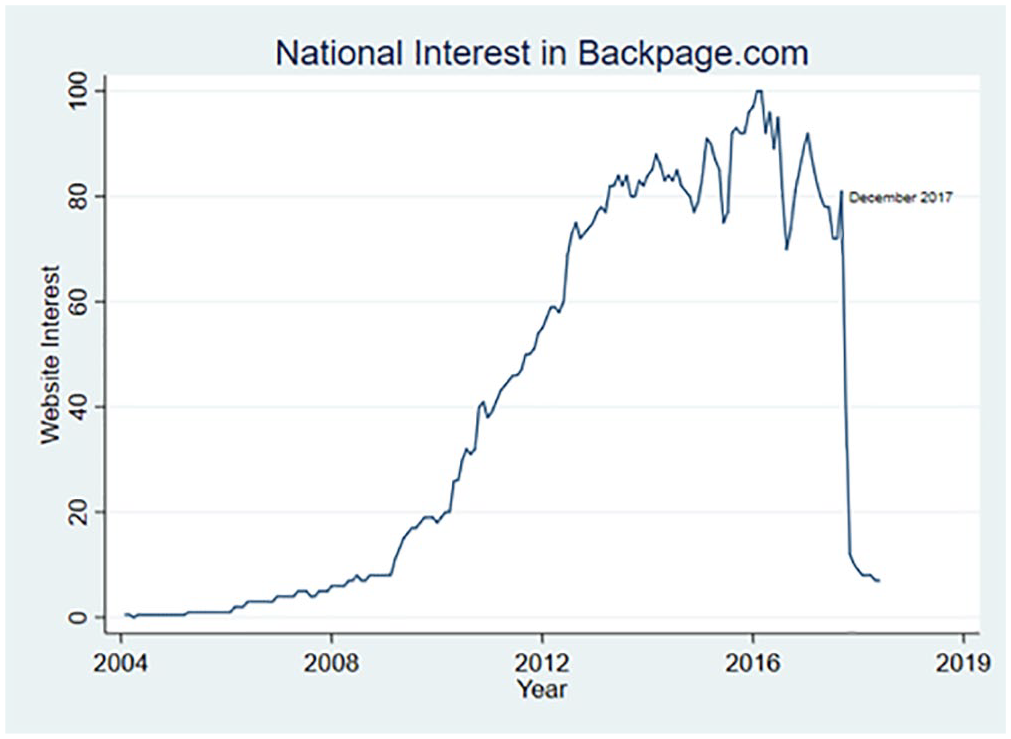
National interest in Backpage.com.
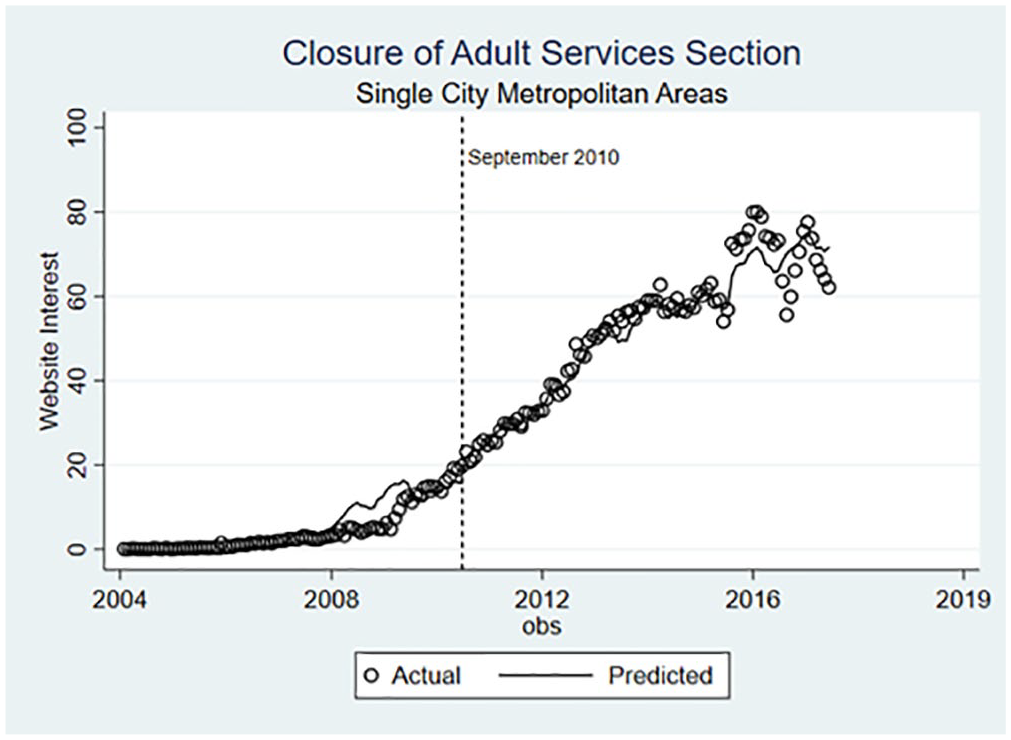
Single city metropolitan interest in Backpage.com.
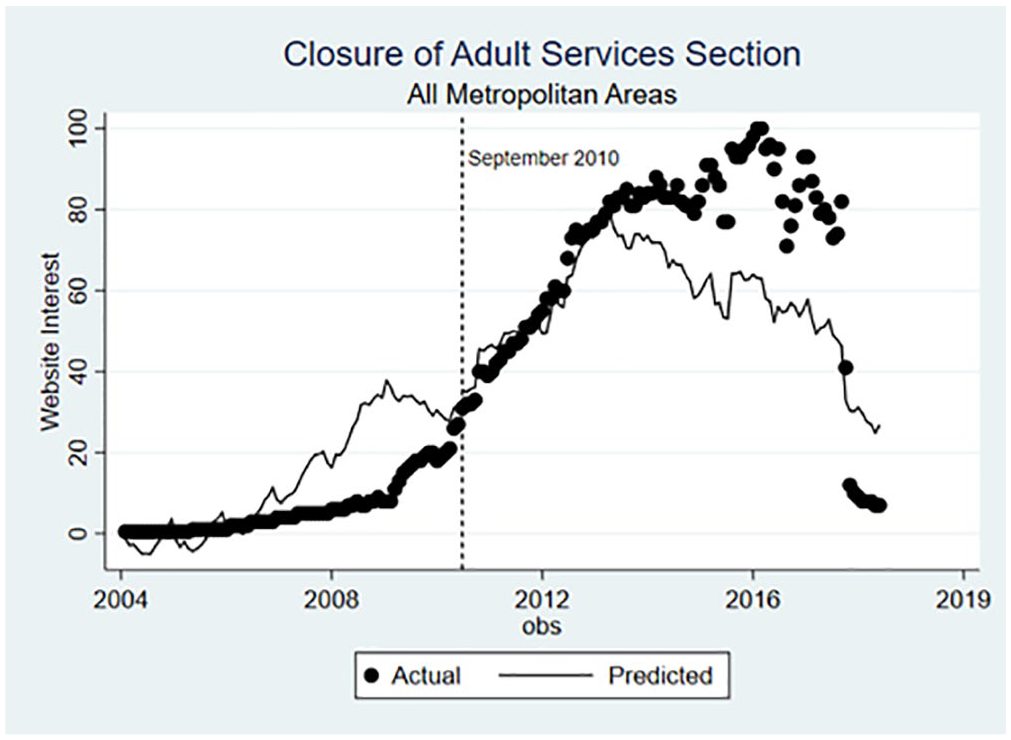
All metropolitans interest in Backpage.com.
ITSA Results Interest in Backpage.com.
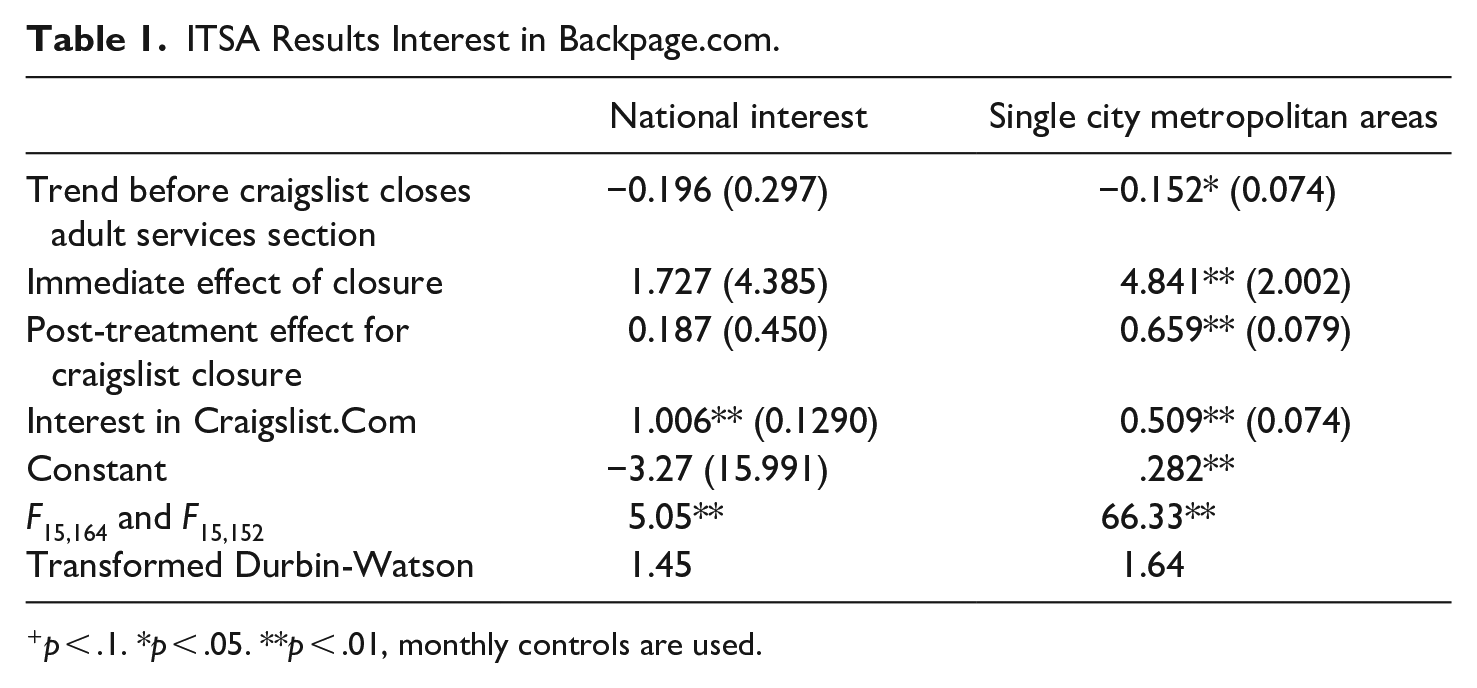
p < .1. *p < .05. **p < .01, monthly controls are used.
Hypothesis #2
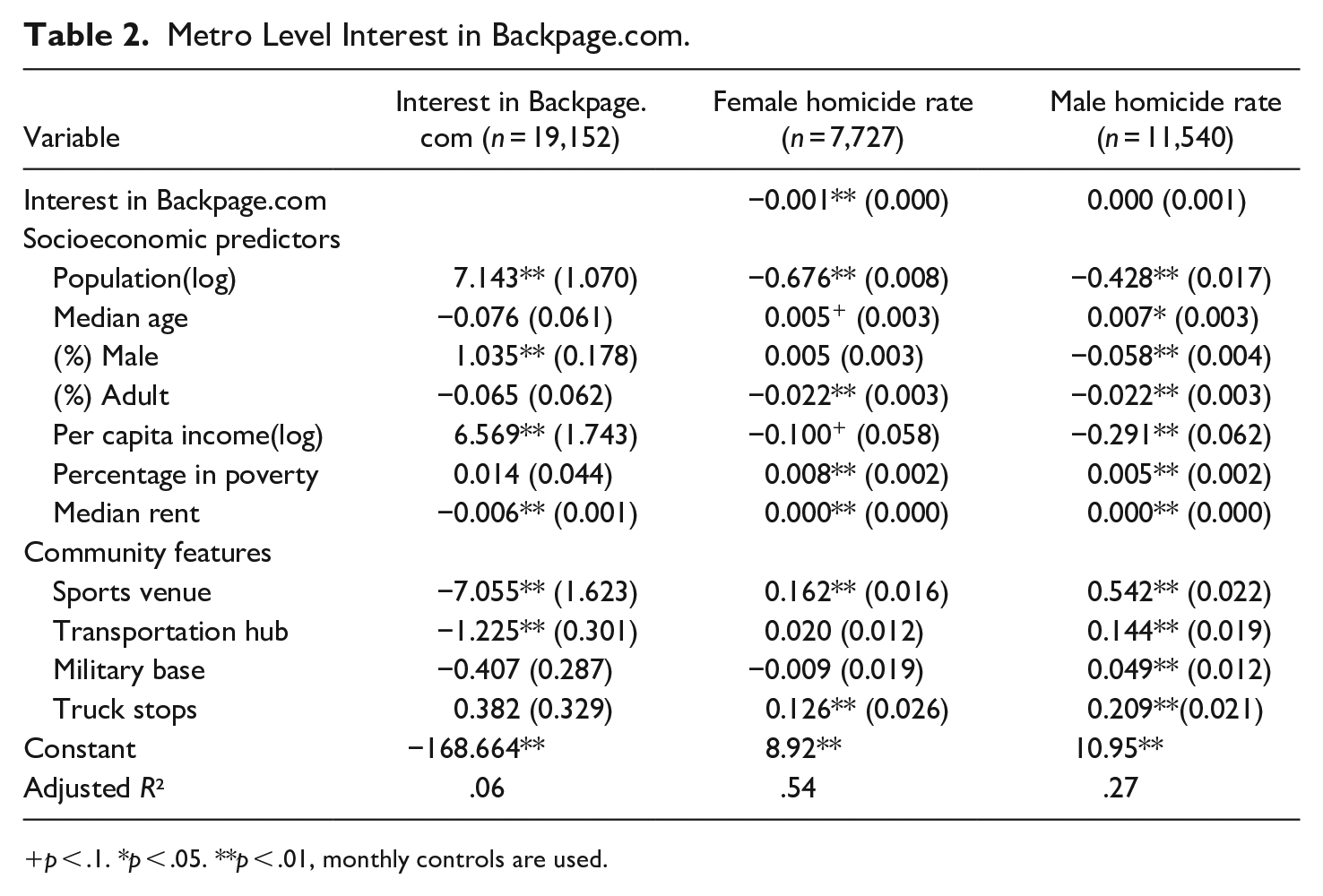
As shown in Table 2, there are several socioeconomic and community features associated with interest in Backpage. As it concerns demographic features, the higher the percentage of men, the larger the interest in Backpage. Interestingly, neither the median age, nor the percentage of adults reached a level of significance. Consistent with prior research, areas with higher populations, and higher per capita income levels were associated with the website. As Makin and Bye (2018) note in their study on the licit sex market, prior research has shown that areas with greater populations and higher income levels are associated with increased interest of sexual commerce. Interestingly, our socio-economic measure based on Cunningham and Shah (2018), areas with higher median rent, were associated with a decrease in interest in the website.
Metro Level Interest in Backpage.com.
p < .1. *p < .05. **p < .01, monthly controls are used.
Results of the community features analysis are contrary to expected results. While the presence of sports venues have been found to have a mixed support regarding association with prostitution and consumer demand (Farley et al., 2014), these studies have focused on large, specific events like the Super Bowl, the World Cup, and the Olympics (Delva et al., 2011; Fredericks, 2016; Ham, 2011; Hayes, 2010; Latonero, 2011; Wright, 2013), although it should be noted that the focus was on sex trafficking, which has often been conflated with sex work. Our results suggest that areas with a sports venue were associated with a decrease in interest in Backpage. To ascertain whether there is a multicollinearity issue between areas with higher populations and the presence of sports teams and transportation hubs, we conducted a supplemental analysis concerning multicollinearity. Results showed no multicollinearity symptoms. Metros with transportation hubs were also associated with decreases in interest. Neither military bases nor the number of truck stops were associated with interest in Backpage.
Hypothesis #3
Similar to the Craigslist findings of Cunningham et al. (2019), we found that interest in Backpage is associated with a decrease in homicide rates for women. When controlling for many of the common socioeconomic and community features associated with the illicit sex market and used in studies of homicide (see Butchart & Engström, 2002; Fox & Zawitz, 1999; Kovandzic et al., 1998; Salfati et al., 2008; Steffensmeier & Haynie, 2000a) we find an influence on female homicide rates. Interest in Backpage was not associated with changes in the rates of homicide for men.
Limitations
While every step was taken to strengthen the validity of this study, there were several limitations. The first limitation is the use of the Supplementary Homicide Reports (SHR). While the SHR is still the best measure for homicides and specifically its ability to show the number of incidents by month and the characteristics of the victim, there are key issues that impacted data collection for our study. The SHR is limited to incidents voluntarily reported by agencies. It does not include data from states like Florida and Alabama who did not report to the FBI and therefore, were excluded in our sample. It is also important to note that as a result of differing department reporting practices, there is not a standardized way to report the incidents and it is unclear if the incidents reported are rolled over monthly, when the incidents occurred, or when they are cleared. It is also impossible to identify the relationship between victim and offender as being sex worker involved, as it can be difficult to identify the homicide victim as a sex worker or being the result of engaging in sex work. Ultimately, identification is dependent on the investigating officer, and therefore, cannot be limited to those killed because of participation in the sex trade only. As such, non-sex work homicides are included within the sample, however, SHR has been utilized as the dependent variable in previous sex worker safety literature, making it the most appropriate measure at the time of this study.
Another limitation is the use of metropolitan and micropolitan statistical areas. While metropolitan and micropolitan statistical areas includes the incidents and interest levels of counties within these statistical areas. They do not include towns, cities, and counties that are not included in metropolitan and micropolitan statistical areas. This study also did not include those statistical areas with multiple cities included in the metropolitan and micropolitan areas. While supplemental analysis did not show a significant difference in interest levels, by removing these metropolitan areas, information is missing for these cities.
Finally, there is the limitation with using interest levels. There were months in which metropolitan areas had interest scores of 0 or <1. It is important to reiterate that a score of 0 does not reflect “no interest.” Rather, a score of 0 means compared to other areas, it did not meet the threshold of moving to a “1.” Additionally, this study is using the interest in, and not use, of Backpage. This is an important distinction for numerous reasons. First, this interest measure only captures the search queries that lead to Backpage. It does not include those who go directly to the website via a bookmark, the number of accesses to Backpage that occurs, or how and why the website is used. In many ways, our interest measures should be considered a representation of new users interested in the website for each location.
Discussion
As the results of the time series analysis suggest, there is a statistically significant influence of the closure of an adult service and diffusion to another service, which until now had not been documented through empirical research. Prior research has documented a momentous shift in website traffic, though our results show the immediate effect and the sustained increase in interest. Recognizing this shift, it is important for both practical and theoretical reasons to understand what drives the interest in these websites and equally as important, how the sex market adapts to these changes.
As our findings show, an increase of interest in Backpage was statistically associated with the shutdown of Craigslist, strongly suggesting a displacement effect instead of a deterrent effect. From an economic perspective, it is understandable why the market would shift. Quite directly, the cost of entry is low, while the financial benefits are high (Macfarlane et al., 2017). Prostitution, regardless of manner, results in about $14 billion annually, with indoor prostitution (including online prostitution) accounting for 85% of the profit (Cunningham & Shah, 2018). For those advertising online, Craigslist generated over $40 million from advertising while Backpage generated approximately $37 million annually in prostitution advertisements (Farley et al., 2014). In addition to high profits, these use of online advertisement websites provide increased accessibility for individuals with a click of the button, and in certain circumstances, complete anonymity (Beckham & Prohaska, 2012; Kosloski et al., 2017), increasing the potential clientele pool. As evidence of this, consider that in a study of fifteen cities, it was found that 1 out of 20 adult males were utilizing online advertisements for paid sexual encounters (Roe-Sepowitz et al., 2016). In another study of “johns” or clients of prostitutes soliciting services over the web, Kosloski et al. (2017) measured over 200 responses to advertisements in a single 24-hour period. As the authors documented, the “reach” of these websites creates market opportunity. Similar to the displacement effect that happened when Craigslist shutdown (Heil & Nichols, 2014), the shutdown of Backpage has resulted in a vacuum effect, shifting users to other sources for obtaining sexual interactions (Lopez et al., 2020; Nhan et al., 2020), and facilitating the evolution of the online sex market beyond web advertisements to a different type of “on-demand” or “gig” market (Brok, 2020).
Gig, or on-demand, markets are online platforms in which anyone with a stable internet connection and access to the internet, often through a smartphone or computer, can engage in a demand of labor, like online sex work (Brok, 2020). There are four types of platforms: (1) in-person direct where the internet is used to facilitate a physical interactions like Craigslist and Backpage’s advertisements, (2) at-a-distance, indirect “live” where sex work is committed through the use of technology like web-cams, (3) indirect purchasing as in the purchase of pornographic material, and (4) asynchronous consumption and interaction in which sex workers deliver interactions/material through third party applications like OnlyFans and Snapchat (Swords et al., 2021). With FOSTA-SESTA and the resulting shutdown of Backpage reducing avenues for advertisement and income along with health concerns brought by the COVID-19 pandemic, sex workers have adapted to utilizing other means for advertising and income through the use of asynchronous consumption and interaction platforms like OnlyFans and restricted social media accounts, which allow the content to be more explicit (Swords et al., 2021) while creating the opportunity to generate a high profit for its content creators. In an interview with an OnlyFans creator, Allie Rae, it was reported that when she first started posting content on OnlyFans, she made $8,000 in the first month. She now averages anywhere from $65,000 to $75,000 a month for content posted (Stern, 2021). Users of OnlyFans have been reported to have spent approximately $2.36 billion on content, with the company reporting a profit $74 million from the 20% cut they receive from content creators (Cooban, 2021). As our study has shown that interest in Backpage is a suitable proxy for online adult erotic web advertisements, we expected to see that interest in Backpage would be higher in metropolitans that have key community and socio-economic features that have been empirically associated with prostitution. Our findings show that the higher percentage of men, higher populations, and higher per capita in the metropolitan statistical area are positively associated with interest in Backpage, in line with the findings of Makin and Bye (2018) and Lopez et al. (2020) while higher median rent was negatively associated with Backpage interest. These findings make sense when considering the socio-economic market for sex work. Like businesses navigating a competitive market, online advertisements in cities with higher populations of men, the main clients of sex workers, have increased the potential pool of clientele, while also increasing the sex worker pool, creating a bargaining environment in sexual commerce. They can adjust their prices based on locale, additional services, or based on the client (DeAngelo et al., 2017; “More Bang for Your Buck; Prostitution and the Internet,” 2014). Higher cost of living means less money to spend on sexual services. However, not all community and socio-economic features are positively associated with interest in Backpage, which is surprising.
Our findings showed that the presence of sports venues and transportation hubs in a metropolitan are negatively associated with interest in Backpage despite prior research findings showing an association with large sporting events, spatial mobility, and prostitution. These findings might be best explained by the temporal characteristics of sporting events and transient populations. Sports venues are typically only used during key events like football seasons, championships, and concerts. These events are temporary and last a matter of hours. When not in use, the venue lays dormant and empty of spectators and tourists, resulting in less demand. Individuals traveling are also only in a location for short periods of time and therefore, may not utilize online advertisements to conduct sexual encounters based on time, money, and anonymity. Instead, they may be utilizing other sources of making direct contact with individuals for sexual purposes like the applications Tinder and Plenty of Fish.
Another finding that is not line with the literature was the lack of association between military bases and truck stops with interest in Backpage. Like the transient nature of sports venues and transportation hubs, truck stops involve temporary stops in an area. It could be argued that perusing online advertisements is too time consuming and that instead, travelers will use other means to make contact with sexual partners. Military members also have other social avenues like bars and online applications to contact a potential sexual partner that have the means to guarantee that the meet is less likely to be a setup or place them at an increased risk of harm in all form. It is important to note that while these findings are relevant, many of the community and socio-economic indicators are based on street-level prostitution and may not account for the shift to online, mimicking indoor prostitution.
Finally, when addressing some of the methodological limitations shown by Feifer et al. (2019) and utilizing a longer period of analysis, this study did find statistical significance indicating a relationship between interest in Backpage and female homicide rates. We do find support for the effect on female homicides rates for Backpage as Cunningham et al.’s (2019) study found with the usage of ERS on Craigslist. However, it is important these results be viewed through the proper lens. First, while every attempt is made to include suitable controls, there is omitted variable bias. Adding additional controls could reduce the level of significance. The detectable influence of Backpage and its associated size is quite small and while it does not achieve the magnitude as Craigslist (Cunningham et al., 2019), there are key differences in how this study was implemented. While there is research showing a relationship between advertising and website interest, adverts on Backpage are quite different from traditional advertising for political campaigns. With that said, in a study of approximately 2,000 counties in the United States over nine years (1999–2008) with access to Craigslist compared to counties without access, it was found that the use of online web advertisements led to a 17.58% increase in prostitution cases in these counties (Chan et al., 2019).
Online advertisement by sex workers has resulted in a shift in the sex work industry. While street level sex workers account for a small percentage of sex work, they have the highest risk of victimization and exploitation compared to sex workers participating in “indoor markets” like massage parlors and brothels (Macfarlane et al., 2017), albeit it is important to note that all sex workers face violence and exploitation through their course of profession (Farley, 2005; O’Doherty, 2011). However, our findings in combination with the findings of Cunningham et al. (2019), suggest that there is an association with decreasing female homicide rates and online advertisements. While we cannot explain this association directly, we would argue that Routine Activities Theory could explain the decreases we have found.
Routine Activities Theory (Cohen & Felson, 1979) posits that crime occurs when the following three factors exist at the same time: a motivated offender, a suitable target, and the lack of a capable guardian (Chon, 2016). Considering the danger of street prostitution, where all transactions occur in person and away from well lit, public areas, creating a suitable target for the motivated offender, the internet has offered sex workers the ability to increase their safety and security by giving them control of who they meet, when they meet them, and where they will meet prior to meeting the prospective clientele, removing the ease of access for making contact with a potential victim an offender had prior to the use of internet. Additionally, faster connections to the Internet along with the affordable access to smartphones allow sex workers to screen potential clients, establish clear boundaries, and access location tracking applications while increasing information sharing between sex workers establishing the guardian.
Despite the intent of FOSTA-SESTA and other anti-trafficking policy supporters in preventing online sexual exploitation (Peterson et al., 2019; Weitzer, 2019), when considering the business nature of the commercial sex market (Makin & Bye, 2018), there is a growing concern the market has shifted in a direction that is untraceable (Weitzer, 2019) or disaggregated to such an extent making data gathering complicated. As some scholars have warned, targeted enforcement measures, like FOSTA-SESTA and the resulting closure of these services, will result in displacement or diffusion (Finn & Stalans, 2016; Stalans & Finn, 2016), having unintended consequences resulting in more harm (Heil & Nichols, 2014). As Heil and Nichols (2014) offer, shutting down the web advertisement sites will not stop sex trafficking or violence. It will only shift it toward an unknown location, making it more difficult to investigate (from both a researcher and practitioner perspective). One of the primary ways that officers were able to track and identify sex trafficking and other illicit activities is through the visible, easy to access advertisements. The shift of the market to platforms behind paywalls and the lack of current, physical advertisements to identify victims make the investigation of sex trafficking nearly impossible. Additionally, at-present, academics and practitioners remain unable to speak to where the market diffused, nor measure the impact of FOSTA-SESTA on public health and safety. More importantly, it does not account for the unintended consequences for sex workers that has resulted from the loss of these marketing avenues.
Conclusion
This article has contributed to the growing body of research studying the impact of online clearinghouses on sex worker safety by expanding on Cunningham et al.’s (2019) study. In consideration of the methodological limitations for replication caused by the shutdown of Craigslist’s Erotic Review Section and the subsequent shutdown of Backpage.com, we established a proxy measurement for advertisements through the use of interest measures. Using interest in the website Backpage.com, which has been argued to be the successor to Craigslist, we identified that a displacement effect occurred with interest in Backpage significantly increasing upon the shutdown of Craigslist. By establishing this displacement, we conducted further analysis to examine what if any relationship existed between measure of interest in Backpage and homicide rates. Consistent with the findings of Cunningham et al. (2019), our results find a relationship between interest in Backpage and decreasing female homicide rates. However, it is important that given the limited research surrounding sex worker safety and the use of online services, future research should explore the relationship between these clearing houses and other types of victimization. There are other measures of safety for sex workers like sexual assault rates and physical assault rates that can be used to determine the influence of online erotic clearinghouses on safety. Relatedly, were these clearing houses associated with increases in instances of cyber harassment or cyberstalking? Expanding on our findings of interest, future research should be conducted on what drives interest in online sex advertisements and where the interest in Backpage diffused upon its shutdown. Every effort should be made to find and expand on predictors of interest levels for the purpose of finding the future online erotic clearinghouses and the impact they have on safety.
In addition to the empirical contributions of our study, our findings offer practical implications as related to policies targeting sex trafficking like FOSTA-SESTA. The passage of FOSTA-SESTA ultimately resulted in the shutdown of Backpage for the purpose of preventing human trafficking. Many sex workers have come forward using the findings of Cunningham et al. (2019) to argue why websites like Craigslist and Backpage should not be closed and more importantly, how safe it made them feel. Unfortunately, one of the difficulties in this field of research has been the result of the overlapping understanding of sex trafficking and prostitution that occurs. It is important to note that not all sex workers are victims of sex trafficking and willingly consent to take part in sex work for a variety of reasons. Because of this overlap, sex workers are often impacted by the policies designed to help and prevent sex trafficking victims. As a result, the effect of FOSTA-SESTA and similar policies has the potential to be profound on both sex workers and the community, resulting in a shift in sex worker risk practices to adjust for the shutdowns.
Our results reveal a shift in interest and website traffic to Backpage, and yet our knowledge on how the market adapted to the seizure of Backpage remains limited. As research continues to examine the impact of these websites and their replacements on society, it reaffirms the need to understand what drives interest in these websites, and to critically analyze how the market adapts, and how these adaptations influence public safety and public health more broadly.
Footnotes
Declaration of Conflicting Interests
The author(s) declared no potential conflicts of interest with respect to the research, authorship, and/or publication of this article.
Funding
The author(s) received no financial support for the research, authorship, and/or publication of this article.
