




Abstract
Students with autism spectrum disorder (ASD) often display serious problem behavior that hinders educational and social progress. Educators in public schools are often untrained in the use of intensive evidence-based positive behavior technologies. This study describes the preliminary investigation of a coaching and consulting model for increasing staff’s ability within U.S. public schools to effectively reduce problem behavior in students with ASD. Public school practitioners who were enrolled in the Customized Behavior Application Training (CBAT) program during the 2020–2021 academic school year completed a survey regarding the social validity of the CBAT model and its impact on problem behavior in students with ASD. Initial findings indicate positive receptivity of CBAT as a useful training for helping school staff more confidently and independently address problem behavior in students with ASD in classroom settings.
Keywords
Public schools are called upon to serve all children with disabilities yet often struggle to serve those with the most severe behavioral challenges (Jury et al., 2021). Challenging behavior can have a significant impact on classrooms, schools, and school divisions. Without the capacity to meet their behavioral needs, school divisions frequently send children and youth who display challenging behavior out of public school to costly private school settings (Kurth, 2014). The Customized Behavior Application Training (CBAT) program was developed to build the capacity of public-school staff to meet the needs of these students through a comprehensive coaching and consulting program to use behavioral assessments and positive behavior interventions. The purpose of this article is to review the results of a survey evaluating the social validity and teacher-reported impact of CBAT in two large geographic regions with 30 school divisions in Virginia.
Impact of Challenging Behaviors on the Education of Individuals With ASD
Children and adolescents with autism spectrum disorder (ASD) display high rates of problem behavior (e.g., aggression, property destruction, self-injurious behavior). Prevalence rates for problem behavior among children with ASD are as high as 90%, and one in four adolescents with ASD meets the criteria for a disruptive behavior disorder (Kaat & Lecavalier, 2013; Simó-Pinatella et al., 2019). Problem behavior has damaging effects on a child or adolescent’s quality of life in a multitude of ways. These include negatively impacting interpersonal familial relationships, limiting access to socialization with peers, and interfering with educational progress (Munkhaugen et al., 2019; Siu et al., 2018). This is particularly concerning as students with ASD are more likely than students without disabilities, and other disabilities, to have poor post-school outcomes in the areas of independent living, employment, and post-secondary education (Bouck & Park, 2018; Roux et al., 2021).
The prevalence of ASD has continued to rise nationally (1 in 44 children), creating a subsequent increase in the number of students needing specialized educational and behavioral services (Maenner et al., 2021). In tandem, there is growing concern over the capacity of providers to meet the increasing need for services (Hartley et al., 2016). An estimated 75,000 board certified behavior analysts (BCBAs) were required in 2015 to satisfy the demand for services but only 19,795 professionals were certified, leaving the field with an approximate deficit of more than 55,000 BCBAs to work with a variety of disabilities and in a variety of settings (Hartley et al., 2016). These findings highlight the need for less reliance by school divisions on outside consultants and BCBAs for case-by-case intervention and more high-quality on-the-job training for school professionals to independently implement behavior assessment and reduction strategies. Schools currently find it difficult to internally meet the behavioral needs of students with ASD due to the lack of expertise among their own staff. Most school professionals either have little training in applied behavior analysis (ABA) technologies or overestimate their actual knowledge of ABA practices (Fennell & Dillenburger, 2018).
Capacity of School Staff to Meet the Behavioral Needs of Students With ASD
Ensuring that school staff manage problem behavior using evidence-based, constructive strategies is particularly essential because students with disabilities who exhibit problem behavior are disproportionately reprimanded more severely than students without disabilities (Gage et al., 2020; U.S. Department of Education, 2020). Data from the U.S. Department of Education’s Office of Civil Rights found that 13% of students receiving services under the Individuals with Disabilities Education Act received out-of-school suspensions, which is more than twice the rate of students without disabilities (6%) during the 2017–2018 school year (U.S. Department of Education, 2020). Students with a disability represent 75% of students receiving physical restraints in public schools and 25% of students arrested or referred to law enforcement. Students with disabilities in public schools who are also members of other marginalized groups (Black, Indigenous, People of Color, etc.) are even more likely to experience disparate responses to problem behavior (Katsiyannis et al., 2020). Compared with White students, Black students with disabilities are 200% more likely to receive restraint or seclusion while Hispanic students with disabilities are 45% more likely (Katsiyannis et al., 2020). The use of punitive measures, rather than positive behavior support to manage challenging behavior not only places students and staff at increased risk of physical harm (Gage et al., 2020) but also damages the rapport between school professionals and students, which can be counterproductive to learning. Evidence-based training protocols to teach school practitioners positive behavior management strategies are needed to address this issue.
Teaching School Practitioners Evidence-Based Positive Behavior Technologies
While many students with ASD can be served using more universal classroom-wide behavior support strategies, those who exhibit severe problem behavior often require intensive and targeted support to be successful in the least restrictive environments (Roane et al., 2016). There are a variety of evidence-based ABA assessment and intervention techniques effective for students with ASD. Hume et al. (2021) conducted a systematic review of evidence-based practices (EBPs) for students with ASD and provided a comprehensive list including behavior analytic techniques such as antecedent-based interventions, functional communication training, planned reinforcement, systematic prompting, functional behavior assessment, and visual supports. Each evidence-based technique should be individualized to each student so it is important that school practioners be trained in an array of options. However, many school practitioners do not have sufficient training on how to use positive behavior strategies (Fennell & Dillenburger, 2018). School practitioners are typically taught behavior analytic skills via professional development training. Components of in-service training found to be most beneficial include didactic instruction on evidence-based approaches and coaching with feedback by a trained expert in authentic environments (Egert et al., 2018; Nesselrode et al., 2022; Oakes et al., 2018). In their meta-analysis, Egert et al. (2018) found that coaching, even as a single training strategy, was three times more effective than any other training strategy. Therefore, there is a need to identify models for providing professional development in positive behavior assessment and intervention strategies that include the opportunity to be coached by a trained professional.
Customized Behavior Application Training Model
The state of Virginia’s public school system served more than 23,279 students with a diagnosis of ASD during the 2020–2021 academic year (Virginia Department of Education, 2021). In response to the growing need for behavioral intervention training to assist school professionals in supporting students with ASD over the past 6 years, a school–university partnership was established. In 2016, one region in Virginia, composed of 15 school divisions, sought help from Virginia Commonwealth University and the Virginia Department of Education (VDOE) to address the behavioral needs of students with ASD. The VDOE contracted with Virginia Commonwealth University to develop a regional capacity-building initiative to increase the number of school division staff who were highly trained in evidence-based behavior assessments and positive behavior interventions for individuals with ASD who had complex behavior support needs. This model was then replicated in 2019 in another region in Virginia, also with 15 school divisions. Both regions, while geographically distant from each other, represented a mix of urban, suburban, and rural school divisions of varying sizes.
The CBAT model is a university and public school collaboration with each iteration running during one academic calendar year. The university provides at least one BCBA to serve as a behavioral coach to each school division in the participating regions. Coaching and consultation services are provided to at least one school staff, called division liaisons (DL) in each division. The training is open to any staff with a desire to enhance their behavior analytic skillset. Therefore, school professionals interested in serving as a DL are not excluded based on prior PBIS or ASD experience, or existing certifications. DLs receive training to learn skills within the different tiers of the positive behavior interventions and supports (PBIS) framework—a system for addressing problem behavior without the use of punitive measures (Simonsen et al., 2022). When implemented with fidelity, the PBIS framework has been associated with decreased use of in-school and out-of-school suspensions for students with disabilities (Simonsen et al., 2022). Tier 1 refers to classroom-wide support, Tier 2 addresses small-group support, and Tier 3 targets individualized student-level support (Simonsen et al., 2022). The objective of CBAT was to increase the capacity of public school professionals to complete the full continuum of behavior technologies (across tiers) more independently, thus serving a greater number of students with behavioral needs in a shorter amount of time. The CBAT model program components include
Purpose and Research Questions
There is a known research-to-practice gap in special education whereby school professionals are not readily implementing EBPs identified within the scientific literature (Cook & Odom, 2013; Dynia et al., 2020). The CBAT model is an intensive coaching and consulting program aimed to streamline research-based behavior intervention strategies to school professionals. This study is a preliminary analysis examining the social validity of the CBAT model on DLs and their reports of its impact on students with ASD they work with in Grades K–12 public school settings. To investigate, a customized survey was developed and distributed to gain better insight into the perceived usefulness of the CBAT model in training DLs to confidently and competently use positive behavior technologies to reduce problem behavior. The following research questions were developed to guide analyses;
The primary purpose of these research questions is to establish an initial level of social validation for the utility and components of the CBAT model.
Method
Participants, Materials, and Procedures
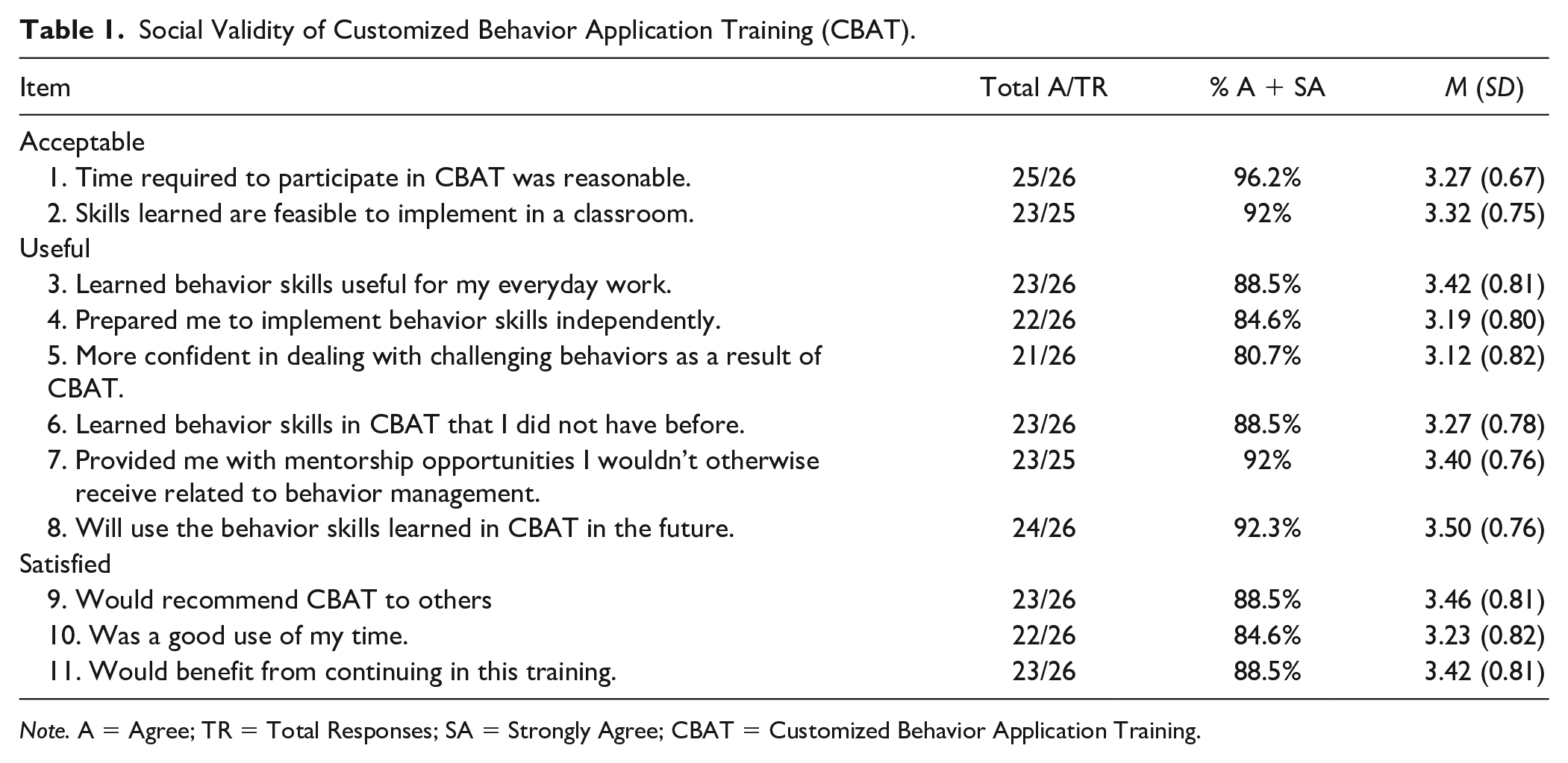
To be included in this study, respondents must have participated in the most recent CBAT training during the 2020–2021 academic school year serving students with ASD. A researcher-developed survey was sent to 50 DLs who met this criterion. No incentive was provided to participants for completing the survey. Once CBAT concluded for the 2020–2021 academic school year, all potential participants were emailed an invitation to voluntarily complete an anonymous online survey within 30 days through the Research Electronic Data Capture (REDCap), a secure web-based application for survey development and distribution. Participants were then sent a reminder email 15 days later and a final reminder email 30 days after the initial invitation. The researcher-developed survey included questions covering three sections. Section 1 covered the social validation of the CBAT model, Section 2 covered core components of CBAT (e.g., coaching, training tracks, didactic trainings, application checklists, and delivery format), and Section 3 covered the impact of CBAT on students with ASD. Measurement of social validity consisted of 11 Likert-type scale questions (Table 1). Measurement of core components included 20 Likert-type scale, one rank order (Table 2), and 10 multiple-choice questions. Measurement of impact on students included 7 Likert-type scale questions (Table 3). Likert-type scale questions asked participants to rate the extent to which they agreed with certain statements on a 4-point scale from strongly agree to strongly disagree (and not applicable).
Social Validity of Customized Behavior Application Training (CBAT).
Note. A = Agree; TR = Total Responses; SA = Strongly Agree; CBAT = Customized Behavior Application Training.
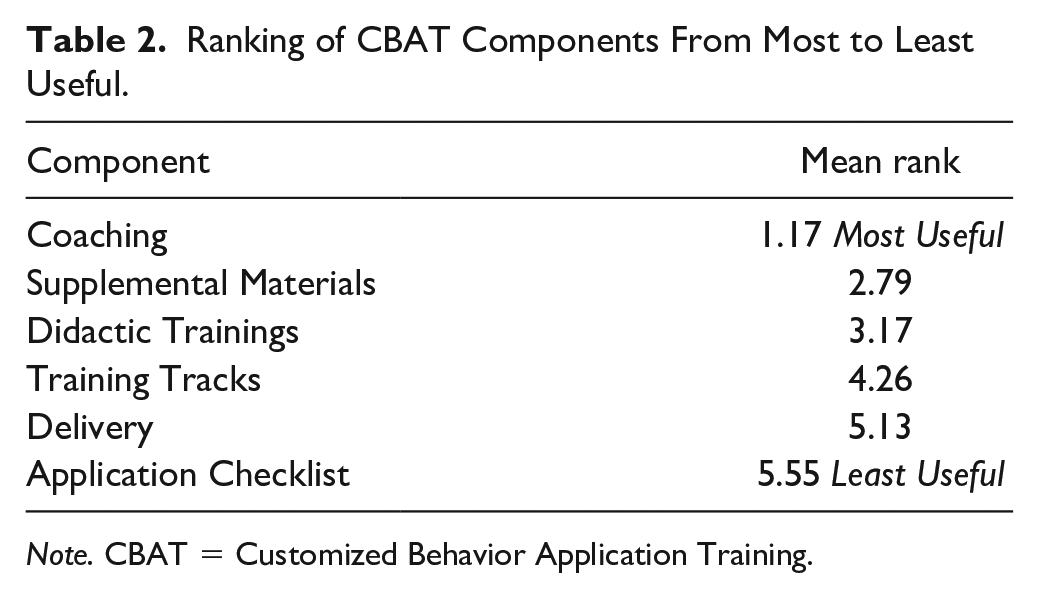
Ranking of CBAT Components From Most to Least Useful.
Note. CBAT = Customized Behavior Application Training.
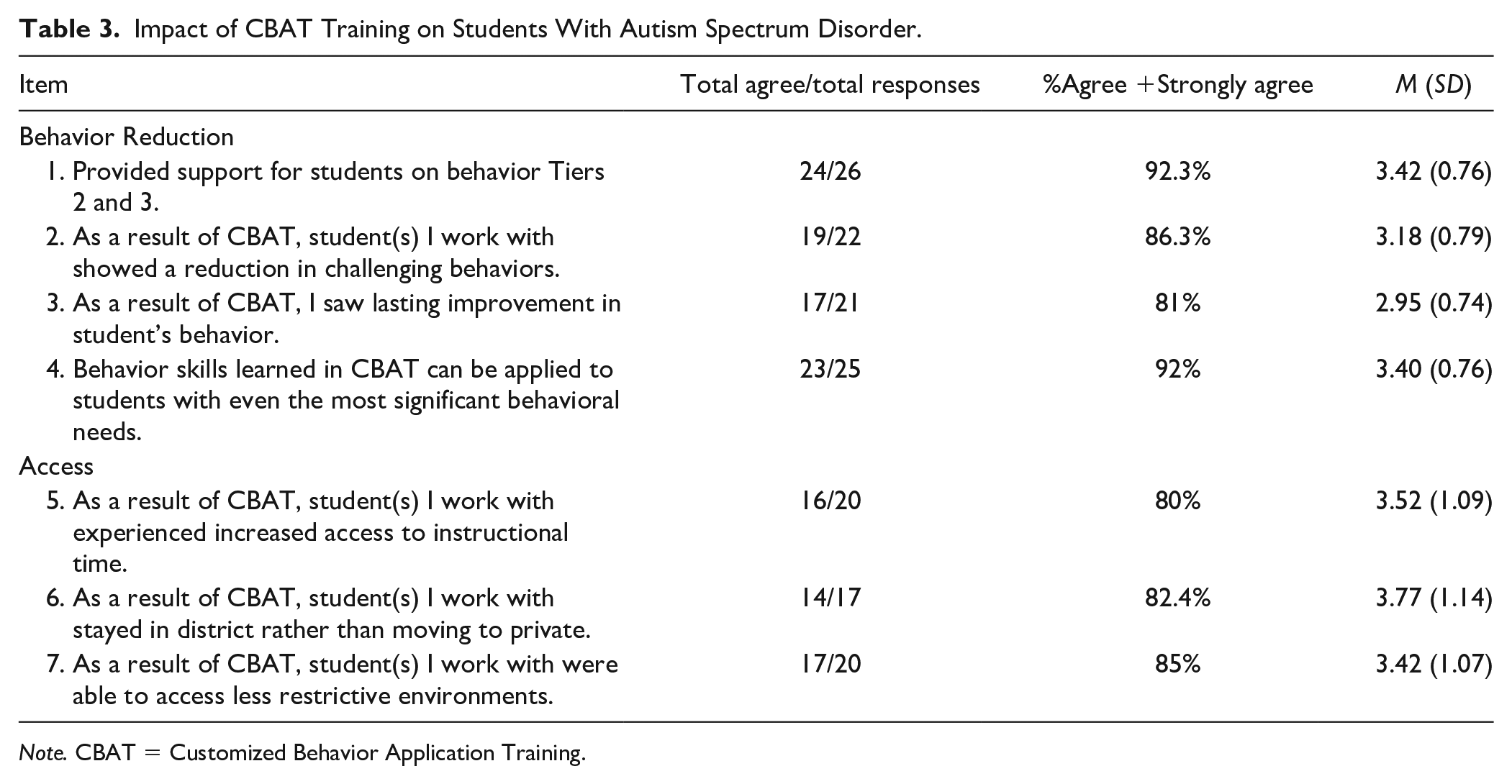
Impact of CBAT Training on Students With Autism Spectrum Disorder.
Note. CBAT = Customized Behavior Application Training.
Data Analysis
Data for all three research questions was analyzed using descriptive statistics (i.e., percentage, mean, and standard deviation). Mean rank was used to analyze the helpfulness of each CBAT component. Lastly, a chi-squared test was used to determine if group differences existed prior to analysis with respect to the professional role, previous experience with PBIS, and the number of years working with students with ASD.
Results
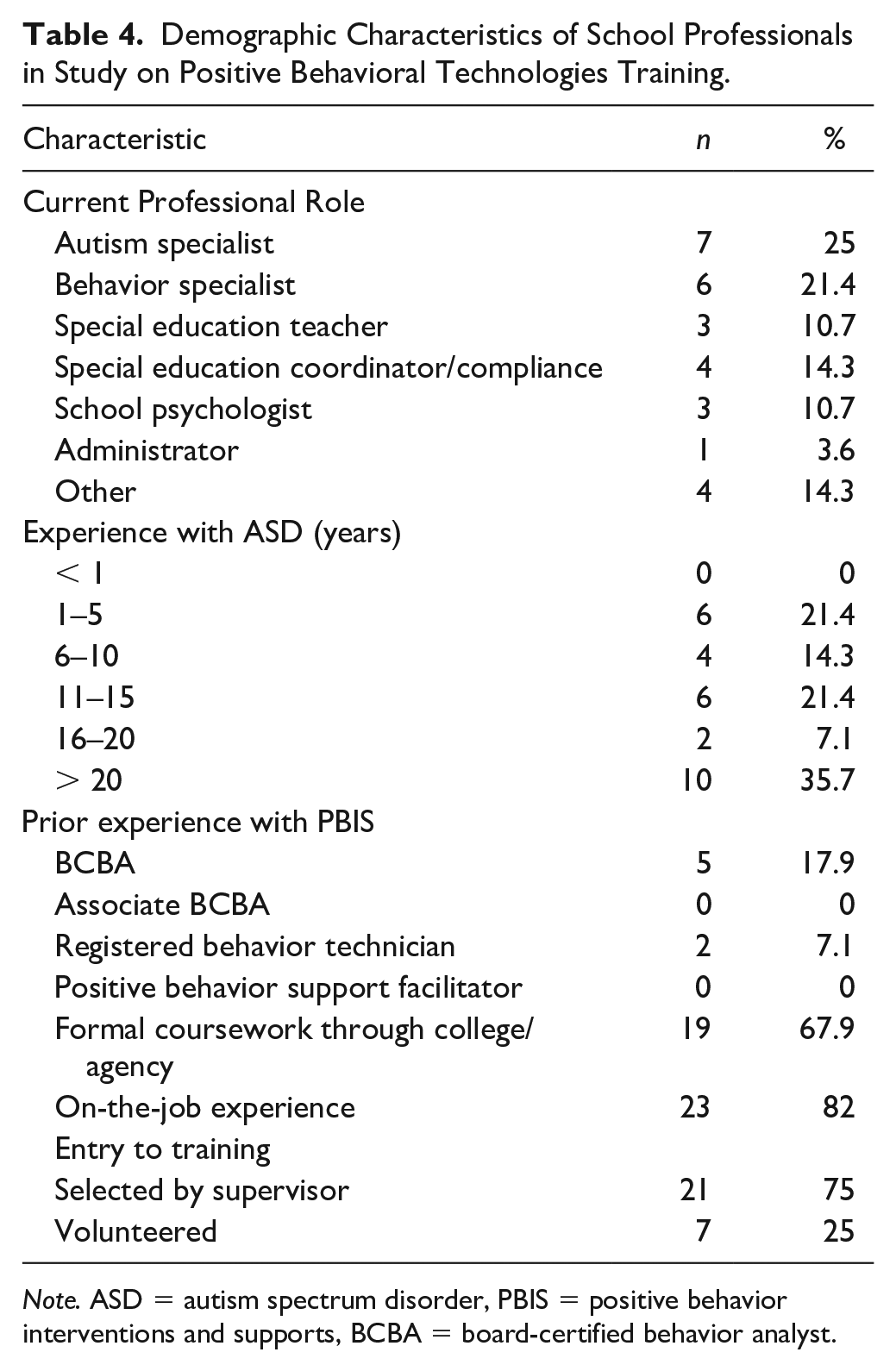
Among the 50 potential participants who were sent the survey link, 30 individuals accessed the link, and 28 of those completed some or all survey questions (56% response rate). A total of 20 potential participants did not access the survey link. DLs who answered the survey were working in a wide range of professional roles. Table 4 presents the demographic information collected. The majority (71%) had more than 10 years of experience working with students with ASD. All participants reported some level of prior experience using positive behavior supports. A small number of participants entered CBAT as a BCBA (17.9%) or a Registered Behavior Technician (7.1%), but most indicated that their prior training in positive behavior intervention was acquired on-the-job (82%) and/or through training offered by a college or expert agency (67.9%). Participants were able to select more than one category for previous behavior training. Three quarters of the sample reported initial entry into the CBAT program through assignment by a supervisor rather than by volunteering, although 96% indicated a willingness to participate. Due to the small sample size and familiarity of participants by researchers, respondents were not asked to report general demographic information such as age, gender, race, or school division. This served to protect the anonymity of participants and encourage candid feedback on the survey.
Demographic Characteristics of School Professionals in Study on Positive Behavioral Technologies Training.
Note. ASD = autism spectrum disorder, PBIS = positive behavior interventions and supports, BCBA = board-certified behavior analyst.
Survey results are organized by research questions below. The 56% (n = 28) response rate observed in this study is within the average range of response rates (55% to 65%) that typically occurs with online distribution methods (Holtom et al., 2022). Not all participants completed all survey questions leaving variation in the total number of responses across survey items. In some cases, items were left blank and in other cases, the respondent chose “not applicable” to indicate the item was not relevant to their professional role or the capacity in which they worked. To ease the interpretation of results, the 4-point Likert-type scale (i.e., 1 = strongly disagree, 2 = disagree, 3 = agree, and 4 = strongly agree) was collapsed into a dichotomous category and reported as percentage of agreement. Survey results in Tables 1 and 3 thus present the sum of respondents who indicated either “agree” or “strongly agree” for each statement out of the total number of participants who answered the question.
Prior to analyzing the stated research questions, non-parametric analyses (i.e., chi-square) were used to determine differences between groups, specifically related to current role, number of years working with students with ASD, and prior training in PBIS. There was no association between current role or years of experience with ASD and responses related to either social validity or impact on students. To examine differences in social validity and impact on student ratings across groups with differing prior PBIS experience, categories were collapsed into dichotomous variables with either formal certification from a recognized board (i.e., BCBA, associate BCBA, registered behavior technician, or certified positive behavior support facilitator) and no formal certification (i.e., taken behavior courses, on-the-job experience, no prior experience or other). Results of a chi-square indicated an association between those who entered CBAT with more formal PBI training and two social validity items inquiring about confidence, χ2(1) = 7.0, p = .02, and learning new behavior skills, χ2(1) = 7.6, p = .02. Individuals with prior formal behavior training were not as likely to express gaining more confidence or learning new behavior skills as a result of this training, although these findings are not surprising given that those with formal certification most likely entered CBAT with a higher level of confidence and foundational skills. The number of individuals with prior formal training was 30.8% (n = 8). Since no other significant differences on the remaining questions of social validity or impact on students was observed, the collective sample was analyzed as a group.
Research Question 1: Social Validity of the CBAT Model
Overall, DLs who participated in CBAT reported high levels of agreement on questions targeting the social validity of the training intervention. Social validity measured the extent to which intervention procedures were considered acceptable and useful along with the degree to which participants were satisfied with the intervention. At least 80% of participants expressed positive agreement with all survey items regarding the social validation of the model. Item means, presented in Table 1, indicated a tendency toward agree rather than strongly agree for the majority of questions. Nearly all respondents felt the time commitment to participate in the training was acceptable (96%) and that the behavior skills strategies learned during CBAT can be reasonably implemented in classroom settings (92%). The majority of respondents agreed that participating in CBAT was useful to their professional development in the following ways; learning both new and useful behavior intervention skills (88.5%) and becoming more confident and independent in using behavior intervention skills with the students they work with (80.7%, 84.6%, respectively). Overall, most DLs felt that participating in CBAT was a good use of their time (84.6%) and agreed they would benefit from continuing to participate in the training to learn more skills (88.5%). Most indicated they would recommend participation in the training to other school professionals (88.5%). The majority of participants also indicated that CBAT provided mentorship opportunities in learning new behavior skills they would not otherwise receive (92%) and that continuing the training in the future (in the same or new training track) would be beneficial (88.5%). Findings indicated that respondents largely agreed rather than disagreed with most items, indicating positive preliminary results concerning the overall acceptability, utility, and approval of the CBAT model.
Research Question 2: Utility of the Core Components of CBAT
The CBAT model is a packaged intervention with multiple components. DLs were asked individual questions about all of the components and asked to rank order each in terms of over usefulness from 1 = most and 5 = least useful (Table 2). Findings are organized by component.
Coaching
Results indicated that coaching was perceived to be the most useful component of the CBAT model. In fact, 100% of respondents ranked individualized coaching sessions within the top three most useful components and item means indicated a tendency toward strongly agree over agree. According to responses, factors contributing to the positive coaching experience included the regular accessibility of the coach to meet at least once biweekly (96.2%, M = 3.67, SD = 0.68), the individual guidance provided in coaching sessions to help DLs practice content learned during didactic training (96%, M = 3.78, SD = 0.75), the feedback provided by coaches after observation sessions (96.2%, M = 3.67, SD = 0.68), and access to the knowledgeable skillset of coaches regarding behavior analytic content (96.1%, M = 3.73, SD = 0.67).
Supplemental Material
During or in between coaching sessions, CBAT staff provided individualized supplemental resources to help reinforce concepts or enable the practicing of skills prior to application with a student. Materials included data forms, video examples, case studies, websites, and other helpful supplies catered specifically to the needs of the DL. These materials were ranked second highest in terms of utility and DLs agreed (96.1%, M = 3.74, SD = .72) that CBAT staff provided a sufficient amount of supplemental resources during the training. Although there was not a standard amount of material distributed due to the tailored nature of sessions, coaches worked one-on-one with DLs to identify and provide materials that would promote understanding of how to complete the steps outlined in the application checklist with fidelity.
Didactic Trainings
Didactic training was also within the top three components perceived as most useful. Most respondents reported that the behavior content-focused training helped increase their knowledge of both behavior assessment (84.6%, M = 3.15, SD = 0.82) and intervention (80.7%, M = 3.07, SD = 0.83). In addition, most felt that the receipt of core behavior analytic concepts via didactic trainings helped better prepare them for subsequent individualized coaching meetings (88.4%, M = 3.33, SD = 0.83). Holding one, 60-min training session each month was considered a reasonable time commitment for most DLs (84.6%, M = 3.33, SD =0.83).
Training Tracks
A brief one-paragraph description of all three training tracks along with example learning objectives was provided to DLs prior to training and 95.6% reportedly felt confident selecting a track after reviewing options. While the majority of DLs chose a training track to focus on during the school year (81.4%, M = 3.26, SD = 0.86), some reported having the track chosen for them by a supervisor. Encouraging DLs to self-select a track appeared to have a positive effect as most felt the track they chose was a good match for their skill level (88%, M = 3.46, SD = 0.86) and were satisfied with the track they chose (84.6%, M = 3.41, SD = 0.89).
Delivery Format
Among survey respondents, 70% used a combination of in-person and virtual modalities while 30% were virtual-only. When asked to compare these modalities, just over half (57.7%) felt that in-personal and virtual delivery of CBAT were equally effective. Slightly fewer (42.3%) felt in-person was more effective than virtual, and 0% thought virtual was more effective than in-person. The majority of school professionals indicated that they preferred getting feedback from their coach verbally during individualized meetings over other methods such as written feedback through email or a conferencing platform.
Application Checklist
When required to rank order, respondents indicated that the application checklist was the least useful aspect of training in comparison to all other components. However, questions regarding the application checklist were left unrated or marked “not applicable” by 38.5% of respondents (n = 10). While this component was comparatively ranked low, respondents who did answer specific questions about the application checklist rated it positively with a leaning toward strongly agree over agree. In total, 87.5% (M = 3.81, SD = 1.13) felt the tool helped them to better understand core behavior analytic concepts and to know what actionable steps were expected while being observed by their coach practicing skills. Nearly all DLs who reported on the tool felt it was helpful in allowing them to self-reflect on their progress and agreed they would use the tool in the future to help maintain fidelity of implementation. Lastly, 87.5% (M = 3.81, SD = 1.13) indicated they would use the application checklist as a tool to help them train other staff within their school divisions to implement behavior strategies.
Research Question 3: Impact of CBAT Model on Students With ASD
The DLs indicated a high degree of agreement concerning the positive impact of the CBAT training on students with ASD. Survey questions investigating the impact of CBAT on students broadly targeted the reduction of challenging behavior and increased inclusivity via access to curriculum and integrated school settings. Table 3 shows the percentage of agreement and means for items related to the impact of CBAT on students. School professionals overwhelmingly agreed that the training was effective in not only reducing incidents of challenging behavior (86%) but also in providing support for students with significant rather than just mild behavioral challenges (92%). The impact of the CBAT model was also perceived by the majority of respondents as having a long-term impact on the occurrence of problem behavior in students with ASD (85%), although the majority indicated agree rather than strongly agree (M = 2.95). In terms of promoting inclusivity, at least 80% of staff agreed that participating in CBAT led to students having increased access to instructional time in the classroom, helped them access less segregated settings within the school environment, and positively impacted the student’s ability to stay in their public school setting rather than moving to a more segregated private placement alternative.
Discussion
The challenges that public-school practitioners face when attempting to provide effective behavior supports are significant. There is a need for training that increases the capacity of public-school practitioners to implement positive behavior technologies in real settings. The CBAT model is designed to address that gap via an intensive training and coaching model in positive behavior strategies. Because this capacity building effort occurs in the context of many other competing priorities for school staff, it is important to assess the social validity of the model. After all, training is not effective if it is too burdensome, difficult to attend, or does not fit in the context where it is intended to be used. Findings from this preliminary study offer initial support for the utility of the CBAT model for both DLs and the students with ASD they work with in school settings. While the immediate findings are somewhat limited, results indicate a potential to help build capacity in schools for staff to more competently and independently address problem behavior using positive support strategies. The results of this study therefore serve mainly as a basis to warrant further investigation of CBAT as a capacity-building model.
Overall, findings indicated that CBAT is an acceptable and useful model for teaching positive behavior support strategies that are feasible to implement in classroom settings. This input serves as a small first step in identifying a training model that can help address the noted shortage of professionals able to provide positive behavior support services (Hartley et al., 2016). DLs reported that participating in CBAT helped them not only learn new positive behavior support skills but also become more confident and independent in using these technologies with students with ASD who display intensive behavior problems. These findings were true during an academic school year impacted by the COVID-19 pandemic, suggesting that CBAT can be successfully implemented flexibly, containing a mix of both in-person and virtual formats.
The top three most highly ranked components included coaching sessions, provision of supplemental materials, and didactic trainings. Collectively, these three components provide DLs with the essential content, data forms, and practice opportunities needed to learn new behavior skills. These findings align with essential in-service training components commonly reported within the scientific literature (e.g., Egert et al., 2018). In contrast, the components that were ranked lower in comparison (e.g., training tracks, delivery format, and application checklist) serve more as periphery components so a lower rating is not surprising. Of all the components, the application checklist was ranked lowest. While further inquiry is needed to elucidate this finding, it is possible that the nature of the application checklist, which involves real-time observation of skill performance, was associated with anxiety or hesitation by DLs and therefore ranked lower. When interpreting the rankings listed for each component, it is important to note that respondents were required to assign each a non-overlapping number. Therefore, results indicate relative importance only in relation to other components, and not overall perceptions of the components as being useful or not to the intervention as a whole. Finally, individualized coaching sessions ranked as the most useful component which reinforces findings previously reported in the literature regarding the importance of including coaching in trainings (e.g., Egert et al., 2018). Of all the components, this piece is highly tailored to the specific needs of the DL which offers a unique customized training experience, so its high ranking may be attributed to its versatility.
Measurement of the impact of the CBAT model on students with ASD was done by indirectly asking DLs to report on how learning new skills in the training affected the students they with work with in schools. Overall, DLs did report positive gains for students as a result of the training related to the reduction of problem behavior, and increased access to instruction and least restrictive environments. School practitioners felt the model was appropriate for students with even the most significant behavioral needs, which is important due to the fact that severe challenging behavior can often be difficult to address within a classroom or school environment. As opposed to clinical or home settings, extraneous variables such as interactions from peers, noise pollution, preset schedules, school rules, required transitions to other rooms/activities within the building, and the inability to individualize all aspects of the classroom to meet the needs of one student make behavior support options more limited in a classroom.
The CBAT model was offered to all school professionals interested in serving as a DL and further advancing or refining their behavior analytic skillset, even those with extensive prior experience working with students with ASD or a formal certification in a PBIS-related discipline. Generally positive overall responses, regardless of years working with students with ASD or type of professional role, suggests the CBAT model may have wide applicability, offering value to staff with all levels of existing professional experience. This is likely due to the individualized approach used by the CBAT model, particularly during coaching sessions, which allows for the adjustment of the intensity and scope of content based on the DLs current skills. These findings are relevant to the overall purpose of the CBAT model, which is to build the capacity of school practitioners with even the least amount of prior training to effectively implement positive behavior technologies. Findings on several other items of social validity support the use of CBAT as a capacity-building model, including a respondent majority indicating an increased ability to implement behavior skills independently as a result of the training and an intention to continue to use skills learned from the training in the classroom after completion of CBAT. Lastly, nearly all respondents (96%) agreed that the time required to participate in the CBAT model was reasonable. Given the generally full schedules of school professionals, establishing a quality model that promoted substantial engagement but did not burden staff to overcommit their availability was important.
Limitations
Several limitations are noted for this study. First, although more than half of those enrolled in CBAT during the 2020–2021 school year completed the survey, the total number of responses (56%) did not reflect the full population of enrollees during the training year. It is possible that those who did respond to the survey, as compared with those who did not, had a more positive experience in CBAT, and were therefore more willing to comply with a survey request. Second, gains in behavior analytic knowledge and skills by DLs were not measured directly in this preliminary study by a pre-and post-test measure so reported advancements in skillsets are somewhat subjective. However, it should be noted that coaching sessions involved direct observation of skill practice, followed by feedback to DLs by highly qualified BCBAs. So, while the analyses in this particular study did not measure performance directly, the model itself did ensure fidelity of implementation by the coaches who observed the DLs completing each skill. Third, impact of CBAT on students with ASD was not directly assessed in relation to the CBAT model and therefore educational gains reported by DLs for students may have been attributed to outlying factors other than staff’s participation in CBAT. Finally, the survey was researcher developed to assess the specific nuances of the CBAT program and therefore the psychometric properties of the instrument have not been evaluated.
Future Directions for Research and Implementation
The findings from this study provide insight into several lines of inquiry for future research and practice. The CBAT model currently focuses on building behavior analytic skills for direct recipients of the model but there remains a need to examine the extent to which it enables DLs to exponentially train other staff within their division. Population considerations will also be a future focal point as refinement of the CBAT model will include multi-cultural awareness and sensitivity efforts as they relate to positive behavior interventions for students with ASD. Future research will need to investigate a more casual relationship between CBAT and behavior skill development for DLs using more rigorous research methodology than self-report measures. Most DLs who completed the survey indicated that the current amount of time required for CBAT was reasonable, but future research should investigate the dosage of intervention necessary to achieve the same measurable outcomes. Reducing the CBAT model to the most effective, least time-intensive amount necessary will help better serve many educators working in the public school system who are taxed for time and resources. Subsequent research will also more specifically address the behavioral profiles of students impacted by the CBAT model, the influence of the model on retention in the least restrictive classroom environments versus private alternatives, and the expansion of the model to students with other disabilities beyond ASD, such as emotional behavioral disorder. Information on the model will continue to be reported as it is evaluated and refined.
Children with ASD often display challenging behavior that thwarts their ability to make educational progress in the classroom and results in social isolation from peers (Munkhaugen et al., 2019; Siu et al., 2018). Educators in public schools often lack the behavior training needed to positively manage problem behavior and trained experts in behavior analytic services are often unable to meet the demand for providers (Fennell & Dillenburger, 2018; Hartley et al., 2016). One way to reduce the gap between qualified providers of positive behavior technologies and student need for support is to build the capacity of school professionals to implement assessments and interventions with less direct dependence on BCBAs and other certificants. Findings from a preliminary evaluation of the CBAT model offers support for the notion that such a model is useful and feasible in public school settings. Further development and refinement of the CBAT training model has the potential to positively impact the educational experience of students with ASD and help staff become more confident in dealing with behavior challenges that arise on the job using effective, evidence-based techniques.
Footnotes
Acknowledgements
The authors would like to thank participating superintendents and special education directors who assisted in the origination, co-development, and successful implementation of the project. In addition, a special thanks to our state education agency leaders, Samantha Hollins and Daniel Irwin, for their ongoing leadership, vision for growth, and expansion of the project’s efforts.
Declaration of Conflicting Interests
The author(s) declared no potential conflicts of interest with respect to the research, authorship, and/or publication of this article.
Funding
The content of this article was developed under partial funding (ACE CORE Grant number 881-APE61172-H027A210107) from the Virginia Department of Education (VDOE). The contents of this article do not necessarily represent the policy or position of VDOE, and endorsement should not be assumed.
