




Abstract
Kenya faces significant challenges in providing safe drinking water, especially in low-income and peri-urban areas. This article assesses institutional and organizational frameworks constraints to the performance of communally-owned small-scale water service producers (SSSPs), which significantly contribute to safe drinking water access in underserved and unserved areas. The study employs a PESTEL analysis based on in-depth interviews to identify external factors affecting SSSPs. The findings reveal several key factors: political goodwill and interference, funding issues, operating costs, ownership, knowledge, technology and data management, freshwater availability, increasing water demand, and pollution, as well as legal and regulatory frameworks for SSSPs. These findings provide key institutional and organizational insights for advancing sustainable water management.
Introduction
Kenya is a developing country with a population of 50 million and a vibrant economy on the East African coast of the Indian Ocean. Along with many other sub-Saharan African countries, Kenya significantly lags in safely managed water and sanitation coverage, and while it aims to achieve universal safe drinking water and sanitation coverage by 2030, as outlined in its Vision 2030 and in line with the 2030 Sustainable Development Goal (SDG) 6 (UN, 2026), water services access is significantly low. The county government-owned water service providers (WSPs) serve only 16 million people, and their growth in coverage has been slow, at about 1.5% annually over the past two decades. Therefore, drastic action is necessary for Kenya to reach its universal coverage target by 2030.
In this article, we deliberately distinguish between water service providers and producers as follows: a water service provider refers to the organization mandated to fulfil the right to water and sanitation, which, in Kenya’s case, would imply the county governments. A water service producer, on the other hand, refers to the organization that undertakes the actual production of the service, which, in Kenya’s case, would imply the water utility. This distinction is strongly suggested by Nobel Laureate Elinor Ostrom (Ostrom, 1990, p. 31) to enhance water resources management. However, in Kenya, this distinction is only made in the functions the Water Act assigns to the county governments and water utilities, but licensed water utilities are referred to as water service providers (WSPs), categorized by the Water Services Regulator Board (WASREB) as either public or private.
Kenya’s Water Sector Background
Kenya’s water services sector has undergone significant reforms over the past two decades, the first major one being the establishment of semi-autonomous WSPs in the Water Act of 2002. Previously, municipalities were responsible for both provision and production functions. The Water Act 2002 established new WSPs, owned by the municipality but established privately under the Companies Act with independent management and ringfenced revenues. Further reforms were implemented with the enactment of the Water Act 2016, which transferred ownership of WSPs to county governments. The new Water Act 2016 and resultant organizational changes were due to a constitutional change that now mandates county governments with water provision. WSPs are responsible to produce water services within the areas specified in their licenses and to develop county assets for water service delivery (The Republic of Kenya, 2016). As of 2024, ninety WSPs had been licensed in the forty-seven counties in Kenya, four of them private WSPs (WASREB, 2024).
The WSPs operate commercially with no direct government subsidies. This requires them to focus on commercially viable areas, primarily in high- and middle-income regions of urban towns and cities, and operate a differentiated service in low-income areas (LIAs) and emerging urban peripheries in line with the Pro-Poor Implementation Plan for Water Supply and Sanitation (MoWI, 2007), or shortly, the pro-poor plan. As such, the WSP model is largely inadequate for serving the large population in LIAs and urban peripheries, which make up a significant proportion of Kenya’s urban population (UN-Habitat, 2018, p. 43). The urban population is expected to exceed 50% by 2050 (UN-Habitat, 2018, p. 6), further prompting an urgency for sustainable urban water and sanitation.
Small-Scale Water Services Producers
Limited access to water and sanitation services in LIAs and peri-urban areas has led to the proliferation of small-scale water services. Small-scale water service producers (SSSPs), registered as estate associations, community-based organizations (CBOs), non-governmental organizations (NGOs), private individuals, or churches, offer these services to fill the gap. In large LIAs, for example, in the capital Nairobi, some SSSPs serve up to tens of thousands through water kiosks and small-piped networks, while in peri-urban and estate set-ups, an SSSP could be serving a small gated community.
However, achieving the licensing conditions set by WASREB is daunting for them, as evidenced by the small number of private WSPs (WASREB, 2024). The conditions set out in Section 86 of the Water Act 2016 require a service provider to indicate financial and technical ability, and sustainability, financial, and expansion plans (WASREB, 2023; The Republic of Kenya, 2016). They should also have a board of directors with specified competencies according to the national Mwongozo guidelines (The Republic of Kenya, 2015). Meeting all these requirements is costly and complex for SSSP operators.
Failing to meet these standards means SSSPs remain unlicensed and the government lacks modalities to support them. Additionally, that consumers continue to experience service level differences with those served by WSPs, which are often professionally run, with guaranteed water quality, and produce sewerage services. Most SSSPs purify water using sand filters or sell raw water. Only a few established SSSPs and the private WSPs are professionally run and adequately treat water. According to the regulator, SSSPs do not guarantee safe drinking water (WASREB, 2024). Furthermore, apart from some private entrepreneurs who produce pit latrine or septic tank emptying services, SSSPs do not produce sanitation services, as they are limited by funding.
However, extensive research on government efforts to leverage community participation, including through the pro-poor plan, shows that only marginal results have been achieved. Their potential for strengthening SSSPs has thus been limited. Nzengya’s research (2015; 2018), for example, aimed at improving the Kisumu Water and Sanitation Company’s delegated management model (DMM). In DMM, the licensed WSP extends main lines to LIAs, installs a master meter, and contracts various SSSPs who operate the service in LIAs, collect fees, and pay the utility. Boakye-Ansah et al. (2020; 2022; 2019), Hanjahanja and Omuto (2018), Schwartz (2017; 2010), Nilsson and Blomkvist (2021), Kemendi and Tutusaus (2018), and Blomkvist et al. (2020) researched different other models and aspects of the differentiated services in other cities, highlighting some benefits but also significant bottlenecks that have hindered the achievement of the plan’s objectives.
Other research featuring SSSPs and mobile water vendors primarily addresses LIA water and sanitation issues. For example, Sarkar (2020) highlights the organizational arrangements for water services production in LIAs, explores the role of water vendors, major water quality and service-level challenges, and the transition towards licensing. Other literature addresses the capacity needs of SSSPs to improve service levels, for example, that of pit-latrine emptiers (Mallory et al., 2021; Peletz et al., 2020) and on factors impeding efficient functionality of SSSPs providing water services (Ananga;Njoh;Adams;& Peaden, 2019). Other literature details SSSPs’ local institutional arrangements, relevance, sustainable models, and smart technology adoption beyond the network (Wamuchiru, 2015; Guma & Wiig, 2022; Tukahirwa;Mol;& Oosterveer, 2013).
However, with much literature focusing on the pro-poor plan or social development of LIAs, there is a gap in the literature on SSSPs regarding their positioning within the overall institutional and organizational framework. We posit that any breakthrough in LIAs and peri-urban areas is contingent on a strong institutional and organizational anchoring of SSSPs.
Study Relevance and Objective
The vitality of urban water and sanitation services cannot be underestimated—unmanaged, communities risk major water shortages and sewage-polluted streets and water sources. Sustainable solutions are demanded as nations pursue development for themselves and to hand over well-performing ecosystems to future generations. Yet, according to the World Water Development Report (United Nations, 2023), SSSPs are less developed because they are less understood. The United Cities and Local Governments (UCLG, 2016) emphasize the need to research the potential for SSSPs, holding that they fill a significant gap and have the potential to supplement municipal utilities. Allen et al. (2006) state that the fast-developing peri-urban areas take an emergent form between urban and rural settings where utility models have been long established. Special attention is needed to establish working mechanisms for their development, including considering small-scale water services. In America, Denmark, Finland, and Bolivia, while municipalities play the major role in community water supply and sanitation, cooperatives play a significant complementary role (Ruiz-Mier & Ginneken, 2006).
Based on calls for further research and the specific literature gap regarding SSSPs’ positioning within Kenya’s water institutional and organizational framework, this study focuses on the sustainability challenges that limit SSSPs in Kenya. It aims to enhance the understanding of SSSPs, provide recommendations for their policy anchoring, and identify critical institutional and organizational lessons with broad applicability across global water sectors. It contributes to sustainable urban development.
Conceptual Framework
The main object of analysis in this research is the SSSP, which we analyse as an organizational model operating in parallel with WSPs, serving a significant population cluster but remaining secluded from the formal institutional and organizational framework. We base the analysis of SSSPs and the water institutional and organizational frameworks on the institutional and organizational theories. We further explain the concept of path dependence in relation to the lack and limitations of institutional diversity and, finally, introduce the sustainability principles, which define the fundamental requirements for water services.
Institutional and Organizational Theories
Organizational theory helps us understand why the government’s establishment of WSPs as an organizational model has been successful. The theory explains how organizations are structured, function, and interact with their environment. It delves into the organizational structure, processes, culture, and external environment, and how to improve organizational performance, effective change management, enhanced employee satisfaction, and informed decision-making. Its focus is mainly on the efficiency of organizations; how organizations can be most productive at the least cost (Jones, 2013). In Kenya’s context, it explains the establishment of the WSPs, whose creation aimed at improving performance through improved governance, operational efficiency, and retained revenue within the sector for reinvestment (The World Bank Group, 2018). According to Wambua (2004), the commercial approach to water services was to reduce the loss-making tendencies of the government. The WSPs, as an organizational model, have succeeded in meeting these objectives to the extent of their improved competence in delivering safely managed water and sanitation, self-financing, and autonomy in planning and decision making.
The institutional theory, on the other hand, helps us understand the broader institutional and organizational gap due to WSPs’ unviability in LIAs and peri-urban areas on the one hand, and the unlicensing of SSSPs on the other, despite being the organizations filling this gap. The theory explains the relationship between organizations and institutions. Organizations are integral components of the broader institutional framework. Using the analogy of a soccer game, the institutions are seen as the rules of the game, while the organizations are the players. Society develops the rules of the game (North, 1990). The water institution constitutes the set of rules and guidelines, formal and informal, that govern how water is managed. The constitution and laws constitute formal institutions. In Kenya, the Water Act and related plans and strategies are the rules of the game in the water sector. Organizations entail the different units established by the Water Act to ensure efficient and effective realization and enforcement of the rules. Viewed as a jigsaw puzzle, where different parts interlock to form a whole, WSPs and SSSPs together complete the puzzle. SSSPs are critical to achieving a comprehensive organization framework and, therefore, a stronger formal water institution.
Path Dependence
Moreover, path dependence explains the adoption of the reformed institutional framework defined in the Water Act 2016, which relies exclusively on WSPs as producers of water and sanitation services. It refers to being constrained to a path, in this case, the municipal water and sewerage systems, which are vastly established in terms of technology and designs and have a long track record in developed countries. Path dependence has been used when describing systems which once adopted, are difficult to replace or retract. According to Melosi (2000, p. 10), Americans discovered the difficulty of replacing waterborne sewerage in the 1950s, about five decades after its inception, when the maintenance costs were becoming so high. Melosi explains that the concept of path dependence offers insight into the serviceable life of technologies of sanitation and the constraints of choices available to later generations of decision-makers. Path dependence is often founded on decision-making based on short-term objectives without foresight of long-term implications. A commitment to permanence leads to lock-in of specific technologies and thus limited choices for future generations. Replacing such established systems would imply massive losses and retrogressing as new technologies are developed - it would also require robust investments in research, innovation, and capital, which is difficult for developing countries (Sharp, 2017, p. 4). The opportunity cost of path dependence in developing economies may be the barriers to entry to alternative water service models and technologies. However, path dependence has had positive outcomes in some instances, like in the case of Finland avoiding lead pipes (Antila et al., 2013).
The Sustainability Principle
The WSP or SSSP’s sustainability directly influences their acceptability in both formal and informal institutions. In formal institutions, sustainability determines whether one is licensed or not. In informal institutions, communities similarly have ways of rewarding or sanctioning sustainable and unsustainable service producers. Informal institutions include taboos, norms, rules, and codes of conduct, and, in many cases, also written constitutions that SSSPs recognize. Ultimately, institutional or organizational reforms must be supported by sustainable water utilities to ensure the realization of the human right to water and sanitation. Sustainability refers to the ability to provide today’s needs without compromising the ability of future generations to meet their needs (World Commission on Environment and Development, 1987). However, many scholars concede that crafting successful and sustainable water institutions is complex. There is no one-fits-all or textbook solution for optimal water services development (Kondwani, 2022; Katko et al., 2013; Ostrom, 1990). Solutions must be context-specific. Furthermore, after optimal solutions are attained, there is no time for long breaks; continuous maintenance must be done.
At a national or institutional level, building sustainable water and sanitation services demands contextual understanding of the country, its cities, and locations, and the balancing of multiple factors. UN Member States during the UN International Conference on Water and Development (UN, 1992), provided perspective to some critical principles for consideration for integrated water resources management and development (IWRM): (i) Fresh water is a finite and vulnerable resource, essential to sustain life, development, and the environment. (ii) Water development and management should be based on a participatory approach, involving users, planners, and policymakers at all levels. (iii) Women play a central part in the provision, management, and safeguarding of water. (iv) Water has an economic value in all its competing uses and should be recognized as an economic good.
Fifty-seven percent of countries had implemented IWRM by 2023 (UN, 2026), revealing the global relevance of the principles. Based on these principles, sustainable water services must balance more than a few aspects, ranging from the water resource, participative and inclusive governance, and economic aspects. Financial constraints are a major setback to IWRM implementation (UN, 2026). However, caution must be taken to avoid neglecting the other equally important sustainability factors. The analysis of sustainability extends to the organizational level, evaluating internal factors including economic, technical, and social factor (Laitinen;Katko;Hukka;Juuti;& Juuti, 2022).
Overall, an institutional rather than an organizational perspective is more relevant to the discussion on the policy anchoring of SSSPs. While the municipal water services model has its merits, path dependence should not prevent the country or sector managers from adopting and developing alternative organizational models, especially those created by grassroots communities, such as SSSPs. Still, it is essential to broaden the approach to water services to identify which modalities best fit the country’s different contexts and establish sustainable solutions suited to each jurisdiction within an institutional diversification framework, which empirical studies have shown to improve the sector’s productivity (Ostrom, 2005).
Methodology
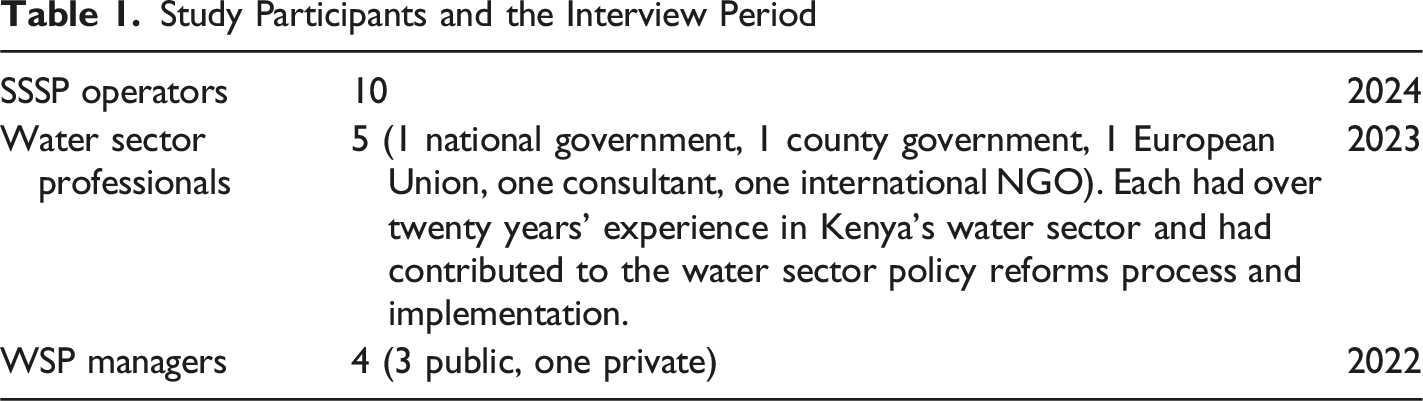
To investigate and analyse challenges that hinder SSSPs’ policy integration, the study involves an analysis of in-depth interview data on SSSP operators, WSP utility managers, and water sector professionals in three study phases between 2022 and 2024 focusing on SSSP’s sustainability.
Study Design
Conceptual Framework
The studies relied on the conceptual framework, which elaborates the institutional gap and sustainable water services. The data collection aimed to gather stakeholder perspectives on the sustainability of SSSPs across political, economic, social, technological, environmental, and legal (PESTEL) dimensions. We employed a qualitative research approach, emphasizing the quality and depth of information obtained from targeted respondents within the sector. Basing qualitative studies on the conceptual framework helps focus questions on the key concepts, thereby improving research efficiency. It also allows for more in-depth exploration of topics within the limited time available for interviews. According to Miles et al. (2020, p. 15), the conceptual framework encourages selectivity and helps define the scope of the qualitative study. The study questions aimed to determine how external factors affected the sustainability of SSSPs across the various PESTEL dimensions.
Study Location
SSSPs are predominantly located in urban low-income and peri-urban areas where WSPs do not cover. As such, the initial criteria for study location selection were urban areas. This selection was further narrowed to the Nairobi Metropolitan Area, which includes Kenya’s capital, Nairobi City, and other connected towns. The area hosts 81% of the country’s low-income population according to the 2019 population census (KNBS, 2022).
Participant Sampling
Study Participants and the Interview Period
Data Collection
A semi-structured in-depth interview technique was used in all interviews. This technique involves the use of a topic guide. This contains a set of questions structured alongside the research themes. The specific questions are often not as important as getting detailed information about the theme. In that sense, semi-structured interviews use open-ended questions with probes included during the interview to derive more information from the interviewee. The recommended number of participants for semi-structured interviews is between 15 and 20. However, the number can be increased or reduced depending on when the investigator deems a saturation has been achieved, that is, a point where no more new information is forthcoming. This approach is best suited to the research aim. The open-ended questions with additional probing enabled the extraction of maximum information from the respondents.
Analysis
The interview data were triangulated to gain a comprehensive understanding of Kenya’s institutions and SSSPs from various stakeholder groups. While all operate within the same sector, they perform different roles in an action arena, which, as described by Nobel Laureate Elinor Ostrom (2011), is the social space where individuals interact, exchange goods and services, solve problems, dominate one another, and fight (among many other activities in action situations). In this case, triangulation may offer multiple perspectives rather than a single, general view of SSSPs, depending on the amount and type of information each party holds about the others. It benefits all actors to understand each other’s perspectives while leaving sufficient space for external actors to draw independent conclusions.
The Atlas. ti software application for qualitative analysis aided the analysis. All transcripts were uploaded to the software and data coded. The codes were preset based on the PESTEL (political, economic, social, technological, environmental, and legal) analysis approach. Laitinen et al. (2022) and Katko et al. (2022) have, for example, applied the PESTEL Analysis to analyse the sustainability and resilience of Finnish water services. According to Antila et al. (2013), using the PESTEL Analysis can help researchers focus on aspects beyond technical and economic.
The following is a detailed description of the factors in the PESTEL Analysis (Laitinen et al., 2022; Washington State University, 2025; 247CaseAnalysis, 2025): i. Political factors include pressures and opportunities brought about by political institutions and the degree of the impact of government policies on the water sector. For instance, government stability, government policies, leadership, and change; foreign policies; internal political issues and trends; tax policy; regulation and deregulation trends. ii. Economic factors include economic structures and the extent to which the economy impacts decisions and influences the trend for sustainable and resilient water services. For instance, current and projected economic growth, inflation and interest rates; job growth and unemployment; labor costs; impact of globalization; disposable income of consumers and businesses; and likely changes in the economic environment. iii. Social factors include cultural components, attitudes, and beliefs that will affect the demand for adequate water services for all. For instance, demographics (age, gender, race, family size), consumer attitudes, opinions, and buying patterns; population growth rate and employment patterns; socio-cultural changes; ethnic and religious trends; living standards; education; health consciousness. iv. Technological factors include technological infrastructure, innovations, barriers, and incentives, internet penetration, use of social media, investment in research and development, and the impact these have on creating sustainable and resilient water services. v. Environmental factors include ecological and environmental components that will affect urban water services. These are important due to the increasing scarcity of freshwater resources, pollution targets, doing business as an ethical and sustainable company, carbon footprint targets, recycling, and renewable energy investments. vi. Legal factors include laws, regulations, and legislation that will affect the operation of water utilities.
Figure 1 illustrates the analytical approach. Data triangulation and PESTEL Analysis, designed by the first author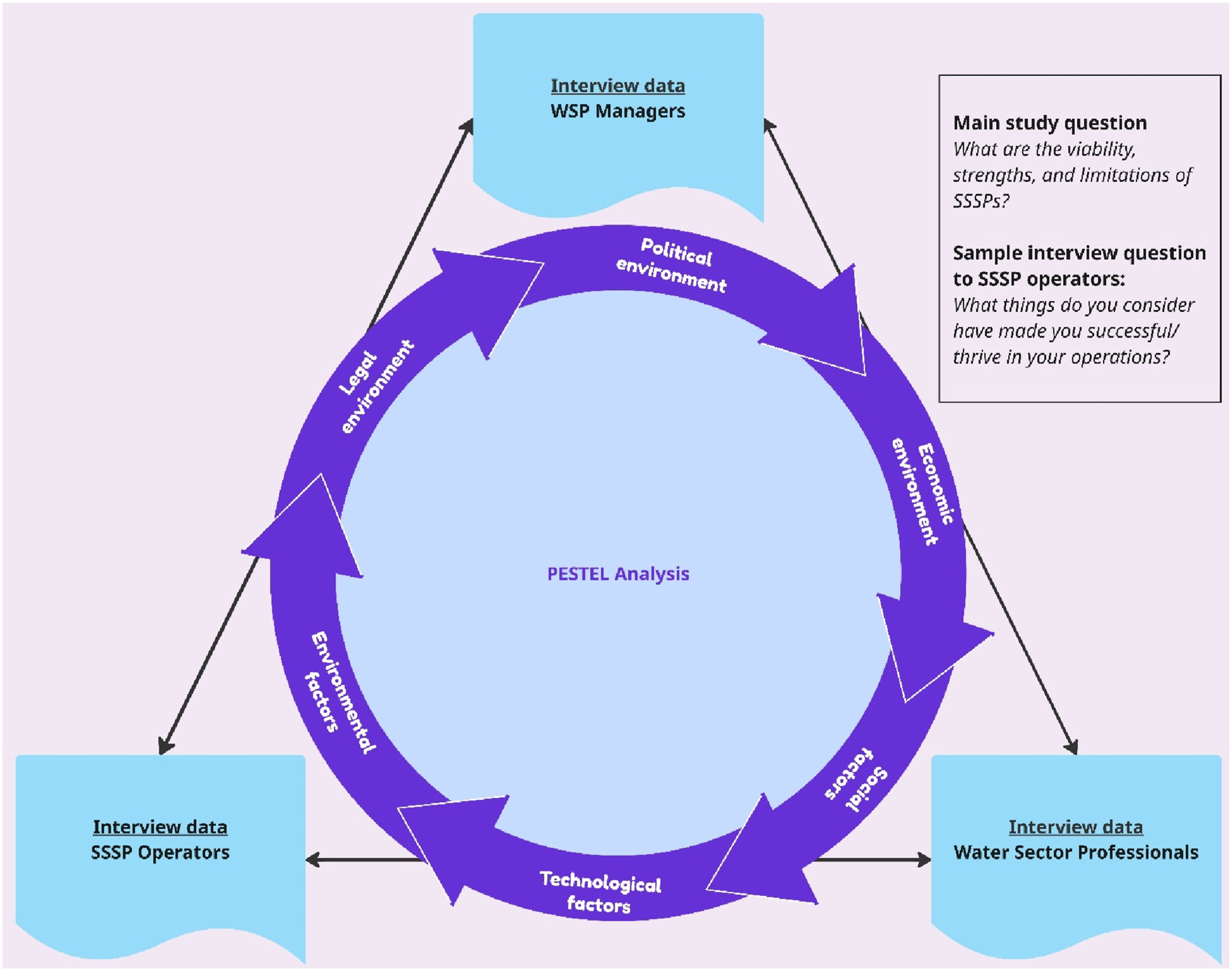
Results
This section presents the results based on in-depth interviews and structured along the PESTEL factors indicated in Figure 1.
The Political Environment
Political goodwill exists to address the deficit in water and sanitation services among lower-income populations. For example, the regulator requires WSPs to show how they cater to people with low incomes. According to the county government respondent, ‘the Water Act wants the lower classes to be cared for, the good intention is there...they (WSPs) must show how they cater to the poor…the poor have been long neglected.’ On SSSPs, the respondent added that ‘As a county, we are open to them and invite them to be partners and show them goodwill’. A WSP manager confirmed such collaboration between WSPs, which are county-owned, and SSSPs, stating that, ‘we have worked in some cooperation with the community project, especially on a sewer, and earlier on water, where the company buys the pipes, they do the excavations. In that case, the pipeline is owned by the company, but we have been able to cooperate and co-finance the project.’ An SSSP operator, on the other hand, narrated that, ‘if I seek assistance from their technical departments, they are always willing to help…always ready to give technical advice…but they are not empowered to move…I have to go back to my pocket to facilitate (their movement/transport means)’. Some fiscal measures have also been put in place by the government to cater to the low-income and marginalized areas. This includes a window for funding the unserved, underserved, and marginalized areas through the Water Sector Trust Fund (WSTF) and another through the equalization fund.
However, often the broader political agenda for the people does not translate well into policy. For example, while there are guidelines by the regulator on collaborations with SSSPs, there are hurdles in forging formal contracts between the government and such local institutions. For example, according to a county government respondent, it is difficult to grant SSSPs public money since they have difficulty accounting for it. ‘You cannot put a million or a billion into a community service provider and yet an SSSP does not have a system to account for these funds to the auditor general’. The funds are, therefore, often channeled through WSPs to finance the government’s pro-poor implementation plan for water and sanitation supply (MoWI, 2007). Still, the effectiveness of the equalization fund, which is another fiscal measure, was challenged by a water professional stating that ‘the only fund that has been created, the equalization fund, has been slow to implement. Its intended purpose was to support arid and semiarid land (ASAL) areas, with a focus on improving water access. However, there has been a lack of policies and operationalization from the national government.’
Political goodwill is inadequate without anchoring policies. The resource allocation issue predominantly recurred. The water sector professionals recommend that policies be in place to enable allocating some resources to SSSPs. They concede that SSSPs contribute to meeting the water rights, closing a major water services gap in the country despite accountability and governance challenges. According to a water professional, ‘there needs to be a framework for the community water project as the government thinks about budget allocation, even though the sector is poorly funded from the national budget’. Another professional added that, ‘the government should ensure that they (SSSPs) have enough capacity to provide water – fund, train, or partner with community…’. The operators were more demanding, for example, stating that ‘water projects are doing what the government should do. The government should, therefore, grant and mitigate some costs.’
Additionally, multiple respondents cited the need for enhanced collaboration between WSPs and SSSPs in public-private partnerships (PPP). While there are policies taking shape, the respondents recommend more engagement and fewer barriers to such collaboration. A WSP manager stated their happiness in ‘changing the Water Act to incorporate the issues of public-private partnerships so that even a community project can enter into a PPP.’ An SSSP operator stated that ‘we want more PPPs where governments come and see the work non-governmental organizations do, the gaps that we have, and how they can enhance us.’ Another, ‘the government should make it their business to work with private and not-for-profit providers because the overall goal is to provide services.’
Politics and political interference emerged strongly as a risk to the successful operations of SSSPs. A water professional noted that ‘at the county level, the constant change of governors and the higher echelons of the county government every five years makes the community water projects fearful because they do not know how the next governor will handle the community project - and not only them, even the WSPs owned by the county (are fearful of political changes). There has been much fighting between the governors and WSPs.’ Another professional stated on SSSPs, ‘the only problem is that sometimes there is politics and political interference. However, where there are no external forces, they (SSSPs) are good.’ A WSP manager feared that the effects of internal politics were more on SSSPs than on the larger WSPs, ‘a big public entity is insulated from these local petty politics than it is for the smaller ones, where there is more politics.’ The SSSP operators similarly perceive this as the cause of failure for most of them. One operator stated, ‘When you get merged with those public ones, they demand to join the board… those are the politicians who come in and put their staff there. Why is there no water now in XX? It is because of the same thing.’ One other stated, ‘if the community elects good management, the CBO will run effectively, but if politics influence them, the lifespan of the CBO will be short.’
Overall, development and investment priorities are political decisions that shape the operating environment, which determine SSSPs’ success or failure. Choices, for example, on whether to license or fund SSSPs, or not, are vested in policy. As one water professional recalled on the debate about including SSSPs in the water institutional framework, ‘only urban areas were addressed during the reforms, while rural areas were left out due to debates on commercial viability and social issues.’ On a separate matter, an SSSP operator commented that ‘the government has introduced new requirements for NGOS, which are not good for our existence.’ Another SSSP operator states that, ‘the higher taxes are affecting our donors’.
Politics plays a vital role in water services. Trowsdale et al. (2020) case study on Auckland exemplifies a practical case of interaction between polities and water managers. Additionally, Thackston et al. (1983; cited by Grigg, 2016, s. 442) evaluated water policy in Tennessee and found a list of constraints. They concluded that institutional issues are the greatest impediment to regionalisation and that the success of regionalisation is based on 70% politics, 20% engineering, and 10% on good luck. Therefore, political goodwill and cooperation are catalysts, but policies need to be solidified to effectively achieve such political goals, especially in terms of funding and curbing political interference.
The Economic Environment
The economic perspectives were mainly on taxation and regulatory costs, energy costs, sector funding, and urban planning. These limit the ability to operate sustainably. Taxation and regulatory costs were deemed extremely high, prohibitive, affecting the cost of production and the entry of other operators. One stated that ‘Raising taxation is increasing the cost of production and weighing down our donors.’ Several operators cited a fivefold jump in water use tariffs. One stated that ‘at one time, the boreholes were charged at 20,000 shillings per year, and suddenly, they raised it to 100,000. They gave a three-month notice. What do you do? How do you get 100,000 shillings? Your market is not giving you that much!’ Energy costs are, on the other hand, astronomical. To all operators, including WSPs, electricity costs are among the highest operational expenses (OpEx). For two SSSPs, this accounted for 70% and 80% of the OpEx.
Multiple factors shape the views on the overall expenses. The first factor is financial constraints – capital and operational costs for water and sanitation systems are enormous and are a major impediment, even for the government. The demand for affordable services further constrains the tariffs even for the unregulated utilities as they yield to market forces such as competition from WSPs. The second is primarily about the social orientation of most SSSPs. Passing high costs to communities contradicts the subsidy environment they provide to meet their social objectives for the low-income. For instance, one complained, ‘I think the regulations are limiting because, at the end of the day, we must go back to the membership to cough more (money) …considering the current economic challenges, it is a real issue.’ The respondents suggested donations, tax incentives, and subsidies to lower the cost of production.
Multiple respondents also cited challenges regarding accessing way leaves for installing infrastructure, which limited access to some needy clients. Lack of coordination during the construction of other infrastructure, such as roads, also led to costly damage to pipelines. A general low sector funding also made the allocated funds less accessible and inadequate.
Social Factors
A major strength attributed to SSSPs was a strong social cohesion between the operators and the community members. This enables better communication, consultation with the clients, easy reporting of network faults such as leakage, flexibility in tailoring rules and following up among each other, security, and self-policing against illegal connections. This is different for WSPs as they are large, not community-based; WSP contacts were through other media such as bulk SMSs and media campaigns. However, this was also dependent on the management approach. A manager of a leading WSP indicated about access to their office by the public that ‘ this is a public office, they are free even to come… if a certain estate has a challenge, they will come as a group, they may call their estate meetings and all that, appoint representatives, and send them to the water department to relay their challenges and reasons. They also have the MCAs, for MCAs this is like their forum, they come here almost daily, sometimes I find the MP taking a cup of tea from my table, he is coming to raise his issues…in Parliament, or the County Assembly they will ask questions relating to how the water facility is being managed, or the water company is being managed.’
SSSPs also enjoyed ownership compared to WSPs, which are public utilities. According to an SSSP operator, ‘there is the unity of the community both in the management and execution of the project’s plans and activities. That means they also embrace the existing challenges and seek collective solutions.’ A WSP manager, on the other hand, stated that ‘most can bring themselves together; there is that community initiative, which means there is ownership of the project, unlike here, even when someone sees a leak, they have no obligation to report it. They will start complaining that this company does not do its work.’
Social factors also relate to the changing demographics of urban and rural areas due to growing peri-urban and low-income segments. Due to these changes, the demand for SSSP services is growing. In peri-urban areas, this is marked by the development of high-rise buildings hosting many households. An operator in an area that was formerly rural commented that, at least three or four houses were coming up here every month, and they demand water.’ Another commented on the changing demographics and demand as follows, ‘This is a fast-growing area in terms of population because it is a new area that has been reclaimed and is now growing to a town status. People come from the highly urbanized places because it is cheaper to buy land. They then put up residential estates, and people come in… water demand is constantly growing. What was planned by Nairobi Water is not what they are doing now. They are now trying to meet the demand. We were lucky to have such big equipment which can produce at least 12,000 L per hour.’
Income differences between the rich, middle-, and low-income served in peri-urban and low-income areas influence the SSSP’s operational model, technology, funding, and tariffs. Water kiosks are the predominant distribution model in LIAs. In contrast, a mix of water kiosks and individual connections to premises was common in peri-urban areas due to the housing types, tenure, space for installing infrastructure, and security factors. SSSP operators in LIAs are, by necessity, led to innovation, with some impeccable outcomes in some cases. At SHOFCO, one of the SSSPs operating in Kibera and Mathare, the respondent narrates, ‘For you to survive in this context, you really must be innovative…We face challenges every day, which push us to innovate because we are determined to solve them…In 2016, we started with underground pipes, but when cartels started cutting our pipes, we came up with the idea of an aerial pipeline.’ A water sector professional cited this innovation, indicating that ‘…I know there are places they do well. For example, some projects in Kibra have benefited from donor funding. In Kibra, there is no place to lay pipes, much vandalism, and high non-revenue water. A certain organization came up with a very broad approach to this. They hang the pipelines across the dwellings, just like electricity lines, so that nobody can steal them. They managed to reduce their non-revenue water drastically.’
Additionally, SSSPs operators expressed a strong preference for self-governance, which provided freedom to make quick and independent decisions and implementation. There is less bureaucracy involved in their operations. The clustering and takeover strategies proposed in the Water Act and driven by the county governments and regulators were strongly opposed primarily for what was perceived as less efficiency of publicly run utilities. The communal water services model has been in existence in Kenya for a long time. Furthermore, the cooperative culture is strongly instituted in the country. In 2017, Kenya’s cooperative movement was ranked first in Africa and seventh globally (KUSCCO, 2025). This social orientation to cooperative development extends to water services through SSSPs.
Technological Factors
SSSPs often have less equipment and infrastructure compared to WSPs due to their small coverage areas or sales at water kiosks. However, equipment such as pumps, water treatment units, elevated tanks, and good quality fittings remains costly. Therefore, many apply limited, lesser quality, and in some cases, skip whole processes, for example, for water treatment. Distribution of non-treated water is the most outstanding shortfall of SSSPs. The water sector professionals and WSP managers unanimously emphasized the vital role of regulation and enforcement in ensuring water quality. A water professional stressed that ‘there should be a way of regulating them in terms of quality because if you look at an area like Rongai and parts of Nairobi, people are taking water unsuitable for human consumption, mainly because of fluoride. Innocent people are consuming water unfit for human consumption because of the chemical contaminants, but they are unaware of it. There is a need to ensure that consumer rights are protected to clean, safe, and adequate water, just like for regulated water providers.’ An SSSP operator using nanofiltration technology to produce high-quality drinking water emphasized that some vendors are driven by greed, selling untreated water to unknowing clients as long as the water is clear.
A second emerging issue was the inconsistent water sector data presented by the various local and global authorities. Water and sanitation access data vary, and the definition of frequently used terms such as safely-managed water and sanitation also differs. With these differences, a water sector professional argued that it will be impossible to address the problem if the goal is unclear. With the advancement of information technology and access to it in the population, especially in Kenya, there is great potential for streamlining water sector data. The professional suggested that ‘we need an authentic and collaborative data center. Right now, it depends on whose data you are looking at.’ For SSSPs, the professional suggested capacity building, adding that ‘some are very manual in managing their data because of the low revenue they collect from their services. The community projects are primarily operating for social good; the little they have is what they use to buy the cheapest available meters.’
Technical knowledge is also a significant bottleneck for SSSPs. They cannot afford professionals in the sector and compete with WSPs, which have the capacity. An SSSP operator stated that most often, the staff were inexperienced, ‘the people you get in a community sometimes have never worked in a water project. Not even in a water project. They have never worked in a formal environment. Moreover, controlling those people is very difficult… that has been one of the biggest problems. The way the proper management should be done here is very difficult. It is unlike the corporate or the professional environment.’ This affects their operations, as a WSP manager commented, ‘because of a lack of expertise, they get low-quality fittings. We have been assisting them in the technical aspects of their boreholes. When it burns or stops working, some can take advantage and tell them the whole pump is broken, yet it is just a fuse, etc. Technical capacity, even if we are supervising, is a limitation.’ Multiple operators recommended that information on the standards and regulatory requirements be disseminated more actively as a reciprocal from the government.
Environmental Factors
Few water professionals cited climate change effects as observable mainly by WSPs who demand high volumes. Dwindling water quantities have been the most damaging impact of climate change, with a water sector professional stating that ‘many water companies are shrinking their water sources, with production for some down to 80% or 60% of the original production...mitigating these effects requires thinking outside the box. Conserving surface and groundwater will be crucial. Some very large utilities have been drawing water from groundwater sources without efforts to recharge the aquifer, even though the government is working on mechanisms and structures to implement managed aquifer recharge.’ There were no comments from SSSPs on a reducing trend in water quantities; the majority only noticed the growing water demand related to population growth.
Concerns on pollution were also raised by a water professional, citing that ‘Kiserian dam, it is no longer a water dam, it is a sewage dam because many people dispose of sewage there.’ They also note the lapse in legal enforcement, stating that ‘the people who are supposed to be doing enforcement have gone to sleep.’ Mitigatory measures, including policy, rules, and strict law enforcement, are necessary to reduce the availability of freshwater resources.
The Legal Environment
Water sector reforms taking place in Kenya have led to important adjustments targeted at improving efficiency, professionalism, and regulation. The SSSPs were particularly required to be more accountable. According to a water professional, ‘It is no longer permitted for them to freelance as they did before. This is due to the issue of poor water quality, where unchlorinated water was often provided to people, and sometimes no water was available. Although they can still work, they must abide by the law.’
One of the most critical advancements further cementing regulatory aspects is the constitutional right to water and sewerage services in the Constitution of Kenya 2010 and the subsequent Water Act 2016. According to a water professional, ‘the right to water and sanitation has been placed at the constitutional level to benefit the consumers, providing a solid basis for regulating and monitoring water and sewerage services.’ There has thence been much pressure on WASREB to bring unregulated utilities under control for accountability and transparency to the users.
Part of the strategy to improve regulation by WASREB and county governments was a clustering strategy to merge large and very small service producers (SSSPs) based on the Water Act 2016 to create larger, more sustainable utilities through economies of scale. Limiting the number of regulated utilities is also aimed at simplifying the regulatory process. Businesses too small to self-sustain can operate under a third-party licensing agreement with a larger licensed utility. Notwithstanding, some communities resisted the strategy, leading to litigation, some of which the community won, stopping the county from merging them with a larger utility. As perceived by a county government respondent, ‘it seemed like a takeover of the small utilities. A more collaborative approach was preferable and is the new county government approach.’
Multiple respondents echoed the need for a legislative framework for anchoring SSSPs. According to a water professional, ‘WASREB needs to see how best they can be brought on board by looking at their organization, their registration, and delineation of the service area so that it does not overlap with the main WSPs. The sustainability of these community water service providers is crucial. Eventually, they may need to be allocated service areas and trained on reporting. This can be done, but then the regulator must be able to onboard them through the normal onboarding process for licensing. Once they are licensed, giving them an equal platform to get support from the government and, by extension, development partners who come through the government to the ministry, who only work within the available structures.’ While WASREB has a category for private WSPs, which caters to some already licensed SSSPs, there were multiple proposals for restructuring the categories to cater to the very small SSSPs, which require capacity support to get closer to the required service levels.
Analysis and Discussion
Figure 2 highlights some emerging themes from a triangulation of the interview data. They represent the converging topics from stakeholders’ perspectives on SSSP’s sustainability and should be part of SSSPs’ policy discourse. The PESTEL Analysis simplified the thematic analysis by providing solid and comprehensive categories into which the most important sustainability themes could be analysed. The analysis and discussion expound on these themes and their interrelationships, focusing on their implications for overall institutional and organizational framework issues. Emerging themes from a PESTEL Analysis of factors influencing SSSPs’ sustainability, illustrated by the first author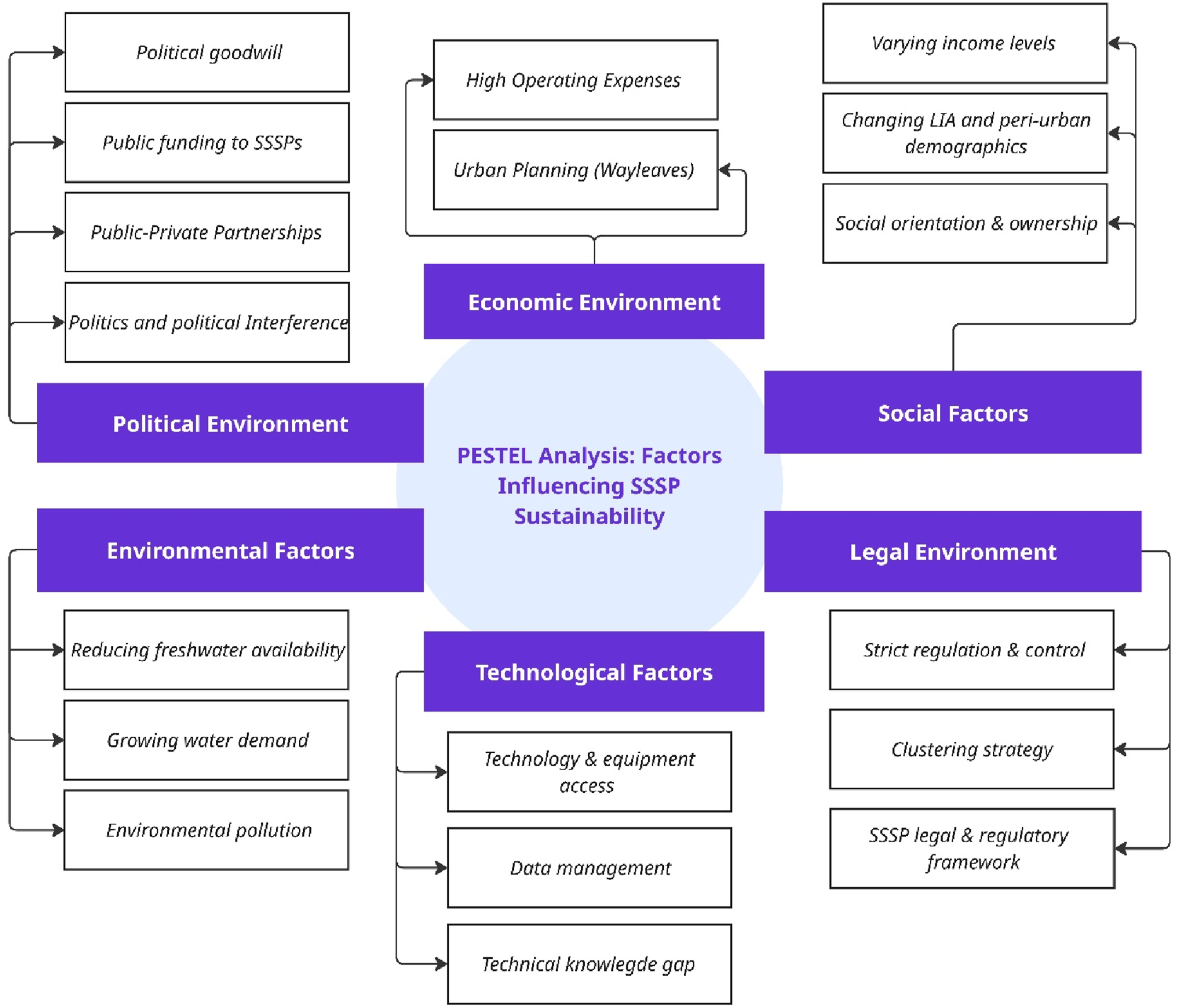
The first major analysis is that political goodwill alone is insufficient without appropriate legal frameworks. The institutional and organizational framework of Kenya’s water sector, which is a legal factor, does not align with the political will to address inequalities in access to water and sanitation services for low-income populations. According to the results, the lack of a supportive legal framework diminishes the potential impacts of political efforts. Lacking a supportive legal framework for SSSPs is evident in licensing challenges, which in turn limit access to public funding and capacity support, directly affecting service levels in LIAs and peri-urban areas. These consequent issues underscore the central role of institutions in providing water services.
Secondly, institutional and organizational frameworks need to be tailored to Kenya’s context to avoid undesired institutional outcomes. Whereas Kenya had well-intended political aims of regulating non-governmental organizations, improving operational efficiency, sector funding, and professionalizing the service, the crafted institutional and organizational framework locked out SSSPs. Moreover, the government did not consider subsidies or other capacity development mechanisms to enable upscaling SSSPs to meet the service levels desired in the institutional reforms.
Thirdly, the complexity of crafting successful institutions is highlighted in the crosscutting wins and losses in Kenya’s water sector. Whereas the WSPs have remarkably improved, SSSPs have not. It has also been complex to decide whether to subsidize SSSPs to improve access and affordability for low-income individuals, or not. The discourse on subsidies has, anyhow, been intense. According to Wambua (2004) and K’Akumu (2005), a commercialization approach aiming at unsubsidized, self-sufficient, financially sustainable organizations, advanced mainly by the World Bank and the International Monetary Fund, informed Kenya’s water institutional reforms. Yet, while historical analyses of global experiences on water service commercialization through privatisation reveal increased efficiency, they reveal that the approach also leads to higher tariffs and inadequate service for low-income populations (Baer, 2014), resembling Kenya’s case. Importantly, futures studies, which entail systematically integrating historical perspectives into present decision-making, can guide contemporary and future planning, thereby helping to avoid recurring institutional challenges (Bendor;Eriksson;& Pargman, 2021; Juuti & Katko, 2005).
Discourse on complex issues such as financial sustainability is set to remain intense, especially in developing countries, where financial constraints are cited as a single major bottleneck to IWRM and achieving SDG 6 (The Republic of Kenya, 2021; UN, 2026; SWA;UNICEF, 2023), but structuring decisions on each country’s context could enable more balanced solutions such as diversifying water services production models. Cambodia, for instance, implemented pro-poor licensing reforms that facilitated the participation of over 400 private small providers through an inclusive legal framework. Additionally, the government provided subsidies to increase access in LIAs. A study by Michaels et al. (2022) shows that 82% of connected people (n = 111) attribute their motivation to connect to the safe water services to subsidies. In contrast, Kenya has not adopted comparable measures, thereby missing an opportunity to support and integrate SSSPs into the national water strategy.
Fourthly, the Kenyan context reveals significant organizational challenges for both WSPs and SSSPs, including high operating expenses, limited institutional capacity, and difficulties securing reliable access to freshwater. All costs should be passed on through tariffs. However, these costs make tariffs unaffordable for water users in lower-income groups, further limiting access to water services. This situation highlights a key characteristic of safe water and sanitation: it is among the most expensive fundamental human needs and lacks viable alternatives. These challenges contribute to a heavy reliance on donors and social enterprises. Without subsidies, community members turn to unsafe water sources, including vendors selling untreated or illegally obtained water cheaply.
Fifthly, providing funding and capacity-building, such as through targeted training by the government or by strengthening apex organizations, can reinforce SSSPs’ positive attributes, such as high levels of local ownership, which sustain them despite significant technological and water quality challenges, and help quickly reduce the gap in safe drinking water and sanitation access caused by limited WSP coverage and under-capacitated SSSPs. This approach aligns with institutional theory and the principle of subsidiarity. While people attribute certain responsibilities to governments, Vischer (2001) and Evans (2013) suggest that, based on subsidiarity, governments should focus on tasks that communities cannot handle. When capacity exists, Nobel Laureate Elinor Ostrom (1990) recommends that the government’s role is to establish a platform for the community to perform at its best. However, this does not preclude government intervention; for example, county-owned WSPs remain relevant. Furthermore, studies indicate that robust government involvement has been crucial to the success of privatized urban water services, as demonstrated in Chile (Baer, 2014).
Lastly, environmental challenges linked to freshwater scarcity are a present challenge in most regions of the southern hemisphere (Zhang et al., 2023). Kenya, like many sub-Saharan African countries, is a water-stressed country with highly populated urban centers. WSPs have much less water to distribute. Bulk water transfers into cities are costly and may harm the environment (Sharp, 2017). In addition to climate unpredictability caused by climate change, these factors strain WSP coverage and reliability. Few SSSPs that rely on surface water sources notice these changes as well, especially with the population surge, mainly in peri-urban areas. However, most relying on boreholes rarely see such changes, according to this study. In fact, SSSPs are seen as more reliable because of the service hours they provide compared to WSPs. This difference may be because SSSPs serve only domestic uses, which are less demanding than the industrial and agricultural uses WSPs also support. Overall, these realities should trigger greater effort to strengthen water-use efficiency and reduce water losses to reduce the risk of collapsing urban water services.
Conclusion
Establishing effective water institutions that fit the local context is a complex task. However, it is essential for developing countries like Kenya, where conventional municipal water services often fall short, especially in low-income and peri-urban areas. The peri-urban population is rapidly growing to accommodate expanding urban areas. SSSPs play a crucial role in these regions, but they often lack the financial resources and technical expertise needed to meet the established standards for water and sanitation rights. The findings indicate a pressing need for a legal and regulatory framework for SSSPs in Kenya. Such a framework would facilitate access to government resources and support while enhancing the organizational capabilities of these providers. The government can play a significant role by increasing its focus on SSSPs as a formal entity within the water sector. This can be achieved through fiscal mechanisms like subsidies and tax incentives, in addition to the rigorous regulations that have successfully upheld normative standards for water and sanitation rights in Kenya. From a fit-to-context perspective, Kenya’s institutional and organizational framework should transition from a strict public and private service provision model to one that takes into account the country’s socio-economic realities. This shift should promote the development of community-based approaches exemplified by SSSPs.
Footnotes

Funding
The authors disclosed receipt of the following financial support for the research, authorship, and/or publication of this article: This work was supported by Tampere University Foundation, VEPATUKI, and The Nordic Africa Institute.
Declaration of conflicting interests
The authors declared no potential conflicts of interest with respect to the research, authorship, and/or publication of this article.