




Abstract
Road safety has progressed positively in many countries, one example being Finland where several major road safety policies were introduced in the 1970s. In Finland, the highest number of road fatalities (1156) was seen in 1972, while in 2003 the number was 379 and, in 2021, 225. This study presents the assessed impacts of 49 key policy actions and decisions related to traffic safety in Finland based on road safety experts’ views, with special focus on years 2004 to 2021, and 1970 to 2003 as background. During the first decade of this millennium, road fatalities reduced but, in the 2010s, safety did not develop as was targeted. Based on experts’ views, the policies during 2010s included controversial policy actions that aimed at reducing road users’ costs instead of going for road safety gains. Policies supporting safe road user behavior, speeds, vehicles and roads need to be further promoted.
Introduction
International comparisons of road safety made among the OECD (Organisation for Economic Co-operation and Development) countries show a more or less continuous decline in most OECD countries in the number of people killed in road accidents, i.e. road fatalities, during the last decades (see e.g., ITF, 2022; OECD, 2023). However, there are considerable differences between countries in terms of road safety performance, which is often calculated as road fatalities per 100,000 or per million people.
In 2021, the lowest rates in Europe in road fatalities per 100,000 people were found in Norway (1.5) and Sweden (2.0). In Finland, the focus country of this article, the corresponding figure was 4.1, i.e., more than double that of its neighboring countries. (OECD, 2023).
Finland, as a member of the European Union (EU) since 1995, follows the common targets and long-term vision of road safety set by the EU. In Finland, the road safety targets have been set as government resolutions, usually every four or five years. The current aim is to halve the number of fatalities and serious injuries in Finland (Ministry of Transport and Communications, 2022; Rekola et al., 2022) and on European roads during the current decade (2020–2030), as a milestone on the way to ‘Vision Zero’ – zero fatalities and serious injuries by 2050 (European Commission, 2022). There has been a similar aim of halving the number of road fatalities already during the 2000s and 2010s both in the EU and in Finland, and the long-term vision has been determined according to Vision Zero in Finland since 2001, i.e. no-one should be killed or seriously injured in road traffic (Debyser, 2019; Ministry of Transport and Communications, 2000, 2005, 2012; Rekola et al., 2022).
There are monitoring systems in place regarding the progress towards the road safety targets both in the EU (e.g., European Road Safety Observatory, see European Commission, 2024) and its member states, such as Finland (see e.g., Traficom, 2024d). Neither Finland nor the EU has been able to reach the previous goals of halving the number of road fatalities in a decade (European Commission, 2017, 2023). It was only recently in the ‘Transport Safety Strategy 2022–2026’ that the year 2050 was set as the goal for reaching this ambitious vision in Finland (Rekola et al., 2022). Globally, in September 2020, the UN General Assembly adopted a resolution “Improving global road safety”, proclaiming the Decade of Action for Road Safety 2021–2030, with the ambitious target of preventing at least 50 percent of road traffic deaths and injuries by 2030 (WHO, n.d).
Objectives
The objective of this study is to assess the road safety impacts of recognized key policy actions and decisions that have been implemented in Finland during the last decades. This assessment is based on literature and expert views and thus mainly descriptive by its nature, compared to studies which have calculated or modelled impacts with more quantitative approaches (e.g. Elvik & Høye, 2021; Strandroth, 2015). We especially focus on the period of 2004–2021, but also present assessment of policy actions and decisions from 1970 to 2003. In an earlier paper in this journal, Katko (2006) explored road safety development in Finland up to year 2004 with the aim of finding key factors and their impacts on traffic safety development on a general level related to major policy decisions and legislation in Finland. Since then, many changes, actions and decisions related to road safety have taken place.
Katko (2006) presented a list of major policy actions and decisions on traffic safety in Finland from 1971 until 2004. This list has been compiled and updated in the Finnish Road Safety Council. The policy actions and decisions are typically presented together with time series data of road fatalities in Finland, as was the case also in Katko’s (2006) article, implying a connection between these two. When looking at the development of the number of road fatalities in Finland (Figure 1), one can get the impression that the most effective actions must have been taken in the 1970s, as the reduction then in road fatalities was then by far the most notable in comparison to other decades. Road fatalities in Finland 1970–2021 (Statistics Finland, 2023c).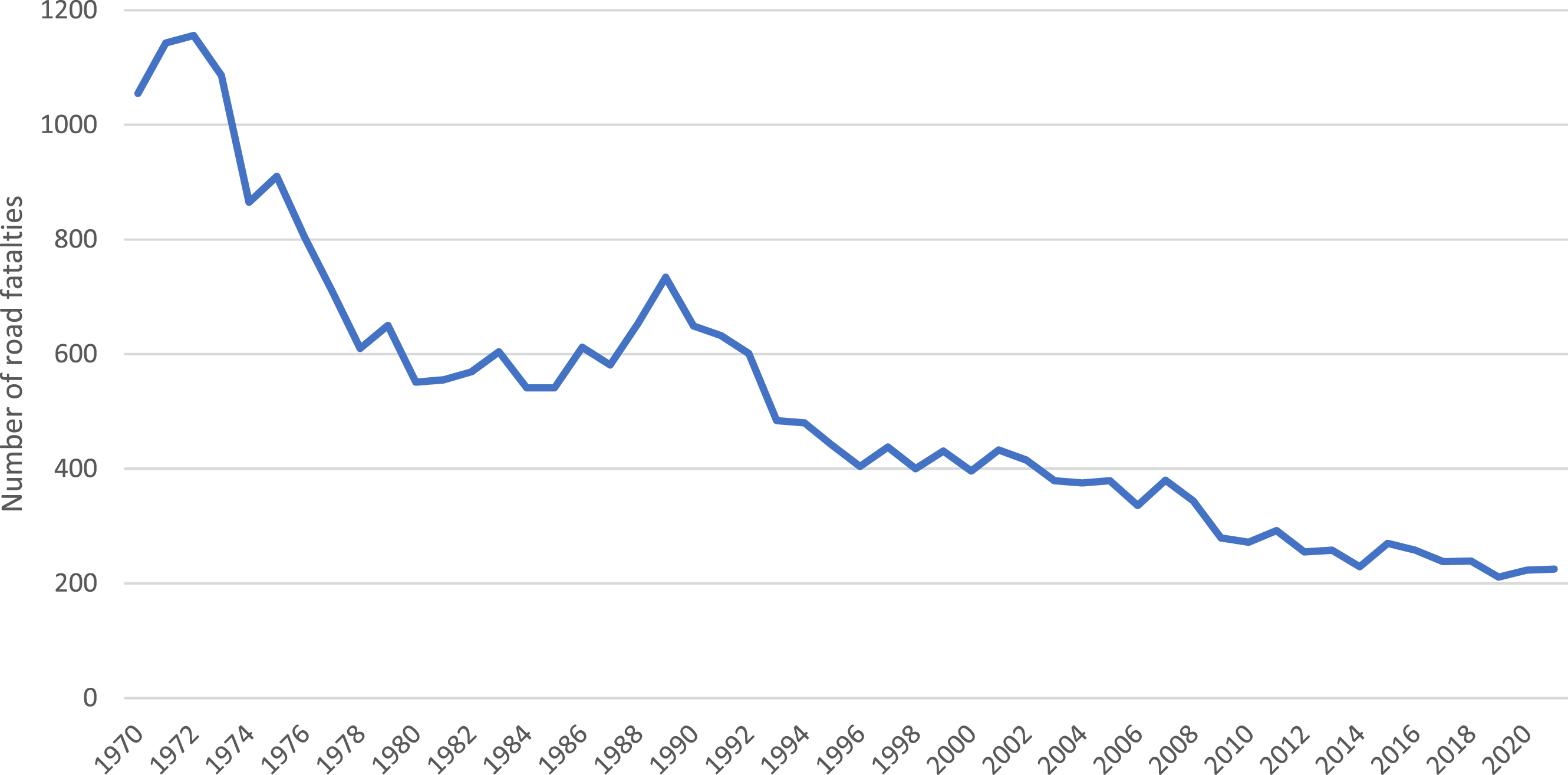
The highest number of road fatalities, 1156, was experienced in 1972. The number of annual fatalities has declined almost continuously after its peak except of the late 1980s. The latter was a time of strong economic boom in Finland and there was a sharp rise in GDP, vehicle stock and traffic performance (Pöllänen & Mäntynen, 2004). In the beginning of the 1990s, there was a massive economic depression in Finland and the number of road fatalities decreased to a level of ca. 400 per year where it stayed for almost a decade around the turn of the century. In the 2000s and the 2010s we can note a declining trend. There is, however, annual fluctuation with some years of higher number of road fatalities.
In this study we seek to find whether there is support for the previously mentioned impression, i.e., if the more recent policy actions have a smaller positive impact on road safety compared to those implemented a longer time ago, focusing on the list of that has been updated in the Finnish Road Safety Council and includes policy actions and decisions up to year 2021. In addition to policy actions and decisions, such as new laws and regulations, the list includes other types of actions, such as the President’s New Year speech in 1973 and publication of the Parliamentary Traffic Committee’s work in 1973 and 1991, trials related to new regulation that followed later and as a special case, the worst-ever road crash in Finnish history in 2004, since it had implications on the subsequent policy actions. Even though the list includes such versatile elements, in this paper we call all of them policy actions and decisions for the sake of clarity. We have included all the actions from the Finnish Road Safety Council’s original list in our study.
There have been some studies made on road safety interventions in Finland, e.g., Peltola and Mesimäki (2019) studied middle barriers on non-motorway highways. On a policy level, there have been analyses on the implementation of measures of a specific national road safety plan and on how indicators related to road safety, such as road network conditions, have developed (e.g., Traficom, 2022). However, the measures in the national road safety plans do not typically include the policy actions and decisions that are studied in this paper. To our knowledge no such overall study on the assessed impacts of policy actions and decisions on road safety in Finland has been made and, with this study, we wish to fill this knowledge gap. Also internationally, we have not recognized a study with a similar approach to ours.
We acknowledge that the list by the Finnish Road Safety Council is a result of subjective views by individual experts, and that road safety is affected by numerous factors, of which the ones presented in the list are only a part of. It should be noted that we do not aim to present a causal relationship between the policy actions and the development of the actual number of road fatalities or injuries in Finland.
Methods
In this study we used a mixed-methods approach. In addition to a literature study and presenting data related to road user behavior, road fatalities, road traffic performance (vehicle-kms) and development of the economy (gross domestic product, GDP), we explored the views of senior experts who work in road safety and have followed long-term road safety developments and policies in Finland, using a questionnaire described later.
The findings of the literature study are presented throughout this paper in their specific context as they are mostly related to the different policy actions and decisions that are assessed in this study. As the amount of journal articles is very limited on the impacts of policy actions and decisions on road safety, specifically in Finland, we mostly use grey literature such as commissioned reports by government agencies in Finland and, additionally, present findings from international studies, where appropriate. However, as we are foremost interested in the assessed impacts in Finland and as the number of policy actions and decisions under study is high, we do not aim to present all related findings from international literature, as the number of possible studies of just one specific action, e.g., regulating the use of mobile devices while driving, could be out of the scope of one individual paper. We searched for related literature using key words in English in scientific databases and search engines (Scopus and Google Scholar), and for materials in Finnish we used Finnish search terms in Google search engine. Regarding evaluation studies related to the policy actions and decisions in Finland between 2004 and 2021, we received a list of possible resources from a senior road safety expert working in the Finnish Transport and Communications Agency Traficom. Additionally, through the responses to our questionnaire, we received several suggestions of possible literature sources.
In the Finnish data, serious injuries in road crashes cannot be separated from all injuries before 2014. Therefore, in this study we will focus on the data related to road fatalities. At the time of this study, the latest data regarding the number of road fatalities in Finland was from 2021, while for 2022 there was preliminary data available. In addition to presenting data on road fatalities, we also present data on road user behavior. This data, such as the proportion of car occupants using a safety belt, can be a part of road safety indicators that have been discussed and studied increasingly during the past years (see e.g. European Transport Safety Council, 2001; IFT, 2023; Tingvall et al., 2010). However, there is no Finnish data related to all relevant safety indicators for the studied timeframe. All the data presented in this study are from publicly available sources.
The questionnaire was sent via e-mail on the 24th of October 2023 to a group of senior road safety experts and the last reply to the questionnaire was received on the 22nd of November 2023. The experts were approached and requested to assess the relative impact of 49 selected policy actions and decisions on road safety in Finland during 1971–2022. This list of policy actions and decisions was received from the Finnish Road Safety Council (2023b), where the list has been updated during the last decades. Approximately the same number of key policy actions and decisions per year are presented for both periods in the list. In 1971–2003 there are 33 and in 2004–2021 there are 18 policy actions and decisions, making the ratios 0.97 and 1.00 per year, for the respective time periods.
As respondents, we invited experts who have a long experience following the Finnish road safety development, have been involved in road safety policymaking or implementing policy actions and decisions, and have worked for relevant organizations (including academia and research organizations such as universities) for several years. The original list of potential respondents was identified by the authors and an expert from the Finnish Road Safety Council. Later the list of potential respondents was expanded, as we received some proposals from the first identified experts and as a result, the group of experts was supplemented by two experts, using the so-called snowball procedure where experts could suggest other experts as possible respondents. Regarding expert selection to be invited as respondents, we analyzed how well these filled the criteria on being senior road safety experts. While making the list of potential experts, we noted that several of them had been working for more than one major party related to road safety in Finland during their career, probably giving them wider views and perspectives. This was noted as a positive factor when considering the expertise of the person.
Altogether 15 selected senior experts were invited to respond of whom 10 replied (a response rate of 67 percent). The number of respondents may sound small but when considering that the number of senior road safety experts is low in a country with a small population and limited development resources for road safety, the sample can be considered satisfactory. Out of the 10 respondents seven were male and three female.
The Ministry of Transport and Communications is responsible for preparing the legislation related to transport safety in Finland (Ministry of Transport and Communications, 2024). According to the Ministry of Transport and Communications (2024), the key actors in road safety in its administrative sector are the Finnish Transport and Communications Agency, Finnish Transport Infrastructure Agency and Finnish Road Safety Council. In the administrative sector of the Ministry of the Interior, the National Police Board of Finland is responsible for implementing policies related to road safety and traffic enforcement (Finnish Government, 2021a). The respondents represented these major bodies of road safety in the country quite well: Centre for Economic Development, Transport and the Environment 1 (1 respondent); Finnish Transport and Communications Agency (2); Finnish Transport Infrastructure Agency; National Police Board of Finland (2); and two universities (4). We also approached road safety experts in the Ministry of Transport and Communications and Finnish Road Safety Council but did not receive a response to the questionnaire. For the universities, the experts are relevant as they work as researchers in the field. A few of the respondents have worked with some of the policy actions and decisions during their careers, for example during the planning or implementation phase.
A Delphi-type study with several response rounds allowing iteration was considered but, as the number of experts and respondents was low, it would have been difficult to maintain the respondents’ anonymity. In a small country, senior experts of one field tend to know each other well. Additionally, considering that a second round of Delphi study most often receives less responses compared to the first round, we decided to have a one-round questionnaire. Regarding the analysis, one of the authors first analyzed the results of the survey, whereafter the other author investigated the results and further developed the analysis. The dialogue was continued between the authors while acknowledging the constructive feedback from the peer reviewers. If there would have been anything unclear in the responses, we had the possibility of asking the respondents for clarification but there was no need for this as the qualitative comments by the respondents were clear enough as such.
We will start by presenting a framework of factors that impact road safety. Related to the framework, we will then describe the Finnish situation and present some relevant data. Thereafter we will introduce the key actions and decisions in Finland from 1971 to 2003, followed by a description of the actions and decisions from 2004 to 2021. The results of the questionnaire and the assessed impacts of 49 policy actions and decisions on road safety development in Finland will then be described. This will be followed by a discussion section including description of limitations of the study. Lastly, conclusions are presented.
Framework of Factors that Impact Road Safety
The development of road safety can be affected by variety of policies, actions, and decisions taken by governments, authorities, and other stakeholders, resulting in road safety benefits, e.g., through improved road user behavior as well as the safety of vehicles and the road environment. However, it cannot be determined to which extent each factor contributes to the improvement of road safety (Elvik & Høye, 2021). As a framework for this study, we refer to Elvik and Høye (2021) who have systematically studied what can explain the decline in the number of traffic fatalities and serious injuries in Norway during the first two decades of the 21st century. According to them, the most important factors that generally impact the number of road fatalities and seriously injured are: (i) Traffic volume and its changes over time, (ii) Economic development and economic cycles, (iii) Traffic safety measures, (iv) Changes in road user behavior, and (v) Changes in police reporting on road crashes.
Regarding the five factors presented by Elvik and Høye (2021), in this study we will have special emphasis on the third (iii) point with particular focus on policy actions and decisions in Finland, mainly changes in legislation and new acts. There are also many other road safety measures, such as providing safer infrastructure and vehicles, but including all these would is not possible in one paper with a long timeframe. Additionally, we note points (i), (ii) and (iv) and are aware of the connections between the different factors, such as economic development, vehicle-kilometers travelled (traffic volume) and road fatalities (see e.g., Yannis et al., 2013). In this study, we ignore point (v) since it is not relevant in the Finnish case as there are no notable changes in police reporting of road crashes leading to fatalities. In Finland, the statistics cover fatal road crashes to nearly one hundred percent (Statistics Finland, 2023d).
Elvik and Høye (2021) found that the three most important factors that contributed to the reduction in the number of killed or seriously injured were highway safety treatments, safer cars and lower mean speed of traffic, while other factors included increased safety belt and bicycle helmet usage, speed cameras and section control. These factors explained 59 percent of the decrease in the number of killed or seriously injured road users in Norway from 2000 to 2019 (Elvik & Høye, 2021). We can note that these relate to the four first mentioned pillars of safe system approach: safe road users, safe vehicles, safe speeds, safe roads, and post-crash care (Khan & Das, 2024). As we have a system-wide perspective in this study, we will connect the policy actions studied in this paper with these pillars to present their linkages.
Koornstra et al. (2002) compared the development of road safety between Sweden, the United Kingdom, and the Netherlands in the SUNflower project. They found that three key areas and related policies (wearing the safety belt, drinking and driving, and vehicle safety) had resulted in halving the number of fatalities between years 1980 and 2000 in the three countries (Koonstra et al., 2002). Figure 2 was presented in the study as an illustration of how external factors (e.g., demographic differences, differences in the road environment) as well as reporting factors (e.g., differences in the categories of road crashes) need to be considered when comparing various countries. Considering the external and reporting factors is also relevant when exploring an individual country, such as Finland. Related to reporting factors, there needs to be a long, comparable, and continuous time series available. For Finland, we can find such existing, especially related to the number of road fatalities and injured and, for a shorter timeframe, related to some road safety performance indicators. Hierarchy for road safety influenced by reporting and external factors and connections to policy context and performance (European Commission, 2018; Koornstra et al., 2002).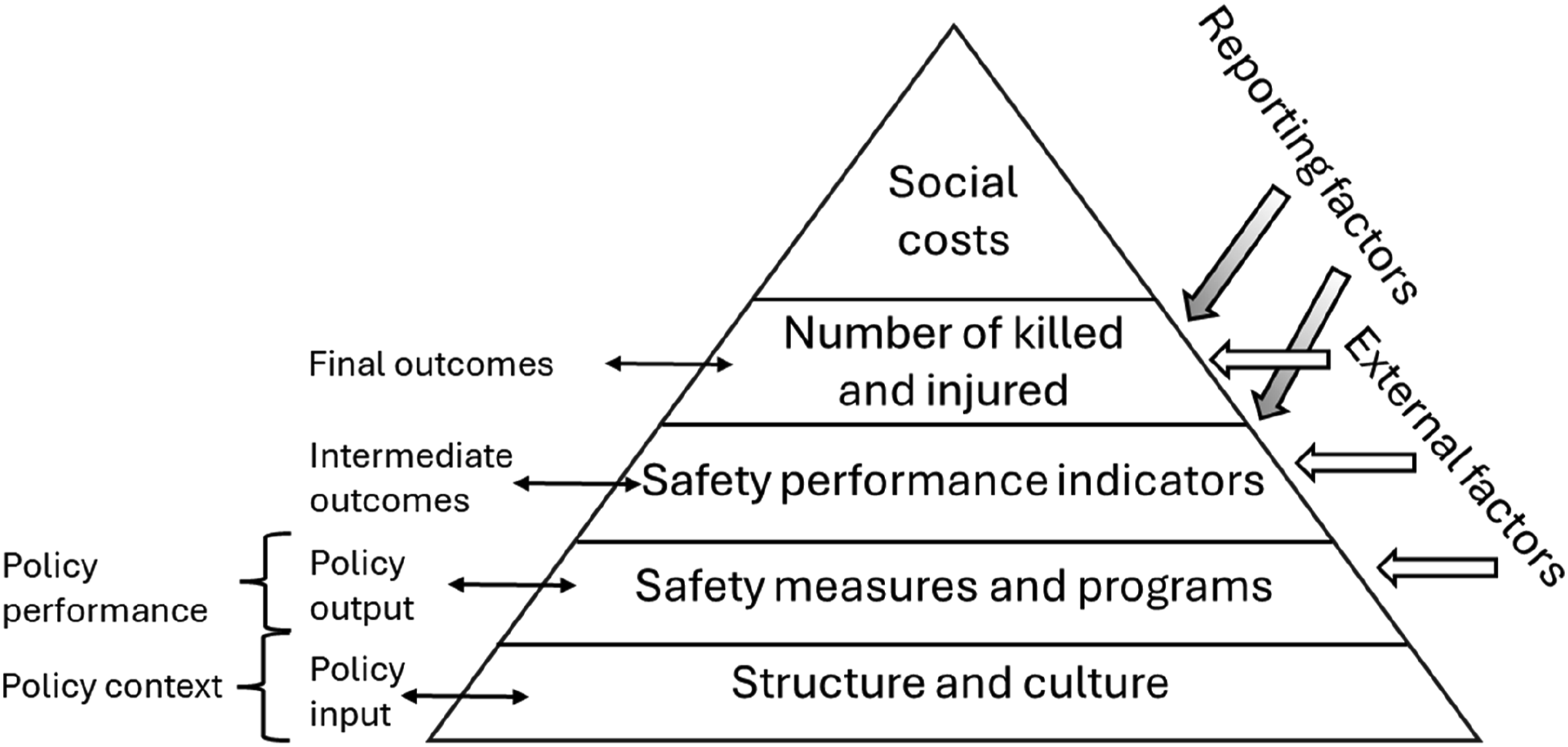
Related to the layers presented in Figure 2, structure and culture of road safety are affected by policy input, which in itself is affected by structure and culture, i.e. there is a two-way interaction in the policy context (European Commission, 2018). Similarly, on the layer of safety measures and programs, which can also be described as policy performance, there is a two-way interaction with policy output (European Commission, 2018). This two-way relationship can be noted for example in the recent national transport safety strategy in Finland. There is follow-up on both the higher layers (safety performance indicators and number of killed and injured in road traffic) but also related to the implementation of the safety measures and programs. The task of the follow-up group for the Transport Safety Strategy 2022–2026 is to monitor the implementation of the strategy’s measures and the effects of their implementation, for example by utilizing the strategy’s indicators (Rekola et al., 2022). The group, consisting of representatives of the key ministries of Finland, led by the Ministry of Transport and Communications, and other key stakeholders, such as the Finnish Transport and Communications Agency, Finnish Transport Infrastructure Agency, and the National Police Board of Finland, may make changes to the operational program if it is foreseen that the intended impacts will not be achieved (Rekola et al., 2022).
Development of Road Fatalities, Traffic Performance and GDP during 2004–2021
Related to the framework by Elvik and Høye (2021), we first study the issues (i) and (ii), i.e., the economic development and the development of traffic performance in the period 2004–2021 in Finland. Here, economic development is described as GDP in current prices and traffic performance in terms on passenger car mileage on highways in Finland. In addition, Figure 3 presents the development of road fatalities for the period 2004–2021. Road fatalities, GDP, and traffic performance of passenger cars on highways in Finland 2004–2021. Year 2004 = index value of 100. Data: Statistics Finland (2023a; 2023b; 2023c).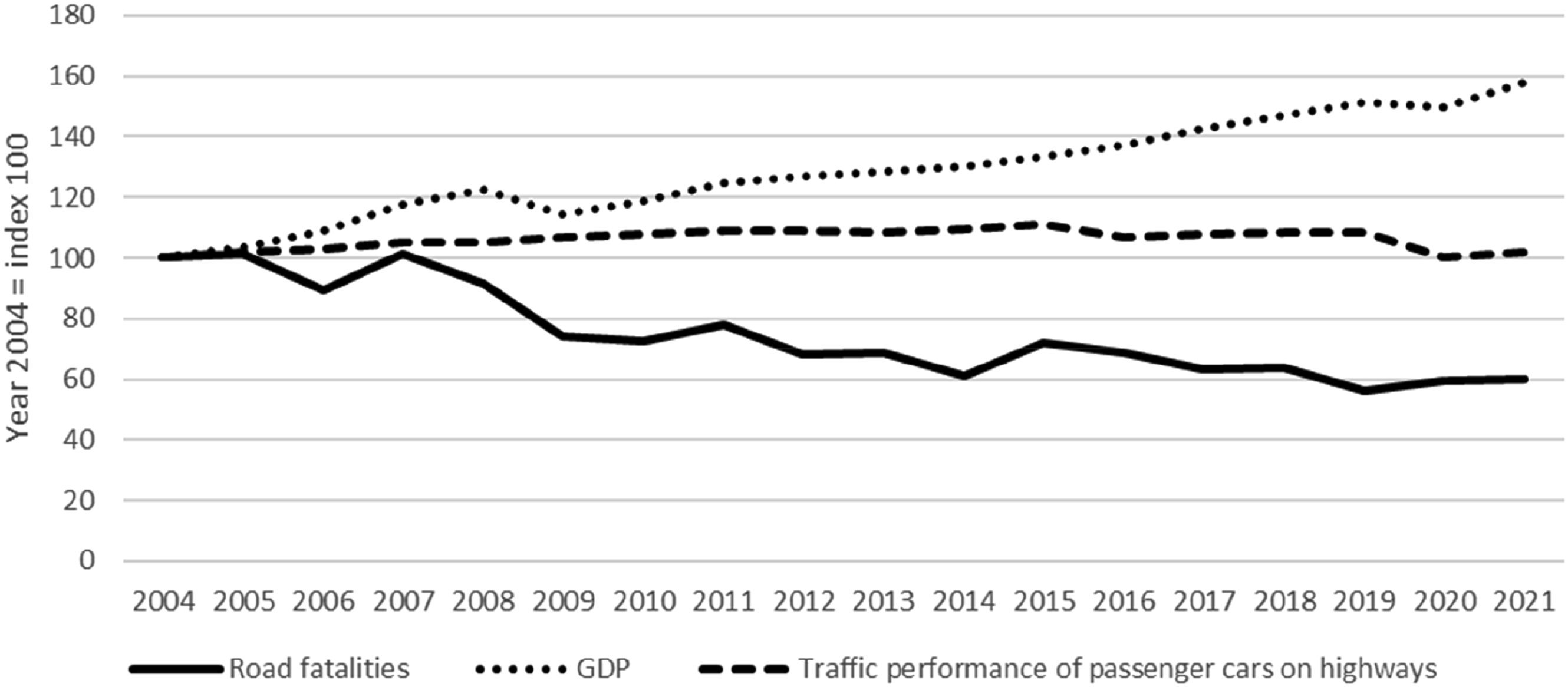
In Finland, GDP has continuously increased during the period 2004–2021 except for 2009 (following the global financial crisis in 2008) and 2020 (outbreak of the COVID-19 pandemic). Passenger car mileage has been relatively stable, showing some increase between 2004–2011 except for 2008, and thereafter fluctuating for some years with growth and decline, most notably in 2020. However, the methods of calculating traffic performance were somewhat changed in 2016 and therefore the figures since then are not wholly comparable with the previous years. When comparing the development of the GDP, traffic performance and road fatalities, the most notable decline in the number of road fatalities occurred in 2007–2009 during which time we also see a decline in GDP and passenger car mileage.
There is more annual fluctuation in the number of road fatalities compared to the development of GDP and traffic performance. In 2020, there was no notable change in the number of road fatalities in Finland. Affected by the lockdowns during COVID-19 outbreak and the reduction of traffic volumes in 2020, the number of road fatalities decreased by 8.6 percent compared with the baseline in the 34 IRTAD (International Traffic Safety Data and Analysis Group) countries with validated data (ITF, 2022). Finland differs from this average, as the number of road fatalities was somewhat higher in 2020 than in 2019.
Changes in Road User Behavior in Finland in 2004–2021
Share of Road Users With Certain Behavior in Finland in 2004 and 2021. Data: Finnish Road Safety Council (2023a).
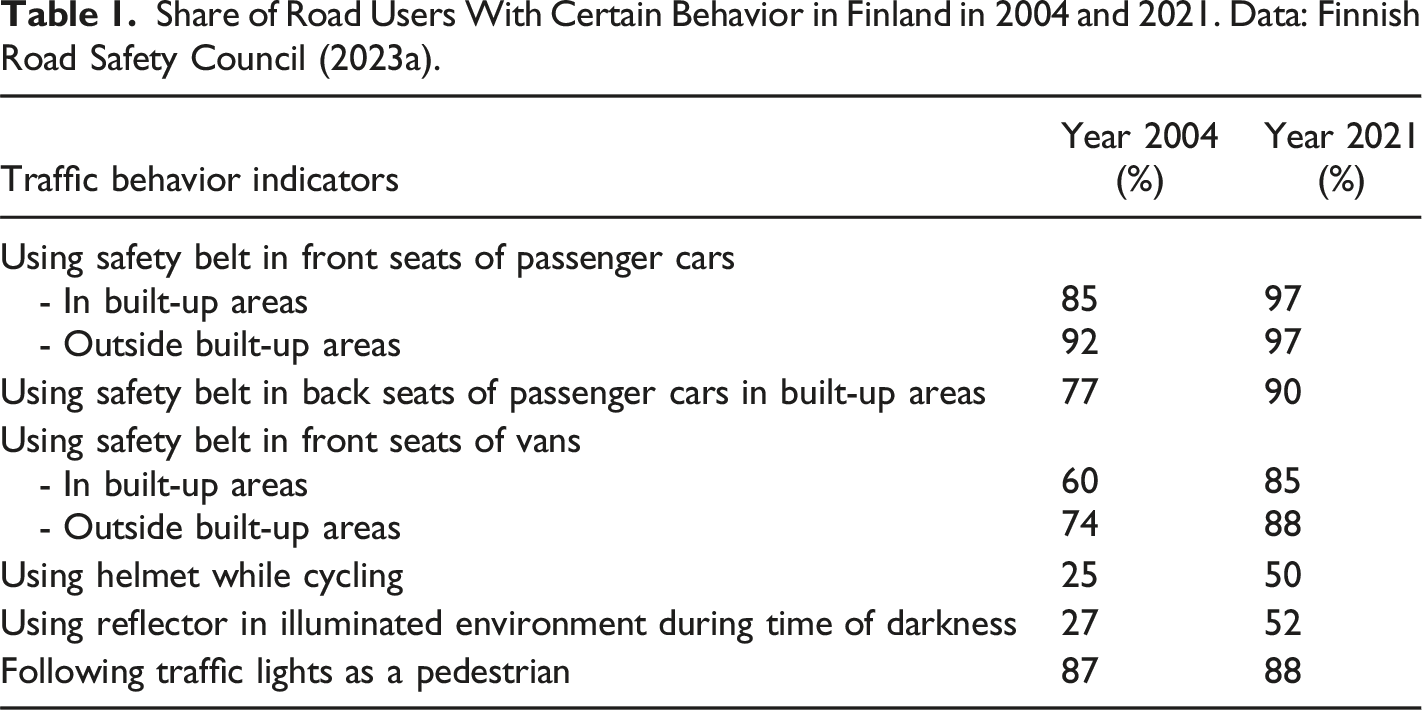
All the listed indicators related to road user behavior show a positive shift towards safer behavior. There is e.g., a notable increase in the use of bicycle helmets and reflectors from approximately one of four users to the current one-half of the users. Already in 2004, the use of safety belts was on a rather high level and increased up to a level of 97 percent in the front seat of passenger cars in 2021.
Key Policy Actions in Finland in 1970–2003
A strong emphasis on road safety in the 1970s is visible through the several policy actions and decisions made during the decade. The First Parliamentary Traffic Committee was established in 1972, releasing its report in 1973 with the aim of improving road safety through a variety of safety measures (Saharinen, 1989). It also set the target of halving the number of road fatalities by the end of the decade, a challenging target that was met (Häkkinen, 1989). The Finnish President’s New Year speech in 1973 promoted speed limits (Saharinen, 1989), as did the Finnish research-based book by Näätänen (1972) on road fatalities. During the period 1970–2003, other presidential New Year speeches mentioned the importance of road safety in 1987 and 2003 (von Bell, 2022), and the Second Parliamentary Traffic Committee published its report in 1991 (Ministry of Transport and Communications, 2001). The goal of the Second Parliamentary Traffic Committee, to reduce road fatalities by half, was almost reached in the 1990s, when Finland reached the internationally recognized high level of road safety (at that time) with fewer than 10 road fatalities per 100,000 people per annum (Ministry of Transport and Communications, 2001).
The first global energy crisis in 1973 called for energy saving actions which lead to introducing a temporary 80 km/h max speed limit in Finland (Saharinen, 1989). Speed limits vary according to road type, with the highest speed limit currently set at 120 km/h on motorways in the summertime (Traficom, 2023a). If there is no speed limit presented, the general speed limit is 80 km/h outside urban areas and 50 km/h in urban areas (Finnish Road Safety Council, 2024a). Seasonally varying speed limits were introduced first as a trial in 1987, and after positive experiences, setting lower speed limits for the wintertime was made permanent in 1991 (Peltola, 2006). On many main roads, the speed limit is lower during the late fall and winter due to prevailing time of darkness and wintry road conditions. Peltola (2015) estimated that eight lives are spared, and 36 injuries are prevented each year thanks to lower wintertime speed limits. Furthermore, there was an 80 km/h speed limit for new drivers in place in Finland during 1972–1996. As a result of common European technical requirements for heavy goods vehicles (HGVs) and buses, speed limiters were gradually required in new vehicles from the year 1994 (European Commission, 2001). Generally positive road safety effects have been associated to the use of speed limitation devices on vehicles in comparison with vehicles not fitted with them, however it takes a longer time when performing an overtaking maneuver (European Commission, 2001).
Other policy actions and decisions that were introduced starting from the 1970s include making the use of safety equipment mandatory. The use of safety belts in the front seats became compulsory in 1975, as did the use of helmets for motorcyclists two years later (Saharinen, 1989). The Road Traffic Act of 1982 sanctioned not using safety belts and the use of moped helmets was made compulsory. In 1987, using safety belts in the rear seats of passenger cars and vans was made compulsory. Prior to these actions and decisions, the installation of safety belts was required by law in the front seats of new passenger cars in 1971 and in the rear seats in 1981. In crash data analysis, the drivers and front seat passengers not using a safety belt were recognized to have a 71 percent higher risk of fatality compared to safety belt users in Finland in 1994–2013 (Lahtinen et al., 2017). Since 2003, the use of a bicycle helmet has been mandated by law, however there is no sanction for not using a helmet while bicycling (Valtonen, 2014). After introducing the new act, helmet use increased and there was a notable decrease in the number of cyclist fatalities (Valtonen, 2014).
There have been several changes in legislation related to driving under the influence of alcohol (DUI) in Finland. The drunk-driving limit (blood alcohol content, BAC) of 0.05 percent was introduced in 1977, making it possible to have police carry out routine large-scale inspections. In Finland, police enforcement of DUI has been found to be most effective during weekends and nighttime (Rintamäki et al., 2022). In 1994, aggravated drunk-driving limit of 0.12 percent was set, lowered from the previous 0.15 percent. In 2003, a zero limit for driving under the influence of drugs was imposed. Despite setting this zero limit, the share of fatal crashes under the influence of drugs has been rising during the past decades in Finland (Finnish Road Safety Council, 2024b; Linnasaari, 2021).
Related to regulation and enforcement, the possibility to give a driving ban for repeated offences has been in the legislation since 1996 in Finland. This can be considered as a simple form of a demerit point system that notes drivers with repeated offences. The effects on road safety of such systems have generally been significant after implementation, but only temporary, and the effects are probably more due to increased enforcement rather than to the system itself (Peräaho, 2013).
During 1970–2003, there were several policy actions and decisions that relate to Finland’s conditions as a Nordic country with limited visibility, as well as snow and ice and, thus, slippery road conditions. To increase the visibility of motorized vehicles, daytime use of dipped headlights outside built-up areas during the winter was introduced in 1973. Use of headlights increase vehicle’s visibility during daylight hours and therefore improve road safety (Koornstra et al., 1997; Polak, 1987; RSA, 2024). In 1982, the use of dipped headlights became mandatory throughout the year during dark or dusk, or when visibility is low due to weather conditions or for other reasons. In 1997, the use of dipped headlights became mandatory even in built-up areas. To increase the visibility of pedestrians, the law has obliged pedestrians to wear an appropriate reflector after dark since 2003 but not wearing a reflector was not sanctioned. Of all pedestrian fatalities in Finland in 2020, well over one-half occurred in the dark or at dusk. According to crash investigation teams’ estimates, the reflector could possibly have saved the lives of two pedestrians who did not use reflectors and were involved in an accident in the dark in 2020 (Sihvola, 2021).
The first winter tires were introduced to the market in 1934 (The Chemical Industry Federation of Finland, 2024), but it was not until 1978 that the use of winter tires became compulsory in Finland. As international vehicle standards were implemented in Finland, the requirement of rear window heating and headlight washers was introduced in 1981. Currently, these requirements are presented in the Regulation (EU) 2019/2144 by the European Union.
In 1995, Finland joined the European Union. Before this, e.g., the common ECE (United Nations Economic Commission for Europe, also known as UNECE) requirements for motor vehicles had influenced the Finnish vehicle stock. As an EU member state, there was EU legislation to take into consideration in Finland. As Finland, together with Sweden, had allowed longer and heavier vehicle combinations than the other EU member states, these were noted in the accession negotiations and a new system called the European Modular System, EMS, was launched (ACEA, n.d.). This allowed full trailer combination trucks being adapted for higher freight capacity on Finnish roads. In national traffic, module dimensions of vehicle combinations allowed a maximum length of 25.25 m and a maximum gross mass of 60 tonnes starting from 1997, while Directive 96/53/EC permits heavy vehicle combinations circulating across European borders with a maximum 18.75 m of length and 40 tonnes in weight (European Commission, 2008). The larger capacity for road freight was argued for based on the long distances in Finland, the great need for goods transport e.g. in the forest industry and, from a road safety perspective, that less trucks would be needed to transport the same amount of goods, meaning less exposure to heavy vehicles on roads (see e.g., Heinonen, 2017). In a Swedish study (Bálint et al., 2014), it was found that crash rate (number of crashes leading to injury per vehicle-kms) was lower for long vehicle combinations (18.76 – 25.25 m) than for medium (12.01 – 18.75 m) or short (≤12 m) combinations.
Additionally, during 1970–2003, changes were made related to driver education and driving licenses. One challenge that led to the development of GDE framework (goals for driver education) was that passing the driving test was easier for young males in Finland but after licensing they were involved in more accidents than older drivers or female drivers (Hatakka et al., 2002; Keskinen et al., 1992). In 1989, a two-phase driver education system was introduced. In this two-phase system, further training was required to obtain the actual driving license. Further training could be completed six months after obtaining a short-term driving license, within a maximum of two years. From 1990, a separate license has been required for motorcycling, and a moped license requirement was introduced in 2000.
To promote the safety of pedestrians, cyclists and moped riders, new regulations were introduced in 1997 that aimed to clarify the traffic rules. In the justification for the new regulations, it was noted that there is both the need for proper communication of the new regulations as well as enforcement to support that the regulations are followed (Government bill to Parliament, 1996). Related to attention directed at the task of driving, the use of a hands-free solution while using a mobile device when driving has been required by law since 2003 in Finland. In a follow-up study in 2004, it was found that this hands-free law had reduced mobile phone use while driving and most motorists believed that the use of mobile phones while driving should only be allowed with hands-free devices (Rajalin et al., 2004).
Even though there have been independent, systematic investigations of fatal road crashes with the purpose of studying the crash circumstances and the influencing factors in order to improve road safety in Finland ever since 1968, it was only in 2001 that this became regulated by law (Government bill to Parliament, 2000). Up-to-date and detailed accident information plays a key role in traffic safety work and has importance in political decision-making (Government bill to Parliament, 2000). The investigations have provided many important recommendations for improving road safety. Findings from the early investigations have been seen to contribute to e.g., safety belts becoming mandatory in the 1970s (Valonen, 2010). The accident data investigated by the investigation teams are used to promote traffic safety locally and nationally based on both individual cases and overall data (Government bill to Parliament, 2000). In practice, studies based on accidents that have occurred and the conclusions drawn from them have also often received more publicity than the results of traditional research activities (Government bill to Parliament, 2000). They have thus also had a significant impact on people’s attitudes towards road safety, facilitating the adoption and introduction of new road safety measures (Government bill to Parliament, 2000).
Key Policy Actions in Finland in 2004–2021
In 2004, medical doctors were obligated to inform authorities of their patients’ reduced ability to operate a vehicle which, however, seems not to have been that easy in practice (Kalsi et al., 2019). In principle, the ability to operate a vehicle should be assessed in connection with all medical examinations, not only those required to extend the validity of driving licenses. It has been found that drivers with health impairments are not detected early enough, and there is great variation among doctors in their reporting threshold (Peräaho et al., 2012). Additionally, often doctors do not ask their patients enough about their driving and postpone reporting on the reduced ability to drive (Peräaho et al., 2012).
The worst ever road crash in Finland took place mid-March 2004 in challenging wintry road conditions. Twenty-three people were killed when a bus collided with the skidding trailer of a full trailer combination truck carrying heavy paper rolls in Konginkangas, central Finland (Accident Investigation Board Finland, 2004). This raised a public debate and promoted several proposals for improving traffic safety, especially for heavy vehicles. According to the Accident Investigation Board Finland (2004), five most important proposals were: 1) The speed limiters for lorries should be set to a maximum speed of 80 km/h, 2) The legislation ought to be amended so that the driver can be penalized for violating the vehicle-specific speed limit on the basis of the speed data recorded by the tachograph, 3) A prerequisite for admission to the driving examination for buses and vehicle combinations should be a successfully completed course in predictive driving for heavy vehicles, 4) The work supervisor of the driver ought to be obliged to bear the responsibility for any violation or sanction for one’s part, and 5) The penalties for driving and rest time violations, violations of working time legislation, and exceeding vehicle-specific axle, bogie and total masses should be made more severe. While all the suggested proposals have not been implemented, there was a notable emphasis in road safety improvement and research especially for heavy vehicles in the years following the Konginkangas crash (Ministry of Justice, 2006). One example of this was the extended liability for loading cargo that was forced into legislation in 2006. Based on Ojala’s (2005) study, there was evidence that the shippers’ safety measures have a positive impact on traffic safety, which is why the liability of the shipper should be extended by amending legislation. While fatal accidents caused by faults in the load occur seldom, there is evidence that the load may have had an effect on the consequences of the accident (Metropolia Ammattikorkeakoulu, 2009).
In 2006, the use of safety belts in heavy goods vehicles and buses became compulsory in Finland in case there is a safety belt installed. Requirements for professional competence of truck and bus drivers have been in place from 2007. Driver certificate of professional competence (CPC) as well as well as the mandatory use of safety belts are based on EU directives (2003/59/EC; 2003/20/EC). According to a survey conducted by the Finnish Road Safety Council in 2015, half of bus passengers reported that they always or almost always wear safety belts. The reported reasons for not fastening the safety belt included inconvenience, forgetfulness and not being used to wearing the belt on the bus (Finnish Road Safety Council, 2024a).
Rider training and an operating test for new moped riders became mandatory in 2011. Before this change, a moped driving license could be acquired by just passing a theory test. In a follow-up study by Ruonakoski and Seila (2013), a notable reduction in the number of moped crashes was found associated with moped riding becoming less popular after the new legislation.
In 2013, the maximum gross mass of heavy vehicle combinations was raised from 60 to 76 tonnes. In the years following this change in legislation, there was a strong increase in the number of vehicle combinations with over 60 tonnes of gross mass (Rajamäki, 2023). To study the possibilities of even larger capacities, a High Capacity Transport (HCT) trial was launched in Finland in 2013 allowing testing of vehicle combinations with gross mass of more than 100 tonnes and lengths exceeding the ones allowed by the law for regular vehicle combinations (Traficom, 2020b). Even though transporting the same amount of goods with a smaller number of vehicles has positive effects on road safety in principle (Traficom, 2020b), there is also discussion on whether there is a mode change from rail to road in case of allowing heavier vehicle combinations on roads (e.g., Regehr et al., 2009).
Also in 2013, a new Driving Licence Act was implemented. This act implemented requirements from an EU directive so that existing driving licenses for passenger cars, motorcycles, mopeds, moped cars, and tractors were set to be valid until 18th January 2033 at the latest, and new driving licenses are valid only for a maximum of 15 years (Traficom, 2023b). When a driving license is about to expire, the driving license holder is required to renew their license. For people over 70 years of age, the driving license of these vehicles is valid for a maximum of 5 years at a time (Traficom, 2021). Training for passenger car drivers became three-phased in 2013, replacing the old two-phase system, and one could start the driver training at the age of 17 years instead of the previous 17.5 years. A new phase in the driver training included a training phase after getting the driving license and allowed feedback. This feedback phase was organized by a driving school, which raised the costs also for those who took the driver training through the so-called driving instruction license in which typically a close relative (a family member) is responsible for giving the driving lessons. The cost issue raised critique which in turn led to the law being fixed already in 2014 (Kallinen, 2014).
In a follow-up study (Laapotti et al., 2016) related to the renewed driver training curriculum, the reform was seen successful in terms of implementing the new content-related and methodological priorities. The emphasis had shifted, and the abilities of new drivers had improved, especially regarding social skills and interaction in traffic. There was no change observed in the number of traffic violations reported by drivers themselves and based on databases new drivers committed less often traffic violations during their first year of driving after the reform. The rate of decrease in the number of accidents among new drivers accelerated after the reform, which indicates that the reform may have contributed to it (Laapotti et al., 2016).
During 2015–2019, Finland had a government that emphasized the growth of the national economy (Finnish Government, 2015). Market forces were seen driving the development also in terms of the transport policy, while legislation was seen as an enabler. Under this government, light electric vehicles, such as electric scooters (e-scooters), and fast tractors (with speeds up to 60 km/h) were allowed in 2016. The use of fast tractors on roads was implemented according to EU regulation. Another change in 2016 was that a driving license for tractors with a maximum speed of 60 km/h could be acquired already at the age of 15, which in turn was national regulation in Finland. Some years after this reform, rentable e-scooters arrived in Finnish cities and became popular, especially among young people. As a new transport mode, there has not been systematic data collection considering the injuries among e-scooter riders, but e.g. in the Finnish city of Tampere, there were 1.7 injured riders per 1 million instances of use according to hospital data in 2022 (Traficom, 2024b). To improve the safety of e-scooter riders, there is a process ongoing to change the legislation in Finland, e.g. by imposing a maximum BAC level for e-scooter riders (Traficom, 2024b). Similarly, fast tractors have gained popularity especially among young people as it is easier to get a driver’s license for those compared to a microcar (i.e., moped car) (Yle, 2021b) and they have less expensive insurances and a higher maximum speed (Yle, 2024). Due to the higher maximum speed, there are dangers involved in the use of fast tractors, and typical crashes include roll-over crashes and running-off-the-road crashes (Yle, 2021a).
In 2017, winter tires were made obligatory for heavy vehicles. From December to February the vehicles with a gross mass of over 3.5 tonnes are required to have tires that meet the requirements (Autonrengasliitto, 2019). Already before this new legislation, heavy vehicles commonly used winter tires in Finland (Valtonen, 2015). To the knowledge of the authors, there is no follow-up studies on winter tire use of heavy vehicles in Finland.
In 2018, the vehicle inspection periods were extended for passenger cars less than 10 years of age, aiming at cost reductions. Reducing the frequency of inspections was argued for stating that modern vehicle technology is durable and that the cars comply well enough with their maintenance programs (Jauhiainen, 2019). Instead of the old periods with inspections every 3-2-1-1-year for newly registered passenger cars, the new periods of 4-2-2-2-1-year meant that a car six years old would need one inspection less, and for a ten-year-old car, there would be three inspections less during the first ten years. From 2018 to 2023, the fail rate for periodic inspections of passenger cars has increased from 25.6 to 28.2 percent for cars of all age groups, whereas 6-year-old cars saw an increase from 8.3 to 11.6 percent (Traficom, 2024c). It should be noted that there are several factors that affect the development of the fail rate (Massonnier, 2020), e.g. among electric cars the fail rate has notably increased in recent years (Traficom, 2024e), so no direct conclusions can be drawn from this data.
The new Act on Transport Services in 2018 deregulated the taxi market and allowed more competition to the market. In a follow-up study (Traficom, 2020c) on the effects of the taxi market deregulation, no clear evidence was found of effects on traffic safety, e.g., the number of injury accidents. There was a slight decrease in the trust of consumers towards the safety of taxi traffic but the trust remained at a high level year after the deregulation (Traficom, 2020c).
In 2018, the streamlining of the Driving License Act aimed at reducing the costs of acquiring a driving license by lowering the number of compulsory driving instruction hours and allowing more simulator training instead of on-road lessons. In this new model, the extent of driver education is assessed according to the needs of each individual student. This degree-based model allows an applicant with existing competences to pass the tests with less training and, when necessary, one can have additional training according to one’s own needs. One can also start the driving training already at the age of 16 instead of the previous 17. It also became possible to obtain a category B driving license (allowing driving a passenger car) at the age of 17 based on an ‘age exception permit’. This led to a strong growth in the number of category B driving licenses issued already at the age of 17, as the exception could be justified relatively easily and using any of several possible justifications, such as the need to drive a car to travel for study, work and hobby purposes (Traficom, 2024a). Immediately after the reform, 17-year-old new drivers of passenger cars and vans were more likely to be involved in a crash, while later that likelihood has decreased (Lehtonen et al., 2022).
In 2019, the regulation for vehicle combinations was revised, allowing for a maximum length of 34.5 m on Finnish roads, replacing the previous maximum length of 25.25 m. Together with the previous increase (in 2013) in the maximum gross mass of vehicle combinations, this has resulted to a growth in the number and use of longer and heavier combinations in Finland. Vehicle combinations of over 60 tonnes carried 54 percent of tonnes and transported 70 percent of tonne-kilometres in 2023 (Statistics Finland, 2024) and according to observations in 2021, 13 percent of vehicle combinations were over 25 m long (Rajamäki & Lahti, 2022). Six heavy vehicle combinations longer than 25.25 m were involved in fatal accidents in Finland in 2019-2021, and according to the road accident investigation teams, the length of the vehicle combination did not affect the occurrence or consequences of these accidents (Rajamäki, 2023). After these changes in allowing heavier and longer vehicle combinations, there have been no signs of negative road safety effects in Finland (Rajamäki, 2023).
In 2020, a new Road Traffic Act replaced the previous one from 1982. According to the Ministry of Transport and Communications (2020), the goal of the new act was to improve the flow and safety of traffic and create a favorable environment for digital transition and safe automation of transport. The new act included several changes and amendments that make it hard to assess the effects of the revision as a whole. Additionally, some changes have transition times related to their implementation and the short time since the revision makes it difficult to study the possible effects, taking statistical fluctuation into account. As an example, the outbreak of COVID-19 as well as exceptional weather and road conditions made the monitoring period 2019–2021 so unusual, related to the use of winter tires and change in the new Road Traffic Act that it was concluded that it was impossible to draw far-reaching conclusions based on the results (Lahti & Sainio, 2021).
In 2021, new regulation was issued on load bodies and load securing systems in road freight vehicles. The new regulation set out more detailed technical requirements for securing the load and the vehicle structures. According to the explanatory memorandum, failure of load securing causes various types of accidents in traffic while the most common serious accident type is a falling swap body during strong turns (Traficom, 2020a).
As the most recent item in the list of policy actions, the first ever strategic, long-term plan for the Finnish transport system for years 2021–32 was published as a report to the Parliament in 2021 (Finnish Government, 2021b). According to the impact assessment of the transport system plan, the plan as a whole has a positive impact on road safety in comparison to the alternative that would not include the actions of the plan (Ministry of Transport and Communications, 2021).
Assessment of Road Safety Impacts of Key Policy Actions in Finland
The Assessed Road Safety Impacts of Key Policy Actions and in Finland 1971–2003. Scale From −1 to +2, Where −1 Presents Negative Impact on Road Safety and +2 a high Positive Impact. Safe System Pillars: Safe Road Users (RU), Safe Vehicles (V), Safe Speeds (S), Safe Roads (R), and Post-crash Care (PCC).
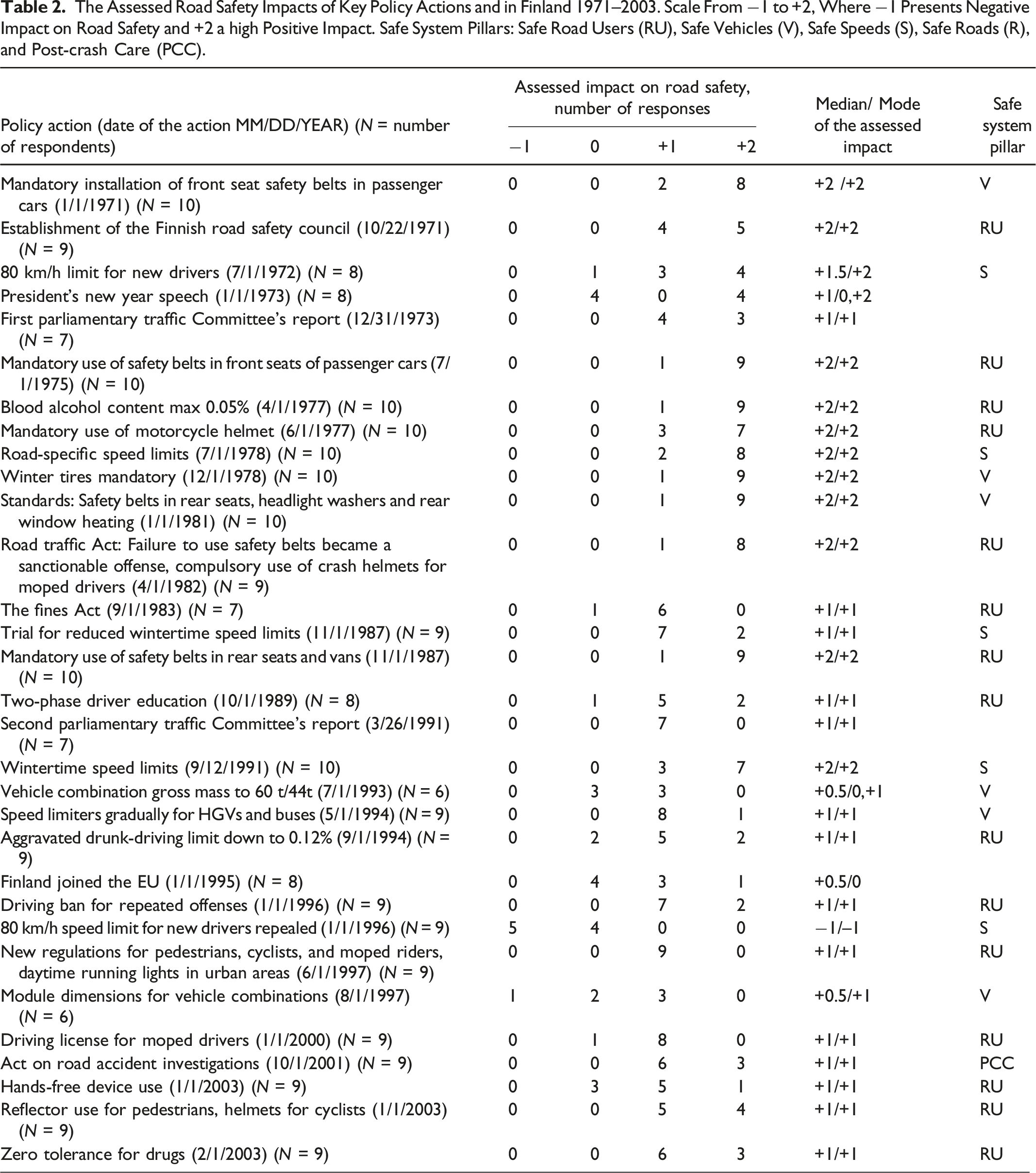
The impacts of policy actions from 1971 until 1991 were assessed very positively, generally with median and mode being +2. Mandatory installation and use of safety belts in front seats, BAC level of 0.05%, road-specific speed limits, making winter tires mandatory, new vehicle standards in 1981 as well as the Road Traffic Act from 1982 were assessed to have had a high positive impact by most respondents.
During 1971–2003, there was only one action – removing the new drivers’ 80 km/h speed limit, the impact of which most respondents (5) considered negative while four respondents assessed the impact as +/−. The respondents commented that although new drivers driving at lower speeds may have caused additional risks in overtaking situations, young and inexperienced drivers are known for having higher risks of motor vehicle accidents in traffic. Some argued that such a limitation for a specific group of drivers would be against the human rights principles, and thus the decision to remove the lower speed limit was the right one.
Regarding the actions from 1971 until 2003, the respondents commented that average speeds and particularly speeding of HGVs and buses reduced after 1994 as speed limiters gradually became widespread. Finland joining the EU in 1995 and adopting EU regulation was considered to have had a +/− impact on road safety by four respondents, while the same number of respondents considered the impact on road safety as positive, e.g., through improved knowledge sharing. This also meant that national level regulation was relatively reduced. A concrete change was the adoption of module dimensions for vehicle combinations. This meant increasing vehicle combination masses, which can be seen to have controversial implications in Finnish conditions. There might be fewer heavy goods vehicles on roads but heavy loads might have negative impacts on road conditions. This is particularly important for the smaller roads on which logs and other timber material is transported to pulp, paper, and carton factories and sawmills.
Most respondents considered the 2003 hands-free act to have had a positive impact on road safety, as it has refrained the road users from mobile phone use or at least from holding it in hand while driving. The use of a hands-free device may still decrease driver’s attentiveness and thus, according to one respondent, legislation could have been stricter.
The Assessed Road Safety Impacts of Key Policy Actions and Decisions in Finland 2004–2021. Scale From −1 to +2, Where −1 Presents Negative Impact on Road Safety and +2 a high Positive Impact. Safe System Pillars: Safe Road Users (RU), Safe Vehicles (V), Safe Speeds (S), Safe Roads (R), and Post-crash Care (PCC).
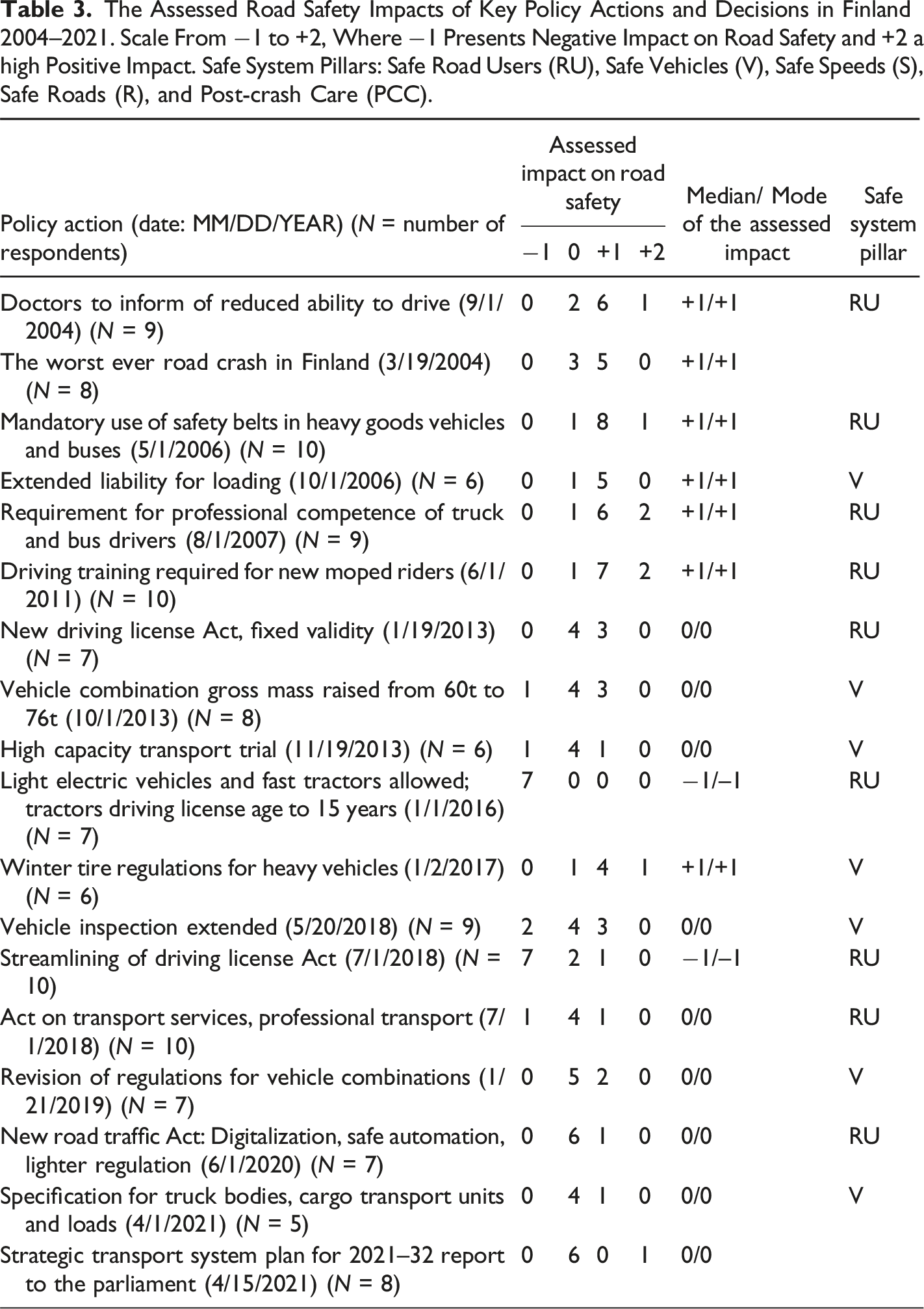
In the period 2004–2021, the actions with the biggest positive impact on road safety were assessed to be the mandate for doctors to inform of reduced driving ability in 2004, EU directive-based requirement for safety belt usage in heavy duty vehicles in 2006, the new requirements for professional competence of truck and bus drivers since 2007, riding training required from new moped riders since 2011, and winter tire regulations for heavy vehicles in 2017. Many of the actions that were assessed to have the next highest positive impacts on road safety were related to the safety regulation of heavy vehicles and their use, such as the extended liability for cargo loading in 2006. This can be seen to be linked with the Konginkangas crash in 2004, which most of the respondents considered having had a positive impact, as it was followed by added focus on road safety.
Some respondents assessed that the new Driving License Act in 2013, revision of regulations for heavy vehicles in 2019, and strategic transport system plan for 2021–32 had a positive impact on road safety while a larger number of respondents assessed their impact to be +/−. The assessed impact of +/− was also the dominant response for raising vehicle combination gross mass to 76 tonnes in 2013, the new Road Traffic Act from 2018, and the specifications for truck bodies, cargo transport units and loads in 2021 while some respondents assessed them to have had a positive impact. Two actions, the High Capacity Transport trial from 2013, and the Act on Transport Services from 2018, were assessed to have had a +/− impact by most respondents, while there were individual respondents assessing these to have had either a positive or a negative impact on road safety.
Two specific actions were assessed to have had a negative impact on road safety by most respondents: allowing light electric vehicles and fast tractors together with the driving license age of fast tractors set to 15 years in 2016 and the streamlining of Driving License Act in 2018. Extending the periods for vehicle inspection in 2018 was mostly assessed to have had a +/− impact, but there were two respondents who assessed the impacts to have been positive, and one respondent who assessed the impact as negative on road safety.
Discussion
Road safety is developed through versatile policies and actions taken by the political decision-makers, road authorities, automotive industry, and other stakeholders. Key instruments on the national level include the road safety strategies and action plans, which set the objectives as well as the actions for improving road safety. In Finland, such strategic plans, led by Ministry of Transport and Communications, have during the past decades covered the following periods: 2001
Among the factors that generally impact the number of road fatalities and seriously injured presented by Elvik and Høye (2021), we found that change in the traffic volume (factor i) has been minor, mostly with some modest growth in Finland between 2004 and 2021, while the economic development (factor ii), measured as GDP, has been increasing in Finland during the period, except for two years with external changes due to financial crisis and COVID-19. Regarding traffic safety measures (factor iii), we focused on the recognized 49 policy actions and decisions. In terms of changes in road user behavior (factor iv), we presented data (Table 1) that showed progress towards safer behavior indicating positive impact on road safety. However, there is no long time series available for all elements related to road user behavior, such as speeding or DUI, that are relevant when considering road safety.
When analyzing the prevalence of the pillars of safe system approach during the two time periods studied, we can find that most of the policy actions can be categorized to one of the pillars. There are however actions, such as the parliamentary reports related to transport policy, that cannot be categorized as they are not specific to any of the pillars. We can note that during both time periods, most of the actions related to road users (15 for the first, 9 for the latter), followed by vehicle-related actions (6 and 7 for the respective time periods) indicating a relative increase in the presence of vehicle-related actions in the past two decades. In addition to these, there were 5 actions related to safe speeds in 1970–2003, but none for the latter period, which can also be considered an interesting finding. Promotion of safe speeds was especially notable in the 1970s, whereas there were no actions in the 2000s or 2010s related to it in the list. Regarding the fifth pillar of safe system approach, post-crash care, there was one action that was associated with it as crash reporting and investigation are also regarded as a part of this pillar (Khan & Das, 2024).
Most of the policy actions that were assessed by the experts cannot be connected to any of the indicators of road user behavior that was presented in Table 1. There is however a clear connection between the action in 2003 mandating bicycle helmet use and obliging pedestrians to wear an appropriate reflector with the rising share of road users using a helmet while cycling and users with reflector during darkness. In less than twenty years, from 2004 to 2021, the share of users rose from 25 to 50 percent (helmet) and from 27 to 52 percent (reflector). During the same period, use of safety belts has increased, but relatively less, and from an already higher level. E.g., the mandatory use of safety belts in rear seats and vans was forced into legislation in 1987, and during 2004–2021, the share of road users using safety belts rose from 60 to 85 percent in front seats of vans in built-up areas, and from 77 to 90 percent in back seats of passenger cars. These show that it takes a long time to change road user behavior even if mandating legislation is in place.
We can find the results expected in the way that the actions in the 1970s are considered to have the greatest positive impact. In the 1970s, the decrease in the number of road fatalities was very rapid and there were actions that directly affected road safety, e.g. by protecting the road user better in case of crash (e.g. introduction of safety belts and helmets), lowering the impact forces in case of crash and harmonizing the traffic flow (e.g. speed limits). When we compare these to some of the actions the experts assessed e.g. from the 2010s, such as raising vehicle combination gross mass to 76 tonnes, the High Capacity Transport trial, and the Act on Transport Services from 2018, we can note that these do not directly intend to increase road safety but instead have some other primary aim, such as improving efficiency in terms of environmental and economic performance. They might have an impact on road safety indirectly but according to the experts’ assessment, their impact was considered negligible. Generally, after the 1970s we can note a decreasing amount of policy actions with impacts assessed as highly positive for road safety. This supports the impression that improvement in road safety in the 1970s can be associated with the policy actions of that time. This has also been seen in other European countries, such as France, where the peak in road fatalities, similarly as in Finland, was also reached in 1972, and the actions of the 1970s included e.g. setting BAC levels, safety belt regulations, regulations on helmet use for motorcyclists, and imposing speed limits, and as a result the number of road fatalities decreased considerably by the end of 1970s (ONISR, 2019).
We can note a continuance in the policy actions during the decades. For example, the regulations from the 1970s regarding safety belt use have been followed by expansions to new vehicle types (vans) and rear seats in the 1980s and for heavy goods vehicles and buses in the 2000s. Safety belt use was recognized as one of the key policy areas with the greatest impact on road safety in the comparative study between the Netherlands, Sweden, and the United Kingdom (Koornstra et al., 2002). In Finland, there has been a stepwise increase in the maximum lengths and gross masses of vehicle combinations that has continued up to year 2019. For example, Castillo-Manzano et al. (2016) found that increased truck load capacity does not seem to be linked with greater numbers of traffic fatalities or accidents. According to Klingender et al. (2009) permitting longer and/or heavier vehicles in road traffic would not inherent an increase of safety risks in general and there could be economic benefits regarding lower accident costs by the usage of such commercial vehicles. In a more recent study, Castillo-Manzano et al. (2021) concluded that circulation of heavier and longer vehicles is advisable only in countries where there is certain degree of maturity and demonstrated achievements in the field of traffic safety. According to this study, Finland has the required proper prior preparation and examination that have led to allowing these “megatrucks” on roads.
In addition to longer and heavier vehicles in Finland, other specific Finnish elements include wintertime traffic with harsh conditions, related to which there are winter tire regulations in place, as well as wintertime speed limits. According to the respondents’ assessment, the actions related to these in the 1970s, 1980s and 1990s have had a high positive impact on road safety in Finland. The impact of winter tire regulations for heavy vehicles in 2017 is assessed to have been less positive, as vehicles were already fitted with tires that were required in the new regulation. This is a good example of an action that on paper seems to be positive for road safety but does not deliver much alteration to the situation. In this case we could think that the variation in the assessments by the experts (one respondent assessing +/− and one +2 impact, while the others responded +1) is related to the knowledge of this specific action and different ways of thinking about the impacts: did it deliver a positive impact (a change) or is the result (securing a high degree of winter tire use) positive for road safety in a broader view.
There are also actions related to regulation, which could have more potential to improve road safety, such as the mandate for doctors to inform of reduced driving ability and legislation related to mobile phone use while driving (hands-free act). Both address a notable risk related to driving, but according to the respondents’ assessment and comments, the actions did not deliver a high positive impact on road safety. According to the Finnish Road Safety Council (2024c), approximately one of five car drivers have faced a hazardous traffic situation while using a mobile phone while driving. During 2000–2022, there has annually been on average four fatal road crashes in which the use of mobile phones has been a background risk factor in Finland (OTI, 2024). According to Olsson et al. (2020) harsher laws that penalize mobile phone use while driving could prevent fatalities resulting from risky driving practices.
There were three actions that most respondents assessed to have had a negative impact on road safety. One of them was the 1996 removal of the 80 km/h speed limit for new drivers. In the period following this change, there was a 43 percent increase in crashes on roads with a 100 km/h speed limit among new drivers but only one percent increase on 80 km/h roads (Rajalin, 1999). In Finland, there has been discussion, e.g., Yle (2009) on how the high risk for novice drivers should be addressed and whether the removal of the 80 km/h speed limit for new drivers was the right decision.
The other two actions that the experts assessed to have had a negative impact on road safety were the acceptance of light electric vehicles and fast tractors in 2016, including setting the driving license age of fast tractors to 15 years, and streamlining of the Driving License Act in 2018. These actions took place under a government that emphasized market growth and reduced regulation, e.g., to decrease the costs of acquiring a driving license. These also coincided during the period when there was no national road safety plan or strategy in place. From road safety perspective, the experts considered both allowing new modes of transport that are not as safe as the existing ones and making it easier to get a driving license to have had a negative impact on road safety. Related to e-scooter use, Janikian et al. (2024) have found that safety can be impacted by policies related to helmet requirements, use of intoxicants, speed limits, enforcement and riding skills (traffic behavior). Interestingly, these are the same issues that Finnish policy actions have addressed in road traffic in general since 1970s to improve road safety.
Limitations of the Study
The number of experts who were invited to the questionnaire and who responded was low. This is linked to the fact that the potential group of senior road safety experts with an ability to judge policy actions and decisions is very limited in Finland. The total number of 15 invited respondents and 10 replies may sound small, but for Finland (with population of about 5.6 million) we consider this as reasonable. For example, in the Ministry of Transport and Communications in Finland there has typically been one expert tasked with road safety issues whereas in a bigger country, there could be a whole unit dedicated to road safety where a group of people are working together on the area. Due to the low number of respondents, dividing them into several groups would have meant very low number of respondents in different groups. Therefore, we did not present the responses in groups, e.g., civil servants and researchers. We also acknowledge that some experts have e.g. a history as academic researchers from which they have shifted to a career in public office.
In the analysis we found that several respondents viewed that they are not yet able to assess the impacts of the latest policy actions and decisions, particularly from the recent years. This is linked to the fact that it can take time until evidence on the impacts can be proven. As the assessment is made by experts, they might expect research-based results before being able to present their impact assessments, subjective as such. As there is less research-based evidence regarding the actions introduced more recently, the experts might tend to end up with the assessment of +/− or not present any assessment for such actions. There are also some cases, especially related to regulation of driving licenses where the pace of renewing the regulation has been so fast that there has not been enough time to verify the impacts of an individual action before a new regulation takes effect. The lowest number of responses was received to an action from 2021 that was also specific in terms on its context (Specification for truck bodies, cargo transport units and loads). This was assessed by 5 respondents while 5 respondents left this unanswered. Of the respondents, four assessed the impact to be +/−. The assessment +/− was also typical for many of the actions from recent years. We cannot define to which extent this also relates to the fact that there has been only a short time for the impacts to be perceived. Conducting a similar questionnaire with experts in 10 years could reveal if impacts have come to be perceived then.
In this study, we have studied the impacts of policy actions and decisions on road safety in Finland based on the list from the Finnish Road Safety Council. Most of these actions were national, while many also have European dimensions, e.g., through ECE standards or EU regulation. Even if the list is updated by an organization, it is a subjective list by the people in the organization. In recent years in Finland there has, for example, been new regulation related to alcohol ignition interlock device (alcolock) and transport of dangerous goods that were not included in the list. The list also included larger entities as one action, such as the new Road Traffic Act. This includes several changes in legislation which can be difficult to think of in one specific item in the questionnaire but having each change on the list separately would have meant a much longer list of items to be assessed.
Additionally, it should be noted that as we focused on the specific 49 policy actions the list did not include e.g., any road infrastructure improvements, such as construction of roundabouts, new motorways, or middle barriers to prevent head-on crashes that may have improved road safety. For example, during the first decades on the 21st century, there has been a strong development towards automated traffic enforcement, which was not noted in the study. Currently there are approximately 1100 fixed control points for automatic traffic surveillance in Finland, covering approximately 3800 km of the paved road network of 51,000 kilometers (Police, n.d.). Furthermore, the development of guidelines for road engineering or transport system planning were not considered in the study. For example, a new guideline was introduced for imposing speed limitations in urban areas in 2000 (Tiehallinto, 2000). This has led to the adoption of lower speed limits on the national road network as well as on urban streets, where the first step was to set the speed limit to 40 km/h and later, increasingly, to 30 km/h (e.g., Malin & Luoma, 2020).
Conclusions
In this study, respondents were asked to assess the road safety impacts of 49 policy actions and decisions, based on a list that has been updated by the Finnish Road Safety Council. Among these actions, there seems to be a tendency towards a lower positive impact on road safety according to expert assessment. In comparison to years 1971–2003, the policy actions and decisions in 2004–2021 received fewer positive assessments regarding their impact on road safety. Literature findings and assessments made by senior road safety experts imply that there were many policy actions and decisions that had a positive impact on road safety in Finland in the 1970s. Among others, regulations related to safety belts on front seats of passenger cars, motorcycle helmets, compulsory use of winter tires and drunk-driving limit were imposed. These have been followed by other policy actions during the past decades, of which most have been related to safe road user behavior. Safe vehicles are addressed by many actions, too, and increasingly during the past two decades. Related to the other pillars of safe system approach, there are no policy actions related to safe speeds during 2004–2021, highlighting a shift from the previous decades. All pillars of safe system approach should be developed with support from policy actions, including also safe roads and post-crash care.
There were two policy actions in the 2010s which most respondents assessed to have had a negative impact on road safety, and one in the 1990s. Allowing new types of motorized transport, younger generations having faster vehicles to drive, and reducing the requirements of getting a driving license, should be avoided to keep up the progress towards Vision Zero. We also recognized the lack of a national road safety plan in Finland from 2015 to 2021 and the temporal connection with the two policy actions that were considered to have had a negative impact on road safety.
All in all, there are many policy actions that have had positive impacts on road safety and the long-term development in the number of road fatalities is towards the desired direction and Vision Zero in Finland. In this study we did not aim to connect the policy actions with road fatalities but at least for some actions there are possibilities related to this, as e.g. the SUNflower study (Koornstra et al., 2002) has demonstrated. There is interest to further study the effectiveness of different policies related to road safety similarly as those related to other road safety measures and work on evidence-based policymaking (e.g., Talbot et al., 2024; Yannis et al., 2008). While this study focused on the Finnish situation, there are similarities between countries as well as differences and lessons to be learnt with comparative studies.
Footnotes
Acknowledgements
We would like to thank the Finnish Road Safety Council for providing us with the list of road safety related actions and decisions in Finland from 1971 to 2021. We acknowledge the ten senior road safety experts for their valuable views and insights on the perceived impacts on road safety actions and decisions. We wish to thank Juha Valtonen from the Finnish Road Safety Council for his valuable comments to the draft of this manuscript and Riikka Rajamäki from Finnish Transport and Communications Agency Traficom for her treasured assistance in recognizing the studies in Finland that have assessed the impacts and relate to the policy actions and decisions in Finland in 2004-2021.
Author’s Note
Both authors are affiliated to Faculty of Built Environment, Tampere University, Finland. Within this faculty, Markus Pöllänen is affiliated to Transport Research Centre Verne https://research.tuni.fi/verne-en/ and Tapio Katko to Capacity Development in Water and Environmental Services (CADWES) Research Team www.cadwes.com. Additional information regarding Tapio Katko is available at  .
.
Declaration of conflicting interests
The author(s) declared no potential conflicts of interest with respect to the research, authorship, and/or publication of this article.
Funding
The author(s) received no financial support for the research, authorship, and/or publication of this article.