



Abstract
Construction projects are frequently used to boost local economic development without consideration of the long-term sustainability impacts. Via implementing circularity approach in public procurement, the research sought to identify best practices for greening construction projects by conducting in-depth interviews with stakeholders to collect their views about green public procurement (GPP) criteria in an EU country. The paper demonstrates how circular public procurement can be implemented for construction projects and which phases of procurement are more promising in terms of minimizing environmental impacts. Our results show that the design and build phases should be procured separately in order to successfully reduce environmental impacts in circular construction projects. The planning phase should ideally be carried out by an interdisciplinary team that establishes the right green public procurement criteria for selecting the designer, the construction firm and developing technical specifications.
Introduction
In the EU, 5–15% of national GHG emissions originate from construction projects (GPP Toolkit, 2016a), and at the same time construction projects are frequently used by public authorities as means of boosting local economic development and creating jobs (Barajei et al., 2023; Ebolor et al., 2022; Ogunmakinde et al., 2022) without careful consideration of the long-term effects. The construction of buildings and infrastructure are complex projects, involving many stakeholders, participants, and have long-term impacts on nature as well. Due to this, construction holds significance not only from the perspective of environmental sustainability but also from that of public administration, as buildings and infrastructure possess the capacity to generate shared value for local communities. The societal values are undergoing gradual transformation, bolstered by policy frameworks aimed at advancing sustainability transitions, exemplified by initiatives such as The European Green Deal of 2019 (The European Green Deal, 2019). Consequently, sustainability is progressively emerging as a pivotal determinant of decision making. The EU spends around 14% of GDP (European Commission, 2022) on the purchase of services, works and supplies, therefore gprofessional public procurement practices could eliminate several of the negative impacts of procured goods and services (including construction) on the environment and support the positive effects and value creation for local communities.
The environmental impacts of different building elements start with the extraction of raw materials, which results in the depletion of natural resources, while related non-renewable energy use leads to GHG and other harmful emissions (Bonilla et al., 2010; Marzouk et al., 2017; Qi et al., 2020). Indoor air quality can also be deteriorated by building materials that contain hazardous substances (Ebolor et al., 2022). The transportation of building materials through extended supply chains to the construction site results in emissions and local air pollution. It has been estimated that greater material efficiency could help avoid 80% of these emissions (European Commission, 2022). The regular transportation of equipment and personnel to the place of construction also produces emissions. The deterioration of air quality in the neighborhood of construction activity due to particulate matter in outdoor air also has a considerable impact. In addition, water use and land occupation are relevant issues associated with construction processes, along with noise pollution. Waste is generated during site preparation, construction, and the use phase of a built structure. In the use phase, energy consumption, water use, and related greenhouse gas emissions occur. In the EU, 35% of waste is generated by the construction industry (European Commission, 2022).
In addition, GHG emissions and local air pollution are caused by the journeys of users to and from buildings. A building is normally planned to be utilized in its original function, with minor renovations for about 50–70 years. Waste generated during renovation or demolition causes major environmental impacts as well, however due to the time-span between the construction work and the final life cycle stage of the built structure these are considered as new projects.
Due to the previously described negative environmental impacts, the construction industry is a priority area for the transition toward sustainability through implementing a circular economy model (Ahmed et al., 2023; Giorgi et al., 2022). The implementation of sustainability aspects pertaining to construction clients, stakeholders, and project teams seems to be still rare in practice and encounters many hurdles (Kirchherr et al., 2018; Wuni, 2022).
The complexity of construction projects, the nature of public procurement, and the current policy and economic environment can be seen as quite turbulent, posing significant challenges for public authorities and procurers.
According to the concept of dynamic capabilities (Eisenhardt & Martin, 2000) in order to cope with highly dynamic environment, businesses need to acquire relevant knowledge, then transform them into capability and finally use this capability to gain and sustain competitive advantage (Zahra & George, 2002).
The theory of dynamic capabilities can also be applied to public authorities, implying that competitiveness involves achieving the strategic goals of public procurement—social, economic, and environmental—such as the efficient use of public funds, creating societal value, and minimizing negative environmental impacts (Douglas et al., 2012; Koala & Steinfeld, 2018) Therefore, public authorities need to acquire knowledge and develop capabilities for implementing sustainable public procurement to meet policy-level requirements and strategic goals of the EU (e.g., the Green Deal), while ensuring the tendering process remains effective and legally compliant.
Therefore, our paper will focus on the environmental sustainability aspects of construction projects procured by public authorities. Compared to other approaches circular procurement provides the possibility to reduce the environmental impact throughout the life-cycle of a building.
The general aim of this paper is to explore how to foster circularity in the public procurement of construction projects.
Public procurement is a highly regulated area where sustainability considerations may even pose a risk to the effectiveness of the public procurement procedure, so the analysis focuses on how the criteria used in literature and practice can be applied correctly and effectively from the legal perspective and at the same time supporting the implementation of the circular economy.
After describing the related literature, a model is built that connects the circular economy model to construction project life-cycle stages and the legal steps of public procurement that need to be taken to achieve the strategic-level goals of circular construction in the public sector. It gives the opportunity to analyze present practices in the public procurement market. By exploring best practices, it is demonstrated how sustainability goals can be realized through circular PP approach applied to construction projects. The paper indicates for practitioners and academics how circular public procurement can be implemented for construction projects and which phases of procurement are more promising in terms of minimizing environmental impacts.
The structure of the paper is the following: after reviewing the literature, the research question is presented, the methodology of the empirical research is described. The circularity model of public procurement in construction projects is introduced, followed by the green public procurement (hereinafter GPP) criteria collected during expert interviews. These criteria are integrated into the model, the result of which are analyzed, the research question answered. Finally, the discussion section is followed by brief conclusions.
Literature Review
Circular Economy and Sustainability
The construction industry being complex by nature with high energy and resource intensity the transition towards more sustainable practices is on the agenda worldwide (Amoako Sarpong et al., 2023; Mhatre et al., 2021; Munaro et al., 2020; Ossio et al., 2023; Çimen, 2021). Circular economy practices are considered to further sustainable development goals, are preliminary conditions to reach sustainability (Geissdoerfer et al., 2018; Schroeder et al., 2019; Münch et al., 2022; Evans, 2023) thus have high relevance in the construction sector in reducing the negative environmental impacts. The circular economy concept originates from regenerative design, cradle-to-cradle, industrial ecology and bio-mimicry. (Mhatre et al., 2021)
The widely accepted definition from the Ellen MacArthur Foundation describes circular economy as “an industrial system that is restorative or regenerative by intention and design” (MacArthur, 2013), meaning that waste is designed out of the system, the resources are kept within the economic loop for as long as possible.
(Geissdoerfer et al. 2017, p 759) provide a more detailed definition of the Circular Economy concept “as a regenerative system in which resource input and waste, emission, and energy leakage are minimized by slowing, closing, and narrowing material and energy loops.”
On the policy level the EU published its first Circular Economy Action Plan in 2015, then later in 2020 (European Commission, 2020). The circular economy framework, which is often visualized as a cycle is built from the following steps: (0) input of raw materials from nature, (1) planning phase, (2) production, transportation activities, (3) utilization and use phase, (4) and recycling and waste management cycles feeding into the different phases again, thus closing the material loop(s) (European Parliamentary Research Service, 2023). From the above, it can be said that the circular economy concept is highly relevant for construction projects.
Defining Circular Construction
The definition of the construction covers the process of the building, renovation, reconstruction, and demolition of public infrastructure (e.g., buildings, other infrastructure, and roads as well (Ebolor et al., 2022; Roostaie & Nawari, 2022), including all necessary physical activities and materials connected to the life-cycle phases of a project. The life cycle phases of a construction project are usually time referenced: pre-construction, construction, operation and maintenance, end-of-life (Ossio et al., 2023) These phases can be further divided into more specific categories e.g., planning, construction, the transportation of material and supplies, etc.
This complex definition is in line with the content of the concept of sustainable construction that has been discussed quite frequently in the literature since 2010 (Amoako Sarpong et al., 2023; Det Udomsap & Hallinger, 2020; Ebolor et al., 2022; Presley & Meade, 2010). The goal of sustainable construction is to create social and economic value in the form of accessible, secure, healthy, and productive buildings while reducing or eliminating the negative impacts on the natural environment (Ebolor et al., 2022). According to Presley and Meade (2010), the terms “green construction” and “sustainable construction” are both used synonymously.
The term “circular construction” has also been introduced lately to refer to “the adoption of ecologically responsible, economically sound, and socially protective techniques to develop, use, and reuse buildings and infrastructure without unnecessarily exhausting natural resources, polluting the living environment and affecting ecosystems” (Wuni, 2022, p. 529). Since the construction industry involves an extended network of stakeholders, and construction projects are complex by nature, changes towards circular construction are required on the macro level of the economy (e.g., in legal frameworks), on the meso level (e.g., in supply chains and business ecosystems) and the company or micro level of the economy (for example, in the form of circular strategies involving extended lifespans or a reduction in the need for new buildings and infrastructure) (Coenen et al., 2023), as well as new circular business models and responsible governance practices from all project participants (Ababio & Lu, 2022; Khadim et al., 2022; Llorente-González & Vence, 2020). This is in line with the proposed definition of Ossio et al., (2023) who formulate a definition of circular construction after carrying out a systematic literature review:
“Circular Construction ...is enabled by a context defined by technology, management systems, government policies and regulations, business models, and social and stakeholder behaviour that enable construction needs to be met sustainably.” (Ossio et al., 2023, p 14)
The definition of circular construction (Ossio et al., 2023; Wuni, 2022) also elevates the understanding of desirable construction projects in the public sector from the simple delivery of tasks to a strategic level involving the creation of social, environmental, and economic value through construction-related public procurement.
Towards Circularity in Public Procurement
From the analysis of the public procurement literature, it can be stated that public procurement essentially has strategic aspirations, and potential to support wider societal development is attractive to policymakers (Dimand, 2022; Gidigah et al., 2022; Grandia & Meehan, 2017). Nonetheless the classic aim of public procurement - spending public resources responsibly - is not in conflict with environmentally sustainable or green public procurement (GPP). Testa et al. (2016, p. 1989) state that “growing awareness and knowledge of what a GPP-oriented strategy means in the long term could lead to shift purchasers’ approach from being strictly ‘purchase-cost’ to ‘life-cycle-cost’ oriented, which would in turn lead to the more efficient management of public resources.”
The EU GPP Toolkit provides green public procurement criteria for several product groups and defines circular public procurement as an approach to GPP “which pays special attention to the purchase of works, goods or services that seek to contribute to the closed energy and material loops within supply chains while minimizing, and in the best case avoiding, negative environmental impacts and waste creation across the whole life-cycle” (ICLEI - Local Governments for Sustainability, pg. 5, 2017).
This understanding of circular public procurement is strongly connected to the life cycle approach of GPP, however the suggested criteria in the GPP Toolkit only make implicit suggestions for greening that go beyond the procurement process to support circularity approach. Such criteria exist for office building design, construction and management (GPP Toolkit, 2016a) and road design, construction and maintenance (GPP Toolkit, 2016b) using a life-cycle approach, starting with the design phase. The tools used in public procurement are simplified in the guideline and focus primarily on the preparation and conduct of procedures. This area is analyzed, among others, by (Tátrai and Diófási-Kovács 2021) in terms of the legal instruments associated with the circular public procurement model. Sharing the views of (Qazi and Appolloni 2022) circular procurement can be considered as a modernized version of green procurement and sustainable procurement, where the end-of-life phase of products were not in strong focus of criteria setting (Appolloni et al., 2014). Circular procurement however aims to go beyond GPP criteria to eliminate waste from the end-of-life phase of products by cross sectoral collaboration, thus contributing significantly to the UN SDG Goals (Qazi & Appolloni, 2022).
There are several obstacles to achieving circular procurement with construction projects (Ababio & Lu, 2022; Brandão et al., 2022; Coenen et al., 2023; Salonen & Vangsbo, 2019) at different levels of the economy, but since our study focuses on the micro level in the form of public tendering, we consider the main barriers to circular procurement – based on the work of (Ababio and Lu 2022) – as the following: lack of interest and human resources, resistance to change, lack of expertise, complex procedures, funding issues within public authorities, and the availability of materials and technology. The mentioned barriers are perfectly in line with the factors hindering the implementation of GPP. Success factors are also analyzed across the different stages of the project life cycle by (Barajei et al. 2023) with special emphasis on the pre-construction phase.
There is literature specifically related to public procurement that clearly follows a circular procurement logic, however GPP is mentioned more frequently, and the main goal is to address environmental impacts. Based on the above clarification between GPP and circular public procurement we introduce findings of the quite rich GPP related literature relevant for construction and continue with the terminology.
Varnäs et al. (2009) aim to provide an overview of the current practices of, opportunities for, and problems concerning green procurement and its application to construction contracts in Sweden. In the construction sector, environmental considerations are increasingly taken into account during procurement but seldom impact the outcome of the process. The paper clearly addresses the process of verification and discusses aspects of circular public procurement by way of a cross-cutting approach.
Testa et al. (2011) searched for links between environmental regulation and competitiveness by focusing on firms that operate in the building and construction sector. Their paper examines legal aspects and focuses on the procurement process until contract conclusion. Testa and Grappio et al.’s (2016) content analysis of public construction tenders from a green perspective indicates that the focus is on energy consumption and recycled materials, omitting other environmental issues that influence the building process. This can lead to the underestimation of the impact of buildings.
Sparrevik et al. (2018) identified some design and construction steps in an innovative public procurement process during the so-called “Visund-net zero energy building” project. The conclusions are particularly relevant to the application of LCC in public procurement. The importance of stakeholder cooperation and the decision-making process is heightened during the preparation and implementation phases.
Pelša (2019), also in a case-based article, highlights the lack of expertise and the legal risk of using LCC and other methods in the analysis of infrastructure investment cases from the perspective of Latvian municipalities, especially for EU-funded projects, focusing mainly on procedural documents, procedure preparation, and technical conduct. Finamore and Oltean-Dumbrava (2022) focus on the tendering specialties associated with the construction phase (without planning) and introduce criteria that can be translated into technical specifications according to the structural elements of the building and controlled during the construction process. The relevance of life-cycle costs and long-term investment is highlighted.
According to Rajabi et al. (2022), the environmental sustainability indicators of a construction project should be the following (with a focus on the construction phase): energy, water, material and waste, land use, biodiversity, and pollution. This article specifically aims to identify and assess KPIs for monitoring and evaluating the sustainability performance of construction projects during the execution phase.
A modest number of works deal with public procurement, and even fewer with its procedural aspects (Behravesh et al., 2022; Sönnichsen & Clement, 2020), especially within the construction sector which is a gap to deal with in public procurement research. As the research gap is identified, in the followings the methodology of the empirical research will be introduced.
Methodology
The research begun with reviewing the relevant literature. We identified the research gap, the topic of transition towards circularity in the construction sector. Our research question was thus: How can a circularity approach be implemented in public procurement of construction projects?
To answer this question, it is necessary to understand circularity in construction projects, to identify the public procurement aspects of the latter, and to carry out project analysis specifically for construction projects that involve several procurement procedures. We first identified the life-cycle stages of construction and matched them to elements of the circular economy concept. After the identification of the steps of a construction project, the steps of procurement procedures were added to the model.
From a methodological point of view, in addition to the literature research, the experiences of Hungarian contracting authorities and tenderers were explored through semi-structured interviews as described by (Kvale 2009).
Key Data From the Interviewees.
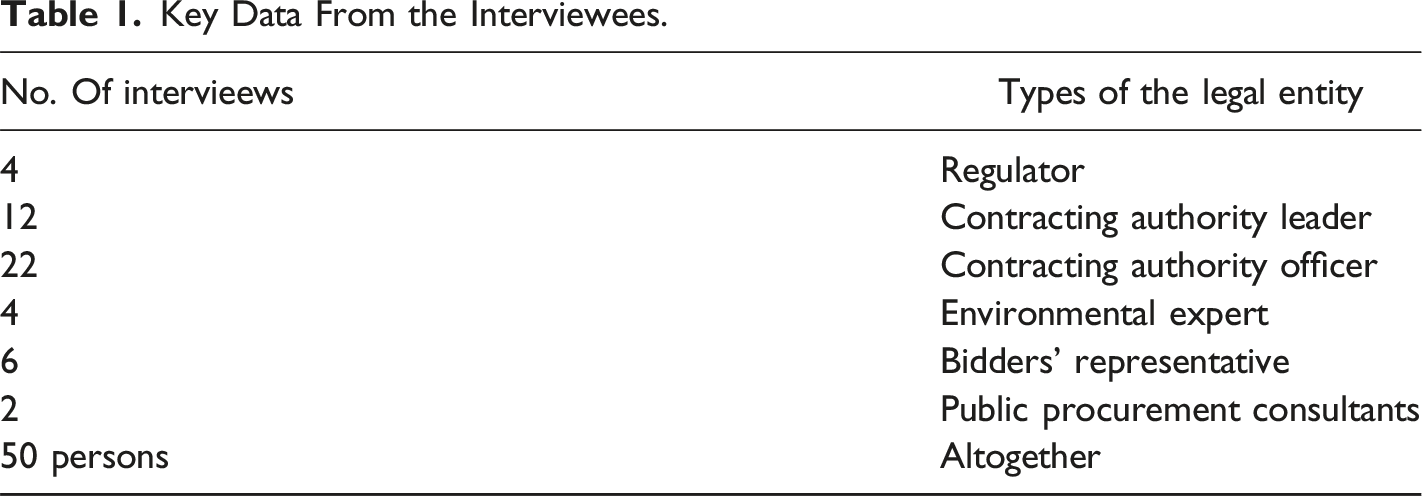
The interviews were organized with different number of participants depending on the size of the organization and its involvement in public procurement of construction projects. Three interviews involved a total of 4 interviewees, while the other interviews typically involved 1 or 2 participants. In each case, the participants represented a different expertise (lawyer, environmental engineer, economist, civil engineer, etc.) By profession 18 engineers, 17 lawyers and 15 economists participated in the on-line meetings in total. The selection of the interviewees was proposed by a group of experts, which consisted of an environmental engineer, a procurement expert with knowledge of EU funds, a lawyer and an economist. To find the interviewees, the so-called “Snowball sampling” was used (Biernacki & Waldorf, n.d), whereby the first set of interviewees were selected by the expert group and after the first 10 interviews, suggestions were requested from the public procurement market players for further interviewees. The interviewees were qualified by the expert group on each occasion, i.e., only and exclusively from highly vetted contracting authorities and tenderers with a proven track record in public work projects and at least five years of experience in the field of public procurement projects were considered eligible. Procurement expertise was not a minimum requirement, as engineers and environmental specialists also provided significant support. The sample is not representative in this form, but it was only relevant to interview practitioners who had already encountered public procurement of construction projects and understood them from a green perspective. In a developing market, it is through professional contacts that like-minded and interviewable knowledge can be identified.
The use of interviews is based on Darnall and Jolley (2004, p. 590), which states that “incorporating expert and public opinion through stakeholder interviews and surveys is widely accepted in the environmental literature as methods that sufficiently account for the public’s environmental concerns”. There have been many similar studies in which, due to the complexity of the topic and the diversity of stakeholders, the interviewers often asked unstructured and identical questions from the interviewees (e.g., Gröfke et al., 2021 in their study on Food Labelling for Environmental Sustainability).
The characteristic feature of stakeholder interviews is that, although it is more difficult to channel the results and requires a precise description of the process, the overall added value of the different groups is not reduced by the fact that often experts with knowledge of a specific part of the topic are interviewed. Therefore, it was essential to identify good practices raised by the interviewees in the coding of the interviews, in line with the relevant legal context.
The interviews aimed at identifying GPP criteria that stakeholders consider important for managing green public procurement better in the construction industry. Expert in-dept interviews have already been used in several GPP-related country-specific researches, like in case of Sweden (Varnas et al., 2009). In interviews verbal descriptions as described by (Flick 2022) were used by stakeholders of Hungarian construction projects, to explore experiences, best practices, first-hand ideas in terms of GPP by EU funded projects.
The main themes of the interviews were: 1. Reasons for including environmental preferences in the construction public procurements; 2. The application of already used GPP criteria; 3. Development of non-used, but planned GPP criteria; 4. How the requirements are monitored during construction work.
The interviews were all conducted within the above framework. If an idea was raised by the interviewees, the next topic was not raised until all stakeholders had expressed their views, in order to identify best practices.
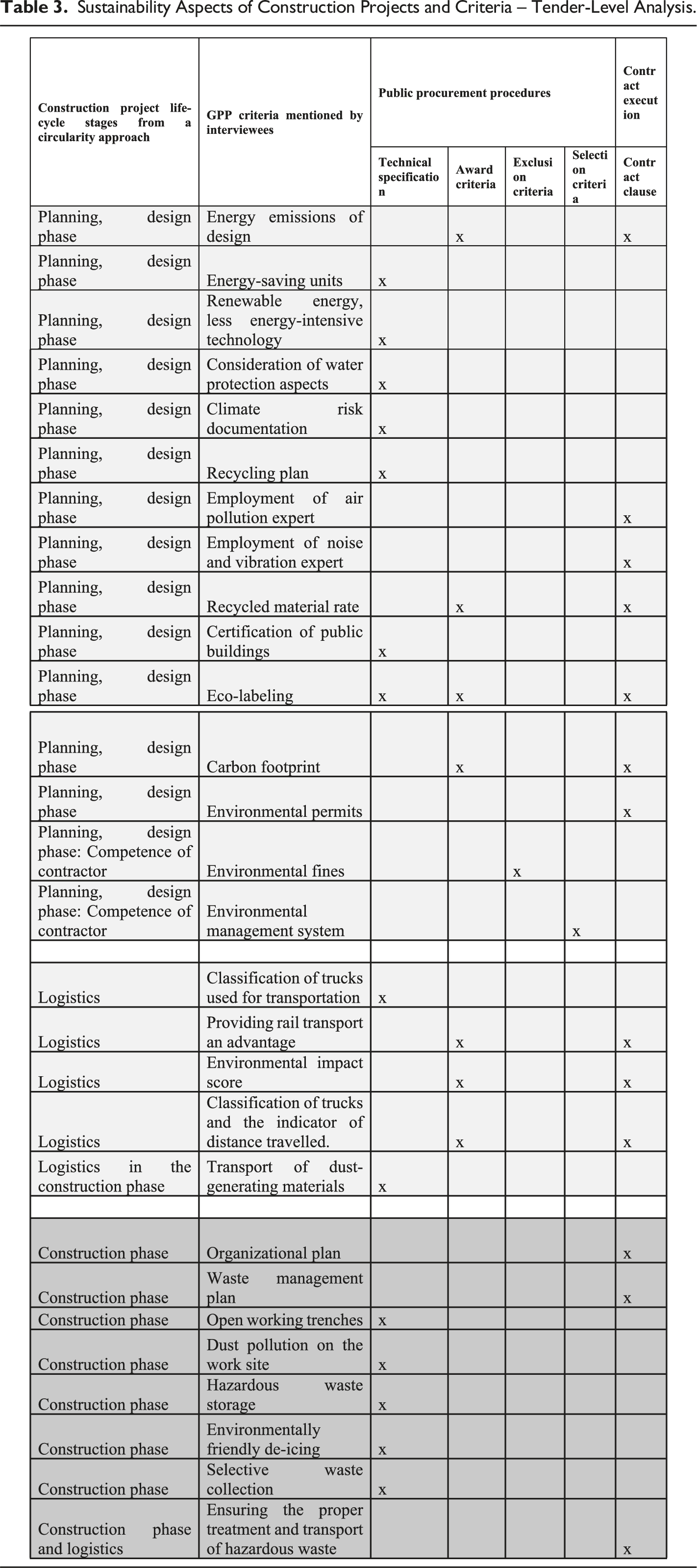
The data were transferred to Excel in order to code the results. The transcripts were analysed by three experts coming from different fields (environment engineer, lawyer, economist). When coding the interview transcripts, the aim was to identify the green aspect and link it to a procedural act. Thematic analysis was used for coding (Braun & Clarke, 2012) where the construction project life-cycle stages were given in the framework of Table 3. The thematic analysis is based on the five green aspects defined under Directive 24/2014/EU, which can be considered as pre-defined “a priori” themes. This can also be followed in the EU GPP Toolkit, with the difference that all types allowed by the legal provisions are listed, so that it does not happen that the ideas raised by the interviewees are outside the range of interpretation. On the basis of what we heard, each practice was classified hierarchically. We followed the classification according to the life-cycle stages defined in Table 3 and then the identification of the practice in terms of public procurement procedure and/or contract execution.
In case of coding, the identification of each GPP criterion was done by each expert without knowledge of the coding of the other experts and then jointly refined the GPP criterion. The linking of the identified GPP criteria to procedural actions or contract execution was performed by the legal expert. The visualisation of the results (Figure 3) followed the original process model (Figure 1). Construction project life-cycle stages using a circularity approach, Source: authors’ compilation.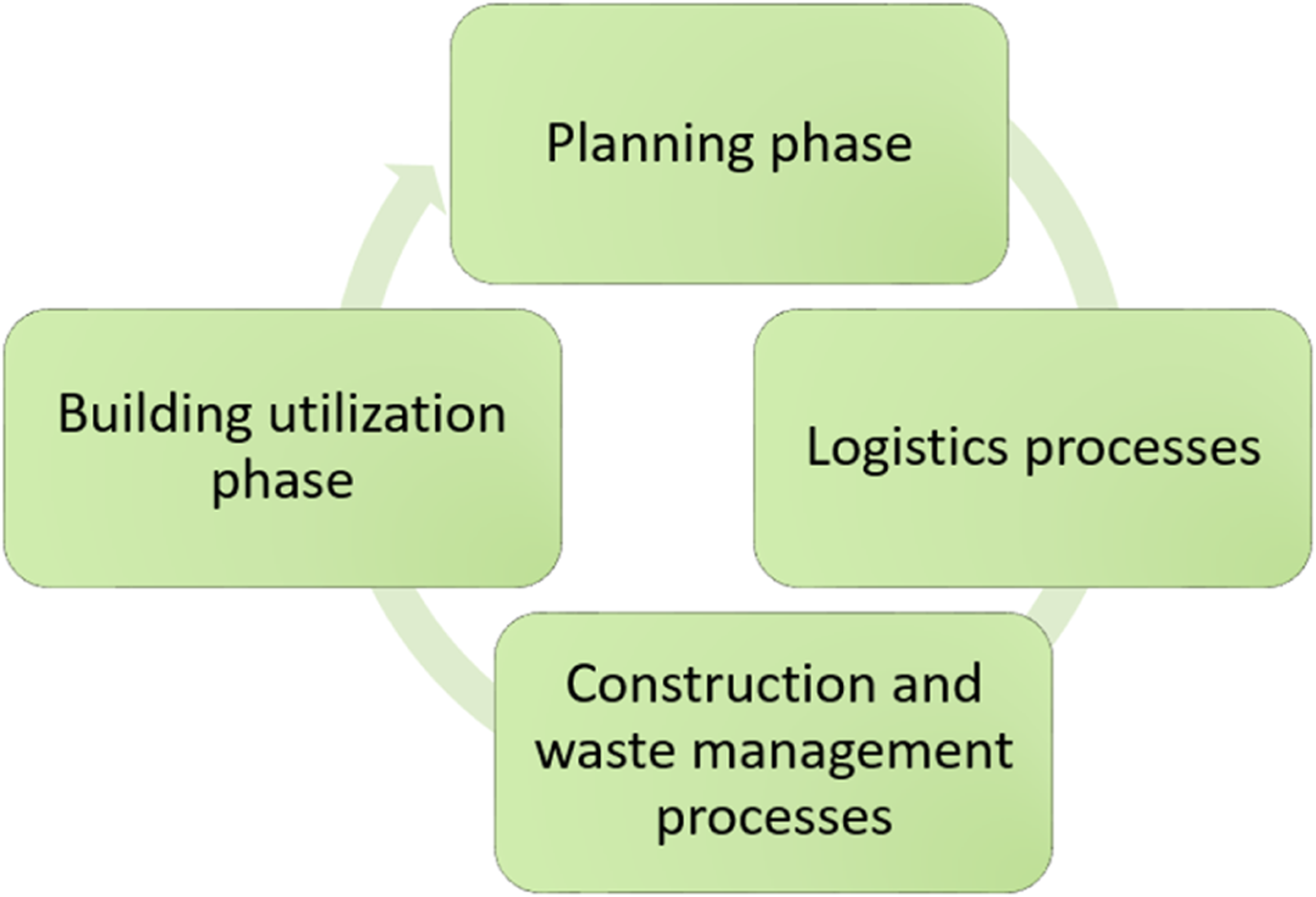
Through the interviews it was possible to explore the main contracting authorities of the public procurement construction projects financed by EU funds and collect their ideas in relation to a specific country. Since there are few large players in the Hungarian public procurement market that manage high-value construction projects, which are almost all EU-funded projects, it was possible to include the most important players in the research, covering the whole Hungarian market. The regulatory environment was completely uniform, therefore everyone had to meet the same conditions of public procurement. Since the legal environment is similar in all EU countries, the findings of the research should be of use in other European countries as well. Figure 2 Environmental impacts addressed by the GPP criteria identified by respondents throughout the life-cycle stages of a construction project.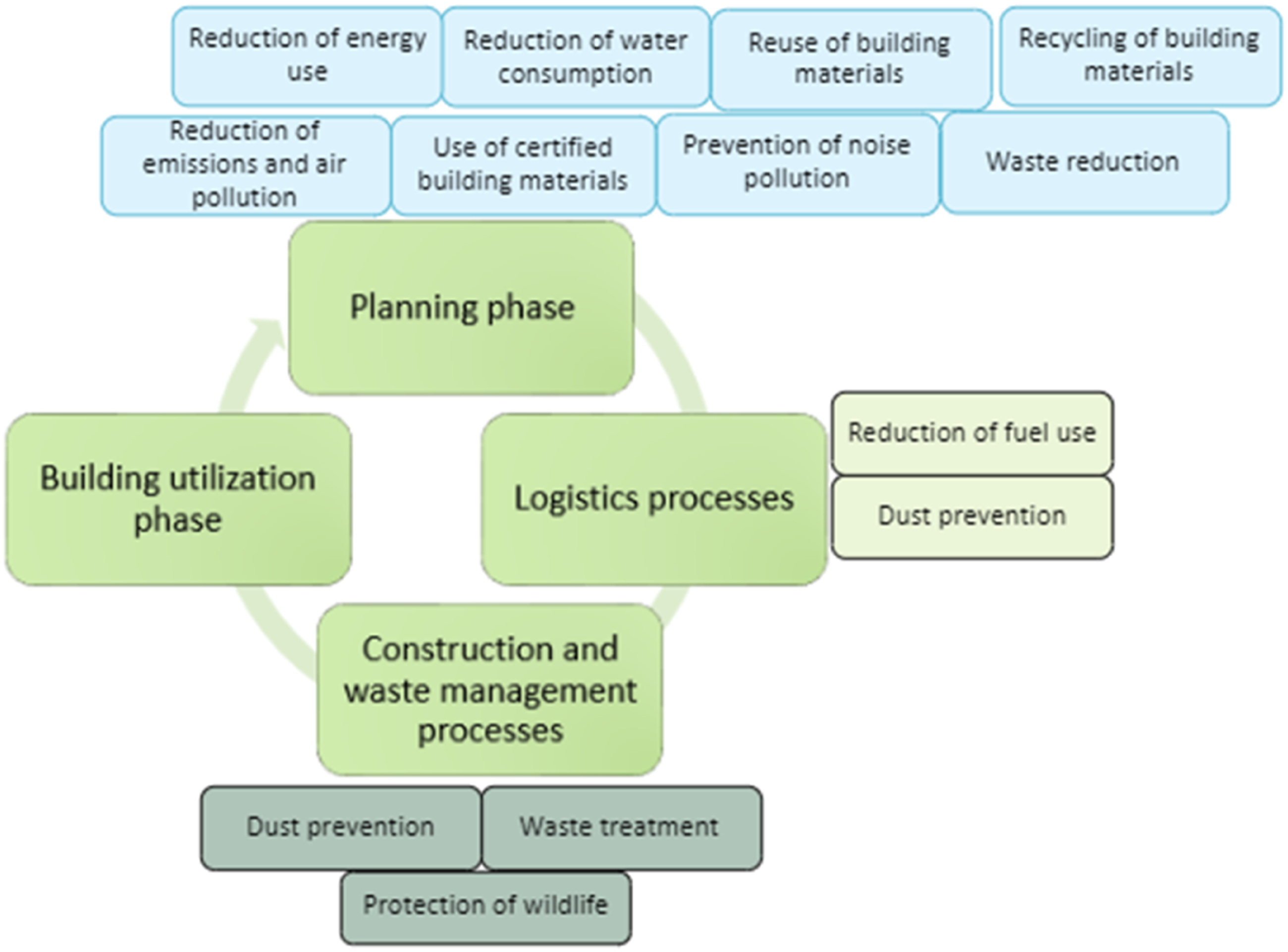
In order to understand the importance of each stage of the construction life cycle from a project management and a procurement perspective, the GPP criteria proposed by each interviewee were mapped and connected to the model describing the life-cycle stages of construction projects (e.g., the planning and design phase, construction, logistics, etc.). From a procurement-implementation point of view, the public procurement phases were identified, to which the GPP criteria could be primarily linked to. Finally, after examining the correlations at the procedure level, - linking construction project life-cycle stages to the GPP criteria identified during the interviews with the help of the model-, conclusions were drawn.
The Circularity Model of Public Procurement as Applied to Construction Projects
Based on the literature review we build our model connecting circularity with construction project management and public procurement law in a way that shows the connection between the life cycle phases of construction projects and the steps a public procurement procedure must follow in case of construction.
If we consider construction projects from the circular perspective using the circular economy framework, we can determine different project stages. For example, the planning phase includes the preliminary assessment and the feasibility study of a project along with the necessary permits and planning activities; the logistics processes are connected to the management of material flow necessary for the construction work; the utilization phase is connected to the handover and facility management of the building.
The life cycle phases of a construction project are completely different in terms of project implementation and procurement management. The two are, in fact, complementary. Procurement management aspects do not appear on a process level but involve a delimitation of individual procurement procedures and their period of performance. While from a project management point of view, the design, logistical preparation, implementation, and exploitation of a project involve different, interrelated activities, from a procurement perspective, the selection and procurement of the designer, followed by the procurement of the contractor and accounting for the performance of all contractors, are often parallel, interdependent activities, with different dynamics. This is one of the reasons why project management cannot be separated from procurement, the success of which depends on whether a project progresses and is of the quality envisaged by its implementers.
However, ensuring circularity from a procurement perspective can be connected to the process level, and the questions asked to the interviewees also referred to green aspects that can be identified in the procurement process. Therefore, it was not sufficient to carry out the analysis at the project level, but instead to analyze all of the GPP criteria later from a procurement perspective to identify which phase in the life cycle is actually affected by the specific GPP criteria.
In order to fulfill the strategic roles of public procurement in the case of circular construction projects, we need to clearly identify the linkage between the project phases, the different steps of the public tendering (public procurement management perspective), and the legal solutions, as highlighted in Table 1. This allows us to better support sustainability goals through public procurement.
Analysis of the Empirical Research
In this section of the paper, the GPP criteria are analyzed from the empirical research. Each interviewee described the criteria used or planned to use by public authorities and experts to support sustainability practices in construction projects.
In the first step, two conditions are introduced that are linked to the successful internal processes of the contracting authority and form the basis of public procurement’s circular approach. One of them is employing an environmental expert to contribute to the multidisciplinary work of creating a call for tenders for a complex project that ensures the consideration of sustainability aspects. The other option that was mentioned in relation to the contracting authority is dividing the tenders for the planning, designing, and construction phases. This can be done through a design contest, which is a procedure that involves the selection of a suitable designer with whom the contracting authority negotiates concerning its expectations regarding the design of the project. The contractor is then selected based on the proposed designs in a separate procedure.
Linkages Between Project Life-Cycle Stages of a Construction Project and Public Procurement Management Using a Circularity Approach. Source: Authors’ Compilation.
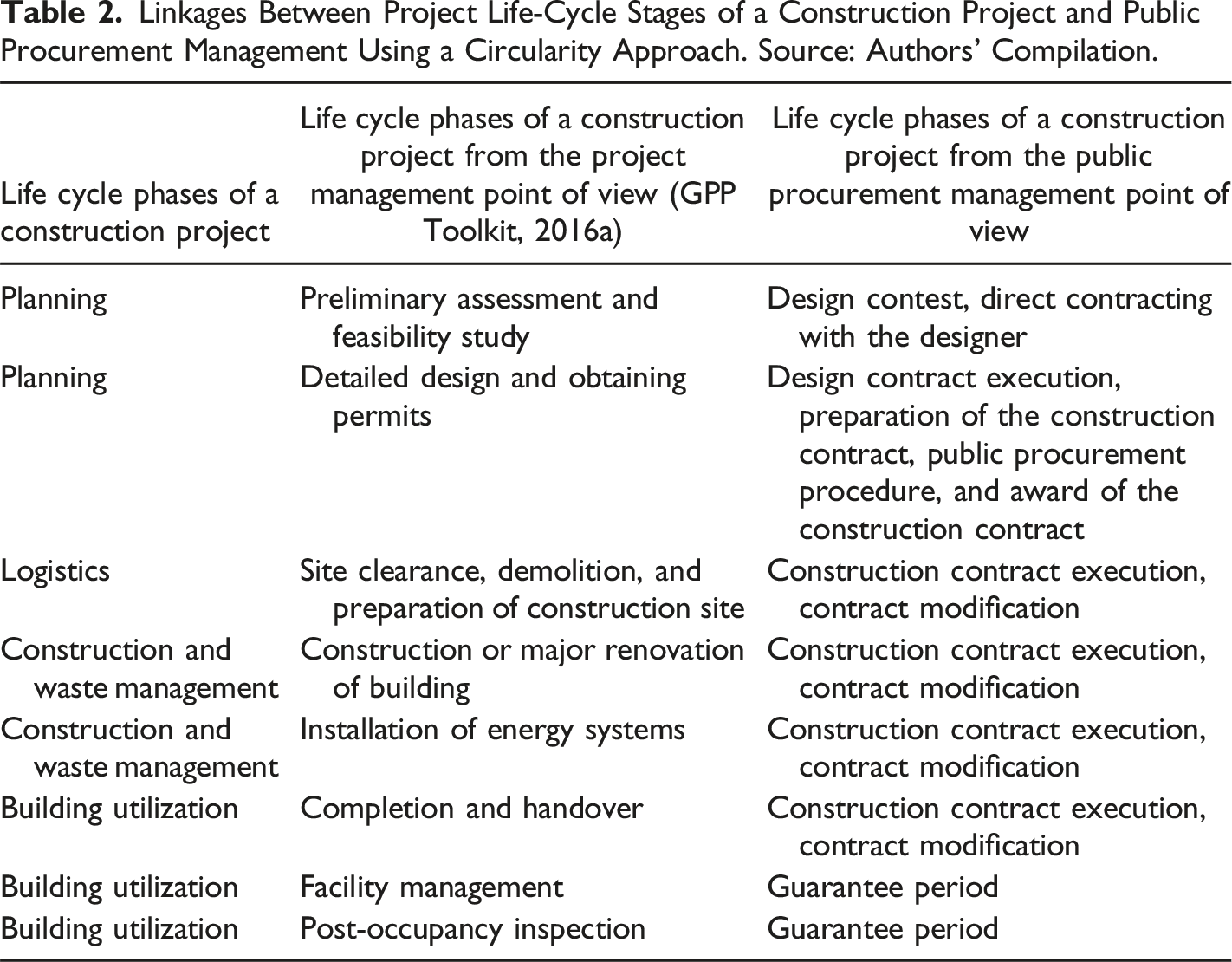
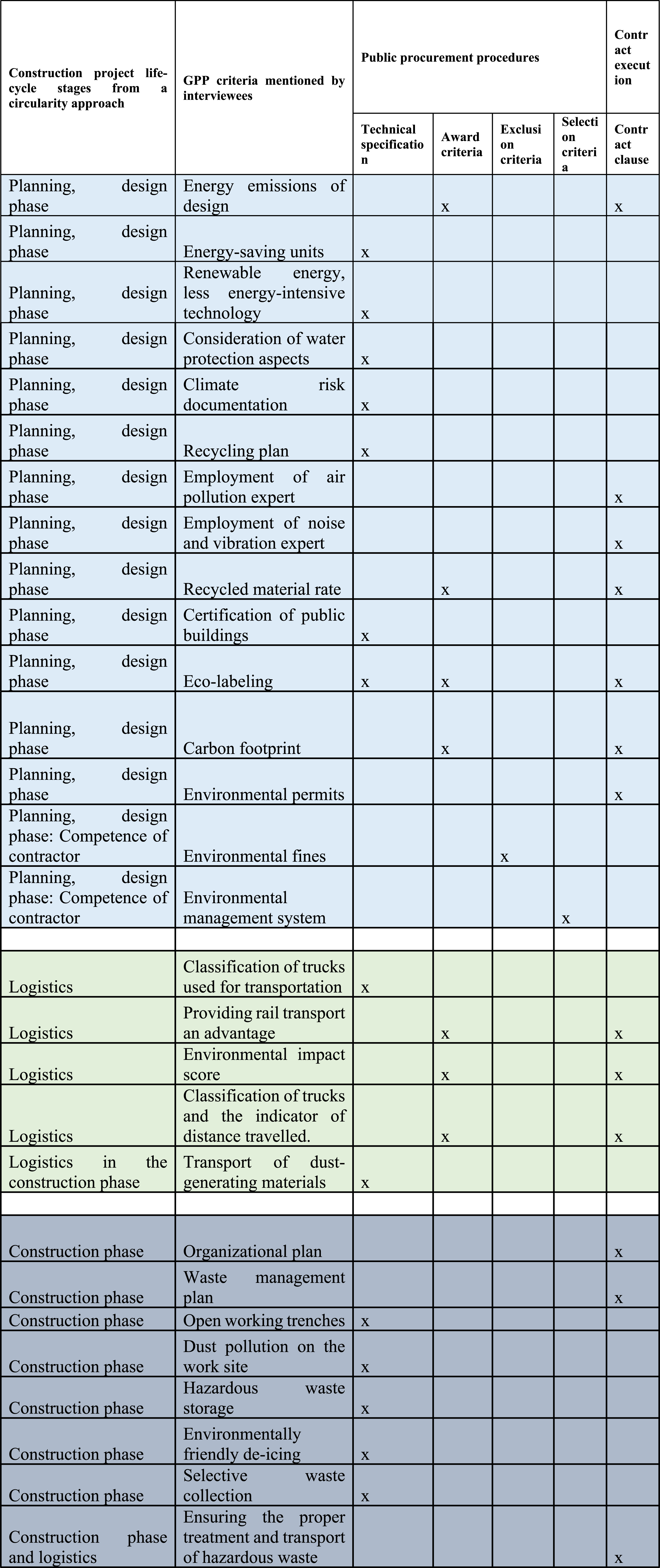
Fifteen of the identified GPP criteria can be categorized as occurring at the planning and design phase. For example, the energy emissions of a design project can be an award criterion, while the consideration and use of energy-efficient and innovative technologies during the building design phase may be part of a contractual clause. In the technical specification, the contracting authority may require the bidder to express the energy efficiency of the different project alternatives during the planning phase in energy-saving units. Consideration of water protection aspects, creating climate-risk documentation of the building (with further suggestions for decreasing negative life-cycle impact), or creating a recycling plan to support material circulation can also be considered in the technical specifications. Requiring the bidder to involve air pollution and noise experts during the planning phase may also be the subject of a contractual clause.
The topic of the certification of buildings and materials also arose during the interviews. A performance bond can be defined in the contractual clauses for the designer and the construction contractor if the building achieves a specific certification standard upon completion. The percentage of eco-labeled material the designer plans to use, the recycled material rate, and the carbon footprint (e.g., based on information from environmental product declarations, EPDs) may be relevant award criteria. In the final part of the planning phase, the requirement to obtain the permits related to the construction can be contractual clauses. Operating according to an environmental management system may be an award criterion for the construction contractor. It is important to note the scope of the environmental management system if this is relevant to the subject of the contract. Environmental fines can be an exclusion criterion for any type of participant in the construction project.
Regarding the logistics process, six GPP criteria were mentioned. The classification of trucks used for transportation during construction may be among the technical specifications. However, the classification of trucks and the indicator of distance travelled might be award criteria. Other award criteria, such as the environmental impact score of the routes, could be applied, or a rail transport advantage on specific routes. The transportation of dust-generating materials properly covered is considered among the technical specifications. Ensuring the proper treatment and transport of hazardous waste is related to both logistics processes and the construction site. The description of methods used to ensure environmental protection shall be described by the bidder.
The interviewees identified eight environmental considerations in relation to the construction phase, including an organizational- and waste management plan for the construction project. This may be a contractual clause in the tender. In addition, activities connected to the construction site (e.g., selective waste collection, environmentally friendly de-icing, extra care with open working trenches, and management of dust pollution) may also be addressed in the tenders, typically among the technical specifications.
It can be stated that the planning and design phase is identified with more GPP criteria than the other phases by the Hungarian public procurement market stakeholders – as highlighted above - a wider variety of environmental impacts can be avoided with the careful selection of GPP criteria (especially in relation to waste reduction by planning material use, reuse and material recycling, which is a key element in circularity models).
Comparison of the above with the criteria identified in the EU GPP Toolkit and other pieces of work (e.g., Rajabi et al., 2022) suggests that they are mainly in line with the recommended criteria; however, important elements associated with environmental impacts (e.g., land use and biodiversity) are missing.
Based on the research findings, contract preparation requires understanding the technical content associated with many different criteria and a deep knowledge of how to coordinate the latter to achieve specific environmental-impact reductions (Figure 3). For this reason, an interdisciplinary approach must prevail, as much legal and technical knowledge is required to validate the GPP criteria. Overall, the GPP criteria identified by the stakeholders require the cooperation of several specialists, but such identification is already late if it occurs in the implementation phase. More importantly, the designer should be specifically required to define the criteria according to which the designs are to be prepared, which can be subsequently checked by the contracting authority independently of the construction contract. This is indirectly the most important message related to addressing environmental impacts with the GPP criteria we identified throughout the life-cycle stages of a construction project. Linkages between project life-cycle stages of a construction project and public procurement management using a circularity approach, Source: authors’ compilation.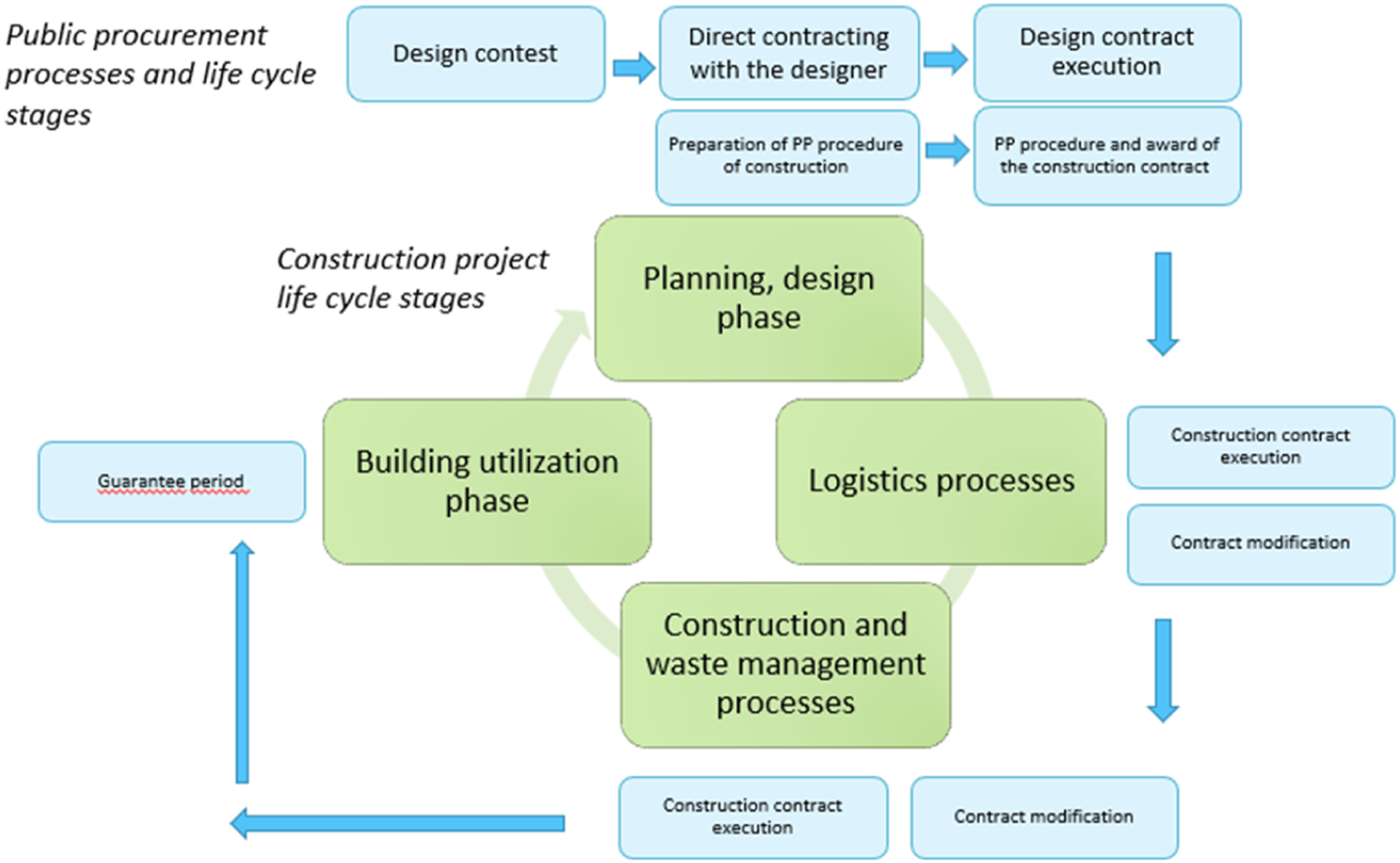
All these elements may not apply to one organization in one tender, making it truly “green” or “circular”. Instead, the criteria are typically spread among many different tenders.
Results and Discussion
Following Sönnichsen and Clement’s (2020) recommendations, the analyzis was made about how green elements are applied at each stage of a circular procurement from a legal perspective.
In general, the initial planning phase is the most relevant from a circularity perspective. Planning has the most significant potential for creating systemic change toward circularity (in relation, for example, to the use of renewables and materials, the longevity of the building, the recycling plan, the design for material reuse after dismantling, etc.) among the different life-cycle phases of a construction project.
The logistics and construction phases are also important in this respect but consist of end-of-pipe-type solutions such as mitigating the negative impacts of construction activities (e.g., avoidance of dust during the transport of materials, protection of wildlife on the construction site, and selective waste collection). Regarding the construction phase, the verification of the specified criteria is of significant importance due to the complexity of construction as an activity and the large number of stakeholders and subcontractors in this industry (Rajabi et al., 2022; Varnäs et al., 2009). For example, the plans for buildings need to contain a list of materials to be used which are eco-labeled, recycled or environmental product declarations (EPDs) (Timm et al., 2021) are available, but the contractor needs to find these materials on the market, and the contracting authority needs to check the conformity of the materials that are built in.
In response to our research question about how to implement a circularity approach into the public procurement of construction projects, the authors found that (1) separating the process of design selection, design, construction and incorporating GPP criteria into each process is a key success factor and also (2) the contracting authority needs an interdisciplinary team to reduce environmental impacts of construction projects.
The two results highlighted above can be assessed as follows: (1) The most appropriate way to conduct circular public procurement for construction is to prepare and conclude a contract for design in a separate procurement process, then a subsequent conventional build contract. As the former is where the contracting authority has the most room for maneuver, the selection of the designer, the content of the design contract, and the resulting designs all allow for the greening of the process. In terms of selecting the contractor, the contractor’s skills, experience, track record, and implementation performance can be checked, and conclusions drawn during the commissioning process. One can therefore build on the process of appraising the design and build contract independently. (2) An interdisciplinary team can ensure that tenders for design and construction works include comprehensive criteria that are specific to the tender and that address the most relevant environmental impacts. In addition, many of the barriers to circular procurement implementation that have been identified (e.g., a lack of interest and human resources, resistance to change, lack of expertise, and complex procedures) (Ababio & Lu, 2022; Ahmed et al., 2023) can be avoided with a well-assembled team.
The illustrated version of our model (Figure 3, below) is based on Table 1.
In identifying GPP criteria, we conclude that not only the content of the design but also the selection of an innovative designer and the content of the design contract are as important as the design output in the construction contract. Beyond the design contract, there is scope to further green the logistics of construction and the construction process, but in reality, the bulk of the impact is dependent on the designer’s output. From a procurement perspective, this covers three sets of activities, which we have labelled in Table 1. (1) First, a design contest is used to select the best designer based on the ideas and sample design of the bidder. (2) This is followed by negotiations with the selected designer (or several designers) about the design contract itself. If the contracting authority invites several designers to participate in the tender, a competition is organized. If only one designer is selected as the most suitable, the contract is decided by means of negotiation without the publication of a contract notice. (3) This contract will be the basis for the preparation of the designs, which will form part of the technical specifications for the tender of work. The logistics and preparation phase of the building are, therefore, much more structured, and many more ideas are generated at this stage, which will subsequently determine the construction and, ultimately, the building itself. These ideas should therefore be included in the preparation phase since if the contractor is obliged to achieve a specific level of energy performance; this is based primarily on the selection of the right designer, the preparation of the right design, and the selection of the right contractor. A key message from this research is that best practice in public procurement involves placing much more emphasis on the selection of the right designer and the definition of the designer’s obligations in the design contract in accordance with the contracting authority’s requirements.
The research suggests that the difficulties of preparing and conducting public procurement procedures, then modifying contracts, the vulnerability of the contracting authority generated by having to manage a whole project in one procedure, are less promising from a GPP perspective. The results do not support the conclusions of Lingegård et al. (2021). The approach is that the contracting authority only enters a contract with the designer and the builder at the same time during the preparatory phase, may not pay sufficient attention to the selection of the designer, and cannot specify new elements at the design phase (as the design contract cannot be significantly modified).
However, there is no conflict between Rosander’s (2022) findings and the present research. The pre-procurement routine applied to develop project-specific relational contracting models proposed by Rosander (2022) is strongly consistent with the process of designer selection, design contracting, and construction contracting that we have identified. It is also a routine solution that can similarly balance organizational goals and promote the achievement of long-term goals. Barajei et al., (2023) also highlight the pre-construction phase of a project as highly relevant in line with the findings of this study.
Conclusions
Sustainability Aspects of Construction Projects and Criteria – Tender-Level Analysis.
Most of the criteria were related to the preparation phase, but the message of the research is much richer than that. It became clear that the division of tendering processes may be critical, meaning that the design and build phases should be procured separately to increase overall project impact. However, the preparation phase is even more elaborate, as it involves both the selection of an innovative designer and the conclusion of a design contract that meets the needs of the contracting authority. This can be achieved by construction-related procurement in accordance with the needs of the contracting authority through a separate procedure, in which the criteria validated by the contracting authority can be communicated, rather than applying the design-build logic, whereby it is not actually possible to select the designer, but all conditions must be considered by the contracting authority when preparing a single procurement procedure. Accordingly, professional support for preparation is necessary, the availability of an interdisciplinary team associated with the contracting authority is of great importance, as professionals specialized in the interpretation of environmental impacts can have the greatest effect during the preparation of the design and preparations for construction, leading to the green characteristics that are required being implemented, monitored, and accounted for during project execution. We originally took Teece et al.’s (1997) theorem on dynamic skills as a starting point, which can be applied to a wide range of disciplines. Our results are in line with Teece (2010), who argues that dynamic capabilities are underpinned indirectly by human resources.
The research findings, therefore, favor preparation, although it should be noted that preparation can be understood in relation to the whole project and a specific process. The procedural level, the elements of the contract notice (exclusion criteria, eligibility criteria, technical specification, awarding criteria) are of great importance, as these are the basis for the selection of the designer or contractor. However, these aspects can never be separated from the impact the contracting authority wants to achieve. Therefore, we identified the exact solutions proposed by each interviewee and conclude that although green aspects may be specified in relation to a particular process, this will only be successful if the contract execution of designers and construction contractors are truly accountable.
Accordingly, circularity does not occur at the procedural level of public procurement but at the level of the whole project and needs to be assessed that way. The limitation of the research is to focus on best practices, but it did not aim to collect an exhaustive list, instead to expand solutions and best practices, thereby inspiring practitioners. Likewise, the analysis did not dig deeper into procedural steps such as preliminary market consultation but stayed with public procurement, which is comparable to the steps of project management.
It would be worth extending the analysis in the future to include the risks and elements that are relevant factors in project delays since it is a fact that the separation of the design phase from the build phase and the more critical task of selecting the designer are more time-consuming processes.
Footnotes
Declaration of Conflicting Interests
The author(s) declared no potential conflicts of interest with respect to the research, authorship, and/or publication of this article.
Funding
The author(s) disclosed receipt of the following financial support for the research, authorship, and/or publication of this article: This work was supported by the Nemzeti Kutatási, Fejlesztési és Innovaciós Alap (137794).
