




Abstract
The New Orleans Adopt-A-Catch Basin Program is the city’s first experiment that puts democratic concepts into practice concerning water management. The program as codified in city ordinance Section 66–287 requires adoptive citizens to be responsible for maintaining the catch basin and the area extending 18 inches off the curb line. This paper examines the adoption of co-production of services between the city and its citizens and analyzes how efficient the program has been in solving the city’s perennial challenges of street flooding. The researchers collated data through surveys issued to stakeholders. Data obtained was analyzed using specific themes to create narratives that answer the questions of the study. The study identified that the primary issues affecting the New Orleans Adopt-A-Catch Basin Program includes ineffective communication, recruitment, risks, liability, and distrust of government. A well-planned program would create better synergy between government and the people, while achieving the program’s objectives.
Keywords
Introduction
This is a case study of the City of New Orleans’ Adopt-A-Catch Basin Program and the citizens that chose (or chose not) to participate. The research is an effort to understand what it takes to make democracy work. It seeks to determine if/how citizens working together can gain some control over their shared future as it relates to repetitive flooding events.
The August 2017 Floods
The New Orleans Adopt-A-Catch Basin Program began in October of 2017 because of an increase in the frequency of flooding within the city. From August 3rd to August 8th of 2017, New Orleans experienced a 100-year flooding event that was declared a state of emergency by Governor John Bel Edwards. The city’s drainage system was overwhelmed resulting in substantial damage to public infrastructure and private property. Cedric Grant, the director of New Orleans Sewage and Water Board (S&WB) at the time, stated, “there is no drainage system in the world that can handle that” (Craig, 2017). It took approximately 14 hours to completely drain the city, a result of a variety of overlapping factors that exacerbated existing issues (ibid). The New Orleans pumping system consists of 120 pumps of which 16 were out of service during the flooding despite initial claims by the S&WB that all pumps had been operating at full capacity during the storms (Schleifstein, 2017). The events that followed the August 2017 floods led to the resignation and termination of several of the Sewerage and Water Board’s top officials and board members (Chavez 2017).
While the flooding event of 2017 was the result of remarkably fast and heavy rainfall, it is feared that the unfortunate outcomes endured by residents whose property was lost or damaged will be repeated in subsequent storms as the frequency of extreme rain events increases while the budgets for drainage repair and disaster preparation decrease. Following Hurricane Katrina, New Orleans was awarded $2 billion in grants by the Federal Emergency Management Agency (FEMA) to repair roads and internal infrastructure, some of which was allocated for drainage repairs; however, it is estimated that repairing the city’s drainage system will cost upwards of $9 billion (Chavez, 2017). To enhance and repair New Orleans’ multipart drainage system, the city sought to enact systemic changes to the way that it maintains the drainage system by creating an easy to use and interactive platform for residents to claim ownership and responsibility for the upkeep of catch basins in their neighborhoods.
Methodology
The purpose of this research was to analyze the perceived success or failure of this co-production effort between New Orleans and its citizens and to provide ways to improve the program for the benefit of both the city and its citizens. While many cities have implemented catch-basin programs or similar citizen-government co-production services, New Orleans is uniquely positioned to provide data quantifying the feasibility of co-production programs in mitigating hazards because of the frequency of flooding events experienced within the city.
1
Mathews notes that “The work of citizens makes complementary production possible. There is no public for the government to collaborate with unless citizens have created a productive public by deciding and acting together on the problems they face” (Mathews, 2019, p. 16). To understand if the New Orleans Adopt-A-Catch Basin Program is a successful example of co- (or complementary) production, this research investigated: 1. What is the Adopt-A-Catch Basin program and how was it developed? 2. Why did the city turn to residents to experiment in government service co-production? 3. To what extent were residents involved in naming / framing the problem? 4. How were public agencies and officials engaging residents throughout the program? 5. What is the city learning about residents as co-producers of flood prevention and control?
To accomplish these tasks, multiple tools were utilized including a review of the issues concerning New Orleans’ catch basin facilities from local news publications, city website, and websites related to the city’s utilities. In addition, surveys were administered to public officials directly related to the program, and citizen participants in the New Orleans Adopt-A-Catch Basin program. The researchers elected to utilize a survey research model to gauge public perception on this topic. Survey research allows the researcher to use either qualitative or quantitative approaches to the analysis of responses (Check & Schutt 2012). Surveys are often utilized in research related to understanding and exploring human behavior (Singleton & Straits, 2017).
The researchers developed and distributed an online survey to two specific groups of individuals associated with the Adopt-A-Catch Basin project: employees of the public agencies who oversaw the implementation of the program, and the members of community groups and residents around the city. The groups were separated in this fashion to determine program effectiveness from both sides of the co-production model. Researchers utilized an online platform because New Orleans has a 100 percent broadband coverage, which is higher than the rest of the State of Louisiana, which is at 90 percent, also higher than coverage across the U.S., which stands at 95 percent (All Connect 2023). The extent of broadband penetration in the city makes online surveys a very viable tool for this study. The survey questions focused on: • The creation of the program • The choice to include and to what extent citizens were allowed/invited to participate in the formation of the program their views on the viability of the program, and how they thought the program could be improved; how frequently their streets became flooded after severe weather events; the extent to which they felt included in the process of creating and implementing this program; whether they believed in the program, as it currently stands; is an effective tool to combat street flooding, and ways the program could be improved. A total of 42 surveys were distributed. 12 surveys were sent to members of the city government, non-profit organization management teams, and various public entities related to water management, environmental health, and infrastructure in New Orleans. 30 surveys were distributed to neighborhood groups, volunteers and residents that were already registered with the program.
Surveys were designed and distributed using a standard Google Form with responses collected in the form of a tabulated spreadsheet. Contact information for community groups associated with the Adopt-A-Catch Basin program was collected from the program coordinator. Without any outward facing record of the project managers in each public agency directly involved in the Adopt-A-Catch Basin formation process, researchers determined points of contact by collecting the email addresses of public engagement managers, environmental affairs correspondents, communication and outreach managers, volunteer coordinators, as well as the main offices for agencies including the DPW, the S&WB, the Mayor’s Neighborhood Engagement Office, the Office of IT and Innovation, NOLA READY and the Office of Resilience and Sustainability.
Components of this research were conducted during the COVID-19 pandemic, during which many public agencies operated at a limited capacity and residents were reasonably distracted from their regular responsibilities to confront the ongoing crisis. Multiple scheduled catch basin cleaning events in March and April of 2020 were canceled to honor the city’s order that residents stay home unless conducting essential errands. It was intended that more community response data would be collected at these events, as well as allowing the researchers to participate in the event. Therefore, this methodology is missing a large component of anticipated information due to COVID 19 changing the ways that we interact as a society. Participant observation of cleaning events was the major component of the research that was missing, but it might not have drastically affected the study since there was a good representation of the sample population required for the research.
This article is organized as follows. Section one is an introduction to the subject matter, providing a background of the study, together with methodology utilized; section two presents a review of New Orleans’ catch basin issues showing what a catch basin is, origins of the program and matters that surrounds the program; section three discusses the research results, section four presents concluding thoughts, challenges, and opportunities.
Review of New Orleans Catch Basin Facilities and Issues
Origin of the Adopt-A-Catch Basin Program
David Mathews, a renowned propagator, and scholar of the public’s role in democracy, notes that “democracy began and continues as a political system in which, at the most fundamental or organic level, citizens must work with other citizens to create things… these two political systems, one governmental or institutional and the other organic or civic, are interdependent in the ecosystem of democracy” (Mathews, 2019, p. 7). To this end, on October 17, 2017, just two months following the flooding event, New Orleans launched the Adopt-A-Catch Basin Program, the only one of its kind in the state. Increased political and resident interest in the fragile state of the city’s drainage system greatly encouraged the launch of the program. The city’s Department of Public Works, the Sewerage & Water Board, the Mayor’s Neighborhood Engagement Office, and the Office of Information Technology & Innovation were directly involved with the implementation and facilitation of this program. The program as codified in city ordinance Section 66–287 requires adoptive citizens to be responsible for maintaining the catch basin and the area extending 18 inches off the curb line. According to EPA guidelines, the extension from the curb line helps ensure that the area that flows into the basin is unobstructed, and that the basin is less than one-third full of debris (U.S. Environmental Protection Agency, 1999, p. 2).
The Adopt-A-Catch Basin Program is the city’s first attempt at co-production of government services. The city has tasked residents and business owners with the ownership and responsibility of catch basins on their blocks to help improve drainage conditions throughout the city. Currently, the Department of Public Works (DPW) oversees the cleaning and maintenance of the 72,124 catch basins located in New Orleans. The Adopt-A-Catch Basin Program is marketed as: “85 percent of the City's clogged catch basins are full of leaves and grass clippings that can be easily and safely removed by residents like you!” (City of New Orleans, 2018). 2
What is a Catch Basin?
Catch basins are a primary part of landscape drainage systems that act as a pre-treatment, maintaining proper drainage by preventing clogging of pipes downstream (Wind River Environmental, 2019). Unlike water that goes down the drains of homes or commercial buildings, the water in catch basins does not undergo a filtration process before reaching local lakes, streams, or the ocean. If a catch basin gets clogged it often overflows compromising the drainage. A catch basin is designed to keep out solids and large debris (e.g. leaves, paper, and plastic bags) so they do not obstruct the main drainage system. It is usually designed to hold a limited amount of solids in the bottom, such as sticks and other organic debris that is difficult to catch using typical grated filtration systems. Figure 1 illustrates a typical catch basin system. Flow diagram of a catch basin.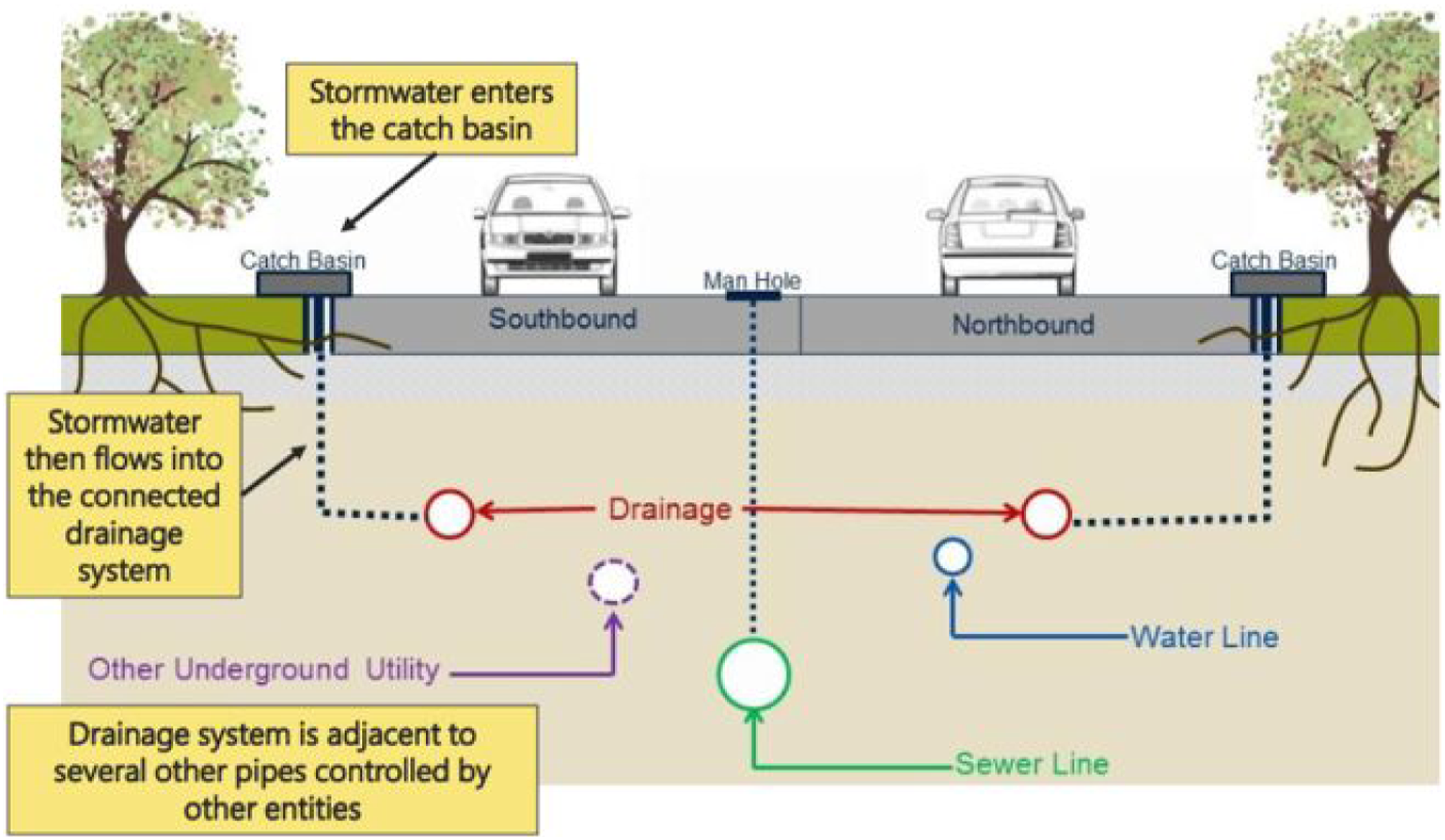
Drainage Issues in New Orleans, Louisiana
New Orleans, Louisiana is located along the Mississippi riverbank within a fluvial delta, built upon former swamp land that had sediment added to make it habitable for early colonizers. As a result, the city experiences some rate of subsidence each year. This fluctuation often breaks underground pipes and disconnects drainage systems. Additionally, the city is located along the Gulf Coast of the North American continent, an area known for its active hurricane seasons and frequent storm events. The frequency of flooding events increases the clogging of catch basins and storm drains, requiring additional maintenance that would not be necessary in areas experiencing less frequent storms.
New Orleans is also uniquely vulnerable because of one of its primary tourist attractions: Mardi Gras. Mardi Gras is a festival season, spanning the spring months following 12th Night and culminating on Mardi Gras Day, or Fat Tuesday, which often falls in late February or early March. Mardi Gras is famous for its parades, where riders on floats on the city’s streets throw tons of plastic bead necklaces, toys, stuffed animals, and trinkets to revelers standing on the curbs and medians. A 2018 article, (Post-Mardi Gras Round Up: All of the Seasons Biggest Controversies) by NOLA.com noted that the city removed over 93,000 pounds of waste from catch basins on a five-block stretch of St. Charles Avenue downtown. More than 46 tons of the waste materials were Mardi Gras beads found between Poydras Street and Lee Circle, a primary parade route (Times Picayune, February 15, 2018). The alarming figure, exacerbated by the floods, galvanized citizens into action who then demanded the city take urgent steps to hasten the cleanup process.
Why and How Are Catch Basins Cleaned?
Cleaning of catch basins has both aesthetic and water quality benefits such as reducing foul odors and suspended solids, as well as lessening the load of oxygen-demanding substances that reach receiving waters. Prior to the Adopt-A-Catch Basin Program, citizens were not overtly involved in caring for the city’s drainage system. The Department of Public Works was the sole entity responsible for maintenance of the city’s catch basins. According to Mathews, “…if citizens don’t join to produce public goods, if they delegate much of what they must do to government agencies, or if all forms of governmental institutions are influenced wholly by professional expertise and bureaucratic routines… all of these relegate citizens to the sidelines” (Mathews, 2019, p. 7). Prior to the program, the DPW prioritized cleaning catch basins based on 311 call cases. To maximize efficiency, crews were instructed to inspect and/or clean catch basins within the nearby vicinity whenever a vacuum truck was dispatched to mitigate an issue with a specific catch basin (Department of Public Works, 2019). The department cleaned five to six catch basins per vacuum truck, per day, and an average of 4263 catch basins per year (ibid). New Orleans had only four vacuum trucks working daily in the city in 2017. Prior to the summer floods of 2017, two of the vacuum trucks operated directly by Department of Public Works were out of service. The addition of $1 million to the 2019 budget allowed for the purchase of two additional vacuum trucks. This allows the city to clean between 10,000 – 12,000 additional catch basins per year. The annual budget for the S&WB, a division of the Department of Public Works, is usually about $56 million (Sewage and Water Board New Orleans, n. d.). S&WB has 34 employees, with approximately 20 staff on hand for the cleaning. In 2017, New Orleans increased the workdays for its staff from 5-day to 6-day workweeks and added an extra two hours to each workday to improve catch basin cleaning efforts. Also, the Louisiana Department of Transportation and Development began assisting in catch basin cleaning efforts on State routes, complementing city efforts.
The Department of Public Works has also hired contractors to complement its catch basin cleaning efforts and to enable it to achieve the cleaning goals. See Figure 2 for cleaning efforts of catch basins from 2017 to 2021. Catch basin cleaning efforts.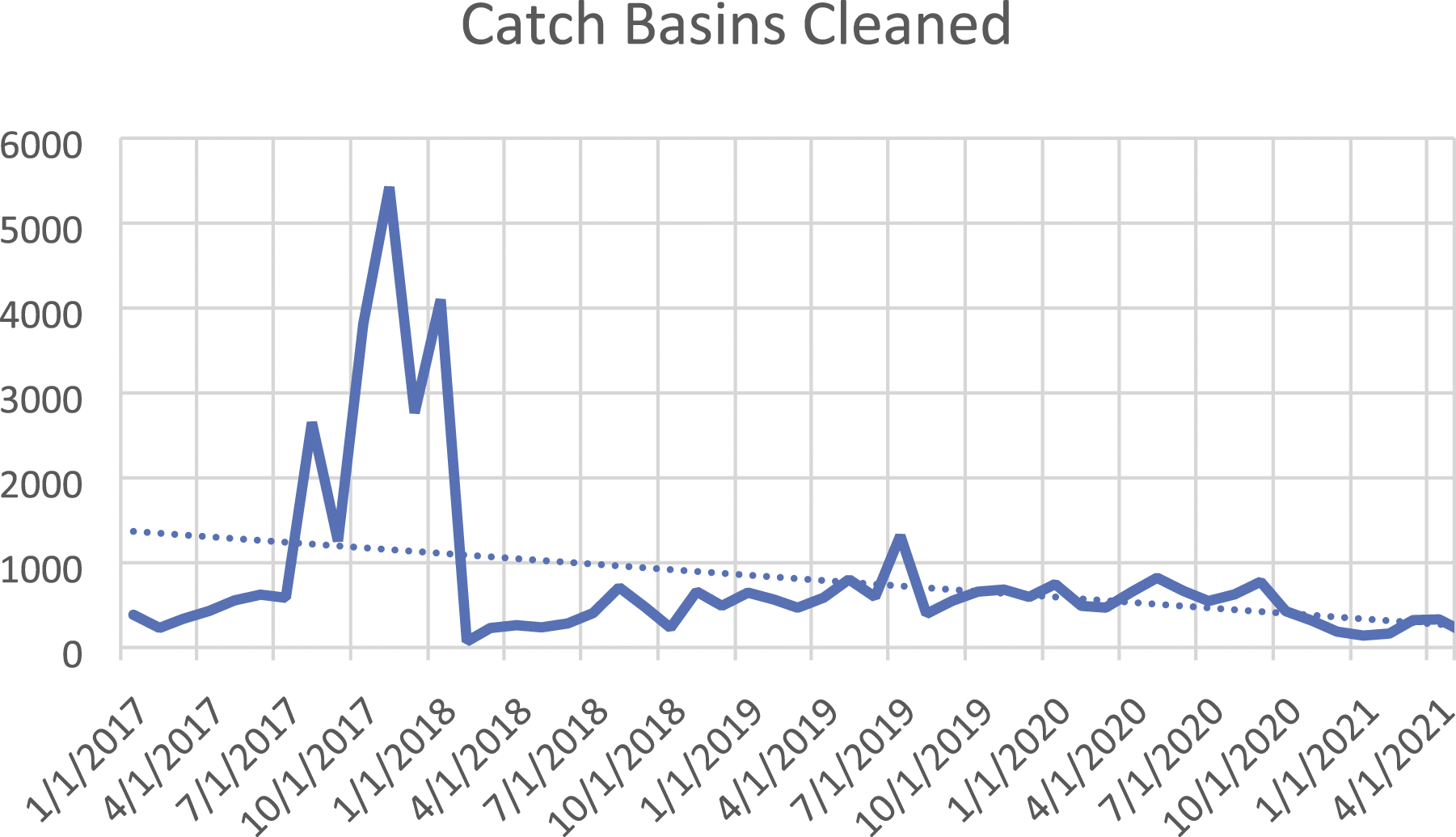
These efforts began when the New Orleans City Council authorized an emergency $10 million, financed by the city’s general fund and a new ‘rainy day’ account. The plan included $7 million to unclog 15,000 catch basins in 120 days, address a backlog of catch basin cleaning, and clean the associated lateral and drainage lines. According to the 2019 OIJ performance audit, following the 2017 floods the city spent $5,670,252 on catch basin inspections and cleanings, as well as $10,967,178 on catch basin repairs for a total of $16,637,430, which saw to the spike in number of catch basins cleaned, as seen in figure 2. Originally, $22,000,000 was budgeted for this project (City of New Orleans Office of Inspector General, 2019). In late 2017, the city enacted emergency contracts with four different contractors for the three major goals of the expenditure: inspection, repair, and cleaning of existing catch basins (ibid). The contract required that cleanings be completed within 120 days from the start of work, and repairs be completed within 240 days. Royal Engineering conducted both pre- and post-catch basin inspections and was largely responsible for quality control in accordance with the contract’s specifications. The Inspector General’s office noted that they inspected 26,095 catch basins (based on a 400 catch basins randomly selected audit sample). Hard Rock Construction was contracted to perform repairs and rehabilitation to existing catch basins and completed repairs on 3408 catch basins based on a 52 catch basins randomly selected audit sample. Finally, RamJ Construction and later Compliance Envirosystems were contracted to clean the city’s catch basins. During the project, the city cancelled its contract with RamJ when it determined that RamJ had no written plan to properly dispose of waste material in a lawful manner, which they were contractually mandated to have. RamJ had performed 347 cleanings at the time the contract was cancelled (Litten 2017). The issues with the contractor exacerbated citizens’ frustrations with the city’s management of the drainage system, and further eroded their trust in local government.
The city later granted an emergency contract to Compliance Envirosystems over the cleaning of the remaining 15,000 catch basins obligated under the original contract (City of New Orleans, n. d.). The results of that emergency contract were discussed several times at Public Works Committee meetings before the City Council, and at neighborhood association meetings. Citizen unrest was clear at these meetings. It was clear how the city managed the drainage system had to change. Research by the Kettering Foundation shows that if citizens are not active in solving some of their problems, local institutions are often overwhelmed by unrealistic expectation about what they can do (Kettering Foundation, n. d.). Kettering Foundation is a non-profit organization that is rooted in the American tradition of cooperative research. Their core mission is identifying best ways for the workability of democracy.
Adopt-A-Catch Basin Program Development
New Orleans’ catch basin cleaning program has been adapted from other successful programs throughout the country where co-production has been used to mobilize citizens to assist in the management of city amenities and infrastructure preventative flooding protection measures and storm drain upkeep. Catch basin cleaning is an efficient, cost effective, and early intervening solution for preventing the transport of pollutants into nearby waterways and flooding mitigation. City governments across the U.S. have enacted programs in collaboration with citizens to complement the traditional municipal efforts of managing cities. For example, Boston has an Adopt-A-Hydrant Program; San Francisco has an Adopt-A-Storm Drain Program; and Saint Paul has an Adopt-A-Drain Program (City of Boston, 2017; City of San Francisco, 2019; Saint Paul, Minnesota, 2016).
In the early stages of strategizing and designing the Adopt-A-Catch Basin Program, city officials examined other citizen government co-production adoption programs across the country. Many cities have enacted some type of citizen adoption program, most commonly streets, catch basins, and community gardens. In their research, The City of New Orleans closely examined San Francisco and Boston’s various citizen adoption programs. Like the New Orleans Adopt-A-Catch Basin program, San Francisco has three main citizen adoption programs which include the city’s Adopt-A-Street Program, the Graffiti Watch Program, and the Adopt a Drain program. In addition to San Francisco, New Orleans also examined Boston’s Adopt-A-Hydrant program. Both cities’ programs have a reputation for having built a strong relationship between the citizens and the city, as shown by the success of their programs. The Key Performance Indicator (KPI) across the board for the drainage programs include how many drainages are cleaned within a period of time, how much debris is collected (weighed in pounds), how many drainages (catch basins) are adopted, and the number of citizens involved in the adoption of drainages or catch basins.
San Francisco’s Adopt-A-Street Program is managed by the San Francisco Department of Public Works and was founded in 1998. The program allows residents to apply to either adopt the sidewalks or streets of the block they choose to adopt. This is accomplished through a mutual agreement between the city and its residents. In turn, the city provides residents with supplies such as a broom, rake, trash bags for leaves, a dustpan, and gloves to help keep the adopted street clean. San Francisco also runs a Graffiti Watch program which partners with citizens to fight vandalism within the city. The program allows citizens to enter into an agreement with the city to maintain a minimum area of four blocks, typically where the adopting citizen lives or works. The goal of the program is to allow removal of graffiti within a quick timeframe (ideally a 24-hour period). This practice has been proven to reduce the likelihood of repeat incidents by vandals. The city provides training for residents enrolled in the program on how to remove graffiti. Also provided are supplies such as paint to match the adopted property, paint brushes, buckets, paint scrapers, wet paint signs, dust masks, and safety glasses. Residents can also organize clean up events in addition to agreeing to adopt an area. San Francisco also promotes civic engagement through its Adopt-A-Drain program which allows citizens to adopt from the city’s approximately 25,000 catch basins. As of March 2020, San Francisco’s program has had 3362 catch basins adopted or about 13% of the city’s total number of catch basins. The city also provides tools and supplies and organizes catch basin cleaning training events.
The Boston Adopt-A-Hydrant program was created in 2011 and is a relationship between citizens and the Boston Fire Department. Program participants assist the fire department by adopting fire hydrants throughout the city and removing snow from around the fire hydrants during the winter months. This has benefited the city by increasing the fire department’s emergency response efficiency. In both cities, San Francisco and Boston, carefully curated community engagement, citizens awareness campaigns, training, and provision of basic tools used for the projects has proven to be the vital accessories for successful implementation of the programs.
Building a Coalition of Public Agencies and People
To better mobilize the public, the Office of Neighborhood Engagement formed a multi-departmental municipal coalition including Homeland Security, NOLA Ready, RoadWork NOLA, GIS, 311, and Office of Resilience to develop the Adopt-A-Catch Basin website. These representatives highlighted the Adopt-A-Catch Basin website at neighborhood events, public meetings, seminars, and conferences to encourage public involvement. The New Orleans’ Office of Information Technology and Innovation created a web map interface specifically designed to promote public engagement and make the adoption process interactive. The website included a web map that presents available catch basins, adopted catch basins and their user- designated nicknames, as well as an option for users to claim unadopted catch basins by simply providing an email address. The Department of Public Works encouraged users to adopt catch basins through social media campaigns, in-person meetings, seminars, and presentations, as well as using scheduled neighborhood catch basin cleaning events. Additionally, the department updated the NOLA Ready website to include information about the Adopt-A-Catch Basin program, to issue regular press releases, and to use rapid alerts through the 311 system to inform residents of the program. The city’s Neighborhood Engagement Office played the main role in supporting citizens’ engagement. The office met with the neighborhood districts to train residents to keep their adopted basins clean and free from debris, as well as providing information on how to organize and facilitate Clean-Up Days.
Adoption Process and Interface
Users wanting to adopt a catch basin are asked to log on to an online mapping platform to select a catch basin and “adopt” it for an indefinite period of time making them personally responsible for ensuring the drainage system is free of debris such as sediment, leaves, trash, and Mardi Gras beads. Citizens are provided with the option to report visual signs of drainage issues and flag catch basins in need of cleaning through the NOLA-311 phone service. This program also trains volunteers to clean their local catch basins successfully, safely, and regularly inspect the grates and remove debris from them, especially prior to severe weather events. Participants are contacted by the city prior to major rain events via the program’s email list urging them to clean their adopted catch basins.
The New Orleans’ Office of Information Technology and Innovation was awarded the Special Achievement in GIS Award at the 2017 Environmental Systems Research Institute (ESRI) International User Conference in celebration of their work on the Adopt-A-Catch Basin Program. As shown in Figure 3, the program has a total of 995 registered users and a total of 1464 catch basins adopted. While these numbers are celebratory, the total number of catch basins adopted is about 2% of the total number of catch basins within the city (June 6, 2023). New orleans adopt-A-catch basin web map view.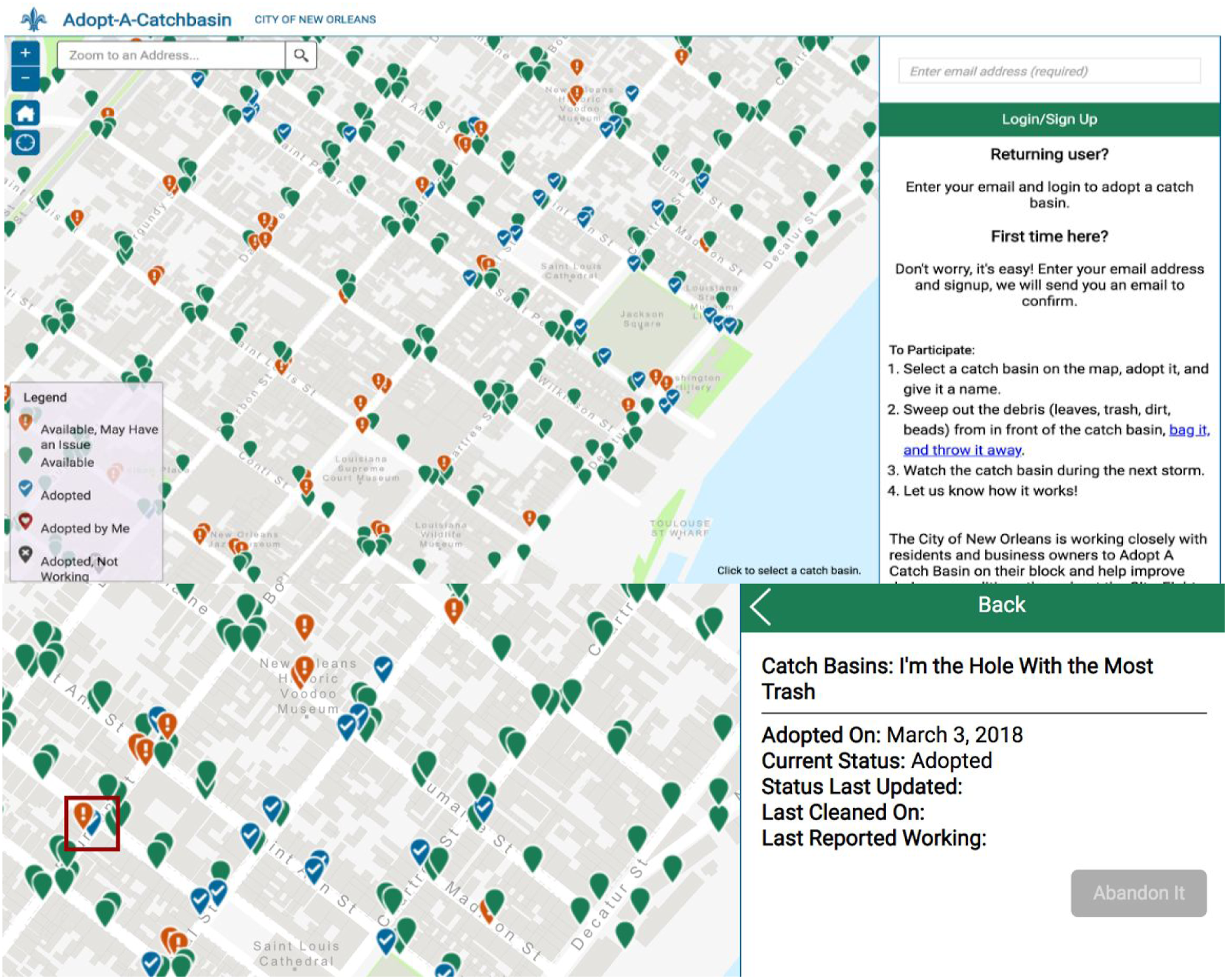
Results
Respondents were asked a series of questions related to the establishment and current management of the Adopt-A-Catch Basin Program. Questions were mirrored to assist the respondents with answering from their own perspective. Thirty-six responses were received out of the 42 surveys sent. The results are discussed by individual theme as follows.
Why did the City Turn to Citizens/Residents to Experiment in Government Service Co-Production?
According to Cheryn Robles, the Community Outreach Manager with the Department of Public Works for New Orleans notes that “the floods of August 2017 really brought the condition of the city’s fragile drainage system into the spotlight.” Prior to the events of August 2017, the app for the Adopt-a-Catch Basin program existed only in beta testing. Growing interest from the city government and residents because of the flooding helped launch the program. Kettering research suggests, “it is possible to strengthen communities by starting with small groups of neighbors and their self-interests, which aren’t necessarily selfish interests. To start small is to recognize cities and towns are comprised of many little neighborhoods, each with its own distinctive hopes and concerns” (Kettering Foundation n. d.). Therefore, city officials began the program by reaching out to neighborhood groups and, later, to individual residents.
Another major factor that drove the city’s initiation of this project was to address perceived generational differences in curb maintenance responsibilities. The city code requires all residents to keep the curb clear of debris up to 18 inches from the curb to the roadway. While the ordinance is not often cited, the city used it as a justification for the implementation of the new co-production program. Robles states that “elderly residents typically ‘know’ they’re supposed to clean the street in front of their house whereas younger people tend to be surprised that they share this responsibility.”
Responses to the survey show a 69% agreement with the need for the integration of all stakeholders in the community to solve the flood issues that have been a long-term issue for the city. This is significant especially regarding residents’ attitude towards performing such functions in the communities.
To What Extent Were Citizens/Residents Involved in Naming and Framing the Problem?
From the public agency perspective, the Mayor’s Neighborhood Engagement team formed a working group to develop and test the app. This group included members of Homeland Security, NOLA Ready, RoadWork OLA, GIS, 311, the Office of Resilience and Sustainability, and others. Representatives from this group were tasked with discussing the new program and the app at local neighborhood events and meetings. Additionally, the city utilized its multiple social media channels to promote and educate the public about the new program. Information regarding important program news or alerts was also linked in with the NOLA Ready text/email alert system that notifies residents of emergencies, weather related precautions, and other important news.
Unfortunately, none of this equated to naming and framing the issue, nor included collective decision-making. Regardless of these short comings, the program did, and continues to, result in complementary action. However, the low adoption rate of 2% is likely a reflection on this lack of deliberation prior to the enactment of the program. Though the program identified who the political actors were/are, what resources they have, and how action should be organized (primarily via the website), the lack of deliberation led to a classic expert/citizen disconnect. Kettering Foundation notes, “Who gets to name a problem – and the terms they use to describe it – is crucial. If people’s concerns are not reflected in the names, if the things they hold dear aren’t considered, then they aren’t inclined to become engaged. Unfortunately, this does not necessarily occur when the problems are described by expert, ideological or partisan terms” (Public Deliberation in Democracy). The Adopt-A-Catch Basin program was deemed as a solution to a flooding problem. However, citizen concerns were more broadly construed to include problem statements like, “living with water,” “infrastructure management,” and “water management.”
From resident responses, 47% of respondents initially heard about the Adopt-A-Catch Basin project from a local neighborhood meeting or their local neighborhood association. However, only 32% of respondents felt that their neighborhoods or fellow citizens were adequately involved with the formation and implementation of the program. Similarly, 32% did not believe that the city has actively engaged the public since the creation of this program. Part of the frustration citizens reported was directly tied to the limited and inadequate problem definition as presented by the city and the program. Citizens were not provided the opportunity to discuss various options for dealing with the problem, the advantages and disadvantages of each, and the tugs and pulls between them. Specifically, residents were dismayed by a lack of discussion of the larger water management issues throughout the city and an opportunity to weigh in on how these projects should be prioritized given the limited resources available.
How Were Public Agencies and Officials Engaging Citizens/Residents Throughout the Program?
Since the launch of the program, the Adopt-A-Catch Basin program has increased its use of the NOLA Ready system by issuing information regarding rain related events and using this platform to discuss the local drainage system and provide residents with examples of ways they can reduce flooding in their areas. Forty-six percent of respondents noted that public agencies did adequately engage the members of their group throughout the program, while 54% replied that they were not adequately engaged throughout the program.
What is the City Learning About Citizens/Residents as Co-Producers of Flood Prevention and Control?
Sixty percent of the responses showed that most residents believe it is the city’s responsibility to clean the drains, and not their responsibility. This finding is in tandem with what Robles notes, “We still have residents who don’t feel like they should have to clear the front of catch basins, but I’m often surprised at how many people want to not only clear the front of their catch basin but also dig drainage ditches. That is one of the things we are working on now, attempting to figure out if we can entrust residents with establishing their own drainage ditches.”
According to citizen respondents, the city could more actively engage with residents by making more of an effort to attend community meetings, provide written materials for residents on the importance of rainwater harvesting, and keep lines of communication open and allow residents to choose their levels of contribution to the project. One respondent noted, “offering the ability to identify issues has to be met with a response from the city; without that, people will stop participating.” This acknowledgement of citizen interest in the larger water management issues the city faces has resulted in additional (though stove piped) opportunities for co-production including (but not limited to) green infrastructure planning and the Clean Up NOLA initiative. Efficient community engagement and awareness were key to the success of similar programs in San Francisco and Boston, making it critical for the New Orleans Adopt-A-Catch Basin Program.
In 2014, the city of New Orleans and the New Orleans Sewage and Water Board (S&WB) published a comprehensive Green Infrastructure plan to support the city’s drainage system by adopting the principles of “Living with Water” by architect David Waggoner and the Dutch Dialogues group. The plan seeks to implement green infrastructure projects throughout the city that comply with the city’s Comprehensive Zoning Article 23 which seeks “to retain at a minimum the first inch of storm water on site within a 24-hour rain event,” (p.15). One of the collaborative goals of the green infrastructure plan is to develop community outreach programs that provide education on green infrastructure practices and include the community in the decision-making process.
Similarly, on September 17, 2018, Mayor LaToya Cantrell announced the launch of the Clean Up NOLA initiative, which is a comprehensive response to litter and blight issues in New Orleans. The initiative seeks to leverage the city's resources including Public Works, Neighborhood Engagement, Sanitation, Safety & Permits, Parks & Parkways. This initiative is designed to unite the efforts of multiple city departments and communities to create a cleaner and healthier city. In addition, the initiative brings residents and city departments together and broadens opportunities for co-production by enabling expanded access to city services for residents (Granicus, 2018; Wilkinson, 2021).
Conclusions
Challenges
Results of the study showed that the primary challenges associated with the program are ineffective communication, community outreach, and community engagement. Issues include inadequate awareness on how the program works and how it impacts communities, the technical details associated with drainage system management, the updating of program data (particularly the website), and program participant recruitment efforts, which has not been forthcoming. For example, one community respondent stated, “It’s a great resource if someone monitored the website, updated it, and sent a vacuum truck to the problem locations reported.” Similarly, another resident mentioned that “I keep catch basins updated but the city does not update the website or follow up on cleaning the problem drains. I usually have to take another route which goes in circles.” Another major issue is that of residents not believing that it is their duty to clean drains. A respondent noted that “if the city wishes to see increased participation, there has to be some effort on their part to actually clean the catch basins. I’m less likely to participate in the future programs if the city never responds with this one.”
Obstacles
The primary obstacle identified in the analysis is the risk of working on a catch basin and legal liability. As one agency respondent states, “There is an opportunity to empower residents to clean inside their own catch basin for example, but we’re also considering that the lids weigh 250 pounds and if someone squishes a finger there’s liability. Determining who decides if that risk is worth it is important.” This issue is supported by a community respondent who noted, “We still need help. There’s many to go and we need the tools to lift the covers”. Other obstacles included low-interest level, lack of awareness, and distrust or mistrust of city government based on past misdeeds. Other success factors, as seen in the San Francisco and Boston co-production services, are the provision of tools and training to citizens to improve efficiency.
Opportunities
The Adopt-A-Catch Basin Program was the City of New Orleans’ initial experiment in putting democratic concepts into practice concerning water management. The program successfully brought people together to address a common problem. Through the public engagement efforts of the city, citizens have a better grasp of the drainage system issues and the funding constraints associated with fixing them; and, the city has a better understanding of what residents will and won’t do to solve a problem (the political feasibility of options). All of these lay the ground work for reengaging citizens in deliberation that allows citizens naming the issue to reflect what is valuable to residents, framing the issue so a range of actions can be considered collectively, identifying the city and community resources that are available, making decisions by weighing the trade-off associated with various options, re-organizing efforts of citizens into a more commentary fashion, and continuing efforts toward collective learning to continue the work. Additionally, the city can adopt more lessons from similar successful programs around the nation. Although the City of New Orleans has looked at some of these cities in the developmental phase of its program, it can go further on implementing some of their practices that have contributed to their success. For instance, the San Francisco’s Adopt-A-Street Program provides residents with supplies such as a broom, rake, trash bags for leaves, a dustpan, and gloves to help keep the adopted street clean. Similar to the San Francisco Graffiti Watch program which also provides supplies such as paint to match the adopted property, paint brushes, buckets, paint scrapers, wet paint signs, dust masks, and safety glasses to the participants to support the work they do for the city. Both programs present excellent examples of successful citizen-government co-production services.
Footnotes
Declaration of Conflicting Interests
The author(s) declared no potential conflicts of interest with respect to the research, authorship, and/or publication of this article.
Funding
The author(s) received no financial support for the research, authorship, and/or publication of this article.
