




Abstract
This paper evaluates a congestion management concept involving conversion of two existing general-purpose freeway lanes per direction on an 8-lane freeway (with 4 lanes per direction) to priced lanes offering free access for high-occupancy vehicles, in conjunction with cash payments to incentivize a sufficient number of commuters to travel as passengers in transit, carpools or vanpools such that congestion on the remaining free lanes would be no worse than it was before the conversion. Building on prior research, we use a refined modeling process to explore the viability of implementation of the concept on the eastern segment of the Capital Beltway in the Washington, DC metro area. The results of the analysis suggest that the strategy can benefit users of shared travel modes and toll-payers, improve travel speeds on toll-free general-purpose lanes, generate significant surplus revenues to support capital investments and operating subsidies for shared travel modes, and can absorb traffic growth through 2040.
Introduction
With additional funding authorized by the U.S. Congress under the Infrastructure Investment and Jobs Act (IIJA), some public agencies in the U.S. are planning to make huge investments in urban highway capacity expansion to relieve congestion and accommodate future demand. But the future is very uncertain with respect to urban mobility needs. Working from home, response to climate change, and automation and new forms of transportation are making it difficult to predict what facilities will be needed for the future. Therefore, strategies are needed that can buy time until it becomes clearer how things will evolve. Rather than make multi-billion-dollar investment decisions that may not be needed in the future, strategies are needed that acknowledge that a lot is likely to change in the next 20 years.
Another issue of increasing concern is that reducing freeway congestion delay by expanding highways induces new auto trips by those who were previously deterred by congestion (Downs, 2004). In the longer-term, this leads to auto-centric development patterns which make it difficult to provide transit services and increases auto dependence. In this paper we demonstrate that a potential alternative exists that might relieve congestion and accommodate growth in travel demand while curbing auto-centric development and induced demand, and require relatively small investments that would buy time until the future of transportation becomes clearer.
The alternative requires no expansion of freeway capacity. It involves rewarding travelers with cash for using shared travel modes, including buses, carpools, and vanpools, but not un-pooled Transportation Network Company trips. Cash payments would be funded by variable tolls charged to lower-occupancy vehicles on one or two existing lanes, leaving toll-free lanes available for those who choose not to avail themselves of the free-flowing tolled lanes (DeCorla-Souza, 2022). A key difference relative to High-Occupancy/Toll (HOT) lanes that currently operate in the U.S. is that toll revenues are dedicated to support cash incentives and other investments to encourage transit and carpooling, and the toll lanes are created by converting existing general-purpose lanes to priced lanes. The lanes are called HOTTER lanes, i.e., lanes reserved for
With HOTTER lanes, a mobile app would be used to verify High-Occupancy Vehicle (HOV) occupancy and to credit passenger accounts with cash payments. A similar approach is used with an app in the Dallas, TX metro area (Lamers, 2021). The app enables HOVs to qualify for toll discounts on tolled highway facilities, with discounts credited on the monthly toll bills of the vehicle driver. The app activates automatically when the user travels on a toll lane and works on both iPhones and Android phones. It uses a combination of Global Positioning Systems (GPS) and Bluetooth to verify that the vehicle is an HOV, based on proximity of the vehicle occupants’ phones. Each person in the car must have the app on their phone. For those without a smartphone, such as children, an Occupant Pass is provided by the program. It is a small Bluetooth device that can be carried in a pocket or bag when a child is in the vehicle. Potential cheating is detected by using algorithms across the data. The app to be used by carpoolers on HOTTER lanes would work like the app in Dallas, crediting accounts of shared travel mode passengers with cash payments. Cash payments that exceed the cost that the passenger pays for the trip (e.g., the transit fare or a share of carpool costs) would result in a surplus for the passenger.
The HOTTER concept essentially combines variable tolls, that rise as traffic demand increases to dissuade some drivers from using the priced lanes when demand is excessive (i.e., congestion pricing), with “reverse” congestion pricing, i.e., variable cash payments to travelers in transit and carpools that rise to attract some drivers to shared travel modes to reduce traffic demand. The combination of congestion pricing with “reverse” congestion pricing can be more effective and more equitable than congestion pricing alone, as we demonstrate in this paper.
The next section summarizes the literature relevant to the concept. We then describe a case example where the strategy could be applied on the eastern segment of the Capital Beltway (I-495) in the Washington, DC metro area. The methodology used to conduct a policy-level evaluation of the concept, if implemented on I-495, is then presented, followed by a summary of results. Finally, we discuss implications of the findings.
Relevant Literature
Use of Cash Rewards
Cash rewards have been used to encourage mode shifts since the nineteen nineties and several mobile apps are currently available to credit shared mode travelers with cash rewards (FHWA, 2019). In a prior report (FHWA, 2012) the Federal Highway Administration discusses parking cash-out. Mode-shift incentives to reduce traffic in congested corridors for short periods of time are discussed by Bliemer and van Amelsfort (2010). Incentives to manage the level of demand for parking are discussed by McCoy et al. (2016). The City/County Association of Governments in the San Francisco Bay Area discusses a pilot project that demonstrated the use of incentive payments to carpool passengers and carpool drivers (C/CAG, 2018). Another incentive pilot in the Bay Area (BART and FTA, 2019) was aimed at reducing train crowding in the Bay Area Rapid Transit (BART) Transbay Corridor that connects San Francisco and Oakland via the underwater Transbay Tube. These studies have shown that cash incentives can have significant effects on travel behavior.
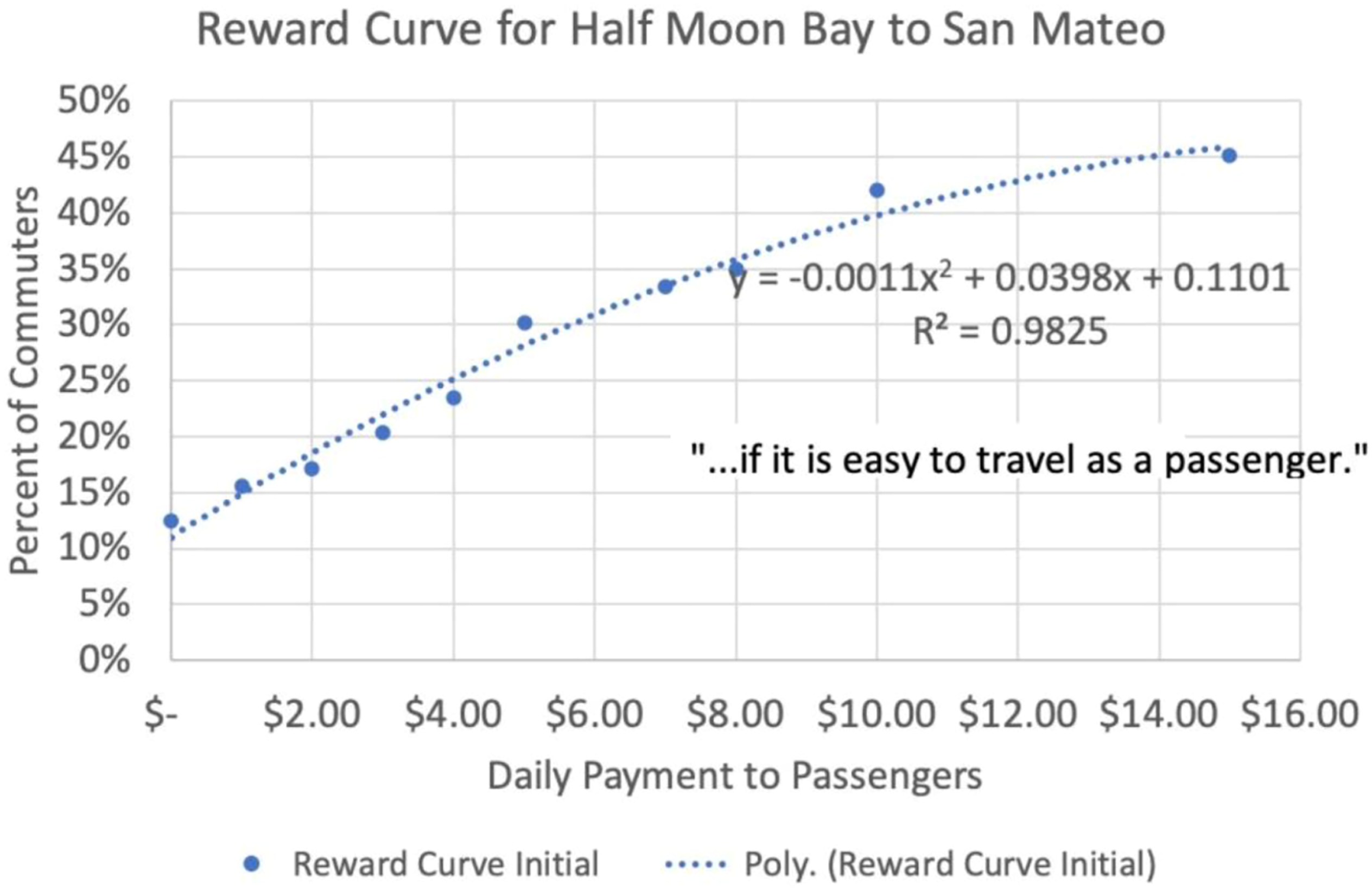
Based on a survey conducted in Northern California, Minett et al. (2020) found that half of all commuters on a congested route would be prepared to travel as passengers instead of as drivers, if the value proposition was sufficient, and half the remaining commuters would be prepared to give rides to passengers, also if the value proposition was sufficient. Minett et al. (2020) derived regression equations which calculate the amount of a cash payment required for a target level of solo commuter drivers to instead pick up carpool passengers (see Figure 1), or to ride as passengers (see Figure 2). For example, if a target were set which needed 15 percent of morning peak period drivers to pick up a passenger, the required payment would be $5.00 daily to get a sufficient number of drivers to do so, and to attract about 15% of commuters to ride as passengers a cash incentive of $1.00 daily would be required, as long as “it is easy to travel as a passenger” in a carpool or vanpool, on a bus, or in a shared Transportation Network Company service. Cash payments required for a given percentage of commuters to shift in the morning from solo driving to carpool driver (Source: Minett et al. (2020)). Incentive amount required to convince a given percentage of commuters to shift from solo driving to passenger mode if it is easy to travel as a passenger (Source: Minett et al. (2020)).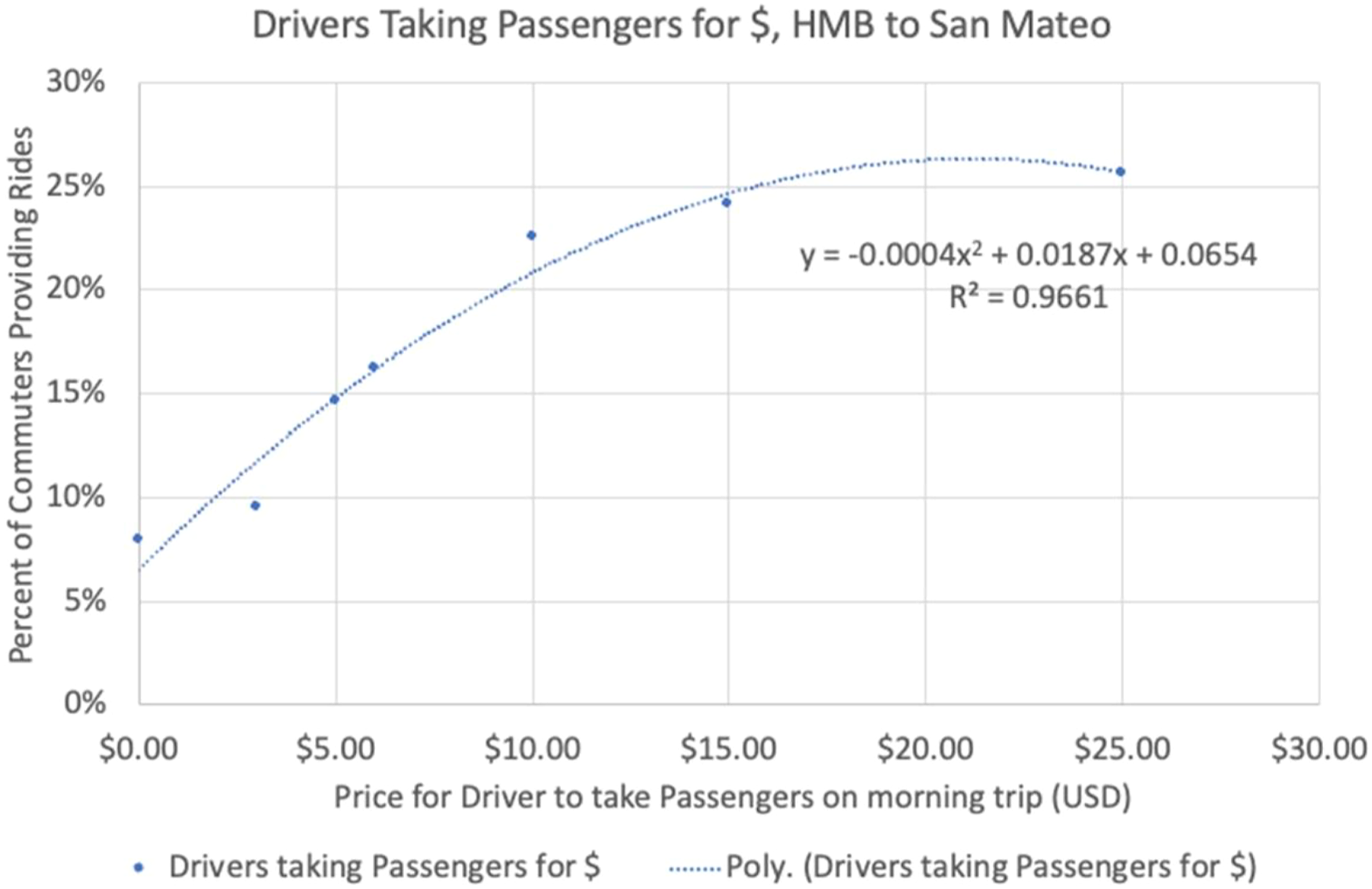
Minett et al. (2020) also found that when congestion is removed from a facility, the temporal distribution (i.e., hour-to-hour shape) of traffic demand is altered, an observation they termed ‘intra-peak demand shift’. In their case study they found that 88% of those traveling in congested conditions were traveling at a time that they did not prefer. When given the option of a congestion-free facility they would leave home at a different time in the morning.
Priced Lanes
The first HOT lanes began operation in Southern California in 1995. Today, 53 such facilities are in operation across the USA (FHWA, 2021). They are mainly new lanes or conversions of existing HOV lanes to HOT lanes. General-purpose lanes have been converted to HOT lanes in the U.S. only on one very small freeway segment in Minneapolis, MN. However, such conversions are permissible under Federal law if HOVs are not charged a toll – with the occupancy level of HOVs required to qualify for the toll exemption left to the discretion of the implementing public agency.
The concept of “Fast and Intertwined Regular (FAIR) Lanes” (DeCorla-Souza, 2000) was a proposal involving reconfiguring existing freeway lanes into priced “fast” lanes and free “regular” lanes. Motorists in the regular lanes would receive compensation for the increased congestion that they would face due to lane “take-aways” to create fast lanes. The compensation would be in the form of credits which they could subsequently use to pay tolls on the priced lanes when they needed to ensure a fast and reliable trip. Since the regular lanes would get more congested than before due to traffic that would shift from the newly tolled Fast lanes, drivers in the regular lanes would likely be worse off, despite the compensation received. More recently, DeCorla-Souza (2022) evaluated priced lane options on a prototypical congested 6-lane freeway (3 lanes per direction) that would involve conversion of either one or two existing general-purpose lanes per direction to priced lanes, in conjunction with providing cash incentives for those who carpool, vanpool, or ride transit, using the Minett et al. (2020) equations. Converting a single lane was found to be more financially viable (after allowing for the cost of cash incentives) but converting two lanes was found to provide more environmental and social welfare benefits. The current paper uses a more robust modeling process to explore the viability of implementation of the concept on a specific freeway, the eastern segment of the Capital Beltway (I-495) in the Washington, DC metro area, using data from a recently completed environmental impact study.
Case Example
The Maryland Department of Transportation (MDOT) has completed a Managed Lanes Study (MDOT (Maryland Department of Transportation), 2020, MDOT (Maryland Department of Transportation), 2021, MDOT (Maryland Department of Transportation), 2022a) on implementing a HOT lane network in the suburbs around Washington, DC on the I-270 and I-495 freeways (see Figure 3). The MDOT study’s purpose, as stated in the Purpose and Need statement (MDOT, 2021), is “to develop a travel demand management solution(s) that addresses congestion, improves trip reliability on I-495 and I-270 within the Study limits, and enhances existing and planned multimodal mobility and connectivity.” While the draft Environmental Impact Study (DEIS) covered the I-495 & I-270 Managed Lanes Study segments shown in Figure 3, in the final Environmental Impact Study (FEIS), MDOT decided to eliminate from the study the eastern segment of I-495 (a.k.a. Capital Beltway) “based in part on feedback from the public and stakeholders who indicated a strong preference for eliminating property and environmental impacts on the top and east side of I-495” (MDOT Maryland Department of Transportation, 2022a). As a result, more than half of the HOT network proposed in the original Managed Lanes Study has been removed from further consideration. The synergies that would come with a complete network of HOT lanes will be jeopardized. Express bus service, for example, would not be possible between the eastern suburbs and the northern and western suburbs. MDOT’s Public-Private Partnership (P3) Program (Source: MDOT Maryland Department of Transportation, 2022b) showing the MDOT’s I-495 and I-270 Managed Lanes Study segments and the I-495 Segment Studied in this paper.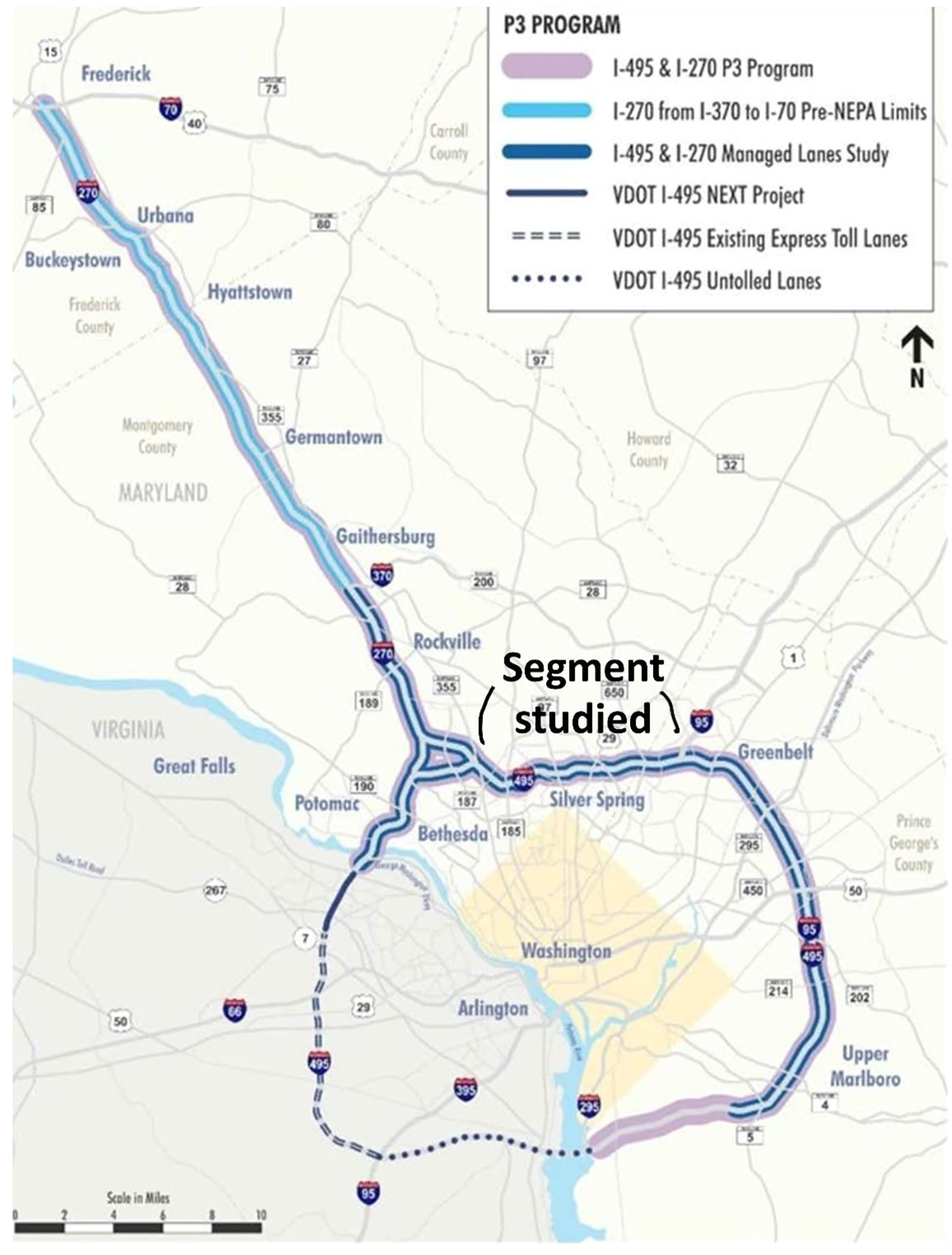
Peak Period Travel on I-495 between I-270 East Spur and I-95 (Source: MDOT, 2020) a
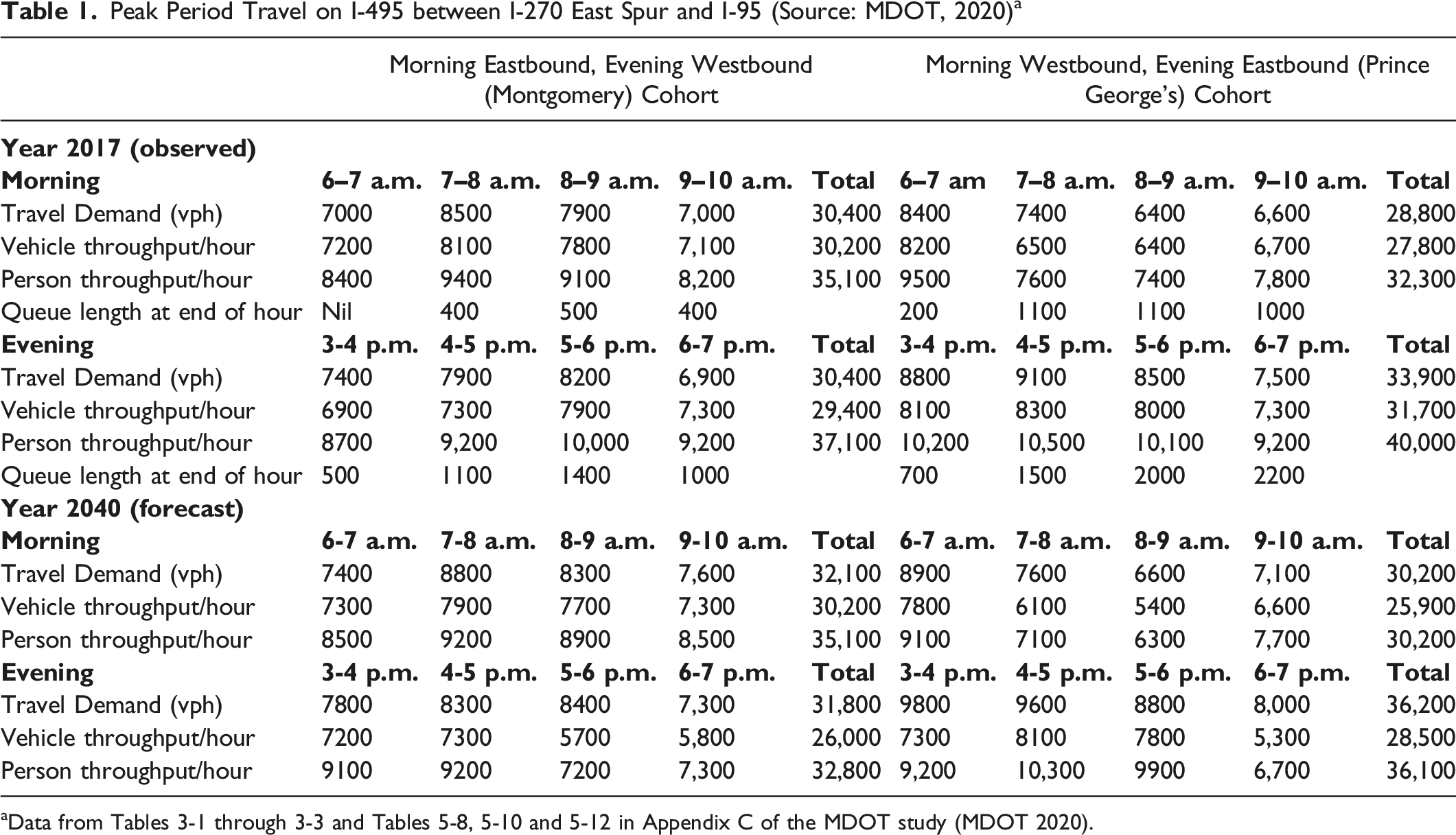
aData from Tables 3-1 through 3-3 and Tables 5-8, 5-10 and 5-12 in Appendix C of the MDOT study (MDOT 2020).
As Table 1 shows, the volumes of traffic in 2017 in both directions are broadly similar: there is a cohort of traffic that flows eastbound in the morning and westbound in the evening comprised mainly of commuters residing in Montgomery County (Montgomery cohort), and a cohort that travels westbound in the morning and eastbound in the evening comprised mainly of commuters from Prince George’s County (Prince George’s cohort), with the Montgomery cohort being roughly equal in the morning and evening with total traffic at 30,400 during each period, and the Prince George’s cohort being larger in the evening than in the morning, i.e., 33,900 versus 28,800. The queues are worse in the evenings for both cohorts, but evening queuing for the Prince George’s cohort is much worse than for the Montgomery cohort. Traffic patterns forecasted for 2040 are similar but higher.
For the evaluation, an alternative is considered with two HOTTER lanes per direction, created by converting two of the four existing general-purpose lanes to HOTTER lanes. It is assumed that tolls will be charged on the HOTTER lanes only during the morning and afternoon peak periods (i.e., 6 a.m. to 10a.m., and 3 p.m.–7 p.m.) similar to the operating hours for HOT lanes on I-66 inside the Capital Beltway in Northern Virginia, which are operated by a public agency seeking to manage congestion rather than by a concessionaire primarily seeking to maximize its revenue from tolls. All lanes, including HOTTER lanes, would be toll-free at other times of the day.
To be consistent with the rest of the HOT network in Maryland and across the state line on the Virginia segment of I-495, only buses and 3-person carpools (HOV3) with E-Zpass Flex transponders would be exempt from tolls. To ensure that traffic congestion would be reduced or get no worse on the remaining toll-free general-purpose lanes, a robust express transit system and carpooling program would be established, and cash payments would be offered to incentivize a sufficient number of travelers to shift to a shared travel mode on HOTTER lanes.
The MDOT study did not incorporate into its modeling any express bus service on the proposed HOT lanes. So, no transit ridership estimates were provided in the study report. For this study, a robust express bus system is included in the HOTTER lanes alternative, to be funded using toll revenue. The system would include express buses operating at a maximum headway of 15 minutes between transportation hubs in the vicinity of I-495 and I-270 throughout the morning and afternoon peak periods.
The questions this paper seeks to answer, at a sketch analysis level, is – would the concept work, would it be financially viable, and would it continue to work with the growth expected by MDOT’s forecast year 2040? Is it worth carrying out further, more detailed modeling?
Evaluation Methodology
We developed a spreadsheet model called the Overview of PASTE model.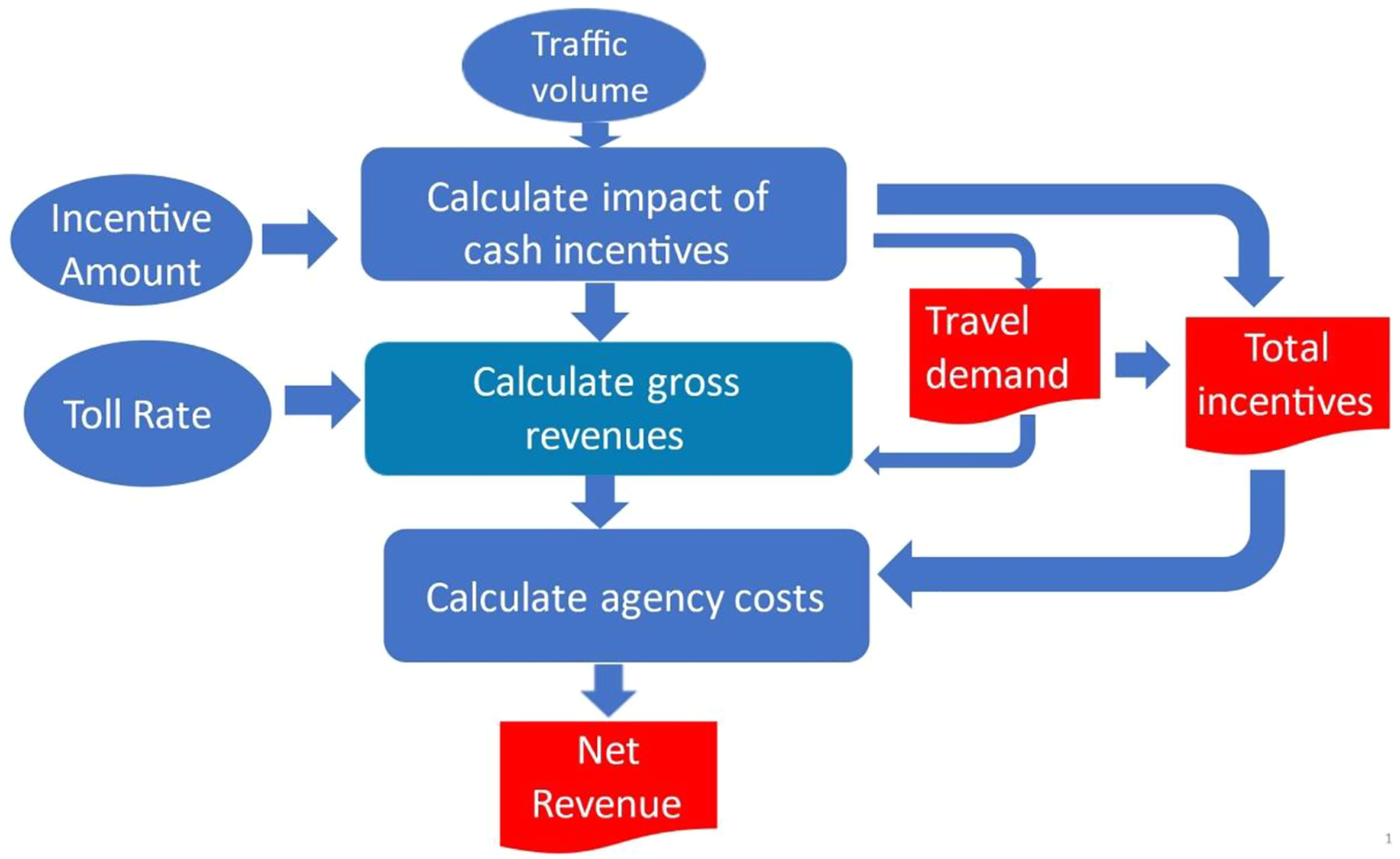
PASTE focuses on the commuter travel market. It first calculates morning and the evening “excess” traffic (i.e., the traffic volume that must be eliminated to ensure acceptable HOTTER operations), and using the larger of the two determines the number of commuters that would need to shift to passenger travel to achieve the HOTTER lane target speed of 55 mph (also called “level of service C”) in both peak periods while ensuring that speeds on the toll-free lanes will be faster or no worse than they would have been without introduction of HOTTER lanes. This is an iterative process due to the need to account for temporal demand shift by shared mode passengers. PASTE then estimates the amounts of incentives required, toll revenues, agency costs for operations, net operating revenues, and travel speeds that would result on the general-purpose (GP) and HOTTER lanes.
Both cohorts of traffic, i.e., the Montgomery and Prince George’s cohorts, are modeled separately for 2017 and 2040 using the traffic data in Table 1. Due to current limitations in the PASTE model, effects on trips made for purposes other than for commuting are not calculated. The “non-commute” travel market would benefit from express transit services introduced on HOTTER lanes. So, there could be additional shifts to transit from non-commuters. Thus, results from PASTE potentially understate the full extent of mode shift that would be incentivized by express bus services, and resulting additional traffic reductions. Non-commute travel impacts could be estimated using a full-scale four-step travel demand model.
We assumed that a basic level of express bus service operating between transportation hubs in the vicinity of the I-495 and I-270 freeways would attract a substantial portion of the incentivized passengers. The rest of the required shift to shared travel would come from single-occupant vehicle (SOV) or 2-person carpool drivers shifting to HOV3 carpools. Bus service would serve as a back-up travel option for carpool passengers on days when they cannot carpool for any reason.
The objective (of the model iterations) was to achieve free-flowing HOTTER lanes with some improvement, or at least no degradation, in level of service in the general-purpose lanes. Consistent with MDOT policy for other parts of the system, we assumed that only buses and HOV3 vehicles would travel for free on the HOTTER lanes.
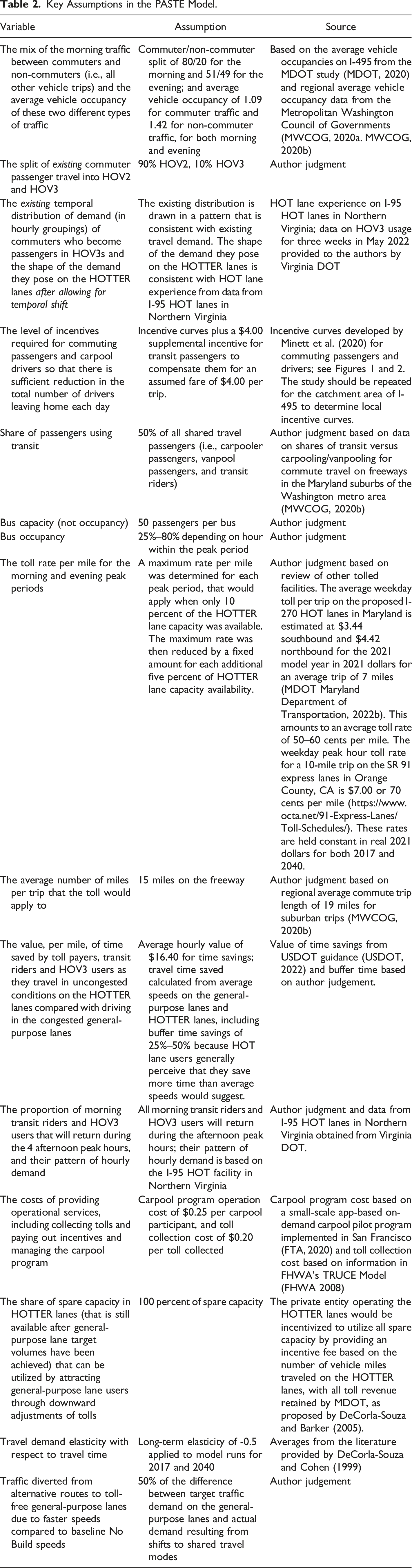
The analysis begins with existing hourly demand for vehicle and person travel observed in 2017 or forecasted for the No Build alternative in 2040 (see Table 1). The model proceeds to calculate target traffic volumes for the two general-purpose and two HOTTER lanes in each direction, based on the need to accommodate half of the total baseline (observed or forecasted) freeway traffic in the two general-purpose lanes to ensure that the congestion levels on the two general-purpose lanes would be unchanged. Based on target traffic volumes on the two general-purpose lanes and the number of vehicles that could be accommodated in HOTTER lanes at 55 mph, the model calculates how many commuter drivers would have to be induced to become transit or carpool passengers, and how many commuters who currently drive alone would need to provide rides to commuters in carpools. The model allows for the temporal demand shift that would occur as from-home departure times change once the HOTTER lanes offer transit riders and carpoolers toll-free access to an uncongested facility; it allows for this temporal shift without increasing demand in any hourly period above the targets for the two general-purpose lanes and two HOTTER lanes.
Having arrived at the proportion of commuters that would need to travel as transit or carpool passengers, the model estimates the amount of cash incentive that would need to be provided, while deducting the value of the time saved by traveling on the uncongested HOTTER lanes rather than the adjacent general-purpose lanes. Similarly, the model estimates the amount of incentive needed for carpool drivers, with a similar deduction of the cash value of the time-savings benefit. The model calculates the cash value of time savings based on average hourly speeds on general-purpose lanes and HOTTER lanes, using the Bureau of Public Roads (BPR) travel time equation and USDOT’s recommended value of travel time savings, making an allowance for “buffer time” savings perceived by travelers, in addition to actual calculated time savings. Buffer time is the additional time that trip-makers must allow for in their travel plans to ensure that they will arrive at their destination on time.
To get general-purpose lane speeds, the model first estimates the traffic that would divert from other routes to the general-purpose lanes to take advantage of the changed (faster) speeds on the general-purpose lanes, especially during those peak hours when speeds are faster. This diverted traffic would slow the general-purpose lanes back down. The model then compares the revised travel time to the travel time in the baseline (No Build) case. A travel time reduction would induce new traffic. Using long-term travel demand elasticity estimates with respect to travel time, the model estimates the amount of induced travel that might occur. It then calculates final speeds on the general-purpose lanes after allowing for both diverted as well as induced travel.
The model estimates the morning traffic flows, and then the impact that the changes to the morning flows would have on the afternoon flows as the same cohort of commuters return from work in the reverse direction. To achieve the target flows in the afternoon, the morning flows (i.e., mode shift required) might need adjustment in an iterative process until the afternoon flows ensure that general-purpose lane travel demand does not exceed the target demand for each afternoon hour. Because there is usually more travel demand in the afternoon, this results in requiring a greater number of incentivized passengers and carpool drivers in the morning. Since traffic reductions required to achieve the targeted general-purpose lane traffic volumes are governed by needs in the highest peak hour in the afternoon, general-purpose lane traffic reductions in the morning peak hours and afternoon peak shoulder hours are higher than needed to maintain baseline general-purpose lane level of service during those times.
After subtracting toll-exempt vehicles, the model estimates the amount of capacity that would be available in the HOTTER lanes to ‘sell’ to toll-payers during each hour of the morning and afternoon peak periods, and the average toll rates that would apply given the amount of available spare capacity. The model then calculates gross toll revenues, costs for cash incentives, costs for toll collection, costs for operation of the shared ride program, and net operating revenue.
Key Assumptions in the PASTE Model.
Model Results
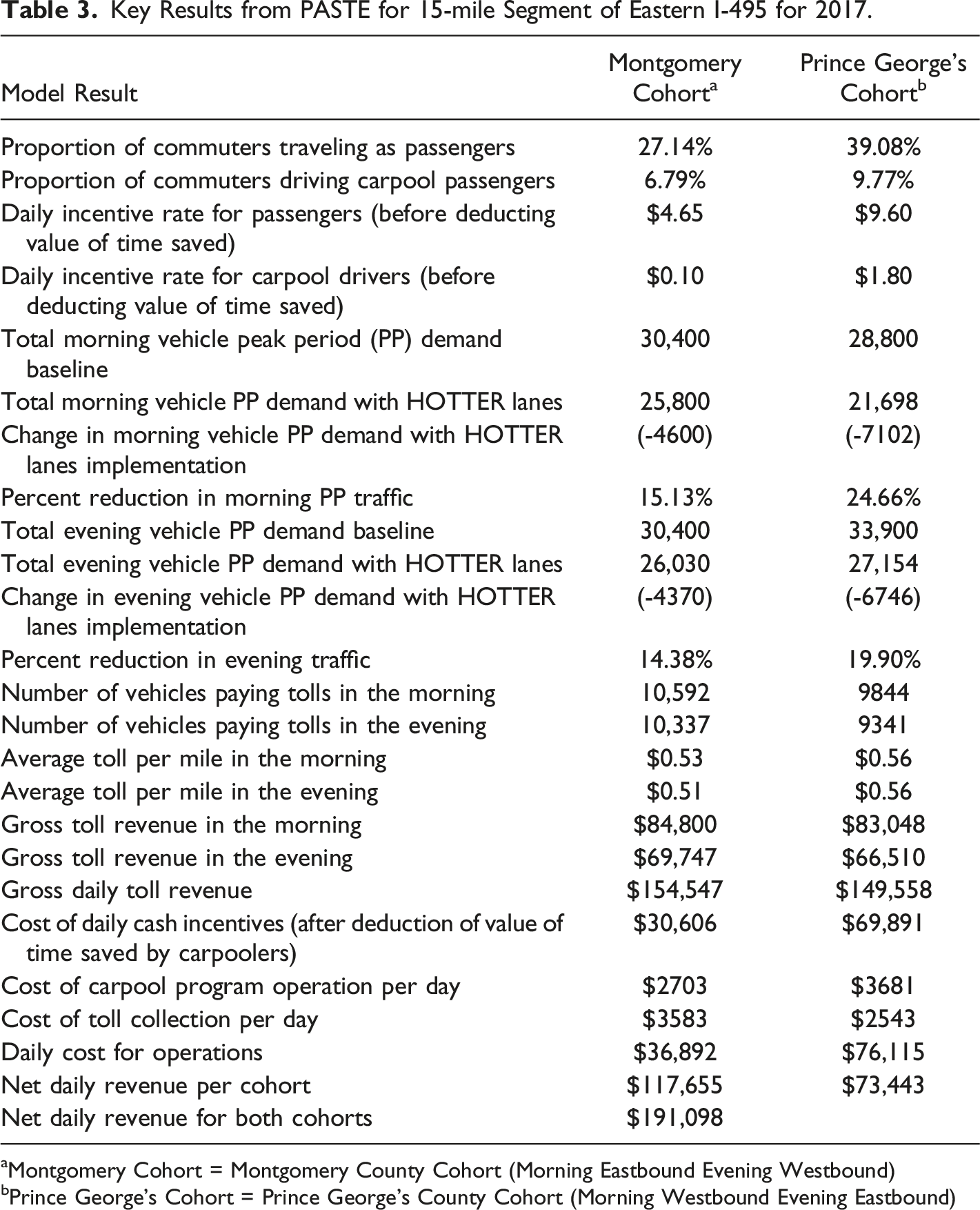
Key Results from PASTE for 15-mile Segment of Eastern I-495 for 2017.
aMontgomery Cohort = Montgomery County Cohort (Morning Eastbound Evening Westbound)
bPrince George’s Cohort = Prince George’s County Cohort (Morning Westbound Evening Eastbound)
Figure 5 shows the magnitude of person trips by shared travel modes (i.e., carpools/vanpools and transit) in comparison with total person trips, for each cohort. Figure 6 presents a comparison of targeted general-purpose lane traffic volumes in the evening for the Prince George’s cohort (which has higher traffic volumes) with traffic volumes estimated by the model – first without accounting for diverted and induced traffic, and then after including diverted and induced traffic. Figures 7 and 8 show hour-by-hour peak period speeds for the eastbound direction (which has the heaviest congestion in the afternoon), first without accounting for diverted and induced traffic, and then after including diverted and induced traffic. The graphics demonstrate how traffic reductions in the general-purpose lanes initially increase travel speeds far above the baseline (No Build) speeds, and speeds remain slightly higher than baseline speeds even after accounting for the additional traffic diverted to or induced onto general-purpose lanes. Mode shares for shared travel modes and total person trips in 2017 model year. Evening Prince George’s cohort traffic in 2017 in general-purpose lanes. I-495 Eastbound average hourly speeds (2017) before allowing for induced traffic. I-495 Eastbound average hourly speeds (2017) after allowing for induced traffic.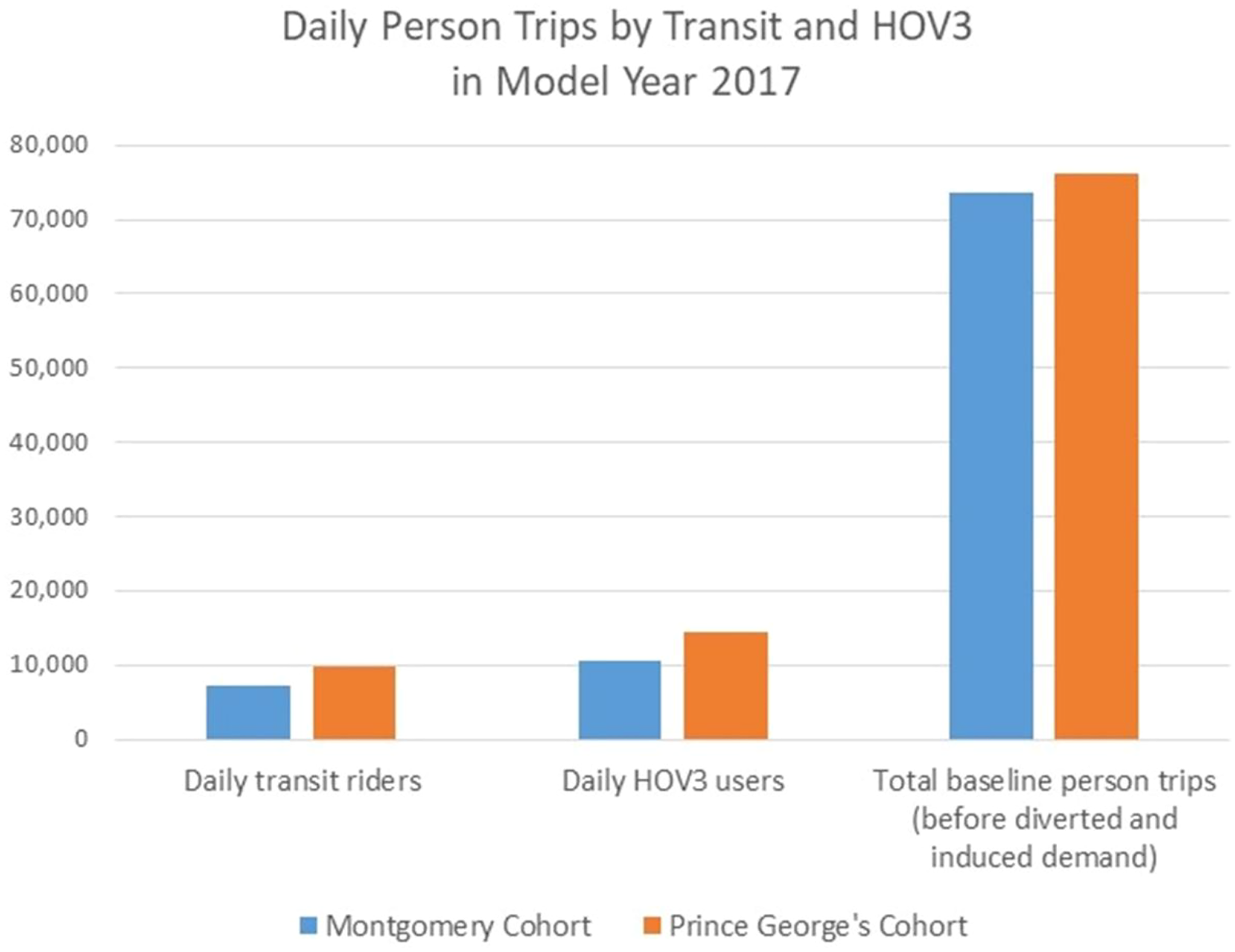
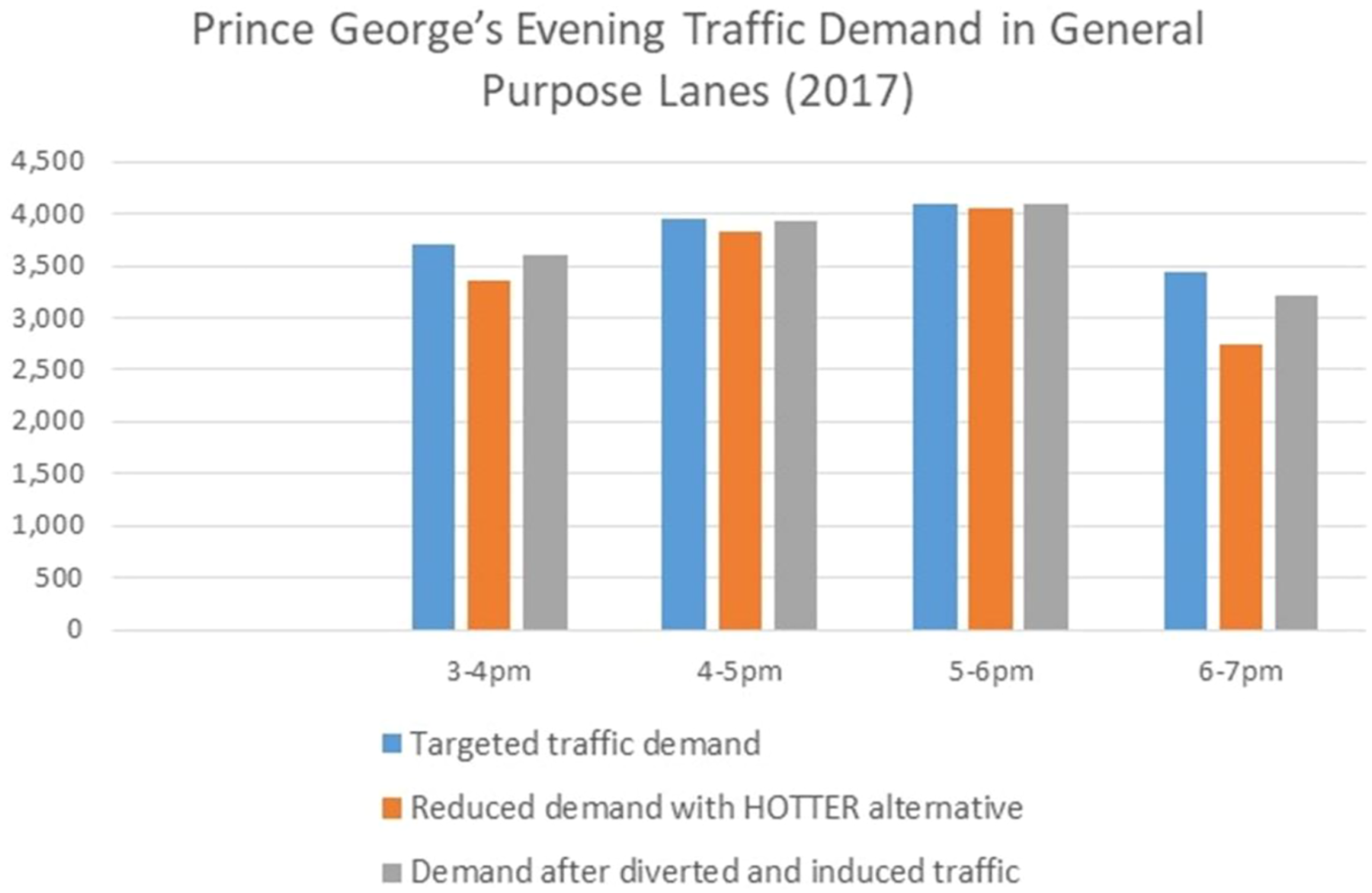
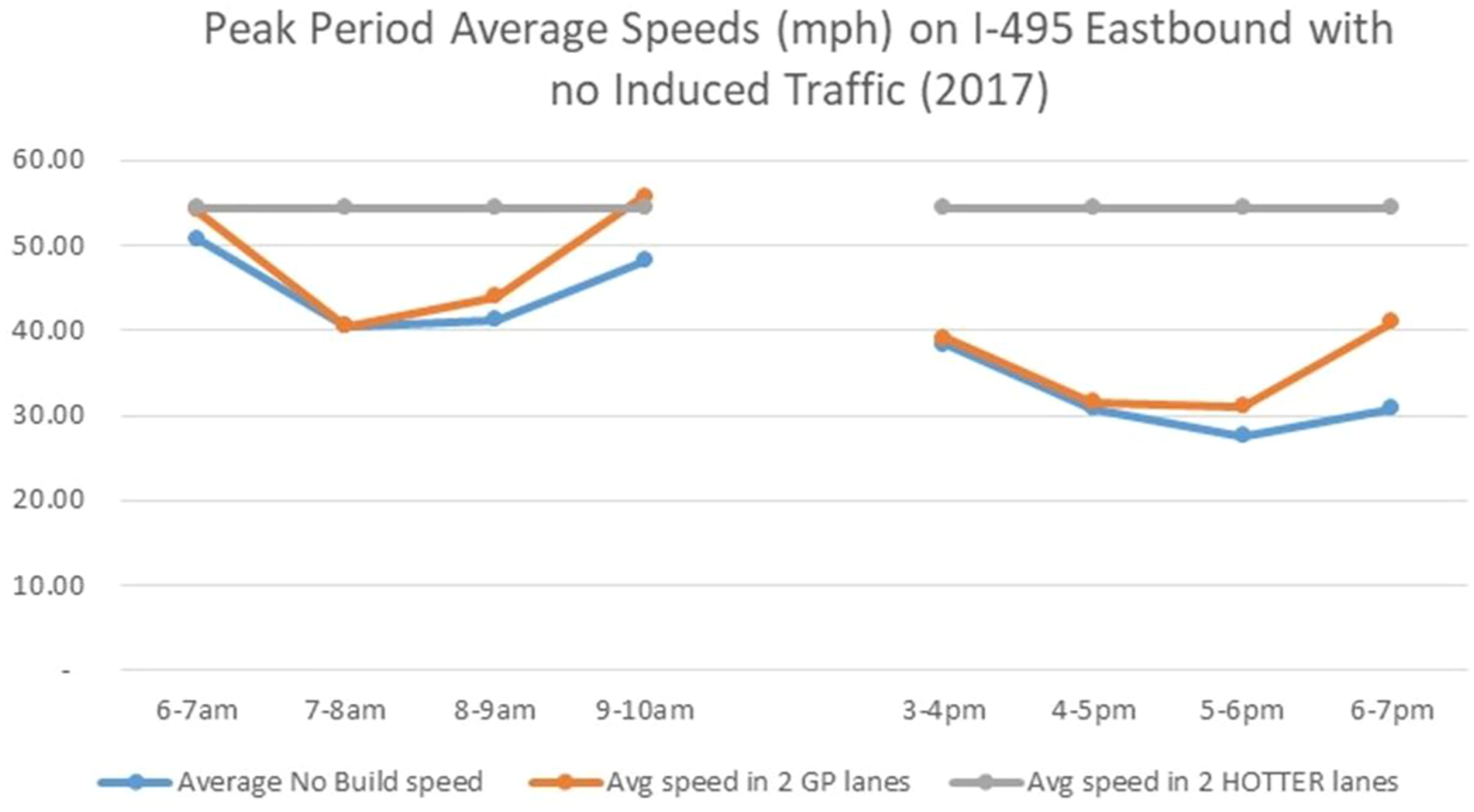
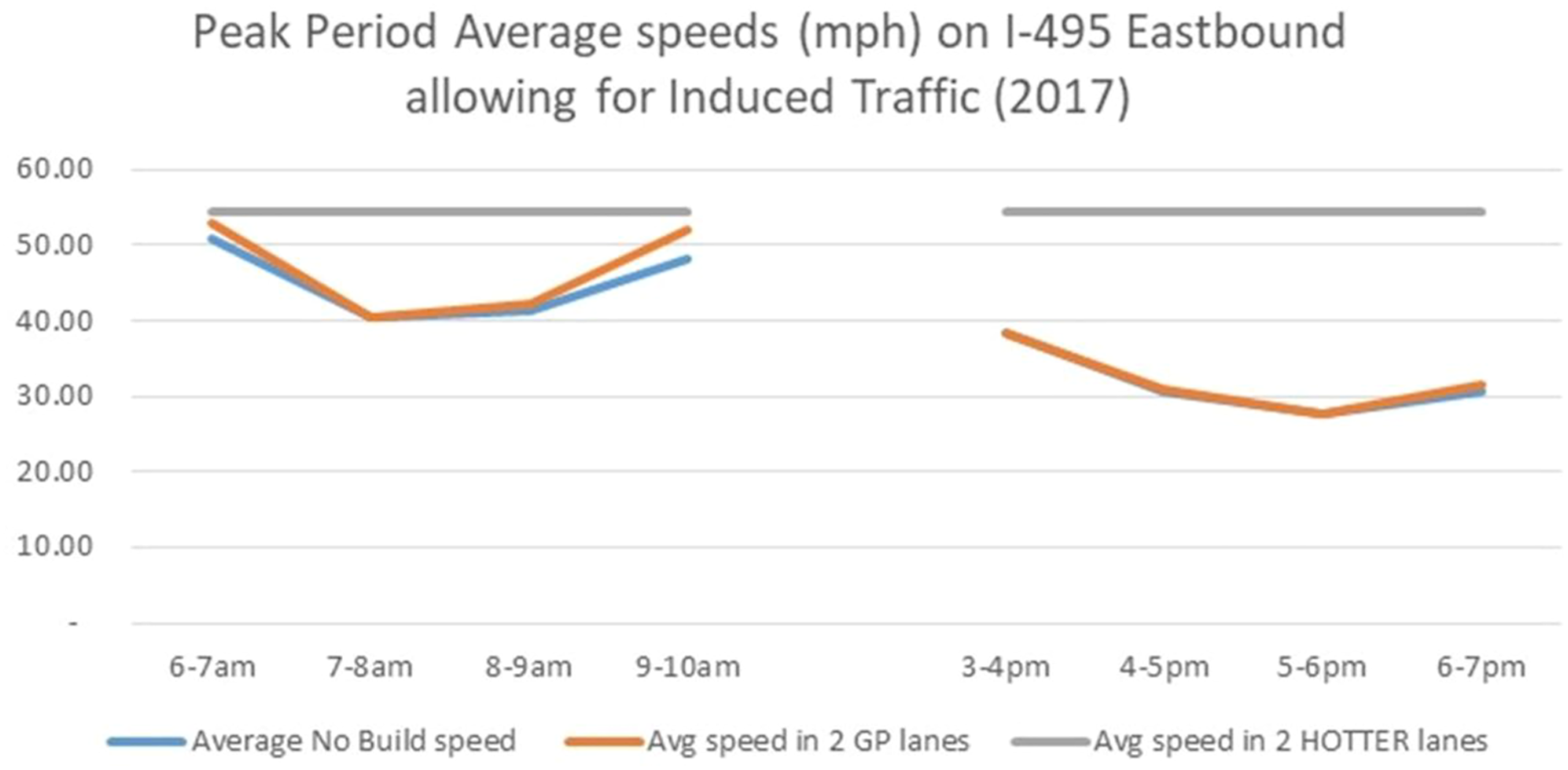
Our conceptual sketch-planning modeling suggests that benefits accrue to HOTTER lane users as well as to general-purpose lane users, although much of the speed improvements on general-purpose lanes are clawed back by induced travel. By using the entire capacity of HOTTER lanes, and by requiring that they operate at 55 mph (i.e., level of service C), more travelers who would otherwise use the general-purpose lanes will benefit from the faster speeds compared to conventional privately-operated toll concessions which usually set toll rates at levels that attempt to maximize revenue rather than at levels that would ensure the full capacity is utilized so that vehicle throughput is maximized. As Table 3 shows, there could be a significant surplus in net operating revenue (after accounting for incentives and all other operating costs), suggesting that HOTTER lanes could be a source of funding for transit capital and operating costs.
Benefits would occur beyond the freeways themselves. Traffic diversion to the general-purpose lanes would likely reduce congestion on alternative routes. With 7102 fewer commuter vehicles each day in the Prince George’s cohort (see Table 3) congestion and delay would also be reduced on city streets that provide access to and egress from the freeway. The reduction would, as well, put downward pressure on demand for parking, and lead to other environmental benefits such as reductions in pollution and improvements in walkability and levels of service for non-motorized transportation modes.
A comparison of results from model runs for 2017 and 2040 indicates that the number of toll-payers will decrease over time because there would be less capacity available for toll-payers as shared travel users increase, drawn to shared modes by higher cash incentives that are needed when traffic demand increases and greater shifts are required to shared modes to maintain desired levels of service on HOTTER and general-purpose lanes. With less capacity available for toll-payers, toll rates would rise, and this would likely offset the costs of increases in incentives. Also, model toll rates do not reflect the fact that real toll rates (in 2021 dollars) would likely increase over time to reflect increasing congestion in general-purpose lanes and higher values of time as real wages increase. Consequently, net revenues could stay stable over time.
Our analysis showed that the rate at which commuters would need to switch to traveling as passengers would begin, for the Montgomery cohort, at 27% of total commuters in 2017, and by 2040 would grow to 29%, since the overall growth in traffic demand predicted in the MDOT study is only about 5%. The 29% level for the Montgomery cohort in 2040 is well below the propensity to travel as passengers of 50% of all commuters reported by Minett et al. (2020) for the Californian case study. However, for the Prince George’s cohort, due to the greater evening demand, the needed commuter passenger rate begins at 39% in 2017 and grows to 46% by 2040, due to a 5%–7% growth in forecast traffic demand. The 46% level in 2040 is pushing towards the upper limit of willingness of commuters to travel as passengers found by Minett et al. (2020). It will be important to discover whether the California estimates hold for the Maryland suburbs.
The results in Table 3 suggest that average weekday net operating revenues would be about $0.2 million in 2021 dollars. This amounts to net annual operating revenues of about $50 million for a 15-mile representative segment on I-495, assuming HOTTER operation in the peak periods only on 250 working weekdays a year. Again, the reader is cautioned that these estimates are preliminary and based on a sketch-planning model. More detailed modeling may produce different estimates.
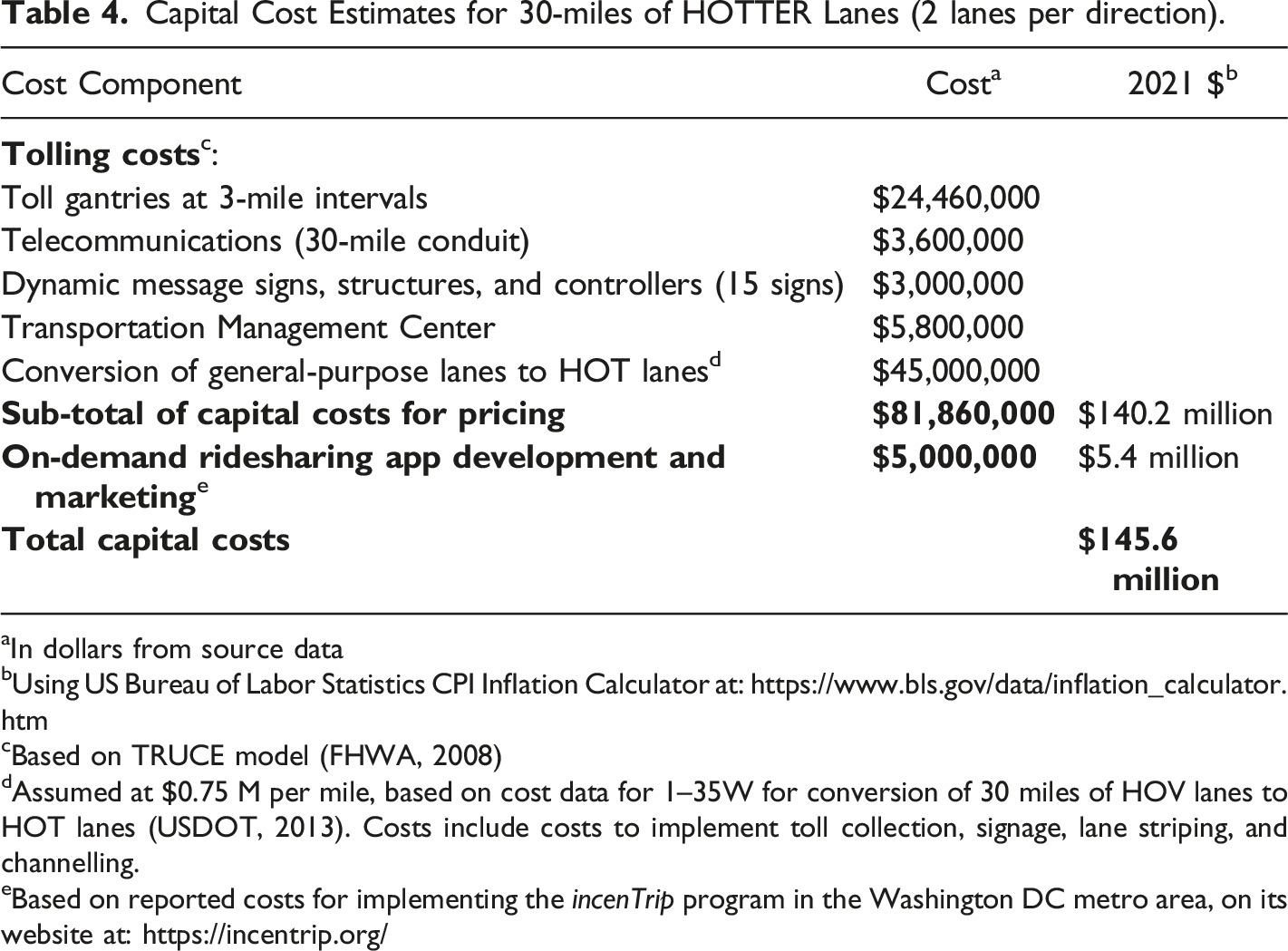
To estimate net annual operating revenues for the entire approximately 30-mile segment of eastern I-495, the above results would be multiplied by a factor of 2, since twice the number of travel miles would be supported on HOTTER lanes. Thus, total net operating revenues would be in the order of $100 million per year. Costs for tolling operations and maintenance are estimated at about $10 million per year (2021 dollars) for the 30-mile segment based on the TOPS-BC model (FHWA, 2020). The resulting net annual revenue stream is $90 million per year (in 2021 dollars, calculated as $100 million - $10 million) for eastern I-495. The present value of the revenue stream over a 30-year period of operations at a 4% real discount rate (to account for revenue risk) would be about $1.5 billion. More detailed modeling could produce different estimates.
Capital Cost Estimates for 30-miles of HOTTER Lanes (2 lanes per direction).
aIn dollars from source data
bUsing US Bureau of Labor Statistics CPI Inflation Calculator at: https://www.bls.gov/data/inflation_calculator.htm
cBased on TRUCE model (FHWA, 2008)
dAssumed at $0.75 M per mile, based on cost data for 1–35W for conversion of 30 miles of HOV lanes to HOT lanes (USDOT, 2013). Costs include costs to implement toll collection, signage, lane striping, and channelling.
eBased on reported costs for implementing the incenTrip program in the Washington DC metro area, on its website at: https://incentrip.org/
Implications
The foregoing evaluation used data from a study currently underway to add new HOT lanes to I-270 and the Maryland portion of the Capital Beltway (I-495). The study removed HOT lanes from consideration on eastern I-495 because right-of-way constraints made adding new lanes infeasible. Our analysis has demonstrated that lack of right-of-way need not be a constraint on establishing an express transit and HOV network that offers premium service to toll-payers and shared travel mode users. If further modeling delivers a similar conclusion, Maryland could use HOTTER lanes to complete its priced lane network despite right-of-way limitations on I-495. Importantly, with HOTTER lanes, Maryland would be actively working to maximize person throughput on the priced lanes, using toll revenue from low-occupancy vehicle users (who benefit from faster trips) to attract shared mode users with cash incentives and shared travel infrastructure. Even those who do not share the ride and do not pay tolls would benefit from HOTTER lanes, because travelers on general-purpose lanes would also benefit, at least in the short run before new travel is induced by the improved level of service in the general-purpose lanes.
Based on our preliminary findings using sketch-planning analysis, the I-495 segment removed from consideration for HOT lanes could generate surplus revenue with a present value of as much as $1.35 billion, which could be used to support transit operating subsidies and capital investments such as park-and-ride facilities, construction of direct access ramps to and from the express lanes to facilitate speedier access to HOTTER lanes, and creation of suburban mobility hubs such as at shopping centers near I-495 and I-270.
As auto-centric development continues, further incentivized by remote work opportunities, those who don’t have access to personal transportation have significantly reduced mobility options, especially when it comes to suburban employment which comprises a large share of metro area employment. With the dearth of transit or carpooling options, access to suburban jobs becomes virtually impossible for those without personal transportation. The HOTTER concept could provide new, affordable travel choices for those who don’t drive while also providing the choice of a fast, reliable trip for those who do.
Summary and Thoughts on Moving Forward
In this paper we have demonstrated that HOTTER lanes could be a cost-effective way to accommodate future travel growth and manage demand on existing freeway lanes while not foreclosing options for the future. New lanes do not need to be added for congestion pricing to work. Congestion pricing, in combination with “reverse” congestion pricing (i.e., cash rewards for shared travel) could be used to avoid major investments that could turn out to be unproductive in the future due to changing transportation needs, while also helping limit auto-centric development patterns and induced traffic demand. The HOTTER concept might effectively and equitably achieve Maryland’s objective (MDOT, 2021) “to develop a travel demand management solution(s) that addresses congestion, improves trip reliability, and enhances existing and planned multimodal mobility and connectivity.”
With the HOTTER concept, tolls need not be applied during off-peak periods when there is no congestion, because costs are significantly reduced relative to adding new lanes. Toll rates can be set to maximize vehicle or person throughput on the priced lanes, making the HOTTER concept more effective than the conventional “revenue maximization” toll-setting approach used by private concessionaires to recoup the high costs of adding lanes. The objective to generate revenue can sometimes conflict with economic efficiency and social welfare. If toll rates set to maximize revenue leave valuable capacity in free-flowing lanes underused, that is wasteful because some travelers in regular lanes would be forced to suffer congestion even though they might have been willing to use the priced lanes if the toll rate were lowered to the throughput-maximizing level.
When priced lanes are combined with encouragement of alternative modes, the benefits of congestion pricing will be maximized. Without alternative modes included in the pricing package, there could be traffic diversions that increase congestion on other facilities. When revenue from pricing is used to support and attract travelers to transit and high-occupancy vehicles, person throughput and levels of service are more likely to be optimized.
Our findings suggest that HOTTER lanes have potential and merit further study. To advance this option in metro areas, more work is needed. First, surveys should be conducted to get reliable estimates of the cash incentives that might be needed in specific contexts, since the northern California survey results used in the analysis for this paper may not be generalizable. Public acceptability of the concept should be assessed, i.e., would the public accept converting a general-purpose lane to an express lane when deployed with a robust express transit system and cash incentives for those using shared travel modes? The concept should be further refined based on public and stakeholder feedback. More detailed transportation demand modeling and microsimulation of freeway operations should be used to estimate performance impacts, including non-commuter mode shifts, and detailed evaluation of the technical, financial, and commercial viability of the approach should be conducted at specific locations and network wide. Equity issues should be addressed, such as those related to app-based technology and payment systems and distributional impacts that may be inequitable. Finally, if the more detailed modeling supports it, a pilot demonstration should be conducted to confirm the operational and financial feasibility of the concept, including whether the desired mode shifts can be achieved in practice and public acceptance can be gained.
Footnotes
Declaration of Conflicting Interests
The author(s) declared no potential conflicts of interest with respect to the research, authorship, and/or publication of this article.
Funding
The author(s) received no financial support for the research, authorship, and/or publication of this article.
