



Abstract

AMSBIO
Lipidure-Coat Low-Adhesion Plates and Dishes
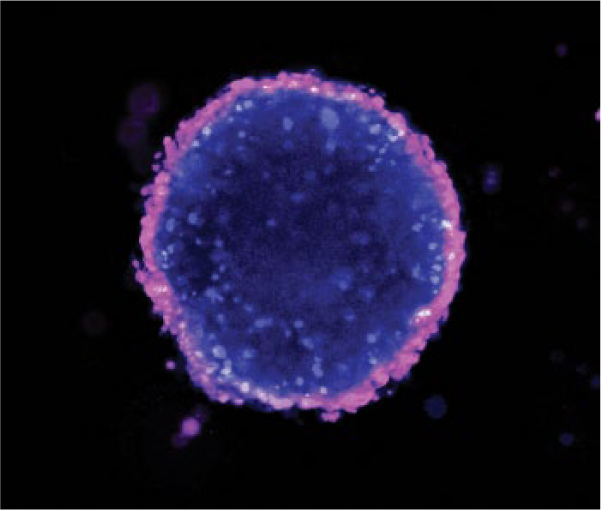
For 3D spheroid cell culture, these plates and dishes are available in a 384-well format optimized for drug screening or other high-throughput applications. Lipidure-Coat surfaces use MPC (2-ethacryloyloxtethyl phosphorylcholine), a biocompatible synthetic polymer with the same structure as the phosphorylcholine polar bases that form cell membranes. As a consequence of the high biocompatibility of this coating, cells will not adhere to the surface of Lipidure-Coat plates or dishes. Different well shapes available for 96-well plates (U, V, and flat-bottom) can be used to control the size, position, and density of spheroids.
According to AMSBIO, Lipidure-Coat promotes the formation of a single spheroid in each well of the U-bottom multiwell. Formation of spheroids, tumorspheres, embryonic bodies, and neurospheres using Lipidure-Coat plates has been demonstrated for cell types, including embryonic stem cells and induced pluripotent stem cells (human and mouse), NIH3T3, preadipocytes, HepG2, and other cancer cell lines, as well as primary neuronal cells.
Stable Cell Lines
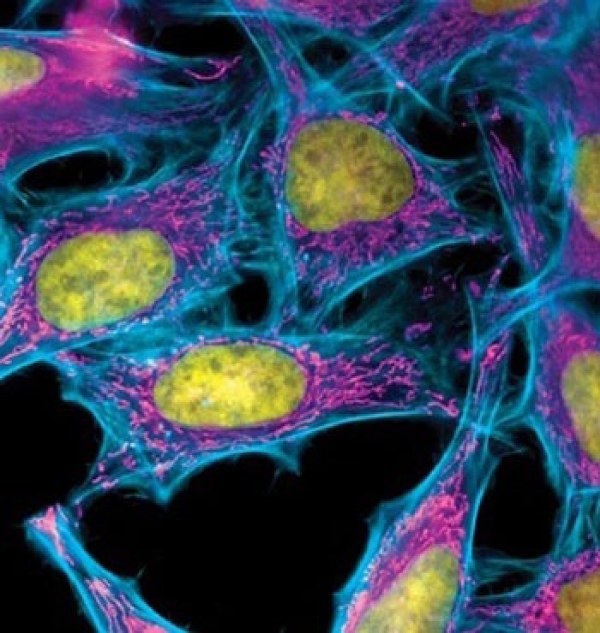
AMSBIO’s portfolio of ready-to-use stable cell lines now includes receptors (e.g., RARa, IGF1 receptor, motilin receptor), ion channels (e.g., CFTR, Nav1.7, Kv1.5), cell signaling (e.g., Notch, JNK, NF-κB, ERK), phosphodiesterases (e.g., aequorin, CNGA2, PDE1B), stem cell related (e.g., LGR5, OCT4, LIN28), fluorescent (e.g., GFP, RFP, CFP, YFP), TetR, luciferase, CRE recombinase/reporter, p53, and DNA repair gene knock-down cell lines (e.g., PARP1, MUTYH, MSH2, MLH1, XRCC6, BRCA1, NBS1). AMSBIO also can develop custom cell lines upon request using a lentiviral system.
ATCC and Evercyte
Immortalized Human Cells and Cell Lines
ATCC and Evercyte now develop and distribute immortalized cell lines that retain key performance characteristics of primary cells. Evercyte systematically establishes and functionally characterizes immortalized human cell lines from specific tissues and donors. ATCC provides cell manufacturing and testing capabilities to ensure the cell lines are fully defined and meet quality standards.
More: www.atcc.org
Creative Biogene
Nucleic Acid Purification Kits
This new range of nucleic acid purification products includes DNA purification, RNA purification, and plasmid purification kits. They are used to extract high yield, purity, and integrity from virtually any sample types, such as formalin-fixed paraffin-embedded (FFPE) sections, culture cells, blood, bacteria, plants, fungi, yeast, virus, and forensic samples.
More: www.biocart.org
Fluxion Biosciences
IsoFlux Rare Cell Enrichment Kit
This new kit incorporates streptavidin-coated magnetic beads that can bind with one or more biotinylated antibodies targeted toward cell surface markers on cells of interest. It facilitates capture of targeted rare cell populations that can include circulating tumor cells (CTCs), cells undergoing epithelial to mesenchymal transition (EMT), cells expressing a particular drug or disease target, stem cells, and immune cells. Similar to the existing IsoFlux enrichment kits, the IsoFlux Rare Cell Enrichment (Streptavidin) Kit uses an advanced microfluidic technology. The cells collected with this kit are immediately ready for downstream analysis. The samples are optimized for molecular analysis and feature high cell recovery, minimal background cells, and low-volume elution.
Integrated DNA Technologies (IDT)
xGen Inherited Disease and Pan-Cancer Panels
The xGen Inherited Disease Panel was designed in collaboration with Emory Genetics Laboratory (EGL) to combine the ease of whole-exome sequencing with the low cost of panels. Emory leveraged IDT Lockdown Probes to create a library targeting all exons in HGMD (human gene mutation database)–listed genes. The creation of this library simplifies workflow and lowers costs, while facilitating rapid sequencing and providing the high coverage levels needed for clinical diagnostics application of next-generation sequencing (NGS).
The xGen Pan-Cancer Panel is based on the findings of The Cancer Genome Atlas (TCGA) network. NGS has enabled the discovery and characterization of gene-specific mutations that have the potential to be tumorigenic, but it also implicates irrelevant genes. The TGCA network has identified 127 significantly mutated genes across 12 tumor types. The Pan-Cancer Panel targets coding regions in all 127 genes.
IDT NGS Panels feature xGen Lockdown Probes, which are 120-mer oligonucleotides with a 5′ biotin modification. Synthesized individually using the IDT Ultramer synthesis platform, Lockdown Probes incorporate the highest coupling rate currently available, 99.6%, to provide high-quality, long oligos. The quality of each capture probe is assessed using electrospray ionization mass spectrometry, and even probes with a high GC content can be synthesized.
More: www.idtdna.com
xGen Acute Myeloid Leukemia Cancer Panel v1.0
Consisting of 11,743 xGen Lockdown Probes, this cancer panel targets over 260 clinically relevant genes that were found to be mutated in a study of 200 patients with acute myeloid leukemia (AML) and published by the TCGA consortium. The AML Cancer Panel is used for enriching the genome for regions of interest before performing NGS. According to IDT, target enrichment enables users to focus sequencing efforts on specific regions of the genome as an alternative to whole-genome sequencing. By including only relevant xGen Lockdown Probes, the AML Cancer Panel enables high coverage of targeted regions, with minimal GC bias.
More: www.idtdna.com
MultiTarget Pharmaceuticals
AquaMutant
AquaMutant is used for in vitro and in vivo random mutagenesis. By mixing activated AquaMutant with a biological sample (e.g., restriction fragments, PCR amplicons, intact plasmids, phages, virus, bacteria, yeast, cultured animal or plant cells, sperms, fish eggs, seeds, Arabidopsis, worms, flies, and zebrafish, etc.) at room temperature for 10 min, users will have a mutant library for screening or directed evolution to find the mutants with desired properties.
Oxford Gene Technology
CytoSure Molecular Arrays
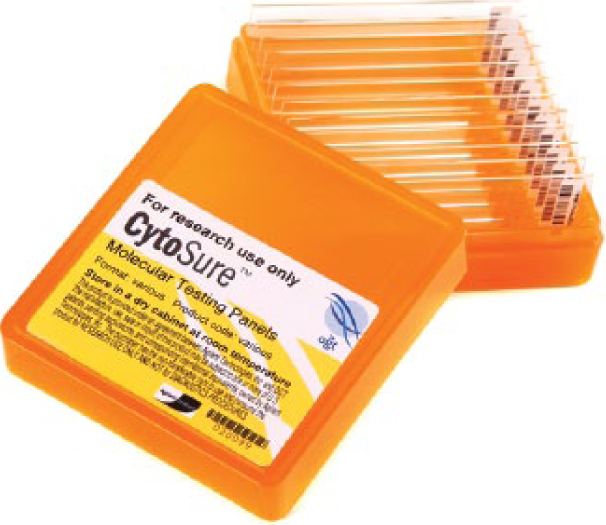
OGT’s range of research-validated CytoSure Molecular Arrays has been expanded to investigate DNA copy number variation (CNV) underlying a variety of genetic disorders. Designed and optimized in collaboration with Emory Genetics Laboratory, the arrays are considered an ideal complement to DNA sequencing, providing a powerful tool for investigating the variety of aberrations underlying genetic disorders.
According to OGT, comparative genomic hybridization arrays (aCGHs) are the gold standard for CNV detection, and the 60-mer oligonucleotide probes used by OGT’s aCGH platform deliver superior CNV detection. The expanded CytoSure Molecular Array portfolio now enables detection of CNV in genes associated with over 20 genetic disorders, including cardiovascular, inherited eye, intellectual disability, and neuromuscular disorders, as well as a range of inherited cancers. In addition, genes covering each disorder can be combined to create bespoke custom arrays or further customized by the addition of novel content to suit each individual research project. For the extraction of results from aCGH data, all CytoSure Molecular Arrays are supplied with OGT’s CytoSure Interpret Software.
More: www.ogt.com/cytosure
Porvair Sciences
2.00-mL 96-Well Round Deep-Well Plates
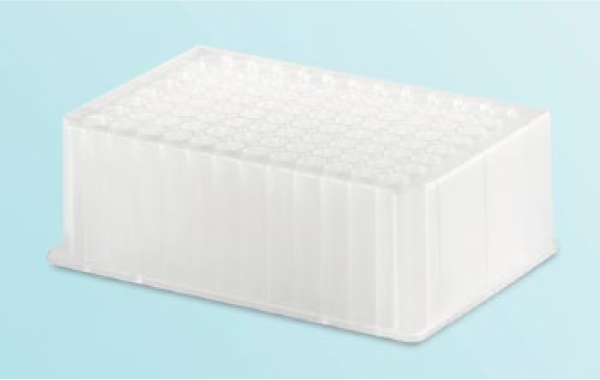
The common wall design of these new plates provides a full 2-mL round-well, round-bottom well within a 45-mm height limit, for full compatibility with most plate handling equipment. Unlike other “2-mL” deep-well plates that typically offer just 1.8 to 1.9 mL/well, the plates enable fraction collecting, compound storage, plate replication, and mixing applications.
Manufactured under class 10,000 conditions from ultra-pure-grade polypropylene, these plates are certified as RNase/DNase free and contain no measurable contaminants that could otherwise leach out and affect the sample. For sterile biological applications, these plates are available irradiated. A matching thermoplastic elastomer cap mat provides easy friction sealing of this new plate for transport, shipping, and short-term storage. For longer periods, the new plates can be heat sealed using Porvair Sciences aluminum or clear heat seals.
These plates are SLAS compatible with microplate stackers, washers, and automated equipment. The new plate design incorporates features that prevent “locking” when stacked and enable easy heat sealing.
More: www.porvair-sciences.com
Combipack Protein Precipitation Sample Prep Kit
Comprising five color-coded Porvair P3 protein precipitation plates and five 1-mL deep-well collection plates, the Combipack contains all the elements required to accelerate protein precipitation sample preparation. Biological samples commonly contain proteins that interfere with downstream applications. The P3 plate uses the “crash” method, in which protein is denatured with acetronitrile and the flocculant filtered out, allowing 96 samples to be handled at one time. The Protein Precipitation Plate, P3, is based on the MicroLute format but without the chromatographic sorbent. Protein “crashes” out of solution and precipitates directly in each well when acetonitrile is added, thus solving common problems associated with the crash technique of protein cleanup. The novel dual-frit, hydrophobically treated matrix means that there is no “wetting out” and leakage of the sample through the plate before the application of vacuum. Optional drain cap and top cap mats are available for those wishing to use vortex sample mixing.
More: www.porvair-sciences.com
Swissci
MRC MAXI 48-Well Crystallization Plate
According to Swissci, this plate is designed for macromolecular crystallization and offers easy to automate crystallization optimization with large sitting drops and is considered ideally suited to replace traditional limbro plates. Drop volumes up to 10 µL are possible, and the distance between well preserves is 9 mm. Wells are spherical but shallow. Raised wide conical wells make crystal viewing, retrieval, and drop replacement easy. The micro-numbered wells are regarded as optically perfect, designed to observe crystals under a microscope, and have a lens effect for perfect illumination. No static charging occurs, and the robust structure ensures a perfectly flat upper surface with wide partition walls between wells, allowing for good sealing. The plate conforms to ANSI/SLAS standards and is made from an optically superior polymer (UVP) that is UV transmittable.
More: www.swissci.com
Thermo Fisher Scientific
Life Technologies TaqMan Multiplex Reagents
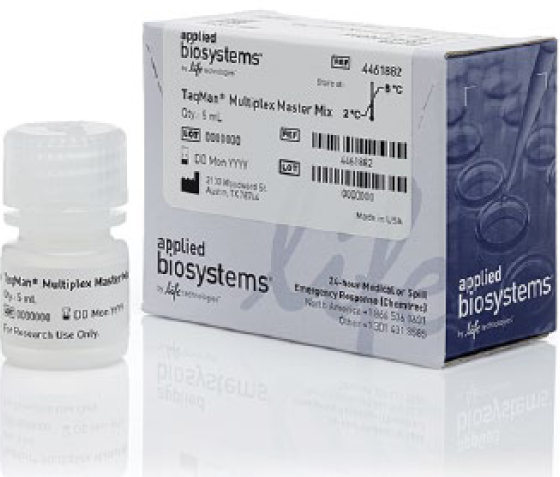
This new set of reagents allows users to simultaneously analyze samples for multiple genetic markers of interest in a single quantitative PCR (qPCR) reaction. The multiplex solutions include the following: TaqMan QSY probe with new QSY quencher and two new ABY and JUN dyes. These combine with FAM and VIC dyes to provide a set of four dyes, which have spectral wavelengths closely aligned with the filter channels available on Applied Biosystems–branded real-time PCR instruments.
TaqMan Multiplex Master Mix is formulated with the necessary components to allow amplification of up to four targets in the same reaction. It contains Mustang Purple dye, a new passive reference compatible with new ABY and JUN dyes.
Spectral Calibration Plates are available in different formats for use with several Life Technologies brand real-time PCR systems, including the QuantStudio instrument portfolio, the ViiA 7, and the 7500 and 7500 Fast Real-Time PCR Systems.
Off-the-shelf TaqMan RNaseP and GAPDH QSY Assays are available to quantify GAPDH and RNAseP genes. These assays are also available in a primer-limited format.
These new solutions double the capacity of the Life Technologies qPCR systems to interrogate samples for up to four targets (4-plex) simultaneously, in addition to the Mustang Purple passive reference. Thermo Fisher also offers a custom service to design multiplex assays for user studies.
More: www.thermofisher.com
About the JBS Product Focus Column
E-mail news releases for consideration to