




Abstract

Asynt
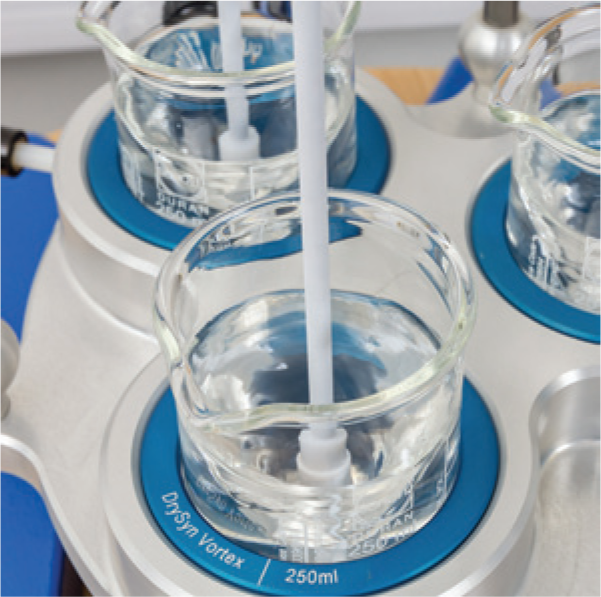
Vortex Blend Overhead Stirrer
This new adaption of the Asynt Vortex overhead stirrer is designed for the requirements of users who need to test new formulations and blends in parallel. The Vortex Blend offers an efficient, space-saving way of performing three blending experiments in parallel. Benefiting from a three-way gearbox and integral heating plate, the Vortex Blend economizes valuable lab space and ensures that parallel experiments have identical stirring rates and heating rates/temperature conditions. The Vortex Blend incorporates a standard overhead stirrer motor and hotplate for operation.
Beckman Coulter Life Sciences
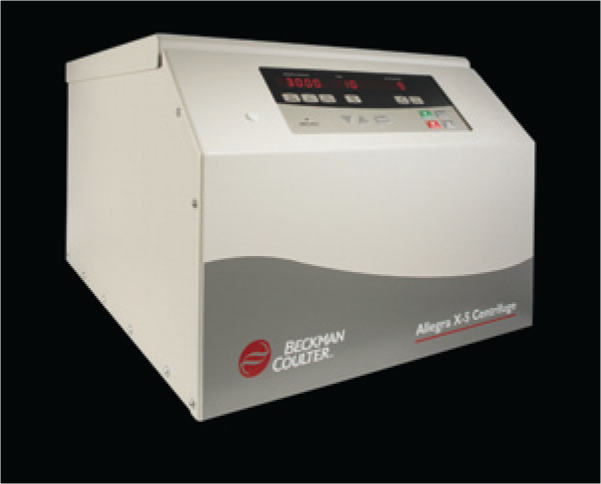
Allegra X-5 Air-Cooled Benchtop Centrifuge
Bundled packages that include swinging bucket rotors and common adapters are offered for a range of clinical sample preparation applications and seamless integration with the Beckman Coulter AutoMate 2500 family of sample processing systems. In addition, Beckman Coulter UniCel DxC and UniCel DxI sample racks can be spun directly in the centrifuge. A small footprint offers capacity for up to 140 blood collection tubes, with a maximum speed of 4700 rpm and centrifugal force of up to 4470 × g.
More: www.beckmancoulter.com
JA-14.50 Rotors for Avanti Centrifuges
Designed for applications that use common, disposable conical tubes, JA-14.50 rotors extend the applications and flexibility of the Beckman Coulter’s Avanti centrifuge series and can be used in Avanti J-26S, J-30I, and J-E centrifuges. Although greater capacity results in higher throughput, the rotors maintain the precision performance offered by products in the Avanti line and are capable of spinning 50, 15, 5, and 1.5 mL conical tubes and 50, 15, and 10 mL round-bottom tubes and bottles at their maximum speeds.
Delivering a top speed of 14,000 rpm and rcf of 35,000 × g, JA-14.50 rotors hold up to 16 × 50 mL conical tubes and maximize the number of 50 mL conical tubes that can be processed in a single run. The fixed-angle rotor is intended for general pelleting of cells, bacteria, and food products; separating proteins, viruses, and subcellular fractions; running concentrators and columns; and phase separation and binding studies.
Avanti centrifuges are available with a selection of BioCertified fixed-angle and swinging-bucket rotors, ranging in capacity from 360 mL to 6 L and all independently certified to contain liquids and aerosols. A BioCertified dual-locking lid configuration, for workflows that include biohazardous samples, maintains biocontainment when removing the rotor from the centrifuge and transporting it to a containment hood. Rotors are also available in a standard single-locking lid configuration.
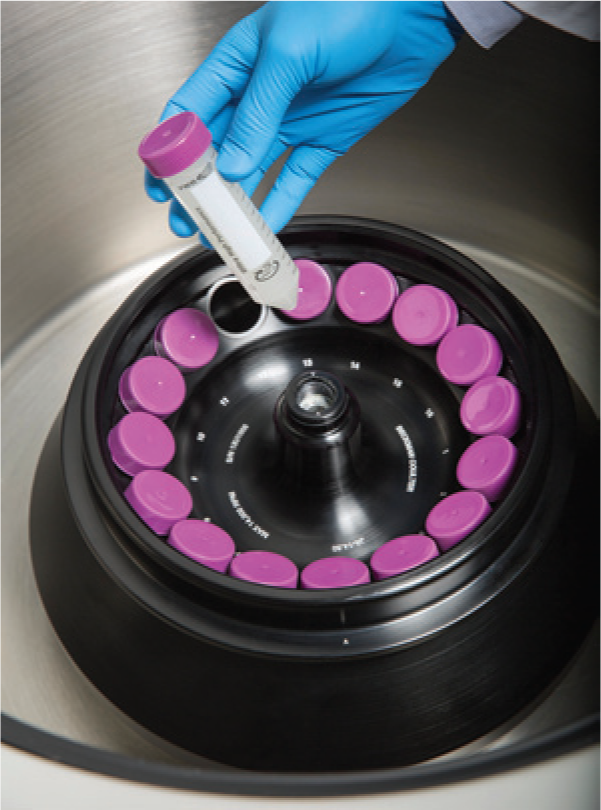
Avanti rotors, including the new JA-14.50 rotor, have a unique ID that is tracked using magnetic sensors; the centrifugation system uses Dynamic Rotor Inertia Check and the ID for Automatic Rotor Identification and to ensure that no individual rotor exceeds the maximum speed permitted.
Multisizer 4e Coulter Counter
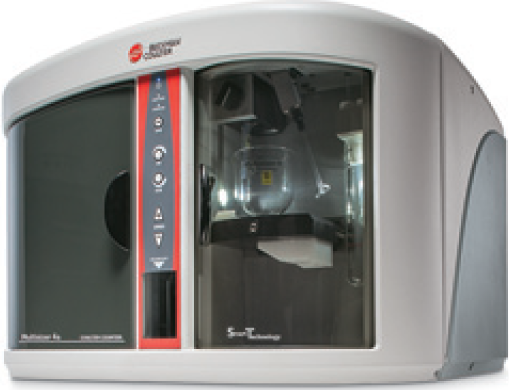
This new version offers a 10 µm aperture that enables users to obtain accurate count, size, and mass distribution for particles and cells ranging from 0.2 to 1600 µm. Digital pulse processing provides high-resolution analysis in as many as 400 channels. The Multisizer 4e delivers dynamic size measurements in real time. High-speed signal digitalization allows the use of various pulse parameters for more accurate cell and particle characterization. Response is unaffected by particle color, shape, composition, or refractive index. Biotech applications include monitoring of transfection; counting mitochondria, organelles, and other intracellular components; and characterizing changes in cell size when changes are made to cultures.
Subvisible particle capability means that pharmaceuticals can be analyzed for compliance with USP 788 guidelines to ensure product cleanliness. Multisizer 4e is also compliant with 21 CFR Part 11.
Instrument operation is completely computer controlled by intuitive software with wizards and menu-driven set up. Sample management system using Smart Technology provides consistency from one analysis to the next.
More: www.beckmancoulter.com
Exeter Analytical
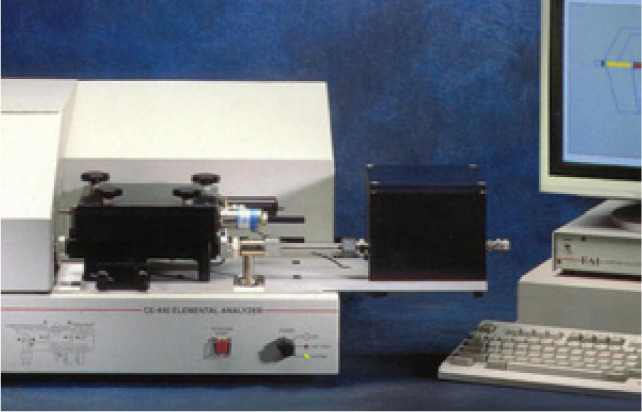
Model 440 Elemental Analyzer
According to Exeter Analytical, the Model 440 is an entry-level manual version of its high-performance Model 440 Elemental Analyzer for determining percentage levels of carbon, hydrogen, and nitrogen across a range of sample types. The manual Model 440 is based on Exeter Analytical’s static combustion elemental analyzer, which incorporates a horizontal furnace design for the easy removal of sample residue (metals, inorganics) between each material analysis to eliminate possibilities for contamination. The gas flow characteristics of the Model 440 analyzer are considered by Exeter to be superior to other elemental analyzers because of the elimination of residue buildup over time. Consequently, the Model 440 provides longer-term calibration stability and enhanced accuracy and precision for measured sample data. The manual Model 440 can be upgraded at any point into a fully automated system.
More: www.eai1.com
Hamilton Robotics
Disposable Tip Hand Probe for the Microlab 600
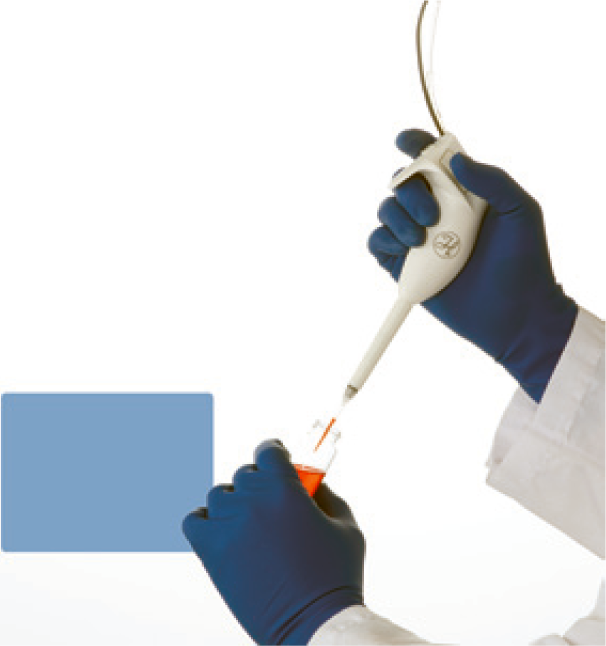
Common tasks in the laboratory often involve dilutions of one type or another, mixing one or more samples and reagents and then bringing the solution up to a final volume with a diluent-like water or buffer. Using the Microlab 600 Diluter for these tasks can reduce user-to-user variation, improve consistency, minimize wasted buffer, and save on labor costs.
The current Concorde CT Hand Probe is designed for most analytical applications; however, some applications require a higher level of assurance for which the new Disposable Tip Hand Probe (DTHP) was developed. For these sensitive applications, the sample is aspirated into a disposable plastic tip and thrown away between each sample, eliminating any chance for carryover. Applications that benefit from the DTHP include forensics, sterile samples, and DNA amplification.
More: www.hamiltoncompany.com
EasyFerm Bio pH Sensors

This sensor line is designed specifically for use with sensitive cell cultures and incorporates a newly formulated glass, which increases response times and reduces drift after sensor sterilization. The pH electrodes are also considered ideal for biotech applications, such as fermentations, where autoclavation, steam sterilizations, and clean-in-place procedures occur frequently. In addition, the EasyFerm Bio sensors have certified biocompatibility for the reference electrolyte as well as EHEDG-certified cleanability. In combination with the Hamilton Hygienic Socket or FlexiFit, the EasyFerm Bio sensors fit perfectly in many kinds of fermenters and vessels.
As an option, EasyFerm Bio sensors also integrate the Arc transmitter, which enables direct communication to the process control system via a 4-20 mA standard signal or digital modbus. All relevant sensor data, including calibration and diagnostic information, are stored in the sensor head, simplifying calibration and maintenance. Additional wireless communication directly from the sensor to a computer or a handheld device simplifies laboratory calibration, configuration, and maintenance.
Microlab Immunostain NIMBUS Workstation
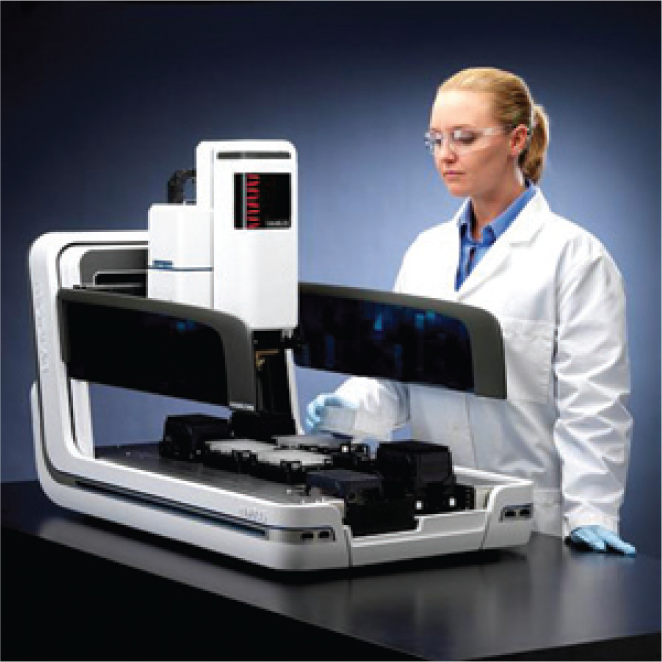
For automated immune-histochemistry (IHC) and in situ hybridization (ISH) applications, this compact, automated, and cost-effective workstation accepts multiple slide configurations and staining kit brands for simple and error-free operations. The Immunostain NIMBUS Workstation reduces reagent use and removes operator-to-operator variability. It can process up to 24 slides at once and fully supports single-color and multicolor IHC and ISH kits. The NIMBUS workstation can also process slides for conventional light microscopy and comes with two washing options: automated pipetting or a tilt module.
The demo method included with the Immunostain NIMBUS Workstation offers an easy-to-use software wizard that provides systematic instructions for slide set up and reagent processing, which can easily be adapted to any requirements and makes it simple to transition to an automated system.
More: www.hamiltonrobotics.com
Porvair Sciences
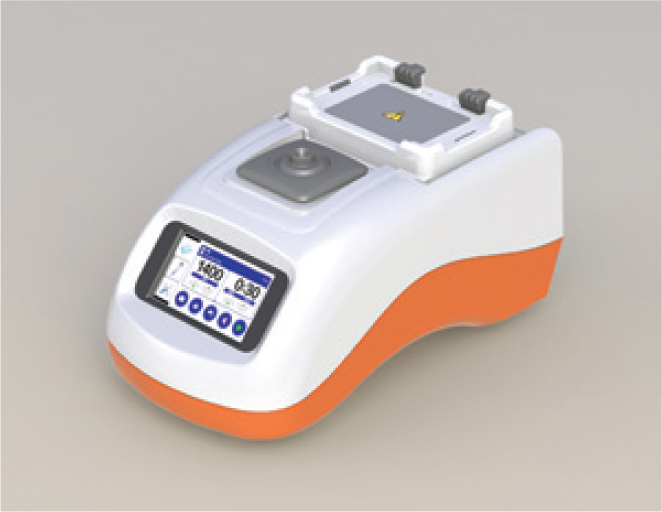
Co-Mix Multi-Format Mixer
Operated via an intuitive touchscreen, the Co-Mix offers effortless changing between mixing of 96- and 384-well microplates in skirted, semi-skirted, and unskirted variants plus deep-well plates and PCR tubes/strips. A plate-holding mechanism ensures smooth manipulation of microplates, eliminating sample spillage and cross-contamination problems. A vortex module enables mixing of numerous tube formats including micro test tubes. Designed to improve laboratory mixing productivity, the Co-Mix comes preprogrammed with commonly used mixing profiles. Protocols for new applications can be added and saved quickly and simply.
RheoSense
m-VROC Viscometer
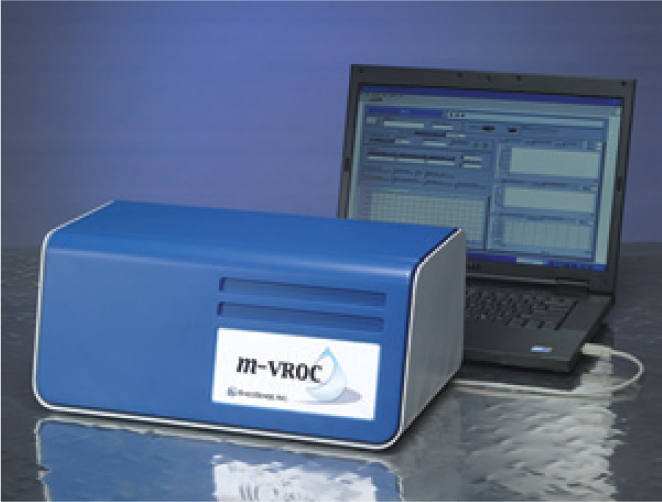
According to RheoSense, the m-VROC is now equipped with the highest resolution to detect and measure intrinsic viscosity, a parameter used to determine the molecular size, weight, structure, and interactions among proteins, polymers, or macromolecules for applications related to polymerization, degradation, interaction, and the stability of molecules. With RheoSense m-VROC, intrinsic viscosity measurement requires just 20 mL and takes only a few minutes.
More: www.rheosense.com
About the JBS Product Focus Column
E-mail news releases for consideration to