




Abstract

AMSBIO
384-Well Alvetex Scaffold 3D Cell Culture Plates
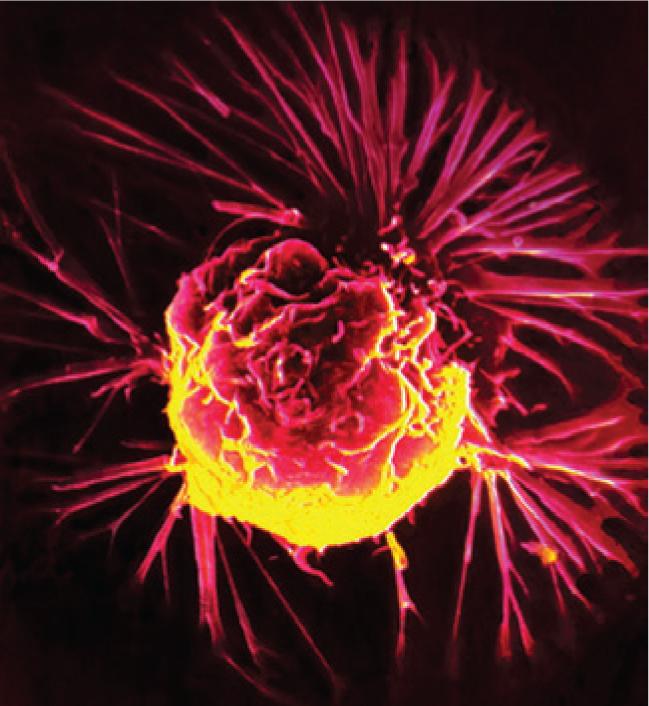
These new 384-well plates are designed to extend the application of 3D cell culture for high-throughput laboratories that need to test larger numbers of parameters with cells in a 3D environment. According to AMSBIO, a typical application for this new product is cancer cell cytotoxicity testing. The Alvetex Scaffold 384-well plates allow scientists to grow tumor cells in a way that better mimics the way these cells grow in vivo. It then simplifies testing the cytotoxic effect of novel or existing anticancer compounds using standard cell health assays such as MTT, XTT, extracellular oxygen consumption, and many others. Researchers can then easily retrieve RNA and protein from the drug-treated cells to study mechanism of action and look for biomarkers. Alvetex Scaffold plates work seamlessly with liquid-handling robotic systems and are available in other formats, including a 12-well culture plate, 24-well culture plate, 96-well plate, and 6-well and 12-well inserts.
More: www.amsbio.com
Animal-Free and Endotoxin-Free Stem Cell Factors
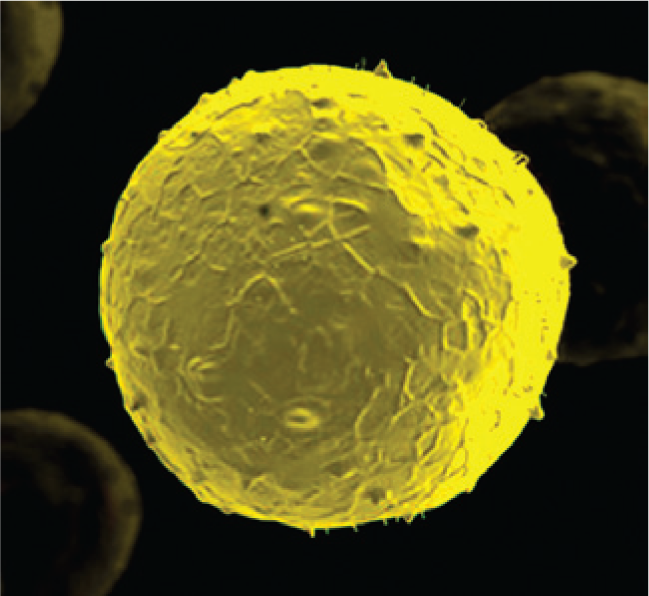
A new range of animal-free and endotoxin-free growth factors and cytokines, tailored to stem cell research, has been launched by AMSBIO to address what it considers to be a growing body of evidence suggesting accepted levels of endotoxin contamination may significantly compromise stem cell maintenance and differentiation. These new recombinant growth factors and cytokines are produced in a plant-based expression system that uses barley seed to eliminate the risks and limitations associated with traditional expression systems.
More: www.amsbio.com/animal-endotoxin-free-recombinants.aspx
Greiner Bio-One
96-Well Microplates with 3D Epoxy Surface for Covalent Binding of Biomolecules
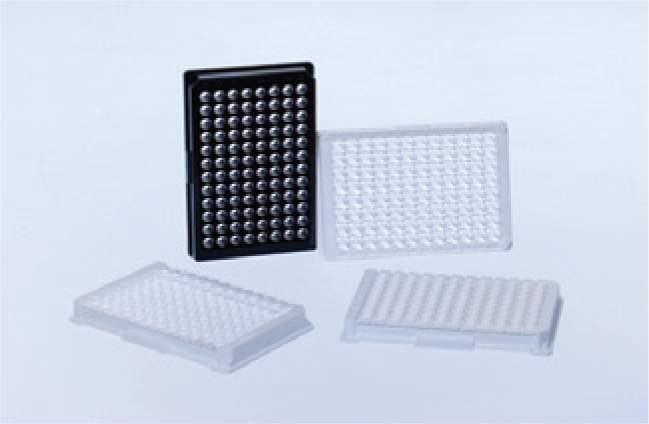
According to Greiner Bio-One, these new microplates are used mainly if adsorptive binding of peptides or oligonucleotides, for example, to high/medium binding surfaces is ineffective or the binding strength is not sufficient. Areas of application include detection methods such as enzyme-linked immunosorbent assay (ELISA), ELI-Spot, protein and peptide arrays, and DNA binding. A 3D functional matrix allows the development of covalent binding of nucleophiles to the plate surface without complex coupling chemistry. The structure of the matrix, which has a thickness of up to 50 nm, also reduces unspecific binding to a minimum.
The 3D epoxy surface is chemically and mechanically highly robust and features particularly homogeneous surface functionalization. The microplates are free of detectable DNases and RNases. The shelf life at room temperature is 2 years.
More: www.greinerbioone.com
Artificial Skin: ThinCert Cell Culture Inserts

According to Greiner Bio-One, ThinCert Cell Culture Inserts offer an artificial environment for in vitro reconstruction of skin cells that can be cultivated. Replicated skin models consisting of human skin cells—from surgical waste, for example—feature the same properties and functions as normal human skin, which enables the models to react more authentically than animal skin.
The base of the cell culture inserts features a capillary pore membrane that consists of USP Class VI certified PET. The membrane enables oxygen to reach the cells from above while they are simultaneously supplied with nutrients from the multiwell plate below. This is important because skin cells need specific nutrients and contact with oxygen to develop the stratum corneum. The membrane surface is treated in a way that ensures optimum adhesion and growth for the cultivated cells. Using a scalpel, the PET membrane can be easily removed from the housing, thus also enabling light or electron microscopic tests. The hanging geometry of the ThinCert cell culture inserts ensures the distance to the well base and the side walls. This prevents capillary suction between the internal and external well walls.
The cell culture inserts are available for 6-, 12-, and 24-well multiwell plates with pore diameters of 0.4, 1, 3, and 8 µm. ThinCert inserts are considered ideal not only for primary cell cultures but also for transport, secretion and diffusion studies, migration experiments, cytotoxicity tests, co-cultures, and transepithelial electrical resistance (TEER) measurements.
More: www.greinerbioone.com
DMSO-Resistant 1536-Well Storage Plate
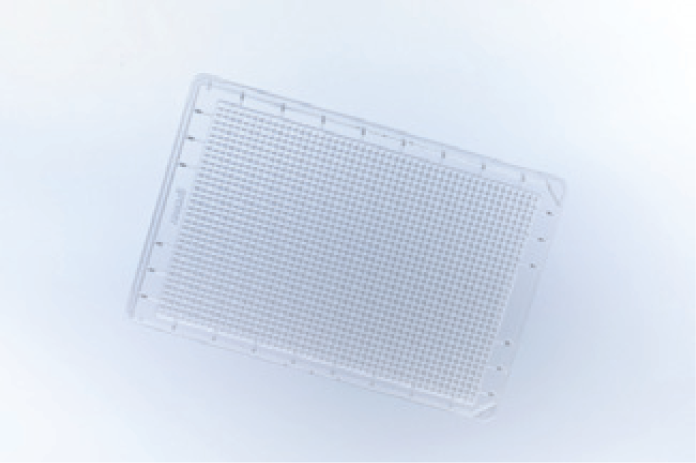
These new solid-base transparent 1536-well compound storage plates are the latest addition to Greiner Bio-One’s portfolio of high-format microplates. Made of transparent cycloolefin, the optical, chemical, and physical properties of cycloolefin microplates make them popular for automated research. According to Greiner Bio-One, they are considered particularly suitable for storing active ingredients and ideal for storing samples with low water vapor permeability and resistance to polar solvents such as DMSO. Glass-like optical properties and a high level of transparency also enable use of the microplates for biochemical testing. The footprint conforms to ANSI standards, and the microplate top is absent of alphanumerical coding to render a smooth surface for heat sealing and automated sealing techniques that use metal cover plates. Unlike conventional 1536-well microplates made of polystyrene, these new microplate feature a more conical well-top with a deeper volume, permitting even the smallest residues of sample material to be transferred.
More: www.greinerbioone.com
Porvair Sciences
Chromatrap 96 HT Microplate
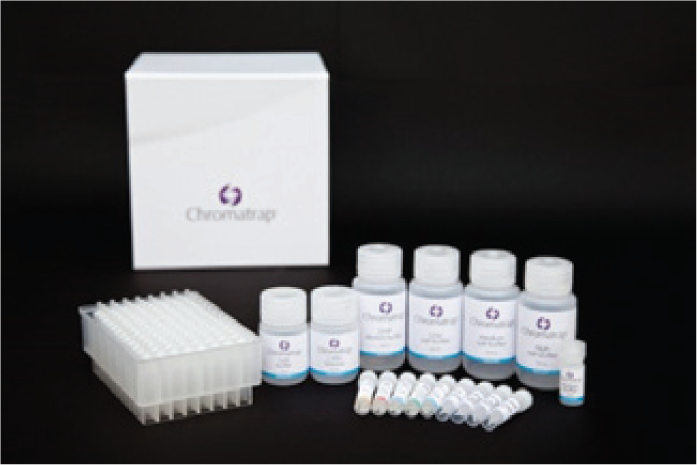
The Chromatrap 96 HT is a new high-throughput chromatin immunoprecipitation (ChIP) microplate based on spin column ChIP technology. It is essentially 96 separate Chromatrap spin columns in one device designed to enable up to 96 ChIP experiments in parallel. Assays can be performed by using a handheld multichannel pipette or automated liquid-handling robots.
The volume and dimensions of the wells in the microplate are similar to those of established Chromatrap spin columns, so the optimized spin column protocol forms the basis of the approach to performing high-throughput ChIP analysis in microplates. Each well has its own porous disk at the bottom in which protein A or protein G has been covalently attached. The functionalized disks have the same chemistry and stoichiometry as the spin columns, so all reagent volumes and timings can be directly inferred from the spin tube protocol. The microplate is supplied with a close-fitting collection plate to recover the retained chromatins at the elution step.
More: www.porvair-sciences.com
Microlute SPE Sample Preparation Starter Kit
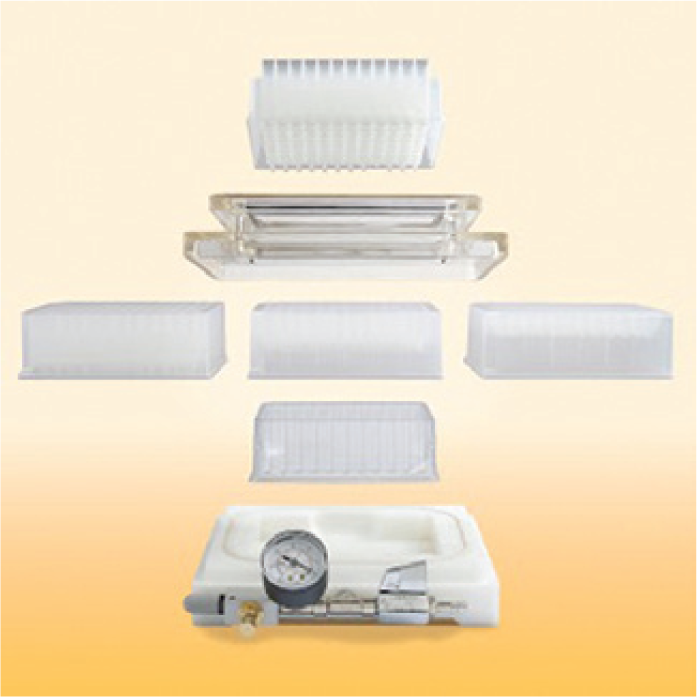
This kit contains everything needed to begin productive SPE sample preparation in a 96-well plate format, including two development filter plates and a C18 sorbent filter plate, 2-mL collection plates, disposable waste trays, and the Microlute Acrylic Vacuum Manifold. According to Porvair, the new starter kit offers all the advantages of SPE sample preparation in a microplate format capable of rapidly processing 96 samples in one run, repeatedly and precisely. All that is required for full operation is a suitable laboratory vacuum connection or pump.
Handling samples as small as 150 µL, the Microlute SPE starter kit helps to increase analytical sensitivity by providing preinjection cleanup and concentration. Two Development Microlute plates in the kit are preloaded with eight different sorbents to aid method development. Once the most suitable sorbent has been identified, whole plates containing the chosen material can be ordered for use with the Microlute system. Standard 2-mL sample collection plates are supplied, but dedicated plates with well volumes of 350 µL and 1 mL may also be used to optimally match sample preparation requirements. The supplied disposable polycarbonate waste trays simplify waste solvent handling during sample cleanup.
More: www.porvair-sciences.com
Spring Bioscience
Anti-PTEN (SP218) Rabbit Monoclonal IHC Antibody
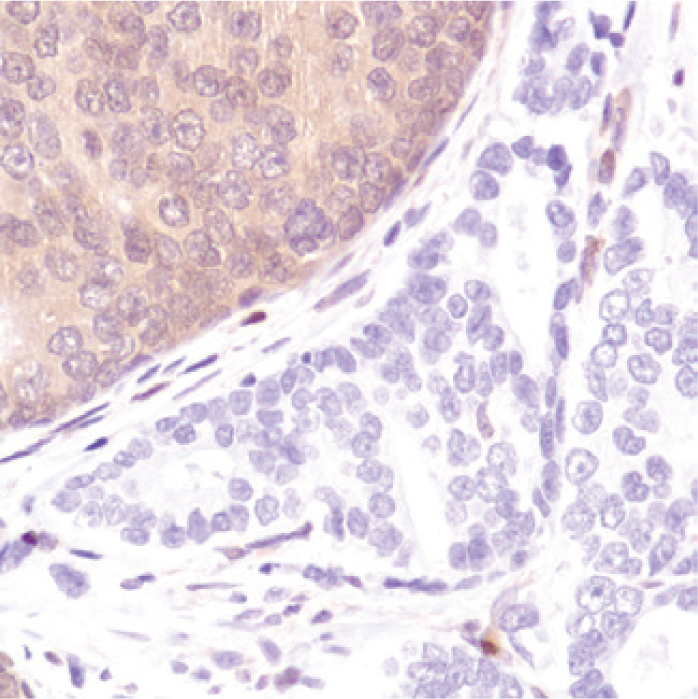
The Spring Bioscience portfolio of antibodies for cancer research now includes the Anti-PTEN (SP218) Rabbit Monoclonal Immunohistochemistry (IHC) Antibody. SP218 can provide accurate, sensitive, and specific detection of PTEN, a common protein found in most tissues that acts as part of a critical cell signaling pathway that tells cells to stop dividing. The Anti-PTEN (SP218) Rabbit Monoclonal Antibody for IHC on formalin-fixed, paraffin-embedded tissue is available in 0.1-, 0.5-, and 1.0-mL concentrate configurations, as well as 7.0 mL ready-to-use. Recommended staining protocols are available for manual, semiautomated, and VENTANA Discovery XT platforms for decreased assay development times.
More: www.springbio.com
Swissci
MRC Under Oil 96-Well Crystallization Plate
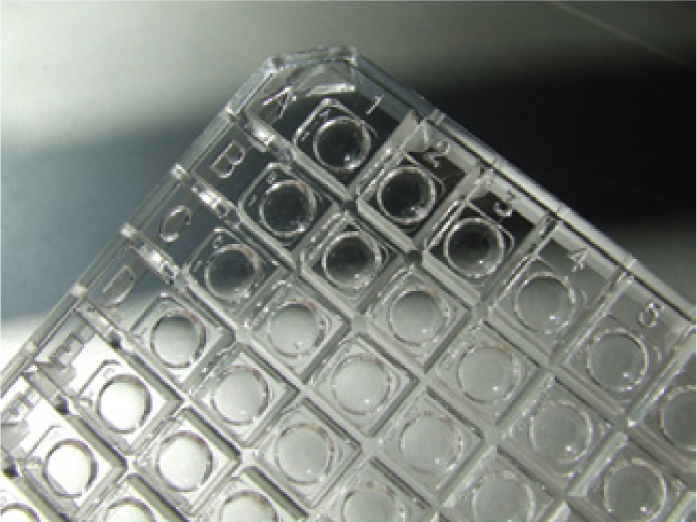
The Swissci MRC Under Oil Crystallization plate uses proprietary oil specially selected for the purpose of running macromolecular crystallization. The plate conforms to ANSI/SLAS standards and is made from an optically superior polymer that is UV transmissible, enabling the differentiation between salt and crystal. They are considered ideal for nanoliter crystallization screening and microliter optimization alike. Fine tuning of crystallization conditions can be achieved and a new design of micro numbered wells allows easy crystal viewing and retrieval as well as perfect illumination. Wide partition walls allow optimal sealing, and wells are optically designed to enable observation of crystals under a microscope. The plate can be centrifuged for better results, has no static effects, and guarantees central drop location in the well.
More: www.swissci.com
About the JBS Product Focus Column
E-mail news releases for consideration to