




Abstract
AMSBIO
Aptamer Protein Precipitation Kits
The AMSBIO Aptoprecipitation (AP)/Co-aptoprecipitation (Co-AP) kits are aptamer-based protein precipitation kits designed to provide easy, quick, and consistent protein precipitation. Based on a proprietary oligonucleotide, aptamer kits will not contribute to protein/peptide background that can interfere with subsequent mass analysis. Supplied as a complete kit in which aptamer is covalently conjugated to magnetic beads, users can perform successful pull-down experiments without the traditional conjugation step. Unlike antibody-based protein precipitation methods, Aptamer is considered highly specific, recognizing just the native form of target proteins, not the denatured form. The mild elution conditions used with Aptamer kits enable isolation of intact proteins and protein complexes.
Benefiting from a long shelf life at room temperature, covalent magnetic bead immobilization, and mild elution methodology, the AMSBIO aptamer (AP) resin can be reused. The prepared aptamer-conjugated magnetic beads can be regenerated and reused several times for AP/Co-AP assays without any significant loss in binding capacity.
3D Spheroid Assays for Cancer Drug Screening
According to AMSBIO, its new range of 96-well format 3D Spheroid Cell Proliferation/Viability Assays provides a new tool to allow cell-based assays to be carried out in 3D.
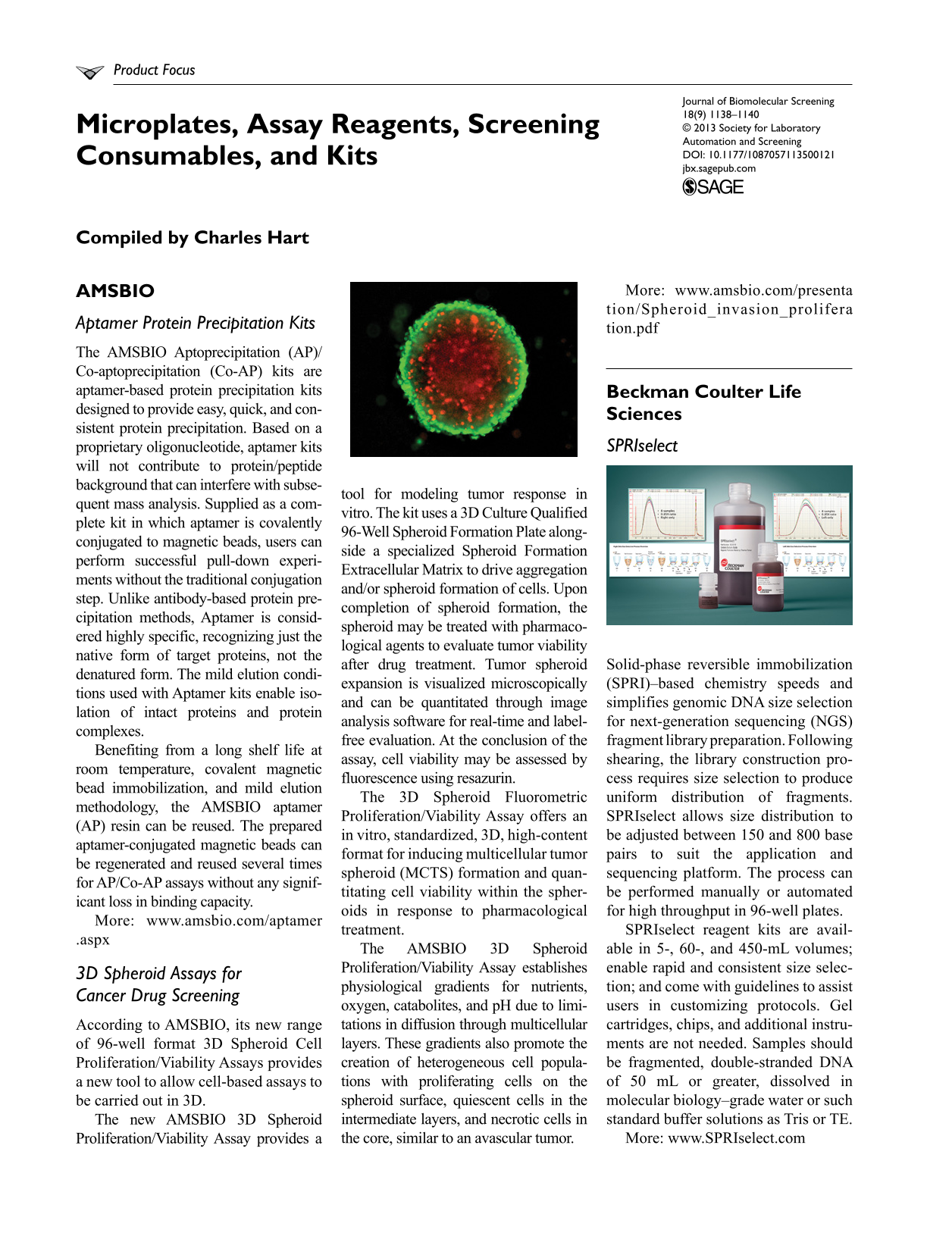
The new AMSBIO 3D Spheroid Proliferation/Viability Assay provides a tool for modeling tumor response in vitro. The kit uses a 3D Culture Qualified 96-Well Spheroid Formation Plate alongside a specialized Spheroid Formation Extracellular Matrix to drive aggregation and/or spheroid formation of cells. Upon completion of spheroid formation, the spheroid may be treated with pharmacological agents to evaluate tumor viability after drug treatment. Tumor spheroid expansion is visualized microscopically and can be quantitated through image analysis software for real-time and label-free evaluation. At the conclusion of the assay, cell viability may be assessed by fluorescence using resazurin.
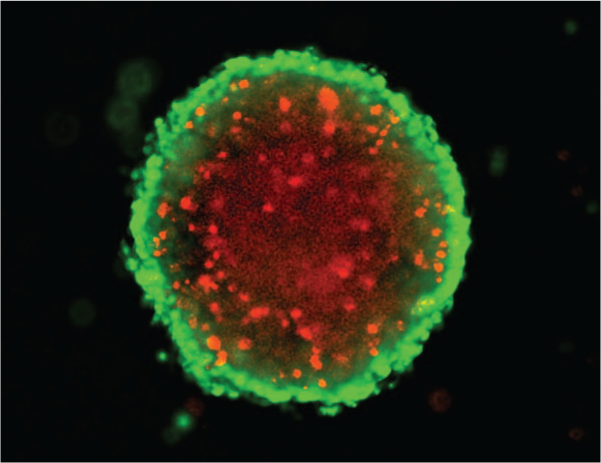
The 3D Spheroid Fluorometric Proliferation/Viability Assay offers an in vitro, standardized, 3D, high-content format for inducing multicellular tumor spheroid (MCTS) formation and quantitating cell viability within the spheroids in response to pharmacological treatment.
The AMSBIO 3D Spheroid Proliferation/Viability Assay establishes physiological gradients for nutrients, oxygen, catabolites, and pH due to limitations in diffusion through multicellular layers. These gradients also promote the creation of heterogeneous cell populations with proliferating cells on the spheroid surface, quiescent cells in the intermediate layers, and necrotic cells in the core, similar to an avascular tumor.
More: www.amsbio.com/presentation/Spheroid_invasion_proliferation.pdf
Beckman Coulter Life Sciences
SPRIselect
Solid-phase reversible immobilization (SPRI)–based chemistry speeds and simplifies genomic DNA size selection for next-generation sequencing (NGS) fragment library preparation. Following shearing, the library construction process requires size selection to produce uniform distribution of fragments. SPRIselect allows size distribution to be adjusted between 150 and 800 base pairs to suit the application and sequencing platform. The process can be performed manually or automated for high throughput in 96-well plates.
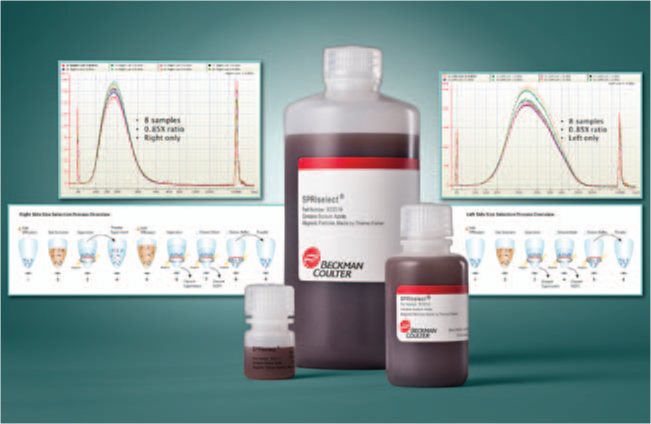
SPRIselect reagent kits are available in 5-, 60-, and 450-mL volumes; enable rapid and consistent size selection; and come with guidelines to assist users in customizing protocols. Gel cartridges, chips, and additional instruments are not needed. Samples should be fragmented, double-stranded DNA of 50 mL or greater, dissolved in molecular biology–grade water or such standard buffer solutions as Tris or TE.
More: www.SPRIselect.com
VersaComp Antibody Capture Bead Kits
These kits are designed to set compensation for multicolor flow cytometry experiments by allowing users to utilize the same reagents employed in their experiments. Two vials are provided. One contains positive beads, microspheres that capture conjugates in single-color stains; the second contains negative beads, which provide particles with a measure of autofluorescence similar to unstained cells across the different excitation/emission wavelength combinations, including those excited by violet lasers. Using positive and negative beads for each conjugate allows generation of a compensation matrix to correct for the spectral overlap of that conjugate into other channels.
All mouse and rat isotypes, most hamster isotypes, and rabbit polyclonal IgG are recognized by the positive beads. The fluorescence generated by the positive beads after capture is well separated from the fluorescence generated by the negative beads. The kits are considered flexible enough for use of test reagents, which may include tandem conjugates offered by Beckman Coulter Life Sciences or those of other manufacturers, and the kits can be used with any cytometer, including configurations with more than three lasers.
Greiner Bio-One
96-Well SCREENSTAR Microplate for High-Resolution Microscopy
According to Greiner Bio-One, the key advantage of this plate over other plates for high-resolution microscopy is the extremely short distance between the well bottom and the microplate skirt (internal well to skirt bottom = 0.7 mm; external well to skirt bottom = 0.51 mm), rendering ease of high-magnification microscopy at perimeter wells without complex microscopic adjustments. The circular wells allow microscopic work without disruptive shadow using the smallest possible meniscus lens. The perimeter ditch can be filled with water or medium to reduce edge effect due to evaporation, especially for long incubation periods.
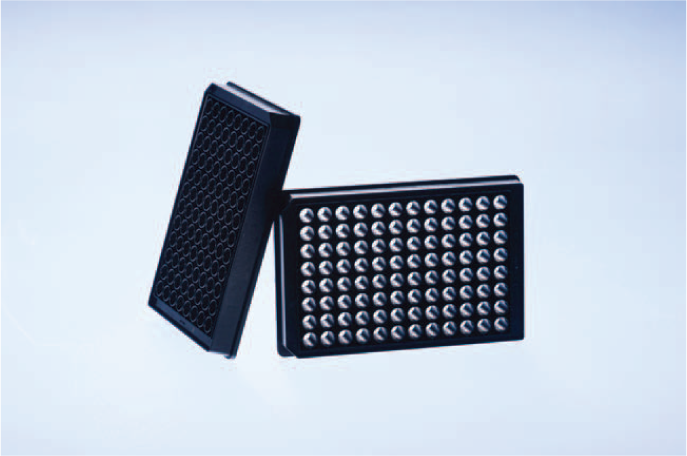
Manufactured entirely of cycloolefin, the 96-well SCREENSTAR plate, available in black with a 190-µm clear film bottom, is cell culture treated and sterile, with lid, individually packed. The microplate well bottoms are protected by a film that must be removed prior to use. The identical microscopy plate is also available with a glass bottom and will be unveiled shortly.
Integrated DNA Technologies (IDT)
PrimeTime qPCR Assay Plates
For high-throughput quantitative PCR (qPCR) analysis, primers and probes for 5′-nuclease and intercalating dye assays (e.g., SYBR) are now available in a 96-well plate format, eliminating the transfer of primers and probes from reagent stocks and streamlining the reaction setup. According to IDT, PrimeTime qPCR Assay Plates are a solution for applications that generate large quantities of data, such as validation of NGS and microarray data, as well as high-throughput gene expression screening.
Addressing the needs of each particular qPCR assay requirement, a range of primer and/or probe concentrations are available, delivered lyophilized within a 96 deep-well plate. Different dye-quencher combinations can also be ordered on the same plate, extending the range of assays that can be performed during a single run. Twenty-four assays is the minimum per-plate order, and replicate plates can be generated at a lower total cost per reaction.
Designing and ordering custom assays in this new plate format is rapid and intuitive with the online PrimeTime qPCR assay tool, which allows users to easily create a master plate via simple copy-and-paste actions from source data. Alternatively, users can select from a specialized library of predesigned human, mouse, or rat assays generated by IDT’s design engine. In addition to incorporating accurate Tm and secondary structure prediction data, this assay design engine takes into account the latest data from the NCBI RefSeq database, to avoid off-target amplification and single-nucleotide polymorphisms (SNPs).
More: www.idtdna.com
Oxford Gene Technology
CytoSure Cancer +SNP Array
This new array combines long oligo array comparative genomic hybridization (aCGH) probes with fully validated SNP content to detect copy number variations (CNVs) and loss of heterozygosity (LOH) on a single chip. Unique to the CytoSure Cancer +SNP array, any reference sample can be used for analysis without changes to the standard aCGH protocol, and thanks to novel SNP probe chemistry, no restriction digest is required. The capacity to use matched samples is considered a particular advantage for research into genetic aberrations in cancer, enabling any constitutional abnormalities to be filtered out.
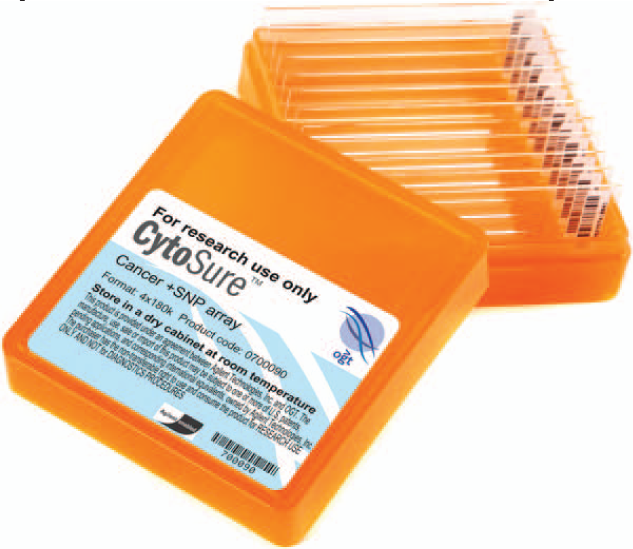
The array allows users to simultaneously screen a wide genomic background for CNVs and LOH, while enabling in-depth CNV analysis on 1500 known cancer-associated genes. This approach produces accurate and insightful data, with all aberrations clearly highlighted and filtered using OGT CytoSure Interpret Software. The 60-mer oligonucleotide probes used in the array provide a high signal-to-noise ratio and highly sensitive detection, which is considered ideal for research into complex malignant tissues. OGT’s CytoSure Interpret Software is updated to include a B-allele frequency plot, optimized for the identification of biologically relevant genomic variants in tumor samples.
More: www.ogt.com/cancer
Porvair Sciences
Untreated Microplates for Growing Cells in Suspension
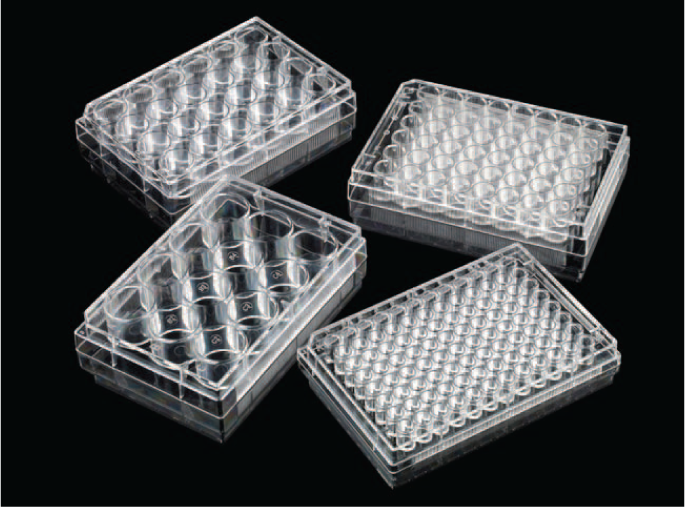
A new range of 12-, 24-, 48-, and 96-well format untreated polystyrene culture microplates for growing cells in stationary suspension or other applications where reduced cell attachment is desired are molded from ultra-pure polystyrene in a class 100,000 cleanroom production environment. These culture plates include raised well rims to reduce evaporation, a single position lid to avoid cross-contamination, and alphanumeric code marking to enable easy identification of individual wells. They are supplied with lids in individual sterile packs.
More: www.porvair-sciences.com
QIAGEN
Four NGS Preanalytical Sample Prep Kits
QIAGEN now offers four new products designed to improve critical sample preparation processes in the preanalytical phase of NGS. The kits are universal, compatible with any NGS platform on the market, and functional in a wide range of NGS applications.
According to QIAGEN, single-cell analysis in NGS needs much higher amounts of starting DNA and therefore requires an amplification step to achieve reliable results. The new REPLI-g Single Cell Kit enables sequencing from single cells and minute amounts of DNA with highly accurate whole-genome amplification (WGA).
Ribosomal RNA, which makes up approximately 90% of total RNA, uses up sequencing capacity and negatively influences analysis of RNA species of interest. The new GeneRead rRNA Depletion Kit provides effective and selective removal of ribosomal RNA through novel hybrid capture technology for RNA analysis.
Traditional NGS requires WGA with multiple runs to process an entire sample, but cancer researchers prefer to do targeted sequencing, saving time and money. The new GeneRead DNAseq Gene Panel System enables fast enrichment of target gene panels for NGS analysis, with multiple predefined and validated cancer panels, as well as custom-made gene panels supported by easy-to-use online software for sequence variant analysis.
Library quantification is a required step in every NGS protocol. The new GeneRead Library Quant Kits enable reliable and simple DNA library quantification, allowing also nonexperts to quickly process samples for NGS analysis. These kits can be paired with other QIAGEN products for sample preparation, target enrichment, newly developed libraries, and the new NGS platform.
More: www.qiagen.com/goto/NGS
VolitionRx
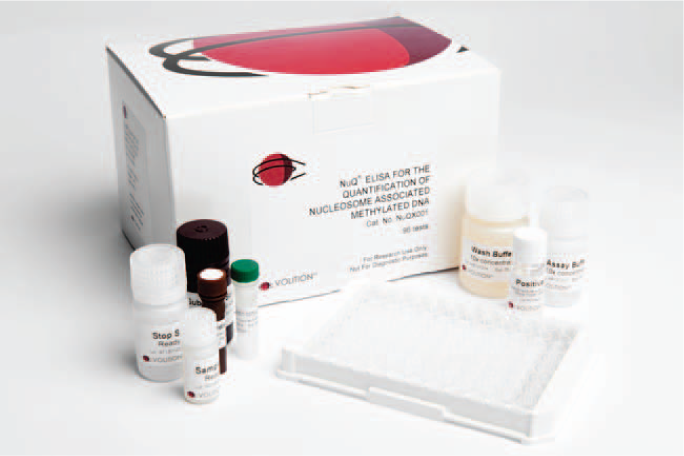
NuQ Epigenetic Immunoassays
The NuQ range of products is based on the Nucleosomics platform, which identifies and measures nucleosome structures in cell culture, serum, plasma, or other biofluids. The initial range comprises 15 immunoassays across four families, each of which captures intact nucleosomes and labels a specific feature. The NuQ-A is a family of Adduct Kits, the NuQ-M is a family of Histone Modification Kits, the NuQ-V is a family of Histone Variant Kits, and the NuQ-X is a family of DNA Methylation Kits.
More: www.nucleosomics.com
About the JBS Product Focus Column
E-mail news releases for consideration to nhallock@slas.org. MSWord documents and 300+ dpi image files are preferred. Deadlines are at least two months prior to publication. JBS editors reserve the right to select the products they deem most appropriate for the section and may revise copy as necessary. Product descriptions are based on information provided by the manufacturer. Inclusion in this section in no way implies endorsement by the Journal of Biomolecular Screening or the Society for Laboratory Automation and Screening.