Agilent Automation Solutions has released a new applications bulletin that describes an automated system for rapid characterization of pathogens, such as the influenza A (H1N1) virus. Designed and built for researchers at Los Alamos National Laboratories and UCLA, the BioCel PCR Viral Genotyping System provides automated genetic sequencing of viruses. The system can sequence 40 RNA samples across 192 genes in 11 h and a minimum of 10,000 influenza viruses per year.
The BioCel System used in this application comprises a variety of Agilent liquid handling options and third-party devices, including thermal cyclers, incubators and plate storage devices, and a dual-robot system designed to address the 2 steps of the PCR workflow. For further information, see www.agilent.com/lifesciences/automation.

The Broad Institute released the newest version of CellProfiler, an open-source software for modular, high-throughput biological image analysis. The software quantitatively measures biological phenotypes from thousands of images automatically. CellProfiler 2.0 introduces new functionality, including improved thresholding and metadata annotation, detection of new features and phenotypes, a preview mode for assay development, and user interface enhancements. For more information and downloads for Mac, Windows, and Linux, visit http://www.cellprofiler.org.
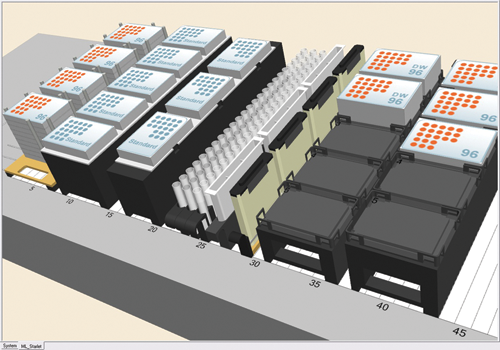
Hamilton Robotics introduces MICROLAB® VENUS two, control software for MICROLAB STAR and STARlet liquid handling workstations with a touch-screen graphical user interface. VENUS two also incorporates new multiple-language capability. A real-time 3D deck view has been added, enabling users to test a method in simulation mode before starting the actual run. Interactive functionality allows the program to seek feedback from the user, and new programming steps and parameters dynamically distribute liquid on the fly. VENUS two’s scheduler is 4 times faster than the previous version. A SuperSimpleMethods module facilitates programming of the most common lab routines such as copy plates, add buffer, or merge plates. For more information, visit www.hamiltonrobotics.com.
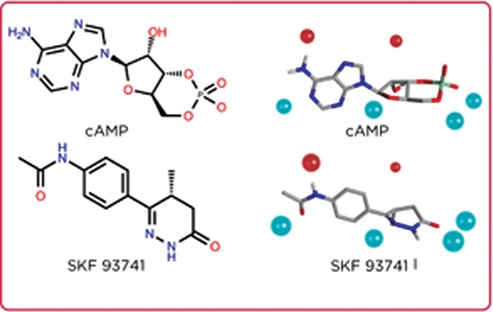
Syrris has released Medstere, bioisostere replacement software designed for medicinal chemists that suggests thousands of alternatives to a known lead. By ranking compounds from the viewpoint of proteins, it offers structurally diverse suggestions. It creates a range of potential lead molecules from initial 2D or 3D lead structures, ensures that results are synthesizable, identifies structurally diverse bioisosteres, comes with a large database of fragments, and provides real-time filtering, according to logP, TPSA, and Rule of Five. Medstere uses field point technology developed by Cresset BMD to score its results as whole molecules. For further information, see www.syrris.com.
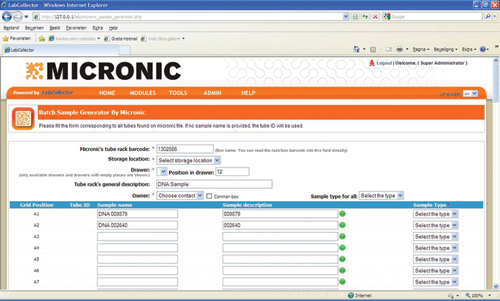
Micronic announced Track-IT™, a sample management system interfaced to a 2D code reader to organize and track individual samples, including chemical compounds, DNA, RNA, plasmids, clones, proteins, peptides, probes, antibodies, enzymes, tissues, cell lines, and so on. It is compatible with most commercial barcode readers and scanners and allows one to catalogue and organize samples. The database produced by Track-IT™ is customizable to match workflow as well as unique aspects of different sample types. Offering operation over an intranet, Track-IT™ allows data to be accessed from any connected computer in the network. Compliant with CFR 21 Part 11 protocols, Track-IT™ offers full-sample audit traceability. For further information, please e-mail sales@micronic.com.
Numerical Algorithms Group (NAG) has introduced the NAG Library for SMP and Multicore. The library contains more than 1600 routines, including over 100 new for this release. The library has been designed to make it easy to move applications that currently call serial routines into the parallel computing world so that users can benefit from parallel performance. For further information, go to www.nag.com.
Oxford Gene Technology has introduced its new CytoSure™ Interpret software, for translation of oligonucleotide-based array comparative genomic hybridization (aCGH) data into meaningful results. The software provides contextual input by integrating results with legacy data, confirmation probe information (including FISH and MLPA), and annotation tracks covering syndromes, genes, exons, CNVs, and recombination hotspots. These link to publicly available databases such as Decipher and the Database of Genomic Variants to provide greater context. For further information, please visit www.ogt.co.uk.

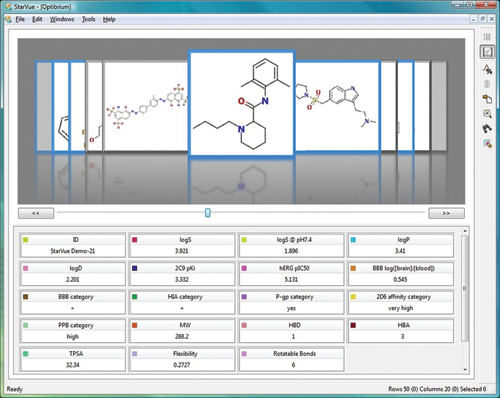
Optibrium has announced StarVue, a free desktop application that enables scientists to view compound structures and data. The StarVue application offers 2 ways to look at data—a traditional table and a “molecule view” that summarizes all of the data for a compound on a single screen. Compounds can be loaded into StarVue from SD, SMILES, MOL, or CSV files and selected from StarVue data sets and exported for more detailed investigation. For more information, go to www.optibrium.com.
Symyx Technologies, Inc. and the Royal Society of Chemistry (RSC) announced the launch of a collaborative partnership designed to enhance the usability and accessibility of public scientific databases. The first joint project links related chemical structures between 2 information sources—ChemSpider (from RSC) and DiscoveryGate (from Symyx)— enabling scientists to quickly retrieve more complete information. For more information, go to http://www.symyx.com.
Thermo Fisher Scientific, Inc. introduced version 3.0 of the Thermo Scientific SkanIt Software for the Multiskan FC microplate photometer. This version provides the user with 8 inbuilt languages and incorporates the parallel line analysis function in compliance with European Union regulatory guidelines (European Pharmacopoeia) for testing the efficacy of pharmaceutical compounds. The software has been designed with a variety of inbuilt calculations, including blank subtraction, curve fits, and basic statistics (Avg, CV%, SD). Results can also be exported to Microsoft Excel. For further information, visit www.thermoscientific.com/skanit.
Thermo Fisher Scientific, Inc. released GRAMS 9.0, a suite of spectroscopy software for visualizing, processing, reporting, and managing spectroscopy data. GRAMS 9.0 enables a visual workflow and model deployment capabilities for quantitative and qualitative analyses, automatic finding and transformation of all of the spectra on a hard drive to a standard format, and an import wizard for data from more than 180 types of IR, UV-Vis, nuclear magnetic resonance, and liquid chromatography/gas chromatography/mass spectrometry instruments. It is supported on Microsoft Vista Pro and adds compatibility with more than 30 new instrument data formats. For more information, see www.thermo.com/informatics.

Thermo Fisher Scientific, Inc. announced Momentum™ workflow software for laboratory applications. Momentum lets users define, execute, and monitor complex processes in a visual environment. Its open topology editor allows the user to specify the design, configuration, and operation of his or her individual system and to plug in different schedulers to support a range of processes and workflows. Users can also manage multiple islands of automation, treating them as part of a larger connected system. It is suitable for such applications as hit picking and inventory management, high-throughput screening/high-content screening, automated cell/tissue culture applications, and laboratory workflow management. The composite user interface is built on a .NET platform. Momentum™ is compatible with any combination of instruments and plate movers, regardless of vendor. For information, please visit www.thermo.com/momentum.





