



Abstract
This cross-cultural study investigated country and gender differences among American (U.S.A.) and Japanese students’ reading motivation. Fourth-grade students (94 from the United States and 102 from Japan) were administered a reading motivation questionnaire. Study results indicated American students had higher reading motivation than Japanese students on most dimensions, including Self-Efficacy, Challenges, Curiosity, Importance, Involvement, Recognition, Grades, Competition, and Social. We found that culture may impact students’ reading motivation and discuss how individualistic and collectivistic cultures influence students’ reading motivation. Contrasting with the existing research, this study did not show any significant gender differences in reading motivation across the two countries. The null effect of gender needs to be re-examined in future studies.
A growing body of evidence has indicated that reading motivation is one of the most imperative factors affecting individuals’ reading comprehension (Baker et al., 2000; Cantrell et al., 2018; Gambrell, 2011; Marinak & Gambrell, 2010). While reading motivation has been studied extensively over the past several decades, the roles of country and gender in reading motivation remain unclear in the existing literature. Conradi et al. (2014) reported a majority of previous studies have been conducted in North American and European countries. In contrast, studies conducted in Asia (namely in Hong Kong, Korea, Taiwan, and Lebanon) are limited (8.6%). To the best of our knowledge, there are only two cross-country comparative studies (Chile, Finland, Greece, and the United States [Orellana et al., 2019] and Taiwan and the United States [Wang & Guthrie, 2004]) examining students’ reading motivation. Different countries hold unique cultures. Regardless, neither study explicitly indicated nor examined cultural influences on reading motivation across countries.
Although researchers have acknowledged cultural factors affecting reading motivation within a specific country in the existing literature (Huang, 2013; Kambara, 2020; Kambara et al., 2021; Lau, 2004), very few studies looked at how different cultures influence reading motivation across countries. Huang (2013) examined Taiwanese middle school students’ reading motivation, while Lau (2004) explored factor structures in Chinese middle school students’ reading motivation. Kambara (2020) investigated Japanese fourth-grade students’ reading motivation, and Kambara et al. (2021) explored the factor structure of Japanese college students’ reading motivation. These studies were all conducted in Asian countries, which are considered as collectivist cultures (Markus & Kitayama, 1991). Yet, none of the studies specifically discussed how individualistic and collectivist cultures influenced students’ reading motivation through cross-country comparisons.
In addition, the role of gender in reading motivation has predominantly been investigated in the United States and United Kingdom (see Eccles et al., 1993; Marinak & Gambrell, 2010; McGeown, 2015; McGeown et al., 2012; Wigfield et al., 1997; Wigfield & Guthrie, 1997). A majority of studies found that girls have higher reading motivation than boys. However, no studies investigated whether gender affected reading motivation across different racial and ethnic groups. Therefore, this gap in the literature raises a question of the role of gender in reading motivation across different racial groups, such as Asian populations.
Individualism Versus Collectivism: Cultural Differences Between Western Countries and East Asian Countries
Culture can be defined through different approaches. From a cultural–historical approach, culture can be defined as people’s involvement in common practices in particular cultural communities (Gutiérrez & Rogoff, 2003) and can be viewed as practices and activities in daily life (Razfar & Gutiérrez, 2013). However, from a cross-cultural psychology approach, Triandis (1972) defined culture as “shared attitudes, beliefs, categorizations, expectations, norms, self-definitions, values, and other such elements of subjective culture found among individuals whose interactions were facilitated by shared language, historical period, and geographic region” (p. 3). Cross-cultural psychology researchers (Markus & Kitayama, 1991; Triandis, 1993) consider that there are different cultural characteristics across countries, such as the United States and Japan. The United States has a highly individualistic culture (Markus & Kitayama, 1991; Triandis, 1993). Highly individualistic culture is influenced by Greek philosophy, which believes individuals can be viewed as separate from others and unique (Nisbett, 2003). Individualism focuses on independence and personal goals (Hamamura, 2012). Individualistic cultures emphasize self, which is distinguished from other people and groups. Also, one’s identity is constructed individually and is viewed as having unique characteristics (Guzley et al., 2009). Individualism especially values an individual’s personal goals, needs, and rights over those of others. Therefore, individuals are typically motivated by their own goals rather than the goals of others (Hamamura, 2012). Individualism emphasizes achievement through self-direction. In addition, people in individualistic cultures tend to have high self-efficacy (Kitayama et al., 2004). Although U.S. society (henceforth “American” for simplicity) is typically considered as individualist, some studies (e.g., Forrest-Bank et al., 2015; Umaña-Taylor & Updegraff, 2007; Wong et al., 2003) have indicated that several race-related factors, such as racial and ethnic microaggressions (e.g., implicit racial discrimination) and identity (e.g., self-concept that belongs to a social group), are associated with self-efficacy. For example, Forrest-Bank and colleagues (2015) reported that racial and ethnic microaggression was negatively associated with self-efficacy. Moreover, ethnic identity is possibly related to self-efficacy. Within individualistic cultures, racial and ethnic identities, particularly those that result in microaggressions, can moderate one’s self-efficacy.
In contrast to the United States, Japanese culture upholds collectivism, which is closely related to Confucianism (Winfield et al., 2000). Both Confucianism and collectivism value harmony in groups and social norms (Winfield et al., 2000). In such cultures, the self is described in the context of being a part of in-group membership, and there is an emphasis on interdependence and connectedness with others (Guzley et al., 2009; Hamamura, 2012). Individuals are mainly motivated by the goals of the collective over their own goals (Hamamura, 2012). Goals are generally group-oriented; therefore, success is seen as the result of group effort, and failure is viewed as a lack of effort (Tiessen, 1997). Specifically, compliance is deemed as proper and expected in Japanese culture (Kishimoto & Maehara, 2015). Compliance is related to Confucianism, which emphasizes that individuals should obey their own roles as expected from others in a strict hierarchical society (Winfield et al., 2000). People in collectivist cultures perceive self-promotion and self-enhancement negatively (Yoshida et al., 1982). Although different types of cultures have unique tendencies to impact individuals, each person can own multiple views and identities of self (e.g., individualism and collectivism) even though they belong to a specific social and cultural group (Mao et al., 2004). While several researchers (e.g., Henry & Cliffordson, 2013; Markus & Kitayama, 1991; Serafini, 2020; Tanaka, 2020; Yashima et al., 2017) argued that individualistic and collectivistic cultures affect general motivation and language motivation, it still remains unclear whether they influence reading motivation in the existing literature.
Constructs of Reading Motivation
Reading motivation consists of several multifaceted constructs. Wigfield and Guthrie (1997) developed the Motivation for Reading Questionnaire (MRQ), which was originally based on Wigfield and Guthrie’s (1995) research. Wigfield and Guthrie (1997) identified 11 dimensions of reading motivation: Self-Efficacy, Challenge, Work Avoidance, Curiosity, Involvement, Recognition, Grades, Competition, Social, Compliance, and Importance. In addition, Baker and Wigfield (1999) suggested that these 11 dimensions can be grouped into three categories: competence and self-efficacy beliefs, intrinsic and extrinsic goals for reading, and social purposes of reading.
Categories related to competency and self-efficacy beliefs include Self-efficacy, Challenge, and Work Avoidance (Wigfield & Guthrie, 1997). Self-efficacy refers to one’s beliefs of one’s own competence to attain certain goals (Bandura, 1997). Challenge indicates willingness to pursue difficult material (Wigfield & Guthrie, 1997). Work avoidance indicates the individual’s ambition to evade interfacing with reading materials (Baker & Wigfield, 1999).
Goals for reading involve two different motivational orientations: intrinsic motivation and extrinsic motivation. Intrinsic motivation indicates a willingness to read for personal curiosity and interests (Schaffer et al., 2013). Wigfield and Guthrie (1997) identified three dimensions of intrinsic reading motivation: Curiosity, Involvement, and Importance. Curiosity indicates a propensity to learn more about the topics within an individual’s interests (Schaffer et al., 2013). Importance refers to the benefits that an individual considers toward a certain task (Wigfield & Guthrie, 1997). Importance was derived from subjective task values (Eccles & Wigfield, 1985). Involvement refers to pleasure with engagement in literacy activities (Schaffer et al., 2013).
In contrast, extrinsic reading motivation is encompassed by engagement in reading activities to gain specific external consequences, such as rewards and social demands (Wang & Guthrie, 2004). Dimensions in extrinsic reading motivation include Recognition, Grades, and Competition (Wigfield & Guthrie, 1997). Recognition refers to the wish to obtain acknowledgment for success in reading by others, while Grades indicate the desire to be positively assessed by others (Wigfield & Guthrie, 1997). Competition refers to the ambition to demonstrate superiority over others’ performance in reading (Baker & Wigfield, 1999).
The category related to social purposes of reading contains Social and Compliance constructs (Wigfield & Guthrie, 1997). The dimensions present motivation related to social contexts and contain social reasons for reading and compliance. Social reasons for reading indicate the reasons behind reading motivation that are related to family and friends (Wigfield & Guthrie, 1997). Compliance refers to reading to meet expectations from others (Baker & Wigfield, 1999).
Cross-Cultural Studies of Reading Motivation
Only Orellana et al. (2019) and Wang and Guthrie (2004) conducted comparative studies that examined students’ reading motivation across different countries. Orellana et al. (2019) examined the reading motivation of students from kindergarten to second grade in Chile, Finland, Greece, and the United States. Their results showed similar reading motivation patterns across the four countries, and students’ reading motivation scores increased at the end of the school year across the four countries.
Wang and Guthrie (2004) examined the influence of intrinsic and extrinsic motivation, the amount of reading, and past reading achievement on text comprehension among American and Taiwanese students. The results in this study revealed that intrinsic motivation and text comprehension were positively correlated, while extrinsic motivation and text comprehension were negatively correlated in both groups. There were no discrepancies of either intrinsic or extrinsic reading motivation and other variables between American and Taiwanese students. The two studies by Orellana et al. (2019) and Wang and Guthrie (2004) reported similar patterns of reading motivation across student groups from different countries. Neither study reported on cultural influences on reading motivation.
Reading Motivation in East Asian Contexts
A limited number of studies (Huang, 2013; Kambara, 2020; Lau, 2004) have explored reading motivation and its influential factors in East Asian contexts. Lau (2004) investigated Chinese students’ reading motivation and revealed that high-achieving students had higher self-efficacy, intrinsic motivation, extrinsic motivation, and social motivation than poor academic achievers. In addition, this study found a positive relation between intrinsic reading motivation and students’ strategy use, reading comprehension, and academic achievement. These results from Lau (2004) were consistent with findings from western reading motivation studies. However, this study found relatively low self-efficacy scores, even in high achievers. Lau explained that Chinese students’ low self-efficacy scores related to Chinese culture valuing humbleness and modesty. In addition, Huang (2013) investigated reading motivation in Taiwanese seventh-grade students and identified that personal interests, choices, values, and goals were powerful influential factors in Taiwanese middle school students’ intrinsic motivation to read. Consistent with the results of the study by Lau (2004), the study by Huang (2013) also found low scores on self-efficacy, indicating that Taiwanese students, even high achievers, did not report themselves as competent readers.
Recently, Kambara (2020) examined Japanese fourth-grade students’ reading motivation using a mixed-method explanatory sequential design. The quantitative results revealed Japanese students had low self-efficacy, minimal sense of competition, and little need for recognition. In addition, Japanese students had high compliance and low social reasons for reading. Kambara (2020) explained how low self-efficacy, competition, and recognition, as well as a high sense of compliance, reflected the social norms of Japanese culture. In addition, the qualitative results revealed that grades and a strong emphasis on testing significantly impacted Japanese students’ motivation to read. Furthermore, Japanese parents and teachers mainly encouraged students to read for improving grades. Both quantitative and qualitative results reflected the unique cultural aspects of Japan. In particular, Japanese students’ low self-efficacy was also consistent with other studies on Asian students, such as Taiwanese (Huang, 2013) and Chinese students (Lau, 2004). All three studies showed strong cultural influences on students’ reading motivation in East Asia countries.
Gender Differences in Reading Motivation
Previously, researchers (Eccles et al., 1993; Marinak & Gambrell, 2010; McGeown, 2015; McGeown et al., 2012; Wigfield et al., 1997; Wigfield & Guthrie, 1997) have investigated gender differences in reading motivation in the United States and United Kingdom. However, there is limited research investigating the role of gender in East Asian students’ reading motivation. There are no studies on Japanese students’ reading motivation in the literature. The majority of current research has reported that girls start school with more positive attitudes toward reading than boys, disregarding age and socioeconomic status (Barnett & Irwin, 1994). In addition, results from previous studies showed that girls tend to value reading and hold higher competence beliefs than boys (Eccles et al., 1993; Parker & Edward, 1986; Wallbrown et al., 1981; Wigfield et al., 1997). For example, Marinak and Gambrell (2010) reported that third-grade boys were found to be less motivated and to place less value on reading than girls, although boys and girls showed equal self-confidence about their reading ability. In addition, Wigfield and Guthrie (1997) reported gender differences where girls had higher scores on three dimensions (self-efficacy, importance, and social reasons for reading) of reading motivation than boys. Unlike most studies, Baker and Scher (2002) found no gender differences in American first graders’ reading motivation.
Two studies were conducted in the United Kingdom and showed some gender differences in reading motivation. McGeown (2015) found sex differences in children’s intrinsic reading motivation and choices. Female traits were found to be associated with reading motivation and engagement. By contrast, McGeown et al. (2012) investigated sex differences in children’s reading skill and motivation. While no sex differences were found in reading skill or extrinsic reading motivation, girls had higher intrinsic reading motivation than boys.
Most studies examining gender differences in reading motivation shared results favoring girls, but there were some studies indicating no gender differences. These mixed results around gender effect on reading motivation could be attributed to different factors. According to Logan and Johnson (2010), gender differences in reading could be possibly explained by multifaceted dimensions, including differences in behavioral and motivational factors, brain activation, cognitive abilities, and learning styles. In addition, Meece et al. (2006) suggested that social class, individual ability, race/ethnicity, and classroom context could moderate gender effect. Therefore, more future research needs to explore the role of gender in reading motivation with different racial and ethnic groups (Petscher, 2010).
The Current Study
Previous studies have been carried out over the years without considering cultural impacts on reading motivation across different racial and ethnic groups and international contexts. In addition, the role of gender in reading motivation across racial groups remains unclear. Therefore, this study seeks to bridge the gaps in the literature by comparing country and gender differences in the reading motivation of fourth-grade students. Exploring country and gender differences in both the United States and Japan can sharpen our understanding about how cultures and gender may impact students’ reading motivation. This study sought to answer three research questions. First, we address the question of whether there are significant gender and country differences among different dimensions in three categories (competence and self-efficacy, goals for reading, and social reasons for reading) in reading motivation. If this is the case, which dimensions in each category demonstrate these differences? Second, we explore the relation between country and each reading motivation dimension (Self-Efficacy, Challenges, Work Avoidance, Curiosity, Importance, Involvement, Recognition, Grades, Competition, Social, and Compliance). Third, we investigate the relation between gender and each reading motivation dimension (Self-Efficacy, Challenges, Work Avoidance, Curiosity, Importance, Involvement, Recognition, Grades, Competition, Social, and Compliance).
Method
In this study, we employed a split-plot factorial design (Kirk, 2013) with two between-groups variables (country, gender) and one repeated-measure factor from each reading motivation category (e.g., competence and efficacy, goals for reading, and social reasons for reading) to address the first research question. To address the second and third questions, we used the point-bi-serial corrections to examine the relations among country, gender, and reading motivation.
Participants
As shown in Table 1, the participants consisted of 94 American and 102 Japanese fourth-grade students. A superintendent in the United States and a professor in Japan helped the researchers select participants from similar backgrounds, including socioeconomic background, to form homogeneous groups across the two countries. The American students included 41 white boys and 53 white girls (M = 9.7 years) from two elementary schools in the southern-central region of the United States. In this study, researchers did not purposely exclude nonwhite participants, but all participants were white children whose racial backgrounds were confirmed by school principals and teachers. The selected elementary schools in the United States were in middle-class homogeneous communities. The first school had 829 students from pre-K to fifth grade. The school contained 664 white, 16 Native American, 37 Asian, 17 African American, and 50 Hispanic students, as well as 45 students of two or more races. According to the State Department of Education A–F scoring system, this school received an A, with a score of 92, for the 2014–2015 school year. This school had 115 fourth-grade students, and 57 students voluntarily participated in this study. Another school had 736 students from pre-K to fifth grade. The school included 698 white, 12 Native American, five Asian, three African American, and 12 Hispanic students, as well as five students of two or more races. According to the State Department of Education A–F scoring system, this school received an A, with a score of 93, for the 2014–2015 school year. This school had 102 fourth-grade students, and 37 students participated in the study.
Participant Characteristics.
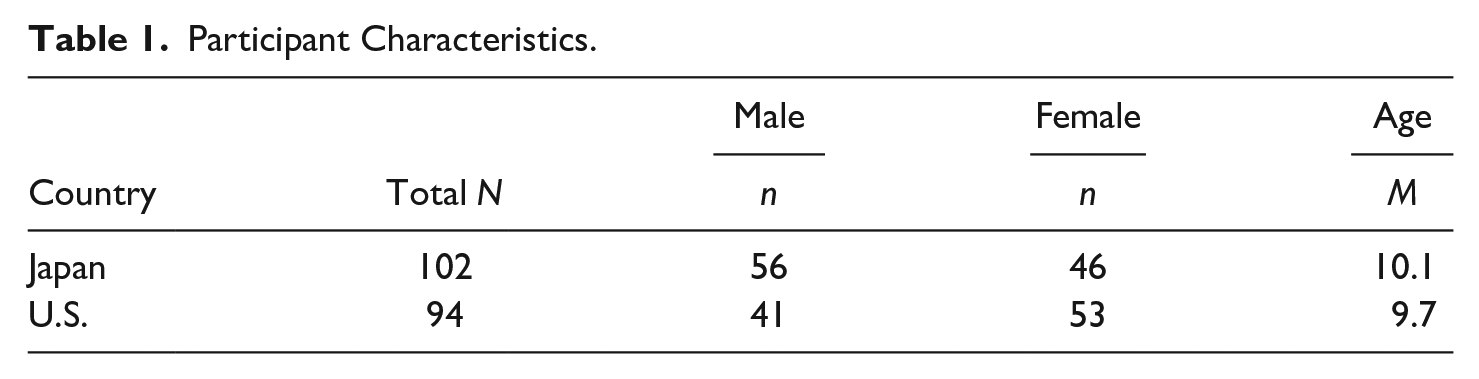
The students in Japan, 56 boys and 46 girls (M = 10.1 years), participated from two elementary schools located in the central-northern region of Japan in middle-class homogeneous communities. The first school had a total of 507 students from first to sixth grade, with 74 fourth-grade students. The second school had a total of 403 students, with 49 fourth-grade students. According to the educational data provided by school principals in both schools, the schools were considered A-level with students from middle-class families. All students in the two schools were native Japanese students.
Instrument
This study used the MRQ (Wigfield & Guthrie, 1997). Two background questions, including about age and gender, were added to the original MRQ to gain some information from each participant. The MRQ is a paper-based questionnaire that contains a total of 54 items. Students answered each item on a 1 to 4 scale, with 1 = very different from me, 2 = a little different from me, 3 = a little like me, and 4 = a lot like me.
For this study, the principal investigator, who is bilingual in Japanese and English, translated the original MRQ from English to Japanese. In addition, the translated version of Wigfield and Guthrie’s (1997) MRQ was back-translated for accuracy and reliability. Two Japanese–English bilingual researchers evaluated the translated MRQ for accuracy and determined that the translation was culturally appropriate. The discrepancies between the original English version and the back-translated version were compared and discussed several times until all evaluators and the researcher agreed on its content. After several checks and discussions, there was 95% agreement among them.
Procedures
To recruit participants, the principal investigator visited all participating schools in the two countries. Parental permission and student consent were received before data collection occurred and before the principal investigator’s visit. The participants were told they were going to answer questions about their reading and that the questions had no right or wrong answers. They were provided the opportunity to engage with two practice questions before starting the actual assessment. The participants were allowed to read the questions by themselves, and the principal investigator was available to answer any questions they may have. It took approximately 20 minutes for the participants to complete the MRQ.
Results
To answer Research Question 1, a three-way mixed analysis of variance (ANOVA) was conducted to reveal the effects of country and gender on reading motivation scores of competence and efficacy in each of the three categories (competence and self-efficacy, goals for reading, and social reasons for reading). Since we wanted to compare gender and country differences in each reading motivation dimension, we used the ANOVA models to analyze the data. The ANOVA is one of the most common and conventional statistical methods in psychology and education (Brysbaert, 2019). To address Research questions 2 and 3, point-bi-serial correlations were conducted to investigate the relation between country and the 11 dimensions of reading motivation, as well as the relation between gender and the 11 dimensions of reading motivation. Furthermore, we used the correlation to quantify the relations among our variables (Field, 2018). We first present the ANOVA results and then the point-bi-serial correlations.
ANOVA Results
Competence and efficacy
Descriptive statistics of Self-Efficacy, Challenge, and Work Avoidance scores by gender and country are presented in Table 2. As illustrated in Table 3, the results showed there was a significant competence and efficacy × gender × country three-way interaction, F(1.586, 304.606) = 3.684, p < .001,
Mean Scores of Competence and Efficacy.
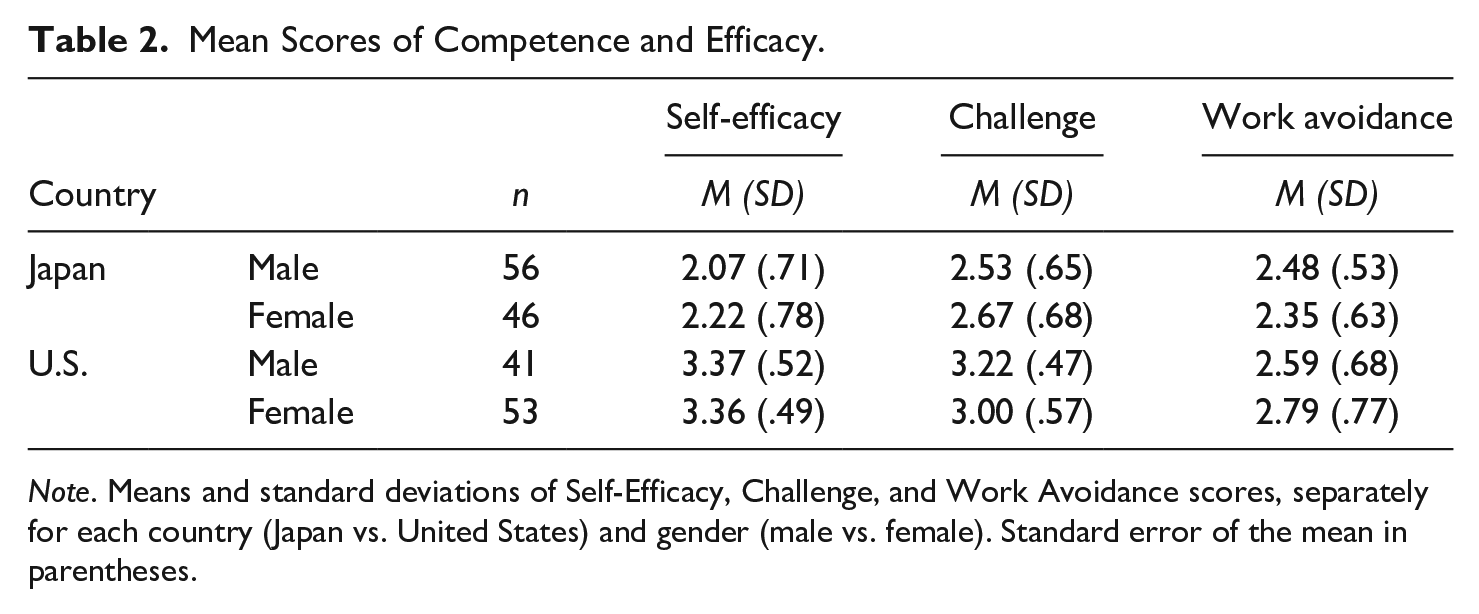
Note. Means and standard deviations of Self-Efficacy, Challenge, and Work Avoidance scores, separately for each country (Japan vs. United States) and gender (male vs. female). Standard error of the mean in parentheses.
Results of ANOVA Analysis.
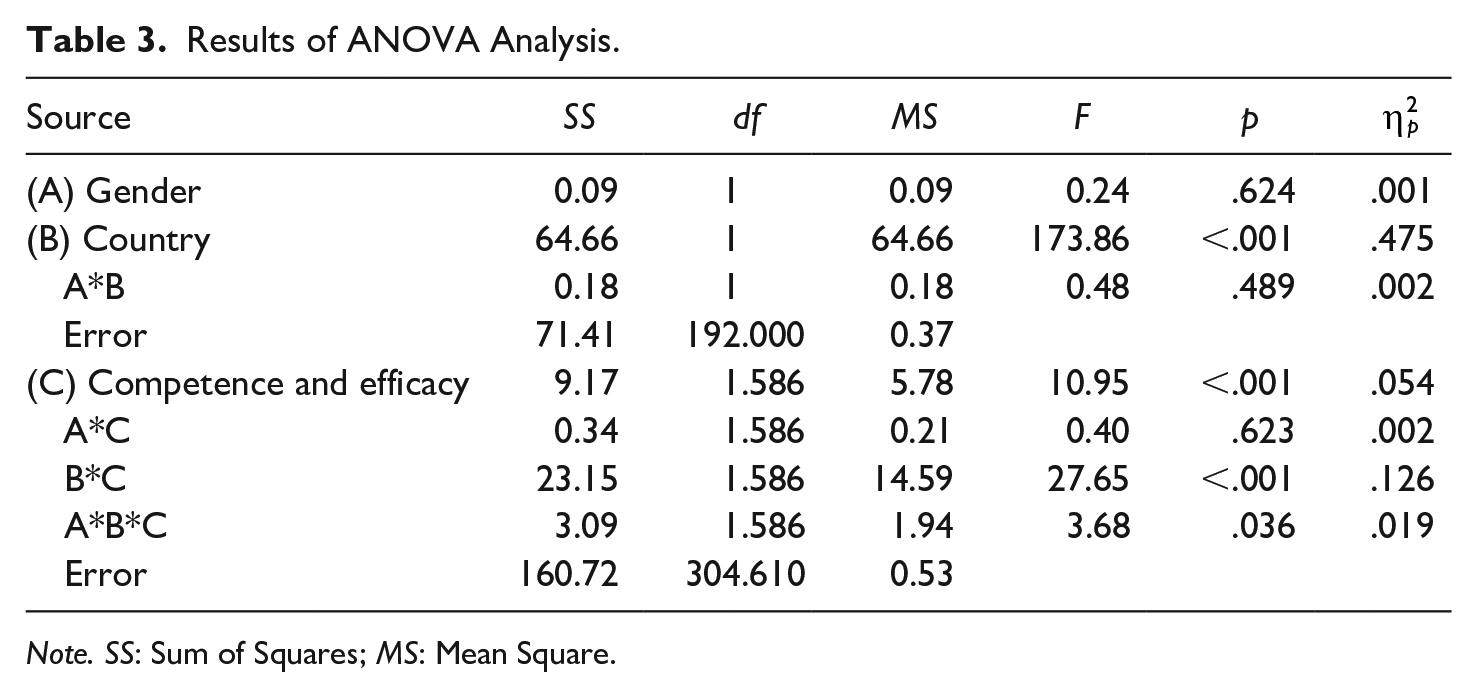
Note. SS: Sum of Squares; MS: Mean Square.
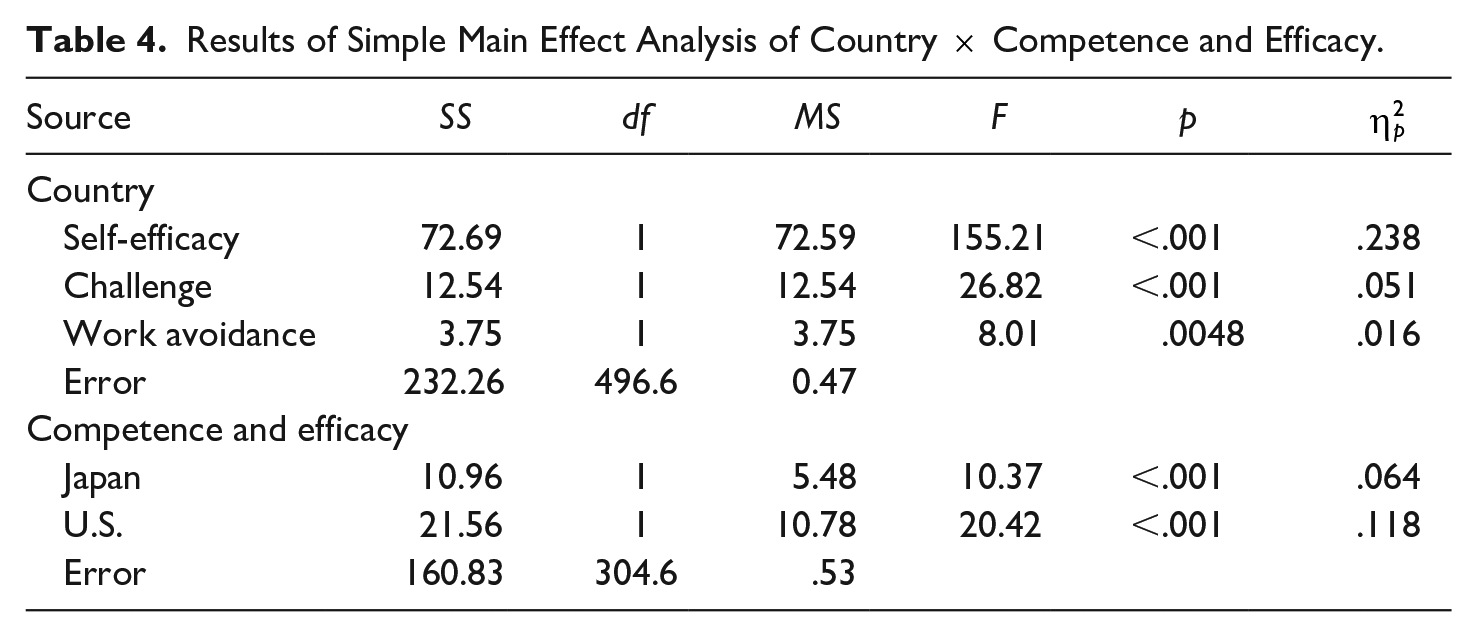
Results of Simple Main Effect Analysis of Country × Competence and Efficacy.
Goals for reading
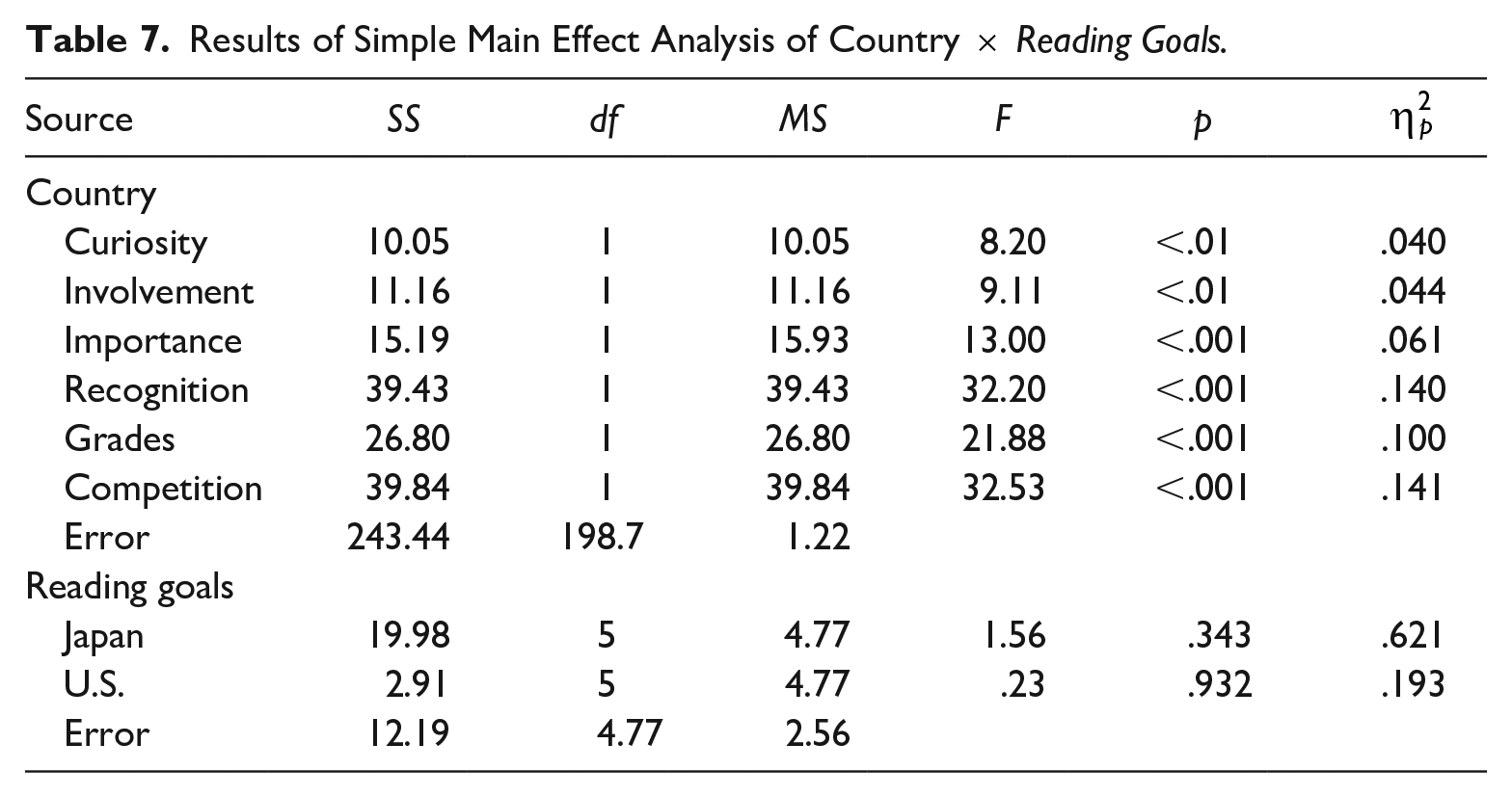
Descriptive statistics of Curiosity, Involvement, Importance, Recognition, Grades, and Competition scores by gender and country are presented in Table 5. As illustrated in Table 6, there was no significant three-way interaction among goals for reading, gender, and country, F(4.808, 923.152) = 3.684, p = .602. Neither goals for reading × gender interaction, F(4.808, 923.152) = .934, p = .456, nor gender × country interaction, F(1, 192) = .507, p = .477, were significant. Moreover, there was no main effect of gender, F(1, 192) = 1.915, p = .168. However, goals for reading interacted with country, F(4.808, 923.152) = 6.608, p < .001,
Mean Scores of Goals for Reading.
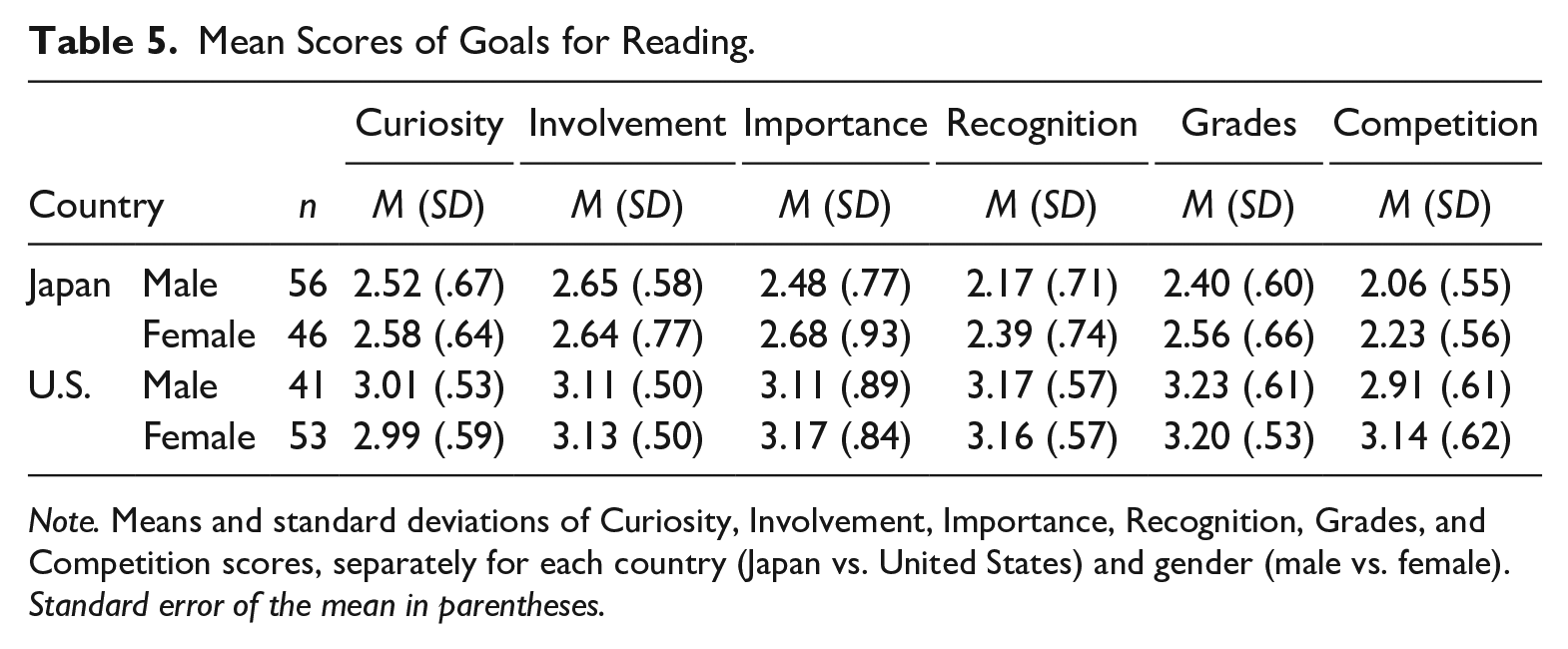
Note. Means and standard deviations of Curiosity, Involvement, Importance, Recognition, Grades, and Competition scores, separately for each country (Japan vs. United States) and gender (male vs. female). Standard error of the mean in parentheses.
Results of ANOVA Analysis.
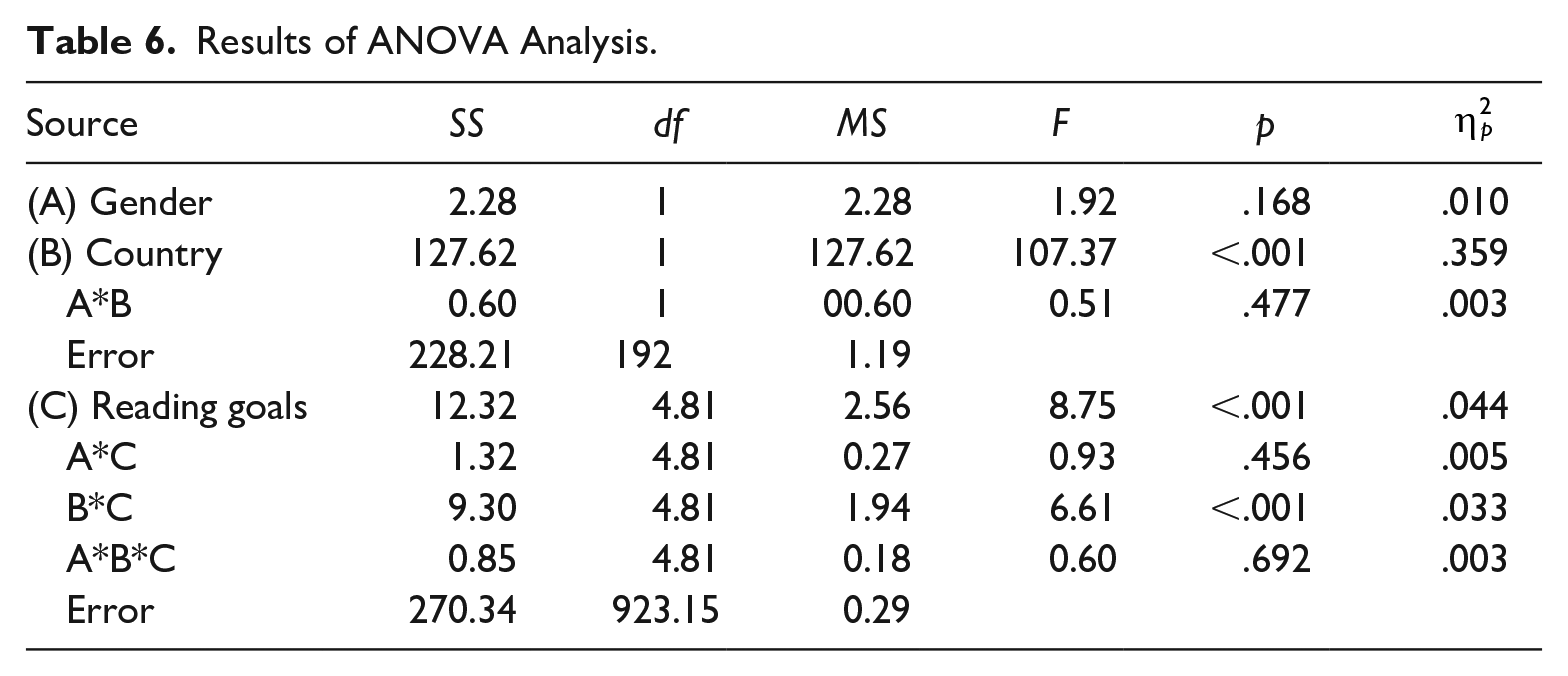
Results of Simple Main Effect Analysis of Country × Reading Goals.
Social purposes for reading
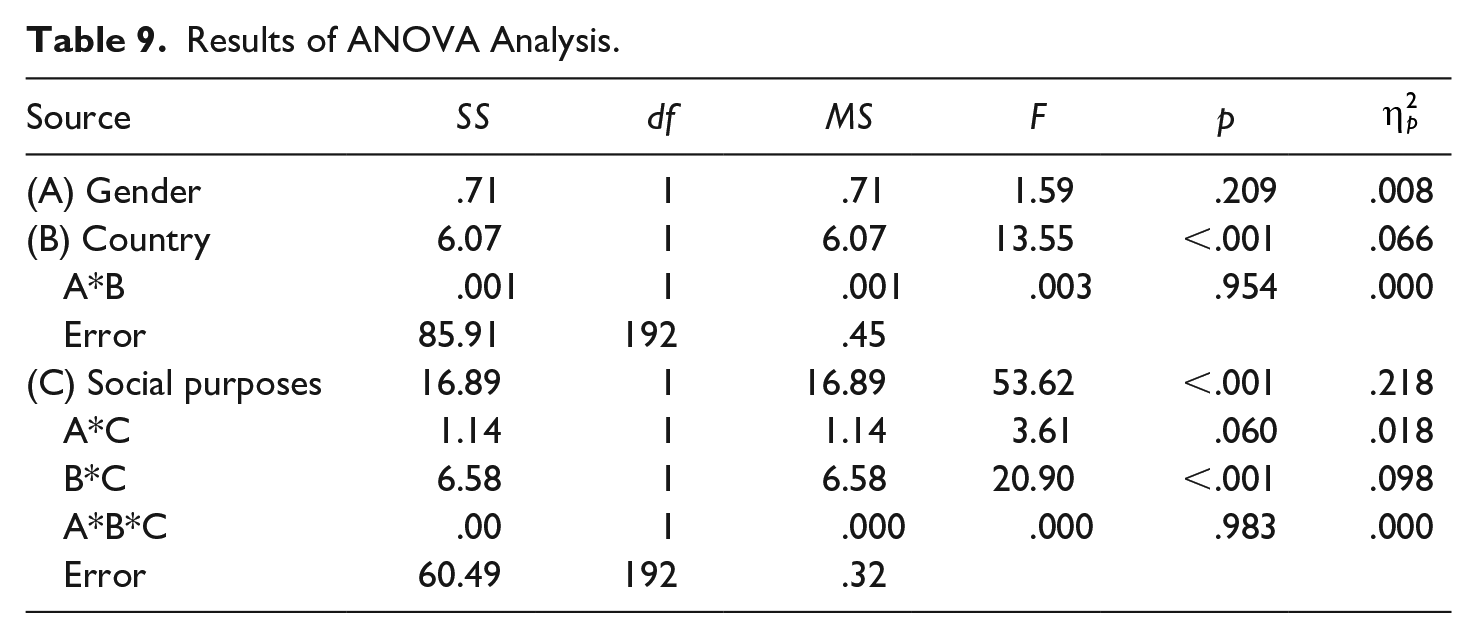
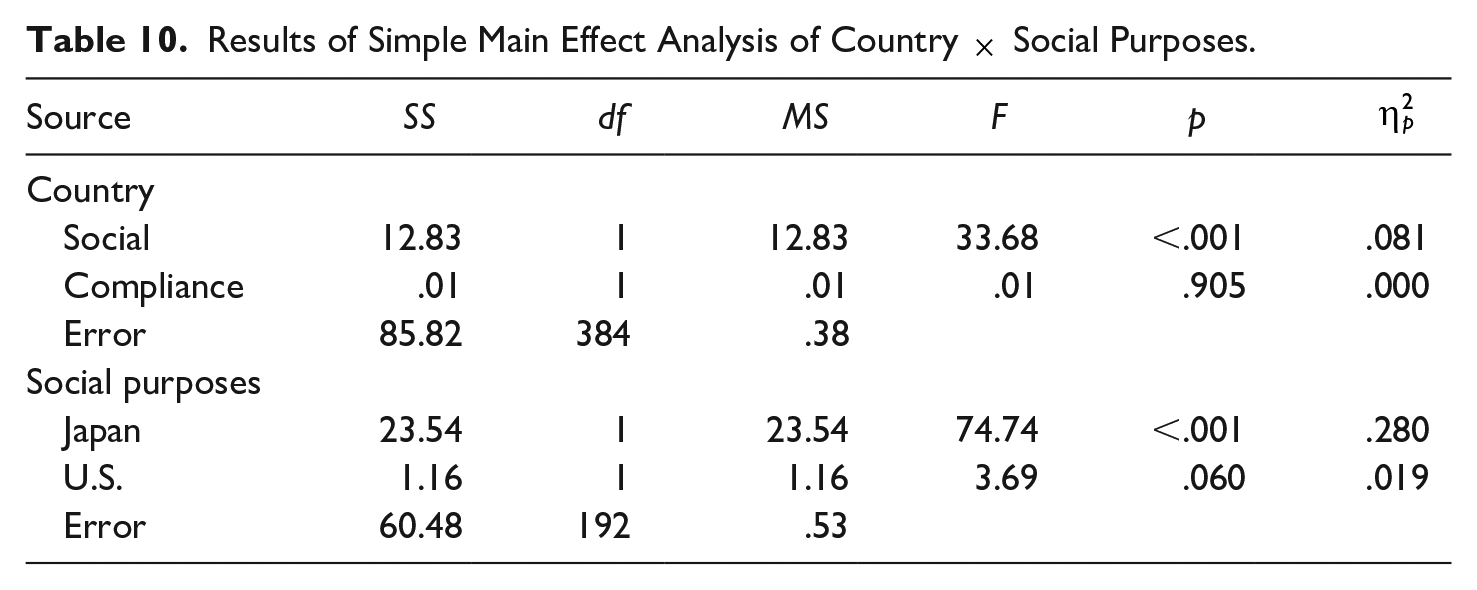
Descriptive statistics of social and compliance scores by gender and country are presented in Table 8. As shown in Table 9, there was no significant social purposes × gender × country three-way interaction, F(1, 192) = .000, p = .983. Neither social purposes for reading × gender interaction, F(1, 192) = 3.610, p = .059, nor gender × country interaction, F(1, 192) = .003, p = .954, were significant. In addition, there was no main effect of gender, F(1, 192) = 1.586, p = .209. Nonetheless, there was a significant two-way interaction between social purposes and country, F(1, 192) = 20.896, p < .001,
Mean Scores of Social Purposes for Reading.
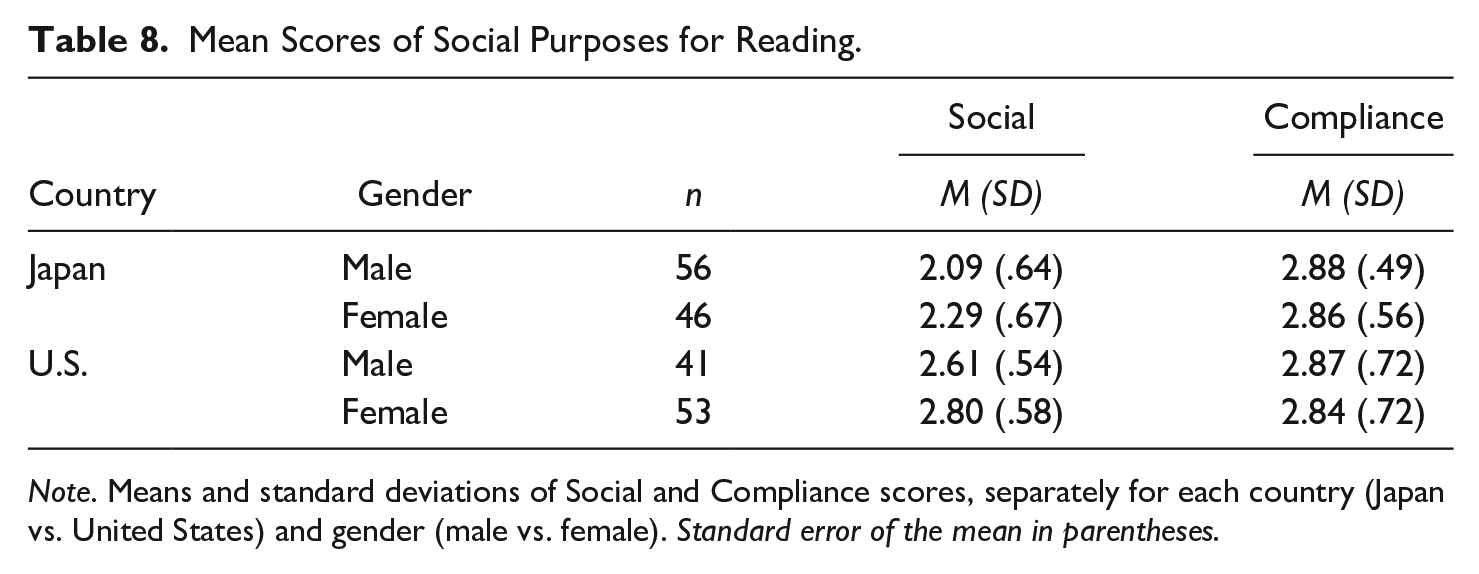
Note. Means and standard deviations of Social and Compliance scores, separately for each country (Japan vs. United States) and gender (male vs. female). Standard error of the mean in parentheses.
Results of ANOVA Analysis.
Results of Simple Main Effect Analysis of Country × Social Purposes.
Correlation Results
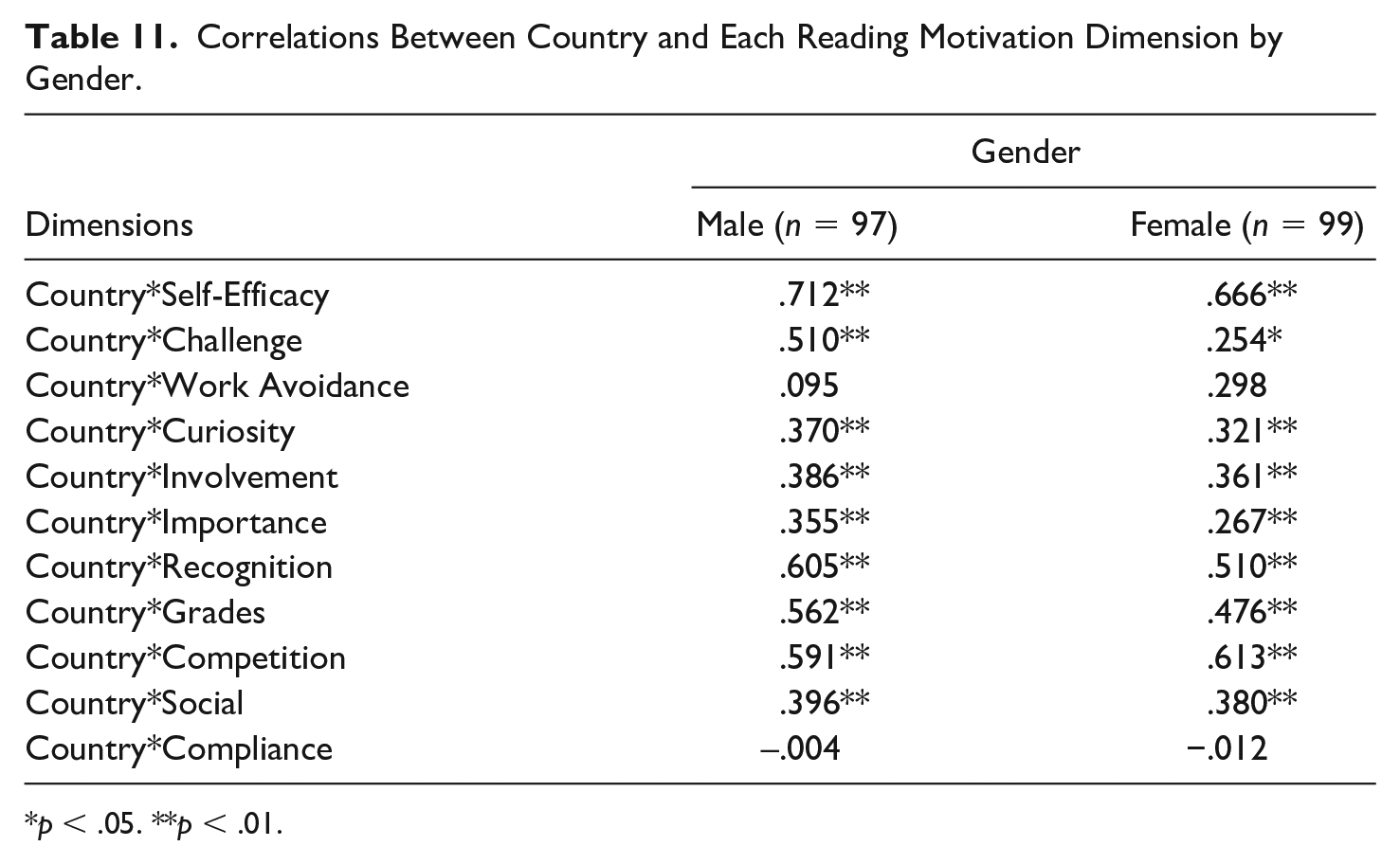
As illustrated in Table 11, for both male and female students, country was significantly related to scores of different reading motivation dimensions (Self-Efficacy, Challenge, Curiosity, Involvement, Importance, Recognition, Grades, Competition, and Social), suggesting that American students tended to have higher scores in those dimensions than Japanese students. However, country was not significantly related to Work Avoidance and Compliance across genders, suggesting that both American and Japanese students exhibited similar scores of Work Avoidance and Compliance.
Correlations Between Country and Each Reading Motivation Dimension by Gender.
p < .05. **p < .01.
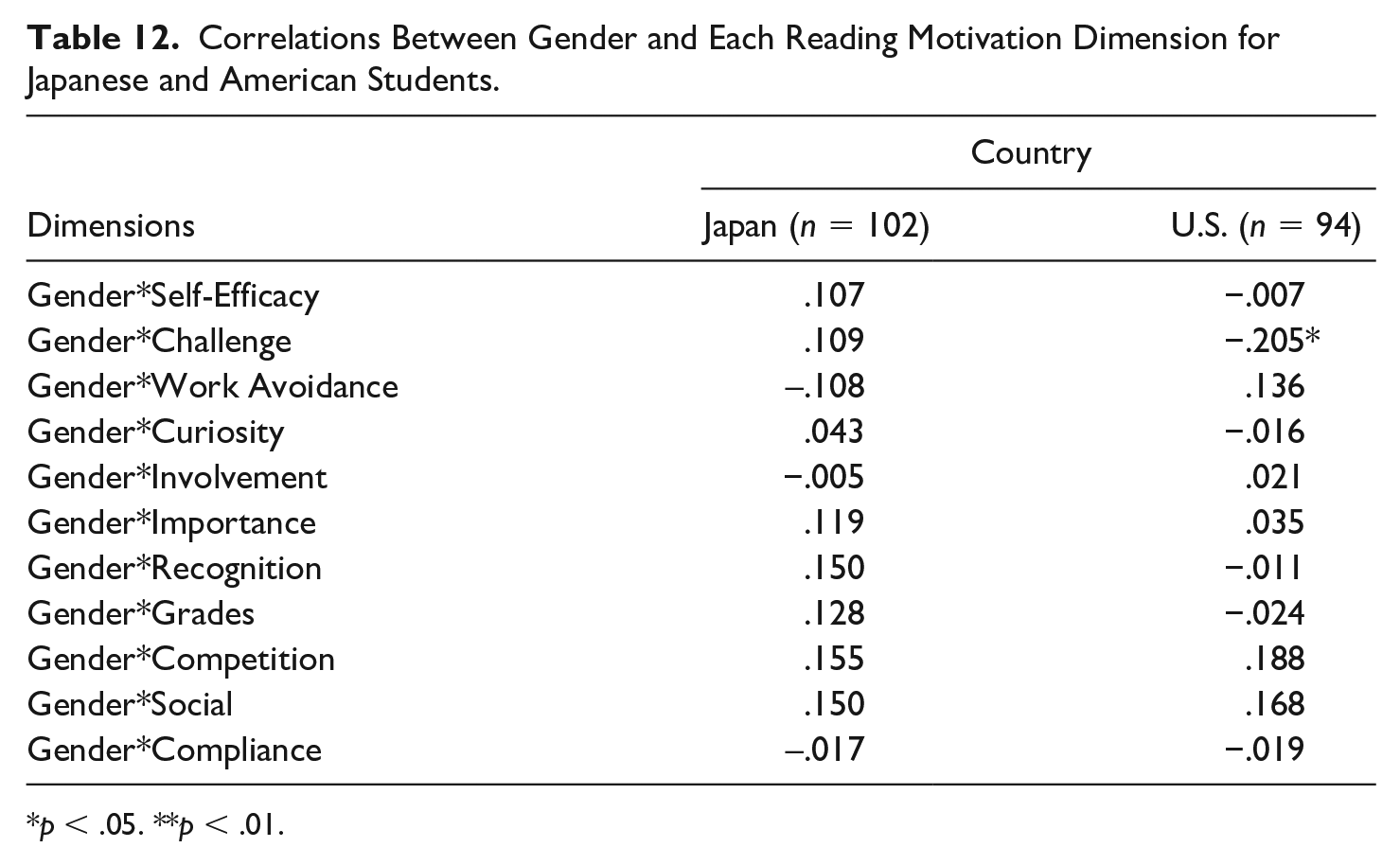
As illustrated in Table 12, for Japanese students, gender was not significantly related to scores of any of the different reading motivation dimensions, suggesting that both female and male students exhibited similar scores across all reading motivation dimensions. Similarly, for American students, gender was not significantly related to scores for most reading motivation dimensions, except for Challenge. This result indicates that American male students tended to have higher scores for the Challenge dimension than American female students.
Correlations Between Gender and Each Reading Motivation Dimension for Japanese and American Students.
p < .05. **p < .01.
Discussion
Country Differences
Both ANOVA and correlation results indicated there was a significant difference in reading motivation between American and Japanese fourth-grade students. Overall, country interacted with three categories of reading motivation. American students had higher scores on most dimensions (Self-Efficacy, Challenges, Curiosity, Importance, Involvement, Recognition, Grades, Competition, and Social) across the three categories (competence and efficacy beliefs, goals for reading, and social purposes for reading) than Japanese students. There were no significant differences for two dimensions (Work Avoidance and Compliance) between American and Japanese students, suggesting that Work Avoidance and Compliance were weighed similarly in both two countries.
Specifically, in the competence and efficacy category, American and Japanese students showed opposite trends. American students showed the highest score on Self-Efficacy among the three dimensions (Self-Efficacy, Work Avoidance, and Challenge), while Japanese students showed the lowest score on Self-Efficacy. This discrepancy could be explained by differences in the two predominant cultures (individualism vs. collectivism) across the two countries. This result is consistent with the previous study by Kambara (2020) that showed Japanese fourth-grade students had low self-efficacy. These results are also consistent with those of several research studies investigating other East Asian students, such as Taiwanese students (Huang, 2013) and Chinese students (Lau, 2004). One possible reason why American students had high self-efficacy while East Asian students had low self-efficacy could be differences in social orientations (e.g., individualism and collectivism; Hofstede, 1980; Markus & Kitayama, 1991; Triandis, 1993) between the two countries. Self-efficacy is one of the important components in reading motivation, which may be affected by individualism–collectivism differences (Bandura, 1997; Markus & Kitayama, 1991). Individualistic cultures (e.g., American culture) value personal goals and identity above group goals and identity (see Kim & Cho, 2011). This may lead to a high sense of self-efficacy in American students (Kitayama et al., 2004).
On the contrary, Japan has a collectivistic culture (Guzley et al., 2009; Hamamura, 2012) influenced by Confucianism (Winfield et al., 2000) that values interdependence, harmony, and adherence to social norms (Tiessen, 1997). Both Huang (2013) and Lau (2004) found that all Chinese and Taiwanese students, even high achievers, did not see themselves as competent readers. These studies reported that East Asian students typically have lower self-esteem than western students and tend to be more modest and score low when making comments about themselves (Lau, 2004). Traditional Confucianism (Winfield et al., 2000) strongly values humility and modesty (Huang, 2013; Lau, 2004) and is a cultural foundation in East Asian countries. For Japanese students, Yoshida et al. (1982) reported that self-enhancement and self-promotion were perceived negatively by second, third, and fifth graders. Therefore, this cultural influence could explain why Japanese students also showed low self-efficacy, similar to Chinese (Lau, 2004) and Taiwanese (Huang, 2013) students. Given the cultural influences on individuals’ reading motivation, it is plausible that each individual holds both social orientations (individualism and collectivism) and identities (individual and group identities), even though the person belongs to a specific culture (Mao et al., 2004).
Furthermore, American students showed similar scores between Social and Compliance in the category of social purposes of reading. However, Japanese students showed higher scores of Compliance than Social. Viable reasons to explain the results include the influences of each country’s unique cultural factors. Japanese society strongly values compliance, which is considered as appropriate and common manners (Kishimoto & Maehara, 2015). It is possible that American society equally values social reasons for reading and compliance. Social reasons for reading refer to connecting with others and maintaining social relationships. Compliance is related to meeting others’ expectations. In fact, there was no significant correlation between Social reasons for reading and Compliance in the United States (r = .045, p = .665), whereas there was a significant positive correlation between them in Japan (r = .314, p = .001). This indicates the social reasons for reading and compliance in the United States are independent, while they are dependent in Japan. However, it remains unclear why American and Japanese students weighted social reasons for reading and compliance differently. More studies are needed to address this topic further.
Gender Differences
Both ANOVA and correlation results reported there was no significant difference in reading motivation between males and females in either country. Our result was consistent with the result of Baker and Scher (2002), but not consistent with the results of previous studies (Eccles et al., 1993; Marinak & Gambrell, 2010; McGeown, 2015; McGeown et al., 2012; Wigfield et al., 1997; Wigfield & Guthrie, 1997). One of the possible explanations for the discrepancy between previous studies and the current study is a Type-I error rate inflation from multiple tests using the single dimension in the previous studies. For instance, Marinak and Gambrell (2010) conducted multiple independent t-tests for a single item in each dimension. Multiple tests in each item may lead to inflated Type-I error rates even though they used a Bonferroni correction to address the issue. The gender difference found in their study could be possibly due to an artifact of statistical analysis. In contrast, this study used the three-way ANOVAs across multiple items for each dimension to reduce Type-I error rates. The discrepancy between previous studies and this study could be explained by different factors. Particularly, social class, race/ethnicity, and classroom context (Meece et al., 2006) could be confounding variables that are related to gender. For example, many previous studies conducted in the United States did not distinguish participants’ racial and ethnic groups in their data. In contrast, our study distinguished white American and Japanese participants. The discrepancy between previous studies and this study could be due to different racial and ethnic groups instead of gender. Overall, the results in this study suggested there was no gender gap in either country. The role of gender in reading motivation should be re-evaluated in future studies.
Implications
This study has theoretical and educational implications. From the theoretical view, the study lends empirical evidence into cross-cultural reading motivation studies. Previous studies (Henry & Cliffordson, 2013; Markus & Kitayama, 1991; Serafini, 2020; Tanaka, 2020; Yashima et al., 2017) suggested that individualistic and collectivistic cultures affect general motivation and language motivation. This study expands the connection between culture and reading motivation in the field of literacy. For educational practice, this study clearly demonstrated the cultural influences on students’ reading motivation. Educators must consider students’ diverse cultural backgrounds when they assess students’ reading motivation. To meet individuals’ learning needs, educators should design diverse curricula and activities that facilitate students’ reading motivation, particularly self-efficacy.
Limitations and Future Directions
This study has several limitations. First, this study only researched white American populations who are from middle-class communities and are highly privileged in the United States; this group may not represent the general American population, which includes different racial and ethnic groups. The white American participants in this study may have more enriched literacy opportunities than other students in the United States. Second, it is acknowledged that each individual has multiple views and identities of self (e.g., individualism and collectivism) that may simultaneously affect reading motivation. It is important to measure individual differences. Moreover, individuals’ multiple views and identities of self could change over time. Therefore, it is imperative to test participants multiple times to observe their developmental trends. Third, our findings were obtained from fourth-grade students and cannot be generalizable to different age groups. Fourth, our study only compared the two American and Japanese cultures and cannot be generalized to other cultures. Last, this study investigated reading motivation in students’ first languages instead of second languages.
To address these limitations, there are some considerations for future studies. Future studies should include different racial and ethnic groups in the United States. In addition, longitudinal studies are needed to capture dynamic changes of individuals’ multiple identities and views of self. Furthermore, future research studies could investigate different age groups, such as adolescents and adults. Current studies can be extended into reading motivation in the second language. More international studies should be conducted to explore how culture and gender influence students’ reading motivation differently. Finally, this study employed the quantitative approach. This study established a baseline for future qualitative studies to investigate how different cultures across countries influence students’ reading motivation through interviews.
Conclusions
Existing literature on reading motivation is mainly dominated with Eurocentric studies. These findings cannot provide well-informed details about East Asian students’ reading motivation. To fill an important gap in the literature, this study examined country and gender differences by comparing American and Japanese students’ reading motivation. Our findings revealed that culture played the most significant role in the three categories (competence and efficacy beliefs, goals for reading, and social purposes for reading) in reading motivation. Self-efficacy specifically showed cultural influences. Compared with previous studies, this study did not find any gender differences in reading motivation across these two countries, leaving open the possibility that other confounding variables may affect reading motivation.
Supplemental Material
sj-zip-1-jlr-10.1177_1086296X211030455 – Supplemental material for Differences in Reading Motivation Between American and Japanese Students
Supplemental material, sj-zip-1-jlr-10.1177_1086296X211030455 for Differences in Reading Motivation Between American and Japanese Students by Hitomi Kambara and Yu-Cheng Lin in Journal of Literacy Research
Footnotes
Acknowledgements
The authors sincerely thank the three anonymous reviewers and editors of the Journal of Literacy Research for providing their valuable feedback during rigorous peer review.
Declaration of Conflicting Interests
The author(s) declared no potential conflicts of interest with respect to the research, authorship, and/or publication of this article.
Funding
The author(s) received no financial support for the research, authorship, and/or publication of this article.

References
Supplementary Material
Please find the following supplemental material available below.
For Open Access articles published under a Creative Commons License, all supplemental material carries the same license as the article it is associated with.
For non-Open Access articles published, all supplemental material carries a non-exclusive license, and permission requests for re-use of supplemental material or any part of supplemental material shall be sent directly to the copyright owner as specified in the copyright notice associated with the article.
