



Abstract
A rapidly expanding number of companies have pledged to contribute towards the Paris Agreement’s goal by establishing 2050 net-zero emissions targets. However, the literature lacks an in-depth analysis of firms’ strategies to reach those targets and their underlying assumptions. Scholars increasingly use time and space as functional constructs to theorise what motivates different business responses to climate change. Organisational boundaries represent an additional critical dimension when analysing companies’ climate actions. Hence, we adopted a novel tri-dimensional framework (time, sense of place, and organisational boundaries) to analyse the link between the targets companies set and their proposed decarbonisation strategies. We conducted a qualitative content analysis of self-reported and tertiary data from 45 European manufacturing companies rated as leaders in climate action. By investigating how time, sense of place, and organisational boundaries substantiate companies’ decarbonisation strategies’ present and possible future impact, we delineate how different approaches to the three dimensions enable or constrain the comprehensives of net-zero strategies.
Keywords
Climate change is a wicked problem that requires companies to consider cross-scale interactions among organisations and socio-ecological systems (Bansal et al., 2021). Failing to do so might lead companies to adopt limited solutions that translate a grand challenge into business as usual (Wright & Nyberg, 2017) or even aggravate inequalities and injustices (Sovacool et al., 2019). Currently, there are shortcomings in organisational theory and practice when applied to address climate change, a complex issue that requires a radical transformation in ways of organising (Bansal & Knox-Hayes, 2013; Nyberg et al., 2022; Wittneben et al., 2012).
Studying what motivates different business responses to climate change, authors have pointed to time and space, and less often to organisational boundaries (Mazutis et al., 2021; Nyberg et al., 2022). Regarding time, authors have argued, among others, that managers’ adoption of linear temporal perspectives locks them into short-term thinking, constraining their capacity to respond to this future-oriented issue that has impacts in timescales beyond their lifetimes (Kaesehage et al., 2019; Slawinski & Bansal, 2012; Wright et al., 2013). Considering space, authors have proposed that managers experiencing space as uniform and perceiving resources as endless are more likely to adopt inadequate responses to climate change (Guthey et al., 2014; Mazutis et al., 2021). Regarding organisational boundaries, the literature has put forward that companies’ absolute emissions reductions can be shaped by how they bound their own impact and how they relate to external value chain actors (Dahlmann & Roehrich, 2019; Grewatsch et al., 2021; Levy & Lichtenstein, 2011; Wittneben et al., 2012). While the existing literature has identified time, space, and organisational boundaries as factors that shape companies’ responses to climate change, it has not considered the interplay among these three factors. This is problematic because managers based their decisions on their perceptions of all three factors rather than on one of these factors in isolation. Thus, we aim to analyse companies’ decarbonisation strategies using a tri-dimensional framework that considers the interplay between perceptions of time, space, and organisational boundaries.
Decarbonisation strategies are an appropriate empirical context for applying our tri-dimensional framework. A rapidly expanding number of companies have pledged to contribute towards the Paris Agreement’s goal of limiting global warming to 1.5°C by establishing 2050 net-zero emissions targets (Berger-Schmitz et al., 2023). To reach those commitments, companies need to develop decarbonisation 1 strategies (Fankhauser et al., 2022), but that process requires substantial investment in the form of long-term planning and intricate action plans (Berger-Schmitz et al., 2023). To aid that process, researchers are increasingly analysing the impacts of net-zero targets quality in reducing companies’ carbon emissions (Coen et al., 2022; Dahlmann et al., 2019; Ioannou et al., 2016; Talbot & Boiral, 2018). The content of decarbonisation strategies associated with those targets may also affect the absolute emission reductions that companies can achieve. However, the literature still lacks an in-depth analysis of decarbonisation strategies and their underlying assumptions. Considering the exposed backdrop of theoretical and practical motivations, the aim of this study is to use time, sense of place, and organisational boundaries to analyse the link between the targets companies set and the decarbonisation strategies they propose.
We conducted a qualitative content analysis of self-reported and tertiary data from 45 European manufacturing companies, which are considered leaders in climate action by the CDP and with targets verified by the Science Based Targets Initiative. In this way, we explore how companies are reconciling speed and breadth in climate responses (Slawinski & Bansal, 2012) and seeking to promote deep decarbonisation (Newell, 2020). Ultimately, we want to clarify how different approaches to the three dimensions of interest (time, sense of place, and organisational boundaries) influence the comprehensiveness of decarbonisation strategies.
Our main theoretical contribution lies in revealing the factors that compose different approaches to the three dimensions and how those impact the content of companies’ net-zero strategies. By linking the dimension of organisational boundaries to time and sense of place, we further illuminate the multi-dimensional nature of climate responses (Mazutis et al., 2021). Companies that engage with climate change responses must cope with actors and events beyond the firm boundaries and engage with their value chain to increase mitigation impact. In addition, by conducting the analysis at the firm level, we inductively derived key factors that shape companies’ approach to the three dimensions.
Theoretical Background
Companies’ Shortcomings When Responding to Climate Change
Climate science research has produced mounting evidence that human-induced greenhouse gas (GHG) emissions cause climate change (Intergovernmental Panel on Climate Change [IPCC], 2021). Experts have warned that surpassing our limited global carbon budget will create undesirable conditions in climate systems (IPCC, 2021). While climate science is clear, corporate climate action is surrounded by technological uncertainty and contrasting political positions (Wright & Nyberg, 2017). Amid an ongoing low-carbon transition, businesses have established net-zero emissions targets to respond to governmental and societal pressure. However, it remains largely unclear how companies will reach those targets. Initiatives like the Task Force on Climate-Related Financial Disclosures (TCFD) and CDP are the primary sources of instruments and guidelines that companies currently draw on to develop their decarbonisation strategies.
Although decarbonisation strategies represent an advancement in nonfinancial reporting, research remains unclear as to how well firms are incorporating the extended time horizons and uncertainty of climate change impacts (O’Dwyer & Unerman, 2020). As previous studies indicate, companies are developing strategies with different speeds and breadth of response (Mazutis et al., 2021; Slawinski & Bansal, 2012). Fast responses tend to fail to engage with the complexity of the problem, while broader responses incorporate the long-term nature of climate change and seek more integrated approaches (Slawinski & Bansal, 2012). While a mix of responses might be valuable for addressing the different sustainability issues linked to climate change (Mazutis et al., 2021), the central problem is that decarbonisation strategies remain largely focused on internal issues and firm-level performance (Grewatsch et al., 2021). They do not tap into more systemic solutions that address industry dynamics and wider socio-ecological systems. There is a strong focus on “win-win solutions” based on energy efficiency and the adoption of renewable energy, but those actions are not challenging the market discourses of continuous growth and profit maximisation (Wittneben et al., 2012; Wright & Nyberg, 2017). Strategies based on incremental change will fail to promote the deeper transformations required for climate change mitigation (Slawinski et al., 2017; Vieira et al., 2022; Wright et al., 2013). After all, achieving global net-zero emissions demands less resource-intensive economies based on circularity and fossil fuel replacement (Schaltegger et al., 2022; Wright & Nyberg, 2015). Hence, firms’ products, business models, and ways of organising must fundamentally change to enable a sustainability transition (Markard et al., 2012). The absolute reduction of emissions needs greater focus, especially as firms continue to grow (Slawinski et al., 2017).
Another concern is that decarbonisation strategies are being developed as part of symbolic management practices to obtain stakeholders’ legitimacy regardless of emissions mitigation (Callery, 2022; Coen et al., 2022; Dahlmann et al., 2019). Setting climate targets can increase social legitimacy, but offers no guarantee of emissions reductions (Dahlmann et al., 2019). Only targets presenting a certain level of quality (e.g., based on absolute emissions and longer time frames) have been associated with emissions reductions (Dahlmann et al., 2019). Naturally, the adoption of emissions reduction pledges is less impactful than proposing concrete operational improvements (Coen et al., 2022; Malen, 2022). The existence of frameworks (e.g., the TCFD and CDP) also seems to orient companies around developing documents that follow disclosure guidelines rather than devising disruptive strategies that can mitigate climate change (Callery, 2022; Coen et al., 2022).
Constructs Central to Understanding Business Climate Change Response
Previous studies have demonstrated that companies’ construction of time and place can influence decarbonisation strategies’ mitigation potential or impact towards more sustainable and equal futures. We will consider both factors in turn.
Scholars have invested significant energy into understanding how companies’ approach to time affects their response to climate change. The main conceptualisations adopted by studies can be generalised in the macro groups of clock time and cyclical time (Mazutis et al., 2021). Authors highlight how organisational practices are mostly shaped by a clock time perspective, from just-in-time inventory management systems to quarterly earnings reporting (Mazutis et al., 2021). When managing sustainability issues, a clock time perspective based on the assumptions of linearity and predictability that tend to favour short-termism is often associated with poorer sustainability outcomes (Mazutis et al., 2021; Slawinski et al., 2017). Sustainability actions also result in future implications that are measurable in timeframes that might be quite different from those companies often use to strategize and measure performance. Authors have demonstrated how this is particularly relevant for climate change mitigation. Since the societal and environmental beneficial impacts of carbon mitigation will not be perceived in the short term, companies may feel less inclined to make the big investments required to mitigate emissions (Slawinski et al., 2017; Wright & Nyberg, 2017). The same short-term mentality has been found to underline companies’ practices that focus on immediately available actions, which might have a limited impact on climate change mitigation (Slawinski & Bansal, 2012).
Nevertheless, shifting from a short to a long-term approach has been demonstrated as insufficient to ensure an adequate response. A long-term approach might allow the elaboration of a more comprehensive decarbonisation strategy; however, it can also result in a delay of action that creates a mismatch with the physical constraints of climate change (Slawinski & Bansal, 2012; Wright & Nyberg, 2017). Authors have started to put forward that adopting multiple time spans is required to develop adequate climate strategies and correctly assess their potential impact (Kaesehage et al., 2019). This dual focus on short and long-term actions requires linking everyday actions to long-term consequences (Slawinski et al., 2017; Wright et al., 2013)—a practice that contradicts traditional systems of experience and understanding. Authors have explored how process time and event time, based on a view of time as cyclical rather than linear can allow companies to develop better strategies (Nyberg et al., 2022; Slawinski & Bansal, 2012). The use of an event-time perspective has been demonstrated to allow companies to connect past, present, and future events, and this cyclical view of time increases their willingness to make long-term investments (Slawinski & Bansal, 2012). A more “fluid sense of time” that draws from the past to imagine the future, has been linked to managers’ ability to integrate financial and socio-environmental motivations that enable them to engage in climate action (Kaesehage et al., 2019). It is unclear, therefore, whether a linear conceptualisation of time can allow this dual focus to emerge, or whether only managers with a conceptualisation of time that differs from a clock-time approach can respond adequately to climate change. Given that this is the dominant approach in companies and that all companies need to decarbonise, it is crucial to investigate under what circumstances a clock-time approach can still enable the development of a comprehensive decarbonisation strategy.
Companies’ sense of place is another dimension that climate change mitigation challenges (Mazutis et al., 2021; Nyberg et al., 2022; Shrivastava & Kennelly, 2013). While space often denotes statistical physical locations, place involves constructing meaning around the natural environment and living beings (Nyberg et al., 2022). Organisational studies and companies largely exclude the natural environment from organisations’ external environment (Guthey et al., 2014). Authors have put forward how the current trend of a global business that relies on resources from many locations used in yet other locations results in place being experienced as uniform (Guthey et al., 2014; Mazutis et al., 2021). This disconnect seems to solidify beliefs that many locales can provide endless resources and sustain unlimited economic growth (Grewatsch et al., 2021). Climate change challenges management practices to consider the macro-level links between an organisation and socio-ecological systems (e.g., the existence of a global carbon budget), and further, how micro-level initiatives can create better outcomes (e.g., the development of companies’ decarbonisation strategies) (Grewatsch et al., 2021; Levy & Lichtenstein, 2011; Schad & Bansal, 2018; Waddock, 2020). Thus, it is imperative to understand how different conceptualisations of place may impact the urgency that companies see in climate action and the comprehensiveness of the strategies they develop.
Investigation of a sense of place has been limited to cases based on resource-extractive firms with direct links to certain localities (Nyberg et al., 2022; Pinkse & Gasbarro, 2019). Analysis of the sense of place dimension in companies with no direct link to the natural environment, such as global manufacturing firms, is absent. We consider these companies a critical case, as previous scholars have suggested that global manufacturing companies struggle to consider planetary boundaries, resulting in a lack of sense of place (Mazutis et al., 2021). Further research is necessary to provide more nuance and explore what factors might still allow the development of a sense of place in a global company setting. Simultaneously, exploring the links between different conceptualisations of place and the emergence of cross-scale resilience is important. Cross-scale resilience refers to considering all socio-ecological systems, even those beyond organisational boundaries that organisations depend upon (Williams et al., 2021). This factor often captures the intent to prevent ecological impacts from being transferred from one natural system to another (Williams et al., 2021).
Finally, climate change challenges companies’ interpretation of organisational boundaries (Grewatsch et al., 2021; Williams et al., 2021). Organisational boundaries are a construct that has yet to be explored in the context of decarbonisation strategies and that will be combined with time and sense of place in our analysis. The value chain concept is a central construct when organisational boundaries of decarbonisation strategies are considered. The value chain encompasses all the firm’s activities to create customer value (Porter, 1985). As such, we contend that the extent to which focal firms see upstream and downstream activities beyond their control as fundamental to their value creation might interfere with the types of actions and actors that companies engage when developing decarbonisation strategies. The three emission scopes elaborated by the GHG protocol are another instrument that might shape companies’ view of their boundaries once it hints at which opportunities to reduce GHG emissions may lie in activities outside of a firm’s direct operations (GHG Protocol, 2011). The literature has tapped into how companies relate to external value chain actors to promote decarbonisation (Dahlmann & Roehrich, 2019), but a deeper understanding of how they bind their impact is lacking. Previous studies have not considered this important operational aspect, much less integrated it with time and space to assess decarbonisation strategies’ impact. The addition of organisational boundaries to the analysis seeks to address why strategies to improve firm-level carbon performance may not necessarily result in better system-level outcomes (Grewatsch et al., 2021; Levy & Lichtenstein, 2011), or why dynamics in one industry could stimulate or inhibit solutions in another (Grewatsch et al., 2021; Köhler et al., 2019).
In short, this paper jointly investigates these three dimensions to explore their influence on the comprehensiveness of decarbonisation strategies aimed at achieving net-zero emissions. While time and place have been predominantly used in individual-focused analyses (Kaesehage et al., 2019; Mazutis et al., 2021), applying them at the firm level might produce different insights on the factors that shape decarbonisation strategies and how they relate to the individual level. Moreover, by adding the dimension of organisational boundaries, we can evaluate how multi-dimensional strategies are. Strategies might tap only at the firm level and their direct emissions or add the value chain and stakeholders to seek exclusive opportunities to reduce indirect emissions (e.g., selecting low-carbon materials and suppliers or developing products with low-carbon impact). Together with organisational boundaries, time and sense of place can assist in understanding what factors impact the comprehensiveness of strategies.
Methods
To assess the link between targets companies set and the comprehensiveness of decarbonisation strategies, we applied our tri-dimensional framework in a qualitative study. Specifically, we performed a content analysis of European manufacturing companies’ decarbonisation strategies, which feature verified targets to reduce GHG emissions. First, using multiple data sources we explored the content of decarbonisation strategies in terms of risks, opportunities, timelines, scope, proposed actions, metrics, and mitigation performance. Hence, the first step focused on unpacking the content of strategies and their consistency with decarbonisation targets. Second, we qualitatively interpreted how companies have conceptualised the dimensions of time, sense of place, and organisational boundaries. Finally, we established how different approaches to those three dimensions shape firms’ engagement with decarbonisation.
Sample Selection and Data Collection
Our study comprised a content analysis of decarbonisation strategies from companies aiming to achieve net-zero emissions. Those targets reflect the intent to achieve a level of GHG release under the global carbon budget (Fankhauser et al., 2022). Any further release will need to be balanced by removal into sinks. To select a group of companies with net-zero emissions targets, we began by sampling from the CDP database. CDP is a not-for-profit that runs a global disclosure system for investors, companies, cities, states, and regions to manage their environmental impacts. The CDP has been a key player in climate disclosure since 2002, as its questionnaires are the most complete source of public information on companies’ decarbonisation strategies (Backman et al., 2017; Callery, 2022; Dahlmann et al., 2019). To select data that was sufficiently relevant and deep, we used a purposive sample approach (Given, 2008; Oliver, 2006). Purposive sampling is a nonprobability method where units are selected for inclusion because of their characteristics. This sampling method relies on the researcher’s judgement to identify and select cases that can provide the best information for the study’s objectives. The drawback of this approach is its limited external validity, but it compensates by allowing for a more homogeneous sample whose characteristics are easier to unravel.
The first criterion for selecting our sample was companies with an A score in CDP classification. The classification ranking used by CDP consists of six categories (A, A-, B, C, D, E), and each reflects a level of disclosure. We selected only A-score companies, as those possess thoroughly disclosed climate-related information and verified GHG reduction targets consistent with the net-zero goal. Moreover, the CDP considers companies with an A classification as leaders in climate action (CDP, 2021). We recognise that this selection criterion may result in a positive selection bias, but we are interested in exposing the nuances between firms that generally articulate the best decarbonisation strategies. By contrasting the analysed companies with data available from the Science Based Targets initiative (SBTi), we reveal the considerable variance in companies’ proposed decarbonisation targets, despite the CDP A classification.
The second selection criterion was the geographic location: We only included European companies in order to ensure a more homogeneous external context. Companies housed in the European Union are subjected to equal public policies and similar societal pressures in climate change mitigation (Backman et al., 2017). Additionally, the European Union has agreed to achieve climate neutrality by 2050 via the European Green Deal, which could help motivate companies to develop net-zero strategies. Companies in our sample outside the European Union were in the United Kingdom. However, the United Kingdom has similar climate policies to European and Brexit was still a recent phenomenon in 2021. Fittingly, Europe had the most A-rated companies in 2021 (104 companies).
We further limited our analysis by only selecting manufacturing companies. This choice sought to ensure consistency in the questionnaire structure and avoid significant differences in activities and discrepancies related to the sectorial specificities. Moreover, the manufacturing sector represents the largest share of GHG emissions in Europe (Eurostat, 2022) and the most companies classified as A in 2021 by the CDP. Hence, we did not consider companies from the energy, financial, and transportation sectors. This resulted in a total of 46 companies. Finally, we cross-checked if companies had decarbonisation targets verified by the SBTi initiative. We removed one company that was not present in the SBTi database. Thus, our final sample was 45 companies (Table 1).
Companies Included in the Analysis (Revenues and Number of Employees).
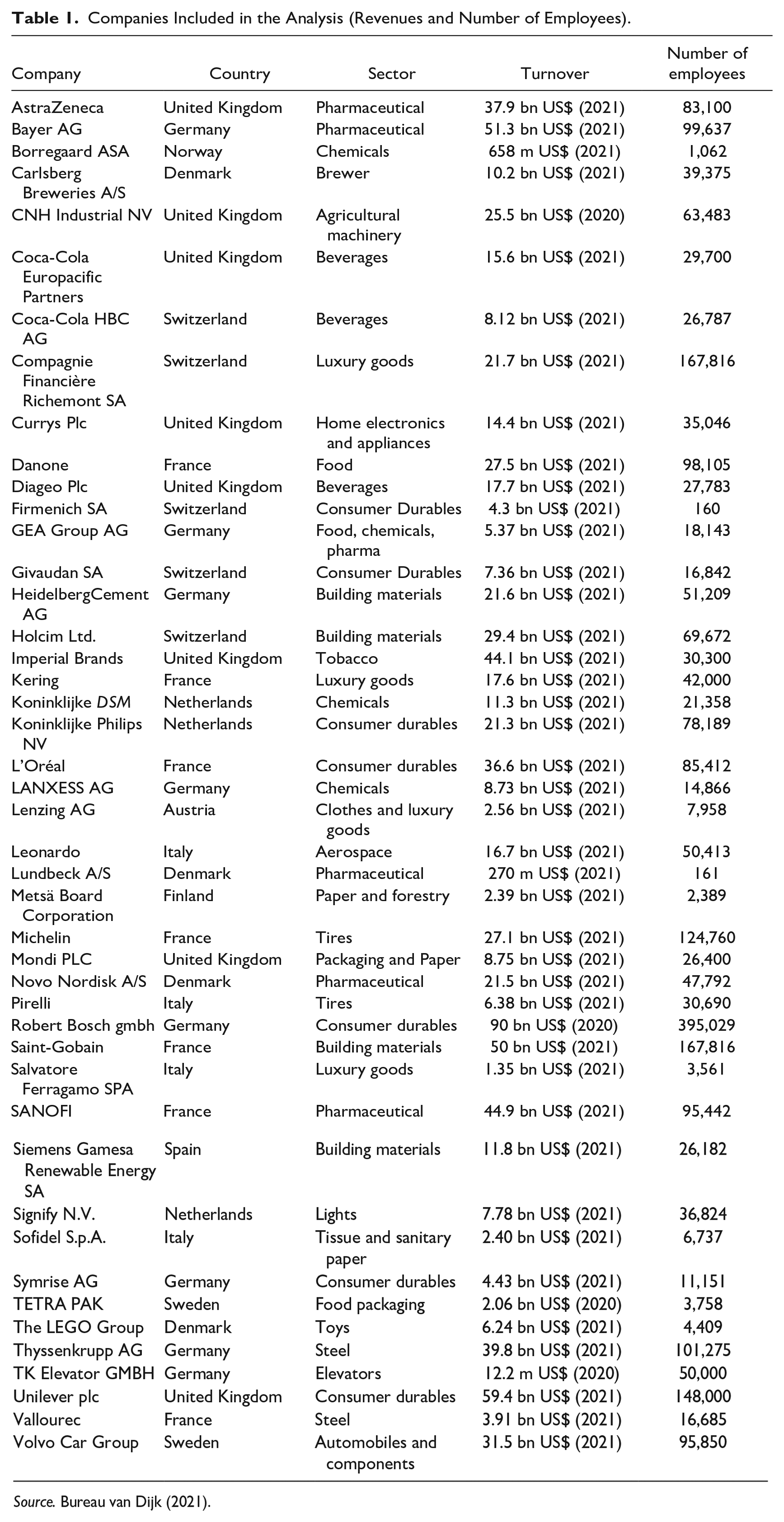
Source. Bureau van Dijk (2021).
We used a broad range of data sources to develop a more thorough understanding of companies’ decarbonisation strategies (Table 2). One part of the data sources comprised self-reported data from CDP questionnaires, sustainability or integrated reports, and other company reports. We collected companies’ CDP questionnaires from the CDP database, consisting of 100 pages long on average and comprising more than 250 questions, many of which are open-ended. Besides information on climate targets and performance, CDP questionnaires provide a clear picture of strategic aspects through questions on governance, risks and opportunities, business strategy, and stakeholder engagement on climate-related issues. Moreover, we included companies’ sustainability reports or integrated reports from 2021, as well as any other documents relevant for comprehending companies’ climate strategies (e.g., TCFD reports and net-zero roadmaps). We collected those documents from companies’ websites. Together, the documents reflect companies’ public disclosure on emissions performance, proposed targets, climate risks, and main actions. We recognise that the use of secondary data has its limitations (Callery, 2022). However, the comprehensiveness of the utilised documents provided us with access to a unique set of data regarding the range and detail of companies’ strategies. We addressed the limitation of using companies’ self-reported data by adding other third-party sources.
Data Sources Used in the Content Analysis.
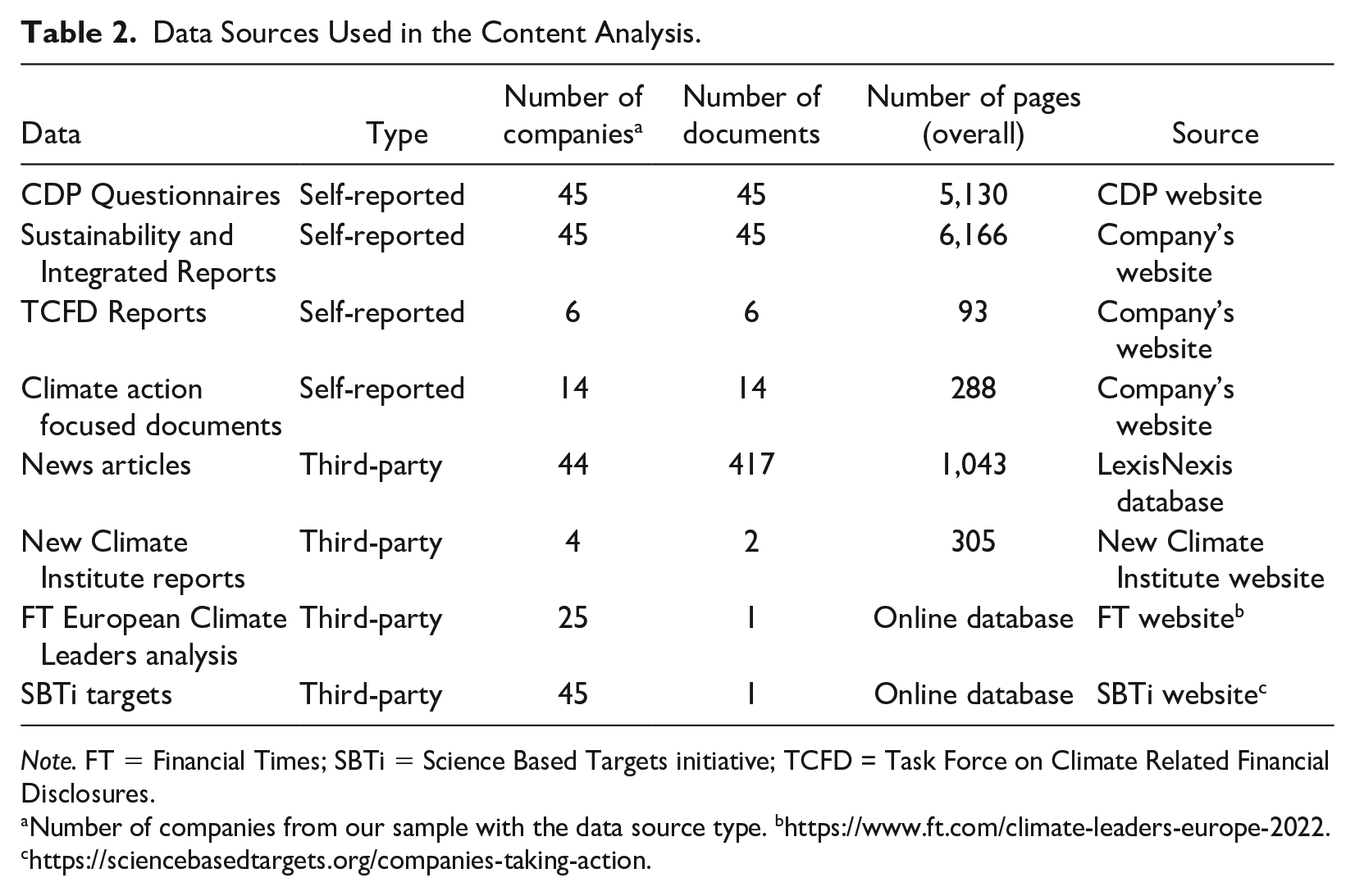
Note. FT = Financial Times; SBTi = Science Based Targets initiative; TCFD = Task Force on Climate Related Financial Disclosures.
Number of companies from our sample with the data source type. b https://www.ft.com/climate-leaders-europe-2022. chttps://sciencebasedtargets.org/companies-taking-action.
The second key source of data came from the SBTi database, which includes companies’ targets and whether they have been verified by the initiative. The SBTi database details if companies have verified near-term targets that are consistent with reductions required by 2030, long-term targets in accordance with 2050 net-zero objectives, or net-zero targets encompassing both. All companies included in the analysis had targets verified by the initiative.
A third source of data included news articles detailing companies’ net-zero strategies or decarbonisation actions. We used the LexisNexis database to collect those by conducting individual searches for each company using the search string “title (company’s name) AND net-zero OR decarbonisation.” We excluded duplicate entries, resulting in 417 news articles. Finally, we collected reports from third parties that had evaluated the decarbonisation strategies of some of the analysed companies, such as the Financial Times European Climate Leaders analysis (Hawcock, 2022) and reports from the New Climate Institute (Day et al., 2022, 2023).
Data Analysis
The data analysis followed a two-stage process of data categorisation and qualitative interpretation. In the first stage, we sought to align the content of firms’ decarbonisation strategies with a common framing, which allowed us to compare the comprehensiveness of said strategies. Thus, we followed a deductive approach by applying a structured coding protocol to the different data sources. As companies do not provide a formal document detailing their decarbonisation strategies, we integrated various data sources to build a clearer picture of companies’ strategies. To craft a consistent outline of all analysed companies’ decarbonisation strategies, we used a data categorisation protocol (Table 3) based on the current guidelines for climate disclosure from the TCFD (Huiskamp et al., 2022; TCFD, 2017), the European Commission (2019, C 209/01), and the International Sustainability Standards Board (ISSB, 2021). Based on the current recommendations, we developed an initial list of risks, opportunities, and actions to assist in the data extraction, which we expanded later as new typologies appeared (Table 3). Using the NVivo software, we collected the following: companies’ identified risks and opportunities, proposed actions to mitigate climate change, the stated decarbonisation targets and their coverage, and the adopted time horizons.
Data Categorisation Protocol.
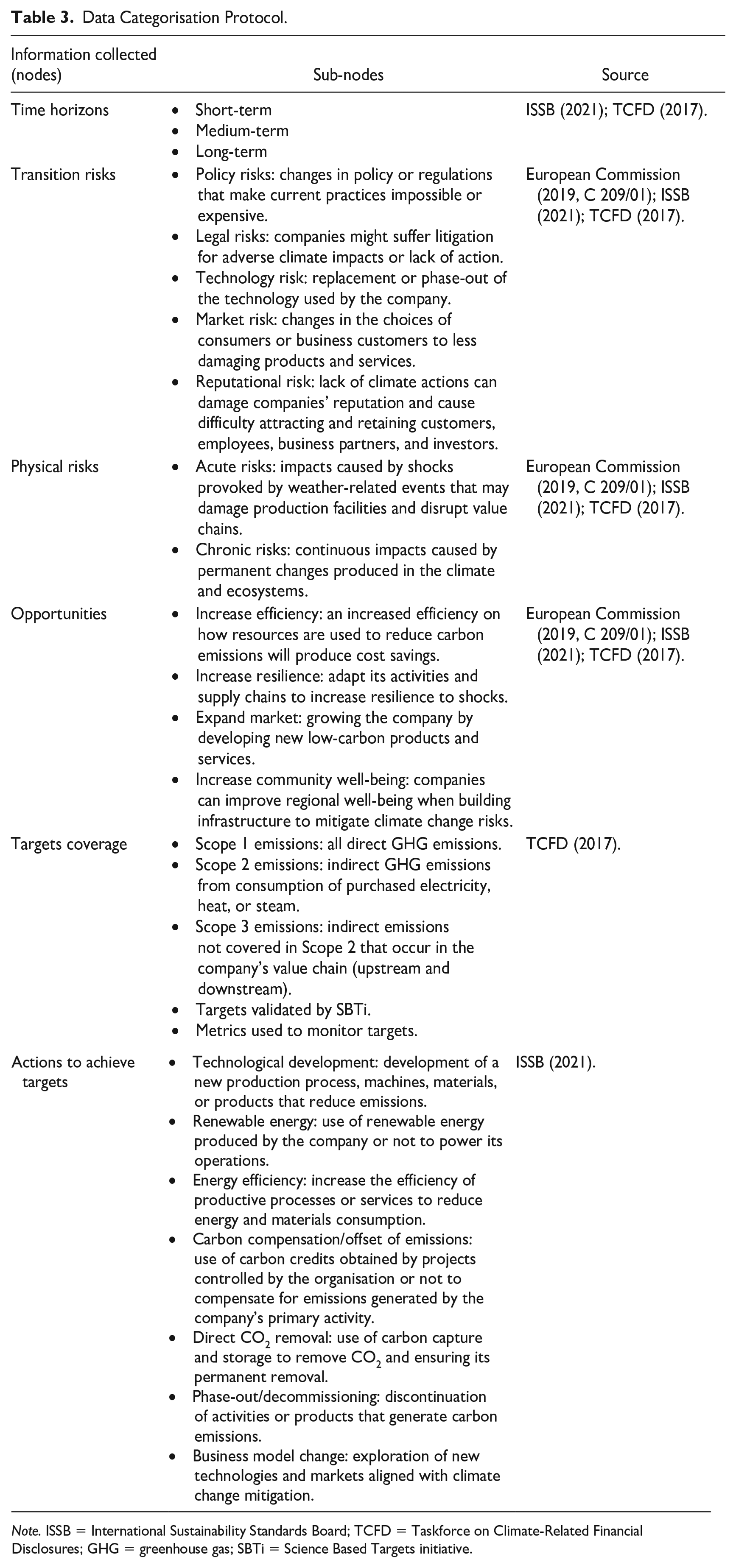
Note. ISSB = International Sustainability Standards Board; TCFD = Taskforce on Climate-Related Financial Disclosures; GHG = greenhouse gas; SBTi = Science Based Targets initiative.
After the data were systematised in the first stage, the second stage followed an iterative process to articulate how companies approach the three dimensions of our framework (time, sense of place, and organisational boundaries). Our goal was to establish how different approaches of these three dimensions impact the content of decarbonisation strategies. Our data analysis was both deductive and inductive. The deductive component involved examining data with predefined theoretical dimensions derived from the decarbonisation strategies literature—time, sense of place, and the new organisational boundaries dimension—while the inductive part involved exploring the data collected to identify key factors that reveal companies’ different approaches to the theoretical dimensions. Thus, for each dimension that make up our framework, we qualitatively explored how they were represented in companies’ net-zero strategies. In coding the information, we first conducted an exploratory coding procedure on the data to collect passages that referred to each dimension. After collecting several passages, the main themes that emerged from the firms’ statements were grouped into key factors. These key factors act as macro-themes that help to reveal the companies’ different approaches. In the Results section, we will present the key factors and how distinct practices associated with them shape companies’ approach to the three dimensions.
Across both stages, we gathered the results obtained in an Excel spreadsheet (Supplemental Material). The spreadsheet contained company details and the results obtained in the data categorisation stage regarding the timelines (in years) that companies stated to adopt (as short-, medium-, and long-term), the coverage (Scope 1, 2, or 3) of their emissions reduction targets, their proposed actions, and their disclosure of emissions. This information was explicitly stated in firms’ documents. To verify the consistency of companies’ declarations, we contrasted that information with the categorisation (i.e., the approaches to time, place, and organisational boundaries) derived from the second stage of the analysis. We analysed the relationships between different companies’ clusters according to their approaches to time, place, and organisational boundaries. Later, we contrasted the different clusters in terms of the comprehensiveness of their decarbonisation strategies and net-zero targets. Finally, we elaborated on how our tri-dimensional framework can contribute to theory on companies’ climate response and disclosure.
Findings
The Conceptualisation of Time, Place, and Organisational Boundaries in Decarbonisation Strategies
Figure 1 presents an overview of the three theoretical dimensions analysed; the inductively derived conceptualisation of the key factors that comprise the three theory dimensions, and companies’ approaches to climate change mitigation. We will now detail those elements for each of the three analysed dimensions.
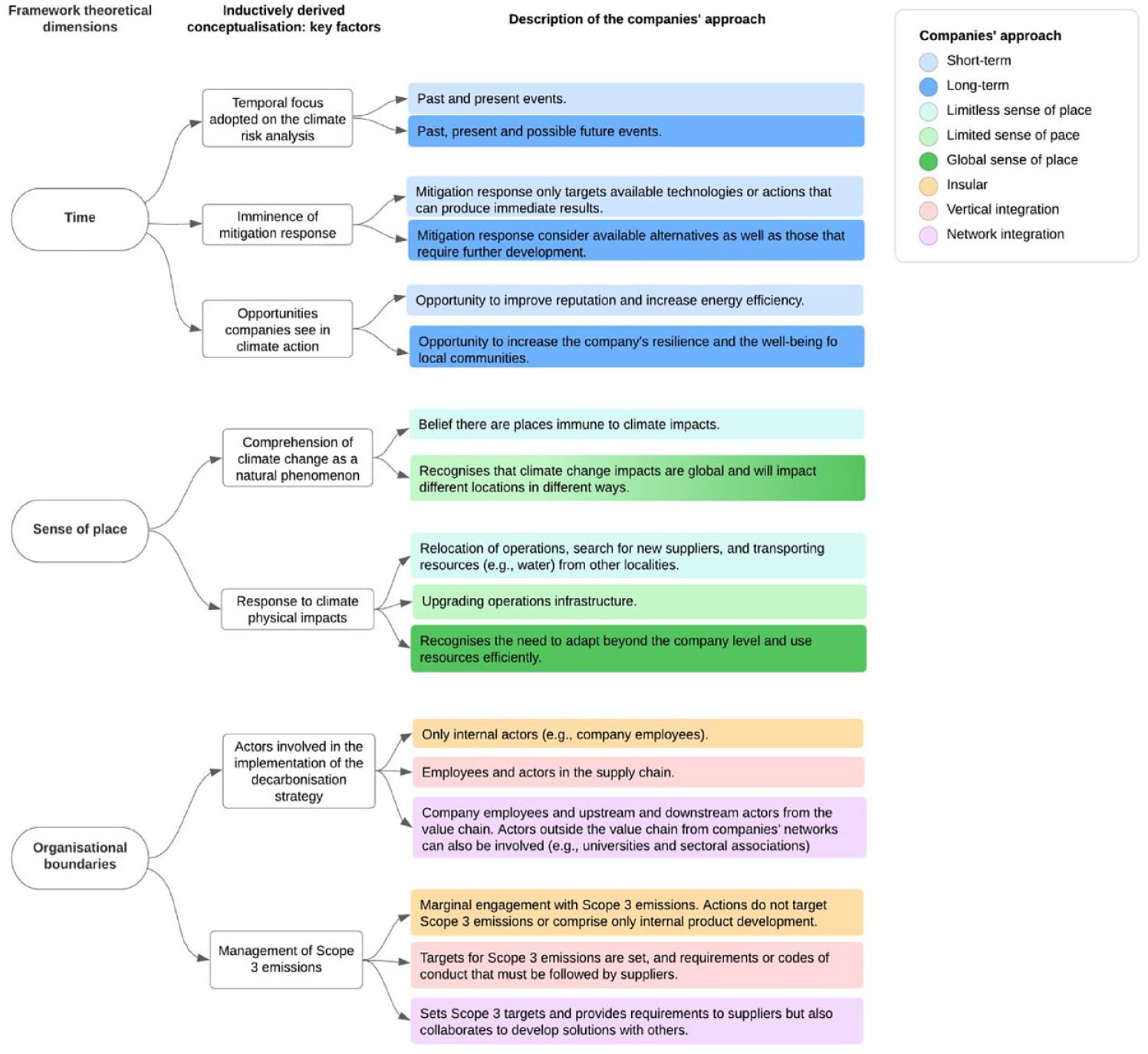
The Tri-Dimensional Framework and Companies’ Approaches to Climate Change Mitigation.
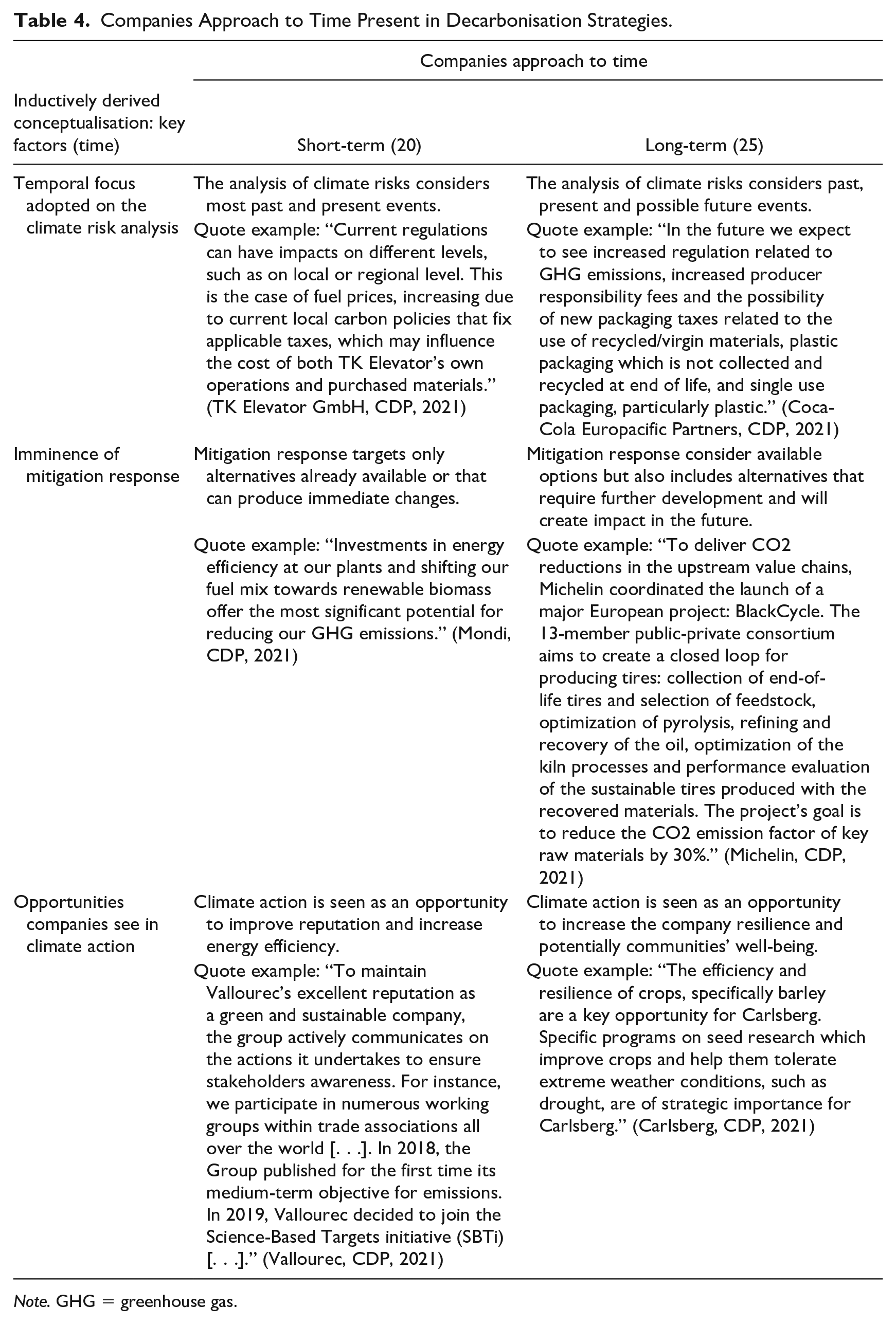
The first aspect of decarbonisation strategies we explored was the adopted temporal horizon in their development. Although most targets reflected a long-term focus, a closer look at the content of strategies reveals that a structured roadmap for actions often does not follow those. Our analysis uncovered three factors that capture companies’ conceptualisation of time: (a) temporal focus adopted on the climate risk analysis; (b) imminence of actions proposed as a mitigation response; and (c) opportunities that companies see in climate action (Table 4). These factors allowed us to distinguish between companies with a short- versus long-term approach to decarbonisation.
Companies Approach to Time Present in Decarbonisation Strategies.
Note. GHG = greenhouse gas.
Relevant to factor (a), companies included an analysis of climate physical and transition risks in their decarbonisation strategies and how those can affect their activities. Companies with a short-term focus were locked into past and present events: Their analyses failed to incorporate the uncertainty of physical risks and the disruptiveness of transitional risks. When discussing physical risks, companies referred to historical patterns that might be incompatible with future climatic conditions. Likewise, the transition risks analyses strongly focused on current political, market, and technological settings. For instance, short-term companies concentrated on present policy targets, such as the European Energy Efficiency Directive and the European Emissions Trading System. Their short-term focus ignores the progressively restrictive targets that have already been articulated. Their attachment to current events prevented the companies from weighing the necessary disruptions for a low-carbon transition.
Companies with a long-term approach considered risks more broadly and referred to uncertainty in their analysis of both physical and transitional risk. Adopting a future-oriented mentality, the firms attempted to explore future events and scenarios that might impact their activities using current trends as a starting point. Regarding physical risks, these companies aware of the need to consider the future potential risks to their facilities and supply chains. Likewise, the transition risks analyses exceeded the already known political climate targets and investigated the suitability of their businesses in a future low-carbon market or a context with distinct environmental conditions. One example of a company that presented such a mentality is Sanofi: “The risk for Sanofi is to fail the provision of the right medicines and vaccines in the pace of climate-related disease vectors due to the lack of appropriate technology” (Sanofi CDP questionnaire, 2021).
The second factor (b) that allowed a distinction among companies was how imminent their actions to mitigate emissions were. Short-term companies limited their focus to more consolidated practices and available technologies (e.g., adopting renewable energy sources and improving energy efficiency). To ensure that their emissions reductions can already be reported, many companies also included carbon compensation as part of their strategies. An example is Salvatore Ferragamo’s use of carbon credits to compensate for the emissions of one of its shoe collections. Companies with a long-term approach, instead, understood that achieving a net-zero target will require actions that surpass the current opportunities. These companies proposed actions that linked the achievement of their targets with the development of new technologies—a signal of long-term planning. For example, these firms described the adoption of sustainable agriculture practices that can contribute to carbon mitigation, circular business practices that require the involvement of value chain actors, and collective investments in technologies that enable direct CO2 removal.
The third factor (c) that emerged from the analyses related to the opportunities that companies saw in climate action. Companies that demonstrated a short-term approach tended to exclusively see climate mitigation actions as an opportunity to improve their reputation and increase energy efficiency. However, these residual opportunities are unlikely to represent a differential when we reach the proposed strategies’ deadlines. There is already a widespread assumption that renewable energy and energy efficiency practices will become the norm. Thus, those actions only represent a short-term opportunity to improve reputation. A more farsighted approach entails linking climate action to increasing companies’ resilience or community well-being. For instance, companies will need additional resilience to endure the climate extremes resulting from the unavoidable levels of warming. Similarly, companies’ future well-being depends on healthy societies and prosperous ecosystems.
The second dimension that we explored in companies’ decarbonisation strategies was their sense of place. The key factors that emerged from the analysis were (a) comprehension of climate change as a natural phenomenon and (b) proposed responses to physical climate impacts. The two factors allowed us to characterise companies as having a limitless, limited, or global sense of place (Table 5).
Companies Approach to Sense of Place Present in Decarbonisation Strategies.
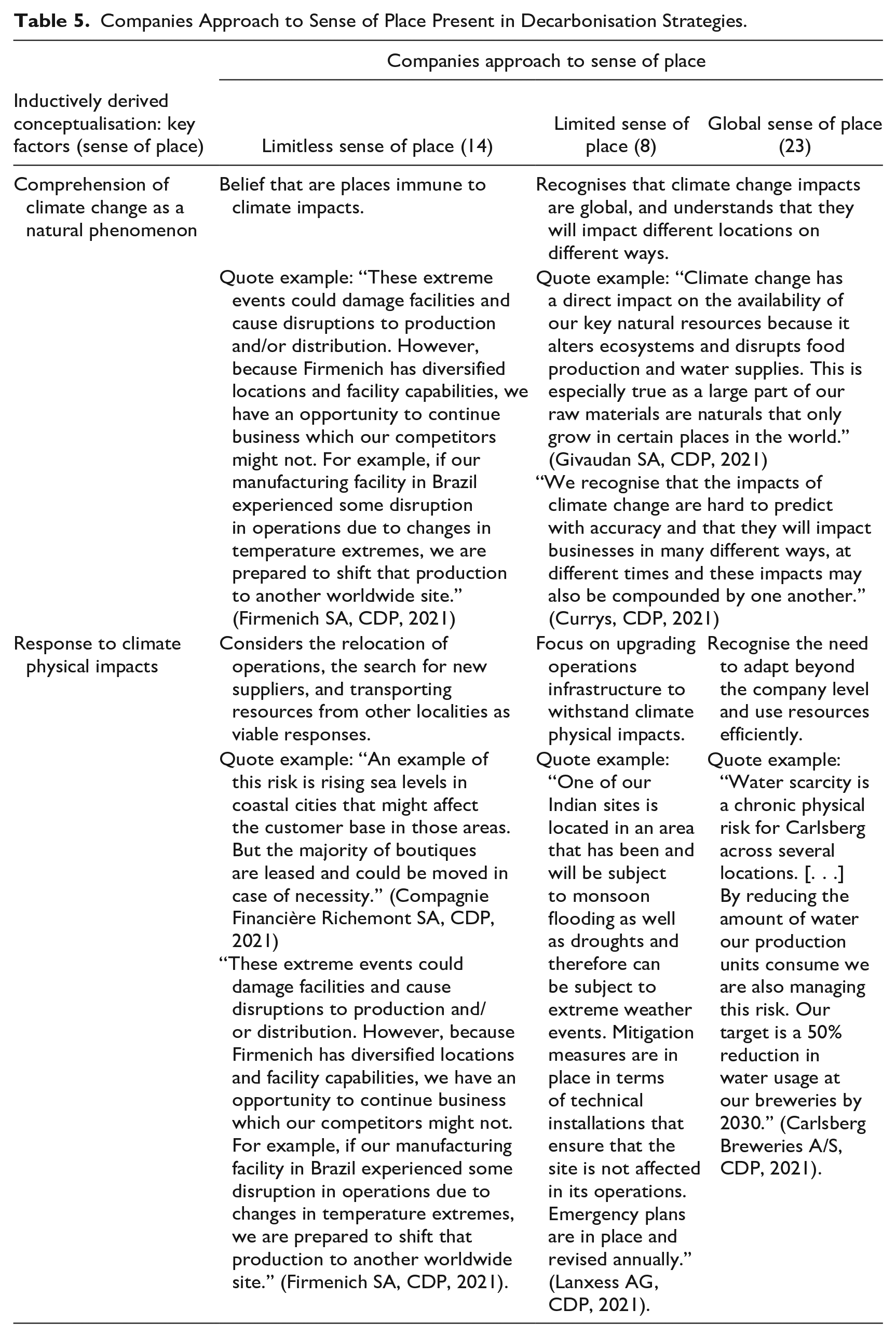
To derive factor (a), we analysed how companies described climate change and its associated impacts. One group of companies demonstrated a high comprehension of climate change as a natural phenomenon, recognising its diverse global impact. Their risk analyses also signalled an awareness of the indirect impacts of climate change (e.g., water scarcity). Meanwhile, another group recognised the changing climate but engaged with the phenomena superficially. They demonstrated a low comprehension of how impacts spread geographically or what indirect impacts to expect. Those companies also confounded mitigation with adaptation, stating that climate change does not present a risk because their carbon footprint is small. For example, Richemont, whose core business is linked with precious minerals from African countries, did not see itself as exposed to climate risks. The company stated that
Richemont’s carbon footprint is relatively small compared to that of energy-intensive industries. Whilst we do not see climate change as a significant area of direct risk for the Group, we recognise that managing the issues arising from climate change helps us to reduce our impact and thus contributes to one of the greatest challenges facing the planet (Riechmont sustainability report, 2021).
How companies responded to what they understood of climate change allowed a more apparent distinction between the three kinds of sense of place present among companies. By drawing on the companies’ response (factor b), a distinction was created among companies that comprehend the climate change phenomenon. Among companies that understand the phenomena, a subgroup presented what we call “a global sense of place.” Their global perspective emphasised the necessity of adaptation, and to that end, the importance of addressing operations beyond the company’s direct control, including suppliers. Moreover, they demonstrated an awareness that constraints in natural resource availability might be aggravated in the future by extending their concerns with resource efficiency beyond energy. An example are investments in research and incentives from Danone and Carlsberg to foster the adoption of regenerative agriculture practices by suppliers, in order to improve their resilience and mitigate emissions.
The second subgroup of companies had a sound understanding of the natural phenomena, but a limited sense of place. Thus, these firms solely focused on their directly controlled operations and ignored their dependence on global supply chains. Several of these firms focused on improving their manufacturing sites’ infrastructure, revealing an expectation that this could suffice to make them somewhat immune to climate impacts. In other words, such companies do not recognise how disruptions among external actors can impair their own operations. This quote from Lanxess offers a clear example where the company is concerned with securing the functioning of its facilities but do not consider that supply chains and other external structures might be impaired in the occasion of extreme weather events:
One of our Indian sites is located in an area that has been and will be subject to monsoon flooding as well as droughts and therefore can be subject to extreme weather events. Mitigation measures are in place in terms of technical installations that ensure that the site is not affected in its operations. Emergency plans are in place and revised annually (Lanxess, CDP, 2021).
The last subgroup comprises those that exhibit a poor understanding of climate change and, consequently, an inadequate response to the phenomena. These companies presented a limitless sense of place by treating environmental resources and places as infinite. Rather than integrate adaptation and resource efficiency into their responses, these firms proposed solutions based on the belief that some places are immune to climate change. This belief was present in proposals to relocate operations or stores to places less exposed to climate impacts or select new suppliers less exposed to climate risks. Companies ignored the possibility that such risk-free locations or suppliers do not exist. Likewise, they assumed that endless resources are available in ever-favourable geopolitical settings: for instance, one proposed solution to water scarcity was simply bringing the resource from other locations.
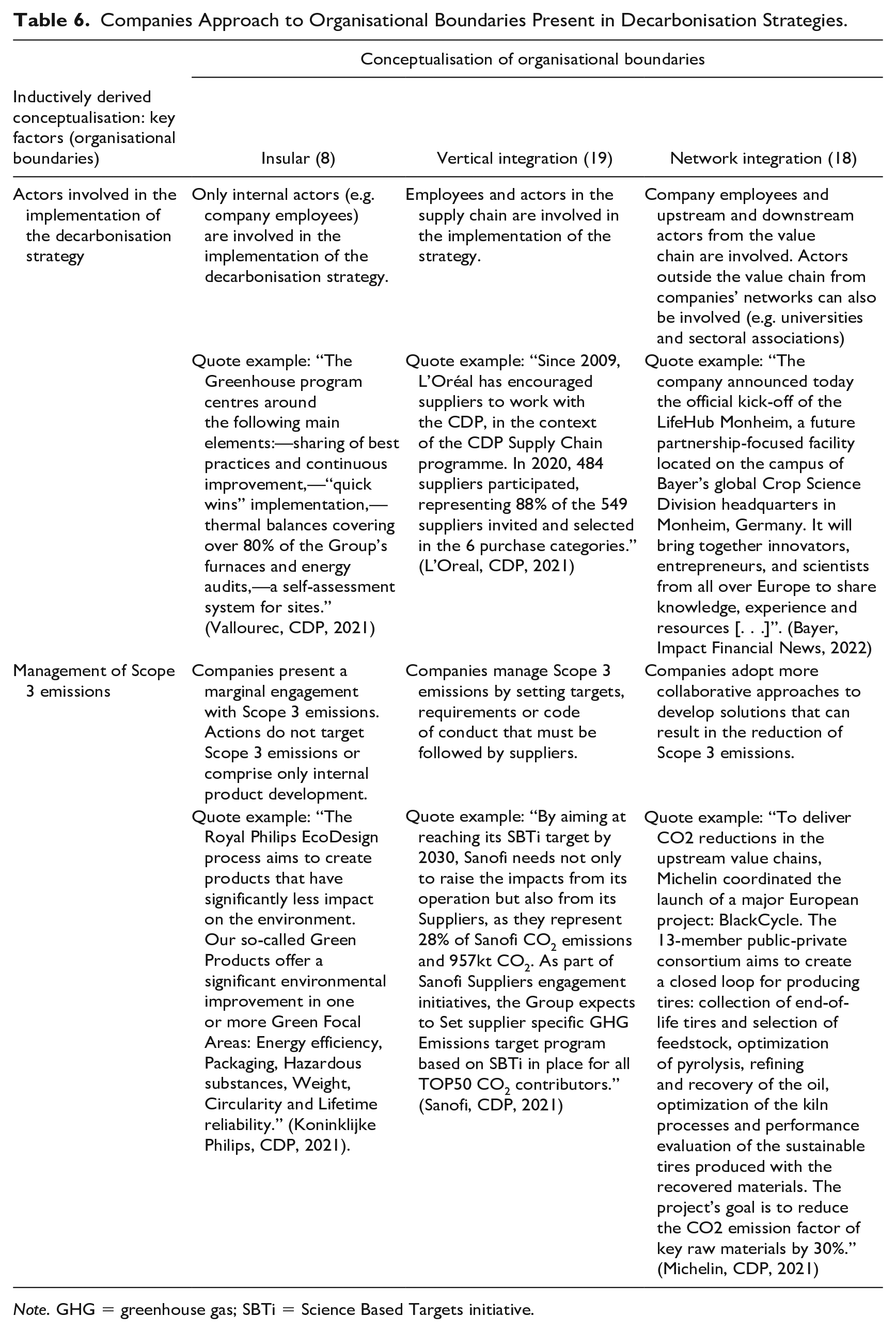
The final aspect we analysed was “organisational boundaries.” When firms create value, the associated carbon emissions are mostly indirect. Thus, companies should ideally go beyond the boundaries of their legal responsibility by incorporating the activities of actors in their value chain. We identified two key factors that distinguished companies’ conceptualisation of their organisational boundaries: (a) the value chain actors involved in the operationalisation of the strategy and (b) if and how companies were managing indirect Scope 3 emissions. Our analysis revealed three distinct boundary configurations: insular, vertical integration, and network integration (Table 6).
Companies Approach to Organisational Boundaries Present in Decarbonisation Strategies.
Note. GHG = greenhouse gas; SBTi = Science Based Targets initiative.
Regarding factor (a), the three types engaged with different actors to develop their decarbonisation strategy. Insular companies adopted the strictest view of organisational boundaries that aligned with legal liability. Thus, their decarbonisation solutions were limited to what the company’s employees could accomplish. Vertically integrated companies, meanwhile, incorporated suppliers into their strategies, but only in a transactional manner (i.e., suppliers had to meet the firm’s requirements). This approach resulted in responsibility being delegated more than shared. Finally, network integration companies extended their boundaries by engaging with other value chain actors apart from suppliers (e.g., clients). They also went beyond their value chain by engaging with universities or companies to develop projects targeting further emissions reductions.
Regarding factor (b), the practices that companies use to manage indirect Scope 3 emissions were considered (such as from logistics, purchased materials and services, product usage and disposal, etc.). These emissions can be substantial: Among our sample of manufacturing companies, Scope 3 emissions represented 90% of the total emissions on average. However, there are currently no regulatory requirements to address them. Thus, their inclusion in the strategy reflects companies’ intent to think beyond their operations. Companies that limit their decarbonisation strategies to emissions linked to their factories’ operations and energy consumption will likely achieve a net-zero target. However, a lack of consideration of value chain emissions would limit their absolute impact and ignore their exclusive opportunities to contribute to global mitigation targets.
Insular companies considered controlled assets and operations to be the boundaries of their organisation; therefore, their engagement with indirect emissions was relatively marginal. Some of those companies mentioned developing low-carbon products to reduce emissions, but most actions were linked to their operations. A minority of companies had an internal focus that was incompatible with their Scope 3 emissions targets. Meanwhile, vertical integration companies saw low carbon procurement as a critical avenue to reduce Scope 3 emissions. They often set targets, requirements, or codes of conduct for their suppliers in order to achieve emissions reductions. Finally, network integration companies sought to reduce indirect emissions by engaging with different actors to develop solutions or practices. One example is CNH Industrial, which collaborated with other companies to develop a heavy-duty electric vehicle: “IVECO, FPT Industrial, and Nikola Motor Company are currently collaborating on developing the Nikola TRE semi-truck, the first battery electric vehicle of its kind for European markets” (CNH Industrial, CDP, 2021). Companies with more fluid organisational boundaries were more likely to adopt this latter approach, although they occasionally exhibited transactional practices with their suppliers that mirrored their vertical-integration peers.
The Comprehensiveness of Companies’ Decarbonisation Strategies
Table 7 summarises how each company approached the three dimensions of time, sense of place and organisational boundaries, and how they relate to the level of comprehensiveness of strategies. The comprehensiveness of strategies was assessed by observing what kinds of targets companies have verified by SBTi (short-term targets, or net-zero targets that comprise both short and long-term). We also collected information on other operation elements, such as the content of targets, emission reduction targets, and emissions disclosure, available in Supplemental Material. Notably, the comprehensiveness of strategies interacts with our three key constructs.
Different Configurations Present in the Data and Their Frequencies.
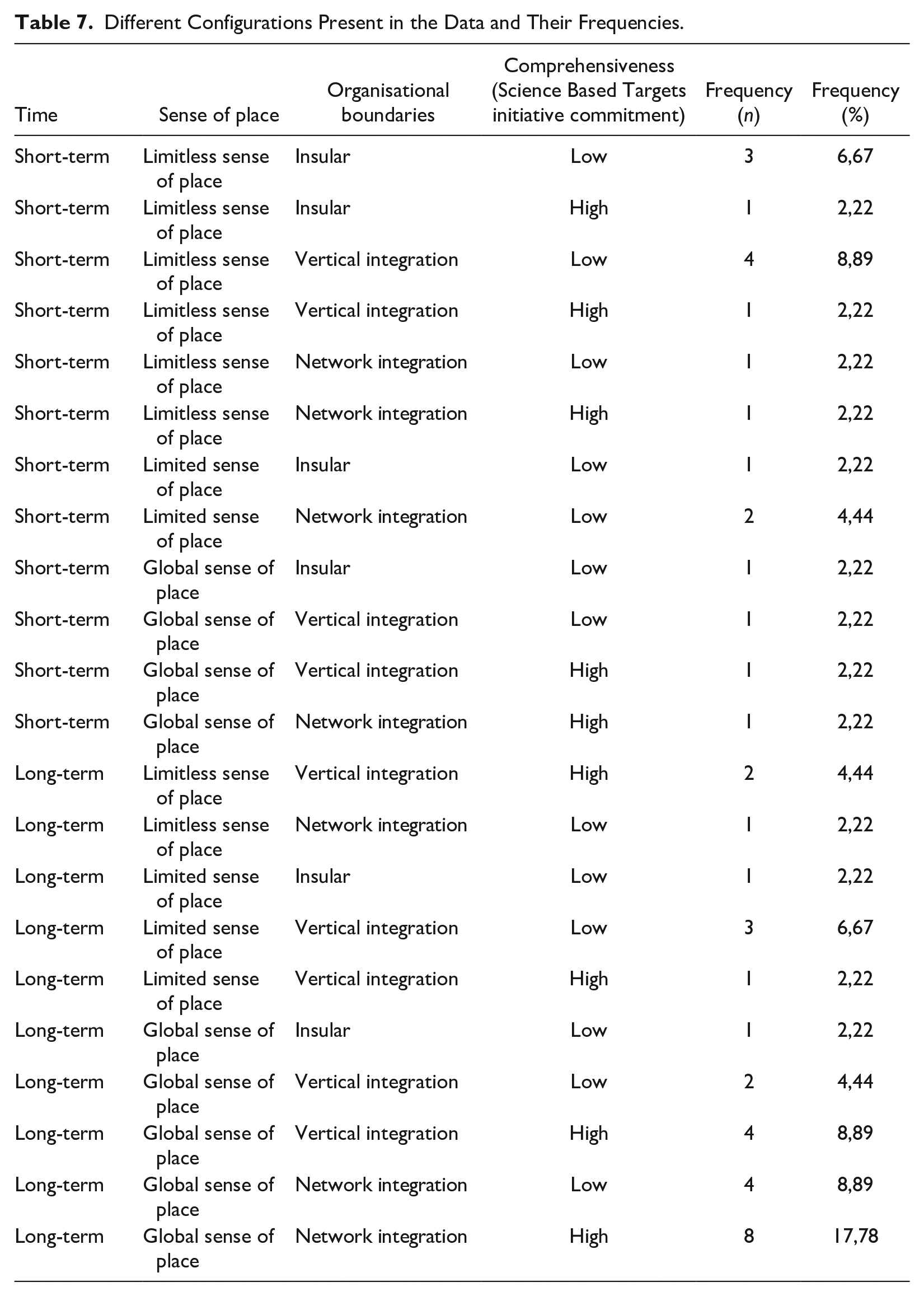
The first typical pattern we identified is companies adopting a short-term time frame for their strategies, often followed by a limitless approach to space. Such companies often focus on the immediate gains of emissions reduction (such as to their reputation) and fail to consider the real impact they can create in emissions mitigation. Consequently, those firms tend to concentrate on the emissions that matter for regulatory purposes (which are the direct Scope 1) and develop strategies with a low level of comprehensiveness. Companies with few to no actions targeting indirect emissions are more inclined to seek solutions inside the organisation’s formal boundaries. The internal focus will not necessarily impair companies’ achievement of their near-term targets for Scope 1 and 2 emissions but it does represent a shallow response to climate mitigation (Newell, 2020). In this way, firms can prioritise environmental management activities that might create financial benefits and are more visible to external stakeholders. We therefore propose the following:
Conversely, companies that adopt a long-term frame for their strategies often exhibit a global sense of place and tend to expand their organisational boundaries. Those firms better reconciled the trade-off between the speed and breadth of responses (Slawinski & Bansal, 2012), as well as proposed comprehensive strategies that could more significantly contribute to global climate change mitigation. Firms with high-comprehensiveness strategies had both short- and long-term net-zero targets. They were also more ambitious with their Scope 3 targets, with half aiming at more than a 50% absolute reduction. Those companies’ proposed actions encompassed available technologies and practices (e.g., renewable energy and energy efficiency) that would reduce their direct emissions, but also engagement with suppliers, value chain actors, and others to reduce the impact of utilised materials and develop low-carbon products. In short, these companies sought to go beyond an insular approach to organisational boundaries. We thus derive the following:
Regardless of how comprehensive their strategies were, most companies disclosed the full scope of emissions. Twenty-three companies reported reductions in all scopes, and generally, the disclosures were consistent with the targets adopted. Inconsistency is present in the case of eight companies with targets for Scope 3 emissions that do not report on metrics to measure their performance. Some companies aiming at vertical and network integration might use the theme of Scope 3 emissions opportunistically, since they recognise the need to address those, but are not reporting on indirect emissions.
Discussion
Previous studies have used the dimensions of time and place to theorise the motivations and content of business responses to climate change (Mazutis et al., 2021; Shrivastava & Kennelly, 2013; Slawinski & Bansal, 2012; Slawinski et al., 2017). In this study, we combined these two concepts with the notion of organisational boundaries to analyse the decarbonisation strategies of companies aiming for net-zero emissions. In this way, our paper is among the first to pursue a multi-dimensional understanding of companies’ decarbonisation strategies as we considered the firm, its value chain and its value network. By incorporating this dimension, our study advances the understanding of the significance that time and sense of place have in such strategies.
Studies have highlighted the crucial role of a process-time perspective in developing appropriate mitigation plans (Kaesehage et al., 2019; Nyberg et al., 2022; Slawinski & Bansal, 2012). Although most firms analysed utilised a clock-time approach to their strategies, a subset of long-term companies demonstrated the ability to develop comprehensive decarbonisation strategies. Our findings also address previous concerns that a long-term focus could undermine the temporal demands of climate change mitigation (Slawinski & Bansal, 2012). Instead, companies have formulated strategies that incorporate short- and long-term objectives. It is worth highlighting that a long-term time perspective is only one factor contributing to the development of comprehensive climate change strategies. The presence of a conceptualisation of place that incorporates a thorough comprehension of climate phenomena is crucial for the comprehensiveness of strategies. Scholars have explored the relationship between time and sense of place when responding to climate change (Bansal & Knox-Hayes, 2013; Mazutis et al., 2021; Nyberg et al., 2022). Our study contributes to this debate by illustrating that a limitless sense of place, irrespective of a long-term view, reduces companies’ urgency to act on climate change and the comprehensiveness of strategies. Therefore, having a sense of place that encompasses an understanding of climate change phenomena is critical.
Notably, scholars have questioned the ability of companies with a global structure to share a sense of place with the local communities on which they depend (Mazutis et al., 2021; Nyberg et al., 2022). Nevertheless, our research shows that half of global manufacturing companies can strategise about the many local communities on which their globally dispersed supply chains depend. Critically, companies with a global sense of place recognise the need for adaptation beyond their borders, which may result from their level of understanding of climate phenomena—an awareness that is lacking among their limited peers. Firms that better understand climate change conceptualisation realised the need to plan actions beyond the business level. This led to more comprehensive strategies. Recognising how their activities are interconnected with other actors and natural ecosystems enables companies with a global sense of place to acknowledge that they are unlikely to attain the necessary mitigation and adaptation outcomes in isolation. Collaborating with networks within and beyond their value chains, such companies have established an approximation of what Williams et al. (2021) call cross-scale resilience.
Previous research has examined how companies work with external actors within the value chain to promote decarbonisation (Dahlmann & Roehrich, 2019). However, there is a lack of in-depth understanding of how these companies limit their impact. Our analysis identifies three levels of company strategies: insular, vertical integration, and network integration. The boundaries of these strategies are affected by both the time and place dimensions. Firms interact with other actors within the value chain in distinct ways based on whether they possess a limited or a global sense of place. Companies with a limited sense of place tend to concentrate on achieving vertical integration of suppliers within their strategies. However, those with a global perspective emphasised horizontal collaboration with networks of actors, both within and outside their value chains. Engaging value chain actors in comprehensive strategies is a common approach, but engagement without a clear understanding of the phenomena or a long-term perspective can result in limited impact.
Contribution to Research on Climate Disclosure
Previous studies have exposed how adopting net-zero targets and using intermediary score systems such as CDP can serve as a symbolic management practice to obtain social legitimacy (Callery, 2022; Coen et al., 2022; Dahlmann et al., 2019). Our results confirm that some strategies seem more adequate to obtain social legitimacy than climate mitigation. However, we content that is difficult to determine whether such discrepancies intentionally seek to mislead stakeholders or instead reflect firms’ limitations in developing adequate decarbonisation strategies (Berger-Schmitz et al., 2023). Still, these seemingly symbolic practices may achieve a tangible positive impact beyond an unearned social legitimacy. Among companies that presented a short-term perspective and a limitless/limited approach to places, a small group elaborated strategies that targeted their suppliers and went beyond insular approaches to include indirect emissions. Those companies may have developed such strategies in an effort to mimic peers’ practices and bolster their own public image. Nonetheless, their engagement with suppliers could ultimately contribute to mitigation beyond their internal operations, even if they still need to fully comprehend what climate change means to their business. This approach is distinct from previous studies in which companies compressing time and space adopt a narrow approach to sustainability issues (Mazutis et al., 2021) and would perhaps focus only on direct emissions. As such, the use of symbolic practices is one of the possible factors that positively moderates the ability of companies with a short-term perspective and a limitless sense of place to develop vertically integrated strategies that comprehensively explore opportunities to reduce carbon emissions.
Managerial Implications
Our analysis shows that companies with a better understanding of the climate change are more likely to develop comprehensive strategies. There is therefore a need for skills development to enable managers to better understand climate change, its risks and opportunities, and to develop strategies that can have a greater impact on reducing emissions. However, even companies that took a long-term view had a global sense of place, and considered multiple levels when devising actions, still fell short in proposing decarbonisation strategies that challenge current business models. Current regulations and frameworks provide companies with the structure of a decarbonisation strategy, but a knowledge gap exists on operationalising strategies into multi-dimensional actions that can contribute to global climate mitigation. This lack of disruptiveness suggests a limited capacity to apply future thinking and innovate for a decarbonised world. After all, strategy development primarily draws on fact-based analyses that produce generalisations about historical facts or experience (Lê, 2013; Waddock et al., 2015). These tools may be useful for identifying short-term impacts, but they limit the capacity to imagine alternative realities with different technologies, markets, institutions, and habits (Giddens, 2009; Lê, 2013). This signals a need for new instruments that account for the dynamics and uncertainties of transitions and assist managers in elaborating on new solutions.
Limitations and Future Research
This paper features some limitations. First, our sample only included manufacturing companies. While this sector is responsible for a high level of emissions, future studies should include other sectors (e.g., energy and services). Our sample also contained only companies with verified net-zero goals; however, an analysis of companies that have decarbonisation strategies without verified targets might reveal new approaches to time, sense of place and organisational boundaries. Second, our use of a purposive sampling strategy means that our empirical results cannot be generalised. However, their relevance lies in exposing that a lack of clarity on the need for absolute emissions reductions can result in actions with a limited impact—even among companies that are perceived as climate leaders and have verified net-zero emissions targets. Future research could increase the generalisability by using other methodologies (e.g., surveys). The third limitation involves our use of CDP questionnaires and self-reported information among the data sources. While those questionnaires are verified and expected to contain information aligned with companies’ actions, they may not represent a complete picture. Finally, this study utilised a cross-sectional analysis. Future research could incorporate more longitudinal data to see how companies’ perceptions of these three dimensions evolve over time, if those impact the content of strategies and emissions performance.
Our findings also illuminate theoretical gaps that future studies can address. Multiple companies in our sample incorporated multi-dimensions into their strategies, but only a few mentioned actions such as adopting circular practices or changing business models. The dimensions that we focused on could not explain why companies pursued actions with a more systemic character—an opportunity for future research. Likewise, future studies can further investigate the factors that enable a multi-dimensional view by exploring how institutional settings can interfere with companies’ decarbonisation strategies (Kaesehage et al., 2019; Slawinski et al., 2017).
Finally, our findings hint at the need for more conceptual development about the operational elements of an adequate response with the potential to advance sustainability transitions. After all, decarbonisation strategies must shift paradigms: from reducing emissions intensity to one of reducing global absolute emissions (Slawinski et al., 2017; Wright & Nyberg, 2017). Classifications of different carbon mitigation strategies and ways companies can respond to climate change have been developed in the literature (Kolk & Pinkse, 2005; Vieira et al., 2022; Weinhofer & Hoffmann, 2010), but actors like the CDP are the leading evaluators of climate responses quality. Our empirical analysis unpacked the range of actions companies are considering in decarbonisation strategies and their level of operation (from the firm to the value chain level). However, to elaborate on what requires a climate change response able to reduce absolute emissions and advance sustainability transitions, more conceptual development is necessary.
Conclusion
This study adopted a novel tri-dimensional framework that integrated time and sense of place with organisational boundaries to analyse the link between the targets companies set and the decarbonisation strategies they propose. Our analysis revealed how a long-term approach to time and a limited or global sense of place are crucial to engaging with suppliers and other value chain actors. However, only companies with a long-term focus and a global sense of place pursued collaboration with actors both inside and outside their value chain. Expanding the organisational boundaries through network integration offers companies the most extensive opportunities to mitigate climate change. Meanwhile, companies with a short-term perspective and a limitless approach to place will make minimal contributions to mitigating emissions along their value chains. Ultimately, companies that are serious about climate change mitigation and adaptation must plan for the long-term and consider multiple levels: from their internal actions up to the indirect effects of their value chain.
Supplemental Material
sj-xlsx-1-oae-10.1177_10860266241229226 – Supplemental material for Responding to a Wicked Problem: How Time, Sense of Place, and Organisational Boundaries Shape Companies’ Decarbonisation Strategies
Supplemental material, sj-xlsx-1-oae-10.1177_10860266241229226 for Responding to a Wicked Problem: How Time, Sense of Place, and Organisational Boundaries Shape Companies’ Decarbonisation Strategies by Leticia Canal Vieira, Mariolina Longo and Matteo Mura in Organization & Environment
Footnotes
Declaration of Conflicting Interests
The author(s) declared no potential conflicts of interest with respect to the research, authorship, and/or publication of this article.
Funding
The author(s) received no financial support for the research, authorship, and/or publication of this article.

Supplemental Material
Supplemental material for this article is available online.
Notes
Author Biographies
References
Supplementary Material
Please find the following supplemental material available below.
For Open Access articles published under a Creative Commons License, all supplemental material carries the same license as the article it is associated with.
For non-Open Access articles published, all supplemental material carries a non-exclusive license, and permission requests for re-use of supplemental material or any part of supplemental material shall be sent directly to the copyright owner as specified in the copyright notice associated with the article.
