




Abstract
Because corporate social responsibility (CSR) is potentially beneficial for companies, it is important to understand the factors that improve a company’s CSR practice. Scholars hypothesize that facilitating learning organization characteristics, which are divided in characteristics at the organizational and the operational level, may improve CSR implementation. These characteristics stimulate companies and their members to be critical, learn from the past, and embrace change, but there is limited empirical evidence of this approach. This study addresses this gap by surveying 280 CSR professionals and performing bootstrap mediation analyses to test multiple hypotheses. Learning organization characteristics at the organizational level, play a key role in supporting CSR implementation: leadership for learning, system connection, and group learning show a direct relationship with CSR implementation. It is striking that the role of the learning organization characteristics at the operational level is only indirect; the organizational characteristics mediate their relationship with CSR implementation.
Keywords
Introduction
Business organizations increasingly acknowledge the importance of corporate social responsibility (CSR; Dunphy et al., 2007) as a way to work on the grand social challenges presented in the field of sustainable development. These issues, sometimes referred to as wicked problems (see Rittel & Webber, 1973), can be characterized by their complexity; environmental impacts, social problems, and economic conditions have to be addressed simultaneously, are demanded by inside and outside stakeholders with sometimes colliding interests and value frames, and may have unintended negative consequences or side effects (see Section 2.1). Implementing CSR is complex and means dealing with multiple dilemmas (Carollo & Guerci, 2018). It is this complexity that forces organizations to increasingly adopt a learning mindset (see Section 2.2).
A learning organization is one that enables and stimulates the organization and its members to experiment, to learn from past experiences, and to be able to adapt quickly to changing demands (Marsick & Watkins, 2003). Whereas Senge (1990) describes the importance of developing core learning capabilities (i.e., building a shared vision, developing and testing mental models, and developing systems thinking) for implementing CSR, Jamali (2006) concludes that companies should have specific learning characteristics (e.g., learning culture, team building, and shared purpose). However, these studies are predominantly theoretical (Molnar & Mulvihill, 2003). Siebenhüner and Arnold (2007) were among the first to assess empirically the relationship between learning organizations and CSR. They conclude that implementing CSR and learning organizations are connected via learning mechanisms. Nevertheless, it is unclear which mechanisms should be addressed.
In sum, the association between learning organizations and CSR implementation has been explored mainly conceptually, and empirical research is limited to case studies (e.g., Cramer, 2005; Siebenhüner & Arnold, 2007), whereas there is need for more clarity about the actual associations. In addition, more clarity is needed about which specific characteristics of learning organizations (e.g., system approach, empowerment) actually affect CSR implementation. Hence, in this study, the following research questions are answered: (a) to what extent is there an empirical association between learning organization characteristics and CSR implementation and (b) to what extent do learning organization characteristics differ in their contribution to CSR implementation.
Theory originating from the learning organization and CSR implementation literature is used to explore the relationship between both strands of literature, on the assumption that certain characteristics of the learning organization might support CSR implementation. To go beyond theorizing about the relationship and collect empirical evidence, in this study, we empirically tested the seven learning organization characteristics developed by Marsick and Watkins (2003). These characteristics are the following: (a) continuous learning, (b) dialogue and inquiry, (c) group learning, (d) leadership for learning, (e) system connection, (f) empowerment, and (g) information systems and can roughly be divided in two levels, with the first three characteristics referring to the operational level and the latter four to the organizational level. This study is considered exploratory as it is the first to test empirically the relationships between learning organization characteristics and CSR implementation beyond the level of a single case study.
The outcomes of this study contribute mainly to the literature in the field of CSR implementation. As revealed by Aguinis and Glavas (2012), only a limited number of studies have been conducted on the micro-level contribution to CSR implementation, let alone across the different levels in organizations; and studies undertaken focus on the role of CSR managers, identifying competencies and roles (e.g., Osagie et al., 2019) and the role of supervisors (e.g., Aguilera et al., 2007) or take only one characteristic of the learning organization into account (e.g., inquiry in the case of Lankester, 2013). Analysis of all learning organization characteristics together enables the sketching of a comprehensive picture of the micro-level contribution to CSR implementation, and how it is facilitated by characteristics at the organizational level like leadership for learning, system connection, and group learning. Although the primary added value for theory lies in the field of CSR implementation, theory development in the field of learning organizations also benefits from our efforts to unravel the intricate relationship between the seven characteristics of learning organizations and CSR implementation. Yang et al. (2004), for instance, distinguish between operational-oriented characteristics and organizational-oriented characteristics; but, whereas Yang et al. (2004) argue that group learning is part of the cluster of operational-oriented characteristics, this study claims that group learning should be part of the cluster of characteristics at the organizational level.
In the next section, the connection between learning organization characteristics and CSR implementation is further developed: First, by explaining why CSR implementation is such a complex organizational task; next, by exploring why this complexity demands a learning organization approach; and, finally, by formulating hypotheses that show how the connection is studied.
CSR Implementation and Its Connection With Learning Organizations
The theoretical framework addresses three relevant elements: first, the complexity of CSR implementation; second, its accompanying conditions on an organizational level; and, third, why a learning organization approach is needed to address CSR implementation. The characteristics of a learning organization are then explained and hypotheses are developed. These hypotheses guide this research.
Complexity of CSR Implementation
CSR implementation refers to the process of implementing organizational activities needed in order to achieve CSR-related objectives (Maon et al., 2009) and should be seen as an unfolding continuous change process (Jamali, 2006). This means that, although the word implementation might sound like there is at some point a finished state, CSR implementation is continuously emerging and there is never a finished state. This complexity is caused by multiple dilemmas faced by organizations while implementing CSR. CSR, the business approach to sustainability (Marrewijk & Werre, 2003), therefore represents complex achievements because of three dilemmas (Carollo & Guerci, 2018). The first dilemma identified by Carollo and Guerci (2018) is the dilemma between business goals as such and value creation for society at large. CSR-implementing organizations, on the one hand, commit to the notion of going beyond an exclusive profit-driven focus, but on the other hand, profit remains a dominant parameter to measure success (i.e., shareholder value). The second dilemma is the difference between insiders’ and outsiders’ perspectives. Although CSR concerns implementation within organizational boundaries, impacts and claims are not restricted to organizational boundaries. The context in which the organization manifests itself is of increasing importance and requires the inclusion of outside stakeholders with their different demands and claims in comparison with the inside stakeholders (Jamali, 2008). The complexity of this dilemma is raised even more by the increasing number of stakeholders like governments and non-governmental organizations involved in CSR implementation and the fact that they often have conflicting value frames and ideologies (Peterson, 2009). The third and final dilemma is the short-term versus the long-term dilemma. Nowadays, organizations need to be able to face the developments that emerge in their day-to-day work practices while simultaneously working on long-term developments with their—sometimes even unknown—consequences. Given these dilemmas, it is clear that CSR is not a development or task that can be implemented in a linear fashion, nor it is finished on a certain day. These three dilemmas together make implementing CSR exceptionally complex, making CSR implementation an organizational task that should be considered as an outlier in the business context and therefore in need of special treatment in research and literature.
Conditions for CSR implementation
According to Cramer (2005), there is no single approach, strategy, or scenario for CSR implementation. CSR is a search process that requires companies, their leaders, subordinates, and stakeholders to develop their own company-specific people–planet–profit balance in both the short and the long term. Therefore, multiple scholars suggest that CSR implementation needs involvement and actions on multiple organizational levels to become (more) effective (Aguinis & Glavas, 2012; Cramer, 2005; Elkington, 1997). For example, whereas on the macro-level one can think of working together with the local community, on the meso-level, leadership is needed to drive change. At the same time, on the micro-level, interventions with regard to employee commitment to CSR are needed to realize the required changes.
Although there is no single approach to CSR, it is clear that, to implement CSR effectively, CSR principles should be thoroughly implemented within the organization (Jamali, 2008). This involves more than implementing CSR in isolated business processes (e.g., sustainable procurement) or implementing a code of conduct; it requires an ambitious CSR strategy, long-term commitment, and planned changes in the company’s organization, encompassing a variety of activities.
Given the complex nature of CSR and the importance of a multilevel approach to CSR implementation, conditions to accelerate it are explored in the literature. One of the necessary conditions on the micro-level is a safe (learning) environment in which both employees and external stakeholders are seen as critical partners who are invited to share their opinions and come up with new (creative) ideas to improve CSR implementation (Cramer, 2003). The different dilemmas that characterize the complexity of CSR implementation need different perspectives and inputs to try to address them as well as possible. This means that organizations should create an environment in which both employees and external stakeholders are encouraged to share their opinions and ideas, even when these ideas and opinions go against the grain. Next, organizations that want to make progress in implementing CSR should engage in continuous learning (Doppelt, 2003) between departments. CSR implementation should not be realized solely by implementing standalone projects. Of course, pilot projects are part of the implementation trajectory, but all business facets and departments should be taken into account; this requires a climate of continual exchange and learning. Finally, CSR implementation requires engagement across organizations and interaction with the environment and learning with external stakeholders. Consequently, the business should no longer be seen as the system, but should open up and see itself as part of a larger system (Maon et al., 2009). Therefore, crossing the boundaries of the business is crucial for the success of CSR implementation. In summary, the unique nature of CSR implementation requires the organization to be safe enough for staff members to learn on the individual level, that this learning takes place continuously between different departments, and that the organization is open to learning from others outside the company.
Learning Organization Theory
The concept of the learning organization increased in popularity after Peter Senge (1990) published his book The Fifth Discipline, in which he describes learning organizations as organizations with both adaptive capabilities and the ability to create alternative futures. In it, he outlines how a company can become a learning organization through systems thinking, commitment by individuals, realizing one’s potential, being open to new ideas, building shared visions, and team learning. Despite its popularity, the concept of the learning organization was initially criticized for failing to provide practitioners with practical knowledge and for a lack of agreement regarding the definition of learning organization, making it difficult to integrate the findings of learning organization research (Carley & Harrald, 1997; Huysman, 2000). Later, fresh insights delivered a more compelling vision of learning organizations, offering practitioners concrete recommendations and practical tools for assessing organizations’ learning characteristics (e.g., Garvin et al., 2008). The learning organization concept became an increasingly important area of empirical research (Örtenblad, 2002) and has been related to several business outcomes, including organizational dynamic capabilities (Hung et al., 2010) and financial performance (Ellinger et al., 2002).
Nowadays, learning organizations are studied from various perspectives. Örtenblad’s (2002) typology of the learning organization describes four conceptualizations (organizational learning, learning at work, learning climate, and learning structure). Watkins and Marsick (1993) combined these perspectives into one framework, operationalized and validated this framework, and developed an instrument for measuring learning organization characteristics (Marsick & Watkins, 2003; Örtenblad, 2002). Although their model could be validated in a more sophisticated way (Kim et al., 2015), it is the only model that works with distinctive items and covers all four learning organization levels (individual, group, organization, and society; Yang et al., 2004). Therefore, their framework was used in this study.
As stated, learning is a process that occurs at several discrete levels within organizations (Kim et al., 2015). Each level is represented by one or more characteristics. The individual level includes the characteristics continuous learning, referring to the extent to which a company creates continuous learning opportunities for its employees, and dialogue and inquiry, referring to the extent to which a company promotes inquiry-based behavior and dialogue among its employees. The group level is represented by one characteristic, group learning, referring to the extent to which a company encourages collaboration and learning from and with one another. The organizational level is covered by three characteristics: (a) empowerment toward a shared vision, referring to the extent to which a company involves its employees in developing and owning a collective vision; (b) embedded information systems, referring to the extent to which a company creates and maintains systems designed to capture and share knowledge; and (c) leadership for learning, referring to the extent to which a company provides leadership in order to encourage learning and to link these efforts to strategic objectives. The societal level is covered by system connection, referring to the extent to which a company is connected to the communities in which it operates.
Learning Organization Characteristics in Relation to CSR Implementation
As stated, in earlier contributions, the association between learning organization characteristics and CSR implementation has been developed theoretically. However, empirical evidence is hardly available. Therefore, this study adopts a learning organization lens to explore what could support CSR implementation: a safe learning environment (Cramer, 2003), continuous learning (Doppelt, 2003), and going beyond the organizational system level (Maon et al., 2009) are identified as characteristics that might support CSR implementation. Hypotheses are developed by screening the existing empirical literature on learning organizations and CSR. Watkins and Marsick’s (1993) seven characteristics are used as the starting point. Although these seven characteristics do not exactly match the theoretical assumptions and cover an additional range of aspects, given this study’s exploratory character, it was decided to include all seven. In the following sections, existing empirical evidence per characteristic is unraveled, and unveiled mechanisms are summarized in hypotheses.
Continuous Learning
Stimulating continuous learning and adaptive competencies among employees is particularly useful in the context of CSR implementation. Empirical evidence supporting the importance of employee learning is provided by Benn et al. (2013), who interviewed leaders in sustainability education (e.g., professors and education specialists), Fenwick (2007), who interviewed HR managers, HR directors, and owner-managers of small businesses, and Law et al. (2017) who conducted case studies in Japanese companies. These studies conclude that the lack of CSR implementation—or ineffective CSR implementation—can be attributed, at least in part, to a lack of education and/or training opportunities and a lack of connections between important systems. Law et al. (2017) conclude that proper training approaches and organizational commitment encourage the transformation of employees’ values, norms, and behaviors toward sustainability, and as CSR challenges are ever-changing, learning should be a continuous process. Hence, the following hypothesis is formulated:
Dialogue and Inquiry
Dialogue and inquiry activities stimulate reflection on one’s work behavior. From Lankester’s (2013) case study, it can be concluded that active experimentation facilitates critical reflection on practices and questioning of the self, others, and cultural norms, and consequently contributes to an enhanced sense of social responsibility. Another example originates from Lyon (2004), as he states that companies that encourage staff to critically question corporate objectives, standards, and practices are likely to be effective in implementing CSR. Hansen et al. (1997) show that encouraging stakeholder dialogue has a high potential to introduce new knowledge into the organization where CSR should be implemented. Furthermore, dialogue helps organizations clarify their boundaries and their position on certain CSR issues (Müller & Siebenhüner, 2007). In sum, evidence collected shows that promoting dialogue and stimulating inquiry encourage employees to reflect on their own work behavior and adopt work behaviors that support CSR implementation. Such reflection and adaptation is necessary to account for the evolving character of CSR. Hence, the following hypothesis is formulated:
Group Learning
Employees are better off when they work and learn in groups, as this gives them access to various modes of thinking, and an opportunity to review their own ideas. This stimulates both creativity and innovativeness (Marsick & Watkins, 2003; Senge, 1990), and a save learning environment, which is essential to discuss all viewpoints with regard to CSR challenges. In the field of CSR implementation, Siebenhüner and Arnold (2007) show that working groups are effective ways to promote higher order learning processes. In these groups, considerable information exchange takes place and sustainability-related knowledge is generated, thereby increasing CSR implementation. Based on this finding, the following hypothesis is formulated:
Empowerment Toward a Collective Vision
A corporate culture that encourages employees to ask for feedback and to participate in decision making will stimulate employees’ feeling of empowerment (Choi, 2007; Gagné et al., 2000). Empowered employees believe that they are held accountable, at least in part, for the change and will therefore behave in a manner that supports the change and will achieve satisfaction in initiating and realizing these changes (Gagné et al., 2000). In the field of CSR implementation, Müller and Siebenhüner (2007) show that, if staff members from all hierarchical levels join the learning process, a broad basis for CSR implementation can be achieved, including the broad acceptance of emerging objectives, mission, and vision. Based on these findings, the following hypothesis is constructed:
Embedded Information Systems
Information systems such as meetings, training programs, and newsletters are important elements in any planned organizational change. These systems inform employees regarding the challenges faced by the company and the need for change (Armenakis & Harris, 2002; Chiang, 2010) and, because employees know more about the need for change, they are more willing to change. Siebenhüner and Arnold (2007) show that, in one of the cases that they studied, a handbook was developed that explained company-specific ecological criteria. The handbook contained checklists that needed to be completed by the employees and served as a tool for knowledge diffusion within the company, so that other employees could learn from it as well. This approach appeared to be successful during CSR implementation. Therefore, it is hypothesized that:
Leadership for Learning
Employees have a unique relationship with their managers and leaders. These relationships shape the behavior that is expected of all parties involved (Furst & Cable, 2008). Siebenhüner and Arnold’s (2007) findings show that a participatory and supportive leadership style fosters employee motivation and supports active research and generation of new knowledge in the CSR field, whereas a more directive and consultative styles tend to inhibit the open flow of information and new knowledge. Furthermore, Blok et al. (2015) and Wesselink et al. (2017) show that leaders influence their employees’ learning with respect to CSR by demonstrating sustainable behavior themselves or, as discovered by Ramus and Steger (2000), by actively promoting it among employees. Such leadership may help internalize CSR, making it part of one’s daily tasks and as such ensuring that CSR challenges are (continuously) addressed. Therefore, the following hypothesis is formulated:
System Connection
Learning organizations operate as open systems, interacting and exchanging feedback with their communities. Employees learn through these interactions, and work practices are adjusted based on the information received (Marsick & Watkins, 2003). These characteristics enable companies to effectively interact with key stakeholders. This interaction is essential for CSR implementation, as (a) a company’s CSR program should address the needs and concerns of its stakeholders and (b) a continuous constructive dialogue will ensure that the voices of stakeholders are heard and integrated in the program, ensuring that the program remains aligned to these needs (Maon et al., 2009). Hence, the following hypothesis is formulated:
Above, direct associations between learning organization characteristics and CSR implementation are presented. There are no examples of studies that incorporate the whole set of learning organization characteristics. Earlier findings on the incorporation of single characteristics suggest that a more complex relationship may exist between them. Yang et al. (2004) report that some learning organization characteristics can mediate the effect of other learning organization characteristics with respect to organizational outcomes (e.g., knowledge and financial performance). The rationale behind this indirect effect is that learning organization characteristics can be separated into two groups. One group, operational learning characteristics, includes continuous learning, dialogue and inquiry, group learning, and empowerment toward a collective vision. Operational means that these characteristics can be found within the operations of an organization. The second group, consisting of organizational facilitators is installed by the organization and include embedded information systems, leadership for learning, and system connections. The first group—operational characteristics—benefits from having the second group of organizational characteristics (Yang et al., 2004). This suggestion is supported by Heugens (2006). He shows in his study that individual CSR-related competencies developed on the basis of experiences with CSR (i.e., continuous learning) can become group competencies through processes of acquisition, reflection, and application at group level (i.e., group learning). Next, managers, in their role as leaders for learning, combine new insights gained from individual or group reflections and amend existing CSR efforts with, consequently, (improved) organizational CSR capabilities (Heugens, 2006). Hence, the effects of operational characteristics (i.e., continuous learning, dialogue and inquiry, group learning, and empowerment) on CSR implementation seem to be mediated by organizational facilitators (i.e., embedded information systems, leadership for learning, and system connections). Therefore, the final hypothesis reads as follows:
Figure 1 summarizes all hypothesized relations.
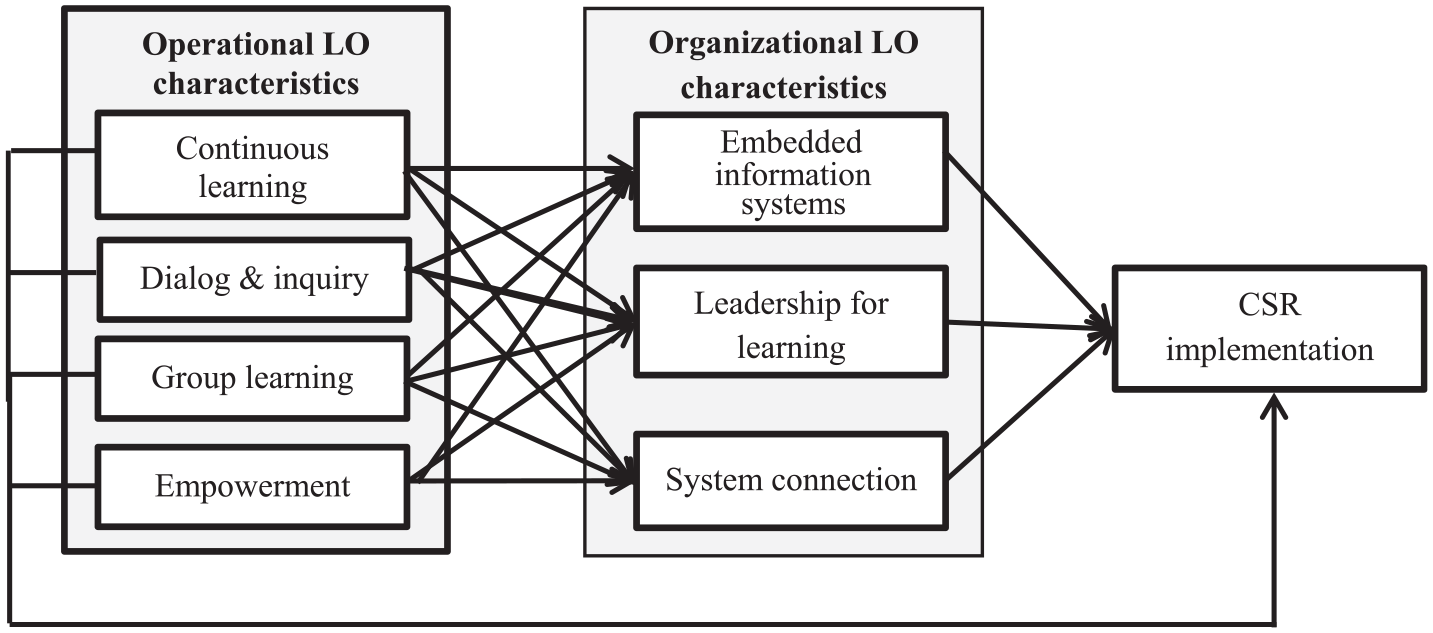
Hypothesized relations between variables at stake.
Material and Method
Sample and Procedure
The primary objective of this study is to assess the specific characteristics of learning organizations that actually influence effective CSR implementation and second, to investigate the intricate relationship between these characteristics. Therefore, a quantitative study was performed. The data were collected as part of a separate study among Dutch companies conducted by CSR Netherlands (in Dutch, MVO Nederland) 1 ; questions relevant for this study were incorporated into their questionnaire, which was distributed among the members of trade associations that were partners of CSR Netherlands. These trade associations were contacted and invited to send the questionnaire to the principal CSR professionals in their member companies. Companies that have a CSR professional show their commitment to work on CSR and therefore the sample should be seen as a convenient sample.
A total of 280 CSR professionals signed the informed consent form and completed the questionnaire anonymously; these professionals worked in either the service industry (n = 191) or the manufacturing industry (n = 89). Each professional was either an owner-manager (n = 125), a CSR director or manager (n = 104), a principal CSR staff member (n = 39), or other CSR-related professional (e.g., R&D professional, senior CSR advisor, or product manager; n = 12).
Measures
Learning Organization
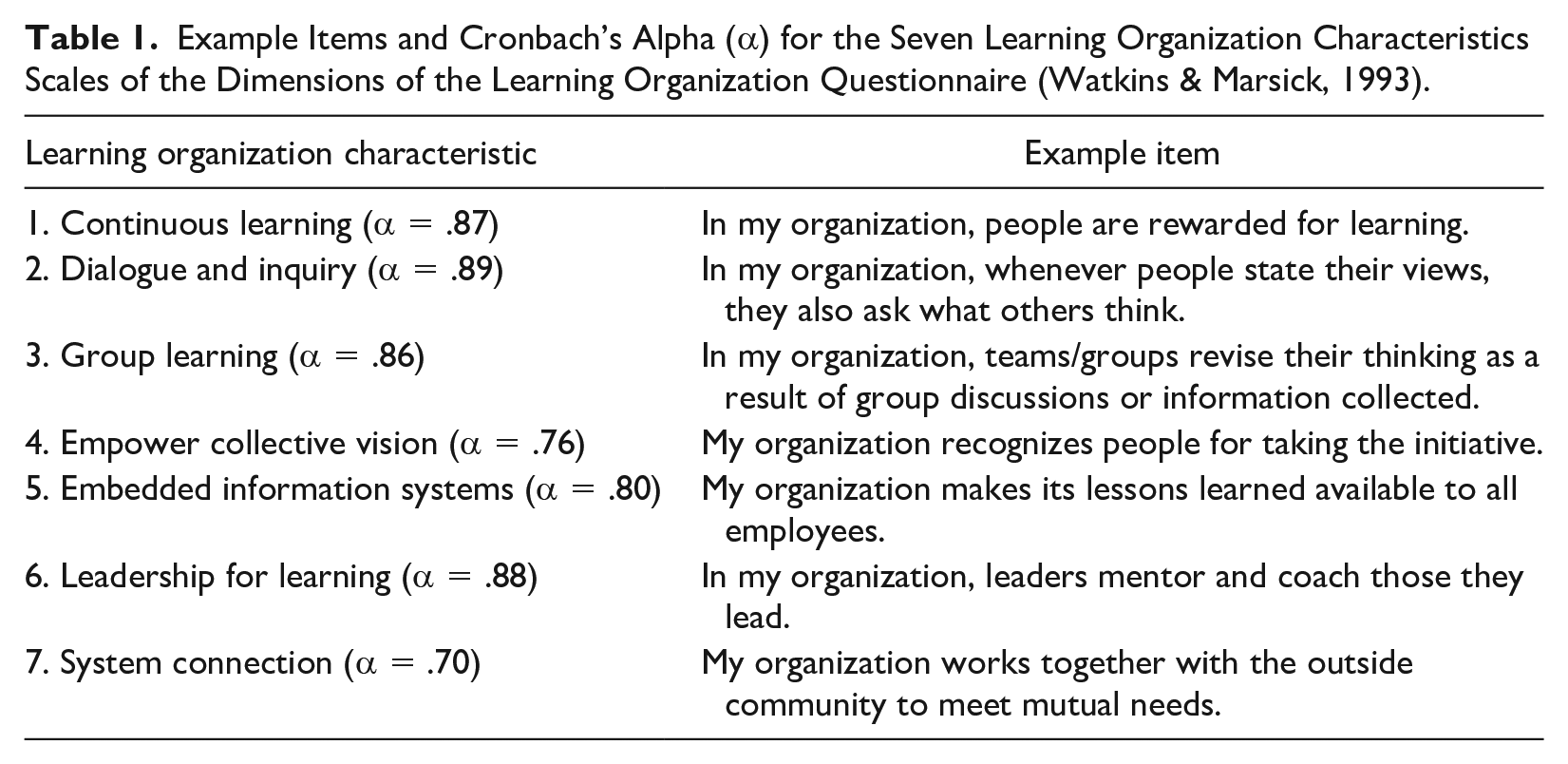
The abbreviated version of the Dimensions of the Learning Organization Questionnaire (DLOQ) was used to measure learning organization characteristics. The DLOQ (Watkins & Marsick, 1993) describes seven learning organization characteristics from the perspective of action requirements and is therefore used to generate practical implications (Yang et al., 2004). The abbreviated version is reported to have better validity than the extended one (Yang et al., 2004) and includes 21 items—three for each of the seven characteristics—and response choices ranging from 1 (almost never true) to 6 (almost always true). A higher mean score indicates more prevalent levels of the respective learning organization characteristics. Table 1 provides example items for each of the seven characteristics; all scales were considered to be reliable based on Hair et al. (2010), who specify a threshold of .70 for Cronbach’s alpha.
Example Items and Cronbach’s Alpha (α) for the Seven Learning Organization Characteristics Scales of the Dimensions of the Learning Organization Questionnaire (Watkins & Marsick, 1993).
A confirmatory factor analysis (CFA) was performed on the availability of a predetermined structure for this measurement. Through the CFA, we could assess whether the learning organization data fit the measurement model described by Yang et al. (2004). In addition, a robust maximum likelihood estimation was used to account for any nonnormality in our data. This approach returns robust standard errors and calculates the Saorra–Bentler chi-square (SBχ2) value, which adjusts the normal-theory chi-square (Rosseel, 2012). As in Yang et al. (2004), two models were constructed: a simple one-factor model and a complex seven-factor model. The first model is a naive model that assumes that each item is designed to measure only one factor. The second model is more realistic, as it allows the user to correlate measurement errors and latent variables, and items can be loaded on multiple factors. Similar to Yang et al. (2004), the following indices were used to assess the fit of the models: SBχ2, the goodness-of-fit index (GFI), the GFI adjusted for the degrees of freedom (AGFI), the comparative fit index (CFI), the nonnormed fit index (NNFI or TLI [Tucker–Lewis index]), and the root mean square error of approximation (RMSEA). A model is considered to be acceptable if the following conditions are met: relative chi-square value (i.e., chi-square divided by the number of degrees of freedom) is <5.0 (or ideally <2.0); GFI and NNFI are >0.90; and CFI is >0.90. An RMSEA value <0.08 indicates an acceptable fit, and a value < 0.05 indicates an extremely good fit between the model and the population (Teo et al., 2013).
CSR Implementation
A self-report measure for CSR implementation was developed in close collaboration with CSR Netherlands. Items were constructed on the basis of the literature and practical professional experiences of professionals working for CSR Netherlands. Next, the scale was discussed with nine business owners (one large company [≥250 employees] and eight small and medium-sized enterprises [small and medium-sized enterprises, <250 employees]), and items were amended based on their feedback (e.g., adjusted wording). Given that CSR is an evolving development, it appears difficult to say at a certain juncture that the CSR implementation is successful. Therefore, in the items, items about both the actual state of affairs and the conditions to capture the evolving character of CSR implementation were incorporated.
The respondents were instructed to evaluate 12 statements regarding specific CSR implementation-related situations in their company (Table 2). The possible responses range from 1 (not true at all) to 5 (completely true). A higher mean score indicates a higher level of CSR implementation.
Results of Exploratory Factor Analysis.
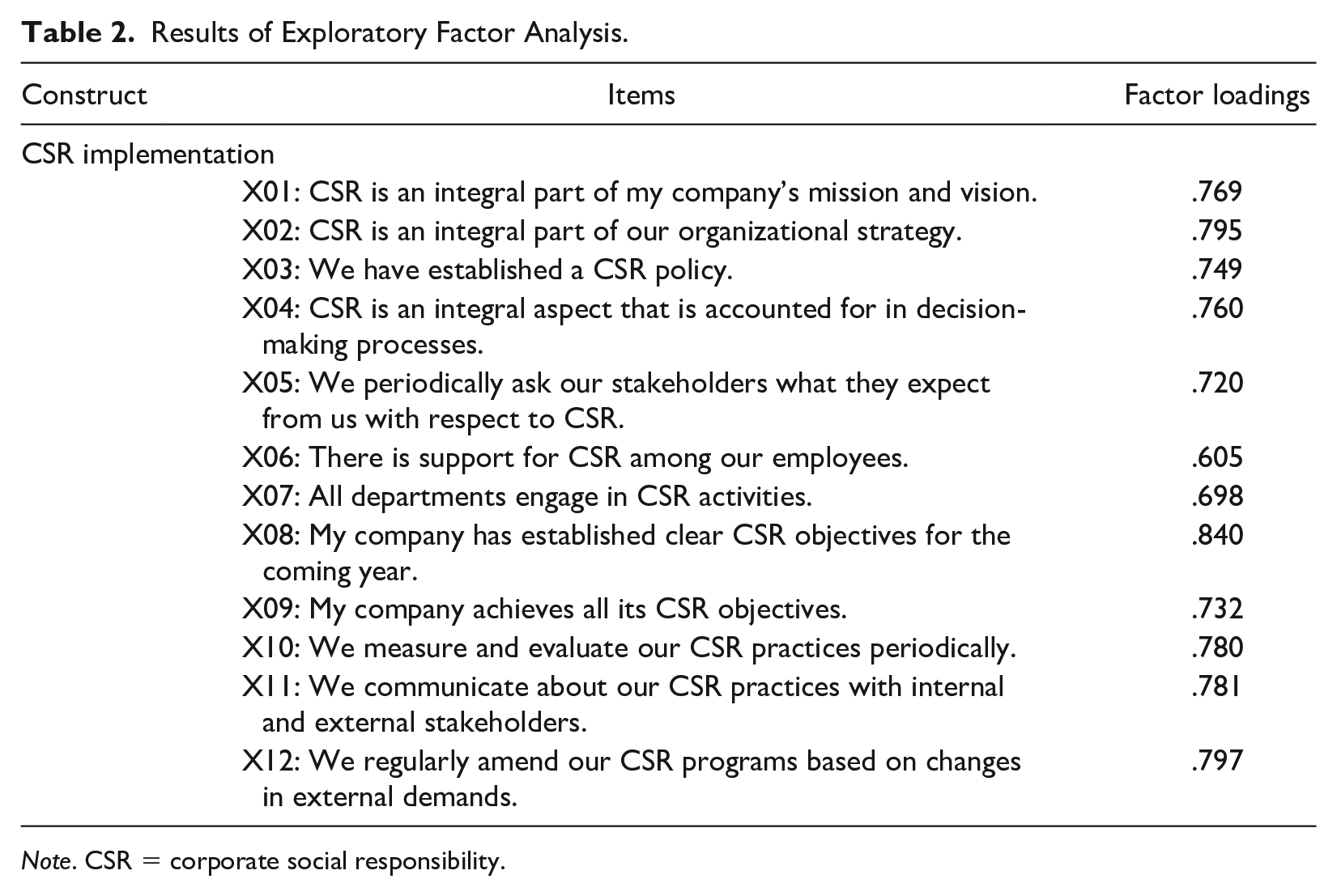
Note. CSR = corporate social responsibility.
An exploratory factor analysis (EFA) was performed as no predetermined structure existed for the data. A principal axis factoring was applied as the extraction method to identify the significant components underlying the respondents’ choices of the 12 statements. Using the SPSS syntax reported by O’Connor (2000), a parallel analysis was conducted in order to determine the number of factors to extract; this approach is superior to other, more ambiguous methods (e.g., the Eigenvalue >1 rule and the Scree test; see Thompson, 2004).
Control Variables
A company’s size, financial situation, and type of industry can have significant effects on the ratings of CSR outcomes (Aguinis & Glavas, 2012; Graves & Waddock, 1994; Pasricha et al., 2018). Pasricha et al. (2018) conducted research on multiple companies in which they controlled for the following factors:
The company’s industry. Mimicking the approach used by Waldman et al. (2006), the dependent variable was normalized (i.e., CSR implementation) in order to control for industry effects.
Company size. A dummy coded variable was included (1 = small and medium-sized enterprises, 2 = large company) in the analysis.
The company’s financial situation. Respondents were instructed to rate their company’s general financial situation over the past four years in order to take into account any potential effect of the 2008 global financial crisis. The possible responses were as follows: 1 (much worse than before), 2 (worse than before), 3 (similar to before), 4 (better than before), 5 (much better than before). A higher score indicates a better financial situation.
Data Analyses
To test the hypotheses, Preacher and Hayes’s (2004) bootstrap macro approach (with 5,000 bootstrap samples) was used, after checking for the assumptions of this analysis. This approach was chosen because it depends less on assumptions regarding sampling distributions, and it permits the performance of analyses with multiple mediators. All variables were standardized prior to the analyses. Several mediation analyses were performed as described by Zhao et al. (2010); each analysis used a different learning organization characteristic as predictor. This procedure involves the following three paths: the association between a given predictor (i.e., continuous learning, dialogue and inquiry, group learning, or empowerment) and the mediators (i.e., embedded information system, leadership for learning, and system connection; Path a); the association between CSR implementation and embedded information system, leadership for learning, and system connection (Path b); and the association between the predictors and CSR implementation (path c). Path c’ represents the total effect, which takes into account the effect of the control variables and the other learning organization characteristics.
The procedure consisted of three steps. First, the mean indirect effect (point estimate; see Table 3) for each predictor-mediator pair (Path a × Path b; see Table 4) was determined, and whether the effect was significant. The bootstrap test returns a 95% bias-corrected, accelerated confidence interval to test the significance of an indirect effect. If this interval excludes 0, the indirect path is interpreted as being statistically significant (Table 3). Indirect effects are small at 0.01, medium at 0.09, and large at 0.25 (Kenny, 2012).
Mediating Effects of EIS, LL, and SC in the Association Between CSR Implementation and CL, DI, GL, and E.
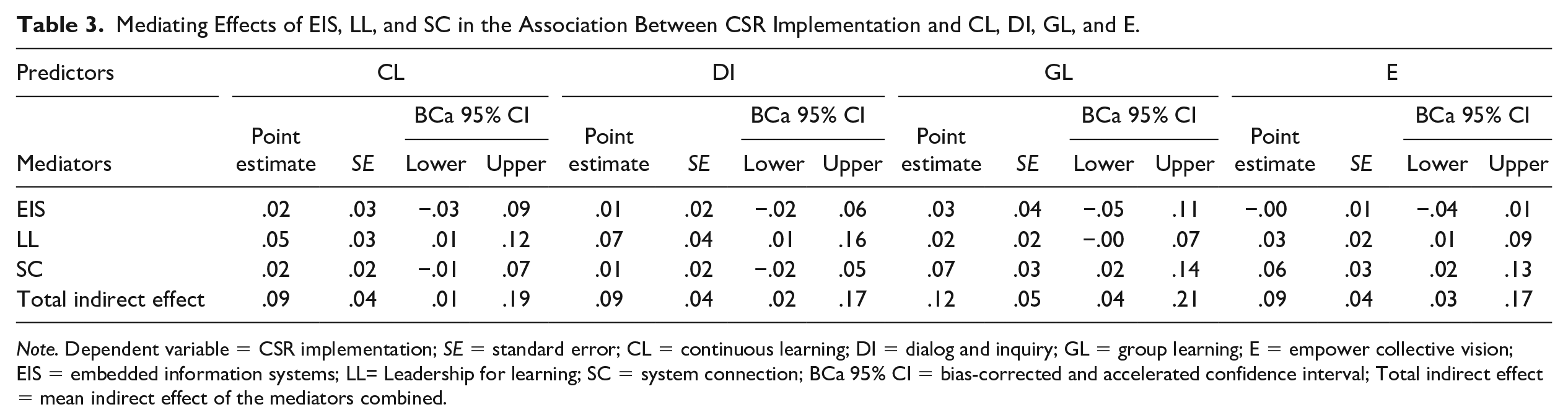
Note. Dependent variable = CSR implementation; SE = standard error; CL = continuous learning; DI = dialog and inquiry; GL = group learning; E = empower collective vision; EIS = embedded information systems; LL= Leadership for learning; SC = system connection; BCa 95% CI = bias-corrected and accelerated confidence interval; Total indirect effect = mean indirect effect of the mediators combined.
Path Estimations of Direct Effects Using the Preacher and Hayes’s (2004) Bootstrap Macro.
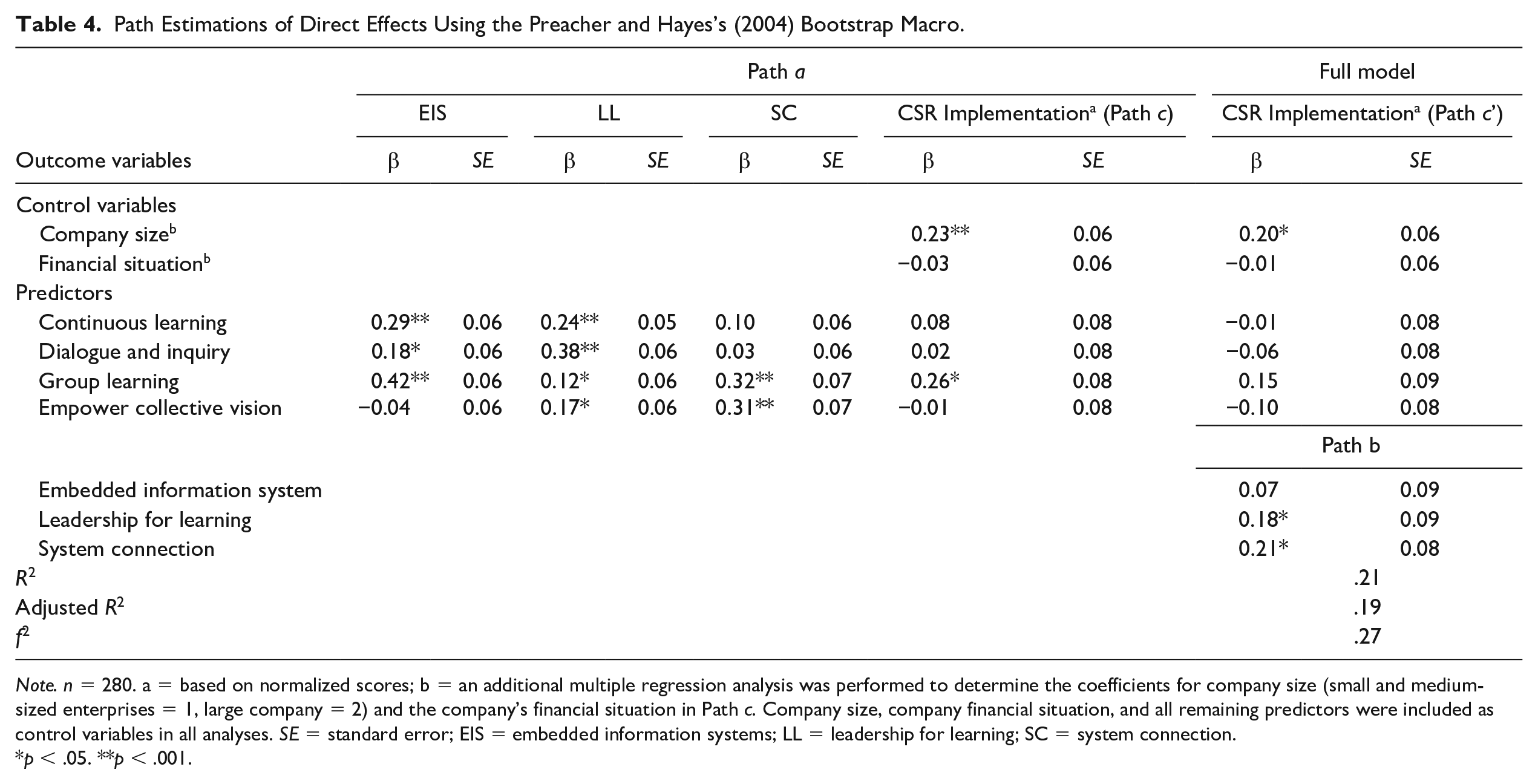
Note. n = 280. a = based on normalized scores; b = an additional multiple regression analysis was performed to determine the coefficients for company size (small and medium-sized enterprises = 1, large company = 2) and the company’s financial situation in Path c. Company size, company financial situation, and all remaining predictors were included as control variables in all analyses. SE = standard error; EIS = embedded information systems; LL = leadership for learning; SC = system connection.
p < .05. **p < .001.
In the second step, the type of effect was classified by estimating the coefficients of Paths a, b, and c (see Table 4). The effect is classified as follows: “indirect-only (mediation)” if a × b (the indirect path) is significant but Path c (the direct path) is not significant, which indicates a mediating effect consistent with the hypothesized theoretical framework; “direct-only (no mediation)” if a × b is not significant but Path c is significant, which indicates a problematic hypothesized theoretical framework and the likelihood of absent mediators; “no effect (no mediation)” if both a × b and Path c are not significant, which indicates an incorrect hypothesized theoretical framework; “complementary (mediation)” if both a × b and Path c are significant and a × b × c is a positive value; and “competitive (mediation)” if both a × b and c are significant and a × b × c is a negative value. The last two classifications indicate the presence of a mediating effect consistent with the hypothesized theoretical framework, although, in these cases, one should also consider the likelihood of absent mediators in future studies (Zhao et al., 2010).
Results
The results of the CFA indicate that the complex seven-factor model in our study had an improved fit—or an equally good fit—with the model, χ2/degrees of freedom (df) = 390.90/168 = 2.33; RMSEA = 0.07; GFI = 0.95; AGFI = 0.93; NNFI (TLI) = 0.89; and CFI = 0.91, compared with the results reported by Yang et al. (2004), χ2/df = 2746.29/778 = 3.53; RMSEA = 0.08; GFI = 0.75; AGFI = 0.71; NNFI (TLI) = 0.81; and CFI = 0.83. This result confirms the validity of the DLOQ used in our study.
The results of the EFA are presented in Table 2. Bartlett’s test of sphericity, χ2(66) = 1974.85; p < .001, and the Kaiser–Meyer–Olkin measure of sampling adequacy (Kaiser–Meyer–Olkin = 0.92, which exceeds the required minimum value of 0.60) indicate that the data and sample were adequate and suitable for an EFA (Field, 2009). Following Stevens’s (2002) recommendation, factor loadings of 0.40 or higher were used as an inclusion threshold. One component was extracted and labeled as CSR implementation. The scale was considered to be reliable (α = .94) and explained 60.39% of the variance in the respondents’ responses.
Table 5 summarizes the descriptive statistics and correlations among the variables. Company size was the only control variable that had a significant correlation with CSR implementation. Continuous learning, dialogue and inquiry, group learning, empowerment toward a collective vision, embedded information systems, leadership for learning, and system connection were all strongly correlated with one another, and they were weakly to moderately correlated with CSR implementation; nevertheless, these correlations were positive and significant.
Descriptive Statistics and Correlations Between Study Variables (n = 280).
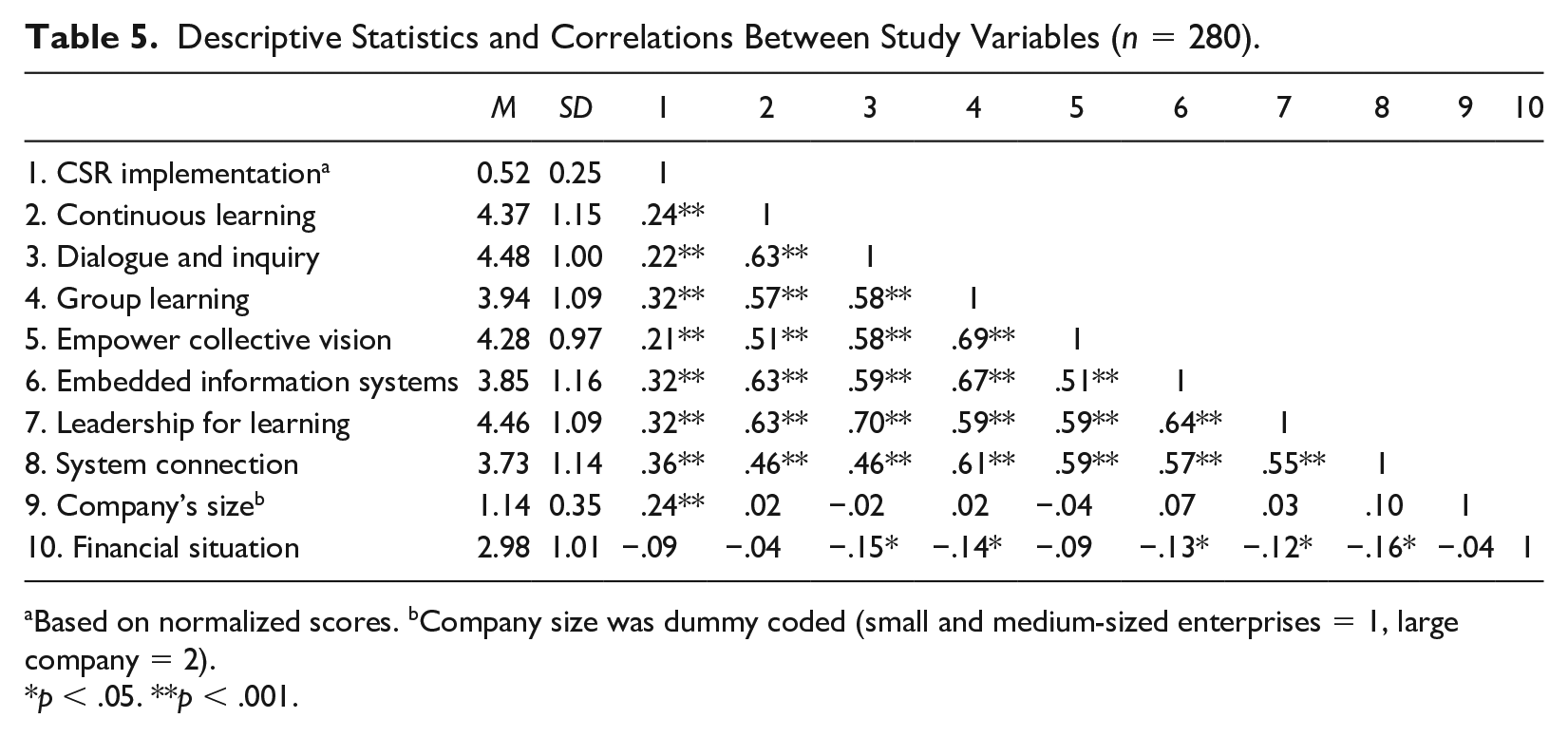
Based on normalized scores. bCompany size was dummy coded (small and medium-sized enterprises = 1, large company = 2).
p < .05. **p < .001.
The results of the mediation analyses are summarized in Tables 3 and 4. It was found that company’s size remains significant (β = .20, p < .05) after controlling for the other variables, indicating that CSR managers from larger companies consider that they have higher levels of CSR implementation in comparison with their smaller counterparts. Despite the significant correlations between the learning organization characteristics and CSR implementation, only leadership for learning (β = .18, p < .05) and system connection (β = .21, p < .05) had a positive unique effect on CSR implementation when the other variables were controlled for (see Table 4, full model); system connection had the largest effect on CSR implementation. These results indicate that the first five hypotheses (Hypotheses 1 through 5) can be rejected and Hypotheses 6 and 7 are supported. Effect size was calculated for the full model using Cohen’s f2. Effect size is considered small, medium, or large if Cohen’s f2 is 0.02, 0.15, or 0.35, respectively (Cohen, 1988). The full model explained 21% of the variance in CSR implementation; this shows a medium effect of the control variables and learning organization characteristics on CSR implementation (f2 = 0.27).
Table 3 shows the effects of continuous learning, dialogue and inquiry, group learning, and empowerment on CSR implementation through the organizational characteristics (i.e., embedded information systems, leadership for learning, and system connection). A medium, significant total indirect effect on CSR implementation was found for all predictors, with estimates ranging from 0.09 to 0.12. This indicates that the associations between CSR implementation and the operational characteristics (continuous learning, dialogue and inquiry, group learning, and empowerment) are mediated by the combined effects of the organizational characteristics (embedded information systems, leadership for learning, and system connection). However, a closer examination of the specific indirect effects revealed that, at the organizational characteristics level, leadership for learning was the only significant mediator of the relationships between (a) continuous learning and CSR implementation and (b) dialogue and inquiry and CSR implementation. The mean indirect paths (Paths a × b) were small and positive (for the link between continuous learning and CSR implementation: 0.05, BCa 95% confidence interval [CI] [0.01, 0.12]; for the link between dialogue and inquiry and CSR implementation: 0.07, BCa 95% CI [0.01, 0.16]; in contrast, the direct paths (Path c) were not significant (for the link between continuous learning and CSR implementation: β = .08, p > .05; for the link between dialogue and inquiry and CSR implementation: β = .02, p > .05), indicating an indirect-only effect for continuous learning and dialogue and inquiry on CSR implementation (see Table 4) via leadership for learning.
An indirect-only effect was also discovered for group learning (an operational characteristic) in its relationship with CSR implementation. System connection (an organizational characteristic) was the only significant mediator between CSR implementation and group learning. The mean indirect effect was small but positive (0.07; BCa 95% CI [0.02, 0.14]). The direct path was significant (β = .26, p < .05; see Table 4) and a × b × c is a positive value (0.32 × 0.21 × 0.26 = 0.02), indicating that group learning has a complementary mediation effect on CSR implementation. Both leadership for learning and system connection were significant mediators in the relationship between empowerment and CSR implementation; their mean indirect effects were small and positive (0.03 and 0.06 for leadership for learning and system connection, respectively), and the direct path was not significant (β = −.01, p > 0.05; see Table 4), indicating that empowerment has an indirect-only mediation effect on CSR implementation. The embedded information systems variable was not a significant mediator in any association between the predictors and CSR implementation.
In summary, Hypothesis 8 is partially supported by the results, suggesting that continuous learning, dialogue and inquiry, and empowerment can benefit CSR implementation because of the mediating effect of the variable leadership for learning. In addition, empowerment and group learning affect CSR implementation because of their relation with system connections, which in turn can also facilitate CSR implementation. Moreover, besides its indirect effect, group learning also directly benefits CSR implementation (see Figure 2).
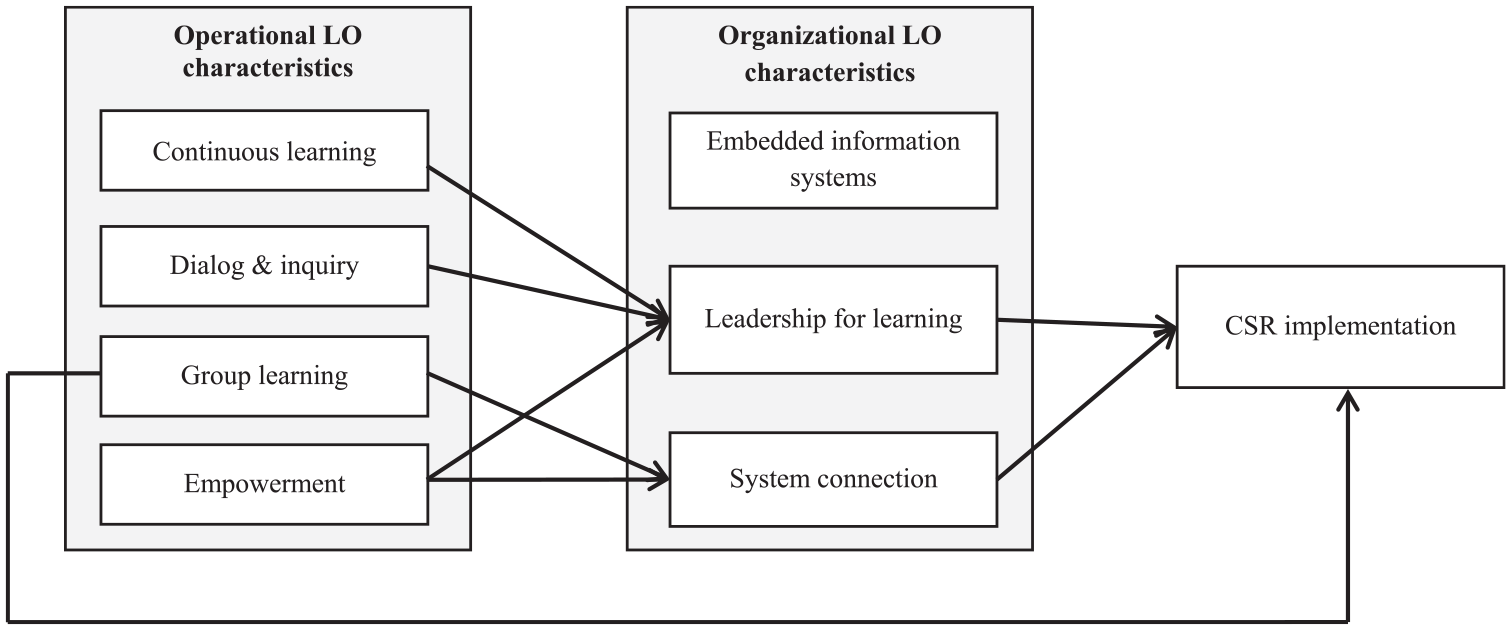
Results of the mediation analyses in this study.
Discussion
In this study, the associations between learning organization characteristics and CSR implementation are examined, and, as far as we know, this is one of the first studies to do this by means of a large-scale empirical study. In contrast to multiple studies that contend that employees’ learning and development make a significant contribution to CSR implementation (e.g., see Nijhof et al., 2005; Osagie et al., 2019), the results of the present study sheds as one of the first a light on the intricate relationship between operational and organizational learning organization characteristics: learning organization characteristics at an organizational level, rather than learning organization characteristics at an operational level, are particularly important. The only direct association between an operational characteristic and CSR implementation was group learning (when controlled for each effect and for the effect of company’s size and financial situation). This one is the only one that is not completely mediated by one or more organizational facilitators. Given the literature in the field of CSR implementation, this is striking. However, looking at the complexity of CSR implementation and its accompanying dilemmas, one might expect individual employees not to feel (i.e., self-perception) that they contribute to CSR implementation on an individual basis. This might be the case for unidimensional CSR implementation aspects such as separating waste, but not in the case of bigger and more complex issues, such as buying fair-trade products. These more complex issues require discussions with others (inside and outside the company) to screen the various modes of thinking and negotiate the different possibilities. Next, decisions are taken mostly at board-of-directors level. Outcomes of the studies undertaken by Osagie et al. (2019) and Wesselink et al. (2015) show that the role of the individual employee is rather small; it is always a group of employees who join forces that have an impact. Both Osagie et al. (2019) and Wesselink et al. (2015) unraveled roles and competencies for CSR managers. However, the nature of these roles and competencies is so widespread that it is almost impossible for them to be embodied in one single person. Take, for example, normative competence and strategic competence. On the one hand, CSR implementation is expected to meet the needs and demands of all relevant stakeholder groups, whereas, on the other hand, CSR implementation should in one way or another represent a business case. These—often colliding—interests, also called dilemmas, are difficult to work with, let alone for a single person make decisions about them. Therefore, employees and of course specifically CSR managers discuss a lot in groups and with others. This might explain why they do not emphasize their individual contribution as such and often explain it as a collective or group performance.
Furthermore, with regard to the organizational facilitators, it was found that, when each effect and the effect of company’s size and financial situation were controlled for, leadership for learning and system connection were the characteristics with a favorable effect on CSR implementation. First, a short reflection is shared on why embedded information systems neither interferes as mediator nor has a direct role. Second, the role of the other organizational characteristics is discussed: leadership for learning and system connection.
Embedded Information Systems as a Mediator
Embedded information systems does not stimulate CSR implementation when other variables are controlled for. Consequently, embedded information systems is not a significant mediator in the association with any of the operational characteristics and CSR implementation. At first glance, this result seems to contradict previous studies, which found that good information systems are essential for implementing change, as these information systems inform employees regarding both the need for change and the progress of, and the approach to, changes (e.g., Armenakis & Harris, 2002; Chiang, 2010). The lack of any significant effect of embedded information systems on CSR implementation could be attributed to the way in which the embedded information systems variable was measured. The abbreviated version of the DLOQ does not specify the kind of information systems that are intended in the items. See, for example, the following item in the DLOQ: “My organization measures the results of the time and resources spent on training.” Thus, in principle, respondents could have been thinking of technological systems in their response to the embedded information systems statements. Next, the respondents themselves (CSR managers) are responsible for implementing CSR and that might also influence the way they answered these questions; they are as up to date as possible. Additional explanations could be retrieved from other scientific sources. Employees may not necessarily use mediated information channels such as websites, newspapers, or reports to stay informed regarding upcoming changes. Moreover, employees are not “targets of communication”; rather, they are active participants who can choose to ignore or not “hear” what they read (Jabri et al., 2008). In such cases, technological information systems can fail to achieve their intended goal of educating employees. Therefore, these systems should be complemented with interpersonal information channels such as face-to-face meetings (Fidler & Johnson, 1984; Lewis, 2006).
Leadership for Learning as a Mediator
According to the results, leadership for learning plays a central role in the effect of several learning organization characteristics on CSR implementation. More specifically, leadership for learning mediates the associations between CSR implementation and continuous learning, dialogue and inquiry, and empowerment for a shared vision. This mediating effect could be attributed to the employees’ personal feelings of ownership, which can be triggered by continuous learning, dialogue and inquiry, and empowerment activities. In other words, continuous learning, dialogue and inquiry, and having a collective vision can stimulate individuals’ engagement and personal ownership; “a state in which individuals feel as though the target of ownership or a piece of that target is ‘theirs’” (Pierce et al., 2003, p. 86). A strong psychological bond with a target or an objective (i.e., CSR implementation) can cause an employee (in this case, a CSR manager or equivalent) to act as an informal leader because of his or her sense of responsibility for the objective. Such employees, who are also guided by their virtues (i.e., good character; Blok et al., 2016) actively encourage others to behave appropriately and to invest both time and effort in cultivating change (Wagner et al., 2003). Companies should therefore ensure that they facilitate such leadership, as it can stimulate CSR implementation, also because research by Osagie et al. (2019) found that, in general, although CSR managers acknowledge the dilemma between business and social value, the business value is still dominant. So, facilitating this leadership and consequently employees’ engagement with CSR could foster CSR implementation.
System Connection as a Mediator
Companies should ensure that they collaborate with (external) stakeholders in order to determine the direction of their CSR programs (Lozano, 2008; Maon et al., 2009). The findings seem to suggest that group learning activities and empowerment activities stimulate activities that foster system connection. According to Nadler et al. (2003), stimulating group learning and working together to realize a shared vision can enable employees to gain experience (and develop competencies) with respect to reaching integrative solutions with others who may have other motives. Employees will develop competencies needed to participate in these collaborations, as such interactions can entail difficulties related to both the coordination costs and the different mindsets of the parties involved (Genefke, 2000). An internal pilot project should be set up to test whether a more sustainable resource has the same characteristics as its less sustainable counterpart (see Wesselink et al., 2015). These internal experiences will serve as a step toward initiating new connections with external parties, as well as nurturing existing connections. CSR managers and employees learn through these stakeholder interactions, and work practices can be adjusted in line with the information received (Maon et al., 2009). This demonstrates that group learning, empowerment, and system connection reinforce one another and lead toward potentially favorable outcomes for CSR implementation. It is not surprising that CSR implementation is influenced by both leadership for learning and system connection, in particular. Studies regarding general change often emphasize the importance of stakeholder engagement and change agents in implementing change (e.g., Barratt-Pugh et al., 2013; Ford et al., 2008).
As stated, most research conducted in this field has been undertaken with the aim of building theory. Only a few researchers collected empirical data on a single learning organization characteristic or a combination of learning organization characteristics. This research is one of the first to include a comprehensive set of learning organization characteristics and investigate the intricate relationship between the different learning organization characteristics. Therefore, data were collected for all these characteristics in relation to implementing CSR. Although the theoretical associations seemed relevant, empirical testing showed a more nuanced picture. Multiple hypotheses were rejected, and some were (partly) confirmed. However, the results should be interpreted with a degree of caution. First, we explored the influence of learning organization characteristics on CSR implementation. These characteristics were chosen because they embody the essence of (facilitating) learning in organizations, which has been emphasized in many CSR studies (e.g., Müller & Siebenhüner, 2007; Siebenhüner & Arnold, 2007). Yet, besides learning organization characteristics, there could be other factors, not included in this study, that are related to learning and that may (indirectly) influence the extent to which CSR is implemented in the organization (e.g., level of innovation in the organization, job autonomy, job variety, and the extent to which individuals are prone to seek ways to improve their competence; e.g., Osagie et al., 2018); let alone the factors that are not concerned with learning, such as the economic situation in a country.
Furthermore, it was proposed that learning organization characteristics could boost a company’s CSR implementation. However, because the study was cross-sectional by design, no definite conclusions can be drawn regarding causal relationships. Although it was of interest to determine the learning organization characteristics that can stimulate CSR implementation, a reciprocal association between these concepts is also possible, as indicated by Koch and Lindenthal (2011). They found that the activities involved in integrating environmental aspects into an organization can foster organizational learning (and by extension, learning organization characteristics). Therefore, this study cannot exclude the possibility that CSR implementation can strengthen a company’s learning organization characteristics. Future studies should provide further insight into the causal direction between these concepts.
Another important limitation to this study is the diversity of the target group. Although an attempt was made to involve CSR managers, these managers have different roles, tasks, and positions within their companies. Furthermore, the CSR manager role is developing (see Wesselink & Osagie, in press). It cannot be guaranteed that all involved CSR managers shared the same frames of reference, but this situation is inherent in such an emerging field and does justice to the complexity in reality.
Another limitation concerns the collaboration with CSR Netherlands. This collaboration provided the opportunity to assess CSR implementation among a large number of organizations. As far as is known, this study is one of the first to explore the relationship between learning organization and CSR implementation on such a large scale. However, the collaboration came with some limitations regarding the study design. A single-informant technique (i.e., one respondent from each firm) was applied, and all variables were measured by a common method (a self-reporting tool). Although the reliability of the separate concepts was considered sufficient, a self-reporting tool can elicit socially desirable responses. Regarding the issue of common method bias, procedural remedies (e.g., assuring participant anonymity and that there were no right or wrong answers) were employed to proactively address related concerns. However, other remedies, such as collecting the predictor measures separately from the criteria measures or using different methods to assess the variables, were not possible due to the anonymous participation and the single measurement time. Thus, there is a fair chance that common method variance has inflated the correlations found between some of the variables. Some research suggests that the influence of common method variance might be overestimated (Spector, 2006), because correlations between variables measured using the same method are not necessarily stronger than correlations between variables measured using multiple methods. Nevertheless, it should be considered as a point of improvement in future studies. In this study, there are still some expected relationships that show no correlations, and therefore this study gives valuable indications of research possibilities in a rather new playing field. Future research could use multi-informant and multimethod designs to assess companies’ learning organization characteristics and CSR implementation. For example, document analysis could be combined with self-reporting tools in order to measure companies’ CSR implementation. Also, more than one representative from each company could be included, ideally working at different levels, as perceptions of learning organization characteristics and CSR implementation might differ between employees, even within the same company. Furthermore, organizational characteristics and their effects on organizational outcomes can be complex. The correlations between operational characteristics and CSR implementation indicate that interaction effects may exist, in addition to the indirect effects assessed in this study; these interactions should be explored in future studies. Regarding CSR implementation, an important role for both leadership for learning and system connection was found. Future studies can begin by assessing any possible interaction effects between these two variables.
Despite all these shortcomings, it can still be claimed that this research adds to existing research in the different fields involved in this study. In the field of CSR implementation, the research underpins the claim that the micro-level should not be neglected. This study reveals that this level does matter with regard to CSR implementation and, following Aguinis and Glavas (2012), it is stressed that this level should be studied in relation to other organizational levels. In particular, the level on which employees collaborate and discuss should be taken into account in future studies, rather than the individual level (e.g., Nord & Fuller, 2009). The micro-level as identified by Aguinis and Glavas (2012) is still quite broad. This study reveals that this especially concerns the group and the group learning level. Second, this study adds to the field of learning organizations that the two levels (i.e., operational characteristics and organizational characteristics) should be distinguished and studied on a multilevel basis, as contended by Yang et al. (2004). Our findings suggest that the position of group learning should be reconsidered. In the applied distinction, group learning belongs to operational characteristics, but, given these findings, one could think of putting group learning under the heading of organizational facilitator as well. In many organizations, the decision whether to work in groups or teams is made on the organizational rather than the operational or individual level.
These findings also suggest that organizations working on CSR implementation should consider working in groups to discuss difficult and conflicting issues with regard to CSR implementation, encourage leaders to be open to their subordinates learning, meaning that they should encourage them to look at other departments, develop a network with relevant stakeholders, and employ mechanisms in which employees get feedback on aspects, issues, and ideas that they introduce. Furthermore, they should envision and present their organization as an open organization and not be just inward-looking.
Conclusions
The results of this study serve as an initial step in developing an empirically validated explanation of the extent to which specific learning organization characteristics contribute to CSR implementation. The analysis underscores the key roles of three learning organization characteristics: (a) leadership for learning, champions and change agents to motivate and encourage employees to learn and embrace change; (b) system connection, meaning that a company could foster CSR implementation by operating as an open system through which employees can adjust their practices based on the needs of the community; and (c) group learning, which enables groups and teams to promote higher order learning processes with results that could be used in CSR implementation. Furthermore, group learning also has an indirect role, just as the other learning organization characteristics. The complexity of CSR implementation cannot be faced from an individual level, and factors on the manager, the team, and the system level can especially contribute to making CSR work from the bottom up in companies.
In summary, this research suggests that, despite a lack of empirical evidence on the effect of the other learning organization characteristics on CSR implementation, companies are already applying such characteristics in general and they should become aware that these characteristics can support CSR implementation. Developing learning organization characteristics is a progressive way of dealing with challenges faced by companies that wish to embody the complexity of implementing CSR. This study revealed that such efforts should be aimed specifically at supporting leadership for learning, group learning and system connection.
Footnotes
Author’s note
Eghe Osagie works at HAN University of Applied Sciences, Arnhem, the Netherlands
Declaration of Conflicting Interests
The author(s) declared no potential conflicts of interest with respect to the research, authorship, and/or publication of this article.
Funding
The author(s) received no financial support for the research, authorship, and/or publication of this article.
Notes
Author Biographies
 .nl for more information about his current research.
.