



Abstract

Otologics, LLC, a medical device company headquartered in Boulder, Colorado is involved in the development and manufacturing of the Middle Ear Transducer™ (MET™) Implantable Hearing Device, a middle ear implant designed for improving the quality of life of the moderate-to-severe sensorineural hearing impaired. Otologics' technology is based on nearly 30 years of research initiated under the direction of Dr. John M. Fredrickson of the Washington University School of Medicine in St. Louis, MO (Fredrickson et al., 1973; Coticchia et al., 1993; Park et al., 1995a; Park et al., 1995b; Fredrickson et al., 1996). The collaboration of Dr. Fredrickson and Washington University Medical Center with Storz Instrument Co. provided a foundation of market research data and the technology feasibility data through primate implant studies that led to the formation of Otologics, LLC in 1996.
Since 1996, Otologics, LLC has continued to research the technological feasibility and development of the MET Implantable Hearing Device. As with any new technology, the development of the MET Implantable Hearing Device is scheduled to undergo a chronological progression through distinct clinical trial phases. The first phase clinical trials assessed the safety of the implant procedure and ensured the reversibility of the procedure without damage to auditory status or middle ear function. In addition, the first phase was aimed at defining the requirements and feasibility of this technology with its potential benefit to the moderately-to-severely hearing impaired patient population. The second phase of development, which is currently in progress, compares the amplification of middle ear implant technology to that of appropriately fit conventional (acoustic) hearing aids. The final phase may be characterized as an optimization of development whereby efforts remain focused on maximizing benefit.
Since the device is currently undergoing clinical trials in the United States, the disclosure of results, while promising and noteworthy, may not occur to the public domain until FDA approval is obtained. With that in mind, the primary objectives of this article are to:
provide a rationale and supporting preclinical research for middle ear implants,
provide an overview of the MET Implantable Hearing Device,
review implemented research design strategy for assessing device efficacy, and
review current candidacy criteria.
Rationale for the MET Implantable Hearing Device
Middle ear implant technology provides an alternative means of amplification for individuals diagnosed with moderate-to-severe sensorineural hearing loss who have not achieved sufficient satisfaction with conventional hearing aids. Despite the continued advancements in hearing aids, the impetus of middle ear implant technology stems from the inherent shortcomings of current technology, such as feedback, signal distortion, ear canal occlusion, and associated issues.
These factors become greater issues as a function of hearing loss; patients who have more severe sensorineural hearing loss require higher amplification needs, putting them at greater risk for the aforementioned problems with conventional hearing aids.
Feedback represents a frequently occurring and challenging issue for hearing health care practitioners. While digital hearing aid circuits incorporate feedback reduction strategies, practical solutions may rely on feedback management techniques that ultimately contribute to some level of signal degradation. Decreasing high frequency gain may be effective in eliminating feedback, but this strategy contributes to degradation of speech understanding. Patients with higher amplification needs often require tight-fitting earmolds, which frequently cause discomfort.
Regardless of the degree of hearing impairment, conventional hearing aids incorporate insertion in the ear of either a shell or earmold, resulting in occlusion of the external auditory canal. The placement of a hearing aid shell or earmold within the external auditory canal can reportedly amplify the wearer's own voice by as much as 30 dB in the lower frequency range (Killion, 1988). As described by Revit (1992), this occlusion effect can cause the perceived loudness of the patient's own voice to be four times as great compared with an unoccluded ear canal. Since the MET Implantable Hearing Device is coupled directly to the ossicular chain, it offers the wearer the potential to greatly decrease feedback and distortion since sound energy is not trapped within the ear canal, allowing higher fidelity sound to be directed to the cochlea. The inherent design of most middle ear implants precludes the need for earmold or hearing aid shells. This leaves the external auditory canal unoccluded and eliminates the occlusion effect while preserving the natural resonance characteristics of the outer ear.
From a consumer standpoint, middle ear implants offer advantages over conventional amplification. For instance, there remains a consumer demand for cosmetically appealing, comfortable, low-maintenance devices. Despite the availability and cosmetic advantages of completely-in-the-canal hearing aids, many clinical challenges and large time investments are required to achieve comfortable, deep fitting shells that sufficiently reduce the negative consequences of the occlusion effect. Device repairs, due to exposure to cerumen and the moist environment typical of the occluded external auditory canal, represent important issues to the consumer. From an infection standpoint, some patients are prone to severe otitis externa, precluding consistent opportunities to wear hearing aids daily. While cerumen inhibits various forms of microbial growth within the confines of the external auditory canal, its efficacy to inhibit microbial growth may be uniquely challenged in hearing-impaired populations fit with conventional amplification (Kemp and Bankaitis, 2000). Occlusion of the ear canal creates a warmer, moister environment, even in the presence of a large vent. When the ear canal retains moisture, its pH level is affected, resulting in a neutral or more alkaline environment that is more conducive to bacterial and/or fungal growth (Hawke, 1987).
Preclinical Research
Supporting evidence for the feasibility of the MET Implantable Hearing Device as a viable amplification option for even the severely impaired sensorineural patient population has been collected over several decades. Initial bench studies of the implanted unit reveal output levels equivalent to more than 135 dB SPL over the frequency range of 250 to 10,000 Hz. The frequency response was found to be relatively flat, varying only 10 dB through 10,000 Hz, providing a frequency characteristic appropriate for the reproduction of speech (Figure 1). The output of the transducer was not significantly affected as a function of probe-tip loading as long as the load was kept below 100 dynes. This level of loading was shown to be effective in the transmission of mechanical energy to the ossicular chain.

Frequency Response of the MET Implantable Hearing Device.
While the MET Implantable Hearing Device is capable of delivering high-fidelity signals at high levels of amplification, preclinical animal and human studies provided insight regarding the potential capability of direct ossicular stimulation to deliver a higher-fidelity signal, resulting in improved sound quality with reduced distortion (Park et al., 1995a; Fredrickson et al., 1996). Implantation of the MET Implantable Hearing Device in two rhesus monkeys showed that auditory brainstem response (ABR) recordings and distortion product otoacoustic emissions (DPOAE) measurements could be obtained via direct mechanical stimulation of the ossicular chain that were comparable to measurements obtained acoustically (Park et al., 1995a).
Initial feasibility assessments in humans provided additional evidence of the viability of middle ear implant technology. As described by Kasic and Fredrickson (2001), the MET Implantable Hearing Device was modified to allow the device to be placed on the ossicular chain via the tympanic membrane under local anesthesia. The normal length of the transducer probe tip is 1 cm; however, the length was extended to 11 cm for this initial study. The extended probe was stereo-taxically guided down the ear canals of three normal-hearing and two hearing-impaired volunteers, and the transducer was placed on the malleus near the umbo to allow for stimulation of the ossicular chain. All normal subjects judged the quality of the mechanical stimulation to be excellent. The two hearing-impaired patients, whose pure tone averages were 70 and 75 dB HL, judged the quality of the sound provided by the mechanical transducer to be superior to the sound quality provided by their hearing aids. In addition, improved word recognition scores were obtained via direct ossicular stimulation compared to scores obtained with a high-fidelity insert receiver placed in the ear canal prior to probe tip placement. Word recognition scores for both subjects improved from 35% and 37% (acoustic signal, prior to probe tip placement) to 54% and 48% (mechanical stimulation, with probe tip), respectively.
MET Implantable Hearing Device Components
The Middle Ear Transducer (MET) Implantable Hearing Device is a semi-implantable device, although a fully implantable version is in the research and design phases. The current model consists of two components: an implantable transducer and electronics and a Button Audio Processor™ (Figure 2). The implantable components are surgically implanted within the confines of the temporal bone and middle ear space via an extended atticotomy. The external component is worn on the side of the head.

Internal and External Components of the MET Implantable Hearing Device.
MET Implantable Hearing Device Transducer and Electronics
The components of the implanted, internal unit are an electronic receiver and a detachable transducer. Otologics has strategically designed the internal unit so that transducer lead connects with the electronics receiver utilizing IS-1 Connector technology, the international connector standard used in pacemakers (Figure 3).

MET Implantable Hearing Device Transducer and Electronics.
The unique advantage offered by this is the ability to disconnect the transducer lead from the electronics, permitting later upgrades to the future fully-implantable system under local anesthesia without necessitating the explantation of the original transducer.
Surgical Approach
Implantation of the MET Implantable Hearing Device incorporates a standard postauricular incision used for cochlear implantation. The transducer is implanted through an extended atticotomy, drilled posteriorly along the temporal (dural) line and anteriorly along the ear canal. This surgical approach properly exposes the body of the incus and the head of the malleus, avoiding the delicate structure of the chorda tympani and facial nerve. Furthermore, the surgical approach avoids traumatic injury to the facial nerve and the more delicate portions of the ossicular chain.
During the surgical procedure, the aluminum oxide tip of the transducer's probe is inserted into a laser-made hole within the body of the incus. During the postoperative healing period, the transducer tip becomes fixed to the incus via a flexible fibrous union. After an approximate 8-week healing period, the implant may be activated and the patient may be fit with the Button Audio Processor.
Button Audio Processor
The Button Audio Processor is a flat, circular shell that houses the microphone, battery, digital signal processor, and transmitter coil all in one unit (Figure 4). The Button Audio Processor contains a proprietary chipset providing the flexibility for up to 16 active filter bands and a frequency response bandwidth extending beyond 6000 Hz. The device is programmed with the user friendly OtoFit™ Fitting Software system operated as a module through NOAH (version 3.0). Sound picked up by the microphone is digitally modified according to the amplification needs of the wearer. Once the acoustic signal is appropriately modified, the information is fed to the transmitter coil that transcutaneously delivers the modified signal to the internal components of the implant via FM-transmission.

Components of the Button Audio Processor accompanying the MET Implantable Hearing Device.
Reference Transmitter/Reference Receiver (RTR) System
Otologics developed proprietary equipment designed to provide clinicians with an arsenal of implant-specific tools comparable to those incorporated in hearing aid fittings. Since middle ear implants bypass the outer ear, direct stimulation of the ossicular chain may result in slightly different thresholds than those obtained acoustically under headphones. Theoretically, an individual's acoustic and mechanical thresholds should be equivalent. However, the ability of a new technology to assess this at the forefront positions it to take any potential differences into consideration during the fitting process, either globally or individually. From that standpoint, the system of proprietary equipment developed by Otologics is referred to collectively as the Reference Transmitter/Reference Receiver (RTR) system. The RTR system has two components: the Reference Transmitter (RT) and the Reference Receiver (RR).
Reference Transmitter (RT)
The RT is an apparatus that provides a means for delivering a calibrated signal transcutaneously to the implant electronics, resulting in direct stimulation of the ossicular chain (Figure 5). The RT interfaces with a clinical audiometer by way of a standard connecting cord and to the patient's implant via a transmitter coil assembly placed on the implanted side of the patient's head. A signal delivered by the audiometer is routed to the RT where it undergoes radio-frequency modulation. From there, the modulated signal is delivered by the RT directly to the implanted electronics by way of the transmitter coil assembly, allowing for direct stimulation of the ossicular chain. This arrangement provides a controlled means of presenting audiometer output to the implant for purposes of obtaining unaided, electromechanical thresholds and uncomfortable loudness levels which are used by the OtoFit Fitting Software to calculate prescribed gain.

The Otologics Reference Transmitter (RT) and associated cables. The RT interfaces with a clinical audiometer to allow for direct stimulation of the MET Implantable Hearing Device to obtain unaided, mechanical threshold and UCL data.
Reference Receiver (RR)
The Reference Receiver (RR) is a small box of internal components representing the average characteristics of the MET Implantable Hearing Device electronics. The RR was designed to interface with a standard hearing aid analyzer by way of a cord, and with a Button Audio Processor via a magnetic attraction (Figure 6). When connected to a hearing aid analyzer, the RR provides a means for measuring the frequency response, gain, output, and compression of a Button Audio Processor. In this sense, it serves the same purpose as a 2cc coupler used for acoustic hearing aids. The RR allows the clinician to verify programmed output levels of the Button Audio Processor prior to fitting the patient with the device.
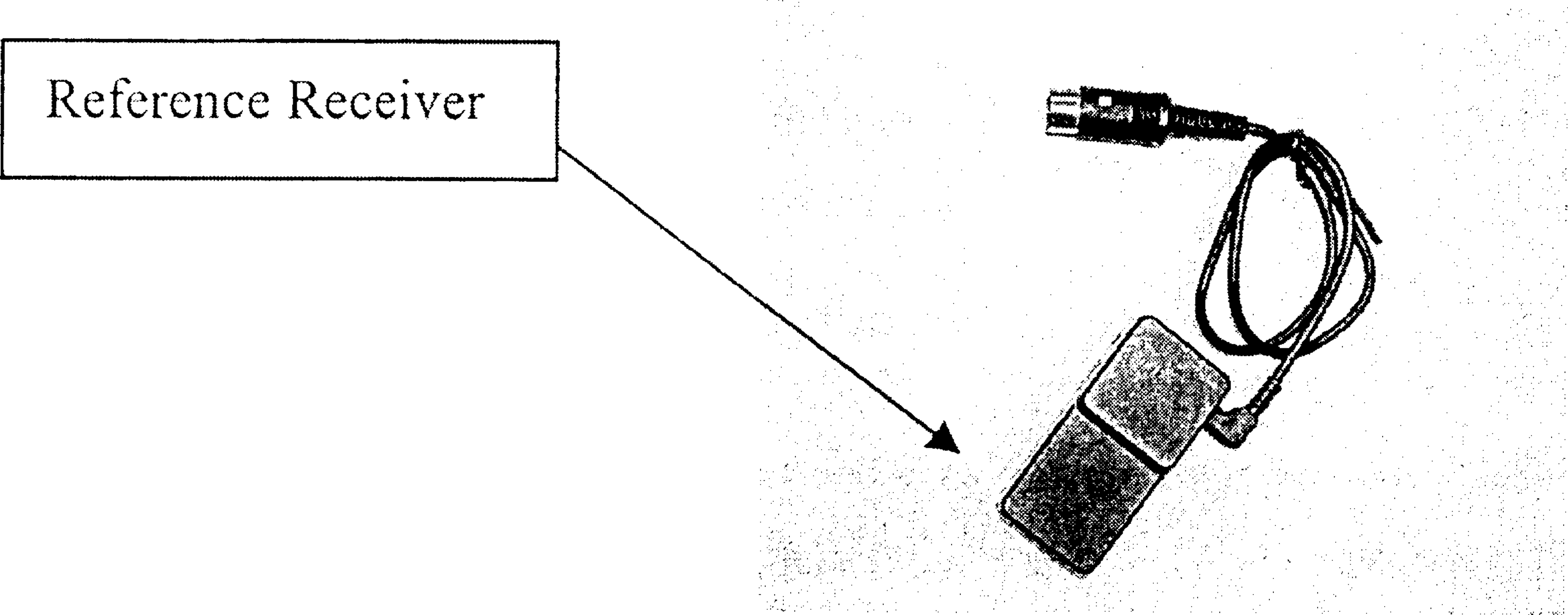
The Otologics Reference Receiver (RR).
As described, the RT and the RR are mainly used independently during different stages of the Button Audio Processor fitting process. It is important to point out that the RT and the RR indirectly interface with one another during RTR system calibration procedures. Calibration of the RTR system, utilizing a clinical site's audiometer and a hearing aid analyzer, provides a controlled means of delivering calibrated signals to the implant during RT testing procedures. In addition, RTR calibration allows for calculation of an established decibel reference reflecting values obtained via direct mechanical stimulation of the ossicles, referred to as dB MET.
Research Design Strategies of Clinical Studies
An overview of the research design strategy implemented for purposes of assessing device performance follows. Clinical trials in the United States have been designed to be conducted in two distinct phases. Since the nature of middle ear implants involves surgical implantation of components, assessment of the surgical technique to ensure reversibility and to establish safety of the procedure to audibility and middle ear function is necessary. Phase I is designed to establish the safety of device implantation with regard to auditory status, and Phase II is designed to assess device performance or efficacy. The Phase I studies have been completed. The current Phase II study is moving through its preliminary stages of data collection. Preoperative versus postoperative air and bone conduction thresholds showed no statistically significant threshold changes with the exception of a slight change in air conduction at 500 Hz for the implant ear. The slight reduction in unaided auditory sensitivity observed in the implant ear was not considered clinically relevant. Given the nature of middle ear implantation, a somewhat anticipated, albeit slight reduction, in static compliance was observed in the implant ear postoperatively; however, the change was neither statistically nor clinically significant.
Secondly, as an alternative technology to traditional amplification, valid comparisons between appropriately fit hearing aids (acoustic) versus appropriately fit amplification delivered by middle ear implants (mechanical) are critical in establishing the efficacy of middle ear implants. Specifically, performance comparisons should involve acoustic and mechanical technologies incorporating comparable or equivalent signal processing schemes and well-validated fitting algorithms and technique. From that perspective, the Phase II portion of the clinical trials were designed to assess aided device performance across three amplification modes: (1) preimplant performance with subjects' own (walk-in) hearing aid(s), (2) preimplant performance with binaural digital JUMP-1 BTE hearing aids, the research version of the commercially available Digifocus™ (Oticon,), and (3) postsurgical performance with the MET Implantable Hearing Device. For the first 20 subjects, implanted performance was assessed with a modified JUMP-1 External Audio Processor. Following the 3-month postoperative follow-up appointment, subjects were transitioned to the Button Audio Processor previously described. The remaining 79 implanted subjects have been, or will be, fit with the Button Audio Processor.
The rationale for this design stems from the need to establish an appropriate hearing condition preoperatively in order to validly compare hearing aid performance to middle ear implant performance. Given the variety of linear, programmable, and digital technologies currently available, comparison of an individual's current or “walk-in” hearing aid(s) to that of the middle ear implant is unlikely to yield an appropriate comparison, particularly if the conventional hearing aid is out-dated, old, or less technologically advanced than the technology incorporated in the middle ear implant's external audio processor. For example, it is possible that any performance improvement observed with a middle ear implant may be an artifact, merely reflecting the inadequacy of the patient's current walk-in hearing aid.
Finally, from a research design perspective, it is critical to control as many variables as possible between the hearing aid and middle ear implant for purposes of comparing performance outcomes. Hearing aids used for comparison should, when possible, incorporate the same, well-validated fitting techniques and, if possible, the same or at least comparable signal processing approaches. With that in mind, the first 20 implanted subjects were initially fit with a BTE External Audio Processor. The rationale for that strategy was to fit patients with a device that was constant on every aspect of signal processing, using the same prescription algorithms and fitting techniques. Although the Button Audio Processor offers advantages over the BTE External Audio Processor in terms of an extended frequency response and greater flexibility in the number of frequency bands, fitting a subset of patients with the modified JUMP-1 BTE External Audio Processor allowed for the collection of performance data from amplification devices that were equal in all regards with the exception of the mode of auditory stimulation. The JUMP-1 represents an acoustic hearing aid, whereas the BTE External Audio Processor, a modified version of the JUMP-1, was equal in all aspects to the JUMP-1 with the exception that it was modified to work with the implanted components, stimulating the auditory system mechanically via direct ossicular stimulation.
Candidacy Criteria
The MET Implantable Hearing Device is limited by Federal (US) law to investigational use. Candidates for the United States Clinical Trials must be at least 18 years of age and must exhibit a nonfluctuating, bilaterally symmetrical moderate-to-severe sensorineural hearing loss that falls within the shaded area of the candidacy audiogram shown in Figure 7.

Candidacy Audiogram for the MET Implantable Hearing Device.
As with any clinical trial, other criteria must be met for implant consideration. For both phases of the United States Clinical Trials, subjects must also exhibit Type A tympanograms, no history or reported symptoms of chronic middle ear disorder, monaural and binaural aided speech recognition scores of 20% or greater at 65 dB SPL, and postlingual onset of hearing loss. Patients must also be fluent English speakers. Even when meeting these outlined candidacy requirements, potential subjects must be judged by the site audiologist and surgical team to be cognitively able to accomplish tasks of clinical trials.
Conclusion
The implantation surgery does not result in or induce further sensorineural hearing loss or middle ear damage, as shown by no significant changes in bone conduction thresholds and tympanograms. As expected, small air-bone gaps were observed in some patients; however, the extent of the change in hearing sensitivity found was not considered clinically relevant in that it results in little or no need for adjustment of an acoustic hearing aid fitting and minimal, if any, effect on the patients' daily communications. Nevertheless, strides continue to be taken to assess current factors that may play a potential role in influencing postoperative status. In terms of efficacy data, the preliminary results from both the US and Europe are very promising, demonstrating that the MET Implantable Hearing Device may be capable of supplying adequate gain and output to patients with moderate-to-severe sensorineural hearing loss. There is every reason to believe that this promising trend will continue as Otologics moves forward with the Phase II clinical trials.