




Abstract
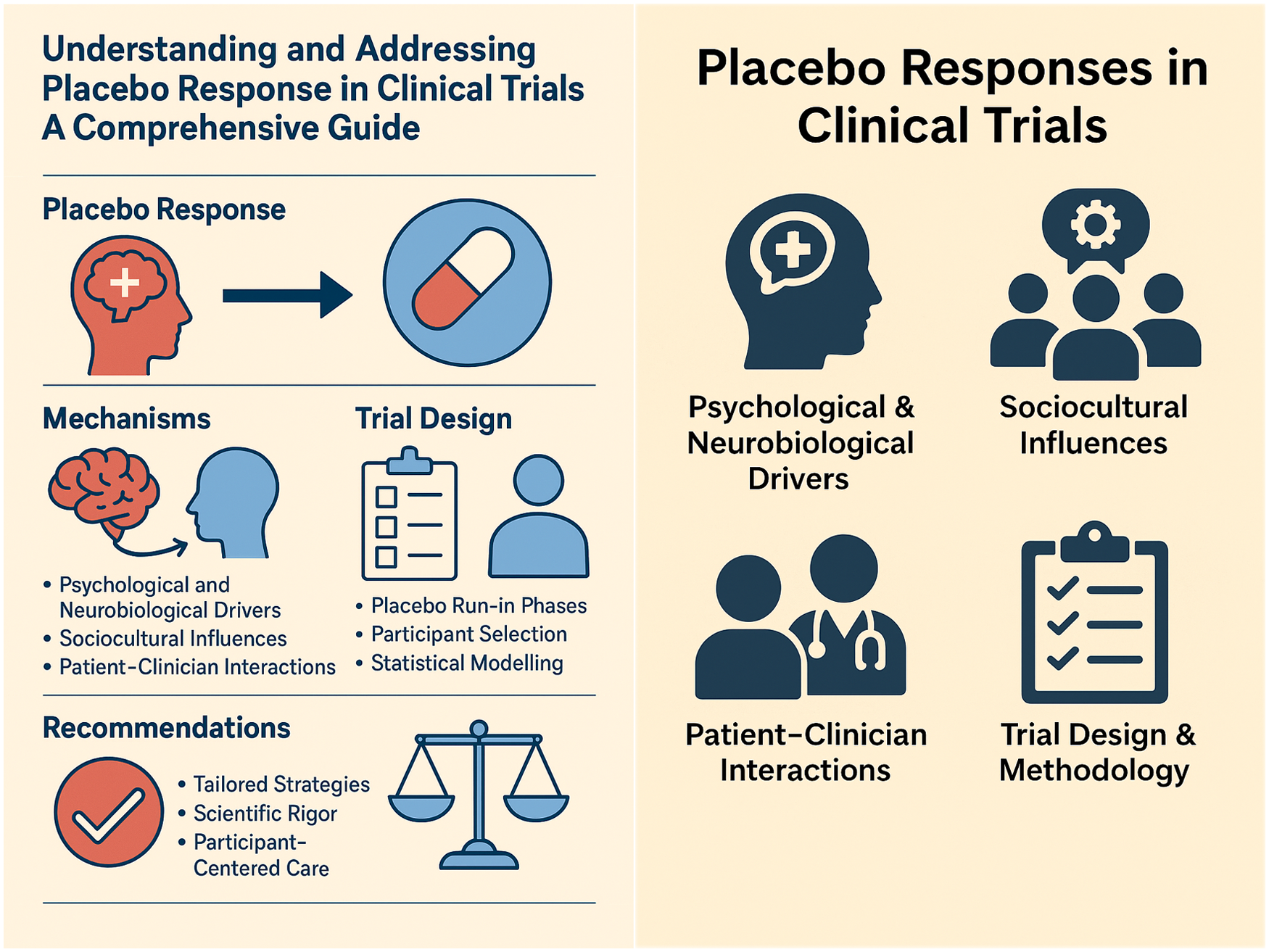
The placebo response represents a significant and complex phenomenon in clinical trials, impacting the interpretation of efficacy and safety outcomes across diverse therapeutic areas. This comprehensive review aims to clarify the mechanisms underlying placebo responses, assess their impact on trial validity, and provide practical strategies for mitigation. We explore psychological and neurobiological drivers, sociocultural influences, and patient–clinician interactions that shape placebo responses. The review also examines design and methodological approaches, including placebo run-in phases, participant selection, and statistical modeling to identify and address placebo effects ethically and effectively. We discuss regulatory and ethical considerations in the context of upholding participant welfare and scientific integrity. By summarizing current evidence, key guidelines, and successful case studies, this guide offers a practical resource for clinical trial designers, sponsors, investigators, and regulators committed to improving trial quality while safeguarding ethical standards. Our recommendations highlight the importance of tailored strategies that balance scientific rigor with participant-centered care, laying the groundwork for more reliable and ethically sound clinical research.
Keywords
Get full access to this article
View all access options for this article.