



Abstract
The role of NPA in perioperative management of pediatric dental surgery under intravenous sedation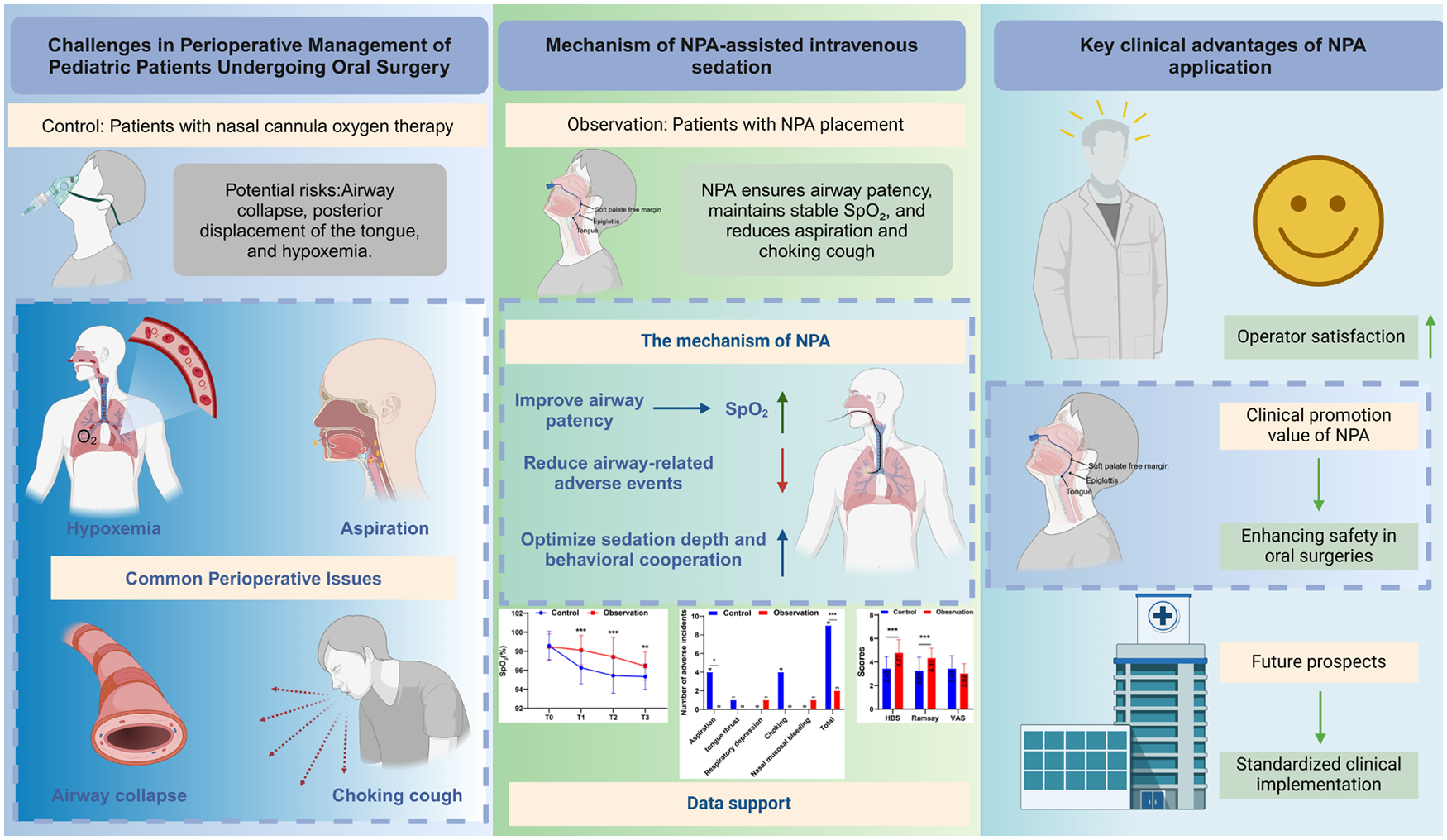
Perioperative airway management during pediatric dental procedures remains challenging, particularly in balancing oxygenation stability with procedural safety under intravenous sedation. This randomized trial compared nasopharyngeal airway (NPA)-assisted intravenous sedation (n = 30) versus traditional nasal cannula oxygenation (n = 30) in 60 children aged 6–12 years undergoing dental surgery. Both groups received standardized midazolam-propofol sedation and perioperative monitoring. Primary outcomes encompassed oxygen saturation (SpO2), adverse events (aspiration, choking, mucosal bleeding), sedation efficacy, and surgeon satisfaction. The NPA group demonstrated superior SpO2 maintenance at key procedural stages (p < 0.05), with a 78% reduction in hypoxemia episodes compared to controls. Notably, aspiration and choking incidents decreased significantly (p < 0.05), yielding a fourfold lower overall adverse event rate (6.67% vs 30.00%, p = 0.001). Sedation quality metrics revealed enhanced behavioral cooperation (p < 0.001) and optimal sedation depth (Ramsay scores: p < 0.001) in the NPA cohort, though pain perception remained comparable between groups (p > 0.05). Surgeons reported 93.33% satisfaction with NPA-assisted cases versus 33.33% with conventional methods (p < 0.001), correlating with fewer procedural interruptions. These findings establish NPA as a clinically superior modality for pediatric dental sedation, offering dual benefits of improved oxygenation stability and procedural workflow efficiency. The technology addresses critical gaps in perioperative safety while maintaining hemodynamic equilibrium, positioning it as a viable optimization strategy for high-risk pediatric populations.
Get full access to this article
View all access options for this article.
References
Supplementary Material
Please find the following supplemental material available below.
For Open Access articles published under a Creative Commons License, all supplemental material carries the same license as the article it is associated with.
For non-Open Access articles published, all supplemental material carries a non-exclusive license, and permission requests for re-use of supplemental material or any part of supplemental material shall be sent directly to the copyright owner as specified in the copyright notice associated with the article.


