




Abstract
The inverse finite element method (iFEM) is a powerful tool for shape sensing and structural health monitoring and has several advantages with respect to some other existing approaches. In this study, a two-dimensional four-node quadrilateral inverse finite element formulation is presented. The element is suitable for thin structures under in-plane loading conditions. To validate the accuracy and demonstrate the capability of the inverse element, four different numerical cases are considered for different loading and boundary conditions. iFEM analysis results are compared with regular finite element analysis results as the reference solution, and very good agreement is observed between the two solutions demonstrating the capability of iFEM approach.
1. Introduction
Structural analysis is an important engineering discipline to ensure the safety of structures. Numerical analysis is widely used for structural analysis calculations based on different approaches ranging from well-known finite element method [1] to semi-analytical approaches [2], higher-gradient theories [3–6], smoothed particle hydrodynamics (SPH) [7], and more recently peridynamics [8]. Shape sensing and structural health monitoring (SHM) are effective approaches for structural analysis and monitoring. They are mainly based on using sensor systems, collecting sensor data, processing the data, and finally making decisions. Various shape sensing and SHM approaches are available in the literature. One of the most promising approaches is Ko et al.’s [9] displacement theory which is suitable for beam-type structures. As another approach, model method [10] can be used to make predictions without material information. Model method is suitable for both beam- and plate-type structures. As an alternative approach, inverse finite element method (iFEM) [11] can also be used which is the main focus of this study. According to iFEM approach, the solution domain should be discretised with suitable inverse elements (beam, plate, shell, or solid) and strain data from sensors located on different parts of the structure should be collected. It is a robust approach and complex shapes can be monitored in real time. As an additional advantage, loading is not required to be measured during the monitoring process.
Especially during the recent years, there has been a significant progress on iFEM methodology. For different types of structures, different types of inverse elements have been developed. Among these, Tessler and Spangler [12] developed a three-node inverse shell element (iMIN3). iMIN3 is based on the variation of in-plane displacements and bending rotations linearly, and transverse displacements quadratically along with in-plane coordinates. The capability of iMIN3 element has been extended by Tessler et al. [13] for large deformations. An inverse beam element was developed by Gherlone et al. [14] based on Timoshenko beam formulation. A four-node shell element with drilling degree of freedom (iQS4) was introduced by Kefal et al. [15], and iQS4 has been successfully used for monitoring of different marine structures [16], such as chemical tanker [17], containership [18], bulk carrier [19], and offshore wind turbine [20]. Kefal [21] developed an eight-node curved shell element (iCS8) using first-order deformation theory. de Mooij et al. [22] presented a novel inverse solid element formulation and considered various benchmark problems. Composite and sandwich structures are also analysed using iFEM [23,24]. Damage in structures can also be predicted using iFEM [25]. Kefal and Oterkus [26] introduced isogeometric iFEM analysis to reduce the number of required sensors for iFEM analysis, which was further explored in some other studies [27,28].
In this study, a two-dimensional four-node quadrilateral inverse finite element formulation is presented. The element is suitable for thin structures under in-plane loading conditions. To validate the accuracy and demonstrate the capability of the inverse element, three different numerical cases are considered by applying different loading and boundary conditions. iFEM analysis results are compared with regular finite element analysis results as the reference solution.
2. Inverse finite element formulation for a two-dimensional four-node quadrilateral element
In this section, the details of the formulation for a two-dimensional four-node quadrilateral inverse element, named as iQP4, are provided. As shown in Figure 1(a), each node has two degrees of freedom,
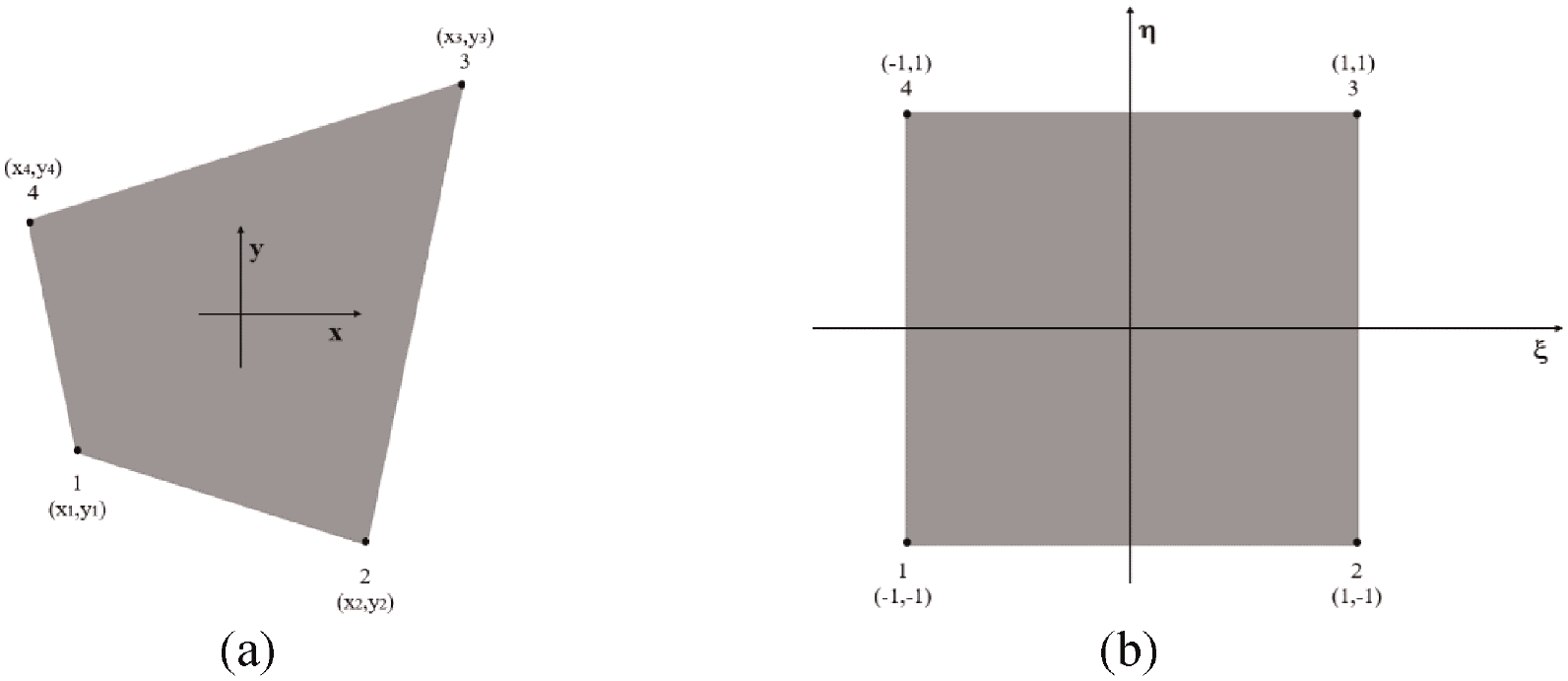
(a) Two-dimensional four-node quadrilateral inverse element. (b) The master element in
The location of any point on iQP4 element can be expressed in terms of the location of nodes in the


The bilinear isoparametric shape functions,




Similarly, using the same shape functions, the in-plane displacements,


Strain components can be obtained using the relationships between strain and displacement components. For a plane element, only three components of in-plane strains can be expressed as:



Using the displacement expressions given in equations (3a) and (3b) and strain definitions given in equations (4a)–(4c), the analytical elemental strains can be expressed by the shape functions and nodal displacements as:

where

iFEM solution can be obtained by minimising a weighted least-squares functional with respect to nodal degrees of freedom for the entire solution domain. For each inverse element, the weighted least-squares functional can be written as:

where

where

or

where


Next, the global equation system can be written based on the element contributions given in equations (10a) and (10b) as:

where



and

where
3. Numerical examples
We considered four different cases to validate iQP4 inverse plane element formulation and demonstrate its capability, which are listed in Table 1, for different loading and boundary conditions. Furthermore, different mesh configurations together with reduced sensor conditions for fine mesh cases are also taken into consideration.
Description of numerical cases.

The influence of the mesh size will be explored in Cases 1 and 2. Case 3 is introduced for further verifying the accuracy of iQP4 inverse plane element and sensor selection. The results of displacements in two directions are mainly selected for comparison. For complex structure and loading conditions, von Mises stress is a useful parameter, especially for potential failure of the structure. For the general plane stress condition, the von Mises stress can be calculated as:

where
3.1. Case 1: square plate under tension loading
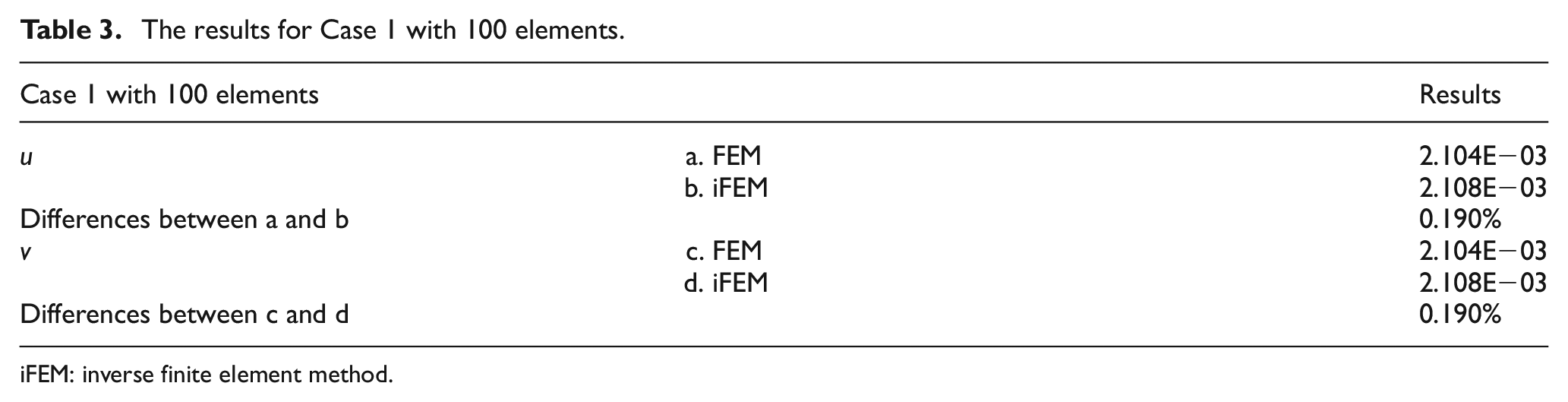
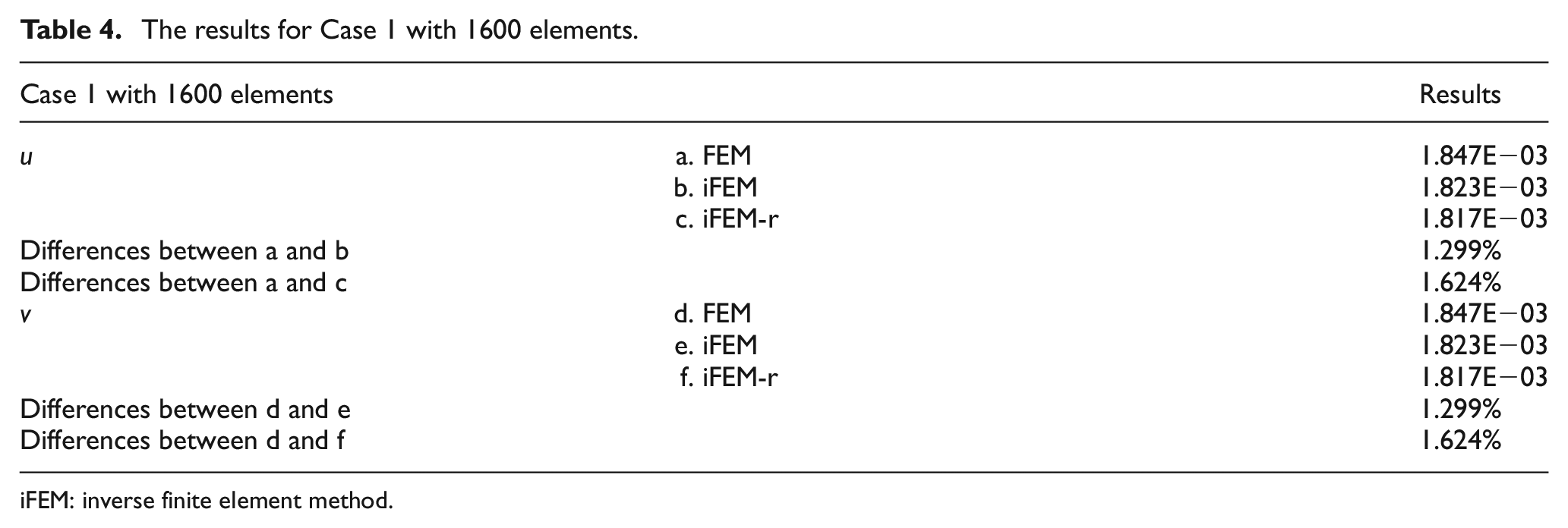
The first case is a square plate (2×2 m2) under tension loading as shown in Figure 2. Moreover, 1000 MN force is evenly distributed to the nodes of each edge of the plate. The plate is meshed with three different numbers of elements which are 16, 100, and 1600, respectively (see Figure 3). The results of the three mesh cases are listed in Tables 2–4.
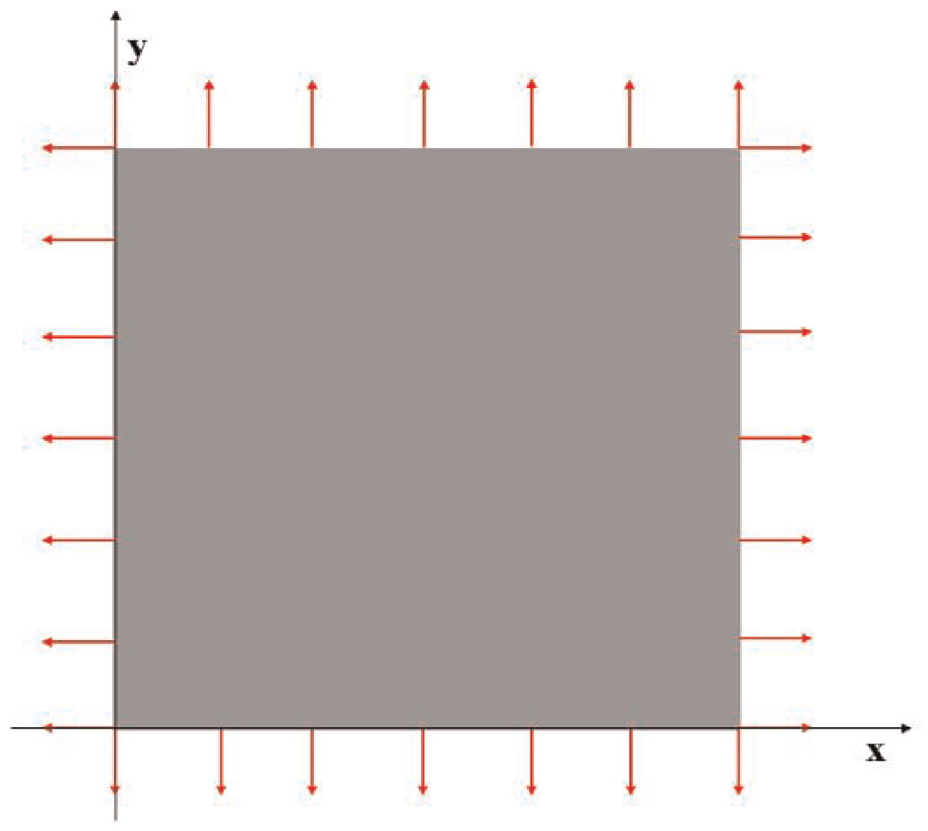
The loading of Case 1.
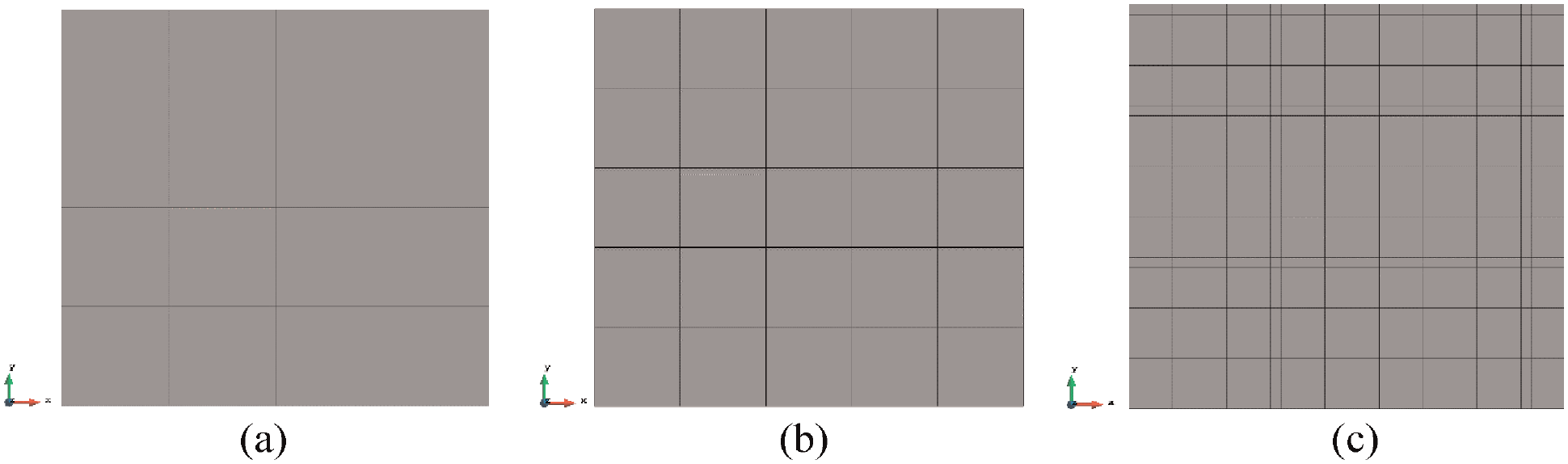
Three different meshes of Case 1. (a) 16 elements. (b) 100 elements. (c) 1600 elements.
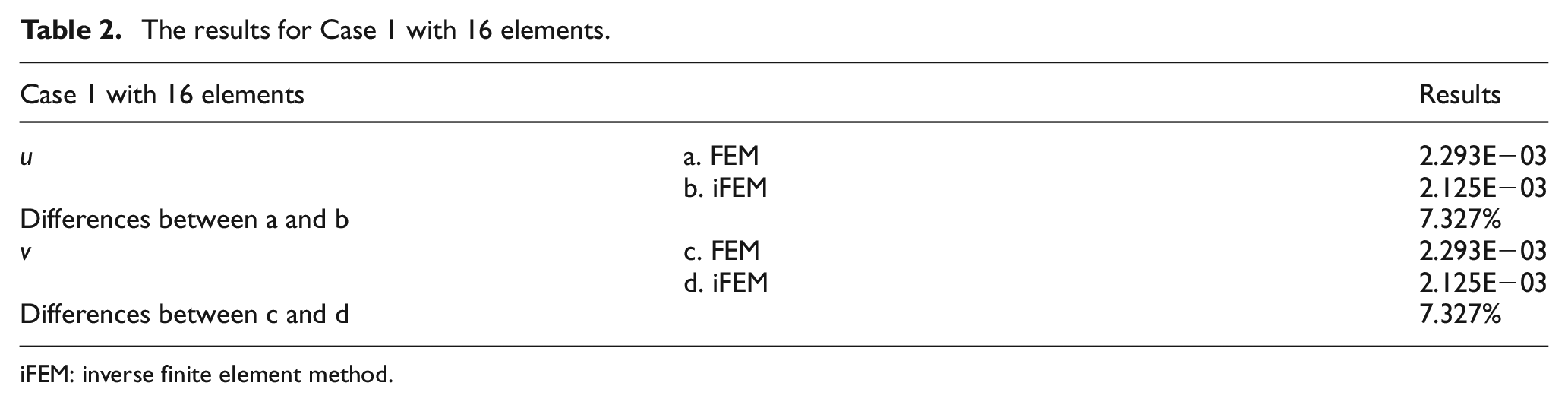
The results for Case 1 with 16 elements.
iFEM: inverse finite element method.
The results for Case 1 with 100 elements.
iFEM: inverse finite element method.
The results for Case 1 with 1600 elements.
iFEM: inverse finite element method.
For the coarse mesh with 16 elements, as can be seen from Table 2, iFEM displacement results have 7.327% error with respect to FEM results. With the increase in the number of elements, the percentages of difference of displacements are reduced dramatically to 0.190% for 100 elements. For 1600 elements, the reduced sensor condition is applied to the fine mesh case. As shown in Figure 4, only sensors along the edges of the plate are selected which finally gives the number of sensors as 156. With the strain inputs provided by these 156 sensors, even if the strain data for the remaining elements are missing, iQP4 element can still provide accurate results and the percentages of the error just slightly raised from 1.299% to 1.624%.
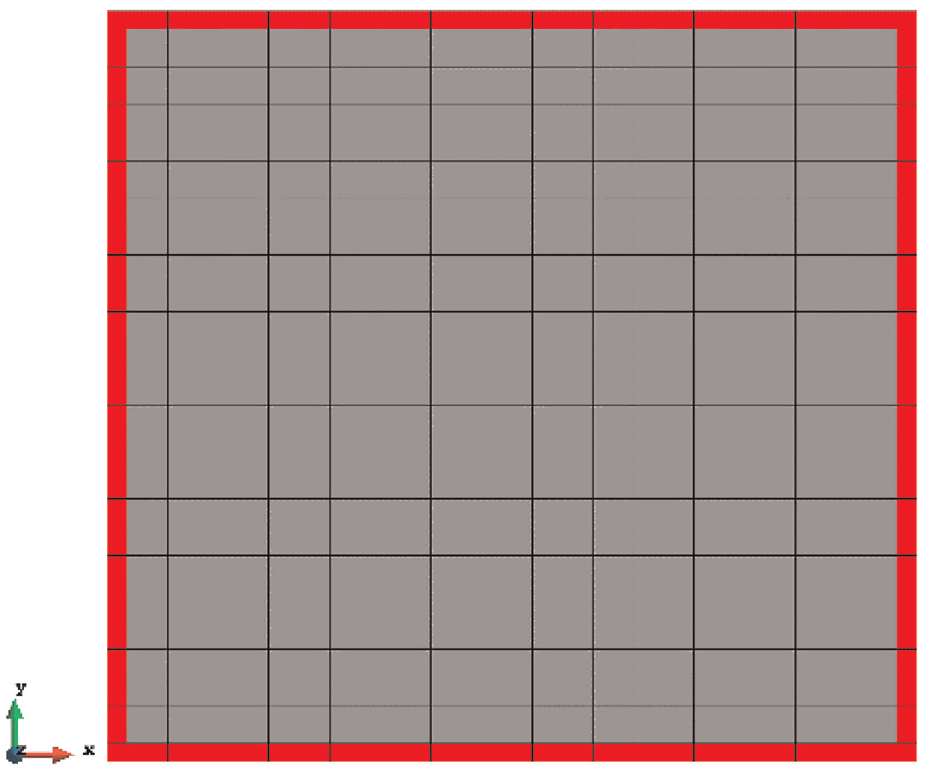
The reduced sensor locations of Case 1 with 1600 elements (iFEM-r).
The contour plots of the displacements are also shown in Figures 5–7 to further illustrate the results. It can be seen that the displacements are symmetrical along the central axis of the plate and the maximum/minimum values appear on the corners of the plate. These typical features can be captured by the inverse analysis, and they are not affected by the mesh and match well with the FEM plots including the reduced sensor condition (iFEM-r).
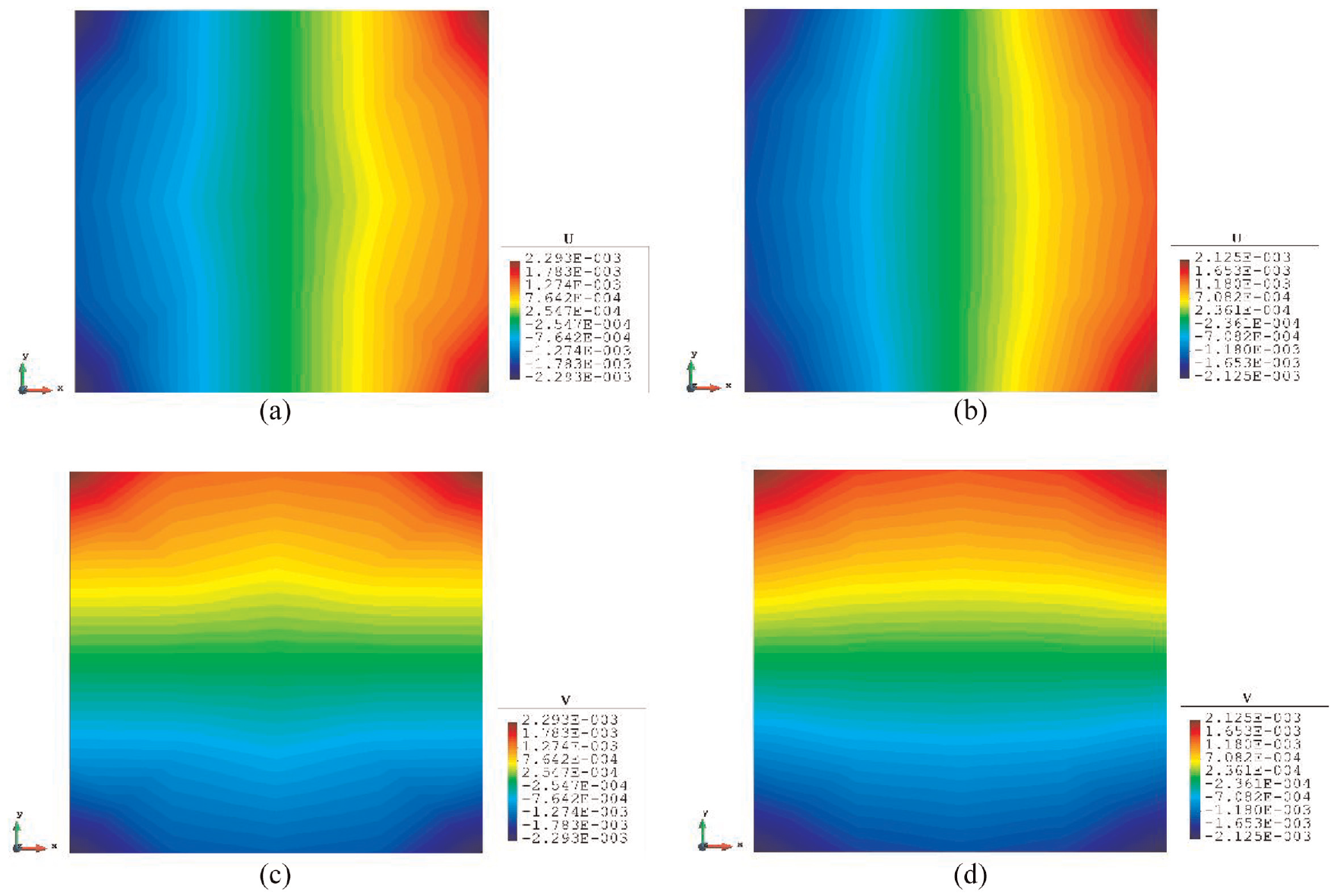
The plots of displacements of Case 1 with 16 elements. (a) x-displacements of FEM. (b) x-displacements of iFEM. (c) y-displacements of FEM. (d) y-displacements of iFEM.
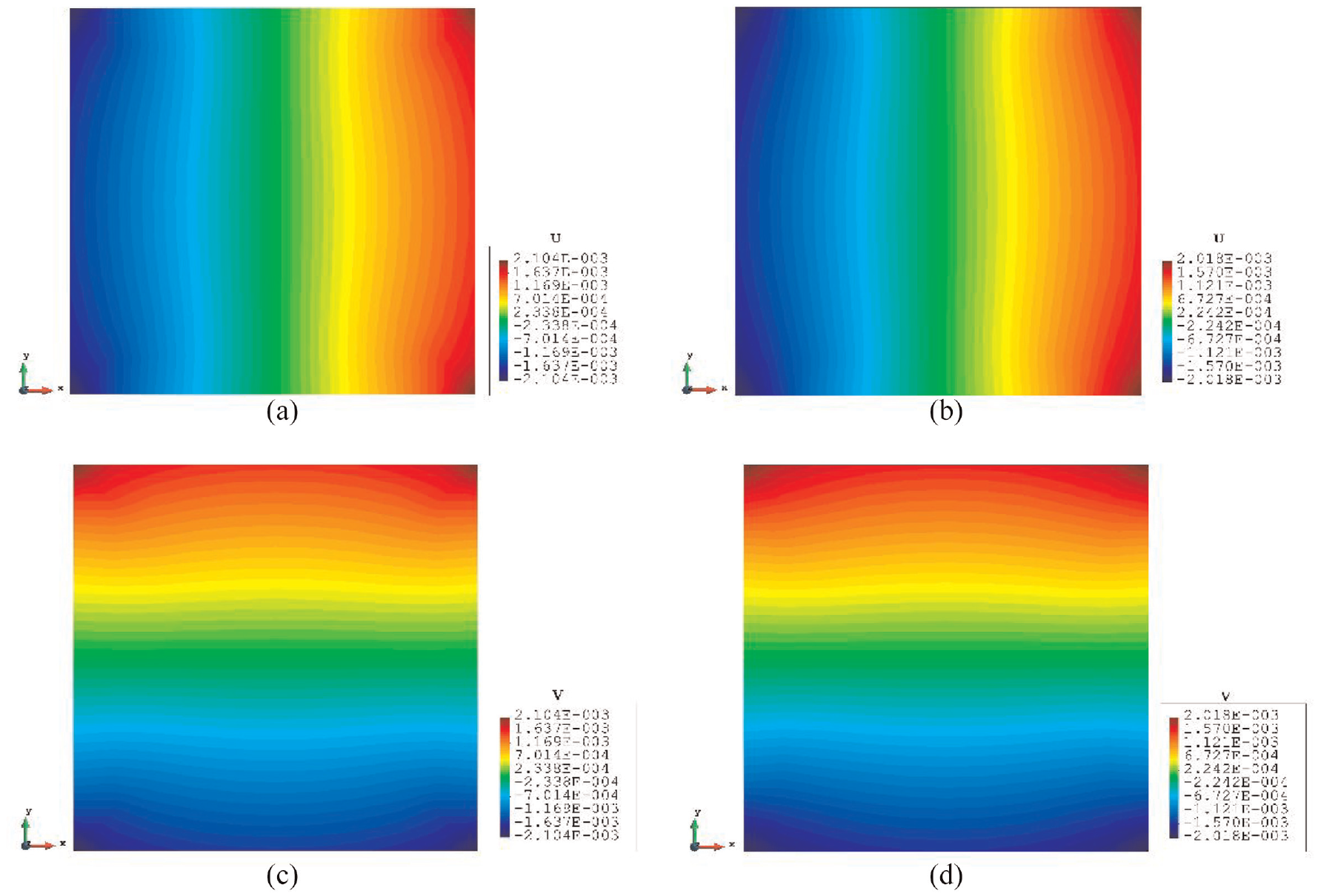
The plots of displacements of Case 1 with 100 elements. (a) x-displacements of FEM. (b) x-displacements of iFEM. (c) y-displacements of FEM. (d) y-displacements of iFEM.
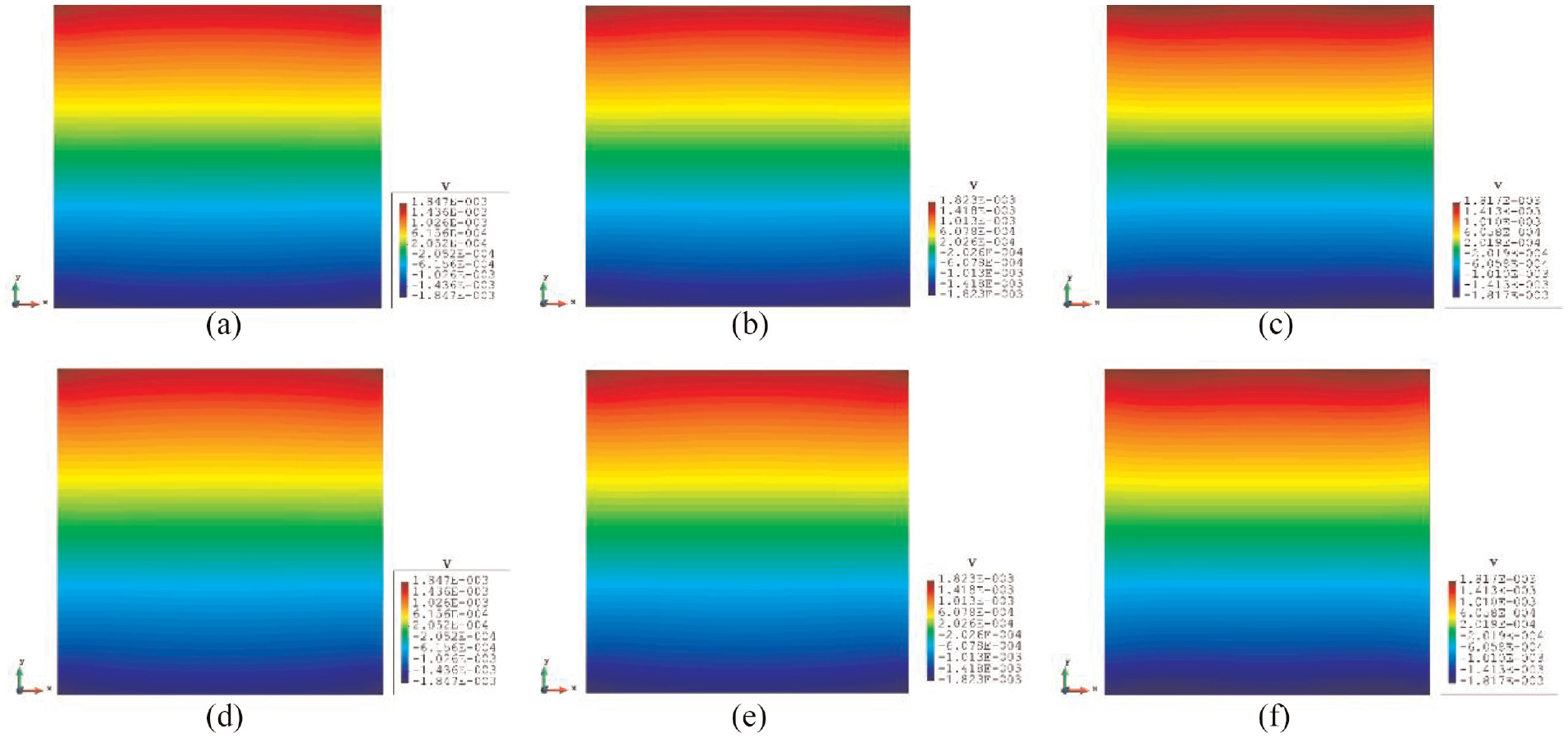
The plots of displacements of Case 1 with 1600 elements. (a) x-displacements of FEM. (b) x-displacements of iFEM. (c) x-displacements of iFEM-r. (d) y-displacements of FEM. (e) y-displacements of iFEM. (f) y-displacements of iFEM-r.
3.2. Case 2: rectangular plate under tension loading
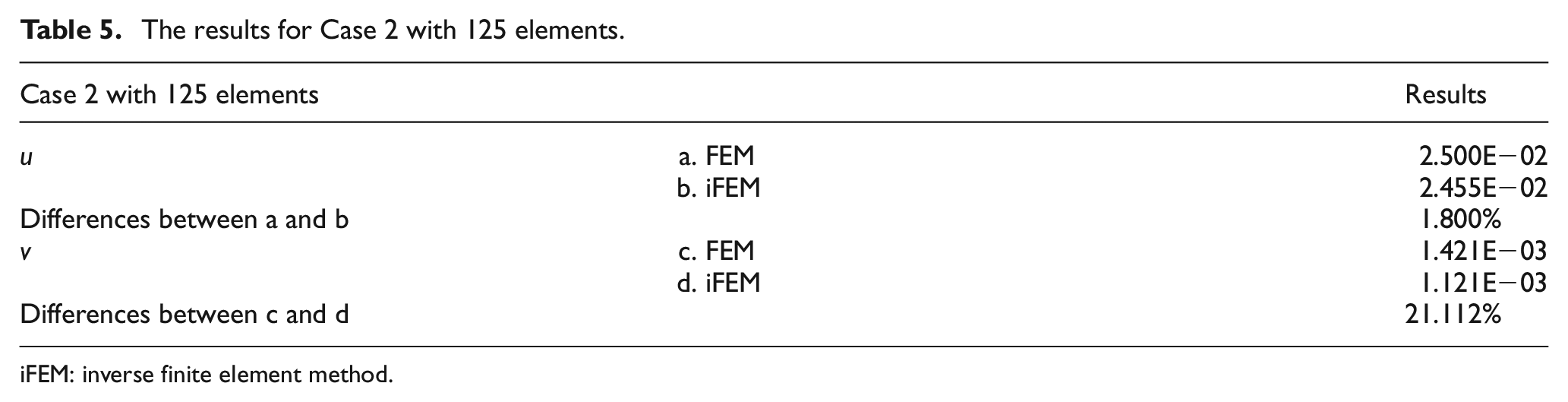
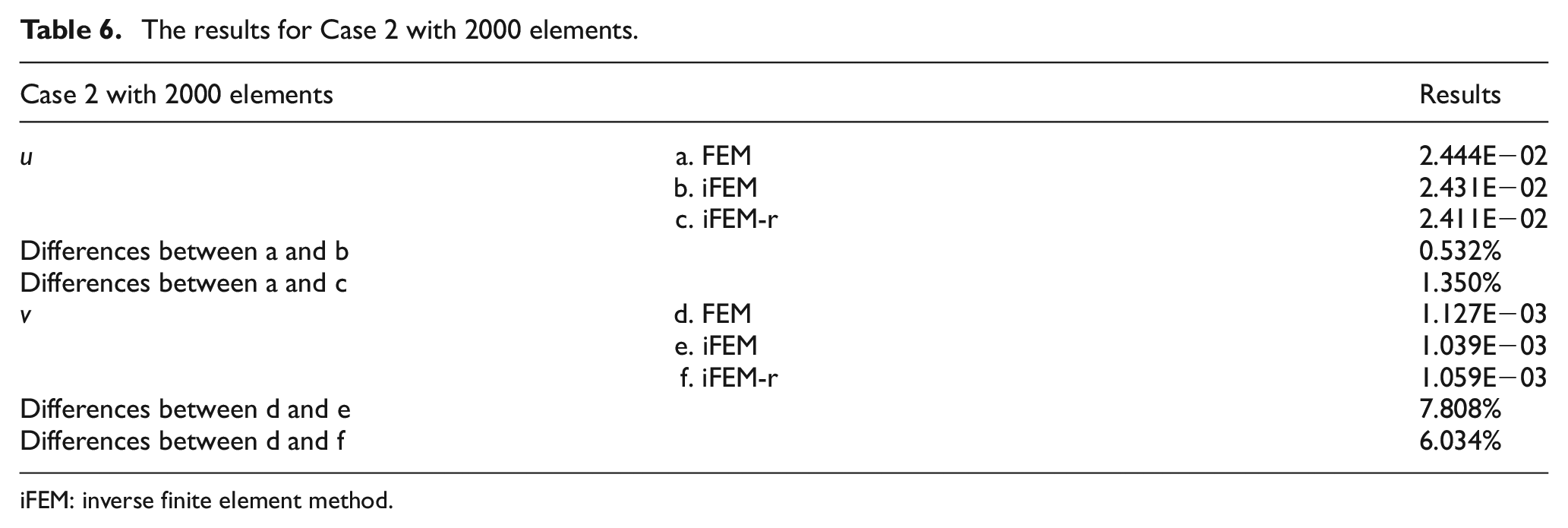
For Case 2, a rectangular plate, with 5 m length and 1 m height, is fully constrained on the left edge and the same tension loading as in Case 1 is applied to the right edge (see Figure 8). Similarly, the plate has been meshed with both coarse mesh (125 elements) and fine mesh (2000 elements) (see Figure 9). Tables 5 and 6 present the results for Case 2. If the mesh is quite coarse, the estimation of the y-displacements is not as good as the x-direction. The error of the
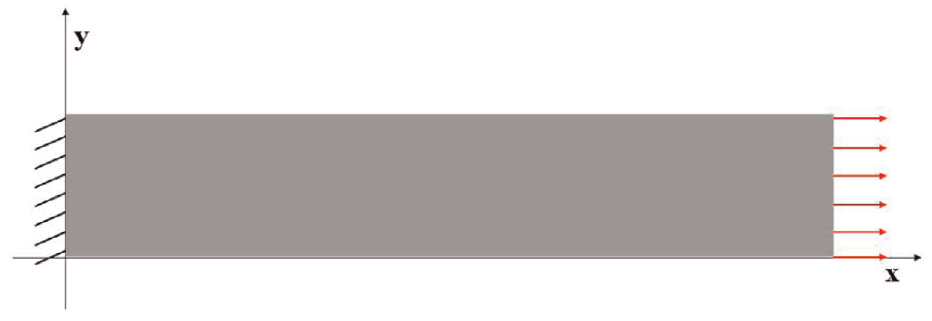
The loading and displacement boundary conditions of Case 2.

Two different meshes of Case 2. (a) 125 elements. (b) 2000 elements.
The results for Case 2 with 125 elements.
iFEM: inverse finite element method.
The results for Case 2 with 2000 elements.
iFEM: inverse finite element method.
The contour plots of Case 2 are given in Figures 10 and 11. There is no doubt that, for the full sensor condition, the differences of the plots between the inverse analysis and FEM reference are indistinguishable. For the plots of the reduced sensor condition, the sensors are kept along the edge leading to a total number of 236 sensors (Figure 12). Because of the sensor reduction, some features along the edge are not captured clearly. However, the main features, i.e., the locations of the large deformations, are obviously captured.
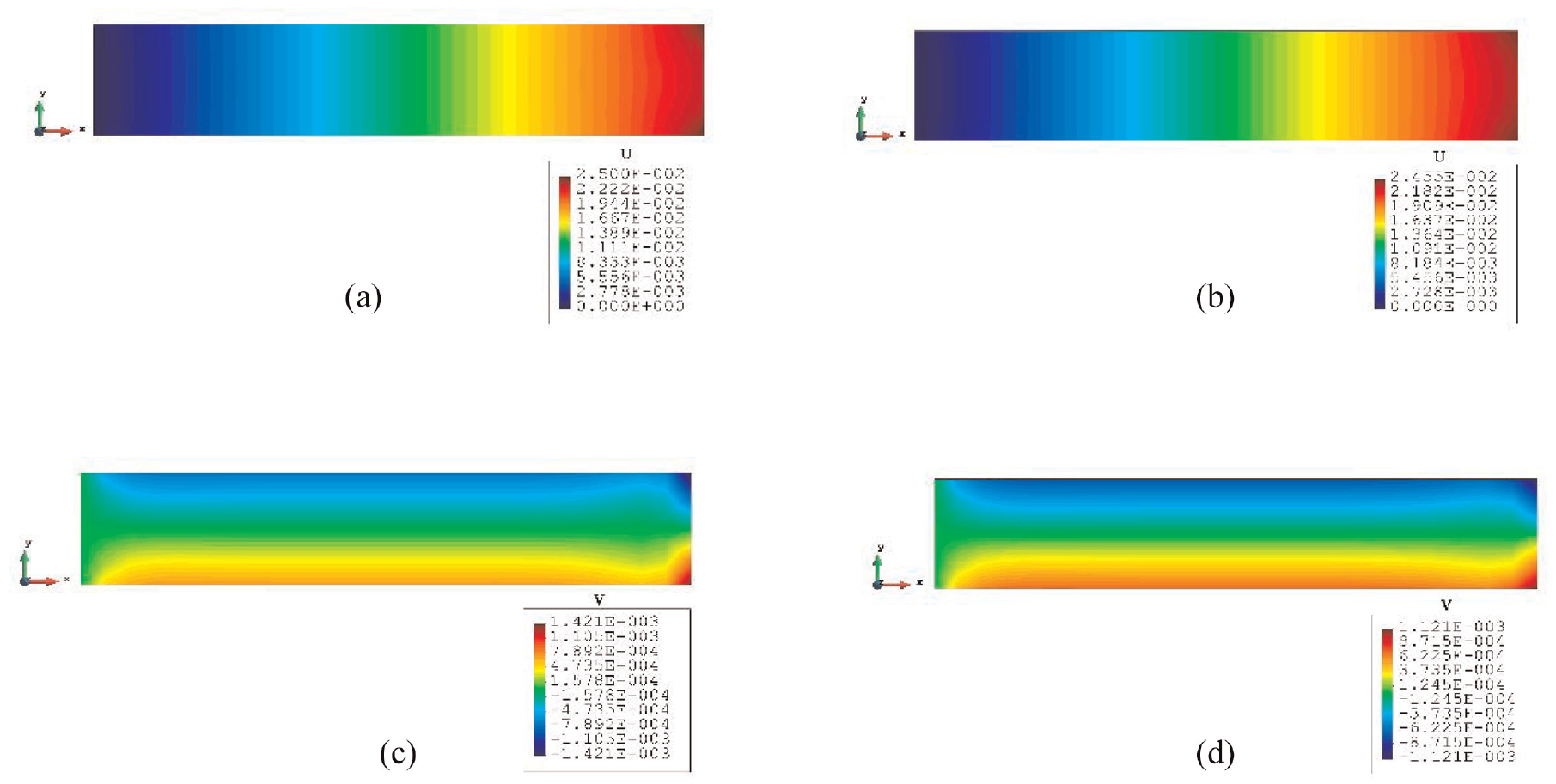
The plots of displacements of Case 2 with 125 elements. (a) x-displacements of FEM. (b) x-displacements of iFEM. (c) y-displacements of FEM. (d) y-displacements of iFEM.
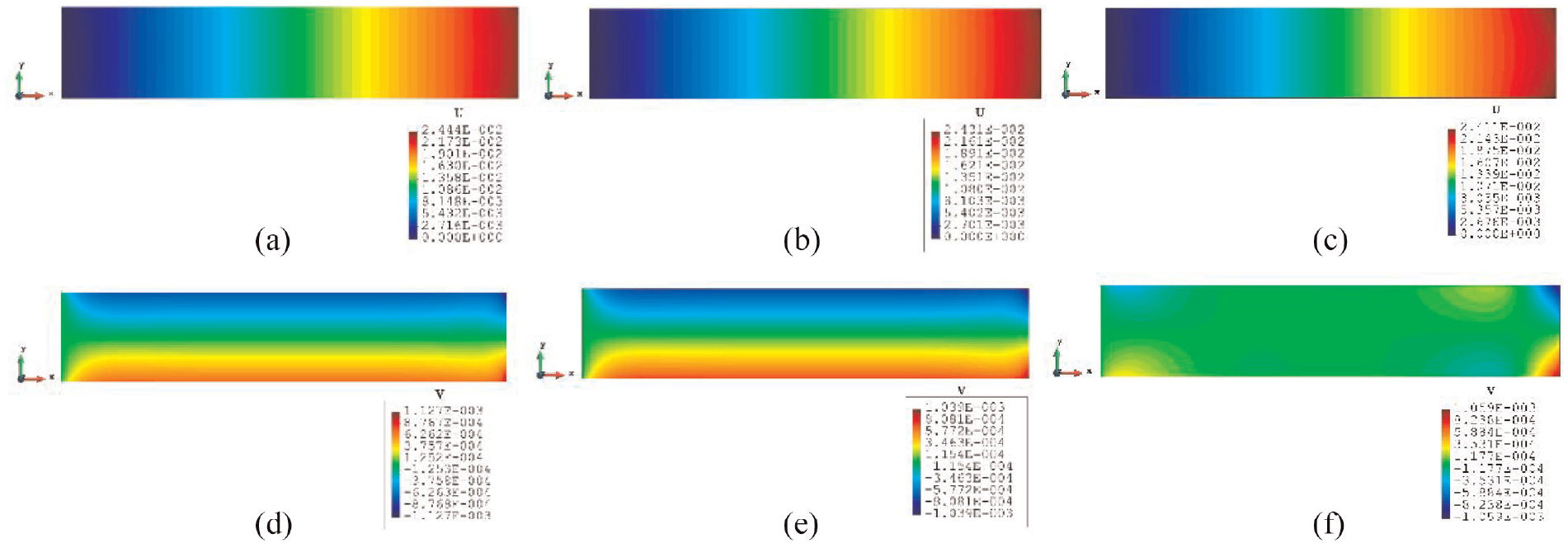
The plots of displacements of Case 2 with 2000 elements. (a) x-displacements of FEM. (b) x-displacements of iFEM. (c) x-displacements of iFEM-r. (d) y-displacements of FEM. (e) y-displacements of iFEM. (f) y-displacements of iFEM-r.
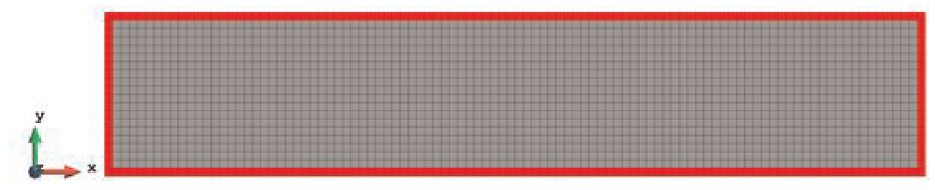
The sensor locations of Case 2 with 2000 elements.
3.3. Case 3: square plate with a central hole under tension loading
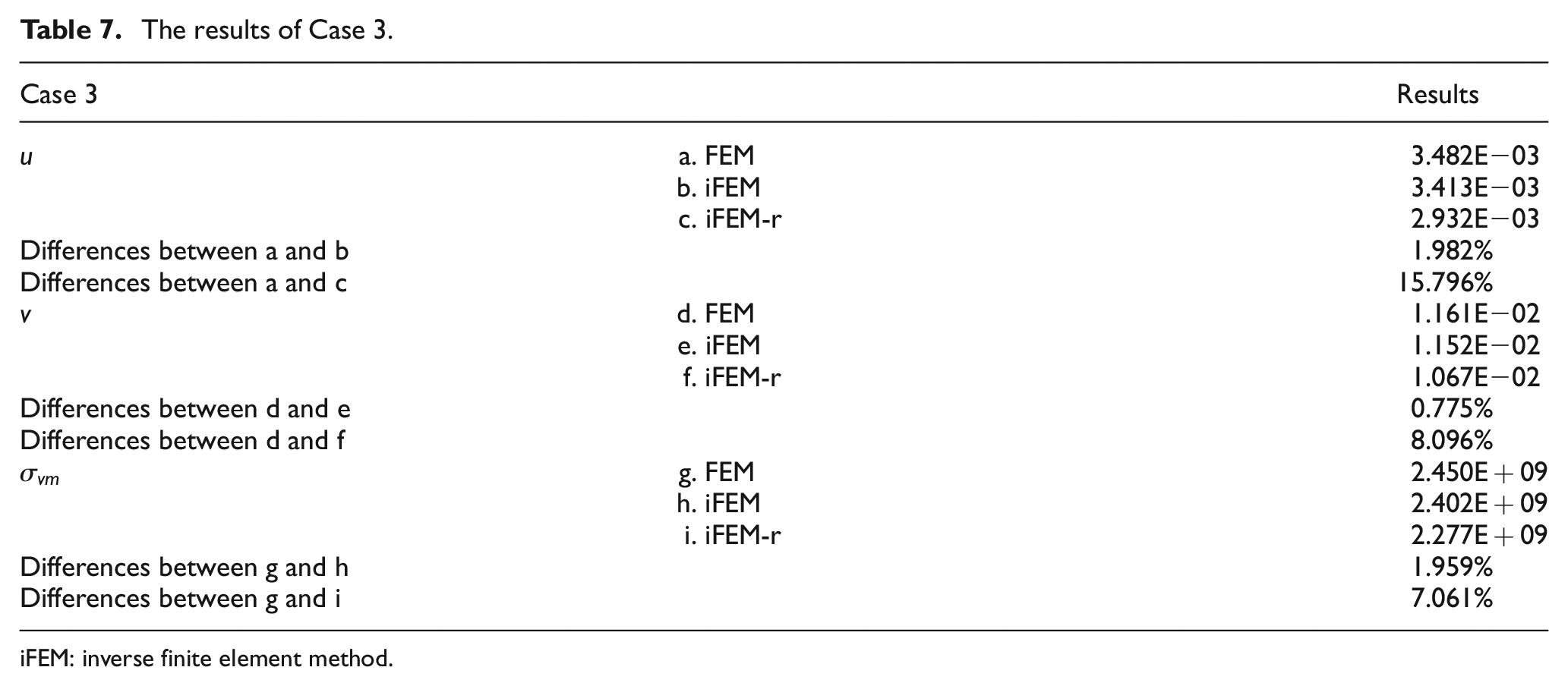
A more complex case which is a plate with a hole at the centre is selected as the last case (Figure 13). The plate has the same geometry as Case 1 and the radius of the hole is 0.5 m. Only dense mesh is considered for Case 3 to ensure the accuracy of FEM analysis, and the plate has been meshed with 1288 elements (Figure 14). The reason for this difference is that around the hole, the mesh would be slightly different, but it will not influence the results. von Mises stress is also chosen for this case to further illustrate the comparison. As shown in Table 7, for the full sensor condition, all three results (
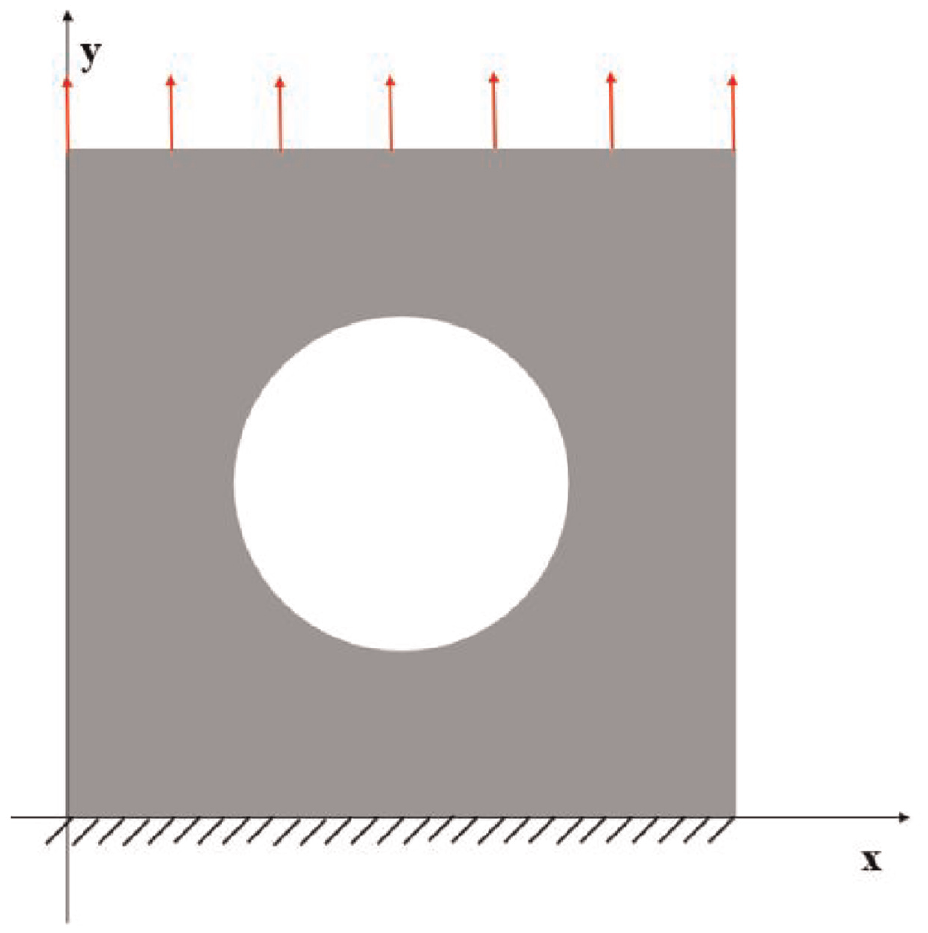
The loading and displacement boundary conditions of Case 3.
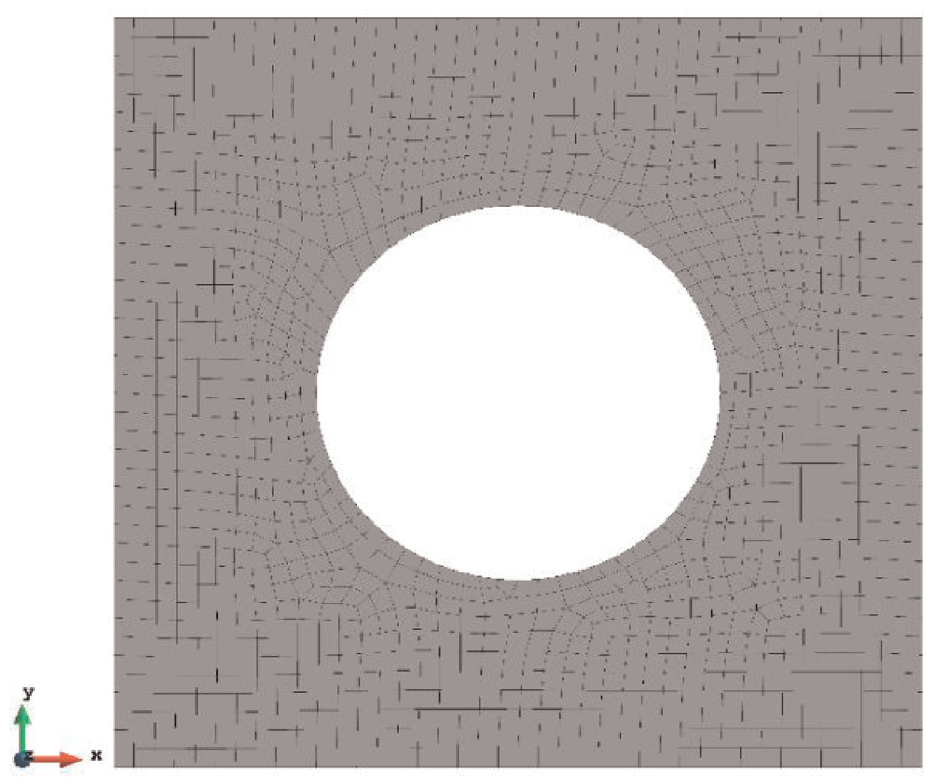
The mesh for Case 3 (1288 elements).
The results of Case 3.
iFEM: inverse finite element method.
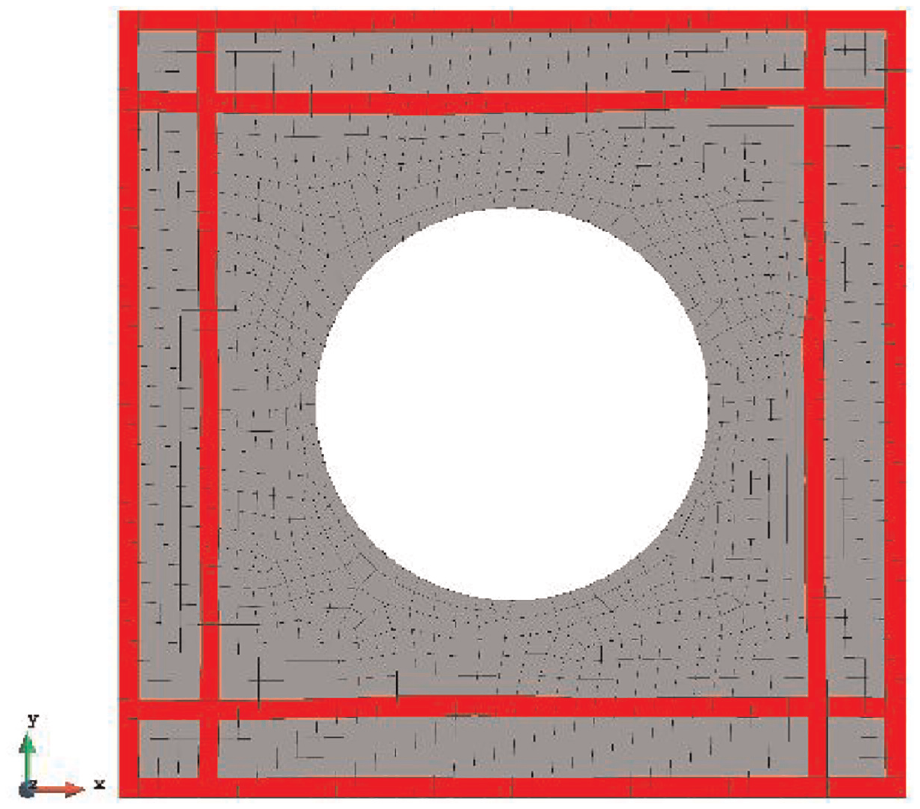
The reduced sensor locations for Case 3 with 1288 elements (iFEM-r).
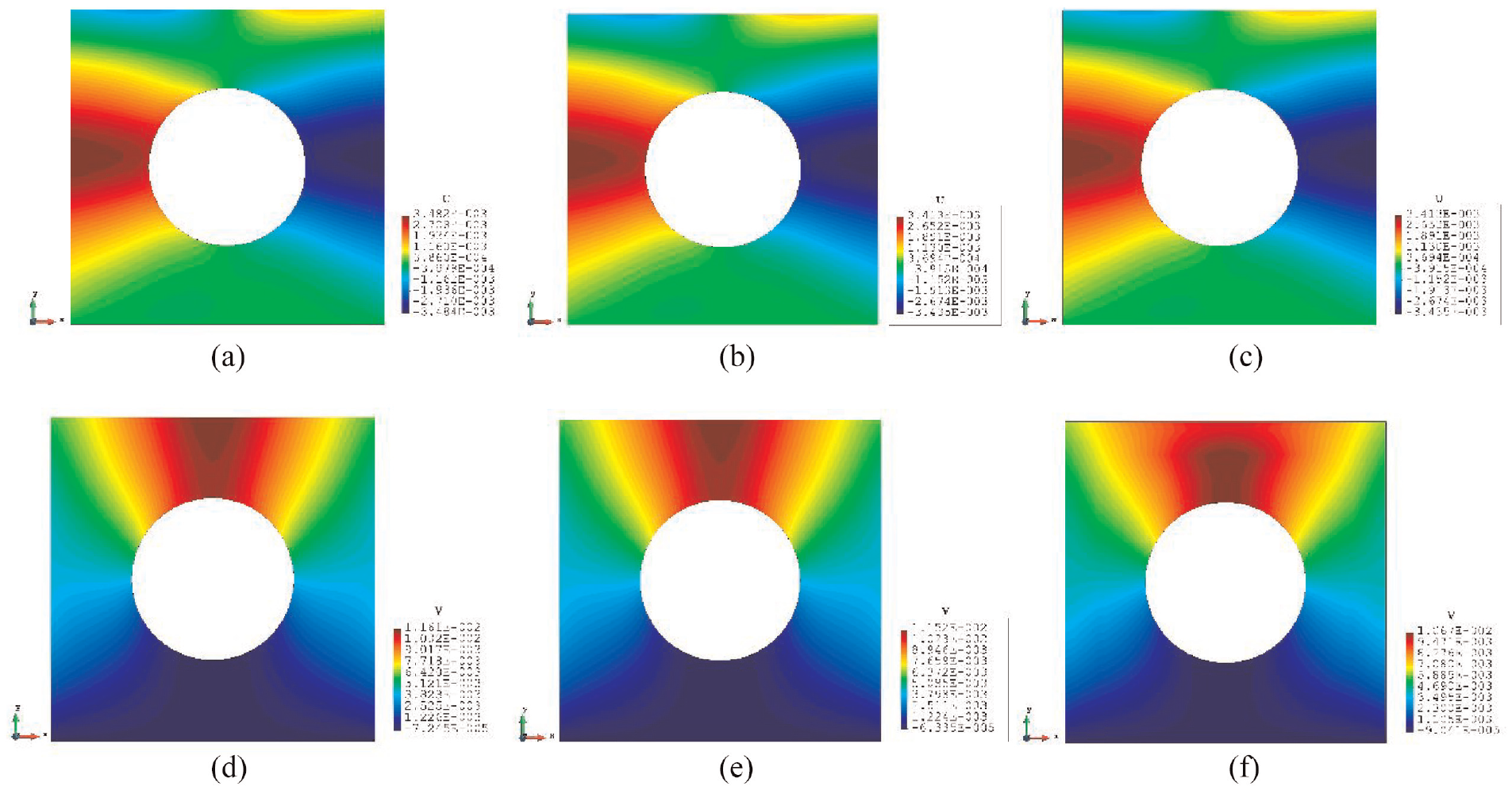
The plots of displacements of Case 3. (a) x-displacements of FEM. (b) x-displacements of iFEM. (c) x-displacements of iFEM-r. (d) y-displacements of FEM. (e) y-displacements of iFEM. (f) y-displacements of iFEM-r.
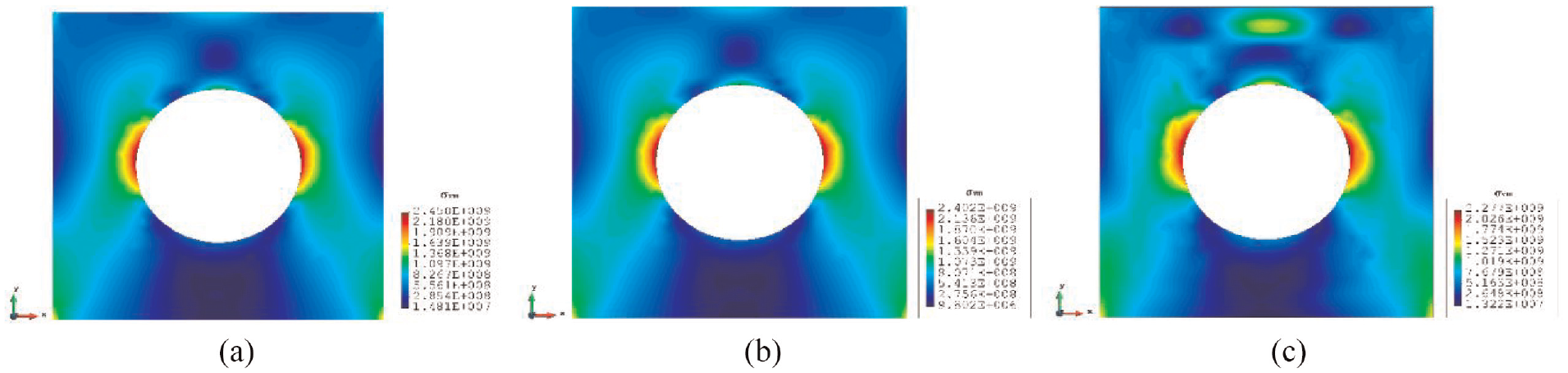
The plots of von Mises stress of Case 3. (a) FEM. (b) iFEM. (c) iFEM-r.
4. Conclusion
In this study, a two-dimensional four-node quadrilateral inverse finite element formulation, iQP4, is presented. To validate the accuracy of the inverse element and demonstrate its capability, four different numerical cases are considered for different loading and boundary conditions. iFEM analysis results are compared with regular finite element analysis results as the reference solution. For all cases, it was demonstrated that iQP4 element can provide accurate results even by considering reduced number of sensors. Therefore, it can be concluded that iFEM and iQP4 element can be used for shape sensing and SHM of structures under in-plane loading conditions.
